
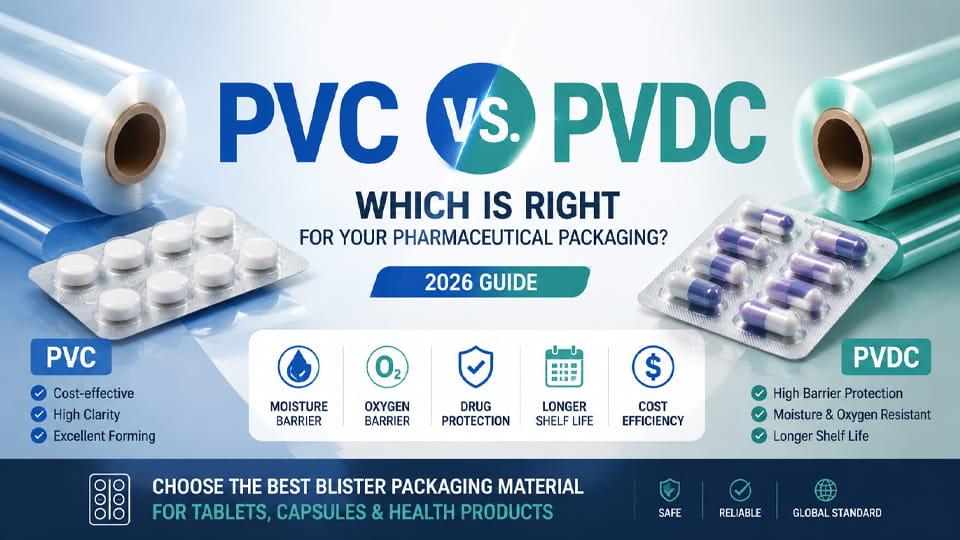
Pharmaceutical blister packaging (e.g. tablets and capsules) commonly uses clear PVC or PVC/PVDC films sealed with foil. Choosing the right blister film is a big decision for any pharma producer. PVC and PVDC may look alike, but their moisture and oxygen barrier properties, shelf life, cost and processing needs are very different. If you’re working in pharma manufacturing or procurement, you’ve likely asked: Is PVC or PVDC the better choice for our medicine blister packs? This friendly guide compares PVC and PVDC head-to-head for pharmaceutical packaging. We’ll cover what each material is, how their barrier and cost properties differ, and practical advice on choosing the right blister film. By the end, you’ll know whether plain PVC or PVDC-coated PVC (sometimes called PVC/PVDC) suits your product’s needs – or if a hybrid solution makes the most sense.
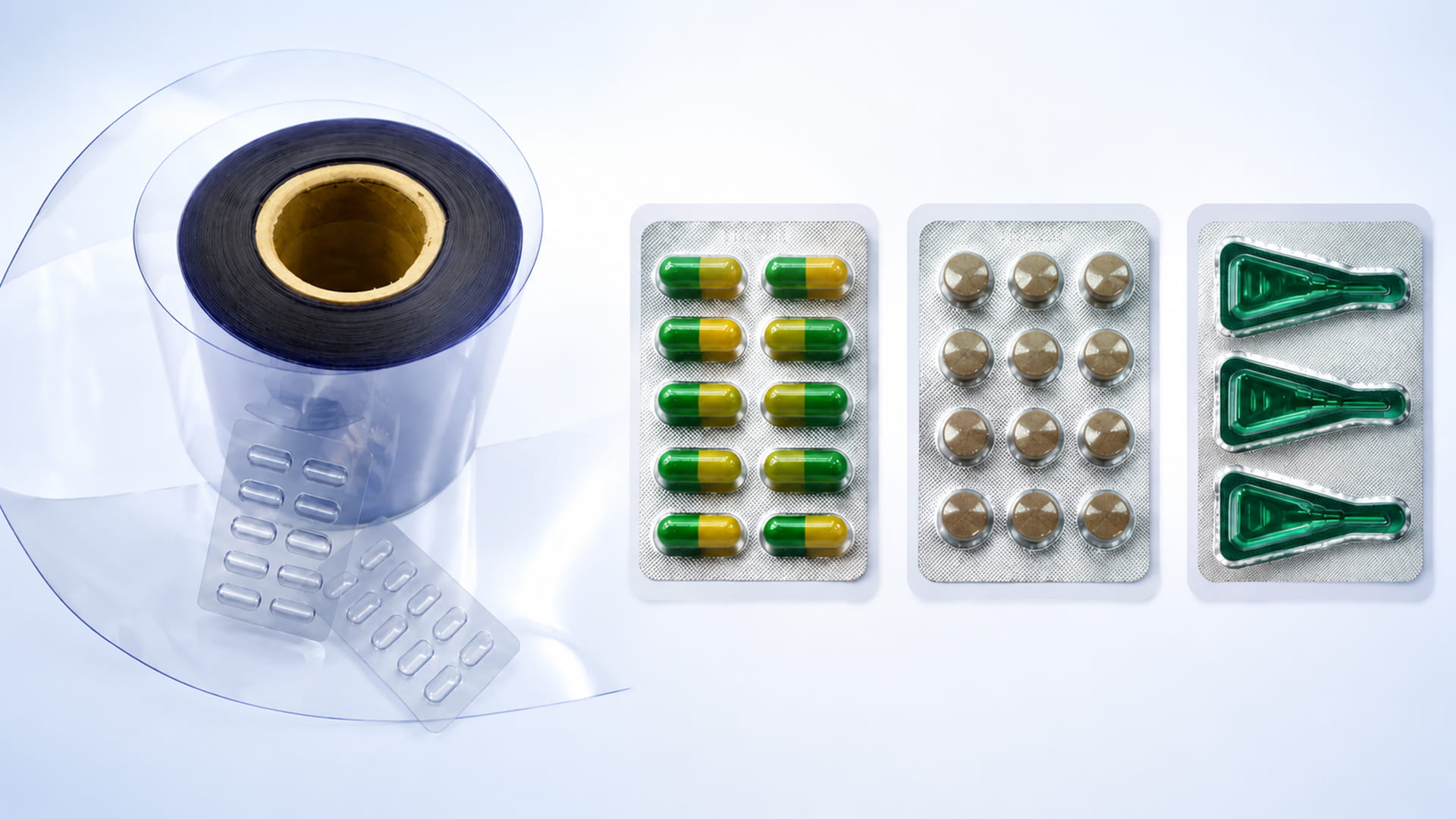
PVC (polyvinyl chloride) is a clear, flexible plastic, the most common blister material for tablets and capsules. In pharma blisters, “PVC” always means non-plasticized, rigid PVC. Typical PVC film is 200–300 μm thick (often 250 μm). It serves as the formable base layer of the blister. The principal advantages of PVC are its low cost and ease of thermoforming. It’s clear (excellent transparency), durable, and molds quickly on a thermoforming line. Manufacturers love PVC for ordinary products like over-the-counter tablets, vitamins and stable generics.
PVC blister film provides good structure and visibility. You can see and count the pills through the pack, and push them out easily. PVC is also chemically stable against many excipients and has been approved in pharmacopeias (Ph. Eur. and USP) for medicine contact. In short: PVC is a reliable, “workhorse” blister film for cost-sensitive, moisture-tolerant products.
PVDC (polyvinylidene chloride) is a high-barrier polymer often applied as a coating on PVC film. Pure PVDC film (uncoated) is hard to thermoform by itself, so in blister packs it appears as a very thin film layer (in duplex or triplex structures). The PVDC layer contains much more chlorine in its chemical structure (CH₂CCl₂), giving it outstanding moisture and oxygen resistance.
In practice, PVDC-coated PVC is the standard for high-barrier blister packs. For example, a typical duplex film is 250 μm PVC with 40–120 gsm PVDC coating. Thicker PVDC (higher gsm) yields lower WVTR (as low as 0.25 g/m²/day) and near-zero OTR. Forming is very similar to PVC – you run the composite film on the thermoformer – but you must control the oven temperature so the PVDC layer doesn’t cure too quickly.
PVDC coating is usually applied by emulsion (water-based) coating, in multiple passes. There are “standard” and “super-barrier” PVDC grades. The super-barrier grades give over twice the moisture/O₂ resistance per gram of coating. Common final structures include:
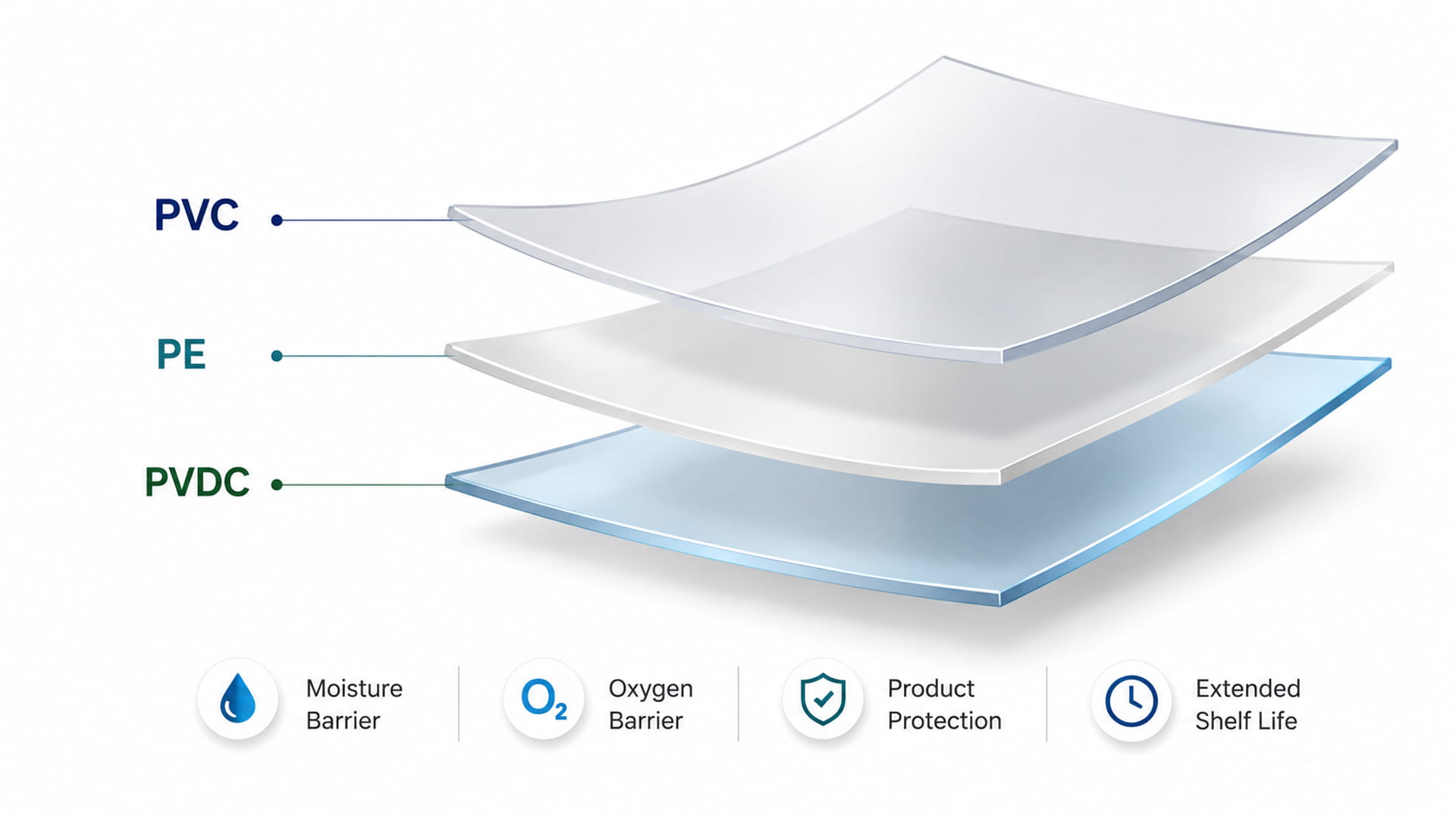
Put simply: PVC forms the blister’s shape, while PVDC seals it tight. A blister pack made from plain PVC (with foil backing) is economical and clear, but only offers basic protection. A PVC/PVDC pack costs more but drastically slows moisture and oxygen ingress, protecting sensitive drugs longer.
| Feature | PVC (uncoated) | PVC/PVDC (coated) |
| Moisture Barrier | ★★☆☆☆ (moderate) | ★★★★★ (high) |
| Oxygen Barrier | ★★☆☆☆ (low) | ★★★★★ (high) |
| Cost | Low | Medium–High |
| Clarity (Transparency) | Excellent | Excellent |
| Shelf Life (in packaging) | Moderate (shorter) | Long (extended) |
| Thermoforming Ease | Easy | Easy (with adjusted settings) |
| Sensitive Drugs (moisture/O₂) | No (not ideal) | Yes (recommended) |
| Export/Tropical Markets | Limited suitability | Good suitability |
| Common Products | OTC vitamins, tablets | Moisture-sensitive drugs, exports |
Table: Comparing PVC vs PVC/PVDC blister films. (★ = barrier rating, more stars = better protection.)
This quick comparison shows why PVDC is chosen for challenging applications. Uncoated PVC is fine for general use, but PVC/PVDC gives far better protection.
Medicine protection is all about barrier performance. Moisture and oxygen can degrade APIs, affect potency, cause clumping, or trigger chemical changes. PVC alone provides only moderate protection: at 38°C/90%RH, a standard 250 μm PVC film lets in about 3.0 g/m²/day of water. That means a lot of humidity can seep through a PVC blister if exposed. In contrast, a well-coated PVC/PVDC film (e.g. 250 μm PVC + 80 gsm PVDC) might only allow 0.30 g/m²/day (10× less moisture). The same story holds for oxygen: PVC’s OTR is ~20 mL/m²/day, while PVC/PVDC can drop to ~0.1–1 mL/m²/day.
Why does this matter? Lower WVTR/OTR means longer shelf life and stability. A moisture-sensitive ingredient (like an effervescent granule or probiotic) might go bad in just 6–12 months inside PVC, but remain stable 2–3 years in PVC/PVDC. Medicine-makers track WVTR (water vapor transmission rate) and OTR (oxygen transmission rate) when developing packaging. Lower values mean the film is a tougher barrier.
In short: PVDC-coated films protect drugs far better. If your product is sensitive to humidity or needs a long expiration date, PVC/PVDC or another high-barrier film is usually worth the extra cost. PVC alone is a compromise – it’s OK until the worst-case climate or shelf requirement says otherwise.
Use plain PVC blister film for:
PVC is the workhorse for everyday items. Think Vitamin C tablets in a city pharmacy, or aspirin in a winter climate. These products tolerate some moisture and won’t spoil quickly if the packaging leaks a bit. According to pharma best practice, standard 250 µm PVC film (RPVC) is used when cost-efficiency and ease are priorities.
Example: A company packaging vitamin tablets might choose 250 µm PVC with aluminum foil lidding. The tablets have a 12-month shelf life and go to local markets. PVC’s low cost and clarity make it ideal.
Use PVC/PVDC films for:
If your pills cannot tolerate moisture or oxygen, PVC/PVDC is usually required. For instance, a pediatric antibiotic bound for a tropical climate might ship from Singapore to Brazil. Using 250 µm PVC with 80–100 gsm PVDC (a “duplex” film) can achieve a 12+ month shelf life even in 30°C/75%RH conditions, according to case studies.
Example: Effervescent Vitamin C tablets (which produce fizz in water) are extremely moisture-sensitive. A manufacturer would run 250 µm PVC/80gsm PVDC blisters to ensure the tablets stay solid through distribution in Asia. The higher film cost is justified by preventing product failure.
Beyond PVC and PVDC, other blister materials include Aclar® (PCTFE) and Alu-Alu (cold-form aluminum). Here’s how they compare:
| Material | Barrier Strength | Cost Level | Typical Use |
| PVC | Medium | $ | Standard tablets, capsules (domestic) |
| PVC/PVDC | High | $$ | Moisture-sensitive drugs, exports |
| PVC + Aclar® | Very High | $$$$ | Specialty biotech, high-end pharma |
| Alu-Alu | Maximum (zero light/moisture) | $$$$$ | Hormones, oncology, extreme climates |
For most pharma uses, PVC, PVC/PVDC and sometimes PVC/Aclar® are enough. Alu-Alu is a niche for ultra-sensitive APIs. (See our table above for a quick comparison.) In practice, PVC/PVDC is the most common high-barrier option, balancing performance and cost.
When evaluating materials, budget and sustainability often weigh in alongside performance:
Most pharma blister packs you see daily are actually PVC/PVDC rather than pure PVC. The reason: PVDC provides that extra barrier without sacrificing the visibility and formability of PVC. Here are some common formats:
In practice, the PVC/PVDC/Alu blister is the workhorse for many tablets and capsules that need a longer shelf life. If asked “which is better, PVC or PVDC blister?”, remember that it’s often not one or the other – it’s the combination that wins.
Here are some guiding questions and answers for picking between PVC and PVDC films in pharma:
Whether you package tablets or capsules, the material choices overlap. A common scenario:
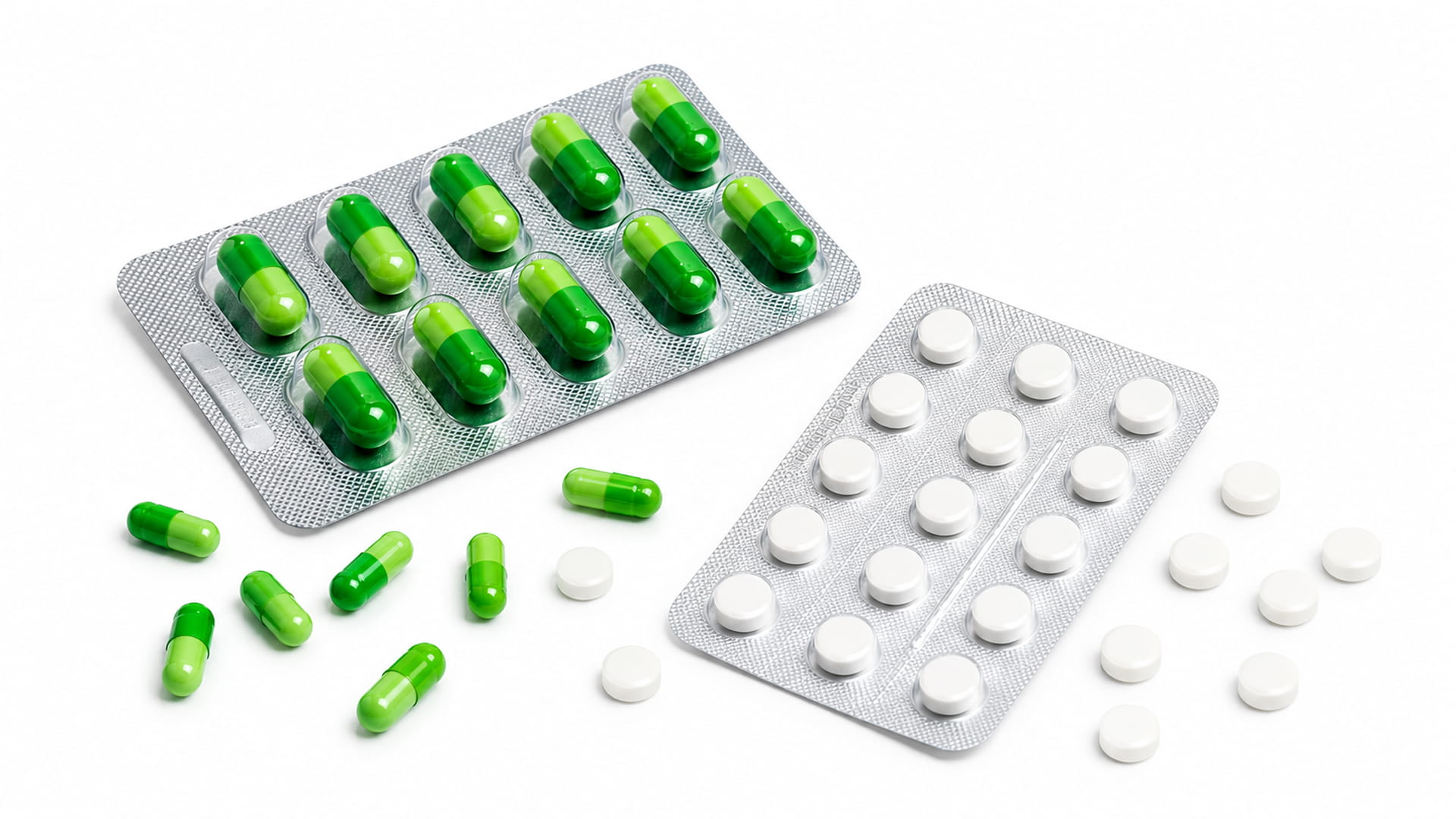
In both cases, the unit-dose format isolates each dose, and the transparent cavity lets users see the medication. You might wonder about blister packaging machines: modern lines can form cavities from either PVC or PVDC films. The main difference is that PVDC-coated PVC might need slightly different heating settings on the thermoforming die. Consult your equipment manual or vendor to dial in the right parameters.
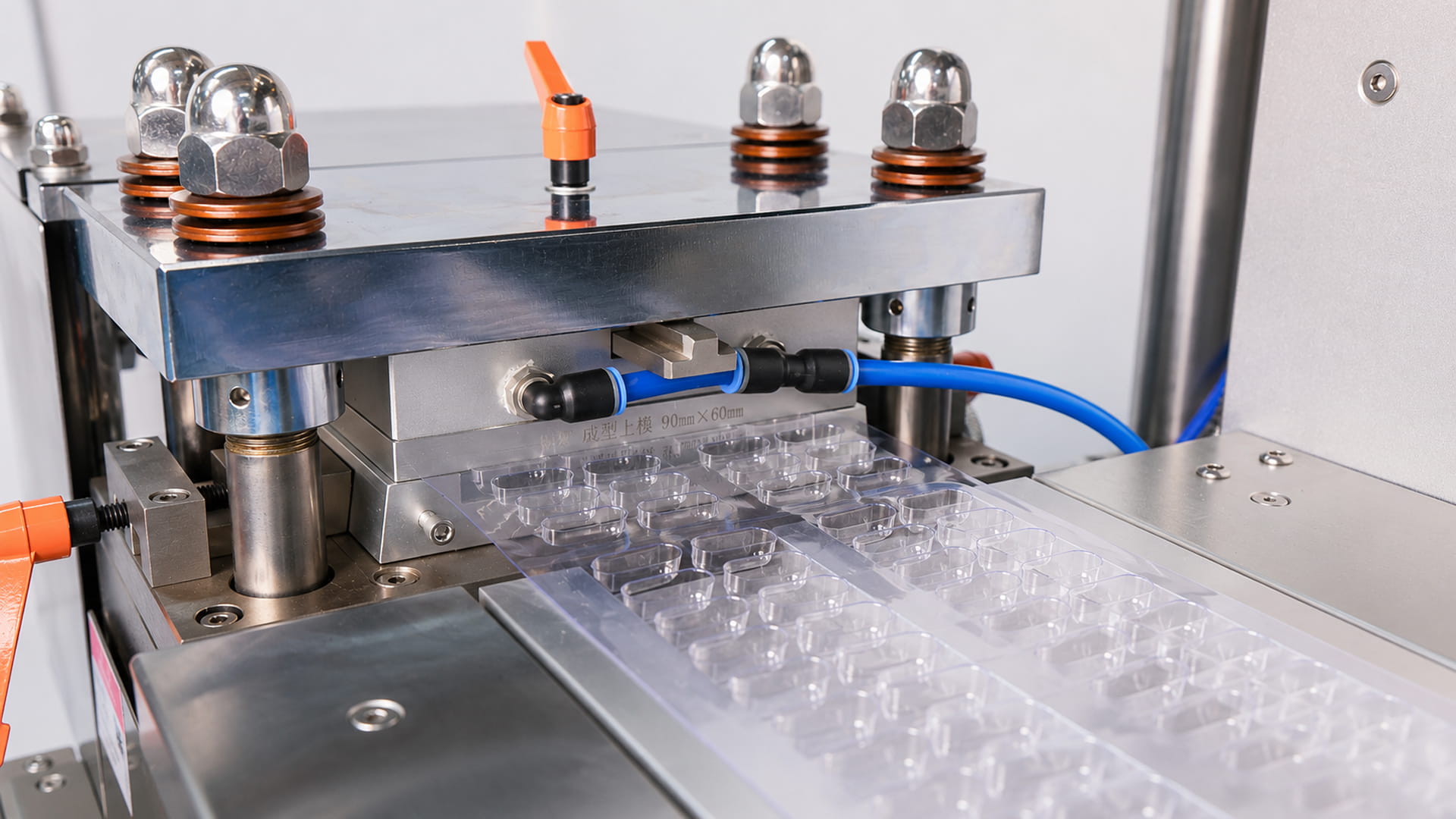
Yes. Blister packaging machines are generally compatible with both materials. You don’t need separate machines for PVC vs PVC/PVDC. However, you do need to adjust the process:
Modern machines (such as JinLuPacking’s DPP-160 or DPP-270Max thermoformers) handle PVC, PVC/PVDC and even cold-form aluminum. They allow you to switch between films by tweaking the temperature profile and forming depth. For example, when running PVC/PVDC, a tech might reduce the oven lamps by 10-20% compared to plain PVC. Overall, the transition is straightforward for an experienced operator.

JinLuPacking’s blister machines are built to run all major pharma blister films – PVC, PVC/PVDC, PVC/PE/PVDC, aluminum, even high-barrier laminates. Their PLC controls and recipe system make it easy to save parameters for each film type. In short, one machine can be your all-in-one solution as long as you set it up correctly for PVC vs PVDC materials.
Choosing between PVC and PVDC boils down to your product’s needs. PVC films are cost-effective and clear, ideal for many standard tablets and capsules. PVDC-coated films deliver superior barrier, crucial for moisture- or oxygen-sensitive drugs requiring long shelf life. In practice, the hybrid PVC/PVDC approach often wins: it uses PVC’s clarity and formability while adding PVDC’s barrier where it counts.
When in doubt, evaluate factors like medicine stability, required shelf life, budget, and sustainability goals. For example, a common choice is PVC/PVDC blisters for export medicines, and plain PVC-Alu blisters for local, short-term products. Always think about the failure mode: if your product lost potency 10% too soon, what would that cost? This risk assessment often guides whether a higher-barrier film is justified.
Ready to optimize your pharma packaging? Contact JinluPacking for expert advice and the right blister packing solutions. Our team can help you select the ideal film (PVC, PVDC, or advanced composites) and recommend the blister packaging machine setup to match. Whether you need standard tablet blisters or specialized child-resistant capsules, we’ll ensure your packaging keeps medicines safe and compliant until the very end.
PVC (Polyvinyl Chloride) and PVDC (Polyvinylidene Chloride) are two commonly used materials for pharmaceutical blister packaging. PVC is mainly used as the thermoforming base film because it offers excellent transparency, easy forming, and low cost.
PVDC is usually applied as a coating layer on PVC film to improve moisture and oxygen barrier performance. Compared with standard PVC blister packaging, PVC/PVDC blister provides better protection for sensitive drugs and can help extend shelf life.
PVDC (Polyvinylidene Chloride) is a high-barrier polymer material widely used in pharmaceutical and food packaging applications. It has excellent resistance against moisture vapor and oxygen transmission, making it suitable for protecting products that require improved stability.
In pharmaceutical blister packaging, PVDC is commonly used as a coating layer on PVC film rather than as a standalone forming material. The combination of PVC/PVDC creates a high-barrier blister film with better drug protection performance.
PVC and PVDC films can be difficult to distinguish visually because both materials are usually transparent and used in similar blister packaging structures.
The main identification methods include:
• Material structure: PVC is normally the base thermoforming film, while PVDC is a thin barrier coating applied on PVC.
• Barrier performance: PVDC-coated films provide significantly better moisture and oxygen protection than standard PVC.
• Technical specification: Manufacturers usually identify the material by structure labels such as PVC, PVC/PVDC, or PVC/PE/PVDC.
For pharmaceutical purchasing and production, checking the supplier’s material specification sheet is the most reliable method.
In terms of moisture and oxygen barrier, yes. PVDC (as a coating) provides much higher barrier than plain PVC. But PVDC is more expensive, so it’s “better” only if you need that extra protection. For simple, stable products, PVC is usually fine.
PVDC resin costs more to produce, and applying the coating is a multi-step process. You’re essentially adding extra material (the coating) and extra processing. The added performance comes at that price.
Yes. PVDC can improve pharmaceutical shelf life by reducing the penetration of moisture and oxygen into the blister package.
Many drug products, including moisture-sensitive tablets, probiotics, and certain nutraceutical products, require stronger barrier packaging because humidity and oxygen can affect product quality and stability.
However, actual shelf life depends on the drug formulation, packaging structure, storage conditions, and stability testing results.
PVC/PVDC and PVC/PE/PVDC are both high-barrier blister packaging structures.
PVC/PVDC:
A standard duplex structure where PVDC coating is applied directly on PVC. It provides improved moisture and oxygen protection.
PVC/PE/PVDC:
A triplex structure that adds a PE layer between PVC and PVDC. This structure improves flexibility and forming performance, especially for deeper blister cavities.
The best choice depends on product requirements, cavity design, and packaging machine capability.
It’s PVC film with a thin PVDC layer on one side. The PVC provides formability and strength; the PVDC layer provides moisture/oxygen barrier. Together they form a two-layer (duplex) or three-layer (triplex) structure.
Yes. Modern blister machines (like JinLuPacking’s models) are designed for PVC, PVC/PVDC and other thermoformable films. You simply select the right settings. The key is controlling oven temperature and forming parameters for the specific film.
For hot/humid export markets, PVC/PVDC (or even PVC/Aclar or Alu-Alu) is recommended. PVC alone often fails in tropical climates.
References:
1.Container Closure Systems for Packaging Human Drugs and Biologics —— U.S. Food and Drug Administration
2.Plastic Packaging Systems and Their Materials of Construction —— United States Pharmacopeia
3.Pharmaceutical Blister Packaging, Part 1 Rationale and Materials —— Gale
4.Polyvinylidene Chloride —— ScienceDirect
5.Chemical Approaches for the Identification of PVC and PVDC in Pharmaceutical Packaging Materials —— ResearchGate
6.QUALIFICAÇÃO DE MATERIAL FLEXÍVEL PVC / PVC – PVDC NA INDÚSTRIA FARMACÊUTICA —— revistajrg.com