
Pharmaceutical equipment maintenance is not simply about fixing a machine when it stops. A good maintenance program keeps equipment clean, reliable, accurate, and ready for production while reducing unexpected downtime and avoiding quality risks. Under FDA current good manufacturing practice, equipment used to manufacture, process, pack, or hold drug products must be cleaned and maintained at appropriate intervals, supported by written procedures and records. Automatic, mechanical, and electronic equipment must also be routinely calibrated, inspected, or checked under a written program.
For a pharmaceutical plant, the practical goal is straightforward: know which machines matter most, identify the components most likely to affect product quality or uptime, maintain them before failure, document the work, and keep improving the plan from real operating data. ISPE’s Good Practice Guide for Maintenance similarly treats maintenance as a structured GMP-area program rather than a collection of isolated repair jobs.
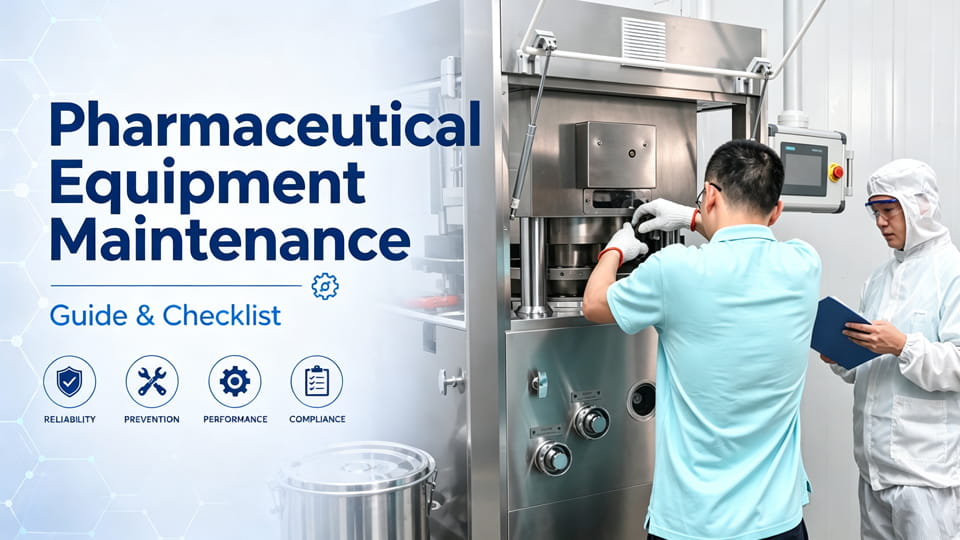
This guide explains how to build that system, with a practical pharmaceutical equipment maintenance checklist, maintenance schedule, machine-specific advice, and GMP considerations for tablet presses, capsule fillers, blister machines, counting machines, and cartoners.
Pharmaceutical Equipment Maintenance is the planned inspection, cleaning, lubrication, adjustment, calibration support, repair, and replacement work used to keep pharmaceutical manufacturing and packaging machinery performing as intended.
It covers much more than a maintenance technician with a toolbox. A complete pharmaceutical maintenance program connects production, engineering, quality assurance, operators, spare-parts management, documentation, and equipment suppliers.
Why does that matter?
There are four useful maintenance approaches:
| Maintenance Type | Trigger | Best Use | Main Limitation |
| Reactive maintenance | Equipment has already failed | Low-criticality, inexpensive components | Creates unplanned downtime and may allow secondary damage |
| Preventive maintenance | Time, cycles, batches, or operating hours | Routine wear parts, lubrication, inspections, scheduled servicing | Can replace parts earlier than necessary if intervals are poorly set |
| Condition-based maintenance | Measured condition crosses a defined limit | Bearings, motors, vacuum systems, temperature-sensitive components | Requires reliable measurements and acceptance limits |
| Predictive maintenance | Trends or models indicate developing deterioration | Critical equipment where early warning has high value | Requires sufficient data, monitoring discipline, and technical capability |
For most pharmaceutical manufacturers, the best answer is not choosing only one method. It is using preventive maintenance as the foundation, reactive maintenance for suitable low-risk items, and condition-based or predictive methods where equipment criticality justifies them.
A practical preventive maintenance program in the pharmaceutical industry starts with the equipment—not with a generic checklist downloaded from the internet.
A simple workflow looks like this:
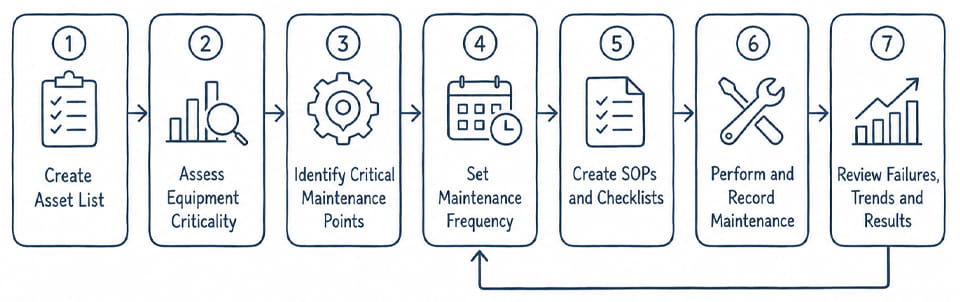
The important part is the last arrow. A pharmaceutical maintenance schedule should improve as you learn how the equipment actually behaves.
The following schedule is a starting template, not a regulatory frequency. Actual intervals should follow the equipment manufacturer’s recommendations and your site’s risk assessment, operating hours, materials, maintenance history, and validated state. FDA requires a maintenance schedule and EU GMP expects equipment to be appropriately maintained and relevant measuring and control equipment to be checked at defined intervals.
| Frequency | Recommended Pharmaceutical Equipment Maintenance Tasks |
| Daily / each shift | Clean accessible product-contact areas; remove dust and residues; inspect for leakage, unusual noise, vibration, loose parts, damaged guards, abnormal alarms, air/vacuum problems, and obvious tooling wear; verify safety devices before operation |
| Weekly | Inspect and clean sensors, filters, chains, belts, vacuum lines, pneumatic fittings, feeders, guide rails, tooling, and dust-extraction points; lubricate approved points where required |
| Monthly | Inspect bearings, cams, drive components, motors, electrical connections, seals, gearboxes, tooling alignment, vacuum performance, heaters, and wear parts; review alarm and repair history |
| Quarterly | Perform deeper mechanical and electrical inspection; verify critical settings and instrumentation; inspect safety circuits and high-wear assemblies; review recurring failures and spare-parts consumption |
| Annual | Conduct comprehensive inspection or planned overhaul based on machine condition; replace life-limited parts where justified; verify calibration status and safety systems; review the PM program, maintenance history, documentation, and training |
For the daily pharmaceutical equipment maintenance checklist, operators are your first line of defense. Ask them to look for changes: a new noise, more powder around a seal, a slower vacuum response, a warmer motor, unstable film tracking, or an increased reject rate. Small changes often appear before a full breakdown.
Weekly work should focus on components that accumulate dust or gradually loosen, clog, dry out, or wear. Monthly maintenance goes deeper into drive systems, electrical connections, alignment, seals, tooling, and moving assemblies.
Quarterly and annual work should not become a ritual where technicians simply tick boxes. Compare actual machine condition with earlier inspections. Check repeat faults. Look at replaced components. Ask whether the maintenance frequency is still right.
Lubrication deserves particular care. Too little lubricant increases friction; using the wrong lubricant or applying it where contamination is possible can create another problem. JinLu has a separate Pharmaceutical Equipment Lubricants Guide covering lubricant selection and maintenance considerations for pharmaceutical machinery.
Generic pharma equipment maintenance advice only goes so far. The real value comes from knowing what to inspect on each machine.
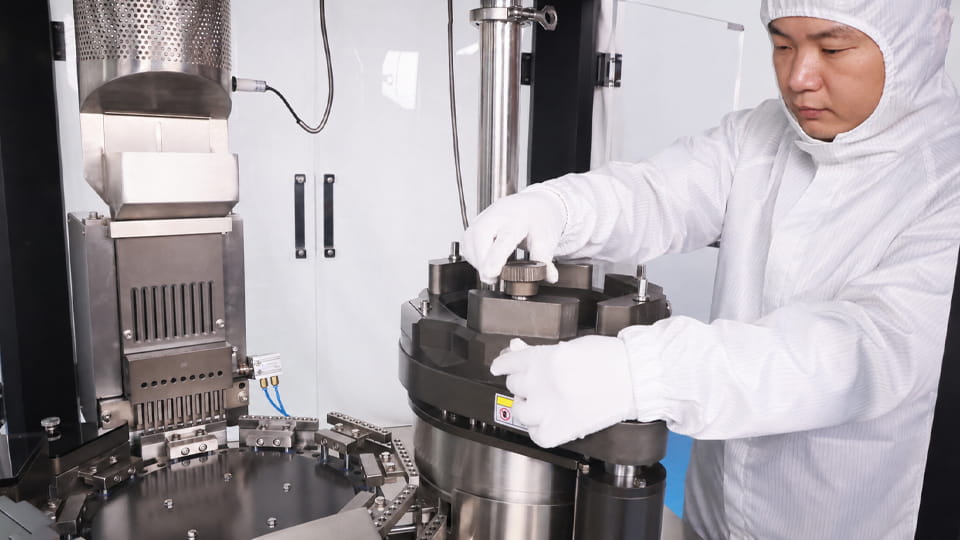
Tablet press maintenance. Focus on punches and dies, the turret, upper and lower cam tracks, compression rollers, force feeder, drive system, lubrication points, dust extraction, and safety protection. Powder accumulation around the turret or tooling can accelerate wear and contribute to tablet defects, while damaged tooling or poor alignment deserves immediate investigation. JinLu tablet presses use assemblies such as rotary turrets, force feeders, vacuum systems, compression systems, and overload protection, making these logical inspection points in a tablet press preventive maintenance program. See JinLu’s Tablet Press Machine range.
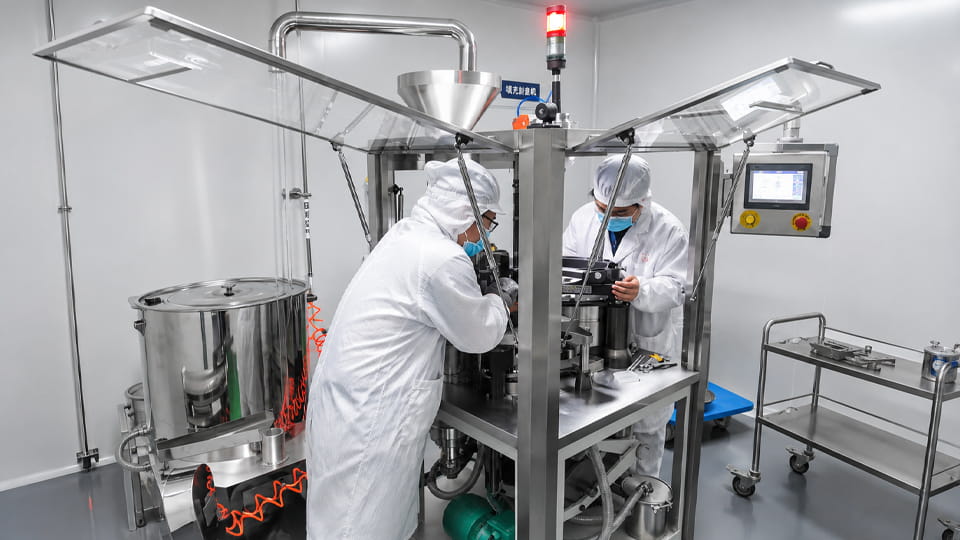
Capsule filling machine maintenance. Keep the capsule feeder, separation system, vacuum circuit, dosing components, tamping or filling assemblies, locking station, cams, and dust-control areas clean and correctly adjusted. Watch especially for powder entering mechanical spaces, declining vacuum performance, capsule misalignment, and abnormal cam noise. JinLu’s automatic capsule fillers use modular filling assemblies and, on certain models, oil-free bearings intended to reduce maintenance needs. For a deeper component-level guide, see How to Maintain an Automatic Capsule Filling Machine and the Capsule Filling Machine range.
Blister machine maintenance. Inspect forming and sealing stations, heaters, sealing plates or rollers, guide rollers, film tension, feeders, cutting tooling, cooling, sensors, pneumatic components, and vacuum systems. Dust or residue on sealing surfaces, worn components, incorrect alignment, and unstable processing conditions can quickly show up as weak seals or malformed packs. JinLu blister machines combine forming, feeding, heat sealing, traction, and cutting functions, so alignment between stations is particularly important. See the Blister Packing Machine range and JinLu’s Blister Machine Problems Guide.
Counting and cartoning machines. On tablet and capsule counters, keep vibration channels, feeding surfaces, photoelectric or vision sensors, dust-removal areas, bottle handling, reject systems, and pneumatic components clean and correctly positioned. JinLu’s counting equipment is designed for integration into bottling lines, while its JL-16C product uses a modular, enclosed design intended to simplify maintenance and limit dust problems. On a Cartoning Machine, pay close attention to vacuum pick-up components, suction cups, carton magazines, chains, guides, sensors, leaflet systems, forming stations, and product/carton detection because several coordinated stations must operate in sequence.
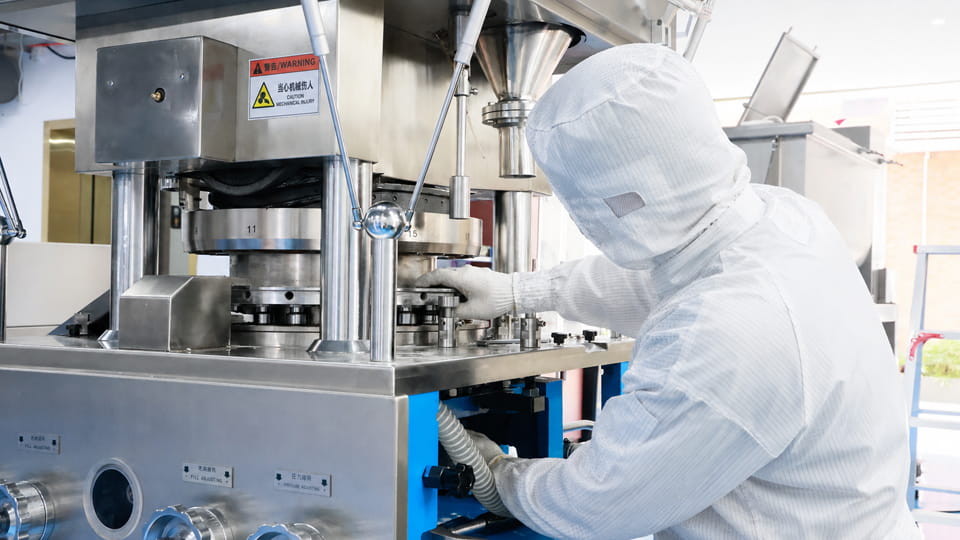
Maintenance, cleaning, and calibration are related, but they are not interchangeable.
| Activity | Main Purpose | Typical Example |
| Cleaning | Remove product residue, dust, cleaning-agent residue, and contamination | Cleaning a capsule dosing station after a batch |
| Maintenance | Preserve or restore mechanical/electrical performance | Replacing a worn bearing or adjusting a drive system |
| Calibration | Confirm that a measuring or control device performs within defined accuracy | Checking a temperature, pressure, weight, or force measurement against a reference |
FDA makes those responsibilities clear. Section 211.67 requires written cleaning and maintenance procedures, including responsibility, schedules, methods and materials, disassembly or reassembly where needed, protection of clean equipment, pre-use cleanliness inspection, and records. Section 211.68 adds routine calibration, inspection, or checking of automatic, mechanical, and electronic equipment under a written program.
A GMP-oriented SOP can therefore use this checklist:
| SOP Element | What to Define |
| Purpose and scope | Equipment and activities covered |
| Responsibility | Operator, maintenance, engineering, QA, or contractor roles |
| Frequency | Time, operating-hour, cycle, batch, or condition-based trigger |
| Safety and preparation | Isolation, lockout, cleaning status, required PPE |
| Maintenance method | Inspection, adjustment, replacement, lubrication, tools, approved materials |
| Disassembly/reassembly | Required sequence and checks before restart |
| Acceptance criteria | What constitutes acceptable machine condition |
| Post-maintenance checks | Cleanliness, guards, settings, trial run, calibration or requalification where applicable |
| Documentation | Date, technician, work performed, parts used, findings, deviations, approvals |
The EU position is closely aligned. EU GMP Chapter 3 says manufacturing equipment should be designed, located, and maintained for its intended purpose; repair and maintenance must not create a product-quality hazard; equipment should be easy to clean; measuring and control equipment should be calibrated and checked at defined intervals with records; and defective equipment should be removed or clearly identified where possible.
This remains an active inspection issue rather than an old requirement sitting in a regulation book. FDA warning letters issued in 2025 and 2026 have continued to cite firms for inadequate equipment cleaning and maintenance procedures or failures associated with 21 CFR 211.67.
One of the most common maintenance mistakes is running everything until failure. Others include giving every machine the same service interval, ignoring small changes in noise or vibration, using the wrong lubricant, over-lubricating, postponing sensor checks, keeping poor records, carrying no critical spare parts, and restarting production without a proper post-maintenance inspection.
Predictive maintenance can take the program further. Instead of asking, “Is it time to replace this bearing?” you ask, “Is the bearing actually deteriorating?” Useful inputs include vibration, temperature, pressure, motor current, alarm history, vacuum trends, and existing process data. A pharmaceutical manufacturing study using an operating aseptic filling line found that long-term shifts in process-monitoring data could be linked with equipment faults and used to support earlier planned interventions.
The practical benefit is not that every factory needs artificial intelligence. It is that trend information can help move maintenance from a fixed calendar toward evidence-based decisions.
To reduce maintenance cost, start with boring fundamentals: standardize common spare parts where possible, keep critical wear parts available, train operators to notice deterioration, follow correct lubrication practices, document recurring failures, and involve the OEM when a pattern is unclear. JinLu, for example, provides technical documentation, training, preventive and corrective maintenance, remote troubleshooting, and parameter/software backup as part of its support offering.
Maintenance cost also starts at procurement. FDA 21 CFR 211.63 specifically requires pharmaceutical equipment to have appropriate design, size, and location to facilitate intended operation, cleaning, and maintenance. When comparing pharmaceutical machinery suppliers, look for accessible maintenance points, easy product-contact disassembly, modular tooling, understandable fault diagnostics, readily available wear parts, good manuals, remote support, and realistic spare-parts lead times.
Ask the supplier a simple question before buying: “Show our maintenance team how we will access, clean, inspect, and replace the parts that wear most often.” A machine that saves ten minutes every changeover or makes inspection easier can be more valuable over its life than a machine with a slightly lower purchase price.
In pharmaceutical manufacturing, maintenance = reliability + quality + compliance. Good Pharmaceutical Equipment Maintenance is less about performing more maintenance and more about performing the right maintenance at the right time. Choosing the right equipment is step one; following through with a structured maintenance program is just as crucial. By doing daily checks, sticking to schedules, and documenting every action, you prevent surprises, reduce costs, and keep patients safe.
At Jinlu Packing, we design our machines (tablet presses, capsule fillers, etc.) with hygiene and maintenance ease in mind. But even the best machine needs TLC. We encourage you to apply the tips in this guide to your own equipment, and always refer to your machine’s manual for specifics.
If you have questions about maintenance programs or need technical support for your line, our engineers at Jinlu are ready to help. Proper maintenance keeps your line running smoothly – and ultimately, keeps your quality high and costs low.
Ready to improve your machine uptime? Contact JinluPacking’s support team or explore our full range of pharmaceutical packaging equipment to see how we design for easy cleaning and maintenance.
There is no single maintenance interval that works for every pharmaceutical machine. Maintenance frequency should be based on the equipment manufacturer’s recommendations, operating hours, production load, equipment criticality, product characteristics, and previous maintenance history. High-use or critical equipment may require daily or weekly inspections, while deeper preventive maintenance may be scheduled monthly, quarterly, or annually.
Preventive maintenance is planned maintenance performed before equipment fails. It normally includes inspection, cleaning, lubrication, adjustment, wear-part replacement, safety checks, and functional testing at defined intervals. A good preventive maintenance program helps pharmaceutical manufacturers reduce unexpected downtime, maintain consistent machine performance, and identify component wear before it affects production or product quality.
A pharmaceutical equipment maintenance checklist should cover mechanical parts, lubrication points, drive systems, sensors, electrical components, pneumatic and vacuum systems, safety devices, tooling, seals, filters, and other wear parts. It should also record the equipment ID, inspection date, technician, findings, parts replaced, corrective actions, and the next scheduled maintenance date.
Yes. GMP requires pharmaceutical manufacturing equipment to be maintained so that malfunction or contamination does not affect product quality. Under FDA 21 CFR 211.67, manufacturers must establish and follow written equipment cleaning and maintenance procedures, including assigned responsibilities, maintenance schedules, methods, inspections, and records. The exact maintenance interval should be defined according to the equipment and process rather than using one universal schedule.
Preventive maintenance is normally performed according to a predefined time, operating-hour, cycle, or production schedule. Predictive maintenance uses equipment-condition data to determine when maintenance is actually needed. For example, vibration, motor temperature, vacuum pressure, electrical current, or alarm trends can help identify developing problems before failure. Many pharmaceutical plants use preventive maintenance as the foundation and predictive maintenance for critical equipment.
Pharmaceutical manufacturers should maintain records that clearly show what maintenance was performed, when it was completed, who performed it, what problems were found, and what corrective actions or parts replacements were required. Major equipment records may also include cleaning and use information, equipment identification, batch references, inspections, calibration checks, deviations, and follow-up activities. Records should be traceable, chronological, and easy to retrieve during GMP inspections.
Start with a complete equipment list and classify each machine according to its impact on product quality, safety, and production. Then review the OEM maintenance manual, identify critical wear components, and define inspection or replacement intervals based on operating hours, production intensity, failure history, and risk. Assign responsibilities, create equipment-specific checklists, document completed work, and regularly adjust the schedule using actual maintenance data.
Not every maintenance activity requires full requalification, but significant repairs or changes should be assessed for their impact on equipment performance and the validated state. Replacing a routine wear part with an equivalent component may only require defined post-maintenance checks. Changes affecting critical settings, control systems, measurement accuracy, software, product-contact parts, or operating parameters may require calibration, verification, change control, or partial requalification before production resumes.
The most effective approach is to combine risk-based preventive maintenance with good operator inspection and fast access to critical spare parts. Operators should report abnormal noise, vibration, temperature, leakage, vacuum loss, sensor faults, or increasing reject rates before they become major failures. Maintenance teams should also analyze repeated breakdowns, keep accurate service histories, monitor critical components, and work with the equipment manufacturer when recurring problems cannot be resolved internally.
Buyers should evaluate maintenance accessibility before focusing only on machine speed and purchase price. Look for easy access to wear parts, quick product-contact disassembly, modular tooling, standardized spare parts, clear lubrication points, useful PLC diagnostics, accessible electrical and pneumatic components, and simple cleaning procedures. The supplier should also provide maintenance manuals, spare-parts lists, training, technical documentation, remote support, and reliable after-sales service.
References:
1.Good Practice Guide: Maintenance 2nd Edition —— ISPE
2.Quality assurance of pharmaceuticals: a compendium of guidelines and related materials: volume 2: Good manufacturing practices and inspection, 10th ed —— WHO
3.21 CFR § 211.182 Equipment Cleaning and Use Log —— eCFR
4.ICH Topic Q 7 Good Manufacturing Practice for Active Pharmaceutical Ingredients —— European Medicines Agency
5.Guidance on good manufacturing practice and good distribution practice: Questions and answers —— European Medicines Agency
6.Targeted Preventive Maintenance of Pharmaceutical Equipment —— ResearchGate