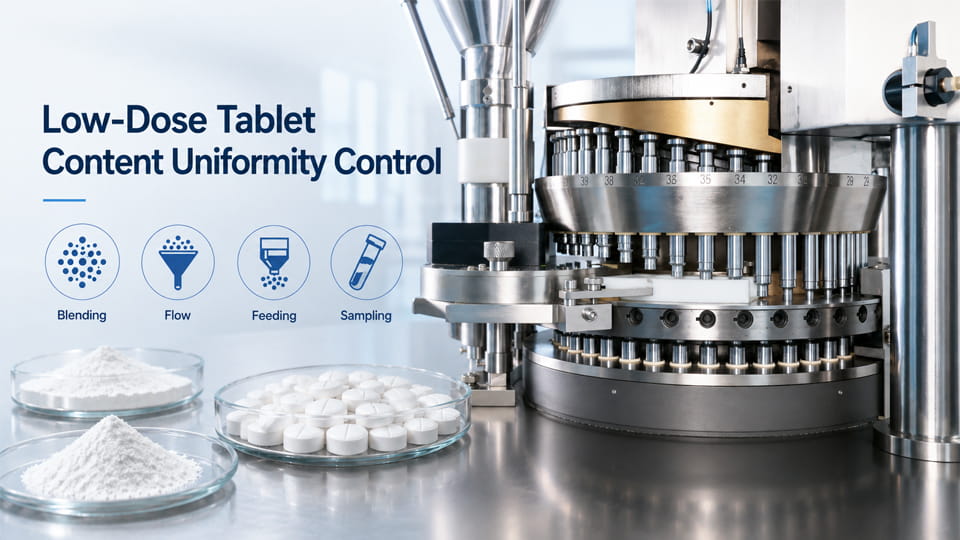
How to Control Low-Dose Tablet Content Uniformity: Blending, Flow, Feeding & Sampling
Learn how to control low-dose tablet content uniformity through blending, powder flow, tablet press feeding and representative sampling.

Learn how to control low-dose tablet content uniformity through blending, powder flow, tablet press feeding and representative sampling.
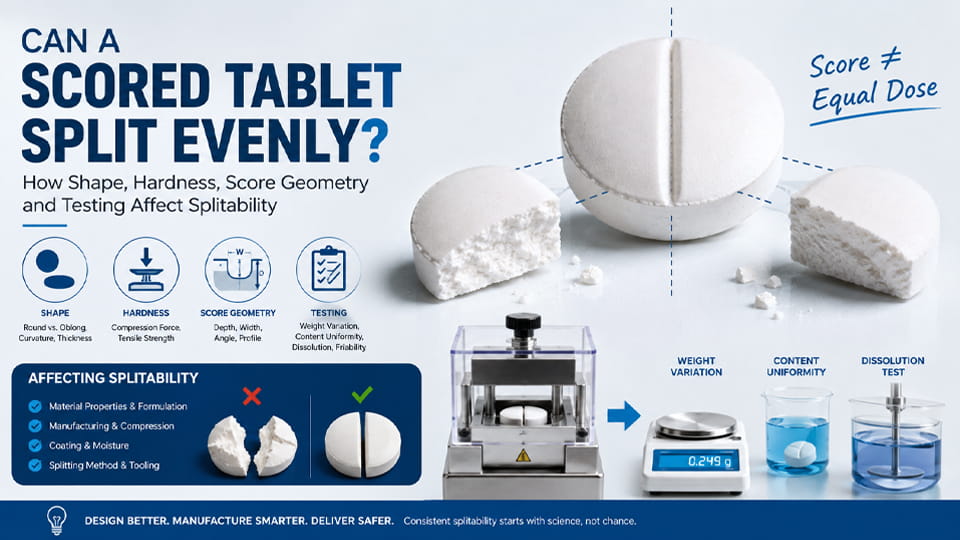
Discover whether a score line guarantees equal halves. Learn how tablet shape, hardness, and score design affect splitability. Get testing
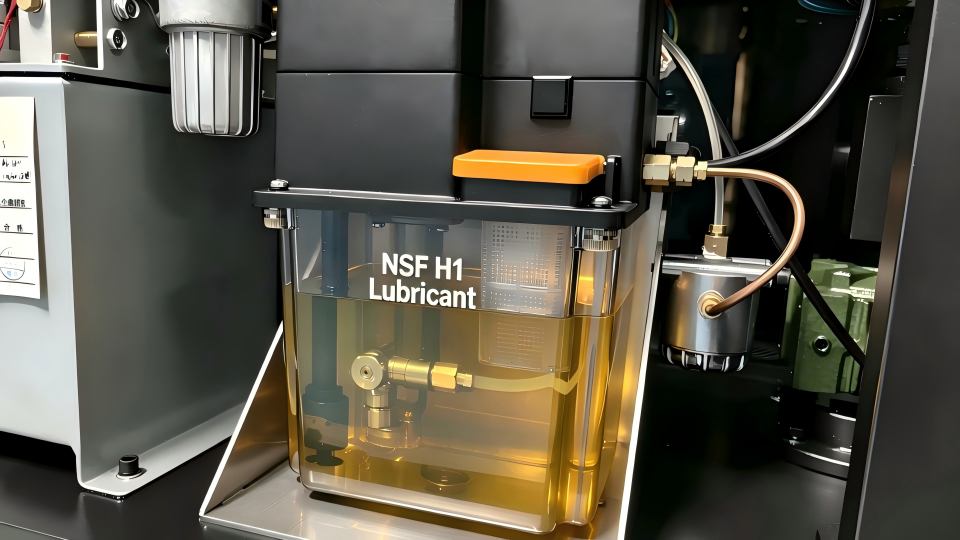
Learn tablet press lubrication with NSF H1 food grade lubricant. A cGMP guide to lubricant selection and maintenance for your

Learn how tablet stability data (moisture, oxidation, photodegradation) inform moisture, oxygen and light barrier requirements in pharmaceutical packaging.
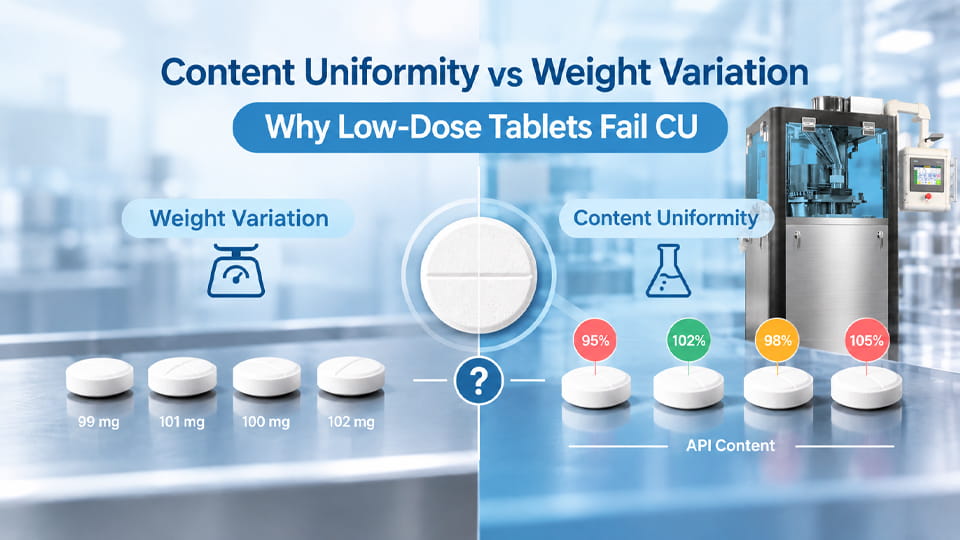
Learn how content uniformity vs weight variation affects low-dose tablets, why stable tablet weight can hide API variation, and how
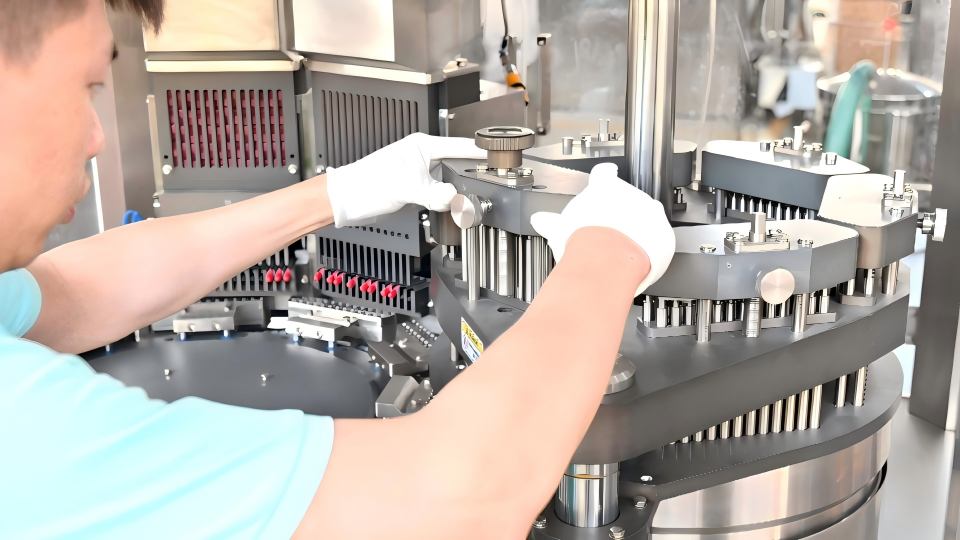
This guide covers 8 capsule filling machine common pain points and how the NJP-3800D automatic capsule filling machine prevents them.
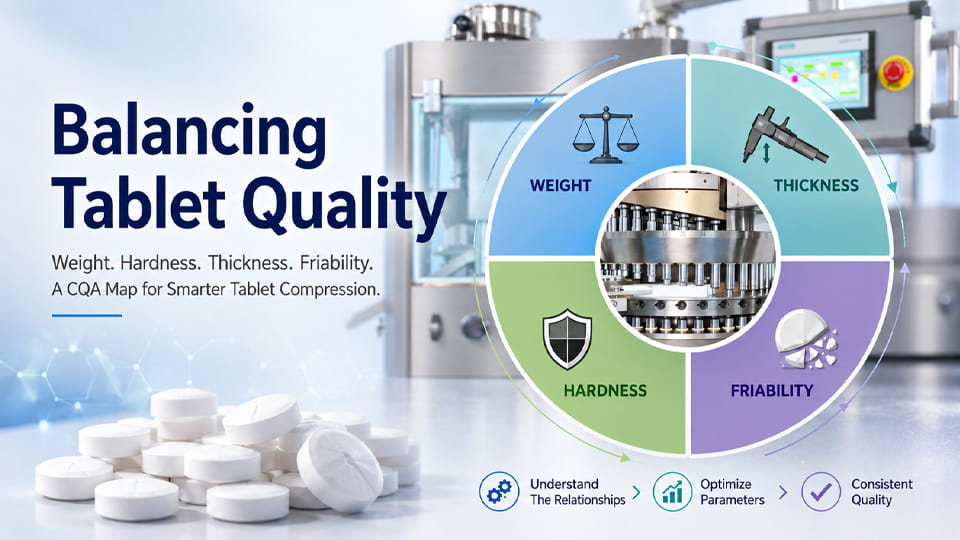
Discover how to balance tablet quality attributes – weight, hardness, thickness, friability – using a CQA map approach. Learn how
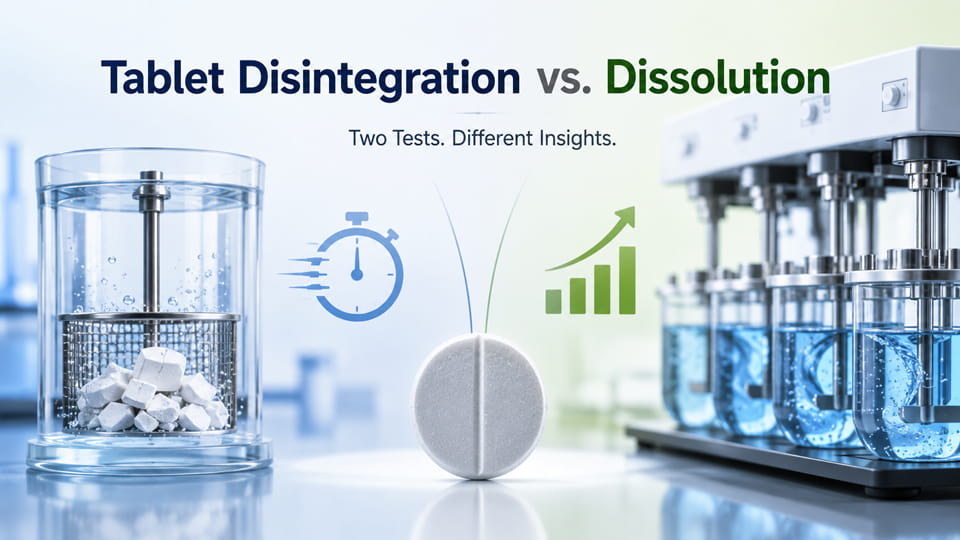
Learn how tablet disintegration vs dissolution tests differ, why results may diverge, and how formulation and manufacturing factors (e.g. compression
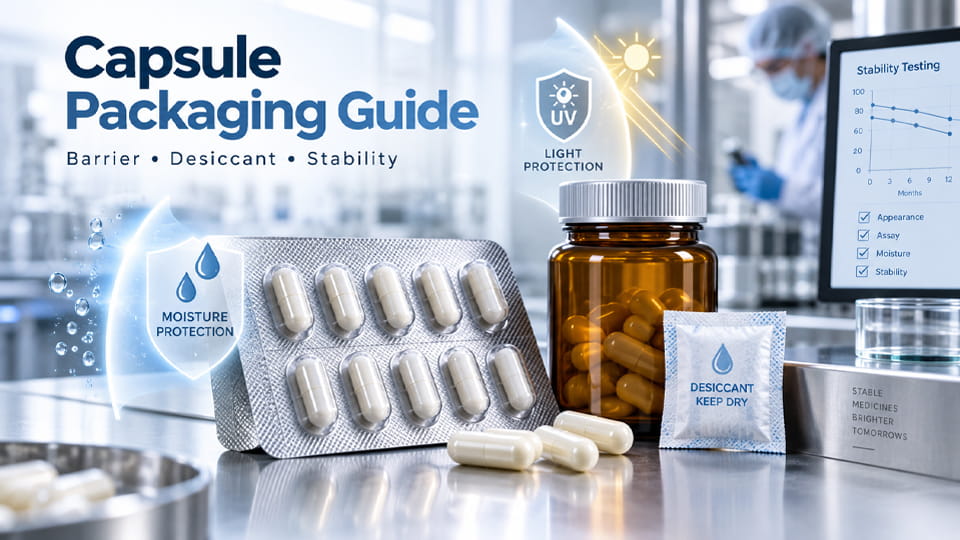
Learn how to protect moisture- and light-sensitive capsules with high-barrier materials (PVC/PVDC, PCTFE, foil), desiccants, and ICH-compliant stability testing. Compare