

ممارسات التصنيع الجيدة (GMP) المبادئ التوجيهية تملي قواعد صارمة ل معدات التعبئة والتغليف الصيدلانية لضمان جودة المنتج وسلامة المرضى. وتشمل المتطلبات الرئيسية تصميم الآلة الصحية, المواد غير المتفاعلة, التأهيل الكامل للمعدات (الأشعة تحت الحمراء/WH/PQ), تنظيف معتمد, الأتمتة لتقليل الأخطاء, سلامة البيانات (21 CFR الجزء 11) وتتبع المنتج (التسلسل). يغطي هذا الدليل إدارة الغذاء والدواء, معايير EMA/الاتحاد الأوروبي ومنظمة الصحة العالمية, يقدم قائمة مرجعية لممارسات التصنيع الجيدة (GMP) ويشرح كيفية الاختيار والصيانة آلات التعبئة والتغليف المتوافقة مع GMP.
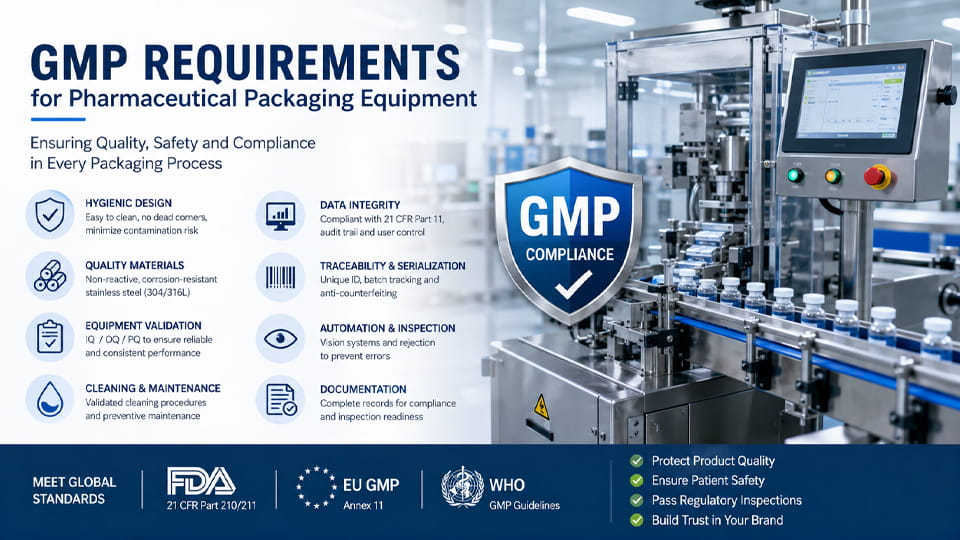
GMP (ممارسات التصنيع الجيدة) هو إطار الجودة الذي يضمن إنتاج المستحضرات الصيدلانية والتحكم فيها باستمرار. في التعبئة والتغليف, يعنيGMP التصاميم والعمليات التي تمنع الخلط أو التلوث. الوكالات التنظيمية مثل إدارة الغذاء والدواء (21 CFR210/211), ema (الاتحاد الأوروبي GMP الجزء الأول, المرفقات) ومنظمة الصحة العالمية (إرشادات الجودة الصيدلانية) تتطلب جميعها معدات مستخدمة في التعبئة والتغليف لتلبية مبادئ GMP. الهدف هو حماية المنتج هوية, قوة, الجودة والنقاء (لا توجد تفاعلات كيميائية أو تلوث غير مرغوب فيه). تؤكد الهيئات التنظيمية العالمية أيضًا على أن عمليات ومعدات التعبئة والتغليف يجب أن تكون كذلك التحقق من صحتها / مؤهلة تمامًا مثل خطوات تصنيع الأدوية, وأن الموظفين المدربين فقط هم الذين يعملون بموجب إجراءات مكتوبة.
يجب أن تتوفر آلات التعبئة والتغليف صحية, تصميم قابل للتنظيف. هذا يعنى الفولاذ المقاوم للصدأ (على سبيل المثال. 304 أو الغذاء الصف 316L) بناء, الأسطح الملساء, طائرات مائلة لتجنب مصائد الغبار, ولا توجد أرجل ميتة أو تجاويف مخفية. تشير إرشادات إدارة الغذاء والدواء الأمريكية إلى أنه "يجب إنشاء المعدات وتحديد موقعها لتسهيل عملية التنظيف" و"منع التلوث من...العمليات الأخرى". وبالمثل، يتطلب برنامج الرصد العالمي للاتحاد الأوروبي (EU GMP) معدات تصنيع "تنظيفها بسهولة وبشكل كامل" من خلال إجراءات مكتوبة مفصلة. في الممارسة العملية, غالبًا ما تستخدم آلات GMP الحديثة الكابولي ("شرفة") تصميمات تعزل المحركات وأنظمة التشحيم بعيدًا عن منطقة المنتج. يجب أن تكون جميع المناطق قابلة للوصول للتفتيش, مسح, والمسح. على سبيل المثال, تشير شركة Jinlupacking إلى أن آلات البثرة المتوافقة تستخدم الأسطح المائلة والفولاذ SUS316L على جميع الأجزاء الملامسة للمنتج لتجنب مصائد الجسيمات.
يجب أن تكون جميع الأجزاء الملامسة للمنتج غير رد الفعل وغير الاستيعابية, حتى لا تتسرب أو تربط المكونات النشطة. يتطلب CGMP التابع لإدارة الغذاء والدواء الأمريكية أن "يتفاعل أي سطح من المعدات الملامسة لمنتجات الأدوية, المضافة, أو الاستيعابي وذلك لتغيير نوعية المنتج الدوائي". على نفس المنوال, يقول الاتحاد الأوروبي GMP أن أجزاء الاتصال "يجب ألا تكون متفاعلة, مضافة أو ممتصة...بأنها ستؤثر على جودة المنتج". في الممارسة العملية, وهذا يعني استخدام الفولاذ المقاوم للصدأ النظيف (SUS316L) أو البلاستيك الصيدلاني, ومواد التشحيم الغذائية. جميع التجهيزات, يجب أن تكون الأختام والخراطيم متوافقة مع الأدوية ومواد التنظيف المستخدمة. على سبيل المثال, يُفضل استخدام الحشيات المستخدمة في المستشفيات وأنابيب PTFE لتجنب التآكل أو البقايا. والنتيجة هي معدات تعبئة لا يمكنها تلويث المنتج أو تحلله.
يتطلب GMP التأهيل الكامل للمعدات. بعد التثبيت, يجب أن تخضع الآلة الجديدة أو المعدلة مؤهلات التثبيت (معدل الذكاء), التأهيل التشغيلي (أوكيو), و تأهيل الأداء (PQ).
يؤكد مفتشو إدارة الغذاء والدواء الأمريكية على أنه "يجب تركيب المعدات الجديدة بشكل صحيح... وتنظيفها قبل الاستخدام وفقًا لإجراءات مكتوبة" مع "توثيق التنظيف والتحقق من صحته". إن توفير المعدات المتوافقة مع GMP يعني توفير حزمة كاملة من وثائق التحقق من الصحة (على سبيل المثال, بروتوكولات وتقارير IQ/OQ/PQ). ويتم ذلك غالبًا عبر FAT/SAT والدعم القوي للموردين. على سبيل المثال, تشير مدونة الحكمة إلى أن الأجهزة المتوافقة مع إدارة الغذاء والدواء الأمريكية تتطلب "الفولاذ المقاوم للصدأ SUS316L لجميع أجزاء الاتصال" و"وثائق IQ/OQ/PQ المقاومة للرصاص" لنجاح التدقيق.. بعبارة أخرى, بدون IQ/OQ/PQ الموثق, لا تعتبر المعدات معتمدة من قبل GMP.
(مخطط حورية البحر: تدفق خطوات التحقق من صحة IQ → OQ → PQ)
يجب أن يكون لديك خطوط التعبئة والتغليف عمليات التنظيف المعتمدة. بعد تشغيل كل منتج أو دفعة, يتم تنظيف المعدات وفقًا لإجراءات التشغيل القياسية (SOPS). يتطلب المنظمون توثيق إجراءات التنظيف, تم التحقق منها, وإعادة التحقق من صحتها بشكل دوري. تشير إرشادات منظمة الصحة العالمية لبرنامج الرصد العالمي إلى أنه ينبغي أخذ تصميم المعدات في الاعتبار عند التخطيط للتحقق من صحة التنظيف, لأن التصميم يمكن أن يؤثر على الفعالية. تتطلب الأسطح الملامسة فقط التحقق الشامل - ويمكن استبعاد المناطق غير الملامسة. العناصر الحرجة (مثل النطاطات أو الفوهات القابلة لإعادة الاستخدام) غالبًا ما تتطلب استخدامًا مخصصًا أو منتجًا واحدًا لتبسيط عملية التنظيف. في الممارسة العملية, تحدد الشركات حدود قبول المخلفات وتجري اختبارات المسح أو الشطف. توصي الأسئلة الشائعة لإدارة الغذاء والدواء الأمريكية (FDA) باستخدام طرق مثل Total Organic Carbon (جدول المحتويات) أو فحوصات محددة لتأكيد إزالة البقايا.
يتم أيضًا تكليف الصيانة والمعايرة. تتوقع GMP إجراء صيانة وقائية منتظمة: يجب إصلاح الأجزاء المعيبة أو البالية قبل أن تسبب مخاطر التلوث. معايرة المعدات (الأوزان, المقاييس, أجهزة استشعار) يجب أن يتبع الإجراءات المكتوبة مع السجلات (21 CFR211.68). على سبيل المثال, تنص إرشادات إدارة الغذاء والدواء الأمريكية على أن أجهزة القياس والتحكم "يجب معايرتها وفحصها على فترات زمنية محددة" مع الاحتفاظ بالسجلات. وهذا يضمن استمرار الجهاز في الأداء ضمن المواصفات (على سبيل المثال, حجم التعبئة الصحيح, وضع التسمية).
تدعم الميزات التلقائية GMP عن طريق تقليل الأخطاء البشرية. غالبًا ما تتضمن الآلات الحديثة أنظمة الرؤية, ماسحات الباركود, أو أجهزة تدقيق الوزن للفحص المباشر. على سبيل المثال, تتحقق الماسحات الضوئية الآلية للملصقات/الرموز الشريطية من أن كل حزمة تم تصنيفها بشكل صحيح وإمكانية التعرف عليها - وهي خطوة أساسية في ممارسات التصنيع الجيدة. يمكن للتكامل مع أنظمة MES/ERP تسجيل البيانات المجمعة. يؤدي الرفض التلقائي إلى التخلص من الحزم غير المعبأة أو المعيبة. الروبوتات (للتعامل مع الزجاجة أو الانتقاء والمكان) تعزيز الاتساق. في الممارسة العملية, تتضمن العديد من خطوط GMP ميزات الجهاز مثل التعشيق (على سبيل المثال, لن تعمل الآلة إذا كان الباب مفتوحًا), حراس التحول التلقائي, وأجهزة استشعار للقبض على الاختناقات. يجب أن تحتوي جميع البرامج على حسابات مستخدمين آمنة (انظر القسم التالي).
تتطلب ممارسات التصنيع الجيدة (GMP) الصيدلانية تكاملًا قويًا للبيانات. في الولايات المتحدة والعديد من الأسواق, يجب أن تستوفي الضوابط المحوسبة 21CFRPart11: وهذا يشمل تسجيلات الدخول الفريدة, مسارات التدقيق, والتوقيعات الإلكترونية. جميع سجلات الدفعة, يجب أن تكون الإنذارات والتغييرات مختومة بالوقت ومحمية من التلاعب. على سبيل المثال, تحذر إدارة الغذاء والدواء الأمريكية (FDA) من أن الموازين ذات المعايرة التلقائية لا تزال بحاجة إلى فحوصات خارجية, ويجب أن يتتبع برنامج التحكم من قام بتغيير المعلمات ومتى. تتضمن المتطلبات الأساسية الوصول المستند إلى الدور (المشغلين مقابل المديرين), سجلات التدقيق غير القابلة للتغيير لتغييرات المعلمة, والتوقيع الرقمي على الخطوات الحاسمة. ويتطلب الملحق 11 للاتحاد الأوروبي بالمثل أنظمة تم التحقق من صحتها ومسارات التدقيق لأي أنظمة محوسبة ذات صلة بـ GMP. في الجوهر, يجب أن يمنع HMI/PLC الخاص بالجهاز التغييرات غير المصرح بها. تعني سلامة البيانات الصحيحة أيضًا نسخًا إلكترونية من إجراءات التشغيل الموحدة, سجلات الدفعات وسجلات الصيانة.
اللوائح الأخيرة (على سبيل المثال. توجيهات الاتحاد الأوروبي بشأن الأدوية المزيفة, الولايات المتحدة DSCSA) تتطلب معرفات فريدة على كل حزمة أساسية. يجب أن تدعم معدات التعبئة والتغليف GMP ذلك عن طريق طباعة/نقش الرموز الشريطية ثنائية الأبعاد أو رموز QR. تعني إمكانية التتبع ربط كل رمز متسلسل بدفعة إنتاج. يجب أن تتكامل المعدات مع برنامج التسلسل أو الكاميرات لضمان حصول كل وحدة على رمز فريد يتوافق مع قواعد الدولة. هذا ليس فقط GMP ولكن أيضًا قانون السوق. في الممارسة العملية, غالبًا ما يقوم المصنعون بتثبيت برنامج تشفير ليزر أو نفث الحبر وربطه بقاعدة بيانات تتحقق من صحة كل رمز. يجب أن يسمح خط التعبئة النهائي باستدعاء أو تتبع أي دفعة عبر الكود الخاص به.
لا يغطي برنامج الرصد العالمي (GMP) الآلات فحسب، بل يغطي جميع عمليات التعبئة والتغليف. تشمل الضوابط الرئيسية:
باتباع ضوابط العملية هذه, تضمن الشركات عدم حدوث أي اختلاط أو تلوث أثناء التعبئة.
| متطلبات | النقاط الرئيسية |
| تصميم | صحية, تصميم ناتئ أو شرفة; لا مناطق ميتة; منحدر, الأسطح التي يمكن الوصول إليها |
| مواد | درجة فارما (316ل) الفولاذ المقاوم للصدأ; الأختام / مواد التشحيم غير التفاعلية; اللحامات على نحو سلس |
| تصديق | معدل الذكاء الكامل, أوكيو, PQ (تثبيت, التأهيل التشغيلي والأداء) |
| تنظيف | إجراءات التنظيف المعتمدة; الوثائق/إجراءات التشغيل الموحدة; التنظيف في المكان إن أمكن |
| صيانة | جداول الصيانة الوقائية; سجلات قطع الغيار; معايرة (مع السجلات) |
| الأتمتة | أنظمة الرؤية, أجهزة الكشف عن المعادن, رفض البوابات, الماسحات الضوئية للتسمية لتقليل الاختلاط والأخطاء |
| سلامة البيانات | 21 الامتثال لـ CFRpart11: مسارات التدقيق, التوقيعات الإلكترونية, ضوابط وصول المستخدم |
| إمكانية التتبع | التسلسل (2D الباركود / UIDs); الترميز الدفعي; ربط الرموز بسجلات الدُفعات |
الأجهزة المختلفة لديها تحديات GMP مختلفة:
آلات التغليف نفطة: تشكل هذه الجيوب البلاستيكية/الألومنيوم وتغلقها. نقاط GMP الرئيسية: يجب أن تكون منطقة التشكيل والختم الحراري مغلقة أو في منطقة نظيفة لمنع التلوث. يجب ألا تحتوي بكرات وقوالب الختم الحراري على حواف حادة, ونظام الفراغ (إذا كان موجودا) يجب ألا تطلق الجسيمات في البثور. للأدوية الحساسة, قد تعمل آلات البثرة في بيئات خاضعة للرقابة (أغطية التدفق الصفحي أو غرف الأبحاث).
ماكينات صناعة الكرتون: هذه كرتونة منتصبة, إدراج المنتجات (بثور, زجاجات, أكياس), وأغلق الكراتين. احتياجات GMP: طباعة دقيقة ومسح ضوئي لرموز الدُفعات على كل كرتونة (100% تَحَقّق), والرقابة المشددة على مجلات الكرتون (لتجنب الخلط بين المنتجات المختلفة). يمكن أن يكون التحكم في الغبار مشكلة عند تغذية الكراتين والمنشورات; ومن ثم يتم استخدام المرشحات أو القواديس المغلقة.
آلات وضع العلامات: يقومون بوضع ملصقات أو منشورات على العبوات. قضايا GMP: المزامنة (لذا فإن الملصقات تتطابق مع المنتج المناسب); كاميرات التحقق لالتقاط الملصقات الخاطئة أو المفقودة; وأسطح الملصقات النظيفة (يجب ألا تلوث المواد اللاصقة المنتج).
عد & ماكينات تعبئة: عدادات الكمبيوتر اللوحي, حشو كبسولة, وتتعامل حشوات الزجاجات مع المواد الصلبة أو السوائل السائبة. يتطلب GMP أن تكون جميع أجزاء الاتصال قابلة للتنظيف (في بعض الأحيان CIP للأنظمة السائلة), وجميع التعبئة لتكون دقيقة. يجب رفض العيوب مثل نقص الملء تلقائيًا (عن طريق جهاز تدقيق الوزن). للسوائل, الفوهات المختومة والتفريغ يمكن أن تمنع الفقاعات.
ماكينات الأكياس/الأكياس: للمساحيق أو الحبيبات. غالبًا ما يحتاجون إلى ميزات تنظيف الكيس (لإزالة المسحوق المسكوب), وفحص الشد لقوة الختم. يجب حماية سكاكين تشذيب الحواف.
في كل حالة, بحث التحقق من صحة المعدات المحددة: على سبيل المثال, تحتاج آلة البثرة إلى اختبار تسرب الفراغ (لضمان نفطة مختومة حقا), ويحتاج صانع الكرتون إلى التحقق من صحة اختبار السقوط (لإظهار كرتون تصمد). غالبًا ما يقدم المصنعون الوثائق (على سبيل المثال. مثال لخطة OQ) لكل نوع آلة. عند النظر في أ خط تسليم المفتاح, تأكد من أن المورد لديه خبرة في دمج هذه الآلات بطريقة متوافقة مع ممارسات التصنيع الجيدة (على سبيل المثال. أثبتت شركة Jinlu تكاملها مع البثرة+الكرتون+ملصقات الملصقات مع التحكم السلس).
[jl_youtube src=”https://www.youtube.com/embed/1Bb_J6rluac”]
عند اختيار الآلات لخط الأدوية الخاص بك, تأكد من تصميمه ودعمه لعمليات GMP:
👉 للحصول على حلول مخصصة متوافقة مع GMP, اتصل بـ Jinlu Packaging أو طلب عرض أسعار مفصل. نحن نقدم شهادة آلات التعبئة نفطة, آلات الكرتون, آلات وضع العلامات وحزم الوثائق الكاملة. تم تصميم معداتنا لتلبية معايير cGMP وتدمج ميزات مثل الناقلات المصنوعة من الفولاذ المقاوم للصدأ, أدوات التغيير السريع, ووحدات التسلسل الآلي.
تغطي متطلبات GMP لمعدات تعبئة الأدوية كل جانب من جوانب الماكينة والعملية - بدءًا من درجة الفولاذ والتصميم الصحي وحتى التحقق من الصحة, تنظيف, الأتمتة, وضوابط البيانات. إن تنفيذ هذه الأمور بشكل صحيح يضمن أن منتجاتك آمنة, يمكن تتبعها, وجاهزة للتدقيق. إن الاستثمار في المعدات والعمليات المتوافقة لا يتوافق مع اللوائح فحسب (ادارة الاغذية والعقاقير / الوكالة الأوروبية للأدوية / منظمة الصحة العالمية) ولكنه يقلل أيضًا يتذكر ويعزز ضمان الجودة. اختر الأجهزة المصممة لـ GMP, وسيكون خط الإنتاج الخاص بك فعالاً وجاهزًا للفحص.
تتضمن متطلبات GMP الرئيسية التصميم الصحي (الفولاذ المقاوم للصدأ, لا مناطق ميتة), تصديق (الأشعة تحت الحمراء/WH/PQ), إجراءات التنظيف المعتمدة, الصيانة الدورية والمعايرة, الضوابط الآلية لمنع الأخطاء, وسلامة البيانات القوية (21 CFR 11) وإمكانية التتبع (التسلسل) مقاسات. هذه تضمن عدم التلوث أو الخلط بين المنتجات.
يوفر التحقق من صحة IQ/OQ/PQ دليلاً موثقًا على أن المعدات مصممة وتعمل على النحو المنشود. يتحقق IQ من التثبيت الصحيح; تقوم OQ باختبار كل وظيفة وحدود; يوضح PQ أن الآلة تنتج مخرجات متسقة في ظل الظروف الحقيقية. بدون هذا التوثيق, ينظر المنظمون إلى المعدات على أنها "لم يتم التحقق من صحتها" وأي بيانات دفعة مشبوهة.
تستخدم معدات GMP درجة عالية, مواد غير قابلة للتآكل (مثل الفولاذ المقاوم للصدأ 316L) لجميع الأجزاء الملامسة للمنتج. لديها على نحو سلس, اللحامات والأسطح القابلة للتنظيف. تشتمل الميزات على واقيات سهلة الإزالة, قدرات CIP, ومحامل مختومة. يجب أن تكون لوحات التحكم مختومة أو محمية. في الأساس, لا يوجد شيء في التصميم يجب أن يعرض خطر التلوث أو التآكل.
يحكم الجزء 11 السجلات والتوقيعات الإلكترونية. لماكينات التعبئة والتغليف, فهذا يعني أن البرنامج/HMI يجب أن يفرض تسجيلات دخول المستخدم, أن يكون لديك مسار تدقيق آمن لأية تغييرات (من فعل ماذا, متى), وتمكين التوقيع الإلكتروني للتقارير الدفعية. ويضمن بيانات الدفعة (ملء المبالغ, أرقام الكثير, إلخ.) لا يمكن تغييرها دون أثر. غالبًا ما تكون أنظمة PLC الحديثة 21 CFR 11 وسائط مدمجة للاستخدام الصيدلاني.
التسلسل هو تعيين معرف فريد لكل وحدة معبأة (عادة رمز ثنائي الأبعاد) وتسجيله في قاعدة البيانات. أنظمة (على سبيل المثال, مرض الحمى القلاعية في الاتحاد الأوروبي, الولايات المتحدة DSCSA) تتطلب الآن إجراء تسلسل على الحزم الأساسية والثانوية لمنع التزييف وتمكين عمليات الاسترجاع. يجب أن تحتوي خطوط GMP على برامج تشفير وماسحات ضوئية لتطبيق هذه الرموز والتحقق منها. يتيح ذلك إمكانية التتبع الكامل لكل صندوق/زجاجة وصولاً إلى دفعة الإنتاج الخاصة بها.
يضمن الامتثال لممارسات التصنيع الجيدة (GMP) تعبئة الأدوية بشكل صحيح, منع التلوث, الخلطات, وأخطاء التسمية. فهو يساعد في الحفاظ على جودة المنتج ويحمي سلامة المرضى في جميع أنحاء سلسلة التوريد.
تتضمن لوائح GMP الرئيسية:
• ادارة الاغذية والعقاقير 21 جزء CFR 210/211 (الولايات المتحدة الأمريكية)
• برنامج الرصد العالمي للاتحاد الأوروبي (حجم يودراليكس 4)
• المبادئ التوجيهية لمنظمة الصحة العالمية GMP
يجب على الشركات المصنعة الالتزام بلوائح السوق المستهدفة.
عند اختيار المعدات, يعتبر:
• التصميم والمواد المتوافقة مع GMP
• توافر وثائق التحقق من الصحة (الأشعة تحت الحمراء/WH/PQ)
• سلامة البيانات وميزات التتبع
• الامتثال لمعايير إدارة الغذاء والدواء/الاتحاد الأوروبي/منظمة الصحة العالمية
يضمن اختيار المورد المناسب إجراء عمليات تدقيق أكثر سلاسة وامتثالًا على المدى الطويل.
مراجع:
1.أسئلة وأجوبة حول المتطلبات الحالية لممارسات التصنيع الجيدة | معدات -- نحن. إدارة الغذاء والدواء
2.الملحق 9 المبادئ التوجيهية الخاصة بتغليف المنتجات الصيدلانية —— gmp-compliance.org
3.21 جزء CFR 211 – ممارسات التصنيع الجيدة الحالية للمستحضرات الصيدلانية النهائية —— معهد المعلومات القانونية
4.المبادئ الأساسية لممارسات التصنيع الجيدة (GMP) للمنتجات الصيدلانية -- من