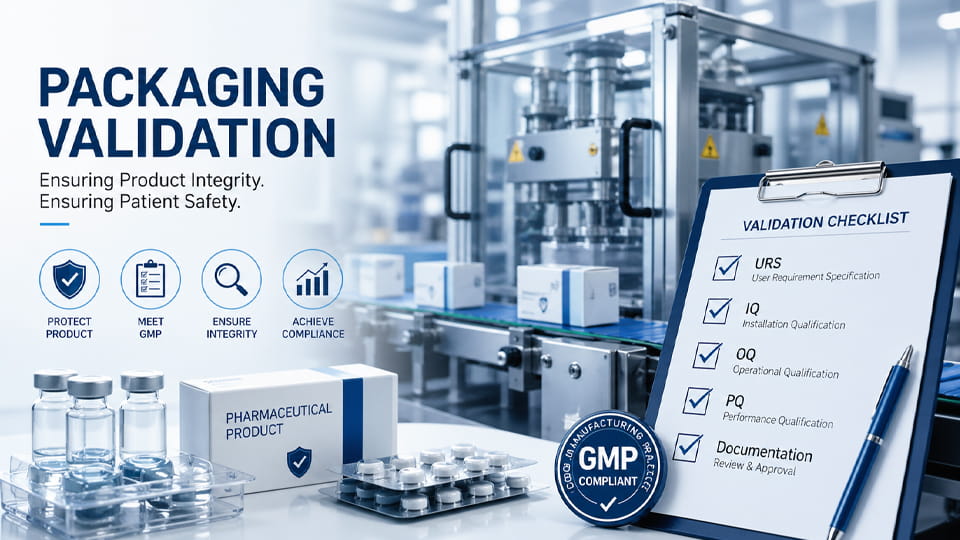
ما هو التحقق من صحة التعبئة والتغليف في صناعة الأدوية? دليل كامل لمصنعي الأدوية
ما هو التحقق من صحة التعبئة والتغليف في صناعة الأدوية? دليل كامل لمصنعي الأدوية
أبريل 29, 2026
لا تعليقات
في صناعة الأدوية, التحقق من صحة التعبئة والتغليف هي مجموعة فرعية حرجة من التحقق من صحة العملية ركز على ضمان أن معدات وعمليات التغليف تحمي جودة المنتج الدوائي باستمرار. أنه ينطوي على برنامج موثق للتأهيل (تثبيت, التشغيلية, أداء) والاختبار (على سبيل المثال. سلامة إغلاق الحاوية, استقرار, ينقل) لإثبات أن أنظمة التعبئة والتغليف تعمل على النحو المنشود بموجب شروط GMP. إن التحقق الفعال من التغليف يضمن سلامة المرضى (عن طريق منع التلوث, التدهور أو الخلط) ويضمن الامتثال التنظيمي (ادارة الاغذية والعقاقير, ema, من, أنا, ISO). يشرح هذا الدليل تعريف, خطوات, الاختبارات, المعايير, و أفضل الممارسات للتحقق من صحة التعبئة والتغليف الصيدلانية, ويبين كيف المعدات الآلية (يحب آلات التعبئة جينلو) تم تصميمه لتلبية هذه المتطلبات الصارمة.
تعريف التحقق من صحة التغليف
التحقق من صحة التعبئة والتغليف في وسائل فارما مما يدل على الأدلة الموثقة أن عملية التعبئة والتغليف (المعدات والمواد) تنتج بشكل موثوق حزمة تحمي المنتج الدوائي. في الممارسة العملية, فهو يطبق نفس مفاهيم التحقق الصارمة المستخدمة في التصنيع (الأشعة تحت الحمراء/WH/PQ) ل أساسي, ثانوي, والتعبئة والتغليف الثالث العمليات. وفقًا لتوجيهات منظمة الصحة العالمية GMP, "تحتاج عمليات ومعدات التعبئة والتغليف إلى التحقق/التأهيل بنفس الطريقة مثل أي جزء آخر من المعالجة داخل المنشأة الصيدلانية.". بعبارة أخرى, التحقق من صحة التعبئة والتغليف يضمن نظام إغلاق الحاويات, وضع العلامات, وخطوط التعبئة والتغليف تلبية مواصفات الجودة والمتطلبات التنظيمية باستمرار. الهدف هو الحفاظ على قوة الدواء, النقاء والاستقرار من خلال التعبئة والتغليف, التوزيع ومدة الصلاحية, مع منع الخلط, مزيفة, أو الضرر.
تتضمن التسليمات النموذجية في التحقق من صحة التغليف أ مواصفات متطلبات المستخدم (URS) (التصميم & معايير الجودة), بروتوكولات التثبيت/التشغيل/تأهيل الأداء, وسجلات الاختبار. تغطي عملية التحقق:
التعبئة الأولية (الحاوية أو الحاجز الذي يتصل مباشرة بالدواء, على سبيل المثال. قوارير, تجاويف نفطة, أكياس)
التغليف الثانوي (على سبيل المثال. كرتون, التسميات, إدراج, التسلسل الذي يجمع الحزم الأساسية)
يجب على كل مستوى حماية المنتج. على سبيل المثال, يحدد TGA الأسترالي "التغليف الأولي" (الحاوية التي تغطي البضائع على الفور) ويميز التغليف الثانوي كالصندوق الخارجي أو المجمع. أخيرًا, يرتبط التحقق من صحة التغليف بـ GMP - مما يضمن ذلك الحاويات والإغلاقات لا تغير الدواء و "توفير الحماية الكافية ضد العوامل الخارجية" أثناء التخزين والاستخدام.
لماذا يعد التحقق من صحة التغليف أمرًا بالغ الأهمية في مجال الأدوية
التعبئة والتغليف الدوائي هو الدفاع النهائي عن جودة الدواء. يعد التحقق من صحة عمليات التغليف أمرًا حيويًا لأنه:
يضمن سلامة المنتج وسلامته: التعبئة والتغليف التي تم التحقق منها بشكل صحيح تمنع التلوث, دخول الرطوبة, أو التعرض للأكسجين الذي يمكن أن يؤدي إلى تحلل المكونات النشطة. على سبيل المثال, يمكن أن تسمح التسريبات أو فشل الختم بدخول الميكروبات أو الغازات, إفساد العقم أو الفاعلية.
الامتثال التنظيمي: الوكالات (ادارة الاغذية والعقاقير, إيما/أنا, من) تتطلب التعبئة والتغليف التحقق من صحتها. نحن. ادارة الاغذية والعقاقير 21 CFR 211.94 يحظر عمليات الإغلاق التي تغير جودة الدواء وتفرض عمليات الإغلاق "توفير الحماية الكافية ضد العوامل الخارجية المتوقعة". ملحق برنامج الرصد العالمي للاتحاد الأوروبي 1 يصر بالمثل على ذلك "يجب إغلاق الحاويات بطرق معتمدة بشكل مناسب" (مع 100% اختبار السلامة للمنتجات مغلقة الانصهار). تنص منظمة الصحة العالمية صراحة على أن أنظمة التعبئة والتغليف يجب أن تكون مؤهلة مثل أي عملية GMP أخرى. عدم الامتثال يمكن أن يعني يتذكر, رفض الاستيراد أو الاستشهادات التدقيق.
يمتد العمر الافتراضي: تساعد مواد التعبئة والتغليف والأختام التي تم التحقق من صحتها في ظل ظروف الاستقرار في تحديد مطالبات دقيقة بمدة الصلاحية. حتى أن إرشادات ICH Q1A تحدد إجراء دراسات الاستقرار في "نظام إغلاق الحاويات" المقترحة للمنتج. إذا فشلت التعبئة والتغليف, بيانات الاستقرار غير صالحة.
التسلسل ومكافحة التزييف: غالبًا ما تشتمل عبوات الأدوية الحديثة على التسلسل, الأختام الواضحة, وميزات مكافحة التزييف. التحقق من صحة هذه الميزات (على سبيل المثال. إمكانية مسح الباركود, سلامة الأشرطة العبث) يساعد على تأمين سلسلة التوريد. يمكن أن يؤدي وجود خطأ في وضع العلامات أو التسلسل إلى منع إصدار المنتج.
الجودة وفعالية التكلفة: خطوط فعالة تم التحقق من صحتها تقلل من العيوب (يخطئ, أخطاء التسمية, كرتونة مطحونة) والخردة. عمليات التفتيش الآلي (أنظمة الرؤية لفحص الختم/الملصق) غالبًا ما تكون جزءًا من الضوابط التي تم التحقق من صحتها. إجمالي, تعمل عمليات التغليف المعتمدة على تقليل المخاطر على المريض وتضمن الإمداد المستمر بالفعالية, أدوية أصلية.
المحركات الرئيسية للتحقق من الصحة
سلامة المرضى: التعبئة والتغليف غير السليم يمكن أن يضر المرضى (على سبيل المثال. الحقن الملوثة). التحقق من صحة توثيق حاجز الأمان.
تخفيف المخاطر التنظيمية: تمثل العمليات التي لم يتم التحقق من صحتها خطرًا كبيرًا للاستدعاء أو فرض العقوبات. يتوقع المنظمون بيانات التأهيل لكل خط إنتاج.
التوزيع العالمي: تلبية المعايير الدولية (ادارة الاغذية والعقاقير / الوكالة الأوروبية للأدوية / منظمة الصحة العالمية) يتطلب التغليف المعتمد عبر الأسواق.
استمرارية الأعمال: فشل التعبئة والتغليف في توزيع النفايات المنتج والوقت. يضمن التحقق من الصحة ”الحق لأول مرة“ العملية تحت GMP.
جاهزية التدقيق: ستقوم عمليات التدقيق التي تجريها سلطات الجودة أو الجهات التنظيمية للعملاء بمراجعة سجلات التحقق من صحة التغليف ومؤهلات المعدات كجزء من عمليات التفتيش على ممارسات التصنيع الجيدة.
نطاق التحقق من صحة العبوات الدوائية
يتناول التحقق من صحة التغليف جميع مراحل التغليف. عادة, نحن نميز:
التحقق من صحة العبوة الأولية: يركز على إغلاق الحاوية (قوارير, أمبولات, تجاويف نفطة, زجاجات). تشمل الاختبارات سلامة الختم, التوافق المادي (المواد المستخرجة/القابلة للترشيح) وأداء إغلاق الحاويات. للمنتجات المعقمة, اختبارات سلامة إغلاق الحاويات (CCIT) إلزامية لضمان صيانة العقم.
التحقق من صحة التغليف الثانوي: يغطي العبوة الخارجية الفورية (كرتون, التسميات, منشورات, المجففات). يتضمن ذلك التحقق من وضوح/دقة الملصق, اختبارات سقوط الكرتون, واختبارات ضغط الصندوق (للنقل). يضمن التحقق من الملصق تطبيق معلومات المريض الصحيحة بشكل متسق.
التحقق من صحة التغليف الثلاثي: يشمل التعبئة والتغليف السائبة/النقل. هنا, اختبارات الأداء مثل الاهتزاز, يسقط, والدراجات الحرارية (سلسلة باردة) محاكاة ضغوط الشحن للتحقق من أن المنصات وكرتون الشحن تحافظ على سلامة المنتج ووضع العلامات عليه أثناء التوزيع. البروتوكولات القياسية مثل ASTM D4169 (محاكاة النقل) غالبا ما تستخدم.
يتطلب كل مستوى تقييم المخاطر والاختبار المناسب: على سبيل المثال, أساسي قد تتضمن التعبئة والتغليف USP <1207>-اختبارات سلامة الأسلوب, بينما ثانوي قد تتضمن اختبارات التغليف قوة الكرتون والتصاق الملصق, و التعليم العالي تستخدم العبوة بروتوكولات اختبار ISTA/ASTM. ويجب توثيق كل ذلك في خطة التحقق من الصحة.
الخطوات الأساسية في عملية التحقق من صحة التغليف
يتبع التحقق من صحة العبوة عادةً دورة حياة تأهيل المعدات/العملية, غالبا ما توصف بأنها دق/مق/أوك/PQ. تضمن هذه المراحل أن خط التعبئة الجديد أو المعدل يلبي المتطلبات في كل مرحلة.
مؤهل التصميم (دي كيو): المرحلة المبكرة حيث يتم تقييم التصميم مقابل URS (مواصفات متطلبات المستخدم) والمبادئ التوجيهية GMP. جميع جوانب التصميم (وظائف الآلة, مواد, قابلية التنظيف, التوافق مع المنتج / مواد التعبئة والتغليف) تتم مراجعتها. تتضمن المستندات URS ومواصفات التصميم (مواصفات التصميم الوظيفي FDS, مواصفات تصميم الأجهزة/البرمجيات). في كثير من الأحيان تقييم المخاطر (على سبيل المثال. سوق دبي المالي العالمي) ويتم ذلك لتوقع أوضاع فشل التغليف.
مؤهلات التثبيت (معدل الذكاء): التحقق من تثبيت الجهاز/الخط بشكل صحيح وفقًا لمواصفات البائع. يتضمن IQ قائمة مرجعية للتحقق من الموقع الصحيح, المرافق (قوة, هواء, ماء), الظروف البيئية, والتجمع السليم. جميع المكونات موجودة وغير تالفة. يتم فحص معايرة أجهزة القياس. التسليمات: بروتوكولات الذكاء والتقرير, شهادات المعايرة.
التأهيل التشغيلي (أوكيو): التحقق من أن الجهاز يعمل على النحو المنشود في ظل جميع الظروف المحددة. المعلمات الحرجة (نطاقات السرعة, درجات الحرارة, الضغوط, مستويات الفراغ, عزم الدوران, إلخ.) يتم تحديها في إعدادات الحد الأدنى/الحد الأقصى أو أسوأ الحالات. قد تتضمن الاختبارات في OQ الختم عند السرعات القصوى, وظائف الاستشعار/التنبيه, تتغير سرعة الناقل, دقة التسمية, دقة مضخة الملء. يسجل بروتوكول OQ أن كل اختبار وظيفي يلبي معايير القبول.
تأهيل الأداء (PQ): يوضح ذلك في ظل ظروف الإنتاج العادية, ينتج الخط باستمرار مواصفات جودة المنتج. يتم إجراء PQ على كميات/دفعات الإنتاج الفعلية. ويتضمن تشغيل الخط لفترة زمنية أو كمية محددة وأخذ عينات من المخرجات. أنشطة نموذجية: تشغيل كرتون نفطة متعددة, زجاجات أو أكياس وإجراء اختبارات مراقبة الجودة على العينات (على سبيل المثال, سلامة إغلاق الحاوية (CCIT), فحص الوزن, فحص العيوب البصرية, قوة الختم). يوضح PQ أن الخط يمكن أن يعمل بشكل مستمر مع الحفاظ على جودة المنتج.
يلخص الجدول أدناه مراحل DQ-IQ-OQ-PQ:
منصة
غاية
المستندات الرئيسية
أمثلة للأنشطة/الاختبارات
مؤهل التصميم (دي كيو)
تحقق من أن تصميم نظام التغليف يتوافق مع URS/GMP
URS (مواصفات المتطلبات), مواصفات التصميم (قوات الدفاع والأمن/HDS/SDS), تقييم المخاطر
مراجعة التصميم, اختبارات توافق المواد, سوق دبي المالي العالمي
مؤهلات التثبيت (معدل الذكاء)
تأكيد التثبيت الصحيح للمعدات
بروتوكول/قائمة مراجعة الذكاء, سجل التثبيت, شهادات المعايرة
التحقق من المرافق, تجميع المعدات, معايرة
التأهيل التشغيلي (أوكيو)
التحقق من وظائف المعدات ضمن الحدود المحددة
بروتوكول أوك, خطط الاختبار الوظيفي, SOPS
معلمات الاختبار (سرعة, درجة حرارة, ضغط); الشيكات الختم
تأهيل الأداء (PQ)
ضمان الجودة المتسقة أثناء عمليات الإنتاج
بروتوكول PQ, سجلات دفعة, معايير الافراج
يعمل الإنتاج; اختبار العينة (CCIT, ملء الوزن, التفتيش البصري)
كما يظهر الرسم البياني, التحقق من صحة التغليف هو عملية دورة حياة بدءًا من التصميم وحتى الأداء. لاحظ أن إعادة التأهيل قد تكون هناك حاجة بعد تغييرات كبيرة أو بشكل دوري.
الاختبارات الرئيسية في التحقق من صحة التغليف
يتم إجراء العديد من الاختبارات المتخصصة بشكل شائع أثناء التحقق من صحة العبوة:
اختبار سلامة إغلاق الحاويات (CCIT)
يعد CCIT ضروريًا للمنتجات المعقمة وحتى غير المعقمة. ويقيم ما إذا كان نظام إغلاق الحاويات (على سبيل المثال. قارورة + سدادة + غطاء, أمبولة, ختم نفطة) يشكل حاجزا مثاليا. وتشمل الطرق الاضمحلال الفراغي, اضمحلال الضغط, دخول الصبغة, أو التحدي الميكروبي. كما يوضح أحد مصادر الصناعة, “اختبار سلامة إغلاق الحاويات (CCIT) هو اختبار يقيم مدى كفاية أنظمة إغلاق الحاويات للحفاظ على حاجز معقم ضد الملوثات المحتملة.. الوثائق التنظيمية (جامعة جنوب المحيط الهادئ <1207>, ادارة الاغذية والعقاقير, ملحق EMA 1) التأكيد على سلامة إغلاق الاختبار لضمان عدم وجود تسرب أو خروقات. على سبيل المثال, جامعة جنوب المحيط الهادئ <1207> يوفر إرشادات حول اختيار طرق اختبار التسرب للتصديق على العبوات المختومة.
اختبار توافق المواد (المواد القابلة للاستخراج/القابلة للترشيح)
مواد التعبئة والتغليف (البلاستيك, المطاط, الأحبار, مواد لاصقة) يجب ألا يتفاعل سلبًا مع المنتج الدوائي. المواد القابلة للاستخراج والترشيح دراسات تحاكي الاتصال طويل الأمد: المواد القابلة للاستخراج هي مواد كيميائية يتم إخراجها من عبواتها في ظل ظروف قاسية, والمواد القابلة للترشيح هي تلك التي تنتقل فعليًا إلى المنتج في ظل الظروف العادية. تضمن هذه الاختبارات أن العبوة لا تحتوي على شوائب سامة أو تؤثر على الاستقرار. دستور الأدوية وإرشادات إدارة الغذاء والدواء (على سبيل المثال. جامعة جنوب المحيط الهادئ <661>, Q3E) الخطوط العريضة لاختبار E/L لأنظمة إغلاق الحاويات. في الممارسة العملية, واحد يتحقق من أن البوليمر, الطلاءات, ومواد التسمية تلبي معايير دستور الأدوية (على سبيل المثال. نوع الزجاج USP, مواصفات الإغلاق المطاطي ISO). تلاحظ منظمة الصحة العالمية أن معايير دستور الأدوية لعمليات الإغلاق (مثل السدادات المطاطية) نكون "الحد الأدنى من المتطلبات" ويؤكد دراسات الاستقرار لإثبات الملاءمة.
اختبار الاستقرار في التعبئة والتغليف
وفقًا لـ ICH Q1A, دراسات الاستقرار يجب أن يتم ذلك على المنتج الدوائي في تكوينه النهائي للتغليف. أثناء التحقق من الصحة, يتم تقييم تأثير التغليف على الاستقرار: على سبيل المثال, تخضع العبوة النهائية للشيخوخة المتسارعة (ارتفاع درجة الحرارة/الرطوبة) والظروف في الوقت الحقيقي لضمان عدم التدهور (على سبيل المثال. دخول الرطوبة في عبوات نفطة, نفاذ الأكسجين في الزجاجات). فحوصات تشير إلى الاستقرار (الكيميائية والميكروبية) يتم تنفيذها. التغليف الذي يفشل في حماية المنتج تحت الضغط يبطل ادعاءات العمر الافتراضي. هكذا, يتضمن التحقق التأكد من أن العبوة المختارة تلبي متطلبات العمر الافتراضي (وهذا يتداخل مع بروتوكولات الاستقرار التنظيمي).
اختبار النقل والتوزيع
التعبئة والتغليف الثلاثي اختبارات تحاكي ظروف الشحن الفعلية. تشمل الاختبارات القياسية اختبارات ارتفاع السقوط, اهتزاز (محاكاة الشاحنات/السكك الحديدية), ضغط (التراص الوزن), ودورة درجة الحرارة (خاصة بالنسبة لسلسلة التبريد). على سبيل المثال, أستم D4169 (للمنتجات المعبأة) أو يمكن استخدام بروتوكولات ISTA. تتحقق خطة التحقق من صحة التغليف القوية من أن الكراتين, تحمي الصناديق والصناديق الطرود الأولية أثناء المناولة: التحقق من عدم وجود الكسر, تقشير التسمية, أو يحدث تلف بسبب الرطوبة في ظل ظروف التوزيع. لسلسلة التبريد, يتم اختبار رسم خرائط درجات الحرارة وأجهزة الشحن المعزولة المعتمدة للحفاظ على نطاقات درجات الحرارة المطلوبة طوال فترة النقل.
المعايير التنظيمية والمبادئ التوجيهية
يجب أن يفي التحقق من صحة عبوات الأدوية بالتوقعات التنظيمية المتعددة:
لوائح cGMP: في الولايات المتحدة, ادارة الاغذية والعقاقير 21 جزء CFR 211 (الجزء الفرعي J) يحكم الحاويات والإغلاقات. قسم 211.94(إعلان) يحدد أن الحاويات/الإغلاقات لا يمكن أن تغير جودة الدواء ويجب أن تحمي من التلوث المتوقع.
برنامج الرصد العالمي للاتحاد الأوروبي: المبادئ التوجيهية الأوروبية (يودراليكس المجلد. 4) تتطلب ذلك "يجب إغلاق الحاويات بطرق معتمدة بشكل مناسب" (الملحق 1) وأن عمليات التعبئة والتغليف تتبع ممارسات التصنيع الجيدة (GMP). (الملحق 15 على التحقق من الصحة). ملحق برنامج الرصد العالمي للاتحاد الأوروبي 11 يتطلب التحقق من صحة النظام المحوسب (بما في ذلك خطوط التعبئة والتغليف مع الضوابط الإلكترونية).
منظمة الصحة العالمية GMP: سلسلة التقارير الفنية لمنظمة الصحة العالمية 902 (الملحق 9) تنص صراحة على أن معدات التعبئة والتغليف تحتاج إلى التحقق من الصحة مثل أي خطوة معالجة أخرى. توفر منظمة الصحة العالمية أيضًا إرشادات بشأن سلامة العبوة (على غرار الاتحاد الأوروبي/ICH).
المبادئ التوجيهية للتراث الثقافي غير المادي: على الرغم من التراث الثقافي غير المادي (س7, Q8, س9, س10) ليس لديك مستند محدد للتحقق من صحة التغليف, يفرضون إدارة المخاطر (س9) والجودة حسب التصميم (س8/س10) المبادئ التي تنطبق. على سبيل المثال, تقييم المخاطر (أنا س9) يجب أن تغطي سمات التعبئة والتغليف (نوع الإغلاق, التحكم في التسمية) التي تؤثر على CQAs المنتج.
المعايير: للمنتجات المعقمة, ISO 11607 (لتغليف الأجهزة الطبية المعقمة) غالبا ما يستخدم عن طريق القياس; جزء 2 من ISO 11607 يحدد متطلبات التحقق من صحة عمليات التشكيل/الختم, وهو أمر ذو صلة بحزم أو أمبولات الأدوية الوريدية. دستور الأدوية (جامعة جنوب المحيط الهادئ, دكتوراه. يورو.) تحتوي أيضًا على فصول اختبار التغليف (على سبيل المثال. جامعة جنوب المحيط الهادئ <381> للإغلاق المطاطي, <1207> لاختبار التسرب).
في ملخص, يجب أن يتوافق أي خط تعبئة مع دستور الأدوية الوطني ومعايير ممارسات التصنيع الجيدة الإقليمية. تستشهد قوائم التحقق من الامتثال عادةً بإدارة الغذاء والدواء (FDA)., برنامج الرصد العالمي للاتحاد الأوروبي, منظمة الصحة العالمية ومعايير ISO ذات الصلة, وغالبًا ما تتطلب إجراءات التشغيل القياسية الموثقة بالكامل والخطط الرئيسية للتحقق من الصحة التي تغطي التغليف.
التحديات الشائعة في التحقق من صحة التغليف
يشكل التحقق من صحة التغليف تحديات فريدة مقارنة بعمليات التصنيع:
نوع البيانات وأخذ العينات: غالبًا ما يتم تحديد نجاح خط التعبئة والتغليف من خلال نتائج منفصلة (على سبيل المثال. تمرير/فشل للختم, يٌقطِّع) بدلا من القياسات المستمرة. كما يلاحظ أحد الخبراء, "إن نوع البيانات التي يتم الحصول عليها... يشكل تحديًا كبيرًا. غالبًا ما يتم تحديد النجاح أو الفشل من خلال العيوب (دموع, الثقوب, اللطخات, أو تسرب الأختام)… وهذا النقص قابل للقياس (عامل) غالبًا ما تتطلب البيانات أحجامًا كبيرة جدًا من العينات حتى يتم التحقق من صحة عملية التغليف إحصائيًا.. بعبارة أخرى, قد تحتاج إلى العديد من العينات لإثبات الموثوقية.
تنوع التكنولوجيا: هناك العديد من تقنيات التعبئة والتغليف (بثور, عمال التعبئة والتغليف, ملصقات, حزم القضية, إلخ.) من موردين مختلفين. ولكل منها ملفات تعريف مخاطر مختلفة, مما يجعل خطة التحقق ذات الحجم الواحد مستحيلة.
تغيير التحكم: غالبًا ما تقوم خطوط التعبئة والتغليف بتشغيل العديد من أنواع المنتجات (أقراص, السوائل, مساحيق) وأحجام العبوات على نفس المعدات (باستخدام تغيير الأجزاء أو التنسيقات). قد يتطلب كل تغيير إعادة التحقق أو وضع أقواس في خطة التحقق. إدارة هذا (ال مصفوفة التحقق من الصحة) يمكن أن تكون معقدة.
الضوابط البيئية: بعض التغليف (على سبيل المثال. التعبئة والتغليف نفطة من الأدوية الحساسة للرطوبة) يتطلب رطوبة خاضعة للرقابة أو جو خامل. التحقق من صحة عناصر التحكم هذه يزيد من التعقيد.
التكامل مع عملية المنبع: يعتمد التحقق من صحة التغليف على الاتساق الأولي. إذا كانت حبيبات الدواء تختلف في الحجم, قد يتأثر تغيير آلة التعبئة والتغليف (على سبيل المثال. ملء المربى). يمكن أن يؤدي هذا الاعتماد المتبادل إلى تعقيد تحليل السبب الجذري لفشل التغليف.
التسلسل/التتبع: اللوائح الحديثة (على سبيل المثال. DSCSA, مرض الحمى القلاعية في الاتحاد الأوروبي) تتطلب التسلسل والتتبع. التأكد من أن الخطوط الآلية تتبع كل وحدة بشكل صحيح (والتحقق من صحة التقاط البيانات) يضيف طبقة إضافية من التأهيل (التحقق من صحة البرمجيات, اختبارات ماسح الباركود, فحوصات قاعدة البيانات).
الغموض التنظيمي: ومن المفارقة, هناك إرشادات محدودة صريحة من إدارة الغذاء والدواء الأمريكية/وكالة الأدوية الأوروبية بشأن "التحقق من صحة العبوة".,"لذلك يجب على الشركات في كثير من الأحيان تفسير المبادئ التوجيهية العامة لـ GMP والتحقق من صحة العملية للتغليف. يمكن أن يسبب هذا عدم اليقين بشأن النطاق الدقيق أو الاختبارات المطلوبة.
ورغم هذه التحديات, يبقى المبدأ الأساسي: التعامل مع التعبئة والتغليف مثل أي عملية حاسمة أخرى, مع التأهيل الشامل وفحوصات مراقبة الجودة القوية. كما خلصت ورقة ISPE, التحقق من صحة التعبئة والتغليف "تختلف(ق) القليل من التحقق من صحة العمليات المستخدمة لتصنيع الأدوية..
أفضل الممارسات للتحقق من صحة العبوات الدوائية
للتغلب على التحديات وضمان التحقق الناجح, اتبع أفضل الممارسات هذه:
التقييم المبكر للمخاطر: استخدام إدارة مخاطر الجودة (أنا س9) من مرحلة التصميم. تحديد سمات التعبئة والتغليف الهامة (على سبيل المثال. العقم, أدلة التلاعب, حماية الضوء) وتحديد أولويات الاختبارات وفقا لذلك. وضع الفشل & تحليل التأثيرات (فميا) يوصى به أثناء DQ لتخطيط نطاق التحقق.
متطلبات المستخدم (URS): قم بتوثيق جميع المتطلبات بوضوح مقدمًا: القدرة الإنتاجية, تنسيقات الحزمة, نقاط التكامل (على سبيل المثال. ربط آلة الفقاعة بآلة تعبئة الكرتون), الظروف البيئية, متطلبات التنظيف. يحافظ URS المحدد جيدًا على عملية التحقق من الصحة على المسار الصحيح.
إجراءات التشغيل القياسية (SOPS): الحفاظ على إجراءات التشغيل القياسية التفصيلية لتشغيل المعدات, تنظيف, التحول, والصيانة. يجب أن يشير التحقق من الصحة إلى إجراءات التشغيل القياسية هذه لضمان الاستخدام المتسق.
التفتيش الآلي والضوابط: دمج اختبارات الجودة في الخط (على سبيل المثال. أنظمة الرؤية لفحص الطباعة/الملصقات, أجهزة تدقيق الوزن, ماسحات الباركود, أجهزة كشف التسرب). هذه ليست مجرد أدوات لضمان الجودة ولكنها أيضًا جزء من التحقق من الصحة من خلال اكتشاف العيوب في الوقت الفعلي.
توثيق شامل: قم بإعداد خطة رئيسية للتحقق من الصحة تحدد الاستراتيجية, والتأكد من جميع بروتوكولات التأهيل (الأشعة تحت الحمراء/WH/PQ) لديها معايير قبول واضحة. الاحتفاظ بسجلات مفصلة لجميع أشواط, الانحرافات, ويعيد الاختبارات. استخدم قوائم المراجعة للتأكد من عدم إغفال أي شيء.
التدريب والموظفين: يجب تدريب المشغلين وموظفي مراقبة الجودة على كل من المعدات وإجراءات التحقق من الصحة. يجب على الموظفين المؤهلين فقط إجراء اختبارات التحقق وتسجيل النتائج.
البرمجيات والسجلات الإلكترونية: للضوابط المحوسبة, اتبع ادارة الاغذية والعقاقير 21 CFR الجزء 11/ملحق GMP 11: التحقق من صحة البرمجيات, مسارات التدقيق, التوقيعات الإلكترونية (ضمان الأمن, النسخ الاحتياطية). حتى خطوط التغليف غير المعقمة غالبًا ما تحتوي على أجهزة التحكم المنطقية القابلة للبرمجة/أجهزة HMI التي تحتاج إلى التحقق من الصحة.
تصميم للتحقق من الصحة: كلما كان ذلك ممكنا, اختر الأجهزة ذات الميزات التي تعمل على تبسيط التحقق من الصحة: على سبيل المثال. محركات مؤازرة مزودة بعناصر تحكم رقمية (لدقيقة, المعلمات القابلة للتكرار), إطارات صحية من الفولاذ المقاوم للصدأ (لسهولة التنظيف), أجزاء سهلة التغيير (لتقليل جهد التنظيف بين التنسيقات), والتصميم المعياري (للحد من عدد التكوينات التي تتطلب الاختبار).
التحقق المستمر: التحقق من صحة العبوة لا يتم "مرة واحدة ويتم". تنفيذ المراجعة الدورية أو مشغلات إعادة التحقق (على سبيل المثال. بعد الصيانة الكبرى, ترقيات المعدات, أو انحراف كبير في العملية). استخدام التحكم في العمليات الإحصائية (توافق آراء ساو باولو) على المقاييس الرئيسية (ملء اختلاف الوزن, معدل العيب) للقبض على الاتجاهات في وقت مبكر.
سلامة البيانات: تطبيق مبادئ ALCOA+: كافة بيانات التحقق (سجلات الاختبار, تقارير مراقبة الجودة, المعايرة) يجب أن يعزى, مقروء, معاصر, إبداعي, ودقيقة. استخدم دفاتر الملاحظات المقيدة أو الأنظمة الإلكترونية المعتمدة.
من خلال دمج التفكير في التحقق من الصحة في كل مرحلة - بدءًا من التصميم وحتى التشغيل اليومي - يمكن للمصنعين التأكد من أن خطوط التعبئة والتغليف تقدم منتجات تلبي توقعات الجودة والامتثال.
دور آلات التعبئة والتغليف في التحقق من الصحة
يؤثر اختيار وتصميم معدات التعبئة والتغليف بشكل كبير على نجاح التحقق من الصحة. تم تصميم آلات التعبئة والتغليف عالية الجودة لتلبية متطلبات GMP ودعم التأهيل السهل. على سبيل المثال, Jinlu Packing تم تصميم الأجهزة الآلية بميزات تعمل على تبسيط التحقق من الصحة:
الدقة والاتساق: جينلو آلات نفطة, تستخدم ماكينات التعبئة والتغليف والحشو محركات مؤازرة وميكانيكا دقيقة لضمان ضغط ثابت للغلق الحراري, ملء مجلدات, والفهرسة. يعد هذا التكرار أمرًا بالغ الأهمية لاجتياز اختبارات OQ وPQ (على سبيل المثال. يوفر جهاز التغذية الذي يحركه المؤازرة "تحديد المواقع بدقة" على خط نفطة بهم).
تصميم صحي: المواد والأسطح مصنوعة من الفولاذ المقاوم للصدأ أو البلاستيك المتوافق مع إدارة الغذاء والدواء, مصممة لسهولة التنظيف. سلس, الأسطح المنحدرة تمنع مصائد الغبار. وهذا يدعم الامتثال لممارسات التصنيع الجيدة (GMP) ويبسط التحقق من صحة التنظيف.
القدرة على التكيف مع التنسيقات: تقدم Jinlu مغذيات مخصصة وقضبان توجيه لأنواع العبوات المختلفة (يرى مغذيات مخصصة على صفحات المنتج). يؤدي استخدام الأدوات المناسبة إلى تقليل التباين وتسريع عملية تغيير التنسيق, مما يقلل من احتياجات إعادة التأهيل عند تبديل التنسيقات.
الضوابط المتكاملة: تحتوي خطوط Jinlu الحديثة على عناصر تحكم PLC/HMI يمكنها إنشاء سجلات الدفعات الإلكترونية. على سبيل المثال, آلة تعبئة السوائل لديها الذكاء الاصطناعي سيمنز PLC/HMI للبساطة, عملية يمكن تتبعها. تدعم عناصر التحكم الرقمية هذه تسجيل البيانات (تماشيا مع 21 CFR الجزء 11/الملحق 11) - ضروري للتحقق من أن نقاط الضبط والإنذارات تعمل على النحو المصمم.
وثائق التحقق من الصحة: توفر Jinlu الوثائق الكاملة (أوراق البيانات, كتيبات, إلخ.). على سبيل المثال, قائمة صفحات منتجاتهم "مجموعة كاملة من الوثائق الفنية" ويؤكدون على توفير التصميم التفصيلي ووثائق الاختبار. مورد يرغب في تقديم اختبار قبول المصنع (سمين) تعمل البروتوكولات أو مجموعات IOQ على تخفيف عبء التحقق من صحة المستخدم بشكل كبير.
شهادات الجودة: آلات حمل Jinlu CE, cGMP وشهادات أخرى, مما يشير إلى أنها تستوفي معايير معينة للجودة والسلامة (راجع شعار cGMP الموجود على صور مواصفات المنتج). يمكن أن يؤدي استخدام المعدات المعتمدة إلى تبسيط المراجعة التنظيمية.
في الممارسة العملية, قد يتضمن خط التعبئة المعتمد: جينلو آلة تعبئة الفقاعة مرتبطة ب آلة التغليف بالكرتون و خطوط العد/التعبئة. يجب أن تكون كل المعدات مؤهلة (الأشعة تحت الحمراء/WH/PQ). تم تصميم أنظمة Jinlu للعمل معًا بسلاسة (على سبيل المثال. "خط التغليف الكرتوني الفقاعي الآلي للغاية" حتى 320 كرتون / دقيقة), الحد من مشاكل التكامل أثناء التحقق من الصحة. كما نقدم دراسات الحالة (على سبيل المثال. كاملة خط العد والزجاجة, أو التغليف الكرتوني التلقائي & خط وضع العلامات) التي توضح الحلول الشاملة التي تم التحقق من صحتها.
آلة التعبئة DPH-270MAX Roller Blister
من خلال الشراكة مع Jinlu أو الشركات المصنعة المماثلة, تستفيد الشركات من المعدات التي "متوافق مع cGMP", يدعم دورة حياة التحقق الكاملة, ويأتي مع دعم ما بعد البيع (التكليف, تمرين) لضمان بقاء الخط معتمدًا.
خاتمة
التحقق من صحة التعبئة والتغليف أمر ضروري للجودة الصيدلانية والامتثال. من خلال التعامل مع عمليات التعبئة والتغليف بدقة مثل خطوات التصنيع الأساسية, تضمن الشركات وصول منتجاتها إلى المرضى بأمان. تمتد العملية إلى التعريف (URS, تقييم المخاطر), مؤهل (دق/مق/أوك/PQ), الاختبار (CCIT, استقرار, ينقل), والمراقبة المستمرة. ويخضع للوائح GMP (ادارة الاغذية والعقاقير, ema, من) ومعايير الصناعة.
تلعب معدات التغليف الآلية الحديثة – مثل آلات Jinlu Packing – دورًا رئيسيًا في التحقق من الصحة. مصممة للدقة, النظافة والتتبع الإلكتروني, فهي تساعد الشركات المصنعة على تلبية معايير التحقق بكفاءة. عند اختيار خطوط التعبئة والتغليف, خذ بعين الاعتبار الموردين الذين يقدمون وثائق ودعم كاملين للتحقق من الصحة.
أخيرًا, التحقق الشامل من التعبئة والتغليف هو "الضمان النهائي لجودة المنتج وسلامة المرضى", تتماشى مع كل من المتطلبات التنظيمية وأهداف العمل.
على استعداد للتحقق من صحة خط التعبئة والتغليف الخاص بك?اتصل بخبراء Jinlu Packing لمناقشة حلول التغليف المتوافقة مع GMP أو طلب عرض أسعار.
الأسئلة الشائعة حول التحقق من صحة التغليف في الصناعة الدوائية
ما الفرق بين التحقق من صحة العبوة والتحقق من صحة العملية?
يشير التحقق من صحة العملية عادةً إلى خطوات إنتاج المادة الدوائية أو المنتج الدوائي السائب (على سبيل المثال. خلط, تحبيب, ضغط). يطبق التحقق من صحة التغليف بشكل خاص مبادئ التحقق من الصحة على عمليات التعبئة والتغليف (ختم, وضع العلامات, تعبئة الكرتون, إلخ.). لكن, كلاهما يتبع نفس دورة حياة DQ/IQ/OQ/PQ ومتطلبات GMP. في الأساس, التحقق من صحة التعبئة والتغليف يضمن عملية التعبئة والتغليف (وليس فقط عملية التصنيع) يلبي باستمرار متطلبات الجودة.
ما هي الاختبارات المطلوبة للتحقق من صحة التعبئة والتغليف الصيدلانية?
وتشمل الاختبارات الرئيسية سلامة إغلاق الحاوية (CCIT) للتحقق من الأختام, التوافق المادي (دراسات المواد القابلة للاستخراج / المواد القابلة للترشيح), اختبارات الاستقرار (الدواء في الحزمة النهائية تحت الضغط), واختبارات التوزيع (صدمة, اهتزاز, درجة الحرارة للعبور). تغطي الفحوصات الإضافية دقة الملصق, أنظمة الفحص البصري, الوزن/تدقيق الوزن, وأي اختبارات خاصة بالعقد (على سبيل المثال. قوة الفيلم العقيمة). يجب أن يكون لجميع الاختبارات معايير قبول محددة مسبقًا وأن يتم توثيقها.
كم من الوقت يستغرق عادةً التحقق من صحة العبوة?
الجدول الزمني يعتمد على التعقيد (عدد التنسيقات, معدات, المواقع). يمكن أن يتراوح معدل الذكاء/OQ/PQ في سطر واحد من بضعة أسابيع إلى بضعة أشهر. عوامل: عدد اختبارات معلمات OQ, أحجام العينات المطلوبة في PQ, ووقت تنفيذ الاختبار (على سبيل المثال. الاستقرار في الظروف المتسارعة يستغرق أسابيع). تخطيط الأنشطة الموازية (مثل إعداد البروتوكولات أثناء وصول المعدات) يمكن أن يوفر الوقت.
ما هي الوثائق التي تحكم التحقق من صحة التعبئة والتغليف?
المراجع الأساسية هي لوائح GMP: 21 جزء CFR 211 (ادارة الاغذية والعقاقير الامريكية), يودراليكس المجلد. 4 (برنامج الرصد العالمي للاتحاد الأوروبي, الملحق 1 و 15), ومرفق برنامج الرصد العالمي التابع لمنظمة الصحة العالمية 9. يوفر ICH Q7/Q10 مبادئ التحقق العامة, يغطي ICH Q9 إدارة المخاطر لقرارات التعبئة والتغليف, و ايزو 11607-2 ينطبق على التحقق من صحة عملية العبوة المعقمة. المعايير الدوائية (جامعة جنوب المحيط الهادئ, دكتوراه. يورو.) والمبادئ التوجيهية المحلية (على سبيل المثال. NMPA الصينية, الهند جدول م) تؤثر أيضًا على متطلبات التغليف. تتماشى دائمًا مع لوائح السوق المستهدفة.
كيف تدعم Jinlu Packing التحقق من صحة التغليف?
تم تصميم آلات التعبئة والتغليف الخاصة بشركة Jinlu وفقًا لممارسات التصنيع الجيدة (GMP).. أنها توفر وثائق التصميم (URS, قوات الدفاع والأمن), شهادات المعايرة, ودعم OQ/PQ. معداتهم (آلات نفطة, عمال التعبئة والتغليف, خطوط التعبئة) يتميز بالتحكم الدقيق في المؤازرة وتصميم النظافة لتلبية مواصفات التحقق من الصحة. كما هو موضح في موقع جينلو, تحمل الآلات شعارات cGMP/CE وتأتي مع مجموعات الوثائق الفنية. تقدم Jinlu أيضًا دعم التثبيت والتحقق من الصحة, حلول مخصصة, والتدريب للمساعدة في تنفيذ خطوط التعبئة والتغليف المعتمدة. لمزيد من المعلومات, راجع صفحات آلة تعبئة الفقاعة أو آلة التغليف الكرتوني الخاصة بشركة Jinlu.
بيتي فو, مؤسس شركة Jinlupacking, يجلب 20 سنوات من الخبرة في قطاع الآلات الصيدلانية. تحت قيادته, لقد نمت Jinlu لتصبح موردًا موثوقًا به يدمج التصميم, إنتاج, والمبيعات. بيتي متحمس لمشاركة معرفته العميقة بالصناعة لمساعدة العملاء على التغلب على تعقيدات التعبئة والتغليف الدوائية, ضمان حصولهم ليس فقط على المعدات, ولكن شراكة خدمة متكاملة حقيقية مصممة خصيصًا لأهداف الإنتاج الخاصة بهم.