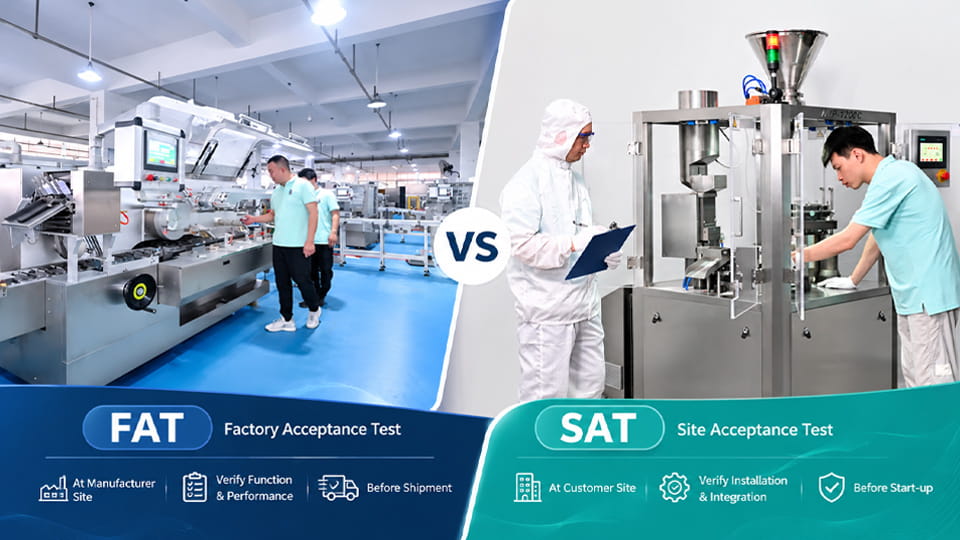
اختبار قبول المصنع (سمين) واختبار قبول الموقع (قعد) هما مرحلتان متكاملتان للتحقق من المعدات الصيدلانية. تتم عملية FAT في منشأة الشركة المصنعة للمعدات (قبل الشحن) للتأكد من أن جميع المواصفات والوظائف تلبي متطلبات العميل. يتم إجراء اختبار SAT بعد التثبيت في موقع العميل للتأكد من أن الجهاز يعمل بشكل صحيح في بيئة الإنتاج الفعلية. معاً, يساعد FAT وSAT في اكتشاف المشكلات مبكرًا (توفير الوقت والتكلفة) والتأكد الامتثال لممارسات التصنيع الجيدة. تشرح هذه المقالة FAT وSAT بالتفصيل – وتغطي ما يتحقق منه كل اختبار, الاختلافات الرئيسية, كيف تتناسب مع دورة حياة IQ/OQ/PQ, نماذج لقوائم المراجعة ل خطوط التعبئة (بثرة, كبسولة, قرص, التغليف بالكرتون), وأسئلة أفضل الممارسات للمشتري.
ما هو اختبار قبول المصنع (سمين)?
أ اختبار قبول المصنع (سمين) هو رسمي, تقييم موثق للمعدات في موقع الشركة المصنعة, يتم إجراؤها قبل شحن الوحدة إلى العميل. إنه يتحقق من أن الآلة قد تم تصنيعها وفقًا لما هو متفق عليه مواصفات متطلبات المستخدم (URS) ويعمل بشكل صحيح. خلال الدهون, البائع والعميل (أو ممثليهم) تنفيذ بروتوكول FAT معتمد لحالات الاختبار وقوائم المراجعة. وتشمل الأهداف النموذجية إظهار الامتثال للمواصفات, اكتشاف العيوب في وقت مبكر, وإعطاء المشتري الثقة بأن "المعدات جاهزة للشحن".
ما الذي يتحقق منه FAT؟?
في الدهون, وينصب التركيز على الأداء المستقل والالتزام بالتصميم. ويشمل بشكل عام:
- الشيكات البصرية والبناء: فحص التجميع الميكانيكي, محاذاة الإطار, الأسلاك, وبناء الجودة مقابل الرسومات. قم بتأكيد الأرقام التسلسلية ومعرفات الطراز.
- الاختبارات الكهربائية والتحكم: التحقق من توصيلات الطاقة, إصدارات برامج PLC/HMI, أجهزة الاستشعار والمحركات. التحقق من شاشات التحكم, وصفات, وأجهزة الإنذار تستجيب بشكل صحيح.
- اختبارات الوظائف (عدم التحميل أو التشغيل الجاف): قم بتشغيل كل وظيفة رئيسية في الجهاز (المحركات, محركات الأقراص, مغذيات, سخانات) عبر نطاقه الكامل. على سبيل المثال, سرعات الدورة عند الحد الأدنى والحد الأقصى, سخانات الاختبار / سلالم الضغط, وتشغيل التعشيقات عمدا.
- فحوصات الأداء: استخدم مواد الإنتاج التمثيلية إن أمكن. للحشوة أو آلة التعبئة والتغليف, تشغيل عينات المنتج والتحقق من الإنتاجية, دقة, التحول, وأهداف الأداء الأخرى. (يوصى بشدة باستخدام المنتجات الفعلية للعميل أثناء FAT للكشف عن المشكلات الخاصة بالمواد.)
- السلامة والانترلوك: اختبار توقف الطوارئ, ستائر خفيفة, حراس, صمامات تخفيف الضغط, إلخ., للتأكد من أن جميع أنظمة السلامة تستجيب على النحو المنشود في ظل ظروف الخطأ.
- مراجعة التوثيق: التأكد من أن كافة المستندات المطلوبة جاهزة: كتيبات التشغيل, المخططات الكهربائية والهوائية, أدلة الصيانة, قوائم قطع الغيار, شهادات المعايرة, إلخ.
- معايير القبول: يتم تقييم جميع الاختبارات وفقًا لمعايير القبول المتفق عليها مسبقًا (غالبًا ما يتم استخلاصها من URS). يتم تسجيل أي انحرافات أو نقاط مفتوحة في قائمة مثقوبة لحلها.
ينتهي FAT الناجح بتقرير FAT موقع, تفصيل الاختبارات التي تم اجتيازها وسرد أي مشكلات يجب إصلاحها قبل الشحن. في الأساس, يضمن FAT أن "النظام جاهز للشحن" من خلال التحقق من وظائفه الأساسية في ظل ظروف المصنع الخاضعة للرقابة.
متى ومن يحدث FAT؟?
يتم إجراء FAT عادةً بعد تجميع الماكينة بالكامل ولكن قبل أن تغادر أرضية الشركة المصنعة. ويتبع مؤهل التصميم (إن وجدت) ويسبق التسليم. عادة ما يشمل المشاركون الرئيسيون مهندسين وفنيين من البائعين, وممثلين عن الشركة المشترية (مهندسو ضمان الجودة/التحقق, موظفي الإنتاج). يجب أن يصل فريق المشتري مستعدًا, في كثير من الأحيان جلب URS, بروتوكولات الاختبار, وأي مواد متخصصة للتشغيل. إن FAT هي الفرصة الأخيرة للمشتري للتعرف على التناقضات الكبيرة تحت سيطرة المورد.
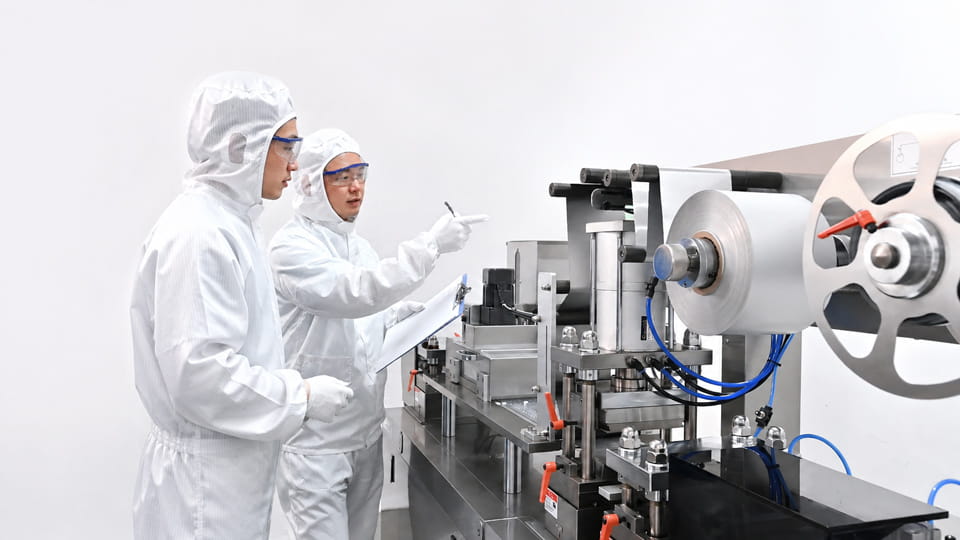
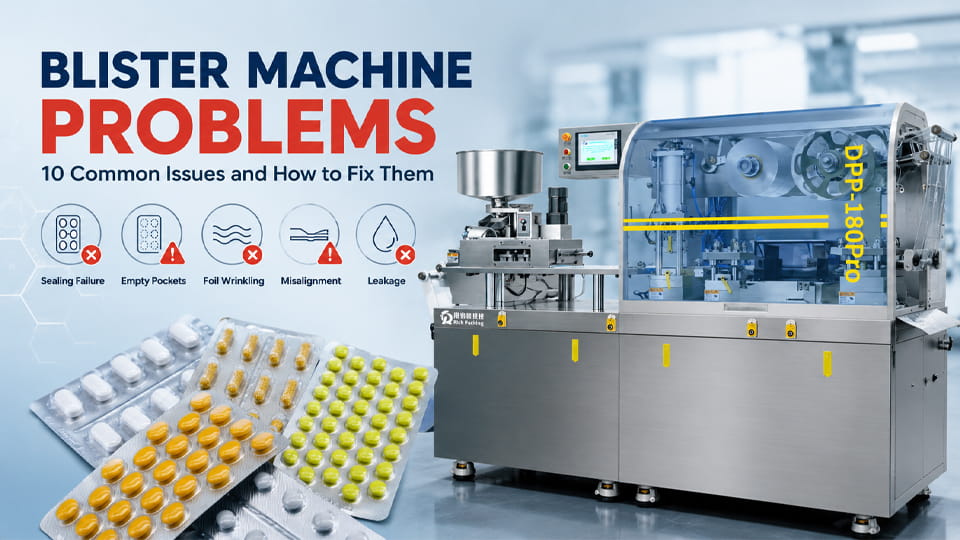
شكل: صيدلية آلة التعبئة والتغليف نفطة يخضع لاختبار القبول. في FAT صارمة, كل نظام فرعي (تشكيل, ختم, تغذية, الضوابط) يتم فحصه مقابل URS. ثم يقوم اختبار SAT اللاحق بتكرار الاختبارات الوظيفية الرئيسية بعد التثبيت في بيئة الاستخدام النهائي.
ما هو اختبار قبول الموقع (قعد)?
أ اختبار قبول الموقع (قعد) هو اختبار موثق يتم إجراؤه في منشأة العميل بعد تسليم المعدات وتركيبها ولكن قبل إطلاقها للإنتاج. يقوم SAT بإعادة التحقق من أن الجهاز يلبي المتطلبات في سياق التشغيل الفعلي الخاص به. في السبت, يتم فحص المعدات للتأكد من تركيبها بشكل صحيح, ربط المرافق, تكامل النظام, والأداء النهائي.
ما الذي يتحقق منه SAT؟?
يتضمن اختبار SAT عادةً:
- مؤهلات التثبيت (معدل الذكاء) الشيكات: تأكد من تركيب المعدات وفقًا للخطة المعتمدة. يتضمن ذلك تأكيد الموقع الصحيح, التسوية, المرافق (جهد الطاقة, الضغط الهوائي, ماء, إلخ.), التأريض, والظروف المحيطة. يجب أن تكون جميع مكونات الجهاز ووثائقه موجودة ومثبتة بشكل صحيح.
- التحقق من المنفعة: تأكد من أن مرافق الموقع تلبي متطلبات الماكينة. على سبيل المثال, قياس الجهد الفعلي, ضغط الهواء / التدفق, درجة حرارة الماء المبرد, أو ضغط البخار من إمدادات المنشأة. تأكد من بقائها ضمن النطاق المقبول الذي يحدده الجهاز.
- اختبار التكامل: التحقق من الواجهات مع المعدات الأولية/المصبية وأنظمة البناء. التحقق من روابط الاتصال (على سبيل المثال. إلى LIMS, زارة التربية والعلم, سكادا) إن أمكن. تأكد من محاذاة الناقلات, يتم التسليم بين الآلات بشكل سلس, وأي إنذارات شبكية أو جمع بيانات يعمل تحت ظروف الموقع.
- كرر الاختبارات الوظيفية في ظل ظروف حقيقية: أداء الوظائف الأساسية مرة أخرى, الآن مع توصيل الماكينة بالمرافق واستخدام مواد الإنتاج الفعلية إن أمكن. على سبيل المثال, تشغيل مجموعة من الحقيقي أقراص أو كبسولات من خلال الجهاز للتأكد من أنه لا يزال يفي بمعايير السرعة والجودة. تأكد من أن أي تعديلات يتم إجراؤها على ظروف الموقع فعالة.
- فحوصات السلامة والبيئة: أعد اختبار أقفال الأمان وأجهزة الحماية ضمن إعدادات التثبيت الحقيقية. التحقق من المتطلبات البيئية (فئة غرف الأبحاث, درجة حرارة, رطوبة) يتم استيفاءها ولا تؤثر سلبًا على تشغيل الماكينة.
- معايير القبول النهائي: التأكد من استيفاء جميع معايير القبول في اختبار SAT (غالبًا ما يتم استخلاصها من URS وبروتوكولات الموقع) راضون. قم بتوثيق أي انحرافات متبقية في القائمة المثقوبة. جمع موافقات المشغل ووثائق القبول الرسمية.
ينتهي اختبار SAT الناجح بتقرير SAT أو شهادة موقعة من كل من البائع والعميل. يقدم دليلاً موثقاً على أن "المعدات/النظام قد تم تسليمه بحالة جيدة ولم يتأثر بالنقل" ويعمل الآن بشكل صحيح في الموقع. في الممارسة العملية, يمنح اختبار SAT الشامل الثقة بأن الجهاز جاهز للمرحلة التالية من التحقق من الصحة (الأشعة تحت الحمراء/WH/PQ) أو الإنتاج الروتيني.
فات مقابل سات: 10 الاختلافات الرئيسية
- موقع: يتم إجراء FAT في موقع الشركة المصنعة; جلس عند المالك (العميل) موقع.
- توقيت: تحدث الدهون قبل الشحن (بعد التجميع), في حين أن SAT هو بعد التثبيت (التكليف المسبق).
- بيئة: FAT موجود في إعدادات المصنع الخاضعة للرقابة (في بعض الأحيان ليس في ظل ظروف غرف الأبحاث); SAT موجود في بيئة الإنتاج الفعلية مع الظروف المحيطة الحقيقية.
- المرافق: في الدهون, المرافق (هواء, ماء, قوة) يمكن محاكاتها بالقيم الاسمية من قبل البائع; في السبت, يستخدم الجهاز أدوات مساعدة للموقع المباشر (الهواء الفعلي, ماء, الإمدادات الكهربائية).
- اندماج: يقوم FAT باختبار الجهاز بشكل منفصل (في بعض الأحيان مع الأحمال الوهمية). تتضمن اختبارات SAT التكامل مع المعدات المحيطة (على سبيل المثال. محمل المنبع, باكر المصب, أنظمة البيانات).
- نطاق الاختبار: تميل البرامج النصية FAT إلى أن تكون أكثر شمولاً (الشيكات الوظيفية الكاملة, السرعات القصوى) "للتخلص من" المشكلات الموجودة على أرضية البائع. تركز نصوص SAT على تأكيد الأداء الأساسي في ظل ظروف الموقع والتحقق من الإصلاحات من FAT.
- تفاصيل التوثيق: عادةً ما تكون بروتوكولات FAT مفصلة للغاية مع اختبارات العناصر (غالبًا ما يتم كتابته إلى UW). قد تشير بروتوكولات SAT إلى نتائج URS وFAT, بحيث يمكن أن تكون أكثر انسيابية.
- معايير القبول: يعتمد قبول FAT بشكل صارم على معايير اختبار المصنع المتفق عليها مقدمًا. يتضمن قبول اختبار SAT أي معايير إضافية للموقع (على سبيل المثال. تكامل كامل الخط, العوامل البيئية).
- موضوعي: الهدف من FAT هو "إثبات" أن الآلة بنيت بشكل صحيح. هدف SAT هو "التأكيد" على أنه لا يزال يعمل بعد النقل والتثبيت.
- تأثير: يمكن معالجة المشكلات الموجودة في FAT لدى البائع (تكلفة أقل). غالبًا ما تتطلب المشكلات التي يتم العثور عليها في SAT فترة توقف عن العمل ويمكن أن تؤدي إلى تأخير الإنتاج. يقلل نظام FAT الشامل من مفاجآت اختبار SAT المكلفة.
باختصار, FAT وSAT هما نقاط تفتيش متسلسلة: يكتشف نظام FAT العيوب مبكرًا في المصنع; يكتشف SAT أية مشكلات متبقية بمجرد تواجد الجهاز في الموقع. كلاهما ضروري للامتثال لممارسات التصنيع الجيدة وإدارة المخاطر.
FAT مقابل SAT في لمحة
| ميزة |
سمين (اختبار قبول المصنع) |
قعد (اختبار قبول الموقع) |
| أين & متى |
في منشأة البائع, قبل الشحن. |
في موقع العميل, بعد التثبيت. |
| غاية |
تأكد من أن الجهاز يفي بمواصفات التصميم/URS ويعمل بشكل مستقل. |
التحقق من أن الآلة تعمل بشكل صحيح في خط الإنتاج الفعلي (المرافق, بيئة, اندماج). |
| بيئة |
ظروف المصنع الخاضعة للرقابة (المرافق البائع). |
ظروف النبات الحقيقية (الهواء الفعلي, قوة, درجة حرارة). |
| نطاق الاختبار |
اختبارات وظيفية مفصلة مقابل مواصفات العقد; محاكاة العملية باستخدام مواد تمثيلية إن أمكن. |
تحقق من التثبيت (معدل الذكاء), ثم كرر الوظائف الأساسية والأداء مع المنتج/الإعداد النهائي; اختبار التكامل مع المعدات الأولية/المصب. |
| معايير القبول |
بناءً على متطلبات المستخدم وخطة الاختبار المتفق عليها (على سبيل المثال. سرعة, دقة). |
يؤكد الأداء المعدل حسب الموقع (على سبيل المثال. جودة الإنتاج متسقة, معلمات المنفعة) تلبية المعايير. |
| الوثائق |
بروتوكول FAT الرسمي, سجلات الاختبار, قائمة لكمة, تقرير FAT النهائي. |
بروتوكول SAT الرسمي (في كثير من الأحيان أكثر بساطة), سجل الانحراف/قائمة لكمة, تسجيل خروج, وإمكانية التتبع إلى URS. |
| حصيلة |
"المعدات المعتمدة للشحن" (أو قائمة الإصلاحات). |
"الجهاز مقبول في الموقع" (أو قائمة بالمشكلات المتبقية لإصلاحها). |
يسلط هذا الجدول الضوء على الفروق الرئيسية: يدور FAT حول إثبات أن الجهاز مصمم وفقًا للمواصفات قبل يترك المصنع, بينما يثبت SAT أنه لا يزال يفي بالمتطلبات بعد التثبيت في بيئة العمل الخاصة به. كلاهما مطلوب عادةً بموجب GMP/الملحق 15 إرشاد.
FAT vs SAT vs IQ vs OQ vs PQ
يعد FAT وSAT جزءًا من دورة حياة التأهيل الأكبر لمعدات GMP. في تدفق المشروع النموذجي, عليك أن تبدأ بمواصفات متطلبات المستخدم (URS) ومؤهلات التصميم (دي كيو), ثم انتقل إلى FAT, توصيل, تثبيت, قعد, وأخيرًا IQ/OQ/PQ في الموقع. يوضح مخطط حورية البحر أدناه هذا التسلسل:
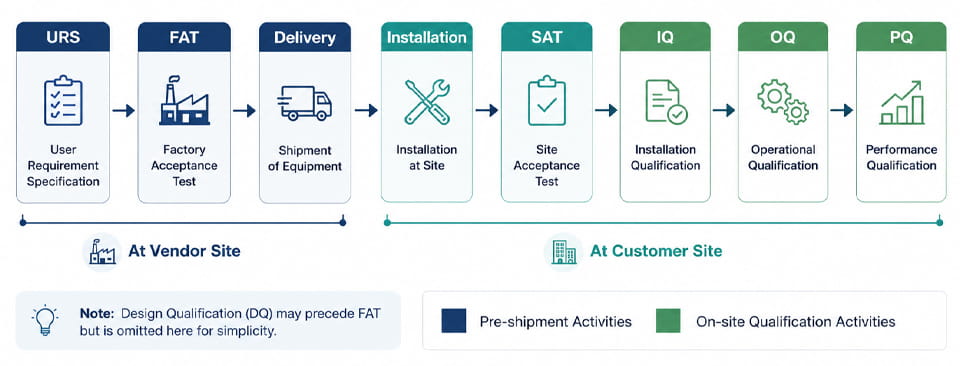
شكل: تدفق دورة حياة المؤهلات. بعد تعريف URS, اختبار قبول المصنع (سمين) يتم تنفيذها في موقع البائع. ثم يتم شحن المعدات وتركيبها, يليه اختبار قبول الموقع (قعد). أخيراً, مؤهلات التثبيت (معدل الذكاء), التأهيل التشغيلي (أوكيو), وتأهيل الأداء (PQ) يتم تنفيذها في الموقع (ملحوظة: قد يسبق DQ FAT ولكن تم حذفه هنا للتبسيط).
ويدعم هذا التدفق توجيهات GMP. على سبيل المثال, بموجب ملحق برنامج الرصد العالمي للاتحاد الأوروبي 15 و ISPE C&ممارسات س, غالبًا ما يمكن الاستفادة من نتائج FAT الموثقة في IQ/OQ, الحد من الازدواجية. في الحقيقة, تشير إرشادات ISO/ISPE إلى أن أنشطة FAT "تساهم بشكل مباشر في تأهيل التصميم (دي كيو) وتأهيل التثبيت (معدل الذكاء) شهادة,"المساعدة في ضغط وقت التأهيل الإجمالي. في الممارسة العملية, إن FAT الصارم مع التوثيق المناسب يعني أن فريق الذكاء الخاص بك يمكنه إعادة استخدام هذه النتائج (على سبيل المثال. تم إجراء فحوصات التثبيت بالفعل) بدلا من إعادة اختبار نفس النقاط.
قائمة مراجعة بروتوكول FAT (التعبئة والتغليف فارما)
يتضمن بروتوكول FAT الشامل لآلات تعبئة الأدوية عادةً العناصر التالية:
- بروتوكول FAT المعتمد مسبقًا: وثيقة مكتوبة (على أساس URS) الذي يسرد كل حالة اختبار, معايير القبول, والمسؤولية. تتم الموافقة على هذا من قبل كل من المشتري والبائع قبل الاختبار.
- التفتيش البصري: التأكد من مطابقة الآلة للرسومات النهائية المعتمدة, مع عدم وجود أجزاء مفقودة أو ضرر. التحقق من الأرقام التسلسلية للمكونات والطراز.
- ميكانيكية & التفتيش الكهربائي: تأكيد جميع المكونات الهيكلية (إطارات, حراس, الناقلات) والمكونات الكهربائية (المحركات, الكابلات, لوحات) تم تثبيتها وتصنيفها بشكل صحيح.
- اختبارات الإنذار والتعشيق: قم بتشغيل كل حالة إنذار وتحقق من الاستجابة المناسبة. قم بتنشيط كل قفل أمان (أوقف, حارس الباب, ستارة خفيفة) للتأكد من توقف الجهاز أو تنبيهه كما هو مصمم.
- فحوصات التحكم/البرمجيات: قم بتأكيد إعدادات PLC/HMI, إصدارات البرامج, التعامل مع الوصفة, وتعمل مستويات وصول المستخدم. اختبار واجهات المشغل ومنطق التحكم مقابل المتطلبات.
- التحقق من معايرة الأجهزة: تأكد من أن جميع أجهزة الاستشعار والأدوات لديها شهادات معايرة صالحة وأنها ضمن المواصفات قبل الاستخدام.
- يعمل الأداء مع المنتج: قم بتشغيل الماكينة بجميع سرعات التشغيل المحددة باستخدام منتج تمثيلي أو مواد أسوأ الحالات. قياس المخرجات الرئيسية (ملء الأوزان, الإنتاجية, جودة الختم, دقة العد, إلخ.) ضد معايير القبول.
- مظاهرات التغيير: إذا كانت هناك حاجة إلى تنسيقات/وحدات SKU متعددة, يوضح التحول الإجراءات والتوقيت حسب العقد.
- محاكاة المنفعة: محاكاة شروط فائدة الموقع (على سبيل المثال. تشغيل المحركات بجهد منخفض, تطبيق ضغط الهواء المنخفض) لضمان قدرة الماكينة على التعامل مع الفروق المتوقعة في المرافق.
- مراجعة التوثيق: التأكد من كافة الأدلة, الخطط, أدلة الصيانة, وقوائم قطع الغيار كاملة وتم تسليمها.
- قائمة لكمة وتسجيل الخروج: قم بتوثيق أي مشكلات مفتوحة في قائمة المهام. بعد إعادة اختبار الإصلاحات, قم بتضمين صفحة التوقيع النهائية "لقبول FAT" في تقرير FAT.
يساعد اتباع قائمة المراجعة هذه في اكتشاف الانحرافات في المصنع. على سبيل المثال, يحذر خبراء الصناعة من سجلات FAT الغامضة - الكمية فقط, وينبغي قبول بيانات الاختبار الخاصة بالمعدات. إن قبول مجرد بيانات "تمرير" المورد أو قوائم المراجعة غير المكتملة يمكن أن يخفي المشاكل. قم دائمًا بتسجيل القيم المقاسة وتتبعها حتى الرقم التسلسلي للجهاز المحدد.
قائمة التحقق من بروتوكول SAT (التعبئة والتغليف فارما)
عادةً ما يغطي بروتوكول SAT لآلات تعبئة الأدوية:
- فحوصات ما قبل التثبيت: التحقق من أن الموقع جاهز (غرف الأبحاث, مستوى الأساس), المرافق في مكانها الصحيح (قوة, الهواء المضغوط, فارغ, ماء), ورسومات التثبيت مطابقة للآلة.
- التحقق من التثبيت: تأكد من تجميع جميع المكونات الميكانيكية بشكل صحيح في الموقع (لا ضرر من الشحن). تأكد من توصيل الأدوات المساعدة بشكل صحيح (الجهد االكهربى, ضغط, تدفق) وأن الظروف البيئية (درجة حرارة, رطوبة, تصنيف) تلبية متطلبات المعدات.
- اختبارات وظيفة عدم التحميل: قم بتشغيل الوظائف الرئيسية فارغة أو باستخدام منتج وهمي لضمان بقاء الأسلاك والمحركات سليمة بعد النقل. تحقق من أقفال الأمان مرة أخرى في ظل ظروف الموقع (على سبيل المثال. هواء النبات بدلاً من هواء المصنع).
- اختبار ربط المنفعة: قياس معلمات المنفعة الفعلية في الجهاز (على سبيل المثال. تأكد من أن ضغط الهواء الفعلي وتدفقه يفي بالمواصفات).
- اختبار التكامل: إن أمكن, اختبار الاتصال بين هذا الجهاز ومعدات المنبع/المصب (على سبيل المثال. تأكد من أن آلة العد تشير بشكل صحيح إلى ماكينة الكرتون للقيام بالفهرسة).
- اختبار أداء الإنتاج: قم بتشغيل الجهاز بمنتج حقيقي أو منتج وهمي (وفقًا لـ URS). على سبيل المثال, قم بتغذية بثور أو كبسولات الأقراص الفعلية عبر الخط للتأكد من الإنتاجية والجودة كما هو مطلوب. هذا هو في الأساس تشغيل موقع PQ.
- تدريب المشغلين & التسليم: التأكد من قدرة المشغلين على تشغيل الآلة. قم بمراجعة إجراءات التشغيل واطلب من المشغلين أداء المهام الأساسية تحت المراقبة.
- حل المشكلة: سجل أي انحرافات أو نتائج في اختبار SAT في السجل وتحقق من الإجراءات التصحيحية. فقط بعد إغلاق جميع النقاط الحرجة، تحصل الآلة على القبول الرسمي.
- تسجيل الخروج النهائي: أكمل تقرير أو شهادة SAT, قم بالتوقيع عليه, وتضمين بيانات التشغيل النهائية. وهذا يصبح دليلا على الامتثال.
باختصار, يعيد بروتوكول SAT تأكيد جميع الوظائف المهمة في ظل الظروف الحقيقية. إنها نقطة التفتيش الأخيرة قبل بدء التشغيل. على سبيل المثال, يشير Jinlupacking إلى أن اختبار SAT الشامل غالبًا ما يولد بيانات أساسية يمكن أن تنتقل مباشرة إلى بروتوكولات IQ/OQ, تجنب إعادة اختبار المرافق والبيئة.
FAT وSAT لماكينات تعبئة الأدوية
خطوط التعبئة والتغليف الدوائية (بثرة, كبسولة, قرص, آلات الكرتون) لديهم تركيز FAT/SAT الخاص بهم. فيما يلي بعض النقاط النموذجية:
- آلة التعبئة والتغليف نفطة: يجب على FAT التحقق من محطات التشكيل والختم. على سبيل المثال, قياس توحيد درجة الحرارة على الصوانى الحرارية (± 2 درجة مئوية عبر القالب) ويموت الختم (±3 درجة مئوية) تحت سرعات أسوأ الحالات. اختبار سلامة الختم (اختبارات التقشير حسب ASTM F88). التحقق من دقة تغذية البثرة, الفهرسة, محاذاة الفيلم, وأن نظام الرفض يزيل البثور المشوهة. قعد سيتم بعد ذلك تكرار هذه الاختبارات باستخدام رقائق البثرة الفعلية والأجهزة اللوحية في الموقع والتأكد من أن الجهاز لا يزال يفي بقوة الختم ومواصفات الإنتاجية في ظل الرطوبة/درجة الحرارة المحلية.
- ماكينة تعبئة الكبسولات: تشمل نقاط فحص الدهون توجيه الكبسولة والتغذية (تحقق من تحميل الأغطية والأجسام بشكل صحيح), دقة تعبئة المسحوق (قم بقياس ملء الوزن على نطاق منخفض/عالي), أنظمة الكشف (تحقق من محاذاة المستشعر فارغًا, مزدوج, أو التوجه الخاطئ), وسلامة القفل (تأكد من إغلاق الكبسولات بإحكام). تحقق من فهرسة البرج ودقة المؤازرة بدون المنتج. قعد سيتم بعد ذلك اختبار دقة التعبئة باستخدام كبسولات العميل ومزيج المسحوق, والتأكد من أن آلية رفض نهاية السطر تعمل عند حدوث عمليات رفض حقيقية.
- آلة ضغط الأقراص: خلال الدهون, وتشمل الاختبارات معايرة الأدوات (وزن الكمبيوتر اللوحي, سماكة, صلابة عبر مواقف البرج), إطار التغذية وتشغيل القادوس, واضغط على اتساق القوة. قم بتشغيل المكبس تحت الحمل بأقل وأعلى قوى ضغط للتحقق من سرعة الرام. قعد إعادة التحقق من مواصفات الجهاز اللوحي باستخدام التحبيب الفعلي بحجم الدفعة المطلوب, يؤكد أن مستويات التشحيم والصوت مقبولة, ويتحقق من بوابات الأمان ومرحلات التحميل الزائد في الموقع.
- ماكينات العد والتعبئة في الكرتون: لآلات العد, تركز FAT على الدقة والسرعة مع المنتجات الوهمية, التحقق من أجهزة الاستشعار ورفض المزالق. لعمال الكرتون, يتحقق FAT من تشكيل الكرتون, توقيت في التغذية, سرعة الإخراج, وجودة الختم. قعد سيتم اختبار التشغيل المستمر: تغذية عبوات أو زجاجات نفطة فعلية في علبة كرتون والتأكد من صحة علب الكرتون الناتجة. كما أنه يتحقق من أن آلة العد وآلة تعبئة الكرتون تتزامنان بشكل صحيح (على سبيل المثال. لا توجد زجاجات ضائعة).
في جميع الحالات, يتحقق كل من FAT وSAT من أن الماكينة تعمل بالسرعة المحددة وتنتج العدد/الوزن/الجودة الصحيحة مع المنتج الفعلي. تخطي الاختبارات (على سبيل المثال, عدم تشغيل منتج حقيقي في FAT) يمكن أن يؤدي إلى الفشل في SAT. كما يحذر أحد الخبراء, "إن تشغيل FAT باستخدام المواد العامة الخاصة بشركة OEM ليس مثل تشغيله مع المواد الخاصة بك" - إذا لم تقم باختبار المواد الحقيقية في FAT, غالبًا ما تظهر مشكلات الموقع لاحقًا.
لماذا يمكن للآلة اجتياز اختبار FAT ولكنها تفشل في اختبار SAT؟?
حتى لو قام الجهاز بتمرير كل عنصر في قائمة فحص FAT, لا يزال من الممكن أن يفشل في اختبار SAT إذا تغيرت الظروف. تشمل الأسباب الشائعة:
- اختلافات المنفعة: الجهد, ضغط الهواء, أو قد تكون جودة العرض في المصنع خارج النطاق المستخدم في FAT. قد يتعطل محرك الناقل عند SAT إذا كان جهد الخط منخفضًا قليلاً, على سبيل المثال.
- التغيير البيئي: يمكن أن تؤثر اختلافات درجة الحرارة أو الرطوبة على العمليات. كانت إحدى الحالات تحتوي على آلة نفطة تمرر الدهون عند رطوبة معتدلة (45% ر.س) ولكن فشل سلامة الختم في الموقع في 80% ر.س.
- اختلافات المنتج: إذا لم يستخدم المورد المنتج أو مواد التغليف المحددة في تشغيل FAT, قد تتصرف الآلة بشكل مختلف مع المنتج الحقيقي. (ننصح بالضغط على OEM لتشغيل المواد الخاصة بك في FAT.)
- قضايا التثبيت: أخطاء في الإعداد, تنسيق, أو التثبيت أثناء الشحن يمكن أن يؤدي إلى أخطاء جديدة يجب على SAT اكتشافها. على سبيل المثال, قد لا يتم ملاحظة وجود جهاز تشفير مفكك أو سكة توجيه متدافعة حتى اختبار الموقع.
- مشاكل التكامل: قد لا يتصل الجهاز بشكل صحيح مع معدات الخط الأخرى أو نظام التحكم في المصنع ما لم يتم اختبار هذه الواجهات في اختبار SAT.
- قائمة لكمة غير مغلقة: إذا قام البائع بإطلاق سراح جزئي (على سبيل المثال. "سوف نقوم بإصلاح هذا بعد التسليم"), قد تظهر مشكلة FAT التي لم يتم حلها إلا في اختبار SAT.
باختصار, يقوم FAT باختبار الجهاز بشكل منفصل; اختبار SAT في السياق. كل اختلاف في ظروف الموقع أو الإعداد هو وضع فشل محتمل. اختبار SAT جيد التنفيذ, لكن, هو الفحص النهائي للكشف عن مثل هذه المشكلات قبل الإنتاج الكامل.
ما الذي ينبغي للمشترين أن يسألوا المورد عن FAT وSAT؟?
عند اختيار مورد الجهاز, غالبًا ما يستخدم مشترو الصناعة جاهزية FAT/SAT كمؤهل رئيسي. على سبيل المثال, دليل تدقيق الموردين الخاص بشركة Jinlu يوصي بالسؤال:
- توفر الوثيقة: "هل يمكنك توفير الوثائق الكاملة للمعدات, بما في ذلك الأدلة, رسومات, تقارير FAT/SAT, وقوالب الذكاء/OQ?". (يوفر البائع المتوافق هذه الأمور بشكل استباقي.)
- دعم التحقق: "هل ستساعد في التثبيت والتأهيل? هل تقدم الدعم أو التدريب في الموقع خلال FAT/SAT؟?". (تأكد من إرسال مهندسين إلى FAT وSAT.)
- المشاركة في العملية: "من سيقود FAT وSAT? هل يمكن لفريق ضمان الجودة/التحقق الخاص بي المشاركة في الاختبارات أو مشاهدتها?"
- استخدام العينات: "هل ستقوم بتشغيل منتجي الفعلي ومواد التعبئة والتغليف في FAT؟?" (كما لوحظ, استخدام مواد حقيقية أمر بالغ الأهمية.)
- معالجة الانحراف: "إذا فشل شيء ما في FAT, كيف سيتم اصلاحها? هل ستقوم بإعادة الاختبار في الموقع قبل الشحن?"
- تغيير التحكم: "كيف يمكنك إدارة تغييرات ما بعد الطلب? هل يمكن استيعاب تحديثات URS البسيطة في البروتوكولات?".
- خبرة & مراجع: "هل قمت بتسليم هذا النموذج لعملاء فارما آخرين؟? هل يمكننا أن نرى دراسات الحالة أو مراجع الاتصال?".
- قطع الغيار والخدمة: "ما هي سياسة دعم قطع الغيار الخاصة بك? هل تقدمون ضمانات ممتدة أو خدمة محلية؟?".
تساعد هذه الأسئلة في قياس مدى نضج التحقق من صحة المورد. يجب أن يجيب البائع ذو الخبرة بسهولة بأنه يقدم آلات "جاهزة للتدقيق" مع حزم FAT/SAT/IQ/OQ الكاملة.
قائمة التحقق من قبول FAT/SAT
لضمان عملية قبول سلسة, يمكن للمشترين استخدام قائمة التحقق السريعة FAT/SAT هذه:
- الاتفاق على النطاق مقدمًا: قم بتضمين خطط FAT وSAT في أمر الشراء أو URS, تحديد الاختبارات التي سيتم إجراؤها بالضبط وما هي المعايير التي يجب استيفاؤها.
- اختبارات الشهود: حضور FAT (بشكل مثالي شخصيًا) للتحقق من إجراء كل اختبار. إذا التشهد عن بعد, ضمان الفيديو المباشر للقراءات.
- استخدم الرسومات/المواصفات النهائية: تأكد من اختبار الجهاز وفقًا لأحدث رسومات URS والرسومات (لا المراجعات القديمة).
- إحضار أدلة المعايرة: تأكد من معايرة الأدوات المستخدمة في FAT/SAT وأن شهاداتها موجودة في حزمة الوثائق.
- جمع البيانات الخام: تتطلب أن جميع القيم المقاسة (الأوزان, القوات, الفولتية, إلخ.) يتم تسجيلها, وليس فقط علامات "النجاح/الفشل"..
- إغلاق الانحرافات على الفور: يجب أن يتم إصلاح أي تناقض يتم العثور عليه وإعادة الاختبار قبل القبول. لا تقبل عبارة "سنصلح هذا لاحقًا" دون دليل.
- إمكانية التتبع: حافظ على مصفوفة التتبع التي تربط كل نقطة URS بحالات ونتائج اختبار FAT/SAT.
- تسجيل الخروج النهائي: لا تحرر الجهاز حتى يتم حل كافة عناصر قائمة FAT والتوقيع على تقرير FAT. كرر لSAT.
- فحص ما قبل الشحن بعد FAT: اختياريا, قم بإجراء فحص ما قبل الشحن للتأكد من عدم تغيير أي شيء بعد FAT (نقترح هذا الفحص النهائي بعد تعبئة الجهاز).
- أرشيف التوثيق: احتفظ بنسخ من جميع بروتوكولات وتقارير FAT وSAT في ملفات التحقق الخاصة بك. وتصبح هذه جزءًا من سجلات تأهيل المعدات.
إن اتباع هذه القائمة المرجعية يتجنب المفاجآت. على سبيل المثال, إن رؤية صور التعبئة الخاصة بالمورد أو ملاحظات مراقبة الجودة العامة بعد حدوثها أمر طبيعي لا دليل على الامتثال. أقوى دليل هو مجموعة كاملة من سجلات FAT/SAT المرتبطة بالجهاز المحدد.
خاتمة
يعد كل من FAT وSAT بمثابة فحصين أساسيين لضمان أداء آلات تعبئة الأدوية الخاصة بك بشكل موثوق ومتوافق مع GMP. من خلال اختبار المعدات بدقة في موقع البائع (سمين) ومرة أخرى بعد التثبيت (قعد), يمكنك تقليل المفاجآت المكلفة والتحقق من استيفاء جميع نقاط URS.
على استعداد لتبسيط اختبارات القبول الخاصة بك? يسلم جينلو التعبئة المعدات الصيدلانية (تعبئة نفطة, حشو كبسولة, يضغط الكمبيوتر اللوحي, خطوط العد والتعبئة في الكرتون, إلخ.) مع دعم FAT/SAT الكامل. يتم شحن كل جهاز مزودًا ببروتوكول FAT/SAT الكامل ومجموعة IQ/OQ/PQ لجعل مؤهلاتك أسرع وأكثر سلاسة. اتصل بـ Jinlu اليوم لمناقشة URS الخاص بك وإعداد خطط FAT/SAT لمعداتك الجديدة, أو قم بزيارة صفحات منتجاتنا ل ماكينات تعبئة الكبسولات, ماكينات تعبئة الفقاعات, مكابس الكمبيوتر اللوحي, آلات العد, ماكينات صناعة الكرتون وأكثر. سيساعدك فريقنا في تخطيط خطوات FAT/SAT وتوفير وثائق التحقق الجاهزة حتى يظل مشروعك في الوقت المحدد ومتوافقًا.
تواصل معنا مع خبراء جينلو للحصول على إرشادات FAT/SAT وتأكد من أن خط التعبئة الجديد الخاص بك جاهز للتحقق من الصحة من اليوم الأول.
الأسئلة الشائعة حول FAT وSAT في فارما
ما هو الفرق بين FAT وSAT?
سمين (اختبار قبول المصنع) يتم إجراؤها في منشأة الشركة المصنعة للمعدات قبل الشحن للتحقق من أن الماكينة تلبي المواصفات والمتطلبات الوظيفية المتفق عليها. قعد (اختبار قبول الموقع) يتم إجراؤها في منشأة العميل بعد التثبيت للتأكد من أن المعدات تعمل بشكل صحيح مع المرافق الفعلية للموقع, بيئة, والأنظمة المتصلة.
لماذا تعتبر FAT مهمة قبل شحن المعدات الصيدلانية?
يسمح FAT للمشتري والمورد بتحديد التصميم, تصنيع, يتحكم, أو مشكلات في الأداء قبل مغادرة الجهاز لمنشأة الشركة المصنعة. من الأسهل عمومًا التحقيق في المشكلات التي يتم العثور عليها في هذه المرحلة وتصحيحها بسبب المعدات, الفريق الهندسي, أدوات, وبيئة الاختبار متاحة بسهولة. ومن ثم، يمكن لنظام FAT المخطط جيدًا أن يقلل من تأخيرات التشغيل ويتجنب إعادة العمل غير الضرورية في موقع العميل.
هل FAT مطلوب قبل SAT؟?
يتم إجراء FAT عادةً قبل اختبار SAT, ولكن ما إذا كان إلزاميا يعتمد على المشروع, عقد, معدات, ومتطلبات الجودة. يتحقق FAT من المعدات قبل الشحن, بينما تقوم SAT بالتحقق من المعدات بعد تركيبها في موقع العميل. للآلات الصيدلانية, يمكن للاختبارين أن يكمل كل منهما الآخر بدلاً من أن يحل كل منهما محل الآخر.
هل يمكن للمعدات اجتياز FAT ولكنها تفشل في SAT?
نعم. اجتياز اختبار FAT لا يضمن اجتياز المعدات اختبار SAT. يتم تنفيذ FAT عادة في ظل ظروف المصنع الخاضعة للرقابة, بينما يقوم SAT بتقييم الآلة بعد النقل, تثبيت, الاتصال بالمرافق الفعلية, والتكامل مع المعدات الأخرى. الاختلافات في إمدادات الطاقة, الهواء المضغوط, الظروف البيئية, تغذية المنتج, أو قد يؤدي تكامل الخط إلى إنشاء مشكلات لم تكن مرئية أثناء FAT.
ما الذي يجب أن تتضمنه قائمة التحقق من FAT؟?
يجب أن تستند قائمة فحص FAT للمعدات الصيدلانية إلى المواصفات المتفق عليها وقد تتضمن تعريف المعدات, التفتيش الميكانيكي, الأنظمة الكهربائية, وظائف PLC/HMI, إنذار, تشابكات السلامة, تشغيل الآلة, اختبار الأداء, الوثائق, ومعايير القبول المتفق عليها. لآلات التعبئة والتغليف, قد تغطي القائمة المرجعية أيضًا سرعة الإنتاج, دقة التغذية, ختم, الترميز, الرفض, وغيرها من الوظائف الخاصة بالجهاز.
ما الذي يجب أن تتضمنه قائمة التحقق من اختبار SAT؟?
يجب أن تركز قائمة فحص SAT على المعدات بعد التثبيت في موقع العميل. اعتمادا على الجهاز, قد تشمل حالة التثبيت, التوصيلات الكهربائية, الهواء المضغوط والمرافق الأخرى, تشغيل الآلة, أجهزة السلامة, إنذار, التواصل مع المعدات المنبع والمصب, أداء الإنتاج, ووظائف المشغل. يجب أن يستخدم اختبار SAT معايير القبول المتفق عليها قبل الاختبار بدلاً من الاعتماد فقط على العرض التوضيحي غير الرسمي للآلة.
من يجب أن يحضر FAT وSAT؟?
عادةً ما تتضمن FAT مهندسي المورد وممثلي المشتري (ضمان الجودة/التحقق من الصحة, هندسة, العمليات). يجب أن يتضمن اختبار SAT البائع المثبت أو فريق الخدمة, ضمان الجودة/التحقق من الصحة, وموظفي عمليات العميل. يتم في بعض الأحيان تضمين مستشارين أو مفتشين من جهات خارجية.
ما هي الوثائق المطلوبة لـ FAT وSAT?
ويتطلب كل منها بروتوكولًا معتمدًا مسبقًا يحدد جميع الاختبارات, معايير القبول, والمسؤوليات. أثناء الاختبار, ملء البروتوكول بالبيانات والملاحظات في الوقت الحقيقي. تتضمن التسليمات البروتوكول المنفذ, قائمة لكمة من أي انحرافات, وتقرير نهائي أو شهادة موقعة. للسات, قم أيضًا بإعداد مصفوفة التتبع التي تربط الاختبارات بمتطلبات URS.
ما هو الفرق بين الدهون, قعد, معدل الذكاء, و أوك?
FAT وSAT هما اختباران للقبول, في حين أن IQ وOQ هما عادةً جزء من استراتيجية تأهيل المعدات. تقوم FAT بفحص المعدات في منشأة الشركة المصنعة قبل الشحن; يقوم SAT بفحصه بعد التثبيت في موقع العميل. معدل الذكاء (مؤهلات التثبيت) يركز على ما إذا كان قد تم تركيب المعدات وفقًا للمتطلبات المعتمدة, بينما أوك (التأهيل التشغيلي) يتحقق من أنه يعمل على النحو المنشود عبر نطاقات التشغيل المحددة. يعتمد التسلسل الدقيق والوثائق على استراتيجية التحقق من صحة الشركة ومتطلبات المشروع.
هل FAT جزء من التحقق من صحة GMP?
يمكن أن يدعم FAT استراتيجية تأهيل المعدات الصيدلانية والتحقق من صحتها, ولكن لا ينبغي معاملة FAT نفسها تلقائيًا على أنها مكافئة لمؤهلات GMP. دورها يعتمد على المعدات, متطلبات المشروع, تقييم المخاطر, ونظام الجودة المعمول به. في بعض المشاريع, يمكن أن يوفر اختبار FAT المناسب أدلة موثقة يتم الاستفادة منها أثناء أنشطة التأهيل اللاحقة, ومن المحتمل أن يؤدي ذلك إلى تقليل الازدواجية غير الضرورية عندما يكون ذلك مبررًا.
مراجع:
1.أنظمة الأتمتة في صناعة العمليات – اختبار قبول المصنع (سمين), اختبار قبول الموقع (قعد), واختبار تكامل الموقع (يجلس) —— أنسي/ISA-62381-2026 / اللجنة الانتخابية المستقلة 62381:2024
2.هندسة SOP-FAT : اختبار قبول المصنع & قعد : اختبار قبول الموقع —— pharmastate.academy
3.اختبار FAT وSAT في معدات الأدوية —— سكريبد
4.دراسات التأهيل في مرحلة القبول في اختبار SAT لغسالة عبوات الأدوية —— بوابة البحث
5.قائمة التحقق من اختبار قبول المصنع والموقع —— سكريبد



رد واحد
من المثير للاهتمام كيف يمكن أن يؤثر التمييز بين FAT وSAT على العمليات الصيدلانية. خلال عمليات تفتيش عملائنا, كثيرًا ما نكتشف مشكلات الرطوبة التي يمكن أن تؤثر على أداء المعدات. عندما نستخدم التصوير الحراري, نجد تسربات مخفية قد تؤدي إلى توقف مكلف. ننصح دائمًا مالكي العقارات بإجراء تقييمات شاملة قبل الانتهاء من قبول المعدات. هل لاحظت أي اتجاهات في كيفية تعامل الشركات مع هذه التحديات خلال مرحلة اختبار القبول؟?