Máy đóng gói bột protein: Cách chọn thiết bị phù hợp cho túi, lọ & Gói gậy
Máy đóng gói bột protein: Cách chọn thiết bị phù hợp cho túi, lọ & Gói gậy
Tháng tám 28, 2026
Không có bình luận
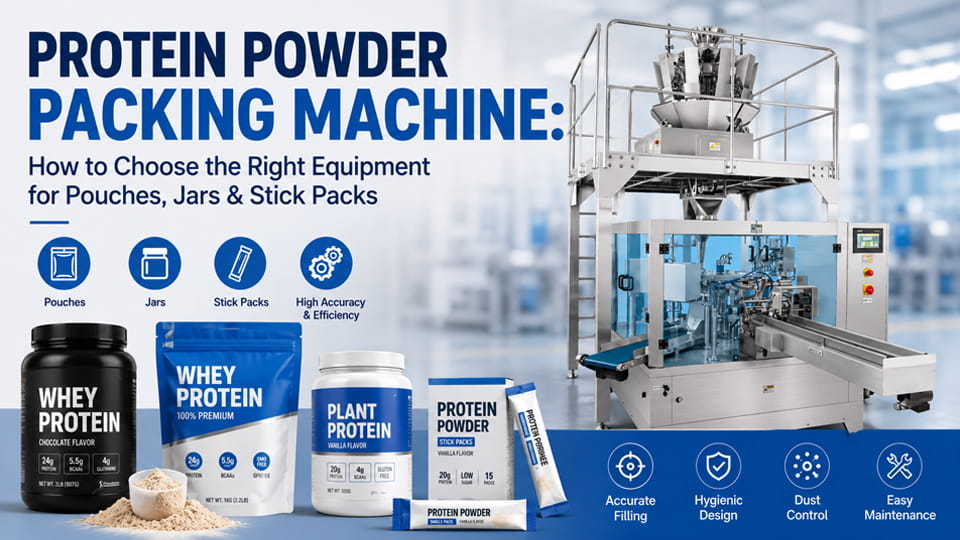
Đóng gói bột protein hiệu quả là điều cần thiết cho các nhà sản xuất thực phẩm và thực phẩm bổ sung. Cho dù bạn đang đổ đầy những thùng whey protein lớn để bán lẻ hay phục vụ một lần nhỏ gói dành cho khách hàng đang di chuyển, lựa chọn đúng máy móc đóng gói tạo nên sự khác biệt. Một cách tự động đóng gói bột protein dòng có thể liều, đổ đầy, và niêm phong hàng trăm container mỗi giờ với độ chính xác nhất quán. Trong hướng dẫn này, chúng tôi sẽ giải thích tại sao máy tốc độ cao lại là chìa khóa để đóng gói bột hiệu quả, so sánh các định dạng bao bì chính (lọ, túi, gói dính), và xem qua các tính năng cần lưu ý khi chọn thiết bị phù hợp. Hãy coi đây là “tổng quan về máy móc” thân thiện của bạn – điều mà người quản lý vận hành hoặc kỹ sư mua sắm sẽ hỏi khi tìm nguồn cung ứng mới dây chuyền đóng gói bột.
Tại sao nên sử dụng máy đóng gói tự động cho bột protein?
Ngay cả các thương hiệu bột protein nhỏ cũng nhanh chóng phát triển hơn việc đóng gói thủ công bằng muỗng. Máy đóng gói tự động có thể tăng đáng kể tốc độ sản xuất (thường 10× hoặc hơn hơn là thủ công) đồng thời đảm bảo trọng lượng đổ đầy đúng vị trí. Ví dụ, dây chuyền đóng gói bột tích hợp đầy đủ có thể sản xuất theo thứ tự 200 đơn vị mỗi phút, so với ~15 đơn vị khi đóng gói bằng tay. Điều này cắt giảm nhu cầu lao động (thường giảm lực lượng lao động từ 60–80%) và tăng tốc các dây chuyền hướng tới năng suất đẳng cấp thế giới.
Ngoài tốc độ, máy móc tự động cải tiến tính nhất quán và vệ sinh. Với điều khiển bằng servo chất độn khoan Và cân kiểm tra, mỗi bồn hoặc túi được đổ đầy trong phạm vi dung sai chặt chẽ. Điều này làm giảm quà tặng (lãng phí thêm bột) và khiếu nại của khách hàng. Máy kèm theo cũng giữ được bột, ngăn ngừa ô nhiễm và dọn dẹp lộn xộn. Dành cho các công ty thực phẩm hoặc dược phẩm, cuộc họp cGMP hoặc tiêu chuẩn FDA là rất quan trọng – khả năng hút bụi tích hợp và vỏ bọc kín giúp duy trì môi trường phòng sạch. Tóm lại, cho bất kỳ nhà sản xuất bột protein có quy mô hợp lý, Máy đóng gói không phải là một thứ xa xỉ mà là điều cần thiết để mở rộng quy mô một cách có lợi và an toàn.
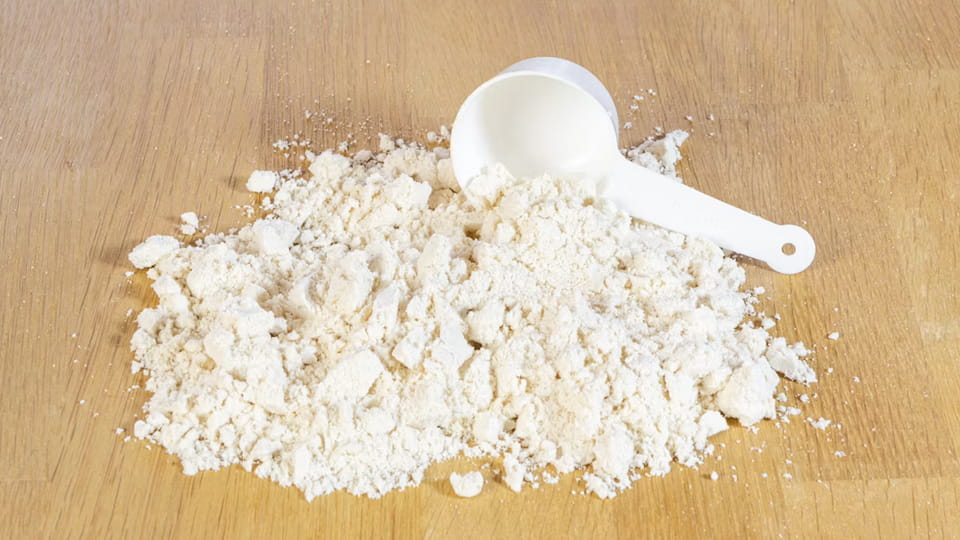
Nhân vật: Bột protein là loại tốt, chất chảy tự do có thể dễ dàng trở thành bụi. Độ chính xác caochất độn khoanthường được sử dụng để định lượng bột vào lọ, túi hoặc gói.
Các định dạng đóng gói chính cho bột protein
Quyết định đầu tiên là định dạng vùng chứa. Bột protein thường được vận chuyển ở một trong ba dạng: lọ/bồn (thùng cứng), Túi đứng lên (túi xách), hoặc gói/gói dính (gậy dùng một lần). Mỗi cái đều có trường hợp sử dụng của nó:
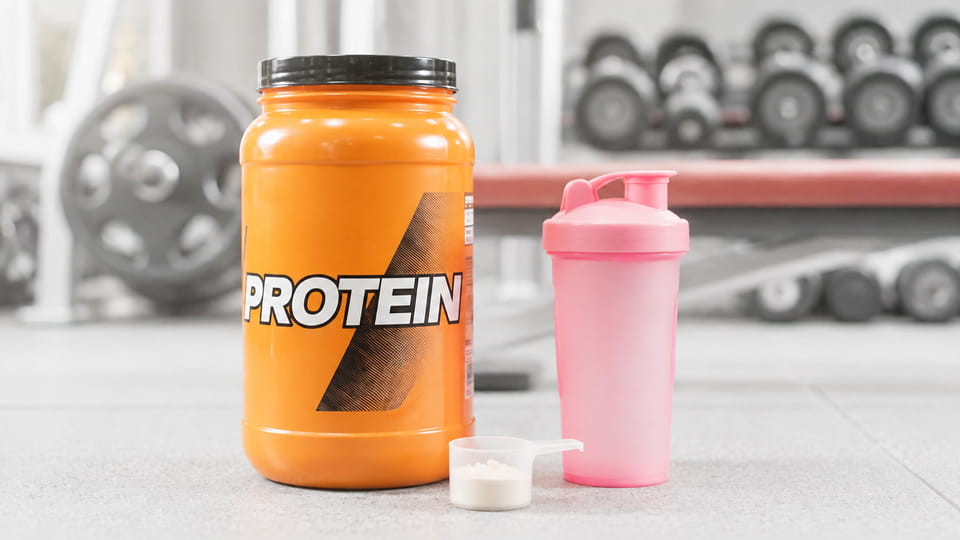
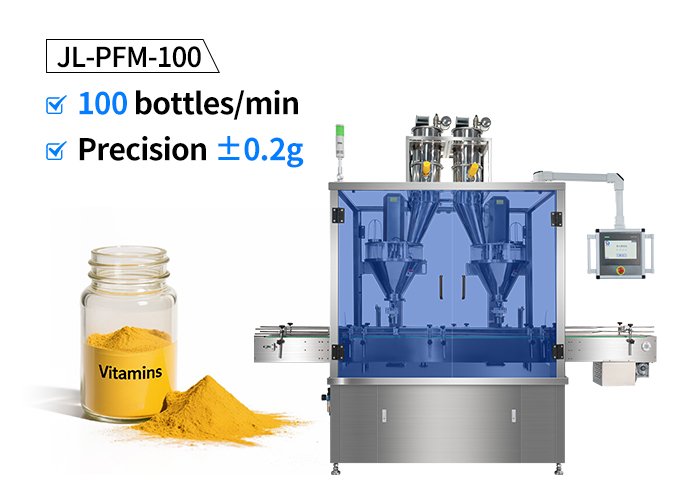
lọ & Bồn tắm (Thùng chứa cứng): Bao bì khổ lớn cổ điển (ví dụ. 500 g, 1 kg, 2 kg bồn). Những thứ này thường có nắp vặn và có thể bao gồm cả muỗng bên trong.. Khách hàng mong đợi sự bền bỉ, lọ có thể khóa lại cho bột số lượng lớn hoặc có giá trị cao (như whey tăng cơ hoặc thực phẩm bổ sung đặc biệt). Dây chuyền đóng gói sử dụng một máy khoan cho bột vào lọ, sau đó là trạm đóng nắp và máy hàn cảm ứng để đảm bảo độ tươi. Chum có thể chạy ở 5–50 đơn vị/phút tùy theo mức độ tự động hóa. Một ví dụ là của Jinlu Máy chiết rót bột, đạt được độ chính xác ± 0,1 g đối với bột. Lọ phù hợp với các thương hiệu muốn có vẻ ngoài cao cấp và khả năng đóng lại dễ dàng.
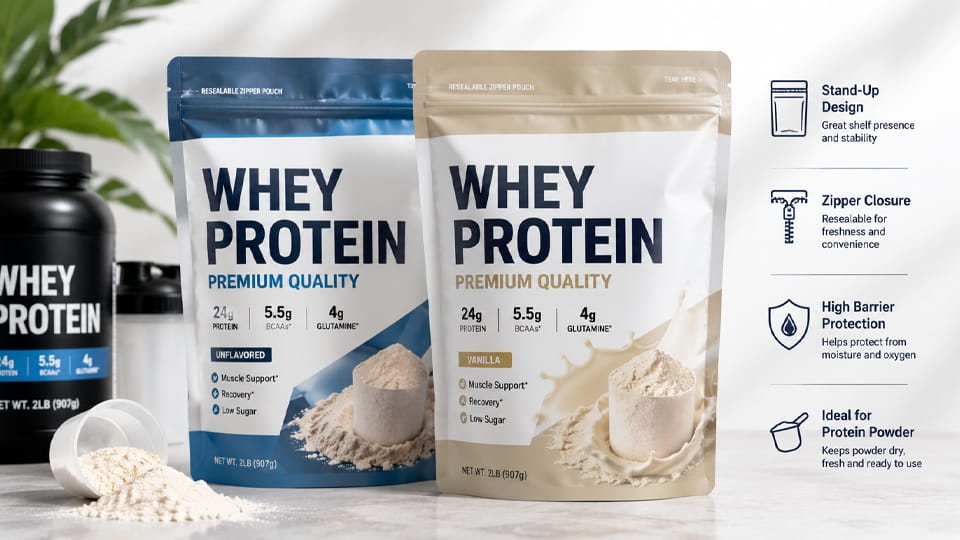
Túi đứng & Túi dây kéo: Túi linh hoạt (doypacks hoặc các giá đỡ có dây đeo) hiện nay rất phổ biến đối với bột protein. Chúng bao gồm từ quy mô thử nghiệm nhỏ (100–250 g) lên đến quy mô bán lẻ lớn hơn (1–2 kg). Túi thường có thể đóng lại được con dấu dây kéo, lý tưởng để bảo quản độ tươi. Việc điền vào những thứ này thường đòi hỏi một máy đóng gói túi tiền đề. Máy nhặt túi rỗng làm sẵn, mở chúng, đổ đầy bột, và hàn kín phần trên. của Jinlu máy đóng túi làm sẵn chạy ~60–70 bao/phút với Độ chính xác ± 0,4% và hỗ trợ các kiểu túi khác nhau (dây kéo, vòi, đáy phẳng). Túi tiết kiệm nhựa so với. lọ và nhẹ để vận chuyển. Họ cũng cho phép in bao bì hấp dẫn. Định dạng này rất phù hợp cho kệ bán lẻ, thương mại điện tử trực tiếp tới người tiêu dùng, hoặc cửa hàng tạp hóa.
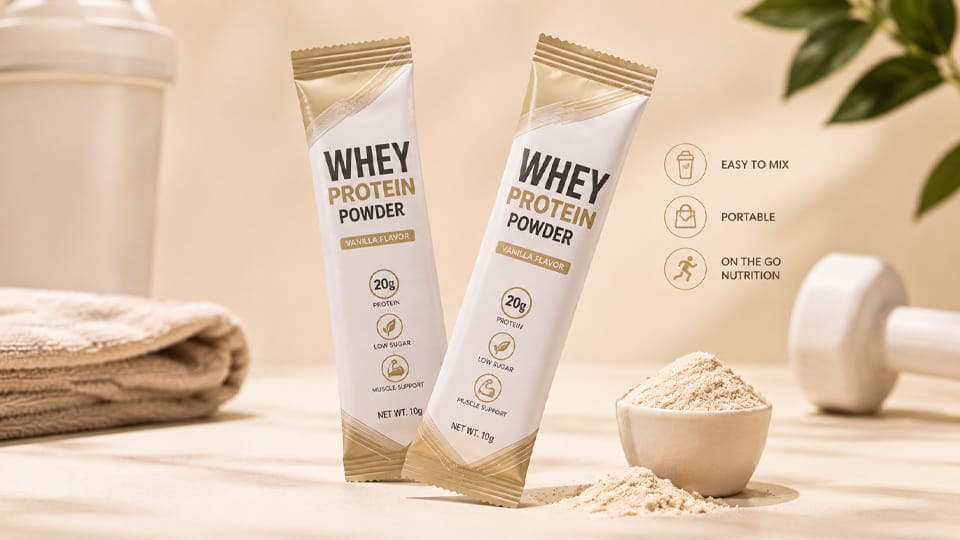
Gói/Gói dính (Gói phục vụ một lần): Những cái này dài, dải kín mỏng chứa một khẩu phần duy nhất (thường 10–30 g bột). Hãy nghĩ đến những gói protein khi di chuyển mà những người tập gym xé ra. Gói dính (đôi khi được gọi là gói) được làm từ các tấm mỏng hoặc màng giấy bạc và được lấp đầy trên một máy đóng gói que. Họ tối đa hóa tính di động và tiện lợi – lý tưởng cho các mẫu, gói du lịch, hoặc khuyến mãi. Máy đóng gói nhiều làn có thể tạo ra hàng trăm gói mỗi phút. Ví dụ, của Jinlu máy đóng gói thanh đạt tới 240 gậy/phút (băng qua làn đường) và điền từng cái với độ chính xác đến ± 0,02 g. Định dạng này giảm thiểu trọng lượng và lãng phí bao bì cho các phần nhỏ nhưng không đóng kín lại. Tốt nhất là dùng một lần hoặc dùng thử.
Mỗi định dạng đều có sự đánh đổi (xem bảng dưới đây). Chọn sai thùng chứa có thể đồng nghĩa với việc tăng thêm chi phí vật liệu hoặc vận hành rườm rà. Đọc tiếp để tìm hiểu thêm về máy móc và các yếu tố cho từng định dạng.
Các loại máy đóng gói bột protein
Khi bạn biết loại gói, câu hỏi tiếp theo là máy nào sẽ lấp đầy nó. Dưới đây là các loại thiết bị chính:
Máy chiết rót (Máy chiết rót bột) – Dùng đựng các vật chứa có miệng mở như lọ, bồn tắm, chai hoặc thậm chí túi nhỏ. Vít dài của máy (mũi khoan) quay để phân phối một lượng bột chính xác vào mỗi thùng chứa. Chất độn Auger có thể đạt được độ chính xác rất cao (thường là ± 0,1–1% trọng lượng lấp đầy). Họ thường tích hợp các tính năng bổ sung: khử khí chân không để loại bỏ không khí khỏi bột, máy dò kim loại, và đơn vị capper sau khi điền. Ví dụ, Máy khoan của Jinlu đi kèm với ống hút chân không để tránh tràn và có thể tự động chèn muỗng đo. Sử dụng những thứ này cho bột protein số lượng lớn hoặc bất kỳ nhu cầu đổ đầy lọ/chai nào.
Máy chiết rót bột
Con dấu điền mẫu dọc (VFF) Máy móc – Một hệ thống đóng gói phổ biến để tạo thành túi từ màng cuộn. Máy tạo thành túi phẳng (gối hoặc dây đai) từ một cuộn phim, lấp đầy nó bằng sản phẩm, và sau đó hàn nhiệt phần trên. Máy VFFS có thể dùng cho túi đựng bột trơn (không có dây kéo). Chúng rất hiệu quả khi chạy tốc độ cao (ví dụ. kích thước nhỏ hoặc trung bình với khối lượng lớn). Tuy nhiên, họ không tạo ra các túi có khóa kéo trừ khi được trang bị dụng cụ có khóa kéo. (VFFS nâng cao có thể áp dụng dây kéo nội tuyến, nhưng đây là chuyên ngành.)
Máy đóng gói túi làm sẵn – Lý tưởng cho túi dây kéo đứng hoặc các loại túi được tạo hình sẵn khác. Máy có cơ chế gắp và đặt: nó nhặt một cái túi rỗng từ một chồng, mở nó ra (thường sử dụng máy bay phản lực hoặc dụng cụ kẹp), sau đó một mũi khoan hoặc máy cân sẽ đưa bột vào bên trong, và cuối cùng là túi được hàn nhiệt. Vì túi đã được làm sẵn, niêm phong rất đáng tin cậy và gói hoàn thiện trông có chất lượng cao. Máy đóng túi làm sẵn của Jinlu chạy khoảng 50–60 túi/phút với độ chính xác cao. Họ xử lý nhiều kiểu túi khác nhau (dây kéo, vòi, doypack). Sự đánh đổi là chi phí mua túi làm sẵn thay vì phim. Máy làm sẵn là lựa chọn tốt nhất để đóng gói túi bán lẻ với số lượng từ trung bình đến cao.
Liều lượng rất chính xác, xử lý bột dính, tích hợp đóng nắp/niêm phong
Máy VFFS
Túi đựng gối, Túi Gusset
Túi làm từ màng với số lượng lớn (500g–2kg)
Tốc độ rất cao, chất thải vật liệu tối thiểu
Máy đóng gói túi làm sẵn
Túi đứng, Túi dây kéo
Túi protein bán lẻ (50g–2kg)
Giao diện gói cao cấp, phong cách túi linh hoạt, niêm phong chặt chẽ
Máy đóng gói dính
gói dính (1–50g)
Gói protein dùng một lần (du lịch/mẫu)
Sản lượng cao nhất cho gói nhỏ, chi phí vật liệu thấp trên mỗi đơn vị
Gói gậy nhiều làn
gói dính (nhiều)
Sản xuất hàng loạt gói nhỏ
Thông lượng rất cao (nhiều làn đường)
Việc lựa chọn máy phù hợp là rất quan trọng. Các phần tiếp theo chia nhỏ các bước vận hành và những điều cần cân nhắc khi chọn một.
Máy đóng gói bột protein hoạt động như thế nào?
Mặc dù máy móc có nhiều loại khác nhau, quy trình cốt lõi để làm đầy bột protein cũng tương tự: (1) Cho ăn bột → (2) Liều lượng theo trọng lượng → (3) Đổ đầy gói → (4) Niêm phong gói → (5) Xuất gói đã hoàn thành.
Cho ăn bột: Phễu cung cấp chứa bột số lượng lớn. Đối với bột rất mịn, máy hút chân không hoặc máy cấp liệu kiểu vít có thể nâng bột vào phễu chính phía trên bộ phận nạp. Thường là một bàn rung hoặc máy khuấy giữ cho bột chảy đều đặn (ngăn ngừa vón cục hoặc bắc cầu ở đầu ra). Máy tốt có phễu hình nón và độ rung hoặc chổi để ngăn cản việc cong vênh (bắc cầu).
Liều lượng trọng lượng: MỘT khoan phụ (vít) hoặc máy cân nhiều đầu đo từng liều. Để làm đầy mũi khoan, một động cơ servo quay trục vít trong phễu cấp liệu để đo bột. Khối lượng di chuyển tương quan với trọng lượng lấp đầy. Hệ thống có thể là vòng lặp mở (hiệu chỉnh thể tích) hoặc vòng kín (với một thang đo để điều chỉnh nhanh chóng). Dụng cụ khoan thích hợp (sân bóng đá, chiều dài, tốc độ) được chọn dựa trên lưu lượng bột. Như JinluPacking ghi chú, Ngăn ngừa tắc nghẽn và thiết kế phễu là vấn đề then chốt – một phễu được thiết kế tốt có thể giảm hiện tượng tắc nghẽn bột từ ~85% xuống còn 12% số lần chạy.
Định vị gói hàng: Nếu đổ đầy bình hoặc chai, một người giải mã hoặc người nạp sắp xếp các thùng chứa rỗng. Nếu đổ đầy túi, cái túi được hình thành (VFF) hoặc được chọn/mở (máy đóng gói túi hoặc que làm sẵn). Mở túi chính xác (thường có dụng cụ kẹp chân không hoặc vòi phun khí) đảm bảo bột không tràn ra ngoài.
Lấp đầy: Bột được phân phối vào thùng chứa. Nhiều máy sau đó sử dụng một giai đoạn khử khí rung hoặc chân không lắc nhẹ thùng chứa đầy, lắng bột và loại bỏ không khí bị mắc kẹt. Điều này cải thiện mật độ và cho phép nhiều bột hơn trên mỗi gói, và giảm bụi.
Niêm phong/đóng nắp: Túi được hàn nhiệt bằng con lăn hoặc quai hàm. Các lọ được đậy nắp (tự động nhấn hoặc vặn vít). Đôi khi một niêm phong cảm ứng áp dụng một con dấu tươi bằng nhôm dưới nắp (đặc biệt phổ biến trong dinh dưỡng). Lớp bịt kín phải không có bụi - thường dùng chổi quét nhanh hoặc máy thổi khí cuối cùng sẽ loại bỏ bột khỏi môi.
Kiểm tra chất lượng & đầu ra: Cân kiểm tra trọng lượng hoặc hệ thống quan sát có thể xác minh trọng lượng cuối cùng và niêm phong. Các gói hàng sau đó thoát khỏi máy để thu thập băng tải hoặc trực tiếp vào thùng.
Trong tất cả các bước, kiểm soát bụi rất quan trọng. Đóng gói nhiều pound protein tạo ra bụi trong không khí. Các hệ thống hàng đầu có mũ hút bụi cục bộ và bộ lọc HEPA để thu giữ các hạt, giữ máy móc sạch sẽ và bảo vệ người lao động. Nếu không được chọn, bụi có thể bao phủ các con dấu hoặc làm ô nhiễm các sản phẩm khác. Nhiều máy đóng gói túi thậm chí còn bao gồm các tùy chọn cho xả nitơ, thay thế oxy bên trong túi để kéo dài thời hạn sử dụng của bột protein.
Tại sao chất độn Auger lại là chìa khóa cho bột protein
Đối với bất kỳ loại bột khô nào, những chất đặc biệt dính hoặc mịn như protein, mũi khoan (vít) thường là sự lựa chọn tốt nhất cho việc dùng thuốc. Không giống như chất độn cốc thể tích, MỘT khoan phụ có thể đo chính xác các loại bột khó vào hộp hoặc túi mở. Đây là lý do tại sao máy khoan lại vượt trội:
Độ chính xác cao: Với sự hiệu chuẩn phù hợp, hệ thống khoan hiện đại có thể đánh Độ chính xác ± 0,1–1%. Bước vít, chiều dài và tốc độ quay được điều chỉnh theo mật độ khối và trọng lượng lấp đầy của bột. Máy khoan điều khiển bằng servo cho phép điều chỉnh động. Ví dụ, Máy khoan của Jinlu sử dụng bộ truyền động servo để đạt được độ chính xác khi đổ đầy 0.01 g.
Xử lý các loại bột đầy thử thách: Bột protein thường có cầu hoặc lỗ chuột (tạo thành một hầm) trong phễu nếu không rung. Máy khoan kết hợp với máy cấp liệu rung, bàn chải hoặc máy khuấy có thể làm gãy những cây cầu này. Nếu bột dính (như váng sữa) hoặc tĩnh điện, một số máy cung cấp vít dài hơn hoặc vít được phủ để giảm thiểu sự bám dính. Biến thể mũi khoan dài (và Jinlu cung cấp) được thiết kế để di chuyển bột dính mà không bị kẹt.
Giảm thiểu bụi: Chất độn dạng khoan cho bột thường hoạt động trong các phễu nửa kín. Nhiều người có vòi phun tay áo nhét vào lọ hoặc túi trước/trong khi dùng thuốc. Máy của Jinlu sử dụng ống hút bao quanh khu vực lấp đầy để thu giữ bụi lạc, hầu như loại bỏ sự cố tràn. Kết hợp với mũ trùm bụi bên ngoài, điều này giữ cho khu vực đổ xăng luôn gọn gàng.
Tính năng tích hợp: Trên dòng jar, chất độn khoan có thể được ghép nối với tự động dụng cụ chèn muỗng. Những thiết bị này thả thìa đong vào lọ trước khi pha bột (phổ biến với bồn whey protein). Mũi khoan sau đó lấp đầy xung quanh muỗng. Sau khi điền, một capper niêm phong bình. Như Jinlupacking ghi chú, chất độn lọ dựa trên mũi khoan thường bao gồm chính xác những tính năng này – vị trí đặt muỗng, giới hạn, và thậm chí ghi nhãn trên một dây chuyền tích hợp.
Tóm lại, nếu sản phẩm chính của bạn là thành phần bột, chất làm đầy khoan thường là nền tảng tốt nhất. Nó linh hoạt và có thể được tích hợp với phần còn lại của dòng sản phẩm của bạn một cách dễ dàng. Ví dụ, một dòng jar điển hình có thể là: máy sắp xếp lại chai → máy khoan → máy chèn muỗng → máy đóng nắp → máy hàn cảm ứng → máy dán nhãn → máy kiểm tra trọng lượng. Điều này xử lý mọi thứ từ chất bổ sung protein số lượng lớn đến bột dinh dưỡng mịn.
Các yếu tố chính cần xem xét khi chọn máy
Việc lựa chọn thiết bị “phù hợp” phụ thuộc vào nhiều chi tiết về sản phẩm và nhà máy của bạn. Dưới đây là các yếu tố quan trọng mà nhóm mua sắm và kỹ thuật nên cân nhắc:
Loại gói & Kích cỡ: Bạn đang đổ đầy lọ à, bồn tắm, túi đứng, hoặc gói dính? Và những gì lấp đầy trọng lượng? (ví dụ. 20 g giao bóng đơn vs 1,000 g số lượng lớn.) Các gói nhỏ hơn yêu cầu các máy khác nhau (máy đóng gói dạng que hoặc máy đóng gói túi nhỏ) hơn bồn tắm lớn (chất độn khoan và mũ lưỡi trai). Đảm bảo máy được xếp hạng theo kích thước và trọng lượng gói hàng tối thiểu và tối đa của bạn.
năng lực sản xuất: Bạn cần bao nhiêu đơn vị mỗi phút hoặc mỗi ca? Dự án tăng trưởng trong tương lai quá. Một cỗ máy có thể xử lý 20 lọ/phút hoặc 200 túi/phút – sự khác biệt lớn. Đường cao tốc thường sử dụng nhiều làn đường (đặc biệt là máy đóng gói dạng que hoặc VFFS) để nhân đầu ra. Ví dụ, một máy đóng gói 4 làn có thể tạo ra tốc độ gấp 4 lần cho một làn. Xác nhận xem tốc độ trích dẫn có được kiểm tra bằng bột của bạn không (một số nhà cung cấp liệt kê mức tối đa theo lý thuyết chỉ có thể đạt được với điều kiện lý tưởng).
Đặc tính bột: Bột protein của bạn có chảy tự do không (giống như một số whey protein cô lập) hoặc gắn kết hơn (protein đậu cô lập, hỗn hợp collagen)? Nó có tạo ra tĩnh không? Có hút ẩm không (hấp thụ độ ẩm)? Những điều này ảnh hưởng đến việc lựa chọn công nghệ làm đầy. Bột chảy kém có thể cần vòi phun chất lỏng hoặc hỗ trợ chân không. Nếu tĩnh là một vấn đề, tìm biện pháp chống tĩnh điện (thanh ion hóa, phễu dẫn điện). Thảo luận với nhà sản xuất xem họ có kinh nghiệm với các loại bột tương tự hay không – nhiều người sẽ kiểm tra sản phẩm của bạn trước.
Yêu cầu về độ chính xác: Vì thực phẩm bổ sung, khách hàng thường quan tâm đến liều lượng chính xác. Nếu bạn phải nằm trong phạm vi ±1% trọng lượng mục tiêu, sử dụng hệ thống có cân định lượng nhiều đầu hoặc mũi khoan có độ chính xác cao. Một số chất độn thể tích không thể đảm bảo dung sai chặt chẽ với lưu lượng bột thay đổi. Hãy nhớ rằng bột protein có thể có mật độ khối thay đổi ~±25% theo từng đợt, vì vậy phễu cân có phản hồi theo thời gian thực sẽ an toàn hơn.
Tự động hóa & Tích hợp: Bạn có cần dây chuyền hoàn toàn tự động (một người giám sát nhiều máy) hoặc bán tự động cũng được? Bạn có cần tích hợp với thiết bị thượng nguồn/hạ lưu (xô thang máy, máy dò kim loại, thùng giấy)? Ngoài ra, hãy cân nhắc xem bạn có cần các tính năng bổ sung như máy mã hóa/gắn nhãn hay không, xả nitơ, hoặc CIP (sạch sẽ tại chỗ). Tự động hóa nhiều hơn làm tăng chi phí nhưng tiết kiệm lao động lâu dài.
Chuyển đổi & Linh hoạt: Tần suất bạn chuyển đổi sản phẩm hoặc kích cỡ gói hàng? Nếu bạn có nhiều SKU (kích cỡ túi khác nhau hoặc hỗn hợp bột), tìm kiếm các tính năng chuyển đổi nhanh chóng. Điều này có thể bao gồm các hướng dẫn có thể điều chỉnh, dụng cụ khoan thay đổi nhanh, và bộ nhớ công thức. Máy đa dạng (giống như một số máy độn tuyến tính Jac hoặc máy cân nhiều đầu) cho phép bạn xử lý cả bột và hạt bằng cách hoán đổi phễu.
Vật liệu xây dựng & Khả năng làm sạch: Đặc biệt đối với thực phẩm/dược phẩm, Thép không gỉ 304 hoặc 316 bộ phận liên lạc là phải. Thiết kế phải đảm bảo vệ sinh (không có bẫy bột). Việc làm sạch dễ dàng giữa các lần chạy là rất quan trọng nếu hương vị thay đổi. Nhiều nhà sản xuất cung cấp xe đẩy hoặc xi lanh thủy lực để nghiêng phễu ra để làm sạch, và che vòng đệm hoặc vòng CIP.
Ngân sách & Ủng hộ: Máy đóng gói có nhiều loại từ khiêm tốn (~$20k cho chất độn mũi khoan độc lập đơn giản) đến sáu con số đối với dây chuyền hoàn toàn tự động. Nhận báo giá bao gồm cài đặt, đào tạo, và kế hoạch dịch vụ. Xem xét hồ sơ theo dõi của nhà cung cấp: họ có chuyên về bột không? Họ có cung cấp thử nghiệm với sản phẩm của bạn không? Một chiếc máy chỉ hoạt động tốt khi có sự hỗ trợ của nó – hãy kiểm tra chứng nhận CE/FDA nếu bạn cần.
Bằng cách đi qua những điểm này, bạn có thể kết hợp các tính năng với nhu cầu. Thường thì sẽ hữu ích khi làm việc với một nhà tư vấn đóng gói hoặc nhà cung cấp máy móc để xác nhận các giả định (ví dụ. chạy thử tại trung tâm demo).
Tùy chọn đóng gói được so sánh: Bình vs Túi vs Gói Stick
Hãy so sánh trực tiếp ba định dạng. Điều này có thể làm rõ cái nào phù hợp với ứng dụng của bạn:
Bao bì lọ/bồn:
Tốt nhất cho: Sản phẩm số lượng lớn (500g+), thực phẩm bổ sung cao cấp (tăng khối lượng, lắc tất cả trong một).
Ưu điểm: Có thể khóa lại (nắp vít), vững chắc, sự hiện diện mạnh mẽ của kệ để xây dựng thương hiệu. Tốt cho khối lượng lớn.
Nhược điểm: Chi phí đóng gói cao trên mỗi đơn vị (lọ nhựa hoặc thủy tinh). Nặng. Thông lượng thấp hơn so với túi có cùng kích thước (vì xử lý).
Máy móc: Tiêu biểu, khoan phụ + capper + Labolder. Đầu ra có thể là 10–50 lọ/phút.
Bao bì túi đứng:
Tốt nhất cho: Gói bán lẻ cỡ trung (100g–2kg). Các thương hiệu muốn kháng cáo lên kệ hoặc vận chuyển thương mại điện tử.
Ưu điểm: Bật lửa, rẻ hơn lọ. Dây kéo cho phép tái sử dụng. Thiết kế linh hoạt (cửa sổ rõ ràng, vòi phun, hình dạng độc đáo).
Nhược điểm: Cần mua túi làm sẵn (hoặc xử lý cuộn phim nếu VFFS). Máy dây kéo phức tạp hơn. Không cứng nhắc (phải lấp đầy cẩn thận để không bị lật đổ).
Máy móc: Máy đóng túi làm sẵn hoặc VFFS. Tốc độ điển hình là 40–60 bao/phút (làm sẵn). Thỏa hiệp tốt về chi phí và tốc độ.
Gói dính / Bao bì gói:
Tốt nhất cho: Khẩu phần ăn một lần (10g–50g), gói mẫu, gói du lịch (ví dụ. túi tập thể dục).
Ưu điểm: Siêu di động, vật liệu đóng gói tối thiểu, định lượng dễ dàng. Tốc độ đường truyền cao (đặc biệt là với máy nhiều làn, có thể đánh tổng cộng hàng trăm gậy/phút).
Nhược điểm: Không niêm phong lại. Không phù hợp với khối lượng lớn (gói bột mất độ tươi nhanh hơn). Cần điền chính xác hơn ở trọng lượng nhỏ.
Máy móc: Máy đóng gói que (một làn hoặc nhiều làn). Máy móc hiện đại có thể làm được 200+ gậy/phút (tổng cộng) một cách dễ dàng. Chi phí vật liệu trên mỗi đơn vị thấp (chỉ là một tấm phim mỏng).
Nhân tố
Bình/bồn
Túi đứng
Thanh/Gói
Phạm vi điền điển hình
Trung bình-Lớn (≥250g)
Nhỏ-Lớn (100g–2kg)
Bé nhỏ (5–50g)
Tính di động
Trung bình
Cao (có thể thu gọn)
Rất cao
Niêm phong lại
Đúng (nắp vặn)
Đúng (dây kéo)
KHÔNG
Chi phí đóng gói
Cao
Vừa phải
Thấp trên mỗi đơn vị
Tốc độ sản xuất
Vừa phải (10-50/phút)
Cao (50-80/phút)
Rất cao (nhiều làn)
Thương hiệu
Tốt (nhãn trên bình)
Rất tốt (in trên túi)
Tốt (in gói dính)
Tốt nhất cho
Sản phẩm số lượng lớn
Bán lẻ/bán hàng trực tuyến
Khuyến mãi phục vụ một lần
Chọn sai định dạng có thể hạn chế thị trường hoặc hiệu quả của bạn. Ví dụ, nếu khách hàng muốn một gói du lịch có sẵn cho phòng tập thể dục, hũ 2kg không bán được. Ngược lại, đặt một 2 kg protein trộn vào 200 gói là không thực tế. Vì vậy, hãy sớm điều chỉnh định dạng phù hợp với trường hợp sử dụng sản phẩm.
Những thách thức chung trong bao bì bột protein
Đóng gói bột mịn với tốc độ cao có thể mang lại những cạm bẫy. Dưới đây là các vấn đề cần chú ý và cách máy giải quyết chúng:
Trọng lượng lấp đầy không nhất quán: Sự thay đổi về mật độ hoặc lưu lượng khối có thể khiến một số gói bị đổ thiếu hoặc bị đổ đầy. Đổ đầy chất thải. Cách khắc phục: sử dụng liều lượng chính xác (máy cân nhiều đầu hoặc máy khoan vòng kín có cảm biến tải trọng), và hiệu chuẩn theo từng đợt. Một máy khoan được lựa chọn tốt (cao độ/độ dài bên phải) rất quan trọng. Cân kiểm tra trọng lượng tự động cũng phát hiện các giá trị ngoại lệ ngay lập tức.
Phủi bột: Bột mịn có xu hướng cuồn cuộn khi đổ đầy. Không có sự kiểm soát, nó để lại dư lượng và có thể làm tắc nghẽn các con dấu. Giải pháp bao gồm vòi hút bụi tại điểm điền, vòi hút chân không xung quanh miệng túi, và thậm chí cả băng tải chân không nội tuyến. Nhiều máy đóng túi có tích hợp chức năng loại bỏ bụi xung quanh hàm niêm phong. Điện tích tĩnh làm tăng khả năng thoát bụi; một số dòng bổ sung thêm chất ion hóa chống tĩnh điện để trung hòa các hạt bám vào.
Bột bắc cầu hoặc chuột-Holing: Đây là lúc bột tạo thành hình vòm trong phễu, dừng dòng chảy. Nó đặc biệt phổ biến với bột dính hoặc kết dính. Thiết kế phễu tốt gần như có thể loại bỏ nó. Phễu được tối ưu hóa có thể giảm tỷ lệ bắc cầu từ ~85% xuống ~12%. Tìm máy có tường dốc, máy khuấy bên trong, hoặc máy đập chuối để giữ cho sản phẩm chuyển động. Đôi khi chỉ cần tăng đường kính phễu hoặc thêm bộ rung là có thể giải quyết được.
Khiếm khuyết con dấu (Con dấu mở hoặc rò rỉ): Nếu có bột trên miệng túi khi hàn kín, con dấu có thể thất bại. Máy thường rung/chải túi sau khi đổ đầy để loại bỏ bột khỏi mép. Niêm phong mặt sau nằm ngang trên gói dạng que có chức năng kiểm soát nhiệt độ (và Jinlu sử dụng) đảm bảo chặt chẽ, con dấu chống không khí. Thường xuyên vệ sinh hàm bịt kín là rất quan trọng.
Dụng cụ không chính xác: Sử dụng sai vít khoan hoặc phễu có thể làm hỏng hiệu suất. Đảm bảo các bộ phận của chất độn phù hợp với kích thước hạt bột của bạn. Một số máy cho phép thay đổi mũi khoan nhanh chóng cho các công thức nấu ăn khác nhau.
Quà tặng sản phẩm: Để tránh lấp đầy, một số công ty mặc định lấp đầy, gây lãng phí bột protein đắt tiền. Cách chữa trị là hiệu chuẩn. Chất độn hiện đại có thể “học hỏi” trọng lượng điền (bằng cách cân nhanh từng lần đổ đầy) và tự động điều chỉnh. Điều này giữ cho việc tặng quà ở mức tối thiểu.
Nhiều vấn đề trong số này có thể tránh được nhờ các tính năng phù hợp của máy. Như các chuyên gia nói, luôn phân tích loại bột cụ thể của bạn và chạy thử: “Giải quyết nguyên nhân gốc rễ thay vì chỉ điều trị triệu chứng”.
Xây dựng dây chuyền đóng gói bột protein hoàn chỉnh
Đối với người quản lý sản xuất, thật hữu ích khi hình dung toàn bộ thiết lập dòng cho từng định dạng:
Dòng bình/bồn:
Máy sắp xếp lại chai/Dỡ pallet: định hướng và cho ăn các lọ rỗng.
Máy khoan phụ: làm đầy bột. Nếu cần, Dụng cụ chèn muỗng thả một muỗng vào trong mỗi lọ.
Bàn rung hoặc giai đoạn chân không: lắng bột và loại bỏ không khí.
capper: tự động đặt và siết chặt nắp vít.
Máy hàn cảm ứng: dán giấy bạc dưới nắp.
Máy dán nhãn: nhãn bọc hoặc miếng đệm trên bình.
Cân kiểm tra: xác minh trọng lượng điền và tính toàn vẹn, từ chối lọ giảm cân.
Người đóng thùng (không bắt buộc): đóng hộp các lọ để vận chuyển.
Dòng túi (làm sẵn):
Khay nạp/Tạp chí: ngăn xếp các túi rỗng làm sẵn (thường xuyên với tải lại tự động).
Chọn/Mở túi: tự động mở từng túi.
Máy chiết rót/Cân nhiều đầu: phân phối bột vào túi mở.
Dây kéo gần hơn (nếu cần): đóng nắp dây kéo lồng vào nhau.
Máy hàn nhiệt: niêm phong túi trên đầu.
Bộ mã hóa/Máy in ngày: lô tem và ngày tháng trên túi.
Cân kiểm tra & Từ chối: kiểm tra lại trọng lượng.
Đơn vị đóng thùng: bó túi vào hộp.
Dòng gói dính:
Trình giải nén phim: đưa màng đa làn vào vai hình thành.
Đơn vị hình thành: tạo ra nhiều ống dài (mỗi làn một chiếc).
Máy khoan phụ: làm đầy mỗi ống thông qua một mũi khoan, được hỗ trợ bởi máy rung.
Máy dán ngang: niêm phong các ống đầy thành một dải dài liên tục.
Bộ phận cắt: cắt dải thành từng gói dính riêng lẻ.
Điều tra & Đếm: xác minh số lượng và trọng lượng.
Đóng thùng & Máy đóng thùng: cho khối lượng lớn, gói dán gói vào hộp hoặc gói hiển thị.
Mỗi cấu hình có thể được điều chỉnh. Ví dụ, một dây chuyền gói thanh có thể đưa đầu ra vào một Máy gói carminging căn chỉnh và chèn chúng vào thùng giấy. (Jinlu thậm chí còn cung cấp hệ thống chìa khóa trao tay đóng thùng-đóng gói tích hợp.)
Chìa khóa dành cho người quản lý vận hành là đảm bảo mọi bộ phận của dây chuyền đều được cân bằng. Chất độn không nên 30% chậm hơn so với niêm phong, Ví dụ. Khi báo giá máy, các nhà cung cấp thường chỉ định tốc độ tối đa; xác minh những điều đó với sản phẩm của bạn.
Phần kết luận
Lựa chọn quyền máy đóng gói bột protein tập trung vào việc kết hợp các đặc điểm của bột và mục tiêu đóng gói của bạn với thiết bị phù hợp. Bạn có cần lớn không?, bồn có thể khóa lại hoặc hàng chục que phục vụ một lần? Bạn sẽ chủ yếu bán lẻ với túi cao cấp, hoặc thùng rác có bồn lớn? Mỗi con đường đều có một giải pháp phù hợp. Cách tiếp cận thông minh nhất thường là dây chuyền tùy chỉnh hoặc bán tùy chỉnh – một dây chuyền tích hợp máy khoan phụ với các bộ cấp liệu và máy bịt kín chính xác mà sản phẩm của bạn yêu cầu.
Trong mọi trường hợp, thiết bị phù hợp sẽ hoàn vốn nhanh chóng. Dây chuyền tự động tăng cường năng suất, giảm quà tặng, và đảm bảo mọi túi hoặc lọ đều đáp ứng các tiêu chuẩn chất lượng - tất cả đều quan trọng trong quá trình sản xuất thực phẩm bổ sung có tính cạnh tranh. Nếu bạn đang lên kế hoạch cho một dây chuyền đóng gói bột mới (hoặc nâng cấp cái cũ), nói chuyện với các nhà cung cấp có kinh nghiệm. Ví dụ, Jinlu Đóng gói cung cấp mọi thứ từ máy làm đầy bột cho lọ để máy đóng gói túi làm sẵn Và máy đóng gói thanh. Chúng tôi có thể giúp chọn sự kết hợp phù hợp giữa máy móc và tính năng cho sản phẩm bột protein của bạn.
Sẵn sàng thực hiện bước tiếp theo?Liên hệ với chuyên gia đóng gói của Jinlu để nhận được đề xuất phù hợp. Dây chuyền đóng gói bột protein được thiết kế tốt sẽ giúp quá trình sản xuất của bạn diễn ra suôn sẻ, sản phẩm của bạn nhất quán, và người mua của bạn hạnh phúc.
Câu hỏi thường gặp về việc đóng gói bột protein
Máy nào được sử dụng để đóng gói bột protein?
Máy đóng gói bột protein thường sử dụng hệ thống chiết rót bằng máy khoan để đo và phân phối bột trước khi đóng gói vào lọ, túi, gói, hoặc gói dính. Máy chính xác phụ thuộc vào định dạng đóng gói. Các lọ và bồn thường sử dụng chất độn mũi khoan có nắp xuôi dòng, trong khi túi có thể sử dụng túi làm sẵn hoặc thiết bị VFFS, và sản phẩm dùng một lần có thể sử dụng máy đóng gói dạng que chuyên dụng.
Là máy chiết rót thích hợp cho bột protein?
Đúng. Máy chiết rót thường được sử dụng cho bột protein vì hệ thống định lượng dựa trên trục vít có thể cung cấp khả năng nạp bột được kiểm soát và trọng lượng chiết rót có thể lặp lại. Cấu hình mũi khoan phải được chọn theo mật độ khối của bột, tính dễ chảy, đặc tính hạt, trọng lượng lấp đầy mục tiêu, và tốc độ sản xuất yêu cầu.
Đối với bột mịn, Kiểm soát bụi và thiết kế phễu cũng rất quan trọng vì việc xử lý bột kém có thể ảnh hưởng đến cả tính đồng nhất của chiết rót và chất lượng bịt kín.
Bao bì tốt nhất cho bột protein là gì?
Không có định dạng đóng gói tốt nhất cho mọi sản phẩm bột protein. Lọ hoặc bồn thích hợp cho các gói bán lẻ lớn hơn, trong khi túi đứng có thể giảm trọng lượng gói hàng và hữu ích cho nhiều kích cỡ chiết rót khác nhau. Gói và gói dạng que phù hợp hơn với các sản phẩm dùng một lần, định dạng du lịch, và bột protein gói nhỏ.
Sự lựa chọn đúng phụ thuộc vào trọng lượng lấp đầy, thị trường mục tiêu, tính di động, Khối lượng sản xuất, khả năng hàn lại, chi phí đóng gói, và các thiết bị đóng gói có sẵn.
Máy nào tốt nhất cho bột protein phục vụ một lần?
Đối với sản phẩm dùng một lần, máy đóng gói dạng que hoặc máy đóng gói dạng gói có hệ thống định lượng khoan thường là một lựa chọn thiết thực. Những máy này có thể sản xuất các gói bột protein nhỏ gọn với trọng lượng tương đối nhỏ và phù hợp với các sản phẩm được thiết kế cho phòng tập thể dục, du lịch, lấy mẫu, và tiêu dùng khi đang di chuyển.
Số làn đường yêu cầu phụ thuộc vào đầu ra mục tiêu, điền trọng lượng, đặc tính bột, và không gian sản xuất sẵn có.
Cùng một máy đóng gói bột protein có thể đổ đầy cả túi và lọ không?
Thường không có cùng cấu hình bao bì hoàn chỉnh. Túi và lọ yêu cầu hệ thống xử lý đóng gói khác nhau, mặc dù cả hai đều có thể sử dụng máy khoan để định lượng bột. Một dòng jar cần xử lý container, điền vào, giới hạn, và thường dán nhãn, trong khi dây chuyền đóng túi yêu cầu cấp liệu vào túi hoặc tạo màng, điền vào, và niêm phong nhiệt.
Dành cho nhà sản xuất xử lý cả hai định dạng, thông thường sẽ tốt hơn nếu đánh giá hệ thống rót và máy đóng gói dưới dạng các mô-đun riêng biệt hoặc như một dây chuyền đóng gói phối hợp.
Máy làm bột protein chính xác như thế nào?
Độ chính xác của việc đổ đầy phụ thuộc vào đặc tính của bột, trọng lượng lấp đầy mục tiêu, phương pháp định lượng, thiết kế khoan, cài đặt máy, và điều kiện sản xuất. Nhà sản xuất không nên chọn máy chỉ dựa trên con số chính xác được trích dẫn; tốt hơn là nên tiến hành thử nghiệm sản phẩm bằng cách sử dụng bột protein thực tế và trọng lượng lấp đầy mục tiêu.
Đối với bột protein có giá trị cao, định lượng phù hợp là rất quan trọng vì cả chiết rót thiếu và chiết rót thừa đều có thể ảnh hưởng đến việc tuân thủ sản phẩm, chi phí vật chất, và hiệu quả sản xuất.
Làm thế nào để ngăn chặn bột protein xâm nhập vào khu vực bịt kín?
Cách tiếp cận chính là kiểm soát bột trong quá trình chiết rót và giữ cho khu vực bịt kín sạch sẽ. Tùy thuộc vào máy và sản phẩm, điều này có thể liên quan đến việc cho ăn bằng máy khoan có kiểm soát, thiết kế vòi phun phù hợp, hút bụi, biện pháp chống rê bóng, và cài đặt niêm phong túi thích hợp.
Điều này quan trọng vì bột bị kẹt trong khu vực bịt kín có thể làm giảm chất lượng niêm phong và dẫn đến rò rỉ hoặc gói hàng bị loại bỏ. Do đó, hiệu suất kiểm soát bụi và bịt kín phải được đánh giá cùng nhau thay vì coi là các chức năng máy riêng biệt.
Tôi nên cân nhắc những yếu tố nào khi chọn máy đóng gói bột protein?
Các yếu tố chính bao gồm: • khả năng chảy của bột và mật độ khối • trọng lượng lấp đầy mục tiêu • hình thức đóng gói • sản lượng sản xuất yêu cầu • độ chính xác điền • kiểm soát bụi • yêu cầu niêm phong • thời gian vệ sinh và thay thế • số lượng SKU • mở rộng sản xuất trong tương lai Máy nên được kiểm tra bằng bột protein thực tế bất cứ khi nào có thể. Một máy hoạt động tốt với một công thức bột có thể yêu cầu các thông số liều lượng hoặc cấp liệu khác nhau cho một công thức bột khác..
Petty fu, Người sáng lập Jinlupacking, mang lại 20 năm kinh nghiệm trong lĩnh vực máy móc dược phẩm. Dưới sự lãnh đạo của ông, Jinlu đã phát triển thành một nhà cung cấp thiết kế tích hợp đáng tin cậy, sản xuất, và bán hàng. Petty đam mê chia sẻ kiến thức chuyên sâu về ngành của mình để giúp khách hàng giải quyết sự phức tạp của bao bì dược phẩm, đảm bảo họ không chỉ nhận được thiết bị, mà là mối quan hệ đối tác dịch vụ một cửa thực sự phù hợp với mục tiêu sản xuất của họ.