Tạo hình nguội và Tạo hình nhiệt: Bao bì vỉ y tế nào phù hợp với Pharma?
Tạo hình nguội và Tạo hình nhiệt: Bao bì vỉ y tế nào phù hợp với Pharma?
Tháng tám 26, 2026
Không có bình luận
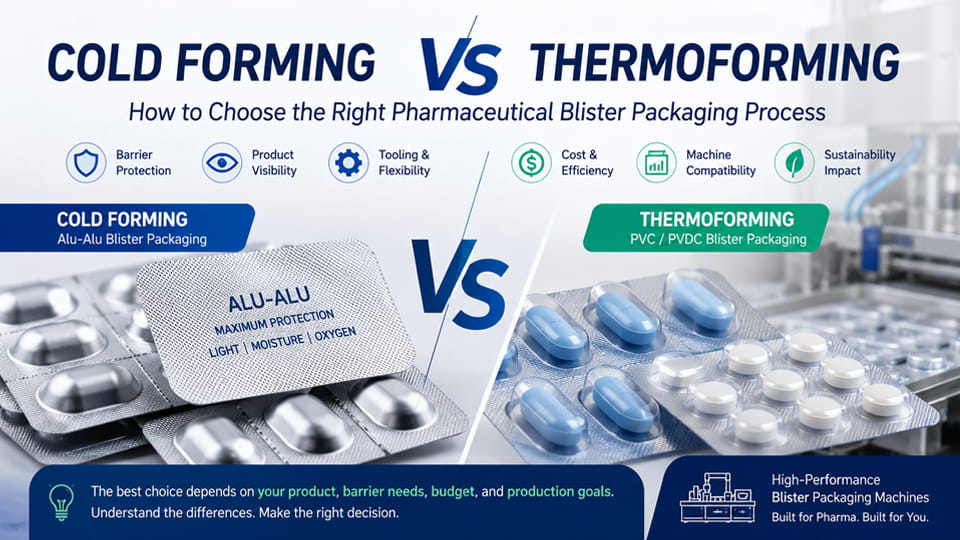
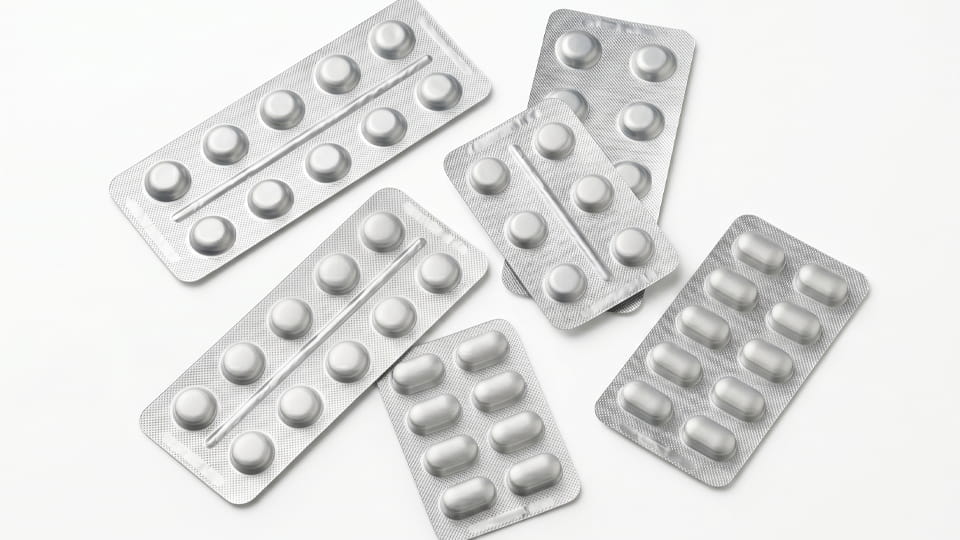
Dược phẩm thường được đóng gói dạng vỉ để bảo vệ liều lượng đơn vị và kháng cáo về thời hạn sử dụng. Trong bao bì vỉ, hai phương pháp tạo hình chính là ép nóng Và hình thành lạnh. Định hình nhiệt làm nóng lưới nhựa (như PVC hoặc PET) cho đến khi dẻo rồi hút chân không hoặc ép vào khuôn. Hình thành lạnh, ngược lại, sử dụng phương pháp dập áp suất cao trên tấm nhôm nhiều lớp ở nhiệt độ phòng. Mỗi phương pháp sử dụng các nguyên liệu khác nhau và cho kết quả rất khác nhau: vỉ ép nhiệt trong suốt và chi phí thấp hơn, trong khi hình thành lạnh (Mọi thời đại) mụn nước mờ đục nhưng có khả năng bảo vệ hàng rào cao hơn nhiều. Hướng dẫn này chia nhỏ cách chúng hoạt động, sự khác biệt chính (rào cản, trị giá, tốc độ, vân vân.), và cách chọn phương pháp và máy phù hợp cho sản phẩm của bạn.
Định hình nhiệt là gì?
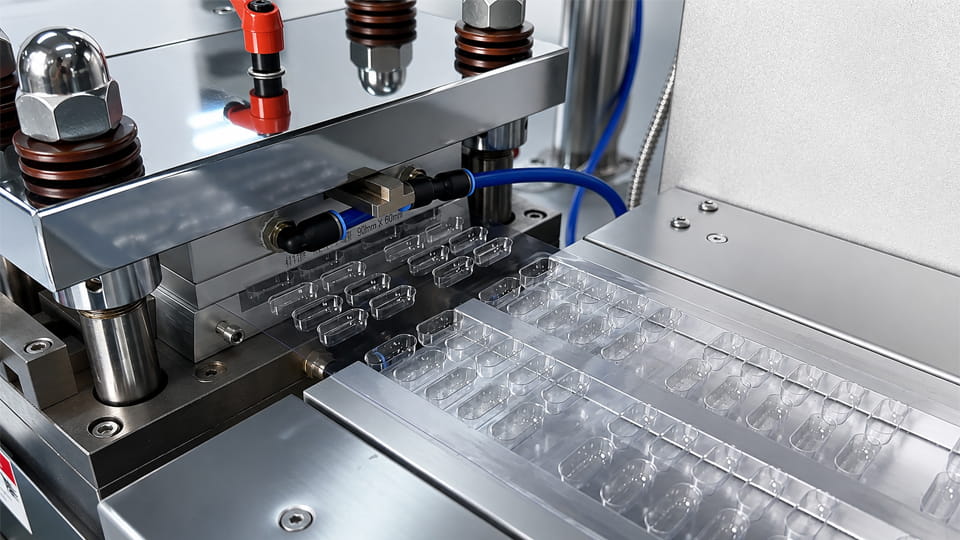
Thermoforming bao bì vỉ làm nóng tấm nhựa cho đến khi nó mềm ra và sau đó tạo thành các lỗ rỗng bằng chân không hoặc áp suất. Đơn vị kiểm soát nhiệt độ (thường là 150–180°C) làm nóng PVC hoặc màng nhựa nhiệt dẻo khác, sau đó được tạo hình trên khuôn. Sau khi phim nguội, các khoang hình thành được lấp đầy bằng sản phẩm và bịt kín bằng giấy bạc hoặc nắp giấy.
Quá trình này có khả năng thích ứng cao: màng hình thành phổ biến bao gồm PVC, THÚ CƯNG, PP, hoặc copolyme, đôi khi có lớp phủ rào cản (PVDC, COC, PCTFE, vân vân.). Thermoforming mang lại tính linh hoạt trong thiết kế cao - hình dạng vỉ có thể sâu hoặc phức tạp (sử dụng phích cắm hỗ trợ) mà không thay đổi vật liệu cơ bản. Nó cũng tiết kiệm chi phí cho các hoạt động lớn: màng nhựa nhiệt dẻo không đắt và máy chạy ở tốc độ cao. Ưu điểm chính là khả năng chi trả và thông lượng – như một nguồn lưu ý, “Ưu điểm chính của PVC là chi phí thấp và dễ dàng tạo hình nhiệt”.
Ưu điểm của nhiệt luyện
Chi phí vật liệu thấp hơn: Phim nhựa (ngay cả với lớp phủ rào cản) rẻ hơn nhiều so với lá kim loại nhiều lớp. Điều này làm cho chi phí đơn vị thấp hơn cho sản xuất lớn.
Tốc độ cao hơn: Máy ép nóng thường có chu kỳ nhanh hơn. Ví dụ, dây chuyền ép vỉ nhiệt hiện đại có thể chạy tốt trên 150 gói/phút, cao hơn tốc độ dạng lạnh thông thường.
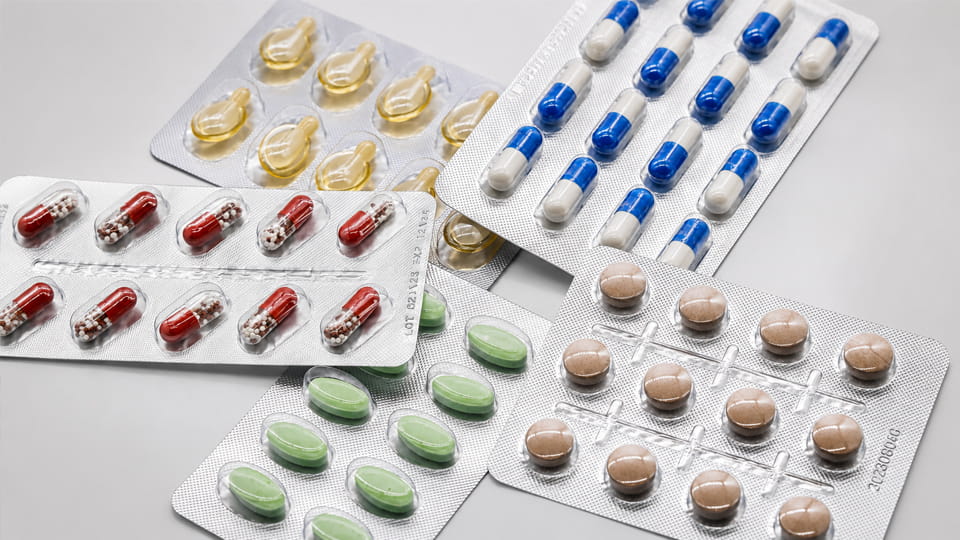
Khả năng hiển thị sản phẩm: Gói PVC/PET trong suốt cho phép người dùng nhìn thấy viên thuốc hoặc viên nén bên trong. Sự minh bạch này tốt cho sự hấp dẫn của người tiêu dùng (ví dụ. bán lẻ vitamin) và để kiểm tra trực quan.
Thiết kế linh hoạt: Có thể đạt được hình dạng khoang phức tạp hoặc vết lõm sâu bằng màng gia nhiệt (thường được hỗ trợ bằng chân không hoặc hỗ trợ cắm). Nó cũng tích hợp dễ dàng với các quy trình niêm phong tốc độ cao và điền nhanh.
Hạn chế ép nhiệt
Rào chắn bảo vệ: Một màng PVC trơn chỉ cung cấp một vừa phải rào cản độ ẩm và oxy. PVC không tráng có tốc độ truyền hơi nước cao (ví dụ. ~3g/m2·ngày ở độ ẩm 90%RH). Để cải thiện thời hạn sử dụng, túi giữ nhiệt phải sử dụng màng nhiều lớp tốn kém (ví dụ. PVC/PVDC hoặc tấm nhựa PVC/PCTFE) hoặc màng dày hơn. Thậm chí sau đó, rào cản thường ở dưới mức mà lá nhôm đạt được.
Độ nhạy sáng: Phim trong suốt cho phép tia UV và ánh sáng nhìn thấy xuyên qua. Điều đó có nghĩa là các vỉ thuốc được định hình bằng nhiệt không lý tưởng cho các loại thuốc nhạy cảm với ánh sáng – chúng hầu như không có khả năng chống tia cực tím trừ khi bạn thêm chất phụ gia ngăn tia cực tím.
Thời hạn sử dụng hạn chế: Dành cho các API phản ứng hoặc nhạy cảm với độ ẩm cao, gói định hình nhiệt (ngay cả với lớp phủ) thường mang lại sự ổn định ngắn hơn. ghi chú Wikipedia: “những bất lợi [của PVC] là rào cản kém chống lại sự xâm nhập của hơi ẩm và oxy”.
Chi phí dụng cụ cứng nhắc: Trong khi máy móc thường rẻ hơn, tạo hình nhiệt sâu có thể yêu cầu khuôn chính xác và khuôn hỗ trợ phích cắm, thêm vào chi phí dụng cụ.
Hình thành lạnh là gì?
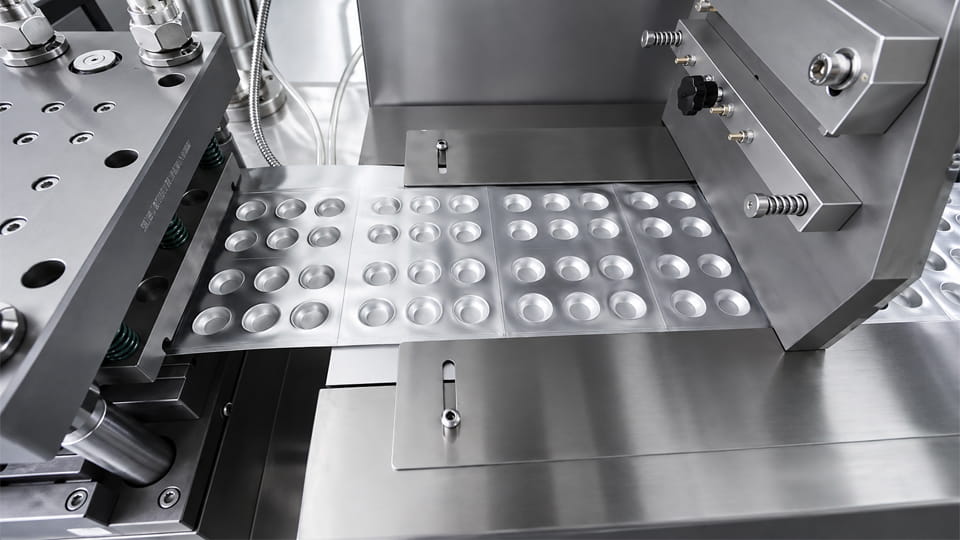
Hình thành lạnh (thường được gọi là Mọi thời đại bao bì vỉ) sử dụng màng nhôm nhiều lớp làm mạng định hình. Một loại tấm cán nguội điển hình là PVC/Nhôm/Polyamide, với lớp nhôm ở bên ngoài. Trong quá trình này, bộ phim là không đun nóng. Thay vì, một cú đấm áp suất cao mạnh mẽ sẽ dập giấy bạc vào các lỗ ở nhiệt độ phòng. Nhôm dãn ra nhưng biến dạng dẻo, và nó giữ hình dạng khoang sau khi tem được gỡ bỏ. Mỗi khoang đầy sau đó được niêm phong (thường có nắp đậy bằng nhôm hoặc giấy bạc).
Vì tạo hình nguội không làm nóng vật liệu, nó tránh được bất kỳ áp lực nhiệt nào đối với các loại thuốc nhạy cảm. Kết quả là một vết phồng rộp hoàn toàn mờ đục (không xem được nội dung) nhưng cung cấp một xuất sắc rào cản. Lá nhôm ngăn chặn gần như toàn bộ độ ẩm, ôxy, và ánh sáng từ việc tiếp cận thuốc, có thể kéo dài thời hạn sử dụng rất nhiều.
Ưu điểm tạo hình nguội
Rào cản vượt trội: Các lớp nhôm làm cho vỉ gần như không thấm nước. Như Wikipedia ghi chú: “Ưu điểm chính của vỉ giấy bạc dạng lạnh là việc sử dụng nhôm tạo ra một rào cản gần như hoàn toàn đối với nước và oxy., cho phép gia hạn thời hạn sử dụng sản phẩm”. Đây là lý do vì sao vỉ Alu-Alu được dùng để hút ẩm, nhạy cảm với oxy, hoặc dược phẩm nhạy cảm với ánh sáng.
Bảo vệ độ ẩm và ánh sáng: Vỉ tạo lạnh giữ ẩm, ôxy Và tắt đèn. Ví dụ, lá nhiều lớp ngăn chặn hoàn toàn tia cực tím/ánh sáng nhìn thấy và tạo thành lớp bịt kín xung quanh mỗi liều. Điều này ảnh hưởng đến hiệu lực của thuốc bị phân hủy nhanh chóng trong không khí ẩm hoặc ánh sáng mạnh..
Tính linh hoạt của vật liệu: Mạng hình thành (PVC/Alu/PA) vẫn còn một mặt PVC, giúp giữ hình dạng túi và mang lại độ đàn hồi nhất định, trong khi nhôm mang lại sự bảo vệ. Điều này làm cho khoang mạnh mẽ và nông, thường là đủ cho hầu hết máy tính bảng và viên nang.
Hạn chế hình thành lạnh
Chi phí vật liệu cao hơn: Màng nhôm đắt hơn nhiều so với màng nhựa. Giấy bạc có nhiều lớp (ví dụ. 9–15μm Al cộng với 80–100μm các lớp khác) và các sáng tác chuyên biệt, Vì vậy chi phí nguyên liệu cho mỗi gói cao. Một nguồn ghi chú cụ thể “chi phí cho vỉ ép lạnh có xu hướng cao hơn so với ép nóng”.
Tốc độ chậm hơn: Do quá trình dập và cần phải xử lý giấy bạc (không co giãn được như nhựa), máy dạng nguội chạy ở tốc độ thấp hơn. Như một bản tóm tắt chỉ ra, vỉ giấy bạc dạng lạnh có “tốc độ sản xuất chậm hơn so với ép nóng”.
Không có khả năng hiển thị: Cả hai mặt của vỉ đều là nhôm (hoặc mặt trên là nhôm), nên người dùng hoàn toàn không thể nhìn thấy sản phẩm. Điều này hạn chế sử dụng đối với các sản phẩm không yêu cầu xác nhận trực quan trên kệ. (Điều đó cũng có nghĩa là các gói tuân thủ phải có nhãn in rõ ràng, vì bạn không thể kiểm tra nội dung bằng mắt.)
Độ mòn máy: Dụng cụ và khuôn dập nguội chịu tải nặng, vì vậy máy móc phải rất chắc chắn. Đục và khuôn phản phải được chế tạo chính xác và thường cần thép dày hơn, thêm bảo trì.
Kích thước gói lớn hơn: Vì nhôm không co dãn nhiều như nhựa, các khoang hình thành lạnh thường nông hơn hoặc có đường viền xung quanh lớn hơn. Wikipedia lưu ý rằng gói Alu-Alu thường kết thúc “kích thước lớn hơn của thẻ vỉ” và tường túi ít dốc hơn.
Tạo hình nguội và Tạo hình nhiệt: Sự khác biệt chính
Bảng dưới đây nêu bật những khác biệt chính giữa bao bì dạng vỉ ép nóng và tạo hình nguội:
Nhân tố
Thermoforming
Hình thành lạnh (Mọi thời đại)
Quá trình hình thành
Đun nóng màng nhựa cho đến khi mềm, sau đó tạo chân không/áp suất vào các khoang.
Phim nhựa (PVC, THÚ CƯNG, PP, thường có lớp phủ rào cản như PVDC).
Lá nhôm nhiều lớp (ví dụ. Alu/PVC/PA).
rào cản (độ ẩm/không khí)
Vừa phải (Chỉ riêng PVC là có thể thấm được; Màng phủ PVDC cải thiện rào cản).
Tuyệt vời - lá nhôm gần như không thấm nước và oxy.
Bảo vệ ánh sáng
Hạn chế - nhựa trong không có rào cản tia cực tím / ánh sáng (trừ khi sắc tố được thêm vào).
Hoàn thiện – giấy bạc mờ chặn tất cả ánh sáng.
Khả năng hiển thị
Minh bạch - khách hàng có thể nhìn thấy sản phẩm.
Đục – sản phẩm ẩn bên trong.
Tốc độ sản xuất
Nói chung cao hơn (dòng sản lượng cao).
Nói chung là chậm hơn (tốc độ giới hạn dập cơ học).
Vật liệu & giá máy
Thấp hơn – màng nhựa rẻ hơn, máy móc đơn giản hơn.
Cao hơn – tấm nhôm có giá cao hơn, và máy móc yêu cầu máy ép mạnh mẽ.
Các trường hợp sử dụng điển hình
Thuốc OTC khối lượng lớn, Vitamin, máy tính bảng tiêu chuẩn; khi tầm nhìn & vấn đề chi phí.
Độ ẩm- hoặc thuốc nhạy cảm với ánh sáng (kháng sinh, sinh học), cần thời hạn sử dụng lâu dài.
Mỗi yếu tố trên phản ánh sự đánh đổi giữa hai phương pháp. Thermoforming có xu hướng sử dụng vật liệu rẻ hơn và chạy nhanh hơn, trong khi tạo hình nguội sử dụng lá kim loại đắt tiền để bảo vệ hàng đầu.
So sánh chi tiết: 8 Các yếu tố chính
Để tóm tắt, đây là tám yếu tố chính tạo nên sự khác biệt giữa tạo hình nhiệt và tạo hình nguội:
Phương pháp hình thành:
Thermoforming: Tấm nhựa là đun nóng, sau đó tạo chân không/áp suất trên khuôn.
Hình thành lạnh: Tấm kim loại là đóng dấu lạnh với áp suất cao; nhôm giữ hình dạng.
Nguyên vật liệu:
Thermoforming: Sử dụng những bộ phim như PVC, THÚ CƯNG, PP (thường có lớp phủ rào cản PVDC/COC/COP). Ví dụ, nhiều dòng vỉ sử dụng nhựa PVC không dẻo (RPVC) như mạng lưới hình thành.
Hình thành lạnh: Sử dụng một tấm nền nhôm (thường là PVC/nhôm/nylon). “Giấy bạc dạng nguội” này được thiết kế đặc biệt để tạo hình có rào cản cao.
Độ ẩm & Rào cản khí:
Thermoforming: Màng PVC trần có rào cản kém (WVTR ~3g/m2·ngày, OTR ~20mL/m2·ngày). Màng PVC nhiều lớp (được phủ bằng PVDC hoặc được ép đùn bằng PCTFE/COC) có thể cải thiện điều này, Nhưng không bao giờ đến mức lá kim loại. Wikipedia lưu ý nhược điểm của PVC là “Rào cản kém chống lại độ ẩm và oxy”.
Hình thành lạnh:Xuất sắc. Lá nhôm tạo ra một rào cản gần như không thấm nước. Như đã lưu ý, mụn nước hình thành lạnh cho một “gần như hoàn toàn có rào cản đối với nước và oxy”, kéo dài thời hạn sử dụng rất nhiều.
Bảo vệ ánh sáng:
Thermoforming: Phim trong suốt cho phép tất cả ánh sáng xuyên qua (trừ khi bạn sử dụng màng màu đặc biệt hoặc thêm chất chống tia cực tím). Đây là lý do tại sao vỉ nhựa PVC trong suốt lại được sử dụng không được khuyên dùng cho các thuốc nhạy cảm với ánh sáng.
Hình thành lạnh: Hoàn thành. Khối lá mờ đục 100% ánh sáng, bảo vệ API cảm quang.
Tốc độ sản xuất:
Thermoforming: Thông thường cao hơn. Bởi vì màng nhựa được nạp nhanh và chu kỳ hình thành nhanh, những dòng này thường vượt quá 150–200 gói/phút (trên máy quay cao cấp).
Hình thành lạnh: Nói chung là chậm hơn. Việc dập và xử lý giấy bạc hạn chế thông lượng. Ngay cả những máy dạng nguội hàng đầu cũng thường ở mức dưới 100 gói/phút cho thiết kế Alu-Alu sâu.
Trị giá (Vật liệu & Thiết bị):
Thermoforming: Màng nhựa thô có giá trên mỗi mét tuyến tính thấp hơn nhiều so với màng 3 lớp. Máy móc đơn giản hơn (chỉ là tấm sưởi ấm và trạm chân không), vì vậy chi phí máy ban đầu thường thấp hơn. Một nguồn tóm tắt, “Ưu điểm chính” của PVC là chi phí thấp và dễ tạo hình.
Hình thành lạnh: Cao hơn. Giấy bạc đặc biệt đắt tiền, và máy móc phải mạnh mẽ hơn. Ghi chú nghiên cứu “thiết bị đóng gói vỉ dạng lạnh … đặc biệt phù hợp với các sản phẩm nhạy cảm với độ ẩm,” nhưng với chi phí cao.
Khả năng hiển thị sản phẩm:
Thermoforming: Có – sản phẩm có thể nhìn thấy qua lớp nhựa trong. Tốt cho trưng bày bán lẻ hoặc kiểm tra liều lượng dễ dàng.
Hình thành lạnh: Không - hoàn toàn mờ đục.
Ứng dụng điển hình:
Thermoforming: Thuốc OTC tiêu chuẩn và viên/viên nang theo toa trong đó rào cản cao không quan trọng (ví dụ. thuốc giảm đau, Vitamin). Dược phẩm số lượng lớn, chất bổ sung, hoặc bất kỳ sản phẩm nào cần đường truyền tốc độ cao nhanh chóng. Cũng được sử dụng cho bao bì vỉ y tế của các thiết bị không vô trùng.
Hình thành lạnh: Thuốc cao cấp hoặc quan trọng (ví dụ. kháng sinh, API nhạy cảm, enzyme đóng gói chân không) và bất kỳ sản phẩm nào yêu cầu bảo vệ độ ẩm/ánh sáng tối đa và thời hạn sử dụng lâu dài. Thường thấy ở PTP (đẩy qua) gói cho liều lượng rất ổn định, hoặc cho các sản phẩm được phân phối trên toàn cầu với khí hậu thay đổi.
Những khác biệt này cho thấy ép nóng vượt trội về tốc độ, chi phí và khả năng hiển thị, trong khi hình thành lạnh vượt trội trong việc bảo vệ và ổn định. Trong thực tế, nhà thiết kế cân nhắc những yếu tố này với yêu cầu của sản phẩm.
Chọn phương pháp phù hợp: Hướng dẫn dành cho người mua máy móc dược phẩm
Khi lựa chọn giữa tạo hình nguội và tạo hình nhiệt (và tương ứng Máy đóng gói phồng rộp), hỏi:
Nhu cầu ổn định sản phẩm: là của bạn API hoặc công thức rất nhạy cảm với độ ẩm, oxy hoặc ánh sáng? Nếu như Đúng, hình thành lạnh (Mọi thời đại) mụn nước thường được yêu cầu. Nếu sản phẩm của bạn tương đối ổn định (ví dụ. máy tính bảng tiêu chuẩn), có thể tạo hình nhiệt là đủ.
Thời hạn sử dụng mong muốn: Sản phẩm có cần gia hạn sử dụng không (18+ tháng)? Gói dạng lạnh có thể kéo dài đáng kể thời hạn sử dụng do rào cản vượt trội của chúng. Để có thời hạn sử dụng ngắn (<1 năm) các sản phẩm, Gói PVC thường được chấp nhận.
Khối lượng và tốc độ sản xuất: Bạn có cần thông lượng rất cao? Dây chuyền ép nóng thường chạy nhanh hơn, vì vậy chúng phù hợp với sản xuất quy mô lớn. Đối với số lượng nhỏ thuốc rất có giá trị, phương pháp dạng lạnh chậm hơn có thể được chấp nhận.
Hạn chế về chi phí: Nếu ngân sách eo hẹp và yêu cầu rào cản vừa phải, ép nóng tiết kiệm hơn. Ví dụ, Jinlupacking lưu ý rằng “chi phí cho các vỉ thuốc dạng lạnh có xu hướng cao hơn so với ép nóng”. Tính đến cả chi phí vật liệu và thiết bị trong phân tích TCO của bạn.
quy định / Nhu cầu thị trường: Một số thị trường hoặc công thức có thể yêu cầu bao bì nhất định. Ví dụ, thông số kỹ thuật quy định có thể yêu cầu giấy Alu-Alu cho một loại kháng sinh cụ thể, hoặc hoạt động tiếp thị có thể ủng hộ việc đóng gói trong suốt cho một loại vitamin có thương hiệu.
Khả năng tương thích của máy: Hãy cân nhắc xem bạn muốn một máy cho cả hai phương pháp hay các dòng riêng biệt. Một số máy móc hiện đại (giống như của Jinlu Máy ép vỉ DPP-180PRO) có thể được cấu hình cho một trong hai nhiệt- hoặc tạo hình nguội, nhưng nhiều công ty sử dụng dây chuyền chuyên dụng để tối ưu hóa từng quy trình.
Máy đóng vỉ DPP-180pro cho viên nang
Một nguyên tắc nhỏ: Sử dụng phương pháp ép nóng cho các loại thuốc tiêu chuẩn nơi khả năng hiển thị của khách hàng và chi phí là yếu tố then chốt; sử dụng tạo hình nguội cho các nhu cầu có rào cản cao, nơi việc bảo vệ là điều tối quan trọng.
Khi nào nên chọn phương pháp ép nóng
Sản phẩm của bạn không vô cùng độ ẩm- hoặc nhạy cảm với ánh sáng (máy tính bảng OTC cơ bản, Vitamin).
Tốc độ sản xuất cao và chi phí thấp là ưu tiên hàng đầu.
Bạn muốn bao bì trong suốt để có thể nhìn thấy sản phẩm.
Thời hạn sử dụng dự kiến tương đối ngắn hoặc vừa phải.
Bạn dự định sử dụng màng nhựa tiêu chuẩn (PVC, Được phủ PVDC/PVDC, COC, vân vân.).
Máy đóng gói vỉ của bạn được thiết lập cho các trạm tạo hình được làm nóng.
Khi nào nên chọn tạo hình nguội
Sản phẩm của bạn là đánh giá cao nhạy cảm với độ ẩm/oxy hoặc nhạy cảm với ánh sáng (ví dụ. viên hút ẩm, sterol, sinh học nhất định).
Bạn cần rào cản tuyệt đối tốt nhất và thời hạn sử dụng lâu nhất.
Bạn có quãng đường chạy nhỏ hơn hoặc sẵn sàng đánh đổi tốc độ để được bảo vệ.
Bạn có thể chấp nhận bao bì mờ đục (hoặc sử dụng nhãn mác nặng nề để phân biệt).
Ngân sách cho phép chi phí vật liệu cao hơn (tấm alu-lá mỏng).
Máy móc của bạn (hoặc nhà cung cấp) hỗ trợ quá trình tạo hình nguội với khuôn kim loại chắc chắn.
Ví dụ, nhiều vỉ dược phẩm dạng lạnh có nhãn “Mọi thời đại” trên giấy bạc. Chúng được chọn chính xác khi tối đa hóa sự ổn định của thuốc là mục tiêu.
So sánh chi phí
Chi phí là yếu tố quan trọng cần cân nhắc. Chi phí vật liệu: màng PVC (ngay cả với lớp phủ PVDC) rẻ hơn nhiều so với tấm nhôm 3 lớp. Trên cơ sở mỗi đơn vị, vật liệu của một gói được định hình bằng nhiệt có thể chỉ có giá vài xu, trong khi gói giấy bạc Alu-Alu tương đương có thể là bội số của gói đó. Một nguồn tin trong ngành xác nhận rằng “chi phí cho vỉ ép lạnh có xu hướng cao hơn so với ép nóng”.
Chi phí máy và OEE: Máy ép nóng thường đơn giản hơn (bộ phận sưởi ấm và buồng chân không) và thường rẻ hơn để duy trì. Máy dạng nguội cần đột dập mạnh và đôi khi nạp liệu kép (cho lá bên trong và bên ngoài), có thể làm tăng chi phí vốn. Tuy nhiên, nếu tạo hình nguội ngăn ngừa thất thoát sản phẩm (ví dụ. khỏi sự hư hỏng), chi phí trả trước cao hơn có thể hợp lý. Luôn cân nhắc tổng chi phí sở hữu, bao gồm cả thời gian ngừng hoạt động, BẢO TRÌ, và chất thải vật chất, không chỉ tốc độ đường truyền.
Dây chuyền lựa chọn và đóng gói máy
Sự lựa chọn của bạn cũng quyết định dây chuyền đóng gói. Máy đóng gói vỉ được thiết kế cho quy trình này hay quy trình khác. MỘT máy ép vỉ nhiệt sẽ có trạm sưởi ấm và chân không; Một máy tạo vỉ lạnh sẽ có một máy ép lớn và máy cấp giấy bạc. Một số máy hybrid (thường trong nghiên cứu hoặc sử dụng ở quy mô thấp) có thể chuyển đổi chế độ, nhưng một dòng nhất định thường được tối ưu hóa cho một phương pháp.
Ví dụ, Jinlu Máy vỉ con lăn DPH-270Max có khả năng của cả hai phương pháp, nhưng hầu hết các dây chuyền sản xuất sẽ được dành riêng. Nếu bạn chọn ép nóng, đảm bảo của bạn thiết bị đóng gói vỉ ủng hộ bộ phim bạn đã chọn (độ dày PVC, loại lớp phủ) và có đủ điều khiển nhiệt độ. Nếu bạn chọn tạo hình nguội, đảm bảo máy của bạn có thể xử lý các cuộn giấy bạc Alu-Alu và có lực dập cần thiết.
Khi nói chuyện với nhà cung cấp, đề cập đến nhu cầu sản phẩm của bạn: giả sử bạn cần “máy đóng gói vỉ cho bao bì vỉ Alu-Alu” hoặc “máy đóng gói vỉ ép nóng cho màng PVC/PVDC”.
Làm thế nào để quyết định: Danh sách kiểm tra nhanh
Đánh giá độ nhạy của sản phẩm: Kiểm tra xem thuốc của bạn có cần được bảo vệ khỏi độ ẩm không, ôxy, hoặc ánh sáng. Nếu như bất kì trong số này rất quan trọng, hình thành lạnh có thể được yêu cầu.
Mục tiêu về thời hạn sử dụng: Có cần gia hạn thời hạn không? Vì 2+ thời hạn sử dụng năm, rào chắn Alu-Alu là sự lựa chọn an toàn nhất.
Yêu cầu về hình ảnh: Bạn muốn khách hàng nhìn thấy sản phẩm? Nếu có, ủng hộ việc tạo nhiệt (trong suốt).
Khối lượng sản xuất & Trị giá: Đối với khối lượng rất cao và độ nhạy chi phí, ép nhiệt thường thắng. Nếu khối lượng thấp hơn và giá thành sản phẩm cao, tốc độ chậm hơn của hình thành nguội có thể được chấp nhận.
Khả năng của máy: Xác nhận rằng máy vỉ có thể xử lý vật liệu đã chọn. Nhiều nhà sản xuất có thể cung cấp cả hai loại, nhưng bạn cần có công cụ và thiết lập dây chuyền chính xác.
Nếu nghi ngờ, tham khảo ý kiến chuyên gia: các kỹ sư đóng gói thường sẽ mô hình hóa độ ổn định của loại thuốc cụ thể trong các vật liệu khác nhau. Nhưng một heuristic tốt là hình thành lạnh (Chào mừng) mang lại sự bảo vệ tốt nhất với chi phí cao hơn, và ép nhiệt (nhựa) mang lại khả năng hiển thị và thông lượng tốt nhất với chi phí thấp hơn.
Phần kết luận
Tạo hình nguội và tạo hình nhiệt đều có những ưu và nhược điểm rõ ràng. Thermoforming (Dựa trên PVC) nhanh, trong suốt, và tiết kiệm chi phí, làm cho nó trở nên lý tưởng cho nhiều loại dược phẩm thông thường. Hình thành lạnh (Chào mừng) chậm hơn và tốn kém hơn, nhưng nó mang lại độ ẩm vượt trội, bảo vệ oxy và ánh sáng cho giá trị cao, thuốc nhạy cảm. Trong thực tế, gói ép nóng được sử dụng cho máy tính bảng tiêu chuẩn, vitamin và sản phẩm OTC, trong khi gói dạng lạnh được chọn cho các loại thuốc nhạy cảm với độ ẩm hoặc hết hạn sử dụng lâu dài.
Cuối cùng, quyết định của bạn nên được thúc đẩy bởi yêu cầu sản phẩm. Nếu rào cản cuối cùng là cần thiết, bạn có thể sẽ chọn gói vỉ alu-alu trên máy đóng gói vỉ tạo hình lạnh. Nếu bạn cần tốc độ, khả năng hiển thị và tiết kiệm chi phí, một gói ép nóng PVC trên máy ép vỉ ép nóng có thể là đủ.
Hãy thoải mái liên hệ với các chuyên gia đóng gói của chúng tôi để được hướng dẫn. Chúng tôi có thể đề nghị quyền Máy đóng gói phồng rộp tự động và quy trình cho sản phẩm của bạn – cho dù bạn cần dây chuyền ép vỉ nhiệt tốc độ cao hay dạng nguội (Chào mừng) máy vỉ.
Luôn tuân thủ và tiết kiệm chi phí với sự lựa chọn đúng đắn về bao bì dạng vỉ!
Những câu hỏi thường gặp về vỉ tạo hình lạnh và vỉ định hình nhiệt
Sự khác biệt giữa tạo hình nguội và tạo hình nhiệt?
Thermoforming sử dụng nhiệt để định hình màng nhựa vào các lỗ phồng rộp, trong khi tạo hình nguội ép một cách cơ học một lớp màng nhôm thành hình dạng mà không cần nhiệt. Quá trình ép nóng thường nhanh hơn và tiết kiệm chi phí hơn, trong khi tạo hình nguội mang lại khả năng bảo vệ hàng rào mạnh mẽ hơn.
Tạo hình nguội có tốt hơn tạo hình nhiệt không?
Không nhất thiết. Tạo hình nguội tốt hơn cho các sản phẩm cần được bảo vệ chắc chắn khỏi độ ẩm, ôxy, hoặc ánh sáng, trong khi ép nóng thường được ưu tiên cho các sản phẩm ổn định có chi phí, tốc độ, và khả năng hiển thị sản phẩm là ưu tiên.
Cái nào rẻ hơn, tạo hình lạnh hoặc ép nóng?
Thermoforming thường ít tốn kém hơn. Vật liệu tạo hình bằng nhựa thường có giá thấp hơn so với các loại vật liệu cán mỏng làm từ nhôm được sử dụng để đóng gói dạng vỉ Alu-Alu dạng lạnh, mặc dù tổng chi phí cũng phụ thuộc vào tốc độ máy, dụng cụ, và yêu cầu sản xuất.
Cung cấp khả năng bảo vệ độ ẩm tốt hơn?
Tạo hình nguội thường cung cấp khả năng bảo vệ độ ẩm tốt hơn. Tấm laminate dựa trên nhôm của nó cung cấp một rào cản rất chắc chắn, làm cho nó phù hợp với các sản phẩm dược phẩm nhạy cảm với độ ẩm. Yêu cầu thực tế phải được xác nhận thông qua nghiên cứu về độ ổn định của sản phẩm và bao bì.
Cái nào nhanh hơn, tạo hình lạnh hoặc ép nóng?
Tạo hình bằng nhiệt thường nhanh hơn tạo hình nguội. Quá trình hình thành của nó rất phù hợp với sản xuất khối lượng lớn, trong khi tạo hình nguội thường chạy ở tốc độ thấp hơn vì lớp nhôm đòi hỏi phải tạo hình cơ học.
Tại sao bao bì vỉ Alu-Alu được sử dụng cho các loại thuốc nhạy cảm?
Bao bì dạng vỉ Alu-Alu mang lại khả năng bảo vệ chống ẩm tuyệt vời, ôxy, và ánh sáng. Do đó, nó thường được xem xét cho các sản phẩm dược phẩm có độ nhạy cao với môi trường hoặc yêu cầu về thời hạn sử dụng..
Định hình nhiệt có thích hợp cho đóng gói vỉ dược phẩm không?
Đúng. Thermoforming được sử dụng rộng rãi cho máy tính bảng và viên nang khi sản phẩm không yêu cầu mức độ bảo vệ hàng rào cao nhất. Các vật liệu như PVC và PVC/PVDC có thể cung cấp các mức độ chống ẩm khác nhau tùy thuộc vào công thức và thông số kỹ thuật của bao bì.
Sự khác biệt giữa vỉ Alu-Alu và vỉ dạng nhiệt là gì?
Vỉ Alu-Alu sử dụng tấm ép định hình bằng nhôm và có màu đục, trong khi vỉ thermoform thường sử dụng màng nhựa và có thể trong suốt. Alu-Alu mang đến khả năng bảo vệ hàng rào mạnh mẽ hơn, trong khi ép nóng thường mang lại khả năng hiển thị tốt hơn và chi phí thấp hơn.
Một máy đóng gói vỉ có thể xử lý cả tạo hình nguội và tạo hình nhiệt không??
Thường không có thiết kế hoặc cấu hình máy cụ thể. Hai quy trình yêu cầu hệ thống tạo hình khác nhau, dụng cụ, và xử lý vật liệu. Nếu cả hai định dạng đều cần thiết, nhà sản xuất máy nên xác nhận tính tương thích trước khi mua.
Làm cách nào để lựa chọn giữa máy tạo vỉ lạnh và máy ép vỉ nhiệt?
Bắt đầu với độ nhạy của sản phẩm, thời hạn sử dụng cần thiết, vật liệu đóng gói, Khối lượng sản xuất, và chi phí mục tiêu. Chọn tạo hình nguội khi khả năng bảo vệ hàng rào cao là rất quan trọng; chọn ép nóng khi tốc độ, khả năng hiển thị, và hiệu quả chi phí là quan trọng hơn.
Petty fu, Người sáng lập Jinlupacking, mang lại 20 năm kinh nghiệm trong lĩnh vực máy móc dược phẩm. Dưới sự lãnh đạo của ông, Jinlu đã phát triển thành một nhà cung cấp thiết kế tích hợp đáng tin cậy, sản xuất, và bán hàng. Petty đam mê chia sẻ kiến thức chuyên sâu về ngành của mình để giúp khách hàng giải quyết sự phức tạp của bao bì dược phẩm, đảm bảo họ không chỉ nhận được thiết bị, mà là mối quan hệ đối tác dịch vụ một cửa thực sự phù hợp với mục tiêu sản xuất của họ.