
Bao bì vỉ dược phẩm (ví dụ. viên nén và viên nang) thường sử dụng màng PVC hoặc PVC/PVDC trong suốt được dán kín bằng giấy bạc. Lựa chọn quyền phim vỉ là một quyết định lớn đối với bất kỳ nhà sản xuất dược phẩm nào. PVC và PVDC có thể trông giống nhau, nhưng đặc tính chống ẩm và chống oxy của chúng, hạn sử dụng, chi phí và nhu cầu xử lý rất khác nhau. Nếu bạn đang làm việc trong lĩnh vực sản xuất hoặc thu mua dược phẩm, có thể bạn đã hỏi: PVC hay PVDC là sự lựa chọn tốt hơn cho chúng ta vỉ thuốc? Hướng dẫn thân thiện này so sánh trực tiếp PVC và PVDC về bao bì dược phẩm. Chúng tôi sẽ đề cập đến từng vật liệu là gì, đặc tính rào cản và chi phí của chúng khác nhau như thế nào, và những lời khuyên thiết thực về việc lựa chọn màng vỉ phù hợp. Đến cuối, bạn sẽ biết PVC trơn hay PVC phủ PVDC (đôi khi được gọi là PVC/PVDC) phù hợp với nhu cầu sản phẩm của bạn – hoặc nếu giải pháp kết hợp có ý nghĩa nhất.
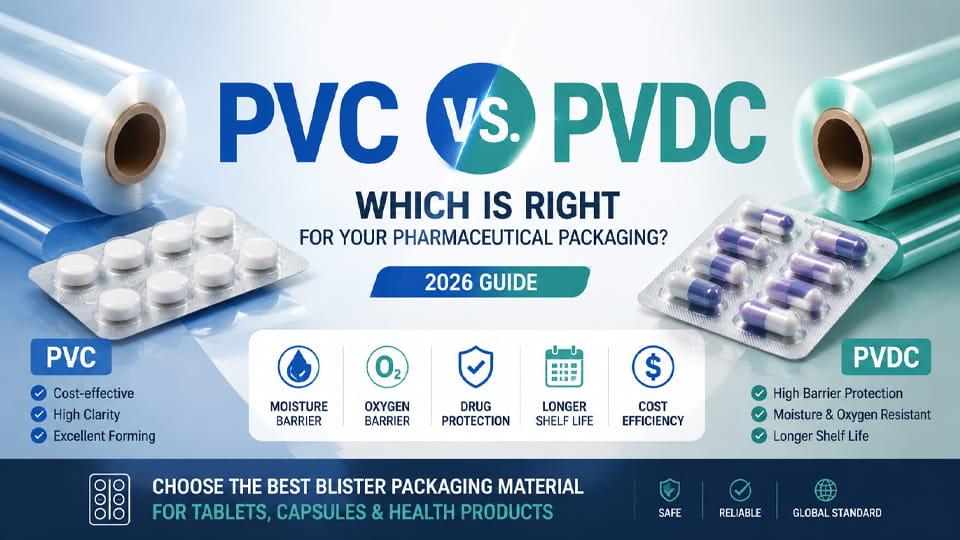
PVC (polyvinyl clorua) là rõ ràng, nhựa dẻo, các vật liệu vỉ phổ biến nhất cho máy tính bảng và viên nang. Trong vỉ dược phẩm, “PVC” luôn có nghĩa là không dẻo, PVC cứng. Màng PVC thông thường dày 200–300μm (thường là 250μm). Nó đóng vai trò là lớp nền có thể định hình của vết phồng rộp. Ưu điểm chính của PVC là chi phí thấp và dễ dàng tạo hình nhiệt. Rõ ràng (tính minh bạch tuyệt vời), bền bỉ, và tạo khuôn nhanh chóng trên dây chuyền ép nóng. Các nhà sản xuất yêu thích PVC cho các sản phẩm thông thường như máy tính bảng không kê đơn, vitamin và thuốc generic ổn định.
Màng vỉ PVC cung cấp cấu trúc tốt và khả năng hiển thị. Bạn có thể xem và đếm số lượng thuốc qua gói, và đẩy chúng ra một cách dễ dàng. PVC cũng ổn định về mặt hóa học đối với nhiều tá dược và đã được phê duyệt trong dược điển (Ph. Euro. và USP) liên hệ thuốc. Tóm lại: PVC là đáng tin cậy, phim vỉ “workhorse” dành cho nhạy cảm với chi phí, sản phẩm chống ẩm.
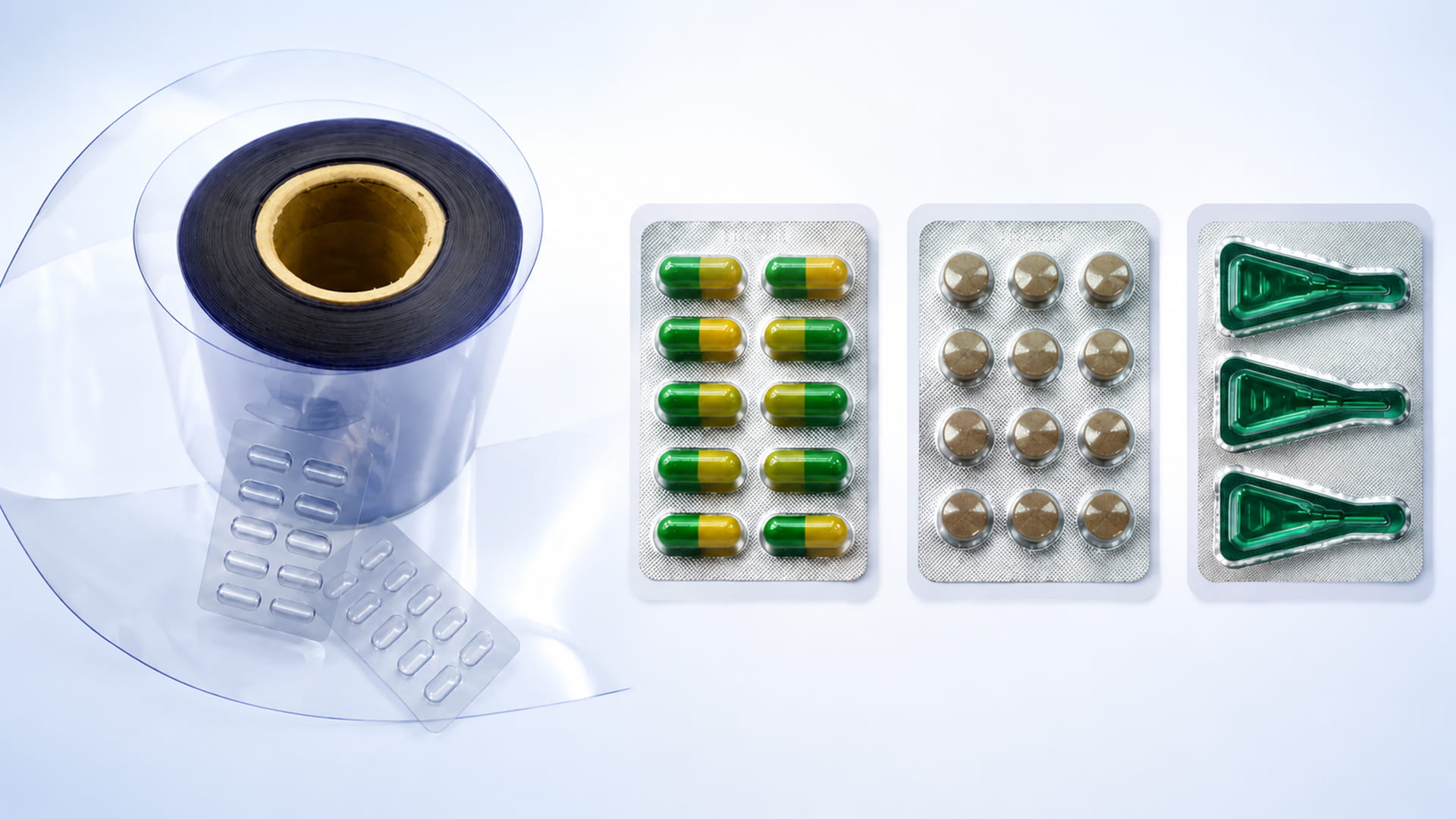
PVDC (polyvinylidene clorua) là một polyme có rào cản cao thường được sử dụng làm lớp phủ trên màng PVC. Phim PVDC nguyên chất (không tráng) rất khó để tự tạo nhiệt, vì vậy trong vỉ nó xuất hiện dưới dạng một lớp màng rất mỏng (trong cấu trúc song công hoặc triplex). Lớp PVDC chứa nhiều clo hơn trong cấu trúc hóa học của nó (CH₂CCl₂), mang lại cho nó khả năng chống ẩm và oxy vượt trội.
Trong thực tế, PVC phủ PVDC là tiêu chuẩn cho các vỉ thuốc có rào cản cao. Ví dụ, một màng song công điển hình là 250μm PVC với lớp phủ PVDC 40–120gsm. PVDC dày hơn (gsm cao hơn) mang lại WVTR thấp hơn (thấp tới 0,25g/m2/ngày) và OTR gần bằng 0. Việc tạo hình rất giống với PVC – bạn chạy màng composite trên máy ép nhiệt – nhưng bạn phải kiểm soát nhiệt độ lò để lớp PVDC không xử lý quá nhanh.
Lớp phủ PVDC thường được thi công bằng nhũ tương (gốc nước) lớp phủ, trong nhiều lần đi. Có cấp độ PVDC “tiêu chuẩn” và “siêu rào cản”. Các lớp siêu rào cản mang lại hơn hai lần khả năng chống ẩm/O₂ trên mỗi gam lớp phủ. Cấu trúc cuối cùng phổ biến bao gồm:
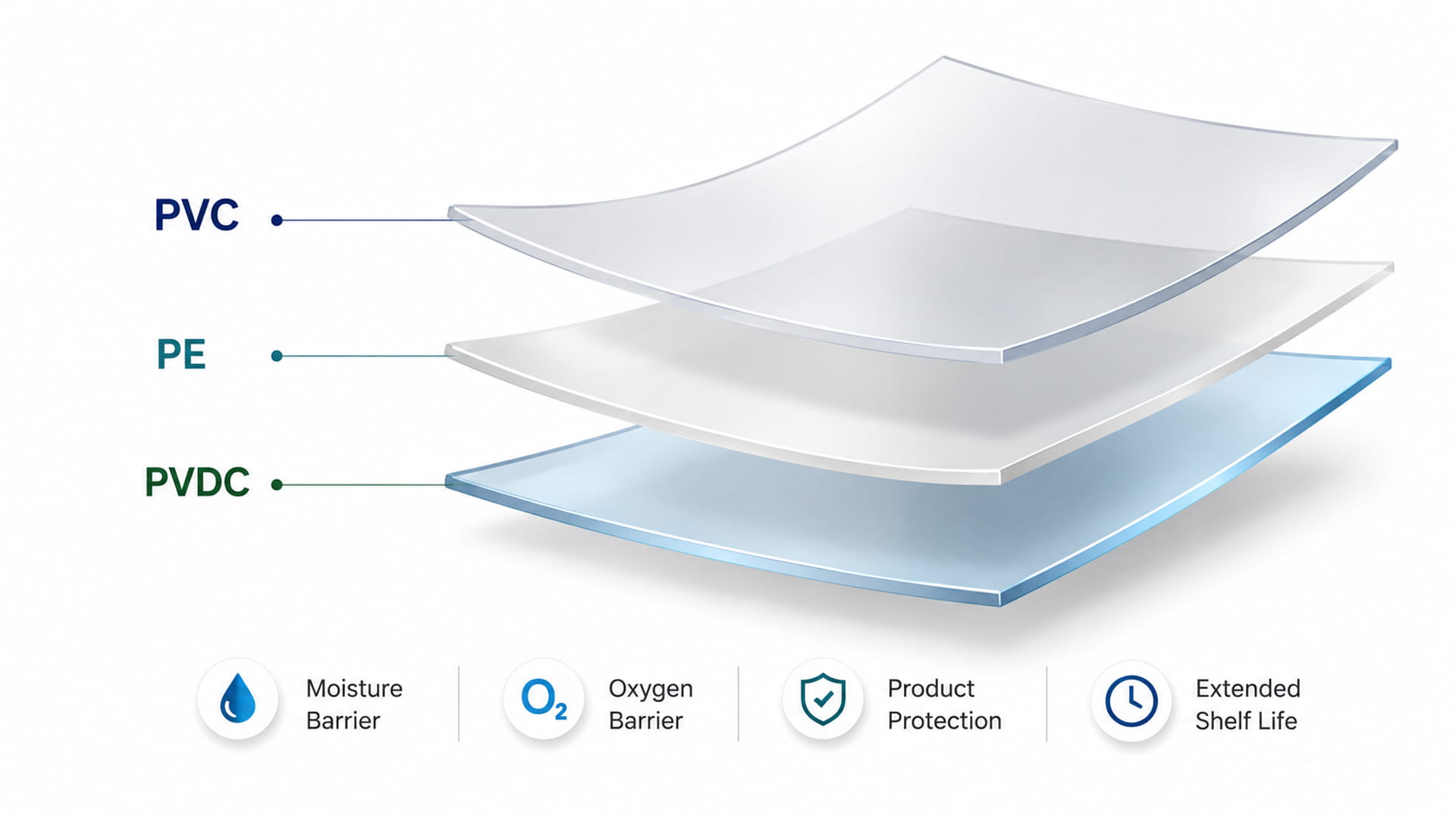
Nói một cách đơn giản: PVC tạo hình dạng vỉ, trong khi PVDC niêm phong chặt chẽ. Một vỉ thuốc được làm từ nhựa PVC trơn (với sự ủng hộ của giấy bạc) tiết kiệm và rõ ràng, nhưng chỉ cung cấp sự bảo vệ cơ bản. Gói PVC/PVDC đắt hơn nhưng làm chậm đáng kể sự xâm nhập của hơi ẩm và oxy, bảo vệ thuốc nhạy cảm lâu hơn.
| Tính năng | PVC (không tráng) | PVC/PVDC (tráng) |
| Rào cản độ ẩm | ★★☆☆☆ (vừa phải) | ★★★★★ (cao) |
| Hàng rào oxy | ★★☆☆☆ (thấp) | ★★★★★ (cao) |
| Trị giá | Thấp | Trung bình-Cao |
| Rõ ràng (Tính minh bạch) | Xuất sắc | Xuất sắc |
| Hạn sử dụng (trong bao bì) | Vừa phải (ngắn hơn) | Dài (mở rộng) |
| Dễ dàng định hình nhiệt | Dễ | Dễ (với cài đặt đã điều chỉnh) |
| Thuốc nhạy cảm (độ ẩm/O₂) | KHÔNG (không lý tưởng) | Đúng (khuyến khích) |
| Thị trường xuất khẩu/nhiệt đới | Sự phù hợp hạn chế | Sự phù hợp tốt |
| Sản phẩm thông dụng | vitamin không kê đơn, máy tính bảng | Thuốc nhạy cảm với độ ẩm, xuất khẩu |
Bàn: So sánh màng vỉ PVC và PVC/PVDC. (★ = xếp hạng rào cản, nhiều sao hơn = bảo vệ tốt hơn.)
Sự so sánh nhanh này cho thấy tại sao PVDC được chọn cho các ứng dụng đầy thách thức. PVC không tráng phủ phù hợp cho mục đích sử dụng thông thường, nhưng PVC/PVDC cho bảo vệ tốt hơn nhiều.
Bảo vệ thuốc là tất cả về hiệu suất rào cản. Độ ẩm và oxy có thể làm suy giảm API, ảnh hưởng đến hiệu lực, gây vón cục, hoặc kích hoạt những thay đổi hóa học. Riêng PVC chỉ cung cấp bảo vệ vừa phải: ở 38°C/90%RH, một màng PVC 250μm tiêu chuẩn cho phép khoảng 3.0 g/m2/ngày nước. Điều đó có nghĩa là rất nhiều độ ẩm có thể thấm qua vỉ PVC nếu tiếp xúc. Ngược lại, màng PVC/PVDC được phủ tốt (ví dụ. 250 mm PVC + 80 gsm PVDC) chỉ có thể cho phép 0.30 g/m2/ngày (10× độ ẩm ít hơn). Câu chuyện tương tự cũng xảy ra với oxy: OTR của PVC là ~20mL/m2/ngày, trong khi PVC/PVDC có thể giảm xuống ~0,1–1mL/m2/ngày.
Tại sao điều này lại quan trọng? WVTR/OTR thấp hơn có nghĩa là thời hạn sử dụng lâu hơn và ổn định. Thành phần nhạy cảm với độ ẩm (giống như một hạt sủi bọt hoặc probiotic) có thể hỏng chỉ sau 6–12 tháng bên trong PVC, nhưng vẫn ổn định 2–3 năm ở PVC/PVDC. Đường đua của nhà sản xuất thuốc WVTR (tốc độ truyền hơi nước) Và OTR (tốc độ truyền oxy) khi phát triển bao bì. Giá trị thấp hơn có nghĩa là màng là rào cản cứng rắn hơn.
Tóm lại: Màng phủ PVDC bảo vệ thuốc tốt hơn nhiều. Nếu sản phẩm của bạn nhạy cảm với độ ẩm hoặc cần thời hạn sử dụng dài, PVC/PVDC hoặc màng có rào cản cao khác thường đáng giá hơn. Riêng PVC là một sự thỏa hiệp – không sao cho đến khi yêu cầu về thời tiết hoặc kệ trong trường hợp xấu nhất nói khác đi.
Sử dụng màng vỉ PVC trơn để:
PVC là vật liệu phù hợp cho các vật dụng hàng ngày. Nghĩ Vitamin C. ở một hiệu thuốc thành phố, hoặc aspirin trong khí hậu mùa đông. Những sản phẩm này chịu được độ ẩm nhất định và sẽ không bị hỏng nhanh nếu bao bì bị rò rỉ một chút. Theo thực hành tốt nhất về dược phẩm, Màng PVC 250µm tiêu chuẩn (RPVC) được sử dụng khi hiệu quả chi phí và dễ dàng là những ưu tiên.
Ví dụ: Một công ty đóng gói viên vitamin có thể chọn PVC 250µm có nắp bằng lá nhôm. Máy tính bảng có thời hạn sử dụng 12 tháng và được bán tại các thị trường địa phương. Chi phí thấp và độ trong suốt của PVC khiến nó trở nên lý tưởng.
Sử dụng màng PVC/PVDC cho:
Nếu thuốc của bạn không thể chịu được độ ẩm hoặc oxy, PVC/PVDC thường được yêu cầu. Ví dụ, Một kháng sinh trẻ em bị ràng buộc bởi khí hậu nhiệt đới có thể vận chuyển từ Singapore đến Brazil. Sử dụng 250µm PVC với PVDC 80–100gsm (một bộ phim “song công”) có thể đạt được một 12+ thời hạn sử dụng tháng ngay cả trong điều kiện 30°C/75%RH, theo nghiên cứu trường hợp.
Ví dụ: Viên sủi Vitamin C sủi bọt (tạo ra bọt khí trong nước) cực kỳ nhạy cảm với độ ẩm. Một nhà sản xuất sẽ chạy các vỉ PVDC 250µm PVC/80gsm để đảm bảo các viên thuốc luôn ở trạng thái rắn trong suốt quá trình phân phối ở Châu Á. Chi phí màng cao hơn được chứng minh bằng cách ngăn ngừa lỗi sản phẩm.
Ngoài PVC và PVDC, vật liệu vỉ khác bao gồm Aclar® (PCTFE) Và Mọi thời đại (nhôm dạng nguội). Đây là cách họ so sánh:
| Vật liệu | Sức mạnh rào cản | Mức chi phí | Sử dụng điển hình |
| PVC | Trung bình | $ | Máy tính bảng tiêu chuẩn, viên nang (nội địa) |
| PVC/PVDC | Cao | $$ | Thuốc nhạy cảm với độ ẩm, xuất khẩu |
| PVC + Aclar® | Rất cao | $$$$ | Công nghệ sinh học đặc biệt, dược phẩm cao cấp |
| Mọi thời đại | Tối đa (không ánh sáng/độ ẩm) | $$$$$ | nội tiết tố, ung thư học, khí hậu khắc nghiệt |
Đối với hầu hết các mục đích sử dụng dược phẩm, PVC, PVC/PVDC và đôi khi PVC/Aclar® là đủ. Alu-Alu là một niche dành cho các API cực kỳ nhạy cảm. (Xem bảng của chúng tôi ở trên để so sánh nhanh.) Trong thực tế, PVC/PVDC là lựa chọn rào cản cao phổ biến nhất, cân bằng hiệu suất và chi phí.
Khi đánh giá vật liệu, ngân sách và tính bền vững thường cân nhắc cùng với hiệu suất:
Hầu hết các vỉ dược phẩm bạn nhìn thấy hàng ngày thực chất là PVC/PVDC thay vì PVC nguyên chất. Lý do: PVDC cung cấp thêm rào cản đó mà không làm mất đi khả năng hiển thị và khả năng định hình của PVC. Dưới đây là một số định dạng phổ biến:
Trong thực tế, các Vỉ PVC/PVDC/Alu là lựa chọn phù hợp cho nhiều loại máy tính bảng và viên nang cần thời hạn sử dụng lâu hơn. Nếu được hỏi “cái nào tốt hơn, Vỉ PVC hoặc PVDC?”, hãy nhớ rằng thường không phải cái này hay cái kia – chính sự kết hợp sẽ thắng.
Dưới đây là một số câu hỏi và câu trả lời hướng dẫn để chọn giữa màng PVC và PVDC trong ngành dược phẩm:
Cho dù bạn đóng gói viên nén hay viên nang, sự lựa chọn vật liệu chồng chéo. Một kịch bản chung:
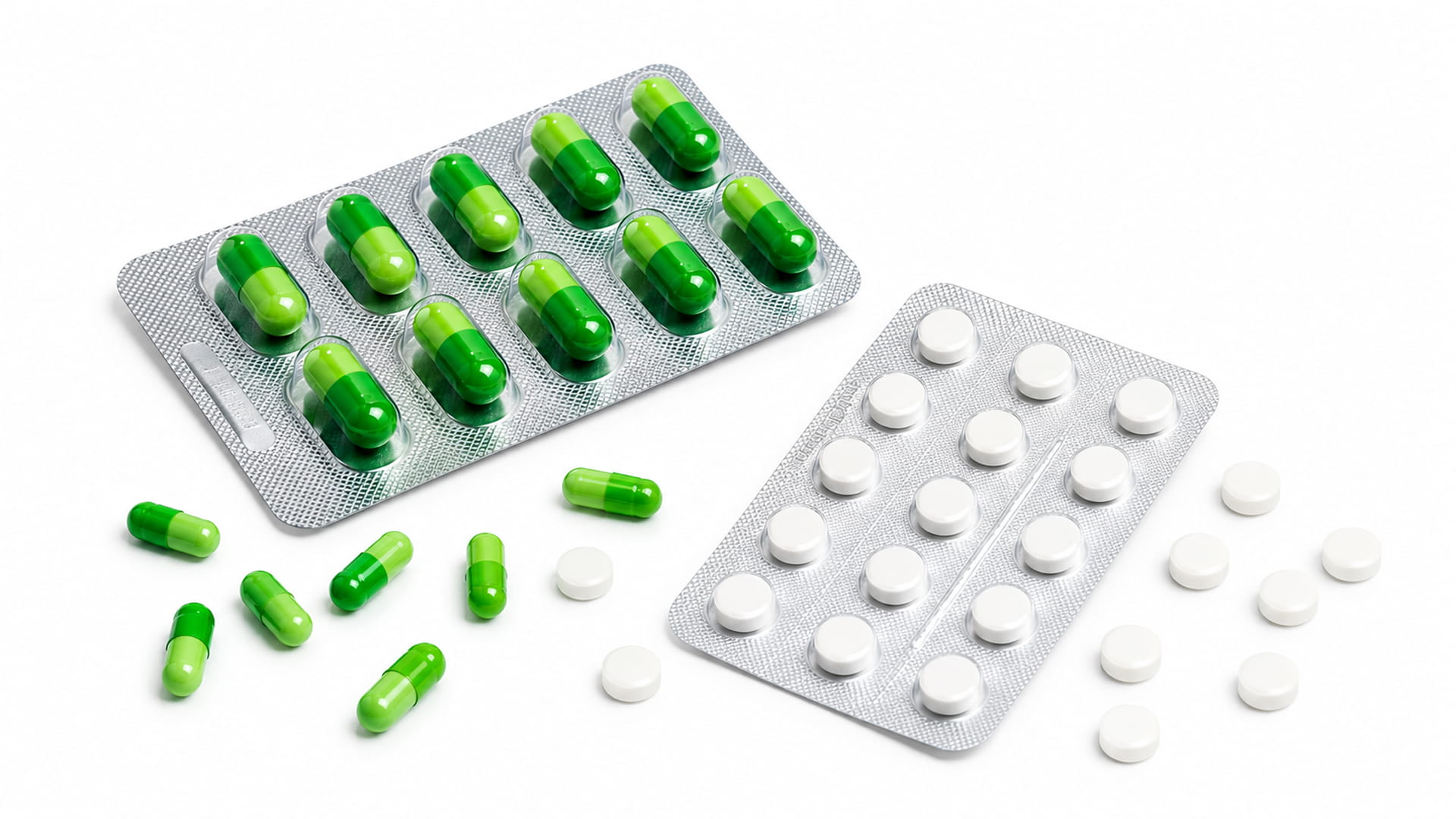
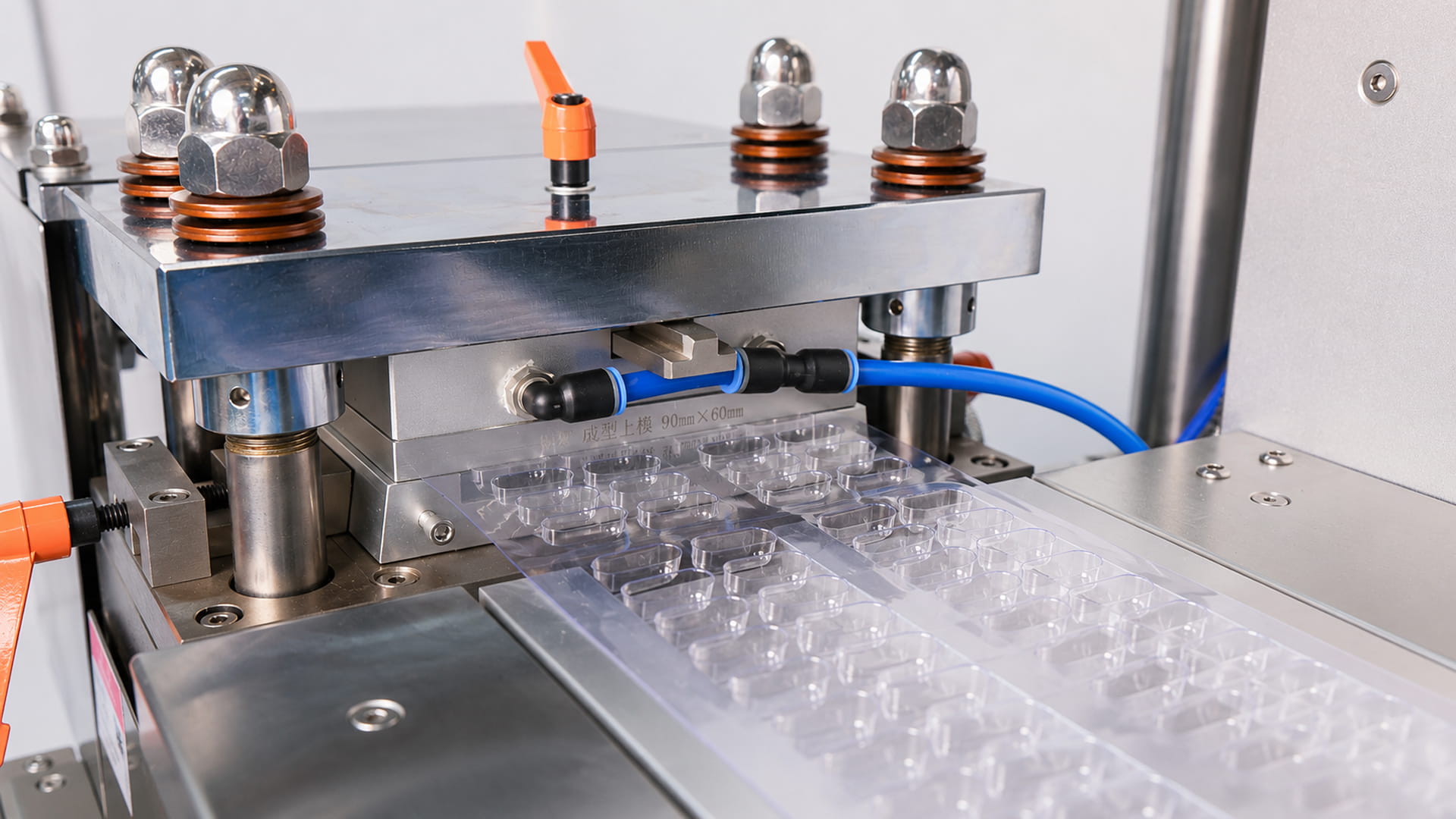
Trong cả hai trường hợp, các dạng đơn vị liều cách ly từng liều, và khoang trong suốt cho phép người dùng nhìn thấy thuốc. Bạn có thể thắc mắc về Máy đóng gói vỉ: dây chuyền hiện đại có thể tạo thành các khoang từ màng PVC hoặc PVDC. Sự khác biệt chính là PVC phủ PVDC có thể cần các cài đặt gia nhiệt hơi khác nhau trên khuôn ép nóng. Tham khảo hướng dẫn sử dụng thiết bị hoặc nhà cung cấp của bạn để chọn đúng thông số.
Đúng. Máy đóng gói vỉ nói chung là tương thích với cả hai vật liệu. Bạn không cần máy riêng cho PVC và PVC/PVDC. Tuy nhiên, Bạn cần điều chỉnh quy trình:
Máy móc hiện đại (chẳng hạn như JinLuPacking's DPP-160 hoặc DPP-270Max máy ép nhiệt) xử lý PVC, PVC/PVDC và thậm chí cả nhôm dạng nguội. Chúng cho phép bạn chuyển đổi giữa các màng bằng cách điều chỉnh cấu hình nhiệt độ và độ sâu tạo hình. Ví dụ, khi chạy PVC/PVDC, một công nghệ có thể giảm bớt đèn lò bằng cách 10-20% so với PVC trơn. Tổng thể, quá trình chuyển đổi diễn ra đơn giản đối với người vận hành có kinh nghiệm.

Máy đóng vỉ của JinLuPacking được chế tạo để chạy tất cả các màng vỉ dược phẩm lớn – PVC, PVC/PVDC, PVC/PE/PVDC, nhôm, ngay cả những tấm laminate có rào cản cao. Hệ thống điều khiển PLC và công thức của họ giúp dễ dàng lưu thông số cho từng loại phim. Tóm lại, một chiếc máy có thể là giải pháp tất cả trong một của bạn miễn là bạn thiết lập chính xác cho vật liệu PVC và PVDC.
Việc lựa chọn giữa PVC và PVDC tùy theo nhu cầu sản phẩm của bạn. Màng PVC là chi phí hiệu quả và rõ ràng, lý tưởng cho nhiều viên nén và viên nang tiêu chuẩn. Phim phủ PVDC cung cấp rào cản vượt trội, quan trọng đối với độ ẩm- hoặc các thuốc nhạy cảm với oxy cần thời hạn sử dụng lâu dài. Trong thực tế, các phương pháp lai PVC/PVDC thường thắng: nó sử dụng độ trong và khả năng định hình của PVC đồng thời bổ sung thêm rào cản của PVDC khi cần thiết.
Khi nghi ngờ, đánh giá các yếu tố như độ ổn định của thuốc, thời hạn sử dụng cần thiết, ngân sách, và mục tiêu bền vững. Ví dụ, sự lựa chọn phổ biến là vỉ PVC/PVDC cho thuốc xuất khẩu, và vỉ PVC-Alu trơn cho địa phương, sản phẩm ngắn hạn. Hãy luôn nghĩ về chế độ thất bại: nếu sản phẩm của bạn mất hiệu lực 10% quá sớm, cái đó sẽ có giá bao nhiêu? Đánh giá rủi ro này thường hướng dẫn liệu phim có rào cản cao hơn có hợp lý hay không.
Sẵn sàng tối ưu hóa bao bì dược phẩm của bạn? Liên hệ với JinluPacking để được tư vấn chuyên môn và các giải pháp đóng gói vỉ phù hợp. Nhóm của chúng tôi có thể giúp bạn chọn bộ phim lý tưởng (PVC, PVDC, hoặc vật liệu tổng hợp tiên tiến) và đề xuất thiết lập máy đóng gói vỉ để phù hợp. Cho dù bạn cần vỉ thuốc tiêu chuẩn hay viên nang chống trẻ em chuyên dụng, chúng tôi sẽ đảm bảo bao bì của bạn giữ thuốc an toàn và tuân thủ cho đến cuối cùng.
PVC (Polyvinyl clorua) và PVDC (Polyvinylidene clorua) là hai vật liệu thường được sử dụng để đóng gói vỉ dược phẩm. PVC chủ yếu được sử dụng làm màng nền định hình nhiệt vì nó mang lại độ trong suốt tuyệt vời, dễ dàng hình thành, và chi phí thấp.
PVDC thường được sử dụng làm lớp phủ trên màng PVC để cải thiện hiệu suất chống ẩm và chống oxy. So với bao bì vỉ PVC tiêu chuẩn, Vỉ PVC/PVDC giúp bảo vệ tốt hơn các loại thuốc nhạy cảm và có thể giúp kéo dài thời hạn sử dụng.
PVDC (Polyvinylidene clorua) là vật liệu polymer có rào cản cao được sử dụng rộng rãi trong các ứng dụng đóng gói dược phẩm và thực phẩm. Nó có khả năng chống hơi ẩm và truyền oxy tuyệt vời, làm cho nó phù hợp để bảo vệ các sản phẩm đòi hỏi sự ổn định được cải thiện.
Trong bao bì vỉ dược phẩm, PVDC thường được sử dụng làm lớp phủ trên màng PVC hơn là vật liệu tạo hình độc lập. Sự kết hợp giữa PVC/PVDC tạo ra màng vỉ có độ rào cản cao, mang lại hiệu quả bảo vệ thuốc tốt hơn.
Màng PVC và PVDC có thể khó phân biệt bằng mắt thường vì cả hai vật liệu này thường trong suốt và được sử dụng trong các cấu trúc đóng gói vỉ tương tự nhau.
Các phương pháp nhận dạng chính bao gồm:
• Cấu trúc vật liệu: PVC thường là màng ép nóng cơ bản, trong khi PVDC là lớp phủ rào cản mỏng được áp dụng trên PVC.
• Hiệu suất rào cản: Màng phủ PVDC cung cấp khả năng chống ẩm và oxy tốt hơn đáng kể so với PVC tiêu chuẩn.
• Thông số kỹ thuật: Các nhà sản xuất thường xác định vật liệu bằng nhãn cấu trúc như PVC, PVC/PVDC, hoặc PVC/PE/PVDC.
Đối với việc mua và sản xuất dược phẩm, kiểm tra bảng thông số vật liệu của nhà cung cấp là phương pháp đáng tin cậy nhất.
Về độ ẩm và rào cản oxy, Đúng. PVDC (như một lớp phủ) cung cấp rào cản cao hơn nhiều so với PVC trơn. Nhưng PVDC đắt hơn, vì vậy nó chỉ “tốt hơn” nếu bạn cần thêm sự bảo vệ. Để đơn giản, sản phẩm ổn định, PVC thường ổn.
Nhựa PVDC có chi phí sản xuất cao hơn, và áp dụng lớp phủ là một quá trình gồm nhiều bước. Về cơ bản bạn đang bổ sung thêm tài liệu (lớp phủ) và xử lý bổ sung. Hiệu suất bổ sung đi kèm với mức giá đó.
Đúng. PVDC có thể cải thiện thời hạn sử dụng của dược phẩm bằng cách giảm sự xâm nhập của hơi ẩm và oxy vào gói vỉ.
Nhiều sản phẩm thuốc, bao gồm cả viên nén nhạy cảm với độ ẩm, chế phẩm sinh học, và một số sản phẩm dinh dưỡng, yêu cầu bao bì có rào chắn chắc chắn hơn vì độ ẩm và oxy có thể ảnh hưởng đến chất lượng và độ ổn định của sản phẩm.
Tuy nhiên, thời hạn sử dụng thực tế phụ thuộc vào công thức thuốc, cấu trúc bao bì, điều kiện lưu trữ, và kết quả kiểm tra độ ổn định.
PVC/PVDC và PVC/PE/PVDC đều là những cấu trúc đóng gói dạng vỉ có rào cản cao.
PVC/PVDC:
Cấu trúc song công tiêu chuẩn trong đó lớp phủ PVDC được áp dụng trực tiếp trên PVC. Nó cung cấp độ ẩm và bảo vệ oxy được cải thiện.
PVC/PE/PVDC:
Cấu trúc triplex bổ sung thêm lớp PE giữa PVC và PVDC. Cấu trúc này cải thiện tính linh hoạt và hiệu suất hình thành, đặc biệt là đối với các vết phồng rộp sâu hơn.
Sự lựa chọn tốt nhất phụ thuộc vào yêu cầu sản phẩm, thiết kế khoang, và năng lực của máy đóng gói.
Đó là màng PVC có lớp PVDC mỏng ở một bên. PVC cung cấp khả năng định hình và sức mạnh; lớp PVDC cung cấp rào cản độ ẩm/oxy. Chúng cùng nhau tạo thành hai lớp (hai mặt) hoặc ba lớp (bộ ba) kết cấu.
Đúng. Máy ép vỉ hiện đại (giống như các mô hình của JinLuPacking) được thiết kế cho PVC, PVC/PVDC và các loại màng chịu nhiệt khác. Bạn chỉ cần chọn đúng cài đặt. Điều quan trọng là kiểm soát nhiệt độ lò và các thông số tạo hình cho màng cụ thể.
Đối với thị trường xuất khẩu nóng/ẩm, PVC/PVDC (hoặc thậm chí PVC/Aclar hoặc Alu-Alu) được khuyến khích. Riêng PVC thường thất bại ở vùng khí hậu nhiệt đới.
Tài liệu tham khảo:
1.Hệ thống đóng thùng chứa để đóng gói thuốc và sinh phẩm dành cho người —— CHÚNG TA. Cục Quản lý Thực phẩm và Dược phẩm
2.Hệ thống bao bì nhựa và vật liệu xây dựng của chúng —— Dược điển Hoa Kỳ
3.Bao bì vỉ dược phẩm, Phần 1 Cơ sở lý luận và vật liệu —— cơn gió lớn
4.Polyvinylidene clorua —— Khoa họcTrực tiếp
5.Phương pháp hóa học để xác định PVC và PVDC trong vật liệu đóng gói dược phẩm —— Cổng nghiên cứu
6.CHẤT LƯỢNG VẬT LIỆU PVC Dẻo / PVC – PVDC TRONG NGÀNH DƯỢC PHẨM —— revistajrg.com