Nhu cầu toàn cầu về thảo dược bổ sung sản phẩm tiếp tục phát triển khi ngày càng có nhiều người tiêu dùng tìm kiếm những cách tự nhiên để hỗ trợ sức khỏe và thể chất của họ. Từ viên nang và viên nén đến bột và kẹo dẻo, thực phẩm bổ sung thảo dược hiện được tìm thấy ở các hiệu thuốc, siêu thị, và các cửa hàng trực tuyến trên toàn thế giới. Khi thị trường mở rộng, các nhà sản xuất phải đối mặt với những kỳ vọng ngày càng tăng về chất lượng ổn định, Sản xuất hiệu quả, và bao bì đáng tin cậy để bảo vệ các thành phần thực vật nhạy cảm. Thực hành sản xuất tốt và kiểm soát đóng gói phù hợp cũng rất cần thiết để đảm bảo chất lượng sản phẩm và tuân thủ trong suốt quá trình sản xuất.
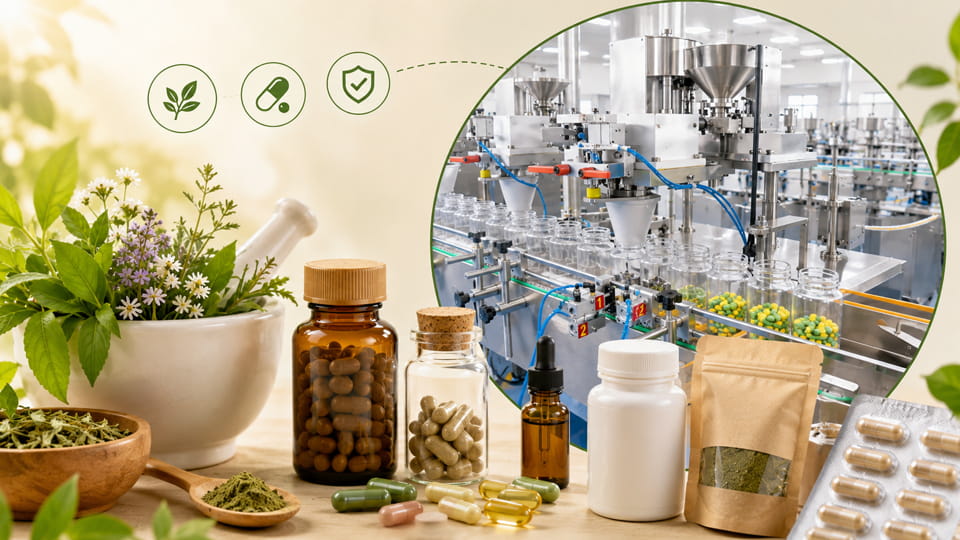
Cho dù bạn đang lên kế hoạch xây dựng dây chuyền sản xuất thực phẩm bổ sung thảo dược mới hay nâng cấp thiết bị hiện có, hiểu rõ quy trình sản xuất là bước đầu tiên để đưa ra quyết định tốt hơn. Trong hướng dẫn này, chúng ta sẽ tìm hiểu các loại thảo dược bổ sung phổ biến nhất, chúng được sản xuất như thế nào, thiết bị liên quan, và các giải pháp đóng gói giúp nhà sản xuất nâng cao hiệu quả, chất lượng sản phẩm, và thời hạn sử dụng.
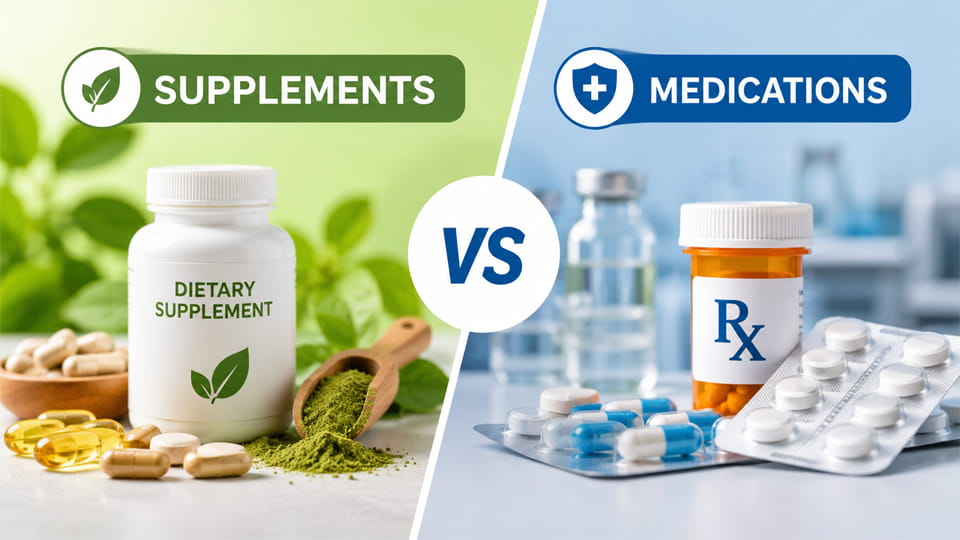
thảo dược bổ sung (còn được gọi là thực vật bổ sung) là một loại thực phẩm bổ sung làm từ nguyên liệu thực vật (rễ, lá, hoa, hạt giống, hoặc chiết xuất) nhằm mục đích hỗ trợ sức khỏe. Khác với vitamin tổng hợp, thảo dược bổ sung có nguồn gốc từ các nguồn tự nhiên. Họ thường khai thác các loại thuốc thảo dược truyền thống (ví dụ. gừng, bạch quả, hoa cúc dại) và bao gồm các chất chiết xuất hoặc bột cô đặc. Trong điều kiện quy định, chất bổ sung thảo dược được phân loại là thực phẩm bổ sung, không phải ma túy. Dưới Hoa Kỳ. theo luật, chúng phải chứa các thành phần được dán nhãn và tránh các chất gây ô nhiễm (thuốc trừ sâu, kim loại nặng). Các dạng điển hình bao gồm viên nang, máy tính bảng, viên nang mềm, bột, chất lỏng (cồn thuốc), trà và kẹo dẻo.
Các chất bổ sung thảo dược nhằm mục đích “bổ sung chế độ ăn uống” bằng các chất dinh dưỡng hoặc hoạt chất có nguồn gốc thực vật, thường xuyên để hỗ trợ miễn dịch, tiêu hóa, giảm căng thẳng, hoặc năng lượng. Ví dụ, các thành phần như cơm cháy, echinacea và vitamin C phổ biến cho khả năng miễn dịch, trong khi ashwagandha và trà xanh được sử dụng để giảm căng thẳng và trao đổi chất. Người tiêu dùng ngày càng thích các chất bổ sung thảo dược vì nguồn gốc tự nhiên và nhãn sạch. Thị trường thực phẩm bổ sung thảo dược toàn cầu diễn ra vào khoảng $45.9 tỷ trong 2025 và được dự đoán sẽ tăng trưởng ~8% mỗi năm thông qua 2034, được thúc đẩy bởi nhu cầu về chăm sóc sức khỏe phòng ngừa dựa trên thực vật.

Thuốc bổ sung thảo dược được sản xuất dưới nhiều dạng bào chế. Mỗi hình thức đều có ưu điểm, do đó các nhà sản xuất lựa chọn dựa trên sản phẩm và thị trường. Các định dạng phổ biến bao gồm:


Thảo dược bổ sung có nhiều dạng: viên nang cứng, viên nang mềm, viên nén và bột đều sử dụng thành phần thực vật. Lựa chọn hình thức phù hợp phụ thuộc vào chiết xuất thảo dược, nhu cầu liều lượng, và sở thích của người tiêu dùng.
| Mẫu bổ sung | Thành phần thảo dược tiêu biểu | Ưu điểm chính | Bao bì chung | Thiết bị sản xuất được đề xuất |
|---|---|---|---|---|
| Viên nang | Ashwagandha, nghệ, Nhân sâm | Dễ nuốt, liều lượng chính xác, bảo vệ bột nhạy cảm | Chai, Gói vỉ | Máy làm đầy viên nang, Dây chuyền chiết rót chai, Máy đóng gói phồng rộp |
| Máy tính bảng | Tảo Spirulina, Tỏi, Cây kế sữa | Tiết kiệm chi phí, thời hạn sử dụng lâu dài, thích hợp cho sản xuất số lượng lớn | Chai, Gói vỉ | Máy ép viên, Máy phủ máy tính bảng, Dây chuyền đóng gói chai |
| Bột | Matcha, chùm ngây, cỏ lúa mì | Kích thước phục vụ linh hoạt, lý tưởng cho hỗn hợp đồ uống và hỗn hợp protein | Túi đứng, gói dính, lọ | Máy trộn bột, Máy chiết rót, Máy đóng gói túi làm sẵn |
| Viên nang mềm | Dầu tỏi, Dầu hạt lanh, Dầu hoa anh thảo buổi tối | Thích hợp cho chiết xuất gốc dầu, dễ tiêu thụ | Chai, Gói vỉ | Dây chuyền sản xuất softgel, Máy chiết rót chai |
| kẹo dẻo | cơm cháy, Giấm táo, nghệ | Hương vị dễ chịu, phổ biến với trẻ em và người lớn | Chai, túi | Máy đếm kẹo dẻo, Dây chuyền chiết rót chai, Máy đóng gói túi làm sẵn |
| Chiết xuất chất lỏng | Echinacea, Ginkgo Biloba, Rễ cây nữ lang | Hấp thụ nhanh, thuận tiện cho việc tùy chỉnh liều lượng | chai thủy tinh, chai nhỏ giọt | Máy chiết rót chất lỏng, Máy đóng nắp, Máy dán nhãn |
| Túi Trà Thảo Dược | Hoa chamomile, bạc hà, hoa dâm bụt | Phương thức tiêu dùng truyền thống, chuẩn bị đơn giản | Gói, thùng giấy | Máy đóng gói túi trà, Máy đóng thùng |
Các nhà sản xuất có thể nhắm tới một định dạng cụ thể về tính khả dụng sinh học hoặc sự hấp dẫn của người tiêu dùng. Ví dụ, thực phẩm bổ sung thảo dược dạng viên nang chiếm thị phần đáng kể (xung quanh 39%) vì chúng bảo vệ hoạt chất và hòa tan nhanh trong cơ thể. Bột (trong lọ hoặc gói dính) đang trở nên phổ biến đối với hỗn hợp siêu thực phẩm giàu protein hoặc xanh, trong khi máy tính bảng vẫn là nguồn cung cấp vitamin và chiết xuất thảo dược tiêu chuẩn. Cuối cùng, các thiết bị sản xuất (chất độn viên nang, máy tính bảng ấn, người đóng túi, vân vân.) phải phù hợp với hình thức và khối lượng sản xuất đã chọn.
Các nhà sản xuất tập trung vào các loại thảo dược có nhu cầu tiêu dùng mạnh mẽ và có cơ sở khoa học. Các thực vật chính trong chất bổ sung bao gồm:
Sự so sánh dưới đây cung cấp một cái nhìn tổng quan nhanh chóng về một số chất bổ sung thảo dược được sử dụng rộng rãi nhất trong ngành dược phẩm ngày nay:
| thảo dược bổ sung | Mục đích sức khỏe chung* | Các dạng bào chế phổ biến | Bao bì điển hình | Ghi chú sản xuất |
|---|---|---|---|---|
| nghệ (tinh bột nghệ) | Hỗ trợ khớp và viêm | Viên nang, máy tính bảng, bột | chai nhựa, Gói vỉ, Túi đứng lên | Chiết xuất curcumin thường được tiêu chuẩn hóa với các chất tạo dòng |
| Ashwagandha | Hỗ trợ căng thẳng và giấc ngủ | Viên nang, Gummies, bột | chai nhựa, gói dính | Thường được sản xuất dưới dạng chiết xuất rễ tiêu chuẩn |
| Nhân sâm | Hỗ trợ năng lượng và nhận thức | Viên nang, viên nang mềm, chiết xuất chất lỏng | Chai màu hổ phách, Gói vỉ | Kiểm soát độ ẩm rất quan trọng trong quá trình đổ đầy |
| Echinacea | Hỗ trợ sức khỏe miễn dịch | Máy tính bảng, viên nang, cồn thuốc | Chai, chai thủy tinh nhỏ giọt | Thường được sản xuất dưới dạng chiết xuất khô hoặc chiết xuất lỏng |
| Cây kế sữa | Hỗ trợ sức khỏe gan | Viên nang, viên nang mềm | chai nhựa, Gói vỉ | Hàm lượng silymarin tiêu chuẩn thường được yêu cầu |
| Tỏi | Hỗ trợ sức khỏe tim mạch | Viên nang mềm, máy tính bảng | Gói vỉ, chai | Kiểm soát mùi và lớp phủ thường được xem xét |
| gừng | Hỗ trợ tiêu hóa | Viên nang, bột, túi trà | Gói, túi, chai | Khả năng chảy của bột ảnh hưởng đến độ chính xác làm đầy |
| Ginkgo Biloba | Hỗ trợ trí nhớ và tuần hoàn | Máy tính bảng, viên nang | Chai, Gói vỉ | Thường được tiêu chuẩn hóa theo hàm lượng flavonoid |
| Chiết xuất trà xanh | Hỗ trợ chống oxy hóa | Viên nang, máy tính bảng | Chai, Gói vỉ | Bảo vệ nhiệt và độ ẩm cải thiện sự ổn định |
| cơm cháy | Hỗ trợ miễn dịch | kẹo dẻo, xi-rô, viên nang | chai PET, chai thủy tinh | Kẹo dẻo yêu cầu thiết bị đếm và đóng chai chuyên dụng |
Xu hướng trong 2025 làm nổi bật các chất bổ sung được xây dựng cho sức khỏe miễn dịch (quả cơm cháy, hoa cúc dại, kẽm), sức khỏe phụ nữ, và sức khỏe nhận thức. Ví dụ, Người tiêu dùng Anh ngày càng sử dụng nghệ nhiều hơn, ashwagandha, chùm ngây và cơm cháy giúp tăng cường khả năng miễn dịch và giảm căng thẳng. Tìm nguồn cung ứng và xây dựng thành phần yêu cầu kiểm soát chất lượng: mỗi loại thảo mộc phải được kiểm tra về hiệu lực hoạt động và không có chất gây ô nhiễm (thuốc trừ sâu, kim loại nặng) theo tiêu chuẩn GMP.

Sản xuất thực phẩm bổ sung thảo dược tuân theo quy trình gồm nhiều bước, kết hợp các kỹ thuật dược phẩm tiêu chuẩn với việc chăm sóc cụ thể cho các thành phần thực vật. Dòng chảy chung là: tìm nguồn cung ứng thảo mộc thô → làm sạch → sấy/nghiền → trộn → định lượng (viên nang/viên) → Bao bì. Các bước chính bao gồm:
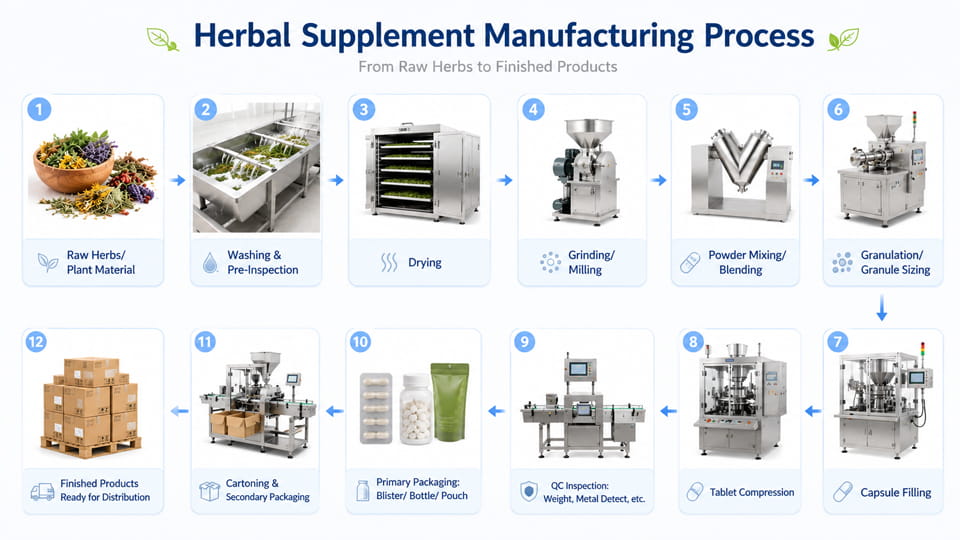
Trong suốt quá trình sản xuất, điều kiện (nhiệt độ, độ ẩm) được kiểm soát chặt chẽ. Nhiều loại thực vật nhạy cảm với độ ẩm, vì vậy toàn bộ dây chuyền có thể chạy trong phòng sạch được kiểm soát độ ẩm. Bao bì có rào cản cao (vỉ nhôm, HDPE có chất hút ẩm) được lựa chọn để bảo quản thời hạn sử dụng.
Sản xuất thực phẩm bổ sung thành công phụ thuộc vào độ tin cậy máy chế biến và đóng gói. Dưới đây là tổng quan về các trang bị chính – đặc biệt là những trang bị do Jinlu cung cấp – cùng với vai trò của chúng:

Nhân vật: Máy làm viên nang tốc độ cao của Jinlu (mô hình NJP-1500D, 90K cps/giờ). Chất độn tự động như vậy định hướng viên nang rỗng, mét bột thảo dược, nén đầy, và lắp ráp từng viên nang với độ chính xác ± 3%.
 Nhân vật: Máy ép viên quay HZP-26D-40D. Máy ép viên nén hạt thảo dược thành viên với trọng lượng và độ cứng chính xác. Máy ép của Jinlu có thể xuất ra 260,000 viên/giờ đồng thời đảm bảo tính đồng nhất.
Nhân vật:Máy đóng gói túi làm sẵn. Những máy móc như vậy (giống như series GD của Jinlu) có thể tự động mở, đổ đầy, và dán kín các túi đứng hoặc túi có khóa kéo bằng bột, hạt hoặc viên, đạt được trọng lượng điền rất chính xác.
Các thiết bị cần thiết khác bao gồm máy rửa chai (để bắt đầu chai rỗng), người dán nhãn, Và máy dò kim loại. Máy của Jinlu được thiết kế để đáp ứng các chứng nhận toàn cầu (CN, cGMP, FDA) và có thể được tùy chỉnh (ví dụ. với máy hút chân không cho các loại bột khó, cân kết hợp cho hỗn hợp).
Lựa chọn bao bì chính phù hợp ảnh hưởng đến sự ổn định, trải nghiệm người dùng, và tuân thủ. Dưới đây chúng tôi so sánh các định dạng đóng gói phổ biến cho thực phẩm bổ sung:
| Định dạng | Tốt nhất cho | Thuận lợi | Những thách thức/cân nhắc |
| Chai (HDPE, THÚ CƯNG) | Viên nang, Máy tính bảng, Viên nang mềm, kẹo dẻo | Rào cản độ ẩm/oxy mạnh; dễ dàng dán nhãn; đóng cửa chống trẻ em có sẵn; định dạng quen thuộc | Cồng kềnh khi vận chuyển; thường mờ đục (ít tái chế hơn); yêu cầu mũ CR với vật liệu hỗn hợp |
| Gói vỉ (Alu/PVC) | Máy tính bảng, Viên nang, viên nhỏ | Bảo vệ liều đơn vị (mỗi viên thuốc được niêm phong); rào cản tuyệt vời (giấy bạc); rõ ràng là giả mạo; định lượng thuận tiện | Đắt hơn trên mỗi đơn vị; hình dạng/kích thước hạn chế; Tái chế giấy bạc/PVC rất khó |
| Gói gậy | Bột (phục vụ một lần), Trà | Liều di động được đo trước; phần còn lại tối thiểu; hồ sơ mỏng | Chất thải dùng một lần; yêu cầu cán mỏng (thử thách tái chế); khối lượng nhỏ mỗi gói |
| Gói | Hạt, Viên thuốc sủi bọt, Bột | Gói một phần, thường tan trong nước; chi phí thấp | Rào cản độ ẩm hạn chế; dễ bị thủng; chất thải dùng một lần |
| Túi đứng (có thể hàn lại được) | Bột, Hạt, kẹo dẻo, Nhiều gói | Nhẹ, tiết kiệm không gian; tấm rào cản cao; dây kéo có thể khóa lại; hình dạng tùy chỉnh | Thường trong suốt (rủi ro ánh sáng); cần chất hút ẩm cho nội dung nhạy cảm với độ ẩm; dây kéo làm tăng chi phí |
| lọ / hộp thiếc (Kính/Nhôm) | kẹo dẻo, Bột, Sản phẩm cao cấp | Khả năng tái chế vượt trội (kính/nhôm); rào cản cao; tái sử dụng; cái nhìn cao cấp | Nặng hơn (chi phí vận chuyển); dễ vỡ (thủy tinh); theo mặc định không chống trẻ em trừ khi có thêm cơ chế nắp |
| Thùng thứ cấp | Viên nang/viên trong chai hoặc vỉ | Cho phép đóng gói số lượng lớn; thêm rào cản cho nhiều sản phẩm; cung cấp không gian ghi nhãn | Thêm chi phí và vật liệu; rào chắn carton kém hơn nhựa (có thể cần lớp lót để giữ ẩm) |
Đối với thực phẩm bổ sung thảo dược, Kiểm soát độ ẩm và oxy là những chức năng đóng gói quan trọng. Ví dụ, lá vỉ có rào cản cao hoặc túi nhiều lớp có thể bảo vệ các loại thảo mộc hút ẩm. Chống trẻ em (CR) việc đóng cửa thường được yêu cầu về mặt pháp lý (đặc biệt là vitamin). Lựa chọn bền vững (nhựa PCR, vật liệu có thể tái chế, túi có thể phân hủy) đang có xu hướng phát triển, nhưng vẫn phải đáp ứng yêu cầu về an toàn và thời hạn sử dụng.
Máy đóng gói (chất độn chai, đường phồng rộp, máy đóng gói túi) phải phù hợp với định dạng và đầu ra đã chọn. Hệ thống tự động (như máy đóng gói túi GD kiểu mẫu của Jinlu hoặc máy đóng vỉ dòng PJ) xử lý tốc độ cao với độ kín phù hợp, điều cần thiết cho ngành dược phẩm tuân thủ GMP.
Ngay cả với thiết bị tốt, sản xuất thực phẩm bổ sung có thể gặp khó khăn. Dưới đây là những vấn đề thường gặp và cách khắc phục:
Trong mọi trường hợp, bảo trì phòng ngừa và người vận hành có kinh nghiệm là chìa khóa. Tự động phục hồi lỗi (trạm từ chối, báo động) giúp nắm bắt vấn đề sớm. Ví dụ, Máy của Jinlu có tính năng “từ chối thông minh” để loại bỏ các túi bị đổ sai.
Lựa chọn thiết bị đóng gói là một quyết định chiến lược. Các yếu tố cần xem xét bao gồm:
Tóm lại, chọn máy được xếp hạng cho sản lượng mong muốn và yêu cầu tuân thủ của bạn. Các thiết bị phù hợp đảm bảo điền/đóng dấu nhất quán, tối đa hóa năng suất, và tránh việc thu hồi tốn kém.
Sự thay đổi toàn cầu hướng tới sức khỏe tự nhiên đã khiến thực phẩm bổ sung thảo dược trở thành một ngành công nghiệp chính, nhưng nó cũng đòi hỏi quy trình sản xuất ở cấp độ dược phẩm nghiêm ngặt. Từ việc kiểm tra cẩn thận các loại thực vật thô đến việc chiết viên nang tự động và đóng gói chống giả mạo, mỗi bước phải được tối ưu hóa để đảm bảo tính nhất quán, Tuân thủ, và chất lượng. Những tiến bộ về thiết bị (như chất làm đầy viên nang tốc độ cao, đường vỉ chính xác, và máy đóng túi linh hoạt) cho phép các công ty dinh dưỡng mở rộng quy mô một cách hiệu quả trong khi vẫn duy trì mức độ dung sai chặt chẽ.
Tóm lại, sản xuất thực phẩm bổ sung thảo dược là một điệu nhảy phức tạp của bí quyết thực vật truyền thống và kỹ thuật hiện đại. Bằng cách làm theo hướng dẫn của GMP, sử dụng máy móc phù hợp, và luôn đi trước xu hướng (giống bao bì bền vững và công thức cá nhân hóa), nhà sản xuất có thể cung cấp an toàn, sản phẩm từ thực vật hiệu quả. Dành cho các công ty muốn mở rộng hoặc nâng cấp dây chuyền của họ, Đóng gói Jinlu cung cấp một dòng sản phẩm bổ sung viên nang tích hợp, máy tính bảng ấn, máy vỉ, máy đóng gói dạng túi và hơn thế nữa - tất cả đều được thiết kế để sản xuất thực phẩm dinh dưỡng. Liên hệ với chúng tôi để tìm hiểu cách thiết bị của chúng tôi có thể giúp đưa thực phẩm bổ sung thảo dược của bạn từ vườn thảo mộc đến kệ lưu trữ với chất lượng và hiệu quả.
Thực phẩm bổ sung thảo dược là thực phẩm bổ sung được làm từ thảo dược, chiết xuất thực vật, hoặc các thành phần có nguồn gốc thực vật khác. Những sản phẩm này thường có sẵn dưới dạng viên nang, máy tính bảng, bột, Gummies, trà, hoặc chiết xuất chất lỏng và được thiết kế để bổ sung vào chế độ ăn uống thay vì thay thế thực phẩm thông thường. Tùy thuộc vào thị trường, thực phẩm bổ sung thảo dược được quy định là thực phẩm bổ sung cho chế độ ăn uống chứ không phải là thuốc dược phẩm.
Ở Mỹ, thực phẩm bổ sung (bao gồm cả thảo dược) thuộc đạo luật DSHEA của FDA. Các nhà sản xuất phải tuân theo các quy tắc cGMP của FDA (21 CFR 111) để đảm bảo danh tính, sự tinh khiết, và tránh ô nhiễm. Điều này có nghĩa là phải kiểm tra kỹ lưỡng các loại thảo mộc thô và kiểm tra trong quá trình. Ở châu Âu và các nơi khác, tiêu chuẩn sản xuất tốt tương tự (EU GMP, hướng dẫn của WHO) áp dụng cho thực phẩm dinh dưỡng.
Chúng có nhiều dạng: viên nang, máy tính bảng, bột, chất lỏng/cồn thuốc, Gummies, gói dính, trà, vân vân. Sự lựa chọn phụ thuộc vào đặc tính thực vật và sở thích của người tiêu dùng. Ví dụ, các loại thảo mộc đắng nhỏ có thể được dùng dưới dạng viên nang, trong khi trà thư giãn được bán dưới dạng túi trà.
Quá trình sản xuất thường bao gồm một số bước chính:
• Lựa chọn thảo dược thô
• Làm sạch và sấy khô
• Mài hoặc phay
• Trộn bột
• Tạo hạt (Nếu được yêu cầu)
• Làm đầy viên nang hoặc nén viên thuốc
• Kiểm tra chất lượng
• Bao bì sơ cấp
• Đóng thùng và đóng gói thứ cấp
Các nhà sản xuất hiện đại thường tự động hóa các quy trình này để cải thiện tính nhất quán, năng suất, và chất lượng sản phẩm.
Tối thiểu, nhà sản xuất cần thiết bị trộn, máy ép viên nang hoặc máy ép viên (tùy theo liều lượng), và dây chuyền đóng gói. Máy móc chính bao gồm: máy làm đầy viên nang, máy ép viên quay, Máy đóng gói phồng rộp, dây chuyền đếm/đóng chai, máy đóng gói gói / que, và máy đóng gói túi. Ví dụ, Jinlu Đóng gói cung cấp chất độn viên nang và máy đóng gói túi được thiết kế đặc biệt cho dược phẩm dinh dưỡng.
Hầu hết các nhà sản xuất đều sử dụng vật liệu đóng gói chống ẩm như vỉ, Chai nhựa HDPE có con dấu cảm ứng, tấm nhôm lá mỏng, hoặc túi có rào cản cao. Môi trường sản xuất được kiểm soát, chất hút ẩm, hệ thống niêm phong thích hợp, và kiểm tra chất lượng thường xuyên cũng giúp bảo vệ các chất bổ sung thảo dược trong suốt quá trình bảo quản và vận chuyển.
Bao bì tốt nhất phụ thuộc vào loại sản phẩm và độ nhạy cảm với độ ẩm, ôxy, và ánh sáng.
Các tùy chọn đóng gói phổ biến bao gồm:
• Chai đựng viên nang và viên nén
• Vỉ thuốc bảo vệ theo đơn vị liều lượng
• Túi đứng đựng bột
• Gói và gói dán cho khẩu phần ăn đơn
• Chai thủy tinh đựng chất lỏng chiết xuất
Lựa chọn bao bì màng chắn phù hợp giúp duy trì chất lượng sản phẩm và kéo dài thời hạn sử dụng.
Thuốc bổ sung thảo dược được phân loại là thuốc bổ sung chế độ ăn uống và có thể được bán mà không cần đơn thuốc, tập trung vào hỗ trợ dinh dưỡng. Thuốc thảo dược (như Ayurvedic hoặc thuốc truyền thống Trung Quốc) thường được quy định là thuốc hoặc sản phẩm y tế, với tuyên bố chữa bệnh. Các chất bổ sung có thể thúc đẩy sức khỏe nói chung (ví dụ. “hỗ trợ khả năng miễn dịch”) nhưng không thể tuyên bố chữa khỏi bệnh.
Tài liệu tham khảo:
1.Tài liệu hướng dẫn bổ sung chế độ ăn uống & Thông tin quy định—— CHÚNG TA. Cục Quản lý Thực phẩm và Dược phẩm
2.Thực phẩm bổ sung —— CHÚNG TA. Cục Quản lý Thực phẩm và Dược phẩm
3.thảo dược bổ sung —— CHÚNG TA. Sở Nông nghiệp
4.Phát triển thực phẩm bổ sung thực vật an toàn và hiệu quả —— Thư viện Y khoa Quốc gia
5.Đảm bảo chất lượng và an toàn của thực phẩm bổ sung thảo dược —— Thư viện Y khoa Quốc gia
6.Thực phẩm bổ sung và thảo dược —— NCCIH