Yeni bir farmasötik ürünün pazara sunulması, etkili bir formülasyon geliştirmekten çok daha fazlasını gerektirir. Üreticilerin karşılaştığı en önemli kararlardan biri doğru ambalajı seçmektir. Bir farmasötik ürün için seçilen ambalaj, ürünün stabilitesini doğrudan etkileyebilir., raf ömrü, düzenleyici uyumluluk, ulaşım güvenliği, ve hasta deneyimi. Neme karşı koruma sağlayamayan bir paket, oksijen, ışık, veya kirlenme, son kullanıcıya ulaşmadan çok önce ürün kalitesini tehlikeye atabilir. Bu nedenle ambalaj sadece bir kap değildir; ürün koruma sisteminin önemli bir parçasıdır.
İlaç üreticileri için, üretim yöneticileri, ve satın alma ekipleri, Doğru ambalajın seçilmesi birden fazla faktörün dengelenmesini gerektirir, dozaj formu dahil, Malzeme uyumluluğu, bariyer performansı, hasta güvenliği, üretim verimliliği, ve gelecekteki ölçeklenebilirlik. Ürünün tablet olup olmadığı, kapsül, toz, sıvı, veya enjekte edilebilir, Doğru paketleme çözümü, verimli ticari üretimi desteklerken ürün bütünlüğünün sağlanmasına da yardımcı olabilir. Bu kılavuzda, yeni bir farmasötik ürün için ambalaj seçerken her üreticinin dikkate alması gereken temel faktörleri inceleyeceğiz.
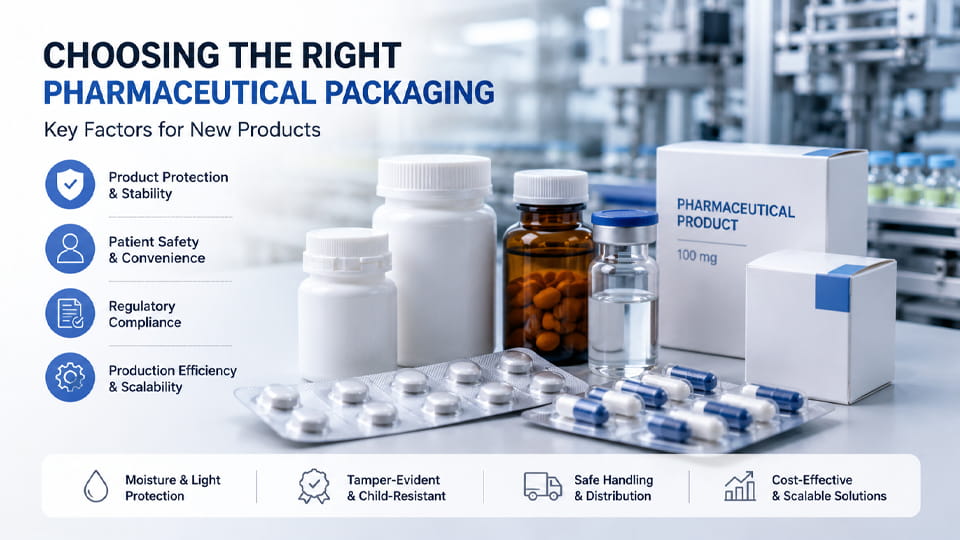
İlaçlarda Ambalaj Seçimi Neden Önemlidir?
Farmasötik ambalaj öyle hayati, isteğe bağlı değil. Normal tüketici ambalajından farklı olarak, ilaç ambalajı şart İlacın bütünlüğünü tüm raf ömrü boyunca koruyun. DSÖ ve düzenleyici kılavuzlar, ambalajın ilaçları zararlı maddelerden koruması gerektiğini vurgulamaktadır. nem, ışık, oksijen ve diğer dış tehditler. Başka bir deyişle, “tıbbi ürünlerin stabilitesini ve kalitesini korur” ve bozulmayı veya kurcalamayı önler.
Ambalajın temel işlevleri şunları içerir::
- Ürün koruması: Nemi dışarıda tutun, oksijen, ışık, ısı ve kirletici maddeler. Örneğin, bir USP kılavuzu şunu belirtmektedir: katı hapların “su buharından korunması gerekiyor” nem ilacın gücünü veya çözünmesini değiştirebileceğinden. Yüksek bariyerli malzemeler (alüminyum folyo, kaplamalı filmler, kehribar cam) hassasiyetin yüksek olduğu yerlerde sıklıkla kullanılır.
- Mevzuata uygunluk: Ambalaj FDA'ya uygun olmalıdır, EMA ve WHO GMP gereklilikleri. Bu, uygun konteyner kapatma bütünlüğü (CCİ), doğrulanmış materyaller, ve gibi özellikler kurcalanmaya açık fatura. Çocuklara dayanıklı ambalaj Birçok ilacın kazara yutulmasını önlemek için gereklidir. Serileştirme ve izlenebilirlik (her pakette benzersiz barkodlar) Artık büyük pazarlarda zorunlu (FDA DSCSA, AB Şap Hastalığı).
- Hasta güvenliği ve uyumluluk: Ambalaj tasarımı dozaj hatalarını ve yanlış kullanımı önlemelidir. Kurcalanmaya karşı dayanıklı etiketler ve çocuklara karşı korumalı kapaklar “Kazayla zehirlenmeye karşı korunun”. Kullanıcı dostu özellikler (kolay açılır, dozaj yardımcıları, takvim kabarcıkları) hastaların ilaçları doğru şekilde almasına yardımcı olun.
- Marka ve iletişim: İkincil paketleme (kartonlar, etiketler) talimatları iletir, uyarılar, ve marka. Uzmanlara göre, Karışıklıkları önlemek için etiketler dayanıklı ve net olmalıdır. Aslında, neredeyse bir analiz bulundu 50% uyuşturucu geri çağırmaları paketleme/etiketleme sorunlarıyla bağlantılıdır.
Kısacası, Ambalaj aktif bir korumadır. Doğru paketi seçememek API'lerin bozulmasına neden olabilir, hastaya zarar, ve düzenleyici baş ağrıları. Doğru paketleme “ilaç kalitesini korur” ve böylece ürünün etkinliğini ve itibarını destekler.

Adım 1: Yeni Farmasötik Ürününüzün Özelliklerini Anlayın
İlk adım bir kapsamlı ürün denetimi. Sormak: Dozaj formu nedir (tablet, kapsül, toz, sıvı, enjekte edilebilir, vesaire.)? İlacın hangi hassasiyetleri var? (nem, oksijen, ışık, sıcaklık)? Özel dozaj kontrolüne ihtiyaç var mı? (ölçülü doz inhaler, damlalık, önceden yüklenmiş şırınga)?
- Dozaj formu: Tabletler ve kapsüller genellikle katı doz ve sıklıkla paketlenir kabarcıklı paketler veya şişeler. Sıvılar/süspansiyonlar şişeler veya şişeler. Enjekte edilebilirler gerektirir steril şişeler, ampuller veya önceden doldurulmuş şırıngalar. Gazlar/inhalerler özel kutular kullanır. Tozlar veya granüller paketlenebilir poşetler, çubuk paketleri veya şişeler.
- Kimyasal/fiziksel hassasiyetler: İlaç higroskopik mi yoksa oksidasyona eğilimli mi?? Yüksek neme duyarlı ilaçlar (örneğin. efervesan tabletler) ihtiyaç yüksek bariyerli ambalaj Alu-Alu kabarcıklı veya kurutucu kaplı şişeler gibi. Işığa duyarlı bileşiklere ihtiyaç vardır opak veya renkli kaplar. Reaktif ilaçlar inert malzemeler gerektirir (örneğin. bardak, bazı polimerler).
- Raf ömrü ve stabilite: Gerekli sıcaklık kontrolünü göz önünde bulundurun (soğutma) veya vakum/steril koşullar. Bazı aşılar veya biyolojik maddeler soğuk zincir ambalajı veya özel şişeler gerektirebilir.
Anahtar nokta: Birincil ambalaj inert ve koruyucu olmalıdır. İlacın sızmaması veya absorbe edilmemesi gerekir, ve kapalı bir ortam sağlamalıdır. Örneğin, FDA, katı oral kapların bir “düşük oranda su buharı geçirgenliği, ve kapatma sistemi bir sızdırmazlık sağlamalıdır”. Aday ambalaj bileşenleriyle uyumluluk ve çıkarılabilir madde testleri yapmak çok önemlidir.
Ürün denetimi için kontrol listesi:
- Dozaj formu/tipi (tablet, kapsül, sıvı, vesaire.)
- Depolama/stabilite koşulları (sıcaklık, nem, ışık)
- Dozaj/uygulama gereksinimleri (damlalık, pompa, birim doz)
- Hasta kullanımıyla ilgili hususlar (çocuk vs yetişkin tıbbı, hareketlilik, yaşlı dostu)
- Düzenleyici kısıtlamalar (örneğin. birincil paketin hasta bilgileri kısmıdır?)
Bu anlayış, birincil ambalaj seçiminizi yönlendirecektir (ilaçla doğrudan temas halinde olan paket). Sonraki, bu seçenekleri tartışıyoruz.
Adım 2: Uygun Birincil Ambalajı Seçin
Birincil paketleme ilacı tutan acil kaptır. Doğrudan ilaca dokunuyor. Yaygın birincil ambalaj türleri şunları içerir: Blister paketleri, şişeler (plastik/cam), şişeler/ampuller, poşetler, tüpler, vesaire. Her birinin artıları/eksileri var:
- Blister paketleri (Alu-Alu veya Alu-PVC): Birim dozlu katı formlar için idealdir (tabletler, kapsüller). Onlar sağlarlar mükemmel nem/ışık bariyeri, özellikle Tüm zamanlar (soğuk biçimli folyo) tip. Kabarcıklar her dozun kullanıma kadar kapalı kalmasını sağlar, Uyumluluğu artırmak ve çapraz bulaşmayı azaltmak. Modern kabarcıklar çocuklara karşı dayanıklı hale getirilebilir. Teçhizat: Yüksek hızlı kabarcıklı paketleme makineleri şekillendirme kolu, besleme, ısıyla yapıştırma ve kesme (örneğin. JinluPacking'in Alu-Alu kabarcık makineleri).
- Şişe (Plastik veya Cam): Çoklu ünite paketleme için ortak (şuruplar, kapsüller, tabletler). Büyük hacimler için şişeler uygun maliyetlidir. Cam şişeler (Tip I borosilikat) mükemmel kimyasal eylemsizlik sunar ve ışıktan koruma için kehribar renginde olabilir. Plastik şişeler (HDPE, PP) hafiftir ve kırılmazdır ancak genellikle daha yüksek nem geçirgenliğine sahiptir. Şişeler sıklıkla kullanılır çocuklara dayanıklı kapaklar. Teçhizat: Sayma/doldurma makineleri şişeleri doldurur ve kapatır, ve yapabilirim kurutucuları ekleyin veya folyo contalar (sayma çizgilerine bakın). Jinlu'nun şişe dolum hatları ve otomatik kapatma makineleri bu adımları entegre ediyor.
- Poşet & Çubuk Paketleri: Tozlar için kullanılır, granüller, veya tek dozluk sıvılar (örneğin. antibiyotikler, ORS). Bunlar her tarafı kapatılmış esnek folyo veya laminat torbalardır. Poşetler mükemmel bariyer sunar (genellikle alüminyum folyo ile) ve kolaylık. Teçhizat: Poşet paketleme makineleri formu, doldurmak, ve bu poşetleri tek seferde mühürleyin.
- Şişeler & Ampuller: Steril enjekte edilebilirler için standart (çözümler, liyofilize tozlar). Şişeler (cam veya plastik) lastik tıpalarla sterilliği korur. Ampuller (bardak) kullanıma kadar hava geçirmez şekilde kapatılmıştır. Her ikisi de yüksek saflık sağlar ve iğneler/şırıngalar için uygundur. Teçhizat: Flakon dolum hatları, kapatma ve kıvırma makineleri kullanılır (genellikle sterilite için laminer akış alanlarıyla).
- Diğerleri: Tüpler (metal veya plastik) merhemler/kremler için yaygındır. Önceden doldurulmuş şırıngalar veya inhalerler (MDI'ler/DPI'lar) özel cihaz paketlemesini içerir. Bunlar genellikle özel dolum ve montaj ekipmanı gerektirir.
Her seçeneğin uygunluğu ürününüze bağlıdır:
- Maliyet vs. Koruma: Aşağıdaki tablo birincil paket türlerini karşılaştırmaktadır:
| Tip |
En İyisi |
Koruma Seviyesi |
Maliyet |
Teçhizat |
| Kabarcık paketi |
Tabletler, Kapsüller |
Çok yüksek (Nem/Işık) |
Orta |
Blister Ambalaj Makinası |
| Şişe |
Tabletler, Şuruplar, Haplar |
Orta (ekler konusunda iyi) |
Düşük |
Şişe Dolum/Kapama Hattı |
| Poşet/Çubuk |
Tozlar, Granüller |
Yüksek (Folyo bariyeri) |
Orta |
Poşet paketleme makinesi |
| Flakon/Ampul |
Enjekte edilebilirler, Serumlar |
Çok yüksek (Steril cam) |
Yüksek |
Flakon Doldurma & Sızdırmazlık Hattı |
Dozaj formuna ve bariyer gereksinimlerine uygun birincil paketi seçin. Örneğin, neme duyarlı bir tablet gerektirebilir Alu-Alu kabarcık veya kurutucu içeren amber rengi bir cam şişe. Daha sıradan OTC tabletleri, fiber geçirmez kapaklı plastik bir şişeye konulabilir (artı çocuklara dayanıklı özellik).
Uç: Birim doza uyum önemliyse (Örn., hastane dağıtımı veya seyahat paketleri), kabarcıklı tabakalar veya çubuk paketler sıklıkla tercih edilir. Esneklik için (Dozajlar değiştirilebilir), şişeler daha iyi.
Adım 3: Stabilite ve Raf Ömrü Gereksinimlerini Göz önünde bulundurun
Paketleme kararları istikrardan ayrılamaz. Yanlış kap, bozulmaya veya etiket arızasına neden olabilir. Temel hususlar:
- Bariyer özellikleri: Kritik faktörleri engelleyen malzemeler kullanın. İçin neme duyarlı ilaçlar, yüksek bariyerli folyolara veya cama ihtiyaç vardır. Örneğin, soğuk biçimli alüminyum kabarcıklar esasen sıfır nem girişi sağlar. FDA/ICH stabilite kılavuzu, ürünlerin gerçekten geçirimsiz kaplarda olduğunu belirtmektedir. (Örn., folyo kabarcıkları veya kapalı cam) özel nem çalışmaları yapılmadan normal koşullar altında test edilebilir. Tersine, yarı geçirgen paketler (bazı plastikler gibi) dikkatli nem değerlendirmesi gerektirir.
- Işık koruması: Işığa duyarlı API'lerin opak veya sarı ambalaja ihtiyacı vardır. Örneğin, amber renkli cam şişeler veya metalize torbalar UV'ye karşı koruma sağlar. Yaygın bir uygulama, gerekirse şeffaf şişeleri alüminyum ambalajla sarmaktır..
- Uyumluluk: Ambalaj malzemelerinin ilaçla reaksiyona girmediğinden emin olun. Cam hareketsizdir, ancak bazı plastikler bileşikleri sızdırabilir veya emebilir. Birincil bileşenler üzerinde ekstrakte edilebilir/sızınabilir malzeme çalışmaları gerçekleştirin. Düzenleyici yönergeler (FDA, Ema) beklemek konteyner kapatma bütünlüğü (CCİ) raf ömrü boyunca test.
- Raf ömrünün belirlenmesi: Stabilite çalışmaları (ben Q1A/R2) kullanmalı önerilen konteyner kapatma sistemi. Raf ömrü denemeleri bozulma gösteriyorsa, ambalajı ayarlamanız gerekebilir (örneğin. daha iyi bir bariyere geçin) veya taşıma/saklama talimatlarını etiketleyin.
- Gelişmiş özellikler: Bazı paketler kurutucuları veya oksijen tutucuları entegre eder. Çok katmanlı laminatlar (PET/alüminyum/PE) genellikle küresel dağıtım için kullanılır. Çok yüksek hassasiyette koruma için, aktif paketleme (gömülü nem emiciler) kullanılabilir.
Stabilite uyumluluğu için kontrol listesi:
- Gerekirse yüksek bariyerli birincil malzemeyi seçin (Tüm zamanlar, bardak, laminatlar).
- Sızdırmazlık yöntemini doğrulayın (ısı yalıtımı, büyük harfler) düşük nem buharı iletimi sağlar (MVTR).
- Hızlandırılmış stabiliteyi yönetin (40°C/u bağıl nem) Nem girişi veya kimyasal değişiklik olmamasını sağlamak için ICH'ye göre.
- Konteyner kapatma bütünlüğünü planlayın (vakum veya boya giriş testi) özellikle sıvı/steril ürünler için.
- Ambalajın dağıtım şoklarına dayanabileceğinden emin olun (İkincil/üçüncül paketlemeyle düşme/titreşim testi).
Stabilite gereksinimlerini önceden karşılayan bir ambalaj seçerek, maliyetli yeniden formülasyon veya daha sonra yeniden paketlemeden kaçınırsınız.
Adım 4: Hasta Rahatlığını ve Uyumluluğunu Değerlendirin
Korumanın ötesinde, modern ambalaj hastaların ilaçlarını doğru kullanmalarına yardımcı olmalı. Ambalaj tasarımı uyumu doğrudan etkiler ve güvenlik. Dikkate almak:
- Açılış/Kullanım kolaylığı: Yaşlı hastalar sıkı kapaklarla mücadele edebilir. Teklif kıdemli dostu kapaklar veya kolay soyulabilir contalar faydalı olabilir. Birim doz ilaçlar için, takvim kabarcıkları (etiketli günler veya saatler) hastalara doğru hapı almalarını hatırlatabilir.
- Dozaj yardımcıları: Varsa, sıvılar için ölçüm kapları/kaşıkları içerir, oftalmikler için damlalıklar, veya ölçülen doz pompaları. Konteyner üzerindeki net işaretler (mezuniyetler, renk bantları) doğruluğu artırın.
- Taşınabilirlik: Hastalar seyahat ediyorsa veya ilaç taşıyorsa, kompakt poşetler veya küçük şişeler faydalıdır. Kurcalanmaya açık özellikler güvenliği garanti eder.
- Uyumluluk özellikleri: Bazı birincil paketler uyumluluk için tasarlanmıştır: Örn., Dahili alarmlı hap dağıtıcıları, veya kullanımı takip eden akıllı kabarcıklı kartlar. Yüksek uyum kritik ise, bu tür yenilikleri düşünün.
- Etiketler ve ekler: Net olduğundan emin olun, karton veya broşürdeki çok dilli talimatlar. İyi ambalaj, okunaklı etiketlerle eczacılara ve hastalara yardımcı olur, dozaj çizelgeleri, ve depolama simgeleri.
Esasen, sormak: Hasta bu paketin kullanımını kolay ve güvenli bulacak mı?? Değilse, ürünü kötüye kullanabilir veya terk edebilirler. Hasta odaklı özellikler dahil (çocuk kilitleri, kolay açılır, net etiketleme) hasta güvenliğine önem veren düzenleyici kurumları da tatmin ediyor.
Adım 5: Mevzuata Uygunluğu Sağlayın
İlaç ambalajı sıkı bir şekilde denetleniyor. Temel uyumluluk sorunları:
- Çocuklara dayanıklı (CR) gereksinimler: Birçok ülke (BİZ, AB, Avustralya) Yüksek riskli ağızdan alınan ilaçlar için CR ambalajını zorunlu kılın. DSÖ şunu belirtiyor: “Çocuklara dayanıklı kapaklar geliştirildi” çocukları korumak için. Oral katı ve sıvı reçeteli ilaçların, kanunen gerekli olması halinde onaylı CR kapakları veya itmeli-dönüş mekanizmalarının kullanıldığından emin olun. (Örn.. BİZ 16 CFR 1700 altın AB standartları TR 14375).
- Kurcalanmaya karşı korumalı mühürler: FDA ve diğerleri paketin açılmadığına dair kanıt istiyor. Sabotaj bantları, küçültülmüş ambalajlar, veya ayrılabilir contalar şişelerde yaygındır; folyo contalar kavanozlarda yaygındır. Kabarcıklı ambalajların bile belirgin bir hasar olmadan açılması zor olmalıdır.
- Etiketleme: Birincil ve ikincil paketler gerekli tüm bilgileri taşımalıdır (ilaç adı, kuvvet, dozaj formu, parti/lot numarası, son kullanma tarihi, depolama koşulları, üretici). Yazı tipleri okunaklı olmalı ve farmakope kurallarına uygun olmalıdır. Örneğin, FDA 21 CFR 201.15 etiket dayanıklılığını kapsar.
- Serileştirme ve izlenebilirlik: FDA'nın DSCSA'sı gibi düzenlemeler (BİZ) ve AB Sahte İlaçlar Direktifi benzersiz kodlar gerektirir (örneğin. 2D barkodları) satılabilir her ünitede. Ambalaj tasarımı, seri numaralarının ve veri matris kodlarının kabarcıklı şeritler veya şişe etiketleri üzerine basılmasına veya kazınmasına uygun olmalıdır.. Paketleme hattınızın bir kodlama yazıcısına ve görüntü sistemine ihtiyacı olabilir, ve takip ve izleme veritabanıyla entegrasyon.
- İyi Üretim Uygulamaları (Gmp): Paketleme hatları GMP'ye uygun olmalı (temizlenebilirlik, malzeme izlenebilirliği, vesaire.). Kullanılan tüm birincil paketler GMP onaylı olmalıdır (örneğin. ISO 15378 ambalaj malzemeleri için). Makineler olmalı IR/WH/PQ nitelikli. (Jinlu Paketleme ekipmanı için aşağıya bakın).
Mevzuatla ilgili temel ipucu: Uyumluluğu sonradan akla gelen bir düşünce olarak görmeyin. Örneğin, kurcalanmayı belli eden bir özelliğin dahil edilmemesi ürün kaydını engelleyebilir. Ülkeye özgü kuralları önceden gözden geçirin – ör.. USP <661> plastik kaplar için, CFR 211 paketleme kontrolleri için. Seçilen paketleme ve paketleme ekipmanının bu standartları karşıladığını her zaman doğrulayın.
Adım 6: Paketleme Maliyeti ile Üretim Verimliliğini Dengeleyin
Bu aşamada, değerlendirmek toplam sahip olma maliyeti (TCO) paketleme seçenekleri için. Dikkate almak:
- Malzeme maliyeti: Esnek torbalar ve kabarcıklar, basit şişelere göre birim başına daha pahalı olabilir. Alu-Alu kabarcıklı folyo PVC folyodan daha pahalıdır. Cam şişeler plastikten daha pahalı.
- Ekipman verimi: Blister gibi yüksek bariyerli formatlar, şişe hatlarından daha yavaş çalışabilir, ihtiyaç duyulan ekipman sayısını etkilemek. Tersine, şişe doldurucuları çok yüksek hızlara ulaşabilir (birkaç bin şişe/saat) ama şifre çözücülere ihtiyacım var, büyük harfler, ve etiketleyiciler bir sıra halinde.
- Hat karmaşıklığı: Daha karmaşık paketleme (örneğin. birim doz kabarcıkları) özel makineler gerektirir. Sermaye yatırımı ve bakımın bütçenize uygun olup olmadığını kontrol edin.
- İş gücü: Tam otomatik hatlar manuel emeği azaltır ancak sermayeyi artırır. Yarı otomatik makineler daha az maliyetlidir ancak daha fazla operatöre ihtiyaç duyar.
- Lojistik: İkincil/üçüncül paketlemenin de maliyeti vardır. Büyük cam şişelerin nakliyesi daha ağırdır. Hacimli kartonlar nakliye maliyetlerini artırır.
- Atık ve verim: Daha fazla işlem (örneğin. kabarcık delme) hurda üretebilir. İsraf edilen malzemeleri değerlendirin (kabarcıklardan kurtulmak, kırık şişeler, vesaire.).
Kaba bir işlem gerçekleştirin maliyet karşılaştırması: örneğin. Malzemeler ve işleme dahil son paket başına maliyet. Ayrıca hızı da göz önünde bulundurun (saat başına birim) ve gerekli parti büyüklüğü.
A TCO kontrol listesi:
- Birim başına ambalaj malzemesi maliyetini karşılaştırın.
- İhtiyaç duyulan makine verimi ile talebi karşılaştırın.
- Her hat için işçilik ve enerji maliyetlerini hesaplayın.
- Atık imha/geri dönüşüm maliyetlerini dahil edin.
- Yeniden işleme riski faktörü (örneğin. paketleme başarısız olursa, yeniden etiketleme veya yeniden paketleme maliyeti).
- Gelecekte ölçek büyütme: hacimler iki katına çıkarsa, bu çözüm ölçeği mi?
Çoğu zaman en düşük maliyetli malzeme en iyisi değildir geri çağırma veya reddetmeye yol açıyorsa. Dengeyi kurmak çok önemli: Bazen daha iyi bariyer veya otomasyon için daha fazla ödeme yapmak, daha yüksek verim ve uyumlulukla karşılığını verir.
Adım 7: Ambalajın Gelecekteki Talebe Göre Ölçeklenebilmesini Sağlayın
Sadece anında lansmanı düşünmeyin, ama uzun vadeli yaşam döngüsü ürünün:
- Pilot vs. Reklam: İlk klinik veya küçük pazar partileri için, manuel veya yarı otomatik hatları kullanabilirsiniz. Büyük ölçekli üretim için, tam otomatik bir hatta ihtiyaç duyulacak. Seçiminizin olduğundan emin olun (veya satıcının teklifi) modüler yükseltmelere izin verir.
- Ekipman modülerliği: Hızı artırmak için şerit veya birim ekleyebilir misiniz?? Örneğin, bazı kabarcıklı makineler daha fazla döner cep ekleyebilir. Şişeleme hatlarına paralel doldurucular eklenebilir.
- Entegrasyon: Uçtan uca düşünün: sayma/doldurma → mühürleme → kartonlama → kutu paketleme → paletleme. Jinlu Packaging veya benzeri bir şirketle ortaklık yapıyorsanız, bir tasarım yapabilirler anahtar teslim paketleme hattı serileştirmeyi içerir, kartonlama, kutu paketleme, vesaire.
- Düzenleyici ölçeklendirme: Ambalaj bileşenlerinde herhangi bir değişiklik (örneğin. yeni bir şişe tedarikçisi) Stabiliteyi veya uyumluluğu etkiliyorsa düzenleyici kurumun yeniden onayını gerektirir. Ambalaj tedarikçisi kalite kontrolünü ve yedekleme satıcılarını planlayın.
- Gelecek ürünler: Şirketiniz başka dozaj formları üretebiliyorsa (örneğin. gelecekte bir jel), esnek ekipman seçin. Çeşitli formatları işleyebilen modüler kapsül doldurucular veya kabarcıklı makineler iyi bir yatırım olabilir.
Paketleme mühendislerinin veya bir danışmanın erkenden sürece dahil edilmesi, daha sonra ortaya çıkabilecek darboğazları önleyebilir. Bir endüstri uzmanının belirttiği gibi, “Ambalaj formülasyon geliştirme sürecine paralel olarak düşünülmeli, sonradan akla gelen bir düşünce olarak değil." Doğru erken kararlar, ölçek büyütmeyi ve hat genişletmeyi daha sorunsuz hale getirecek.
Kaçınılması Gereken Yaygın Ambalaj Seçimi Hataları
- Ambalaj Seçimini Çok Geç Bırakmak: Ambalajlamaya ancak formülasyon kilitlendikten sonra karar vermeyin. Erken stabilite çalışmalarında nihai paketleme kullanılmalıdır, sahte kavanozlar değil.
- Stabilite Testlerini Atlama: Asla bir konteynerin çalışacağını varsaymayın; ilacınızı her zaman ICH koşulları altında gerçek kapta/kapakta test edin. Ambalajın zayıf olması durumunda stabil bir formül bozulabilir.
- Yalnızca Maliyete Odaklanmak: Ucuz malzemeler başlangıçta tasarruf sağlayabilir ancak geri çağırma veya raf ömrünün kısalması durumunda daha fazla maliyete neden olabilir. Maliyeti korumayla dengeleyin.
- Hasta Faktörlerinin Göz ardı Edilmesi: Standart bir şişe maliyet hedeflerine uyabilir, ancak hastalar onu açamaz veya yapıştıramazlarsa, ürün piyasada düşük performans gösterecek.
- Düzenleyici İhtiyaçların Hafife Alınması: Gerektiğinde kurcalanmaya karşı koruma sağlayan bir mühür veya çocuklara karşı korumalı kapatma özelliğinin eklenmemesi, onayın durdurulmasına neden olabilir. Her zaman yönergelere başvurun.
- Tedarik Zincirinin İhmal Edilmesi: Ambalaj tedarik sürelerini ve raf ömrünü göz önünde bulundurun. Bazı özel malzemeler (oksijen tutucu astarlar gibi) uzun teslim süreleri olabilir.
Bu hatalardan ve işlevler arası incelemeden kaçınarak (R&D, KG, Üretme, Düzenleyici), seçtiğiniz ambalajın uygulanabilir olduğundan emin olursunuz, uyumlu, ve etkili.
Yeni Farmasötik Ürün Türüne Göre Önerilen Ambalaj
| Ürün türü |
Önerilen Birincil Ambalaj |
| Tabletler/Kapsüller |
Birim doz Blister paketleri (Alu-Alu veya PVC/Alu) veya toplu şişeler. Şişeler için çocuklara dayanıklı kapaklar. İdeal ekipman: kabarcıklı paketleme makinesi veya tablet/kapsül sayımı & şişeleme hattı. |
| Oral Tozlar/Granüller |
Poşet veya sopa paketleri (tek doz için); veya şişeler (toplu için). Birim doz için poşet paketleme makineleri, şişeler için burgu dolgu maddeleri. |
| Sıvılar/Şuruplar |
Plastik veya cam şişeler vidalı kapaklı (genellikle folyo contalı ve çocuklara dayanıklı kapaklı). Yüksek saflık için, Tip I cam. Teçhizat: sıvı dolum hattı (pompalar, satır içi sınırlama). |
| Enjekte edilebilirler |
Cam şişeler veya ampuller (steril) veya önceden doldurulmuş şırıngalar. Temiz odada steril flakon doldurma ve kıvırma makinelerini kullanın. |
| Kremler/Merhemler (Yarı katılar) |
Tüpler veya kavanozlar (alüminyum/plastik tüpler, cam/plastik kavanozlar). Kurcalanmaya karşı korumalı contalara sahip tüpler. Yarı otomatik veya otomatik tüp dolum makineleri. |
| Efervesan tabletler |
Alüminyum tüpler veya şişeler (kuru tutmak); sıklıkla kurutucuyla birlikte. Alüminyum folyo kabarcıklı ambalajlar da yaygındır. Boru makineleri (tabletler için) veya kabarcık makineleri. |
| Fitiller |
Blister tepsiler (tipik olarak Alu/PVC veya Alu/Alu) veya ayrı ayrı sarılmış birimlerin kutuları. Blister paketleyiciler veya termoformerler. |
| İnhalerler/Burun Spreyleri |
MDI kutuları veya DPI kartuşları (cihaza özel). Cihaz üreticisi ile koordinasyon; özel dolum/kutu dolum ekipmanları. |
Bu haritalama, her ilaç formunun uygun korumayı almasını sağlamaya yardımcı olur. Örneğin, kabarcıklı paketler katı oral dozlar için mükemmeldir, steril enjekte edilebilirler için cam şişeler şarttır. Tablo aynı zamanda ekipmanı da öneriyor: örneğin. kabarcıklı paketleme makineleri, şişe dolum ve kapatma hatları, poşet paketleme makineleri, flakon doldurucular, ve benzeri.
Jinlu Packaging İlaç Firmalarına Nasıl Yardımcı Olur?
Jinlu Packaging lider bir firmadır ilaç paketleme makineleri üreticisi. Yeni ilaç paketleme hatları için anahtar teslim çözümler sunuyoruz. Anahtar teklifler:
- Blister Ambalaj Makinaları: PVC/Alu veya Alu-Alu ambalajlar için yüksek hızlı kabarcık makineleri. Tablet/kapsül formatınıza ve hız gereksinimlerinize uyacak özel tasarımlar.
- Şişe Dolum & Kapatma Hatları: Otomatik şişe doldurma, kaplama, ve etiketleme sistemleri. Sayma ve doldurma hatlarımız şifre çözücüleri entegre edebilir, kurutucu yerleştiriciler, folyo avcılar, ve tablet/sakızlı şişeler için kapaklar.
- Kartonlama Makineleri: Kabarcıkların etrafına karton dikmek için yatay ve dikey kartonlayıcılar, şişeler, veya poşetler. Gibi özellikler 100% serileştirme ve hızlı geçişler için kod tarama.
- Serileştirme/Kodlama Sistemleri: Toplu yazdırma ve doğrulama için hatları mürekkep püskürtmeli/lazer kodlayıcılar ve görsel denetimle donatabiliriz, son kullanma tarihi, ve benzersiz kodlar.
- Komple Paketleme Hatları: Ürün beslemeden koli paketlemeye kadar, cGMP ve serileştirme ihtiyaçlarını karşılayan tam entegre bir hat tasarlayabiliriz. Makinelerimiz kolay temizlik için üretilmiştir (SUS316L paslanmaz çelik) ve IQ/OQ belgelerini ekleyin.
- Destek & Uygunluk: Makine yeterliliği konusunda yardımcı oluyoruz (IR/WH/PQ) ve dünya çapında yerinde kurulum ve eğitim sunuyoruz.
Bizimle çalışarak, sadece ekipman almıyorsunuz, ama paketleme uzmanlığı. Seçtiğiniz paketleme yöntemini sağlıyoruz (kabarcık hattı, şişe hattı, vesaire.) ürününüz ve mevzuat ihtiyaçlarınız için optimize edilmiştir, Ürününüzün lansmanını daha sorunsuz hale getirme.
Çözüm
Yeni bir farmasötik ürün için doğru ambalajın seçilmesi çok yönlü karar. İlaç stabilitesinin dengelenmesini gerektirir, hasta güvenliği, uygunluk, maliyet, ve ölçeklenebilirlik. Hatırlamak: En iyi ambalaj, ürününüzü hastaya ulaşana kadar güvenli ve etkili tutan ambalajdır. Bu sadece çekici ya da ucuz olmakla ilgili değil; kaliteyle de ilgili. Ürün özelliklerini dikkatle analiz ederek, paketleme seçeneklerini test etme, ve aşağıdaki düzenlemeler, üreticiler maliyetli geri çağırmalardan kaçınabilir ve ilaçlarının etkili kalmasını sağlayabilir, saf, ve güvenli. İyi seçilmiş bir paketleme stratejisiyle (ve doğru makine), hem müşterilerinizi hem de markanızın itibarını korursunuz.
Yeni Bir Farmasötik Ürün İçin Ambalaj Seçimi Hakkında SSS
Yeni bir farmasötik ürün için ambalaj neden önemlidir??
Ambalaj bir ilacı içermekten çok daha fazlasını yapar. Farmasötik ürünü nemden korur, oksijen, ışık, kirlenme, ve fiziksel hasar. Doğru paketleme aynı zamanda mevzuat uyumluluğunun sağlanmasına da yardımcı olur, hasta güvenliği, ürün stabilitesi, dağıtım ve depolama boyunca raf ömrü.
İlaç ambalajını seçerken hangi faktörler dikkate alınmalıdır??
Üreticiler çeşitli faktörleri değerlendirmelidir, içermek:
• Dozaj formu (tablet, kapsül, sıvı, toz, enjekte edilebilir)
• Nem ve oksijen hassasiyeti
• Işıktan korunma gereksinimleri
• Raf ömrü hedefleri
• Düzenleyici gereklilikler
• Hasta rahatlığı
• Paketleme maliyetleri
• Üretim verimliliği
• Gelecekteki ölçeklenebilirlik
İdeal paketleme çözümü ürün korumasını dengelemelidir, uygunluk, ve operasyonel verimlilik.
Tabletler ve kapsüller için en iyi ambalaj nedir?
Blister ambalajlar ve şişeler en yaygın seçeneklerdir.
• Blister ambalaj, birim doz kolaylığı sunarken neme ve kirlenmeye karşı mükemmel koruma sağlar.
• Şişeler yüksek hacimli üretim için uygun maliyetlidir ve tabletler için yaygın olarak kullanılır, kapsüller, ve diyet takviyeleri.
En iyi seçim, ürünün stabilite gereksinimlerine ve hedef pazara bağlıdır.
Ambalaj ilacın stabilitesini nasıl etkiler??
Ambalaj malzemeleri ilacın nem gibi çevresel faktörlere maruz kalmasını doğrudan etkiler, oksijen, ve ışık. Kötü paketleme bozulmayı hızlandırabilir, gücü azaltmak, ve raf ömrünü kısaltın. Bu nedenle stabilite testi genellikle ticari dağıtıma yönelik nihai ambalajlama konfigürasyonu kullanılarak gerçekleştirilir..
İlaç şirketleri ambalaj uyumluluğunu nasıl sağlayabilir??
Üreticiler ambalaj malzemelerinin uygun olduğunu doğrulamalıdır., etiketler, kapanışlar, ve paketleme ekipmanı FDA gibi geçerli düzenlemelere uygundur, AB GMP, serileştirme, ve çocuklara dayanıklı ambalaj gereksinimleri. Deneyimli farmasötik paketleme ekipmanı tedarikçileriyle çalışmak, doğrulama ve uyumluluk süreçlerinin basitleştirilmesine yardımcı olabilir.
Farmasötik ürün geliştirme sırasında paketleme ne zaman dikkate alınmalıdır??
Ambalaj, ürün geliştirme sırasında mümkün olduğu kadar erken değerlendirilmelidir.. Ticarileşmeye kadar beklemek stabilite sorunları yaratabilir, düzenleyici gecikmeler, ambalaj yeniden tasarım maliyetleri, ve üretim zorlukları. Erken ambalaj seçimi, üreticilerin doğru stabilite çalışmaları yürütmesine ve daha verimli bir ticari ambalajlama stratejisi geliştirmesine olanak tanır.
Yeni bir ürün için doğru farmasötik paketleme makinesini nasıl seçerim??
Değerlendirerek başlayın:
• Ürün tipi ve dozaj formu
• Ambalaj formatı (kabarcık, şişe, kese, şişe)
• Gerekli üretim kapasitesi
• Otomasyon düzeyi
• Düzenleyici gereklilikler
• Gelecekteki genişleme planları
Ölçeklenebilir farmasötik paketleme ekipmanlarının seçilmesi gelecekteki yatırım maliyetlerinin azaltılmasına yardımcı olabilir ve uzun vadeli iş büyümesini destekleyebilir.
Referanslar:
1.Beşeri İlaç ve Biyolojik Ürünlerin Paketlenmesine Yönelik Konteyner Kapatma Sistemleri -- BİZ. Gıda ve İlaç İdaresi
2.ICH Q8 Farmasötik Geliştirme —— ICH Veritabanı
3.Eczacılık Ürünleri İçin İyi Üretim Uygulamaları -- DSÖ
4.USPQ&A: İlaç Ürünleri İçin Plastik Ambalaj Sistemleri Standartları —— usp.org
5.Konteyner Kapatma Bütünlüğü Testi - İlaç Endüstrisinde Pratik Yönler ve Yaklaşımlar —— pda.org
