A anahtar teslim paketleme hattı tamamen entegre bir, Tek bir tedarikçi tarafından sunulan uçtan uca paketleme sistemi. İlk ürün beslemesinden birincil paketlemeye kadar üretimin her aşamasını kapsar, ikincil paketleme, ve hat sonu kutulama/paletleme – ve tek bir Kullanıcı Gereksinimleri Spesifikasyonu kapsamında çalışmaya hazır olarak teslim edilir (URS). Eczacılıkta, anahtar teslimi hatlar sağlar tek nokta sorumluluğu, daha hızlı devreye alma, ve tasarım gereği tam GMP uyumluluğu. Bu makalede anahtar teslim paketleme hattının modülleri açıklanmaktadır, nasıl çalışıyor (akış şeması), temel faydalar, ve bunun çok satıcılı bir kurulumdan farkı nedir?. Ayrıca tipik farmasötik uygulamaları da ele alıyoruz, tedarikçi seçim ipuçları (Jinlu'nun yeteneklerine bir örnek), ve SSS.
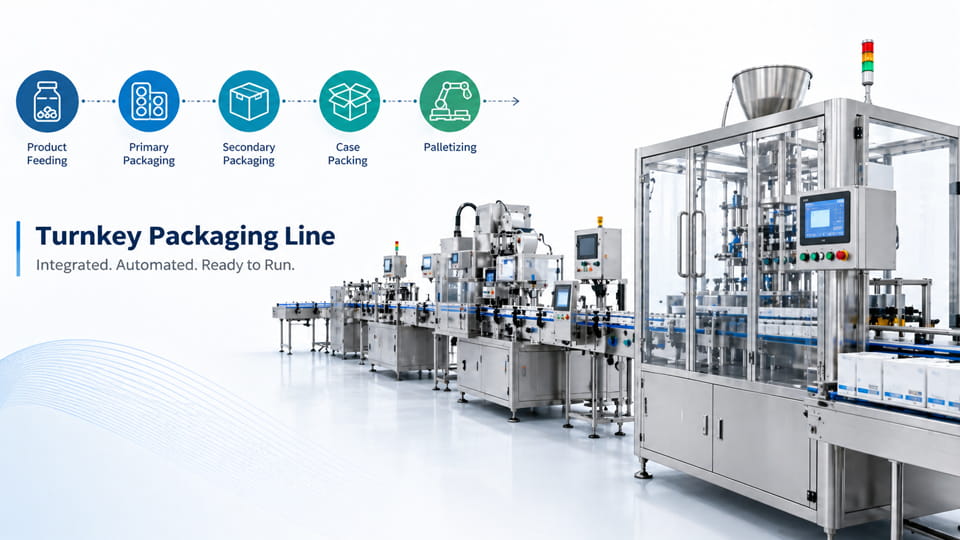
Gerçek bir anahtar teslimi hat, makineleri bir araya getirmenin ötesine geçer; tek satıcı tasarımları, inşa eder, teslim eder, ve tüm sistemi tek bir sözleşme kapsamında doğrular. Buna karşılık, geleneksel bir yaklaşım, farklı tedarikçilerden ayrı ayrı makineler satın alabilir ve bunları daha sonra entegre etmeye çalışabilir, bu genellikle gecikmelere neden olur, ekstra maliyetler, ve doğrulama baş ağrıları. Anahtar teslimi çözüm, toplu ürün elleçlemeden son kutu paketlemeye kadar otomasyonu içerir, birleşik kontrollerle birlikte, veri bağlantısı, ve belgeler. Örneğin, Jinlupacking, anahtar teslimi kabarcık hattını kaplama olarak tanımlıyor tablet besleme, kabarcık oluşturma/sızdırmazlık, yazdırma/kodlama, kartonlama, ve kutu paketleme hepsi tek bir doğrulanmış sistem olarak teslim edilir. Pratikte, bu konsept her türlü farmasötik formatı kapsar (tabletler, kapsüller, şişeler, flakon, poşetler, vesaire.) – bir tedarikçinin bir ürünü teslim ettiği anlamına gelir tamamlamak, çalışmaya hazır paketleme sistemi ayrı makinelerden oluşan bir koleksiyon yerine.
Anahtar Teslimi Paketleme Hattı Neleri İçerir??
Anahtar teslimi bir paketleme hattı, ihtiyaç duyulan tüm modülleri bir araya getirir ham farmasötik ürün (örneğin. tabletler, kapsüller, toz, sıvı) tamamen paketlenmiş birim doz paketleri ve kutulu kartonlar. Anahtar modüller genellikle şunları içerir::

- Ürün Besleme & Taşıma: Toplu tabletleri/kapsülleri/şişeleri/torbaları alıp bunları kontrollü bir hızda tek tek hatta besleyen otomatik besleyiciler veya kase sistemleri. Katılar için, bu bir titreşimli tava besleyici veya kapsül çözücü olabilir; şişeler için, şifre çözücü ve konveyör; sıvılar için, bir yönlendirme/birikim istasyonu. Doğru besleme, ilk paketleme makinesine tutarlı akış sağlar.
- Birincil ambalaj: Ürünü doğrudan içeren paketin ilk seviyesi. Bu ürün türüne göre değişir: tabletler/kapsüller için kabarcık makineleri (folyo/pvc'nin kabarcıklı paketlere ısıyla şekillendirilmesi ve kapatılması); sıvı dolum makineleri flakonlar/ampuller için (kapaklı veya kıvrımlı piston veya peristaltik dolgular); tüp doldurucular jeller/kremler için; poşet veya çubuk paketleme makineleri tozlar veya granüller için; önceden hazırlanmış kese doldurucuları; şişe doldurucular ve kapaklar oral sıvılar için; vesaire. Her birincil paketleyici, spesifik dozaj formu ve dolgu malzemesi için tasarlanmıştır. Örneğin, kabarcık oluşturucular haplar için cepler oluşturmak üzere PVC filmi ısıtır, soğuk formdayken (Tüm zamanlar) Blister makineleri neme duyarlı ilaçlar için alüminyum folyo basıyor. Her birincil adım, ürün ve folyo/poşet/şişe özelliklerine tam olarak uymalıdır.
- İkincil ambalaj (Kartonlama): Birincil paketlemeden sonra, ikincil makine kaplamaları, kutular, veya birincil paketleri kartonlara koyun. Ortak makineler şunları içerir: kartonlama makineleri, katlanır kartonları hazırlayan ve hasta bilgi broşürleriyle birlikte kabarcıklı kartları veya şişeleri yerleştiren. Yan yük var (yatay) ve üstten yüklemeli (dikey) formata bağlı olarak kartonlama makineleri. Diğer ikincil ekipmanlar şunları içerebilir: etiketleyiciler (Şişelere/kartonlara uyumlu etiketler uygulayın), sarmalayıcıları küçültmek, veya kollu sarmalayıcılar paketleri paketlemek. Örneğin, Blisterden bir kabarcıklı kart çıkar ve otomatik olarak bir hazneye beslenir. kartonlama makinesi bir kartonun dikildiği yer, hasta broşürü yerleştirildi, ve karton mühürlendi. Blister ve kartonlama arasındaki zamanlama, sıkışmaları önlemek için anahtar teslimi bir hatta sıkı bir şekilde senkronize edilir; bu, PLC kontrolleri tarafından gerçekleştirilir (aşağıdaki Entegrasyona bakın).
- Hat Sonu Paketleme: Bunlar toplu taşımaya yönelik üçüncül paketleyicilerdir. kutu paketleyiciler ve paletleyiciler. Koli paketleyicisi dolu kartonları alır (veya şişeler) ve bunları oluklu nakliye kasalarına yüklüyor (RSC kartonları), sonra davayı mühürler. Paletleyiciler kasaları paletlere istifler. Birlikte ürünü dağıtıma hazırlıyorlar. Modern koli paketleyicileri genellikle içeriği doğrulamak ve ana etiketleri uygulamak için ağırlık kontrol ve etiket uygulama istasyonlarını içerir. Gerçek bir anahtar teslimi çözümde, bu son adımlar bile entegre edilmiştir, böylece veriler (lot numaraları gibi, ağırlıklar, palet kimlikleri) toplu kayıtlara doğru akar. Örneğin, koli paketleme istasyonunda sistem her koliyi tartabilir ve koli kimliğini içeren bir etiket uygulayabilir, serileştirilmiş topluluğa geri bağlama.
- Denetleme & Kalite Kontrol: Entegre görüş ve test ekipmanları her aşamada uyumluluğu sağlar. Tipik istasyonlar şunları içerir: takip ve izleme kodlaması/denetim (Toplu kodların yazdırılması ve doğrulanması, son kullanma tarihleri, DataMatrix, vesaire.) Ve hat içi denetim sistemleri (kamera görüşü, metal dedektörleri, kontrol terazileri veya röntgen). Örneğin, anahtar teslimi bir kabarcıklı hat, her bir kabarcıklı kartın üzerine parti kodunu ve 2D DataMatrix'i basacak ve bunu bir kamerayla hemen doğrulayacaktır.. Sistem, eksik veya okunamayan koda sahip tüm kabarcıkları tüm hattı durdurmadan reddeder. Gerçekten entegre bir hat olmadan, cıvata bağlantılı bir yazıcı güvenilir bir şekilde ayak uyduramayabilir, Denetim hatalarına yol açan. Dolum seviyesi kontrolleri gibi diğer QC özellikleri, mühür bütünlüğü testleri (örneğin. şişeler için sızıntı test cihazları), ve son karton ağırlık kontrolleri genellikle gömülüdür. Tüm sensörler ve dedektörler merkezi PLC/HMI'ya bağlıdır, herhangi bir hatanın ana kontrolör içindeki tam ünitede tutulmasını sağlamak, ayrı bir bilgisayar değil.
- Entegrasyon & Otomasyon Kontrolü: Fiziksel modüllerin ötesinde, anahtar teslimi bir hat şunları içerir: komple otomasyon sistemi – bir PLC tabanlı kontrol ağı, tek operatör arayüzü (HMI), ve tüm hat için tam entegre elektrik/yazılım tasarımı. Her makinenin kendi kontrolörüne sahip olması yerine, hattın tamamı genellikle tek bir PLC mimarisi altında çalışır (örneğin. Siemens S7 tüm istasyonları çalıştırıyor) ve bir denetleyici HMI. Bu, hat hızlarının makineden makineye eşleştirilmesine olanak tanır, arabellekler küçültüldü, ve veriler merkezi olarak günlüğe kaydedilir. Tüm tarif parametreleri, hızlar, ve tariflere birleşik bir dokunmatik ekrandan erişilebilir. Çok önemli, entegrasyon sağlayıcısı tek bir kontrol yazılımı seti yazar, bir Fabrika Kabul Testi yapar (YAĞ) tam çizgide, ve bir doğrulama paketi sunar (IR/WH/PQ). Bu, hattın tek adımda üretime "geçmesini" sağlar. Uygun bir anahtar teslimi hatta, mekanik, elektrik, ve yazılım sistemleri entegratör tarafından birlikte teslim edilir, böylece “karton birleştirilmiş PLC kontrolü altında çalışır, üç ayrı tedarikçi protokolü değil”.
Özetle, A anahtar teslim paketleme sistemi eczacılık için şunları içerir her şey Toplu beslemeden son kutu paketlemeye kadar, artı kodlama/denetim ekipmanı ve birleşik kontrol sistemi. Bu, üç paketleme seviyesini kapsar (öncelik, ikincil, üçüncül) tek bir tutarlı çizgide. Anahtar teslimi yaklaşım, bir mühendislik projesine (bir URS) sahip olacağınız anlamına gelir, bir FAT/SAT, Zemine sığacak birden fazla makine yerine tek bir doğrulama belgesi seti.
Anahtar Teslimi Paketleme Hattı Nasıl Çalışır??
Anahtar teslimi bir hat dikkatlice tasarlanmıştır. sürekli süreç akışı. Ürünler toplu olarak girilir, birincil ve ikincil paketlemeye tabi tutulur, ve paletlenmiş kutular olarak çıkın. Tüm sekansın koreografisi kontrol sistemi tarafından yapılıyor. Aşağıda basitleştirilmiş bir süreç akış şeması bulunmaktadır:
- Toplu Ürün → Besleyici/Yönlendirme: Toplu tabletler veya kapsüller, titreşimli besleyiciler veya çözücüler aracılığıyla hatta beslenir, Ürünleri doğru şekilde yönlendiren. Şişe hatlarında, şifre çözücüler boş şişeleri konveyöre yerleştiriyor. Bu aşama, ürünü ilk paketleyiciye tam ihtiyaç duyulan hızda ölçer.
- Birincil ambalaj: Ürün ilk kabına girer. Örneğin, tabletler bir yere gider kabarcık paketleyici filmin cepler halinde oluşturulduğu ve folyo ile kapatıldığı yer. Sıvılar şişelere doldurulabilir ve kapatılabilir. Tozlar çubuk poşetlere dağıtılabilir. Parametreler (hız, doldurma hacmi, mühür sıcaklıkları) hepsi önceden programlanmıştır. Her adım verileri kaydeder (örneğin. doldurma ağırlığı, mühür kuvveti). Anahtar teslimi bir hatta bu makineler fiziksel olarak birbirine cıvatalanmıştır, Böylece ürün hiçbir manuel müdahale olmadan birinden diğerine sorunsuz bir şekilde hareket eder.
- Kodlama & Proses İçi Denetim: Birincil paketlemeden hemen sonra, hat, her bir üniteye serileştirme ve parti kodlarını yazdırır. Bir görüş kamerası kodları gerçek zamanlı olarak okur ve doğrular. Bir kod yanlışsa veya paket hasarlıysa, hat içi reddedici veya bypass bunu otomatik olarak kaldırır. Bu şunları sağlar: 100% izlenebilirlik. Tek başına bir yazıcı bu sıkı entegrasyonu garanti edemez. Kontrol sistemi tüm yazdırma verilerini elektronik toplu kayıtlara kaydeder (21 CFR bölümü 11 uygunluk).
- İkincil ambalaj (Kartonlama/Etiketleme): Sonraki, birincil paketler (kabarcıklı kartlar, flakon, poşetler) bir yere taşınmak kartonlama makinesi veya etiketleme istasyonu. Bir kartoncu bir kartonu diker, ürünü ve basılı prospektüsü ekler, daha sonra kutuyu kapatıp mühürler. Tekrar, bu ana PLC'ye bağlıdır: kartonlama makinesi yalnızca kabarcıklama makinesinin ürünü sağladığı hızda çalışır (arabellekler en aza indirilir). Modern hatlar, yüksek hızlı kabarcık çıktısını karşılamak için çift kafalı veya çok şeritli kartonlama makineleri kullanır. Etiketler (eğer ayrıysa) aynı parti/son kullanma tarihi kodlarıyla otomatik olarak uygulanır. Çünkü tüm makineler tarifleri ve hız ayarlarını tek bir HMI'da paylaşır, değişiklikler (örneğin. yeni karton boyutu veya ürün kodu) eşit şekilde yönetilir.
- Kutu Ambalajı & Paletleme: Nihayet, mühürlü kartonlar otomatik koli paketleyiciye doğru ilerliyor. Burada karton kutular dikiliyor, karton grupları yüklendi (genellikle katmanlar halinde), ve dava mühürlendi. Sistem genellikle koli ağırlığını kontrol eder ve içindeki serileştirilmiş kartonlara bağlı bir koli etiketi uygular.. Paletleyiciler daha sonra kasaları paletler üzerine istifler ve bunları sarabilir/şrinkleyerek sarabilirler.. Her palet ayrıca etiketlenir ve geriye doğru izlenir. Otomasyon yazılımı tüm bunları birbirine bağlar: toplu girişten palet kimliğine kadar eksiksiz bir geçmişe sahip olursunuz, düzenleyici izlenebilirliğin sağlanması.
Hat boyunca, birleşik kontrol stratejisi çok önemlidir: bir PLC sistemi hat hızının dengeli olmasını sağlar, OEE optimize edildi, ve herhangi bir arıza yalnızca ilgili bölümü durdurur, ilgisiz makineler değil. Hat düzeni veya uyumsuz kontrollerden kaynaklanan kesintiler, uygun şekilde tasarlanmış anahtar teslimi bir hatta neredeyse tamamen ortadan kaldırılır. Entegre hat, hat düzeninin neden olduğu aksama süresini ortadan kaldırır, tasarım, makine yerleşimlerinden veya kontrol sisteminden, Duruşları yalnızca gerçek makine arızalarına odaklamak. Pratikte, bu, paketleme sürecinin sürekli olarak tek bir "beyin" altında aktığı anlamına gelir,” daha yüksek üretkenlik ve öngörülebilirlik sağlar.
[jl_youtube src=”https://www.youtube.com/embed/zRe4BB8i9n0″]
Anahtar Teslimi Paketleme Hattının Temel Faydaları
Anahtar teslimi bir paketleme hattını benimsemek, parçalı kurulumlara göre birçok avantaj sağlar:
- Tek Sorumluluk Noktası: Tek tedarikçi tasarımları, mühendisler, ve tüm hattı teslim eder, ve performansının sorumluluğunu alır. Tüm istasyonları kapsayan bir sözleşme ve bir doğrulama paketi imzalarsınız. Bu, yönetim karmaşıklığını büyük ölçüde azaltır. Başlangıçta veya üretim sırasında bir şeyler ters giderse, birden fazla satıcı arasında düzeltmeler için pazarlık yapmak yerine tek bir entegratörle ilgilenirsiniz. Jinlupacking'in uyardığı gibi, “En pahalı hata…doğru makineleri yanlış satıcılardan satın almaktır”. Anahtar teslimi bir çözümle, tedarikçi “tüm prosesin sahibidir – mekanik, elektrik, ve yazılım entegrasyonu”.
- Daha Hızlı Devreye Alma & Pazara Çıkış Süresi: Çünkü hat tek bir yerde oluşturuluyor ve hata ayıklanıyor (tedarikçinin fabrikası) ve tamamen monte edilmiş olarak gönderilir, devreye alma çok daha hızlıdır. Entegratör şunları çalıştırır: tek FAT/SAT tüm hattın protokolü. Tersine, Çok tedarikçili projeler, makinelerin ayrı ayrı gelmesi ve sahada entegrasyon sorunlarının ortaya çıkması nedeniyle sıklıkla uzun gecikmelerle karşılaşıyor. Anahtar teslimi projeler genellikle teslimattan üretime hazırlığa kadar devam eder. haftalar, aylar değil. Örneğin, Standart anahtar teslimi hatlar 45-60 gün içinde entegre edilebilir, 90-120 günde karmaşık çizgiler bile. Bu sıkıştırılmış zaman çizelgesi, fırlatma hedeflerinize daha hızlı ulaşabileceğiniz anlamına gelir.
- Garantili Verim & Yeterlik: Anahtar teslimi bir hat, uçtan uca hedef hızlarınızı karşılayacak şekilde tasarlanmıştır. Tüm makine ve konveyörler birlikte tasarlandığından, verim optimize edildi (Görünmeyen bir darboğaz yok). Tedarikçi belirli bir çıktıyı garanti edebilir (örneğin. “200 kabarcık/dakika”) tüm satır için, sadece bireysel makineler değil. Bu, daha yüksek Genel Ekipman Verimliliği anlamına gelir (OEE). Anahtar teslimi tasarım, durma-başlatma sorunlarını ve hattaki açlık veya tıkanmayı önleyerek sürekli olarak optimize edilmiş OEE performans seviyeleri sunar. Pratikte, tek bir satıcı tarafından oluşturulan hat, hızları eşleştirecek ve tüm süreç için tek bir HMI kullanacak, ayrık sistemlerde gereken maliyetli tamponlardan veya manuel transferlerden kaçınma.
- Uyumluluk ve Doğrulamaya Hazır: Anahtar teslimi hatlar sıfırdan ilaç GMP'si ile inşa edilmiştir. Gibi tasarım özellikleri tamamen paslanmaz çerçeveler (Gerektiğinde SUS316L), sıhhi düzen (ölü bacak yok), ve CIP/SIP yeteneği belirlenip teslim edilebilir. Daha da önemlisi, belgeler eksiksiz olarak geliyor: sen aldın kapsamlı bir doğrulama dosyası (YAĞ, IQ'su, OQ, Güç kalitesi) tüm hattı kapsayan. Not olarak, anahtar teslimi bir proje bir tane içerir IR/WH/PQ tüm istasyonlar için. Bu seri doğası gereği GMP standartlarını karşılıyor (21 CFR bölümü 211, AB Eki 1, vesaire.) ve elektronik kayıt gereklilikleri (21 CFR bölümü 11 veri kaydı için). Örneğin, kabarcık kapatma istasyonu parti başına sıcaklık/basınç/bekleme süresini elektronik bir kayda kaydedecektir, ve koli paketleyici serileştirme verilerini her koli üzerine yerleştirecektir. Anahtar teslimi bir tedarikçiyle, birden fazla tedarikçinin sertifikalarını bir araya getirmenize gerek yok; tüm uyumluluk mühendisliği birleştirildi.
- Daha Düşük Toplam Sahip Olma Maliyeti (TCO): Anahtar teslimi hatlar genellikle daha yüksek ilk yatırım, zamanla para tasarrufu sağlarlar. Çünkü tüm ekipmanlar ortak yedek parçaları ve elektrik standartlarını paylaşıyor, yedek stoklar daha basittir. Servis sözleşmeleri ve yedek parçalar çoğu zaman tek kaynakta olabiliyor, genel bakım maliyetlerini düşürebilecek. Bir sektör analizine göre, anahtar teslimi bir hattın tipik olarak "daha yüksek ön ödemesi" vardır, daha düşük toplam sahip olma maliyeti. Tersine, çok tedarikçili hatlar gizli entegrasyon maliyetlerine neden olabilir, çoklu yedek parça listeleri, tekrarlanan yeniden yeterlilik, ve sorun giderme sırasında maliyetli kesintiler. Hattın tamamı için tek SLA destek anlaşması aynı zamanda daha hızlı hizmet anlamına da gelir. Birkaç yıl içinde, alıcılar genellikle tam entegrasyon için biraz daha fazla ön ödeme yapmanın, daha yüksek çalışma süresi ve öngörülebilir destek ile dengelendiğini fark ediyor.
- Ölçeklenebilirlik ve Özelleştirme: Anahtar teslimi tedarikçiler, hattı tam ürün karışımınıza ve tesis düzeninize göre uyarlayabilir. 3 ml'lik şişelerden 10 ml'lik şişelere geçiş yapabilecek bir hatta ihtiyacınız var? Anahtar teslimi bir entegratör değişimleri gerçekleştirecek (paylaşılan tarifler, hızlı değiştirilebilen parçalar) başından beri. Ayrıca çizgi geometrisine de uyacaklar (örneğin. Dar alanlar için U şekli) ve istenen tüm özellikleri içerir (robotik yükleme, izolatör, vesaire.). Bu düzeyde özelleştirme, tam olarak ihtiyacınız olanı alacağınız anlamına gelir; ürün yelpazeniz veya tesis boyutunuz benzersizse bu bir avantajdır. Örneğin, Jinlu Ambalaj teklifleri özel anahtar teslimi hatlar müşterinin alan ve süreç gereksinimleriyle eşleşen.
Birlikte ele alındı, bu avantajlar anahtar teslim paketleme hatlarını ilaç sektörü için çok çekici kılmaktadır. Parçalanmış ekipman satın almanın getirdiği risk ve belirsizliklerin çoğundan kaçınırsınız. Bir uzmanın belirttiği gibi, gerçek bir anahtar teslimi sözleşme şu anlama gelir: “bir FAT/SAT, tek doğrulama paketi, ve cGMP üretimi devam edene kadar bir ekip sahada” – lansman zaman çizelgenizi korumak için net bir formül.
Anahtar Teslim vs Çoklu Makine: Yan Yana Karşılaştırma
Aşağıdaki tablo, tek tedarikçili anahtar teslimi hattı geleneksel çok tedarikçili kurulumla karşılaştırmaktadır. Düzenlemeye tabi endüstrilerde anahtar teslimi yaklaşımın neden sıklıkla tercih edildiğini vurguluyor:
| Özellik |
Anahtar Teslim Hat (Tek Tedarikçi) |
Çok Satıcılı Sistem |
| URS & Tasarım |
Bir URS tüm hattı kapsar; tedarikçi uyumluluğun sahibidir. Tüm tasarım boşlukları ele alındı. |
Makine başına ayrı URS belgeleri; alıcı entegrasyonu yönetmelidir. |
| Kontroller & Entegrasyon |
Birleşik PLC, bir HMI ekranı; tek bir iletişim protokolü tüm istasyonları yönetir. |
Her makine kendi kontrol cihazını/PLC'sini kullanır. Teslimat sonrası alıcı/entegratör tarafından yapılan entegrasyon, genellikle pahalı ara yazılımlarla. |
| YAĞ/SAT |
Hedef verimde tam hat için tek FAT ve SAT belgeleri. |
Makine başına FAT'ler; tam hat SAT ekstra çaba gerektirebilir veya eksik olabilir. Alıcı birden fazla test raporunu koordine eder. |
| Doğrulama (IR/WH/PQ) |
Bir ana doğrulama planı ve dosyası. Yeterlilik konusunda devretme belirsizliği yok. |
Makine başına ayrı doğrulama paketleri; alıcının protokolleri ve verileri şirket içinde uyumlu hale getirmesi gerekir. |
| Verimlilik Garantisi |
Satıcı uçtan uca hızı garanti eder (beklenmeyen darboğazlar yok). |
Her makine ayrı ayrı derecelendirildi. Genel hat genellikle en yavaş üniteyle sınırlıdır, ancak montajdan sonra keşfedildi. |
| İzlenebilirlik |
Sorunsuz uçtan uca serileştirme & Birincil paketten kutuya kadar denetim takibi. |
Veriler genellikle makineler arasında bağlantılı değildir. Özel veri aktarımları veya manuel günlükler gerekli, boşlukları riske atmak. |
| Sorumluluk |
Hattın tamamı için tek servis iletişimi ve SLA. Bir entegratör her türlü sorunu çözer. |
Çoklu satıcılar; kesinti durumunda her biri diğerini suçlar. Alıcının entegrasyon sorunlarını gidermesi gerekir. |
| Devreye Alma Süresi |
Hızlı başlatma: Teslimattan üretime kadar genellikle birkaç hafta. |
Yavaş entegrasyon: PLC'ler ve hızlar uzlaştırıldıkça yaygın olarak 2-3 ay veya daha fazla gecikmeler yaşanıyor. |
| Toplam Sahip Olma Maliyeti |
Daha yüksek başlangıç fiyatı ancak öngörülebilir yedek parçalar/destek. 3 yıllık daha düşük toplam sahip olma maliyeti. |
Daha düşük ön maliyet; Ekstra aksama süresi nedeniyle daha yüksek uzun vadeli maliyetler, yeniden doğrulama, yedek stoklar, ve entegrasyon düzeltmeleri. |
Masa: Anahtar teslimi arasındaki temel farklar (tek tedarikçi) hatlar ve çok satıcılı montajlar.
Bu karşılaştırma (endüstri verilerinden uyarlanmıştır) Bu, birçok ilaç şirketinin daha yüksek başlangıç tekliflerine rağmen neden anahtar teslimi çözümleri tercih ettiğini gösteriyor. Her şeyden sorumlu tek bir sistem entegratörüyle, çok tedarikçili projeleri rahatsız eden parmakla işaretleme ve zaman aşımlarından kaçınırsınız.
Anahtar Teslim Paketleme Hatlarının İlaç Sektöründe Uygulamaları
Anahtar teslimi paketleme hatları sanal olarak yapılandırılabilir herhangi bir farmasötik ürün. Yaygın uygulamalar şunları içerir::
- Tablet ve Kapsül Hatları: Yüksek düzeyde otomatikleştirilmiş kabarcık hatları (PVC veya Alu-Alu kabarcık makineleri + kartonlama makineleri) veya şişe hatları (tablet sayaçları + doldurma/kapama + etiketleme + kartonlama). Örneğin, bir tablet üretim hattında bir tablet presi bulunabilir, çok kafalı sayma makinesi (şişeleri doldurmak), bir indüksiyon kapağı, Etiket, ve bir kartonlama makinesi – hepsi tek bir sistem olarak entegre. Anahtar teslimi kabarcık hatları (tabletten kartona) ve anahtar teslimi şişe hatları (kutu paketleyiciye tablet sayacı) katı dozlu ilaçlar için tipiktir.
- Sıvı & Enjekte Edilebilir Hatlar: Steril sıvılar için komple hatlar (flakon, ampuller, şırıngalar) popüler bir anahtar teslim projedir. Bunlar genellikle bir yıkayıcı sterilizatörü içerir, doldurma makinesi, eklemeleri durdurur, kıvırıcı (şişeler için), veya vakumlu doldurma/kapama (ampuller için), artı liyofilizatör yükleme konveyörü, yıkama/kurutma, ve gerekirse otoklav entegrasyonu. Doldurduktan sonra, hat incelemeye gidiyor, etiketleme, ve kartonlama. Örneğin, entegre bir şırınga hattı otomatik olarak monte edilebilir, etiket, ve bir çözüm sağlayıcısının gösterdiği kartonlu şırıngalar. Özetle, anahtar teslimi steril dolum hatları, aseptik dolumdan son kartona kadar tüm adımların birlikte doğrulanmasını sağlar.
- Toz ve Granül Paketleme (Poşetler/Çubuk Paketleri): Birim doz tozlar için anahtar teslimi çözümleri sıklıkla görüyoruz (antiasitler, ağızdan rehidrasyon, vesaire.) ve karışımlar (nutrasötikler). Bu hatlar, bir çubuk veya poşet dolum makinesini çok şeritli bir kartonlama makinesi ve koli paketleyiciyle birleştirir. Örneğin, Jinlu'nun çok şeritli stick-pack kartonlama hattı dört makineyi entegre ediyor (sopa paketi dolgu maddeleri, ağırlık, gruplama konveyörü, ve kartonlayıcı) tozlar için, granüller, sıvılar veya jeller. Böyle bir anahtar teslimi sistem şu şekilde özelleştirilebilir: 2 ile 16 şeritler, GMP tasarımını sağlarken yüksek çıktı ihtiyaçlarını karşılamak.
- Torbalarda/Çantalarda Katı Doz: Bazı ilaçlar (örneğin. tabletler veya tozlar) önceden hazırlanmış torbalarda paketlenmiştir. Anahtar teslimi bir kese hattı bir sayma ünitesi içerecektir (tabletler veya kapsüller için) veya burgu dolgusu (toz için), bir kese dolum makinesi, sızdırmazlık, ve ardından ikincil kartonlama ve koli paketleme. Bu çizgiler daha az yaygındır ancak aynı tam entegrasyon ilkesini takip eder.
- Tıbbi Cihaz & Kombinasyon Kitleri: Anahtar teslimi entegrasyon, cihaz montajı ve kitlerini de kapsar. Örneğin, bir hat enjeksiyon kalemlerini monte edebilir, bunları etiketleyin ve kapaklı veya kartonlara paketleyin, otomatik inceleme dahil.
- Steril ve Aseptik İşleme: Biyoteknoloji/ilaç alanında, aseptik dolum-bitiş süitlerinin tamamı anahtar teslimi olarak teslim edilebilir, izolatörler veya RABS dahil (kısıtlı erişim engelleri), otomatik dolum hatları, ve entegre CIP/SIP sistemleri. Bunlar büyük ölçekli projeler (bazen “kutudaki tesis” olarak da adlandırılır) ancak anahtar teslimi modeli takip edin: tek bir mühendislik firması tüm hizmetleri yönetiyor, temiz oda, ve ekipman.
Pratikte, anahtar teslimi paketleme sistemleri en yaygın olanıdır ilaç ve sağlık, fakat aynı zamanda nutrasötikler gibi ilgili endüstrilerde de yaygın olarak kullanılmaktadır., kozmetik, ve hatta temiz olan yiyecekler bile, otomatik süreçlere ihtiyaç var. İlaç bünyesinde, Yüksek hız gerektiren herhangi bir ürün, kesinlik, ve GMP izlenebilirliği – tabletler, kapsüller, flakon, şırıngalar, poşetler – anahtar teslimi bir hat ile idare edilebilir.
Doğru Anahtar Teslimi Paketleme Hattı Tedarikçisi Nasıl Seçilir
Doğru tedarikçiyi seçmek, hattın kendisini seçmek kadar kritiktir. İşte alıcılar için temel kriterler:
- Endüstri Deneyimi & Referanslar: İlaç paketleme projelerinde kanıtlanmış deneyimi olan bir satıcı arayın. Sahip olmaları gerekirdi vaka çalışmaları veya sizinkine benzer hatlar için müşteri referansları. İlaç mevzuatına aşina bir tedarikçi (CGMP, FDA/EMA denetimleri) gereksinimlerinizi daha iyi anlayacak. Geçmişteki anahtar teslimi hat kurulumlarına ve performans sonuçlarına ilişkin örnekler isteyin.
- Özelleştirme Yeteneği: Her ürün ve tesis farklıdır. İyi bir entegratör, makineleri ihtiyaçlarınıza göre uyarlayacaktır (örneğin. özel besleyiciler, özel sterilize edilebilir bileşenler, veya niş malzemeler). Jinlu'nun öne çıkanları, "alan ve süreç ihtiyaçlarına göre tasarlanmış anahtar teslimi hatlar sunuyorlar". Tedarikçinin benzersiz ürünleri nasıl ele aldığını öğrenin, çoklu SKU çalıştırmaları, veya temiz oda kısıtlamaları. Bakalım düzeni değiştirebilecekler mi (Dar alanlar için U şekli) veya ekipman (çoklu şerit, özel hazneler).
- Doğrulama & Uyumluluk Desteği: Tedarikçi tam bir doğrulama paketi sağlamalıdır. Fabrika kabul testlerini ve kullanıma hazır IQ/OQ protokollerini sağlayacaklarını onaylayın. Ayrıca uyumluluğu da sağlamalılar: Örneğin, Jinlu, ürün serilerinin GMP uyumluluğuna göre tasarlandığını ve belgelerle birlikte geldiğini vurguluyor. Sistemin düzenleyici gereksinimleri destekleyip desteklemediğini kontrol edin (kapsamındaki elektronik kayıtlar 21 CFR bölümü 11, izlenebilirlik, temizlenebilirlik). İdeal olarak, tedarikçi düzenleyici başvurularda yardımcı olur (örneğin. USP sağlanması <1207> sızıntı testi planları, Ek 1 uyumluluk).
- Satış Sonrası Hizmet & Destek: Hızlı servis ve yedek parça hayati önem taşıyor. Satıcının yerel temsilciliği veya küresel hizmet ekipleri var mı?? Uzaktan destek sunabilirler mi?? Bir rehberin tavsiye ettiği gibi, Arıza sürenizi en aza indirmek için bir şirketin parçaları hızlı bir şekilde gönderip gönderemeyeceğini veya mühendis gönderip gönderemeyeceğini görün. Garanti süresi, tepki süresi garantileri (HDS), Bölgeniz için parçaların bulunabilirliği ve bulunabilirliği çok önemlidir. Tedarikçiler şunu sever: Jinlu sıklıkla 3 yıllık garantilerin altını çiziyor ve 24/7 Destek. Yakınınızda çok dilli kılavuzlar ve yedek parça depoları bulunan bir satıcı tercih edilir.
- Toplam Maliyet & Ayak izi: Etiket fiyatının ötesinde, toplam yaşam döngüsü maliyetini göz önünde bulundurun. Kolay bakımı planlayan bir tedarikçi (standart yedek parçalar, modüler parçalar) uzun vadede para tasarrufu sağlayabilir. Ayrıca hattın fiziksel ayak izini ve hizmet ihtiyaçlarını da doğrulayın: iyi bir entegratör düzeni tesisinize uyacak şekilde uyarlayacaktır (örneğin. dönen çizgi, asma kat konveyörleri). Kullanılmayan kapasite için fazla ödeme yapmayın; hattın hızını ve boyutunu mevcut ve öngörülen hacminizle eşleştirin. Tersine, Talep artarsa büyüme için yer olduğundan emin olun.
- Kurumsal Kimlik Bilgileri: Üreticinin sertifikalarını kontrol edin: ISO 9001 (kalite yönetimi) ve ISO 13485 (tıbbi cihaz kalitesi) ikramiyedir. İlaç sektörüne özgü endişeler için, CE gerekliliklerini ve geçerli elektrik/EMC standartlarını onayladıklarından emin olun. (CE işareti Avrupa'da zorunludur ve diğer yerlerde temel güvenlik uyumluluğunu göstermek için sıklıkla gereklidir.)
Örnek: Jinlu Paketleme Makineleri, örneğin, olarak kendimizi pazarlıyoruz “uçtan uca” ilaç hattı sağlayıcısı. Ekibimiz tedarik edebilir kapsül dolgu maddeleri, kabarcık paketleyiciler, sayma makineleri, kartonlama makineleri, vesaire., tamamı GMP standartlarına göre üretilmiştir. Yerleşim ve otomasyon konusunda müşterilerle yakın işbirliği içinde çalışıyoruz. Jinlu'yu veya herhangi bir satıcıyı değerlendirirken, URS'nize dayalı olarak ayrıntılı fiyat teklifleri isteyin ve önerilen entegrasyon yaklaşımlarını karşılaştırın.
Çözüm
Özetle, A anahtar teslim paketleme hattı her şey dahil, için tek satıcılı çözüm ilaç ambalajı, Toplu beslemeden son paletlemeye kadar her şeyin üstesinden gelir. Yüksek verimlilik sağlar, GMP uyumluluğu, ve birleşik bir URS ve doğrulama planı kapsamında tek bir entegre sistem sunarak basit proje yönetimi. Temel avantajlar arasında daha hızlı başlatma yer alır, daha iyi hat performansı, ve tek noktadan sorumluluk. İlaç üreticileri için, Anahtar teslimi bir yaklaşım, çok tedarikçili entegrasyonun risklerini ve sıkıntılarını önemli ölçüde azaltır. Anahtar teslim teklifleri değerlendirirken, tedarikçi uzmanlığına odaklanın, özelleştirme, ve GMP doğrulama desteği. Doğru partnerle (örneğin. Jinlu Packaging'in uçtan uca çözümleri veya benzer anahtar teslimi sağlayıcılar), pürüzsüz bir sonuç elde edebilirsiniz, İlk günden itibaren çalışmaya hazır, uyumlu paketleme süreci.
Anahtar Teslim Paketleme Hatları hakkında SSS
Anahtar teslimi hat ile entegre paketleme hattı arasındaki fark nedir??
Aslında aynı kavramı ifade ediyorlar: anahtar teslimi hat, çalışmaya hazır olarak teslim edilen entegre bir paketleme sistemidir. Fark ifadelerde daha fazladır. “Anahtar teslimi” hat, bir tedarikçinin tüm projeyi tek bir sözleşme kapsamında ele aldığını vurgular, “entegre hat” birden fazla makinenin tek bir sistemde birbirine bağlandığını vurguluyor. Her ikisi de baştan sona tam otomasyon anlamına gelir. Fakat, bazen “entegre hat” hâlâ birden fazla satıcıyı kapsayabilir; “Anahtar teslimi” açıkça tek tedarikçi anlamına gelir. Anahtar teslimin en önemli faydası tek noktadan hesap verebilirlik ve birleşik doğrulamadır.
Küçük veya niş bir ilaç şirketi için uygun, anahtar teslimi bir paketleme hattıdır?
Evet, anahtar teslimi hatlar daha küçük operasyonlara uyacak şekilde ölçeklendirilebilir. Modern entegratörlerin tasarımı oldukça esnektir. Sınırlı alanlar için (örneğin. küçük bir R&D tesisi veya pilot hattı 40 m²), Satıcılar, ayak izini en aza indirmek için monoblok makineler veya U şekilli konveyör hatları gibi kompakt düzenler sunuyor. Çıktınız mütevazı olsa bile, yarı otomatik veya tek şeritli anahtar teslimi bir hat büyük verimlilik kazanımları sağlayabilir (ve gelecekte daha kolay ölçek büyütme) manuel adımları azaltarak. Küçük bir hat için ön maliyetin yüksek görünebileceği doğru, ancak doğrulama sırasında zamandan tasarruf edersiniz ve verimlilik sayesinde daha hızlı yatırım getirisi elde edersiniz. Kısacası, Anahtar teslimi çözümler yalnızca büyük fabrikalar için geçerli değildir; bunların yalnızca tedarikçi tarafından doğru boyutta olması gerekir.
Anahtar teslim paketleme hattının hayata geçirilmesi ne kadar sürer??
Anahtar teslimi hat projelerinin düzgün şekilde tasarlanması zaman alır, ancak entegrasyon genel olarak çok tedarikçili kurulumlardan daha hızlıdır. Orta derecede karmaşık bir çizgi için, tasarımın tamamlanmasından itibaren 3-6 ay bekleyebilirsiniz (URS) fabrika testine, ve ardından kurulum ve SAT için tesiste birkaç hafta daha. Bazı satıcılar standart anahtar teslimi modüllerin 45-60 gün içinde hazır olduğunu bildiriyor, 90-120 gün aralığında son derece özel hatlarla. Bu dönemde tedarikçiyle yakın işbirliği içinde çalışacaksınız.: ürün parametrelerinin tanımlanması, düzenleri onaylamak (genellikle 3D CAD'de), daha sonra fabrikalarında FAT'a tanık olmak. Saha hazırlığı için gereken süreyi de unutmayın (yardımcı programlar, temiz oda). Toplamda, orta ölçekli projelerde anahtar teslimi bir hat genellikle bir yıldan kısa sürede tamamlanır, oysa ayrı makinelerden oluşan bir yama işi bunun çok ötesine uzanabilir.
İlaç paketleme hattında hangi sertifikaları veya standartları aramalıyım??
Paketleme ekipmanının kendisi endüstriyel güvenlik ve elektrik standartlarını karşılamalıdır (Örneğin, Avrupa'da CE işareti, Kuzey Amerika'da UL veya CSA, ve EMC/LVD direktifleri). Eczacılıkta, makineler için tek bir “GMP” sertifikası yok, ancak tasarım GMP ilkelerine uygun olmalıdır (sıhhi tasarım, doğrulamaya hazır yazılım, vesaire.). Öyleyse, Tedarikçinin hat için bir doğrulama paketi sağladığından emin olun (FAT raporları, IQ/OQ protokolleri). Yazılım FDA'yı desteklemelidir 21 CFR bölümü 11 (elektronik kayıtlar için) ve AB GMP Eki 11. Birçok üretici (Jinlu gibi) makinelerinde CE işaretini vurgulayın, Avrupa'da satılması yasal olarak zorunlu olan. Ek olarak, ISO'yu isteyin 9001 (kalite yönetimi) üreticinin sertifikasyonu, ve ilgili müşteri kalite denetimleri. Pratikte, uyumluluk, hattınızın karşılanması anlamına gelir 21 CFR 211 (paketleme kontrolleri) ve Ek 1 (steril ürünler) tasarım gereği standartlar.
Hangi endüstriler genellikle anahtar teslimi paketleme hatlarını kullanıyor??
İlaçların yanı sıra, anahtar teslimi paketleme hatları yüksek hızlı her yerde kullanılır, otomatik paketlemeye ihtiyaç var. Buna nutrasötikler de dahildir (vitamin, takviyeler), kozmetik, yiyecek (özellikle bebek maması veya şekerlemeler), ve kimyasallar. Örneğin, Bir gıda üreticisi, konsept olarak ilaç hattına benzer, porsiyonlamayı entegre eden, anahtar teslimi bir dondurulmuş ürün hattı kurabilir, birincil ambalaj, karton ambalaj, ve paletleme. Özellikle sağlık alanında, Büyük ilaç şirketlerinden niş biyoteknolojiye kadar üretimi kolaylaştırmak isteyen her şirket anahtar teslimi otomasyondan yararlanabilir.
Anahtar teslim paketleme sistemleri özelleştirilebilir mi??
Kesinlikle. Anahtar teslimi hatlar genellikle her müşterinin ürününe göre tasarlanır, hacim, ve uzay. Tedarikçiler rutin olarak özel şeritler sunuyor, makine konfigürasyonları, ve özel özellikler (örneğin. robotik seçme ve yerleştirme, izolatörler, nitrojen temizleme) paketin bir parçası olarak. "Özel anahtar teslimi" terimi bazen bu esnekliği vurgulamak için kullanılır. Özelleştirilemeyen tek sözleşme niteliğidir: özel makineler ekleseniz veya düzenleri değiştirseniz bile, hepsi anahtar teslimi teslimat kapsamına giriyor. Bu, tedarikçinin hâlâ tek bir entegre sistem sağladığı anlamına gelir.
Referanslar:
1.21 CFR bölümü 211 – Alt Bölüm G – Paketleme ve Etiketleme Kontrolü —— Yasal Bilgi Enstitüsü
2.CPG Sec. 450.500 Bazı Reçetesiz Beşeri İlaç Ürünleri için Kurcalamaya Karşı Dayanıklı Ambalaj Gereksinimleri -- BİZ. Gıda ve İlaç İdaresi
3.Anahtar Teslim Paketleme Hattı Entegrasyonu için Altı Kılavuz —— Ambalaj Dünyası
4.AB GMP Eki 15: Yeterlilik ve Doğrulama —— gmp-compliance.org
5.Ek 9 Farmasötik ürünlerin ambalajlanmasına ilişkin kılavuzlar -- DSÖ
