
Günlük dilde "ilaç" Ve "ilaç" sıklıkla birbirinin yerine kullanılır. İlaç endüstrisinde, Yine de, genellikle ürün yaşam döngüsünün farklı aşamalarını ifade ederler. A ilaç genellikle aktif farmakolojik maddedir (API'si) terapötik etkiler sağlayan. A ilaç (bazen denir tıbbi ürün) bitmiş üründür – hastanın kullanımı için formüle edilmiş ve paketlenmiş ilaçtır. Bu ayrım ürünlerin nasıl geliştirildiğini etkiler, üretilmiş, ve paketlenmiş. Basit anlamda, her ilaç bir ilaçla başlar (aktif madde), ancak her ilaç pazarlanabilir bir ilaç haline gelmez. Bu terimlerdeki farklılıklar etkileyebilir dozaj formu tasarım, düzenleyici durum, Ve paketleme makinesi seçimi.
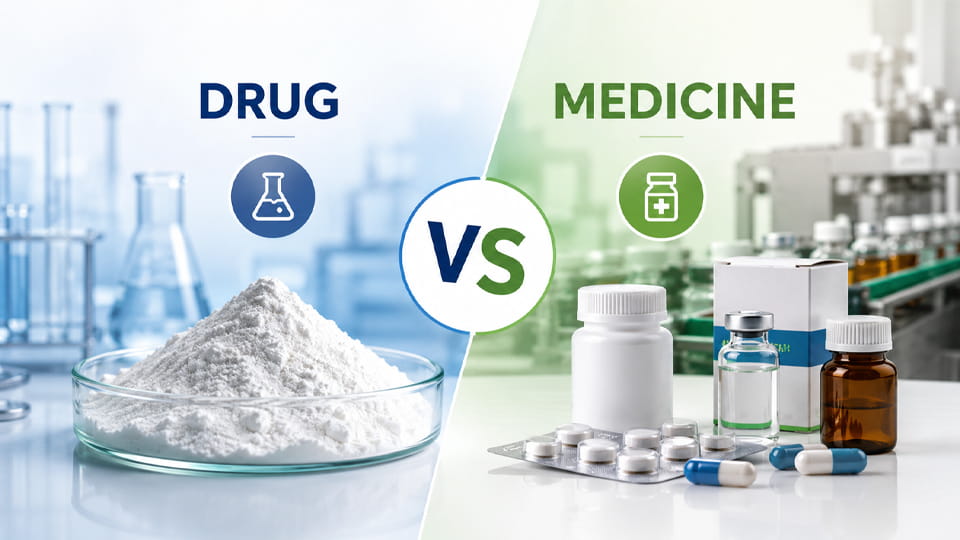
Farmasötik açıdan, A ilaç teşhis etmek için kullanılan aktif bir kimyasal veya biyolojik maddedir, tedavi, hafifletmek, davranmak, veya hastalığı önlemek. FDA bir ilacı genel olarak şöyle tanımlıyor:Tanıda kullanılması amaçlanan bir madde, tedavi, hafifletme, tedavi, veya hastalığın önlenmesi"insanlarda veya hayvanlarda. Pratikte, "ilaç" genellikle saf aktif maddeyi ifade eder (API'si) kendisi. Örneğin, Toz halindeki ibuprofen veya amoksisilin, ilaç haline getirilmeden önce ilaç maddesi olarak adlandırılacaktır. tablet veya kapsül.
Hakkında önemli noktalar uyuşturucu ilaç üretiminde:
Özetle, A ilaç ham terapötik madde veya API'dir - ilaca etkisini veren "nedir". Bu terim formülasyon geliştirme ve düzenlemede yaygındır..
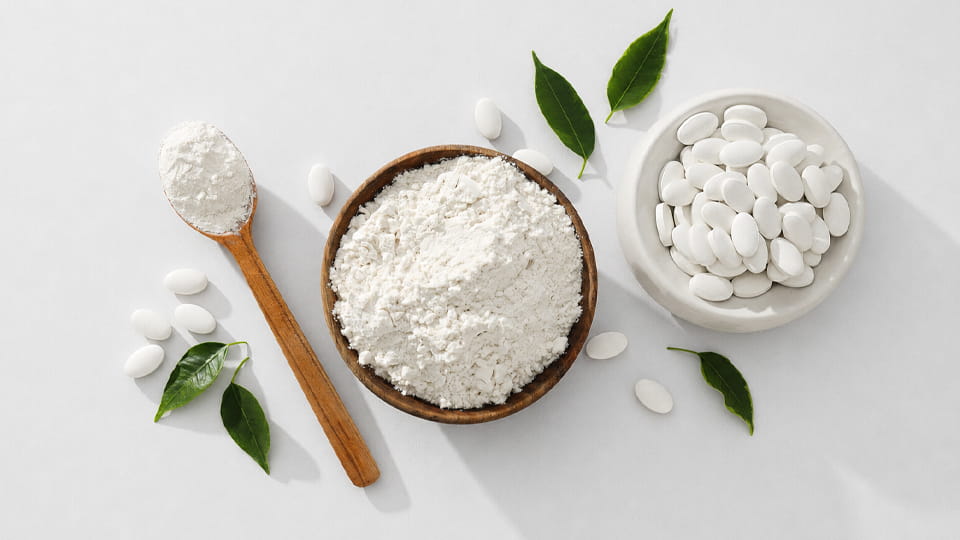
A ilaç (veya tıbbi ürün) bir bitmiş farmasötik ürün hasta kullanımı için tasarlanmıştır. Bir veya daha fazla ilaç içerir (API'ler) artı aktif olmayan bileşenler (yardımcı maddeler) ve güvenli dağıtım ve kullanım için paketlenmiştir. Başka bir deyişle, Bir ilaç bir dozaj formuna formüle edildiğinde (tablet, kapsül, sıvı, vesaire.) ve bir kapta etiketlendi, satışa hazır bir ilaç haline gelir.
Basit anlamda, A ilaç paketlenmiş mi, Bir durumu teşhis etmek veya tedavi etmek için kullanılan, hastaya hazır ürün. Yıldız bileşen olarak ilacı içerir, ama aynı zamanda diğer tüm şeyler (yardımcı maddeler, konteyner, etiket).
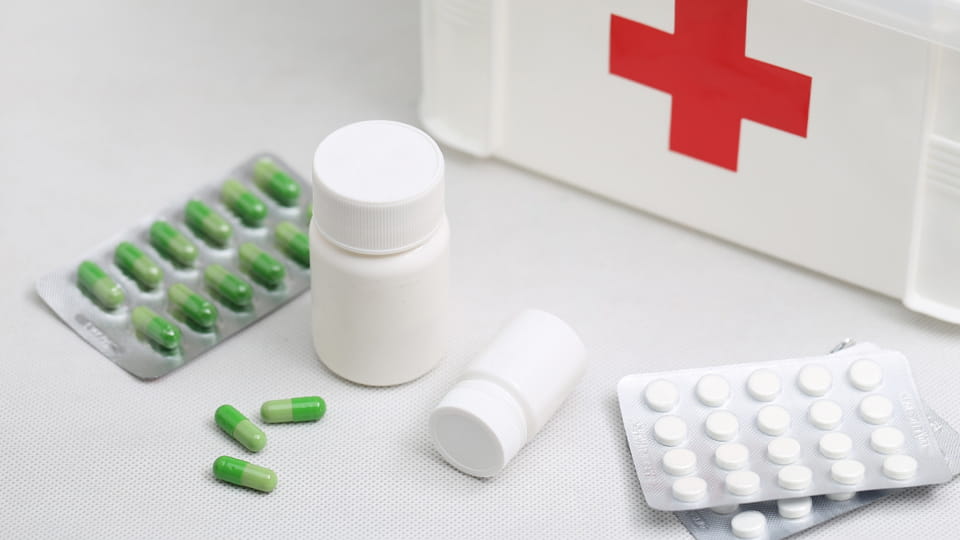
Aşağıda bunların bir özeti yer almaktadır temel ayrımlar ilaçla ilaç arasında. Farklılıklar sade bir dille göze çarpmasa da üretim ve düzenleme bağlamlarında önemlidir:
| Bakış açısı | İlaç | İlaç (Tıbbi Ürün) |
| Temel anlam | Aktif madde (API'si) terapötik etkisi olan | İlacı içeren bitmiş ürün, hasta kullanımına hazır |
| Sahne | Genellikle erken aşamadaki içerik maddesine veya araştırma bileşiğine atıfta bulunur | Formüle edilip paketlendikten sonra nihai dozaj formunu ifade eder |
| Kompozisyon | Saf aktif madde (örneğin. aspirin tozu) | API içerir + yardımcı maddeler, konteyner, etiket (örneğin. Blister içinde aspirin tableti) |
| Bağlamı kullan | Üretme, R&D, düzenleyici (onay süreci) | Klinik kullanım, reçete yazmak, dağıtım (sağlık ortamlarında) |
| Düzenleme | Geniş FDA "ilaç" tanımı API'leri içerir | Sıkı düzenlemelere tabi bitmiş ürünler (FDA/EMA onayları, Gmp) |
| Örnek | İbuprofen API'si, insülin proteini (dökme madde) | İbuprofen tabletleri, flakonlarda insülin enjeksiyonları |
Açıkça söylemek gerekirse: A ilaç Farmakolojik etkiye sahip aktif kimyasal/biyolojik maddedir. A ilaç bu ilaç artı formülasyon ve ambalaj mı, hastaların güvenli kullanımı için tasarlanmıştır. Bir ilaç kaynağının belirttiği gibi, “Her ilaç ilaç olarak başlar, ama her ilaç ilaç olmaz”. Örneğin, saf morfin bir ilaç maddesidir; salinle enjekte edilebilir dozlar halinde formüle edildikten ve şişeler içinde kapatıldıktan sonra, ilaç oluyor (ağrı kesici bir ürün).
Önemli nokta şu ki ilaç düzenlenmiş anlamına gelir, sarf malzemesi, halbuki ilaç yalnızca ham aktif madde veya daha geniş bir bileşik sınıfı anlamına gelebilir. Yukarıdaki tablo bu farklılıkları vurgulamaktadır.
“İlaç vs ilaç”ı tam olarak anlamak," eczacılıkta sıklıkla kullanılan ilgili terimlerin açıklığa kavuşturulmasına yardımcı olur:
Sonuç olarak: İlaç üretiminde, “ilaç maddesi” API, “ilaç ürünü” formüle edilmiş dozaj formudur (tabletler, kapsüller, enjeksiyon, vesaire.), Ve "ilaç" pazara hazır bir terapötik ürün olduğunda ilaç ürünü olarak adlandırdığınız şeydir. Örneğin, metformin bir ilaç maddesidir, 500mg metformin tablet ilaç ürünüdür, ve o tablet (ambalajında) hastanın kullandığı ilaç nedir.
Bu terimleri anlamak hayati önem taşıyor: Bir ilaç ürününün dozaj formunu bildiğimizde, doğru olanı seçebiliriz paketleme hattı onu istikrarlı bir ilaca dönüştürmek.
Formülasyon & Dozaj Formu Geliştirme: ham uyuşturucu madde tek başına hasta için hazır değil. Uygun bir dozaj formuna formüle edilmelidir (tablet, kapsül, şurup, enjeksiyon, vesaire.) – bu üretim geliştirmenin önemli bir parçasıdır. Her dozaj formu belirli yardımcı maddeler ve işlemler gerektirir (karıştırma, granülasyon, sterilizasyon) olmak ilaç ürünü. Örneğin, Enjekte edilebilir biyolojik maddelere yönelik hassas API'lerin aseptik işleme ihtiyacı vardır, bir hap için stabil bir API kurutma ve tablet sıkıştırma aşamalarından geçer.
Düzenleyici Onay: FDA veya EMA gibi kurumlar ilaç maddesine ilişkin verileri inceliyor Ve ilaç ürünü/ilaç. API'nin güvenliğini ve son formülasyonun etkinliğini değerlendirirler. Bitmiş ilaç katı standartları karşılamalıdır (Gmp, istikrar, etiketleme). FDA'lar CGMP kurallar açıkça paketleme süreçlerini ve ekipmanlarını kapsar; yani bir ilacı nasıl paketlersiniz? (ham bir ilaçtan bile daha fazlası) son derece düzenlenmiştir.
Paketleme ve Etiketleme: Bu ayrım paketleme ihtiyaçlarını belirler. Bir ilaç maddesinin tipik olarak minimal ambalajlaması vardır (davul, depolama için şişeler). Bir ilaç, Yine de, gereklilikler birincil ambalaj dozajı koruyan (örneğin. Blister paketleri, şişeler, flakon) Ve ikincil paketleme (kartonlar) bilgi ve izlenebilirlik için. Örneğin, tabletler (bitmiş ürün) raf ömrünü sağlamak için neme dayanıklı kabarcıklı paketlere veya şişe ve kapatma sistemlerine ihtiyacınız var. Enjekte edilebilir bir ilaç için steril cam şişeler veya ampullerin yanı sıra kurcalanmaya karşı korumalı mühürler gerekir. Her API ve dozaj formu kombinasyonunun eşleşen bir paketleme çözümü vardır.
Ekipman seçimi: Yalnızca API'leri düşünüyorsanız, reaktörleri veya karıştırıcıları düşünebilirsiniz. Ancak bir madde, ambalajlanması gereken bir ilaç ürünü olduğunda, doğru paketleme hattına ihtiyacınız var. Blister ambalaj makineleri, kapsül dolum makineleri, sıvı dolgu maddeleri, flakon dolum hatları, KARTON MAKİNELERİ – hepsi alakalı hale gelir. “İlaç”ın tanınması, ambalajlı ürünün bu makinelerin satın alınmasını gerektirmesi anlamına gelir.
Kısacası, "İlaç ve ilaç" konusunu anlamak, proje ekiplerinin bilgi sahibi olmasına yardımcı olur ne zaman ve nasıl Ambalajı üretim iş akışına entegre etmek. İlaç ürününün sadece formüle edilmemesini sağlar, ancak uygun şekilde korunup piyasaya sunulması.
Ambalajlama, formüle edilmiş bir ilacı hastaların güvenle kullanabileceği bir ilaca dönüştüren son kritik adımdır.. İçinde ilaç ambalajı, birincil ambalaj dozajla doğrudan temas halindedir (ilaç ürünü) ve bozulmaya karşı ilk engeli sağlar. Örneğin, sert jelatin kapsüller ve tabletler sıklıkla alüminyum-plastik Blister paketleri, sıvı şuruplar içeri girerken plastik (PET/HDPE) şişeler. Enjekte edilebilir ilaçlar doldurulur steril cam şişeler veya ampuller. Her birincil kap, inertliği ve bariyer özellikleri nedeniyle seçilir.
Birincil ambalaj kapatıldıktan sonra, ikincil paketleme (kartonlar, etiketler, broşürler) hasta bilgileri ve toplu veri sağlar. Örneğin, kabarcıklı paketler veya şişeler, talimat broşürleriyle birlikte markalı karton kartonlar halinde gruplandırılır, parti numaraları, ve barkodlar – uyumluluk ve hasta güvenliği açısından çok önemlidir.
JinLuPacking'de çalışıyor, makinelerimiz bu adımları otomatikleştiriyor. Otomatik kabarcık paketleme makinesi saatte binlerce tableti kabarcıklara dönüştürebilir; A kapsül dolum makinesi ilacı kapsüllere dozlar; A şişe dolum ve kapatma hattı tabletleri sayar veya şurupları şişelere doldurur; ve bir kartonlama makinesi bitmiş ürünleri sarar ve kutular. Tüm bu aşamalar – doldurma, kaplama, ambalajlama – nihai ilacın doğru şekilde dozlandığından emin olun, güvenli, ve dağıtıma hazır.
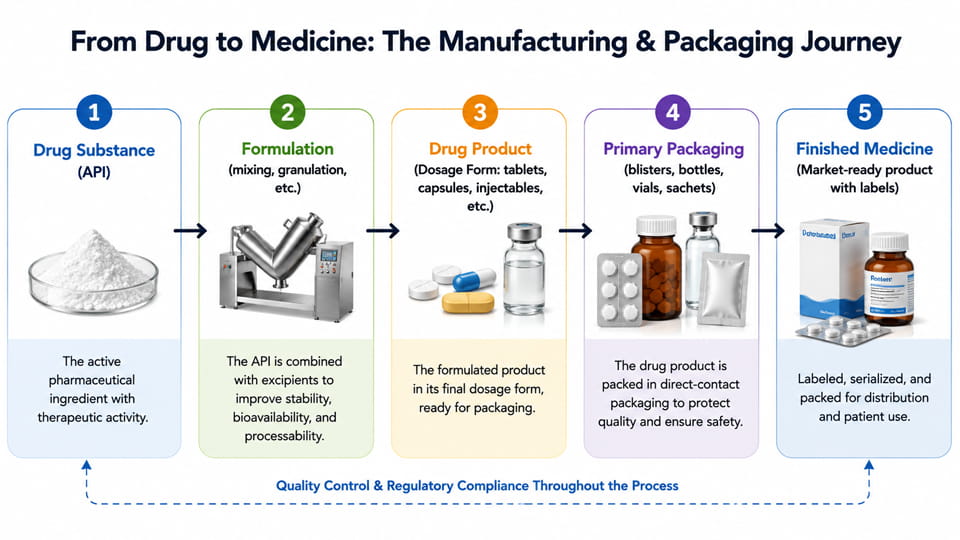
Figür: İlaç Akış Şeması → Tıp: Aktif uyuşturucu madde (API'si) bir şekilde formüle edilmiştir ilaç ürünü (spesifik dozaj formu). Daha sonra içeri doğru hareket eder birincil ambalaj (örneğin. tabletler için kabarcıklı paketler, şuruplar için şişeler, Enjektabller için cam şişeler). Nihayet, bu bir olur bitmiş ilaç ikincil ambalajla (kartonlar/etiketler) hasta kullanımı için.
Farklı dozaj formları farklı paketleme çözümleri gerektirir. Aşağıdaki tablo tipik eşleşmeleri özetlemektedir:
| Dozaj Formu | Ortak Birincil Paketleme | Örnek JinLuEquipment |
| Tabletler (Katı Oral) | Blister paketleri (PVC/PVDC folyo), veya plastik şişeler vidalı kapaklı | Blister Ambalaj Makinası; Tablet Sayma & Şişeleme Hattı |
| Kapsüller (sözlü) | Blister paketleri, veya tabletlere benzer şişeler | Otomatik Kapsül Dolum Makinesi; Blister Makinası |
| Ağızdan Sıvı (Şuruplar) | Plastik (PET/HDPE) şişeler çocuklar için güvenli kapaklarla | Sıvı Dolum ve Kapatma Sistemi; Şişe |
| Toz / Poşet | Tek dozluk poşet paketleri (folyo veya laminat torbalar) | Poşet / Çubuk Paketleme Makinası; Hazır Kese Hattı |
| Enjekte edilebilirler (Steril) | Bardak flakon, ampuller, veya önceden doldurulmuş şırıngalar, artı folyo contalar | Flakon/Ampul Dolumu & Durdurma Hattı; İndüksiyon Kapatıcı |
| Merhemler/Kremler | Lamine tüpler (alüminyum veya plastik) | Tüp Dolum ve Kapama Makinesi |
| Softjel Kapsüller | Şişe (PET) veya kabarcıklı paketler | Softgel Kapsül Blister Makinası; Sayma Hattı |
Seçim, doz formu stabilitesi gibi faktörlere bağlıdır, kısırlık, ve hasta rahatlığı. Örneğin, tabletler ve kapsüller sıklıkla kullanılır Blister Makineler veya şişe dolum hatları, sıvılara ihtiyaç duyulurken şişe durulayıcılar, doldurma, ve kapatma makineleri. Enjekte edilebilir ilaçlar temiz oda koşullarında steril dolum sistemleri gerektirir. Her çözüm, ilaç ürününün korunan bir ürün haline gelmesini sağlamak için özel paketleme makineleri tarafından desteklenir., etiketli ilaç bu karşılıyor GMP standartları.
Bunu somut hale getirmek için, İşte spesifik ilaçların nasıl ilaca dönüştüğünü gösteren birkaç örnek:
Her örnek gösterir: İlaç (API'si) → Formülasyon (tabletleme, doldurma, vesaire.) → Ambalajlama (kabarcık, şişe, şişe, kese) → İlaç (etiketli son ürün).
Mutlaka değil. Her ilaç bir ilaçla başlar, ama her ilaç ilaç olmaz. Birçok kimyasal veya biyolojik bileşik (uyuşturucu) hastalara asla ulaşamıyorum. Bazı ilaçlar R'de kalıyor&D veya yalnızca araştırma için kullanılır, ve diğerleri tıbbi ortamların dışında kullanılır (örneğin. eğlence amaçlı uyuşturucular). Sadece bir ilaç formüle edildiğinde, test edildi, ve onaylandı ilaç olur mu.
Bir SSS yanıt notu olarak, “Aspirin hem ilaç hem de ilaçtır”. Kimyasal formunda bir ilaçtır (asetilsalisilik asit) ve ateş tedavisinde formüle edilip kullanıldığında ilaç haline gelir, ağrı, veya iltihaplanma”. Önemli olan kullanım amacı ve sunumdur: Hastanın kullanımına hazır bir ürün olarak kullanılması onu ilaç haline getirir.
Özetle, yalnızca onaylandı, hastaya yönelik ürünler ilaçlar mı. Bunu anlamak, üreticilerin ve düzenleyicilerin deneysel maddeler ile gerçek pazar ürünleri arasında ayrım yapmasına yardımcı olur.
Özetle, "ilaç" genellikle aktif bileşene veya herhangi bir farmasötik maddeye atıfta bulunur, sırasında "ilaç" (tıbbi ürün) bitmiş anlamına gelir, o ilacı içeren hastanın kullanımına hazır ürün. Bu ayrım ilaç üretimi için önemlidir: R'ye rehberlik eder&D, düzenleyici durum, ve paketleme seçenekleri. Bu terimleri anlamak, bir ilaç maddesini formülasyon yoluyla taşımamızı ve ambalajlama istikrarlı hale gelmek için uygun şekilde, uyumlu tıp.
Ne zaman yeni bir dozaj formu geliştirmek, Unutma: doğru paketleme hattı (kabarcık paketleyici, kapsül dolgu, şişe hattı, şişe doldurucu, karton, vesaire.) için gereklidir ilacı korumak ve GMP ile tanışmak. Örneğin, tablet üreticileri güveniyor kabarcıklı paketleme makineleri Ve sayma/doldurma hatları, enjekte edilebilir ürünler gerektirirken flakon/ampul doldurma ve kapatma makineleri ve ikincil ambalajı emniyete alın. JinLuPaketleme tam bir ürün yelpazesi sunuyor ilaç paketleme makineleri her dozaj formuna göre uyarlanmıştır – tablet & kapsül kabarması ile poşet ambalaj Ve kartonlama.
İlacınızı pazara hazır bir ilaca dönüştürmeye hazır? Çözümlerimizi keşfedin: tablet & katı dozlar için kapsül kabarcıklı paketleme makineleri, toz için kapsül dolum makineleri/sıvı kapsüller, kese & hazır kese makineleri tozlar için, ve son kutulama için kartonlama makineleri. Ekipmanlarımız ürün kalitesinin korunmasına yardımcı olur, hasta güvenliğini sağlamak, ve üretim hattınızı ilaçtan bitmiş ilaca kadar kolaylaştırın.
Tam olarak değil. Gündelik konuşmalarda örtüşüyorlar, ancak teknik olarak ilaç genellikle aktif bileşen veya herhangi bir farmakolojik madde anlamına gelir., oysa ilaç hastalara verilen bitmiş üründür. “Her ilacın bir ilacı vardır” denilebilir., ancak bir ilaç formüle edilene kadar tek başına ilaç olmayabilir”.
Çoğu farmasötik bağlamda esasen aynı kavramdırlar.. Bir ilaç ürünü tamamlanmış dozaj formudur (tablet, kapsül, enjeksiyon) satışa hazır. İlaç, hastanın kullanımı için paketlendiğinde ilaç ürününe verilen addır.. Pratikte, onaylı ilaç ürünleri (etiketleme ile) ilaçlar mı.
Bir uyuşturucu madde (veya API) saf aktif maddedir – terapötik etkiye sahip olan kimyasal veya biyolojik maddedir. Bir ilaç ürünü, o maddeyi içeren nihai formülasyondur., artı yardımcı maddeler, dozaj formunda (hap, çözüm, vesaire.). Tuz ve tuzluk düşünün: tuz (uyuşturucu madde) içerik; bir şişede topaklanma önleyici madde içeren tuz (ilaç ürünü) kullanışlı bir üründür.
İlacın ilaca dönüşmesinde ambalaj çok önemli. JinLuPacking kaynaklarının notunda olduğu gibi, ilaç ambalajı (Blister paketleri, flakon, şişeler) ilaç ürününün stabilitesini ve dozajını korur, ve düzenlemelere uygunluğu sağlar. Uygun paketleme ve etiketleme, ambalajsız bir ilaç maddesini güvenli bir maddeye dönüştürür, kullanıcı dostu ilaç.
Evet. İbuprofen veya asetaminofen gibi bir bileşik bir ilaç maddesidir. Talimatlarla birlikte bir OTC tablete dönüştürüldüğünde, aynı zamanda bir ilaçtır. Biçime ve kullanıma bağlıdır. Yukarıda belirtildiği gibi, Aspirin kimyasal olarak bir ilaçtır ancak ağrı kesici olarak tablet haline getirildikten sonra ilaç olarak adlandırılır. Birçok ağrı kesicide durum aynı, antibiyotikler, vesaire.
Doktorlar sıklıkla "ilaç" kelimesini herhangi bir farmasötik ajanın nötr anlamında kullanırlar.. Klinik jargon ve hukukta (FDA Yasası gibi), “İlaç” tedavi edici bir madde için resmi terimdir. Öksürük şurubundan kemoterapiye kadar her şeyi kapsıyor. Bu sırada, “İlaç” daha hasta dostu. Yani doktor ibuprofen reçete edebilir (ilaç) ağrı kesici olarak (ilaç).
Referanslar:
1.İlaçlar@FDA Terimler Sözlüğü -- BİZ. Gıda ve İlaç İdaresi
2.Ürünlerin İlaç ve Cihaz Olarak Sınıflandırılması ve Ek Ürün Sınıflandırma Konuları -- BİZ. Gıda ve İlaç İdaresi
3.Sözlük (P terimleri: farmasötik ürün, yardımcı madde, başlangıç malzemesi) -- DSÖ
4.Ön Yeterlilik Sözlüğü -- DSÖ
5.Dozaj Formları | FDA -- BİZ. Gıda ve İlaç İdaresi
6.Aktif Farmasötik İçerikler için Q7A İyi Üretim Uygulamaları Rehberi -- BİZ. Gıda ve İlaç İdaresi
