

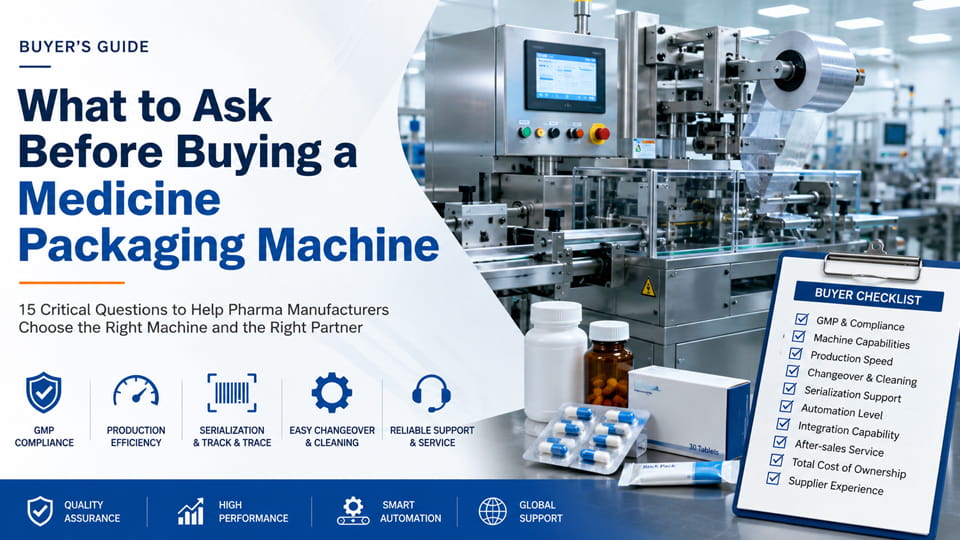
を購入する 医薬品包装機 製薬会社にとっては重大な決断です, したがって、事前に適切な質問をすることで時間を節約できます, お金, そして後で頭痛がする. モダンな 医薬品包装ライン 複雑です (統合することが多い カプセル充填剤, ブリスターマシン, 計数システム, 箱詰め業者, もっと), 厳格なGMPおよび規制基準を満たさなければなりません. 実際には, 研究では全体のほぼ半数が示されています 医薬品のリコール パッケージングまたはラベル付けの間違いが含まれる. このガイドでは, 医薬品購入者向けの最も重要な質問と考慮事項をまとめました. コンプライアンスを評価する方法を学びます (GMP/FDA/WHO), フォーマット (錠剤, 液体, 水ぶくれ, 等), 速度と自動化レベル, クリーニングと検証のニーズ, シリアル化/トレーサビリティ, TCO (総所有コスト), およびサプライヤーのサポート. 便利な機能も付属しています 購入者のチェックリスト よくある調達ミスを強調します. 小規模の請負包装業者を運営している場合でも、大規模な製造工場を運営している場合でも, これは、マシンを系統的に比較し、コストのかかる落とし穴を回避するのに役立ちます。.
なぜそれが重要なのか: 製薬業界で, コンプライアンスは交渉の余地のないものです. 機器はFDAを満たす必要があります, 欧州連合, 製品を製造する前に、WHO の cGMP 基準に従う必要があります。. 機械の接触部品は製薬グレードである必要があります (通常 ステンレス鋼316Lまたは 304) 滑らかな, 溶接面 - 錆びない, 穴, または粉が隠れる隙間. デザインは衛生的でなければなりません (例えば. 片持ちモジュール, 傾斜面) 掃除や点検が簡単です. に尋ねてください 医薬品包装機器サプライヤー 文書化用: のプロトコルを受信する必要があります IQ (設置資格), OQ (運用資格), そして PQ (パフォーマンス資格). これらは、マシンが正しくインストールされていることを検証します, 意図したすべての設定で実行, 実際の運用負荷の下でも一貫してパフォーマンスを発揮します. IQ/OQ/PQレコードなし, 機器は「認定」されていません GMPの使用. サプライヤーの品質システムと認証も確認してください: ISOに従っていますか 9001? 材料証明書を提供できますか (例えば. FDA準拠のシリコンシール) 必要に応じて CE/UL マークも付けます? ついに, 設計がデータの整合性をサポートしていることを確認する (例えば. 21 CFRパート 11 電子ログ用) 必要に応じて滅菌も行います.
画像: 最新の医薬品包装生産ライン, 統合された機械とGMP準拠の設計の必要性を示す.
すべての機械がすべての製品を処理できるわけではありません. 製品の種類について明確にする必要があります. 例えば, 錠剤とカプセル 多くの場合、計数/ボトル充填ラインまたはブリスターパッカーを使用します, 一方 液体の薬 専用の液体充填シール機が必要. 粉末・顆粒 小袋またはスティックパックに入っている場合があります. 以下は簡単なガイドです – ニーズによっては、複数のマシンを 1 つのラインに組み合わせることができます:
| 剤形 & 形式 | 代表的なマシンタイプ |
| 固体錠剤 (ゆるい, 瓶の中) | 自動カウント & ボトル充填ライン |
| 固体錠剤 (ストリップまたは水ぶくれ) | ブリスターパッケージングマシン (PVC/アルミPVC) |
| カプセル (ハードジェル) | カプセル充填機 + (ブリスターまたはボトルライン) |
| 液体/シロップ (バイアルまたはボトル) | 液体充填・キャッピング機 |
| 粉末・顆粒 (スティックまたは小袋) | 小袋またはスティックパック機 |
| ソフトジェル/グミ | 計数機 + ブリスターまたはボトリング |
| カートン (二次的) | 箱詰め機 ファイナルボクシングに向けて |
医薬品包装機は、次のように販売されることがよくあります。 統合ライン. 例えば, カプセルラインは製品を供給する可能性があります ロッド に 計数機, その後、 ブリスターパッカー または 箱詰め業者.
医薬品包装機のサプライヤーに問い合わせてください: 「ラインで私の製品を実行できますか?」?」 各フォーマットごとに, 材料の適合性を確認する – 例:. ブリスターマシンはホイルとフィルムを実行する必要があります (PVC, ペット, アルアル) 適切な温度で. ボトルのラインは、さまざまなボトルの高さとキャップの種類に合わせて調整する必要があります. 複数の商品を企画する場合 (例えば. カプセルと錠剤), 部品を交換したり、別のマシンが必要になる場合もあります. 一部のマシンは、 マルチフォーマット, ただし、どのような切り替えが必要かを必ず確認してください (次のセクションを参照してください).
マシンの定格速度は出力目標と一致する必要があります. 機械が 1 分/時間あたりに梱包できるユニット数を調べます 確実に. 必ずご検討ください ネット 出力 (拒否した後) 最大値だけではなく. 現在のニーズについて考える そして 将来の成長. 例えば, 中型の錠剤のブリスター ラインは次のように評価される可能性があります。 40,000 1時間あたりの水ぶくれ数; 大規模な全自動ラインは、 100,000 1時間あたり. しかし, 頻繁にクラッシュする非常に高速なマシンは、わずかに遅いマシンよりも悪くなる可能性があります。, 安定したもの.
毎日または年間のボリュームを見積もり、ピークに対応できるマシンを選択してください. 業界のトレンドを念頭に置く: 多くの製薬会社は現在、頻繁な切り替えを伴う小規模なバッチを実行しています。, したがって、単一 SKU の非常に高い速度は柔軟性ほど重要ではありません. 複数のシフトを実行する場合, より高いスループットへの投資は、労働力の節約を通じてより早く回収できる. ただし、バッチが小さい場合やカスタムの場合は、, 素早いレシピ切り替えと工具不要の切り替えを可能にする機械 (セクションを参照 4) 素の速度より価値がある.
本当に必要な自動化の度合いを決定する. 半自動機械 オペレータにコンテナの積み込みを要求する, サイクルを開始する, または手動タスクを実行する (例えば. 錠剤を水疱に落とす). 全自動医薬品包装ライン 最小限の人的介入で餌やりからアザラシまですべてを行う. 半自動マシンは初期費用が少なく、少量の作業やバッチ作業に適しています。. 全自動ラインはコストは高くなりますが、労働力を節約し、人的ミスを減らします。.
| 特徴 | 半自動 | 完全に自動 |
| オペレーターの関与 | はい – 積み込み/積み下ろし, 等. | 最小限 – 1 人がライン全体を監督 |
| 生産速度 | 適度 | 高い |
| 切り替え | もっとゆっくり (手動調整) | もっと早く (多くの場合工具不要, レシピ主導型) |
| 初期投資 | より低い | より高い |
| 検証の複雑さ | 似ている (IQ/OQ/PQはまだ必要です) | 似ている |
| に最適 | 小さなラン, ラボパイロット | 大規模な実行, 24/7 生産 |
完全に自動化された製薬システムには、多くの場合、フィードホッパーが含まれています, 自動ラベラー, キャップ, とコンベアはすべて同期されています. エラーチェックも統合されています (体重計, ビジョンシステム) リアルタイムで. 半自動装置は受託製造を始めようとする場合に適している可能性があります, しかし、成長計画により、購入者は完全自動化を選択することがよくあります.
製薬会社はあなたが思っているよりも頻繁に製品を変更します, それぞれの変更には徹底的なクリーニングが必要です (そしてしばしば再検証). 優れたマシン設計によりこれが高速化されます. 探す 工具不要 取り外し可能な部品, ライトコンポーネント (一人がそれらを処理できます), QA を可能にするオープン フレーム 見る 残留物が残っている場合. 錠剤や粉末が蓄積する可能性のある隠れた空洞があってはなりません. ベンダーはクリーニングに関する明確な SOP を提供する必要があります。, 分解と再組み立て. 切り替え手順の検証: 缶製品 レシピ 保存されるため、特定の SKU のすべての設定を呼び出すことができます?
実際に, 迅速に洗浄および検証できる機械は生産性を直接的に向上させます. 切り替えが必要なお薬をお持ちの場合, 言う, 規制物質とビタミン製品, クリーニングと、多くの場合クリーン検証テストを実行します (最悪の場合の製品テスト) 毎回. について尋ねる 定位置クリーン (CIP) オプションまたはその他の衛生機能.
現代の規制 (私たち. DSCSA, EU 口蹄疫, 等) 必要とする 販売可能な各ユニットをシリアル化する 薬の. 購入する前に, ラインにコーディングプリンターを統合できることを確認する (インクジェット/レーザー) パッケージに 2D バーコードまたは QR コードを適用して検証するためのビジョン スキャナー. 制御システムは各シリアル番号を取得し、バッチ データにリンクする必要があります。. 実際に, 購入者はよく尋ねます: 「このマシンはラベルのないアイテムや無効にコード化されたアイテムを拒否できますか?」?」 そして 「後でコーダーやカメラを追加するためのスペースと配線は確保されていますか?」?」. 今日輸出しなくても, シリアル化の準備ができたラインを構築することは、後から改造するよりも賢明です.
連載を超えて, デジタル統合を検討する. マシンは標準の産業用通信をサポートしていますか (イーサネット/IP, OPC UA, Modbus, 等) MES/ERP にフィードを提供できるようにする? QA用の監査証跡と電子バッチ記録を生成できますか? 最新のスマートファクトリーはリアルタイムデータを期待しています: 稼働時間, 拒否カウント, アラーム, 等. 「スマート」な製薬ラインは問題を早期に発見し、データ整合性要件をサポートするのに役立ちます (手動ログはありません). HMI/PLC をネットワーク接続できるかどうかを確認する, イベントログがある場合, リモートサービスかどうか (VPNまたはIoT経由) 提供されています. デジタル対応によりラインの将来性が確保され、トレーサビリティが向上します.
ステッカー価格は始まりにすぎません. 賢い購入者は計算する TCO 機械の寿命にわたって. TCOには基本価格が含まれます プラス 配送, インストール, IR/WH/PQ, トレーニング, スペアパーツ, エネルギーの使用, メンテナンス, ダウンタイムコスト. 例えば, ある研究では、高価だが信頼性の高い中国製の医薬品包装ラインは、より安価な製品よりも 3 年間ではるかに多くのコストを節約できることがわかりました。, あまりサポートされていないもの. テーブルを作る (以下のように) ベンダーを比較する:
| コスト要因 | 説明 | コメント |
| 購入価格 | 機械, アクセサリー, 配達 | 一度 (ただし大きく異なる場合があります) |
| インストール & 試運転 | 現場の準備, 較正, IR/WH/PQ | ここでの手順を怠ると、将来のコストが増加する可能性があります |
| トレーニング | オペレーター & メンテナンストレーニング | 適切なトレーニングによりオペレーターのミスが減少します |
| スペアパーツ & コンポーネント | 摩耗部品 (ベルト, センサー, 等) | リストを要求する; 高可用性によりダウンタイムを節約 |
| エネルギー/公共事業 | 電気, 空気, 空の, 等. | 効率的なマシンはOPEXを削減できる |
| メンテナンス & ダウンタイム | 定期メンテナンス & 予定外の修正 | 迅速なサービスと故障の少ない設計により、この問題が最小限に抑えられます。 |
| サポート/サービス | リモートトラブルシューティング, 現場訪問 | 強力なサービス SLA にはそれだけの価値があります |
| 消耗品 & ツール | シール, 潤滑剤, 予備ノズル, 等. | 見落とされがちですが、積み重なる可能性があります |
2 つのベンダーが同様のマシンを見積もる場合, 各リストに何が含まれているかを詳しく調べる. 高価なマシンは長持ちする可能性があります, より安いスペアパーツがある, または圧縮空気の使用量を減らし、実際のコストを削減します. 保証期間と保証内容については、必ず各ベンダーにお問い合わせください。 (部品, 労働, 技術者のための旅行).
最高のマシンでもメンテナンスが必要です. 医薬品包装機サプライヤーの実績とサービス体制を確認する. 信頼性の高いマシンには、HMI 上の明確な障害コードなどの機能が備わっています。, きちんとラベルが貼られた電気キャビネット, 簡単な予防保守計画. MTBF を要求する (平均故障間隔) データまたはケーススタディ. スペアパーツの取り扱い方法も確認してください: 既製部品またはカスタム部品です? 重要なコンポーネントをどれだけ早く入手できるか (翌日または数週間)? 特に世界中のバイヤーにとって, ローカルサポートが鍵. JinLu Packing の調査では、迅速な部品配送とサービスにより、ダウンタイムによる 6 桁の損失を防止できることが示されました。.
[jl_youtube ソース=”https://www.youtube.com/embed/1Bb_J6rluac”]
ビデオ: 自動充填・瓶詰めライン. 信頼性機能の評価 (エラーセンサー, クリアキャビネット) 機器の選択時のメンテナンスのしやすさ.
すべての医薬品包装機械メーカーが医薬品のニュアンスを理解しているわけではありません. 理想的には, ~で実績のあるベンダーを選ぶ 製薬/GMP. 顧客リストと最近のプロジェクトについて尋ねる. あなたの地域または規制された市場に供給していますか (米国FDA, 私はEMA)? 彼らは脂肪を作りますか (工場での受け入れテスト) および FAT レポート? 必要に応じて資格取得プロセスに対応できますか? 評判の良いサプライヤーはエンジニアリング QMS を備えており、カスタマイズを提供する場合があります。 (例えば. OTC と RX のラベリングに特化した視覚検査).
物流も考慮する必要があります: 彼らの工場はどこですか? 海外なら, あなたの国にチャネルパートナーまたはインストーラーはありますか? 通関や配送は誰が担当するのか? 覚えて, 最も安価なマシンでも、ドキュメントが不足していたり、ローカルでサポートされていなかったりするために船上に設置されている場合は、あまり価値がありません。.
最後に, 会議や見積依頼で使用できるチェックリストは次のとおりです:
これらの質問, たくさんある一方で, 最も重要な点を確実にカバーし、ベンダーを同等の基準で比較できます。.
適切な医薬品包装機への投資はパフォーマンスのバランスをとることを意味します, コンプライアンス, そして長年にわたるコスト. こういった質問をすることで, 要件を明確にし、予期せぬ事態を避けることができます. 覚えて, 最良の選択は必ずしも最も安価なマシンであるとは限りません, しかし、それは あなたのプロセスに適合します そして コンプライアンスを維持します 最小限のダウンタイムで.
ガイダンスが必要な場合, 包装自動化の専門家に相談する – たとえば, ジンルパッキング エンドツーエンドの医薬品ラインの設計とサポートを提供します, GMPラインレイアウトから検証文書まで. お問い合わせ あなたのプロジェクトについて話し合うために: カスタム提案を提供したり、ライブデモを手配したりできます. 投資が規制上の成功と業務効率の両方を確実に実現しましょう.
医薬品分包機を購入する前に, GMP準拠について尋ねるべきです, 生産速度, 包装の種類, 検証サポート, 機械材料, 切り替え時間, スペアパーツの入手可能性, およびアフターサービス. マシンが将来の生産拡張やシリアル化の要件をサポートできるかどうかを確認することも重要です.
適切なマシンは製品タイプによって異なります, 生産量, 包装形態, およびコンプライアンス要件. 例えば, ブリスター包装機は錠剤やカプセルによく使用されます, 一方、粉末や顆粒には小袋またはスティックパック機が適しています。. 購入者は自動化レベルも考慮する必要があります, メンテナンス費用, およびライン統合機能.
信頼できる医薬品包装機械メーカーは、次のような文書と証明書を提供する必要があります。:
• CE認証
• GMP準拠の設計文書
• IQ/OQ/PQプロトコル
• FAT/SAT ドキュメント
• 材料証明書
• 21 CFRパート 11 サポート (該当する場合)
これらの文書は、製薬工場が監査に合格し、規制要件を満たすのに役立ちます。.
GMP 準拠は製品の安全性の確保に役立ちます, 一貫した品質, および規制当局の承認. GMP 準拠の機械は汚染リスクを軽減するように設計されています, 洗浄性の向上, 適切な文書化とトレーサビリティをサポートします. これは規制市場に輸出する製薬メーカーにとって特に重要です.
最新の医薬品包装装置は多くの包装形式をサポートできます, 含む:
• ブリスターパック
• ボトル
• サシェ
• スティックパック
• ポーチ
• カートン
最適な選択肢は剤形によって異なります, 市場の要件, そして生産目標.
DSCSA や EU FMD などの医薬品トレーサビリティ規制により、多くの国でシリアル化が不可欠になりつつあります. シリアル化機能を備えたマシンは、固有のコードを印刷および検証できます。, メーカーが偽造品を防止し、サプライチェーン追跡を改善できるよう支援します.
半自動機械は通常、より手頃な価格であり、少量生産またはスタートアップに適しています。. 全自動医薬品包装機は効率が向上するため、大規模生産に適しています。, 人件費を削減する, 人的エラーを最小限に抑える.
価格はいくつかの要因によって決まります, マシンタイプも含めて, 自動化レベル, 生産速度, カスタマイズ要件. 基本的な半自動機械は、シリアル化と検証のサポートを備えた完全に自動化された医薬品包装ラインよりもはるかにコストが低い場合があります. 購入者は、最初の購入価格だけではなく、総所有コストに注目する必要があります。.
はい. 最新の医薬品包装機の多くは計数機と接続できます, ラベルシステム, 箱詰め機, コンベア, およびERP/MESシステム. 統合は自動化と全体的な生産効率の向上に役立ちます.
専門のサプライヤーが提供する必要があります:
• インストールサポート
• オペレーターのトレーニング
• オンライントラブルシューティング
• スペアパーツの供給
• 予防保守のガイダンス
• リモート技術サポート
優れたアフターサービスにより、ダウンタイムが大幅に短縮され、長期的な生産の安定性が向上します。.
参考文献:
1.現在の優れた製造業 (CGMP) 規則 - 私たち. 食品医薬品局
2.WHO の生物由来製品の適正製造基準, 別館 2, TRS いいえ 999 - 誰が
3.優れた製造慣行 —— 欧州医薬品庁
4.シリアル化に関する 10 のよくある質問 —— 国際製薬工学学会