×

オンラインサービス

💬WhatsApp: +86 1801179332
💡
  • ブログ
  • 医薬品包装機サプライヤーを評価する方法: 完全な購入者ガイド (2026)

医薬品包装機サプライヤーを評価する方法: 完全な購入者ガイド (2026)

Why Supplier Evaluation Matters for Pharma Packaging

Pharmaceutical packaging equipment must meet strict quality and safety standards. A supplier’s failure can lead to 製品リコール or regulatory action. Supplier qualification is a risk management process that provides “confidence that suppliers…can supply consistent quality in compliance with regulatory requirements”. 実際には, EU GMP guidelines explicitly state that selecting and maintaining packaging material suppliers requires attention “similar to that given to starting materials”. Due diligence – not just cost comparison – is essential. Vetting a supplier upfront ensures machines meet cGMP standards (material grade, 清潔さ, validation support) and that the vendor can consistently support your project.

Key factors include regulatory compliance (FDA, EU GMP), design and build quality (例えば. 316L stainless steel fabrication), supplier quality systems (ISO 9001/13485, CAPA process), ドキュメント (validation protocols), 容量, service, and long-term value. This guide breaks down each step:

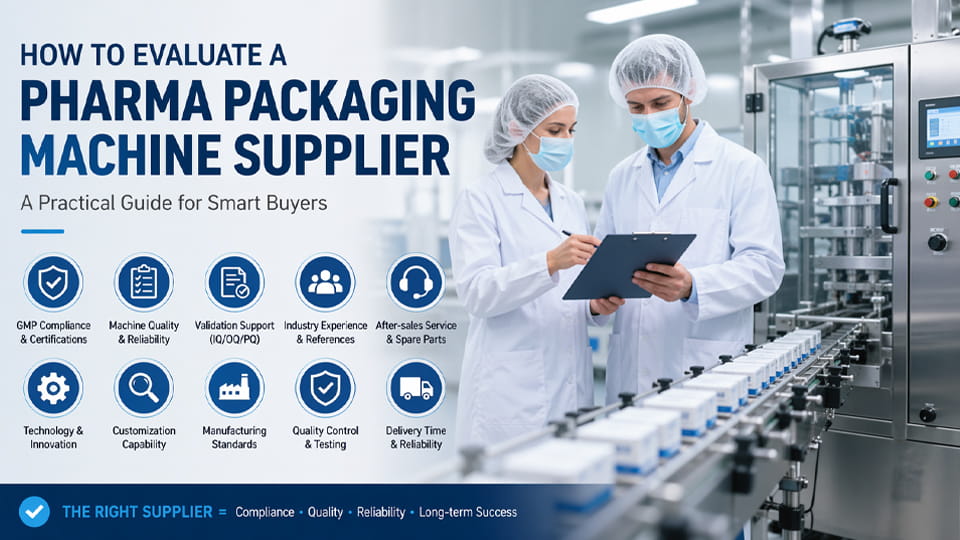
医薬品包装機サプライヤーを評価する方法


Step-by-Step Supplier Evaluation Process

To select a reliable pharma packaging machine supplier, follow these steps:

1. Define Your Technical & Quality Requirements

Clearly outline your process needs (出力, packaging types, フォーマット) and quality criteria (GMP衛生, cleanroom compatibility). Identify any special options (例えば. aseptic design, cleanroom installation, pharmaceutical-grade materials). Having precise requirements lets you compare vendors on an apples-to-apples basis. Consider project scope: full line or individual machines, semi vs. 全自動, 特殊な材料 (316l ステンレス鋼, FDA-approved plastics), and any performance specs (スピード, 正確さ). Involve your QA, engineering and production teams to capture all needs upfront. Suppliers often ask for user requirements in their proposals, so a written spec sheet or request-for-quote packet is essential.

2. Check GMP and Regulatory Compliance

Regulatory compliance is non-negotiable. Ensure the supplier’s equipment and documentation meet cGMP (FDA) or EU-GMP standards. 例えば, FDA’s Quality System Regulation (21 CFR 820) and ISO 11607 (for sterile packaging) require that packaging processes be validated under IQ/OQ/PQ protocols. Ask for certificates of conformity (CEマーキング, FDA 510(k) if relevant), and check if the supplier’s processes align with standards like ISO 13485 またはISO 9001. A supplier’s GMP certification or a strong track record in pharma shows commitment to compliance. Verify that the machine design follows GMP principles (例えば. no dead spaces, 掃除しやすい表面, sanitary finishes). According to industry guidance, pharmaceutical machines should use 316L stainless steel with proper polishing and passivation to resist corrosion and ease cleaning – a detail inspectors will expect. (If the supplier uses cheaper materials, that’s a red flag.) Also confirm material traceability and documentation processes: all parts and welds should be documented per ASME BPE or FDA guidance.

3. Evaluate Machine Design and Build Quality

Inspect machine construction in detail. 高品質 pharma packaging equipment will have a solid design, robust frame, sanitary guards, and modular components. Look for features like: servo-driven actuators (for precision), validated safety interlocks, and food/pharma-grade lubricants (NSF or FDA approved). Check that contact parts are high-grade (316Lステンレス, electropolished or passivated). Evaluate their engineering: are welds smooth? Are seams and sensors aligned? Compare multiple vendors’ machines to spot obvious flaws (loose components, misaligned conveyors, rust spots). Many companies list GMP features in brochures; verify them physically if possible. In this stage, a third-party inspection or witness factory run (video demo) can help assess build quality.

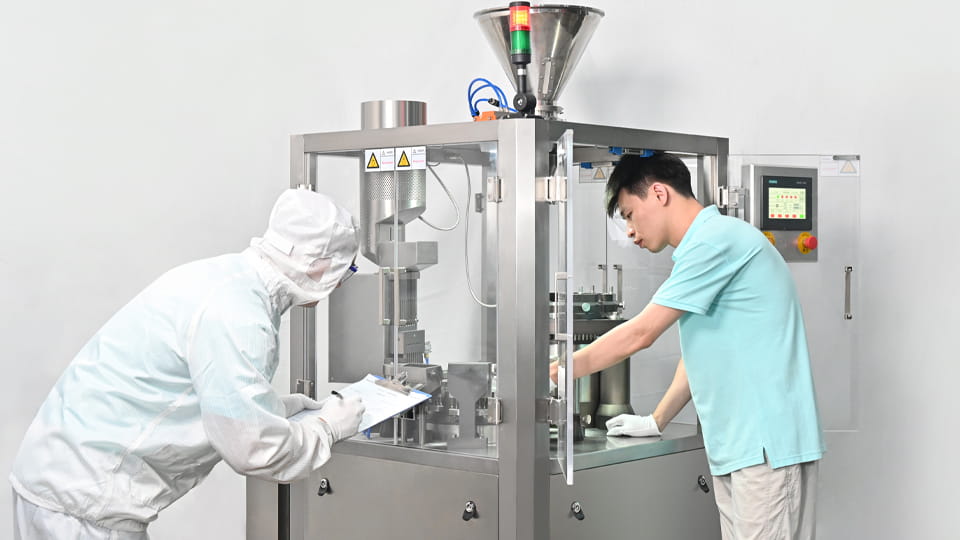
Quality control inspection on a pharmaceutical machine

画像: Quality control inspection on a pharmaceutical machine.

4. Assess Supplier’s Quality Systems and Certifications

A reputable supplier will have a documented Quality Management System (QMS). Prefer vendors with ISO 9001 certification; if they serve medical/pharma, ISO 13485 is a bonus. Per ISO 13485:2016, manufacturers must carefully select and evaluate suppliers to meet strict regulatory and quality standards. Check if the supplier maintains a “List of Qualified Suppliers” and performs regular supplier audits. Ask to see quality manuals or procedure outlines. The supplier should have a robust CAPA (Corrective and Preventive Action) プロセス. 例えば, if a vendor logs issues, investigates root causes and implements fixes, that indicates a mature QMS. Industry guidance notes that if performance issues arise, manufacturers are “expected to take appropriate corrective actions,” even to the point of replacing a supplier. Ask the supplier how they handle non-conformances or field failures: do they have an internal change control and CAPA register? Documented processes for spare parts control and traceability are also critical. If a supplier has no formal QMS or avoids quality questions, consider it a serious concern.

5. Review Experience, Track Record and References

Look for suppliers with proven pharmaceutical packaging experience. Ask how long they’ve made pharma machines and for examples (without violating confidentiality). Case studies or client lists can reveal expertise (see “Our clients” logos for known pharma companies). Evaluate their product range: a manufacturer focused on pharma (水膨れ, 小袋, vial lines) is more likely to understand your needs than a generic packaging vendor. Request references or at least testimonials from recent customers, particularly in your region or industry. Inquire about past projects: Did they meet specs? Were validation documents complete? How quickly were any teething problems resolved? A supplier’s willingness to share successes (and lessons learned) demonstrates transparency.

6. Verify Validation and Documentation Support

Any pharma equipment must be delivered with thorough documentation for your validation team. Confirm the supplier provides complete IQ/OQ/PQプロトコル, ユーザーマニュアル, and calibration certificates. Installation Qualification (IQ) ensures the machine was built and installed per spec; Operational Qualification (OQ) tests functional parameters; Performance Qualification (PQ) validates output quality. According to FDA guidance, “IQ, OQ, PQ protocols are methods for demonstrating that equipment…will offer a high degree of quality assurance”. Make sure the vendor will support these steps. Do they include templates for IQ/OQ/PQ? Will they witness commissioning runs? Good suppliers often assist with protocol drafting or even perform the tests on-site. Also verify documentation like BOM (bill of materials), wiring diagrams, and certificates of material (for stainless steel, drives, 等) are provided. All documents should be traceable – ideally in a digital format – and kept updated (especially if a design was revised during production). Without solid documentation, your validation team cannot formally approve the machine.

7. Evaluate Production Capacity and Lead Time

Capacity matters. Ask about the supplier’s production capabilities and current backlog. Can they meet your timeline without cutting corners? 大きい, busy plants may have long lead times or push rush orders. A reliable vendor will offer a realistic delivery schedule (allow time for tooling, testing and shipping). Check their working capital or consignment stock practices: do they have critical parts ready to shorten turnaround? Some suppliers maintain stock of standard models for quick delivery. Trade-offs: a slightly longer lead time might be acceptable for higher quality. Just ensure you understand what drives costs – for instance, overseas shipping vs. expedited air freight. Also confirm the shipping insurance and logistics plan: who handles customs, is there pre-shipment inspection?

8. Confirm After-Sales Service and Technical Support

サービス can make or break operations. A good supplier provides training, スペアパーツ, and timely support after purchase. Clarify warranty terms (間隔, coverage) – JinLuPacking, 例えば, offers a 3-year warranty on 箱詰め機. Ask how they handle breakdowns: Is there local support or on-site service? 24/7 hotline? Are spare parts stocked regionally? Consider a Service Level Agreement (SLA). また, inquire about software or control system updates: will new options or improvements be backward-compatible? Having on-site commissioning and training included is a plus. The vendor’s service network (distributors or offices) is important for global customers. 最終的に, choose a supplier who stays engaged after delivery – one that will respond quickly to field issues and proactively prevent future ones.

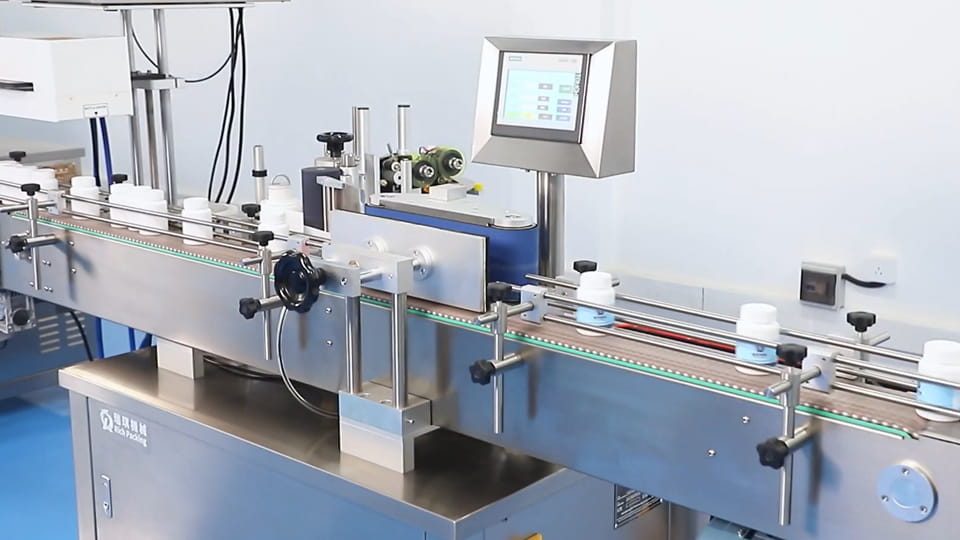
Conveyor system in a clean manufacturing plant

画像: Conveyor system in a clean manufacturing plant.

9. Conduct a Factory Audit (Onsite or Remote)

Seeing is believing. Audit the supplier’s factory or arrange a virtual tour. Key audit points: 清潔さ (especially critical areas), layout (logical flow, separation of fabrication/assembly), and documentation practices (are SOPs visible?). Check if calibration labs and testing rigs are on-site. Evaluate inventory control and health/safety practices. Inquire about employee training and turnover; experienced staff are a good sign. もし可能なら, bring a checklist and inspect one of their machines on the line. Did they meet their own quality checks? Also review any certifications (ISO certificates, FDA 510(k), ce, 等) on display. An audit builds trust: a supplier who welcomes your visit shows confidence in their processes. Remember to prepare questions beforehand and take notes or photos (with permission). The audit should either confirm your choice or reveal issues that require correction before proceeding.

10. Compare Total Cost vs. Value (Not Just Price)

ついに, compare proposals holistically. The lowest bid isn’t always best – consider long-term costs and value. Calculate Total Cost of Ownership (TCO): initial price + インストール + qualification + downtime risk + スペアパーツ + エネルギー効率 + メンテナンス + トレーニング. A machine with better accuracy and reliability may reduce rejects and save money on rework. Factor in benefits like energy savings from modern drives or faster cycle times. Also consider financing: some vendors offer financing or leasing which might ease cash flow. If you have multiple quotes, weigh each aspect systematically. Use the supplier evaluation checklist (下に) as a guide. Then make an informed decision.

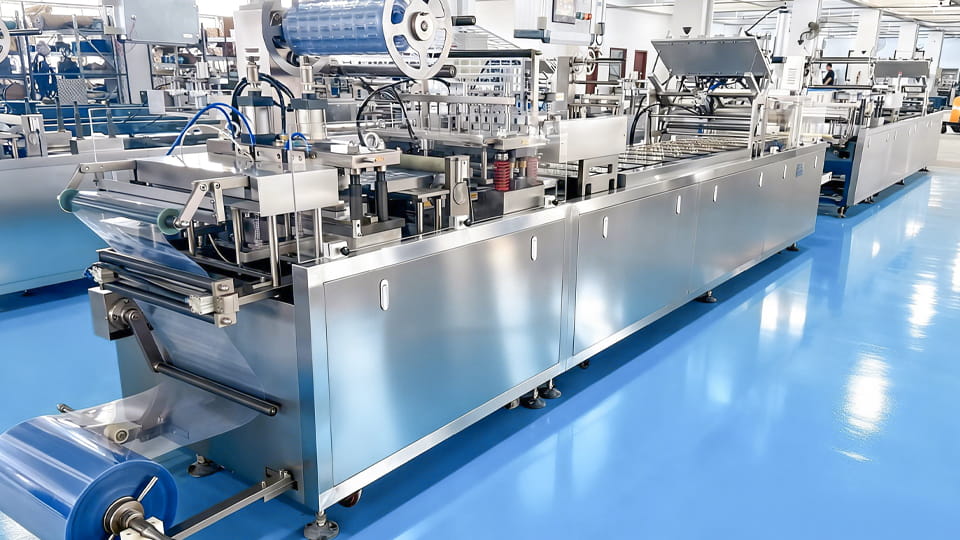
Final QC check on a blister packaging line

画像: Final QC check on a blister packaging line.


Common Buyer Mistakes to Avoid

  • Focusing only on price: Overlooking compliance and quality to save money often backfires with reworks or fines.
  • Skipping site visits: Not auditing the factory can hide critical issues (poor practices, hidden costs).
  • Neglecting documentation: Accepting incomplete IQ/OQ/PQ support can delay your validation.
  • Overlooking long-term costs: Ignoring service network or spare parts availability leads to costly downtime.
  • Ignoring references: Failing to check past performance means you have no safety net if issues arise.

By avoiding these pitfalls and following our structured process, you’ll choose a supplier that delivers reliable equipment and peace of mind.


Supplier Evaluation Checklist

Use this checklist to score and compare potential suppliers. (▶️ Download PDF Checklist for easy reference.)

Evaluation Criteria Key Questions
規制 & GMP準拠 Does the supplier meet FDA/EU GMP standards? Are machines built with 316L stainless & required coatings (electropolish/passivation)? Are relevant certifications (ce, ce, FDA 510(k) 等) in place?
Quality Management System (QMS) Does the supplier have ISO 9001 (またはISO 13485) certification? Is there a documented CAPA and risk management process? How do they control non-conformances (例えば. corrective actions)?
経験 & 参考文献 How many years in pharmaceutical packaging? Can they share anonymized case studies or client references? Have they delivered similar packaging lines (水膨れ, 箱詰め業者, 等)?
Machine Design & ビルド品質 Are materials and finishes pharma-grade? (例えば. 滑らかな溶接, sanitary design). Are tolerances and performance validated? Are safety systems (警備員, interlocks) robust?
検証 & ドキュメント Will the vendor provide complete IQ/OQ/PQ protocols and validation support (expert guidance, テスト)? Are manuals, calibration certificates, and drawings provided?
Factory Capacity & リードタイム Can they meet your schedule? Do they have capacity (skilled staff, fabrication resources)? What’s the proposed lead time and can it be guaranteed? How did they define the delivery timeline?
アフターセールスサポート & トレーニング What warranty is offered? Is spare parts support available locally? Do they provide start-up support and operator training? Is technical support (hotline, on-site) readily available?
Total Cost & Value Beyond unit price, what are the long-term costs? (エネルギーの使用, メンテナンス, スペアパーツ). Does the proposal include all necessary accessories? Consider efficiency and yield improvements.


Final Thoughts and Next Steps

正しい選択 pharma packaging machine supplier is as much about people and processes as it is about hardware. A thorough evaluation – from regulatory compliance to after-sales – ensures you partner with a supplier who can grow with your business. As industry experts note, “supplier qualification…should identify and mitigate the associated risks”. Follow this 10-step guide and checklist to de-risk your investment.

Ready to move forward? Request a Quote from our team または download the checklist above to prepare your evaluation. We’re here to help you find the perfect equipment partner.


FAQs About How to Evaluate a Pharma Packaging Machine Supplier

What is a pharma packaging machine supplier?

A pharma packaging machine supplier is a company that designs, manufactures, and delivers equipment used to package pharmaceutical products such as tablets, カプセル, 液体, または粉末. A reliable supplier must not only provide machines but also ensure compliance with GMP regulations, validation support (IR/WH/PQ), and long-term technical service.

Why is it important to evaluate a pharma packaging machine supplier carefully?

Supplier evaluation is critical because packaging directly impacts product safety, labeling accuracy, 規制遵守と. Studies show that supplier-related issues contribute to a large percentage of GMP inspection findings, making supplier qualification a key part of quality assurance.

What makes a pharma packaging equipment supplier compliant?

Key factors include GMP certification (FDA/EU), use of pharmaceutical-grade materials (例えば. 316L stainless steel), and robust documentation. Look for compliance with standards like ISO 9001/13485 and FDA 21 CFRパート 820. Verify that machines have smooth finishes and all surfaces that contact product are cleanable and validated.

Why are IQ/OQ/PQ protocols important for packaging machines?

IQ, OQ and PQ are validation stages that prove a machine is installed correctly, operates as intended, and performs consistently. They are critical in pharma to ensure quality output. 実際には, FDA regulations and ISO 11607 make packaging validation via IQ/OQ/PQ a requirement.

How do I verify a supplier’s after-sales support?

Ask for details on warranty terms, response times, and service network. Does the supplier offer on-site commissioning and training? Check if spare parts are stocked locally. Review online or customer feedback: suppliers serving pharma often highlight 24/7 support and global service centers (例えば, JinLuPacking advertises worldwide on-site service and engineering support).

What should I include in a supplier factory audit?

Inspect production flow, 清潔さ, 従業員研修, およびドキュメント. Check whether quality records and calibration logs are maintained. Evaluate how they handle safety and sanitation. A good audit also verifies that what was promised (design features, 材料) is actually built. For risk control, regular auditing is recommended by ISO 13485 and GMP guidelines.

Can I rely on cost comparisons alone?

Not for pharma projects. A low bid may save money upfront but risk quality issues and downtime later. 総所有コストを考慮する: machine efficiency, 信頼性, スペアパーツ, and regulatory compliance can all have hidden costs. A slightly higher-priced, proven supplier often delivers better long-term value. Use the above checklist to balance cost with critical factors like quality and compliance.


参考文献:
1.Q7A Good Manufacturing Practice Guidance for Active Pharmaceutical Ingredients ——U.S. 食品医薬品局
2.Supplier Qualification in Pharma: A GMP-Focused Guide to Audits, Risk Assessment, and Supplier Approval in 2026 ——pharmuni.com
3.GMP Requirements for Supplier Qualification ——gmp-compliance.org
4.Overview of Packaging Validation for Drug Products ——ispe.org

この記事をシェアする:
の写真 ペティフー
ペティフー

ペティフー, 金魯包装の創設者, もたらす 30 製薬機械分野における長年の専門知識. 彼のリーダーシップの下で, Jinlu はデザインを統合する信頼できるサプライヤーに成長しました, 生産, と販売. ペティは、クライアントが医薬品包装の複雑さを乗り越えられるよう、業界の深い知識を共有することに情熱を持っています。, 機器だけでなく確実に受け取れるようにする, しかし、生産目標に合わせて調整された真のワンストップ サービス パートナーシップ.

目次

お問い合わせを送信してください

返信を残す

あなたのメールアドレスは公開されません. 必須フィールドにマークが付いています *

無料見積もりを取得する

*私たちはあなたの機密性を尊重し、すべてのデータは保護されます. あなたの個人データは、JL ソリューションのためにのみ使用および処理されます。.