正しい選択 タブレットプレス機 製薬または栄養補助食品の製造業者にとって重要です. 打錠機にはさまざまな種類がある (シングルパンチ, ロータリー, 二層, 等) そしてスピード, それぞれが特定の錠剤の配合と生産量に適しています. 錠剤自体は単純な丸い錠剤から発泡性錠剤や二層錠剤まで幅広くあり、それぞれのタイプによって工具に特定の要件が課せられます。, 圧縮力, 餌やり, と環境制御.
このガイドは、業界のバイヤーがタブレットの種類を理想的なマシンに適合させるのに役立ちます. タブレットのカテゴリをカバーします (標準, 発泡性の, 二層, チュアブル, 大きい/不規則な), マシンのカテゴリ (シングルパンチ, ロータリー, 高速, 二層/多層プレス), 出力容量などの重要な選択要素, タブレットのサイズ, ツーリングの互換性, フィーダーの設計, 圧縮力, およびGMPへの準拠. タブレットの種類と推奨されるマシンおよび機能をマッピングした比較表が含まれています, 避けるべきよくある落とし穴, とヒント 信頼できるサプライヤーを選ぶ. 最後までに, スピードのバランスをとる方法がわかるでしょう, 柔軟性と品質 – タブレットとスループットのニーズに合った印刷機を見つけてください.
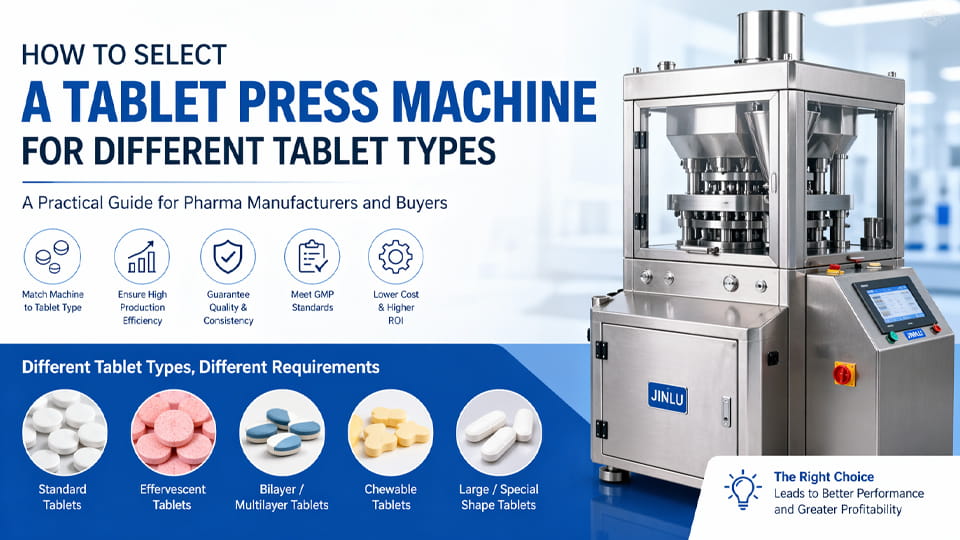
タブレットの種類とその要件を理解する
タブレット製品が異なれば、必要なプレス機能も異なります. 以下は共通です タブレットのカテゴリ そしてそれらが機器に何を意味するか:
- 標準タブレット (単層, ラウンド, カプレット, 等): これらは典型的な医薬品またはサプリメントの丸薬です. 彼らは使用します B-ツーリング (19 ミリパンチ, ~13mmまでのタブレット) ほとんどの輪転機で. 適度な圧縮力 (60~100kN程度) 通常は均一な硬さに必要です. 標準的な機械は複数の形状に対応します (ラウンド, 楕円形, 長方形の) 特別なハードウェアなしで. 例えば, Jinlu ZP-17D 印刷機 (万能モデル) まで生成します 37,800 錠剤/時間 と 25 mm最大直径 そして 100 kNの力, ほとんどの標準タブレットをカバー.
- 発泡性の錠剤 (シュワシュワ, 発泡性): これらのタブレット (医薬品に使用される, ドリンクミックス, クリーナー) 酸塩基剤を含む (クエン酸 + 重炭酸ナトリウム) 湿気で反応するもの. 彼らが必要とするのは 高圧縮 (タブレットを無傷に保つために) そしてしばしば より大きな金型. 強力輪転機 (よく一緒に Dツール) 推奨されています. 批判的に, 発泡性パウダーが水分を素早く吸収します, したがって、環境制御が鍵となります. 特殊な発泡プレスにはインライン除湿機などの機能が備わっています, 密閉された圧縮チャンバー, 早期反応を防ぐための耐食性コンポーネント. 例えば, Jinluの大型印刷機 (まで 400 kN 力, 60 直径mm) 発泡性錠剤や洗剤錠剤を扱うために特別に設計されています.
- 二重層 / 多層錠剤: タブレットが2層以上の場合 (さまざまな薬, 色, またはプロファイルをリリースする), が必要です 二層または多層プレス. これらの機械には 2 つ以上のホッパーとフィーダーがあり、1 つのタレットに順番に供給されます。. 最初の層を圧縮します, 次に 2 番目を追加します (そして3番目, 必要に応じて). 主な機能にはデュアルフォースフィーダーが含まれます (層の混合を防ぐため), 独立した圧縮ステーション, およびプロセス内サンプリングポート. 例えば, JL ZP-27/73D 三層印刷機の出力は最大 395,000 錠剤/時間 (と 50 mm 直径) 150kNの圧力. 3 つの同期ホッパーにより、タブレットごとに最大 3 つの層を作成できます (色分けまたはさまざまな配合). 多層プレスの図 (以下を参照してください) 砲塔とホッパーを示しています.

形: 多層式ロータリー打錠機 (例えば. JL ZP-27/73D) 押すことができます 2-3 タブレットあたりのレイヤーを非常に高速に処理 (まで 395,000 錠剤/時間). 特殊な強制フィーダーと密閉チャンバーにより、各層を均一に充填できます。.
- チュアブル / ソフトタブレット: チュアブル錠 (ビタミン, 制酸薬) が必要です より柔らかい食感とより良い味. 通常、硬度を避けるために低圧で圧縮します。, そしてよく使います BBツーリング (小型錠剤用の短い 19mm パンチ). パウダーフォーミュラ (例えば. マンニトール, 甘味料, 潤滑剤) ベタベタしたり柔らかくなったりする傾向があります. 機械の要件には穏やかな圧縮が含まれます (低いkN), 砲塔速度が遅い (滞留時間が長い), および固着防止工具コーティング. 実際に, 適切な工具を備えた標準的な輪転機 (または専用の「チュアブル打錠機」) 使用されています. パンチは特殊な形状をしていることが多い (心, 等) マーケティング用.
- 大きい錠剤または不規則な錠剤: 一部の製品 (発泡性洗浄タブレット, 大型動物用錠剤) 巨大なもの - 最大幅 60mm、または奇妙な形状. これらに必要なものは、 Dツール (25.4 mmパンチ最大) 非常に頑丈なプレス (高トルク, 400kNまで). 速度はもっと遅くなければなりません; 出力範囲は控えめです (例えば. 20,000–45,000タブ/時) 品質を確保するために. これらの「大型タブレット」印刷機には、特殊なタレット サイズと強力なカムが搭載されていることがよくあります。. ボーナスとして、マルチカラーまたはマルチレイヤーも処理できます。. Jinluの発泡・洗剤用大型プレスアウト. トレードオフは容量です: 400kN の 60mm タブレットは最大 30k/hr しか生産できない可能性があります, でもこれが、このような錠剤を割らずに形成する唯一の方法です.
要約すれば, まず製品を定義する: 錠剤の直径, 厚さ, レイヤー, そして配合 (流動性, 湿気への敏感性, もろさ). それぞれの寸法と特性により、機械の選択肢が狭まります. 一般的なルール: 寸法と硬度は機械のサイズを駆動します, 目標とする出力だけではなく. 「100,000 タブ/時間」のバナーで購入しないでください; まずはタブレットの仕様をタレットとツールに合わせることから始めます.
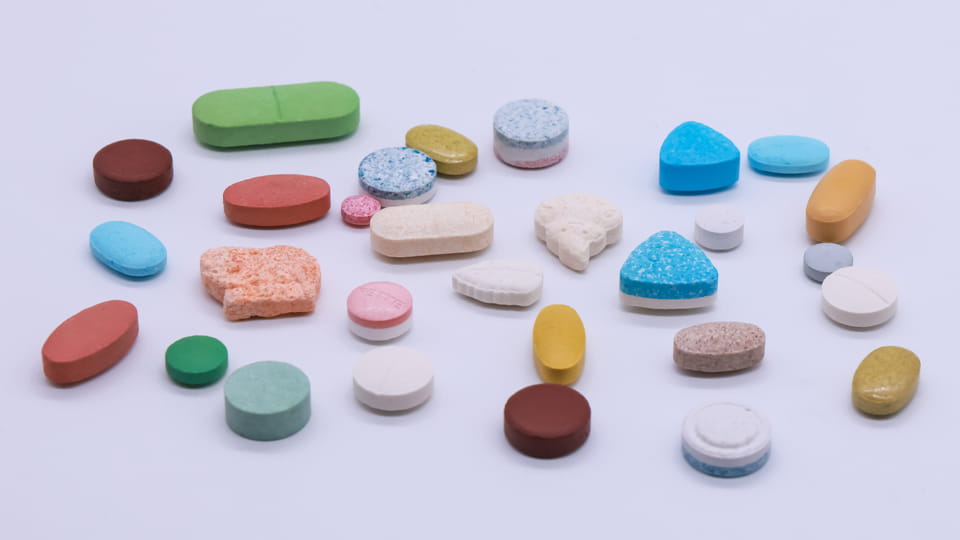
打錠機の種類
打錠機は大きく 2 つのカテゴリーに分類されます: シングルパンチ (風変わりな) そして ロータリー (マルチステーション), 特殊なバリアントを使用.
- シングルパンチ (エキセントリック) プレス: これらのシンプルな機械にはパンチとダイが 1 つだけあります, 手動またはモーター駆動. に最適です R&D, パイロットバッチ, および小規模生産. シングルステーションプレスには手動による粉末供給が必要です (ホッパーまたはダイフィル経由) 一度に 1 錠ずつパンチします. 利点: 非常に低コスト, 簡単なメンテナンス, 複雑な制御システムは必要ありません. 欠点: 極めて低いスループット (数百錠/時間) 単純な配合に限定される. 完全を期すためにこのタイプを含めます, しかし、ほとんどの産業用バイヤーは、生産ニーズが非常に小さい場合を除き、回転機械に傾きます。.
- ロータリー打錠機: これらは中規模から大規模の生産に主力です. 輪転機には、多数のパンチ/ダイを保持する回転タレットがあります。 (一般的なタレットのサイズは次のとおりです。 8, 16, 20, 37, 45, 62, 80 駅). 粉末はホッパーから回転フィードフレームを介して供給されます. 1回転で数十個のタブレットを圧縮可能. 産業用ロータリーは、1 時間あたり約 20,000 個から最大数十万個のタブレットを生産します. 標準ロータリーは一般的なタブレットを処理できます: 継続的な高スループットと重量/硬度の正確な制御を実現します。. 2 つのサブタイプは、:
-
- 標準輪転機: 中量の場合に高い効率と一貫した結果を提供します. 多くの場合、それらには次のものが含まれます。 圧縮前 ローラー (最終圧縮前に粉末を高密度化するため), そして適度な速度で走ることができる (例えば. 6045 ステーションのタレットで –120 rpm により、約 162,000 ~ 243,000 タブ/時を生産).
- 高速または多層輪転機: 非常に大量生産に対応. これらにはサーボモーターが搭載されていることが多いです, 二重砲塔 (1 つの静止, 1 回転で 2 倍の容量), などの高度な機能 強制給餌システム (粘着性の粉末を金型に押し込む). 二層/多層を一度に設定することもできます. 例えば, RichPacking は、高速印刷機には多層圧縮と正確な速度制御が含まれており、出力を最大化できると述べています。. ジンルーの「ZP-26-40D」シリーズは高速ロータリーの一例です.
- 二層 / 多層プレス: これらは、次のように設計された特殊なロータリーです。 2つ以上のホッパー および同期圧縮ステーション. 一般的な構成は、各タレット位置に 2 つのプレス ステーションがあり、1 つは最初の層を圧縮します。, 別のレイヤーは 2 番目のレイヤーを追加します, その後排出. 追加のカムや強制フィーダーを備えていることがよくあります. 2 つの製剤を 1 つの錠剤に組み合わせる必要がある場合に使用します。 (例えば. 徐放層の上に即放層). 主な機能には、独立したレイヤーの重み制御と各レイヤーの自動サンプリングが含まれます。. Jinlu社のZP-27/73Dなどの機種で出力可能 三層 錠剤 (3色デザインでも) 1台のマシンで. 製品にレイヤードデザインがある場合, 多層プレスは必須です.
- 両面 (タブレットプレス) / 分割タレット: あまり一般的ではない高度なバリアント. これらの機械にはタレットの両側にパンチング ステーションがあります。, 1 回転につき 2 つのタブレットを許可 (容量を効果的に倍増). これらは、主に非常に大規模な製薬工場で見られる高速機械です。. 多くの場合、砲塔の側面ごとに個別のホッパーが含まれています。, それ以外の場合は、2 台の輪転機が背中合わせにあるように見えます。.
- チュアブル打錠機: これらは通常、特別な機能を備えた標準的な回転機械です。 チュアブル錠ツール. JinLuPacking は、チュアブル プレスでは特別なツールを利用して、より柔らかい質感と心地よい味の錠剤を製造していると述べています。. 実際に, 配合を調整してラバーコーティングを使用することもできます, ただし、機械自体には、砂糖ベースの粉末を処理するために、より低い圧縮力設定と追加のダスト カバーが付いている場合があります。.
すべての場合において, モダンなものを探す 自動化と制御 特徴: PLC/HMI タッチスクリーン, 圧力/重量センサー, レシピストレージ, 自動重量リジェクト, 特に規制遵守が必要な場合. 優れた機械には安全インターロックも付いています, 集塵, 簡単にアクセスできるドア (これらについては、以下の選択要素で説明します。).
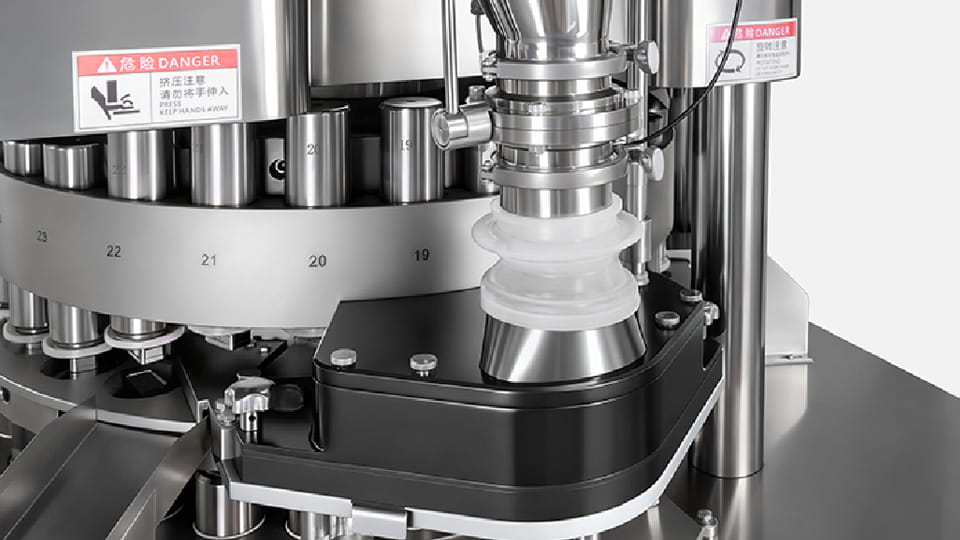
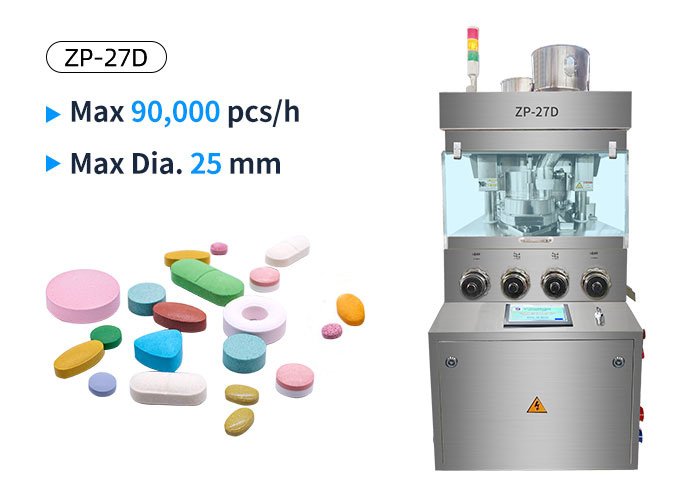 ZP-27Dロータリータブレット圧縮機
主要な選択要素
タブレットについて理解したら, 特定のマシンの仕様を評価するのは次です. 主な要因には以下が含まれます::
- 生産能力 (スループット): 1時間あたり何錠必要ですか? 輪転機は錠剤/時またはタレットの回転数によって評価されます。. パンチステーションの数が増える = スループットが向上する. 例えば, ある 45-ステーションプレスで 60 回転数 ≈ 162,000 タブ/時間. ただしトレードオフに注意してください: 押し速度が速すぎると、充填/重量の変動が発生する可能性があります. 砲塔速度と滞留時間のバランスを取る (厚い錠剤は硬度を上げるために遅い速度が必要です). ヒントの場合: 必要な場合は >50k/hr または複数 SKU バッチ, 安定したパフォーマンスを得るには、45 ステーション以上の輪転機をお勧めします. シングルパンチユニットまたは小型ロータリーは、以下の場合にのみ意味を持ちます。 <10k/hr または R&D.
- タブレットのサイズと形状: タブレット 直径と厚さ 基本的にマシンクラスを決定する. 各モデルには最大のダイボアと充填深さがあります。. 例えば, 小型卓上プレス機 (例えば. 「ZP-7」) 6 ~ 12 mm の錠剤の周りにキャップをします。, より大きな砲塔は最大 60mm まで対応します (Dツール付き). 常に最初にダイのサイズとタレットの互換性を一致させてください: 「タブレットの寸法を考慮せずに印刷機を選択することは、乗客数を知らずに車を購入するようなものです。」. また, 非常に厚い錠剤はより多くの力を必要とし、多くの場合より長い滞留時間を必要とします; 小型プレスでは、たとえ直径が適合していても、厚さ 8 mm のカプレットを適切に圧縮できない可能性があります。.
- ツールの互換性: パンチとダイスがタブレットの形状を定義します. 何をチェックするか ツーリング 報道機関が使用する標準 (共通の基準は b, D, とBBツール). 例えば, チュアブルビタミンを作る必要がある場合 (小さい, 6–8mm), BBツーリングが理想的; 標準的な 12 ~ 13 mm の錠剤をお持ちの場合, B-ツーリングで十分. 動物用または大型の洗剤 (25 mm以上の錠剤) D ツールが必要. 工具の材質/コーティングも考慮してください: 硬化鋼 (例えば. GCR-15) ほとんどの場合に使用されます, ただし、湿った混合物や酸性の混合物には、ステンレスまたは TiN コーティングされたツールが必要な場合があります. Jinlu の ZP-17D 印刷機の用途 GCR-15 スチール工具 100kNに耐えられる. 固着防止コーティングをお勧めします (TiN/CrN) 特に発泡性または粘着性の製剤を製造する場合は、強制フィーダーを使用します。.
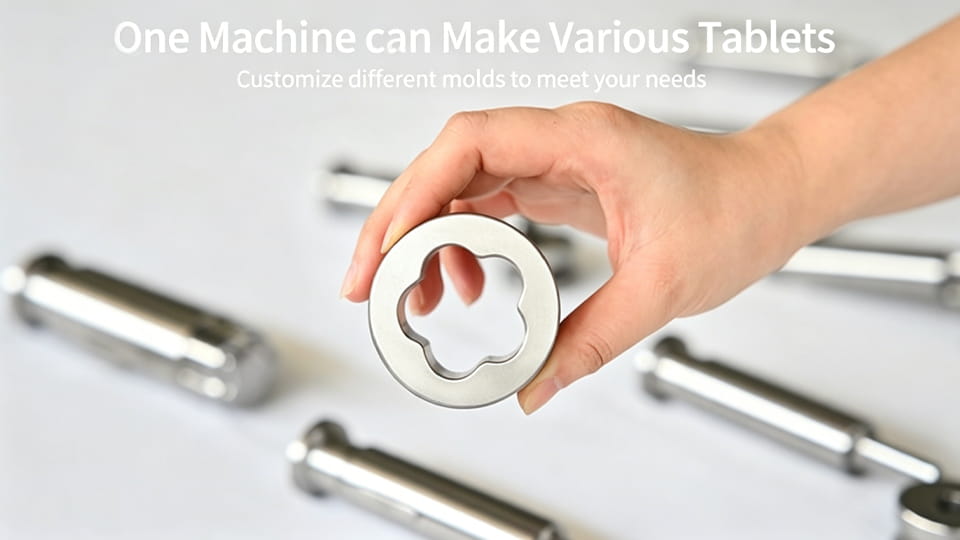
形: パンチとダイス (タブレットツール) さまざまなサイズ/素材があります. 例えば, Jinlu の標準プレスは、最大 100kN の圧力に耐える GCR-15 スチール パンチを使用します. ツールはタブレットのサイズと一致する必要があります: 例えば. 6 ~ 8mm チュアブル用の BB ツール, ~12mmの医薬品錠剤用のBツール, 大型 25+mm タブレット用の D ツール.
- 粉体の流れと供給: 挑戦的なパウダー (とても良い, 凝集性のある, または低嵩密度) 重力によってうまく流れない可能性があります. マシンに 強制フィーダー (粉末をダイに押し込む撹拌機またはパドル). 強制送りにより、刃物台の高速移動時の重量変動を防止. 粘着性または湿った粉末 (例えば. ハーブ抽出物) 特にフォースフィーダとスムーズなホッパー設計のメリットが得られます。. 事前圧縮も考慮してください: 小さな予圧縮ローラーは、材料の脱気または事前圧縮を行い、キャッピング/ラミネーションを軽減します。. 要約すれば, プレスのホッパーとフィードフレームが粉体の流れに適合していることを確認してください; 以前にあなたの配合を実行したかどうかを尋ねる.
- 圧縮力: 錠剤の硬度と製剤密度により必要な力が決まります. 標準的な製薬タブレットには次のものが必要です 60–100kN. 非常に硬い錠剤または大きな錠剤 (60mmの発泡剤のような) 必要かもしれない 何百もの kNの (JLの大型機械は最大400kNまで対応). 力を過剰に指定することは、不足するよりも優れています; 力が弱すぎると柔らかくなります, 壊れやすい錠剤. リッチパッキングノート 60 ~ 100kN が一般的です, そして「力を大きくすると硬度と均一性が向上します。」また、機械にリアルタイムの圧縮を監視するための圧力トランスデューサーが装備されているかどうかも確認してください。. 1 台のマシンでソフトチュアブルとハード錠剤の両方が必要な場合, 力の範囲を低くダイヤルして高くできることを確認してください.
- オートメーション & コントロール (PLC/表示器): 近代的な設備で, 手動ダイヤルは時代遅れ. 優れた印刷機には、レシピとデータログ用の PLC とタッチスクリーン HMI が搭載されています。. 重量超過/重量不足の自動拒否などの機能を探す, 圧力センサー, パンチ位置のデジタル読み取り. データ追跡 (バッチファイル, CMS21 CFR パーツ 11 コンプライアンス) 製薬の品質システムにとって重要です. リモート アクセスまたは IoT モジュールにより、技術サポートと予知保全アラートが可能になります. Jinlu ZP-27/73D 印刷機, 例えば, Siemens タッチスクリーン HMI が付属しており、圧縮レシピを保存し、制御を容易にします。.
- GMP準拠 & 材料: 特に製薬業界にとっては, プレス設計は cGMP を満たす必要があります. つまり、 接触面 あるべきです ステンレス鋼 (多くの場合316L) そして研磨可能, 掃除のためのデッドコーナーが最小限に抑えられている. 密封された, 密閉された圧縮ゾーンが粉末の流出を防止. クイックリリースホッパーとタレットにより洗浄が迅速化され、相互汚染のリスクが軽減されます。. 利用可能かどうかを確認する IQ/OQ/PQ ドキュメント サプライヤーからの. 多くの場合、マシンには CE が付属しています, CGMP, またはFDAの設計証明書. デリケートな商品については (発泡剤のような), 耐食性のある材料を探す (クロムメッキまたはステンレス) 報道機関内部で.
- 切り替え & メンテナンス: ダウンタイムは非常にコストがかかる. 工具の交換や機械の掃除がいかに簡単かを見てください。. チェックすべき機能: モジュラー設計, 工具不要の分解, および潤滑システム. リッチパッキングは次のように指摘しています 取り外し可能なタレット, ホッパー, とフィーダー, プラス 時限自動潤滑, メンテナンス時間を大幅に短縮できる. クイックダイ交換システムにより、パンチを交換できるようにする必要があります。 20 分. 透明な安全ドアと人間工学に基づいたレイアウトがオペレーターをサポート. 例: 一部の最新のプレスでは、タレット内の真空ワンドを使用して、実行の間に残留粉末を吸い出します。. サプライヤーにサービス契約があるかどうかを尋ねる, トレーニング, スペアパーツの入手可能性.
- 総所有コスト (TCO): ステッカー価格を超えて, ライフサイクルコストを計算する. 安価な機械は摩耗が早くなったり、より多くの労働力が必要になる場合があります. エネルギー使用の要因, スペアパーツの必要性, そして期待寿命. 例えば, すぐに入手できる部品を備えたよく構築されたプレスにより、コストを節約できます。 まで 20% 年間 ダウンタイムコストで. 保証期間と保証内容についても質問してください.
- サプライヤーの専門知識 & サービス: 打錠機の購入には長期的なパートナーシップが必要です. サプライヤーの実績を確認する (10+ 製薬機器における長年の経験が最適です). ターゲット市場での参考資料はありますか (ヨーロッパ, 私たち, 等)? 工場のレイアウトを手伝ってもらえますか, レシピの試作, そして検証? アフターセールスサポート (インストール, 試運転, トレーニング, 24/7 リモートヘルプ) 重要です. 例えば, Jinlu Packing は無料の配合テストを提供し、多くの機械には 3 年間の保証が付いています. フルラインのサプライヤーから購入する (カプセル充填剤, カウンター, ブリスターマシン) RichPacking のメモのように、統合と検証を簡素化できます, ベンダーが 1 つになることで保守管理が簡素化されます. Jinlu のサイトには、製品も供給していることが示されています。 カプセル充填機, 計数機, ブリスターパッカー, 等, これは、完全な生産ラインを計画する場合に役立ちます。.
- ノイズ, 粉塵と安全性: 打錠機は騒音が大きく、埃っぽい場合があります. 騒音レベルを確認する (あるべきです <80 DB) 印刷機に HEPA 防塵フィルターと密閉シュートが装備されている場合. 安全インターロック (ドアのストップモーション, 非常停止) 過負荷センサーがオペレーターと機器を保護します. 過度の振動や粉塵の流出はGMPステータスを損なう可能性があります.
- 将来性のある: アップグレード パスを探す. 業界は製薬に向かって進んでいます 4.0: サーボ駆動の精度, MES の Ethernet/IP 接続, 予知保全, およびモジュール式アドオン. オープン アーキテクチャの印刷機を購入すると、後から新しいセンサーやソフトウェアを取り付けることができます, 改造コストの節約. 例えば, 一部の印刷機ではカメラ検査または自動サンプリング モジュールが提供されています。. 少なくとも基本的なことは確認してください: SCADA または MES に統合する機能.
タブレットの種類と推奨マシンのマッチング
以下の表は、各タブレット カテゴリに適したプレスのタイプと機能をまとめたものです。:
| タブレットタイプ |
推奨マシン |
マシンの主な機能 |
| 標準タブレット |
輪転機 (B-ツーリング) または高速プレス |
19 mm (b) ツーリング, 60-100kNの力, 30k~250k タブ/時, 圧縮前, PLC制御. 鏡面仕上げ, GMP設計. 普通の丸型/楕円型錠剤に適しています. |
| 発泡性 / 洗剤 |
頑丈なロータリーまたは大型 D ツール プレス |
25 mm (D) ツーリング, 非常に高い力 (150~400kNまで), 密閉チャンバー, 強制フィーダー, 除湿オプション. ステンレスまたはコーティングされた部品 (耐酸性). 低速, 専用フィーダー. |
| 二重層 / 多層 |
二層または三層プレス (特殊ロータリー) |
2+ ホッパー & フィーダー, デュアルコンプレッションカム, インライン重量サンプリング. レイヤーごとに事前圧縮, VFD制御, 同期砲塔. 薄い中間層にも対応可能. 標準またはカスタムのパンチ形状を使用します. |
| チュアブル / 柔らかい |
標準ロータリー (B または BB ツール) |
BBツーリング (ショートパンチ, ~6~8mm), 低い圧縮力 (~30~60kN), 穏やかな圧縮プロファイル, 固着防止コーティング. 滞留時間が長くなる可能性がある (遅い回転数). スムーズな送りとダストカバー (シュガーダスト). |
| 大・不定形 |
大型金型輪転機 (Dツール) |
25+ ミリパンチ (Dツーリング), 非常に高い力 (100–400kN), 頑丈なフレーム, 砲塔速度が遅い (~10 ~ 60 RPM), 特殊なカム. 多くの場合、大きな金型の移動に対応するために重いカムタレットが使用されます. 複雑な形状にも対応. |
タブレットの寸法とタイプを上記と一致させることで、, モデルを候補リストに挙げることができます. 常にクロスチェックする: 例えば. 40mmの発泡性錠剤が 大型Dツールプレス 行, 標準的な印刷機ではありません.
避けるべきよくある間違い
経験豊富なバイヤーでも失敗する. 注意すべき落とし穴は次のとおりです:
- 出力・価格重視で選ぶ: 「200,000 タブ/時」または低価格を誇るという理由だけでマシンを選択しないでください. タブレットが大きすぎる、または厚すぎる場合, 高速なマシンはダイを受け入れないか、システムに過負荷をかけます. 覚えて: タブレットのサイズがマシンを決定する, その逆ではない. 常に錠剤の直径と厚さから始めます.
- タブレットの寸法を無視する: 関連して, 重要な仕様を決して無視しないでください. タブレットの直径と厚さをサプライヤーに提供しないと、サイズの小さいプレスを提案される可能性があります。. プレスの最大ダイボアと最大充填深さをご自身で確認してください.
- 過剰な容量: 購入者の中には「小さめよりも大きめのほうが良い」と考える人もいます。ただし、特大の印刷機は 2 ~ 3 倍の費用がかかる場合があります, より多くの床面積を消費する, 非効率的に実行されます 10% 負荷. 悪い, より長いクリアランスがある可能性があります (滞在時間が短い) 薄い錠剤が柔らかすぎる. 競合サプライヤーは、 最小で十分な モデル, または、将来の成長に備えて最大でも 1 つ上のサイズ.
- ツールの無視 & 定式化: 印刷機が必要な工具を正確に使用できるかどうかを確認する. ツーリングの設計ミスにより重量の変動や固着が発生する. パウダーも評価してください: 粘着性がある場合 (ハーブ, 砂糖ベースの), コーティングされたパンチと強制フィーダーが指定されていることを確認してください.
- メンテナンスと部品を過小評価する: 新しいプレスには注油と時々の修理が必要です. 予備のパンチの予算を確保してください, ローラー, ベルト, 等. リッチパッキングが警告しているように, スペアパーツの計画を立てないのはよくある間違いです. お住まいの地域での交換部品の入手のしやすさも考慮してください。.
- コンプライアンスの無視 & インストール: 確認書類を忘れずに (IR/WH/PQ) あなたが製薬会社の場合. 設置計画があることを確認してください, トレーニング, および検証テスト. ここはサプライヤーのサポートに頼るほうが安全です.
- 最初にテストしない: 理想的には, マシンモデルで実際の式を使用してテストまたはパイロットを実行する. 多くの優れたサプライヤー (Jinluパッキングを含む) 無料のテストやフォーミュラのトライアルを提供する. テストをスキップした場合, 出荷後に初めて問題が見つかる可能性があります, 月を無駄にする.
要するに, タブレットのプロファイルと製品の目標に焦点を当てる, 光沢のあるスペックだけではありません. 「ただ最速のマシンが欲しかっただけ」のような間違いは裏目に出ることが多い.
適切なサプライヤーを選択する方法 (なぜJinlu Packingなのか)
マシンスペックを絞り込んだ後, サプライヤーを評価する 気をつけて. 重要な基準:
- 経験 & 参考文献: 理想的には、タブレット機器の分野で 5 ~ 10 年以上の経験を持つサプライヤーと、あなたの業界/地域のクライアントを選択してください。. 事例紹介や参考資料を求める (特に世界的な大手製薬会社). ジンルパッキング, 例えば, Fortune-500 のサプライヤーです 30+ 長年の機械経験 (クライアントのロゴを見る).
- テクニカルサポート: 適切なモデルを決定するのに役立ちますか? 優れたサプライヤーはタブレットの仕様を尋ねます (直径, 厚さ, 配合の詳細) 引用する前に – LinCi が強調しているように, メーカー 決して推測してはいけません. 工場での受け入れテストを提供しているかどうかを確認する (脂肪) 適合性を確認するためにサンプルツールを発送する用意があります.
- アフターサービス: オンサイトでの試運転, トレーニング, スペアパーツのタイムリーな発送が重要です. 一部のサプライヤーはリモートを約束しています 24/7 サポート. 地元の担当者またはサービスセンターのネットワークを持つベンダーを好む. 保証条件を明確にする (少なくとも 1 マシン全体で年間, 3 主要部品の年数は良好です).
- 統合機能: ラインを構築している場合, 印刷機が上流/下流の装置と統合できるかどうかを確認する. 例えば, タブレットカウンターまたはブリスターラインにリンクできますか? リッチ梱包メモ リッチの印刷機は計数機とブリスター機に接続されています. Jinlu も同様にフルスイートを提供しています (カウンター, 箱詰め業者, ブリスターパッカー), ターンキーラインについてアドバイスできるようにする.
- 会社の信頼性: 認定を確認する (ce, ISO). 財務面の安定性も確認.
- 例と参考文献: Jinlu のサイトには、 ケーススタディ (例えば. パキスタンの打錠機) および認証 (CGMP, ce, RoHS, UL ロゴを表示). これらを使用して能力を評価します. 貿易フォーラムのフィードバックを確認したり、同僚に質問したりすることもできます.
- お試しお見積り・お問い合わせ: ついに, サプライヤーに連絡するとき, 簡潔なスペックシートを提供する: 錠剤の形状・寸法, 期待される出力, 単重, 主な成分 (摩耗/腐食用), および共加工された賦形剤. 製品に必要なダイボアとタレットのサイズを確認するよう依頼してください。. 危険信号は、仕様を尋ねずに価格だけでモデルをすぐに見積もるベンダーです。.
可能な限り, 地元に存在するサプライヤーまたは既知の販売代理店を選択します – これにより保証サービスが簡素化されます. 多くの Tier-1 製薬会社は Fette のようなサプライヤーを使用しています, ボッシュ (ミルシュタイン), またはプレス用の Cadmach; 中国メーカーの中では, ジンルパッキング, リッチパッキング, 他の企業は世界規模で競争しています. 重要なのは主張の検証です: 例えば, Jinlu は出力範囲と圧力を宣伝しています, ただし、これらを要件と照らし合わせて確認する必要があります.
結論と次のステップ
適切な打錠機を選択することは、テクノロジーを生産戦略に適合させることです。. 信頼性の高い, 準拠したタブレットの製造, に焦点を当てます トータルパフォーマンス – 精度, 耐久性, 値段だけではない、サポートも充実. Jinlu Packing は、GMP 準拠の一連の輪転機を提供しています (シングル, 多層, 高速) およびサポート機器. タブレットの仕様をお知らせください (直径, 厚さ, レイヤー, 出力) カスタムの推奨事項と見積もりを取得するには. 当社の専門家が適切な機械と工具をご案内します, よくある落とし穴を回避するのに役立ちます. あなたの公式を使用してサンプルテストを実行することもできます. 詳細なお見積りやプロジェクトのご相談は, 見積もりをリクエストするか、 弊社の営業チームにご相談ください 今日.
Jinluの製品ラインナップを詳しく見る: カプセル充填機, ブリスター包装機, そして 錠剤計数機 すべてタブレット印刷機と統合できます. チェックしてください カプセル充填機 ページまたは 錠剤計数機 詳細については.
打錠機の選び方に関するよくある質問
打錠機とは何ですか、またどのように機能しますか?
打錠機は、粉末または顆粒を所定の形状の錠剤に圧縮するために使用される医薬品装置です。, 重さ, そして硬さ. 材料を金型キャビティに充填し、上下のパンチを使用して圧縮力を加えて固体の錠剤を形成します。.
1 台の打錠機で医薬品と栄養補助食品の両方を処理できますか (例えば. ビタミン) 製品?
多くの場合、そうです, 粉末の流動性と潤滑性が同様の場合. しかし, 粘着性のあるハーブパウダーや砂糖には特別なコーティングや強制給餌器が必要です. さまざまなレシピに合わせてツールとフィーダーの設定を変更できることを確認してください.
さまざまな錠剤の種類に適した打錠機を選択するにはどうすればよいですか?
重要なのは、マシンとタブレットの特性を一致させることです, サイズも含めて, 形, 定式化, そして生産量. 例えば, 発泡錠剤には高い圧縮力と大型の工具が必要です, 一方、二層錠剤には多層の供給システムが必要です. 価格のみに基づいて選択すると、後で生産上の問題が発生することがよくあります.
圧縮中にタブレットの品質に影響を与える要因?
タブレットの品質に影響を与えるいくつかの要因, 含む:
・粉体流動性
・圧縮力
• 工具の状態
• 水分含有量
粉末の流れが悪い、または不適切な供給は、錠剤の重量が不均一になり、欠陥が生じる可能性があります。.
打錠機でよくある問題は何ですか?
典型的な問題には次のものがあります。:
• タブレットの重量が不均一
• パンチにくっついたりピッキングしたりする
• 錠剤のひび割れや硬度の低さ
・粉漏れ
これらの問題は、多くの場合、材料の流れが悪いことが原因で発生します, 不適切な圧力設定, または磨耗した工具.
初めて購入する人が犯すよくある間違い?
「多ければ多いほど良い」と考えて大型印刷機を購入する; ツールの互換性を無視する; メンテナンスの必要性を過小評価している; テストやスペアパーツの予算計画をスキップする. マシンをタブレットの仕様と全体的な生産計画に注意深く合わせて、これらを回避します。.
打錠機をフルラインに統合できますか?
はい. 良いサプライヤー (ジンルパッキングのような) タブレットカウンターと連動するプレスを設計する, カプセル充填剤, 水ぶくれ, ターンキー生産のためのカートナー. 多段ラインを計画する場合, コンベヤの統合と自動化についてベンダーと事前に話し合う.
打錠機を購入する前に材料をテストすべきか?
絶対に. 実際の配合を使用して試運転することを強くお勧めします. 錠剤の硬さを評価できます, 重量の一貫性, 最終的な投資決定を下す前に、実際の生産条件下での欠陥率を確認する.
BツーリングとDツーリングの違いは何ですか?
B ツールは標準的なタブレットによく使用されます (小さいサイズ), 一方、D ツールは発泡性製品や動物用製品などの大きな錠剤用に設計されています。. タブレットのサイズに直接影響するため、適切なツールを選択することが重要です。, 形, とマシンの互換性.
参考文献:
1.経口固形剤形の承認前後の問題 (1/94) - 私たち. 食品医薬品局
2.固形医薬品製剤の錠剤製造技術 ——メルク
3.錠剤の製造 - 圧縮特性 & 定式化 ——サイエンスダイレクト
4.タブレットプレス ——https://www.instrumenthive.com/wiki/tablet-press/
5.タブレットプレス —— ウィキペディア