a ターンキー包装ライン 完全に統合されています, 単一のサプライヤーによって提供されるエンドツーエンドの梱包システム. 最初の製品供給から一次包装まで、生産のあらゆる段階をカバーします。, 二次包装, および最終ラインの箱詰め/パレタイジング – 1 つのユーザー要件仕様に基づいて実行できる状態で引き渡されます。 (URS). 製薬業界で, ターンキーラインで確実に 一点責任, より迅速な試運転, 設計により完全な GMP 準拠. この記事では、ターンキー包装ラインのモジュールについて説明します, どのように機能するか (フローチャート), 主な利点, マルチベンダー設定との違い. 代表的な製薬用途もカバーします, サプライヤー選択のヒント (Jinlu の機能の例を示します), およびよくある質問.
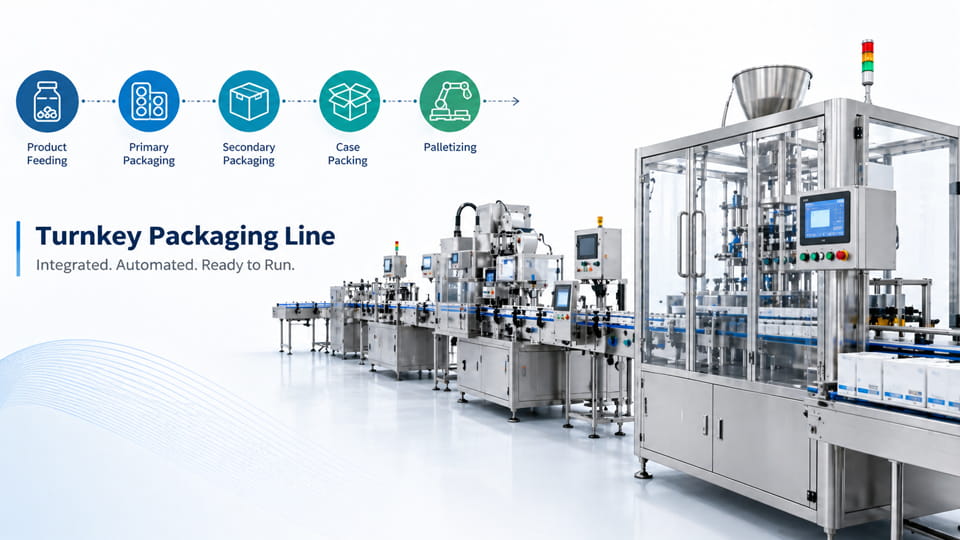
真のターンキー ラインは、機械を縫い合わせるだけではありません - 1 つのベンダーが設計します, ビルドします, 届ける, 1 つの契約に基づいてシステム全体を検証します. 対照的に、, 従来のアプローチでは、さまざまなサプライヤーから個々のマシンを購入し、後でそれらを統合しようとする可能性があります。, それはしばしば遅延を引き起こす, 追加費用, 検証の頭痛の種. ターンキー ソリューションには、バルク製品の取り扱いから最終ケースの梱包までの自動化が含まれます。, 統合されたコントロールとともに, データ接続, およびドキュメント. 例えば, Jinlupacking はターンキー ブリスター ラインをカバーとして定義しています タブレットの給餌, ブリスター形成・シール, 印刷/コーディング, 箱詰め, そしてケースの梱包 すべてが 1 つの検証済みシステムとして提供される. 実際に, この概念はあらゆる医薬品フォーマットに適用されます (錠剤, カプセル, ボトル, バイアル, 小袋, 等) – 1 つのサプライヤーが 完了, すぐに実行できるパッケージングシステム 個別のマシンの集合ではなく.
ターンキー包装ラインには何が含まれますか?
ターンキーパッケージングラインには、出荷に必要なすべてのモジュールがバンドルされています。 医薬品原料 (例えば. 錠剤, カプセル, 粉, 液体) 完全に梱包された状態に 単位用量パック および箱入りのカートン. 主要なモジュールには通常次のものが含まれます:

- 製品の供給 & 取り扱い: バルクの錠剤/カプセル/バイアル/パウチを取り出し、制御された速度で 1 つずつラインに供給する自動フィーダーまたはボウル システム. 固体用, これは振動パンフィーダーまたはカプセルアンスクランブラーである可能性があります; ボトル用, アンスクランブラーとコンベア; 液体用, オリエンテーション/蓄積ステーション. 適切な供給により、最初の包装機への一貫した流れが確保されます。.
- 一次包装: 製品を直接含むパッケージの最初のレベル. 製品タイプによって異なります: 錠剤/カプセル用ブリスターマシン (ホイル/PVC を熱成形してブリスターパックに密封します。); 液体充填機 バイアル/アンプル用 (キャッピングまたは圧着を備えたピストンまたはペリスタルティックフィラー); チューブフィラー ジェル/クリーム用; 小袋またはスティックパック機 粉末または顆粒用; 既成パウチフィラー; ボトルフィラーとキャッパー 経口液体用; 等. 各一次包装機は、特定の剤形と充填材料に合わせて設計されています. 例えば, ブリスターフォーマーは PVC フィルムを加熱して錠剤用のポケットを作成します, 冷間成形中 (アルアル) ブリスターマシンは湿気に敏感な薬剤用にアルミホイルをプレスします. すべての主要なステップは、製品とホイル/パウチ/ボトルの仕様を正確に一致させる必要があります。.
- 二次包装 (箱詰め): 一次梱包後, 二次機械ラップ, ボックス, またはプライマリパックをカートンにします. 一般的なマシンには次のものがあります。 箱詰め業者, 折り畳み式カートンを組み立て、患者情報リーフレットと一緒にブリスター カードまたはバイアルを挿入します。. 横荷重あり (水平) そしてトップロード (垂直) フォーマットに応じたカートナー. その他の二次機器には次のものがあります。 ラベラー (ボトル/カートンに準拠したラベルを貼ります), シュリンク包装紙, または スリーブラッパー パックをバンドルする. 例えば, ブリスターカードはブリスターから出てきて、自動的に供給されます。 箱詰め機 カートンが立てられている場所, 患者リーフレットが挿入されます, そしてカートンは密封されています. ブリスターとカートナーの間のタイミングは、ジャムを回避するためにターンキー ラインで厳密に同期されます。これは PLC 制御によって処理されます。 (以下の統合を参照してください).
- エンドオブラインパッケージング: これらはバルク処理用の三次パッケージャーです – ケースパッカーおよびパレタイザー. ケースパッカーは充填済みのカートンを受け取ります (またはボトル) 段ボールの輸送ケースに積み込みます (RSC カートン), その後ケースを密閉します. パレタイザーはケースをパレットに積み上げます. 彼らは協力して配布用の製品を準備します. 最近のケース包装機には、内容物を確認してマスター ラベルを貼り付けるための重量検査ステーションとラベル貼り付けステーションが組み込まれていることがよくあります。. 真のターンキー ソリューションで, これらの最終ステップさえも統合されるため、データは (ロット番号のような, 重み, パレットID) バッチレコードに流れます. 例えば, ケースパックステーションでは、システムが各ケースの重量を量り、ケースIDのラベルを貼り付けることができます。, シリアル化されたバッチにリンクし直す.
- 検査 & 品質管理: 統合されたビジョンおよびテスト機器は各段階でのコンプライアンスを保証します. 代表的な駅としては、 追跡追跡コーディング/検査 (バッチコードの印刷と検証, 有効期限, データマトリックス, 等) そして インライン検査システム (カメラビジョン, 金属探知機, 重量チェッカーまたは X 線). 例えば, ターンキー ブリスター ラインは各ブリスター カードにバッチ コードと 2D DataMatrix を印刷し、すぐにカメラで検証します。. システムは、ライン全体を停止することなく、コードが欠落しているか判読できないブリスターを拒否します。. 真に統合されたラインがなければ, ボルトオンプリンターでは確実に対応できない可能性があります, 監査の失敗につながる. 充填レベルチェックなどのその他の QC 機能, シール完全性テスト (例えば. バイアル用リークテスター), 多くの場合、カートンの最終重量チェックが組み込まれています。. すべてのセンサーと検出器は中央の PLC/HMI に接続されています, あらゆる障害フラグがメインコントローラー内のそのユニットに確実に保持されるようにする, 別個のコンピュータではない.
- 統合 & 自動化制御: 物理モジュールを超えて, ターンキーラインには以下が含まれます 完全な自動化システム – 1 つの PLC ベースの制御ネットワーク, 1つのオペレーターインターフェース (HMI), ライン全体の完全に統合された電気/ソフトウェア設計. 各マシンが独自のコントローラーを持つのではなく, 通常、ライン全体が単一の PLC アーキテクチャで稼働します。 (例えば. すべてのステーションを実行する Siemens S7) および 1 つの監視 HMI. これにより、マシン間の回線速度を一致させることができます。, バッファは最小化されました, データは一元的に記録されます. すべてのレシピパラメータ, 速度, 統合されたタッチスクリーンからレシピにアクセスできます. 重要です, 統合プロバイダーは単一セットの制御ソフトウェアを作成します, 工場受け入れテストを 1 回実施する (脂肪) フルラインで, 1 つの検証パッケージを提供します (IR/WH/PQ). これにより、ラインは 1 ステップで生産に「移行」することができます。. 適切なターンキーラインで, 機械的な, 電気, ソフトウェア システムはすべてインテグレーターによってまとめて提供されます, 「カートンは統合された PLC 制御の下で実行されます」, 3 つの個別のサプライヤー プロトコルではありません。」.
要約すれば, ある ターンキー包装システム 製薬向けには以下が含まれます すべて バルク供給から最終ケース詰めまで, コーディング/検査装置と統合制御システムを追加. これは 3 つのレベルのパッケージングをカバーします (主要な, 二次的, 三次) 一つのまとまりのあるラインで. ターンキー アプローチでは、1 つのエンジニアリング プロジェクト、つまり 1 つの URS を取得できることを意味します。, FAT/SAT 1 つ, 複数のマシンをフロアに設置する必要はなく、1 セットの検証ドキュメントで済みます。.
ターンキー包装ラインはどのように機能するか?
ターンキーラインは、 連続的なプロセスフロー. 商品は一括で入ります, 一次包装と二次包装を受ける, パレット化されたケースとして排出されます. シーケンス全体は制御システムによって振り付けられます. 以下は簡略化されたプロセスフロー図です:
- バルク製品 → フィーダー/オリエンテーション: バルク錠剤またはカプセルは、振動フィーダーまたはアンスクランブラーを介してラインに供給されます。, 製品の向きを適切に調整します. ボトルラインで, アンスクランブラーは空のボトルをコンベア上に並べます. この段階では、必要な正確な速度で製品を計量して最初のパッカーに投入します。.
- 一次包装: 製品が最初のコンテナに入ります. 例えば, タブレットは ブリスターパッカー フィルムがポケットに形成され、ホイルで密封される場所. 液体はバイアルに充填され、蓋が閉められる場合があります. 粉末はスティック小袋に分配可能. パラメータ (スピード, 充填量, シール温度) すべて事前にプログラムされています. 各ステップでデータを記録します (例えば. 充填重量, シール力). ターンキーラインでは、これらの機械は物理的にボルトで固定されます, そのため、製品は手動介入なしで次から次へとシームレスに移行します。.
- コーディング & 工程内検査: 一次梱包直後, この行は各ユニットのシリアル化コードとバッチ コードを出力します。. ビジョンカメラがリアルタイムでコードを読み取り、検証します. コードが間違っている場合やパックが破損している場合, インラインリジェクタまたはバイパスにより自動的に除去されます。. これにより、 100% トレーサビリティ. スタンドアロン プリンタでは、この緊密な統合は保証されません。. 制御システムはすべての印刷データを電子バッチ記録に記録します。 (21 CFRパート 11 コンプライアンス).
- 二次包装 (箱詰め/ラベル貼り): 次, プライマリパック (ブリスターカード, バイアル, ポーチ) に移動する 箱詰め機 または ラベル貼付ステーション. カートナーがカートンを組み立てる, 製品と印刷された添付文書を挿入します, その後、箱を閉じて密封します. また, これはメイン PLC にリンクされています: カートナーはブリスタラーが製品を供給するのと同じ速度でしか動作しません (バッファは最小化されます). 最新のラインでは、高速ブリスター出力に合わせてデュアルヘッドまたはマルチレーンのカートナーを使用しています。. ラベル (別の場合) 同じバッチ/有効期限コードが自動的に適用されます. すべてのマシンが 1 つの HMI でレシピと速度設定を共有するため, 切り替え (例えば. 新しいカートン サイズまたは製品コード) 一元的に管理されている.
- ケース梱包 & パレタイジング: ついに, 密封されたカートンは自動ケース包装機に送られます. ここにカートンケースが組み立てられています, カートンのグループが積み込まれています (多くの場合、層状に), そしてケースは密閉されています. 通常、システムはケースの重量をチェックし、内部のシリアル番号が付けられたカートンにリンクされたケースラベルを貼り付けます。. 次に、パレタイザーがケースをパレットに積み上げ、包装/シュリンク包装する場合があります。. 各パレットにもラベルが付けられ、追跡されます. 自動化ソフトウェアはこれらすべてを結び付けます: 一括入力からパレットIDまでの完全な履歴を取得します, 規制上のトレーサビリティの確保.
ライン全体を通して, 統合管理戦略が鍵となる: 1 つの PLC システムでライン速度のバランスを確保, OEE が最適化される, 障害が発生すると、関連するセクションのみが停止します, 無関係なマシンではない. 適切に設計されたターンキーラインでは、ラインレイアウトや制御の互換性がないことによるダウンタイムが事実上排除されます。. 統合ラインによりラインレイアウトによるダウンタイムを解消, デザイン, 機械の配置または制御システムから, 実際のマシンの障害のみに焦点を当てた停止. 実際に, これは、包装プロセスが 1 つの「頭脳」の下で継続的に行われることを意味します。,」 より高い生産性と予測可能性をもたらします.
[jl_youtube ソース=”https://www.youtube.com/embed/zRe4BB8i9n0″]
ターンキー包装ラインの主な利点
ターンキー包装ラインを採用すると、段階的にセットアップする場合に比べて、いくつかの利点が得られます。:
- 単一の責任点: 1 つのサプライヤーが設計する, エンジニア, そしてライン全体を配信します, そしてそのパフォーマンスに対して責任を負います. すべてのステーションをカバーする 1 つの契約と 1 つの検証パッケージに署名します。. これにより管理の複雑さが大幅に軽減されます. 起動時または運用中に問題が発生した場合, 複数のベンダー間で修正について交渉するのではなく、1 つのインテグレーターと取引することになる. Jinlupacking が警告しているように, 「最も高価な間違いは、間違ったベンダーから適切なマシンを購入したことです。」. ターンキーソリューションを使用, サプライヤーは「機械的なプロセス全体を所有している」, 電気, とソフトウェアの統合」.
- より迅速なコミッショニング & 市場投入までの時間: ラインの構築とデバッグが 1 か所で行われるため (サプライヤーの工場) 完全に組み立てられた状態で出荷されます, コミッショニングがはるかに速くなります. インテグレータは シングル FAT/SAT 回線全体のプロトコル. 対照的に, マルチベンダーのプロジェクトでは、マシンが別々に到着し、統合の問題が現場で発生するため、長い遅延が発生することがよくあります。. ターンキー プロジェクトは通常、納品から本番の準備が完了するまでに次のように進みます。 週, 数ヶ月ではない. 例えば, 標準のターンキー ラインは 45 ~ 60 日で統合可能, 複雑なラインでも 90 ~ 120 日で完成. この圧縮されたタイムラインにより、より早く立ち上げ目標を達成できるようになります.
- 保証されたスループット & 効率: ターンキーラインはエンドツーエンドで目標速度を満たすように設計されています. すべての機械とコンベヤが一体的に設計されているため、, スループットが最適化される (目に見えないボトルネックがない). サプライヤーは一定の生産量を保証できる (例えば. 「200水ぶくれ/分」) フルライン用, 個々のマシンだけではなく. これは、機器全体の効率がより高いことを意味します (OEE). ターンキー設計により、アイドリングストップの問題やラインの飢餓や閉塞を防止することで、最適化された OEE パフォーマンス レベルを一貫して提供します。. 実際に, 1 つのベンダーによってレイアウトされたラインは速度を一致させ、プロセス全体に単一の HMI を使用します。, ばらばらのシステムで必要なコストのかかるバッファや手動転送を回避します。.
- コンプライアンスと検証の準備完了: ターンキーラインは製薬GMPに基づいて最初から構築されています. などのデザイン機能 オールステンレスフレーム (必要箇所にSUS316Lを使用), サニタリーレイアウト (死んだ足がない), CIP/SIP 機能を指定して配信できます。. さらに重要なことは, ドキュメントが完成します: あなたは受け取ります 1 つの包括的な検証書類 (脂肪, IQ, OQ, PQ) ライン全体をカバーする. メモとして, ターンキープロジェクトには次のものが含まれます IR/WH/PQ 全駅共通. このラインは本質的にGMP基準を満たしています (21 CFRパート 211, EU附属書 1, 等) および電子記録要件 (21 CFRパート 11 データロギング用). 例えば, ブリスターシーリングステーションは、バッチごとの温度/圧力/滞留を電子記録に記録します。, ケースパッカーは各ケースにシリアル化データを埋め込みます. ターンキーサプライヤーとの連携, 複数のベンダーからの証明書をごちゃ混ぜにする必要はありません – すべてのコンプライアンス エンジニアリングが統合されています.
- 総所有コストの削減 (TCO): ターンキー ラインでは多くの場合、より高いコストが必要になりますが、 初期投資, 彼らは時間の経過とともにお金を節約します. すべての機器が共通のスペアパーツと電気規格を共有しているため, 予備在庫がより簡単に. 多くの場合、サービス契約とスペアパーツは単一の供給元と契約できます。, 全体的なメンテナンスコストを削減できる. ある業界の分析によると, ターンキーラインは通常、「前払い額が高くなります」, 総所有コストの削減. 対照的に, マルチベンダーラインでは隠れた統合コストが発生する可能性がある, 複数のスペアパーツリスト, 繰り返される再資格, トラブルシューティング中のコストのかかるダウンタイム. 回線全体に対する単一の SLA サポート契約により、サービスの高速化も実現. 数年かけて, 購入者は、完全な統合のために前払いで少し多めに支払っても、稼働時間の増加と予測可能なサポートによって相殺されることがよくあります。.
- スケーラビリティとカスタマイズ: ターンキーサプライヤーは、お客様の正確な製品構成と工場レイアウトに合わせてラインを調整できます. 3mlバイアルから10mlボトルに切り替えられるラインが必要? ターンキーインテグレーターが切り替えを組み込む (共有レシピ, クイックチェンジパーツ) 最初から. ラインのジオメトリにもフィットします (例えば. 狭いスペース用のU字型) 要求された機能をすべて含めます (ロボットによる積み込み, アイソレータ, 等). このレベルのカスタマイズは、必要なものを正確に入手できることを意味します。製品範囲や施設の規模が独自である場合に有利です。. 例えば, Jinlu 梱包が提供するもの カスタマイズされたターンキーライン クライアントのスペースとプロセス要件に適合する.
一緒に撮った, これらの利点により、ターンキー包装ラインは製薬会社にとって非常に魅力的なものとなっています. 断片化された機器の購入に伴うリスクや不確実性の多くを回避できます。. ある専門家が言うように, 本物のターンキー契約とは、 「1つのFAT/SAT, 1 つの検証パッケージ, cGMP 生産が開始されるまで 1 つのチームが現場に常駐します。」 – 発売スケジュールを保護するための明確な公式.
ターンキー vs マルチマシン: 並べて比較
以下の表は、単一サプライヤーのターンキー ラインと従来のマルチベンダーのセットアップを対比しています。. 規制された業界でターンキーアプローチが好まれる理由が強調されています。:
| 特徴 |
ターンキーライン (単一サプライヤー) |
マルチベンダーシステム |
| URS & デザイン |
1 つの URS が行全体をカバーします; サプライヤーがコンプライアンスを所有する. 設計上のギャップをすべて処理. |
マシンごとに個別の URS ドキュメントを作成する; 購入者は統合を管理する必要がある. |
| コントロール & 統合 |
統合されたPLC, 1 つの HMI 画面; 1 つの通信プロトコルですべてのステーションを管理. |
各マシンは独自のコントローラー/PLC を使用します. 納品後にバイヤー/インテグレーターによって統合が行われる, 多くの場合、高価なミドルウェアを使用する. |
| 脂肪/飽和 |
目標スループットでのフルライン用の単一の FAT および SAT ドキュメント. |
マシンごとの FAT; フルライン SAT は余分な労力がかかるか、不足している可能性があります. バイヤーは複数のテストレポートを調整します. |
| 検証 (IR/WH/PQ) |
1 つのマスター検証計画と関係書類. 資格認定に引き継ぎの不確実性がない. |
マシンごとの個別の検証パケット; 購入者はプロトコルとデータを社内で調整する必要がある. |
| スループット保証 |
ベンダーがエンドツーエンドの速度を保証 (予期せぬボトルネックがない). |
各マシンは個別に評価されます. 全体的なラインは最も遅いユニットによって制限されることがよくあります, 組み立て後に初めて発見される. |
| トレーサビリティ |
シームレスなエンドツーエンドのシリアル化 & プライマリパックからケースまでの監査証跡. |
通常、データはマシン間でリンクされません. カスタムデータ転送または手動ログが必要, 危険なギャップ. |
| 説明責任 |
単一のサービス連絡先とライン全体の SLA. 1 つのインテグレーターがあらゆる問題を解決します. |
複数のベンダー; ダウンタイムが発生した場合、お互いが他人のせいにする. 購入者は統合の問題をトラブルシューティングする必要がある. |
| 試運転時間 |
高速起動: 通常、納品から生産まで数週間. |
統合が遅い: PLC と速度の調整により 2 ~ 3 か月以上の遅延が発生することがよくあります. |
| 総所有コスト |
初期価格は高いが、スペア/サポートは予測可能. 3 年間の TCO を削減. |
初期費用の削減; 余分なダウンタイムによる長期コストの増加, 再検証, 予備在庫, および統合の修正. |
テーブル: ターンキーとの主な違い (単一サプライヤー) ラインとマルチベンダーアセンブリ.
この比較 (業界データから調整された) 多くの製薬会社が初期見積もりが高いにもかかわらず、ターンキー ソリューションを好む理由を示しています. 1 人のシステム インテグレーターがすべての責任を負う, マルチベンダープロジェクトを悩ませる指摘やスケジュール超過を回避できます。.
製薬業界におけるターンキー包装ラインの応用
ターンキー包装ラインは仮想的に構成可能 あらゆる医薬品. 一般的なアプリケーションには次のものがあります。:
- タブレットおよびカプセルライン: 高度に自動化されたブリスターライン (PVC または Alu-Alu ブリスターマシン + 箱詰め業者) またはボトルライン (タブレットカウンター + 充填/キャッピング + ラベリング + 箱詰め). 例えば, 錠剤製造ラインには錠剤印刷機が含まれる場合があります, マルチヘッド計数機 (ボトルを充填する), 誘導キャッパー, ラベラー, とカートナー – すべてが 1 つのシステムとして統合されています. ターンキーブリスターライン (タブレットからカートンまで) およびターンキーボトルライン (タブレットカウンターからケースパッカーまで) 固形剤の典型的なもの.
- 液体 & 注入可能なライン: 滅菌液体の完全なライン (バイアル, アンプル, 注射器) 人気のターンキー プロジェクトです. これらには多くの場合、洗浄滅菌器が含まれています, 充填マシン, インサートを停止します, クリンパ (バイアル用), または真空充填/キャッピング (アンプル用), プラス凍結乾燥機ローディングコンベア, 洗濯/乾燥, 必要に応じてオートクレーブの統合も可能. 充填後, ラインは検査に移ります, ラベリング, そして箱詰め. 例えば, 統合されたシリンジラインは自動的に組み立てられます, ラベル, あるソリューションプロバイダーが示した、箱詰めされた注射器. 要約すれば, ターンキー滅菌充填ラインにより、無菌充填から最終カートンまでのすべてのステップが一緒に検証されることを保証します.
- 粉末および顆粒包装 (小袋・スティックパック): 単位用量の粉末のターンキー ソリューションがよく見られます。 (制酸薬, 経口補水, 等) そしてブレンドする (栄養補助食品). これらのラインは、スティックまたは小袋充填機とマルチレーンカートナーおよびケースパッカーを組み合わせています。. 例えば, ジンル マルチレーンスティックパック箱詰めライン 4台のマシンを統合 (スティックパックフィラー, 重さ, グループ化コンベア, そして箱詰め業者) 粉体用, 顆粒, 液体またはジェル. このようなターンキー システムは次からカスタマイズできます。 2 に 16 車線, GMP設計を確保しながら高出力ニーズに対応.
- 固形分パウチ/バッグ入り: 一部の薬 (例えば. 錠剤または粉末) 既製のポーチに梱包されています. ターンキーパウチラインには計数ユニットが含まれます (錠剤またはカプセルの場合) またはオーガフィラー (粉末用), パウチ充填機, 封印, その後二次箱詰め、ケース詰めを行います。. これらのラインはあまり一般的ではありませんが、完全な統合という同じ原則に従っています。.
- 医療機器 & コンビネーションキット: ターンキー統合はデバイスのアセンブリとキットにまで拡張されます. 例えば, ラインで注射ペンを組み立てることができる, ラベルを付けてクラムシェルまたはカートンに梱包します, 自動検査を含む.
- 滅菌および無菌処理: バイオテクノロジー/製薬分野, 無菌充填・仕上げスイート全体をターンキーで納品可能, アイソレータまたはRABSを含む (制限されたアクセス障壁), 自動充填ライン, および統合された CIP/SIP システム. これらは大規模なプロジェクトです (「ファシリティ・イン・ボックス」と呼ばれることもあります) ただしターンキーモデルに従います: 1 つのエンジニアリング会社がすべてのユーティリティを処理します, クリーンルーム, と設備.
実際に, ターンキー包装システムは以下の地域で最も普及しています。 製薬とヘルスケア, だけでなく、栄養補助食品などの関連産業でも広く使用されています, 化粧品, 清潔な食べ物も, 自動化されたプロセスが必要である. 製薬会社内, 高速性を必要とするあらゆる製品, 精度, および GMP トレーサビリティ – 錠剤, カプセル, バイアル, 注射器, サシェ – ターンキーラインで処理可能.
適切なターンキー包装ラインのサプライヤーを選択する方法
適切なサプライヤーを選択することは、ライン自体を選択するのと同じくらい重要です. 購入者の主な基準は次のとおりです:
- 業界経験 & 参考文献: 医薬品包装プロジェクトで実績のあるベンダーを探す. 彼らはそうすべきだった ケーススタディ または、あなたと同様の行に関するクライアントの参照. 医薬品規制に精通したサプライヤー (CGMP, FDA/EMAの検査) 要件をよりよく理解できるようになります. 過去のターンキーラインの設置例とパフォーマンス結果を尋ねる.
- カスタマイズ機能: 商品や設備はそれぞれ異なります. 優れたインテグレーターはマシンをニーズに合わせて調整します (例えば. カスタムフィーダー, 特別な滅菌可能なコンポーネント, またはニッチな素材). Jinluのハイライト, 彼らは「スペースとプロセスのニーズに合わせたターンキーラインを提供します」. サプライヤーがユニークな製品をどのように扱っているかを問い合わせる, 複数の SKU の実行, またはクリーンルームの制約. レイアウトを変更できるかどうかを確認する (狭い場所用のU字型) または設備 (複数の車線, カスタムホッパー).
- 検証 & コンプライアンスサポート: サプライヤーは完全な検証パッケージを提供する必要があります. 工場での受け入れテストとすぐに使用できる IQ/OQ プロトコルを提供することを確認する. また、コンプライアンスを確保する必要があります: 例えば, Jinlu は、自社のラインが GMP に準拠するように設計されており、文書が付属していることを強調しています。. システムが規制要件をサポートしていることを確認する (電子記録の下にある 21 CFRパート 11, トレーサビリティ, 洗浄性). 理想的には, サプライヤーは規制申請を支援します (例えば. USPの提供 <1207> リークテスト計画, 別館 1 互換性).
- アフターサービス & サポート: 迅速なサービスとスペアパーツが不可欠です. ベンダーには現地代理店またはグローバル サービス チームがいますか? リモートサポートを提供できますか? あるガイドがアドバイスするように、, ダウンタイムを最小限に抑えるために、企業が部品を迅速に発送したり、エンジニアを派遣したりできるかどうかを確認する. 保証期間, 応答時間の保証 (SLA), お住まいの地域での部品の入手可能性が重要です. サプライヤーの好み Jinlu は 3 年間の保証を強調することが多く、 24/7 サポート. 多言語マニュアルとスペアパーツのデポを近くに備えているベンダーが望ましいです.
- 総コスト & フットプリント: ステッカー価格を超えて, 総ライフサイクルコストを考慮する. 容易なメンテナンスを計画しているサプライヤー (標準スペア, モジュラー部品) 長期的にお金を節約できる. 回線の物理的な設置面積とユーティリティのニーズも確認します: 優れたインテグレーターは、貴社の施設に合わせてレイアウトを調整します。 (例えば. 回転線, 中二階コンベア). 未使用の容量に過剰な料金を支払わないでください – 回線の速度とサイズを現在および予測されるボリュームに合わせてください. 逆に, 需要が増加した場合でも成長の余地を確保する.
- 企業の資格情報: メーカーの認定を確認する: ISO 9001 (品質管理) およびISO 13485 (医療機器の品質) ボーナスです. 製薬特有の懸念事項については, CE 要件と該当する電気/EMC 規格を確実に認識するようにする. (CE マーキングはヨーロッパでは必須であり、他の地域でも基本的な安全性への準拠を示すために要求されることがよくあります。)
例: 金鹿包装機械, 例えば, 自分自身を 「エンドツーエンド」 医薬品ラインプロバイダー. 私たちのチームが供給できます カプセル充填剤, ブリスターパッカー, 計数機, 箱詰め業者, 等, すべてGMP基準に基づいて構築されています. 私たちはレイアウトと自動化に関してクライアントと緊密に連携します. Jinlu またはベンダーを評価する場合, URS に基づいて詳細な見積もりを依頼し、提案された統合アプローチを比較します.
結論
要約すれば, ある ターンキー包装ライン オールインクルーシブです, 単一ベンダーのソリューション 医薬品の包装, バルク供給から最終パレタイジングまですべてを処理します. 高い効率を保証します, GMP準拠, 統一された URS と検証計画の下で 1 つの統合システムを提供することにより、プロジェクト管理が簡素化されます。. 主な利点としては、起動の高速化が挙げられます。, 回線パフォーマンスの向上, 単一点の説明責任. 製薬メーカー向け, ターンキーアプローチにより、マルチベンダー統合のリスクと頭痛の種が大幅に軽減されます。. ターンキー製品を評価する場合, サプライヤーの専門知識に重点を置く, カスタマイズ, GMP検証のサポート. 適切なパートナーと (例えば. Jinlu Packing のエンドツーエンド ソリューション または同様のターンキープロバイダー), スムーズに達成できます, 初日から実行できる準拠した梱包プロセス.
ターンキー包装ラインに関するよくある質問
ターンキーラインと統合包装ラインの違いは何ですか?
本質的には同じ概念を指します: ターンキーラインは、すぐに実行できる状態で提供される統合パッケージングシステムです. 違いはもっと表現にあります. 「ターンキー」ラインは、1 つのサプライヤーが 1 つの契約に基づいてプロジェクト全体を処理することを強調します。, 一方、「統合ライン」では、複数のマシンが 1 つのシステムに結合されていることを強調します。. どちらも最初から最後まで完全な自動化を意味します. しかし, 「統合ライン」には依然として複数のベンダーが関与する場合があります; 「ターンキー」とは明示的に 1 つのサプライヤーを意味します. ターンキーの主な利点は、一元的な説明責任と統一された検証です。.
小規模またはニッチな製薬会社に適したターンキー包装ラインです?
はい, ターンキーラインは小規模なオペレーションに合わせて拡張可能. 最新のインテグレータは設計が非常に柔軟です. 限られたスペース向け (例えば. 小さなR&Dプラントまたはパイロットライン以下 40 ㎡), ベンダーは設置面積を最小限に抑えるために、モノブロック機械や U 字型コンベヤラインなどのコンパクトなレイアウトを提供しています。. たとえあなたのアウトプットが控えめであっても、, 半自動または単一レーンのターンキーラインにより、効率が大幅に向上します (将来のスケールアップも容易) 手動ステップを減らすことで. 確かに、小規模な回線では初期費用が高く感じるかもしれません, しかし、検証にかかる時間を節約し、効率化によりより早く ROI を得ることができます。. 要するに, ターンキー ソリューションは大規模工場だけを対象としたものではありません。サプライヤーが適切な規模に設定する必要があるだけです。.
ターンキー包装ラインの導入にはどのくらいの時間がかかりますか?
ターンキーラインプロジェクトは適切に設計するのに時間がかかります, ただし、統合はマルチベンダーのセットアップよりも全体的に高速です. 適度に複雑なラインの場合, デザインが完成するまでに 3 ~ 6 か月かかると予想される場合があります (URS) 工場テストへ, その後さらに数週間現場で設置と SAT を行います. 一部のベンダーは、標準のターンキー モジュールは 45 ~ 60 日で完成すると報告しています, 90 ~ 120 日の範囲で高度にカスタム化された明細. この期間中はサプライヤーと緊密に連携していただきます: 製品パラメータの定義, レイアウトの承認 (多くの場合 3D CAD で), その後工場でFATを目撃. サイトの準備に必要な時間も考慮してください (公共事業, クリーンルーム). 合計, 中規模プロジェクトの場合、ターンキー ラインは 1 年未満で完了することがよくあります, 一方、別々のマシンのパッチワークでは、それをはるかに超えて長引く可能性があります。.
医薬品の包装ラインではどのような認証または基準を探す必要がありますか?
包装機器自体は産業安全および電気規格を満たさなければなりません (例えば, 欧州におけるCEマーキング, 北米のULまたはCSA, およびEMC/LVD指令). 製薬業界で, マシンに対する単一の「GMP」証明書はありません, ただし、設計はGMP原則に従う必要があります (衛生的なデザイン, 検証対応ソフトウェア, 等). したがって, サプライヤーがラインの検証パッケージを提供していることを確認してください (FATレポート, IQ/OQプロトコル). ソフトウェアは FDA をサポートしている必要があります 21 CFRパート 11 (電子記録用) および EU GMP 付属書 11. 多くのメーカー (ジンルのように) 機械の CE マーキングを強調表示する, ヨーロッパで販売することが法的に義務付けられているもの. さらに, ISOを要求する 9001 (品質管理) メーカーの認証, および関連する顧客品質監査. 実際に, コンプライアンスとはラインを満たすことを意味します 21 CFR 211 (包装管理) および別館 1 (無菌製品) 設計による標準.
ターンキー包装ラインを一般的に使用しているのはどの業界ですか?
医薬品以外にも, ターンキー包装ラインは高速のどこでも使用されます, 自動梱包が必要. これには栄養補助食品も含まれます (ビタミン, サプリメント), 化粧品, 食べ物 (特に離乳食やお菓子など), 化学物質と. 例えば, 食品メーカーは、医薬品ラインと同様のコンセプトで、分割機能を統合したターンキー冷凍品ラインを設置する可能性があります。, 一次ラッピング, カートン梱包, そしてパレタイジング. 特にヘルスケアにおいては, 大手製薬会社からニッチなバイオテクノロジーまで、生産の合理化を目指すあらゆる企業は、ターンキー自動化の恩恵を受けることができます。.
ターンキー包装システムはカスタマイズ可能ですか?
絶対に. ターンキーラインは多くの場合、各顧客の製品に合わせて設計されます, 音量, そして宇宙. サプライヤーは定期的にカスタムレーンを提供しています, マシン構成, そして特別な機能 (例えば. ロボットによるピックアンドプレイス, アイソレータ, 窒素パージ) パッケージの一部として. この柔軟性を強調するために、「カスタム ターンキー」という用語が使用されることがあります。. カスタマイズできないのは単一契約の性質です: カスタムマシンを追加したり、レイアウトを変更したりしても, すべてはターンキー納品で提供されます. これは、サプライヤーが依然として 1 つの統合システムを提供していることを意味します.
参考文献:
1.21 CFRパート 211 – サブパート G – 包装とラベルの管理 —— 法務情報機構
2.CPG セクション. 450.500 特定の市販ヒト医薬品製品の不正開封防止包装要件 - 私たち. 食品医薬品局
3.ターンキー包装ライン統合のための 6 つのガイドライン —— パッケージングワールド
4.EU GMP 付属書 15: 資格と検証 —— gmp-compliance.org
5.別館 9 医薬品の包装に関するガイドライン - 誰が
