Che cos'è una specifica dei requisiti utente (UR) nel settore farmaceutico?Una guida completa per le attrezzature farmaceutiche
Che cos'è una specifica dei requisiti utente (UR) nel settore farmaceutico?Una guida completa per le attrezzature farmaceutiche
agosto 17, 2026
Non ci sono commenti
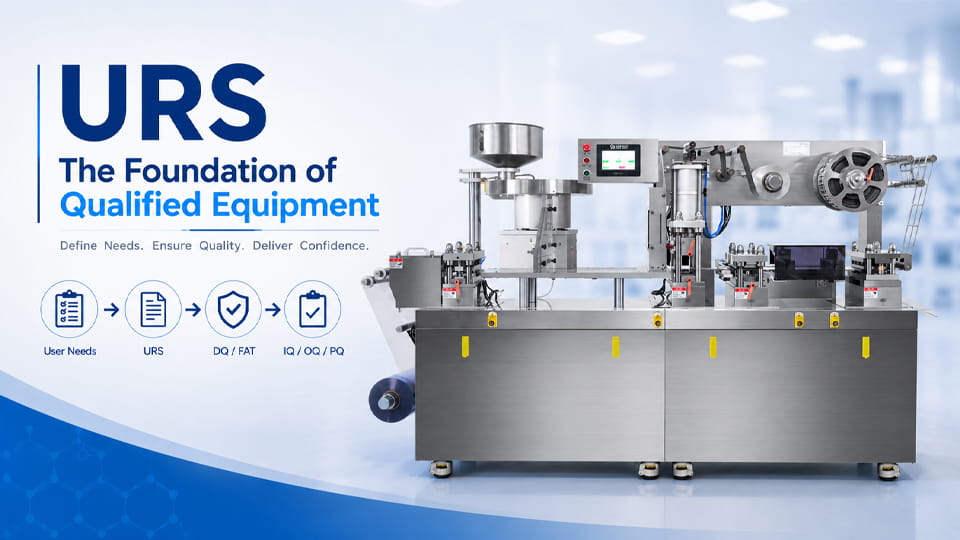
UN Specifica dei requisiti utente (UR) In produzione farmaceutica è il documento fondamentale che definisce Che cosa un sistema o un pezzo di attrezzatura deve soddisfare i requisiti di qualità, prestazione, e le esigenze normative. È scritto dal proprietario dell'attrezzatura (l'azienda farmaceutica) e delinea le funzioni richieste, capacità, Materiali, e le caratteristiche GMP dell'apparecchiatura. Un URS garantisce che tutte le parti interessate (produzione, ingegneria, QA) concordare i requisiti prima dell'inizio dell'appalto o della progettazione. Fornisce una base di riferimento per le proposte dei fornitori e diventa il riferimento durante tutta la progettazione, Test, e convalida.
Punti chiave
URS definisce ciò che le apparecchiature farmaceutiche devono ottenere, compresa la sua destinazione d'uso, capacità, prestazione, qualità, sicurezza, e requisiti operativi.
Un bene Gli URS farmaceutici dovrebbero contenere requisiti chiari e misurabili ciò potrà essere verificato successivamente.
Per macchine confezionatrici, l'URS può coprire le specifiche del prodotto, formati dei pacchetti, velocità di produzione, Materiali, utilità, automazione, pulizia, sicurezza, e documentazione.
URS non è la stessa cosa di una specifica di progettazione. L'URS definisce il risultato richiesto; il produttore dell'apparecchiatura sviluppa la soluzione tecnica.
URS può fornire un riferimento per approvvigionamento di attrezzature, valutazione dei fornitori, DQ, GRASSO/SAB, QI, OQ, e PQ.
Un URS chiaro aiuta a ridurre le incomprensioni tra il produttore farmaceutico e il fornitore dell'apparecchiatura prima che la macchina venga progettata e costruita.
Per il progetto di una macchina confezionatrice, quanto prima l'acquirente definisce requisiti come tipo di prodotto, formato di imballaggio, velocità target, e le aspettative GMP, più facile diventa valutare l'attrezzatura adatta.
Che cos'è una specifica dei requisiti utente (UR) nel settore farmaceutico?
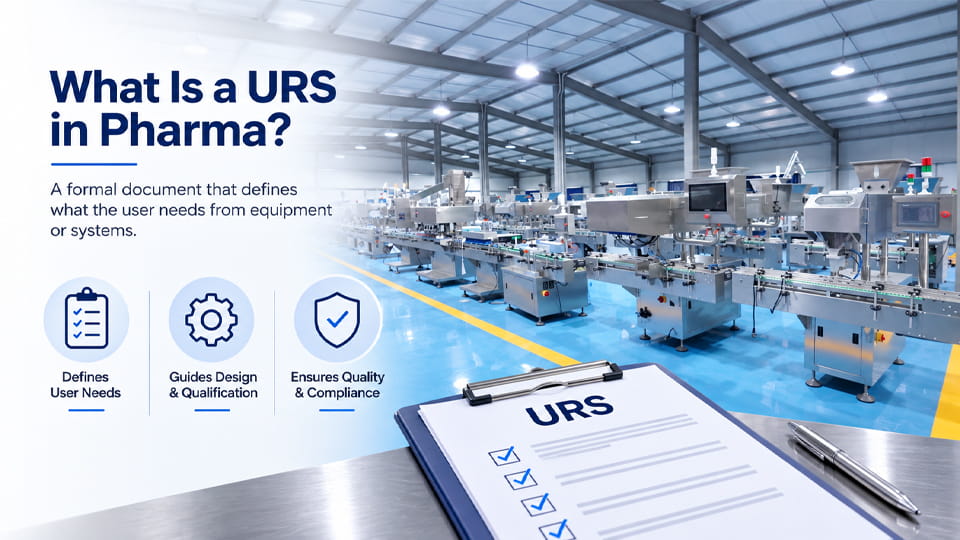
UN Specifica dei requisiti utente (UR) è un documento formale che cattura il bisogni e aspettative dell’utente per un'apparecchiatura o un sistema nell'industria farmaceutica. Descrive Che cosa l'attrezzatura deve fare – ad es. tasso di produzione obiettivo, formati di prodotto, precisione, e funzioni regolatorie – senza prescrizione Come per raggiungerlo. L'URS funge da ponte tra ingegneri di processo o utenti della produzione e fornitori di apparecchiature. Comunica la visione e i vincoli dell’utente in modo che i fornitori possano progettare, citazione, e costruire un sistema per soddisfare tali esigenze.
Per esempio, un URS potrebbe specificare:
IL destinazione d'uso (per esempio. “Confezione in blister da 10-60 compresse”).
Criteri di prestazione (per esempio. “≥ 100,000 vesciche all’ora”).
Requisiti normativi e GMP (per esempio. “Progettazione igienica, pulibilità a <10 residuo in ppm”).
Materiali di costruzione (per esempio. “Tutte le parti a contatto con il prodotto in acciaio inossidabile 316L”).
Utilità e ambiente (per esempio. “Opera in camere bianche di Classe C, richiede alimentazione a 380 V, 6 bar dell'acqua”).
Definendo i requisiti chiaramente in anticipo, l'URS diventa la pietra angolare per tutte le fasi successive: la revisione del progetto, valutazione dei fornitori, Test, e convalida. Guida normativa (per esempio. Allegato UE 15, FDA 21 CFR parte 11, GAMP5) si aspetta esplicitamente requisiti utente documentati come punto di partenza per la qualificazione delle apparecchiature. In pratica, scrivere un URS impone team interfunzionali (produzione, QA, convalida, ingegneria) per allinearsi esattamente su ciò che l'attrezzatura deve fare affinché il prodotto venga realizzato correttamente.
Perché l'URS è importante nella produzione farmaceutica?
Un URS ben realizzato è fondamentale per il successo di un progetto conforme alle GMP. I motivi principali includono:
Chiarezza dei requisiti: Un URS documenta tutte le aspettative (produzione, qualità, sicurezza, ecc.) in un posto. Ciò evita confusione e garantisce che il fornitore sappia esattamente cosa è necessario. Senza URS, i requisiti possono essere vaghi o trascurati, portando a costose riprogettazioni.
Base per la qualificazione della progettazione (DQ): L'URS funge da base per la qualificazione della progettazione. Consente di verificare che il progetto proposto soddisfi tutti i requisiti. Allegato GMP dell'UE 15 afferma esplicitamente che “i requisiti della specifica dei requisiti utente dovrebbero essere verificati durante la qualificazione della progettazione”.
Validazione & Test: Ogni attività di qualificazione riconduce all'URS. La guida della FDA spiega che la qualifica di installazione (QI) verifica l'installazione dell'apparecchiatura rispetto alle specifiche approvate "definite nell'URS (PER ESEMPIO., materiali di costruzione)". Qualificazione operativa (OQ) verifica che l'apparecchiatura funzioni come previsto, e qualificazione delle prestazioni (PQ) conferma di soddisfare costantemente le specifiche definite in Stage 1 (l'URS). Insomma, sia a FAT, SAB, QI, OQ o PQ, ogni test verifica uno o più requisiti URS.
Gestione del rischio & Conformità GMP: Includendo attributi di qualità critici (CQA), Caratteristiche di progettazione GMP, e requisiti normativi nell'URS, i team possono affrontare i rischi in anticipo. Ad esempio, specificando fin dall'inizio i criteri di progettazione igienica si evitano problemi di contaminazione in seguito. Le migliori pratiche del settore enfatizzano l’integrazione del QA, sicurezza, e le esigenze di conformità nell'URS, quindi "il sistema finale soddisfa sia le esigenze aziendali che quelle di conformità".
Comunicazione & Selezione dei fornitori: L'URS è un riferimento comune tra l'azienda farmaceutica e venditori di apparecchiature. Consente ai fornitori di preparare proposte che corrispondono direttamente alle esigenze dell’utente. Aiuta anche a valutare le offerte: le macchine possono essere confrontate con l'URS (tramite FAT/SAT) per vedere quale soddisfa meglio le tue esigenze.
Controllo dei costi e della pianificazione: Requisiti chiari significano meno possibilità di slittamento dell'ambito o di funzionalità mancate. Ciò riduce il rischio di ritardi nei progetti e di costose rilavorazioni.
Esempio: categorie di contenuti URS:
Categoria URS
Requisiti di esempio
Uso previsto
Quali processi e prodotti vengono gestiti dall'apparecchiatura.
Capacità/Prestazioni
Tasso di uscita (PER ESEMPIO., blister/min), dimensione del lotto, precisione.
Prodotto & Confezione
Tipo di prodotto, dosaggio, dimensione della confezione, materiale (PER ESEMPIO., PVC).
Materiali (Contatti)
Tutte le parti a contatto con il prodotto (PER ESEMPIO., 316L SS, finitura superficiale).
Lezione in camera bianca, temperatura/umidità, energia, aria, vuoto, ecc.
Controlli & Dati
Esigenze di PLC/HMI, memorizzazione delle ricette, registrazione dei dati, controllo degli accessi.
Sicurezza
Guardie, E-stop, interblocchi, allarmi, norme di sicurezza.
Documentazione
Manuali, disegni, certificati, documenti di formazione.
Qualificazione
Piani FAT/SAT, e risultati IQ/OQ/PQ con criteri di superamento.
Nota di verifica: Ogni elemento URS dovrebbe essere chiaro e misurabile. Per esempio, specificare i numeri esatti (per esempio. “100 bottiglie/min” o “temperatura camera max 30°C”) in modo che test come FAT/OQ possano verificarli oggettivamente. Includere sempre i criteri di accettazione (per esempio. “le guarnizioni devono sostenere 0,01 MPa per 5 secondi”) ove applicabile.
Cosa dovrebbe includere un URS farmaceutico?
Un URS farmaceutico copre tipicamente queste aree:
Uso previsto & Ambito: Descrivere la fase del processo (riempimento, sigillatura, etichettatura, ecc.), i prodotti e i formati di confezionamento, e come l'attrezzatura si inserisce nel processo complessivo. Questo crea il contesto per tutto il resto.
Capacità e produttività: Definire l'output target (unità/ora o dimensione del lotto). Per esempio: "Pacchetto 50,000 blister monodose per turno di 8 ore. Includere eventuali condizioni di avvio/arresto o intervalli di turndown.
Dettagli del prodotto e dell'imballaggio: Specificare le caratteristiche del prodotto (dimensione della tavoletta, peso, sensibilità all'umidità) e il formato della confezione (tipo di bottiglia, dimensioni del blister, dimensione del cartone). Se vengono utilizzati più prodotti o taglie, elencarli ciascuno.
Materiale di costruzione: Elencare i materiali e gli standard richiesti. Nel settore farmaceutico, acciaio inossidabile (304/316l) e i polimeri di grado FDA sono comuni per le parti a contatto. Includere i requisiti di finitura superficiale (per esempio. Ra ≤0,8μm) ed eventuali rivestimenti o rivestimenti.
GMP e caratteristiche di progettazione: Includere criteri di progettazione igienica (per esempio. nessuna gamba morta o fessure, drenabilità). Fare riferimento a eventuali standard o linee guida applicabili (Allegato GMP dell'UE 11, ISO, ASTM). Per sistemi computerizzati, prendere nota delle esigenze di integrità dei dati (pista di controllo, firme elettroniche secondo 21CFR11).
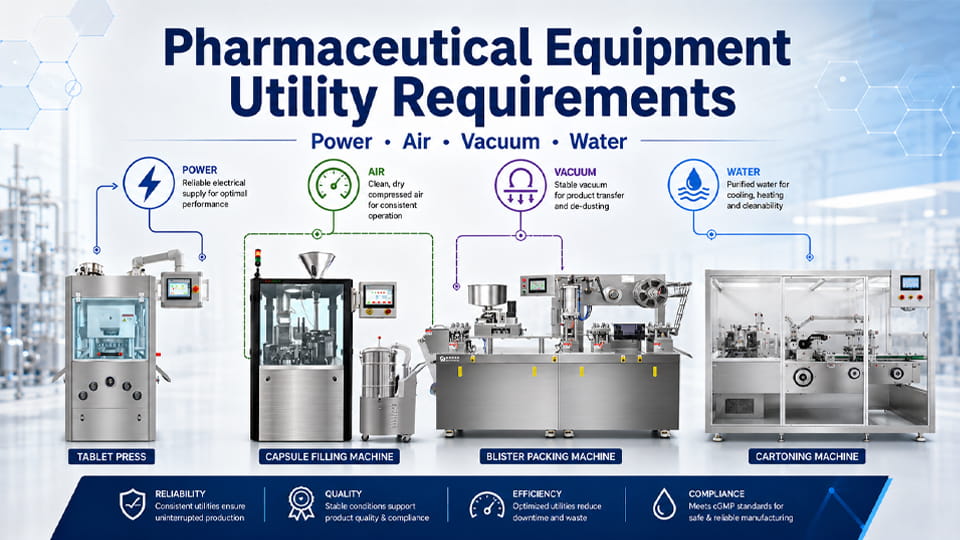
Utilità e Ambiente: Dettaglio utenze richieste (energia: tensione/fasi, pressione/flusso dell'aria compressa, acqua di raffreddamento, vuoto, ecc.) e condizioni ambientali (lezione in camera bianca, intervalli di temperatura/umidità).
Controlli e dati: Descrivere le esigenze di automazione: Piattaforma PLC/HMI, lingue, gestione delle ricette, allarmi, e connettività (Ethernet/SCADA/MES). Indicare eventuali requisiti di archiviazione o reporting dei dati (record di batch, Monitoraggio dell'OEE).
Requisiti di sicurezza: Elenca le caratteristiche di sicurezza (per esempio. barriere fotoelettriche, arresti di emergenza, guardie interbloccate) e le relative norme di sicurezza (CE, UL). Includere eventuali requisiti ergonomici o di sicurezza dell'operatore (blocco/tagout, Zone LOTO).
Documentazione e Servizi: Richiedere la consegna dei manuali utente, disegni as-built, registri di calibrazione, certificati dei materiali, backup del software, e formazione per operatori/personale di manutenzione.
Test e qualificazione: Specificare FAT (Test di accettazione in fabbrica) criteri e la portata di IR/WH/PQ. Per esempio: "Il fornitore dovrà eseguire un FAT presso la propria sede dimostrando la conformità a tutti i punti URS e fornire un rapporto FAT."
Requisiti URS per le apparecchiature per l'imballaggio farmaceutico
Macchinari di imballaggio ha alcune considerazioni speciali sull'URS. Oltre agli articoli generali di cui sopra, includere:
Velocità di imballaggio: Specificare le tariffe target (per esempio. 200 bottiglie/min, 50 cartoni/min, 80 blister/min). Se sono integrate più macchine/linee, chiarire il throughput per ciascuno.
Gamma di prodotti: Elenca tutte le varianti di prodotto che devono essere gestite (tavoletta contro. capsula, diversi diametri di bottiglia, stili di berretto, ecc.). Se la linea gestisce più formati, includere richiesto tempi di cambio e tutte le parti di formato necessarie.
Formati dei pacchetti: Per vesciche, specificare le dimensioni della carta, disposizione delle cavità, tipo di lamina (Spessore PVC/PVDC, Alluminio/PVC). Per bottiglie, fornire i tipi di contenitori e i volumi di riempimento. Per cartoni, specificare dimensioni e tipo di chiusura. Questi dettagli garantiscono che la macchina sia configurata correttamente.
Movimentazione dei materiali: Dettaglia eventuali alimentatori, separatori, o setacci necessari per il dosaggio dei solidi. Per polveri/liquidi, specificare le tolleranze di dosaggio e le esigenze del serbatoio.
Materiali: Come sempre, tutte le parti a contatto con il prodotto devono essere adatte al settore farmaceutico (per esempio. SS316L). Se sono coinvolti prodotti corrosivi o acidi, notare eventuali rivestimenti o materiali speciali.
Pulizia & Cambio: Se sono previsti frequenti cambi di prodotto, richiedono parti a sgancio rapido o CIP (Pulizia sul posto) caratteristiche. Per linee sterili, specificare la classificazione delle camere bianche e i metodi di sterilizzazione.
Controlli: per esempio. “La linea utilizzerà un PLC Allen-Bradley con interfaccia SCADA, supportando il controllo delle ricette." Specificare eventuali serializzazioni di etichette o connettività alle apparecchiature a monte/a valle.
Integrazione: Se parte di una linea più grande, richiedono compatibilità (per esempio. trasportatori, tracciabilità dei lotti, scanner di codici a barre). Documentare eventuali interfacce (elettrico, meccanico, comunicazione) necessario.
Utilità: Linee di confezionamento spesso necessitano di aria compressa (per esempio. 5 bar a X NL/min) e può utilizzare il vuoto o l'azoto. Fornire i requisiti minimi.
Sicurezza: Con più operatori in giro, includere barriere fotoelettriche o comandi a due mani nelle stazioni di carico/scarto. L’URS dovrebbe riflettere le regole di sicurezza del tuo sito (per esempio. Conformità CE).
Per esempio, una macchina blister che URS potrebbe includere: “Capacità di termosaldatura fino a 200°C, ospitare film in PVC/PVDC di 300 µm di spessore, alimentatore blister e trasportatore rifili integrati, 4-traccia formato blister con cambio formato <15 min, tutte le parti di contatto in SS316L, produzione ≥80 blister/min a 100% efficienza." Tali specifiche consentono al costruttore della macchina di soddisfare le vostre precise esigenze.
Come si inserisce URS nel processo di qualificazione?
L'URS è il punto di partenza del ciclo di vita della qualificazione delle apparecchiature. Un flusso semplificato è:
URS → DQ: Una volta approvato l'URS, la progettazione dell'apparecchiatura (disegni, specifiche) viene esaminato in Design Qualification per garantire che tutti i requisiti URS siano soddisfatti. In una revisione del design, gli ingegneri e il QA esaminano i risultati della progettazione confrontandoli con ciascun elemento URS.
URS → GRASSO/SAB: Test di accettazione in fabbrica (GRASSO) viene effettuato presso la sede del fornitore per dimostrare che la macchina soddisfa gli URS prima della spedizione. Allegato 15 suggerisce addirittura di verificare la conformità URS presso la sede del fornitore, se giustificato. Dopo l'installazione, Test di accettazione del sito (SAB) conferma che tutto funziona ancora sul posto (a volte i passaggi FAT e SAT si sovrappongono).
URS → QI: La qualificazione dell'installazione verifica che l'apparecchiatura installata corrisponda alle specifiche URS. Per esempio, Le linee guida della FDA affermano che IQ dovrebbe verificare che “tutti gli aspetti di una struttura, utilità, o apparecchiature che possono influenzare la qualità del prodotto... aderire alle specifiche approvate come definite nell'URS (PER ESEMPIO., materiali di costruzione)". In pratica ciò significa controllare le tubazioni, elettrico, e dettagli strutturali contro l'URS.
URS → OQ/PQ: La qualifica operativa verifica che la macchina funziona come previsto. La FDA rileva che l'OQ verifica che l'apparecchiatura “funzioni”.[S] come previsto per tutti gli intervalli operativi previsti”. La qualificazione delle prestazioni mostra quindi risultati coerenti che soddisfano i criteri definiti da URS. In altre parole, sotto OQ/PQ si fa funzionare la macchina con materiali reali e si confermano le metriche (velocità, prodotto, tasso di difetto, ecc.) secondo l'URS.
In ogni fase, i protocolli di test sono ricondotti ai requisiti URS. Se l'URS dice “Erogare 100 ml ±2%", i test OQ misureranno il volume erogato per soddisfarlo. Un URS trasforma obiettivi vaghi in test oggettivi.
URS vs specifiche funzionali vs specifiche di progettazione
È importante sapere in cosa differiscono questi documenti:
Documento
Definisce (Ambito)
Autore
Specifica dei requisiti utente (UR)
Cosa gli utenti hanno bisogno che il sistema faccia (esigenze funzionali e normative).
L'azienda farmaceutica (proprietario)
Specifica funzionale (FS)
Come il sistema soddisferà l'URS (funzioni, moduli software, caratteristiche).
IL UR risposte Che cosa domande: “Che spettacolo, sicurezza, e sono richieste funzionalità di conformità?” Lascia aperti i metodi di soluzione.
IL Specifiche funzionali suddivide l'URS in funzioni di sistema (per esempio. “Il sistema di controllo si arresterà automaticamente in caso di allarme e registrerà i codici di errore”).
IL Specifiche di progettazione fornisce il progetto vero e proprio (Disegni CAD, Codice PLC, dettagli del venditore/produttore).
Evitare di specificare eccessivamente nell'URS. Per esempio, non imporre una marca di PLC o un tipo di motore specifico a meno che non sia assolutamente necessario. L’URS dovrebbe concentrarsi sui bisogni, non dettaglio di progettazione. Come notano gli esperti del settore, includere dettagli tecnici eccessivi nell'URS può limitare le soluzioni flessibili. Questi dettagli appartengono invece alle specifiche funzionali/di design.
Chi è responsabile della preparazione dell'URS?
Generalmente, IL utilizzatore farmaceutico (acquirente) è responsabile dell'URS. Di solito lo redige un team interfunzionale:
Ingegneri di produzione/processo: Definire la destinazione d'uso, rendimento, e integrazione dei processi.
Garanzia/convalida della qualità: Fornire i requisiti GMP, esigenze di integrità dei dati, e criteri normativi.
Manutenzione/Ingegneria: Specificare le utilità, pezzi di ricambio, accesso per manutenzione, e spazio di installazione.
Normativa/QA: Garantire allegati o linee guida (Allegato 15, Allegato 1 per sterile, ecc.) vengono affrontati.
Appalti: Coordina il formato del documento e può chiarire i punti tecnici.
Il fornitore dell'apparecchiatura può fornire input (cosa è fattibile, prestazione tipica, ecc.), ma l'URS finale deve provenire dall'utente. Coinvolgere tempestivamente tutte le parti interessate (produzione, QA, ingegneria, convalida) è una buona pratica. Per esempio, Il QA potrebbe rilevare un requisito igienico-sanitario, e Processo potrebbe specificare una dimensione del feed. L'URS dovrebbe integrare queste prospettive in modo da riflettere veramente le tue esigenze.
Come scrivere un buon URS farmaceutico
Seguire questi passaggi per creare un clear, URS testabile:
Definire la destinazione d'uso: Inizia con una breve descrizione e scopo del sistema (per esempio. “URS per una macchina riempitrice di liquidi nella linea di prodotti ABC”). Questo pone le basi.
Elenco regolamenti/standard applicabili: Includere indicazioni pertinenti (Allegato GMP dell'UE 15/11, 21 CFR parte 11, SPORT 5, ecc.) quindi le esigenze di conformità non vengono perse.
Sii specifico e misurabile: Indicare i requisiti con valori o test esatti. Invece di “alta velocità”, specificare “minimo 500 bottiglie/ora a 80% riempire". Ogni requisito dovrebbe essere oggettivamente verificabile.
Dettagliare le esigenze di prodotto e processo: Descrivere le varianti del prodotto, proprietà del materiale, condizioni ambientali. Per esempio: “Diametro della compressa 6–10 mm; operare a 20–25°C, 40–60% UR.”
Specificare materiali e criteri di progettazione: Definire chiaramente i materiali di contatto (per esempio. SS316L), finiture (Ra), lezioni di pulizia, ecc. Ciò consente ai controlli IQ di confermare le specifiche "as-built"..
Includi utenze e requisiti di spazio: Documentare l'alimentazione, pressione/flusso dell'aria, qualità dell'acqua, pesi, e qualsiasi esigenza speciale di fondazione o stanza.
Descrivere i controlli e la gestione dei dati: Specificare le preferenze del sistema di controllo (Marchio PLC, Linguaggio HMI), conteggio delle ricette, registrazione allarmi/eventi (pista di controllo per CFR 21Parte 11), ecc. Se la linea deve integrarsi con il MES, notalo.
Caratteristiche di sicurezza generali: Elenco degli interblocchi di sicurezza richiesti, guardia, arresti di emergenza, e il rispetto delle norme di sicurezza (CE, UL). Non trascurare la sicurezza dell’operatore (per esempio. illuminazione, scale, blocco/tagout).
Piano per FAT/SAT: Indicare che la macchina sarà sottoposta a FAT e SAT, e quali criteri di accettazione verranno testati (per esempio. "Tutti i punti URS saranno inclusi nel protocollo FAT con i risultati misurati").
Revisionare e rivedere: Assicurarsi che tutti i requisiti siano chiari, inequivocabile, e tracciabile. Assegna ID univoci se utili per il monitoraggio. Coinvolgere il QA/convalida per verificare che non manchi nulla di critico.
Migliori pratiche principali: coinvolgere utenti di tutti i gruppi, utilizzare un linguaggio semplice, ed evitare termini ambigui. Un buon URS utilizza elenchi puntati o tabelle, e ogni elemento ha criteri per il test. Come afferma una fonte del settore: ogni requisito dovrebbe essere “specifico e verificabile”. Da questa parte, è possibile collegare direttamente ogni passaggio FAT/IQ/OQ a un elemento URS.
Errori comuni quando si scrive un URS
Troppo vago: Requisiti come “facile da usare” o “alta velocità” senza numeri non sono verificabili. Quantificare o specificare sempre i criteri di accettazione.
Linguaggio incentrato sul design: Scrivere “il PLC deve essere Siemens” o “utilizzare tre motori” oltrepassa l’URS. Mantenere l'attenzione sui bisogni (Che cosa, non come).
Metodo di verifica mancante: Se non puoi dire come testarlo, ha bisogno di chiarimenti. Per esempio, "deve sigillare correttamente" dovrebbe includere una specifica del test di tenuta.
Trascurare GMP/integrità dei dati: Dimenticare di menzionare gli allarmi, backup dei dati, o Parte 11 la conformità può causare problemi di audit.
Ignorare Utilità/Ambiente: Le omissioni comuni sono la pressione dell'aria, fasi di potenza, lezione in camera, o anche il peso totale (carico sul pavimento).
Saltare la pulizia/cambio: Nel settore farmaceutico, Il CIP e il cambio rapido sono spesso fondamentali. Ometterli può portare a riprogettazioni successive.
Non coinvolgere tutte le parti interessate: Se il controllo qualità o la produzione non sono coinvolti, requisiti (per esempio. pulibilità, esigenze dell'operatore) potrebbe mancare.
Aspettative irrealistiche: Promettere eccessivamente la produttività o sottovalutare le temperature può rivelarsi controproducente. Numeri base su dati reali di processo.
Nessun controllo della versione: Trattare URS come una bozza modificabile può confondere i team. Una volta finalizzato, dovrebbe essere un documento controllato.
Un URS troppo generico o troppo dettagliato può causare problemi. Obiettivo chiaro, esigenze inequivocabili dell'utente.
Esempio URS di una macchina per l'imballaggio farmaceutico
Di seguito è riportato un esempio semplificato di voci URS per a macchina confezionatrice blister. (I valori reali deriverebbero dai tuoi prodotti e obiettivi specifici.)
Protezioni e arresti di emergenza conformi CE; porte di accesso interbloccate
Documentazione
Manuale utente, schemi elettrici, Protocolli FAT/IQ/OQ, documenti di calibrazione
Supporto per la qualificazione
FAT presso il sito del fornitore che copre tutti i punti URS; il fornitore fornisce documenti IQ/OQ/PQ
Nota: Questi sono esempi illustrativi. Il tuo URS effettivo includerebbe valori rilevanti per le dimensioni del tuo prodotto, grado per camera bianca, requisiti normativi, e piano di validazione.
Macchina per imballaggio DPP-270Pro Liquid Blister
Lista di controllo URS per l'approvvigionamento di attrezzature
Prima di finalizzare l'URS, assicurati di aver coperto:
Destinazione d'uso / fase del processo
Tipologie di prodotto e formati di confezionamento
Capacità produttiva e range operativo
Materiali di costruzione e finiture superficiali
Caratteristiche di progettazione igienica/GMP
Requisiti di pulizia e CIP
Utilità e condizioni ambientali
Controlli e integrità dei dati (HMI, SCADA, CFR21 Parte 11)
Requisiti di sicurezza e protezione
Documentazione (manuali, disegni, certificati)
FAT/SAT e deliverable di qualificazione
Manutenzione, pezzi di ricambio, e bisogni formativi
Una lista di controllo completa aiuta a individuare i pezzi mancanti prima che i fornitori facciano un'offerta per il progetto.
Conclusione
UN Specifica dei requisiti utente (UR) è il punto di partenza per qualsiasi progetto di apparecchiature farmaceutiche. Definisce le esigenze dell'utente e diventa la base per la progettazione e la convalida delle apparecchiature conformi. Facendo lo spelling Che cosa l'attrezzatura deve fare – con chiaro, criteri misurabili – l’URS guida gli appalti, proposte dei fornitori, e prove di qualificazione.
Per linee di confezionamento farmaceutico, un forte URS garantisce il tuo confezionatrici in blister, contatori di tablet, astucciatori, e le macchine per l'imbottigliamento forniscono la produzione necessaria e soddisfano gli standard di progettazione GMP. Quando la tua produzione, QA, e i team di ingegneri collaborano all'URS, riduci al minimo le incomprensioni e stabilisci un percorso agevole verso la FAT, QI, OQ, e PQ.
Se stai preparando un URS per una macchina o una linea di confezionamento, Ricordare: definisci ciò di cui hai bisogno, renderlo misurabile, e collegarlo ai requisiti GMP. Jinlu Packing è specializzato in macchine per l'imballaggio farmaceutico – dal confezionamento in blister e riempimento di capsule alle linee di astucciamento e imbottigliamento. Con un URS chiaro in mano, possiamo adattare le nostre proposte di apparecchiature e il supporto di convalida alle vostre precise esigenze.
Contatta Jinlu Imballaggio per assistenza esperta nella specifica e nella qualificazione della vostra prossima macchina per l'imballaggio farmaceutico. Il nostro team esperto può aiutarti a tradurre il tuo URS in un documento conforme, soluzione ad alte prestazioni.
Domande frequenti sulla specifica dei requisiti utente (UR) nel settore farmaceutico
Che cos'è una specifica dei requisiti utente (UR) nei prodotti farmaceutici?
Un URS è un documento scritto che descrive in dettaglio le aspettative dell'utente per una macchina o un sistema prima che venga progettato o acquistato. Elenca le prestazioni, funzionalità, e le esigenze di conformità che l'apparecchiatura deve soddisfare. In altre parole, dice ai fornitori esattamente cosa richiede il processo.
Perché l'URS è importante nell'industria farmaceutica?
L'URS garantisce che le apparecchiature siano sviluppate secondo GMP, sicurezza, e requisiti di integrità dei dati. Fornisce chiarezza su ciò che è necessario affinché i progettisti possano costruire in modo conforme, sistemi di alta qualità. Senza un URS chiaro, le apparecchiature potrebbero non soddisfare i requisiti chiave, comportando costose rilavorazioni o non conformità normativa.
Chi di solito scrive l'URS?
Di solito le persone che gestiscono il processo (specialisti della produzione o del prodotto) redigere l'URS, con il contributo dell'ingegneria, QA, e team di convalida. Ciò garantisce che tutte le prospettive siano coperte. La revisione finale e l'approvazione dovrebbero coinvolgere il QA per confermare che i requisiti normativi siano soddisfatti.
Quando dovrebbe essere creato l'URS?
L’URS dovrebbe essere preparato prima di acquistare o costruire l’attrezzatura, subito dopo la decisione sulla necessità di un nuovo sistema, e prima della progettazione dettagliata o della selezione del fornitore.
Cosa dovrebbe essere incluso in un URS?
Le sezioni chiave di un URS farmaceutico coprono in genere l'ambito del progetto, requisiti funzionali (cosa fa), requisiti di prestazione (quanto bene lo fa), esigenze di conformità normativa, integrità dei dati, e criteri di accettazione. Può includere anche sezioni sulla sicurezza, manutenzione, documentazione, formazione, ecc.
Qual è la differenza tra un URS e una specifica dei requisiti funzionali (FRS)?
Un URS definisce ciò di cui l'utente ha bisogno (esigenze aziendali, funzioni di alto livello). Il FRS (o specifiche funzionali) viene dopo e descrive come lo farà il sistema. Pensa a URS come se “abbiamo bisogno di output X e precisione Y”, mentre FRS descriverà in dettaglio la soluzione tecnica o il flusso di lavoro per raggiungere questo obiettivo. Generalmente, non duplicare le specifiche funzionali nell'URS.
In che modo l'URS si collega alla convalida (IR/WH/PQ)?
L'URS è la base di riferimento per tutti i test di validazione. Ogni attività di qualificazione riconduce ai requisiti dell'URS. Ad esempio, se l'URS lo richiede 10,000 bottiglie/ora, il PQ (Qualificazione delle prestazioni) testerà quell'output. Allegato 15 afferma esplicitamente che i requisiti URS dovrebbero essere verificati durante il DQ e servire come riferimento durante IQ/OQ/PQ.
Un fornitore può scrivere l'URS per noi??
Mentre un fornitore può chiarire come soddisferà i requisiti, l'URS dovrebbe rimanere di proprietà dell'utente. Deve riflettere il tuo processo specifico e le priorità GMP, non solo ciò che un fornitore ha costruito in precedenza. Potresti ottenere input dal fornitore sulla fattibilità tecnica, ma l'URS finale dovrebbe essere convalidato dal tuo team (QA/convalida) per evitare pregiudizi.
È un URS richiesto dalle autorità di regolamentazione?
SÌ. Linee guida GMP (Allegato UE 15, FDA 21 CFR, ecc.) richiedere specifiche documentate per le apparecchiature. Allegato 15 richiede esplicitamente un URS o specifiche simili all'inizio della qualificazione. Allo stesso modo, Parte della FDA 11 e GAMP5 enfatizzano i requisiti chiaramente documentati. Durante gli audit, i regolatori si aspetteranno di vedere un URS o una specifica per ciascuna macchina critica.
Cosa succede se saltiamo l'URS?
Saltare o scrivere un URS scadente spesso porta a lacune di progettazione e problemi di conformità. Potresti ritrovarti con macchine che non soddisfano le esigenze di produzione o mancano di funzionalità GMP critiche. Pharmaguideline avverte che un URS vago causa “costi eccessivi associati alla riprogettazione e alla qualificazione delle apparecchiature a causa della mancanza di chiarezza”. Inizia sempre con un buon URS: è il percorso più efficiente verso la conformità, sistema su specifica.
Piccolo Fu, Fondatore di Jinlupacking, porta sopra 20 anni di esperienza nel settore delle macchine farmaceutiche. Sotto la sua guida, Jinlu è diventato un fornitore affidabile che integra la progettazione, produzione, e vendite. Petty condivide con passione la sua profonda conoscenza del settore per aiutare i clienti a destreggiarsi tra le complessità del packaging farmaceutico, assicurandosi che ricevano non solo attrezzature, ma una vera partnership di servizi one-stop su misura per i loro obiettivi di produzione.