Che cos'è la produzione farmaceutica a contratto? Una guida completa al CDMO, OCM, Benefici & Processo
Che cos'è la produzione farmaceutica a contratto? Una guida completa al CDMO, OCM, Benefici & Processo
Luglio 15, 2026
Non ci sono commenti
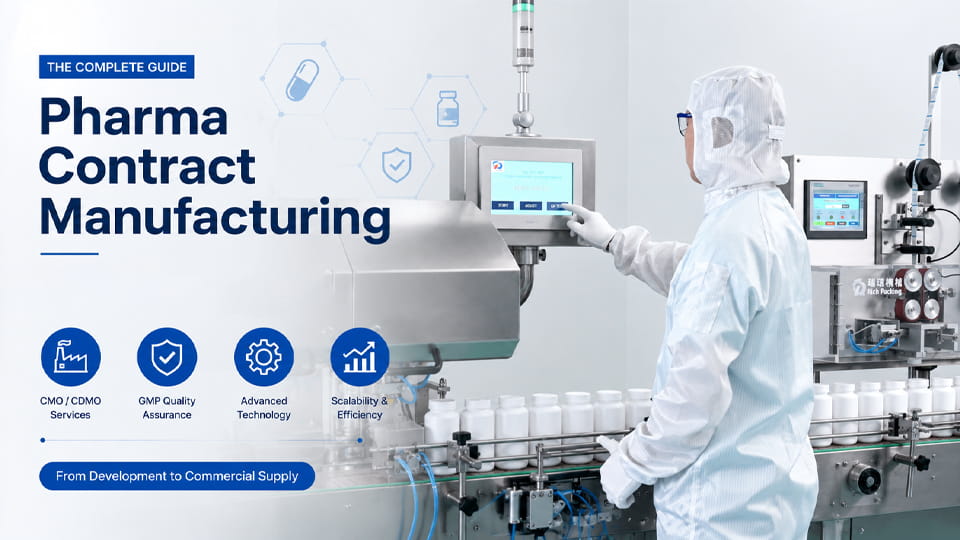
Nell’industria farmaceutica di oggi, Molte aziende stanno esternalizzando la produzione dei farmaci a produttori a contratto specializzati. La produzione farmaceutica a contratto comprende tutto, da API dallo sviluppo della produzione e della formulazione fino all'imballaggio finale, spesso fornito da organizzazioni di sviluppo e produzione a contratto (CDMO) o organizzazioni di produzione a contratto (CMO). Questa guida spiega cosa significa produzione conto terzi nel settore farmaceutico, segue il processo tipico (dallo sviluppo al prodotto finito), confronta CMO e CDMO, e delinea i vantaggi e le sfide dell'outsourcing. Evidenziamo anche l'avanzato attrezzature per la produzione e il confezionamento (filler di capsule, comprimitrici, macchine blister, ecc.) che utilizzano i moderni CDMO.
Produzione conto terzi farmaceutica (chiamato anche outsourcing farmaceutico) è quando un'azienda farmaceutica assume un'azienda terza per realizzare i suoi prodotti farmaceutici. Queste terze parti – conosciute come Organizzazioni di produzione a contratto (CMO) – possono produrre solo il farmaco commerciale o talvolta fornire supporto allo sviluppo. In pratica, la produzione farmaceutica a contratto può coprire:
API (Ingredienti farmaceutici attivi): sintesi del composto farmacologico attivo.
Formulazione & DFF (Forme di dosaggio finite): mescolare gli ingredienti in compresse, capsule, liquidi, o iniettabili.
Produzione del dosaggio: compresse compressive, riempimento delle capsule, riempimento in granuli, ecc.
Confezione & Etichettatura: imballaggio in blister, riempimento delle bottiglie, inserimento di essiccanti, astucciamento, serializzazione, ecc.
Produzione clinica/commerciale: da piccoli lotti per prove a tirature commerciali su larga scala.
È importante sottolineare che, il termine CDMO (Sviluppo contrattuale e organizzazione della produzione) è diventato più comune. Un CDMO non si limita a produrre un farmaco, ma gestisce anche lo sviluppo e l'espansione sotto lo stesso tetto. In altre parole, OCM = “solo produzione," mentre CDMO = “sviluppo più produzione." A CDMO might help with formulation design, lotti pilota, e documenti normativi, e quindi adattare senza problemi il processo alla piena produzione, riducendo al minimo trasferimenti e ritardi.
Un CMO aiuta gli sponsor a produrre le loro sostanze farmaceutiche innovative e i loro prodotti farmaceutici (fornire strutture e capacità produttive). Al contrario, un CDMO fornisce soluzioni integrate per lo sviluppo e la produzione di farmaci, combinando R&Competenza D con capacità di produzione. In pratica, molte aziende farmaceutiche preferiscono sempre più il modello CDMO per una partnership end-to-end – dallo sviluppo iniziale alla serializzazione finale – per ridurre i rischi tra le transizioni.
Processo di produzione farmaceutica a contratto
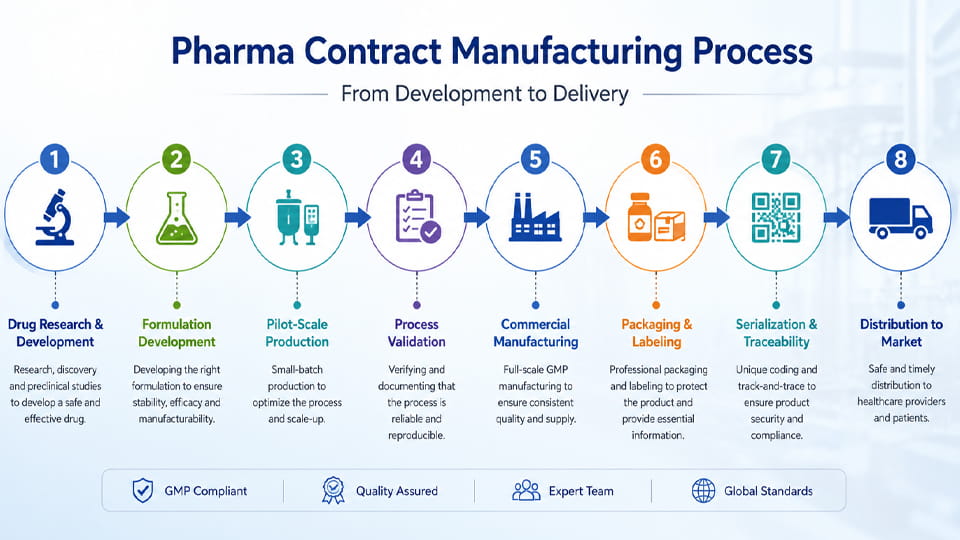
Un programma di produzione a contratto segue in genere il ciclo di vita dello sviluppo del farmaco dal laboratorio al mercato. Le fasi principali sono descritte nel diagramma di flusso riportato di seguito, e poi descritto brevemente:
Ricerca sui farmaci & Sviluppo: All'inizio di R&D, gli scienziati identificano una molecola candidata. Per piccole imprese o biotecnologie, un CDMO può anche collaborare alla formulazione o alla progettazione del processo (per esempio. ottimizzare la formulazione di compresse o capsule).
Sviluppo della formulazione: Il CDMO collabora con lo sponsor per finalizzare la formulazione del farmaco (tavoletta, capsula, polvere, liquido, ecc.) e sviluppare metodi di produzione. Questa fase comprende il lavoro di laboratorio e gli studi di preformulazione per garantire la stabilità e l'efficacia della forma di dosaggio.
Produzione su scala pilota: Una volta impostata una formulazione, il CDMO produce piccoli lotti pilota (spesso 10 ^ 3–10 ^ 5 unità) in condizioni GMP. Questi lotti vengono utilizzati per studi clinici o richieste di regolamentazione. Il processo è graduale.
Convalida del processo: Prima della completa commercializzazione, il CDMO convalida il processo (dimostrando che il farmaco può essere prodotto in modo coerente secondo standard di qualità). Ciò include la qualificazione completa delle apparecchiature, linee di confezionamento, test analitici, e documentazione.
Produzione commerciale: Con convalida completata, il CDMO passa alla produzione su larga scala nell’ambito del cGMP. Ciò può comportare l'esecuzione di più turni, record di batch, e soddisfare le ispezioni normative. L'impianto produce i principi attivi e le forme di dosaggio finali nei volumi concordati.
Confezione & Etichettatura: Le forme farmaceutiche finite vengono quindi confezionate, ad esempio, le compresse possono essere confezionate in blister o flaconi, i liquidi vengono riempiti, tappati ed etichettati. Le moderne linee di confezionamento CDMO spesso includono riempitrici automatiche di capsule, contatori di tablet, riempitrici/tappatrici per bottiglie, sigillatrici ad induzione, stampanti per etichette, e astucciatrici che operano in sequenza.
Serializzazione & Tracciabilità: Per rispettare le normative globali, la confezione incorpora la serializzazione (codici a barre/codici QR univoci) e funzionalità di tracciabilità. Ciò garantisce che ogni unità possa essere tracciata dalla produzione alla vendita.
Distribuzione: Finalmente, i farmaci confezionati vengono immagazzinati e spediti a clienti o distributori in tutto il mondo. Il CDMO può anche gestire lo stoccaggio e la logistica in base ai termini contrattuali.
In ogni fase, il CDMO fornisce la gestione del progetto, controllo della qualità, e supporto normativo per garantire il raggiungimento degli obiettivi fissati. Esternalizzando questi passaggi, gli sponsor farmaceutici evitano di costruire R. ridondanti&D e infrastrutture produttive.
OCM contro CDMO: Qual è la differenza??
Di seguito è riportato un rapido confronto tra un CMO tradizionale (Organizzazione della produzione a contratto) e un CDMO:
Aspetto
OCM (Organizzazione della produzione a contratto)
CDMO (Sviluppo contratto. & Prod. Org.)
Ambito del servizio
Produzione e talvolta imballaggio.
Dall'inizio alla fine: R&D, formulazione, e produzione.
R&D Coinvolgimento
Minimo; presuppone che siano fornite le formulazioni.
Attivo nella formulazione, ingrandirsi, e trasferimento tecnologico.
Fase di produzione
Solitamente produzione commerciale o clinica.
Copre dalla scala clinica iniziale a quella commerciale.
Trasferimenti dei fornitori
Potrebbe essere necessario un partner di sviluppo separato.
Un partner riduce i trasferimenti e i ritardi.
Caso d'uso tipico
Capacità extra per farmaci conosciuti (generici).
Sviluppo di nuovi farmaci o progetti complessi.
Valore aggiunto
Strutture & ingrandirsi, risparmio sui costi.
Supporto normativo, sviluppo analitico, ciclo di vita completo.
Questa tabella lo evidenzia I CMO si concentrano principalmente sulla produzione, mentre I CDMO offrono servizi integrati di sviluppo e produzione. In altre parole, se disponi già di una formula farmaceutica definitiva e ti serve solo capacità produttiva, un CMO potrebbe essere sufficiente. Ma se hai bisogno di aiuto sviluppo di una nuova formulazione di farmaci, processi di ridimensionamento, e norme di navigazione, un CDMO è il partner preferito.
Tipi di prodotti farmaceutici che possono essere prodotti su contratto
I moderni CDMO possono produrre praticamente qualsiasi tipo di prodotto farmaceutico. Ecco alcuni esempi comuni, insieme alle principali attrezzature utilizzate:
Compresse: Le compresse orali solide vengono prodotte comprimendo polveri o granuli in a comprimitrice rotativa. Le macchine comprimitrici ad alta velocità possono comprimere centinaia di migliaia di compresse all'ora. Presse rotative elettroniche può gestire compresse standard e di forma speciale. Di solito segue una comprimitrice granulazione a umido o a secco passo fatto al CDMO. (Le compresse possono quindi essere confezionate in blister o imbottigliate.)
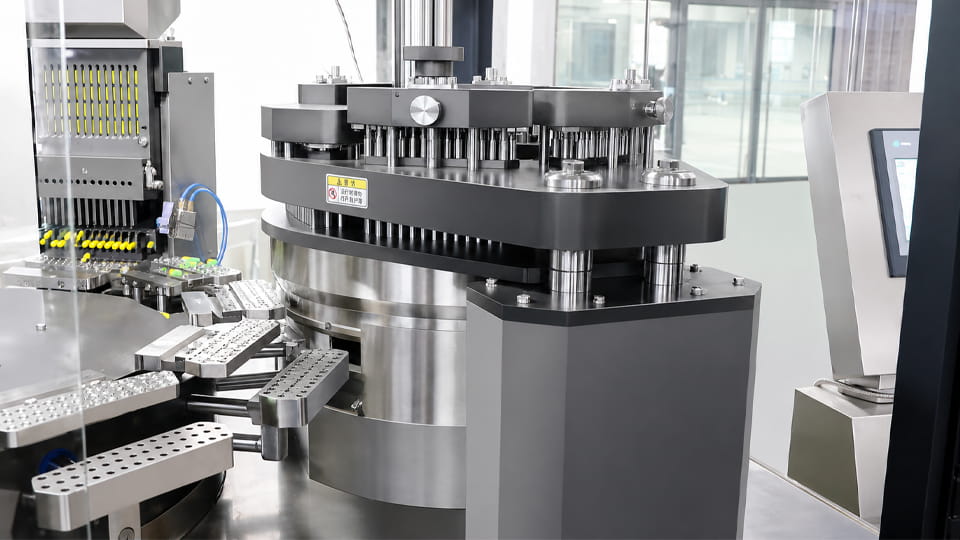
Capsule: Le capsule rigide vengono riempite con polveri o pellet utilizzando a macchina per il riempimento di capsule. Le macchine per il riempimento di capsule Jinlu spaziano dalle riempitrici semi-automatiche (per piccoli lotti) alle macchine completamente automatiche da multimila capsule/ora. Anche le capsule possono esserlo softgel O capsule liquide. La produzione di capsule è comune negli integratori e nei farmaci da banco.
Figura: Linee automatiche di riempimento capsule in un impianto di produzione conto terzi. Queste macchine dosano polvere o pellet in capsule a guscio rigido, consentendo decine di migliaia di capsule all'ora.
Polvere & Granuli: Polveri o granuli sfusi (per esempio. per bustine o confezioni sfuse) può essere movimentato mediante volumetrico o coclea macchine riempitrici, e confezionati in sacchetti o bottiglie. I CDMO utilizzano spesso alimentatori a vibrazione, sistemi a perdita di peso, o riempitivi in polvere specializzati per un dosaggio preciso. (Per esempio, macchine per stick pack [vedere sotto] spesso integrano alimentatori volumetrici di polvere.)
Bustine & Pacchetti di bastoncini: Le bustine monodose sono comuni per formulazioni in polvere o liquide (come polveri o liquidi per sperimentazioni cliniche). Form-fill-seal verticale (Vff) si formano automaticamente macchine come le confezionatrici per bustine, riempire, e sigillare stick pack e piccole buste. Queste macchine possono confezionare polveri, granuli, liquidi o gel in confezioni sigillate.
Bottiglie (Liquidi, Compresse): Gli sciroppi o le sospensioni liquidi vengono riempiti in bottiglie utilizzando l'alta velocità linee di riempimento bottiglie, che comprendono il risciacquo, riempimento, tappatura, e sigillatura ad induzione. Anche compresse e capsule possono essere contate e inserite nei flaconi. Queste linee spesso includono automatiche contatori di compresse/capsule per riempire le bottiglie. (Le macchine per il conteggio di capsule/compresse di Jinlu possono riempire bottiglie a 50-100 bpm.) Una volta riempito e tappato, UN sigillante a induzione applica un sigillo in alluminio sotto il tappo a prova di manomissione.
Confezioni blister: Molte compresse e capsule sono confezionate in blister (Cavità in PVC/Alluminio). Automatizzato macchine da imballaggio con blister (per esempio. Le confezionatrici in blister di JL) formare le tasche del blister, riempirli con le unità di dosaggio, e termosaldare con pellicola o PVC. Le macchine blister possono produrre da 4.000 a 12.000 blister all'ora per prodotti di grandi volumi.
Cartoni: Dopo la formazione di vesciche o il riempimento della bottiglia, i prodotti vengono messi nei cartoni. UN macchina astucciatrice piega e incolla i cartoni di cartone attorno al prodotto (bottiglie, biglietti blister, bustine). Le astucciatrici Jinlu possono gestire fino a ~15.600 scatole/ora e possono integrarsi con l'etichettatura a valle.
Buste/barattoli sigillati: Alcuni prodotti (creme, gel, sospensioni) entrare nei tubi, barattoli, o buste specializzate. Esistono linee di riempimento e tappatura per tubi e vasetti. (Per esempio, sigillatrici a induzione o tappatrici.) Anche Jinlu fornisce imballaggio del sacchetto preconfezionato linee e astucciatrici automatizzate per confezioni multiple.
Insomma, qualsiasi forma di dosaggio finale – compresse, capsule, polveri, liquidi, pacchetti di blister, bottiglie – possono essere prodotte da un CDMO capace.
Vantaggi e sfide della produzione farmaceutica a contratto
Come ogni decisione aziendale, produzione farmaceutica conto terzi offre evidenti vantaggi, ma comporta anche delle responsabilità. Comprendere entrambe le parti aiuta le aziende farmaceutiche a decidere se l’outsourcing è la strategia giusta.
Benefici
Costi di investimento inferiori – Costruire e convalidare una struttura farmaceutica GMP richiede un capitale significativo. La produzione a contratto consente alle aziende di avviare la produzione senza investire in infrastrutture costose.
Time-to-market più veloce – I CDMO esperti dispongono già di strutture qualificate, personale addestrato, e linee di produzione validate, aiutare i prodotti a passare più rapidamente dallo sviluppo alla commercializzazione.
Accesso a competenze specialistiche – I produttori a contratto spesso dispongono di esperti formulatori, squadre di qualità, e specialisti in regolamentazione che comprendono la FDA, Ema, E Requisiti GMP.
Capacità produttiva flessibile – Che si tratti di produrre un lotto pilota o volumi su scala commerciale, l’outsourcing offre la flessibilità necessaria per aumentare o ridurre la produzione al variare della domanda del mercato.
Attrezzature di produzione avanzate – I moderni CDMO investono in macchine riempitrici di capsule ad alta velocità, comprimitrici, macchine per l'imballaggio con blister, linee di confezionamento bottiglie, e sistemi di ispezione automatizzati che molti produttori più piccoli non possono giustificare l'acquisto da soli.
Sfide
Mentre l’outsourcing offre molti vantaggi, le aziende dovrebbero anche essere consapevoli di diverse potenziali sfide:
Mantenere una qualità del prodotto costante tra i diversi lotti di produzione.
Tutela delle formulazioni riservate e della proprietà intellettuale.
Coordinare la comunicazione tra l'azienda farmaceutica e il partner produttivo.
Garantire che il CDMO continui a soddisfare i requisiti normativi e GMP.
Gestire i rischi della catena di fornitura che potrebbero influenzare i programmi di produzione.
Fortunatamente, la maggior parte di queste sfide può essere ridotta al minimo scegliendo un partner esperto nella produzione farmaceutica a contratto con un solido sistema di gestione della qualità, comunicazione trasparente, e comprovata conformità normativa. Un approfondito processo di qualificazione dei fornitori e audit periodici contribuire anche a costruire una partnership di successo a lungo termine.
Come scegliere il partner giusto per la produzione farmaceutica a contratto
La scelta di un CDMO/CMO è una decisione fondamentale. Ecco i criteri chiave, illustrato con la lente delle esigenze dei prodotti farmaceutici:
Qualità & Conformità normativa: Innanzitutto, il partner deve disporre di sistemi di qualità solidi e di un record normativo pulito. Cercare FDA, Ema, o certificazioni GMP dell'OMS, Certificazioni di qualità ISO, e una storia di audit superati. È possibile esaminare i database di ispezione della FDA per verificare la presenza di lettere di avvertimento o GMP 483 nei loro siti. L'azienda dovrebbe essere trasparente riguardo ai propri laboratori di controllo qualità e ai processi di convalida.
Esperienza rilevante: Assicurati che il CDMO abbia esperienza con il tuo tipo di prodotto. Per esempio, se produci compresse, hanno moderne linee di comprimitrici? Se hai prodotti biologici, hanno strutture sterili o monouso? Un partner esperto nella tua area terapeutica (antibiotici contro. ormoni contro. biologici) anticiperà meglio le sfide. Richiedi case study o clienti simili con cui hanno lavorato.
Capacità di produzione & Capacità: Hanno la giusta attrezzatura e scala di capacità? Cerca macchinari aggiornati (per esempio. riempitrici automatiche di capsule, comprimitrici multicompressione, linee per blister e flaconi) per garantire che possano soddisfare le vostre esigenze di volume. Conferma inoltre che dispongano di capacità inutilizzata o di piani di espansione per crescere insieme al tuo progetto. Una struttura piena fino all’orlo potrebbe non dare priorità al tuo progetto.
Supporto tecnico & Servizi di sviluppo: Se hai bisogno di R&D aiuto, scegli un CDMO (non solo un CMO) con una forte formulazione e laboratori analitici. Controlla se offrono servizi completi (sviluppo del metodo analitico, test di stabilità, progettazione dell'imballaggio). Ciò rende i trasferimenti più fluidi e aiuta nella documentazione normativa. Un partner disposto a co-sviluppare e risolvere i problemi è molto più prezioso.
Qualità della comunicazione & Servizio: La chiave è una buona gestione del progetto. Il CDMO dovrebbe assegnare un team dedicato, fornire aggiornamenti regolari, ed essere reattivo. Incontrarsi di persona o virtualmente dovrebbe essere facile: la posizione può essere importante. (Come osserva un articolo di settore, avere un partner nelle vicinanze può ridurre i ritardi di viaggio e migliorare il coordinamento. Tuttavia, molti CDMO globali servono clienti internazionali in modo efficiente.) Assicurati che l'adattamento culturale e la lingua corrispondano alle tue esigenze.
Stabilità finanziaria & Reputazione: Un partner affidabile ha bisogno di finanze solide. Le aziende vogliono relazioni a lungo termine, quindi controlla le dimensioni e la stabilità dell’azienda. Un CDMO di avvio potrebbe essere rischioso a meno che non sia ben supportato. Controlla anche le referenze di altri clienti farmaceutici o cerca recensioni del settore.
Tutela della proprietà intellettuale: Chiedi informazioni sulle loro politiche di sicurezza IP. Come memorizzano i tuoi dati, gestire i quaderni di laboratorio, e gestire l'accesso del personale? Un CDMO affidabile avrà rigorosi accordi di riservatezza.
Prezzi & Accordi: Ovviamente, i costi sono importanti. Richiedi preventivi trasparenti. Fai attenzione alle offerte insolitamente basse: potrebbero essere scorciatoie. Discuti anche i tempi di consegna, flessibilità dell'ordine di modifica, e sanzioni nei contratti. Un buon partner sarà giusto e chiaro.
In sintesi: verificarne la qualità, testare il loro know-how, e assicurati che abbiano il kit e la capacità giusti per il tuo progetto. La trasparenza e la fiducia sono vitali. Condurre visite alle strutture, se possibile. Come suggerisce una guida del settore, rivedere i record GMP della FDA di un CMO è una mossa intelligente. Confrontando più fornitori su questi criteri, puoi selezionare un partner che diventa un'estensione della tua squadra.
Attrezzature farmaceutiche utilizzate nella produzione a contratto
Le attrezzature avanzate sono la spina dorsale di qualsiasi linea di produzione CDMO. Ecco alcune macchine principali che in genere troverai nella struttura di un produttore a contratto:
Macchine per il riempimento di capsule: Queste macchine riempiono con precisione i gusci vuoti delle capsule con la polvere, pellet, o granuli. Riempitrici automatiche moderne (come quelli di Jinlu) può gestire centinaia di corsie contemporaneamente, producendo decine di migliaia di capsule all'ora. Gestiscono regolazioni delicate (riempire il peso, orientamento della capsula) e presentano grado GMP acciaio inossidabile progetto.
Macchina di riempimento della capsula NJP-1200C
Presse per compresse (Compressori rotativi): Ad alta velocità comprimitrici rotative comprimere la polvere in compresse. Queste macchine esercitano migliaia di tonnellate di forza per produrre compresse di qualsiasi forma. Molti hanno alimentatori automatici, controllo del peso, e funzionamento PLC per la precisione. Le comprimitrici sono fondamentali per qualsiasi produzione di dosi solide.
Linee di confezionamento in blister: Dopo che le compresse/capsule sono pronte, macchine confezionatrici blister automatizzate formarli e sigillarli in confezioni di plastica/alluminio. L'attrezzatura Jinlu copre l'intero processo di blister (formando cavità, compresse per l'alimentazione, sigillatura, taglio). Queste linee spesso includono alimentatori integrati e possono funzionare a diverse migliaia di blister all'ora.
Macchine per il conteggio e il riempimento di capsule/compresse: Per prodotti confezionati in bottiglia, dedicato macchine per contare riempire accuratamente i flaconi con il numero corretto di pillole. Queste macchine utilizzano binari vibranti o rotanti e sensori di visione per contare e rilasciare compresse o capsule in contenitori senza sovrapposizioni. Conteggio ad alta precisione (99.97%+) si ottiene con sensori fotoelettrici.
Imbottigliatrice per compresse a capsula JL-16H cGMP
Riempimento di bottiglie & Linee di chiusura: Per liquidi o anche per flaconi di compresse/capsule, le linee automatizzate incorporano un riordinatore di bottiglie, riempitivo, tappatore, e selezionatore di tappi. Una linea di bottiglie completa potrebbe produrre 50-100 bottiglie al minuto o più. Molte linee includono sigillatrici a induzione a foglio e sistemi di controllo peso/ispettori dopo la tappatura.
Macchine Etichettatrici: Applicano etichette stampate alle bottiglie, scatole, o pacchetti. Moderno macchine etichettatrici può stampare e applicare codici a barre/serial sequenziali (per la tracciabilità) e ispezionare visivamente il risultato. Mentre il sito di Jinlu non elencava una pagina etichettatrice, I CDMO utilizzano comunemente etichettatrici automatizzate sulle linee di confezionamento.
Macchine Astucciatrici: Come notato sopra, astucciatori avvolgere i prodotti (bottiglie, biglietti blister, bustine) in cartoni di cartone ad alta velocità. Possono essere collegati a valle delle riempitrici o dei blisteratori per una linea senza interruzioni.
Cartone orizzontale JL-130W
Macchine per bustine/VFFS: Macchine stick pack o pillow pack (form-fill-seal verticale) sono utilizzati per polveri monodose, liquidi, o gel. Quello di Jinlu macchine confezionatrici di bustine può riempire confezioni multipista per formulazioni in polvere o liquide con elevata precisione e velocità.
Automazione & Ispettori: Tutte queste macchine hanno spesso controlli PLC integrati (per esempio. Siemens, PLC), attuatori pneumatici, e servomotori per la precisione. Molte linee includono sistemi di ispezione - Piace selezionatrici ponderali, rilevatori di metalli, e scanner visivi – per garantire che ogni unità soddisfi le specifiche (per esempio. controllo del peso, pillole mancanti, qualità di stampa sulle etichette). Questi controlli automatizzati sono fondamentali per la conformità.
Combinando queste macchine con operatori qualificati e SOP, I CDMO possono eseguire una produzione complessa in più fasi. Per esempio, una linea di prodotti in capsule potrebbe iniziare con un riempitivo per capsule, spostarsi al contatore delle capsule (per riempire la bottiglia), poi una sigillatrice a induzione, e termina con un'etichettatrice e un'astucciatrice, tutte funzionanti sotto controllo sincronizzato. Allo stesso modo, una linea di compresse potrebbe andare da pressa → confezionatrice blister → etichettatrice → astucciatrice. Le apparecchiature avanzate aumentano la produttività e mantengono una qualità costante.
In pratica, i principali CDMO investono in attrezzature all'avanguardia. Ad esempio, Jinlu Packing offre soluzioni integrate: sono progettate macchine riempitrici per capsule e comprimitrici ad alta velocità Conformità cGMP. Gli imballatori in blister includono funzionalità come alluminio-alluminio (Alu-Alu) e PVC termosaldatura per flessibilità. Investire in tali apparecchiature automatizzate di confezionamento e lavorazione garantisce che un CDMO possa fornire ordini di grandi dimensioni in modo affidabile.
Perché i moderni CDMO necessitano di apparecchiature di imballaggio avanzate
Mentre i produttori a contratto si espandono per servire i mercati farmaceutici globali, attrezzature avanzate per l'imballaggio automatizzato diventa essenziale. Ecco perché:
Velocità & Produttività: Attrezzature ad alta velocità (riempitivi multi-linea, presse rotative, linee di blister) consente di eseguire da migliaia a milioni di dosi al giorno. Per un CDMO, macchinari più veloci significano la capacità di gestire più contratti e volumi maggiori. Le linee automatizzate possono funzionare 24/7 con tempi di inattività minimi.
Coerenza & Precisione: Le macchine automatizzate garantiscono che ogni unità sia uguale. Per esempio, i moderni riempitivi per capsule hanno meccanismi di riempimento di precisione (come descritto nei design brevettati di JL) che mantengono bassa la variazione della dose. Presse per compresse accurate e sistemi di ispezione visiva aiutano a ottenere un peso di dosaggio costante, che è fondamentale per l'efficacia e il superamento del controllo di qualità.
Conformità normativa: Le normative GMP richiedono controllo e pulizia documentati. Le apparecchiature più recenti sono costruite con design sanitario (interamente in acciaio inossidabile, superfici facili da pulire, processi chiusi). Ad esempio, le linee di bottiglie con riempimento e tappatura chiusi soddisfano rigorosi standard igienici. Le macchine avanzate supportano anche la serializzazione e la registrazione automatizzata dei dati, che aiutano i CDMO a rispettare le normative track-and-trace.
Risparmio di manodopera: Le linee automatizzate riducono notevolmente il lavoro manuale e l’errore umano. Invece del riempimento manuale o del conteggio manuale, alimentazione delle macchine, riempire, foca, ed etichettare automaticamente. Ciò non solo riduce i costi di manodopera, ma riduce anche i rischi di contaminazione e i problemi di ergonomia.
Flessibilità & Integrazione: Le moderne linee CDMO sono modulari. Per esempio, una stazione di riempimento capsule può essere collegata a un contatore capsule e quindi a una riempitrice di bottiglie sullo stesso trasportatore, formando una linea continua. Questo approccio integrato consente un passaggio più semplice tra i prodotti. Aziende come Jinlu Packing offrono soluzioni chiavi in mano (per esempio. un end-to-end linea di confezionamento bottiglie con riordinatore→riempitrice→tappatore→sigillatrice→etichettatrice→astucciatrice) in questo modo i CDMO possono aggiornare interi flussi di lavoro.
Monitoraggio della qualità: Le apparecchiature avanzate spesso includono sensori e telecamere in linea. Per esempio, dopo aver sigillato un blister, una telecamera ottica può ispezionare ciascuna cavità per individuare compresse o fori mancanti. Se viene rilevato un problema, quel blister può essere rifiutato automaticamente. Tale controllo di qualità integrato migliora notevolmente la sicurezza del prodotto finale.
Insomma, I macchinari per l’imballaggio all’avanguardia non sono un lusso ma una necessità per i CDMO. Aumenta l'efficacia complessiva dell'attrezzatura (OEE) e garantisce l'alta velocità, alta qualità, e lo stretto controllo normativo richiesto dalla moderna produzione farmaceutica. Investendo in macchine come riempitrici automatiche di capsule, confezionatrici in blister, comprimitrici rotative, e linee di riempimento bottiglie, I CDMO possono garantire meglio la qualità del prodotto e l'affidabilità della fornitura. Ciò avvantaggia direttamente i loro clienti farmaceutici fornendo risultati e tracciabilità coerenti con GMP.
Conclusione
Produzione conto terzi farmaceutica (sia tramite CMO che CDMO) è diventato un modello vitale per il settore. L’esternalizzazione della produzione e del confezionamento dei farmaci consente alle aziende di risparmiare capitale, sfruttare competenze specialistiche, e fornire nuovi farmaci ai pazienti più velocemente. Un buon partner CDMO gestirà tutto, dallo sviluppo e validazione alla produzione e all'imballaggio di grandi volumi, il tutto in condizioni cGMP.
Mentre l’outsourcing comporta sfide (come mantenere la supervisione e proteggere la proprietà intellettuale), i vantaggi: risparmio sui costi, velocità, e scalabilità – sono significativi. Mentre il mercato cresce (dovrebbe superare le centinaia di miliardi 2030), sempre più aziende farmaceutiche sceglieranno i CDMO. Quei CDMO, a sua volta, fare affidamento su moderno, apparecchiature automatizzate (macchinari per capsule e compresse, linee per blister e flaconi, ecc.) per soddisfare la domanda.
Pronti a semplificare la vostra produzione farmaceutica?Contatta Jinlu Imballaggio per una consultazione. Forniamo soluzioni di imballaggio completamente integrate – dalle macchine per il riempimento di capsule e comprimitrici ad alta velocità alle linee avanzate di confezionamento di blister e bottiglie – progettate per la produzione a contratto conforme alle GMP. Il nostro team può consigliarvi l'attrezzatura giusta per ottimizzare i processi di produzione e confezionamento dei farmaci. Contattaci oggi stesso per scoprire come possiamo supportare le tue esigenze CDMO/CDO!
Domande frequenti sulla produzione farmaceutica a contratto
Cos'è la produzione farmaceutica conto terzi?
La produzione farmaceutica a contratto avviene quando un'azienda farmaceutica esternalizza la produzione di farmaci a un produttore di terze parti (un CMO o un CDMO). Il produttore a contratto gestisce attività come la sintesi API, formulazione, produzione di compresse/capsule, confezione, ed etichettatura in condizioni GMP. Ciò consente alle aziende farmaceutiche di sfruttare competenze esterne ed evitare di costruire i propri stabilimenti.
Qual è la differenza tra un CMO e un CDMO?
Un OCM (Organizzazione della produzione a contratto) si concentra sulla produzione e il confezionamento di farmaci secondo una formula esistente. Un CDMO (Sviluppo contrattuale e organizzazione della produzione) fornisce sia servizi di sviluppo che di produzione. In altre parole, I CMO di solito iniziano dopo la formulazione, mentre i CDMO possono funzionare dallo sviluppo iniziale della formulazione fino alla produzione commerciale.
Perché le aziende farmaceutiche esternalizzano la produzione?
Le aziende esternalizzano per risparmiare costi e tempo. Costruire un impianto GMP è estremamente costoso, quindi l'outsourcing evita tale spesa in conto capitale. I CDMO dispongono già di attrezzature e competenze, che accelera il lancio del prodotto. L’outsourcing offre inoltre la flessibilità necessaria per aumentare o diminuire la produzione in base alla domanda, e accesso a know-how specializzato in aree come la formulazione, analitica, e conformità normativa.
I servizi di produzione a contratto sono conformi alle GMP?
SÌ. Rinomati produttori farmaceutici a contratto operano secondo cGMP (attuali buone pratiche di fabbricazione) standard applicati da autorità come la FDA, Ema, o l'OMS. Prima di collaborare, dovresti verificare le loro certificazioni e la cronologia delle ispezioni. Un buon record con le ispezioni della FDA (nessuna violazione grave) è un must. Lavorare con un CMO certificato GMP garantisce che il vostro prodotto sia realizzato e confezionato secondo rigorose norme di qualità.
Quali attrezzature vengono comunemente utilizzate nella produzione farmaceutica conto terzi?
I moderni impianti di produzione farmaceutica utilizzano in genere apparecchiature di produzione altamente automatizzate, tra cui: • Macchine riempitrici di capsule • Comprimitrici rotative • Sistemi di miscelazione polveri • Macchine confezionatrici in blister • Linee di riempimento e conteggio bottiglie • Macchine astucciatrici • Sistemi di ispezione visiva • Attrezzature per la serializzazione e la tracciabilità L’automazione migliora l’efficienza produttiva, consistenza del prodotto, e conformità normativa.
Quanto costa la produzione a contratto del settore farmaceutico??
Il costo della produzione farmaceutica conto terzi dipende da diversi fattori, inclusa la formulazione del prodotto, dimensione del lotto, forma di dosaggio, requisiti di imballaggio, test normativi, convalida, e volume di produzione. I grandi lotti commerciali generalmente raggiungono costi unitari inferiori grazie alle economie di scala, mentre i piccoli lotti pilota di solito hanno costi di produzione unitari più elevati.
Perché le attrezzature avanzate per l'imballaggio farmaceutico sono importanti per i produttori a contratto?
Le attrezzature per l'imballaggio automatizzato migliorano la produttività, riduce l’errore umano, supporta la tracciabilità del prodotto, e aiuta i produttori a conformarsi alla FDA, Ema, e requisiti GMP. Tecnologie come le macchine per l'imballaggio in blister, linee di confezionamento bottiglie, sistemi di serializzazione, e le apparecchiature di ispezione automatizzata aumentano anche l'efficacia complessiva delle apparecchiature (OEE) e garantire una qualità di imballaggio costante, rendendoli investimenti essenziali per i moderni CDMO e CMO.
Quali prodotti farmaceutici possono essere fabbricati tramite la produzione a contratto?
Un produttore farmaceutico a contratto può produrre un’ampia gamma di forme di dosaggio, tra cui: • Compresse • Capsule rigide • Capsule molli • Polveri e granuli • Farmaci liquidi • Iniettabili sterili • Bustine e stick pack • Confezioni blister • Prodotti farmaceutici e nutraceutici in bottiglia Il portafoglio di prodotti disponibile dipende dalle strutture del produttore, certificazioni, e capacità produttive.
Piccolo Fu, Fondatore di Jinlupacking, porta sopra 20 anni di esperienza nel settore delle macchine farmaceutiche. Sotto la sua guida, Jinlu è diventato un fornitore affidabile che integra la progettazione, produzione, e vendite. Petty condivide con passione la sua profonda conoscenza del settore per aiutare i clienti a destreggiarsi tra le complessità del packaging farmaceutico, assicurandosi che ricevano non solo attrezzature, ma una vera partnership di servizi one-stop su misura per i loro obiettivi di produzione.