
- Macchine
- Competenza
- Risorse
- Certificati
- Di
- Contatto
- Macchine
- Competenza
- Risorse
- Certificati
- Di
- Contatto
GMP contro cGMP è una delle domande più comuni in produzione farmaceutica- e per una buona ragione. Sebbene i due termini siano strettamente correlati, non sono identici. Comprendere la differenza è essenziale per i produttori farmaceutici, acquirenti di apparecchiature, responsabili della produzione, e team di qualità perché questi standard influenzano ogni fase della produzione, dalla progettazione della struttura e validazione del processo alla selezione delle apparecchiature e alla qualità del prodotto. In particolare, IL “Attuale” In Attuali buone pratiche di produzione (cgmp) riflette l’aspettativa che i produttori adottino continuamente tecnologie aggiornate, sistemi, e pratiche di qualità piuttosto che affidarsi a metodi obsoleti.
Sia che tu stia investendo in una nuova linea di confezionamento di bottiglie, ammodernamento di una linea di produzione esistente, o prepararsi per le ispezioni normative, comprensione GMP contro cGMP può aiutarti a prendere decisioni più informate. In questa guida, spiegheremo le differenze chiave tra GMP e cGMP, delineare il loro requisiti di conformità, e mostrare quanto sia moderno attrezzature per l'imballaggio farmaceutico supporta più sicuro, più efficiente, e una produzione pienamente conforme.
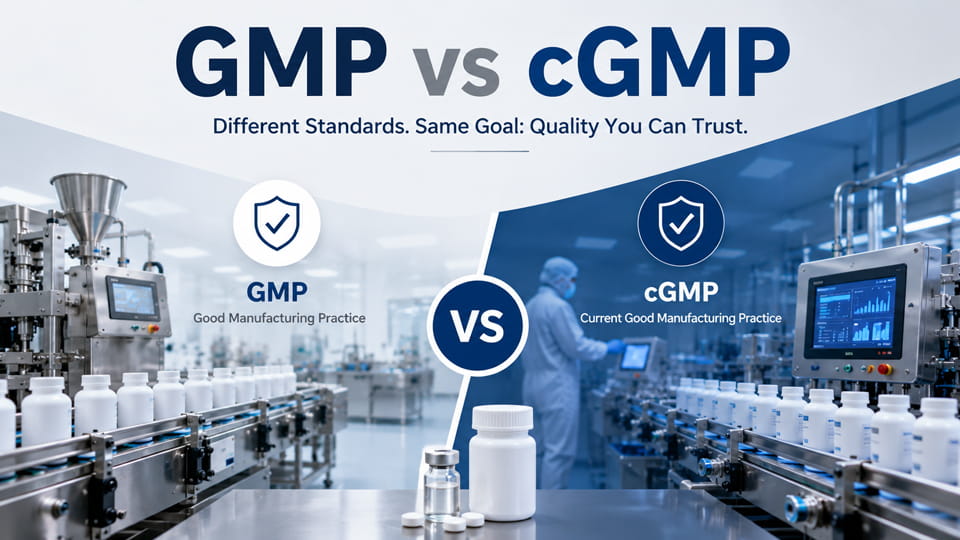
Buona pratica di produzione (GMP) è un quadro globale di garanzia della qualità per l’industria farmaceutica. L’OMS definisce le GMP come quell’aspetto della garanzia di qualità che garantisce che i prodotti siano costantemente fabbricati e controllati secondo standard di qualità adeguati. Allo stesso modo, l’Agenzia europea per i medicinali (Ema) descrive GMP come minimo standard che un produttore di farmaci deve soddisfare nella produzione. In pratica, Le GMP riguardano la progettazione della struttura, attrezzatura, materie prime, Formazione del personale, procedure scritte, e test. L’obiettivo è garantire che ogni lotto sia di alta qualità, idoneo all'uso a cui è destinato, e corrisponde alle sue specifiche.
Mentre l'OMS, L’EMA e altri regolatori lo chiamano “GMP,"Questo termine è essenzialmente intercambiabile con cGMP al di fuori degli Stati Uniti. Infatti, Le linee guida dell’OMS rilevano che in alcuni contesti le GMP vengono “notate anche come ‘cGMP’ o ‘GMP ‘attuale’”. Per molti produttori internazionali, soddisfare le linee guida GMP significa ottenere gli stessi risultati di qualità che la FDA enfatizza successivamente con cGMP.
Attuali buone pratiche di produzione (cgmp) è il termine utilizzato dalla FDA per queste normative negli Stati Uniti. La FDA definisce cGMP come i sistemi che assicurano una corretta progettazione, monitoraggio e controllo dei processi e degli impianti produttivi. Come GMP, Il cGMP mira a garantire che i prodotti farmaceutici abbiano l'identità, forza, qualità e purezza che affermano. Infatti, le normative della FDA coprono esplicitamente tutto, dalla pulizia e attrezzatura della struttura alle qualifiche del personale e alla tenuta dei registri (21 Parti CFR 210 E 211).
La distinzione fondamentale è che la “C” in cGMP sta per attuale. Ciò significa che le aziende devono utilizzare tecnologie aggiornate, attrezzature e procedure. Come nota la FDA, impianti e attrezzature “al top della gamma” 10 O 20 anni fa potrebbero ora non essere all’altezza del cGMP, perché gli standard qualitativi e la tecnologia avanzano nel tempo. Insomma, Il cGMP presenta tutti gli stessi requisiti di qualità del GMP ma aggiunge un'enfasi sul miglioramento continuo e sulla modernizzazione. La conformità alle cGMP viene garantita attraverso le ispezioni della FDA, e il mancato rispetto di questi standard rende legalmente un farmaco “adulterato”.,” anche se supera i test di laboratorio.
Mentre GMP e cGMP mirano allo stesso risultato (sicuro, farmaci di alta qualità), le differenze risiedono nell'enfasi e nell'utilizzo. La tabella seguente riassume le principali distinzioni:
| Aspetto | GMP (Buona pratica di produzione) | cgmp (GMP attuale, FDA) |
| Terminologia | “Buone pratiche di fabbricazione” – utilizzate dall’OMS, Ema, PIC/S, ecc. | “Current Good Manufacturing Practice” – il termine della FDA |
| Contesto normativo | Standard globale applicato da molti paesi (CHI, PIC/S, GMP dell’UE) | Normative specifiche degli Stati Uniti (21 CFR 210–211) |
| Messa a fuoco | Soddisfa costantemente gli standard di qualità stabiliti | Soddisfa gli standard E mantiene aggiornati la tecnologia/i processi |
| Requisito tecnologico | Generalmente statico (soddisfa gli standard di base) | Deve utilizzare le attrezzature e i metodi convalidati più recenti |
| Documentazione | Sono richieste SOP e registrazioni approfondite | Documentazione ancora più rigorosa (record elettronici, piste di controllo) |
| Validazione | È prevista la convalida del processo e della pulizia | Qualificazione delle apparecchiature (IR/WH/PQ) e la convalida del processo è obbligatoria |
| Sistema di qualità | Sistema di gestione della qualità standard | Sistema di gestione della qualità migliorato basato sul rischio; cicli di miglioramento continuo |
| Ispezioni & Aggiornamenti | Ispezioni periodiche per verificare la conformità GMP | Stesso, ma la FDA si aspetta aggiornamenti continui; ciò che era conforme potrebbe diventare obsoleto |
| Ambito normativo | IO/ME: conformità imposta dall’EMA & agenzie nazionali | NOI: conformità imposta dalla FDA; l’inosservanza porta ad azioni legali |
In sostanza, cgmp è GMP più l’aspettativa di stare al passo con le migliori pratiche moderne. Come spiega un’analisi del settore, cGMP “si concentra sul miglioramento continuo e significa che vengono utilizzati gli standard e le tecnologie più aggiornati per garantire la qualità, considerando che le GMP sono considerate un insieme di principi”. In termini pratici, cGMP soddisfa tutti i requisiti GMP, ma con particolare enfasi su ciò che le aziende devono fare attivamente aggiornare i processi e la documentazione.
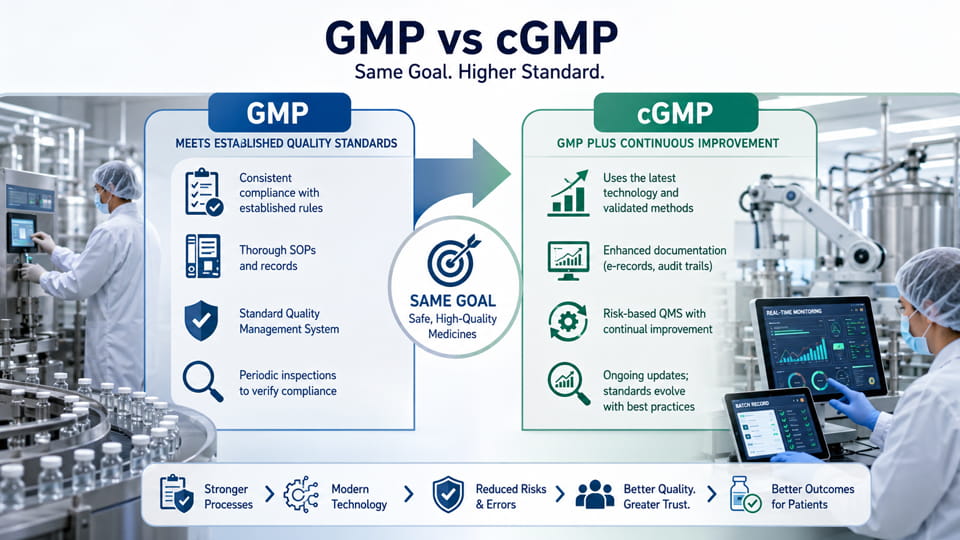
La “corrente” in cGMP non è solo una parola d’ordine: segnala che le strutture, le macchine e i sistemi di qualità non dovrebbero mai diventare obsoleti. Per esempio, se un metodo di produzione o un pezzo di attrezzatura più vecchio risulta essere inferiore, Gli standard cGMP implicano che l’azienda dovrebbe implementare soluzioni più nuove. Questo approccio guida l’innovazione: le aziende che adottano cGMP investono in registrazioni elettroniche dei lotti, sistemi di ispezione automatizzati, monitoraggio dei dati in tempo reale e altri progressi che aumentano la qualità e riducono gli errori.
La lettera “c” in cGMP sottolinea un punto semplice ma critico: conformità significa utilizzare attuale conoscenza e tecnologia. Ciò è importante perché la scienza e le attrezzature farmaceutiche si evolvono rapidamente. Qual era un metodo di pulizia valido 20 anni fa potrebbero non soddisfare più gli standard di contaminazione odierni, e nuovi strumenti (come i sistemi di gestione della qualità digitale) offrono una migliore tracciabilità rispetto ai registri cartacei.
I regolatori si aspettano abitualmente che i produttori lo facciano migliorare attivamente. Ad esempio, Le linee guida della FDA rilevano che le attrezzature dovrebbero essere costruite e posizionate in modo da facilitare la pulizia e prevenire la contaminazione, il che implica che i progetti devono adattarsi man mano che impariamo di più sul controllo della contaminazione. Se saranno disponibili una sterilizzazione o materiali migliori, cGMP richiede di incorporarli. Punti salienti di Jinlupacking: “La “corrente” nel cGMP sottolinea che i produttori devono utilizzare tecnologie e sistemi aggiornati," Quale promuove il miglioramento continuo nei processi produttivi.
In pratica, ciò significa che le strutture devono disporre di un sistema di qualità che riveda e riveda i processi quando le normative o gli standard di settore vengono aggiornati. La parte 21CFR della FDA 11 (per i sistemi computerizzati) è un esempio: è stato aggiunto per affrontare record e firme elettroniche. Sotto cGMP, le aziende farmaceutiche dovevano incorporare accessi univoci, tracce di controllo e caratteristiche di sicurezza nelle loro apparecchiature e software computerizzati. Se un'azienda avesse continuato a utilizzare solo registri cartacei, non soddisferebbe gli standard attuali.
Un'altra area chiave è l'integrità dei dati. Le autorità di regolamentazione ora esaminano attentamente i registri elettronici dei lotti, richiedendo che tutte le modifiche siano riconducibili agli utenti autorizzati. Una guida alla conformità citata lo rileva 21 CFR parte 11 “implica accessi utente univoci, audit trail e firme elettroniche per garantire l’integrità dei dati”. Questa non era una parte originale del GMP decenni fa. Perciò, cGMP oggi significa aggiornare attrezzature e controlli in modo che ogni azione in una linea di produzione (modifiche alle impostazioni della macchina, avvisi di qualità) viene registrato e protetto.
In sintesi, “attuale” nel cGMP significa non riposare mai sui vecchi allori. Spinge le aziende a convalidare regolarmente le nuove apparecchiature, riqualificare il personale su metodi migliori, e abbracciare le più recenti pratiche di qualità. Ciò si traduce in un miglioramento costante della sicurezza e della conformità del prodotto. Qualityze osserva che uno dei motivi principali per cui il cGMP è importante è proprio questo “promuove il miglioramento continuo” – assicurarsi che le aziende utilizzino sempre la tecnologia più recente per garantire la qualità.

Che si chiami GMP o cGMP, alcuni requisiti fondamentali sono universali nella produzione e nel confezionamento farmaceutici. Questi elementi comuni sono essenziali per la conformità alla FDA, Regole OMS o EMA:
Gli enti regolatori come l’OMS affermano che le GMP definiscono “misure e attività di qualità sia per la produzione che per il controllo dei farmaci,” e garantisce tutto, dai “processi [essendo] chiaramente definito, validato e rivisto” affinché il personale e i locali siano “idonei alla produzione”. In pratica, questo copre tutto quanto elencato sopra.
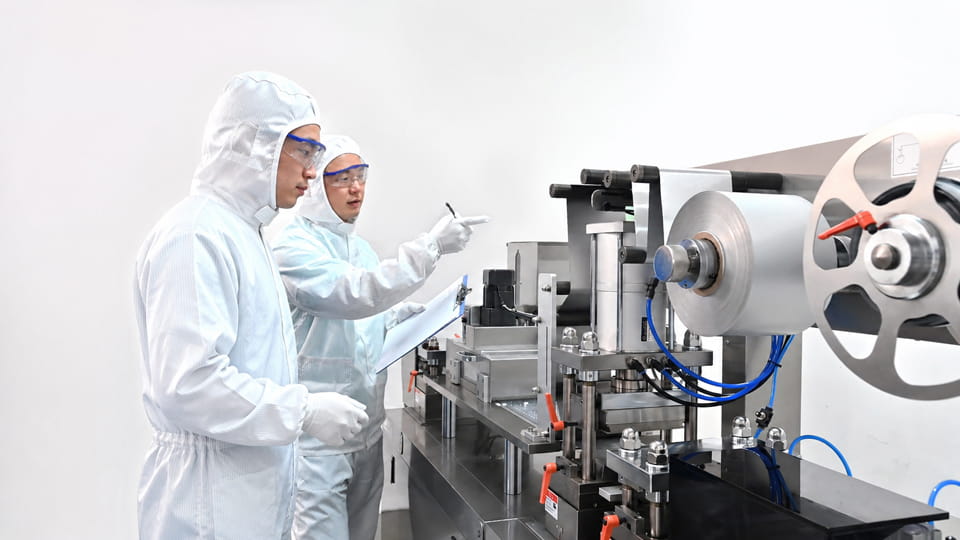
Nelle aree di confezionamento, gli standard spesso si traducono in regole di progettazione specifiche (COME Note della guida alla conformità di Jinlu). Ad esempio, le macchine di una linea GMP devono esserlo facilmente pulibile (acciaio inossidabile liscio, senza crepe o gambe morte) e pienamente convalidato. Documentazione come la qualificazione dell'installazione (QI), Qualificazione operativa (OQ), e qualificazione delle prestazioni (PQ) è richiesto prima e durante la produzione. Senza questi controlli, un audit segnalerebbe la non conformità.
Lo standard che devi soddisfare dipende dal tuo mercato:
Per esempio, La FDA raccomanda esplicitamente che le strutture che vendono a livello globale rispettino le attuali GMP. Allo stesso modo, Lo afferma l’EMA “Qualsiasi produttore di medicinali destinati al mercato dell’UE deve rispettare le GMP dell’UE, indipendentemente da dove si trovino”.. In pratica, le principali aziende farmaceutiche costruiscono strutture per soddisfare le norme cGMP della FDA come riferimento e poi si adeguano alle variazioni locali (come l'etichettatura o il linguaggio della documentazione).
Alla fine, la scelta non è né/o: ci si aspetta che i prodotti farmaceutici moderni rispettino sia la lettera che lo spirito delle GMP. Che tu lo chiami GMP o cGMP, le pratiche sul campo: camere bianche, apparecchiature validate, controllo di qualità rigoroso, e registrazioni approfondite – fanno tutti parte della stessa cultura della qualità.
Quando selezionando macchinari per il confezionamento farmaceutico, gli acquirenti dovrebbero cercare funzionalità che supportino specificamente i principi GMP/cGMP:
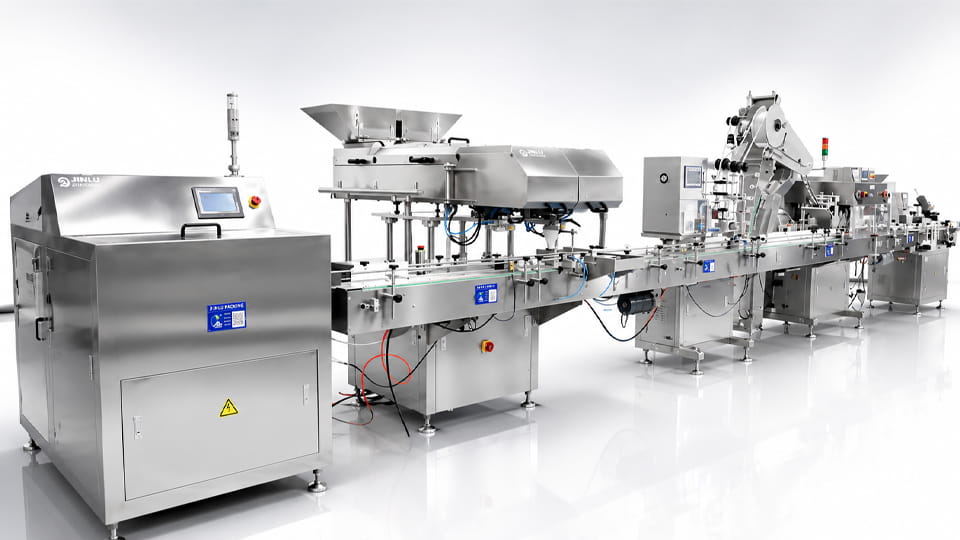
Figura: Una moderna linea di confezionamento di flaconi farmaceutici integra il riordino, riempimento, tappatura, sigillatura ed etichettatura con ispezione integrata. Queste macchine utilizzano una struttura in acciaio inossidabile sanitario e sensori per il controllo qualità.
Garantendo queste funzionalità, i responsabili degli approvvigionamenti possono avere la certezza che la loro linea di confezionamento supporterà una produzione conforme. Note originali Jinlu, le nostre macchine sono realizzate con i migliori materiali e una costruzione sofisticata secondo gli standard CE e GMP, e la nostra confezionatrice per sacchetti soddisfa i requisiti di produzione di cGMP.
Il rispetto delle GMP e soprattutto del cGMP comporta vantaggi significativi:
In sintesi, La conformità alle GMP/cGMP non è solo un onere normativo: protegge i pazienti, costruisce fiducia, e garantisce un business affidabile. Offre inoltre alle aziende un vantaggio migliorando l’efficienza e consentendo la distribuzione globale.

GMP e cGMP sono i pilastri della qualità farmaceutica, garantendo che ogni prodotto sia fabbricato in modo sicuro e coerente. In sintesi, GMP fornisce il quadro essenziale dell’igiene, documentazione e validazione, Mentre cgmp aggiunge il requisito del miglioramento continuo e della tecnologia moderna. Per attrezzature per l'imballaggio, questo significa investire nell’automazione, macchine validate realizzate con materiali sanitari.
E la raccolta di Jeinlu, costruiamo i nostri macchinari tenendo presente questi standard. Scegliendo le apparecchiature conformi cGMP di Jinlu, come le nostre Macchine di riempimento di capsule automatiche, Presse per compresse, Confezionatrici in blister, Macchine Astucciatrici E Macchine per contare – puoi costruire un file completamente validato, linea di produzione pronta per l'audit. Ogni macchina viene fornita con la documentazione e la progettazione igienica necessarie per le ispezioni GMP e FDA.
Pronti a garantire che la vostra produzione soddisfi (C)Norme GMP? Contatta gli esperti di Jinlu oggi per discutere i requisiti della linea di confezionamento o richiedere un preventivo. Il nostro team ti aiuterà a personalizzare il pacchetto di attrezzature giusto per mantenere i tuoi prodotti conformi, sicuro e di alta qualità.
GMP si riferisce ai requisiti di base delle “Buone pratiche di fabbricazione” per la produzione di farmaci. cGMP sta per “attuale GMP”.," intendendo tali requisiti più l'aspettativa di miglioramento continuo. Nel cGMP, i produttori devono utilizzare apparecchiature aggiornate, metodi e sistemi di qualità. In altre parole, cGMP aggiunge che i processi vengono regolarmente rivisti e modernizzati.
La “c” sta per “corrente”.,” sottolineando che un'azienda deve sempre soddisfare le normative e gli standard più recenti. Garantisce che i produttori non facciano affidamento su pratiche obsolete. Come spiega Scilife, cGMP significa utilizzare sistemi e tecnologie moderni per soddisfare le aspettative normative odierne, piuttosto che metodi più vecchi che potrebbero non essere più adeguati.
SÌ. Gli Stati Uniti. regolamenti FDA (21 Parti CFR 210 E 211) sono scritti come cGMP. Per legge, qualsiasi prodotto farmaceutico per gli Stati Uniti. mercato deve essere prodotto secondo le attuali buone pratiche di fabbricazione. La non conformità può portare a lettere di avvertimento o arresti.
Se vengono utilizzate solo pratiche GMP obsolete, l’azienda rischia di fallire le ispezioni. Le autorità di regolamentazione si aspettano prove della tecnologia e delle convalide attuali. Sotto cGMP, il semplice rispetto delle linee guida più vecchie non è sufficiente. Per esempio, si potrebbe citare l'uso di registri cartacei invece di registrazioni elettroniche convalidate. In pratica, Conformità cGMP significa anche se un processo ha una storia GMP, deve essere rivisto tenendo presente gli standard odierni.
La maggior parte dei mercati farmaceutici di tutto il mondo hanno incorporato requisiti simili alle GMP. Sopra 100 i paesi hanno adottato gli standard GMP dell’OMS nella legislazione nazionale. La terminologia varia (alcuni dicono GMP, alcune cGMP, alcuni semplicemente “GMP”), ma praticamente tutti i principali regolatori (FDA, Ema, CHI) richiedono un sistema di qualità equivalente al cGMP.
La stessa OMS solitamente si riferisce semplicemente a “GMP”.,” ma lo definisce in modo ampio. Nei documenti dell'OMS, “GMP (indicato anche come cGMP o “GMP attuale”)" descrive la garanzia della qualità per garantire che i prodotti siano costantemente realizzati secondo standard di qualità. COSÌ, L’OMS usa i termini in modo intercambiabile. Il concetto di essere “attuale” è integrato in tutte le moderne linee guida GMP, anche se l’OMS non usa sempre la “c”.
Assolutamente. La progettazione delle apparecchiature è fondamentale per soddisfare le GMP. Ad esempio, le macchine devono essere facili da pulire (inossidabile, senza fessure nascoste) e dovrebbe supportare l'automazione e l'acquisizione dei dati. Un'attrezzatura mal progettata può portare a contaminazione o confusione. Al contrario, l'attrezzatura giusta (come le macchine di Jinlu) è costruito con funzionalità GMP per garantire la conformità.
La convalida delle apparecchiature documenta che le macchine funzionano come previsto. QI (Qualificazione dell'installazione) verifica che la macchina sia impostata correttamente in base al progetto. OQ (Qualificazione operativa) verifica che ciascuna funzione funzioni in condizioni variabili. PQ (Qualificazione delle prestazioni) dimostra che l'apparecchiatura raggiunge costantemente i risultati richiesti durante la produzione effettiva. Questi sono i requisiti GMP standard per dimostrare che l'attrezzatura è idonea all'uso.
I macchinari conformi automatizzano i controlli di qualità e registrano i dati. Per esempio, i riempitori automatizzati di capsule pesano con precisione le dosi e scartano le capsule difettose, eliminando l’errore umano e la contaminazione. I sistemi di dati integrati registrano automaticamente le informazioni sui lotti con audit trail, soddisfare le regole di integrità dei dati. Selezionando attrezzature con queste caratteristiche, un’azienda rende la conformità cGMP molto più realizzabile.
Le macchine Jinlu sono progettate per la produzione farmaceutica tenendo pienamente conto delle esigenze GMP. Forniscono modelli IQ/OQ/PQ completi e supporto, costruzione inossidabile di alta qualità, e automazione avanzata (come i sistemi di visione integrati e la progettazione sanitaria) per garantire che la tua linea rimanga conforme. Il loro servizio include test FAT/SAT in loco e supporto della documentazione per semplificare il processo di qualificazione.
Riferimenti:
1.Q&A sui requisiti CGMP -- NOI. Amministrazione degli alimenti e dei farmaci
2.Linee guida per la qualità: produzione —— Agenzia europea per i medicinali
3.Attuali buone pratiche di produzione (CGMP) Regolamenti -- NOI. Amministrazione degli alimenti e dei farmaci
4.Buone pratiche di produzione -- CHI
5.TRS 986 – Allegato 2: Buone pratiche di fabbricazione dei prodotti farmaceutici dell’OMS: Principi fondamentali -- CHI
6.EudraLex – Volume 4 – Buona pratica di produzione (GMP) linee guida —— Commissione europea
7.Linee guida GMP —— ispe.org