

- Macchine
- Competenza
- Risorse
- Certificati
- Di
- Contatto
- Macchine
- Competenza
- Risorse
- Certificati
- Di
- Contatto
Acquistando un macchina confezionatrice per medicinali è una decisione importante per qualsiasi azienda farmaceutica, quindi porre le domande giuste in anticipo può far risparmiare tempo, soldi, e mal di testa più tardi. Moderno linee di confezionamento farmaceutico sono complessi (spesso integrandosi filler di capsule, macchine blister, sistemi di conteggio, astucciatori, e altro), e devono soddisfare rigorosi standard GMP e normativi. Infatti, gli studi mostrano quasi la metà di tutti richiami di farmaci comportano errori di imballaggio o di etichettatura. In questa guida, abbiamo raccolto le domande e le considerazioni più importanti per gli acquirenti del settore farmaceutico. Imparerai come valutare la conformità (GMP/FDA/OMS), formati (compresse, liquidi, vesciche, ecc.), velocità e livello di automazione, esigenze di pulizia e validazione, serializzazione/tracciabilità, TCO (costo totale di proprietà), e supporto ai fornitori. Includiamo anche un pratico Lista di controllo dell'acquirente ed evidenziare gli errori comuni negli appalti. Che tu gestisca un piccolo confezionatore a contratto o un grande impianto di produzione, questo ti aiuterà a confrontare sistematicamente le macchine ed evitare costose insidie.
Perché è importante: Nel settore farmaceutico, la conformità non è negoziabile. L'attrezzatura deve soddisfare la FDA, Unione Europea, e gli standard cGMP dell'OMS prima ancora di utilizzare il prodotto. Le parti di contatto della macchina devono essere di qualità farmaceutica (in genere acciaio inossidabile 316L o 304) con liscio, superfici saldate – nessuna ruggine, pozzi, o spazi vuoti in cui può nascondersi la polvere. Il design dovrebbe essere igienico (per esempio. moduli a sbalzo, superfici inclinate) quindi è facile da pulire e ispezionare. Chiedi a fornitore di attrezzature per l'imballaggio farmaceutico per la documentazione: dovresti ricevere i protocolli per QI (Qualificazione dell'installazione), OQ (Qualificazione operativa), E PQ (Qualificazione delle prestazioni). Questi confermano che la macchina è installata correttamente, funziona con tutte le impostazioni previste, e funziona in modo coerente con carichi di produzione reali. Senza record IQ/OQ/PQ, l'attrezzatura non è "qualificata" per Utilizzo delle GMP. Confermare inoltre il sistema di qualità e le certificazioni del fornitore: seguono l'ISO 9001? Possono fornire certificati sui materiali (per esempio. Guarnizioni in silicone conformi alla FDA) e marchi CE/UL se necessari? Finalmente, garantire che il progetto supporti l'integrità dei dati (per esempio. 21 CFR parte 11 per i registri elettronici) e sterilizzazione se necessaria.
Immagine: Una moderna linea di produzione di imballaggi per medicinali, illustrando la necessità di macchine integrate e di progettazione conforme alle GMP.
Non tutte le macchine gestiscono tutti i prodotti. Dovresti essere molto chiaro riguardo ai tipi di prodotto. Per esempio, compresse e capsule spesso utilizzano linee di conteggio/riempimento bottiglie o confezionatrici blister, mentre farmaci liquidi necessitano di macchine dedicate per il riempimento e la sigillatura di liquidi. Polveri/granuli possono essere confezionati in bustine o stick pack. Di seguito è riportata una semplice guida: le tue esigenze possono combinare più macchine in un'unica linea:
| Forma di dosaggio & Formato | Tipo di macchina tipica |
| Compresse solide (sciolto, in bottiglie) | Conteggio automatico & Linea di riempimento bottiglie |
| Compresse solide (striscia o vesciche) | Confezionatrice per blister (PVC/Alluminio-PVC) |
| Capsule (gel duro) | Macchina per il riempimento di capsule + (linea di blister o flaconi) |
| Liquidi/sciroppi (fiale o flaconi) | Macchina per il riempimento e la tappatura di liquidi |
| Polveri/Granuli (stick o bustina) | Macchina per bustine o stick-pack |
| Gel morbidi/gommose | Macchina per contare + Blister o imbottigliamento |
| Cartoni (secondario) | Macchina Astucciatrice per la boxe finale |
Le macchine per il confezionamento dei medicinali sono spesso vendute come linee integrate. Per esempio, una linea di capsule potrebbe alimentare il prodotto da a riempitivo in a macchina per contare, poi attraverso a confezionatrice in blister O cartoniere.
Chiedi al tuo fornitore di macchine per l'imballaggio dei medicinali: “La linea può gestire i miei prodotti?" Per ogni formato, verificare la compatibilità dei materiali – ad es. una macchina blister dovrebbe gestire la pellicola e le pellicole (PVC, ANIMALE DOMESTICO, ALU-ALU) alle giuste temperature. Le linee delle bottiglie devono adattarsi alle diverse altezze delle bottiglie e ai tipi di tappi. Se pianifichi più prodotti (per esempio. capsule e compresse), avrai bisogno di parti di ricambio o anche di macchine diverse. Alcune macchine lo sono multiformato, ma confermare sempre quale passaggio è necessario (vedere la sezione successiva).
La velocità nominale di una macchina deve corrispondere ai tuoi obiettivi di produzione. Scopri quante unità al minuto/ora la macchina può confezionare in modo affidabile. Assicurati di considerare netto produzione (dopo aver rifiutato) e non solo il massimo. Pensa alle esigenze attuali E crescita futura. Per esempio, potrebbe essere classificata una linea di blister per compresse di medie dimensioni 40,000 vesciche all'ora; una grande linea completamente automatica potrebbe superare 100,000 all'ora. Tuttavia, una macchina ad altissima velocità che si blocca spesso può essere peggiore di una leggermente più lenta, quello stabile.
Stimate il vostro volume giornaliero o annuale e scegliete una macchina in grado di gestire i picchi. Tieni presente le tendenze del settore: molte aziende farmaceutiche ora gestiscono lotti più piccoli con frequenti cambi, quindi la velocità estremamente elevata di un singolo SKU è meno critica della flessibilità. Se esegui più turni, investire in una maggiore produttività può essere ripagato più rapidamente grazie al risparmio di manodopera. Ma se i lotti sono piccoli o personalizzati, una macchina che consente rapidi cambi di ricetta e cambi formato senza attrezzi (vedere la sezione 4) sarà più prezioso della velocità pura.
Decidi la quantità di automazione di cui hai veramente bisogno. Macchine semiautomatiche richiedere agli operatori di caricare i contenitori, avviare i cicli, o eseguire attività manuali (per esempio. far cadere le compresse nei blister). Linee di confezionamento farmaceutico completamente automatiche fai di tutto, dall'alimentazione alla sigillatura, con un intervento umano minimo. Le macchine semiautomatiche costano meno in anticipo e possono andare bene per lavori a basso volume o in batch. Le linee completamente automatiche costano di più ma fanno risparmiare manodopera e riducono gli errori umani.
| Caratteristica | Semiautomatico | Completamente automatico |
| Coinvolgimento degli operatori | Sì, carico/scarico, ecc. | Minimo: una persona supervisiona l'intera linea |
| Velocità di produzione | Moderare | Alto |
| Cambio | Più lentamente (regolazioni manuali) | Più veloce (spesso senza attrezzi, basato su ricette) |
| Investimento iniziale | Inferiore | Più alto |
| Complessità di convalida | Simile (IQ/OQ/PQ sono ancora necessari) | Simile |
| Ideale per | Piccole corse, piloti di laboratorio | Grandi corse, 24/7 produzione |
I sistemi farmaceutici completamente automatizzati spesso includono tramogge di alimentazione, etichettatrici automatiche, berretti, e trasportatori tutti sincronizzati. Integrano anche il controllo degli errori (bilance, sistemi di visione) in tempo reale. Le apparecchiature semiautomatiche potrebbero essere adatte per un produttore a contratto alle prime armi, ma i piani di crescita spesso portano gli acquirenti a scegliere la completa automazione.
Le linee farmaceutiche cambiano i prodotti più spesso di quanto si possa pensare, e ogni cambiamento richiede una pulizia approfondita (e spesso riconvalida). Una buona progettazione della macchina consentirà di raggiungere questo obiettivo velocemente. Cercare senza attrezzi parti rimovibili, componenti leggeri (una persona può gestirli), e frame aperti che consentono al QA Vedere se rimangono dei residui. Non dovrebbero esserci cavità nascoste in cui possano accumularsi pillole o polvere. Il fornitore dovrebbe fornire procedure operative chiare per la pulizia, smontaggio e rimontaggio. Convalidare le procedure di passaggio: può prodotto ricette essere memorizzato in modo da richiamare tutte le impostazioni per un determinato SKU?
In pratica, una macchina che può essere pulita e convalidata rapidamente migliora direttamente la produttività. Se hai farmaci che richiedono il passaggio da uno all'altro, Dire, una sostanza controllata e un prodotto vitaminico, eseguirai la pulizia e spesso un test di convalida pulito (test del prodotto nel caso peggiore) ogni volta. Chiedi informazioni pulire sul posto (CIP) opzioni o altre caratteristiche igieniche.
Normative moderne (NOI. DSCSA, FMD dell’UE, ecc.) richiedere serializzare ogni unità vendibile di medicina. Prima di acquistare, confermare che la linea può integrare stampanti di codifica (getto d'inchiostro/laser) e scanner visivi per applicare e verificare codici a barre 2D o codici QR sui pacchi. Il sistema di controllo dovrebbe acquisire ciascun numero di serie e collegarlo ai dati del lotto. In pratica, chiedono spesso gli acquirenti: “Questa macchina può rifiutare qualsiasi articolo senza etichetta o codificato in modo non valido?" E “C'è spazio riservato e cablaggio per aggiungere un codificatore o una telecamera in un secondo momento?". Anche se oggi non esporti, costruire una linea pronta per la serializzazione è più intelligente che aggiornarla successivamente.
Oltre la serializzazione, considerare l’integrazione digitale. La macchina supporta la comunicazione industriale standard (Ethernet/IP, OPCUA, ModBus, ecc.) quindi può alimentare il tuo MES/ERP? Può generare audit trail e record batch elettronici per il QA? Le moderne fabbriche intelligenti richiedono dati in tempo reale: tempo di attività, respingere i conteggi, allarmi, ecc. Una linea farmaceutica “intelligente” aiuta a individuare tempestivamente i problemi e supporta i requisiti di integrità dei dati (nessun registro manuale). Chiedere se l'HMI/PLC può essere collegato in rete, se sono presenti registri eventi, e se il servizio remoto (tramite VPN o IoT) viene offerto. La predisposizione digitale rende la vostra linea a prova di futuro e migliora la tracciabilità.
Il prezzo dell'adesivo è solo l'inizio. Gli acquirenti intelligenti calcolano TCO durante la vita della macchina. Il TCO include il prezzo base più spedizione, installazione, IR/WH/PQ, formazione, pezzi di ricambio, utilizzo dell'energia, manutenzione, e costi di inattività. Per esempio, uno studio ha rilevato che una linea di confezionamento di medicinali di fabbricazione cinese, costosa ma affidabile, ha consentito di risparmiare molto di più in tre anni rispetto a una linea più economica, quello meno supportato. Prepara un tavolo (come di seguito) per confrontare i fornitori:
| Fattore di costo | Descrizione | Commenti |
| Prezzo d'acquisto | Macchina, accessori, consegna | Una volta (ma può variare ampiamente) |
| Installazione & Messa in servizio | Preparazione del sito, calibrazione, IR/WH/PQ | I passaggi mancati qui possono aumentare i costi futuri |
| Formazione | Operatore & formazione sulla manutenzione | Una buona formazione riduce gli errori dell'operatore |
| Pezzi di ricambio & Componenti | Parti soggette ad usura (cinture, sensori, ecc.) | Richiedi l'elenco; l'elevata disponibilità consente di risparmiare tempi di inattività |
| Energia/Utilità | Elettricità, aria, vuoto, ecc. | Macchine efficienti possono ridurre l’OPEX |
| Manutenzione & Tempi di inattività | Manutenzione programmata & correzioni non programmate | Il servizio rapido e il design a basso rischio di guasto riducono al minimo questo problema |
| Supporto/Servizio | Risoluzione dei problemi remota, visite sul posto | Un valido SLA di servizio vale il suo peso |
| Materiali di consumo & Utensili | Sigilli, lubrificanti, ugelli di ricambio, ecc. | Spesso trascurato ma può sommarsi |
Se due fornitori quotano macchine simili, scavare in ciò che ogni elenco include. Una macchina più costosa potrebbe durare più a lungo, avere pezzi di ricambio più economici, oppure utilizzare meno aria compressa, riducendone i costi effettivi. Assicurati di chiedere a ciascun fornitore la durata della garanzia e cosa è coperto (parti, lavoro, viaggiare per i tecnici).
Anche la macchina migliore ha bisogno di manutenzione. Controlla il track record del fornitore della macchina per l'imballaggio dei medicinali e la configurazione del servizio. Una macchina affidabile ha caratteristiche come i codici di errore chiari sull'HMI, un armadio elettrico ben etichettato, e un semplice piano di manutenzione preventiva. Richiedi MTBF (tempo medio tra i guasti) dati o casi di studio. Scopri anche come vengono gestiti i pezzi di ricambio: sono parti standard o personalizzate? Quanto velocemente puoi ottenere i componenti critici: il giorno o le settimane successivi? Soprattutto per gli acquirenti globali, il supporto locale è fondamentale. Lo studio di JinLu Packing ha dimostrato che la consegna rapida dei ricambi e l’assistenza possono prevenire perdite a sei cifre dovute ai tempi di inattività.
[jl_youtube src=”https://www.youtube.com/embed/1Bb_J6rluac”]
Video: Una linea automatizzata di riempimento e imbottigliamento. Valutare le caratteristiche di affidabilità (sensori di errore, armadietti trasparenti) e facilità di manutenzione nella scelta dell'attrezzatura.
Non tutti i costruttori di macchine per il confezionamento di medicinali comprendono le sfumature farmaceutiche. Idealmente, scegliere un fornitore con una comprovata esperienza in farmaceutico/GMP. Chiedi informazioni sulla loro lista di clienti e sui progetti recenti. Hanno rifornito la tua regione o i mercati regolamentati (FDA statunitense, Io EMA)? Fanno FAT (Test di accettazione in fabbrica) e rapporti FAT? Possono gestire un processo di qualificazione, se necessario? I fornitori affidabili disporranno di un sistema di gestione della qualità ingegneristico e potrebbero offrire personalizzazioni (per esempio. ispezioni visive specifiche per l'etichettatura OTC vs RX).
Dovresti considerare anche la logistica: dov'è la loro fabbrica?? Se è all'estero, ci sono partner di canale o installatori nel tuo Paese? Chi si occupa della dogana e della spedizione? Ricordare, la macchina più economica non vale molto se si trova su una nave a causa di documenti mancanti o non è supportata localmente.
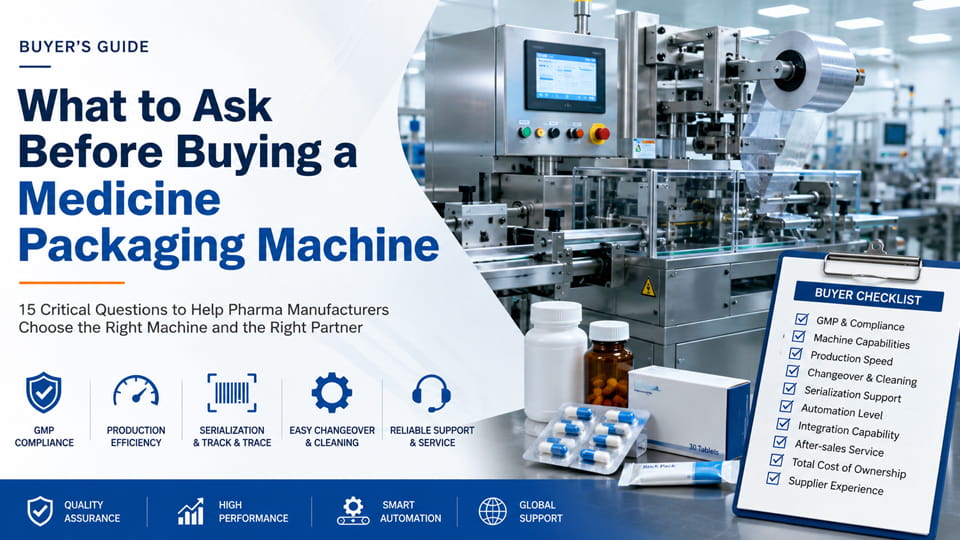
Per concludere, ecco una lista di controllo che puoi utilizzare nelle riunioni o nelle richieste di offerta:
Queste domande, mentre numerosi, ti garantirà di coprire i punti più critici e di confrontare i fornitori su base paritaria.
Investire nella giusta macchina confezionatrice per medicinali significa bilanciare le prestazioni, conformità, e costare per molti anni. Facendo queste domande, chiarirai le tue esigenze ed eviterai sorprese. Ricordare, la scelta migliore non è sempre la macchina più economica, ma quello quello si adatta al tuo processo E ti mantiene conforme con tempi di inattività minimi.
Se hai bisogno di una guida, consultare esperti di automazione degli imballaggi, ad esempio, Imballaggio Jinlu offre progettazione e supporto end-to-end per linee farmaceutiche, dal layout della linea GMP alla documentazione di validazione. Contattaci per discutere del tuo progetto: possiamo fornire una proposta personalizzata o organizzare una demo dal vivo. Assicuriamoci che il tuo investimento garantisca sia il successo normativo che l'efficienza operativa.
Prima di acquistare una macchina confezionatrice per medicinali, dovresti chiedere informazioni sulla conformità GMP, velocità di produzione, tipi di imballaggio, supporto per la validazione, materiali della macchina, tempo di cambio, Disponibilità dei pezzi di ricambio, e servizio post-vendita. È anche importante verificare se la macchina è in grado di supportare futuri requisiti di espansione della produzione e serializzazione.
La macchina giusta dipende dal tipo di prodotto, volume di produzione, formato di imballaggio, e requisiti di conformità. Per esempio, le macchine confezionatrici in blister sono comunemente utilizzate per compresse e capsule, mentre per polveri e granuli sono preferibili le macchine bustinatrici o stick pack. Gli acquirenti dovrebbero considerare anche il livello di automazione, costi di manutenzione, e capacità di integrazione della linea.
Un produttore affidabile di macchine per l'imballaggio farmaceutico dovrebbe fornire documenti e certificazioni come:
• Certificazione CE
• Documentazione di progettazione conforme alle GMP
• Protocolli IQ/OQ/PQ
• Documenti FAT/SAT
• Certificati dei materiali
• 21 CFR parte 11 supporto (se applicabile)
Questi documenti aiutano le fabbriche farmaceutiche a superare gli audit e a soddisfare i requisiti normativi.
La conformità GMP aiuta a garantire la sicurezza del prodotto, qualità costante, e l'approvazione normativa. Una macchina conforme alle GMP è progettata per ridurre i rischi di contaminazione, migliorare la pulibilità, e supportare la documentazione e la tracciabilità adeguate. Ciò è particolarmente importante per i produttori farmaceutici che esportano verso mercati regolamentati.
Le moderne apparecchiature per l'imballaggio farmaceutico possono supportare molti formati di imballaggio, tra cui:
• Confezioni blister
• Bottiglie
• Bustine
• Confezioni stick
• Buste
• Cartoni
L'opzione migliore dipende dalla forma di dosaggio, requisiti del mercato, e obiettivi di produzione.
La serializzazione sta diventando essenziale in molti paesi a causa delle normative sulla tracciabilità farmaceutica come DSCSA e EU FMD. Una macchina con funzionalità di serializzazione può stampare e verificare codici univoci, aiutare i produttori a prevenire i prodotti contraffatti e a migliorare il monitoraggio della catena di fornitura.
Le macchine semiautomatiche sono solitamente più economiche e adatte a piccoli volumi di produzione o start-up. Le macchine per il confezionamento farmaceutico completamente automatiche sono migliori per la produzione su larga scala perché migliorano l’efficienza, ridurre i costi del lavoro, e ridurre al minimo l’errore umano.
Il prezzo dipende da diversi fattori, compreso il tipo di macchina, livello di automazione, velocità di produzione, e requisiti di personalizzazione. Una macchina semiautomatica di base può costare molto meno di una linea di confezionamento farmaceutico completamente automatizzata con supporto di serializzazione e convalida. Gli acquirenti dovrebbero concentrarsi sul costo totale di proprietà anziché solo sul prezzo di acquisto iniziale.
SÌ. Molte moderne macchine per il confezionamento farmaceutico possono connettersi con macchine contatrici, sistemi di etichettatura, macchine astucciatrici, trasportatori, e sistemi ERP/MES. L’integrazione aiuta a migliorare l’automazione e l’efficienza complessiva della produzione.
Un fornitore professionale dovrebbe offrire:
• Supporto all'installazione
• Formazione degli operatori
• Risoluzione dei problemi in linea
• Fornitura di pezzi di ricambio
• Guida alla manutenzione preventiva
• Assistenza tecnica remota
Un buon servizio post-vendita può ridurre significativamente i tempi di inattività e migliorare la stabilità della produzione a lungo termine.
Riferimenti:
1.Attuali buone pratiche di produzione (CGMP) Regolamenti -- NOI. Amministrazione degli alimenti e dei farmaci
2.Buone pratiche di fabbricazione dei prodotti biologici dell’OMS, Allegato 2, TRS n 999 -- CHI
3.Buone pratiche di produzione —— Agenzia europea per i medicinali
4.Dieci domande frequenti sulla serializzazione —— Società Internazionale di Ingegneria Farmaceutica