

- Macchine
- Competenza
- Risorse
- Certificati
- Di
- Contatto
- Macchine
- Competenza
- Risorse
- Certificati
- Di
- Contatto
UN linea di confezionamento bottiglie è un sistema automatizzato end-to-end che trasforma le bottiglie vuote in etichette, prodotti confezionati. Per produttori farmaceutici e nutraceutici, queste linee aumentano la produttività, tagliare i costi del lavoro, e garantire Conforme alle GMP produzione. Questa guida spiega cos'è una linea di confezionamento bottiglie, come funziona, e le principali macchine coinvolte. Copriamo diversi tipi di linea (tavoletta, liquido, nutraceutico, ecc.), elencare i principali vantaggi dell’automazione, e dare consigli pratici per scegliere la linea giusta. Sia che tu voglia un soluzione di confezionamento bottiglie chiavi in mano o stanno confrontando manuale vs. automatico, questo articolo ti copre.
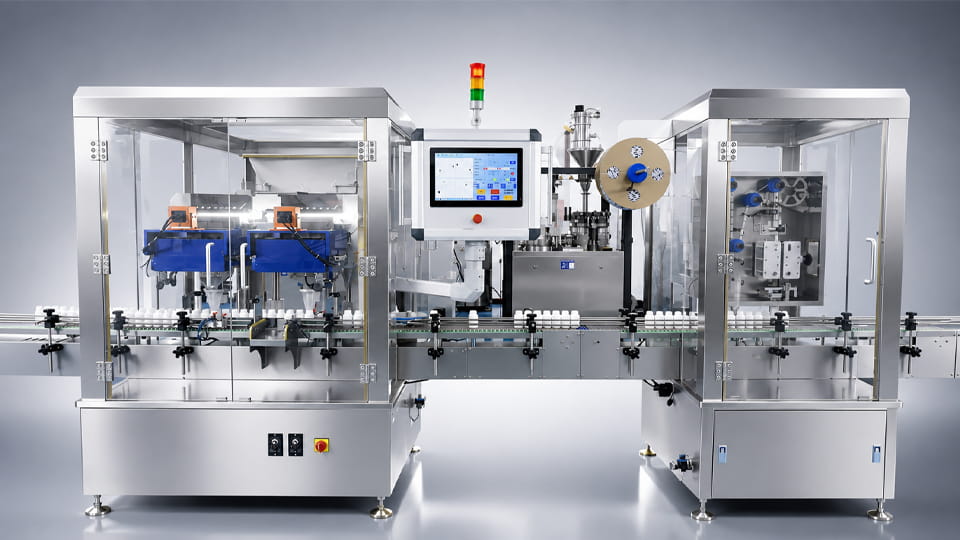
Figura:Una tipica linea di confezionamento di flaconi farmaceutici.
Una linea di confezionamento di bottiglie è una serie di macchine e trasportatori che trasformano automaticamente le bottiglie vuote in finite, prodotti confezionati. Nei prodotti farmaceutici, ciò significa prendere compresse vuote o flaconi di liquidi ed eseguire passaggi come il conteggio/riempimento, tappatura, sigillatura a induzione (sigillatura in lamina), etichettatura, e l'imballaggio finale in cartone. In pratica, una linea “automatizza completamente l’intero processo, Dalle bottiglie decodificate al conteggio, Inserimento di essiccanti, tappatura, sigillatura in alluminio, ed etichettatura”.
In altre parole, invece di raccogliere manualmente le bottiglie e riempirle una per una, un automatizzato linea di confezionamento bottiglie alimenta le bottiglie attraverso ciascuna stazione in sequenza. Una linea tipica inizia con un riordinatore di bottiglie (che orienta le bottiglie in posizione verticale sul trasportatore), quindi passa attraverso il riempimento/conteggio, inserimento di cotone o essiccante (se necessario), tappatura, sigillatura a induzione, etichettatura, ed infine l'astucciamento. Queste macchine lavorano in sincronia sotto il controllo del PLC, formando una linea chiavi in mano che può funzionare ininterrottamente. Per esempio, un fornitore di attrezzature nota che una linea di conteggio-riempimento “può essere collegata a un riordinatore di bottiglie, Inserter essiccante, macchina tappatrice, macchina per sigillare fogli di alluminio ed etichettatrice”, coprendo tutti i passaggi principali.
IL bottiglie stesse può essere di plastica (ANIMALE DOMESTICO, HDPE), bicchiere, o altri materiali (vetro ambrato per prodotti sensibili alla luce, ecc.). La linea è solitamente costruita per gestire una vasta gamma di dimensioni di bottiglie (per esempio. 30–Diametro 150 mm, 40–Altezza 300 mm) e tipi di tappi (tappi a vite, tappi a scatto, chiusure a prova di bambino). Tutte le parti a contatto con il prodotto sono realizzate in acciaio inossidabile di grado GMP con design igienico (superfici lisce, niente gambe morte) per soddisfare gli standard normativi. Molte macchine includono sensori e trasportatori per il controllo della qualità (per esempio. controllo del livello di riempimento, coppia del tappo, presenza di etichette) e supportare la serializzazione (stampa di codici a barre/codici QR) per la tracciabilità.
Insomma, UN linea di confezionamento di flaconi farmaceutici è un integrato, sistema convalidato che gestisce tutto, dall'alimentazione delle bottiglie vuote all'astucciamento finale, garantendo alta velocità, precisione, e conformità.
Il flusso di lavoro di una linea di confezionamento di bottiglie prevede una sequenza di fasi di preparazione, riempire, foca, e confezionare le bottiglie. Il diagramma di flusso seguente mostra una sequenza comune di passaggi:
Figura: Flusso di lavoro di una tipica linea di confezionamento di bottiglie.
In pratica, non tutte le linee hanno ogni stazione. Per esempio, una linea per capi solidi non sensibili all'umidità potrebbe saltare l'inserimento del cotone, mentre una linea liquida non utilizzerà un contatore di compresse. Ecco una breve carrellata di ogni passaggio:
Ciascuna di queste stazioni è collegata da trasportatori e controllata da un sistema PLC/HMI centrale. L'intera linea è generalmente installata in un ambiente sterile, costruito per cgmp standard: telai in acciaio inox (AISI304/316L), Tubo approvato dalla FDA, motori lavabili, e saldature lisce. Automazione PLC (Siemens, Panasonic, Omron, ecc.) sincronizza la velocità e il funzionamento tra le macchine.
[jl_youtube src=”https://www.youtube.com/embed/tSrCmYZ-OQ0″]
Ecco i macchine chiave troverai in una tipica linea di confezionamento di bottiglie (con brevi specifiche o vantaggi):
Alimenta e orienta le bottiglie vuote sul trasportatore. Una qualità elevata riordinatore consegna 50–120 bottiglie/min, movimentazione di bottiglie rotonde in plastica o PET. Utilizza alimentatori a tazza vibranti e cingoli per girare le bottiglie in posizione verticale. I moderni riordinatori sono completamente chiusi (privo di polvere, cgmp) e dotato di controlli PLC Siemens e sensori ottici/pneumatici, in modo che le bottiglie arrivino orientate correttamente (100% precisione) senza caricamento manuale. Le parti a cambio rapido consentono a un operatore di cambiare le dimensioni delle bottiglie in pochi minuti.
Per dosi solide, UN macchina per il conteggio automatico (chiamato anche contatore di compresse/capsule o riempitivo) rilascia un numero esatto di pillole in ogni bottiglia. Questi utilizzano sensori ottici ad alta velocità o teste di conteggio. I contatori di JinLu, ad esempio, maniglia 3–40 mm solidi, raggiungere un rendimento fino a 100 bottiglie/ora con >99.98% precisione. (Le versioni multitesta e multicorsia possono moltiplicare la produttività.) Si integrano perfettamente: “dallo smistamento delle bottiglie all'etichettatura… la linea di riempimento bottiglie conta può essere collegata al riordinatore di bottiglie, Inserter essiccante, macchina tappatrice, [E] etichettatrice”. Insomma, il contatore garantisce che ogni bottiglia riceva il numero corretto di pillole.
Per sciroppi, iniettabili, o altri liquidi, UN riempitrice automatica di liquidi eroga ogni dose. I riempitivi liquidi di Jinlu utilizzano una pompa servoazionata e ugello sommergibile progetto, che evita la formazione di schiuma e il gocciolamento. Corrono a 20–80 bottiglie al minuto con precisione di ±0,2 g, e si adattano a volumi di bottiglia da pochi ml fino a litri. La stazione di riempimento è spesso dotata di un tavolo indice o di un collettore multiugello per aumentare la velocità. Criticamente, queste macchine sono controllate da PLC/HMI per un controllo preciso del flusso e un riempimento basato su ricette.
Dopo il riempimento, un tappatore posiziona e fissa i tappi. Un bene macchina tappatrice gestirà diversi stili di cappelli (tappi a vite, tappi a scatto, a prova di bambino, ecc.) utilizzando teste a cappuccio specifiche. Ordina automaticamente, feed, e applica i tappi con la coppia corretta. Le servo tappatrici di Jinlu (per esempio. modello XG-120) adattarsi a diverse bottiglie e tappi e correre fino a 120 bottiglie/min. Le caratteristiche includono la regolazione della coppia in tempo reale (tramite volantino o servomotore) e controllo presenza tappo. Se un cappuccio è disallineato o mancante, il sistema rifiuterà quella bottiglia, garantendo 100% uscita conforme.
Chiamato anche un sigillante per fogli di alluminio. Questa stazione applica un rivestimento in alluminio termosaldato sotto il tappo per creare una chiusura ermetica. Una tipica sigillatrice a induzione può elaborare fino a 120 bottiglie/min. Fa scorrere le bottiglie su un trasportatore sotto una bobina ad alta frequenza, riscaldare brevemente e incollare la pellicola. Questo passaggio fornisce prove di manomissione e previene perdite. Le moderne sigillatrici sono dotate di teste a doppia modalità per adattarsi ai diversi diametri delle bottiglie e ventole di raffreddamento integrate per un funzionamento continuo.
Applica etichette stampate alle bottiglie. Rotativo ad alta velocità etichettatrici (come la serie TBJ di JinLu) può etichettare fino a 120 bottiglie/min con precisione di ±1 mm. Includono a divisore per bottiglie per distanziare uniformemente le bottiglie e a sistema di rilevamento intelligente per allineare perfettamente ciascuna etichetta. Le etichettatrici multimodali possono gestire l'avvolgimento frontale, avvolgente, ed etichettatura su più lati. Le teste di codifica integrate spesso si trovano accanto alle etichettatrici per la stampa batch/lotto. Dopo l'etichettatura, i sistemi di visione possono verificare codici a barre e testo per soddisfare i requisiti di serializzazione.
Una volta etichettate le bottiglie, gruppi di bottiglie (con istruzioni o volantini se necessario) vengono automaticamente inseriti nei cartoni. Macchine astucciatrici può erigere e chiudere fino a 400–450 cartoni al minuto. Nelle linee di bottiglie, orizzontale (carico laterale) i cartonieri sono comuni. Dopo la formazione dei cartoni, le incartonatrici o i pallettizzatori possono ulteriormente raggruppare i prodotti. Queste macchine di fine linea completano il sistema e spesso dispongono di un proprio PLC per la sincronizzazione con le apparecchiature a monte.
Ognuna di queste macchine ne è un esempio attrezzature per l'imballaggio delle bottiglie. Se collegati insieme su trasportatori con controllo PLC centrale, costituiscono una linea di confezionamento bottiglie altamente automatizzata.
Le linee di confezionamento delle bottiglie sono generalmente classificate in base a tipo di prodotto primario e applicazione. Di seguito è riportato un esempio di tipi di linea comuni:
| Tipo di linea | Prodotto/Applicazione |
| Linea Flaconi Compresse/Capsule | Solidi orali: compresse, capsule, polveri (farmaceutico & integratori) |
| Linea di bottiglie per liquidi | Liquidi: sciroppi, sciroppi, tonici, iniezioni (farmaceutico & nutraceutico) |
| Vitamina & Linea Nutraceutica | Integratori alimentari, vitamine, pillole a base di erbe (integratori alimentari/salute) |
| Linea di flaconi cosmetici | Cura personale: creme, lozioni, sieri, oli (cosmetici) |
| Linea di bottiglie chimiche | Prodotti chimici industriali/domestici, reagenti (prodotti chimici) |
| Siringa/flacone preriempita | Riempimento sterile farmaceutico specializzato (iniettabili) |
Queste linee condividono architetture simili ma utilizzano macchine riempitrici/tappatrici diverse adatte al prodotto. Per esempio, UN linea di flaconi per compresse utilizza macchine conta-pillole, mentre a linea sciroppi utilizza pompe per liquidi. Le linee nutraceutiche spesso includono funzionalità per prodotti delicati (capsule morbide, Vitamine gommose), mentre le linee cosmetiche potrebbero integrarsi guaina termoretraibile o tappatori ad alta velocità. In ogni caso, la linea può essere personalizzata (tipi di ugelli, trasportatori) alla forma della bottiglia e alle esigenze del processo.
Investire in una linea di confezionamento delle bottiglie completamente automatizzata offre molti vantaggi rispetto al confezionamento manuale. I principali vantaggi includono:
In sintesi, le linee di confezionamento automatiche delle bottiglie offrono scalabilità e controllo. Con le macchine giuste, i produttori raggiungono velocità più elevate, manodopera inferiore, e una maggiore qualità del prodotto contemporaneamente. Come nota un esperto di imballaggi, questi sistemi consentono alle aziende di “gestire elevati volumi di prodotti in una frazione del tempo” riducendo al contempo gli errori.
Le linee di confezionamento delle bottiglie sono essenziali in molti settori:
Qualsiasi industria che imbottiglia il proprio prodotto può trarre vantaggio da una linea automatizzata. Anche prodotti di nicchia (pillole di cera d'api, Olio di CBD) utilizzare linee personalizzate. Il principio guida è se l’elevata produttività e il controllo della qualità possano migliorare la produzione, in tutti questi settori, le linee automatiche per le bottiglie giocano un ruolo chiave.
La scelta della linea di confezionamento delle bottiglie ideale dipende da diversi fattori. Ecco cosa considerare:
In sintesi, specifica il tuo tipi di bottiglie, forma del prodotto, obiettivi di output, e bilancio. Quindi collabora con un produttore affidabile per configurare una linea personalizzata. Dovrebbero fornire un layout dettagliato, requisiti elettrici, e tempi di consegna previsti. (Le macchine semiautomatiche standard potrebbero essere spedite in poche settimane; una linea completamente integrata richiede spesso 2-4 mesi per essere costruita e testata.) Convalidare sempre le prestazioni dell'apparecchiatura con prove campione prima della finalizzazione.
| Confezionamento manuale | Linea di confezionamento automatica |
| Lento (Spesso <20 Bpm) | Ad alta velocità (50–120 BPM o più) |
| Alta intensità di manodopera (molti operatori) | Manodopera minima (un tecnico) |
| Precisione variabile (errore umano) | Alta precisione (>99.9% precisione) |
| Qualità non uniforme (riempimento incoerente) | Produzione coerente (qualità ripetibile) |
| Costo iniziale inferiore (ma OPEX elevato) | Investimenti più elevati (ma OPEX inferiore) |
| È necessaria un'integrazione minima delle apparecchiature | Integrazione chiavi in mano (tutto in uno) |
| Difficile da scalare rapidamente | Facilmente scalabile aggiungendo corsie/moduli |
Tavolo: Confronto tra imballaggio manuale vs. una linea automatica di confezionamento bottiglie.
Come mostra la tabella, l'automazione offre produttività e coerenza molto più elevate. Facilita anche la tracciabilità (codice a barre su ogni bottiglia) e spesso può ripagarsi in pochi anni attraverso incrementi di efficienza.
Un moderno linea di confezionamento bottiglie è la spina dorsale di un'industria farmaceutica efficiente (e nutraceutico) produzione. Automatizzando il riempimento, tappatura, sigillatura, ed etichettatura, queste linee massimizzano la produttività garantendo al contempo qualità e conformità normativa. Quando si sceglie una linea, allineare il design con il tipo di prodotto (tavoletta contro. liquido), esigenze di produttività, e standard di qualità (GMP, serializzazione, ecc.). Cerca un fornitore affidabile come Jinlu Packing che offra soluzioni integrate e un forte supporto.
In sintesi: una linea automatizzata di confezionamento delle bottiglie converte le bottiglie vuote in cartoni finali in un'operazione fluida. Può gestire grandi volumi (spesso centinaia al minuto) con eccezionale precisione. Per direttori di stabilimento e ingegneri, i vantaggi: maggiore produttività, manodopera inferiore, migliore consistenza – sono chiari.
Pronti per automatizzare il vostro confezionamento? Contatta il team di vendita di Jinlu Packing per discutere una linea di bottiglie personalizzata per i tuoi prodotti. Offriamo progettazione chiavi in mano, messa in servizio in loco, e garanzie di 3 anni. Con eccesso 30 anni nella produzione di apparecchiature farmaceutiche, Jinlu può aiutarti a selezionare la giusta velocità, formato, e livello di automazione, garantendo che la tua nuova linea offra un ROI rapido. Visita www.jinlupacking.com o richiedi un preventivo per iniziare.
Una linea di confezionamento bottiglie è un sistema integrato di macchine che automatizza il confezionamento dei prodotti in bottiglia. In genere include un riordinatore di bottiglie, una stazione di riempimento o di conteggio, tappatore, sigillante, etichettatura, e spesso un cartoniere. Insieme, queste fasi prendono le bottiglie vuote e le trasformano in bottiglie finite, merce confezionata.
Una linea automatizzata segue un flusso di lavoro prestabilito: le bottiglie vuote vengono alimentate in posizione verticale (non criptato), poi spostato in un riempitivo (per liquidi) o macchina per contare (per compresse/capsule). Prossimo, eventuali elementi aggiuntivi (cotone o essiccanti) vengono aggiunti. Le bottiglie vengono poi tappate, sigillato a induzione, ed etichettato. Finalmente, i gruppi di bottiglie vengono imballati in cartoni. Ogni macchina è sincronizzata dal controllo PLC. Le linee moderne possono persino adattarsi in tempo reale (per esempio. correggere il peso di riempimento) per mantenere la qualità.
Dipende dal modello e dal formato. Le velocità tipiche sono 50–120 bottiglie al minuto per corsia. Per esempio, La linea di conteggio tablet di Jinlu arriva fino a ~70 BPM, e molte macchine tappatrici/etichettatrici gestiscono 120 Bpm. Le linee a più corsie possono moltiplicare l'output (uno sportello a 6 corsie, ad esempio, potrebbe fare 6 volte la tariffa a corsia unica). Per liquidi, sono comuni velocità intorno a 20–80 BPM. Controlla sempre la scheda tecnica del fornitore per le tariffe esatte nelle configurazioni scelte.
I componenti chiave sono: un riordinatore di bottiglie, Macchina riempitrice/contatore, Inseritori di cotone/essiccante, Tappatrice automatica, Sigillante a induzione, Etichettatrice, Stazione di ispezione, e astucciatrice/incartonatrice. Ciascuno è fornito dall'OEM e integrato su un telaio trasportatore comune. Alcune linee possono anche aggiungere una stampante in linea per i codici batch e uno smistatore degli scarti. La formazione esatta dipende dal fatto che il prodotto sia solido o liquido, il tuo tipo di bottiglia, e le esigenze di imballaggio.
SÌ, le linee di bottiglie possono gestire sia compresse che capsule, poiché entrambi sono solidi numerabili. La linea includerebbe un riempitivo per il conteggio di compresse/capsule, che in genere funziona per qualsiasi forma solida di piccole dimensioni (capsule, caramelle gommose, ecc.) dell'intervallo di dimensioni specificato. Il passaggio tra compresse e capsule è solitamente una questione di regolazione della testa di conteggio e dei parametri. Molti produttori progettano le proprie macchine per il conteggio in modo da gestire entrambe le operazioni semplicemente modificando le ricette. Pertanto una singola linea può eseguire diversi SKU (per esempio. una compressa vitaminica in una sola corsa, una capsula nella successiva) con tempi di cambio minimi.
Sì, tutte le macchine di una linea di confezionamento di flaconi farmaceutici sono costruite per soddisfare gli standard cGMP. Sono costruiti in acciaio inossidabile di grado farmaceutico (SS316L), con design sanitario (senza fessure, facile pulizia). I sistemi di controllo supportano la FDA 21 CFR parte 11 (registrazioni elettroniche) e in genere vengono forniti con la documentazione di convalida. Per esempio, i fornitori dichiarano esplicitamente che le loro linee di bottiglie “sono conformi alle buone pratiche di fabbricazione”. (GMP) e le normative FDA”.. Quando si seleziona l'attrezzatura, cercare la marcatura CE, Certificazioni ISO, e confermare che il fornitore fornisce protocolli IQ/OQ per la conformità normativa.
I prezzi variano ampiamente in base alla velocità e alla configurazione. Una semplice configurazione semiautomatica di conteggio e tappatura potrebbe costare qualche migliaio di dollari, mentre una linea ad alta velocità completamente integrata può costare decine o addirittura centinaia di migliaia di dollari. I fattori includono il numero di stazioni (per esempio. una testa di etichettatura aggiuntiva aumenta i costi), utensileria personalizzata, e extra di conformità (per esempio. sistemi di visione). Richiedi sempre preventivi specifici per le tue esigenze. Ricordarsi di considerare il costo totale di proprietà: una linea di alta qualità leggermente più costosa spesso consente di risparmiare denaro nel tempo grazie alla riduzione degli sprechi e dei tempi di inattività.
Le linee di bottiglie chiavi in mano sono complesse. Dopo la produzione e il test in fabbrica, l'installazione in loco richiede in genere 2-7 giorni per modulo macchina (a seconda della preparazione del sito, utilità, e formazione). Le piccole linee potrebbero essere operative tra un paio di settimane, mentre le grandi linee multi-macchina potrebbero richiedere 4-6 settimane in loco (inclusa la convalida IQ/OQ). Il tuo fornitore dovrebbe gestire l'installazione meccanica, collegamento elettrico, e qualificazione iniziale. Pianificare tempo extra per la formazione degli operatori e la convalida del processo.
Assolutamente. Produttori leader (come Jinlu) specializzati in soluzioni personalizzate e chiavi in mano. Puoi personalizzare quasi ogni aspetto: lunghezze del trasportatore, spaziatura della macchina, Linguaggio PLC, colore della pittura, materiali delle parti (per esempio. SS304 contro SS316), e persino integrare aggiunte specifiche del cliente (rilevatori di metalli, Applicatori RFID, ecc.). Perché lo spazio e il flusso di lavoro di ogni stabilimento differiscono, i layout sono personalizzati per adattarsi. Se hai bisogno di un'espansione modulare (per esempio. aggiungendo una seconda testa di riempimento in seguito) o movimentazione di prodotti unici (prodotti fragili, tappi speciali), discuterne in anticipo. L'OEM solitamente offre un layout di fabbrica 3D e una simulazione prima della costruzione.
Sì, molti fornitori offrono linee integrate chiavi in mano, il che significa che forniscono un sistema completamente ingegnerizzato pronto per essere eseguito. Un progetto chiavi in mano include la progettazione, produzione, Test, spedizione, installazione, e qualificazione finale. Questo è l'ideale se desideri un unico fornitore responsabile dell'intera linea. Secondo le guide di settore, una linea di bottiglie chiavi in mano funziona "fase dopo fase" dalla movimentazione delle bottiglie fino alla tappatura e all'etichettatura. Aziende come Jinlu lavoreranno con te sul layout e poi forniranno un prezzo contrattuale per l'intera linea. Ciò semplifica la convalida e il supporto perché un team conosce l'intero sistema.
Riferimenti:
1.Sistemi di chiusura di contenitori per il confezionamento di farmaci e prodotti biologici per uso umano -- NOI. Amministrazione degli alimenti e dei farmaci
2.Guida alle buone pratiche: Confezione, Etichettatura, & Strutture di magazzinaggio —— ispe.org
3.PARTE 211—ATTUALI BUONE PRATICHE DI PRODUZIONE DI PRODOTTI FARMACEUTICI FINITI —— ecfr.gov
4.Risorse per l'etichettatura di cartoni e contenitori -- NOI. Amministrazione degli alimenti e dei farmaci
5.Linee guida sul confezionamento dei prodotti farmaceutici -- CHI