
- Macchine
- Competenza
- Risorse
- Certificati
- Di
- Contatto
- Macchine
- Competenza
- Risorse
- Certificati
- Di
- Contatto
Se ti sei mai chiesto cosa fa effettivamente funzionare una medicina, la risposta è solitamente la API (Ingrediente farmaceutico attivo). Che si tratti di un tablet, capsula, iniezione, o sciroppo, l'API è il componente responsabile della produzione dell'effetto terapeutico desiderato. In termini semplici, è la parte del farmaco che cura la malattia, allevia i sintomi, o fornisce il risultato medico desiderato, mentre altri ingredienti, noti come eccipienti, supportano principalmente la formulazione e la somministrazione. Per i produttori farmaceutici, squadre di approvvigionamento, e responsabili di produzione, comprendere le API è essenziale perché influiscono direttamente sulla qualità del prodotto, conformità normativa, processi di produzione, e, in ultima analisi, la sicurezza del paziente.
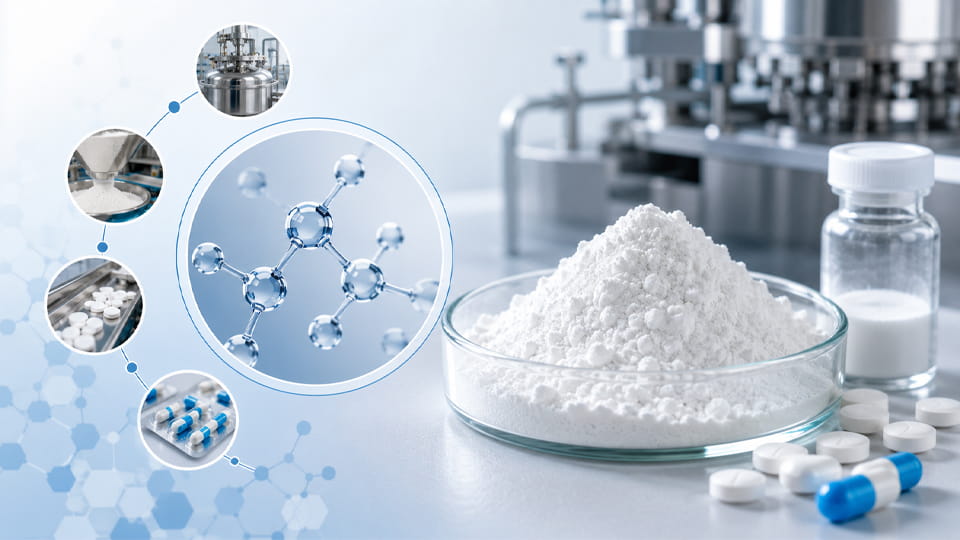
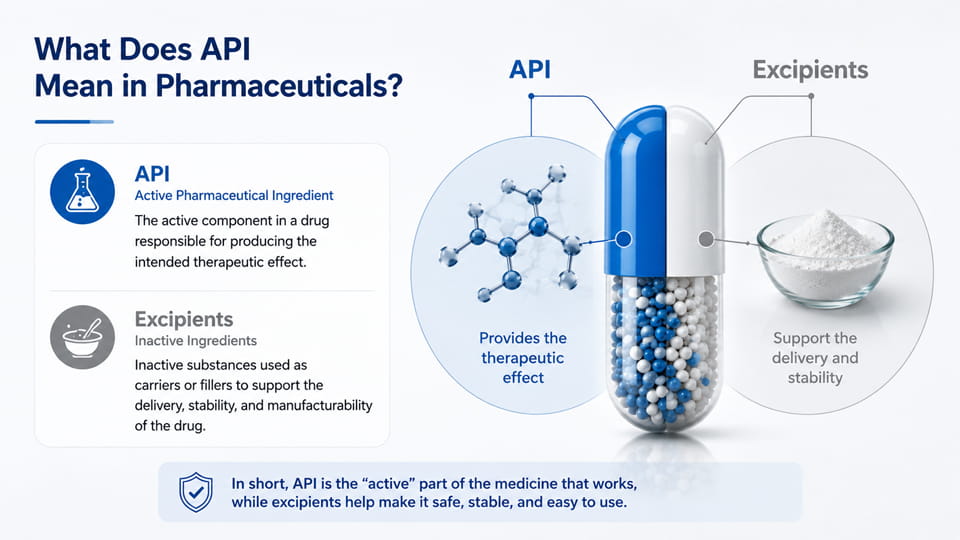
UN API è il Ingrediente farmaceutico attivo - IL sostanza farmacologica attiva in un farmaco che fornisce il suo effetto terapeutico. In termini semplici, è la sostanza chimica (o biologico) componente che fa il lavoro (per esempio. abbassamento della febbre, uccidendo i batteri, alleviare il dolore). Per esempio, in una compressa di paracetamolo, acetaminofene stessa è l'API; gli altri ingredienti (leganti, riempitivi, rivestimenti) Sono eccipienti. Gli Stati Uniti. Il National Cancer Institute definisce un'API come “l’ingrediente principale di un medicinale che provoca l’effetto desiderato del medicinale”.
In pratica, la produzione di farmaci inizia con una o più API e li trasforma nel prodotto finale (tavoletta, capsula, liquido, ecc.) sotto severi controlli di qualità. Come nota una fonte, produzione farmaceutica essenzialmente “significa trasformare principi attivi farmaceutici (API) ed eccipienti in forme di dosaggio (come i tablet, capsule, liquidi, o iniettabili) attraverso varie operazioni unitarie (fresatura, granulazione, compressione, rivestimento, riempimento, ecc.)". Ogni passo deve essere preciso: le autorità di regolamentazione richiedono che ogni lotto “abbia gli ingredienti e la forza che dichiara di avere”. Insomma, senza API, non ci sarebbero medicine – sono loro spina dorsale della formulazione dei farmaci.
Gli API sono spesso polveri o concentrati di elevata purezza; vengono poi mescolati con eccipienti e formati in pillole, capsule, o altre forme di dosaggio (vedere sotto). Il punto chiave è questo Gli API sono i farmaci attivi, mentre tutto il resto della formulazione aiuta semplicemente a somministrare il farmaco in modo sicuro ed efficace.
| Caratteristica | API (Principio attivo) | Eccipiente (Ingrediente inattivo) |
| Ruolo/Funzione | Fornisce il effetto terapeutico (farmaco attivo) | Funge da corriere, legante, riempitivo, stabilizzatore, ecc., per l'API |
| Attività farmacologica | SÌ – biologicamente attivo. | NO – farmacologicamente inerte. |
| Quantità tipica | Generalmente piccola quantità (mg o µg). | Generalmente massa di formulazione. |
| Esempi | Paracetamolo (acetaminofene), amoxicillina, atorvastatina, ecc. | Lattosio, cellulosa microcristallina, stearato di magnesio, ecc. |
| Importanza | Fondamentale per l'efficacia; determina la funzione del farmaco. | Garantisce la stabilità della pillola, producibilità, e biodisponibilità. |
In altre parole, Le API sono le parti “attive”., mentre gli eccipienti sono le parti “di supporto”.. Come spiega una fonte industriale: “Gli API sono farmaci sfusi che sono farmaceuticamente attivi e generano l’effetto farmacologico desiderato, considerando che gli eccipienti sono sostanze farmacologicamente inattive che vengono generalmente utilizzate come veicolanti dell'API”.
Entrambi sono necessari: API per effetto, eccipienti per fornire quell'effetto in una cassaforte, forma di dosaggio stabile. Comprendere la differenza è fondamentale nella produzione farmaceutica.
Entrano in gioco le API due grandi categorie: piccola molecola (sintetico) farmaci e prodotti biologici.
Un modo utile per ricordare: Piccole molecole sono sintetizzati chimicamente e solitamente sono pillole; Prodotti biologici a grandi molecole provengono da sistemi viventi e spesso sono iniettabili. Ciascun tipo ha il proprio percorso produttivo e normativo, ma entrambi sono “API” purché costituiscano l’ingrediente attivo di un farmaco finale.
La produzione delle API è complessa, processo multifase che coinvolge un'attenta chimica o biologia. Un semplificato diagramma di flusso della tipica produzione API (per API sintetiche di piccole molecole) è mostrato di seguito:
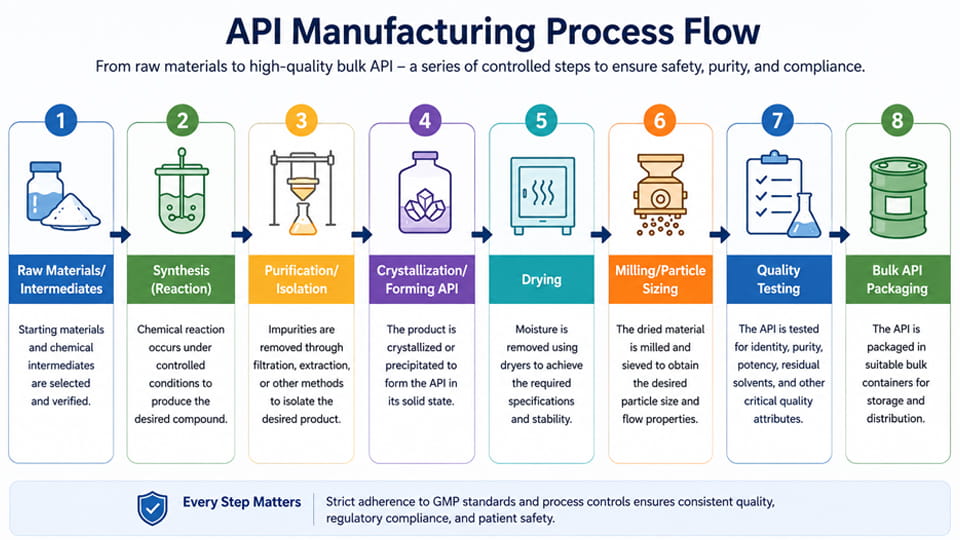
Ogni passo deve seguire cgmp (attuali buone pratiche di fabbricazione) regole. Per esempio, Io Q7 (e l'OMS GMP) fornire indicazioni specifiche per le API. Come nota l’OMS, “Il rigore delle GMP nella produzione delle API dovrebbe aumentare man mano che il processo procede dalle prime fasi API a quelle finali, purificazione, e confezionamento”. In pratica ciò significa una documentazione rigorosa, pulizia convalidata delle attrezzature, personale qualificato, e controlli in-process.
Tecnologia analitica di processo (PAT) e l’automazione sono sempre più utilizzate per monitorare le reazioni in tempo reale. Anche l'industria si sta muovendo verso produzione continua dove le materie prime fluiscono continuamente attraverso fasi di reazione e purificazione invece che in batch. I processi continui possono migliorare l’efficienza e la coerenza, sebbene la produzione in lotti rimanga comune.
In sintesi: La produzione API è una linea di produzione altamente controllata, dalle sostanze chimiche grezze o dalle colture cellulari fino al principio attivo finito, con cancelli di qualità rigorosi in ogni fase. Il risultato è un'API in blocco sicura, potente, e pronto per essere formulato in un farmaco.
La qualità è fondamentale nella produzione di API. Agenzie di regolamentazione (FDA, Ema, ecc.) richiedono che i produttori di API seguano rigorosi principi Buone pratiche di produzione (GMP) per garantire che ogni lotto soddisfi gli standard di qualità. Per le API, ICH Q7 è una linea guida chiave che delinea le GMP specifiche per i principi attivi. Alcuni aspetti critici includono:
Organizzazione mondiale della sanità (CHI) la guida lo sottolinea il rigore aumenta verso le fasi finali. I primi intermedi possono avere meno controlli, ma una volta definito un materiale di partenza API (il punto a partire dal quale si applica la GMP), i passaggi successivi (cristallizzazione, purificazione finale) sono tenuti agli standard più elevati.
Insomma, Il controllo di qualità dell'API è completo: “La garanzia della qualità è un aspetto critico della produzione API” e GMP copre tutto “dall’approvvigionamento delle materie prime al test del prodotto finale”. Ciò garantisce che l’API finale sarà sicura ed efficace una volta trasformata in un farmaco.
È importante distinguere il API dal forma di dosaggio finita (la finale, medicina pronta per il paziente).
Lo decide il FPP come l'API viene fornita nella pratica. Secondo le definizioni normative, una forma di dosaggio finita è “la finale”., medicinale completamente fabbricato che contiene la sostanza farmaceutica e tutti gli eccipienti necessari, e viene elaborato in un formato di consegna specifico, come un tablet, capsula, iniezione, ecc.".
Differenze chiave:
| Palcoscenico | Definizione/Esempio |
| API (Sostanza farmaceutica) | Il composto attivo del farmaco da solo (per esempio. polvere di gentamicina). |
| Prodotto farmaceutico finito | La forma della medicina (per esempio. iniezione di gentamicina) contenente l'API più eccipienti. |
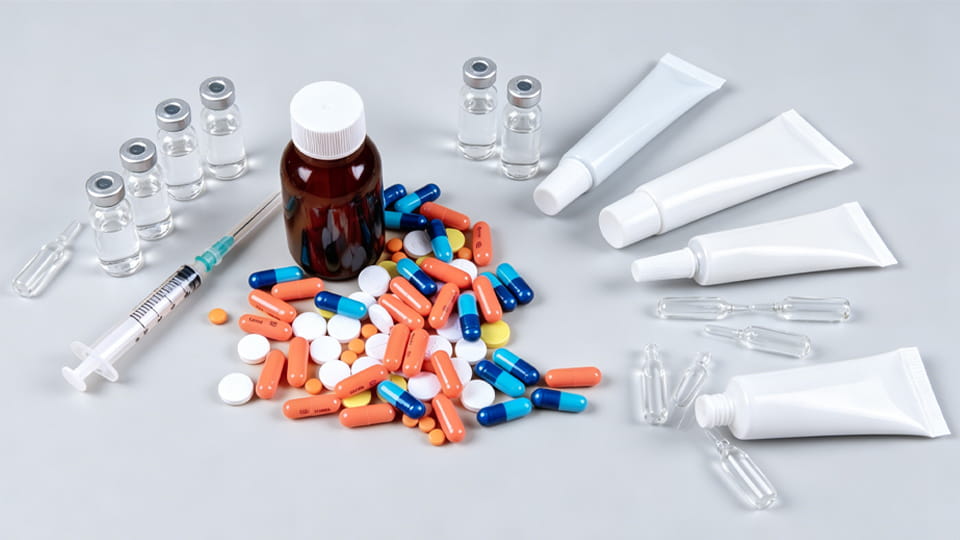
Così, l'API è il agente medicinale fondamentale, mentre il prodotto finito è il modo in cui l'agente viene formulato e confezionato per l'uso. Una buona produzione garantisce che “il prodotto farmaceutico finito contenga l’API giusta nella giusta concentrazione”. Attrezzature per l'imballaggio come comprimitrici O filler di capsule quindi convertire le miscele API-eccipienti in FPP, che sono sigillati in blister, bottiglie, o altri contenitori.
I produttori di API devono affrontare diverse sfide del settore:
Queste sfide significano che i produttori di API devono investire continuamente nell’ottimizzazione dei processi, conformità, e resilienza. Come consiglia una fonte, implementare solidi sistemi di qualità e rimanere aggiornati con le normative sono strategie chiave. In sintesi: mantenere un’elevata qualità sotto la pressione dei costi, e garantire la sicurezza (soprattutto per HPAPI), sono i principali ostacoli nella moderna produzione di API.
Dopo che un API è stato prodotto e formulato in un farmaco, confezione diventa cruciale per proteggere la qualità di quel prodotto e garantire la sicurezza del paziente. L'imballaggio funzionale salvaguarda il medicinale (e la sua API) da fattori ambientali e garantisce che venga somministrata la dose corretta. Le considerazioni chiave sull'imballaggio includono:
In pratica, macchine per l'imballaggio farmaceutico si collega direttamente alle API. Per esempio:
Integrando questi sistemi, gli stabilimenti farmaceutici garantiscono che l'API (principio attivo) raggiunge il paziente esattamente come previsto. Packaging farmaceutico funzionale (vesciche, bottiglie, chiusure a prova di manomissione) è “fondamentale” per proteggere i prodotti dall’umidità, ossigeno, luce e per la sicurezza del paziente.
Per aziende come Imballaggio Jinlu, ciò significa offrire soluzioni di packaging complete che soddisfino le esigenze delle API: PER ESEMPIO., confezionatrici blister e linee di conteggio ottimizzate per compresse sensibili all'umidità, oppure astucciatrici progettate per trattare flaconi di sciroppi o fiale. Insomma, le macchine per l'imballaggio rappresentano l'ultimo anello della catena che mantiene le API stabili ed efficaci fino al punto di utilizzo.
IL API (Ingrediente farmaceutico attivo) è il componente principale che conferisce a un medicinale il suo effetto terapeutico. Dalla produzione e controllo qualità alla conformità normativa e all'imballaggio finale, proteggere l'integrità dell'API è essenziale per garantire la sicurezza del prodotto, efficacia, e coerenza lungo tutta la catena di fornitura farmaceutica.
Man mano che i prodotti farmaceutici diventano più avanzati, apparecchiature di confezionamento affidabili svolgono un ruolo sempre più importante nella salvaguardia dei medicinali basati sugli API. Che tu stia confezionando compresse, capsule, polveri, o granuli, la giusta soluzione di imballaggio aiuta a mantenere la qualità del prodotto migliorando al tempo stesso l'efficienza e la conformità della produzione.
Alla ricerca di attrezzature affidabili per il confezionamento farmaceutico? Jinlu Packing fornisce macchine confezionatrici in blister, Linee di conteggio, sistemi di riempimento bottiglie, macchine astucciatrici, e completo soluzioni di imballaggio chiavi in mano adattato alle esigenze dei moderni produttori farmaceutici. Contatta il nostro team per discutere del tuo prossimo progetto di packaging.
API sta per ingrediente farmaceutico attivo. È il principio attivo di un medicinale che esercita il suo effetto terapeutico. Per esempio, l’API contenuto in una compressa antinfluenzale sarebbe il composto che combatte il virus o allevia i sintomi.
L'API è il nucleo di un farmaco, ma di per sé non è la forma finale del farmaco. Il farmaco finale (pillola, capsula, iniezione) è chiamato prodotto finito o forma di dosaggio finita. L'API deve essere formulato con eccipienti (ingredienti inattivi) e trasformato in un dosaggio prima che diventi la vera medicina che i pazienti assumono.
Gli API sono sostanze attive che provocano l'effetto farmacologico desiderato. Gli eccipienti sono ingredienti inattivi che non influenzano la malattia ma aiutano a formulare il farmaco (aggiungere massa, stabilizzare, favorire l’assorbimento, ecc.). Insomma: Gli API hanno attività terapeutica; gli eccipienti no.
La produzione di API generalmente comporta la sintesi chimica (o fermentazione biologica), seguita dalla purificazione, cristallizzazione, essiccazione, e fresatura. Ogni passaggio è strettamente controllato per garantire purezza e potenza. Questo processo segue le buone pratiche di produzione (GMP). Un flusso semplificato è: Materie prime → (Chimico o biologico) Sintesi → Purificazione → Cristallizzazione → Essiccazione → Macinazione → Test di qualità → Confezionamento (come illustrato sopra).
La qualità dell'API è fondamentale perché influisce direttamente sulla sicurezza e sull'efficacia del farmaco. Gli API impuri o degradati possono causare effetti avversi o una ridotta efficacia. Le autorità di regolamentazione richiedono severi test di qualità delle API (identità, purezza, potenza) secondo le linee guida GMP. Gli API di alta qualità aiutano a prevenire i richiami dei farmaci e garantiscono che ogni dose funzioni come previsto.
Esempi di API includono sostanze farmaceutiche comuni come il paracetamolo (acetaminofene), ibuprofene, amoxicillina, atorvastatina, e metformina. Nei prodotti biologici, esempi sono l'insulina, Herceptin (trastuzumab), anticorpi monoclonali, e vaccini. Essenzialmente, il nome di un'API è solitamente il nome generico del farmaco.
GMP per le API (per esempio. Io Q7) richiede strutture qualificate, processi validati, personale addestrato, e test completi. I produttori devono controllare la contaminazione incrociata, documentare tutti i passaggi, e testare ogni lotto per purezza e potenza. L’OMS rileva che il rigore delle GMP aumenta verso le fasi finali dell’API, garantire che ogni lotto soddisfi gli standard di identità e qualità.
Un imballaggio adeguato protegge gli API nel farmaco finale da fattori ambientali. Ad esempio, i blister e i sistemi a bottiglia tengono lontani l'umidità e l'ossigeno, preservando la stabilità dell'API. Attrezzature per l'imballaggio (macchine blister, riempitivi, berretti, etichettatrici, astucciatori) garantisce che il farmaco contenente API venga dosato accuratamente, sigillato, ed etichettato, mantenere la sicurezza e la conformità.
HPAPI (API altamente potenti) sono composti estremamente attivi (spesso farmaci antitumorali o ormonali) che sono tossici a dosi molto basse. Richiedono attrezzature di lavorazione speciali (isolatori, sistemi chiusi) per tutelare i lavoratori. La domanda di HPAPI è in aumento con terapie mirate, quindi i produttori devono investire in contenimento e competenza.
L'API viene combinata con eccipienti ed elaborata per creare la forma finale del farmaco. Per esempio, una compressa viene prodotta mescolando l'API con riempitivi e comprimendola. Il prodotto finito consegna quindi l'API al paziente in modo conveniente. Macchinari di imballaggio (dal riempimento all'etichettatura) collega la produzione dell'API al farmaco pronto per il consumatore.
Riferimenti:
1.Q7 Guida alle buone pratiche di produzione per gli ingredienti farmaceutici attivi Guida per l'industria — NOI. Amministrazione degli alimenti e dei farmaci
2.Linee guida per la qualità: sostanza attiva — Agenzia europea per i medicinali
3.Ingredienti farmaceutici attivi — CHI
4.TRS 957 – Allegato 2: Buone pratiche di produzione dell’OMS per i principi attivi farmaceutici (sostanze farmaceutiche sfuse) – CHI