Che cos'è la convalida degli imballaggi nell'industria farmaceutica? Una guida completa per i produttori farmaceutici
Che cos'è la convalida degli imballaggi nell'industria farmaceutica? Una guida completa per i produttori farmaceutici
aprile 29, 2026
Non ci sono commenti
Nell'industria farmaceutica, validazione dell'imballaggio è un sottoinsieme critico di validazione del processo focalizzato sulla garanzia che le attrezzature e i processi di confezionamento proteggano costantemente la qualità dei prodotti farmaceutici. Implica un programma documentato di qualificazione (Installazione, Operativo, Prestazione) e test (per esempio. integrità della chiusura del contenitore, stabilità, trasporto) per dimostrare che i sistemi di imballaggio funzionano come previsto in condizioni GMP. Una validazione efficace dell'imballaggio salvaguarda la sicurezza del paziente (prevenendo la contaminazione, degrado o confusione) e garantisce la conformità normativa (FDA, Ema, CHI, IO, ISO). Questa guida spiega il definizione, passi, test, standard, E migliori pratiche per la validazione del packaging farmaceutico, e mostra come le apparecchiature automatizzate (Piace Le macchine di Jinlu Packing) è progettato per soddisfare questi severi requisiti.
Definizione di convalida dell'imballaggio
Validazione del packaging in ambito farmaceutico dimostrare con prove documentate che il processo di confezionamento (attrezzature e materiali) produce in modo affidabile una confezione che protegge il prodotto farmaceutico. In pratica, applica gli stessi rigorosi concetti di validazione utilizzati nella produzione (IR/WH/PQ) A primario, secondario, e imballaggio terziario operazioni. Secondo le linee guida GMP dell’OMS, “I processi e le attrezzature di confezionamento necessitano di convalida/qualificazione allo stesso modo di qualsiasi altra parte del processo di lavorazione all’interno di una struttura farmaceutica”.. In altre parole, la convalida dell'imballaggio garantisce il sistema di chiusura del contenitore, etichettatura, e linee di confezionamento soddisfare costantemente le specifiche di qualità e i requisiti normativi. L’obiettivo è mantenere la forza del farmaco, purezza e stabilità attraverso l'imballaggio, distribuzione e durata di conservazione, evitando al tempo stesso confusioni, contraffazioni, o danni.
I risultati finali tipici della validazione del packaging includono a Specifica dei requisiti utente (UR) (il disegno & criteri di qualità), Protocolli di qualificazione installativa/operativa/prestazionale, e registrazioni dei test. Il processo di convalida copre:
Imballaggio primario (il contenitore o la barriera sono a diretto contatto con il farmaco, per esempio. fiale, cavità vescicolari, bustine)
Imballaggio secondario (per esempio. cartoni, etichette, inserti, serializzazione che raggruppa i pacchetti primari)
Imballaggio terziario (contenitori per il trasporto alla rinfusa, pallet, imballaggi per la catena del freddo per il trasporto)
Ogni livello deve proteggere il prodotto. Per esempio, definisce la TGA australiana “imballo primario” (il contenitore che copre immediatamente la merce) e distingue imballaggio secondario come scatola esterna o involucro. Alla fine, la convalida dell'imballaggio si ricollega alle GMP, garantendo ciò contenitori e chiusure non alterano il farmaco E “fornire un’adeguata protezione contro i fattori esterni” durante lo stoccaggio e l'uso.
Perché la validazione del packaging è fondamentale nel settore farmaceutico
Il packaging farmaceutico è la difesa finale per la qualità dei farmaci. La convalida dei processi di confezionamento è fondamentale perché:
Garantisce la sicurezza e l'integrità del prodotto: Un imballaggio adeguatamente convalidato previene la contaminazione, ingresso di umidità, o esposizione all'ossigeno che potrebbe degradare i principi attivi. Per esempio, perdite o guasti alle guarnizioni potrebbero consentire l’ingresso di microbi o gas, rovinare la sterilità o la potenza.
Conformità normativa: Agenzie (FDA, EMA/I, CHI) richiedono un imballaggio convalidato. NOI. della FDA 21 CFR 211.94 vieta le chiusure che alterano la qualità dei farmaci e impone le chiusure “fornire un’adeguata protezione contro i fattori esterni prevedibili”. Allegato GMP dell'UE 1 insiste allo stesso modo su questo punto “i contenitori dovrebbero essere chiusi con metodi opportunamente validati” (con 100% test di integrità per prodotti chiusi a fusione). L’OMS afferma esplicitamente che i sistemi di imballaggio devono essere qualificati come qualsiasi altro processo GMP. La non conformità può significare ricorda, importazioni rifiutate o citazioni di audit.
Prolunga la durata di conservazione: I materiali di imballaggio e i sigilli convalidati in condizioni di stabilità aiutano a stabilire dichiarazioni precise sulla durata di conservazione. La guida ICH Q1A specifica anche che gli studi sulla stabilità devono essere condotti in “sistema di chiusura del contenitore” proposto per il prodotto. Se l'imballaggio fallisce, i dati di stabilità non sono validi.
Serializzazione e anticontraffazione: Il packaging farmaceutico moderno spesso include la serializzazione, sigilli anti-manomissione, e funzionalità anticontraffazione. Convalidare queste funzionalità (per esempio. scansionabilità dei codici a barre, integrità dei nastri antimanomissione) aiuta a proteggere la catena di fornitura. Un errore nell'etichettatura o nella serializzazione può bloccare il rilascio del prodotto.
Qualità ed efficienza dei costi: Linee efficienti e validate riducono i difetti (riempimenti errati, errori di etichetta, cartoni schiacciati) e rottami. Ispezioni automatizzate (sistemi di visione per controllo sigillo/etichetta) fanno spesso parte dei controlli validati. Complessivamente, I processi di confezionamento convalidati riducono al minimo il rischio per il paziente e garantiscono una fornitura costante di prodotti efficaci, medicinali autentici.
Fattori chiave per la validazione
Sicurezza del paziente: Un imballaggio improprio può danneggiare i pazienti (per esempio. iniettabili contaminati). La validazione documenta la barriera di sicurezza.
Mitigazione del rischio normativo: I processi non convalidati sono ad alto rischio di richiami o sanzioni. Le autorità di regolamentazione si aspettano dati di qualificazione per ogni linea di produzione.
Distribuzione globale: Rispetto degli standard internazionali (FDA/EMA/OMS) richiede imballaggi convalidati in tutti i mercati.
Continuità aziendale: Errori di imballaggio nella distribuzione del prodotto e del tempo di scarto. La convalida garantisce “giusto la prima volta” funzionamento secondo GMP.
Preparazione all'audit: Gli audit da parte delle autorità di qualità o delle autorità di regolamentazione dei clienti esamineranno i registri di convalida degli imballaggi e le qualifiche delle apparecchiature come parte delle ispezioni GMP.
Ambito della convalida dell'imballaggio farmaceutico
La convalida dell'imballaggio riguarda tutte le fasi dell'imballaggio. Tipicamente, distinguiamo:
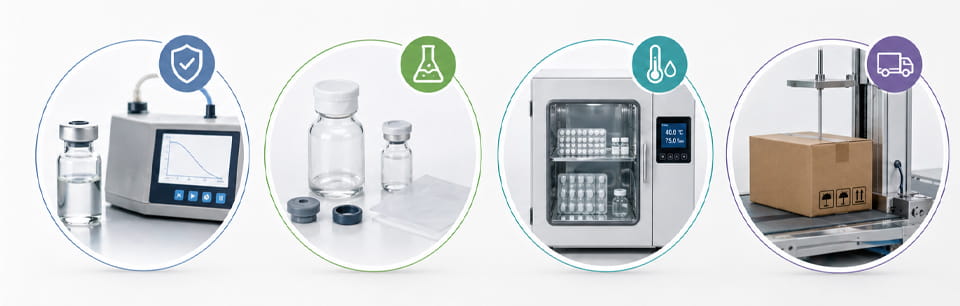
Convalida dell'imballaggio primario: Si concentra sulla chiusura del contenitore (fiale, ampolle, cavità vescicolari, bottiglie). I test includono l'integrità della tenuta, compatibilità materiale (estraibili/lisciviabili) e prestazioni di chiusura del contenitore. Per prodotti sterili, test di integrità della chiusura del contenitore (CCIT) sono obbligatori per garantire il mantenimento della sterilità.
Convalida dell'imballaggio secondario: Copre l'imballaggio immediatamente esterno (cartoni, etichette, volantini, essiccanti). Ciò include i controlli di leggibilità/accuratezza delle etichette, prove di caduta del cartone, e prove di compressione della scatola (per il trasporto). La verifica dell'etichetta garantisce che le informazioni corrette sul paziente vengano applicate in modo coerente.
Convalida dell'imballaggio terziario: Implica l'imballaggio sfuso/per il trasporto. Qui, test prestazionali come le vibrazioni, gocciolare, e ciclo termico (catena del freddo) simulare le sollecitazioni di spedizione per verificare che i pallet e i cartoni di spedizione mantengano l'integrità e l'etichettatura del prodotto durante la distribuzione. Protocolli standard come ASTM D4169 (simulazione dei trasporti) vengono spesso utilizzati.
Ciascun livello richiede una valutazione del rischio e test adeguati: Per esempio, primario l'imballaggio potrebbe comportare USP <1207>-test di integrità dello stile, Mentre secondario i test sull'imballaggio potrebbero includere la resistenza del cartone e l'adesione dell'etichetta, E terziario l'imballaggio utilizza i protocolli di test ISTA/ASTM. Tutto deve essere documentato nel piano di validazione.
Passaggi chiave nel processo di convalida dell'imballaggio
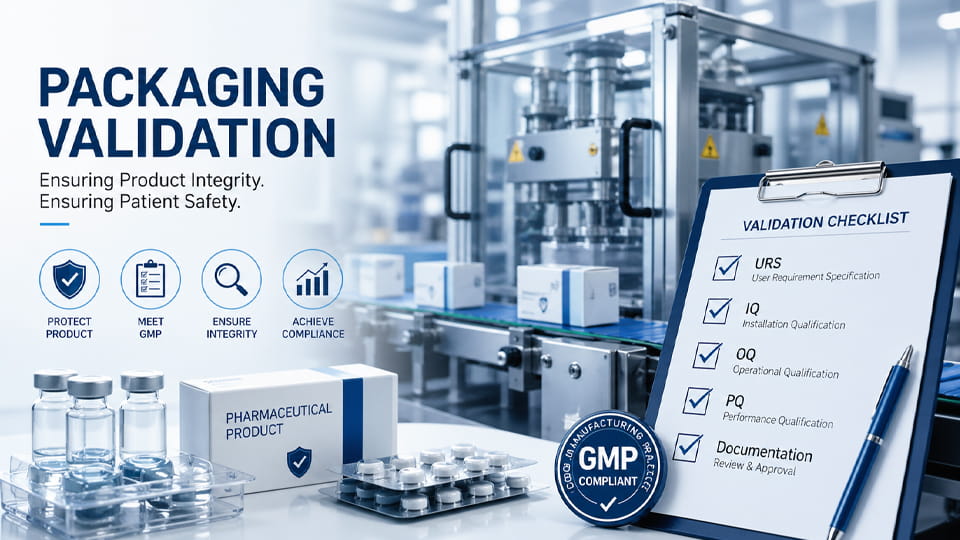
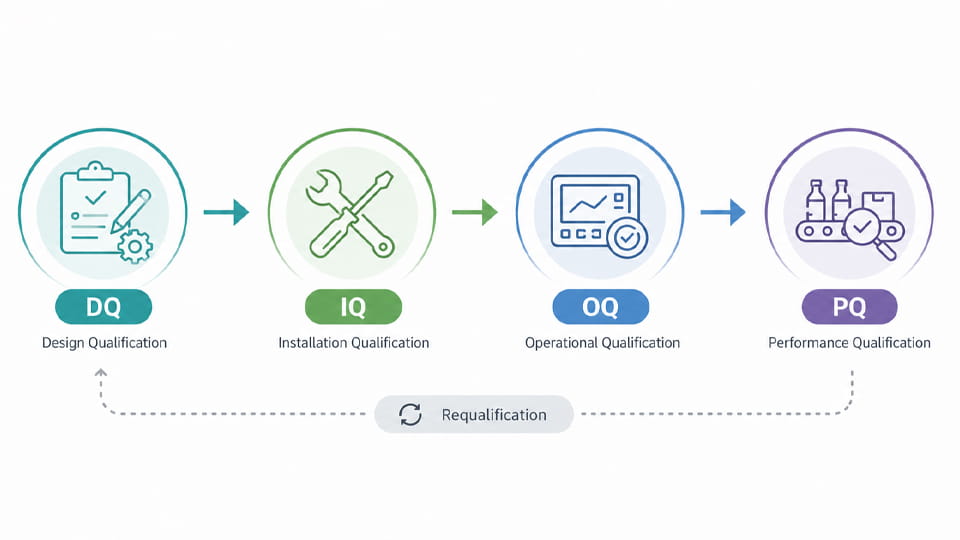
La convalida dell'imballaggio segue in genere il ciclo di vita della qualificazione dell'apparecchiatura/processo, spesso descritto come DQ/IQ/OQ/PQ. Queste fasi garantiscono che una linea di confezionamento nuova o modificata soddisfi i requisiti in ogni fase.
Qualifica di progettazione (DQ): Fase iniziale in cui il progetto viene valutato rispetto all'URS (Specifica dei requisiti utente) e linee guida GMP. Tutti gli aspetti progettuali (funzioni della macchina, Materiali, pulibilità, compatibilità con i materiali del prodotto/imballaggio) vengono revisionati. I documenti includono l'URS e le specifiche di progettazione (Specifica di progettazione funzionale FDS, Specifiche di progettazione hardware/software). Spesso una valutazione del rischio (per esempio. DFMEA) viene fatto per anticipare le modalità di fallimento del packaging.
Qualificazione dell'installazione (QI): Verifica che la macchina/linea sia installata correttamente in base alle specifiche del fornitore. IQ include una lista di controllo per verificare la posizione corretta, utilità (energia, aria, acqua), condizioni ambientali, e un corretto assemblaggio. Tutti i componenti sono presenti e non danneggiati. Viene controllata la calibrazione dei dispositivi di misurazione. Risultati finali: Protocolli e report del QI, certificati di taratura.
Qualificazione operativa (OQ): Verifica che la macchina funzioni come previsto in tutte le condizioni specificate. Parametri critici (gamme di velocità, temperature, pressioni, livelli di vuoto, coppia, ecc.) sono messi in discussione alle impostazioni min/max o nel caso peggiore. I test in OQ potrebbero includere la sigillatura a velocità estreme, funzioni di sensore/allarme, variazioni della velocità del trasportatore, precisione dell'etichettatrice, precisione della pompa di riempimento. Il protocollo OQ registra che ciascun test funzionale soddisfa i criteri di accettazione.
Qualificazione delle prestazioni (PQ): Lo dimostra in normali condizioni di produzione, la linea produce costantemente prodotti che soddisfano le specifiche di qualità. La PQ viene eseguita sulle quantità/lotti di produzione effettivi. Comprende il funzionamento della linea per un tempo o una quantità definiti e il campionamento dell'output. Attività tipiche: eseguire più cartoni blister, bottiglie o bustine ed esecuzione di test di controllo qualità sui campioni (PER ESEMPIO., integrità della chiusura del contenitore (CCIT), controlli del peso, ispezione dei difetti visivi, forza della tenuta). PQ mostra che la linea può funzionare ininterrottamente mantenendo la qualità del prodotto.
La tabella seguente riassume le fasi DQ-IQ-OQ-PQ:
Palcoscenico
Scopo
Documenti chiave
Attività/test di esempio
Qualifica di progettazione (DQ)
Verificare che la progettazione del sistema di imballaggio soddisfi URS/GMP
UR (requisiti specifici), specifiche di progettazione (FDS/HDS/SDS), valutazione del rischio
Revisione del progetto, verifiche di compatibilità dei materiali, DFMEA
Qualificazione dell'installazione (QI)
Confermare la corretta installazione dell'attrezzatura
Protocollo/lista di controllo IQ, registro di installazione, certificati di taratura
Verificare le utenze, assemblaggio di apparecchiature, calibrazione
Qualificazione operativa (OQ)
Verificare le funzioni dell'apparecchiatura entro i limiti definiti
Protocollo OQ, piani di test funzionali, SOP
Parametri di prova (velocità, temp, pressione); controlli di tenuta
Qualificazione delle prestazioni (PQ)
Garantire una qualità costante durante i cicli di produzione
Protocollo PQ, record di batch, criteri di rilascio
La produzione viene eseguita; test del campione (CCIT, riempire il peso, ispezione visiva)
Come mostra il diagramma, la convalida dell'imballaggio è un processo del ciclo di vita, dalla progettazione alla prestazione. Notare che riqualificazione potrebbe essere necessario dopo modifiche importanti o periodicamente.
Test chiave nella convalida degli imballaggi
Durante la convalida dell'imballaggio vengono comunemente eseguiti numerosi test specializzati:
Test di integrità della chiusura del contenitore (CCIT)
CCIT è essenziale per i prodotti sterili e anche non sterili. Si valuta se il sistema di chiusura dei contenitori (per esempio. fiala+tappo+tappo, fiala, sigillo del blister) costituisce una barriera perfetta. I metodi includono il decadimento del vuoto, decadimento della pressione, ingresso di colorante, o sfida microbica. Come spiega una fonte industriale, “Test di integrità della chiusura del contenitore (CCIT) è un test che valuta l’adeguatezza dei sistemi di chiusura dei contenitori per mantenere una barriera sterile contro potenziali contaminanti”.. Documenti normativi (USP <1207>, FDA, Allegato dell’EMA 1) enfatizzare il test dell'integrità della chiusura per garantire l'assenza di perdite o violazioni. Per esempio, USP <1207> fornisce linee guida sulla selezione dei metodi di prova delle perdite per certificare le confezioni sigillate.
Test di compatibilità dei materiali (Estraibili/Leachables)
Materiali di imballaggio (plastica, gomme, inchiostri, adesivi) non deve interagire negativamente con il prodotto farmaceutico. Estraibili e lisciviabili gli studi simulano il contatto a lungo termine: gli estraibili sono sostanze chimiche espulse dall'imballaggio in condizioni difficili, e le sostanze rilasciabili sono quelle che effettivamente migrano nel prodotto in condizioni normali. Questi test garantiscono che l'imballaggio non introduca impurità tossiche o che compromettano la stabilità. Guida alla farmacopea e alla FDA (per esempio. USP <661>, Q3E) delineare i test E/L per i sistemi di chiusura dei contenitori. In pratica, si controlla che il polimero, rivestimenti, e i materiali delle etichette soddisfano gli standard farmacopeali (per esempio. Tipo di vetro USP, Specifiche di chiusura in gomma ISO). L'OMS rileva gli standard della farmacopea per le chiusure (come tappi di gomma) Sono “requisiti minimi” e sottolinea gli studi di stabilità per dimostrare l'idoneità.
Test di stabilità negli imballaggi
Come da ICH Q1A, studi di stabilità deve essere effettuata sul prodotto farmaceutico nella sua configurazione di confezionamento finale. Durante la convalida, viene valutato l’impatto dell’imballaggio sulla stabilità: Per esempio, l'imballo finale è sottoposto ad invecchiamento accelerato (temperatura/umidità elevata) e condizioni in tempo reale per garantire l'assenza di degrado (per esempio. ingresso di umidità nei blister, permeazione dell'ossigeno nelle bottiglie). Saggi indicatori di stabilità (chimico e microbico) vengono eseguiti. L'imballaggio che non riesce a proteggere il prodotto sotto stress invalida le dichiarazioni sulla durata di conservazione. Così, la convalida include la conferma che l'imballaggio scelto soddisfa i requisiti di durata di conservazione (ciò si sovrappone ai protocolli di stabilità normativa).
Test di trasporto e distribuzione
Imballaggio terziario i test simulano le condizioni di spedizione reali. I test standard includono test sull'altezza di caduta, vibrazione (simulazione di camion/ferrovie), compressione (peso di impilamento), e ciclizzazione della temperatura (soprattutto per la catena del freddo). Per esempio, ASTM D4169 (per prodotti confezionati) o possono essere utilizzati i protocolli ISTA. Un solido piano di convalida degli imballaggi verifica che i cartoni, casse e gabbie proteggono i colli primari durante la movimentazione: verificando che non vi siano rotture, distacco dell'etichetta, o danni da umidità si verificano in condizioni di distribuzione. Per la catena del freddo, la mappatura della temperatura e i caricatori isolati convalidati vengono testati per mantenere gli intervalli di temperatura richiesti durante il transito.
Standard normativi e linee guida
La convalida dell'imballaggio farmaceutico deve soddisfare molteplici aspettative normative:
Regolamenti cGMP: Negli Stati Uniti, della FDA 21 CFR parte 211 (capoverso J) disciplina contenitori e chiusure. Sezione 211.94(a.D) specifica che i contenitori/chiusure non possono alterare la qualità del farmaco e devono proteggere da contaminazioni prevedibili.
GMP dell’UE: Linee guida europee (EudraLex vol. 4) richiederlo “i contenitori dovrebbero essere chiusi con metodi opportunamente validati” (Allegato 1) e che i processi di confezionamento seguano le GMP (Allegato 15 sulla convalida). Allegato GMP dell'UE 11 impone la convalida del sistema computerizzato (comprese linee di confezionamento con controlli elettronici).
OMS GMP: Serie di rapporti tecnici dell’OMS 902 (Allegato 9) afferma esplicitamente che le apparecchiature di imballaggio necessitano di convalida come qualsiasi altra fase di lavorazione. L’OMS fornisce anche indicazioni sull’integrità della confezione (simile a EU/ICH).
Linee guida ICH: Sebbene ICH (D7, Q8, D9, Q10) non dispongono di un documento specifico di convalida dell'imballaggio, impongono la gestione del rischio (D9) e qualità fin dalla progettazione (Q8/Q10) principi applicabili. Per esempio, valutazione del rischio (Io Q9) dovrebbe coprire gli attributi dell'imballaggio (tipo di chiusura, controllo dell'etichetta) che influiscono sui CQA del prodotto.
Standard: Per prodotti sterili, ISO 11607 (per il confezionamento di dispositivi medici sterilizzati terminalmente) è spesso usato per analogia; Parte 2 dell'ISO 11607 definisce i requisiti di validazione per i processi di formatura/sigillatura, che è rilevante per blister o fiale di farmaci parenterali. Farmacopee (USP, Ph. Euro.) contengono anche capitoli sui test di confezionamento (per esempio. USP <381> per chiusure in gomma, <1207> per prove di tenuta).
In sintesi, qualsiasi linea di confezionamento deve essere conforme alla farmacopea nazionale e agli standard GMP regionali. Le liste di controllo di conformità in genere citano la FDA, GMP dell’UE, OMS e norme ISO pertinenti, e spesso richiedono SOP pienamente documentate e piani generali di convalida che coprano l'imballaggio.
Sfide comuni nella convalida degli imballaggi
La validazione degli imballaggi pone sfide uniche rispetto ai processi di produzione:
Tipo di dati e campionamento: Il successo della linea di confezionamento è spesso determinato da risultati discreti (per esempio. superato/fallito per un sigillo, lacrima) piuttosto che misurazioni continue. Come nota un esperto, “il tipo di dati ottenuti… crea una sfida significativa. Il successo o il fallimento sono spesso determinati dai difetti (lacrime, buchi, macchie, o guarnizioni che perdono)… Questa mancanza di misurabilità (variabile) i dati spesso richiedono campioni di dimensioni molto grandi affinché un processo di confezionamento possa essere validato statisticamente”.. In altre parole, potresti aver bisogno di molti campioni per dimostrare l'affidabilità.
Varietà tecnologica: Esistono molte tecnologie di confezionamento (vesciche, astucciatori, etichettatrici, confezionatrici di casse, ecc.) da diversi fornitori. Ognuno ha diversi profili di rischio, rendendo impossibile un piano di validazione unico.
Cambia controllo: Le linee di confezionamento spesso gestiscono molti tipi di prodotti (compresse, liquidi, polveri) e dimensioni delle confezioni sulla stessa attrezzatura (utilizzando parti o formati di modifica). Ogni modifica può richiedere una nuova validazione o un bracketing nel piano di validazione. Gestire questo (IL matrice di validazione) può essere complesso.
Controlli ambientali: Alcuni imballaggi (per esempio. confezionamento in blister di farmaci sensibili all'umidità) richiede umidità controllata o atmosfera inerte. La convalida di questi controlli aggiunge complessità.
Integrazione con il processo a monte: La convalida del packaging dipende dalla coerenza a monte. Se i granuli del farmaco variano di dimensione, il cambio della macchina confezionatrice potrebbe essere influenzato (per esempio. riempire la marmellata). Questa interdipendenza può complicare l’analisi delle cause principali dei guasti del packaging.
Serializzazione/Tracciamento: Normative moderne (per esempio. DSCSA, FMD dell’UE) richiedono serializzazione e tracciabilità. Garantire che le linee automatizzate monitorino correttamente ciascuna unità (e convalidare l'acquisizione dei dati) aggiunge un ulteriore livello di qualificazione (convalida del software, test dello scanner di codici a barre, controlli della banca dati).
Ambiguità normativa: Paradossalmente, esistono linee guida esplicite FDA/EMA limitate esclusivamente sulla “convalida della confezione”.,”, quindi le aziende devono spesso interpretare le linee guida generali sulle GMP e sulla convalida dei processi per l'imballaggio. Ciò può causare incertezza sull’ambito esatto o sui test necessari.
Nonostante queste sfide, il principio di fondo rimane: trattare l'imballaggio come qualsiasi altro processo critico, con qualificazioni approfondite e controlli di qualità approfonditi. Come conclude il documento dell'ISPE, validazione dell'imballaggio "differire(S) poco dalla validazione dei processi utilizzati per la produzione dei farmaci”..
Migliori pratiche per la convalida dell'imballaggio farmaceutico
Per superare le sfide e garantire una convalida di successo, seguire queste migliori pratiche:
Valutazione precoce del rischio: Utilizzare la gestione del rischio di qualità (Io Q9) fin dalla fase di progettazione. Identificare gli attributi critici dell'imballaggio (per esempio. sterilità, prove di manomissione, protezione dalla luce) e dare la priorità ai test di conseguenza. Una modalità di fallimento & Analisi degli effetti (FMEA) è consigliato durante la DQ per pianificare l'ambito di convalida.
Specifiche dei requisiti utente (UR): Documentare chiaramente tutti i requisiti in anticipo: capacità produttiva, formati di confezione, punti di integrazione (per esempio. collegamento di una macchina blisteratrice ad un'astucciatrice), condizioni ambientali, requisiti di pulizia. Un URS ben definito mantiene la convalida sulla buona strada.
Procedure operative standard (SOP): Mantenere procedure operative standard dettagliate per il funzionamento delle apparecchiature, pulizia, cambio, e manutenzione. La convalida dovrebbe fare riferimento a queste SOP per garantire un uso coerente.
Ispezione e controlli automatizzati: Incorpora controlli di qualità in linea (per esempio. sistemi di visione per l'ispezione di stampe/etichette, selezionatrici ponderali, scanner di codici a barre, rilevatori di perdite). Questi non sono solo strumenti di QA ma fanno anche parte della validazione rilevando i difetti in tempo reale.
Documentazione completa: Preparare un piano generale di convalida che delinei la strategia, e garantire tutti i protocolli di qualificazione (IR/WH/PQ) avere criteri di accettazione chiari. Conserva registri dettagliati di tutte le esecuzioni, deviazioni, e ripete il test. Utilizza le liste di controllo per assicurarti che nulla venga trascurato.
Formazione e Personale: Gli operatori e il personale QC devono essere formati sia sulle apparecchiature che sulle procedure di validazione. Solo il personale qualificato deve condurre test di validazione e registrare i risultati.
Software e documenti elettronici: Per controlli computerizzati, seguire la FDA 21 Allegato CFR Parte 11/GMP 11: convalidare il software, piste di controllo, firme elettroniche (garantire la sicurezza, backup). Anche le linee di confezionamento non sterili spesso dispongono di PLC/HMI che necessitano di convalida.
Progettazione per la convalida: Quando possibile, scegliere macchine con caratteristiche che semplificano la validazione: per esempio. servoazionamenti con controlli digitali (per preciso, parametri riproducibili), telai igienici in acciaio inox (per una facile pulizia), parti facilmente sostituibili (per ridurre lo sforzo di pulizia tra i formati), e design modulare (per limitare il numero di configurazioni che richiedono test).
Verifica continua: La convalida del packaging non è “una volta fatta”. Implementare controlli periodici o trigger di riconvalida (per esempio. dopo importanti manutenzioni, aggiornamenti delle attrezzature, o una deriva significativa del processo). Utilizzare il controllo statistico del processo (SPC) sui parametri chiave (variazione del peso di riempimento, tasso di difetto) per cogliere le tendenze in anticipo.
Integrità dei dati: Applicare i principi ALCOA+: tutti i dati di validazione (registrazioni di prova, Rapporti di controllo qualità, calibrazioni) deve essere imputabile, leggibile, contemporaneo, originale, e accurato. Utilizzare quaderni rilegati o sistemi elettronici validati.
Incorporando il pensiero di validazione in ogni fase, dalla progettazione al funzionamento quotidiano, i produttori possono garantire che le linee di confezionamento forniscano prodotti che soddisfano le aspettative di qualità e conformità.
Ruolo delle macchine confezionatrici nella validazione
La scelta e la progettazione delle apparecchiature di imballaggio influenzano fortemente il successo della convalida. Le macchine confezionatrici di alta qualità sono progettate per soddisfare i requisiti GMP e supportare una facile qualificazione. Per esempio, Jinlu Packing's le macchine automatizzate sono costruite con funzionalità che semplificano la convalida:
Precisione e coerenza: Quello di Jinlu macchine blister, le astucciatrici e le riempitrici utilizzano servomotori e una meccanica precisa per garantire una pressione di termosaldatura costante, riempire i volumi, e indicizzazione. Questa ripetibilità è fondamentale per superare i test OQ e PQ (per esempio. fornisce il dispositivo di alimentazione servocomandato “posizionamento accurato” sulla loro linea blister).
Design igienico: I materiali e le superfici sono in acciaio inossidabile o plastica conforme alla FDA, progettato per una facile pulizia. Liscio, le superfici inclinate prevengono le trappole di polvere. Ciò supporta la conformità GMP e semplifica la convalida della pulizia.
Adattabilità ai formati: Jinlu offre alimentatori e guide personalizzate per diversi tipi di confezioni (Vedere Alimentatori personalizzati sulle pagine dei prodotti). Avere gli strumenti giusti riduce le variazioni e accelera il cambio formato, che riduce le esigenze di riqualificazione quando si cambia formato.
Controlli integrati: Le moderne linee Jinlu sono dotate di controlli PLC/HMI in grado di generare record batch elettronici. Per esempio, la riempitrice di liquidi ha un PLC/HMI AI Siemens per semplice, operazione tracciabile. Tali controlli digitali supportano la registrazione dei dati (in linea con 21 CFR Parte 11/Allegato 11) – Fondamentale per verificare che i setpoint e gli allarmi funzionino come previsto.
Documentazione di convalida: Jinlu fornisce la documentazione completa (Schede tecniche, manuali, ecc.). Ad esempio, l'elenco delle pagine dei prodotti “Set completo di documenti tecnici” e sottolineano la fornitura di documentazione dettagliata di progettazione e test. Un fornitore disposto a fornire il test di accettazione in fabbrica (GRASSO) protocolli o kit IOQ alleggeriscono notevolmente l’onere di convalida dell’utente.
Certificazioni di qualità: Jinlu trasporta macchine CE, cGMP e altre certificazioni, indicando che soddisfano determinati standard di qualità e sicurezza (vedere il logo cGMP sulle immagini delle specifiche del prodotto). L’utilizzo di apparecchiature certificate può semplificare la revisione normativa.
In pratica, una linea di confezionamento convalidata potrebbe includere: un Jinlu macchina confezionatrice per blister legato ad a macchina astucciatrice E linee di conteggio/riempimento. Ogni attrezzatura deve essere qualificata (IR/WH/PQ). I sistemi Jinlu sono progettati per funzionare perfettamente insieme (per esempio. “linea di astucciamento blister altamente automatizzata” fino a 320 cartoni/min), riducendo i problemi di integrazione durante la convalida. Offriamo anche casi di studio (per esempio. un completo Conteggio e linea di imbottigliamento, o un astucciamento automatico & linea di etichettatura) che dimostrano soluzioni validate end-to-end.
Macchina da imballaggio a rulli DPH-270MAX
Collaborando con Jinlu o produttori simili, le aziende traggono vantaggio da attrezzature che lo sono “Conforme cGMP”, supporta un ciclo di vita di convalida completo, e viene fornito con supporto post-vendita (messa in servizio, formazione) per garantire che la linea rimanga convalidata.
Conclusione
Convalida dell'imballaggio è essenziale per la qualità e la conformità farmaceutica. Trattando le operazioni di imballaggio con la stessa rigore delle fasi fondamentali della produzione, le aziende garantiscono che i loro prodotti raggiungano i pazienti in modo sicuro. Il processo abbraccia la definizione (UR, valutazione del rischio), qualificazione (DQ/IQ/OQ/PQ), Test (CCIT, stabilità, trasporto), e monitoraggio continuo. È regolato dalle normative GMP (FDA, Ema, CHI) e standard di settore.
Le moderne apparecchiature di imballaggio automatizzate, come le macchine Jinlu Packing, svolgono un ruolo chiave nella convalida. Progettato per la precisione, igiene e tracciabilità elettronica, aiutano i produttori a soddisfare i criteri di validazione in modo efficiente. Nella scelta delle linee di confezionamento, prendere in considerazione fornitori che forniscono documentazione e supporto completi per la convalida.
Alla fine, lo è una validazione approfondita dell'imballaggio “la salvaguardia finale per la qualità del prodotto e la sicurezza del paziente”, in linea sia con le esigenze normative che con gli obiettivi aziendali.
Pronti a validare la vostra linea di confezionamento?Contatta gli esperti di Jinlu Packing per discutere di soluzioni di imballaggio conformi alle GMP o richiedere un preventivo.
Domande frequenti sulla convalida degli imballaggi nell'industria farmaceutica
Qual è la differenza tra la convalida del pacchetto e la convalida del processo?
La validazione del processo si riferisce tipicamente alle fasi di produzione della sostanza farmaceutica o del prodotto farmaceutico sfuso (per esempio. miscelazione, granulazione, compressione). La convalida dell'imballaggio applica specificamente i principi di convalida alle operazioni di imballaggio (sigillatura, etichettatura, riempimento del cartone, ecc.). Tuttavia, entrambi seguono lo stesso ciclo di vita DQ/IQ/OQ/PQ e gli stessi requisiti GMP. Essenzialmente, la convalida dell'imballaggio garantisce il processo di imballaggio (non solo il processo di produzione) soddisfa costantemente i requisiti di qualità.
Quali test sono richiesti per la validazione dell'imballaggio farmaceutico?
I test chiave includono l'integrità della chiusura del contenitore (CCIT) per verificare i sigilli, compatibilità materiale (studi sugli estraibili/liscibiliabili), prove di stabilità (farmaco nella confezione finale sotto stress), e test di distribuzione (shock, vibrazione, temperatura per il transito). Ulteriori controlli riguardano l'accuratezza dell'etichetta, sistemi di ispezione visiva, peso/controllo peso, ed eventuali test specifici del contratto (per esempio. resistenza della pellicola sterile). Tutti i test dovrebbero avere criteri di accettazione predefiniti ed essere documentati.
Quanto tempo richiede solitamente la convalida del pacchetto?
La sequenza temporale dipende dalla complessità (numero di formati, attrezzatura, siti). Un IQ/OQ/PQ a linea singola potrebbe variare da poche settimane a un paio di mesi. Fattori: il numero di test dei parametri OQ, dimensioni del campione richieste in PQ, e il tempo per l'esecuzione del test (per esempio. la stabilità in condizioni accelerate richiede settimane). Pianificazione di attività parallele (come preparare i protocolli mentre arrivano le attrezzature) può risparmiare tempo.
Quali documenti regolano la convalida dell'imballaggio?
I riferimenti primari sono le normative GMP: 21 CFR parte 211 (FDA statunitense), EudraLex vol. 4 (GMP dell’UE, Allegato 1 E 15), e l'Allegato GMP dell'OMS 9. ICH Q7/Q10 forniscono principi generali di validazione, ICH Q9 riguarda la gestione del rischio per le decisioni sugli imballaggi, e ISO 11607-2 si applica alla convalida del processo di confezione sterile. Norme farmacopeali (USP, Ph. Euro.) e linee guida locali (per esempio. NMP cinese, Programma indiano M) influenzano anche i requisiti di imballaggio. Allinearsi sempre alle normative del mercato di riferimento.
In che modo Jinlu Packing supporta la convalida dell'imballaggio?
Le macchine confezionatrici Jinlu sono costruite per GMP. Forniscono documenti di progettazione (UR, FDS), certificati di taratura, e supporto OQ/PQ. La loro attrezzatura (macchine blister, astucciatori, linee di riempimento) presenta un servocontrollo preciso e un design igienico per soddisfare le specifiche di convalida. Come mostrato sul sito di Jinlu, le macchine riportano i loghi cGMP/CE e sono dotate di set di documentazione tecnica. Jinlu offre anche supporto per l'installazione e la convalida, soluzioni personalizzate, e formazione per aiutare a implementare linee di confezionamento convalidate. Per maggiori informazioni, vedere le pagine della macchina confezionatrice in blister o dell'astucciatrice di Jinlu.
Piccolo Fu, Fondatore di Jinlupacking, porta sopra 20 anni di esperienza nel settore delle macchine farmaceutiche. Sotto la sua guida, Jinlu è diventato un fornitore affidabile che integra la progettazione, produzione, e vendite. Petty condivide con passione la sua profonda conoscenza del settore per aiutare i clienti a destreggiarsi tra le complessità del packaging farmaceutico, assicurandosi che ricevano non solo attrezzature, ma una vera partnership di servizi one-stop su misura per i loro obiettivi di produzione.