
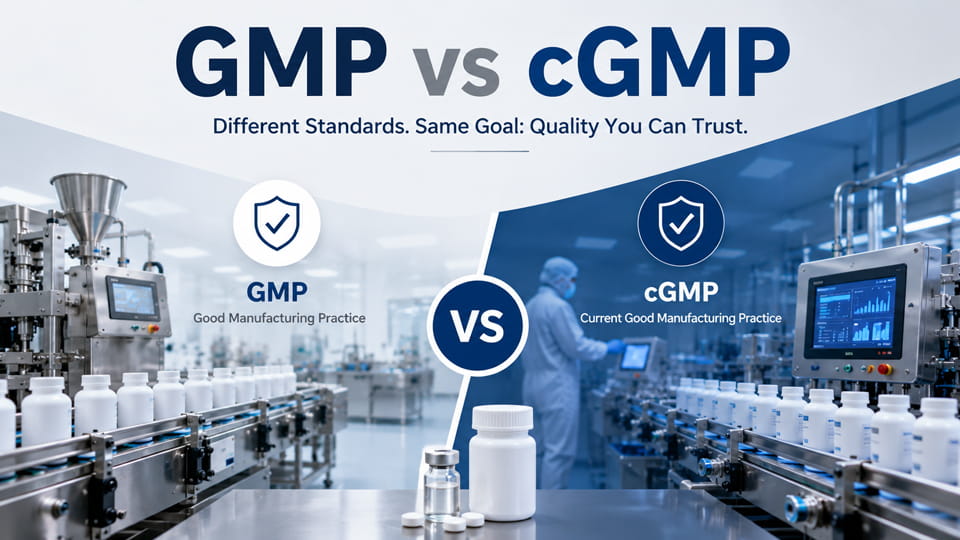
GMP vs cGMP adalah salah satu pertanyaan paling umum di manufaktur farmasi—dan untuk alasan yang bagus. Padahal kedua istilah tersebut berkaitan erat, mereka tidak identik. Memahami perbedaannya sangat penting bagi produsen farmasi, pembeli peralatan, manajer produksi, dan tim berkualitas karena standar ini mempengaruhi setiap tahap produksi, mulai dari desain fasilitas dan validasi proses hingga pemilihan peralatan dan kualitas produk. Secara khusus, itu “Saat ini” di dalam Praktik Manufaktur yang Baik Saat Ini (CGMP) mencerminkan harapan bahwa produsen terus mengadopsi teknologi terkini, sistem, dan praktik kualitas daripada mengandalkan metode yang sudah ketinggalan zaman.
Baik Anda berinvestasi pada lini pengemasan botol baru, meningkatkan jalur produksi yang ada, atau mempersiapkan inspeksi peraturan, memahami GMP vs cGMP dapat membantu Anda membuat keputusan yang lebih tepat. Dalam panduan ini, kami akan menjelaskan perbedaan utama antara GMP dan cGMP, menguraikan mereka persyaratan kepatuhan, dan tunjukkan betapa modernnya peralatan pengemasan farmasi mendukung lebih aman, lebih hemat, dan manufaktur yang sepenuhnya patuh.
Praktik manufaktur yang bagus (GMP) adalah kerangka jaminan mutu global untuk industri farmasi. WHO mendefinisikan GMP sebagai aspek jaminan kualitas yang memastikan produk diproduksi dan dikontrol secara konsisten sesuai standar kualitas yang sesuai. Demikian pula, Badan Obat Eropa (Ema) menggambarkan GMP sebagai minimum standar yang harus dipenuhi oleh pembuat obat dalam produksinya. Dalam praktiknya, GMP mencakup desain fasilitas, peralatan, bahan baku, pelatihan personel, prosedur tertulis, dan pengujian. Tujuannya adalah untuk memastikan setiap batch berkualitas tinggi, cocok untuk tujuan penggunaannya, dan sesuai dengan spesifikasinya.
Sementara WHO, EMA dan regulator lainnya menyebutnya “GMP,” istilah ini pada dasarnya dapat dipertukarkan dengan cGMP di luar AS. nyatanya, Panduan WHO mencatat bahwa GMP “juga disebut sebagai ‘cGMP’ atau GMP ‘saat ini’” dalam beberapa konteks. Bagi banyak produsen internasional, memenuhi pedoman GMP berarti mendapatkan hasil kualitas yang sama dengan yang kemudian ditekankan FDA dengan cGMP.
Praktik Manufaktur yang Baik Saat Ini (CGMP) adalah istilah FDA untuk peraturan ini di Amerika Serikat. FDA mendefinisikan cGMP sebagai sistem yang menjamin desain yang tepat, pemantauan dan pengendalian proses dan fasilitas manufaktur. Seperti GMP, cGMP bertujuan untuk memastikan bahwa produk obat mempunyai identitas, kekuatan, kualitas dan kemurnian yang mereka klaim. nyatanya, peraturan FDA secara eksplisit mencakup segala hal mulai dari kebersihan fasilitas dan peralatan hingga kualifikasi personel dan pencatatan (21 Bagian CFR 210 Dan 211).
Perbedaan penting adalah bahwa “C” dalam cGMP adalah singkatan dari saat ini. Artinya perusahaan harus menggunakan teknologi terkini, peralatan dan prosedur. Seperti yang dicatat oleh FDA, sistem dan peralatan yang “tercanggih” 10 atau 20 beberapa tahun yang lalu sekarang mungkin gagal dalam cGMP, karena standar kualitas dan teknologi maju seiring berjalannya waktu. Pendeknya, cGMP memiliki persyaratan kualitas yang sama seperti GMP namun menambahkan penekanan pada perbaikan berkelanjutan dan modernisasi. Kepatuhan terhadap cGMP ditegakkan melalui inspeksi FDA, dan kegagalan untuk memenuhi standar-standar ini secara hukum menjadikan obat tersebut “dipalsukan,” meskipun lolos uji laboratorium.
Sedangkan GMP dan cGMP bertujuan untuk hasil yang sama (aman, obat-obatan berkualitas tinggi), perbedaannya terletak pada penekanan dan penggunaannya. Tabel di bawah ini merangkum perbedaan inti:
| Aspek | GMP (Praktik manufaktur yang bagus) | CGMP (GMP saat ini, FDA) |
| Terminologi | “Praktik Manufaktur yang Baik” – digunakan oleh WHO, Ema, gambar/s, dll.. | “Praktik Manufaktur yang Baik Saat Ini” – istilah FDA |
| Konteks Peraturan | Standar global yang diterapkan oleh banyak negara (SIAPA, gambar/s, GMP UE) | Peraturan khusus AS (21 CFR 210–211) |
| Fokus | Memenuhi standar kualitas yang ditetapkan secara konsisten | Memenuhi standar Dan menjaga teknologi/proses tetap mutakhir |
| Persyaratan Teknologi | Umumnya statis (memenuhi standar dasar) | Harus menggunakan peralatan dan metode terbaru yang tervalidasi |
| Dokumentasi | Diperlukan SOP dan catatan yang menyeluruh | Dokumentasi yang lebih ketat (catatan elektronik, jalur audit) |
| Validasi | Validasi proses dan pembersihan diharapkan | Kualifikasi peralatan (IR/WH/PQ) dan proses validasi wajib |
| Sistem Mutu | Sistem Manajemen Mutu Standar | Peningkatan QMS berbasis risiko; siklus perbaikan berkelanjutan |
| Inspeksi & Pembaruan | Inspeksi berkala untuk memverifikasi kepatuhan GMP | Sama, tapi FDA mengharapkan pembaruan berkelanjutan; apa yang tadinya patuh mungkin menjadi ketinggalan jaman |
| Ruang Lingkup Peraturan | AKU / AKU: kepatuhan yang ditegakkan oleh EMA & lembaga nasional | KITA: kepatuhan yang ditegakkan oleh FDA; ketidakpatuhan mengarah pada tindakan hukum |
Intinya, CGMP adalah GMP plus harapan untuk mengimbangi praktik terbaik modern. Seperti yang dijelaskan oleh salah satu analisis industri, cGMP “berfokus pada perbaikan berkelanjutan dan berarti standar dan teknologi terkini digunakan untuk menjamin kualitas, sedangkan GMP dianggap sebagai seperangkat prinsip”. Secara praktis, cGMP membawa semua persyaratan GMP, tetapi dengan penekanan ekstra yang harus dilakukan oleh perusahaan secara aktif meningkatkan proses dan dokumentasi.
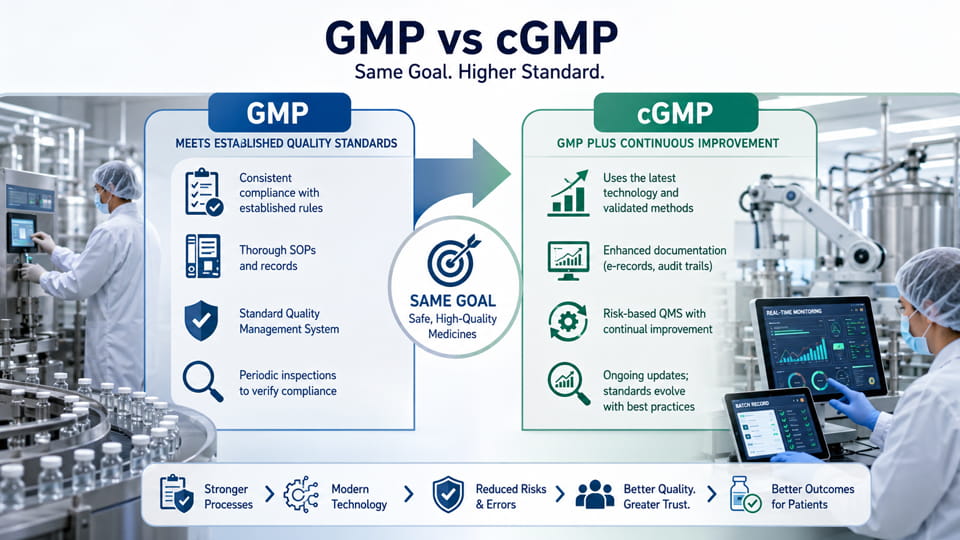
Kata “Terkini” dalam cGMP bukan sekadar kata kunci: itu menandakan fasilitas itu, mesin dan sistem mutu tidak boleh ketinggalan jaman. Misalnya, jika metode produksi atau peralatan yang lebih tua ternyata lebih rendah kualitasnya, Standar cGMP berarti perusahaan harus menerapkan solusi yang lebih baru. Pendekatan ini mendorong inovasi: perusahaan yang mengadopsi cGMP berinvestasi dalam catatan batch elektronik, sistem inspeksi otomatis, pemantauan data waktu nyata dan kemajuan lain yang meningkatkan kualitas dan mengurangi kesalahan.
Huruf “c” dalam cGMP menggarisbawahi poin sederhana namun penting: kepatuhan berarti menggunakan saat ini pengetahuan dan teknologi. Hal ini penting karena ilmu pengetahuan dan peralatan farmasi berkembang pesat. Apa metode pembersihan yang valid 20 tahun lalu mungkin tidak lagi memenuhi standar kontaminasi saat ini, dan alat baru (seperti sistem manajemen mutu digital) menawarkan kemampuan penelusuran yang lebih baik dibandingkan log kertas.
Regulator secara rutin berharap produsen akan melakukan hal tersebut secara aktif meningkatkan. Misalnya, Panduan FDA mencatat bahwa peralatan harus dibuat dan ditempatkan untuk memudahkan pembersihan dan mencegah kontaminasi – yang menyiratkan bahwa desain harus beradaptasi seiring dengan pembelajaran lebih lanjut tentang pengendalian kontaminasi.. Jika sterilisasi atau bahan yang lebih baik tersedia, cGMP menyerukan untuk menggabungkannya. Sorotan Jinlupacking: “Kata ‘Saat Ini’ dalam cGMP menekankan bahwa produsen harus menggunakan teknologi dan sistem terkini," yang mendorong perbaikan berkelanjutan dalam proses manufaktur.
Dalam praktiknya, ini berarti fasilitas harus memiliki sistem mutu yang meninjau dan merevisi proses ketika peraturan atau standar industri diperbarui. Bagian 21CFR FDA 11 (untuk sistem komputerisasi) adalah salah satu contohnya: itu ditambahkan untuk menangani catatan elektronik dan tanda tangan. Di bawah cGMP, perusahaan farmasi harus memasukkan login unik, jalur audit dan fitur keamanan ke dalam peralatan dan perangkat lunak terkomputerisasi mereka. Jika sebuah perusahaan terus hanya menggunakan kertas log, itu tidak akan memenuhi standar saat ini.
Area penting lainnya adalah integritas data. Regulator sekarang meneliti catatan batch elektronik, mensyaratkan bahwa semua perubahan dapat dilacak ke pengguna yang berwenang. Panduan kepatuhan yang direferensikan mencatat hal itu 21 Bagian CFR 11 “mengmandatkan login pengguna unik, jalur audit dan tanda tangan elektronik untuk memastikan integritas data”. Itu bukanlah bagian asli dari GMP beberapa dekade yang lalu. Karena itu, cGMP saat ini berarti meningkatkan peralatan dan kontrol sehingga setiap tindakan di lini produksi dapat dilakukan (pengaturan mesin berubah, peringatan kualitas) dicatat dan dilindungi.
Dalam ringkasan, “Terkini” dalam cGMP berarti tidak pernah berpuas diri. Hal ini mendorong perusahaan untuk secara teratur memvalidasi peralatan baru, melatih kembali staf tentang metode yang lebih baik, dan menerapkan praktik kualitas terkini. Hal ini menghasilkan peningkatan keamanan dan kepatuhan produk secara konsisten. Qualityze mencatat bahwa alasan utama mengapa cGMP penting adalah karena hal itu “mendorong perbaikan berkelanjutan” – memastikan perusahaan selalu menggunakan teknologi terbaru untuk menjamin kualitas.
Entah disebut GMP atau cGMP, persyaratan inti tertentu bersifat universal dalam pembuatan dan pengemasan farmasi. Elemen-elemen umum ini penting untuk kepatuhan di bawah FDA, Aturan WHO atau EMA:
Regulator seperti WHO menyatakan bahwa GMP mendefinisikan “ukuran dan aktivitas kualitas untuk produksi dan pengendalian obat,” dan memastikan semuanya dari “proses [makhluk] didefinisikan dengan jelas, divalidasi dan ditinjau” hingga personel dan lokasi “cocok untuk produksi”. Dalam praktiknya, ini mencakup semua yang tercantum di atas.
Di area pengemasan, standar sering kali diterjemahkan menjadi aturan desain tertentu (sebagai Catatan panduan kepatuhan Jinlu). Misalnya, mesin di jalur GMP harus mudah dibersihkan (baja tahan karat halus, tidak ada retak atau kaki mati) dan tervalidasi sepenuhnya. Dokumentasi seperti Kualifikasi Instalasi (IQ), Kualifikasi Operasional (oke), dan Kualifikasi Kinerja (PQ) diperlukan sebelum dan selama produksi. Tanpa kontrol ini, audit akan menandai ketidakpatuhan.
Standar yang harus Anda penuhi bergantung pada pasar Anda:
Misalnya, FDA secara eksplisit merekomendasikan agar fasilitas penjualan secara global mematuhi GMP saat ini. Juga, EMA menyatakan bahwa “setiap produsen obat yang ditujukan untuk pasar UE harus mematuhi GMP UE di mana pun mereka berada.”. Dalam praktiknya, perusahaan farmasi terkemuka membangun fasilitas untuk memenuhi cGMP FDA sebagai dasar dan kemudian menyesuaikan variasi lokal (seperti pelabelan atau bahasa dokumentasi).
Akhirnya, pilihannya bukanlah salah satu/atau: obat-obatan modern diharapkan memenuhi isi dan semangat GMP. Apakah Anda menyebutnya GMP atau cGMP, praktik di lapangan – kamar bersih, peralatan yang divalidasi, QC yang ketat, dan pencatatan yang menyeluruh – semuanya merupakan bagian dari budaya mutu yang sama.
Kapan memilih mesin pengemasan farmasi, pembeli harus mencari fitur yang secara khusus mendukung prinsip GMP/cGMP:
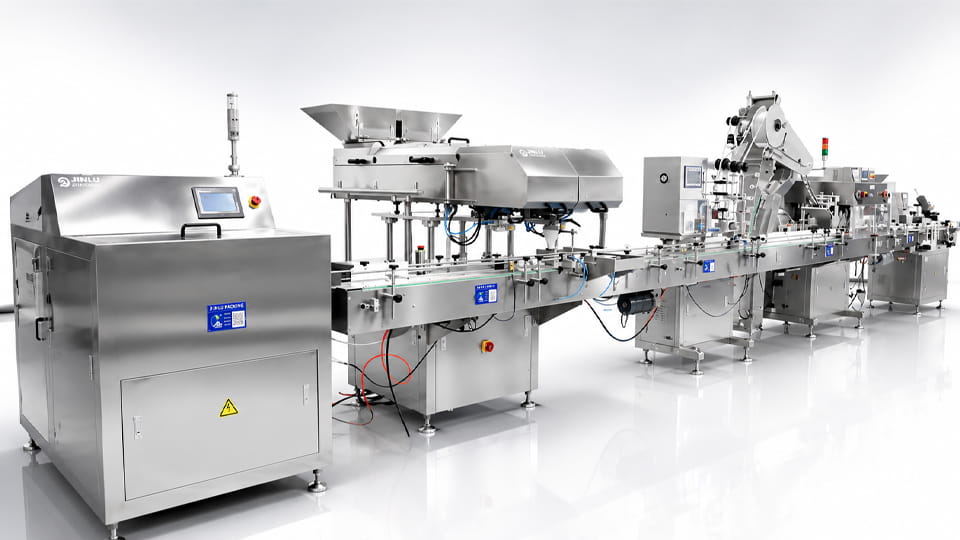
Angka: Lini pengemasan botol farmasi modern mengintegrasikan penguraian, isian, pembatasan, penyegelan dan pelabelan dengan inspeksi bawaan. Mesin ini menggunakan konstruksi dan sensor baja tahan karat sanitasi untuk kontrol kualitas.
Dengan memastikan fitur-fitur ini, manajer pengadaan dapat yakin bahwa lini pengemasan mereka akan mendukung produksi yang patuh. Catatan Jinlu asli, mesin kami dibuat dengan bahan terbaik dan konstruksi canggih sesuai standar CE dan GMP, dan pengemas kantong kami memenuhi persyaratan produksi cGMP.
Mematuhi GMP dan khususnya cGMP membawa manfaat yang signifikan:
Dalam ringkasan, Kepatuhan GMP/cGMP bukan hanya beban peraturan – namun juga melindungi pasien, membangun kepercayaan, dan memastikan bisnis yang dapat diandalkan. Hal ini juga memberikan keunggulan bagi perusahaan dengan meningkatkan efisiensi dan memungkinkan distribusi global.
GMP dan cGMP merupakan landasan mutu farmasi, memastikan bahwa setiap produk diproduksi dengan aman dan konsisten. Dalam ringkasan, GMP menyediakan kerangka penting kebersihan, dokumentasi dan validasi, ketika CGMP menambahkan kebutuhan perbaikan berkelanjutan dan teknologi modern. Untuk peralatan pengemasan, ini berarti berinvestasi pada otomatisasi, mesin tervalidasi yang terbuat dari bahan sanitasi.
Dan Jeinlu memetik, kami membangun mesin kami dengan mempertimbangkan standar-standar ini. Dengan memilih peralatan Jinlu yang sesuai dengan cGMP – seperti milik kami Mesin pengisian kapsul otomatis, Penekan Tablet, Pengemas Blister, Mesin Karton Dan Mesin Penghitung – Anda dapat membuat yang tervalidasi sepenuhnya, lini produksi siap audit. Setiap mesin dilengkapi dengan dokumentasi dan desain higienis yang diperlukan untuk inspeksi GMP dan FDA.
Siap memastikan produksi Anda terpenuhi (C)standar GMP? Hubungi pakar Jinlu hari ini untuk mendiskusikan persyaratan lini pengemasan Anda atau meminta penawaran. Tim kami akan membantu menyesuaikan paket peralatan yang tepat untuk menjaga kepatuhan produk Anda, aman dan berkualitas tinggi.
GMP mengacu pada persyaratan dasar “Praktik Manufaktur yang Baik” untuk produksi obat. cGMP adalah singkatan dari “GMP saat ini,” artinya persyaratan tersebut ditambah harapan akan perbaikan terus-menerus. Dalam cGMP, produsen harus menggunakan peralatan terkini, metode dan sistem mutu. Dengan kata lain, cGMP menambahkan bahwa proses ditinjau dan dimodernisasi secara berkala.
Huruf “c” berarti “saat ini,menekankan bahwa suatu perusahaan harus selalu memenuhi peraturan dan standar terkini. Hal ini memastikan produsen tidak bergantung pada praktik yang sudah ketinggalan zaman. Seperti yang dijelaskan Scilife, cGMP berarti menggunakan sistem dan teknologi modern untuk memenuhi ekspektasi peraturan saat ini, daripada metode lama yang mungkin tidak lagi memadai.
Ya. AS. peraturan FDA (21 Bagian CFR 210 Dan 211) ditulis sebagai cGMP. Secara hukum, produk farmasi apa pun untuk A.S. pasar harus diproduksi berdasarkan Cara Manufaktur yang Baik saat ini. Ketidakpatuhan dapat mengakibatkan surat peringatan atau penutupan.
Jika hanya praktik GMP yang sudah ketinggalan zaman yang digunakan, perusahaan berisiko gagal dalam inspeksi. Regulator mengharapkan bukti teknologi dan validasi terkini. Di bawah cGMP, memenuhi pedoman lama saja tidaklah cukup. Misalnya, penggunaan catatan kertas sebagai pengganti catatan elektronik yang divalidasi dapat dikutip. Dalam praktiknya, Kepatuhan cGMP berarti meskipun suatu proses memiliki riwayat GMP, hal ini harus ditinjau dengan mempertimbangkan standar yang berlaku saat ini.
Sebagian besar pasar farmasi di seluruh dunia telah menerapkan persyaratan serupa GMP. Lebih 100 negara-negara di dunia telah mengadopsi standar GMP WHO ke dalam undang-undang nasional. Terminologinya bervariasi (ada yang bilang GMP, beberapa cGMP, beberapa hanya “GMP”), tapi hampir semua regulator utama (FDA, Ema, SIAPA) memerlukan sistem kualitas yang setara dengan cGMP.
WHO sendiri biasanya hanya merujuk pada “GMP,” tetapi mendefinisikannya secara luas. Dalam dokumen WHO, “GMP (juga disebut sebagai cGMP atau 'GMP saat ini')” menjelaskan jaminan kualitas untuk memastikan produk diproduksi secara konsisten sesuai standar kualitas. Jadi, WHO menggunakan istilah-istilah tersebut secara bergantian. Konsep menjadi “terkini” tertanam dalam semua panduan GMP modern, meskipun WHO tidak selalu menggunakan “c.”
Sangat. Desain peralatan sangat penting untuk memenuhi GMP. Misalnya, mesin harus mudah dibersihkan (tahan karat, tidak ada celah tersembunyi) dan harus mendukung otomatisasi dan pengambilan data. Peralatan yang dirancang dengan buruk dapat menyebabkan kontaminasi atau campur aduk. Sebaliknya, peralatan yang tepat (seperti mesin Jinlu) dibuat dengan fitur GMP untuk memastikan kepatuhan.
Validasi peralatan mendokumentasikan bahwa mesin berfungsi sebagaimana mestinya. IQ (Kualifikasi Instalasi) memverifikasi mesin telah diatur dengan benar sesuai desain. oke (Kualifikasi Operasional) menguji bahwa setiap fungsi berfungsi dalam kondisi yang berbeda-beda. PQ (Kualifikasi Kinerja) membuktikan peralatan secara konsisten mencapai keluaran yang dibutuhkan selama produksi aktual. Ini adalah persyaratan standar GMP untuk menunjukkan bahwa peralatan layak digunakan.
Mesin yang patuh mengotomatiskan kontrol kualitas dan mencatat data. Misalnya, pengisi kapsul otomatis menimbang dosis dengan tepat dan menolak kapsul yang buruk, menghilangkan kesalahan manusia dan kontaminasi. Sistem data terintegrasi secara otomatis mencatat informasi batch dengan jejak audit, memenuhi aturan integritas data. Dengan memilih perlengkapan dengan fitur tersebut, sebuah perusahaan membuat kepatuhan cGMP lebih mudah dicapai.
Mesin Jinlu dirancang untuk produksi farmasi dengan mempertimbangkan sepenuhnya kebutuhan GMP. Mereka menyediakan templat dan dukungan IQ/OQ/PQ yang lengkap, konstruksi tahan karat berkualitas tinggi, dan otomatisasi tingkat lanjut (seperti sistem visi terintegrasi dan desain sanitasi) untuk membantu memastikan saluran Anda tetap patuh. Layanan mereka mencakup pengujian FAT/SAT di tempat dan dukungan dokumentasi untuk menyederhanakan proses kualifikasi Anda.
Referensi:
1.Q&A tentang Persyaratan CGMP -- KITA. Badan Pengawas Obat dan Makanan
2.Pedoman mutu: manufaktur —— Badan Obat Eropa
3.Praktik Manufaktur yang Baik Saat Ini (CGMP) Peraturan -- KITA. Badan Pengawas Obat dan Makanan
4.Praktik Manufaktur yang Baik -- SIAPA
5.TRS 986 – Mencaplok 2: Praktik manufaktur yang baik dari WHO untuk produk farmasi: Prinsip utama -- SIAPA
6.EudraLex – Volume 4 – Praktik manufaktur yang bagus (GMP) pedoman —— Komisi Eropa
7.Pedoman GMP ——ispe.org