Meluncurkan produk farmasi baru ke pasar melibatkan lebih dari sekadar mengembangkan formulasi yang efektif. Salah satu keputusan terpenting yang dihadapi produsen adalah memilih kemasan yang tepat. Kemasan yang dipilih untuk suatu produk farmasi dapat secara langsung mempengaruhi stabilitasnya, umur simpan, Kepatuhan Pengaturan, keselamatan transportasi, dan pengalaman pasien. Paket yang gagal melindungi dari kelembapan, oksigen, lampu, atau kontaminasi dapat menurunkan kualitas produk jauh sebelum mencapai pengguna akhir. Oleh karena itu, pengemasan bukan sekadar wadah—itu adalah bagian penting dari sistem perlindungan produk.
Untuk produsen farmasi, manajer produksi, dan tim pengadaan, memilih kemasan yang tepat memerlukan keseimbangan beberapa faktor, termasuk bentuk sediaan, kompatibilitas material, kinerja penghalang, keselamatan pasien, efisiensi produksi, dan skalabilitas di masa depan. Apakah produk tersebut berupa tablet, kapsul, bubuk, cairan, atau suntik, solusi pengemasan yang tepat dapat membantu memastikan integritas produk sekaligus mendukung produksi komersial yang efisien. Dalam panduan ini, kita akan mengeksplorasi faktor-faktor utama yang harus dipertimbangkan oleh setiap produsen ketika memilih kemasan untuk produk farmasi baru.
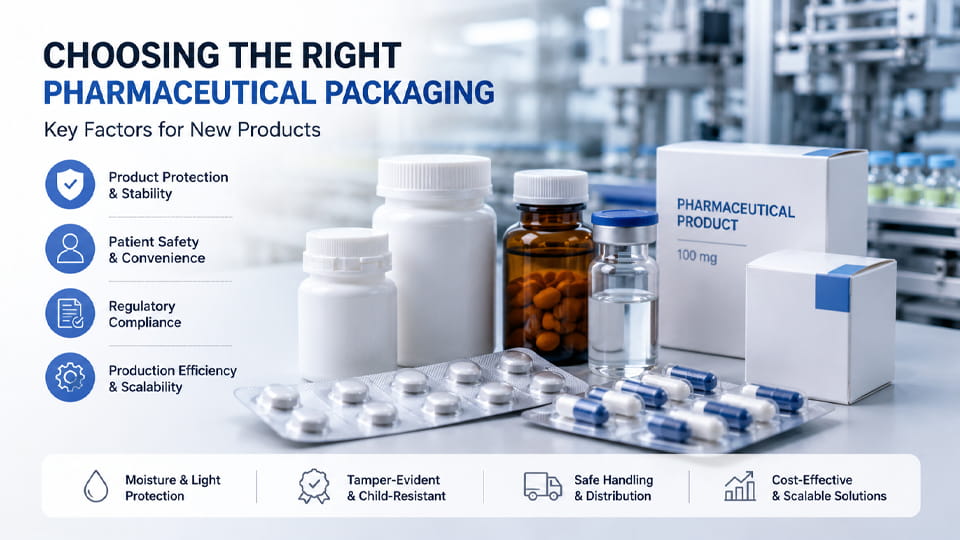
Mengapa Pemilihan Kemasan Penting dalam Farmasi
Kemasan Farmasi adalah vital, bukan opsional. Berbeda dengan kemasan konsumen biasa, kemasan farmasi harus melindungi integritas obat selama masa simpannya. Pedoman WHO dan peraturan menekankan bahwa kemasan harus melindungi obat-obatan kelembaban, lampu, oksigen dan ancaman eksternal lainnya. Dengan kata lain, itu “menjaga stabilitas dan kualitas produk obat” dan mencegah pembusukan atau gangguan.
Fungsi utama kemasan antara lain:
- Perlindungan produk: Jauhkan dari kelembapan, oksigen, lampu, panas dan kontaminan. Misalnya, panduan USP mencatat hal itu pil padat “perlu dilindungi dari uap air” karena kelembapan dapat mengubah potensi atau disolusi obat. Bahan dengan penghalang tinggi (aluminium foil, film berlapis, kaca kuning) sering digunakan dimana sensitivitasnya tinggi.
- Kepatuhan terhadap peraturan: Kemasan harus memenuhi FDA, EMA dan SIAPA Persyaratan GMP. Ini termasuk tepat integritas penutupan kontainer (CCI), bahan yang divalidasi, dan fitur seperti anti rusak segel. Kemasan tahan anak diperlukan oleh banyak obat untuk mencegah konsumsi yang tidak disengaja. Serialisasi dan ketertelusuran (barcode unik di setiap paket) sekarang wajib di pasar-pasar utama (FDA DSCSA, FMD UE).
- Keamanan dan kepatuhan pasien: Desain kemasan harus mencegah kesalahan pemberian dosis dan penyalahgunaan. Label anti rusak dan tutup anti bocor “melindungi dari keracunan yang tidak disengaja”. Fitur yang mudah digunakan (mudah dibuka, alat bantu dosis, kalender melepuh) membantu pasien meminum obat dengan benar.
- Merek dan komunikasi: Kemasan sekunder (karton, label) menyampaikan instruksi, peringatan, dan branding. Menurut para ahli, label harus tahan lama dan jelas untuk menghindari campur aduk. Memang, satu analisis hampir ditemukan 50% penarikan kembali obat-obatan terkait dengan masalah pengemasan/pelabelan.
Pendeknya, pengemasan adalah perlindungan aktif. Gagal memilih paket yang tepat dapat menyebabkan API terdegradasi, membahayakan pasien, dan sakit kepala peraturan. Kemasan yang tepat “melindungi kualitas obat” dan dengan demikian mendukung kemanjuran dan reputasi produk.

Melangkah 1: Pahami Karakteristik Produk Farmasi Baru Anda
Langkah pertama adalah a audit produk menyeluruh. Bertanya: Apa bentuk sediaannya (tablet, kapsul, bubuk, cairan, dapat disuntikkan, dll.)? Sensitivitas apa yang dimiliki obat tersebut (kelembaban, oksigen, lampu, panas)? Apakah perlu kontrol dosis khusus (inhaler dosis terukur, penitis, jarum suntik yang sudah diisi sebelumnya)?
- Bentuk sediaan: Tablet dan kapsul biasanya dosis padat dan sering dikemas dalam kemasan atau botol melepuh. Cairan/suspensi masuk ke dalam botol atau botol. Dibutuhkan suntikan botol steril, ampul atau jarum suntik yang sudah diisi sebelumnya. Gas/inhaler menggunakan tabung khusus. Bubuk atau butiran bisa dikemas sachet, bungkusan tongkat atau botol.
- Sensitivitas kimia/fisik: Apakah obat tersebut higroskopis atau rawan oksidasi? Obat yang sangat sensitif terhadap kelembaban (misalnya. tablet effervescent) membutuhkan kemasan penghalang tinggi seperti botol melepuh Alu-Alu atau botol berlapis pengering. Kebutuhan senyawa peka cahaya wadah buram atau berwarna. Obat reaktif memerlukan bahan inert (misalnya. kaca, polimer tertentu).
- Umur simpan dan stabilitas: Pertimbangkan kontrol suhu yang diperlukan (pendinginan) atau kondisi vakum/steril. Beberapa vaksin atau produk biologi mungkin memerlukan kemasan rantai dingin atau botol khusus.
Poin penting: Kemasan primer harus lembam dan protektif. Seharusnya tidak melarutkan atau menyerap obat, dan itu harus menjaga lingkungan yang tertutup. Misalnya, FDA mencatat bahwa wadah oral padat harus memiliki a “tingkat perembesan uap air yang rendah, dan sistem penutupan harus membuat segel”. Melakukan pengujian kompatibilitas dan dapat diekstrak dengan calon komponen kemasan sangatlah penting.
Daftar periksa untuk audit produk:
- Bentuk/jenis sediaan (tablet, kapsul, cairan, dll.)
- Kondisi penyimpanan/stabilitas (suhu, kelembaban, lampu)
- Persyaratan dosis/administrasi (penitis, pompa, satuan dosis)
- Pertimbangan penggunaan pasien (pengobatan anak vs dewasa, mobilitas, ramah senior)
- Kendala peraturan (misalnya. adalah informasi pasien bagian dari paket utama?)
Pemahaman ini akan mengarahkan pilihan Anda terhadap kemasan utama (kemasannya bersentuhan langsung dengan obat). Berikutnya, kami mendiskusikan opsi-opsi itu.
Melangkah 2: Pilih Kemasan Utama yang Sesuai
Kemasan primer adalah wadah langsung yang menampung obat. Itu langsung menyentuh obatnya. Jenis kemasan primer yang umum meliputi Paket blister, botol (plastik/kaca), botol/ampul, kantong, tabung, dll.. Masing-masing memiliki pro/kontra:
- Paket blister (Alu-Alu or Alu-PVC): Ideal untuk bentuk padat dosis satuan (tablet, kapsul). Mereka menyediakan penghalang kelembaban/cahaya yang sangat baik, khususnya Alu-Alu (foil bentuk dingin) jenis. Lepuh memastikan setiap dosis tersegel sampai digunakan, meningkatkan kepatuhan dan mengurangi kontaminasi silang. Lepuh modern dapat dibuat tahan terhadap anak-anak. Peralatan: Kecepatan tinggi mesin pengepakan melepuh menangani pembentukan, makanan, penyegelan dan pemotongan panas (misalnya. Mesin Blister Alu-Alu JinluPacking).
- Botol (Plastik atau Kaca): Umum untuk kemasan beberapa unit (sirup, kapsul, tablet). Botol hemat biaya untuk volume besar. Botol kaca (Borosilikat tipe I) menawarkan kelembaman kimia yang sangat baik dan dapat berwarna kuning untuk perlindungan cahaya. Botol plastik (HDPE, hal) ringan dan tahan pecah tetapi biasanya memiliki permeabilitas kelembapan yang lebih tinggi. Botol sering digunakan topi tahan anak. Peralatan: Mesin penghitung/pengisi mengisi dan menutup botol, dan bisa masukkan pengering atau segel foil (lihat pada garis hitung). Jalur pengisian botol Jinlu dan mesin penutup otomatis mengintegrasikan langkah-langkah ini.
- Sachet & Paket Tongkat: Digunakan untuk bubuk, butiran, atau cairan dosis tunggal (misalnya. antibiotik, ORS). Ini adalah kantong foil fleksibel atau laminasi yang disegel di semua sisi. Sachet menawarkan penghalang yang sangat baik (sering dengan aluminium foil) dan kenyamanan. Peralatan: Bentuk mesin pengemas sachet, mengisi, dan tutup kantong ini sekaligus.
- Botol & Ampul: Standar untuk suntikan steril (solusi, bubuk terliofilisasi). Botol (kaca atau plastik) dengan sumbat karet menjaga sterilitas. Ampul (kaca) tertutup rapat sampai digunakan. Keduanya memberikan kemurnian tinggi dan cocok untuk jarum suntik. Peralatan: Garis pengisian botol, mesin capping dan crimping digunakan (seringkali dengan area aliran laminar untuk sterilitas).
- Yang lain: Tabung (logam atau plastik) umum untuk salep/krim. Jarum suntik atau inhaler yang sudah diisi sebelumnya (MDI/DPI) melibatkan pengemasan perangkat khusus. Ini sering kali memerlukan peralatan pengisian dan perakitan khusus.
Kesesuaian setiap opsi bergantung pada produk Anda:
- Biaya vs. Perlindungan: Tabel di bawah membandingkan jenis paket utama:
| Jenis |
Terbaik untuk |
Tingkat Perlindungan |
Biaya |
Peralatan |
| Paket blister |
Tablet, Kapsul |
Sangat tinggi (Kelembapan/Cahaya) |
Sedang |
Mesin Pengepakan Blister |
| Botol |
Tablet, sirup, pil |
Sedang (bagus dengan sisipan) |
Rendah |
Jalur Pengisian/Pembatasan Botol |
| Sachet/Tongkat |
bubuk, butiran |
Tinggi (Penghalang foil) |
Sedang |
Mesin pengemasan sachet |
| Botol/Ampul |
Suntikan, serum |
Sangat tinggi (Kaca steril) |
Tinggi |
Pengisian Botol & Garis Penyegelan |
Pilih paket utama yang sesuai dengan bentuk sediaan dan kebutuhan penghalang. Misalnya, tablet yang sensitif terhadap kelembapan mungkin memerlukan Alu-Alu melepuh atau botol kaca kuning dengan pengering. Tablet OTC yang lebih biasa dapat dikemas dalam botol plastik dengan tutup kedap serat (ditambah fitur tahan anak).
Tip: Jika kepatuhan dosis satuan itu penting (MISALNYA., distribusi rumah sakit atau paket perjalanan), lembaran melepuh atau kemasan stik sering kali lebih disukai. Untuk fleksibilitas (dosis dapat diubah), botol lebih baik.
Melangkah 3: Pertimbangkan Persyaratan Stabilitas dan Umur Simpan
Keputusan pengemasan tidak dapat dipisahkan dari stabilitas. Wadah yang salah dapat menyebabkan degradasi atau kegagalan label. Pertimbangan utama:
- Sifat penghalang: Gunakan bahan yang menghalangi faktor kritis. Untuk obat yang sensitif terhadap kelembaban, diperlukan foil atau kaca dengan penghalang tinggi. Misalnya, lecet aluminium bentuk dingin pada dasarnya memberikan nol masuknya uap air. Panduan stabilitas FDA/ICH mencatat bahwa produk berada dalam wadah yang benar-benar kedap air (MISALNYA., lepuh foil atau kaca tertutup) dapat diuji dalam kondisi normal tanpa studi kelembaban khusus. Sebaliknya, paket semi-permeabel (seperti beberapa plastik) memerlukan evaluasi kelembaban yang cermat.
- Perlindungan cahaya: API yang sensitif terhadap cahaya memerlukan kemasan buram atau kuning. Misalnya, botol kaca kuning atau kantong logam melindungi UV. Praktik yang umum dilakukan adalah membungkus botol bening dengan bungkus aluminium jika diperlukan.
- Kesesuaian: Pastikan bahan kemasan tidak bereaksi dengan obat. Kaca bersifat inert, namun beberapa plastik dapat melepaskan atau menyerap senyawa. Melakukan studi yang dapat diekstraksi/dapat larut pada komponen utama. Panduan peraturan (FDA, Ema) mengharapkan integritas penutupan kontainer (CCI) pengujian sepanjang umur simpan.
- Penentuan umur simpan: Studi stabilitas (Saya Q1A/R2) harus menggunakan sistem penutupan kontainer yang diusulkan. Jika uji umur simpan menunjukkan penurunan, Anda mungkin perlu menyesuaikan kemasannya (misalnya. beralih ke penghalang yang lebih baik) atau label petunjuk penanganan/penyimpanan.
- Fitur-fitur canggih: Beberapa paket mengintegrasikan pengering atau pemulung oksigen. Laminasi multi-lapis (PET/aluminium/PE) sering digunakan untuk distribusi global. Untuk perlindungan presisi sangat tinggi, kemasan aktif (penyerap kelembaban tertanam) dapat digunakan.
Daftar periksa untuk kompatibilitas stabilitas:
- Pilih bahan primer dengan penghalang tinggi jika diperlukan (Alu-Alu, kaca, laminasi).
- Verifikasi metode penyegelan (segel panas, topi) mencapai transmisi uap air yang rendah (MVTR).
- Melakukan stabilitas yang dipercepat (40°C/75%RH) sesuai ICH untuk memastikan tidak ada masuknya uap air atau perubahan kimia.
- Rencanakan integritas penutupan kontainer (pengujian masuknya vakum atau pewarna) terutama untuk produk cair/steril.
- Pastikan kemasan dapat menahan guncangan distribusi (pengujian jatuh/getaran dengan kemasan sekunder/tersier).
Dengan memilih kemasan yang memenuhi persyaratan stabilitas di awal, Anda menghindari reformulasi atau pengemasan ulang yang mahal di kemudian hari.
Melangkah 4: Evaluasi Kenyamanan dan Kepatuhan Pasien
Di luar perlindungan, kemasan modern harus membantu pasien menggunakan obatnya dengan benar. Desain kemasan secara langsung mempengaruhi kepatuhan dan keselamatan. Mempertimbangkan:
- Pembukaan/Kemudahan penggunaan: Pasien lanjut usia mungkin kesulitan dengan topi yang ketat. Menawarkan topi ramah senior atau segel yang mudah dikupas bisa bermanfaat. Untuk obat dosis satuan, kalender melepuh (diberi label hari atau waktu) dapat mengingatkan pasien untuk meminum pil yang benar.
- Alat bantu dosis: Jika berlaku, sudah termasuk gelas ukur/sendok untuk cairan, dropper untuk oftalmik, atau pompa dosis terukur. Hapus tanda pada wadah (wisuda, pita warna) meningkatkan akurasi.
- Portabilitas: Jika pasien bepergian atau membawa obat-obatan, sachet kompak atau botol kecil berguna. Fitur anti kerusakan meyakinkan keselamatan.
- Fitur kepatuhan: Beberapa paket utama dirancang untuk kepatuhan: MISALNYA., dispenser pil dengan alarm internal, atau kartu blister pintar yang melacak penggunaan. Jika kepatuhan yang tinggi itu penting, pertimbangkan inovasi semacam itu.
- Label dan sisipan: Pastikan jelas, instruksi multibahasa pada karton atau brosur. Pengemasan yang baik membantu apoteker dan pasien dengan label yang terbaca, grafik dosis, dan ikon penyimpanan.
Intinya, bertanya: Akankah pasien menemukan paket ini mudah dan aman untuk digunakan? Jika tidak, mereka mungkin menyalahgunakan atau meninggalkan produk. Termasuk fitur yang berpusat pada pasien (kunci anak, mudah dibuka, pelabelan yang jelas) juga memenuhi regulator yang menekankan keselamatan pasien.
Melangkah 5: Pastikan Kepatuhan Terhadap Peraturan
Kemasan farmasi diatur secara ketat. Masalah kepatuhan utama:
- Tahan terhadap anak-anak (Kr) persyaratan: Banyak negara (KITA, UE, AU) mengamanatkan kemasan CR untuk obat oral berisiko tinggi. WHO mencatat hal itu “penutupan yang tahan anak telah dikembangkan” untuk melindungi anak-anak. Pastikan obat resep oral padat dan cair menggunakan tutup CR bersertifikat atau mekanisme putar jika diwajibkan oleh undang-undang. (Misalnya. KITA 16 CFR 1700 emas standar UE EN 14375).
- Segel anti rusak: FDA dan lainnya memerlukan bukti bahwa paket belum dibuka. Pita perusak, bungkus menyusut, atau segel yang lepas biasa terjadi pada botol; segel foil biasa ditemukan pada stoples. Bahkan kemasan lepuh pun akan sulit dibuka tanpa kerusakan yang nyata.
- Pelabelan: Paket primer dan sekunder harus memuat semua informasi yang diperlukan (nama obat, kekuatan, bentuk sediaan, nomor batch/lot, kadaluarsa, kondisi penyimpanan, pabrikan). Font harus dapat dibaca dan sesuai dengan pedoman farmakope. Misalnya, FDA 21 CFR 201.15 mencakup daya tahan label.
- Serialisasi dan ketertelusuran: Peraturan seperti DSCSA FDA (KITA) dan Petunjuk Obat Palsu UE memerlukan kode unik (misalnya. 2D barcode) pada setiap unit yang dapat dijual. Desain kemasan harus mengakomodasi pencetakan atau pengetsaan nomor seri dan kode matriks data pada strip blister atau label botol. Lini pengemasan Anda mungkin memerlukan printer pengkodean dan sistem visi, dan integrasi dengan database track-and-trace.
- Praktik Manufaktur yang Baik (GMP): Garis pengemasan harus memenuhi GMP (kemampuan bersih, ketertelusuran material, dll.). Semua paket utama yang digunakan harus memenuhi syarat GMP (misalnya. ISO 15378 untuk bahan kemasan). Mesin seharusnya IR/WH/PQ memenuhi syarat. (Lihat di bawah untuk peralatan Pengepakan Jinlu).
Tip peraturan utama: Jangan menganggap kepatuhan sebagai sebuah renungan. Misalnya, kegagalan menyertakan fitur anti-rusak dapat memblokir registrasi produk. Tinjau kembali peraturan khusus negara sejak dini – misalnya. USP <661> untuk wadah plastik, CFR 211 untuk kontrol pengemasan. Selalu verifikasi bahwa pengemasan dan peralatan pengemasan yang dipilih dapat memenuhi standar ini.
Melangkah 6: Menyeimbangkan Biaya Pengemasan dan Efisiensi Produksi
Pada tahap ini, mengevaluasi total biaya kepemilikan (Tco) untuk pilihan kemasan. Mempertimbangkan:
- Biaya bahan: Kantong dan lepuh yang fleksibel mungkin harganya lebih mahal per unitnya dibandingkan botol biasa. Foil Blister Alu-Alu lebih mahal daripada foil PVC. Botol kaca harganya lebih mahal daripada plastik.
- Throughput peralatan: Format dengan penghalang tinggi seperti lepuh mungkin berjalan lebih lambat dibandingkan saluran botol, mempengaruhi jumlah peralatan yang dibutuhkan. Sebaliknya, pengisi botol dapat mencapai kecepatan yang sangat tinggi (beberapa ribu botol/jam) tapi perlu pengurai, topi, dan pemberi label dalam satu baris.
- Kompleksitas garis: Kemasan yang lebih kompleks (misalnya. lepuh dosis unit) memerlukan mesin khusus. Periksa apakah investasi modal dan pemeliharaan sesuai anggaran Anda.
- Tenaga kerja: Jalur yang sepenuhnya otomatis mengurangi tenaga kerja manual namun meningkatkan modal. Mesin semi-otomatis lebih murah namun membutuhkan lebih banyak operator.
- Logistik: Pengemasan sekunder/tersier juga memerlukan biaya. Botol kaca besar lebih berat untuk dikirim. Karton besar meningkatkan biaya pengiriman.
- Limbah dan hasil: Lebih banyak pemrosesan (misalnya. pukulan melepuh) dapat menghasilkan memo. Evaluasi bahan-bahan yang terbuang (potong dari lecet, botol pecah, dll.).
Lakukan secara kasar perbandingan biaya: misalnya. biaya per paket akhir termasuk bahan dan pemrosesan. Pertimbangkan juga kecepatannya (unit per jam) dan ukuran batch yang diperlukan.
A Daftar periksa TCO:
- Bandingkan biaya bahan kemasan per unit.
- Evaluasi throughput mesin yang dibutuhkan vs permintaan.
- Hitung biaya tenaga kerja dan energi untuk setiap baris.
- Termasuk biaya pembuangan/daur ulang limbah.
- Pertimbangkan risiko pengerjaan ulang (misalnya. jika pengemasan gagal, biaya label ulang atau pengemasan ulang).
- Peningkatan skala di masa depan: jika volumenya dua kali lipat, apakah solusi ini berskala?
Seringkali bahan berbiaya terendah bukanlah yang terbaik jika hal itu menyebabkan penarikan kembali atau penolakan. Mencapai keseimbangan sangatlah penting: terkadang membayar lebih untuk penghalang atau otomatisasi yang lebih baik menghasilkan hasil dan kepatuhan yang lebih tinggi.
Melangkah 7: Pastikan Kemasan Dapat Sesuai dengan Permintaan di Masa Mendatang
Pertimbangkan bukan hanya peluncuran langsungnya, tapi itu siklus hidup jangka panjang produk:
- Percontohan vs. Komersial: Untuk batch klinis awal atau pasar kecil, Anda dapat menggunakan jalur manual atau semi-otomatis. Untuk produksi skala besar, jalur yang sepenuhnya otomatis akan diperlukan. Pastikan pilihan Anda (atau usulan vendor) memungkinkan peningkatan modular.
- Modularitas peralatan: Bisakah Anda menambahkan jalur atau unit untuk meningkatkan kecepatan? Misalnya, beberapa mesin melepuh dapat menambahkan lebih banyak kantong putar. Jalur pembotolan dapat menambahkan pengisi paralel.
- Integrasi: Pikirkan dari ujung ke ujung: penghitungan/pengisian → penyegelan → karton → pengepakan kotak → pembuatan palet. Jika Anda bermitra dengan Jinlu Packing atau sejenisnya, mereka dapat merancang a jalur pengemasan turnkey itu termasuk serialisasi, karton, pengepakan kasus, dll..
- Skala regulasi: Setiap perubahan pada komponen kemasan (misalnya. pemasok botol baru) memerlukan persetujuan ulang peraturan jika hal itu mempengaruhi stabilitas atau kepatuhan. Rencanakan kontrol kualitas pemasok pengemasan dan vendor cadangan.
- Produk masa depan: Jika perusahaan Anda mungkin memproduksi bentuk sediaan lain (misalnya. gel di masa depan), pilih peralatan yang fleksibel. Pengisi kapsul modular atau mesin melepuh yang dapat menangani berbagai format dapat menjadi investasi yang baik.
Melibatkan insinyur pengemasan atau konsultan sejak dini dapat mencegah kemacetan di kemudian hari. Seperti yang dicatat oleh seorang pakar industri, “Pengemasan harus dipertimbangkan secara paralel dengan pengembangan formulasi, bukan sebagai renungan.” Keputusan awal yang tepat akan membuat peningkatan dan perluasan lini menjadi lebih lancar.
Kesalahan Umum dalam Pemilihan Kemasan yang Harus Dihindari
- Meninggalkan Pemilihan Kemasan Terlambat: Jangan memutuskan kemasan hanya setelah formulasi terkunci. Studi stabilitas awal harus menggunakan kemasan akhir, bukan toples tiruan.
- Melewatkan Tes Stabilitas: Jangan pernah berasumsi bahwa sebuah wadah akan berfungsi; selalu uji obat Anda dalam wadah/penutupan sebenarnya dalam kondisi ICH. Formula yang stabil dapat rusak jika kemasannya buruk.
- Hanya Berfokus pada Biaya: Bahan yang murah mungkin menghemat uang di muka, tetapi memerlukan biaya penarikan yang lebih besar atau masa simpan yang lebih pendek. Seimbangkan biaya dengan perlindungan.
- Mengabaikan Faktor Pasien: Botol standar mungkin sesuai dengan target biaya, tetapi jika pasien tidak dapat membukanya atau mematuhinya, produk tersebut akan berkinerja buruk di pasar.
- Meremehkan Kebutuhan Regulasi: Kegagalan untuk menyertakan segel anti rusak atau penutup yang tahan terhadap anak-anak bila diperlukan dapat menghentikan persetujuan. Selalu konsultasikan pedoman.
- Mengabaikan Rantai Pasokan: Pertimbangkan waktu tunggu pasokan pengemasan dan umur simpan. Beberapa bahan khusus (seperti lapisan pemulung oksigen) mungkin memiliki waktu tunggu yang lama.
Dengan menghindari kesalahan ini dan tinjauan lintas fungsi (R&D, QA, Produksi, Peraturan), Anda memastikan kemasan pilihan Anda layak, patuh, dan efektif.
Kemasan yang Direkomendasikan berdasarkan Jenis Produk Farmasi Baru
| Jenis produk |
Kemasan Utama yang Direkomendasikan |
| Tablet/Kapsul |
Unit-dosis Paket blister (Alu-Alu or PVC/Alu) atau dalam jumlah besar botol. Tutup botol yang tahan anak. Peralatan yang ideal: mesin pengepakan melepuh atau penghitungan tablet/kapsul & jalur pembotolan. |
| Bubuk/Butiran Oral |
Sachet atau Paket tongkat (untuk dosis tunggal); atau botol (untuk jumlah besar). Mesin pengemas sachet untuk dosis satuan, pengisi auger untuk botol. |
| Cairan/Sirup |
Botol plastik atau kaca dengan tutup sekrup (seringkali dengan segel foil dan tutup tahan anak). Untuk kemurnian tinggi, Kaca tipe I. Peralatan: jalur pengisian cairan (pompa, pembatasan sebaris). |
| Suntikan |
Botol kaca atau ampul (steril) atau jarum suntik yang sudah diisi sebelumnya. Gunakan mesin pengisian dan crimping botol steril di ruang bersih. |
| Krim/Salep (Setengah padat) |
Tabung atau toples (tabung aluminium/plastik, toples kaca/plastik). Tabung dengan segel anti rusak. Mesin pengisian tabung semi otomatis atau otomatis. |
| Tablet Efervescent |
Tabung atau botol aluminium (untuk tetap kering); sering dengan pengering. Paket lepuh aluminium foil juga umum. Mesin tabung (untuk tablet) atau mesin melepuh. |
| Supositoria |
nampan melepuh (biasanya Alu/PVC atau Alu/Alu) atau kotak unit yang dibungkus satu per satu. Blister packer atau thermoformer. |
| Inhaler/Semprotan Hidung |
Kaleng MDI atau kartrid DPI (khusus perangkat). Koordinasi dengan produsen perangkat; peralatan pengisian/pengisian kaleng khusus. |
Pemetaan ini membantu memastikan setiap bentuk obat mendapatkan perlindungan yang tepat. Misalnya, kemasan melepuh sangat baik untuk dosis oral padat, sedangkan botol kaca adalah suatu keharusan untuk suntikan steril. Tabel ini juga menyarankan peralatan: misalnya. mesin pengepakan melepuh, garis pengisian dan pembatasan botol, mesin pengepakan sachet, pengisi botol, dan sebagainya.
Bagaimana Jinlu Packing Membantu Perusahaan Farmasi
Jinlu Packing adalah yang terdepan produsen mesin pengemasan farmasi. Kami menawarkan solusi siap pakai untuk lini pengemasan obat baru. Penawaran utama:
- Mesin kemasan blister: Mesin blister berkecepatan tinggi untuk kemasan PVC/Alu atau Alu-Alu. Desain khusus agar sesuai dengan format tablet/kapsul dan persyaratan kecepatan Anda.
- Pengisian Botol & Garis Pembatas: Pengisian botol otomatis, pembatasan, dan sistem pelabelan. Jalur penghitungan dan pengisian kami dapat mengintegrasikan pengurai, inserter pengering, penyegel foil, dan capper untuk botol tablet/bergetah.
- Mesin Karton: Karton horizontal dan vertikal untuk memasang karton di sekitar lecet, botol, atau sachet. Fitur seperti 100% pemindaian kode untuk serialisasi dan pergantian cepat.
- Serialisasi/Sistem Pengkodean: Kami dapat melengkapi jalur dengan pembuat kode inkjet/laser dan inspeksi penglihatan untuk mencetak dan memverifikasi batch, kadaluarsa, dan kode unik.
- Jalur Pengemasan Lengkap: Dari pemberian produk hingga pengemasan kasus, kami dapat merancang jalur yang terintegrasi penuh untuk memenuhi kebutuhan cGMP dan serialisasi. Mesin kami dibuat agar mudah dibersihkan (Baja tahan karat SUS316L) dan sertakan dokumentasi IQ/OQ.
- Mendukung & Kepatuhan: Kami membantu dengan kualifikasi mesin (IR/WH/PQ) dan menawarkan instalasi dan pelatihan di tempat di seluruh dunia.
Dengan bekerja bersama kami, Anda tidak hanya mendapatkan peralatan, tapi keahlian pengemasan. Kami memastikan metode pengemasan yang Anda pilih (garis melepuh, garis botol, dll.) dioptimalkan untuk kebutuhan produk dan peraturan Anda, membuat peluncuran produk Anda lebih lancar.
Kesimpulan
Memilih kemasan yang tepat untuk suatu produk farmasi baru adalah a keputusan multi-sisi. Hal ini membutuhkan keseimbangan stabilitas obat, keselamatan pasien, kepatuhan, biaya, dan skalabilitas. Ingat: kemasan terbaik adalah kemasan yang menjaga produk Anda tetap aman dan efektif hingga sampai ke pasien. Ini bukan hanya soal menarik atau murah—ini soal kualitas. Dengan menganalisis properti produk secara cermat, menguji opsi kemasan, dan mengikuti peraturan, produsen dapat menghindari penarikan kembali obat yang mahal dan memastikan obat mereka tetap manjur, murni, dan aman. Dengan strategi pengemasan yang dipilih dengan baik (dan mesin yang tepat), Anda melindungi pelanggan dan reputasi merek Anda.
FAQ Tentang Memilih Kemasan untuk Produk Farmasi Baru
Mengapa pengemasan penting untuk produk farmasi baru?
Kemasan tidak hanya berisi obat. Ini melindungi produk farmasi dari kelembaban, oksigen, lampu, kontaminasi, dan kerusakan fisik. Pengemasan yang tepat juga membantu memastikan kepatuhan terhadap peraturan, keselamatan pasien, stabilitas produk, dan umur simpan selama distribusi dan penyimpanan.
Faktor-faktor apa yang harus dipertimbangkan ketika memilih kemasan farmasi?
Produsen harus mengevaluasi beberapa faktor, termasuk:
• Bentuk sediaan (tablet, kapsul, cairan, bubuk, dapat disuntikkan)
• Sensitivitas kelembaban dan oksigen
• Persyaratan perlindungan cahaya
• Target umur simpan
• Persyaratan peraturan
• Kenyamanan pasien
• Biaya pengemasan
• Efisiensi produksi
• Skalabilitas di masa depan
Solusi pengemasan yang ideal harus menyeimbangkan perlindungan produk, kepatuhan, dan efisiensi operasional.
Kemasan apa yang terbaik untuk tablet dan kapsul?
Paket dan botol melepuh adalah pilihan yang paling umum.
• Kemasan melepuh memberikan perlindungan yang sangat baik terhadap kelembapan dan kontaminasi sekaligus menawarkan kenyamanan dalam dosis satuan.
• Botol hemat biaya untuk produksi volume tinggi dan biasanya digunakan untuk pembuatan tablet, kapsul, dan suplemen makanan.
Pilihan terbaik bergantung pada persyaratan stabilitas produk dan target pasar.
Bagaimana kemasan mempengaruhi stabilitas obat?
Bahan kemasan secara langsung mempengaruhi paparan obat terhadap faktor lingkungan seperti kelembapan, oksigen, dan cahaya. Pengemasan yang buruk dapat mempercepat degradasi, mengurangi potensi, dan memperpendek umur simpan. Itu sebabnya pengujian stabilitas biasanya dilakukan menggunakan konfigurasi kemasan akhir yang ditujukan untuk distribusi komersial.
Bagaimana perusahaan farmasi dapat memastikan kepatuhan pengemasan?
Produsen harus memverifikasi bahan kemasan tersebut, label, penutupan, dan peralatan pengemasan mematuhi peraturan yang berlaku seperti FDA, GMP UE, serialisasi, dan persyaratan kemasan tahan anak. Bekerja sama dengan pemasok peralatan pengemasan farmasi yang berpengalaman dapat membantu menyederhanakan proses validasi dan kepatuhan.
Kapan sebaiknya pengemasan dipertimbangkan selama pengembangan produk farmasi??
Pengemasan harus dievaluasi sedini mungkin selama pengembangan produk. Menunggu sampai komersialisasi dapat menimbulkan masalah stabilitas, penundaan peraturan, biaya desain ulang kemasan, dan tantangan produksi. Pemilihan kemasan awal memungkinkan produsen melakukan studi stabilitas yang akurat dan mengembangkan strategi pengemasan komersial yang lebih efisien.
Bagaimana cara memilih mesin pengemasan farmasi yang tepat untuk produk baru?
Mulailah dengan mengevaluasi:
• Jenis produk dan bentuk sediaan
• Format kemasan (lepuh, botol, bungkusan, botol kecil)
• Kapasitas produksi yang dibutuhkan
• Tingkat otomatisasi
• Persyaratan peraturan
• Rencana ekspansi di masa depan
Memilih peralatan pengemasan farmasi yang terukur dapat membantu mengurangi biaya investasi di masa depan dan mendukung pertumbuhan bisnis jangka panjang.
Referensi:
1.Sistem Penutupan Kontainer untuk Pengemasan Obat Manusia dan Biologis -- KITA. Badan Pengawas Obat dan Makanan
2.Pengembangan Farmasi ICH Q8 —— Basis Data ICH
3.Praktik Manufaktur yang Baik untuk Produk Farmasi -- SIAPA
4.USP Q&A: Standar Sistem Pengemasan Plastik Produk Obat ——usp.org
5.Pengujian Integritas Penutupan Kontainer—Aspek dan Pendekatan Praktis dalam Industri Farmasi —— pda.org
