
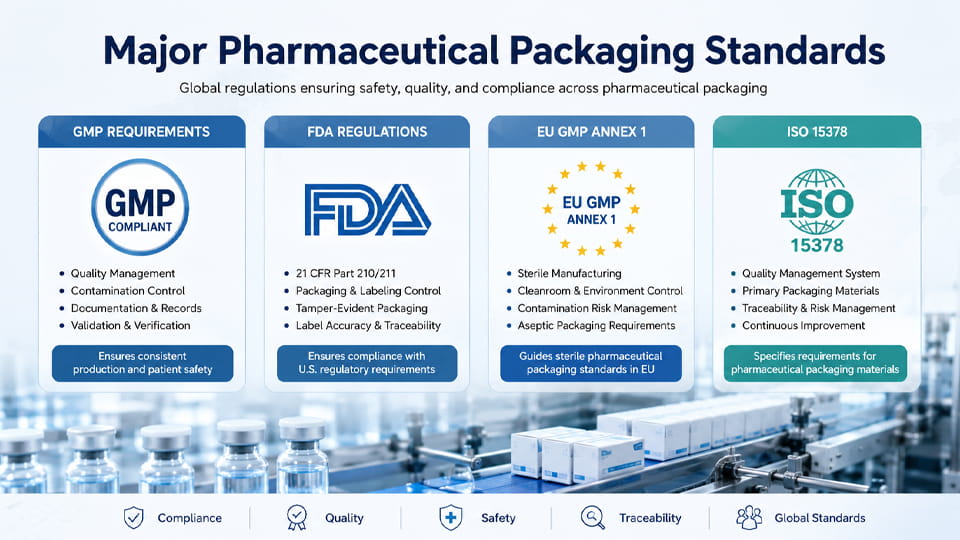
Kemasan Farmasi harus mencegah kontaminasi dan memastikan ketertelusuran, sesuai standar global yang ketat. Praktik Manufaktur yang Baik (GMP) memerlukan desain peralatan yang higienis, bahan non-reaktif, dan kualifikasi penuh (IR/WH/PQ) mesin. Peraturan utama meliputi FDA 21 Bagian CFR 210/211, yang mewajibkan peralatan yang dapat dibersihkan dan catatan pemeliharaan, GMP UE (EudraLex Vol4) (Bagian I Bab.3 dan Lampiran 1) untuk kemasan steril, Dan ISO 15378, standar QMS untuk bahan kemasan primer. Persyaratan penting mencakup kompatibilitas material, pembersihan/CIP yang divalidasi, serialisasi, Dan integritas data (21 CFR Bagian 11/Lampiran UE 11). Panduan ini menjelaskan standar-standar ini dan bagaimana memilih mesin pengemas yang sesuai GMP (lepuh, pengisian botol, karton, pelabelan, dll.) untuk aman, produk obat yang dapat dilacak.
Kemasan farmasi sama pentingnya dengan obat itu sendiri melindungi identitas produk, potensi dan sterilitas. WHO mencatat bahwa kemasan harus melindungi obat dari bahan kimia yang tidak diinginkan, kontaminasi biologis atau fisik dan, untuk produk steril, “sterilitas harus dijaga”. Dalam praktiknya, ini berarti setiap kemasan melepuh, botol atau kemasan karton harus diproduksi dan diberi label dengan benar berdasarkan GMP untuk mencegah campur aduk atau kontaminasi. Regulator global (FDA, Ema, SIAPA) mengharuskan proses dan peralatan pengemasan divalidasi dan dikendalikan seperti halnya pembuatan obat. Pendeknya, standar kemasan farmasi ada untuk menjamin keselamatan pasien dengan menjaga obat-obatan tetap benar, murni dan dapat dilacak ke seluruh distribusi.

GMP adalah kerangka umum untuk kualitas obat. Untuk kemasan, mandat GMP desain higienis dan kontrol yang ketat untuk mencegah kontaminasi silang dan campur aduk. Peralatan harus dirancang sedemikian rupa “mudah dan dibersihkan secara menyeluruh”, seperti yang dinyatakan oleh regulator. Misalnya, Panduan FDA menetapkan peralatan itu “harus dibangun dan ditempatkan untuk memudahkan pembersihan… mencegah kontaminasi”. Pedoman WHO/PIC/S juga menekankan validasi peralatan dan proses dengan desain sanitasi. Intinya, GMP untuk pengemasan memerlukan: baja tahan karat yang dapat dibersihkan (sering SUS316L) peralatan, protokol pembersihan yang terdokumentasi, kualifikasi penuh (IR/WH/PQ) dan catatan pelabelan yang akurat. Praktik-praktik ini melindungi identitas dan kualitas produk pada setiap langkah pengemasan.
Di Amerika Serikat, FDA 21 Bagian CFR 210 Dan 211 mencakup pembuatan dan pengemasan obat. Bagian 211 (Subbagian D/E) mencakup aturan khusus tentang desain peralatan, pembersihan dan kalibrasi. Misalnya, semua peralatan harus beroperasi sesuai spesifikasi dan dibersihkan sesuai prosedur tertulis. Bagian 211 juga memerlukan identifikasi dan pelabelan komponen untuk mencegah campur aduk, dan memelihara catatan batch lengkap selama pengemasan. Penting, 21 Bagian CFR 11 berlaku untuk kontrol terkomputerisasi pada garis pengemasan: itu mengamanatkan login pengguna unik, jalur audit dan tanda tangan elektronik untuk memastikan integritas data. Dalam praktiknya, ini berarti mesin pengemasan modern harus mengenkripsi data batch, membatasi akses pengguna, dan mencatat setiap perubahan, sesuai dengan aturan FDA.
Panduan GMP UE (EudraLex Vol 4) selaras dengan prinsip FDA untuk peralatan. Bagian I Bab 3 (Tempat dan Peralatan) mensyaratkan peralatan tersebut “mudah dibersihkan” dengan bagian kontak non-reaktif. Mencaplok 15 (UE) mengamanatkan kualifikasi penuh (IR/WH/PQ) dari semua mesin. Untuk sistem yang terkomputerisasi, Lampiran UE 11 (tidak ditampilkan di sini) hal serupa juga menuntut validasi dan jalur audit yang aman, seperti Bagian FDA 11. Pembaruan utamanya adalah Lampiran GMP UE 1 (Produk Steril), sepenuhnya berlaku dari 2024. Mencaplok 1 meningkatkan standar kemasan steril: hal ini memerlukan Strategi Pengendalian Kontaminasi yang terdokumentasi (CCS) dan standar ruang bersih bermutu tinggi (ISO 5/7 nilai), serta teknologi penghalang (isolator/RABS) dan metode sterilisasi yang divalidasi. Integritas penutupan kontainer (CCI) pengujian dan pengendalian terhadap bahan yang dapat diekstraksi/dapat dicuci juga ditekankan meminimalkan risiko kontaminasi. Semua lini produk suntik steril yang berbasis di UE atau ekspor harus memenuhi kriteria ini.
ISO 15378 adalah standar internasional untuk bahan pengemas utama produk obat. Ini menentukan sistem manajemen mutu (SMM) selaras dengan ISO 9001, dengan mengacu pada GMP. Dengan kata lain, ISO 15378 berfokus pada desain, pembuatan dan penyediaan komponen kemasan farmasi (kertas melepuh, botol, botol, dll.), memastikan mereka secara konsisten memenuhi persyaratan pelanggan dan peraturan. Sementara ISO 15378 ditujukan untuk pemasok material dan bukan pembuat peralatan, produsen mesin harus mengakomodasi bahan yang sesuai (misalnya. plastik atau laminasi yang disetujui) dan memberikan dokumentasi (sertifikat ketertelusuran material) sehingga kemasan utama akhir tersertifikasi ISO‑15378. Mencapai ISO 15378 sertifikasi menunjukkan komitmen terhadap bahan kemasan berkualitas GMP dalam produksi Anda.
Mesin pengemas farmasi harus memenuhi kriteria teknis yang ketat untuk memenuhi standar di atas. Tabel di bawah ini merangkum persyaratan utama:
| Persyaratan | Poin Penting |
| Desain Higienis | Peralatan dari baja tahan karat (misalnya. 316L), lasan yang halus, permukaan miring. Bingkai kantilever (drive terisolasi) untuk menghilangkan area tersembunyi, memungkinkan pembersihan. |
| Kompatibilitas material | Semua bagian yang menyentuh produk harus non-reaktif/non-penyerap (316aku SS, PTFE, plastik kelas farmasi) sehingga mereka tidak dapat melepaskan atau mengikat bahan aktif. Gunakan pelumas dan segel food grade (PTFE, EPDM) tahan terhadap bahan pembersih. |
| Validasi Peralatan | Penuh IR/WH/PQ untuk setiap mesin: kualifikasi instalasi yang terdokumentasi, pengujian fungsional, dan tes kinerja selama batch simulasi atau nyata. Setiap mesin baru atau modifikasi harus memenuhi syarat sebelum digunakan. |
| Pembersihan & Sanitasi | Prosedur pembersihan/CIP yang divalidasi untuk setiap penggantian produk. SOP pembersihan harus ditulis, dilaksanakan dan divalidasi ulang secara berkala. Hanya area kontak produk yang memerlukan pengambilan sampel validasi. |
| Pemeliharaan & Kalibrasi | Pemeliharaan preventif terjadwal untuk mengganti suku cadang yang aus. Prosedur kalibrasi (misalnya. untuk timbangan, pengukur aliran) dengan catatan (untuk FDA 21 CFR 211.68) memastikan keakuratan. Pengecekan berkala pada sensor dan aktuator sesuai SOP. |
| Otomatisasi & Keamanan | Fitur pencegahan kesalahan seperti inspeksi penglihatan, pemindaian kode batang dan gerbang penyortiran otomatis mengurangi kesalahan manusia. Saling bertautan (misalnya. sensor pintu) menghentikan mesin yang macet. Untuk memberi label pada garis, kamera memverifikasi penerapan label yang benar. |
| Integritas Data | Kontrol harus memenuhi FDA 21 CFR Bagian 11/Lampiran UE 11: mengamankan akun pengguna, jejak audit yang tidak dapat diubah, dan penandatanganan elektronik pada catatan. Integrasi MES/ERP untuk pengarsipan catatan batch. Log digital pengaturan dan penyimpangan. |
| Serialisasi & Ketertelusuran | Peralatan harus mendukung pencetakan atau pengetsaan pengenal unik (misalnya. 2D Kode DataMatrix) pada setiap paket utama. Integrasi dengan sistem lacak dan penelusuran memastikan setiap kode ditautkan ke batch/lot. Jalur tersebut harus mengizinkan penelusuran balik dan penarikan kembali berdasarkan kode. |
Misalnya, setelah menginstal yang baru garis melepuh atau pengisi botol, GMP memerlukan pengujian IQ/OQ/PQ yang terdokumentasi untuk membuktikan setiap fungsi (volume pengisian, kualitas penyegelan, menolak) memenuhi spesifikasi. Demikian pula, setelah setiap batch, mesin harus dibersihkan dengan prosedur yang divalidasi. Regulator menuntut proses pembersihan ini dilakukan “didokumentasikan, diverifikasi, dan divalidasi ulang secara berkala”. Pembersihan Otomatis di Tempat (CIP) sistem untuk pengisi cair atau pembersihan berbasis pelarut untuk padatan adalah hal yang umum. Permukaan kritis (hopper, nozel, segel) dites usap atau diukur (misalnya. Total Karbon Organik) untuk memastikan tidak ada residu yang tersisa. Pendeknya, Anda harus dapat menunjukkan melalui dokumentasi bahwa setiap operasi pengisian/pengemasan menggunakan kualifikasi, mesin sanitasi.
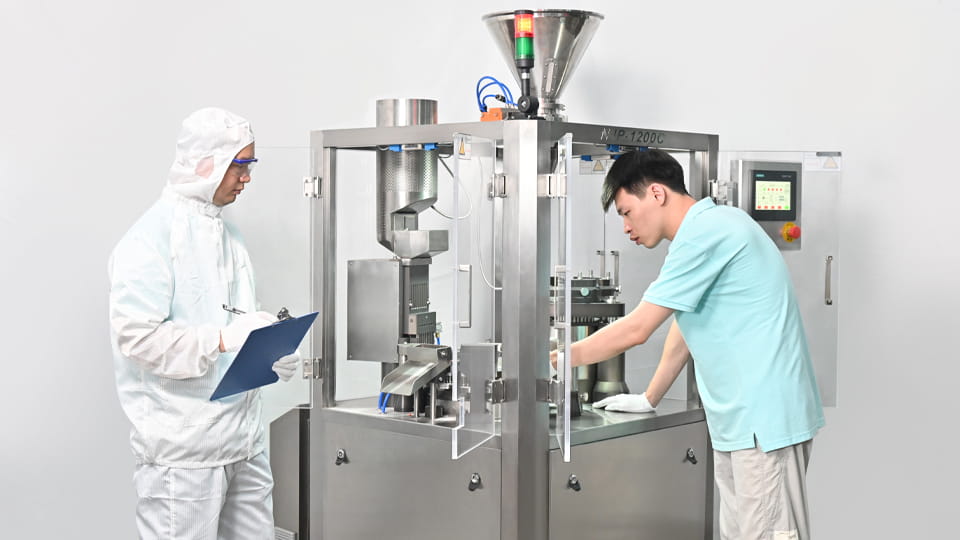
Lini produksi farmasi menggunakan berbagai mesin khusus. Fitur utama yang terkait dengan GMP pada peralatan umum meliputi:
Masing-masing mesin ini harus dipilih dengan mempertimbangkan desain GMP (permukaan tahan karat halus, CIP, Udara HEPA jika diperlukan). Untuk contoh detail, lihat halaman produk Jinlu Packing, yang menyoroti fitur kepatuhan seperti rangka kantilever dan sertifikasi CE/GMP.
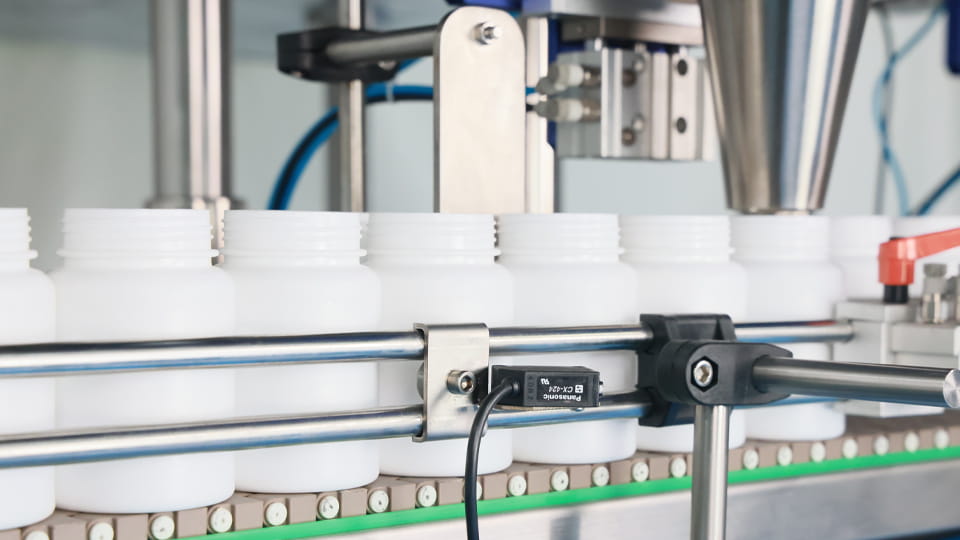
Memenuhi standar pengemasan farmasi menghadirkan tantangan: persyaratan peraturan berbeda-beda di setiap pasar, dan setiap obat baru mungkin memerlukan spesifikasi kemasan yang berbeda (misalnya. penutupan yang tahan terhadap anak-anak, pelapis tertentu). Validasi dan dokumentasi menambah waktu dan biaya – setiap ukuran paket baru atau perubahan produk dapat memicu validasi ulang. Aturan serialisasi (DSCSA di AS, PMK di UE, dll.) bersifat kompleks dan berkembang, memerlukan pembaruan perangkat lunak rutin dan pelatihan staf. Persyaratan ruang bersih (untuk produk steril) juga meningkatkan biaya fasilitas. Akhirnya, melacak dan membuktikan kepatuhan (melalui catatan batch dan jalur audit) berarti perangkat lunak dan pencatatan yang kuat. Mengatasi tantangan-tantangan ini memerlukan kolaborasi yang erat antar teknisi, QA dan pemasok, dan memilih yang mudah beradaptasi, peralatan yang didukung dengan baik.
Saat memilih mesin untuk a lini pengemasan farmasi, ikuti daftar periksa GMP:
Masa depan kemasan farmasi semakin digital dan berkelanjutan. Serialisasi dan Lacak & Jejak akan berkembang secara global, mungkin memanfaatkan blockchain untuk mengamankan rantai pasokan. Kemasan cerdas (tag RFID, Sensor NFC) mungkin mulai memantau kondisi penyimpanan atau merusak kejadian. Peralatan sedang tren ke arah Industri 4.0 – dilengkapi dengan sensor IIoT dan sistem penglihatan berbasis AI yang memprediksi kesalahan atau menghitung pil dengan lebih andal. Robotika untuk pengemasan akhir (penanganan kasus, pembuatan palet) dan hambatan aseptik tingkat lanjut (misalnya. sistem aseptik tertutup) juga sedang berkembang. Di sisi material, ada dorongan untuk komponen kemasan yang dapat didaur ulang atau terurai secara hayati, jadi mesin harus menangani jenis film baru. Keseluruhan, otomatisasi, konektivitas data dan keamanan lingkungan merupakan tren utama yang membentuk kemasan produk farmasi generasi berikutnya.
Mematuhi standar kemasan farmasi adalah tidak bisa dinegosiasikan bagi produsen obat. Dengan memahami GMP, Persyaratan FDA dan ISO—dan dengan memilih mesin yang dibuat untuk memenuhi persyaratan tersebut—Anda menjaga kualitas produk dan keselamatan pasien. Kepatuhan menuntut desain yang ketat (permukaan halus 316L, Pembersihan CIP/COP), validasi penuh (IR/WH/PQ) dan dokumentasi berkelanjutan (log pemeliharaan dan audit). Dengan peraturan seperti FDA 21 CFR dan Lampiran UE 1, lini farmasi tidak mampu mengambil jalan pintas.
Untuk solusi peralatan pengemasan, bekerja dengan pemasok berpengalaman. Pengepakan Jinlu, Misalnya, mengkhususkan diri dalam mesin blister yang sesuai dengan GMP, jalur pengisian cairan, karton dan banyak lagi. Alat berat kami menampilkan desain kantilever, Bahan kelas FDA dan mendukung serialisasi di luar kotak. Hubungi Pengepakan Jinlu hari ini untuk memastikan lini pengemasan Anda berikutnya memenuhi standar GMP global dengan dukungan validasi penuh.
Standar pengemasan farmasi adalah persyaratan peraturan yang memastikan kemasan obat tidak mengkontaminasi atau mencampurkan produk. Ini termasuk pedoman GMP dari lembaga seperti FDA dan EMA, yang mengamanatkan desain peralatan higienis, validasi pembersihan dan dokumentasi menyeluruh. Standar seperti ISO 15378 fokus pada manajemen kualitas bahan kemasan itu sendiri. Bersama-sama mereka memastikan kemasan melindungi kualitas obat dan membawa informasi yang akurat.
FDA 21 Bagian CFR 211 mencakup operasi pengemasan. Hal ini mengharuskan peralatan dipelihara, dibersihkan dan dikalibrasi sehingga tidak mempengaruhi identitas atau kemurnian obat. Misalnya, Panduan FDA menyatakan bahwa peralatan “harus dibuat untuk memudahkan pembersihan” dan memperingatkan bahwa bahan tidak boleh bereaksi dengan obat. Sistem komputer di jalur juga harus mematuhi 21 Bagian CFR 11 (catatan elektronik dan jejak audit).
ISO 15378 adalah standar ISO khusus untuk bahan kemasan utama obat-obatan. Ini menambah ISO 9001 dengan persyaratan GMP, memastikan pemasok bahan kemasan memiliki SMM yang secara konsisten memenuhi standar pelanggan dan hukum. Meskipun tidak mengatur peralatan secara langsung, penggunaan bahan bersertifikasi ISO 15378 pada mesin GMP membantu memenuhi ekspektasi peraturan dan tuntutan pelanggan akan kualitas.
Mencaplok 1 Panduan GMP UE mencakup produk obat steril. Ini menetapkan aturan ketat untuk pembuatan aseptik, termasuk kemasan suntikan. Poin-poin penting mencakup penerapan Strategi Pengendalian Kontaminasi (CCS), menggunakan ruang bersih rahasia (ISO 5/7), teknologi isolator atau penghalang, dan memvalidasi langkah-langkah sterilisasi/disinfeksi. Mencaplok 1 kepatuhan memastikan bahwa bahkan selama pengemasan, obat steril tetap bebas dari mikroba dan partikulat – yang sangat penting untuk keselamatan pasien.
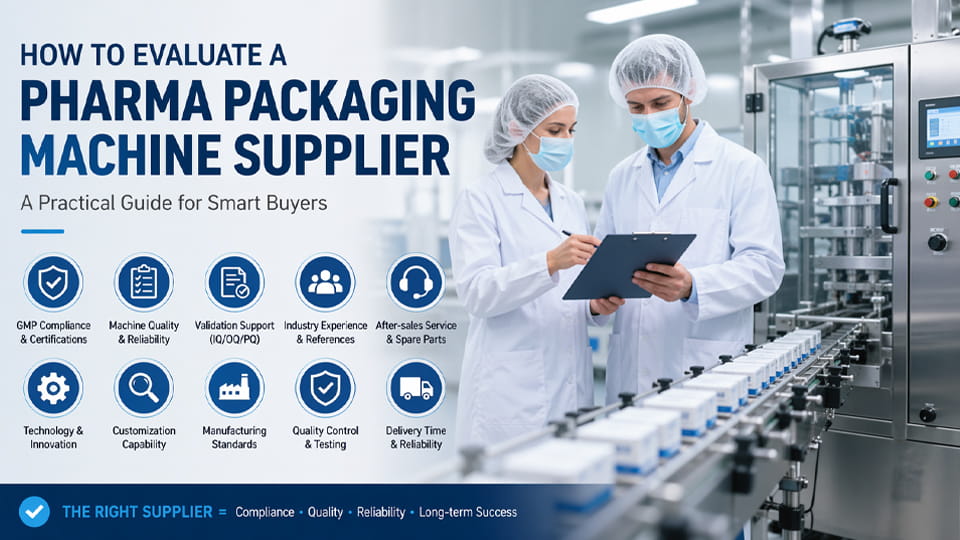
Pertama, periksa desain dan bahannya: itu harus menggunakan baja tahan karat 316L pada semua bagian yang bersentuhan dengan produk dan tidak memiliki celah tersembunyi. Pastikan vendor menyediakan dokumentasi IQ/OQ/PQ yang lengkap. Carilah fitur seperti kemampuan CIP atau pembersihan strip-down yang mudah. Konfirmasikan bahwa ia memiliki kemampuan pencatatan batch elektronik (21 Bagian CFR 11) dan dukungan serialisasi (2pengkodean D). Akhirnya, meninjau tanda sertifikasi apa pun (Ce, GMP) dan meminta referensi atau laporan audit. Mesin yang benar-benar GMP akan dilengkapi dengan dukungan validasi dan dokumentasi kepatuhan penuh.
Hukum serialisasi (misalnya. Undang-Undang Keamanan Rantai Pasokan Narkoba AS, Petunjuk Obat Palsu UE) mewajibkan kode unik pada setiap paket untuk melacaknya melalui rantai pasokan. Peralatan pengemasan harus mencetak atau mengetsa kode-kode ini (biasanya kode batang 2D) pada setiap lepuh atau botol. Hal ini memastikan produk palsu dapat dideteksi dan batch produk dapat ditarik kembali dengan cepat jika diperlukan. Dalam praktiknya, serialisasi diintegrasikan ke dalam jalur pengemasan melalui pembuat kode dan kamera verifikasi, dengan perangkat lunak yang menghubungkan setiap kode ke catatan batch untuk ketertelusuran penuh.
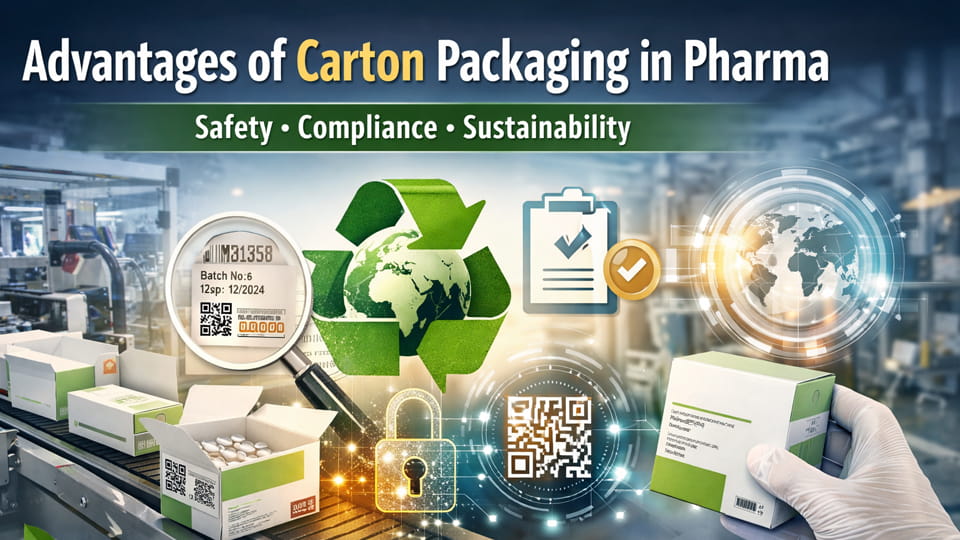
Kartoner GMP harusnya halus, permukaan yang higienis dan wadah karton tertutup untuk meminimalkan debu. Itu harus mengintegrasikan pemindai label dan kode untuk memverifikasi kode batch dan konten setiap karton. Periksa apakah mesin dapat melakukan Line Clearance (pengosongan/pemeriksaan antar produk) per pedoman FDA, dan memungkinkan pembersihan aplikator lem karton dengan mudah. Misalnya, banyak pembuat karton menyertakan pegangan karton vakum dan sistem penglihatan untuk menangkap kemacetan karton atau sisipan yang hilang, memenuhi aturan pencegahan campur aduk di 21 CFR 211.
Referensi:
1.21 Bagian CFR 211 – PRAKTIK MANUFAKTUR YANG BAIK SAAT INI UNTUK FARMASI SELESAI —— Lembaga Informasi Hukum
2.ISO 15378:2017 Bahan pengemas utama produk obat ——iso.org
3.Lampiran GMP UE 1: Industri Produk Obat Steril —— gmp-compliance.org
4.Undang-Undang Keamanan Rantai Pasokan Narkoba (DSCSA) --KITA. Badan Pengawas Obat dan Makanan