Apa Itu Validasi Kemasan di Industri Farmasi? Panduan Lengkap untuk Produsen Farmasi
Apa Itu Validasi Kemasan di Industri Farmasi? Panduan Lengkap untuk Produsen Farmasi
April 29, 2026
Tidak ada komentar
Di industri farmasi, validasi kemasan adalah bagian penting dari validasi proses berfokus pada memastikan bahwa peralatan dan proses pengemasan secara konsisten melindungi kualitas produk obat. Ini melibatkan program kualifikasi yang terdokumentasi (Instalasi, Operasional, Pertunjukan) dan pengujian (misalnya. integritas penutupan kontainer, stabilitas, mengangkut) untuk membuktikan bahwa sistem pengemasan berfungsi sebagaimana mestinya dalam kondisi GMP. Validasi kemasan yang efektif menjaga keselamatan pasien (dengan mencegah kontaminasi, degradasi atau campur aduk) dan memastikan kepatuhan terhadap peraturan (FDA, Ema, SIAPA, SAYA, ISO). Panduan ini menjelaskan definisi, tangga, tes, standar, Dan praktik terbaik untuk validasi kemasan farmasi, dan menunjukkan bagaimana peralatan diotomatiskan (menyukai Mesin Jinlu Packing) dirancang untuk memenuhi persyaratan ketat ini.
Pengertian Validasi Kemasan
Validasi kemasan di bidang farmasi menunjukkan dengan bukti-bukti yang terdokumentasi itu proses pengemasannya (peralatan dan bahan) secara andal menghasilkan paket yang melindungi produk obat. Dalam praktiknya, ini menerapkan konsep validasi ketat yang sama seperti yang digunakan di bidang manufaktur (IR/WH/PQ) ke utama, sekunder, dan kemasan tersier operasi. Menurut panduan GMP WHO, “Proses dan peralatan pengemasan memerlukan validasi/kualifikasi dengan cara yang sama seperti bagian pemrosesan lainnya di fasilitas farmasi.”. Dengan kata lain, validasi kemasan memastikan sistem penutupan kontainer, pelabelan, dan jalur pengemasan secara konsisten memenuhi spesifikasi kualitas dan persyaratan peraturan. Tujuannya untuk menjaga kekuatan obat, kemurnian dan stabilitas melalui pengemasan, distribusi dan umur simpan, sekaligus mencegah campur aduk, palsu, atau kerusakan.
Hasil yang umum dalam validasi kemasan mencakup a Spesifikasi Persyaratan Pengguna (URS) (desain & kriteria kualitas), Protokol Instalasi/Operasional/Kualifikasi Kinerja, dan catatan pengujian. Proses validasi meliputi:
Kemasan primer (wadah atau penghalang yang bersentuhan langsung dengan obat, misalnya. botol, rongga melepuh, sachet)
Setiap level harus melindungi produk. Misalnya, definisi TGA Australia “kemasan utama” (wadah yang langsung menutupi barang) dan membedakan kemasan sekunder sebagai kotak luar atau pembungkusnya. Akhirnya, validasi kemasan terkait dengan GMP – memastikan hal itu wadah dan penutup tidak mengubah obat Dan “memberikan perlindungan yang memadai terhadap faktor eksternal” selama penyimpanan dan penggunaan.
Mengapa Validasi Kemasan Sangat Penting dalam Farmasi
Kemasan farmasi adalah pertahanan terakhir kualitas obat. Memvalidasi proses pengemasan sangat penting karena:
Memastikan Keamanan dan Integritas Produk: Kemasan yang divalidasi dengan benar mencegah kontaminasi, masuknya uap air, atau paparan oksigen yang dapat menurunkan bahan aktif. Misalnya, kebocoran atau kegagalan segel dapat menyebabkan masuknya mikroba atau gas, merusak kemandulan atau potensi.
Kepatuhan Pengaturan: Agensi (FDA, EMA/I, SIAPA) memerlukan kemasan yang tervalidasi. KITA. FDA 21 CFR 211.94 melarang penutupan yang mengubah kualitas obat dan mewajibkan penutupan “memberikan perlindungan yang memadai terhadap faktor eksternal yang dapat diperkirakan”. Lampiran GMP UE 1 juga menegaskan hal itu “wadah harus ditutup dengan metode yang divalidasi secara tepat” (dengan 100% pengujian integritas untuk produk fusi-tertutup). WHO secara eksplisit menyatakan sistem pengemasan harus memenuhi syarat seperti proses GMP lainnya. Ketidakpatuhan bisa berarti ingat, penolakan impor atau audit kutipan.
Memperpanjang Umur Simpan: Bahan kemasan dan segel yang divalidasi dalam kondisi stabilitas membantu menetapkan klaim umur simpan yang akurat. Panduan ICH Q1A bahkan menetapkan bahwa studi stabilitas harus dilakukan di “sistem penutupan kontainer” diusulkan untuk produk tersebut. Jika pengemasan gagal, data stabilitas tidak valid.
Serialisasi dan Anti-Pemalsuan: Kemasan farmasi modern sering kali menyertakan serialisasi, segel anti rusak, dan fitur anti-pemalsuan. Memvalidasi fitur-fitur ini (misalnya. kemampuan pemindaian barcode, integritas kaset tamper) membantu mengamankan rantai pasokan. Kesalahan dalam pelabelan atau serialisasi dapat menghalangi pelepasan produk.
Efisiensi Kualitas dan Biaya: Garis tervalidasi yang efisien mengurangi cacat (salah isi, kesalahan label, karton hancur) dan memo. Inspeksi otomatis (sistem penglihatan untuk pemeriksaan segel/label) sering kali merupakan bagian dari kontrol yang divalidasi. Keseluruhan, proses pengemasan yang tervalidasi meminimalkan risiko pasien dan memastikan pasokan efektif yang konsisten, obat-obatan asli.
Penggerak Utama untuk Validasi
Keselamatan Pasien: Kemasan yang tidak tepat dapat membahayakan pasien (misalnya. suntikan yang terkontaminasi). Validasi mendokumentasikan penghalang keamanan.
Mitigasi Risiko Regulasi: Proses yang tidak divalidasi berisiko tinggi untuk ditarik kembali atau dikenakan sanksi. Regulator mengharapkan data kualifikasi untuk setiap lini produksi.
Distribusi Global: Memenuhi standar internasional (FDA/EMA/WHO) memerlukan kemasan yang tervalidasi di seluruh pasar.
Kontinuitas Bisnis: Kegagalan pengemasan pada distribusi produk dan waktu yang terbuang. Validasi memastikan “benar untuk pertama kalinya” operasi di bawah GMP.
Kesiapan Audit: Audit yang dilakukan oleh Otoritas Mutu atau regulator pelanggan akan meninjau catatan validasi kemasan dan kualifikasi peralatan sebagai bagian dari inspeksi GMP.
Ruang Lingkup Validasi Kemasan Farmasi
Validasi pengemasan membahas semua tahapan pengemasan. Khas, kita membedakan:
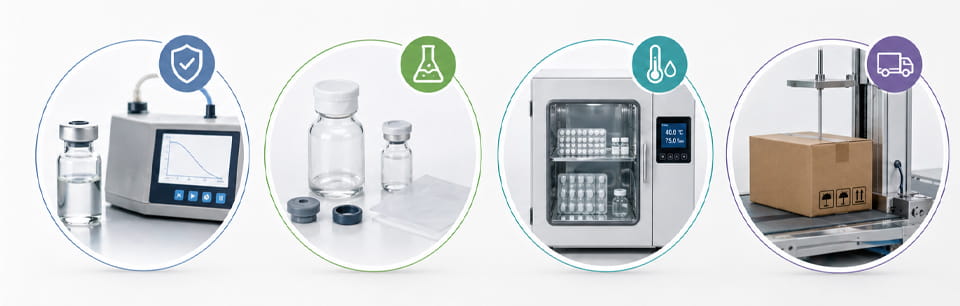
Validasi Kemasan Utama: Berfokus pada penutupan kontainer (botol, ampul, rongga melepuh, botol). Pengujian mencakup integritas segel, kompatibilitas material (dapat diekstraksi/dapat dicuci) dan kinerja penutupan kontainer. Untuk produk steril, uji integritas penutupan kontainer (CCIT) wajib untuk memastikan pemeliharaan sterilitas.
Validasi Kemasan Sekunder: Menutupi paket luar langsung (karton, label, selebaran, pengering). Ini termasuk pemeriksaan keterbacaan/akurasi label, tes jatuh karton, dan tes kompresi kotak (untuk transportasi). Verifikasi label memastikan informasi pasien yang benar diterapkan secara konsisten.
Validasi Kemasan Tersier: Melibatkan pengemasan massal/transportasi. Di Sini, tes kinerja seperti getaran, menjatuhkan, dan siklus termal (rantai dingin) mensimulasikan tekanan pengiriman untuk memverifikasi bahwa palet dan karton pengiriman menjaga integritas produk dan pelabelan selama distribusi. Protokol standar seperti ASTM D4169 (simulasi transportasi) sering digunakan.
Setiap tingkat memerlukan penilaian risiko dan pengujian yang sesuai: Misalnya, utama kemasan mungkin melibatkan USP <1207>-tes integritas gaya, ketika sekunder pengujian pengemasan mungkin mencakup kekuatan karton dan daya rekat label, Dan tersier kemasan menggunakan protokol uji ISTA/ASTM. Semua harus didokumentasikan dalam rencana validasi.
Langkah-Langkah Penting dalam Proses Validasi Kemasan
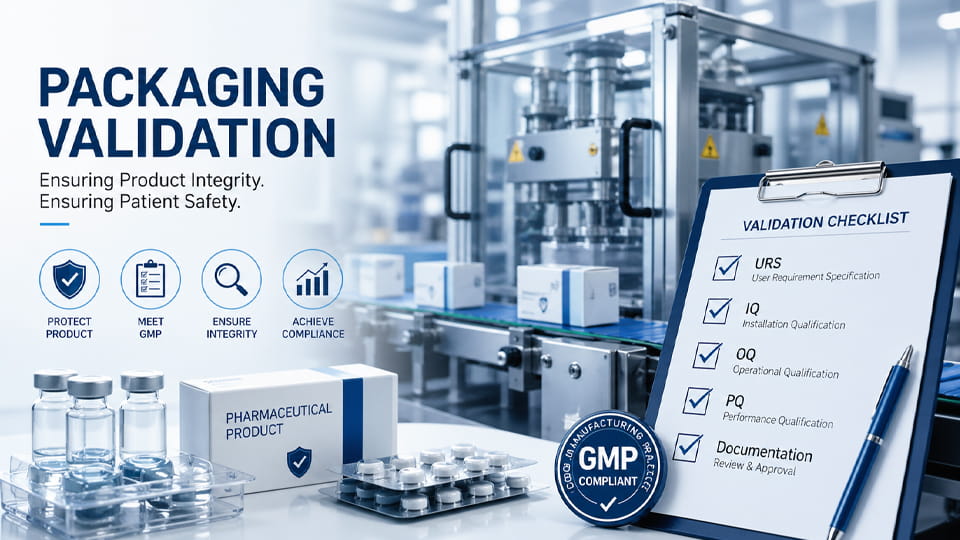
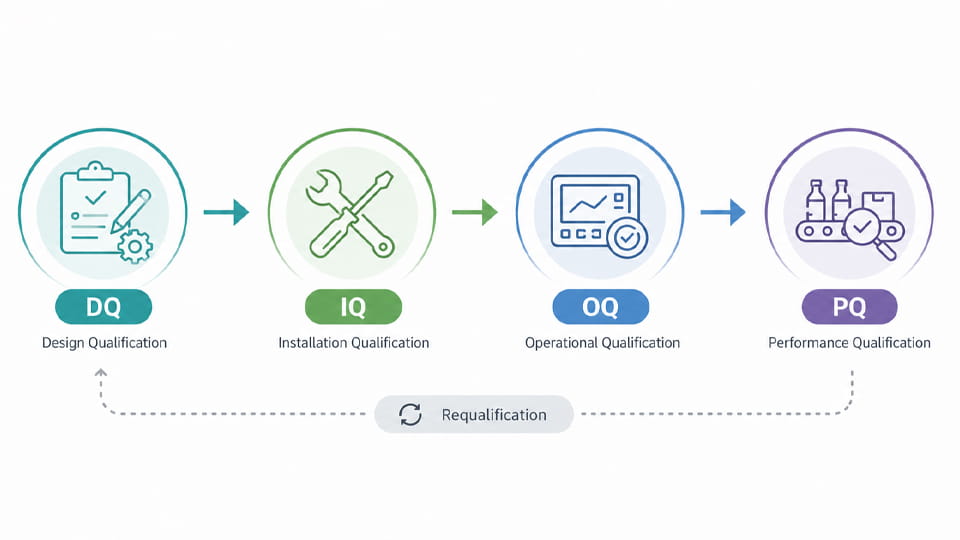
Validasi pengemasan biasanya mengikuti siklus hidup kualifikasi peralatan/proses, sering digambarkan sebagai DQ/IQ/OQ/PQ. Tahapan ini memastikan lini pengemasan baru atau yang dimodifikasi memenuhi persyaratan di setiap tahap.
Kualifikasi Desain (DQ): Fase awal dimana desain dinilai berdasarkan URS (Spesifikasi Persyaratan Pengguna) dan pedoman GMP. Semua aspek desain (fungsi mesin, bahan, kemampuan bersih, kesesuaian dengan produk/bahan kemasan) ditinjau. Dokumen termasuk URS dan spesifikasi desain (Spesifikasi Desain Fungsional FDS, Spesifikasi Desain Perangkat Keras/Perangkat Lunak). Seringkali penilaian risiko (misalnya. DFMEA) dilakukan untuk mengantisipasi modus kegagalan pengemasan.
Kualifikasi Instalasi (IQ): Memverifikasi mesin/saluran dipasang dengan benar sesuai spesifikasi vendor. IQ mencakup daftar periksa yang memverifikasi lokasi yang benar, utilitas (kekuatan, udara, air), kondisi lingkungan, dan perakitan yang tepat. Semua komponen ada dan tidak rusak. Kalibrasi alat ukur diperiksa. Hasil kerja: Protokol dan laporan IQ, sertifikat kalibrasi.
Kualifikasi Operasional (oke): Memverifikasi mesin beroperasi sebagaimana mestinya dalam semua kondisi yang ditentukan. Parameter penting (rentang kecepatan, suhu, tekanan, tingkat vakum, torsi, dll.) ditantang pada pengaturan min/maks atau kasus terburuk. Pengujian di OQ mungkin mencakup penyegelan pada kecepatan ekstrem, fungsi sensor/alarm, perubahan kecepatan konveyor, akurasi pelabel, akurasi pompa pengisian. Protokol OQ mencatat bahwa setiap pengujian fungsional memenuhi kriteria penerimaan.
Kualifikasi Kinerja (PQ): Menunjukkan bahwa dalam kondisi produksi normal, lini ini secara konsisten menghasilkan produk yang memenuhi spesifikasi kualitas. PQ dilakukan pada jumlah/batch produksi sebenarnya. Ini termasuk menjalankan jalur untuk waktu atau kuantitas tertentu dan mengambil sampel hasilnya. Kegiatan yang khas: menjalankan beberapa karton melepuh, botol atau sachet dan melakukan tes QC pada sampel (MISALNYA., integritas penutupan kontainer (CCIT), pemeriksaan berat badan, pemeriksaan cacat visual, kekuatan segel). PQ menunjukkan lini dapat beroperasi terus menerus dengan tetap menjaga kualitas produk.
Tabel di bawah ini merangkum tahapan DQ–IQ–OQ–PQ:
Panggung
Tujuan
Dokumen Penting
Contoh Kegiatan/Tes
Kualifikasi Desain (DQ)
Verifikasi desain sistem pengemasan memenuhi URS/GMP
Pastikan kualitas yang konsisten selama produksi berjalan
Protokol PQ, catatan kumpulan, kriteria rilis
Produksi berjalan; pengujian sampel (CCIT, mengisi berat, inspeksi visual)
Seperti yang ditunjukkan diagram, validasi kemasan adalah proses siklus hidup mulai dari desain hingga kinerja. Perhatikan itu kualifikasi ulang mungkin diperlukan setelah perubahan besar atau secara berkala.
Tes Kunci dalam Validasi Kemasan
Beberapa tes khusus biasanya dilakukan selama validasi kemasan:
Pengujian Integritas Penutupan Kontainer (CCIT)
CCIT sangat penting untuk produk steril dan bahkan non-steril. Ini menilai apakah sistem penutupan kontainer (misalnya. botol+sumbat+tutup, ampul, segel melepuh) membentuk penghalang yang sempurna. Metodenya meliputi peluruhan vakum, peluruhan tekanan, masuknya pewarna, atau tantangan mikroba. Seperti yang dijelaskan oleh salah satu sumber industri, “Uji Integritas Penutupan Kontainer (CCIT) adalah pengujian yang mengevaluasi kecukupan sistem penutupan kontainer untuk mempertahankan penghalang steril terhadap potensi kontaminan.”. Dokumen peraturan (USP <1207>, FDA, Lampiran EMA 1) menekankan pengujian integritas penutupan untuk memastikan tidak ada kebocoran atau pelanggaran. Misalnya, USP <1207> memberikan pedoman dalam memilih metode uji kebocoran untuk mengesahkan paket yang tersegel.
Pengujian Kompatibilitas Bahan (Dapat Diekstrak/Dapat Dicuci)
Bahan kemasan (plastik, karet, tinta, perekat) tidak boleh berinteraksi secara merugikan dengan produk obat. Dapat diekstraksi dan dapat dicuci penelitian mensimulasikan kontak jangka panjang: yang dapat diekstraksi adalah bahan kimia yang dikeluarkan dari kemasan dalam kondisi yang keras, dan bahan yang dapat larut adalah bahan yang benar-benar berpindah ke dalam produk dalam kondisi normal. Pengujian ini memastikan kemasan tidak mengandung kotoran beracun atau yang mempengaruhi stabilitas. Panduan farmakope dan FDA (misalnya. USP <661>, Q3E) menguraikan pengujian E/L untuk sistem penutupan kontainer. Dalam praktiknya, seseorang memeriksa bahwa polimernya, pelapis, dan bahan label memenuhi standar farmakope (misalnya. Jenis kaca USP, Spesifikasi penutupan karet ISO). WHO mencatat standar farmakope untuk penutupan (seperti sumbat karet) adalah “persyaratan minimal” dan menekankan studi stabilitas untuk membuktikan kesesuaian.
Pengujian Stabilitas dalam Kemasan
Sesuai ICH Q1A, studi stabilitas harus dilakukan pada produk obat dalam konfigurasi kemasan akhirnya. Selama validasi, dampak kemasan terhadap stabilitas dinilai: Misalnya, kemasan akhir mengalami penuaan yang dipercepat (suhu/kelembaban tinggi) dan kondisi real-time untuk memastikan tidak ada degradasi (misalnya. masuknya uap air ke dalam kemasan blister, perembesan oksigen dalam botol). Tes yang menunjukkan stabilitas (kimia dan mikroba) dilakukan. Pengemasan yang gagal melindungi produk di bawah tekanan akan membatalkan klaim umur simpan. Dengan demikian, validasi termasuk memastikan bahwa kemasan yang dipilih memenuhi persyaratan umur simpan (ini tumpang tindih dengan protokol stabilitas peraturan).
Pengujian Transportasi dan Distribusi
Kemasan tersier pengujian mensimulasikan kondisi pengiriman sebenarnya. Tes standar mencakup tes ketinggian jatuh, getaran (simulasi truk/kereta api), kompresi (berat tumpukan), dan siklus suhu (terutama untuk rantai dingin). Misalnya, ASTM D4169 (untuk produk kemasan) atau protokol ISTA dapat digunakan. Rencana validasi pengemasan yang kuat memverifikasi karton tersebut, kotak dan peti melindungi paket utama selama penanganan: memverifikasi bahwa tidak ada kerusakan, label terkelupas, atau kerusakan akibat kelembaban terjadi pada kondisi distribusi. Untuk rantai dingin, pemetaan suhu dan pengirim berinsulasi tervalidasi diuji untuk mempertahankan rentang suhu yang diperlukan selama transit.
Standar dan Pedoman Peraturan
Validasi kemasan farmasi harus memenuhi berbagai ekspektasi peraturan:
Peraturan cGMP: Di AS, FDA 21 Bagian CFR 211 (sub bagian J) mengatur kontainer dan penutupan. Bagian 211.94(iklan) menetapkan bahwa wadah/penutup tidak dapat mengubah kualitas obat dan harus melindungi terhadap kontaminasi yang dapat diperkirakan.
GMP UE: pedoman Eropa (EudraLex Vol. 4) memerlukan itu “wadah harus ditutup dengan metode yang divalidasi secara tepat” (Mencaplok 1) dan proses pengemasan mengikuti GMP (Mencaplok 15 pada validasi). Lampiran GMP UE 11 mengamanatkan validasi sistem terkomputerisasi (termasuk jalur pengemasan dengan kontrol elektronik).
SIAPA GMP: Seri Laporan Teknis WHO 902 (Mencaplok 9) secara eksplisit menyatakan peralatan pengemasan memerlukan validasi seperti langkah pemrosesan lainnya. WHO juga memberikan panduan mengenai integritas paket (mirip dengan EU/ICH).
Pedoman ICH: Meskipun ICH (Q7, Q8, Q9, Q10) tidak memiliki dokumen validasi kemasan khusus, mereka mengamanatkan manajemen risiko (Q9) dan kualitas sesuai desain (Q8/Q10) prinsip-prinsip yang berlaku. Misalnya, penilaian risiko (saya Q9) harus mencakup atribut pengemasan (tipe penutupan, kontrol label) yang mempengaruhi CQA produk.
Standar: Untuk produk steril, ISO 11607 (untuk kemasan alat kesehatan yang disterilkan secara terminal) sering digunakan dengan analogi; Bagian 2 dari ISO 11607 mendefinisikan persyaratan validasi untuk proses pembentukan/penyegelan, yang relevan untuk kemasan atau ampul obat parenteral. Farmakope (USP, Ph. euro.) juga berisi bab uji pengemasan (misalnya. USP <381> untuk penutup karet, <1207> untuk pengujian kebocoran).
Dalam ringkasan, setiap lini pengemasan harus mematuhi farmakope nasional dan standar GMP regional. Daftar periksa kepatuhan biasanya mengutip FDA, GMP UE, WHO dan standar ISO yang relevan, dan sering kali memerlukan SOP yang terdokumentasi sepenuhnya dan rencana induk validasi yang mencakup pengemasan.
Tantangan Umum dalam Validasi Kemasan
Validasi kemasan menimbulkan tantangan unik dibandingkan dengan proses manufaktur:
Tipe Data dan Pengambilan Sampel: Keberhasilan lini pengemasan sering kali ditentukan oleh hasil yang terpisah (misalnya. lulus/gagal untuk mendapatkan segel, merobek) daripada pengukuran terus menerus. Seperti yang dicatat oleh seorang ahli, “Jenis data yang diperoleh…menciptakan tantangan yang signifikan. Keberhasilan atau kegagalan seringkali ditentukan oleh cacat (air mata, lubang, noda, atau segel bocor)… Kurangnya hal ini dapat diukur (variabel) data seringkali memerlukan ukuran sampel yang sangat besar agar proses pengemasan dapat divalidasi secara statistik.”. Dengan kata lain, Anda mungkin memerlukan banyak sampel untuk menunjukkan keandalan.
Keanekaragaman Teknologi: Ada banyak teknologi pengemasan (melepuh, kartoner, pemberi label, pengemas kasus, dll.) dari pemasok yang berbeda. Masing-masing mempunyai profil risiko yang berbeda, membuat rencana validasi satu ukuran menjadi tidak mungkin.
Ubah Kontrol: Jalur pengemasan sering kali menjalankan banyak jenis produk (tablet, cairan, bubuk) dan ukuran paket pada peralatan yang sama (menggunakan perubahan bagian atau format). Setiap perubahan mungkin memerlukan validasi ulang atau pengelompokan dalam rencana validasi. Mengelola ini (itu matriks validasi) bisa jadi rumit.
Pengendalian Lingkungan: Beberapa kemasan (misalnya. kemasan melepuh obat-obatan yang sensitif terhadap kelembaban) memerlukan kelembaban terkendali atau atmosfir inert. Memvalidasi kontrol ini menambah kompleksitas.
Integrasi dengan Proses Hulu: Validasi kemasan bergantung pada konsistensi hulu. Jika butiran obat berbeda-beda ukurannya, pergantian mesin pengemasan mungkin terpengaruh (misalnya. isi selai). Saling ketergantungan ini dapat mempersulit analisis akar penyebab kegagalan pengemasan.
Serialisasi/Pelacakan: Peraturan masa kini (misalnya. DSCSA, FMD UE) memerlukan serialisasi dan ketertelusuran. Memastikan jalur otomatis melacak setiap unit dengan benar (dan memvalidasi pengambilan data tersebut) menambahkan lapisan kualifikasi tambahan (validasi perangkat lunak, tes pemindai kode batang, pemeriksaan basis data).
Ambiguitas Peraturan: Secara paradoks, ada panduan eksplisit FDA/EMA yang terbatas hanya pada “validasi kemasan,” sehingga perusahaan harus sering menafsirkan GMP umum dan pedoman validasi proses pengemasan. Hal ini dapat menyebabkan ketidakpastian mengenai cakupan pasti atau pengujian yang diperlukan.
Meskipun ada tantangan-tantangan ini, prinsip dasarnya tetap ada: perlakukan pengemasan seperti proses penting lainnya, dengan kualifikasi menyeluruh dan pemeriksaan QC yang kuat. Sebagai kesimpulan makalah ISPE, validasi kemasan "berbeda(S) sedikit dari validasi proses yang digunakan untuk pembuatan obat.”.
Praktik Terbaik untuk Validasi Kemasan Farmasi
Untuk mengatasi tantangan dan memastikan validasi berhasil, ikuti praktik terbaik ini:
Penilaian Risiko Dini: Gunakan Manajemen Risiko Kualitas (saya Q9) dari tahap desain. Identifikasi atribut kemasan penting (misalnya. kemandulan, bukti perusakan, perlindungan cahaya) dan memprioritaskan tes yang sesuai. Mode Kegagalan & Analisis Efek (FMEA) direkomendasikan selama DQ untuk merencanakan cakupan validasi.
Spesifikasi Persyaratan Pengguna (URS): Dokumentasikan dengan jelas semua persyaratan di awal: kapasitas produksi, format paket, titik integrasi (misalnya. menghubungkan mesin melepuh ke kartoner), kondisi lingkungan, persyaratan pembersihan. URS yang terdefinisi dengan baik menjaga validasi tetap pada jalurnya.
Prosedur Operasi Standar (Sops): Menjaga SOP rinci untuk pengoperasian peralatan, pembersihan, pergantian, dan pemeliharaan. Validasi harus mengacu pada SOP ini untuk memastikan penggunaan yang konsisten.
Inspeksi dan Kontrol Otomatis: Gabungkan pemeriksaan kualitas in-line (misalnya. sistem visi untuk inspeksi cetak/label, checkweigher, pemindai kode batang, pendeteksi kebocoran). Ini bukan hanya alat QA tetapi juga bagian dari validasi dengan mendeteksi cacat secara real time.
Dokumentasi Komprehensif: Siapkan rencana induk validasi yang menguraikan strategi, dan memastikan semua protokol kualifikasi (IR/WH/PQ) mempunyai kriteria penerimaan yang jelas. Simpan log terperinci dari semua proses, penyimpangan, dan tes ulang. Gunakan daftar periksa untuk memastikan tidak ada yang terlewatkan.
Pelatihan dan Personil: Operator dan staf QC harus dilatih tentang peralatan dan prosedur validasi. Hanya personel yang berkualifikasi yang boleh melakukan tes validasi dan mencatat hasilnya.
Perangkat Lunak dan Catatan Elektronik: Untuk kontrol terkomputerisasi, mengikuti FDA 21 CFR Bagian 11/Lampiran GMP 11: memvalidasi perangkat lunak, jalur audit, tanda tangan elektronik (menjamin keamanan, cadangan). Bahkan lini pengemasan yang tidak steril pun sering kali memiliki PLC/HMI yang memerlukan validasi.
Desain untuk Validasi: Kapanpun memungkinkan, pilih mesin dengan fitur yang menyederhanakan validasi: misalnya. drive servo dengan kontrol digital (untuk yang tepat, parameter yang dapat direproduksi), rangka baja tahan karat yang higienis (untuk memudahkan pembersihan), suku cadang yang mudah diganti (untuk mengurangi upaya pembersihan antar format), dan desain modular (untuk membatasi jumlah konfigurasi yang memerlukan pengujian).
Verifikasi Berkelanjutan: Validasi kemasan tidak bersifat “sekali dan selesai”. Terapkan peninjauan berkala atau pemicu validasi ulang (misalnya. setelah pemeliharaan besar, peningkatan peralatan, atau penyimpangan proses yang signifikan). Gunakan kontrol proses statistik (SPC) pada metrik utama (variasi berat isi, tingkat cacat) untuk menangkap tren sejak dini.
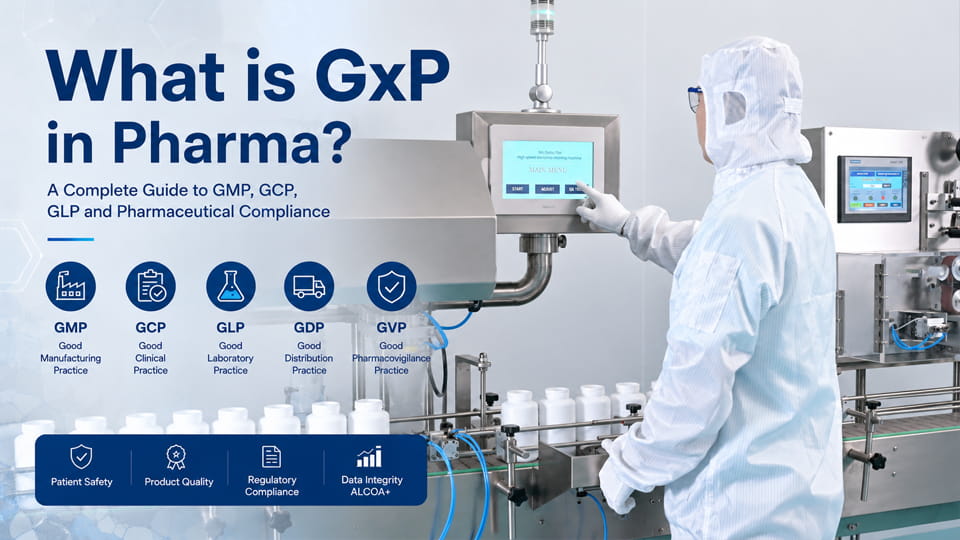
Integritas Data: Menerapkan prinsip ALCOA+: semua data validasi (catatan pengujian, laporan QC, kalibrasi) harus dapat diatribusikan, terbaca, sejaman, asli, dan akurat. Gunakan buku catatan terikat atau sistem elektronik yang tervalidasi.
Dengan menanamkan pemikiran validasi di setiap tahap – mulai dari desain hingga pengoperasian sehari-hari – produsen dapat memastikan lini pengemasan menghasilkan produk yang memenuhi ekspektasi kualitas dan kepatuhan..
Peran Mesin Pengemasan dalam Validasi
Pilihan dan desain peralatan pengemasan sangat mempengaruhi keberhasilan validasi. Mesin pengemasan berkualitas tinggi dirancang untuk memenuhi persyaratan GMP dan mendukung kualifikasi yang mudah. Misalnya, Jinlu Packing's mesin otomatis dibuat dengan fitur yang menyederhanakan validasi:
Presisi dan Konsistensi: Jinlu mesin melepuh, karton dan pengisi menggunakan motor servo dan mekanisme presisi untuk memastikan tekanan penyegelan panas yang konsisten, mengisi volume, dan pengindeksan. Pengulangan ini sangat penting untuk lulus tes OQ dan PQ (misalnya. disediakan oleh perangkat pemberian makan yang digerakkan oleh servo “posisi yang akurat” pada garis melepuh mereka).
Desain Higienis: Bahan dan permukaannya terbuat dari baja tahan karat atau plastik yang memenuhi standar FDA, dirancang agar mudah dibersihkan. Mulus, permukaan miring mencegah perangkap debu. Hal ini mendukung kepatuhan GMP dan menyederhanakan validasi pembersihan.
Kemampuan beradaptasi terhadap Format: Jinlu menawarkan pengumpan khusus dan rel pemandu untuk berbagai jenis paket (melihat Pengumpan khusus di halaman produk). Memiliki peralatan yang tepat akan mengurangi variasi dan mempercepat pergantian format, yang mengurangi kebutuhan rekualifikasi saat berpindah format.
Kontrol Terintegrasi: Jalur Jinlu modern memiliki kontrol PLC/HMI yang dapat menghasilkan catatan batch elektronik. Misalnya, mesin pengisian cairan memiliki AI Siemens PLC/HMI untuk sederhana, operasi yang dapat dilacak. Kontrol digital tersebut mendukung pencatatan data (sejalan dengan 21 CFR Bagian 11/Lampiran 11) – penting untuk memvalidasi bahwa setpoint dan alarm berfungsi sesuai desain.
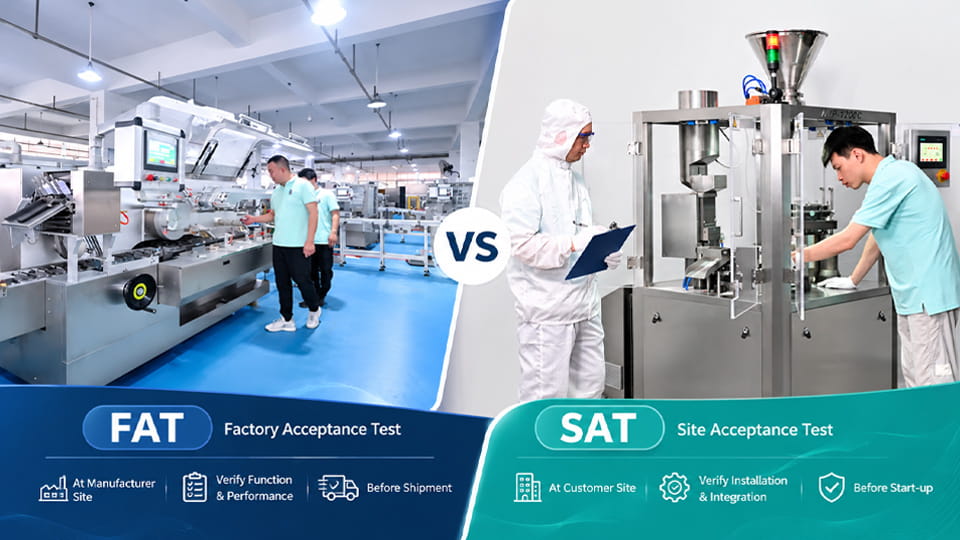
Dokumentasi Validasi: Jinlu menyediakan dokumentasi lengkap (Lembar data, manual, dll.). Misalnya, daftar halaman produk mereka “Dokumen teknis lengkap” dan mereka menekankan penyediaan desain rinci dan dokumentasi pengujian. Pemasok bersedia memberikan Uji Penerimaan Pabrik (GEMUK) protokol atau kit IOQ sangat meringankan beban validasi pengguna.
Sertifikasi Mutu: Jinlu membawa mesin CE, cGMP dan sertifikasi lainnya, menunjukkan bahwa produk tersebut memenuhi standar kualitas dan keamanan tertentu (lihat logo cGMP pada gambar spek produk). Penggunaan peralatan bersertifikat dapat menyederhanakan tinjauan peraturan.
Dalam praktiknya, mungkin termasuk lini pengemasan yang divalidasi: seorang Jinlu mesin pengepakan melepuh dihubungkan dengan a mesin karton Dan garis penghitungan/pengisian. Setiap peralatan harus memenuhi syarat (IR/WH/PQ). Sistem Jinlu dirancang untuk bekerja sama secara lancar (misalnya. “jalur karton melepuh yang sangat otomatis” hingga 320 karton/menit), mengurangi masalah integrasi selama validasi. Kami juga menawarkan studi kasus (misalnya. lengkap jalur penghitungan dan pembotolan, atau sebuah karton otomatis & garis pelabelan) yang mendemonstrasikan solusi tervalidasi ujung ke ujung.
Mesin Pengemas Blister Rol DPH-270Max
Dengan bermitra dengan Jinlu atau produsen serupa, perusahaan mendapat manfaat dari peralatan itu “sesuai dengan cGMP”, mendukung siklus hidup validasi penuh, dan dilengkapi dengan dukungan purna jual (komisioning, pelatihan) untuk memastikan jalur tetap divalidasi.
Kesimpulan
Validasi kemasan sangat penting untuk kualitas dan kepatuhan farmasi. Dengan memperlakukan operasi pengemasan seketat langkah-langkah produksi inti, perusahaan memastikan produk mereka sampai ke pasien dengan aman. Prosesnya mencakup definisi (URS, penilaian risiko), kualifikasi (DQ/IQ/OQ/PQ), pengujian (CCIT, stabilitas, mengangkut), dan pemantauan terus menerus. Hal ini diatur oleh peraturan GMP (FDA, Ema, SIAPA) dan standar industri.
Peralatan pengemasan otomatis modern – seperti mesin Jinlu Packing – memainkan peran penting dalam validasi. Dirancang untuk presisi, kebersihan dan ketertelusuran elektronik, mereka membantu produsen memenuhi kriteria validasi secara efisien. Saat memilih jalur pengemasan, pertimbangkan pemasok yang menyediakan dokumentasi dan dukungan validasi lengkap.
Akhirnya, validasi kemasan menyeluruh adalah “perlindungan terakhir untuk kualitas produk dan keselamatan pasien”, selaras dengan tuntutan peraturan dan tujuan bisnis.
Siap untuk memvalidasi lini pengemasan Anda?Hubungi pakar Jinlu Packing untuk mendiskusikan solusi pengemasan yang sesuai GMP atau meminta penawaran harga.
FAQ Tentang Validasi Kemasan di Industri Farmasi
Apa perbedaan validasi kemasan dan validasi proses?
Validasi proses biasanya mengacu pada langkah-langkah memproduksi bahan obat atau produk obat massal (misalnya. percampuran, granulasi, kompresi). Validasi pengemasan secara khusus menerapkan prinsip validasi pada operasi pengemasan (penyegelan, pelabelan, pengisian karton, dll.). Namun, keduanya mengikuti siklus hidup DQ/IQ/OQ/PQ dan persyaratan GMP yang sama. Intinya, validasi pengemasan memastikan proses pengemasan (bukan hanya proses pembuatannya saja) secara konsisten memenuhi persyaratan kualitas.
Tes apa yang diperlukan untuk validasi kemasan farmasi?
Pengujian utama mencakup integritas penutupan kontainer (CCIT) untuk memverifikasi segel, kompatibilitas material (studi yang dapat diekstraksi/dapat dicuci), tes stabilitas (obat dalam paket akhir di bawah tekanan), dan tes distribusi (terkejut, getaran, suhu untuk transit). Pemeriksaan tambahan mencakup keakuratan label, sistem inspeksi visual, penimbangan/penimbangan, dan tes khusus kontrak apa pun (misalnya. kekuatan film steril). Semua pengujian harus memiliki kriteria penerimaan yang telah ditentukan sebelumnya dan didokumentasikan.
Biasanya berapa lama waktu yang dibutuhkan untuk validasi kemasan?
Garis waktunya tergantung pada kompleksitas (sejumlah format, peralatan, situs). IQ/OQ/PQ garis tunggal dapat berkisar dari beberapa minggu hingga beberapa bulan. Faktor: jumlah pengujian parameter OQ, ukuran sampel yang diperlukan dalam PQ, dan waktu pelaksanaan tes (misalnya. stabilitas pada kondisi yang dipercepat membutuhkan waktu berminggu-minggu). Merencanakan kegiatan paralel (seperti menyiapkan protokol saat peralatan tiba) dapat menghemat waktu.
Dokumen apa yang mengatur validasi kemasan?
Referensi utamanya adalah peraturan GMP: 21 Bagian CFR 211 (FDA AS), EudraLex Vol. 4 (GMP UE, Mencaplok 1 Dan 15), dan Lampiran GMP WHO 9. ICH Q7/Q10 memberikan prinsip validasi umum, ICH Q9 mencakup manajemen risiko untuk keputusan pengemasan, dan ISO 11607-2 berlaku untuk validasi proses paket steril. Standar farmakope (USP, Ph. euro.) dan pedoman lokal (misalnya. NMPA Tiongkok, Jadwal India M) juga mempengaruhi persyaratan pengemasan. Selalu selaras dengan peraturan target pasar.
Bagaimana Jinlu Packing mendukung validasi kemasan?
Mesin pengemasan Jinlu dibuat untuk GMP. Mereka menyediakan dokumen desain (URS, FDS), sertifikat kalibrasi, dan dukungan OQ/PQ. Peralatan mereka (mesin melepuh, kartoner, garis pengisian) dilengkapi kontrol servo yang presisi dan desain higienis untuk memenuhi spesifikasi validasi. Seperti yang ditunjukkan di situs Jinlu, mesin berlogo cGMP/CE dan dilengkapi dengan set dokumentasi teknis. Jinlu juga menawarkan dukungan instalasi dan validasi, solusi khusus, dan pelatihan untuk membantu menerapkan lini pengemasan yang tervalidasi. Untuk informasi lebih lanjut, lihat halaman Mesin Blister Packing atau Mesin Karton Jinlu.
Fu Kecil, Pendiri Jinlupacking, membawa 20 keahlian bertahun-tahun di sektor mesin farmasi. Di bawah kepemimpinannya, Jinlu telah berkembang menjadi pemasok tepercaya yang mengintegrasikan desain, produksi, dan penjualan. Petty bersemangat berbagi pengetahuan industrinya yang mendalam untuk membantu klien menavigasi kompleksitas pengemasan farmasi, memastikan mereka menerima bukan hanya peralatan, namun merupakan kemitraan layanan terpadu yang disesuaikan dengan tujuan produksi mereka.