Τι είναι η Προδιαγραφή Απαιτήσεων Χρήστη (URS) στο Pharma?Πλήρης Οδηγός Φαρμακευτικού Εξοπλισμού
Τι είναι η Προδιαγραφή Απαιτήσεων Χρήστη (URS) στο Pharma?Πλήρης Οδηγός Φαρμακευτικού Εξοπλισμού
Αύγουστος 17, 2026
Δεν υπάρχουν σχόλια
ΕΝΑ Προδιαγραφές Απαιτήσεων Χρήστη (URS) σε φαρμακευτική παραγωγή είναι το θεμελιώδες έγγραφο που ορίζει Τι ένα σύστημα ή ένα κομμάτι του εξοπλισμού πρέπει να ολοκληρώσει για να πληροί την ποιότητα, εκτέλεση, και ρυθμιστικές ανάγκες. Είναι γραμμένο από τον ιδιοκτήτη του εξοπλισμού (η φαρμακευτική εταιρεία) και περιγράφει τις απαιτούμενες λειτουργίες, ικανότητες, υλικά, και τα χαρακτηριστικά GMP του εξοπλισμού. Το URS διασφαλίζει ότι όλα τα ενδιαφερόμενα μέρη (παραγωγή, μηχανική, QA) συμφωνούν σχετικά με τις απαιτήσεις πριν από την έναρξη της προμήθειας ή του σχεδιασμού. Παρέχει μια βάση για τις προτάσεις προμηθευτών και γίνεται η αναφορά σε όλο το σχεδιασμό, δοκιμασία, και επικύρωση.
Βασικά Takeaways
Το URS ορίζει τι πρέπει να επιτύχει ο φαρμακευτικός εξοπλισμός, συμπεριλαμβανομένης της χρήσης για την οποία προορίζεται, ικανότητα, εκτέλεση, ποιότητα, ασφάλεια, και λειτουργικές απαιτήσεις.
Ένα καλό Το φαρμακευτικό URS θα πρέπει να περιέχει σαφείς και μετρήσιμες απαιτήσεις που μπορεί να επαληθευτεί αργότερα.
Για μηχανήματα συσκευασίας, το URS μπορεί να καλύπτει τις προδιαγραφές του προϊόντος, μορφές πακέτων, ταχύτητα παραγωγής, υλικά, υπηρεσίες κοινής ωφέλειας, αυτοματοποίηση, καθάρισμα, ασφάλεια, και τεκμηρίωση.
Το URS δεν είναι το ίδιο με τις προδιαγραφές σχεδιασμού. Το URS ορίζει το απαιτούμενο αποτέλεσμα; ο κατασκευαστής εξοπλισμού αναπτύσσει την τεχνική λύση.
Το URS μπορεί να παρέχει μια αναφορά για προμήθεια εξοπλισμού, αξιολόγηση προμηθευτή, DQ, FAT/SAT, IQ, OQ, και PQ.
Ένα σαφές URS συμβάλλει στη μείωση των παρεξηγήσεων μεταξύ του κατασκευαστή φαρμακευτικών προϊόντων και του προμηθευτή εξοπλισμού πριν σχεδιαστεί και κατασκευαστεί το μηχάνημα.
Για ένα έργο μηχανής συσκευασίας, όσο νωρίτερα ορίζει ο αγοραστής απαιτήσεις όπως τύπο προϊόντος, μορφή συσκευασίας, ταχύτητα στόχου, και τις προσδοκίες GMP, τόσο πιο εύκολο γίνεται η αξιολόγηση του κατάλληλου εξοπλισμού.
Τι είναι η Προδιαγραφή Απαιτήσεων Χρήστη (URS) στο Pharma?
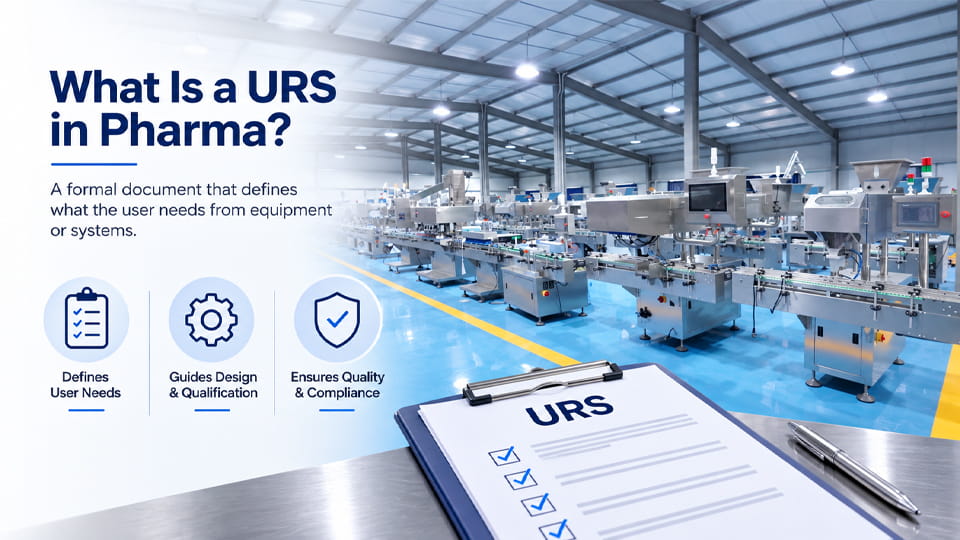
ΕΝΑ Προδιαγραφές Απαιτήσεων Χρήστη (URS) είναι ένα επίσημο έγγραφο που αποτυπώνει το ανάγκες και προσδοκίες των χρηστών για ένα κομμάτι εξοπλισμού ή συστήματος στη φαρμακοβιομηχανία. Περιγράφει Τι ο εξοπλισμός πρέπει να κάνει – π.χ. στόχος παραγωγής, μορφές προϊόντων, ακρίβεια, και ρυθμιστικές λειτουργίες – χωρίς συνταγογράφηση πως για να το πετύχει. Το URS λειτουργεί ως γέφυρα μεταξύ μηχανικών διεργασιών ή χρηστών παραγωγής και προμηθευτών εξοπλισμού. Επικοινωνεί το όραμα και τους περιορισμούς του χρήστη, έτσι ώστε οι προμηθευτές να μπορούν να σχεδιάσουν, παραθέτω, και να δημιουργήσετε ένα σύστημα για να καλύψει αυτές τις ανάγκες.
Για παράδειγμα, μπορεί να καθορίσει ένα URS:
Ο προβλεπόμενη χρήση (π.χ.. «Συσκευασία κυψέλες δισκίων 10–60 αριθμών»).
Κριτήρια απόδοσης (π.χ.. «≥ 100,000 φουσκάλες ανά ώρα»).
Κανονιστικές απαιτήσεις και απαιτήσεις GMP (π.χ.. «Υγιεινός σχεδιασμός, καθαριότητα σε <10 υπολειμμα ppm").
Υλικά κατασκευής (π.χ.. «Όλα τα εξαρτήματα που έρχονται σε επαφή με το προϊόν από ανοξείδωτο χάλυβα 316L»).
Υπηρεσίες κοινής ωφέλειας και περιβάλλον (π.χ.. «Λειτουργεί σε καθαρό δωμάτιο Γ’ τάξης, απαιτεί ισχύ 380 V, 6 μπαρ νερού»).
Καθορίζοντας σαφώς τις απαιτήσεις εκ των προτέρων, το URS γίνεται ο ακρογωνιαίος λίθος για όλα τα μεταγενέστερα στάδια – αναθεώρηση σχεδιασμού, αξιολόγηση προμηθευτή, δοκιμασία, και επικύρωση. Ρυθμιστική καθοδήγηση (π.χ.. Παράρτημα ΕΕ 15, FDA 21 Μέρος CFR 11, GAMP5) αναμένει ρητά τεκμηριωμένες απαιτήσεις χρήστη ως το σημείο εκκίνησης για την πιστοποίηση του εξοπλισμού. Στην πράξη, γράφοντας ένα URS αναγκάζει διαλειτουργικές ομάδες (παραγωγή, QA, νομιμοποίηση, μηχανική) να ευθυγραμμιστεί με το τι ακριβώς πρέπει να κάνει ο εξοπλισμός για να κατασκευαστεί σωστά το προϊόν.
Γιατί το URS είναι σημαντικό στη φαρμακευτική παραγωγή?
Ένα καλοφτιαγμένο URS είναι ζωτικής σημασίας για την επιτυχία του έργου που είναι συμβατό με GMP. Οι βασικοί λόγοι περιλαμβάνουν:
Σαφήνεια Απαιτήσεων: Το URS τεκμηριώνει όλες τις προσδοκίες (παραγωγή, ποιότητα, ασφάλεια, και τα λοιπά.) σε ένα μέρος. Αυτό αποφεύγει τη σύγχυση και διασφαλίζει ότι ο προμηθευτής γνωρίζει ακριβώς τι χρειάζεται. Χωρίς URS, Οι απαιτήσεις μπορεί να είναι ασαφείς ή να παραβλεφθούν, οδηγώντας σε δαπανηρούς επανασχεδιασμούς.
Βάση για Προσόντα Σχεδιασμού (DQ): Το URS χρησιμεύει ως βάση για την πιστοποίηση σχεδιασμού. Σας επιτρέπει να επαληθεύσετε ότι ο προτεινόμενος σχεδιασμός πληροί όλες τις απαιτήσεις. Παράρτημα GMP της ΕΕ 15 αναφέρει ρητά ότι «οι απαιτήσεις της προδιαγραφής απαιτήσεων χρήστη θα πρέπει να επαληθεύονται κατά την πιστοποίηση σχεδιασμού».
Νομιμοποίηση & Δοκιμασία: Κάθε δραστηριότητα πιστοποίησης προέρχεται από το URS. Η καθοδήγηση του FDA εξηγεί ότι το Installation Qualification (IQ) επαληθεύει την εγκατάσταση του εξοπλισμού σύμφωνα με τις εγκεκριμένες προδιαγραφές που «καθορίζονται στο URS (Π.χ., υλικά κατασκευής)”. Επιχειρησιακά Προσόντα (OQ) δοκιμές ότι ο εξοπλισμός λειτουργεί όπως προβλέπεται, και Προσόντα Απόδοσης (PQ) επιβεβαιώνει ότι πληροί με συνέπεια τις προδιαγραφές που ορίζονται στο Stage 1 (το URS). Εν συντομία, είτε στο FAT, ΣΑΤ, IQ, OQ ή PQ, κάθε δοκιμή επαληθεύει μία ή περισσότερες απαιτήσεις URS.
Διαχείριση Κινδύνων & Συμμόρφωση GMP: Συμπεριλαμβάνοντας κρίσιμα χαρακτηριστικά ποιότητας (CQAs), Χαρακτηριστικά σχεδιασμού GMP, και κανονιστικές απαιτήσεις στο URS, οι ομάδες μπορούν να αντιμετωπίσουν τους κινδύνους έγκαιρα. Για παράδειγμα, Ο καθορισμός κριτηρίων υγιεινής σχεδιασμού εκ των προτέρων αποτρέπει προβλήματα μόλυνσης αργότερα. Οι βέλτιστες πρακτικές του κλάδου δίνουν έμφαση στην ενσωμάτωση της QA, ασφάλεια, και τις ανάγκες συμμόρφωσης στο URS, έτσι «το τελικό σύστημα ανταποκρίνεται τόσο στις επιχειρηματικές ανάγκες όσο και στις ανάγκες συμμόρφωσης».
Ανακοίνωση & Επιλογή προμηθευτή: Το URS είναι μια κοινή αναφορά μεταξύ της φαρμακευτικής εταιρείας και πωλητές εξοπλισμού. Επιτρέπει στους προμηθευτές να προετοιμάσουν προτάσεις που ταιριάζουν άμεσα με τις ανάγκες του χρήστη. Βοηθά επίσης στην αξιολόγηση των προσφορών – οι μηχανές μπορούν να ελεγχθούν έναντι του URS (μέσω FAT/SAT) για να δείτε ποιο ανταποκρίνεται καλύτερα στις απαιτήσεις σας.
Έλεγχος κόστους και χρονοδιαγράμματος: Οι καθαρές απαιτήσεις σημαίνουν λιγότερες πιθανότητες ερπυσμού του εύρους ή χαμένων χαρακτηριστικών. Αυτό μειώνει τον κίνδυνο καθυστερήσεων του έργου και δαπανηρών εκ νέου εργασιών.
Παράδειγμα – Κατηγορίες περιεχομένου URS:
Κατηγορία URS
Παράδειγμα Απαιτήσεις
Προβλεπόμενη χρήση
Ποια διαδικασία και προϊόντα χειρίζεται ο εξοπλισμός.
Χωρητικότητα/Απόδοση
Ρυθμός παραγωγής (Π.χ., φουσκάλες/λεπτ), μέγεθος παρτίδας, ακρίβεια.
Προϊόν & Συσκευασία
Τύπος προϊόντος, δοσολογία, μέγεθος συσκευασίας, υλικό (Π.χ., PVC).
Υλικά (Επαφές)
Όλα τα εξαρτήματα που έρχονται σε επαφή με το προϊόν (Π.χ., 316L SS, φινίρισμα επιφάνειας).
Σχέδια FAT/SAT, και παραδοτέα IQ/OQ/PQ με κριτήρια επιτυχίας.
Σημείωση επαλήθευσης: Κάθε στοιχείο URS πρέπει να είναι σαφές και μετρήσιμο. Για παράδειγμα, προσδιορίστε τους ακριβείς αριθμούς (π.χ.. "100 φιάλες/λεπτό" ή "μέγιστη θερμοκρασία θαλάμου 30°C") ώστε τα τεστ όπως το FAT/OQ να μπορούν να τα επαληθεύσουν αντικειμενικά. Να συμπεριλαμβάνετε πάντα κριτήρια αποδοχής (π.χ.. «Οι σφραγίδες πρέπει να έχουν 0,01MPa για 5 δευτερόλεπτα») όπου ισχύει.
Τι πρέπει να περιλαμβάνει ένα φαρμακευτικό URS?
Ένα φαρμακευτικό URS καλύπτει συνήθως αυτούς τους τομείς:
Προβλεπόμενη χρήση & Εκταση: Περιγράψτε το βήμα της διαδικασίας (πλήρωση, σφράγιση, τιτλοφόρηση, και τα λοιπά.), τα προϊόντα και οι μορφές συσκευασίας, και πώς ο εξοπλισμός εντάσσεται στη συνολική διαδικασία. Αυτό θέτει το πλαίσιο για όλα τα άλλα.
Χωρητικότητα και απόδοση: Καθορίστε την έξοδο στόχο (μονάδες/ώρα ή μέγεθος παρτίδας). Για παράδειγμα: "Πακέτο 50,000 συσκευασίες κυψέλης μονάδας δόσης ανά βάρδια 8 ωρών.» Συμπεριλάβετε τυχόν συνθήκες εκκίνησης/απενεργοποίησης ή εύρη απενεργοποίησης.
Στοιχεία προϊόντος και συσκευασίας: Προσδιορίστε τα χαρακτηριστικά του προϊόντος (μέγεθος tablet, βάρος, ευαισθησία στην υγρασία) και τη μορφή συσκευασίας (τύπος φιάλης, διαστάσεις κάρτας blister, μέγεθος χαρτοκιβωτίου). Εάν χρησιμοποιούνται πολλά προϊόντα ή μεγέθη, απαριθμήστε το καθένα.
Υλικό Κατασκευής: Καταγράψτε τα απαιτούμενα υλικά και πρότυπα. Σε φαρμακευτική, ανοξείδωτο χάλυβα (304/316μεγάλο) και τα πολυμερή ποιότητας FDA είναι κοινά για εξαρτήματα επαφής. Συμπεριλάβετε απαιτήσεις φινιρίσματος επιφανειών (π.χ.. Ra ≤0,8 μm) και τυχόν επενδύσεις ή επιστρώσεις.
GMP και σχεδιαστικά χαρακτηριστικά: Συμπεριλάβετε κριτήρια υγιεινής σχεδιασμού (π.χ.. χωρίς νεκρά πόδια ή χαραμάδες, στραγγιστικότητας). Ανατρέξτε σε τυχόν ισχύοντα πρότυπα ή οδηγίες (Παράρτημα GMP της ΕΕ 11, ISO, ASTM). Για ηλεκτρονικά συστήματα, Σημειώστε τις ανάγκες ακεραιότητας δεδομένων (ίχνος ελέγχου, ηλεκτρονικές υπογραφές ανά 21CFR11).
Υπηρεσίες κοινής ωφέλειας και περιβάλλον: Λεπτομέρεια απαιτούμενα βοηθητικά προγράμματα (εξουσία: τάση/φάσεις, πίεση/ροή πεπιεσμένου αέρα, νερό ψύξης, αδειάζω, και τα λοιπά.) και περιβαλλοντικών συνθηκών (τάξη καθαρού δωματίου, κλίμακες θερμοκρασίας/υγρασίας).
Έλεγχοι και δεδομένα: Περιγράψτε τις ανάγκες αυτοματισμού: Πλατφόρμα PLC/HMI, γλώσσες, διαχείριση συνταγών, συναγερμός, και συνδεσιμότητα (Ethernet/SCADA/MES). Δηλώστε τυχόν απαιτήσεις αποθήκευσης δεδομένων ή αναφοράς (αρχεία παρτίδας, Παρακολούθηση ΟΕΕ).
Απαιτήσεις Ασφαλείας: Καταγράψτε τα χαρακτηριστικά ασφαλείας (π.χ.. ελαφριές κουρτίνες, στάσεις έκτακτης ανάγκης, εμπλεκόμενοι φρουροί) και τα σχετικά πρότυπα ασφαλείας (CE, Ul). Συμπεριλάβετε τυχόν εργονομικές απαιτήσεις ή απαιτήσεις ασφάλειας του χειριστή (λουκέτο/ταγκούτ, Ζώνες LOTO).
Τεκμηρίωση και Υπηρεσίες: Απαιτείται παράδοση εγχειριδίων χρήστη, όπως-χτισμένα σχέδια, εγγραφές βαθμονόμησης, πιστοποιητικά υλικού, αντίγραφα ασφαλείας λογισμικού, και εκπαίδευση για χειριστές/προσωπικό συντήρησης.
Δοκιμές και Προσόντα: Καθορίστε FAT (Εργοστασιακή δοκιμή αποδοχής) κριτήρια και το πεδίο εφαρμογής του IR/WH/PQ. Για παράδειγμα: "Ο Προμηθευτής θα πραγματοποιήσει FAT στον ιστότοπό του που αποδεικνύει τη συμμόρφωση με όλα τα σημεία URS και θα παρέχει μια αναφορά FAT."
Απαιτήσεις URS για εξοπλισμό φαρμακευτικής συσκευασίας
Μηχανήματα συσκευασίας έχει ορισμένες ειδικές εκτιμήσεις URS. Εκτός από τα γενικά στοιχεία παραπάνω, συμπεριλαμβάνω:
Ταχύτητες συσκευασίας: Καθορίστε τα ποσοστά-στόχους (π.χ.. 200 μπουκάλια/λεπτό, 50 χαρτοκιβώτια/λεπτό, 80 φουσκάλες/λεπτ). Εάν ενσωματωθούν πολλαπλές μηχανές/γραμμές, διευκρίνιση της απόδοσης για καθένα.
Σειρά προϊόντων: Καταγράψτε όλες τις παραλλαγές προϊόντων που πρέπει να χειριστείτε (tablet vs. κάψουλα, διαφορετικές διαμέτρους μπουκαλιών, στυλ καπακιών, και τα λοιπά.). Εάν η γραμμή χειρίζεται πολλές μορφές, περιλαμβάνει υποχρεωτικά χρόνους μετάβασης και τυχόν εξαρτήματα μορφής που χρειάζονται.
Μορφές πακέτων: Για φουσκάλες, καθορίστε τα μεγέθη των καρτών, διάταξη κοιλότητας, τύπος φύλλου (Πάχος PVC/PVDC, Alu/PVdC). Για μπουκάλια, δώστε τύπους δοχείων και γεμίστε όγκους. Για χαρτοκιβώτια, καθορίστε τις διαστάσεις και τον τύπο κλεισίματος. Αυτές οι λεπτομέρειες διασφαλίζουν ότι το μηχάνημα έχει διαμορφωθεί σωστά.
Χειρισμός Υλικών: Αναλυτικά τυχόν τροφοδότες, διαχωριστές, ή κόσκινα που χρειάζονται για στερεά δοσολογία. Για σκόνες/υγρά, προσδιορίστε τις ανοχές δοσολογίας και τις ανάγκες δεξαμενής.
Υλικά: Όπως πάντα, όλα τα εξαρτήματα που έρχονται σε επαφή με το προϊόν πρέπει να είναι κατάλληλα για φαρμακευτικά προϊόντα (π.χ.. SS316L). Εάν εμπλέκονται διαβρωτικά ή όξινα προϊόντα, σημειώστε τυχόν ειδικές επιστρώσεις ή υλικά.
Καθάρισμα & Αλλαγή: Εάν αναμένονται συχνές αλλαγές προϊόντων, απαιτούν ανταλλακτικά γρήγορης αποδέσμευσης ή CIP (Καθαρισμός επί τόπου) χαρακτηριστικά. Για αποστειρωμένες γραμμές, προσδιορίστε τις μεθόδους ταξινόμησης και αποστείρωσης του καθαρού δωματίου.
Έλεγχοι: π.χ.. «Η γραμμή θα χρησιμοποιεί ένα Allen-Bradley PLC με διεπαφή SCADA, υποστήριξη ελέγχου συνταγών." Καθορίστε οποιαδήποτε σειριοποίηση ετικετών ή συνδεσιμότητα με εξοπλισμό ανάντη/κατάντη.
Ολοκλήρωση: Εάν είναι μέρος μιας μεγαλύτερης γραμμής, απαιτούν συμβατότητα (π.χ.. μεταφορείς, παρακολούθηση παρτίδας, σαρωτές γραμμωτού κώδικα). Τεκμηριώστε τυχόν διεπαφές (ηλεκτρικός, μηχανικός, ανακοίνωση) χρειάζεται.
Βοηθητικά προγράμματα: Γραμμές συσκευασίας συχνά χρειάζονται πεπιεσμένο αέρα (π.χ.. 5 μπαρ στα X NL/λεπτό) και μπορεί να χρησιμοποιεί κενό ή άζωτο. Δώστε ελάχιστες απαιτήσεις.
Ασφάλεια: Με πολλούς χειριστές τριγύρω, περιλαμβάνει φωτοκουρτίνες ή χειριστήρια με τα δύο χέρια στους σταθμούς φόρτωσης/απόρριψης. Το URS θα πρέπει να αντικατοπτρίζει τους κανόνες ασφαλείας του ιστότοπού σας (π.χ.. Συμμόρφωση CE).
Για παράδειγμα, μπορεί να περιλαμβάνει ένα μηχάνημα blister URS: «Δυνατότητα θερμοσυγκόλλησης έως 200°C, φιλοξενούν φιλμ PVC/PVDC πάχους 300μm, ενσωματωμένος τροφοδότης blister και μεταφορέας επένδυσης, 4-μορφή κυψέλης κομματιού με εναλλαγή <15 ελάχ, όλα τα μέρη επαφής σε SS316L, απόδοση ≥80 κυψέλες/λεπτό σε 100% αποδοτικότητα." Τέτοιες ιδιαιτερότητες επιτρέπουν στον κατασκευαστή μηχανών να καλύψει τις ακριβείς ανάγκες σας.
Πώς εντάσσεται το URS στη διαδικασία πιστοποίησης?
Το URS είναι το σημείο εκκίνησης του κύκλου ζωής της πιστοποίησης του εξοπλισμού. Μια απλοποιημένη ροή είναι:
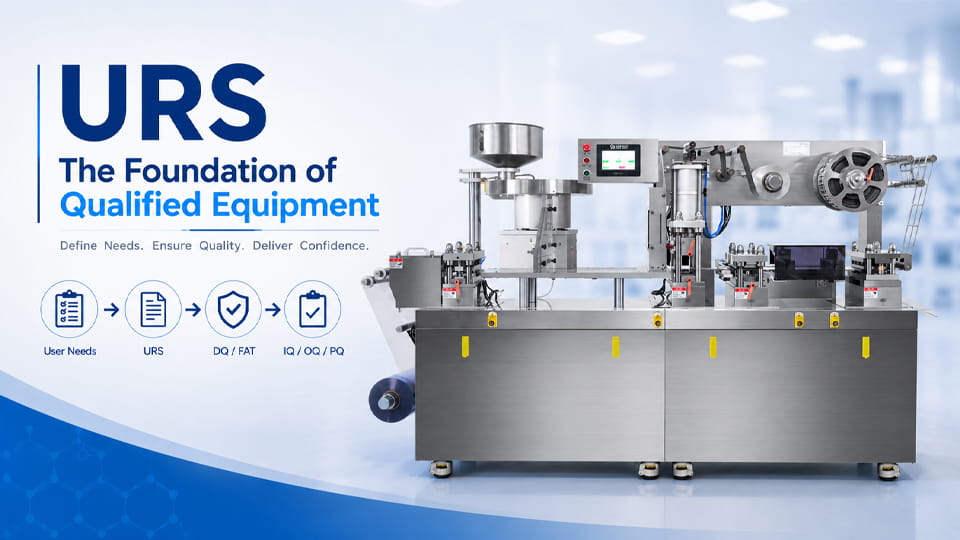
URS → DQ: Μόλις εγκριθεί το URS, ο σχεδιασμός του εξοπλισμού (αναλήψεις, διόπτρα) ελέγχεται στην πιστοποίηση σχεδίασης για να διασφαλιστεί ότι πληρούνται όλες οι απαιτήσεις URS. Σε μια κριτική σχεδίασης, μηχανικοί και QA περπατούν στα αποτελέσματα σχεδιασμού συγκρίνοντάς τα με κάθε στοιχείο URS.
URS → FAT/SAT: Δοκιμή αποδοχής εργοστασίων (ΛΙΠΟΣ) γίνεται στον ιστότοπο του πωλητή για να αποδειχθεί ότι το μηχάνημα πληροί το URS πριν από την αποστολή. Παράρτημα 15 προτείνει ακόμη και την επαλήθευση της συμμόρφωσης με το URS στον ιστότοπο του προμηθευτή, εάν αυτό δικαιολογείται. Μετά την εγκατάσταση, Δοκιμή αποδοχής ιστότοπου (ΣΑΤ) επιβεβαιώνει ότι όλα εξακολουθούν να λειτουργούν στη θέση τους (μερικές φορές τα βήματα FAT και SAT αλληλοεπικαλύπτονται).
URS → IQ: Η πιστοποίηση εγκατάστασης ελέγχει ότι ο εγκατεστημένος εξοπλισμός ταιριάζει με τις προδιαγραφές URS. Για παράδειγμα, Η καθοδήγηση του FDA αναφέρει ότι το IQ θα πρέπει να επαληθεύει ότι «όλες οι πτυχές μιας εγκατάστασης, χρησιμότητα, ή εξοπλισμός που μπορεί να επηρεάσει την ποιότητα του προϊόντος… συμμορφωθείτε με τις εγκεκριμένες προδιαγραφές όπως ορίζονται στο URS (Π.χ., υλικά κατασκευής)”. Στην πράξη αυτό σημαίνει έλεγχο των σωληνώσεων, ηλεκτρικός, και δομικές λεπτομέρειες έναντι του URS.
URS → OQ/PQ: Δοκιμές λειτουργικής πιστοποίησης ότι το μηχάνημα λειτουργεί όπως προβλέπεται. Σημειώσεις FDA Το OQ επαληθεύει ότι ο εξοπλισμός «λειτουργεί[μικρό] όπως προβλέπεται σε όλες τις αναμενόμενες περιοχές λειτουργίας». Το Performance Qualification εμφανίζει στη συνέχεια συνεπή έξοδο που πληροί κριτήρια που ορίζονται από το URS. Με άλλα λόγια, στο OQ/PQ τρέχετε το μηχάνημα με πραγματικά υλικά και επιβεβαιώνετε μετρήσεις (ταχύτητα, απόδοση παραγωγής, ποσοστό ελαττώματος, και τα λοιπά.) σύμφωνα με το URS.
Σε κάθε στάδιο, Τα πρωτόκολλα δοκιμών εντοπίζονται στις απαιτήσεις URS. Εάν το URS λέει «Διανομή 100 ml ±2%,» τότε οι δοκιμές OQ θα μετρήσουν τον όγκο που διανέμεται για να το καλύψει αυτό. Ένα URS μετατρέπει ασαφείς στόχους σε αντικειμενικά τεστ.
URS vs Functional Spec vs Design Spec
Είναι σημαντικό να γνωρίζετε πώς διαφέρουν αυτά τα έγγραφα:
Εγγραφο
Ορίζει (Εκταση)
Συγγραφέας
Προδιαγραφές Απαιτήσεων Χρήστη (URS)
Τι χρειάζονται οι χρήστες για να κάνουν το σύστημα (λειτουργικές και ρυθμιστικές ανάγκες).
Η φαρμακευτική εταιρεία (ιδιοκτήτης)
Λειτουργική Προδιαγραφή (FS)
Πώς το σύστημα θα συναντήσει το URS (λειτουργίες, ενότητες λογισμικού, χαρακτηριστικά).
Ο URS απαντήσεις Τι ερωτήσεις: «Τι απόδοση, ασφάλεια, και απαιτούνται χαρακτηριστικά συμμόρφωσης?Αφήνει ανοιχτές τις μεθόδους λύσης.
Ο Λειτουργική Προδιαγραφή αναλύει το URS σε λειτουργίες συστήματος (π.χ.. «Το σύστημα ελέγχου πρέπει να σταματά αυτόματα σε συναγερμό και να καταγράφει κωδικούς σφάλματος»).
Ο Spec παρέχει τον πραγματικό σχεδιασμό (Σχέδια CAD, Κωδικός PLC, στοιχεία πωλητή/κατασκευαστή).
Αποφύγετε τον υπερβολικό προσδιορισμό στο URS. Για παράδειγμα, μην επιβάλλετε συγκεκριμένη μάρκα PLC ή τύπο κινητήρα εκτός εάν απαιτείται απολύτως. Το URS θα πρέπει να επικεντρωθεί στις ανάγκες, όχι σχεδιαστική λεπτομέρεια. Όπως σημειώνουν οι ειδικοί του κλάδου, Η συμπερίληψη υπερβολικών τεχνικών λεπτομερειών στο URS μπορεί να περιορίσει τις ευέλικτες λύσεις. Αυτές οι λεπτομέρειες ανήκουν στις προδιαγραφές λειτουργίας/σχεδιασμού.
Ποιος είναι υπεύθυνος για την προετοιμασία του URS?
Γενικά, ο φαρμακευτικός χρήστης (αγοραστής) είναι υπεύθυνος για το URS. Συνήθως το συντάσσει μια διαλειτουργική ομάδα:
Μηχανικοί Παραγωγής/Διαδικασιών: Καθορίστε την προβλεπόμενη χρήση, διακίνησης, και ενσωμάτωση διαδικασιών.
Συντήρηση/Μηχανική: Προσδιορίστε βοηθητικά προγράμματα, ανταλλακτικά, πρόσβαση συντήρησης, και χώρο εγκατάστασης.
Ρυθμιστική/ΔΠΠ: Εξασφαλίστε παραρτήματα ή οδηγίες (Παράρτημα 15, Παράρτημα 1 για αποστειρωμένα, και τα λοιπά.) απευθύνονται.
Προμήθεια: Συντονίζει τη μορφή του εγγράφου και μπορεί να διευκρινίσει τεχνικά σημεία.
Ο πωλητής εξοπλισμού μπορεί να δώσει στοιχεία (τι είναι εφικτό, τυπική απόδοση, και τα λοιπά.), αλλά το τελικό URS πρέπει να προέρχεται από τον χρήστη. Έγκαιρη συμμετοχή όλων των ενδιαφερομένων (παραγωγή, QA, μηχανική, νομιμοποίηση) είναι μια βέλτιστη πρακτική. Για παράδειγμα, Το QA μπορεί να καλύψει μια απαίτηση υγιεινής, και Process μπορεί να καθορίσει ένα μέγεθος ροής. Το URS θα πρέπει να ενσωματώσει αυτές τις προοπτικές, ώστε να αντικατοπτρίζει πραγματικά τις ανάγκες σας.
Πώς να γράψετε ένα καλό φαρμακευτικό URS
Ακολουθήστε αυτά τα βήματα για να δημιουργήσετε ένα σαφές, Δοκιμή URS:
Καθορίστε την προβλεπόμενη χρήση: Ξεκινήστε με μια σύντομη περιγραφή και σκοπό του συστήματος (π.χ.. “URS για μηχανή πλήρωσης υγρών στη σειρά προϊόντων ABC”). Αυτό θέτει τη σκηνή.
Κατάλογος ισχυόντων κανονισμών/προτύπων: Συμπεριλάβετε σχετική καθοδήγηση (Παράρτημα GMP της ΕΕ 15/11, 21 Μέρος CFR 11, ΑΘΛΗΜΑ 5, και τα λοιπά.) έτσι οι ανάγκες συμμόρφωσης δεν χάνονται.
Να είστε συγκεκριμένοι και μετρήσιμοι: Δηλώστε απαιτήσεις με ακριβείς τιμές ή δοκιμές. Αντί για «υψηλή ταχύτητα», καθορίστε «ελάχιστο 500 μπουκάλια/ώρα σε 80% γέμισμα". Κάθε απαίτηση πρέπει να είναι αντικειμενικά επαληθεύσιμη.
Λεπτομερείς ανάγκες προϊόντος και διαδικασίας: Περιγράψτε παραλλαγές προϊόντων, ιδιότητες υλικού, περιβαλλοντικών συνθηκών. Για παράδειγμα: «Διάμετρος tablet 6–10 mm; λειτουργούν στους 20–25°C, 40–60% RH.”
Προσδιορίστε Υλικά και Κριτήρια Σχεδιασμού: Καθορίστε με σαφήνεια τα υλικά επαφής (π.χ.. SS316L), τελειώνει (Ra), μαθήματα καθαριότητας, και τα λοιπά. Αυτό επιτρέπει στους ελέγχους IQ να επιβεβαιώνουν τις «ως κατασκευασμένες» προδιαγραφές.
Συμπεριλάβετε βοηθητικά προγράμματα και απαιτήσεις χώρου: Τροφοδοτικό εγγράφων, πίεση/ροή αέρα, ποιότητα νερού, βάρη, και τυχόν ειδικές απαιτήσεις θεμελίωσης ή δωματίου.
Περιγράψτε στοιχεία ελέγχου και χειρισμό δεδομένων: Καθορίστε τις προτιμήσεις του συστήματος ελέγχου (Μάρκα PLC, Γλώσσα HMI), αριθμός συνταγών, καταγραφή συναγερμών/συμβάντων (διαδρομή ελέγχου για το CFR 21Part 11), και τα λοιπά. Εάν η γραμμή πρέπει να ενσωματωθεί με το MES, σημειώστε το.
Περιγράψτε τα χαρακτηριστικά ασφαλείας: Κατάλογος απαιτούμενων κλειδαριών ασφαλείας, φρούρηση, στάσεις έκτακτης ανάγκης, και συμμόρφωση με τα πρότυπα ασφαλείας (CE, Ul). Μην παραβλέπετε την ασφάλεια του χειριστή (π.χ.. φωτισμός, σκάλες, λουκέτο/ταγκούτ).
Σχέδιο για FAT/SAT: Υποδείξτε ότι το μηχάνημα θα υποβληθεί σε FAT και SAT, και ποια κριτήρια αποδοχής θα δοκιμαστούν (π.χ.. "Όλα τα σημεία URS θα συμπεριληφθούν στο πρωτόκολλο FAT με μετρημένα αποτελέσματα").
Αναθεώρηση και αναθεώρηση: Βεβαιωθείτε ότι όλες οι απαιτήσεις είναι σαφείς, ξεκάθαρος, και ανιχνεύσιμο. Εκχωρήστε μοναδικά αναγνωριστικά εάν είναι χρήσιμα για παρακολούθηση. Συμπεριλάβετε QA/Validation για να επαληθεύσετε ότι δεν λείπει τίποτα σημαντικό.
Βασικές βέλτιστες πρακτικές: προσελκύουν χρήστες από όλες τις ομάδες, χρησιμοποιήστε απλή γλώσσα, και αποφύγετε τους διφορούμενους όρους. Ένα καλό URS χρησιμοποιεί λίστες κουκκίδων ή πίνακες, και κάθε στοιχείο έχει κριτήρια για δοκιμή. Όπως το θέτει μια πηγή του κλάδου: κάθε απαίτηση πρέπει να είναι «συγκεκριμένη και ελεγχόμενη». Από εδώ, μπορείτε να συνδέσετε απευθείας κάθε βήμα FAT/IQ/OQ πίσω σε ένα στοιχείο URS.
Συνήθη λάθη κατά τη σύνταξη ενός URS
Πάρα πολύ ασαφές: Απαιτήσεις όπως "εύκολο στη χρήση" ή "υψηλή ταχύτητα" χωρίς αριθμούς δεν είναι δυνατό να ελεγχθούν. Πάντα να ποσοτικοποιείτε ή να προσδιορίζετε κριτήρια αποδοχής.
Design-Centric Language: Η γραφή «Το PLC πρέπει να είναι Siemens» ή «χρησιμοποιήστε τρεις κινητήρες» υπερβαίνει το URS. Διατηρήστε την εστίαση στις ανάγκες (Τι, όχι πώς).
Λείπει η μέθοδος επαλήθευσης: Εάν δεν μπορείτε να πείτε πώς να το δοκιμάσετε, χρειάζεται διευκρίνιση. Για παράδειγμα, Το «πρέπει να σφραγιστεί σωστά» θα πρέπει να περιλαμβάνει μια προδιαγραφή δοκιμής διαρροής.
Παραβλέποντας την ακεραιότητα GMP/Data: Ξεχνώντας να αναφέρω συναγερμούς, δημιουργία αντιγράφων ασφαλείας δεδομένων, ή μέρος 11 η συμμόρφωση μπορεί να προκαλέσει προβλήματα ελέγχου.
Αγνοώντας τις υπηρεσίες κοινής ωφέλειας/περιβάλλοντος: Συνήθεις παραλείψεις είναι η πίεση του αέρα, φάσεις ισχύος, τάξη δωματίου, ή ακόμα και το συνολικό βάρος (φορτίο δαπέδου).
Παράλειψη Καθαρισμού/Αλλαγής: Σε φαρμακευτική, Το CIP και η γρήγορη μετάβαση είναι συχνά κρίσιμα. Η παράλειψή τους μπορεί να οδηγήσει σε μεταγενέστερους επανασχεδιασμούς.
Δεν εμπλέκονται όλοι οι ενδιαφερόμενοι: Εάν δεν εμπλέκεται QA ή παραγωγή, απαιτήσεις (π.χ.. καθαριότητα, ανάγκες του χειριστή) μπορεί να χαθεί.
Μη ρεαλιστικές προσδοκίες: Η υπερβολικά υποσχόμενη απόδοση ή η υποτίμηση των θερμοκρασιών μπορεί να αποτύχει. Αριθμοί βάσης σε πραγματικά δεδομένα διεργασίας.
Χωρίς έλεγχο έκδοσης: Η αντιμετώπιση του URS ως επεξεργάσιμου προχείρου μπορεί να προκαλέσει σύγχυση στις ομάδες. Μόλις οριστικοποιηθεί, θα πρέπει να είναι ένα ελεγχόμενο έγγραφο.
Ένα URS που είναι είτε πολύ γενικό είτε πολύ λεπτομερές μπορεί να προκαλέσει προβλήματα. Στόχος για σαφή, σαφείς ανάγκες των χρηστών.
Παράδειγμα Pharmaceutical Packaging Machine URS
Παρακάτω είναι ένα απλοποιημένο παράδειγμα καταχωρήσεων URS για α Μηχανή συσκευασίας φυσαλίδων. (Οι πραγματικές τιμές θα προέρχονται από τα συγκεκριμένα προϊόντα και τους στόχους σας.)
Απαίτηση
Παράδειγμα (Μηχανή συσκευασίας blister)
Τύπος μηχανής
Αυτόματη περιστροφική μηχανή συσκευασίας blister
Προϊόντα
Δισκίο (6–10 mm Ø) και κάψουλες (8–12 mm Ø)
Υλικό blister
Φιλμ PVC/PVDC 300 μm, ή φύλλο Alu/PVdC 20/30 μm
Αριθμός κομματιών
4-μηχανή τροχιάς (για κύκλους φυσαλίδων)
Ταχύτητα εξόδου
≥ 80 γεμάτες κυψέλες ανά λεπτό
Σφράγιση
Θερμομόνωση με πάνω/κάτω εργαλεία; θερμοκρασία σφράγισης 170–200°C; δύναμη στεγανοποίησης 3kN
Αλλαγή
Αλλαγή μορφής σε < 30 λεπτά μεταξύ των προϊόντων
Κατασκευή
SS316L από ανοξείδωτο χάλυβα για εξαρτήματα επαφής προϊόντος, Ra ≤ 0.8 μm
Σύστημα Ελέγχου
Allen-Bradley PLC με 10″ HMI; αποθήκευση συνταγών έως 20 μορφές
FAT στον ιστότοπο του προμηθευτή που καλύπτει όλα τα σημεία URS; Ο προμηθευτής παρέχει έγγραφα IQ/OQ/PQ
Σημείωμα: Αυτά είναι ενδεικτικά παραδείγματα. Το πραγματικό URS σας θα περιλαμβάνει τιμές σχετικές με τα μεγέθη του προϊόντος σας, βαθμός καθαρού δωματίου, κανονιστικές απαιτήσεις, και σχέδιο επικύρωσης.
Μηχανή συσκευασίας υγρών κυψελών DPP-270Pro
Λίστα ελέγχου URS για προμήθεια εξοπλισμού
Πριν από την οριστικοποίηση του URS, βεβαιωθείτε ότι έχετε καλύψει:
Προβλεπόμενη χρήση / βήμα διαδικασίας
Τύποι προϊόντων και μορφές συσκευασίας
Δυνατότητα παραγωγής και εύρος λειτουργίας
Υλικά κατασκευής και φινιρίσματα επιφανειών
GMP/χαρακτηριστικά υγιεινής σχεδίασης
Απαιτήσεις καθαρισμού και CIP
Υπηρεσίες κοινής ωφέλειας και περιβαλλοντικές συνθήκες
Έλεγχοι και ακεραιότητα δεδομένων (HMI, SCADA, Μέρος CFR21 11)
Απαιτήσεις ασφάλειας και φύλαξης
Απόδειξη με έγγραφα (εγχειρίδια, αναλήψεις, πιστοποιητικά)
FAT/SAT και παραδοτέα πιστοποίησης
Συντήρηση, ανταλλακτικά, και εκπαιδευτικές ανάγκες
Μια πλήρης λίστα ελέγχου βοηθά να πιάσετε κομμάτια που λείπουν προτού οι προμηθευτές υποβάλουν προσφορά για το έργο.
Σύναψη
ΕΝΑ Προδιαγραφές Απαιτήσεων Χρήστη (URS) είναι το σημείο εκκίνησης για κάθε έργο φαρμακευτικού εξοπλισμού. Καθορίζει τις ανάγκες του χρήστη και γίνεται το θεμέλιο για τον συμβατό σχεδιασμό και την επικύρωση εξοπλισμού. Με την ορθογραφία Τι ο εξοπλισμός πρέπει να κάνει – με σαφή, μετρήσιμα κριτήρια – το URS καθοδηγεί τις προμήθειες, προτάσεις προμηθευτών, και τεστ προσόντων.
Για γραμμές συσκευασίας φαρμακευτικών προϊόντων, ένα ισχυρό URS σας εξασφαλίζει blister packers, μετρητές tablet, χαρτοκιβώτια, και οι μηχανές εμφιάλωσης παρέχουν την απαιτούμενη απόδοση και πληρούν τα πρότυπα σχεδιασμού GMP. Όταν η παραγωγή σας, QA, και οι ομάδες μηχανικών συνεργάζονται στο URS, ελαχιστοποιείτε τις παρεξηγήσεις και δημιουργείτε μια ομαλή πορεία προς το FAT, IQ, OQ, και PQ.
Εάν ετοιμάζετε ένα URS για μια μηχανή ή μια γραμμή συσκευασίας, θυμάμαι: ορίστε τι χρειάζεστε, να το κάνει μετρήσιμο, και συνδέστε το με τις απαιτήσεις GMP. Η Jinlu Packing ειδικεύεται σε μηχανήματα συσκευασίας φαρμακευτικών προϊόντων – από τη συσκευασία κυψέλης και το γέμισμα κάψουλας μέχρι τις γραμμές χαρτοκιβωτίου και εμφιάλωσης. Με ένα καθαρό URS στο χέρι, μπορούμε να προσαρμόσουμε τις προτάσεις εξοπλισμού μας και την υποστήριξη επικύρωσης στις ακριβείς απαιτήσεις σας.
Επικοινωνήστε με την Jinlu Packing για βοήθεια από ειδικούς για τον καθορισμό και τον χαρακτηρισμό της επόμενης μηχανής συσκευασίας φαρμακευτικών προϊόντων σας. Η έμπειρη ομάδα μας μπορεί να σας βοηθήσει να μεταφράσετε το URS σας σε συμβατό, λύση υψηλής απόδοσης.
Συχνές ερωτήσεις σχετικά με τις προδιαγραφές των απαιτήσεων χρήστη (URS) στο Pharma
Τι είναι η Προδιαγραφή Απαιτήσεων Χρήστη (URS) στα φαρμακευτικά προϊόντα?
Το URS είναι ένα γραπτό έγγραφο που περιγράφει λεπτομερώς τις προσδοκίες του χρήστη για ένα μηχάνημα ή σύστημα προτού σχεδιαστεί ή αγοραστεί. Απαριθμεί την απόδοση, λειτουργικότητα, και τις ανάγκες συμμόρφωσης που πρέπει να καλύψει ο εξοπλισμός. Με άλλα λόγια, λέει στους προμηθευτές τι ακριβώς απαιτεί η διαδικασία.
Γιατί το URS είναι σημαντικό στη φαρμακοβιομηχανία?
Το URS διασφαλίζει ότι ο εξοπλισμός αναπτύσσεται σύμφωνα με την GMP, ασφάλεια, και απαιτήσεις ακεραιότητας δεδομένων. Παρέχει σαφήνεια σχετικά με το τι χρειάζεται, ώστε οι σχεδιαστές να μπορούν να οικοδομήσουν συμβατό, συστήματα υψηλής ποιότητας. Χωρίς σαφές URS, ο εξοπλισμός ενδέχεται να μην έχει βασικές απαιτήσεις, που οδηγεί σε δαπανηρές επανεπεξεργασίες ή κανονιστική μη συμμόρφωση.
Ποιος γράφει συνήθως το URS?
Συνήθως οι άνθρωποι που τρέχουν τη διαδικασία (ειδικούς παραγωγής ή προϊόντων) σχεδιάστε το URS, με τη συμβολή της μηχανικής, QA, και ομάδες επικύρωσης. Αυτό διασφαλίζει ότι καλύπτονται όλες οι προοπτικές. Η τελική αναθεώρηση και έγκριση θα πρέπει να περιλαμβάνει QA για να επιβεβαιωθεί ότι ικανοποιούνται οι ρυθμιστικές ανάγκες.
Πότε πρέπει να δημιουργηθεί το URS?
Το URS θα πρέπει να προετοιμαστεί πριν από την αγορά ή την κατασκευή του εξοπλισμού – αμέσως μετά την απόφαση ότι χρειάζεται ένα νέο σύστημα, και πριν από τον λεπτομερή σχεδιασμό ή την επιλογή προμηθευτή.
Τι πρέπει να περιλαμβάνεται σε ένα URS?
Οι βασικές ενότητες ενός φαρμακευτικού URS καλύπτουν συνήθως το πεδίο εφαρμογής του έργου, λειτουργικές απαιτήσεις (τι κάνει), απαιτήσεις απόδοσης (πόσο καλά το κάνει), κανονιστικής συµµόρφωσης, ακεραιότητα δεδομένων, και κριτήρια αποδοχής. Μπορεί επίσης να περιλαμβάνει ενότητες για την ασφάλεια, συντήρηση, απόδειξη με έγγραφα, εκπαίδευση, και τα λοιπά.
Ποια είναι η διαφορά μεταξύ ενός URS και μιας Προδιαγραφής Λειτουργικής Απαίτησης (FRS)?
Το URS ορίζει τι χρειάζεται ο χρήστης (επιχειρηματικές ανάγκες, λειτουργίες υψηλού επιπέδου). Το FRS (ή λειτουργική προδιαγραφή) έρχεται αργότερα και περιγράφει πώς θα το κάνει το σύστημα. Σκεφτείτε το URS ως "χρειαζόμαστε έξοδο Χ και ακρίβεια Υ", λαμβάνοντας υπόψη ότι το FRS θα περιέγραφε λεπτομερώς την τεχνική λύση ή τη ροή εργασιών για να επιτευχθεί αυτό. Γενικά, μην αντιγράψετε τις λειτουργικές προδιαγραφές στο URS.
Πώς συνδέεται το URS με την επικύρωση (IR/WH/PQ)?
Το URS είναι η βασική γραμμή για όλες τις δοκιμές επικύρωσης. Κάθε δραστηριότητα πιστοποίησης ανάγεται στις απαιτήσεις του URS. Για παράδειγμα, εάν το απαιτεί το URS 10,000 μπουκάλια/ώρα, το PQ (Προσόντα Απόδοσης) θα δοκιμάσει αυτή την έξοδο. Παράρτημα 15 δηλώνει ρητά ότι οι απαιτήσεις URS πρέπει να επαληθεύονται κατά τη διάρκεια του DQ και να χρησιμεύουν ως αναφορά σε όλο το IQ/OQ/PQ.
Μπορεί κάποιος πωλητής να μας γράψει το URS?
Ενώ ένας πωλητής μπορεί να διευκρινίσει πώς θα ικανοποιήσει τις απαιτήσεις, το URS θα πρέπει να παραμείνει ιδιοκτησία του χρήστη. Πρέπει να αντικατοπτρίζει τη συγκεκριμένη διαδικασία και τις προτεραιότητες GMP, όχι μόνο αυτό που έχει κατασκευάσει ένας προμηθευτής στο παρελθόν. Μπορείτε να λάβετε στοιχεία από τον προμηθευτή σχετικά με την τεχνική σκοπιμότητα, αλλά το τελικό URS θα πρέπει να επικυρωθεί από την ομάδα σας (QA/επικύρωση) για αποφυγή μεροληψίας.
Είναι ένα URS που απαιτείται από τις ρυθμιστικές αρχές?
Ναί. Οδηγίες GMP (Παράρτημα ΕΕ 15, FDA 21 CFR, και τα λοιπά.) απαιτούν τεκμηριωμένες προδιαγραφές για τον εξοπλισμό. Παράρτημα 15 ζητά ρητά ένα URS ή παρόμοια προδιαγραφή κατά την έναρξη της πιστοποίησης. Ομοίως, Μέρος του FDA 11 και το GAMP5 τονίζουν ότι έχουν σαφείς τεκμηριωμένες απαιτήσεις. Κατά τους ελέγχους, Οι ρυθμιστικές αρχές θα αναμένουν να δουν ένα URS ή μια προδιαγραφή για κάθε κρίσιμο μηχάνημα.
Τι θα συμβεί αν παραλείψουμε το URS?
Η παράλειψη ή η σύνταξη ενός κακού URS συχνά οδηγεί σε κενά σχεδιασμού και ζητήματα συμμόρφωσης. Μπορεί να καταλήξετε με μηχανήματα που δεν καλύπτουν τις ανάγκες παραγωγής ή δεν έχουν κρίσιμα χαρακτηριστικά GMP. Η Pharmaguideline προειδοποιεί ότι ένα ασαφές URS προκαλεί "υπερβολικό κόστος που σχετίζεται με τον επανασχεδιασμό και την πιστοποίηση εξοπλισμού λόγω έλλειψης σαφήνειας". Ξεκινάτε πάντα με ένα καλό URS – είναι η πιο αποτελεσματική διαδρομή για ένα συμβατό, σύστημα επί προδιαγραφών.
Πέτι Φου, Ιδρυτής της Jinlupacking, φέρνει πάνω 20 χρόνια εμπειρίας στον τομέα των φαρμακευτικών μηχανημάτων. Υπό την ηγεσία του, Η Jinlu έχει εξελιχθεί σε έναν αξιόπιστο προμηθευτή που ενσωματώνει το σχεδιασμό, παραγωγή, και πωλήσεις. Ο Petty είναι παθιασμένος με το να μοιράζεται τις βαθιές του γνώσεις στον κλάδο για να βοηθήσει τους πελάτες να πλοηγηθούν στην πολυπλοκότητα της συσκευασίας φαρμάκων, εξασφαλίζοντας ότι δεν λαμβάνουν μόνο εξοπλισμό, αλλά μια πραγματική συνεργασία ενιαίας εξυπηρέτησης προσαρμοσμένη στους στόχους παραγωγής τους.