

Η συντήρηση του φαρμακευτικού εξοπλισμού δεν αφορά απλώς τη στερέωση ενός μηχανήματος όταν σταματά. Ένα καλό πρόγραμμα συντήρησης διατηρεί τον εξοπλισμό καθαρό, αξιόπιστος, ακριβής, και έτοιμο για παραγωγή, μειώνοντας παράλληλα τον απροσδόκητο χρόνο διακοπής λειτουργίας και αποφεύγοντας τους κινδύνους ποιότητας. Υπό Τρέχουσα ορθή πρακτική παραγωγής του FDA, εξοπλισμός που χρησιμοποιείται για την κατασκευή, διαδικασία, πακέτο, ή τα ναρκωτικά προϊόντα πρέπει να καθαρίζονται και να συντηρούνται σε κατάλληλα διαστήματα, υποστηρίζεται από γραπτές διαδικασίες και αρχεία. Αυτόματο, μηχανικός, και ο ηλεκτρονικός εξοπλισμός πρέπει επίσης να βαθμονομείται τακτικά, επιθεωρήθηκε, ή ελέγχεται σε γραπτό πρόγραμμα.
Για ένα φαρμακευτικό εργοστάσιο, ο πρακτικός στόχος είναι ξεκάθαρος: ξέρετε ποιες μηχανές έχουν μεγαλύτερη σημασία, προσδιορίστε τα εξαρτήματα που είναι πιο πιθανό να επηρεάσουν την ποιότητα ή το χρόνο λειτουργίας του προϊόντος, συντηρήστε τα πριν την αποτυχία, τεκμηριώστε την εργασία, και συνεχίστε να βελτιώνετε το σχέδιο από πραγματικά δεδομένα λειτουργίας. Ο Οδηγός καλής πρακτικής του ISPE για τη συντήρηση αντιμετωπίζει παρομοίως τη συντήρηση ως ένα δομημένο πρόγραμμα της περιοχής GMP και όχι ως μια συλλογή μεμονωμένων εργασιών επισκευής.

Αυτός ο οδηγός εξηγεί πώς να δημιουργήσετε αυτό το σύστημα, με μια πρακτική λίστα ελέγχου συντήρησης φαρμακευτικού εξοπλισμού, πρόγραμμα συντήρησης, συμβουλές ειδικά για το μηχάνημα, και θεωρήσεις GMP για πιεστήρια tablet, πλήρωση κάψουλας, μηχανές φυσαλίδων, μετρητικές μηχανές, και χαρτοκιβωτίων.
Συντήρηση Φαρμακευτικού Εξοπλισμού είναι η προγραμματισμένη επιθεώρηση, καθάρισμα, λάδωμα, προσαρμογή, υποστήριξη βαθμονόμησης, επισκευή, και εργασίες αντικατάστασης που χρησιμοποιούνται για τη διατήρηση της λειτουργίας των μηχανημάτων παραγωγής και συσκευασίας φαρμακευτικών προϊόντων όπως προβλέπεται.
Καλύπτει πολλά περισσότερα από έναν τεχνικό συντήρησης με μια εργαλειοθήκη. Ένα πλήρες πρόγραμμα φαρμακευτικής συντήρησης συνδέει την παραγωγή, μηχανική, διασφάλιση ποιότητας, χειριστές, διαχείριση ανταλλακτικών, απόδειξη με έγγραφα, και προμηθευτές εξοπλισμού.
Γιατί έχει σημασία αυτό?
Υπάρχουν τέσσερις χρήσιμες προσεγγίσεις συντήρησης:
| Τύπος Συντήρησης | Σκανδάλη | Βέλτιστη χρήση | Κύριος περιορισμός |
| Αντιδραστική συντήρηση | Ο εξοπλισμός έχει ήδη αποτύχει | Χαμηλή κρισιμότητα, φθηνά εξαρτήματα | Δημιουργεί απρογραμμάτιστο χρόνο διακοπής λειτουργίας και μπορεί να επιτρέψει δευτερεύουσες ζημιές |
| Προληπτική συντήρηση | Φορά, κύκλους, παρτίδες, ή ώρες λειτουργίας | Ανταλλακτικά ρουτίνας, λάδωμα, επιθεωρήσεις, προγραμματισμένη εξυπηρέτηση | Μπορεί να αντικαταστήσει εξαρτήματα νωρίτερα από όσο χρειάζεται, εάν τα διαστήματα δεν έχουν ρυθμιστεί σωστά |
| Συντήρηση βάσει συνθηκών | Η μετρούμενη συνθήκη υπερβαίνει ένα καθορισμένο όριο | Ρουλεμάν, κινητήρες, συστήματα κενού, εξαρτήματα ευαίσθητα στη θερμοκρασία | Απαιτεί αξιόπιστες μετρήσεις και όρια αποδοχής |
| Προγνωστική συντήρηση | Οι τάσεις ή τα μοντέλα δείχνουν εξελισσόμενη επιδείνωση | Κρίσιμος εξοπλισμός όπου η έγκαιρη προειδοποίηση έχει υψηλή αξία | Απαιτεί επαρκή δεδομένα, πειθαρχία παρακολούθησης, και τεχνική ικανότητα |
Για τους περισσότερους κατασκευαστές φαρμάκων, η καλύτερη απάντηση δεν είναι να επιλέξετε μόνο μία μέθοδο. Χρησιμοποιεί ως βάση την προληπτική συντήρηση, αντιδραστική συντήρηση για κατάλληλα είδη χαμηλού κινδύνου, και βασισμένες σε συνθήκες ή μεθόδους πρόβλεψης όπου η κρισιμότητα του εξοπλισμού τις δικαιολογεί.
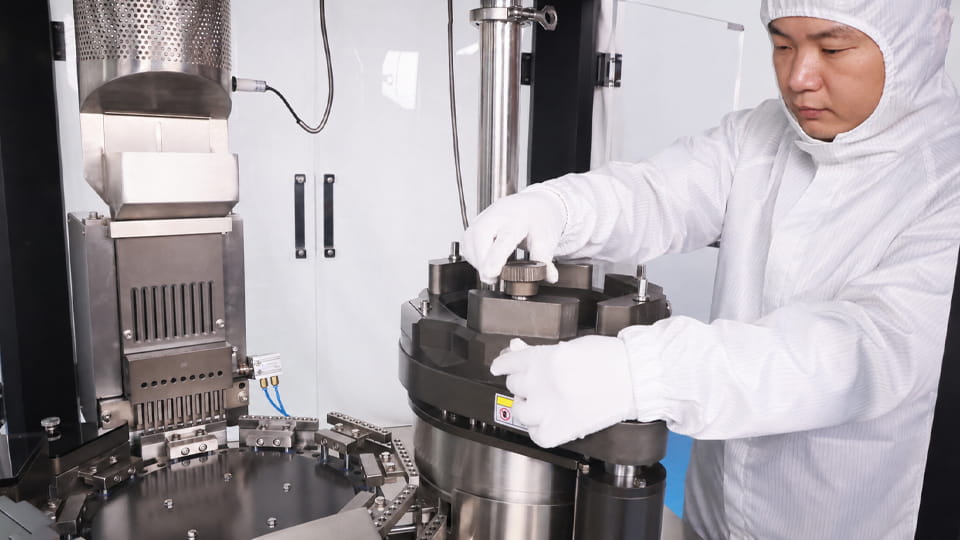
Ένα πρακτικό πρόγραμμα προληπτικής συντήρησης στη φαρμακοβιομηχανία ξεκινά με τον εξοπλισμό, όχι με μια γενική λίστα ελέγχου που έχει ληφθεί από το Διαδίκτυο.
Μια απλή ροή εργασίας μοιάζει με αυτό:
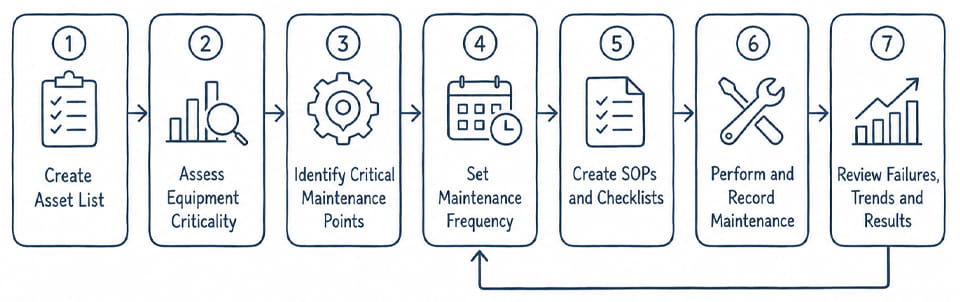
Το σημαντικό μέρος είναι το τελευταίο βέλος. Ένα πρόγραμμα φαρμακευτικής συντήρησης θα πρέπει να βελτιώνεται καθώς μαθαίνετε πώς συμπεριφέρεται πραγματικά ο εξοπλισμός.
Το παρακάτω πρόγραμμα είναι α αρχικό πρότυπο, όχι ρυθμιστική συχνότητα. Τα πραγματικά διαστήματα θα πρέπει να ακολουθούν τις συστάσεις του κατασκευαστή του εξοπλισμού και την αξιολόγηση κινδύνου του ιστότοπού σας, ώρες λειτουργίας, υλικά, ιστορικό συντήρησης, και επικυρωμένη κατάσταση. Η FDA απαιτεί ένα πρόγραμμα συντήρησης και η EU GMP αναμένει ότι ο εξοπλισμός θα συντηρείται κατάλληλα και ο σχετικός εξοπλισμός μέτρησης και ελέγχου θα ελέγχεται σε καθορισμένα χρονικά διαστήματα.
| Συχνότητα | Συνιστώμενες Εργασίες Συντήρησης Φαρμακευτικού Εξοπλισμού |
| Καθημερινά / κάθε βάρδια | Καθαρίστε τις προσβάσιμες περιοχές επαφής με το προϊόν; αφαιρέστε τη σκόνη και τα υπολείμματα; επιθεωρήστε για διαρροή, ασυνήθιστος θόρυβος, δόνηση, χαλαρά μέρη, κατεστραμμένα προστατευτικά, μη φυσιολογικοί συναγερμοί, προβλήματα αέρα/κενού, και εμφανής φθορά εργαλείων; επιβεβαιώστε τις συσκευές ασφαλείας πριν από τη λειτουργία |
| Εβδομαδιαίος | Επιθεωρήστε και καθαρίστε τους αισθητήρες, φίλτρα, αλυσίδες, ζώνες, γραμμές κενού, πνευματικά εξαρτήματα, τροφοδότες, ράγες οδήγησης, εργαλεία, και σημεία εξαγωγής σκόνης; λιπάνετε τα εγκεκριμένα σημεία όπου απαιτείται |
| Μηνιαίος | Επιθεωρήστε τα ρουλεμάν, κάμερες, εξαρτήματα κίνησης, κινητήρες, ηλεκτρικές συνδέσεις, σφραγίδες, κιβώτια ταχυτήτων, ευθυγράμμιση εργαλείων, απόδοση κενού, θερμαντήρες, και φορούν εξαρτήματα; ελέγξτε το ιστορικό συναγερμών και επισκευών |
| Τριμηνιαίος | Εκτελέστε βαθύτερο μηχανικό και ηλεκτρικό έλεγχο; επαληθεύστε κρίσιμες ρυθμίσεις και όργανα; επιθεωρήστε τα κυκλώματα ασφαλείας και τα συγκροτήματα υψηλής φθοράς; ελέγξτε τις επαναλαμβανόμενες βλάβες και την κατανάλωση ανταλλακτικών |
| Ετήσιος | Πραγματοποιήστε ολοκληρωμένη επιθεώρηση ή προγραμματισμένη επισκευή με βάση την κατάσταση του μηχανήματος; αντικαταστήστε εξαρτήματα περιορισμένης διάρκειας ζωής όπου δικαιολογείται; επαληθεύστε την κατάσταση βαθμονόμησης και τα συστήματα ασφαλείας; επανεξέταση του προγράμματος PM, ιστορικό συντήρησης, απόδειξη με έγγραφα, και κατάρτιση |
Για το καθημερινή λίστα ελέγχου συντήρησης φαρμακευτικού εξοπλισμού, οι χειριστές είναι η πρώτη γραμμή άμυνάς σας. Ζητήστε τους να ψάξουν για αλλαγές: νέος θόρυβος, περισσότερη σκόνη γύρω από μια σφραγίδα, πιο αργή απόκριση κενού, ένα θερμότερο μοτέρ, ασταθής παρακολούθηση ταινιών, ή αυξημένο ποσοστό απόρριψης. Οι μικρές αλλαγές εμφανίζονται συχνά πριν από μια πλήρη ανάλυση.
Η εβδομαδιαία εργασία πρέπει να επικεντρώνεται σε εξαρτήματα που συσσωρεύουν σκόνη ή σταδιακά χαλαρώνουν, βουλώνω, στεγνώσει, ή φθορά. Η μηνιαία συντήρηση εμβαθύνει στα συστήματα μετάδοσης κίνησης, ηλεκτρικές συνδέσεις, ευθυγραμμία, σφραγίδες, εργαλεία, και κινούμενα συγκροτήματα.
Η τριμηνιαία και ετήσια εργασία δεν θα πρέπει να γίνει τελετουργία όπου οι τεχνικοί απλώς σημειώνουν κουτάκια. Συγκρίνετε την πραγματική κατάσταση του μηχανήματος με προηγούμενες επιθεωρήσεις. Ελέγξτε επαναλαμβανόμενα σφάλματα. Κοιτάξτε τα εξαρτήματα που έχουν αντικατασταθεί. Ρωτήστε εάν η συχνότητα συντήρησης εξακολουθεί να είναι σωστή.
Η λίπανση αξίζει ιδιαίτερη προσοχή. Το πολύ λίγο λιπαντικό αυξάνει την τριβή; Η χρήση λανθασμένου λιπαντικού ή η εφαρμογή του όπου είναι δυνατή η μόλυνση μπορεί να δημιουργήσει άλλο πρόβλημα. Το JinLu έχει ξεχωριστό Οδηγός Λιπαντικών Φαρμακευτικού Εξοπλισμού που καλύπτει θέματα επιλογής λιπαντικού και συντήρησης για φαρμακευτικά μηχανήματα.
Οι συμβουλές συντήρησης γενικού φαρμακευτικού εξοπλισμού φτάνουν μέχρι τώρα. Η πραγματική αξία προέρχεται από το να γνωρίζουμε τι πρέπει να επιθεωρήσουμε σε κάθε μηχάνημα.
Συντήρηση πρέσας tablet. Επικεντρωθείτε στις γροθιές και τις πεθάνεις, ο πυργίσκος, πάνω και κάτω έκκεντρα κομμάτια, κυλίνδρους συμπίεσης, τροφοδότος δύναμης, σύστημα κίνησης, σημεία λίπανσης, εξαγωγή σκόνης, και προστασία της ασφάλειας. Η συσσώρευση σκόνης γύρω από τον πυργίσκο ή τα εργαλεία μπορεί να επιταχύνει τη φθορά και να συμβάλει σε ελαττώματα του tablet, ενώ τα κατεστραμμένα εργαλεία ή η κακή ευθυγράμμιση χρήζουν άμεσης διερεύνησης. Οι πρέσες ταμπλετών JinLu χρησιμοποιούν συγκροτήματα όπως περιστροφικούς πυργίσκους, τροφοδότες δύναμης, συστήματα κενού, συστήματα συμπίεσης, και προστασία υπερφόρτωσης, κάνοντας αυτά τα λογικά σημεία επιθεώρησης σε ένα πρόγραμμα προληπτικής συντήρησης πρέσας tablet. Δείτε το JinLu's Εύρος Tablet Press Machine.
Συντήρηση μηχανής πλήρωσης καψουλών. Διατηρήστε τον τροφοδότη κάψουλας, σύστημα διαχωρισμού, κενός κύκλος, δοσομετρικά συστατικά, συγκροτήματα συμπίεσης ή πλήρωσης, σταθμός κλειδώματος, κάμερες, και οι περιοχές ελέγχου της σκόνης καθαρές και σωστά ρυθμισμένες. Προσέξτε ειδικά για την είσοδο σκόνης σε μηχανικούς χώρους, μειωμένη απόδοση κενού, κακή ευθυγράμμιση της κάψουλας, και ασυνήθιστο θόρυβο έκκεντρου. Τα αυτόματα πληρωτικά καψουλών της JinLu χρησιμοποιούν αρθρωτά συγκροτήματα πλήρωσης και, σε ορισμένα μοντέλα, ρουλεμάν χωρίς λάδι που προορίζονται να μειώσουν τις ανάγκες συντήρησης. Για έναν βαθύτερο οδηγό σε επίπεδο συστατικού, βλέπω Πώς να διατηρήσετε μια αυτόματη μηχανή πλήρωσης κάψουλας και το Σειρά μηχανών πλήρωσης καψουλών.
Συντήρηση μηχανής blister. Επιθεωρήστε τους σταθμούς διαμόρφωσης και σφράγισης, θερμαντήρες, πλάκες στεγανοποίησης ή κυλίνδρους, οδηγούς κυλίνδρους, ένταση του φιλμ, τροφοδότες, εργαλεία κοπής, ψύξη, αισθητήρες, πνευματικά εξαρτήματα, και συστήματα κενού. Σκόνη ή υπολείμματα στις επιφάνειες στεγανοποίησης, φθαρμένα εξαρτήματα, λανθασμένη ευθυγράμμιση, και οι ασταθείς συνθήκες επεξεργασίας μπορούν γρήγορα να εμφανιστούν ως αδύναμες σφραγίδες ή κακοσχηματισμένα πακέτα. Οι μηχανές κυψελών JinLu συνδυάζουν τη διαμόρφωση, σίτιση, σφράγιση θερμότητας, έλξη, και λειτουργίες κοπής, οπότε η ευθυγράμμιση μεταξύ των σταθμών είναι ιδιαίτερα σημαντική. Δείτε το Σειρά μηχανών συσκευασίας blister και του JinLu Οδηγός προβλημάτων μηχανών φυσαλίδων.
Μηχανές μέτρησης και χαρτοκιβωτίου. Επί μετρητές δισκίων και καψουλών, κρατήστε τα κανάλια δόνησης, επιφάνειες τροφοδοσίας, φωτοηλεκτρικούς αισθητήρες ή αισθητήρες όρασης, περιοχές αφαίρεσης σκόνης, χειρισμός μπουκαλιών, συστήματα απόρριψης, και τα πνευματικά εξαρτήματα καθαρά και σωστά τοποθετημένα. Ο εξοπλισμός μέτρησης της JinLu έχει σχεδιαστεί για ενσωμάτωση σε γραμμές εμφιάλωσης, ενώ το προϊόν JL-16C χρησιμοποιεί αρθρωτό, κλειστός σχεδιασμός που προορίζεται να απλοποιήσει τη συντήρηση και να περιορίσει τα προβλήματα σκόνης. Σε ένα Μηχανή χαρτοκιβωτίου, δώστε μεγάλη προσοχή στα εξαρτήματα συλλογής υπό κενό, βεντούζες, χάρτινα περιοδικά, αλυσίδες, οδηγούς, αισθητήρες, συστήματα φυλλαδίων, σχηματίζοντας σταθμούς, και ανίχνευση προϊόντος/χαρτοκιβωτίου επειδή αρκετοί συντονισμένοι σταθμοί πρέπει να λειτουργούν με τη σειρά.
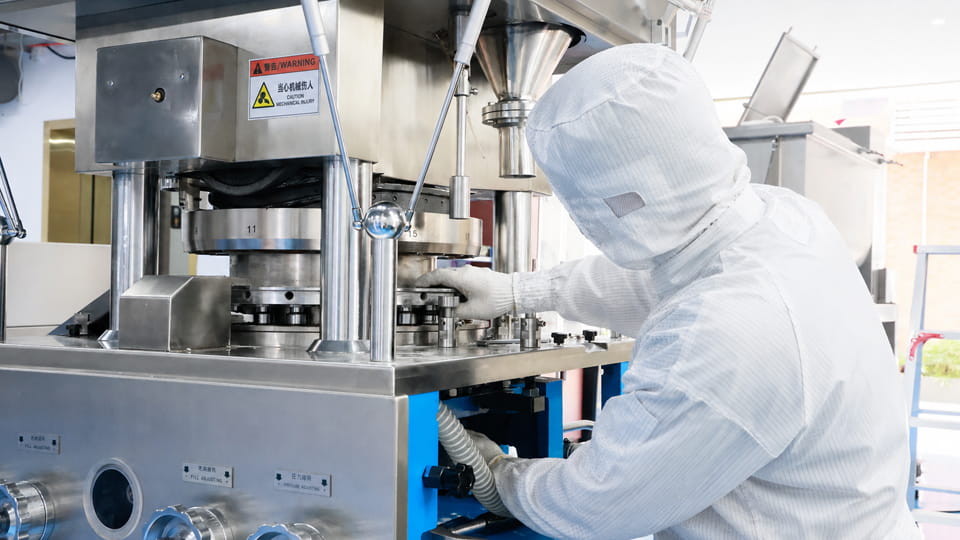
Συντήρηση, καθάρισμα, και η βαθμονόμηση σχετίζονται, αλλά δεν είναι εναλλάξιμα.
| Δραστηριότητα | Κύριος Σκοπός | Τυπικό Παράδειγμα |
| Καθάρισμα | Αφαιρέστε τα υπολείμματα του προϊόντος, σκόνη, υπολείμματα καθαριστικού, και μόλυνση | Καθαρισμός σταθμού δοσολογίας κάψουλας μετά από παρτίδα |
| Συντήρηση | Διατηρήστε ή αποκαταστήστε τη μηχανική/ηλεκτρική απόδοση | Αντικατάσταση φθαρμένου ρουλεμάν ή ρύθμιση συστήματος κίνησης |
| Διαμέτρηση | Επιβεβαιώστε ότι μια συσκευή μέτρησης ή ελέγχου λειτουργεί με καθορισμένη ακρίβεια | Έλεγχος θερμοκρασίας, πίεση, βάρος, ή μέτρηση δύναμης έναντι μιας αναφοράς |
Η FDA καθιστά σαφείς αυτές τις ευθύνες. Τμήμα 211.67 απαιτεί γραπτές διαδικασίες καθαρισμού και συντήρησης, συμπεριλαμβανομένης της ευθύνης, χρονοδιαγράμματα, μεθόδους και υλικά, αποσυναρμολόγηση ή επανασυναρμολόγηση όπου χρειάζεται, προστασία καθαρού εξοπλισμού, επιθεώρηση καθαριότητας πριν από τη χρήση, και αρχεία. Τμήμα 211.68 προσθέτει βαθμονόμηση ρουτίνας, επιθεώρηση, ή έλεγχος του αυτόματου, μηχανικός, και ηλεκτρονικός εξοπλισμός στο πλαίσιο γραπτού προγράμματος.
Ένα SOP προσανατολισμένο στο GMP μπορεί επομένως να χρησιμοποιήσει αυτήν τη λίστα ελέγχου:
| Στοιχείο SOP | Τι να ορίσετε |
| Σκοπός και πεδίο εφαρμογής | Εξοπλισμός και δραστηριότητες που καλύπτονται |
| Ευθύνη | Χειριστής, συντήρηση, μηχανική, QA, ή ρόλους εργολάβου |
| Συχνότητα | Φορά, ώρα λειτουργίας, κύκλος, σύνολο παραγωγής, ή έναυσμα βάσει συνθηκών |
| Ασφάλεια και προετοιμασία | Απομόνωση, λουκέτο, κατάσταση καθαρισμού, απαιτούμενα ΜΑΠ |
| Μέθοδος συντήρησης | Επιθεώρηση, προσαρμογή, αντικατάσταση, λάδωμα, εργαλεία, εγκεκριμένα υλικά |
| Αποσυναρμολόγηση/επανασυναρμολόγηση | Απαιτούμενη σειρά και έλεγχοι πριν από την επανεκκίνηση |
| Κριτήρια αποδοχής | Τι συνιστά αποδεκτή κατάσταση μηχανής |
| Έλεγχοι μετά τη συντήρηση | Καθαριότητα, φύλακες, ρυθμίσεις, δοκιμαστική εκτέλεση, βαθμονόμηση ή επαναπροσδιορισμό όπου ισχύει |
| Απόδειξη με έγγραφα | Ημερομηνία, τεχνικός, εκτελεσθείσα εργασία, εξαρτήματα που χρησιμοποιούνται, ευρήματα, αποκλίσεις, εγκρίσεις |
Η θέση της ΕΕ είναι στενά ευθυγραμμισμένη. Κεφάλαιο EU GMP 3 λέει ότι ο κατασκευαστικός εξοπλισμός πρέπει να σχεδιαστεί, που βρίσκεται, και συντηρείται για τον προορισμό του; Η επισκευή και η συντήρηση δεν πρέπει να δημιουργούν κίνδυνο για την ποιότητα του προϊόντος; ο εξοπλισμός πρέπει να καθαρίζεται εύκολα; Ο εξοπλισμός μέτρησης και ελέγχου θα πρέπει να βαθμονομείται και να ελέγχεται σε καθορισμένα διαστήματα με αρχεία; και ο ελαττωματικός εξοπλισμός θα πρέπει να αφαιρείται ή να αναγνωρίζεται σαφώς όπου είναι δυνατόν.
Αυτό παραμένει ένα ζήτημα ενεργού επιθεώρησης και όχι μια παλιά απαίτηση που περιλαμβάνεται σε ένα βιβλίο κανονισμών. Προειδοποιητικές επιστολές FDA που εκδόθηκαν στο 2025 και 2026 συνέχισαν να αναφέρουν εταιρείες για ανεπαρκείς διαδικασίες καθαρισμού και συντήρησης εξοπλισμού ή αστοχίες που σχετίζονται με 21 CFR 211.67.
Ένα από τα πιο συνηθισμένα λάθη συντήρησης είναι τρέχοντας τα πάντα μέχρι την αποτυχία. Άλλα περιλαμβάνουν το να δίνεται σε κάθε μηχανή το ίδιο διάστημα σέρβις, αγνοώντας μικρές αλλαγές στον θόρυβο ή τους κραδασμούς, χρησιμοποιώντας λάθος λιπαντικό, υπερβολική λίπανση, αναβολή ελέγχων αισθητήρων, κρατώντας κακά αρχεία, δεν φέρουν κρίσιμα ανταλλακτικά, και επανεκκίνηση της παραγωγής χωρίς σωστή επιθεώρηση μετά τη συντήρηση.
Η προγνωστική συντήρηση μπορεί να οδηγήσει το πρόγραμμα περαιτέρω. Αντί να ρωτήσω, «Ήρθε η ώρα να αντικαταστήσουμε αυτό το ρουλεμάν?" ρωτάς, «Είναι πράγματι το ρουλεμάν που επιδεινώνεται;?” Οι χρήσιμες είσοδοι περιλαμβάνουν δόνηση, θερμοκρασία, πίεση, ρεύμα κινητήρα, ιστορικό συναγερμού, τάσεις κενού, και υπάρχοντα δεδομένα διεργασίας. Μια μελέτη φαρμακευτικής παραγωγής που χρησιμοποιεί μια λειτουργική γραμμή ασηπτικής πλήρωσης διαπίστωσε ότι οι μακροπρόθεσμες αλλαγές στα δεδομένα παρακολούθησης της διαδικασίας θα μπορούσαν να συνδέονται με σφάλματα εξοπλισμού και να χρησιμοποιηθούν για την υποστήριξη προηγούμενων προγραμματισμένων παρεμβάσεων.
Το πρακτικό όφελος δεν είναι ότι κάθε εργοστάσιο χρειάζεται τεχνητή νοημοσύνη. Είναι ότι οι πληροφορίες τάσεων μπορούν να βοηθήσουν στη μετακίνηση της συντήρησης από ένα σταθερό ημερολόγιο προς αποφάσεις που βασίζονται σε στοιχεία.
Για μείωση του κόστους συντήρησης, ξεκινήστε με βαρετά βασικά στοιχεία: τυποποιήστε τα κοινά ανταλλακτικά όπου είναι δυνατόν, κρατήστε διαθέσιμα εξαρτήματα κρίσιμης φθοράς, οι χειριστές τρένων να παρατηρήσουν επιδείνωση, ακολουθήστε τις σωστές πρακτικές λίπανσης, επαναλαμβανόμενες αποτυχίες εγγράφων, και εμπλέκουν το OEM όταν ένα μοτίβο είναι ασαφές. JinLu, για παράδειγμα, παρέχει τεχνική τεκμηρίωση, εκπαίδευση, προληπτική και διορθωτική συντήρηση, απομακρυσμένη αντιμετώπιση προβλημάτων, και αντίγραφο ασφαλείας παραμέτρων/λογισμικού ως μέρος της προσφοράς υποστήριξής του.
Το κόστος συντήρησης ξεκινά επίσης από προμήθεια. FDA 21 CFR 211.63 απαιτεί συγκεκριμένα ο φαρμακευτικός εξοπλισμός να έχει κατάλληλο σχεδιασμό, μέγεθος, και τοποθεσία για τη διευκόλυνση της προβλεπόμενης λειτουργίας, καθάρισμα, και συντήρηση. Κατά τη σύγκριση προμηθευτών φαρμακευτικών μηχανημάτων, αναζητήστε προσβάσιμα σημεία συντήρησης, εύκολη αποσυναρμολόγηση με επαφή με το προϊόν, αρθρωτά εργαλεία, κατανοητό διαγνωστικό σφάλματος, εύκολα διαθέσιμα εξαρτήματα φθορά, καλά εγχειρίδια, απομακρυσμένη υποστήριξη, και ρεαλιστικούς χρόνους παράδοσης ανταλλακτικών.
Κάντε μια απλή ερώτηση στον προμηθευτή πριν αγοράσετε: «Δείξτε την ομάδα συντήρησής μας πώς θα έχουμε πρόσβαση, καθαρός, ελέγχω, και αντικαταστήστε τα εξαρτήματα που φθείρονται πιο συχνά.» Ένα μηχάνημα που εξοικονομεί δέκα λεπτά σε κάθε αλλαγή ή διευκολύνει την επιθεώρηση μπορεί να είναι πιο πολύτιμο στη διάρκεια ζωής του από ένα μηχάνημα με ελαφρώς χαμηλότερη τιμή αγοράς.
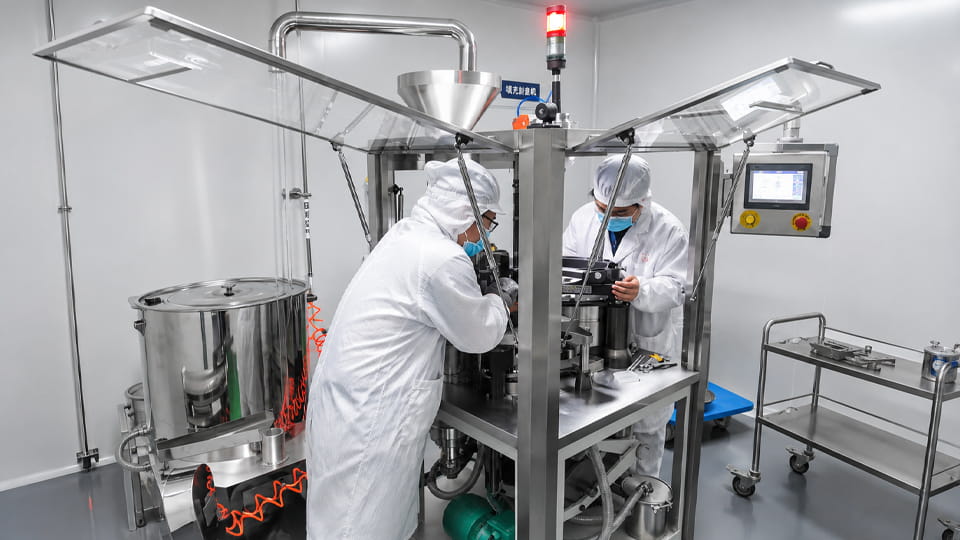
Στη φαρμακευτική παραγωγή, συντήρηση = αξιοπιστία + ποιότητα + συμμόρφωση. Καλός Συντήρηση Φαρμακευτικού Εξοπλισμού αφορά λιγότερο την εκτέλεση περισσότερης συντήρησης και περισσότερο την εκτέλεση της σωστής συντήρησης τη σωστή στιγμή. Η επιλογή του σωστού εξοπλισμού είναι το πρώτο βήμα; Η παρακολούθηση ενός δομημένου προγράμματος συντήρησης είναι εξίσου σημαντική. Κάνοντας καθημερινούς ελέγχους, τήρηση χρονοδιαγραμμάτων, και τεκμηρίωση κάθε ενέργειας, αποτρέπεις εκπλήξεις, μείωση του κόστους, και κρατήστε τους ασθενείς ασφαλείς.
Και jeinlu picking, σχεδιάζουμε τις μηχανές μας (πρέσες δισκίων, πλήρωση κάψουλας, και τα λοιπά.) έχοντας κατά νου την ευκολία υγιεινής και συντήρησης. Αλλά ακόμη και το καλύτερο μηχάνημα χρειάζεται TLC. Σας ενθαρρύνουμε να εφαρμόσετε τις συμβουλές σε αυτόν τον οδηγό στον δικό σας εξοπλισμό, και πάντοτε ανατρέξτε στο εγχειρίδιο του μηχανήματος σας για λεπτομέρειες.
Εάν έχετε ερωτήσεις σχετικά με προγράμματα συντήρησης ή χρειάζεστε τεχνική υποστήριξη για τη γραμμή σας, οι μηχανικοί μας στο Jinlu είναι έτοιμοι να βοηθήσουν. Η σωστή συντήρηση διατηρεί τη γραμμή σας να λειτουργεί ομαλά – και τελικά, κρατά την ποιότητά σας υψηλή και το κόστος χαμηλό.
Έτοιμοι να βελτιώσετε το χρόνο λειτουργίας του μηχανήματος σας? Επικοινωνήστε με την ομάδα υποστήριξης της JinluPacking ή εξερευνήστε την πλήρη γκάμα εξοπλισμού φαρμακευτικής συσκευασίας για να δείτε πώς σχεδιάζουμε για εύκολο καθαρισμό και συντήρηση.
Δεν υπάρχει ενιαίο διάστημα συντήρησης που να λειτουργεί για κάθε φαρμακευτικό μηχάνημα. Η συχνότητα συντήρησης πρέπει να βασίζεται στις συστάσεις του κατασκευαστή του εξοπλισμού, ώρες λειτουργίας, φορτίο παραγωγής, κρισιμότητα του εξοπλισμού, χαρακτηριστικά του προϊόντος, και προηγούμενο ιστορικό συντήρησης. Ο εξοπλισμός υψηλής χρήσης ή κρίσιμος μπορεί να απαιτεί καθημερινές ή εβδομαδιαίες επιθεωρήσεις, ενώ βαθύτερη προληπτική συντήρηση μπορεί να προγραμματίζεται μηνιαίως, τριμηνιαίος, ή ετησίως.
Η προληπτική συντήρηση είναι η προγραμματισμένη συντήρηση που εκτελείται πριν από την αστοχία του εξοπλισμού. Συνήθως περιλαμβάνει επιθεώρηση, καθάρισμα, λάδωμα, προσαρμογή, αντικατάσταση εξαρτήματος φθοράς, ελέγχους ασφαλείας, και λειτουργικές δοκιμές σε καθορισμένα χρονικά διαστήματα. Ένα καλό πρόγραμμα προληπτικής συντήρησης βοηθά τους κατασκευαστές φαρμάκων να μειώσουν τον απροσδόκητο χρόνο διακοπής λειτουργίας, διατήρηση σταθερής απόδοσης του μηχανήματος, και να αναγνωρίσετε τη φθορά των εξαρτημάτων προτού επηρεάσει την παραγωγή ή την ποιότητα του προϊόντος.
Μια λίστα ελέγχου συντήρησης φαρμακευτικού εξοπλισμού πρέπει να καλύπτει μηχανικά μέρη, σημεία λίπανσης, συστήματα κίνησης, αισθητήρες, ηλεκτρικά εξαρτήματα, πνευματικά συστήματα και συστήματα κενού, συσκευές ασφαλείας, εργαλεία, σφραγίδες, φίλτρα, και άλλα εξαρτήματα φθορά. Θα πρέπει επίσης να καταγράφει το αναγνωριστικό του εξοπλισμού, ημερομηνία επιθεώρησης, τεχνικός, ευρήματα, ανταλλακτικά αντικαταστάθηκαν, διορθωτικές ενέργειες, και την επόμενη προγραμματισμένη ημερομηνία συντήρησης.
Ναί. Η GMP απαιτεί τη συντήρηση του φαρμακευτικού εξοπλισμού παραγωγής, έτσι ώστε η δυσλειτουργία ή η μόλυνση να μην επηρεάζουν την ποιότητα του προϊόντος. Υπό το FDA 21 CFR 211.67, οι κατασκευαστές πρέπει να καθιερώνουν και να ακολουθούν γραπτές διαδικασίες καθαρισμού και συντήρησης εξοπλισμού, συμπεριλαμβανομένων των ανατεθέντων ευθυνών, χρονοδιαγράμματα συντήρησης, μεθόδους, επιθεωρήσεις, και αρχεία. Το ακριβές διάστημα συντήρησης θα πρέπει να ορίζεται σύμφωνα με τον εξοπλισμό και τη διαδικασία αντί να χρησιμοποιείται ένα καθολικό πρόγραμμα.
Η προληπτική συντήρηση εκτελείται συνήθως σύμφωνα με προκαθορισμένο χρόνο, ώρα λειτουργίας, κύκλος, ή χρονοδιάγραμμα παραγωγής. Η προγνωστική συντήρηση χρησιμοποιεί δεδομένα κατάστασης εξοπλισμού για να καθορίσει πότε χρειάζεται πραγματικά συντήρηση. Για παράδειγμα, δόνηση, θερμοκρασία κινητήρα, πίεση κενού, ηλεκτρικό ρεύμα, ή οι τάσεις συναγερμού μπορούν να βοηθήσουν στον εντοπισμό προβλημάτων που αναπτύσσονται πριν από την αποτυχία. Πολλά φαρμακευτικά εργοστάσια χρησιμοποιούν την προληπτική συντήρηση ως βάση και ως προγνωστική συντήρηση για κρίσιμο εξοπλισμό.
Οι κατασκευαστές φαρμάκων θα πρέπει να τηρούν αρχεία που να δείχνουν ξεκάθαρα τη συντήρηση που πραγματοποιήθηκε, όταν ολοκληρώθηκε, που το εκτέλεσε, τι προβλήματα βρέθηκαν, και ποιες διορθωτικές ενέργειες ή αντικαταστάσεις εξαρτημάτων απαιτήθηκαν. Τα σημαντικά αρχεία εξοπλισμού μπορεί επίσης να περιλαμβάνουν πληροφορίες καθαρισμού και χρήσης, αναγνώριση εξοπλισμού, παραπομπές παρτίδων, επιθεωρήσεις, ελέγχους βαθμονόμησης, αποκλίσεις, και δραστηριότητες παρακολούθησης. Τα αρχεία πρέπει να είναι ανιχνεύσιμα, χρονολογικός, και είναι εύκολο να ανακτηθεί κατά τη διάρκεια των επιθεωρήσεων GMP.
Ξεκινήστε με μια πλήρη λίστα εξοπλισμού και ταξινομήστε κάθε μηχάνημα ανάλογα με τον αντίκτυπό του στην ποιότητα του προϊόντος, ασφάλεια, και την παραγωγή. Στη συνέχεια, διαβάστε το εγχειρίδιο συντήρησης OEM, προσδιορίζει κρίσιμα στοιχεία φθοράς, και ορίστε διαστήματα επιθεώρησης ή αντικατάστασης με βάση τις ώρες λειτουργίας, ένταση παραγωγής, ιστορικό αποτυχίας, και τον κίνδυνο. Αναθέστε ευθύνες, δημιουργήστε λίστες ελέγχου για συγκεκριμένο εξοπλισμό, έγγραφο ολοκληρωμένη εργασία, και προσαρμόζετε τακτικά το χρονοδιάγραμμα χρησιμοποιώντας πραγματικά δεδομένα συντήρησης.
Δεν απαιτείται πλήρης επανεξέταση κάθε δραστηριότητας συντήρησης, αλλά οι σημαντικές επισκευές ή αλλαγές θα πρέπει να αξιολογούνται ως προς τον αντίκτυπό τους στην απόδοση του εξοπλισμού και στην επικυρωμένη κατάσταση. Η αντικατάσταση ενός εξαρτήματος συνήθους φθοράς με ένα ισοδύναμο εξάρτημα μπορεί να απαιτεί μόνο καθορισμένους ελέγχους μετά τη συντήρηση. Αλλαγές που επηρεάζουν κρίσιμες ρυθμίσεις, συστήματα ελέγχου, ακρίβεια μέτρησης, λογισμικό, εξαρτήματα επαφής προϊόντος, ή οι παράμετροι λειτουργίας ενδέχεται να απαιτούν βαθμονόμηση, επαλήθευση, αλλαγή ελέγχου, ή μερική επανεκπαίδευση πριν από την επανέναρξη της παραγωγής.
Η πιο αποτελεσματική προσέγγιση είναι ο συνδυασμός προληπτικής συντήρησης βάσει κινδύνου με καλή επιθεώρηση χειριστή και γρήγορη πρόσβαση σε κρίσιμα ανταλλακτικά. Οι χειριστές θα πρέπει να αναφέρουν μη φυσιολογικό θόρυβο, δόνηση, θερμοκρασία, διαρροή, απώλεια κενού, σφάλματα αισθητήρα, ή αύξηση των ποσοστών απόρριψης προτού γίνουν σημαντικές αποτυχίες. Οι ομάδες συντήρησης θα πρέπει επίσης να αναλύουν επαναλαμβανόμενες βλάβες, κρατήστε ακριβή ιστορικά σέρβις, παρακολούθηση κρίσιμων στοιχείων, και συνεργαστείτε με τον κατασκευαστή του εξοπλισμού όταν τα επαναλαμβανόμενα προβλήματα δεν μπορούν να επιλυθούν εσωτερικά.
Οι αγοραστές θα πρέπει να αξιολογήσουν την προσβασιμότητα στη συντήρηση προτού εστιάσουν μόνο στην ταχύτητα του μηχανήματος και στην τιμή αγοράς. Αναζητήστε εύκολη πρόσβαση σε εξαρτήματα που φορούν, γρήγορη αποσυναρμολόγηση με επαφή με το προϊόν, αρθρωτά εργαλεία, τυποποιημένα ανταλλακτικά, καθαρά σημεία λίπανσης, χρήσιμα διαγνωστικά PLC, προσβάσιμα ηλεκτρικά και πνευματικά εξαρτήματα, και απλές διαδικασίες καθαρισμού. Ο προμηθευτής θα πρέπει επίσης να παρέχει εγχειρίδια συντήρησης, λίστες ανταλλακτικών, εκπαίδευση, τεχνική τεκμηρίωση, απομακρυσμένη υποστήριξη, και αξιόπιστη εξυπηρέτηση μετά την πώληση.
Αναφορές:
1.Οδηγός καλής πρακτικής: Συντήρηση 2η Έκδοση —— ISPE
2.Διασφάλιση ποιότητας φαρμακευτικών προϊόντων: μια σύνοψη οδηγιών και σχετικού υλικού: τόμος 2: Καλές πρακτικές παραγωγής και επιθεώρηση, 10th ed —— ΠΟΥ
3.21 CFR § 211.182 Μητρώο καθαρισμού και χρήσης εξοπλισμού —— eCFR
4.I Θέμα Q 7 Ορθή παρασκευαστική πρακτική για ενεργά φαρμακευτικά συστατικά —— Ευρωπαϊκός Οργανισμός Φαρμάκων
5.Οδηγίες σχετικά με την ορθή πρακτική παραγωγής και την ορθή πρακτική διανομής: Ερωτήσεις και απαντήσεις —— Ευρωπαϊκός Οργανισμός Φαρμάκων
6.Στοχευμένη Προληπτική Συντήρηση Φαρμακευτικού Εξοπλισμού —— ResearchGate