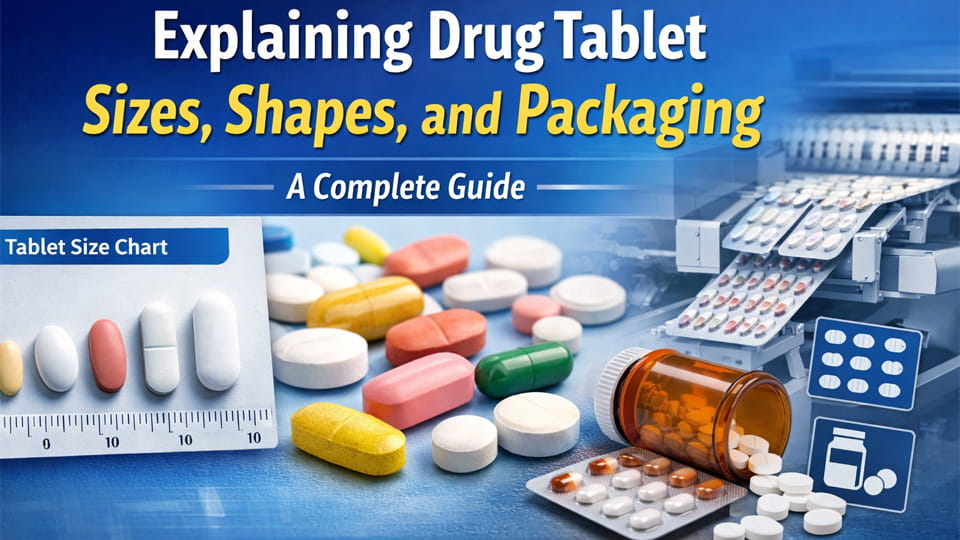

Pharmaceutical manufacturers have long relied on unit-dose packaging to keep tablets and capsules safe. Two common formats are strip packs and blister packs. In a blister pack, pills sit in pre-formed pockets or cavities sealed by foil, whereas a strip pack encloses each dose in a flat, continuous pouch. The image below shows a typical blister card with pills. Blister packs let patients see and push out each pill easily, while strip packs (introduced below) use tight foil seals to block air and moisture.

Figure: A typical blister pack holding tablets in individual clear pockets.
In this guide we’ll break down the differences between strip packaging and Alu-Alu blister packaging. You’ll learn how each format is constructed, how the machines work, and which is better for your product. We’ll use straightforward language and plenty of examples, so by the end you’ll feel confident choosing the right high-barrier packaging for your pharmaceutical product.
Strip packaging (often called a strip pack) is a unit-dose packaging method widely used in pharma. Imagine a blister pack stretched out into a flat ribbon – that’s basically a strip pack. Instead of molded plastic pockets, a strip pack seals each pill between two continuous layers of heat-sealable film (usually aluminum foil laminated with plastic). In practice, a strip pack is just a long web of material with pills placed in order on one layer; a second layer is laid on top and heat-sealed around each tablet. Then the continuous seal is cut into single-dose pouches or short strips that a patient can tear off.
Strip packs are often airtight and compact. Because each tablet is hermetically sealed on all sides, strip packaging provides an almost complete barrier against air, moisture and light. Many strip packs can be made child-resistant and are suitable for sensitive medicines. Modern strip packaging machines automatically feed a bottom web (e.g. alu-alu foil), place pills, overlay the top web, heat-seal around each dose, and then cut the strip to length. This one-step process (feeding, sealing, cutting) makes strip packaging highly efficient and cost-effective.
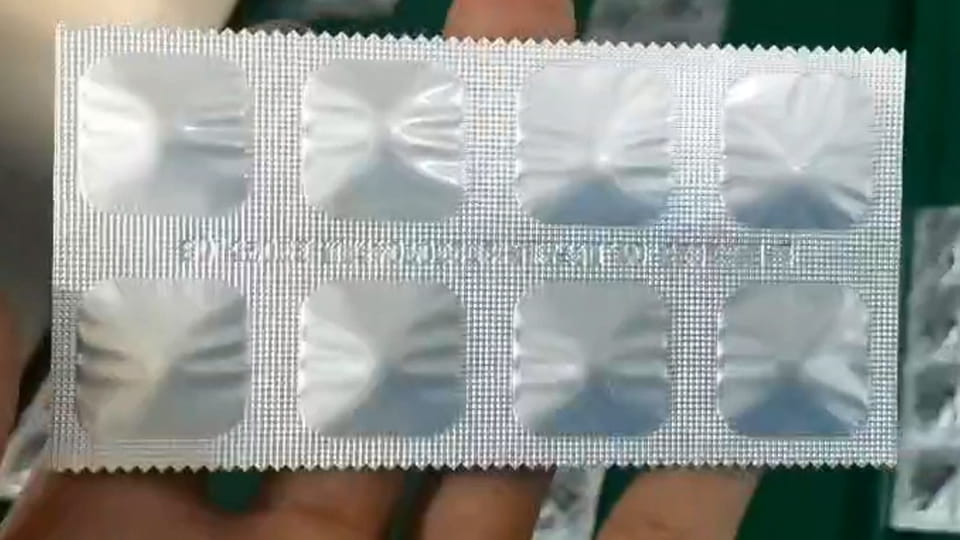
Figure: A strip pack contains tablets sealed in flat foil pouches. Each pill is protected by two foil layers, without raised cavities.
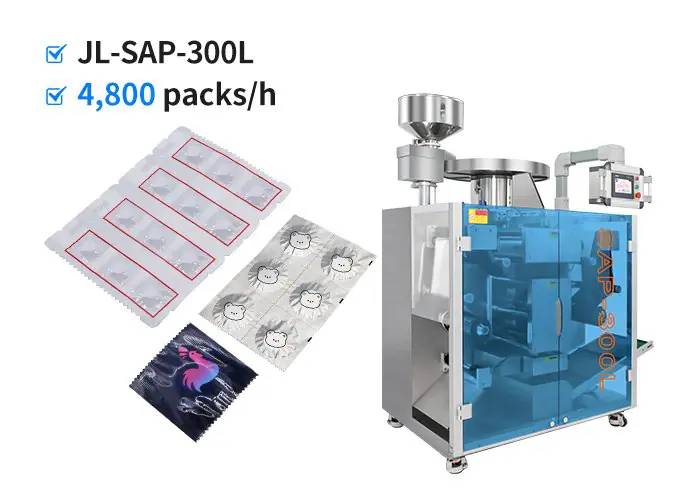
In a strip packaging machine, two long webs run in parallel. The bottom web (often aluminum foil or foil-laminated plastic) is unwound from a roll and advances along the line. A feeder drops tablets or capsules onto this moving web at precise intervals. Meanwhile, a top web (made of similar foil or laminate) is laid over the tablets. Heat and pressure are then applied by sealing jaws or rollers, fusing the two layers around each pill. After sealing, blades cut the bonded material, creating individual pouches or connected strips of pouches.
Because the material is flexible, the strip is easy to roll up or pull through the machine. As the JinLuPacking guide notes, strip packaging “can be done in one automated line, reducing errors and saving time”. The end result is a tight foil packet for each dose, arranged on a continuous strip. This process is much simpler than thermoforming a blister: there are no mold cavities to fill, and the only shaping is the seal around each pill. In fact, one industry guide calls strip packaging a “minimalist yet highly effective package” because it uses only heat and flat foils.
[jl_youtube src=”https://www.youtube.com/embed/OOsBX-jujA0″]
Strip packs typically use aluminum foil as the primary barrier. Many strip packs are actually Soft Double Aluminum (Alu-Alu) format, where the pill is sandwiched between two layers of aluminum foil. This alu-alu strip pack offers the highest protection: both sides of the dose are aluminum, so light, moisture and oxygen are effectively blocked. For example, JinLuPacking explains that aluminum foil “can effectively block light, oxygen, moisture and other gases,” making Alu-Alu strips a top choice for moisture-sensitive drugs.
Other strip packs may use foil combined with plastic films. Common constructions include aluminum/PVC or aluminum/PET laminates. The goal is always to keep each pouch airtight and durable. Unlike rigid blister materials, strip pack films must remain flexible (so the strip can roll). Many manufacturers use multi-layer laminates that include aluminum and plastic; for instance, a typical pack might be an aluminum-backed paper heat-sealed to a polyester or PVC layer. In all cases, strip packs favor light and moisture barriers, often to extend shelf life of the medicine.

Strip packaging offers several key benefits for pharmaceutical products:
Overall, strip packaging is a workhorse of pharma unit-dose: it delivers high barrier protection at low cost. It’s especially suited to markets where cost and volume are key, or where each dose must be labeled and sealed.
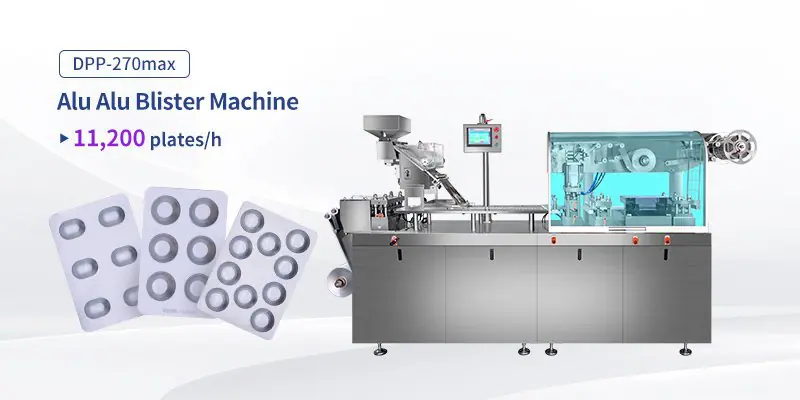
Alu-Alu blister packaging (also called cold-form blister packaging) is another high-barrier format. Instead of a plastic base, an Alu-Alu blister is formed entirely from aluminum laminates. Each tablet is placed into a cavity that’s stamped (cold-formed) into a thick foil-laminated strip. Then a second aluminum foil sheet is heat-sealed on top. The result is a blister card where both the cavity and the cover are aluminum film.
Alu-Alu blisters offer maximum protection. With no plastic, the package is completely opaque and impermeable. For example, one source calls the aluminum foil in Alu-Alu an “impermeable shield” against water vapor and oxygen. It also blocks light entirely. This makes Alu-Alu blisters ideal for very sensitive drugs that degrade with moisture, oxygen or UV light. Most steroid, oncology or antibiotic pills that need an extra long shelf life use cold-form (Alu-Alu) blisters.

Figure: Alu-Alu blister packs are shown. Each dose is sealed between two layers of aluminum foil.
The image above shows a stack of Alu-Alu blisters. Notice that they look like metal cards – there is no plastic window. This design creates a tamper-evident, light-tight pouch for each tablet. Because both sides are foil, moisture or oxygen cannot penetrate. In fact, both strip packs (when double-foil) and Alu-Alu blisters have “near-zero” oxygen and moisture transmission rates. In practice, an Alu-Alu pack can keep a batch of sensitive pills stable for years.
The machine process for Alu-Alu blistering is more complex than strip packing. A specialized cold-form blister machine first stamps cavities into a base foil. This base foil is not plain aluminum – it’s usually a laminate of three layers. The core is aluminum for barrier, laminated on the outside to give strength (often an OPA/polyamide layer) and a heat-seal coating on top. Cold-forming (at room temperature) pushes this multi-layer foil into pockets. Then tablets are automatically fed into each pocket.
After loading, the machine places a sealing foil over the cavities and applies heat and pressure. The lidding foil is also aluminum (often coated on one side for sealing). After sealing, the blister strip is cut into cards. Because the foil is stamped cold (not thermoformed), the cavities are deeper than normal blisters, and the foil is very rigid. The entire process yields packs that are extremely durable.
For example, packaging experts note that although both strip and Alu-Alu provide great barrier, the rigid, pre-formed cavity of an Alu-Alu blister offers extra protection against crushing or compression. In other words, if a carton of pills is dropped, Alu-Alu blisters will shield the tablets better than a flimsy pouch strip.
[jl_youtube src=”https://www.youtube.com/embed/MpmvD9hjN60″]
Alu-Alu blister packs excel in these areas:
On the downside, Alu-Alu blisters require more material and expensive machinery. Each foil cavity needs extra sealing “flange” around it, so more foil is used per tablet. Also, cold-forming machines tend to be slower in terms of changeovers (but still high-speed in a continuous run). These trade-offs mean Alu-Alu packs cost more per dose, which is why they are chosen only when needed.
Let’s compare the two formats side by side:
The two formats also require different machines:
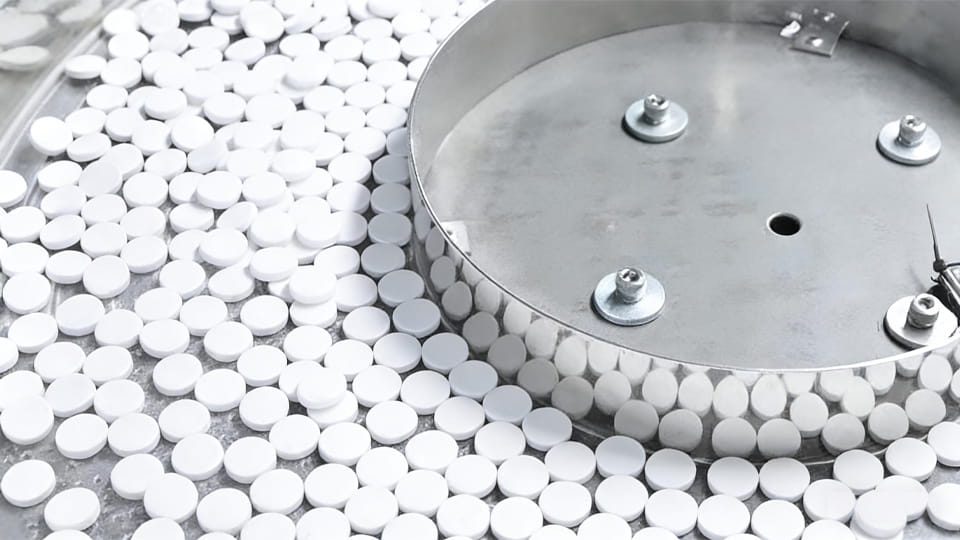
Figure: Tablets on a high-speed filling/feeding conveyor. Automated machines like this feed pills into strip or blister packers.
In short, strip machines are simpler and focus on high throughput for uniform products. Blister machines are more versatile (handling unusual tablets) but involve more steps and changeovers. Equipment costs reflect this: blister lines (especially cold-form) are pricier, while strip lines are often less expensive per output.
For readers interested in innovations, note the push-strip (push-pack) concept. In these push strips, you press tablets through the foil (no plastic dome). This design saves material and is PVC-free, yet still provides excellent moisture barrier. Push-strip packs aim to combine the best of both worlds: the cost and barrier of strips with the easy opening of blisters.
Deciding between strip and Alu-Alu blister depends on your product and market:
Examples: Pantoprazole (a very moisture-sensitive drug) is usually sold in Alu-Alu blister cards. By contrast, paracetamol (acetaminophen) often comes in strip packs or simple Alu-PVC blisters for cost reasons.
In summary, strip packs are generally the most efficient choice for bulk, stable drugs and where cost/volume are key. Alu-Alu blisters are chosen for high-value, sensitive products needing the ultimate barrier. Both are proven in pharma, and sometimes companies even offer the same drug in both formats for different channels.
Strip packaging and Alu-Alu blister packaging each have their place in the pharmaceutical industry. Strip packs (unit-dose foil pouches) are cost-effective, highly protective, and efficient for many meds. Alu-Alu blisters provide superior protection and convenience, ideal for sensitive drugs that need it. The choice comes down to your product needs: barrier requirements, cost constraints, patient convenience, and regulatory factors.
By understanding these formats – their materials, machines, and market uses – industry buyers and engineers can select the best solution. We hope this guide (and the images above) help you see the key differences clearly. Whether you call it strip packaging, alu-alu strip, or cold-form blistering, modern pharma has powerful options to keep medicines safe and deliver them effectively.
A strip pack is a type of pharmaceutical packaging where each tablet or capsule is sealed between two continuous webs of heat-seal film—often aluminum foil laminated with plastic. This creates individual flat pouches for unit-dose protection. Strip packaging is widely used for tablets and capsules that require moisture, oxygen, and light barrier protection.
Alu-Alu blister packaging refers to blister packs made from aluminum foil on both sides—the cavity and the lidding foil are aluminum laminates. This cold-form packaging offers a near-complete barrier against moisture, oxygen, and light, making it ideal for highly sensitive pharmaceuticals.
• Strip pack: Tablets are sandwiched between flexible foil films and sealed; no pre-formed cavities are used.
• Blister pack: Tablets sit in pre-formed pockets (either plastic or aluminum) with a sealed foil lid.
The main differences are in material form, production process, visibility of product, and mechanical protection.
Both strip packs (when using double foil) and Alu-Alu blister packs offer excellent barrier performance against moisture, oxygen, and light. Alu-Alu blisters provide slightly more mechanical protection due to rigid formed cavities, while strip packs are extremely tight with very low air entrapped around the dose.
For highly moisture-sensitive or long shelf-life drugs, Alu-Alu blister packaging is often preferred because the entire package—including the cavity—uses aluminum foil, offering an almost total moisture and oxygen barrier. Strip packs with high-barrier foil are also strong, but Alu-Alu is the industry gold standard for maximum protection.
• Strip packs: Opaque if aluminum foil is used; the product usually isn’t visible from the outside.
• Alu-Alu blister packs: Completely opaque because of all-aluminum material, so the pill cannot be seen without opening the pack.
For visible products, some blister packs use PVC or PVC/PVDC materials—but those aren’t all-aluminum.
Blister packs are generally easier for patients to access because the user can push the tablet out of its cavity. Strip packs are typically torn open along perforations, which may require more effort—sometimes an advantage for child-resistance but harder for patients with limited hand strength.
Alu-Alu blister packs tend to cost more due to the use of dual aluminum foil layers and specialized cold-forming machinery. Strip packs usually use simpler tooling and materials and can be more cost-effective for high-volume products.
Pure aluminum components are recyclable, but mixed materials (foil laminated with plastics) can be harder to separate. While aluminum itself is eco-friendly, mixed films may not be accepted in standard recycling streams and often need specialized processes to recycle properly.
• Strip packs: Great for unit-dose oral solids, especially where customization of dose sequence and labeling is required.
• Alu-Alu blisters: Ideal for highly sensitive, moisture- or light-vulnerable APIs, biologics, and high-value pharmaceuticals where barrier protection is critical.
References:
1. Blister Pack Barrier Properties — Wikipedia (Cold-Form / Alu-Alu)
2.Global Innovations in Sustainable Pharmaceutical Packaging in the Last 25 Years: A Scoping Review — Sustainability Journal, MDPI
3.A Review on Emerging Technologies in Pharmaceutical Packaging: From Anti-Counterfeiting to Green Solutions — Springer Nature
4.Pharmacy Packaging and Inserts — StatPearls / NCBI Bookshelf