
Máy ép viên sử dụng trọng lực hoặc cưỡng bức (mái chèo) thức ăn để điền vào khuôn. Ép ăn chủ động đẩy bột vào khuôn, đảm bảo điền đồng đều, đặc biệt đối với các công thức có độ chảy kém hoặc độ chính xác cao.
Nhiều nhà sản xuất dược phẩm và dinh dưỡng hỏi: “Có nên chọn máy ép viên có bộ nạp lực không??” Câu trả lời phụ thuộc vào yêu cầu về bột và máy tính bảng của bạn. Ngay cả máy ép chất lượng hàng đầu cũng có thể tạo ra những viên thuốc không đồng đều nếu bột không đổ đầy khuôn đúng cách. Cho ăn bằng trọng lực (thả phễu đơn giản) có thể đủ cho các hạt chảy tự do, Nhưng ép ăn trở nên cần thiết khi bột dính, rất ổn, hoặc sản xuất rất nhanh. Không có nó, bạn có nguy cơ thay đổi cân nặng, giới hạn, cán màng, độ cứng thấp, khuôn trống và giảm tốc độ.
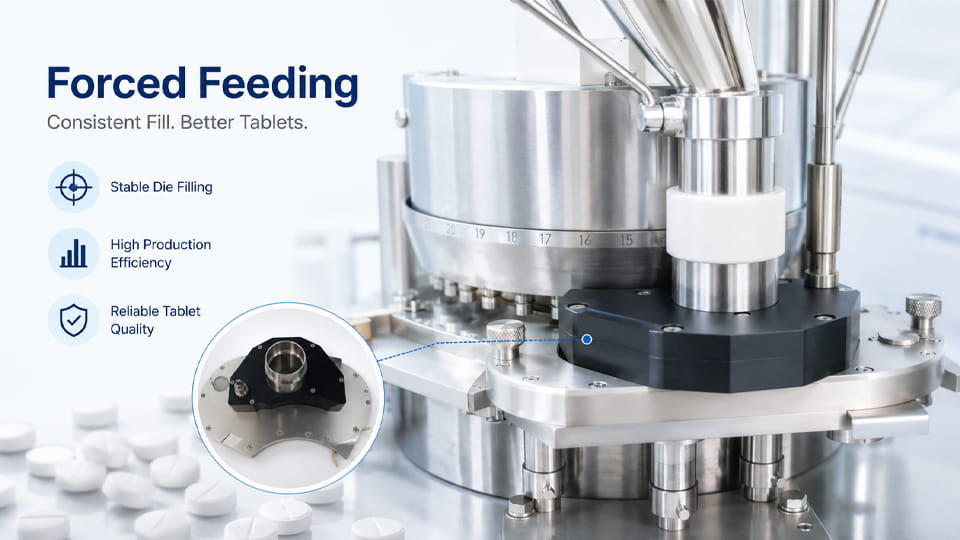
Hướng dẫn này giải thích ép ăn là gì, so sánh nó với việc cho ăn bằng trọng lực, và cho thấy tại sao việc đổ đầy khuôn lại quan trọng, tính nhất quán của trọng lượng, tốc độ và chất lượng máy tính bảng. Chúng tôi liệt kê những sản phẩm cần nó, vấn đề phổ biến mà không có nó, và cách chọn hệ thống khung cấp liệu phù hợp.
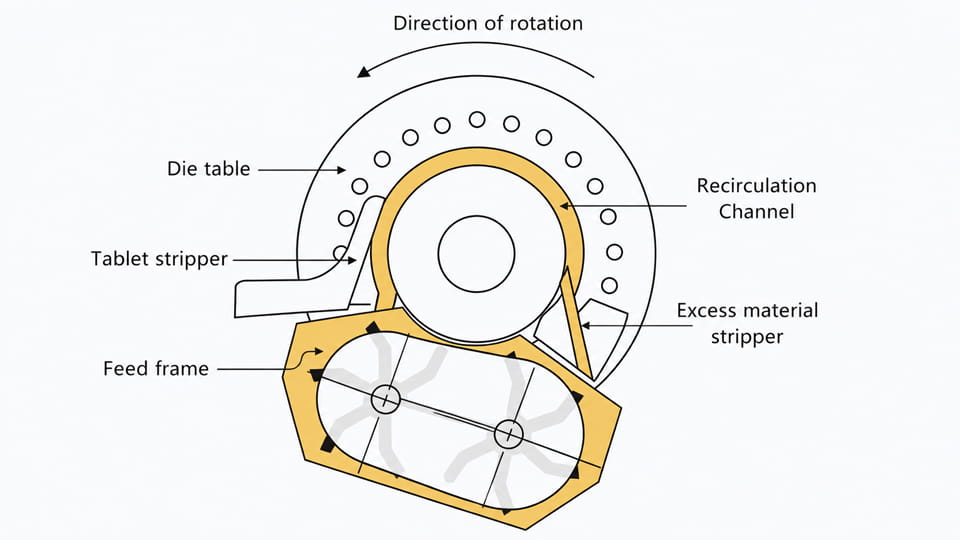
Cưỡng bức cho ăn (còn được gọi là cho ăn bằng mái chèo hoặc cho ăn bằng khung thức ăn) là phương pháp cơ khí đẩy bột vào khuôn viên. MỘT khung thức ăn Dưới phễu chứa các cánh khuấy hoặc bánh xe quay chủ động quét bột vào các khoang khuôn. Không giống như thức ăn trọng lực, chỉ đơn giản là làm rơi vật liệu khỏi phễu, ép ăn đảm bảo mỗi khuôn đều được nạp đầy bột.
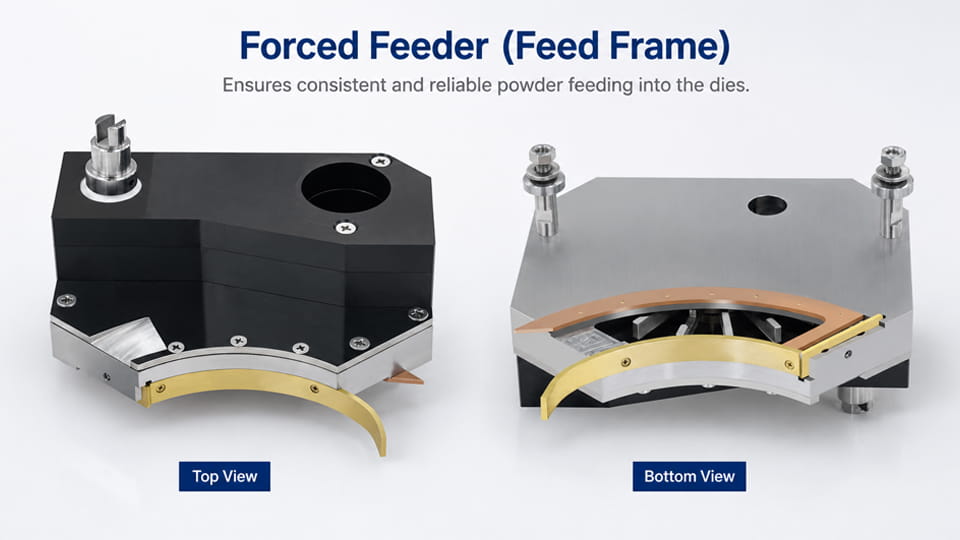
Nhân vật: Khung nạp máy tính bảng có bánh xe quay. Khung cấp liệu đẩy bột vào khuôn một cách cơ học.
Các bộ phận chính của hệ thống cho ăn cưỡng bức bao gồm: cái phễu, khung nguồn cấp dữ liệu (thường là các buồng được chia thành các ngăn có cánh quay), và đôi khi là máy rung hoặc máy khoan vít. Khi tháp pháo quay, mỗi khuôn đi qua khung cấp liệu. Cánh khuấy múc hoặc cắt bột về phía lối vào khuôn, làm đầy nó một cách đồng đều. Máy ép quay hiện đại sử dụng khung cấp liệu này (bị ép) hệ thống như một tính năng tiêu chuẩn để cải thiện việc đổ khuôn đặc biệt đối với các vật liệu khó.
Cho ăn bằng trọng lực, bột chảy tự nhiên từ phễu vào khuôn. Nó có thiết kế đơn giản và chi phí thấp hơn, nhưng chỉ phát huy tác dụng nếu bột chảy tự do. Cưỡng bức cho ăn, ngược lại, sử dụng mái chèo hoặc các phương tiện cơ khí khác. Dưới đây là tóm tắt về sự khác biệt:
| Diện mạo | Cho ăn bằng trọng lực | Cưỡng bức ăn (Khung nạp mái chèo) |
| Cơ chế cho ăn | Bột rơi theo trọng lực | Mái chèo/bánh xe đẩy bột vào khuôn |
| Yêu cầu về lưu lượng bột | Bột phải có độ chảy tốt | Hoạt động với bột có độ chảy kém |
| Tính đồng nhất của khuôn điền | Vừa phải; có thể không đồng đều ở tốc độ cao | Tính đồng nhất cao, ít khuôn trống/tràn đầy hơn |
| Khả năng tốc độ cao | Hạn chế – tốc độ tháp pháo nhanh có thể khiến khuôn chết đói | Tuyệt vời - duy trì điền ở tốc độ cao |
| Ví dụ ứng dụng | Hạt chảy tự do, công thức đơn giản | Chiết xuất thảo dược, bột micronized, hỗn hợp dính |
| Độ phức tạp của thiết bị | Chỉ có phễu đơn giản | Yêu cầu khung cấp dữ liệu có mái chèo (bộ phận cơ khí) |
Việc ép ăn là lý tưởng khi bột có xu hướng hình thành “lỗ chuột” hoặc cầu nối, hoặc khi thông số kỹ thuật của máy tính bảng quá khắt khe. Thức ăn trọng lực có thể đủ cho việc rất đơn giản, vật liệu chảy tự do ở tốc độ thấp.
Việc ép ăn có thể cải thiện rõ rệt chất lượng máy tính bảng và hiệu quả của quy trình. Đây là cách nó giúp:
Khuôn dập nhất quán là yếu tố quan trọng đối với chất lượng máy tính bảng. Cho ăn cưỡng bức đảm bảo mỗi khuôn đều được được lấp đầy hoàn toàn và đồng đều mỗi chu kỳ. Bằng cách tích cực quét bột vào khuôn, máy cấp liệu cưỡng bức ngăn chặn các khoang chứa đầy hoặc quá đầy. Điều này tránh được viên thuốc “trứng bồ câu” (gầy và yếu) hoặc viên thuốc quá dày. Đổ đầy tốt hơn cũng làm giảm các vấn đề về bụi và luồng không khí, vì các cánh khuấy có thể giúp thông khí hoặc phân phối lại bột.
Trong thực tế, điều chỉnh thiết kế mái chèo và tốc độ có thể tối ưu hóa việc lấp đầy. Các nghiên cứu cho thấy các cánh khuấy khung cấp liệu giúp tăng mật độ khuôn bằng cách hóa lỏng bột và giảm sự thay đổi trọng lượng. Ví dụ, tăng tốc độ mái chèo thường làm tăng mật độ lấp đầy, nghĩa là nhiều bột hơn trong mỗi khuôn, dẫn đến trọng lượng máy tính bảng ổn định. (Ghi chú: Tốc độ quá cao đôi khi có thể bôi trơn quá mức hỗn hợp và làm giảm độ cứng một chút, vì vậy cài đặt phải được cân bằng.)
Sự thay đổi trọng lượng là mối quan tâm lớn trong sản xuất máy tính bảng. Đổ khuôn không đều là nguyên nhân gốc rễ sự không nhất quán về trọng lượng, do đó ảnh hưởng đến tính đồng nhất của liều lượng. Khuôn dập nhất quán có nghĩa là mỗi viên có cùng lượng vật liệu. Việc ép ăn làm giảm đáng kể sự thay đổi trọng lượng. Trong một thí nghiệm, việc tăng tốc độ bánh xe của khung cấp dữ liệu dẫn đến mật độ lấp đầy khuôn cao hơn và biến đổi trọng lượng máy tính bảng thấp hơn. Ngược lại, chỉ với thức ăn trọng lực, đặc biệt ở tốc độ cao hoặc với bột có độ chảy kém, cân nặng có thể dao động rộng rãi.
Hơn thế nữa, máy ép tốc độ cao hiện đại thường sử dụng bộ nạp lực cùng với kiểm soát trọng lượng vòng kín. Họ đo lực nén hoặc trọng lượng của máy tính bảng và điều chỉnh các thông số một cách nhanh chóng. Nhưng lớp nền được làm đầy đồng đều: “Khả năng tái tạo khuôn là rất quan trọng vì nó quyết định trọng lượng viên thuốc và sự thay đổi trọng lượng”. Một bộ nạp lực xây dựng khả năng tái tạo đó.
Ở tốc độ tháp pháo cao hơn, thức ăn trọng lực có thể không theo kịp, dẫn đến khuôn trống và mất đầu ra. Nạp cưỡng bức cho phép máy ép chạy nhanh hơn trong khi vẫn duy trì khuôn đầy đủ. Khi tốc độ vượt quá ~50 vòng/phút (vòng quay mỗi phút), một bộ nạp lực hầu như đảm bảo mỗi khuôn đều được lấp đầy trước khi nén. Điều này có nghĩa là việc sản xuất có thể được tăng cường một cách an toàn. Tóm lại, việc ép ăn giúp loại bỏ nút thắt trong việc cung cấp bột, cho phép thông lượng máy tính bảng nhanh hơn mà không làm mất đi tính nhất quán của việc lấp đầy.
Một số loại bột chảy kém đến mức không thể nạp bằng trọng lực. Ví dụ bao gồm:
Những vật liệu này có thể tạo thành “lỗ chuột” trong phễu hoặc cầu nối qua khuôn. Khung cấp liệu có mái chèo phá vỡ các vật cản này. Sự khuấy trộn cơ học và khuấy trộn trong khung cấp liệu giữ cho bột chuyển động. Như một ghi chú hướng dẫn đóng gói: “Khả năng chảy bột kém là phổ biến… Nếu vật liệu không thể chảy trơn tru vào khuôn, trọng lượng máy tính bảng có thể trở nên không ổn định… Bộ nạp cưỡng bức có thể giúp dẫn bột hoặc hạt vào khuôn đồng đều hơn”. Tóm lại, việc ép ăn giúp cho việc tạo ra các công thức đầy thử thách có thể thực hiện được (thảo dược, dinh dưỡng, vân vân.) điều đó sẽ thất bại trên máy ép dùng trọng lực.
Điền thống nhất dẫn đến nén đồng đều. Khi mỗi khuôn nhận được cùng một lượng bột, viên nén thu được sẽ được nén với một lực nhất quán trong toàn bộ mẻ. Điều này mang lại sự đồng đều hơn độ cứng và hồ sơ giải thể theo từng đợt. Mặc dù bản thân thiết kế bộ cấp liệu không tác dụng lực, nó tạo tiền đề: chất làm đầy không nhất quán có thể làm cho một số viên thuốc yếu hơn hoặc mạnh hơn chỉ bằng cách có ít hoặc nhiều bột hơn. Bằng cách cải thiện tính nhất quán điền, ép ăn gián tiếp ổn định độ cứng và các thuộc tính chất lượng khác.
Tuy nhiên, Điều đáng lưu ý là việc ép bột quá mạnh có thể có nhược điểm. Nếu tốc độ mái chèo quá cao, việc cắt thêm có thể bôi trơn quá mức bột (đặc biệt là nếu có chất bôi trơn) và tạo ra những chiếc máy tính bảng quá dễ vỡ. Như vậy, tốc độ khung cấp dữ liệu tối ưu cần hiệu chỉnh: đủ để lấp đầy, nhưng không nhanh đến mức làm hỏng bột hoặc chất bôi trơn trộn quá kỹ.
Không phải tất cả các sản phẩm máy tính bảng đều cần bộ nạp lực – điều này phụ thuộc vào chất liệu và thiết kế của máy tính bảng. Bảng dưới đây trình bày các tình huống phổ biến trong đó khuyến nghị ép ăn:
| Sản phẩm / Loại bột | Cần có bộ nạp lực? |
| Viên thảo dược hoặc thực vật (bột mịn) | Có – dòng chảy kém, dùng cách ép ăn |
| Viên dinh dưỡng/vitamin (pha trộn tốt) | Có – thường dòng chảy kém, cải thiện việc lấp đầy bằng máng ăn |
| Viên sủi bọt/máy rửa chén | Có - kích thước lớn, hút ẩm, cần lấp đầy ổn định |
| Máy tính bảng cỡ lớn (≥30mm) | Có – cần điền ổn định trên khuôn sâu |
| Máy tính bảng nhiều lớp (2-3 lớp) | Có – cần có bộ nạp lực để phân lớp và tách các lớp |
| Máy tính bảng mini rất nhỏ (<6mm) | Thông thường - khuôn nhỏ cần được hỗ trợ đổ đầy (chỉ trọng lực thôi là không đủ) |
| Bột nhẹ/không chảy (ví dụ. rất chi tiết) | Đôi khi – thường trọng lực là đủ, nhưng thức ăn cưỡng bức có thể tăng thêm sự ổn định |
| Vật liệu có độ mịn cao (>20%) | Có – mức phạt cao sẽ giết chết dòng chảy, máng ăn ngăn chặn chuột |
| Nhu cầu sản xuất tốc độ cao | Có – bắt buộc phải tiếp tục đổ đầy >50 vòng/phút |
Ghi chú: Máy tính bảng nhiều lớp luôn luôn sử dụng thức ăn cưỡng bức để có thể lấp đầy lần lượt từng lớp. Khuôn đặc biệt (hình trái tim, lõm sâu, nhiều mẹo) cũng có thể được hưởng lợi từ việc ép ăn để có được sự đồng đều. Nói chung, nếu bột của bạn dính, nhẹ hoặc yêu cầu kiểm soát cân nặng chặt chẽ, nên dùng máy cho ăn có mái chèo.
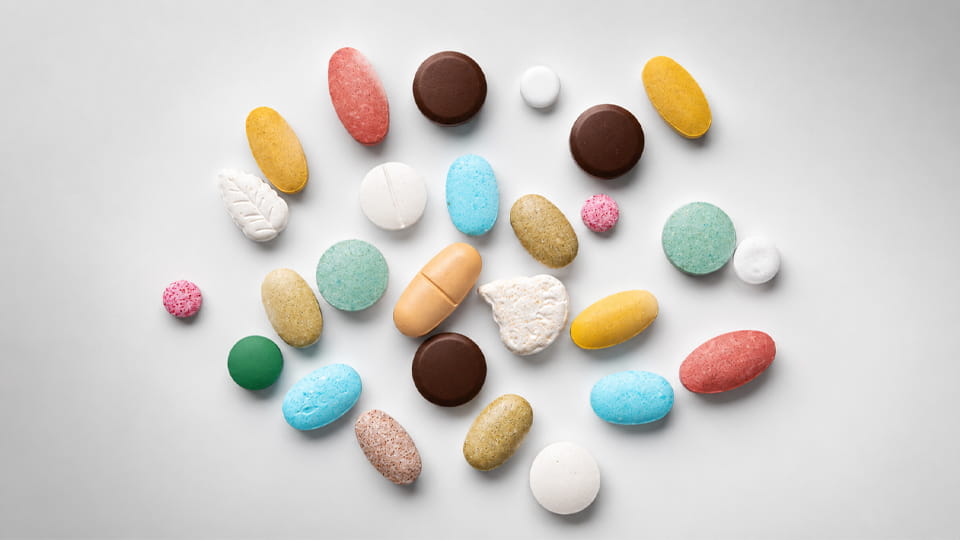
Có những trường hợp cho ăn bằng trọng lực là đủ:
Tuy nhiên, ngay cả trong những trường hợp này, sự gián đoạn nhỏ (độ ẩm, tĩnh, cộng với bất kỳ thay đổi công thức nào) có thể làm đảo lộn việc lấp đầy trọng lực. Nhiều máy ép hiện đại đạt tiêu chuẩn với khung nạp bất kể, để chống lại những thay đổi vật chất trong tương lai.
Chỉ sử dụng thức ăn trọng lực có thể dẫn đến các vấn đề. Bảng này tóm tắt các vấn đề thường gặp, nguyên nhân của họ, và cách thức ăn bắt buộc có thể giải quyết chúng:
| Vấn đề | Nguyên nhân có thể | Giải pháp bằng việc ép ăn |
| Sự thay đổi trọng lượng máy tính bảng | Đổ đầy khuôn không nhất quán | Cánh khuấy đảm bảo phân phối bột đều |
| Viên “trứng bồ câu” (giới hạn) | Khuôn trống hoặc không đầy | Nguồn cấp dữ liệu đang hoạt động ngăn chặn việc lấp đầy |
| Cán/nứt | Lớp bột kém hoặc độ nén không đều | Điền đồng nhất trải đều lực |
| Thuốc dính hoặc nhặt | Ma sát thay đổi và lấp đầy | Đổ đầy ổn định + nén trước (nếu có) |
| Thời gian lấp đầy quá lâu / sản lượng thấp | Trọng lực không theo kịp tốc độ | Bộ nạp có mái chèo duy trì mức đổ đầy ở tốc độ RPM cao |
| Các vấn đề về bụi/phân tách | Hỗn hợp chảy tự do di chuyển không đều | Thức ăn cưỡng bức sục khí và trộn trong khung thức ăn |
| Phản ứng kém với việc mở rộng quy mô | Kết quả phòng thí nghiệm không được nhân rộng trong sản xuất | Khung cấp liệu trong sản xuất cho kết quả ổn định |
Tiêu biểu, bộ nạp cưỡng bức là giải pháp đầu tiên cho các vấn đề đổ đầy không đều. Nó thường có thể được trang bị thêm cho máy ép hiện có sử dụng nguyên liệu trọng lực, chuyển đổi nó thành một hệ thống được cấp bằng mái chèo.
Hệ thống cho ăn cưỡng bức có thiết kế khác nhau. Các yếu tố chính cần xem xét:
Hầu hết các máy ép quay từ Jinlu đều sử dụng khung thức ăn mái chèo như tiêu chuẩn cho việc ép ăn. Khi lựa chọn, kết hợp khay nạp với bột của bạn: điền thử nghiệm khung nguồn cấp dữ liệu vào công thức trong trường hợp xấu nhất của bạn. Cũng xem xét khả năng bảo trì của bạn: ít hơn, các bộ phận chuyển động đơn giản hơn có nghĩa là ít thời gian ngừng hoạt động hơn.
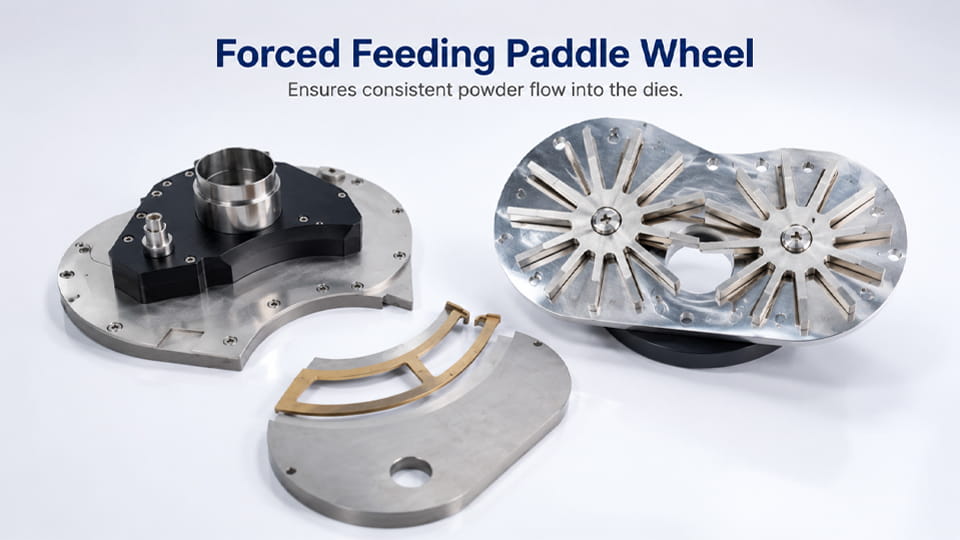
Nhân vật: Tắt khung nguồn cấp dữ liệu, hiển thị lắp ráp bánh xe mái chèo (hệ thống cho ăn cưỡng bức). Thiết kế phù hợp (số lượng/hình dạng của mái chèo) là chìa khóa để điền đồng đều.
Jinlupacking Máy tính bảng quay nhấn được thiết kế để vượt trội trong việc cho ăn các loại bột khó. Ví dụ, dòng ZP sử dụng khung cấp liệu có thể điều chỉnh (lực lượng trung chuyển) với nhiều mái chèo và kiểm soát tốc độ, đảm bảo lấp đầy tối ưu cho thảo dược, viên dinh dưỡng và viên lớn. Các tính năng bao gồm:

Bằng cách bao gồm một bộ nạp lực theo tiêu chuẩn (hoặc như một tùy chọn) trên hầu hết các mẫu máy quay, Jinlu Packing đảm bảo khách hàng có thể chạy cả công thức dòng chảy tự do và công thức dính. Khách hàng đã báo cáo rằng việc nâng cấp lên mô hình máy nạp cưỡng bức đã giải quyết được các vấn đề về tính nhất quán về trọng lượng của họ chỉ sau một đêm.
(Tìm hiểu thêm trong Cách chọn máy ép viên cho sản phẩm của bạn Và Hướng dẫn khắc phục sự cố trên máy tính bảng.)
Cưỡng bức cho ăn (cho ăn bằng mái chèo) là tính năng chính cho bất kỳ máy ép viên quay nào tạo ra các công thức đầy thách thức. Nó đảm bảo việc đổ khuôn đồng đều, tính nhất quán của trọng lượng, độ cứng của máy tính bảng và sản lượng cao. Nếu bạn làm việc tốt, bột dính hoặc phức tạp – hoặc nếu yêu cầu thông số kỹ thuật về trọng lượng viên chặt chẽ – máy ép có bộ nạp lực đáng được cân nhắc. Máy ép viên của Jinlu Packing cung cấp khung cấp liệu chắc chắn và cánh khuấy có thể điều chỉnh để xử lý các loại bột cứng, được hỗ trợ bởi thiết kế GMP và dễ dàng vệ sinh. Để được trợ giúp chọn tùy chọn máy ép và bộ nạp phù hợp, liên hệ với nhóm kỹ thuật của chúng tôi hoặc nhận báo giá ngay hôm nay.
Sẵn sàng giải quyết vấn đề cho ăn máy tính bảng của bạn? Yêu cầu báo giá cho JinluPacking máy ép viên quay bằng cách ép ăn, hoặc tải xuống miễn phí của chúng tôi Hướng dẫn người mua máy tính bảng để biết thêm mẹo về tối ưu hóa sản xuất máy tính bảng.
Cấp liệu cưỡng bức là hệ thống cấp liệu chủ động di chuyển bột hoặc hạt vào khoang khuôn bằng cách sử dụng cánh khuấy hoặc bánh xe cấp liệu quay., thay vì chỉ dựa vào trọng lực. Nó giúp đảm bảo việc đổ đầy khuôn nhất quán, đặc biệt là trong máy ép viên quay tốc độ cao hoặc khi xử lý vật liệu có độ chảy kém. Đổ đầy khuôn nhất quán là một trong những yếu tố quan trọng nhất ảnh hưởng đến trọng lượng máy tính bảng và chất lượng sản phẩm tổng thể.
KHÔNG. Nếu công thức của bạn có khả năng chảy tốt và tốc độ sản xuất tương đối thấp, cho ăn bằng trọng lực có thể là đủ. Tuy nhiên, đối với hầu hết các dây chuyền sản xuất dược phẩm và dinh dưỡng hiện đại—đặc biệt là những dây chuyền chạy ở tốc độ cao hoặc xử lý các loại bột khó—nên sử dụng hệ thống cấp liệu cưỡng bức để cải thiện tính đồng nhất của quá trình chiết rót và tính ổn định trong sản xuất.
Việc ép ăn đặc biệt có lợi cho những vật liệu không dễ chảy, bao gồm:
• Bột chiết xuất thảo dược
• Hỗn hợp dinh dưỡng
• Bột dược phẩm mịn
• Công thức liều cao
• Bột dính hoặc dính
• Hỗn hợp viên sủi
• Dạng viên lớn
Những vật liệu này thường gặp hiện tượng đổ khuôn không đều khi chỉ dựa vào trọng lực.
Bộ nạp cưỡng bức liên tục đẩy bột vào từng khoang khuôn, giảm biến động do dòng bột không nhất quán gây ra. Khuôn đúc đồng đều hơn giúp cải thiện tính đồng nhất của trọng lượng máy tính bảng, tính đồng nhất nội dung tốt hơn, và ít viên thuốc bị từ chối hơn trong quá trình sản xuất.
Đúng. Ở tốc độ tháp pháo cao hơn, Chỉ riêng trọng lực có thể không cung cấp đủ thời gian để điền đầy khuôn. Cưỡng bức cung cấp nguyên liệu hiệu quả hơn, cho phép máy ép viên duy trì sản xuất ổn định đồng thời giảm nguy cơ khuôn chưa đầy và biến đổi trọng lượng.
Không nhất thiết. Trong khi việc tăng tốc độ cánh cấp liệu có thể cải thiện việc đổ đầy khuôn cho bột chảy kém, tốc độ trung chuyển quá mức có thể làm tăng lực cắt hạt, bôi trơn quá mức, hoặc thiệt hại hạt, có thể ảnh hưởng tiêu cực đến độ bền và tính nhất quán của máy tính bảng. Tốc độ nạp tối ưu phải luôn được xác định thông qua xác nhận quy trình và thử nghiệm công thức.
Không cho ăn đầy đủ, nhà sản xuất có thể gặp phải:
• Sự thay đổi trọng lượng máy tính bảng
• Đổ khuôn chưa hoàn chỉnh
• Độ cứng không nhất quán
• Vấn đề đồng nhất về nội dung
• Hiệu quả sản xuất thấp hơn
• Tăng tỷ lệ từ chối
• Đóng nắp hoặc cán màng trong một số công thức
Nhiều vấn đề trong số này bắt nguồn từ dòng bột không ổn định trong giai đoạn đổ đầy khuôn..
Cấp liệu bằng trọng lực phụ thuộc vào dòng bột tự nhiên vào khuôn và hoạt động tốt nhất với các hạt chảy tự do ở tốc độ sản xuất vừa phải. Cấp liệu cưỡng bức sử dụng các cánh khuấy cơ khí hoặc bánh xe cấp liệu để chủ động đưa vật liệu vào khoang khuôn, làm cho nó phù hợp hơn cho sản xuất tốc độ cao và các công thức khó với đặc tính dòng chảy kém.
Công thức của bạn có thể được hưởng lợi từ bộ nạp cưỡng bức nếu bạn nhận thấy:
• Thay đổi trọng lượng máy tính bảng thường xuyên
• Khả năng chảy bột kém
• Các lỗ khuôn không lấp đầy hoàn toàn
• Giảm sản lượng ở tốc độ in cao hơn
• Viên nén có độ cứng không đồng đều
• Làm tắc nghẽn bột hoặc tạo lỗ chuột trong phễu
Đánh giá khả năng chảy của nguyên liệu kết hợp với thử nghiệm sản xuất là cách tốt nhất để xác định liệu hệ thống cấp liệu cưỡng bức có cần thiết hay không.
Khi chọn máy tính bảng, đánh giá nhiều hơn là chỉ sản lượng tối đa. Coi như:
• Thiết kế khung nạp
• Tốc độ mái chèo có thể điều chỉnh
• Khả năng tương thích với các loại bột khác nhau
• Dễ dàng vệ sinh và xây dựng tuân thủ tiêu chuẩn GMP
• Tháo gỡ nhanh chóng để bảo trì
• Vận hành ổn định trong quá trình sản xuất liên tục
Một hệ thống cho ăn cưỡng bức được thiết kế phù hợp phải phù hợp với cả đặc điểm công thức và năng lực sản xuất mục tiêu của bạn để đạt được chất lượng viên nén ổn định trong suốt quá trình sản xuất lâu dài.
Tài liệu tham khảo:
1.Khung nguồn cấp dữ liệu: Bước xử lý cuối cùng trước khi nén viên trong sản xuất dược phẩm —— Khoa họcTrực tiếp
2.Nghiên cứu ảnh hưởng của khung cấp liệu đến đặc tính phối trộn bột trong quá trình đổ khuôn ép viên —— Khoa họcTrực tiếp
3.Thử thách của việc đổ đầy khuôn trong máy ép quay-Một nghiên cứu có hệ thống về đặc tính vật liệu và các thông số quy trình —— Thư viện Y khoa Quốc gia
4.Tối ưu hóa thiết kế khung cấp liệu và các thông số quy trình tạo viên để tăng tính đồng nhất khi đổ khuôn trên máy dập viên quay tốc độ cao —— Khoa họcTrực tiếp
5.Hiểu ảnh hưởng của các thông số quy trình và cấp liệu cưỡng bức khi điền khuôn —— Khoa họcTrực tiếp
6.Ảnh hưởng của thiết kế khung cấp liệu và các thông số vận hành đến độ hao mòn bột, vỡ hạt, và tính chất bột —— Rutgers, Đại học bang New Jersey