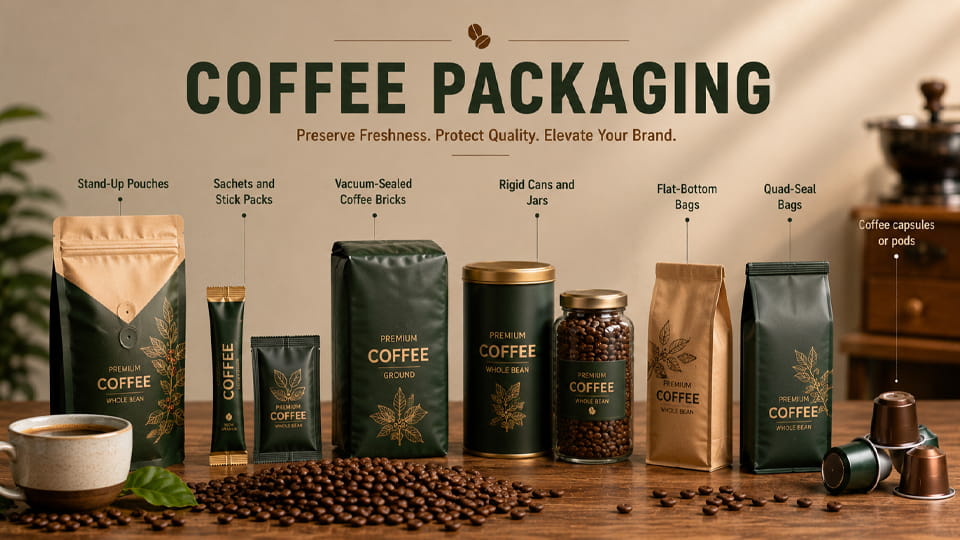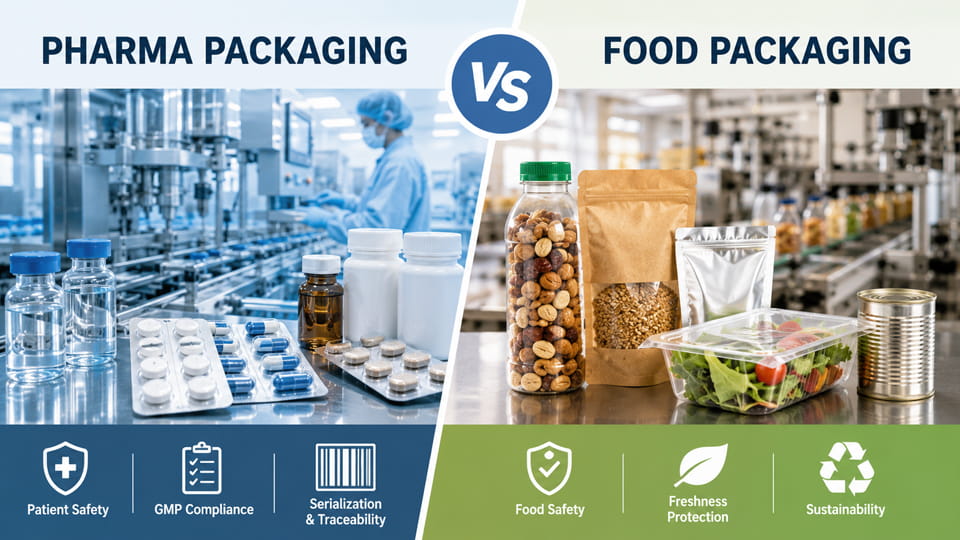

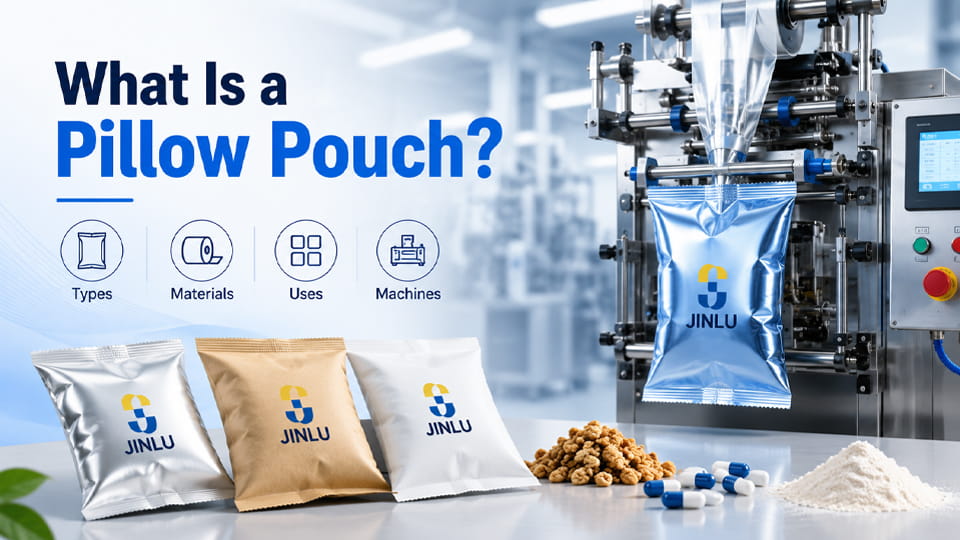
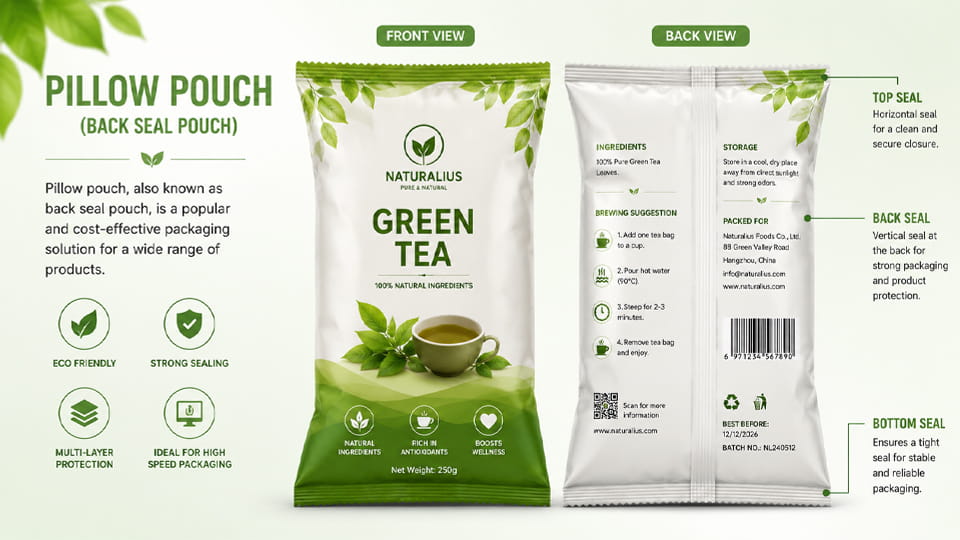
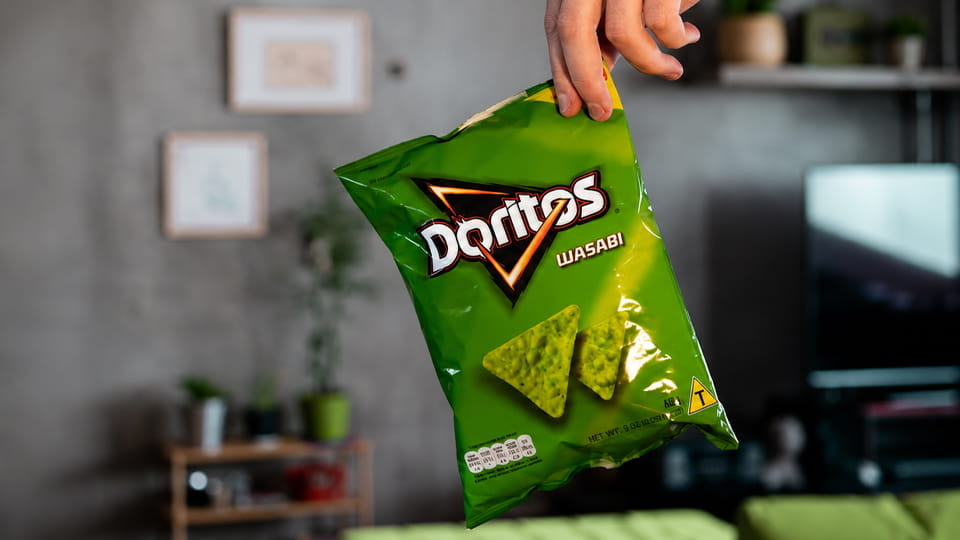
Bao bì linh hoạt có nhiều dạng – từ túi đứng và túi có vòi cho đến túi đựng gối đơn giản. MỘT túi đựng gối là một căn hộ, Túi linh hoạt ba kín nằm phẳng khi rỗng và “phồng” thành hình gối khi đầy. Nó được hàn nhiệt ở phía trên, đường may phía dưới và phía sau (thường được gọi là hải cẩu vây hoặc hải cẩu đùi), làm cho chiếc túi trông giống như một chiếc gối phồng lên. Khi bạn bóp một túi gối đầy, phần giữa phình ra và thuôn nhọn về phía mép bịt kín, giống như một cái đệm nhỏ. Túi đựng gối (còn được gọi là gói gối hoặc túi niêm phong phía sau) được sử dụng rộng rãi vì chúng đơn giản, tiết kiệm chi phí, và dễ dàng xếp chồng và vận chuyển. Chúng rất phổ biến cho các món ăn nhẹ (chip, kẹo), đồ uống dạng bột, cà phê, gia vị, thức ăn cho thú cưng, và các mặt hàng khô khác.
Túi đựng gối là sản phẩm chủ yếu trong bao bì thực phẩm và tiêu dùng. Trong thực tế, chúng được sử dụng để đóng gói chip, kẹo, quả hạch, cà phê, gia vị, thực phẩm đông lạnh và các mặt hàng tương tự. Trong một số ngành công nghiệp, chúng thậm chí còn được sử dụng cho các sản phẩm phi thực phẩm như chất tẩy rửa hoặc đồ y tế dùng một lần., nơi một túi kín đơn giản là đủ. Điểm hấp dẫn của túi đựng gối là giá thành vật liệu thấp và diện tích vận chuyển nhỏ gọn.: căn hộ, thiết kế linh hoạt sử dụng ít nhựa hơn nhiều so với hộp hoặc chai, tiết kiệm vật liệu và vận chuyển hàng hóa. Nhiều túi đựng gối có các đặc điểm như vết rách, treo lỗ hoặc đóng lại dây kéo để thuận tiện. Vì khuôn mặt rộng của họ, túi đựng gối cũng cho phép in đầy đủ màu sắc và xây dựng thương hiệu trên một bề mặt lớn.
Túi đựng gối có một số biến thể cơ bản, chủ yếu được xác định bởi phong cách con dấu ở cạnh sau. Hai phổ biến nhất là:
Trong cả hai trường hợp, phần trên và phần dưới được bịt kín toàn bộ chiều rộng sau khi lấp đầy, hoàn thiện cấu trúc ba dấu. Một số công dụng túi đựng gối chuyên dụng con dấu bên (một bên bịt kín thay vì trung tâm) nhưng vẫn phồng lên như một cái gối khi đầy. Túi đựng gối về cơ bản là 3-túi kín bên (đứng đầu, đáy, mặt sau), mặc dù một số kiểu "gói gối" có thêm miếng đệm bên thứ tư (bốn con dấu) tạo hình hộp hơn.
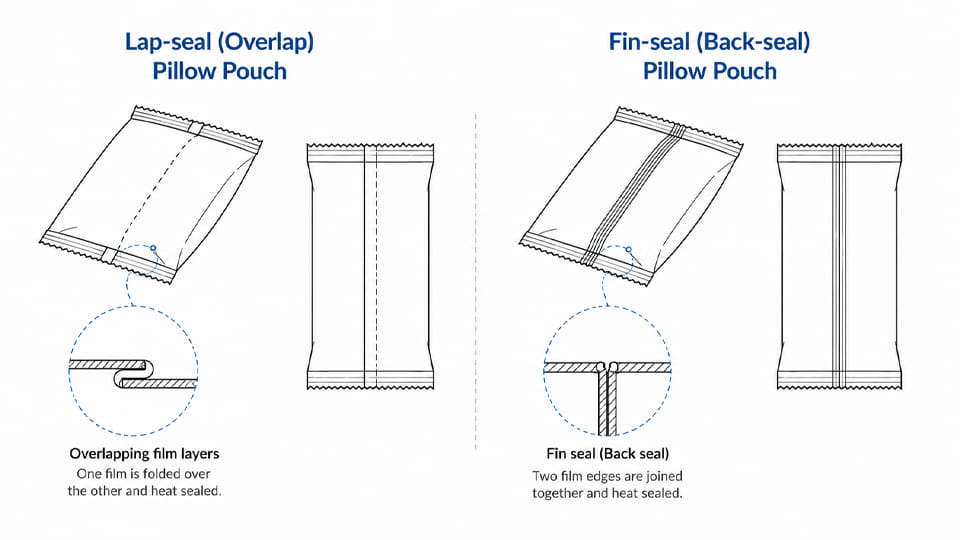
Những kiểu con dấu này ảnh hưởng đến hiệu suất: vòng đệm nằm phẳng nhưng sử dụng ít vật liệu hơn, trong khi hải cẩu vây tạo ra một khoảng rộng hơn, đường may được gia cố có thể đáng tin cậy hơn ở tốc độ cao hoặc với màng dày hơn. Nhà sản xuất sẽ lựa chọn loại seal dựa trên độ dày màng, tốc độ sản xuất và thiết bị. Ví dụ, Các dây chuyền VFFS tốc độ rất cao thường ưu tiên các vòng đệm vây để có đường may chắc chắn hơn. Trong thực tế, cả hai thuật ngữ - túi đệm kín và túi đệm kín - đều được sử dụng cho túi đựng gối, và sự khác biệt là ở phương pháp đóng dấu lại.
Túi đựng gối được làm từ linh hoạt, màng laminate nhiều lớp. Cấu trúc điển hình là ba lớp nhựa hoặc giấy bạc trở lên, mỗi cái phục vụ một mục đích:
Nhiều loại túi đựng gối được FDA phê chuẩn và không chứa BPA để sử dụng trong thực phẩm. Một số túi thân thiện với môi trường sử dụng lớp giấy hoặc gốc sinh học (như giấy PLA hoặc giấy Kraft) để cải thiện khả năng tái chế. Công thức màng chính xác phụ thuộc vào nhu cầu của sản phẩm: đối với hàng hóa nhạy cảm với dầu hoặc độ ẩm, thêm rào cản (giấy bạc hoặc nylon/EVOH) được thêm vào. Tóm lại, vật liệu thông thường bao gồm polyetylen, polypropylen (PP), polyester (THÚ CƯNG) và màng kim loại (giấy bạc). Ví dụ, một túi khoai tây chiên thông thường có thể sử dụng nhựa PET/Al/PE – bền và có thể in được bên ngoài (THÚ CƯNG), một rào cản lá nhôm cho sự tươi mát, và PE bên trong để niêm phong.
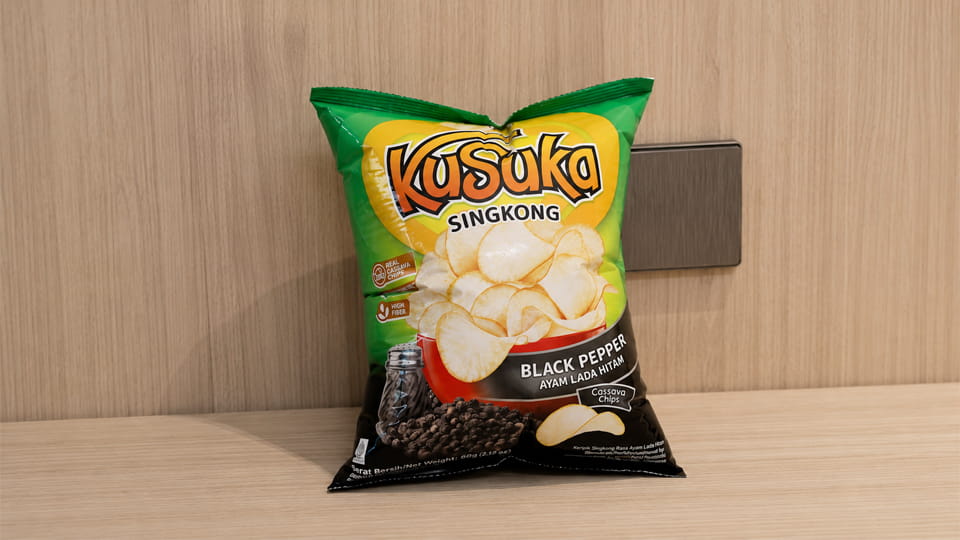
Túi đựng gối cực kỳ linh hoạt và được sử dụng trong nhiều ngành công nghiệp. Họ xuất sắc vì hàng khô dùng một lần hoặc số lượng lớn. Các ứng dụng điển hình bao gồm:
Tóm lại, nếu sản phẩm của bạn chạy với khối lượng lớn và cần cơ bản, đóng gói giá rẻ, một chiếc túi đựng gối thường rất vừa vặn. Của nó thiết kế linh hoạt chứa bột, hạt, đồ ăn nhẹ, ngay cả chất lỏng nhẹ. Các tấm phẳng cũng đóng vai trò như một canvas thương hiệu lớn – các công ty có thể in đồ họa và logo sống động trên túi đựng gối để tăng sức hấp dẫn cho kệ hoặc thương mại điện tử.
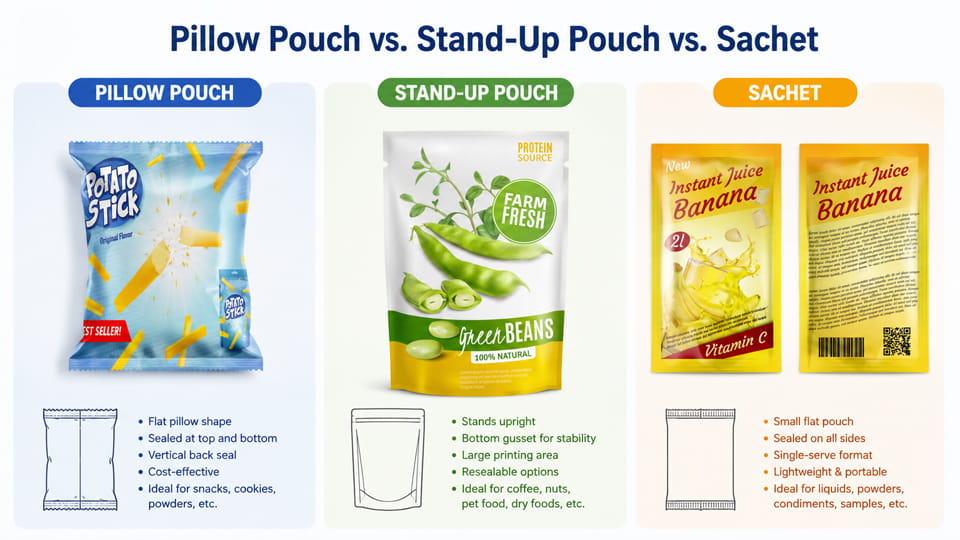
Túi đựng gối là một kiểu túi linh hoạt trong số những kiểu khác. Thật hữu ích khi so sánh chúng:
Đóng gói túi gối có thể được thực hiện bằng nhiều cách, tùy thuộc vào quy mô và hình thức sản xuất. Các phương pháp phổ biến nhất là:


Tóm lại, máy đóng gói túi gối bao gồm: dấu điền theo chiều dọc (VFF) thiết bị cho túi gối màng cuộn; trình bao bọc dòng chảy ngang để gói riêng từng sản phẩm; Và chất độn túi làm sẵn để đổ đầy túi làm sẵn. Các hệ thống hiện đại thường bao gồm các tính năng như máy ảnh màu hoặc cảm biến dấu mắt để căn chỉnh phim in., điều khiển servo để niêm phong chính xác, và màn hình cảm ứng thân thiện với người dùng. Jinlupacking, Ví dụ, cung cấp máy làm túi gối VFFS bằng thép không gỉ, điều khiển PLC, và hệ thống túi thay nhanh mang lại sự linh hoạt. Giấy bọc gối nằm ngang có thể sử dụng màng cấp liệu phía trên hoặc phía dưới (nguồn cấp dữ liệu “bên dưới màng” cho phép dễ dàng tải các sản phẩm nhẹ).
Máy đóng dấu dạng đứng là lựa chọn phù hợp khi bạn cần tốc độ tối đa và chi phí quay phim tối thiểu. Chúng tạo thành từng túi gối khi dây chuyền chạy, hiệu quả cho đồ ăn nhẹ, ngũ cốc, và thức ăn cho thú cưng. Giấy gói ngang được sử dụng khi các vật phẩm được nạp vào hoặc khi ưu tiên hướng máy khác. Máy làm túi gối làm sẵn là tốt nhất khi bạn cần túi tùy chỉnh hoặc có thể khóa lại (đầu zip, vòi phun) hoặc chuyển đổi rất nhanh giữa các phong cách. Máy phù hợp phụ thuộc vào sản phẩm của bạn, tỷ lệ đầu ra yêu cầu, và dạng túi – kỹ sư đóng gói sẽ chọn thiết bị phù hợp.
Túi đựng gối mang lại nhiều lợi ích rõ ràng cho nhà sản xuất:
Kết quả là, túi đựng gối là một “đã được chứng minh, định dạng đã được thử nghiệm theo thời gian cho nhiều loại thực phẩm” và các sản phẩm khác. Chúng mang lại sự cân bằng tuyệt vời trị giá, hiệu suất và tính linh hoạt, đó là lý do tại sao các kỹ sư đóng gói chọn chúng cho rất nhiều mặt hàng có khối lượng lớn.
| Kiểu túi | Kết cấu & Đặc trưng | Sử dụng chung |
| Túi đựng gối | Túi phẳng đơn giản có nắp trên, con dấu phía dưới và phía sau; nằm phẳng trống rỗng. Có thể bao gồm các vết rách, dây kéo, van. Chi phí vật liệu thấp nhất. | Khoai tây chiên, kẹo, bột, gia vị, gói đồ ăn nhẹ nhỏ. |
| Túi đứng | Túi có đáy có rãnh giúp túi đứng thẳng; thường có khóa kéo hoặc vòi. Chi phí vật chất nhiều hơn, sự hiện diện kệ tốt hơn. | Cà phê, thức ăn cho thú cưng, nước sốt, đồ ăn nhẹ cao cấp, đãi thú cưng. |
| gói (3-/4-bên) | Túi rất nhỏ được dán kín 3 hoặc 4 bên; được thực hiện cho khẩu phần đơn liều. Chi phí cực thấp cho mỗi gói. | Phần ăn đơn: sốt cà chua, đường, gia vị, gói trộn đồ uống, mẫu dược phẩm nhỏ. |
Túi đựng gối (hay còn gọi là “gói gối”) thực dụng hơn: họ đừng tự mình đứng lên và thường phục vụ các sản phẩm sử dụng một lần hoặc có tuổi thọ ngắn. Túi đứng được sử dụng khi trưng bày và đóng lại. Gói gói dành cho sử dụng vi mô một lần. Tùy theo sản phẩm mà chọn túi phù hợp, xây dựng thương hiệu và chi phí – nhưng nếu bạn cần số lượng lớn, bao bì giá rẻ chạy nhanh, túi đựng gối thường thắng.
Tóm lại, Một túi đựng gối là một điều đơn giản, túi linh hoạt phẳng được niêm phong trên ba mặt (đứng đầu, đáy, mặt sau) phồng lên thành hình dạng khi được lấp đầy. Cái này gói gối phong cách là đặc trưng của bao bì vì nó nhẹ, tiết kiệm chi phí, và rất phù hợp với dây chuyền tự động tốc độ cao. Thường được làm từ màng nhiều lớp (Thể dục, THÚ CƯNG, giấy bạc, vân vân.), túi đựng gối bảo vệ đồ đạc như đồ ăn nhẹ, bột và nhiều thứ khác để kéo dài thời hạn sử dụng. Chúng có thể bao gồm các tính năng như vết rách, treo lỗ hoặc khóa kéo có thể khóa lại để thuận tiện.
Con dấu điền mẫu dọc (VFF) máy móc thường được sử dụng để sản xuất túi gối một cách nhanh chóng từ màng cuộn. Các lựa chọn đóng gói khác bao gồm giấy gói theo chiều ngang và hệ thống làm đầy túi làm sẵn. Cách tiếp cận phù hợp phụ thuộc vào sản phẩm và nhu cầu đầu ra của bạn. Dành cho nhà sản xuất dược phẩm hoặc thực phẩm muốn đóng gói sản phẩm của họ một cách hiệu quả, túi đựng gối cung cấp một đã được chứng minh, giải pháp kinh tế.
Sẵn sàng đóng gói sản phẩm của bạn trong túi đựng gối? JinluPacking cung cấp máy đóng gói túi gối hiện đại và giải pháp chìa khóa trao tay. Máy VFFS và túi gối nằm ngang của chúng tôi được thiết kế để đảm bảo độ bền, niêm phong chính xác và dễ dàng sự chuyển đổi. Hãy liên hệ với chuyên gia của chúng tôi ngay hôm nay để có giải pháp và báo giá tùy chỉnh - chúng tôi sẽ giúp bạn chọn thiết bị và thiết kế túi gối tốt nhất cho dây chuyền sản xuất của bạn. Hãy để JinluPacking giúp bạn nâng cao hiệu quả và sức hấp dẫn của sản phẩm với hệ thống đóng gói túi gối hoàn hảo.
Một túi đựng gối (hoặc túi đựng gối) là một điều đơn giản, túi linh hoạt hình ống. Nó được hình thành từ màng phẳng và được dán kín ở mặt sau và cả hai đầu, tạo ra hình dạng trông giống như một chiếc gối nhỏ khi được lấp đầy. Nó thường sử dụng nhựa nhiều lớp (và đôi khi giấy bạc) phim ảnh, và được sử dụng để đóng gói đồ ăn nhẹ, bột, và hơn thế nữa.
Vì hình dạng của nó: khi đầy, giữa túi phồng lên như một chiếc gối. Các cạnh được bịt kín xác định đường viền giống như chiếc gối. Cái tên chỉ đơn giản phản ánh sự xuất hiện của nó.
Túi đựng gối được dùng đựng nhiều loại chất rắn, bột. Sản phẩm phổ biến bao gồm khoai tây chiên, quả hạch, bỏng ngô, kẹo, bánh quy, cà phê hòa tan, trà, đồ uống dạng bột, gia vị, đãi thú cưng, và các loại thực phẩm bổ sung sức khỏe dạng bột. Ngay cả những nguyên liệu thô số lượng lớn như đường, bột mì, hoặc chất tẩy rửa có thể được đóng gói trong túi gối lớn. Trong dược phẩm, túi đựng gối/gói đựng thuốc liều đơn, bột vitamin, và thành phần.
Không chính xác. Một gói thường dùng để chỉ một gói nhỏ được niêm phong để sử dụng một lần, thường không có dây kéo (ví dụ. một gói đường hoặc gói gia vị). Túi đựng gối thường lớn hơn và có thể có khóa kéo hoặc vết rách để tái sử dụng. Nói cách khác, gói giống như những chiếc gối đơn nhỏ, trong khi túi đựng gối thường có nhiều công dụng hoặc dùng được nhiều lần..
Sự khác biệt chính là đáy: túi đựng gối không có miếng lót phía dưới và nằm phẳng, trong khi đó túi đứng có đáy phẳng hoặc đáy hộp cho phép nó đứng trên kệ. Túi đứng thường đắt hơn và sử dụng nhiều vật liệu hơn (họ có bốn con dấu), nhưng họ mang đến sự hiện diện tốt hơn trên kệ. Túi đựng gối đơn giản và rẻ hơn (chỉ ba con dấu) và lý tưởng khi không cần màn hình thẳng đứng.
Phổ biến nhất là Dọc Form-Fill-Seal (VFF) máy móc. Những thứ này tạo ra túi gối từ cuộn phim một cách nhanh chóng. Máy đóng dấu dạng ngang hoặc máy dán túi cũng có thể sản xuất túi dạng gối hoặc dạng que cho một số sản phẩm nhất định. Nếu bạn có túi định dạng gối được làm sẵn (với dây kéo hoặc các tính năng đặc biệt), một chất độn túi làm sẵn có thể lấp đầy chúng. Jinlu cung cấp tất cả những thứ này: dòng VFFS, máy đóng gói thanh, và máy đóng túi làm sẵn (có thể xử lý các kiểu túi gối).
Chúng hầu như luôn là phim nhiều lớp. Các cấu trúc phổ biến bao gồm: PET/PE (mạnh, thông thoáng, rào cản vừa phải), PET/AL/PE (rào cản cao với giấy bạc), BOPP/CPP (bóng loáng, có thể in được), Ni lông/PE (chống đâm thủng), và combo giấy-PE. Lớp bên trong thường có khả năng chịu nhiệt (PE hoặc CPP), lớp bên ngoài cho sức mạnh hoặc in ấn. Phim chuyên dụng có thể bao gồm EVOH hoặc PET kim loại chân không để tạo thêm rào cản, quan trọng đối với các sản phẩm nhạy cảm hoặc có thời hạn sử dụng ổn định.
Túi đựng gối truyền thống sử dụng nhiều lớp hỗn hợp (THÚ CƯNG, Thể dục, giấy bạc, vân vân.), điều này làm cho việc tái chế trở nên khó khăn. Tuy nhiên, chúng gây ra ít tác động tới môi trường hơn so với các gói cứng: họ sử dụng ít nhựa hơn và nhẹ hơn. Một số công ty hiện nay đang sử dụng phim đơn chất (chỉ thích OPP/PE) để tái chế dễ dàng hơn. Luôn kiểm tra thông số kỹ thuật của phim: một số túi đựng gối có thể tái chế được trong các hệ thống chấp nhận nhựa dẻo (nếu được đánh dấu rõ ràng và đơn chất liệu). Jinlu cũng đề cập đến các giải pháp thân thiện với môi trường và hỗ trợ các lựa chọn phim có thể tái chế (và có thể sử dụng màng có thể phân hủy hoặc màng gốc PE nếu cần).
Đúng, túi, túi dạng gối dùng trong dược phẩm đựng bột, viên thuốc, và hạt. Họ phải đáp ứng các tiêu chuẩn vệ sinh (cGMP, FDA). Jinlu thiết kế đặc biệt các dòng túi dùng trong dược phẩm (Độ chính xác định lượng ± 0,4%, bộ phận vệ sinh không gỉ). Đối với dược phẩm tiêu dùng (như vitamin liều đơn hay thuốc sủi bọt), doypack đứng lên là phổ biến, nhưng túi gối được sử dụng cho các lô hàng thuốc bột khối lượng lớn, Gói mẫu, hoặc thành phần. Điều quan trọng là sử dụng các tấm nhựa được phê duyệt về mặt y tế và các hoạt động trám sạch.
Đánh giá sản phẩm của bạn (bột vs chất lỏng, độ chính xác cần thiết), kích thước túi, và nhu cầu khối lượng. Dành cho sản phẩm dạng hạt/bột có khối lượng lớn, một máy VFFS (có thể bằng máy cân nhiều đầu) là tốt nhất. Nếu bạn cần các tính năng như khóa kéo hoặc van, hãy xem xét một máy làm túi có sẵn. Kiểm tra độ bền niêm phong (đặc biệt là bột dược phẩm) và tốc độ. Họ, Ví dụ, cung cấp máy đóng túi cấp dược phẩm có chứng nhận. Tóm lại: sản phẩm phù hợp → loại túi → kiểu máy. Các chuyên gia của Jinlu có thể giúp đề xuất mẫu máy phù hợp dựa trên thông số kỹ thuật và ngân sách chính xác của bạn.
Tài liệu tham khảo:
1.2023 Báo cáo về máy đóng gói của Hoa Kỳ hiện trạng của ngành —— PMMI
2.Sản xuất bao bì linh hoạt - Hình thành và niêm phong túi —— Thông tin nghiên cứu của Đại học Twente
3.Máy đóng dấu dạng đứng làm túi gối như thế nào? —— Bao bìTiêu hóa
4.Các loại bao bì linh hoạt và công trình đặc biệt —— Nhãn&Ghi nhãn
5.Hiểu các yếu tố ảnh hưởng đến tính nguyên vẹn của seal trong bao bì thực phẩm dẻo được hàn kín bằng nhiệt: Một đánh giá —— Thư viện trực tuyến WILEY