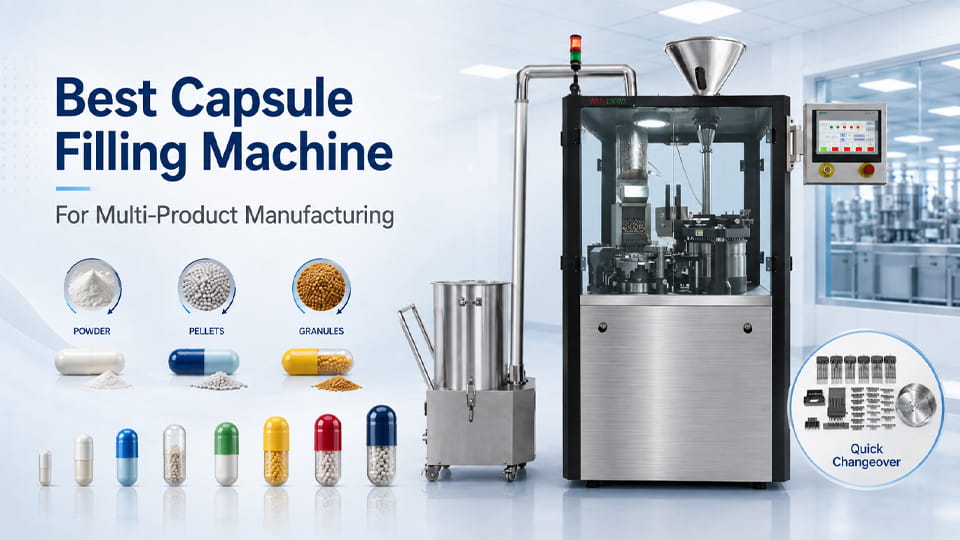

Công thức viên nang có thể sử dụng dạng bột, hạt, viên hoặc viên nhỏ, mỗi cái đều có ưu và nhược điểm riêng. Bột đơn giản và phổ biến nhưng có thể bám bụi hoặc chảy kém. Hạt (bột kết tụ) cải thiện dòng chảy và giảm bụi với chi phí xử lý thêm. Viên nhỏ là các hạt đa đơn vị gần như hình cầu với dòng chảy tuyệt vời và lý tưởng cho các công thức kết hợp và giải phóng có kiểm soát. Máy tính bảng mini (những viên thuốc nhỏ được đổ vào một viên nang) cho phép định lượng chính xác và nhiều API hoặc hồ sơ phát hành trong một viên nang. Việc lựa chọn vật liệu làm đầy ảnh hưởng đến tính đồng nhất của hỗn hợp, tính linh hoạt của liều lượng và khả năng chảy - và nó ảnh hưởng đến máy làm đầy viên nang tính năng cần thiết.
Hướng dẫn này so sánh từng hình thức, cho thấy sự lựa chọn nguyên liệu quan trọng như thế nào đối với sản xuất, và thậm chí còn cung cấp cây quyết định để giúp bạn chọn nguyên liệu làm viên nang tốt nhất cho sản phẩm của mình (và do đó thiết bị phù hợp). Chúng tôi cũng liệt kê dữ liệu công thức chính để chia sẻ với các nhà cung cấp máy tạo viên nang khi xác định phạm vi dự án của bạn.

Viên nang cứng có thể được lấp đầy bằng nhiều dạng rắn khác nhau. Đây là một so sánh nhanh về bột, hạt, viên Và máy tính bảng nhỏ trong viên nang:
| Vật liệu điền | Dạng điển hình | Ưu điểm chính | Những thách thức chung |
| bột (hạt mịn) | Hỗn hợp khô của API + tá dược | Độ linh hoạt liều cao; hòa tan nhanh chóng (phát hành ngay lập tức); công thức đơn giản. | Vấn đề về dòng chảy: có xu hướng kết tụ, tách biệt hoặc cầu; tính đồng nhất của liều có thể bị ảnh hưởng. Nhạy cảm với độ ẩm và tĩnh điện. |
| Hạt (bột kết tụ) | Các cụm lớn hơn từ quá trình tạo hạt ướt/khô | Khả năng chảy tốt hơn và mật độ khối lớn; giảm bụi; trọng lượng điền đồng đều hơn. Cho phép định lượng gắn kết. | Các bước xử lý bổ sung: tạo hạt thêm chi phí/thời gian. Sự thay đổi kích thước hạt ảnh hưởng đến tính đồng nhất; vẫn có thể bắc cầu nếu khô kém. |
| Viên nhỏ (nhân vật chính) | Hạt vi tròn (thường được phủ) | Phát hành có kiểm soát: có thể phủ từng viên để giải phóng theo thời gian. Hình dạng đồng đều → dòng chảy rất tốt trong phễu. <Br>Liều lượng nhất quán: đo bằng thể tích, không được tính. | Sản xuất phức hợp: yêu cầu tạo hạt/đùn và phủ. Thiết bị phải xử lý các hạt nhỏ không bị phân tách. |
| Máy tính bảng mini (máy tính bảng siêu nhỏ) | Những viên thuốc nhỏ (2–4 mm đường kính) | Định lượng linh hoạt: trộn nhiều máy tính bảng nhỏ để phát hành nhiều API hoặc so le. Dễ dàng cầm nắm như những chiếc máy tính bảng nhỏ. | Thử thách đếm: cần bộ nạp đặc biệt để đếm và thả. Có thể có độ chảy thấp hơn hạt rời. Yêu cầu dụng cụ bấm máy tính bảng chính xác. |
Mỗi vật liệu có thể là điền chính hoặc một phần của sự kết hợp. Các dòng viên nang hiện đại thậm chí có thể trộn các dạng trong một viên nang (ví dụ. viên + bột) để đạt được hồ sơ phát hành phức tạp.

Các đặc tính vật lý của vật liệu làm đầy ảnh hưởng trực tiếp đến hiệu suất làm đầy viên nang và chất lượng sản phẩm. Khả năng chảy, kích thước hạt, mật độ và độ ẩm là những yếu tố chính. Ví dụ, bột rất mịn có thể dính hoặc bụi (có xu hướng vón cục hoặc treo lên trên bề mặt), trong khi các hạt hoặc viên lớn hơn chảy dễ dàng hơn. Sự lựa chọn cũng ảnh hưởng đến tính đồng nhất của hỗn hợp – bột mịn với kích thước hạt hỗn hợp có thể tách ra trong quá trình xử lý, trong khi viên hoặc viên nhỏ đồng nhất làm giảm nguy cơ đó.
Vật liệu làm đầy cũng thúc đẩy độ chính xác về liều lượng và tính linh hoạt của công thức. Viên nhỏ (thường được gọi là “đa hạt”) cho phép các mô hình giải phóng phức tạp và sự kết hợp của các viên khác nhau trong một viên nang. Máy tính bảng mini cho phép nhiều API hoặc lớp phủ trên mỗi viên nang. Ngược lại, một hỗn hợp bột đơn giản thường mang lại một hồ sơ phát hành. Nhiều máy tạo viên nang cho phép trộn các dạng khác nhau, nhưng mỗi lần thêm (ví dụ. viên + bột) thêm sự phức tạp và có thể yêu cầu các trạm hoặc trạm trung chuyển riêng biệt.
Cuối cùng, vật liệu chỉ ra cơ chế định lượng nào trên viên nang được sử dụng. Máy khoan hoặc máy cấp liệu dạng đĩa và chốt nén hoạt động tốt đối với bột chảy tự do, trong khi các trạm viên hoặc máy tính bảng xử lý các hạt cứng. Chúng tôi đề cập đến những cân nhắc về máy dưới đây.
bột là loại viên nang cổ điển. Nó chỉ đơn giản là sự pha trộn tự do của API Và tá dược (chất pha loãng, nhảy lượn, vân vân.). Bột tỏa sáng khi bạn cần đơn giản, công thức phát hành ngay lập tức hoặc liều lượng tùy biến cao. Vì bột có diện tích bề mặt cao, chúng hòa tan nhanh chóng - lý tưởng để bắt đầu tác dụng nhanh. Và bột cho phép bạn điều chỉnh liều lượng: dành cho nhi khoa, sức mạnh lão khoa hoặc thay đổi, bạn có thể điều chỉnh hỗn hợp dễ dàng.

Tuy nhiên, bột có nhược điểm. Khả năng chảy thường nghèo: các hạt mịn có thể kết nối trong phễu hoặc dính vào máng ăn. Ngay cả bột được trộn kỹ cũng có thể phân tách (các hạt nặng hơn lắng xuống) nếu bị rung chuyển, gây ra biến thể trọng lượng lấp đầy. Việc thiếu hình dạng xác định có nghĩa là việc định lượng phụ thuộc vào phương pháp đo thể tích hoặc nén (đĩa, chân không/không khí) đòi hỏi hành vi bột rất nhất quán. Như Người trong cuộc của GMP lưu ý, “bột thường có độ chảy kém, khiến chúng khó xử lý”, có thể dẫn đến vấn đề về liều lượng. Bột dễ bị ẩm hoặc tĩnh điện, khiến một số viên nang bị đổ đầy và những viên khác bị đổ đầy. Cuối cùng, bột có thể có mùi vị khó chịu hoặc gây kích ứng, vì họ phát hành ngay lập tức; đóng gói hoặc lớp phủ có thể che giấu hương vị, nhưng bản thân bột có tác dụng bảo vệ hạn chế.
Khi nào nên chọn bột: Công thức yêu cầu phát hành ngay lập tức, API liều cao (dễ dàng điền trọng lượng), hoặc tính linh hoạt tối đa. Đối với thuốc mạnh liều thấp, bột có thể khó khăn nếu không tạo hạt. Phòng thí nghiệm và R&Cân D thường sử dụng bột. Ví dụ, Chất làm đầy viên nang NJP-400C của Jinlu (24k viên/giờ) được thiết kế cho bột và hạt, sử dụng chốt nén hoặc đĩa định lượng để có trọng lượng nạp chính xác.
Mẹo: Kiểm soát kích thước hạt và độ ẩm. Sử dụng chất lượn (ví dụ. Mg stearat) để cải thiện dòng chảy. Giữ hỗn hợp đồng nhất và tiến hành nghiên cứu dòng bột. Đường dây tốc độ cao nên theo dõi xu hướng trọng lượng lấp đầy; nguyên nhân phổ biến của sự thay đổi bao gồm thay đổi độ ẩm, đĩa phân chia và định lượng bị mòn.
Hạt chỉ đơn giản là các hạt bột liên kết thành hạt lớn hơn (tạo hạt ướt hoặc khô). Bằng cách làm cho các hạt lớn hơn và đồng đều hơn, tạo hạt cải thiện đáng kể lưu lượng và xử lý. Khối lượng lớn hơn của hạt có nghĩa là nó làm trống phễu một cách ổn định hơn, và có ít bụi hơn. Điều này dẫn đến trọng lượng nạp ổn định hơn và thời gian dừng máy ít hơn. Người trong cuộc của GMP xác nhận rằng “hạt mang lại đặc tính dòng chảy và khả năng nén được cải thiện” so với bột. Hạt cũng là chất trung gian tuyệt vời nếu cuối cùng bạn nén viên thuốc: viên nang có thể là một liều thuốc nhanh chóng, trong khi hạt cũng có thể nén được.

Viên nhỏ (dưới) thực chất là những hạt hình cầu. Nhưng ngay cả khối hạt không tráng cũng giúp ích cho điền đồng đều. Dành cho nhà sản xuất, tạo hạt thêm một bước nữa, nhưng nó thường xuyên trả hết bằng cách loại bỏ cầu nối. Máy tạo hạt tầng sôi hoặc máy tạo hạt có độ cắt cao có thể tạo ra các hạt làm giảm đáng kể sự phân chia. (Sau khi tạo hạt, bạn có thể sàng lọc theo kích cỡ để đảm bảo cấp liệu đồng đều vào phễu nạp viên nang.)
Khi nào nên chọn hạt: Dùng dạng hạt khi lớp nền bị dính, gắn kết hoặc có sự phân bố kích thước rộng. Quá trình tạo hạt đảm bảo trọng lượng viên nang nhất quán, đặc biệt trên dây chuyền tốc độ cao. Hạt cũng có thể kết hợp chất kết dính hoặc lớp phủ. Để kiểm soát phát hành vừa phải, bạn có thể phủ các hạt dưới dạng viên nhỏ.
Mẹo: Tối ưu hóa kích thước hạt (thường là vài trăm micron) cho phễu phụ của bạn. Đảm bảo hạt được sấy khô hoàn toàn và chảy tự do. Máy cấp liệu rung hoặc máy khoan thường cấp hạt một cách đáng tin cậy, và chất độn viên nang với liều lượng hạt thể tích (ví dụ. phễu phân đoạn) xử lý chúng tốt. Chất độn viên nang của Jinlu chứa hạt: NJP-400C, ví dụ, được đánh giá cho bột Và hạt.
Viên nhỏ (hoặc nhân vật chính) nhỏ, các hạt tròn - thường 0.5 ĐẾN 2 đường kính mm - thường được sản xuất bằng kỹ thuật ép đùn-spheronization hoặc phân lớp. Mỗi viên có thể được phủ để kiểm soát việc giải phóng (ruột, bị trì hoãn, được kiểm soát, vân vân.), vì vậy viên nang chứa đầy viên là lý tưởng cho đa hạt và phát hành sửa đổi công thức. Ghi chú Jinlu gốc, “viên là những hạt nhỏ hình cầu có nhiều đơn vị, thường được phủ để giải phóng bền vững”. Viên nang chỉ chứa đầy viên (còn được gọi là viên nang đa hạt) có thể đưa ra chính xác, phát hành có thể dự đoán được: một số viên hòa tan ngay lập tức, những người khác sau. Cấu hình giải phóng nhiều pha này khó đạt được với bột đồng nhất.

Viên nén chảy rất tốt do hình dạng của chúng. Phễu nghiêng nhanh và các viên nhỏ sẽ đổ ra một cách trơn tru vào đĩa định lượng hoặc bộ nạp bánh sao quay. Chất độn hiện đại thường có đĩa bột phân đoạn để làm đầy viên thể tích, hoặc thậm chí tuôn ra phễu đo viên theo thể tích. Bởi vì viên tương đối nặng và thô, có rất ít bụi, và máy chạy nhanh - lên tới hàng chục nghìn viên mỗi giờ.
Khi nào nên chọn viên: Khi bạn cần giải phóng có kiểm soát hoặc muốn giảm thiểu sự thay đổi liều lượng. Viên nén cho phép bạn kết hợp ngay lập tức- và các viên giải phóng kéo dài trong một viên nang để tạo ra các hồ sơ giải phóng thuốc khác nhau hoặc theo giai đoạn. Chúng rất tuyệt vời đối với các loại thuốc liều cao được hưởng lợi từ việc giải phóng kéo dài. Cũng, nếu công thức của bạn có thể xử lý được việc xử lý bổ sung (phun ra, xếp lớp, hoặc lớp phủ), dạng viên có thể tốt hơn bột về tính nhất quán.
Mẹo: Kích thước viên phù hợp với chất làm đầy viên nang. Viên lớn có thể làm giảm số lượng mỗi viên; quá nhiều viên nhỏ có thể gây ra sự phân tầng trong phễu. Hiệu chỉnh bộ nạp thể tích - vì viên được nạp theo thể tích thay vì đếm, cài đặt bánh xe sao chính xác là chìa khóa. Kiểm tra xem các viên có dễ vỡ không (bụi). Chuyên ngành của Jinlu làm đầy nhiều hạt công nghệ (có sẵn trên các máy như NJP-1500D) xử lý các viên một cách đáng tin cậy và có thể chứa nhiều kích cỡ viên.
Máy tính bảng mini (đôi khi được gọi là máy tính bảng siêu nhỏ) là những viên nén nhỏ, đường kính thường là 2–4 mm. Hãy nghĩ đến việc đặt một hoặc nhiều viên thuốc rất nhỏ này vào trong một viên nang cứng lớn hơn. Cách tiếp cận này kết hợp những lợi ích của viên nén và viên nang: mỗi viên thuốc nhỏ có thể chứa một liều lượng chính xác hoặc API khác nhau, và có thể được phủ để phát hành phù hợp. Ví dụ, một viên nang có thể chứa một viên thuốc A giải phóng nhanh và một viên thuốc B giải phóng kéo dài. Hướng dẫn của Jinlu giải thích rằng máy tính bảng mini “cho phép nhà sản xuất kết hợp các loại thuốc khác nhau, liều lượng, hoặc phát hành hồ sơ trong một đơn vị”.

Máy tính bảng mini có tính linh hoạt liều lượng tuyệt vời. Vì chúng là đơn vị nén, bạn có thể đếm chúng như máy tính bảng: một viên nang = 5 máy tính bảng hoặc 10 máy tính bảng, vân vân. Điều này làm cho việc điều chỉnh tổng liều dễ dàng. Chúng cũng giảm thiểu sự phân chia vì mỗi viên thuốc nhỏ chứa một thành phần cố định. So với viên, máy tính bảng mini thường có độ xốp thấp hơn (độ nhạy ẩm ít hơn) Và trọng lượng máy tính bảng phù hợp. Một nghiên cứu lưu ý rằng các hình thức đa đơn vị (hạt, viên, máy tính bảng nhỏ) “cung cấp khả năng kiểm soát giải phóng thuốc hiệu quả” với “khoảng cách nhỏ hơn- và tính nội biến”.
Mặt khác, cho ăn viên nhỏ cần có thiết bị đặc biệt. Chất làm đầy viên nang cần một trạm định lượng thuốc viên: thường là một đĩa rung hoặc quay có các túi đếm và thả từng viên thuốc nhỏ vào thân viên nang. Điều này làm tăng thêm sự phức tạp và chi phí. Cũng, vì máy tính bảng mini rất chắc chắn, chúng chảy như hạt nhưng có thể bị kẹt nếu không được xử lý nhẹ nhàng. Tuy nhiên, chất làm đầy viên nang hiện đại (bao gồm cả máy của Jinlu) cung cấp bộ nạp máy tính bảng mini tùy chọn. Thực vậy, Jinlu chỉ rõ rằng NJP-400C chấp nhận nạp đầy "máy tính bảng siêu nhỏ", nghĩa là nó có thể nạp những viên thuốc nhỏ được làm sẵn.
Khi nào nên chọn máy tính bảng mini: Khi bạn cần kết hợp liều lượng chính xác hoặc muốn bao gồm nhiều API hoặc tỷ lệ giải phóng trong một viên nang. Chúng phổ biến cho các sản phẩm dành cho trẻ em hoặc nhiều loại thuốc, nơi chuẩn độ liều là chìa khóa. Sử dụng máy tính bảng mini nếu công thức của bạn thân thiện với máy tính bảng và bạn có đủ khả năng mua thêm trạm nạp. Họ tỏa sáng khi tính đồng nhất Và liều lượng cố định là điều tối quan trọng.
Mẹo: Đảm bảo tất cả các máy tính bảng mini đều có kích thước và độ cứng. Xác thực khay nạp máy tính bảng với hình dạng máy tính bảng mini cụ thể của bạn. Nếu sử dụng viên nén nhỏ có vỏ bọc, xử lý chúng nhẹ nhàng để tránh sứt mẻ. Có thể kết hợp viên nhỏ với viên hoặc bột trong một viên - chỉ cần lập trình trình tự phụ (thả máy tính bảng, sau đó thêm viên, sau đó phủ bột lên trên, vân vân.) và Jinlu mô tả.
Đôi khi giải pháp tốt nhất sử dụng nhiều hơn một vật liệu. Chất làm đầy nhiều thành phần có thể cung cấp liệu pháp giải phóng kép hoặc kết hợp. Ví dụ:
Các chiến lược kết hợp này khai thác điểm mạnh của từng hình thức. Nó đòi hỏi một dây chuyền chiết rót với nhiều trạm, nhưng nhiều máy cao cấp hỗ trợ cái này. Lợi ích là một dạng bào chế kết hợp thực sự: kiểm soát điều trị tốt hơn và ít thuốc hơn cho bệnh nhân. Ví dụ, một chất chống viêm có thể được cung cấp dưới dạng 2 máy tính bảng mini phát hành ngay + 50 viên chậm trong một viên nang.
Việc chọn màu điền phù hợp tùy thuộc vào bạn yêu cầu chính: tính dễ chảy, liều lượng linh hoạt, hồ sơ phát hành, xử lý, và thiết bị. Bảng dưới đây ánh xạ các yếu tố này cho từng vật liệu:
| Yếu tố / Vật liệu | bột | Hạt | Viên nhỏ | Máy tính bảng mini |
| Khả năng chảy | Trung bình / Thấp (bột mịn có thể làm cầu) | Tốt (kích thước lớn hơn làm giảm cầu nối) | Rất tốt (quả cầu mịn) | Tốt (nói chung là ổn, nhưng cần xử lý nhẹ nhàng) |
| Liều lượng linh hoạt | Cao (tỷ lệ pha trộn dễ dàng thay đổi) | Cao (giống như bột sau khi tạo hạt) | Cao (trộn các loại viên khác nhau) | Rất cao (đếm viên thuốc cho chính xác) |
| Bản phát hành đã sửa đổi | Giới hạn (trộn với tá dược) | Khả thi (hạt tráng) | Xuất sắc (phủ từng viên) | Xuất sắc (viên nén hoặc sử dụng viên thuốc khác nhau) |
| Tính đồng nhất về nội dung | Vừa phải (nguy cơ bị chia cắt) | Tốt (tạo hạt thúc đẩy tính đồng nhất) | Rất tốt (mỗi viên giống hệt nhau) | Rất tốt (tính liều) |
| Chi phí xử lý | Thấp (trộn đơn giản) | Vừa phải (bước tạo hạt) | Cao (phun ra + lớp phủ) | Cao (nén máy tính bảng + lớp phủ) |
| Dễ dàng làm đầy viên nang | Đơn giản (đĩa/đĩa tiêu chuẩn) | Dễ dàng hơn (trôi chảy) | Dễ (chất độn thể tích hoạt động tốt) | Tổ hợp (cần trạm đếm máy tính bảng) |
| Trường hợp sử dụng tốt nhất | Công thức phát hành ngay lập tức hoặc đơn giản | Bột bắc cầu/chất độn ít bụi | Phát hành có kiểm soát/đa hạt | Đa API hoặc định lượng chính xác (ví dụ. liệu pháp kết hợp) |
Các yếu tố trên hướng dẫn quyết định. Ví dụ:
Vật liệu lấp đầy về cơ bản xác định cơ chế định lượng và cài đặt máy:
Trong mỗi trường hợp, coi như độ chính xác của liều lượng Và tính nhất quán của thức ăn: bột dày đặc có thể sử dụng ghim nén; bột mịn có thể cần chân không hoặc máy khoan; viên được hưởng lợi từ độ chính xác thể tích; máy tính bảng mini dựa vào thiết kế bỏ túi tốt. Bộ phận đo của máy phải được lựa chọn phù hợp với kiểu điền.
Ví dụ, các Máy làm viên nang tự động NJP-400C được xây dựng để xử lý bột, hạt, viên và viên nhỏ. Hệ thống cho ăn có thể điều chỉnh của nó (khuấy trộn khí nén, làm xáo trộn, vân vân.) cho phép chuyển đổi giữa các vật liệu này. Tương tự như vậy, các chất làm đầy viên nang NJP-1500D tốc độ cao bao gồm cùng một phạm vi lên đến 90,000 cps/giờ.
Trước khi chọn chất làm đầy viên nang (hoặc điều chỉnh cái hiện có), kiểm tra các tính chất vật liệu này:
Ví dụ: Thuốc có tác dụng liều thấp (<10 mg) với dòng bột kém là trường hợp điển hình cho dạng viên hoặc dạng viên nhỏ. Liều cao, vitamin nhạy cảm với độ ẩm (300 mg) có thể làm tốt như dạng viên được tráng để tránh hút ẩm.
Điều quan trọng là đưa dữ liệu này vào lựa chọn thiết bị của bạn. Jinlu khuyến nghị cung cấp cho nhà cung cấp mật độ số lượng lớn của sản phẩm, Chỉ số Carr, kích thước hạt, độ ẩm, và đầu ra mong muốn. Điều này đảm bảo nguyên tắc định lượng đúng (chốt xáo trộn vs sinator) được chọn.
Bây giờ nhu cầu xây dựng đã rõ ràng, kết hợp chúng với thiết bị:
Ví dụ về sơ đồ quyết định:

Dòng chảy đơn giản này nói: xác định loại điền của bạn, sau đó chọn cơ chế cấp liệu và máy tương ứng. Trên đường đi, ghi nhớ các đặc tính vật chất. Cuối cùng, chọn chất làm đầy viên nang hỗ trợ nguyên liệu và năng suất của bạn (Jinlu cung cấp các mẫu bán tự động và hoàn toàn tự động để phù hợp với cả R&D và sản xuất toàn diện).
Ngay cả với máy phù hợp, coi chừng những thứ này các vấn đề chung trong viên nang làm đầy, và cách khắc phục chúng:
Hầu hết các vấn đề đều bắt nguồn từ hành vi vật chất so với. cài đặt máy. Chìa khóa là giám sát trong quá trình. Như một hướng dẫn ngành tư vấn, theo dõi sự trôi dạt của trọng lượng, kiểm tra vật liệu để tìm tín hiệu bụi/bắc cầu, và điều chỉnh từng yếu tố một. Lưu giữ hồ sơ lô chi tiết: sự thay đổi kích thước hạt hoặc độ ẩm của nguyên liệu thô thường giải thích các vấn đề ở khâu tiếp theo.
Khi yêu cầu báo giá chất làm đầy viên nang, cung cấp cho nhà cung cấp càng nhiều dữ liệu về công thức càng tốt. Thông tin chính bao gồm:
| Dữ liệu cần cung cấp | Tại sao nó lại quan trọng |
| Sản phẩm & Liều lượng: Trọng lượng lấp đầy mục tiêu, Kích thước viên nang (000–5) | Xác định khối lượng lấp đầy cần thiết và công suất máy. |
| Mật độ công thức: Mật độ khối/khai thác, Chỉ số Carr/Hausner | Cho biết dòng chảy và khả năng nén. Giúp chọn bước khoan và dự đoán độ đồng đều của khối đệm. |
| Kích thước hạt: Phạm vi kích thước bột D50 hoặc hạt | Ảnh hưởng đến hành vi dòng chảy và nguy cơ phân tách hoặc bắc cầu. |
| Dòng chảy/Kết cấu: Chảy tự do và dính/dính (và độ ẩm) | Tín hiệu cần cho bộ cấp nguồn đặc biệt (ví dụ. rung động, hóa lỏng không khí) và liệu quá trình nén có giữ được không. |
| Đơn vị liều lượng: # số viên hoặc viên trên mỗi viên nang (nếu có thể) | Đảm bảo các trạm định lượng của máy (máng máy tính bảng, máy khoan viên) được thiết lập để đếm đúng. |
| đầu ra: Tỷ lệ sản xuất mong muốn (viên nang/giờ) | Phù hợp với tốc độ nạp (bán tự động vs quay) theo yêu cầu thông lượng của bạn. |
Việc cung cấp những thông tin chi tiết này cho phép nhà cung cấp đề xuất kiểu máy và cài đặt phù hợp. Ví dụ, Jinlu khuyên nên bao gồm Chỉ số Carr và thông tin độ ẩm để các kỹ sư có thể đề xuất các tính năng cho loại bột có độ chảy kém. Bảng trên (lấy cảm hứng từ các phương pháp hay nhất trong ngành) nên dùng như một danh sách kiểm tra khi nói chuyện với nhà cung cấp. Hỏi họ cách họ xử lý bất kỳ mục gắn cờ nào (ví dụ. “bột của tôi rất hút ẩm” hoặc “Tôi cần trộn hai viên khác nhau”).
Tóm lại, bột không tự động tốt nhất để làm đầy viên nang. Mỗi lựa chọn đều có sự đánh đổi:
Sự lựa chọn đúng đắn phụ thuộc vào đặc tính thuốc của bạn, hồ sơ phát hành mục tiêu, và nhu cầu sản xuất. Điều quan trọng, kết hợp vật liệu điền của bạn với thiết bị làm đầy viên nang. Một nguyên tắc chung tốt: lên kế hoạch cho công thức của bạn trước, sau đó chọn máy, không phải là cách khác.
Tìm kiếm giải pháp làm đầy viên nang? Máy của Jinlu Packing đáp ứng được tất cả các tình huống này. Của chúng tôi loạt NJP máy có thể xử lý bột, hạt, viên và viên nhỏ. Cho dù bạn cần R quy mô nhỏ&D chạy hoặc sản xuất tốc độ cao, chúng tôi có thể đề xuất mô hình và dụng cụ phù hợp. Liên hệ với Jinlu để thảo luận về nhu cầu về công thức và máy móc của bạn - các chuyên gia của chúng tôi có thể hướng dẫn bạn loại chất làm đầy viên nang lý tưởng cho bột của bạn, hạt, công thức dạng viên hoặc viên nhỏ.
Viên nang cứng có thể chứa nhiều loại chất làm đầy - không chỉ bột. Chúng có thể chứa bột khô, hạt, viên/hạt nhỏ, hoặc thậm chí là máy tính bảng mini (cộng thêm, với thiết bị đặc biệt, chất bán rắn hoặc chất lỏng). Trong thực tế, bạn thường thấy các chất độn đa hạt như viên được bọc hoặc hỗn hợp viên-viên. Ghi chú Jinlu gốc, vỏ cứng rỗng có thể chứa bột, hạt, viên hoặc viên nhỏ, cũng như huyền phù hoặc dầu. Điều quan trọng là chất làm đầy viên nang của bạn phải được thiết lập cho hình thức cụ thể.
Tạo hạt giải quyết nhiều vấn đề về bột. Bằng cách kết tụ bột mịn thành các hạt lớn hơn, khả năng chảy và định lượng trở nên đáng tin cậy hơn nhiều. Các hạt đóng gói dày đặc hơn và chảy mượt mà hơn, ngăn ngừa cầu nối phễu và bụi. Chúng cũng làm giảm sự phân tách trong quá trình cho ăn, cho trọng lượng viên nang đồng đều hơn. Vì vậy, nếu hỗn hợp bột của bạn “dính” hoặc có kích thước hạt rộng, chuyển đổi nó thành hạt (ướt hoặc khô) thường là cách khắc phục tốt nhất. Sử dụng hạt khi bạn cần hiệu suất làm đầy ổn định.
Viên nhỏ (hạt nhỏ) mở khóa hồ sơ phát hành nâng cao. Mỗi viên có thể được phủ để giải phóng chậm hoặc kéo dài. Một viên nang chứa đầy các viên bao có thể cung cấp nhiều giai đoạn giải phóng thuốc (bây giờ một số viên đã tan, những người khác sau). Viên cũng chảy rất tốt và loại bỏ các vấn đề pha trộn (mỗi viên nang nhận được một khối lượng viên phù hợp). Tóm lại, viên là lý tưởng cho các công thức giải phóng có kiểm soát. Họ yêu cầu thiết bị cho ăn viên chuyên dụng, nhưng Jinlu và những người khác cung cấp chất độn được tối ưu hóa cho họ.
Có – đây được gọi là phương pháp “viên trong viên nang”. Máy tính bảng mini (ví dụ. 2–4mm) có thể được thả vào viên nang bằng cách sử dụng bộ đếm. Điều này cho phép bạn đặt chính xác, liều nén sẵn bên trong mỗi viên nang. Bạn có thể có một hoặc nhiều viên thuốc nhỏ trong một viên nang, có thể kết hợp với điền khác. Ưu điểm bao gồm liều lượng trộn và kết hợp (các loại thuốc hoặc dạng phóng thích khác nhau trong một viên thuốc) và độ biến thiên thấp. Sự đánh đổi là bạn cần một chất làm đầy viên nang có trạm định lượng máy tính bảng. Máy của Jinlu có thể xử lý được máy tính bảng mini (họ liệt kê “máy tính bảng siêu nhỏ” trong thông số kỹ thuật của họ).
Tuyệt đối. Nhiều công thức sử dụng kết hợp để đạt được giải phóng nhiều pha hoặc kết hợp API. Ví dụ, một loại bột có tác dụng ngay lập tức cộng với các viên được tráng để có tác dụng lâu dài. Viên nang trải qua hai bước làm đầy: viên đầu tiên, sau đó bột (hoặc ngược lại). Máy viên nang chỉ có nhiều trạm nối tiếp. Mỗi trạm xử lý một biểu mẫu. Chất làm đầy tiên tiến của Jinlu hỗ trợ điều này - bạn có thể “thả máy tính bảng mini, sau đó thêm viên, sau đó phủ lên trên bằng bột” trong một viên. Chỉ cần chú ý đến cách các vật liệu tương tác (ví dụ. bột có thể lắng đọng vào các khoảng trống của viên, điều đó tốt nếu có ý định).
Sự thay đổi chất làm đầy thường xuất phát từ cơ chế định lượng hoặc vật liệu. Thủ phạm phổ biến:
• Thay đổi dòng chảy bột: hấp thụ độ ẩm, tĩnh, hoặc tiền phạt có thể làm cho gói bột khác đi.
• Định lượng sai lệch: Đĩa bị mòn hoặc chốt chèn mang lại liều lượng không đồng đều.
• Sự tách biệt: Pha trộn các thành phần lắng khác nhau (hạt nặng vs ánh sáng).
• Yếu tố trang thiết bị: Tốc độ bánh sao không khớp với mũi khoan, hoặc phễu bị đói khi nạp tiền bị trì hoãn.
Các bản sửa lỗi bao gồm: Hiệu chỉnh và căn chỉnh đĩa định lượng hoặc bộ phận giả mạo; sử dụng máy khuấy/máy rung trong phễu; duy trì nguồn cấp dữ liệu nhất quán (tránh phễu rỗng); điều hòa bột (sấy khô, thêm chất lượn, hoặc tạo hạt). Đồng thời chạy kiểm tra trong quá trình (ví dụ. kiểm tra trọng lượng viên nang thường xuyên trong quá trình chạy) để bắt trôi sớm.
Dòng bột có thể được cải thiện bằng nhiều cách:
• Thêm chất trượt/chất bôi trơn: Một cái nhỏ % magie stearat hoặc keo silica phủ lên các hạt và làm giảm ma sát giữa các hạt.
• Tạo hạt hoặc kết tụ: Như đã thảo luận, chuyển đổi bột thành hạt cải thiện đáng kể dòng chảy.
• Kiểm soát độ ẩm: Giữ RH ổn định; một số loại bột chảy tốt hơn khi được làm ẩm nhẹ, những thứ khác khi khô.
• Tối ưu hóa kích thước hạt: PSD hẹp (phân bố kích thước hạt) tránh bị phạt nặng. Đôi khi việc pha trộn API sẽ giúp.
• Điều chỉnh máy: Sử dụng hỗ trợ chân không hoặc thay đổi độ sâu của tamp. Đảm bảo phễu có độ rung hoặc trộn thích hợp.
Đúng. Hầu hết các máy làm đầy viên nang tự động cao cấp đều có các tùy chọn dạng viên và tab nhỏ. Đối với viên, máy sử dụng đĩa định lượng đặc biệt hoặc phễu phân đoạn. Jinlu liệt kê rõ ràng các ứng dụng viên cho mô hình của họ (ví dụ. NJP-400C, NJP-1500D có thể lấp đầy vật liệu dạng viên). Dành cho máy tính bảng mini, hãy tìm một chiếc máy có khay nạp máy tính bảng. Trang sản phẩm của Jinlu ghi chú “máy tính bảng siêu nhỏ” là vật liệu có thể áp dụng, nghĩa là những model đó có sẵn trạm định lượng máy tính bảng. Tóm lại, đảm bảo bảng thông số kỹ thuật hoặc bảng dữ liệu của mẫu đã chọn đề cập đến khả năng của viên và máy tính bảng mini.
Kích thước hạt ảnh hưởng đến lưu lượng và khối lượng lấp đầy. Bột mịn (300 ừm) chảy tốt hơn nhưng đóng gói ít dày đặc hơn (vì vậy cần nhiều thể tích hơn cho cùng một liều lượng). Mật độ khối/vắt cho bạn biết bạn cần bao nhiêu viên cho một liều nhất định. Ví dụ, mật độ khối rất thấp có nghĩa là bạn 500 liều mg có thể không vừa với kích cỡ 3 viên nang. Chất độn viên nang phải được thiết lập theo kích thước hoặc mật độ hạt dự kiến; nếu không thì, cơ thể viên nang có thể trượt, tắc nghẽn, hoặc phá vỡ. Luôn mô tả mật độ và kích thước hỗn hợp của bạn (và Jinlu đề nghị) trước khi cam kết với một máy.
Viên nang nhiều hạt là viên nang chứa nhiều đơn vị nhỏ (viên, hạt, máy tính bảng nhỏ) thay vì một khối bột. Các hệ thống này được đánh giá cao về khả năng phát hành có kiểm soát. Mỗi đơn vị có thể giải phóng thuốc độc lập, mang lại động học mượt mà hơn. Ví dụ, viên nang đa hạt với các viên được bao bọc có thể mang lại sự giải phóng kéo dài với ít nguy cơ bán phá giá hơn. Thuật ngữ này cũng bao gồm các kết hợp như viên+viên trong một viên nang. Về cơ bản, đây là một thuật ngữ chung cho các dạng bào chế nhiều đơn vị trong viên nang.
Tài liệu tham khảo:
1.Dạng bào chế Nhà sản xuất thuốc cGMP (10/93) —— CHÚNG TA. Cục Quản lý Thực phẩm và Dược phẩm
2.Viên nén mini so với viên là hệ thống phân phối giải phóng biến đổi đa hạt đầy hứa hẹn cho thuốc hòa tan cao —— PubMed
3.Một công nghệ linh hoạt cho thuốc giải phóng biến đổi: hệ thống viên nhiều đơn vị (MUPS) —— PubMed
4.Đổ bột vào viên nang cứng hai mảnh —— Khoa họcTrực tiếp
5.Ảnh hưởng của hình dạng viên và màng bao đến việc đóng viên vào viên nang vỏ cứng —— Khoa họcTrực tiếp
6.Vai trò của kích thước viên, Hình dạng, và phương pháp làm đầy để đạt được sự đồng nhất về trọng lượng làm đầy cho các hệ thống dạng viên được đóng gói: So sánh thí nghiệm và mô phỏng máy tính —— Khoa họcTrực tiếp