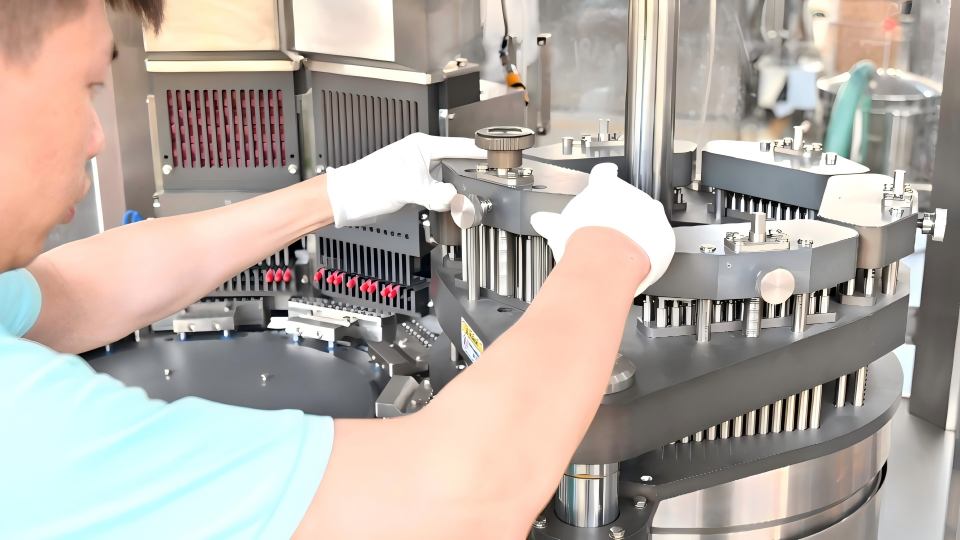
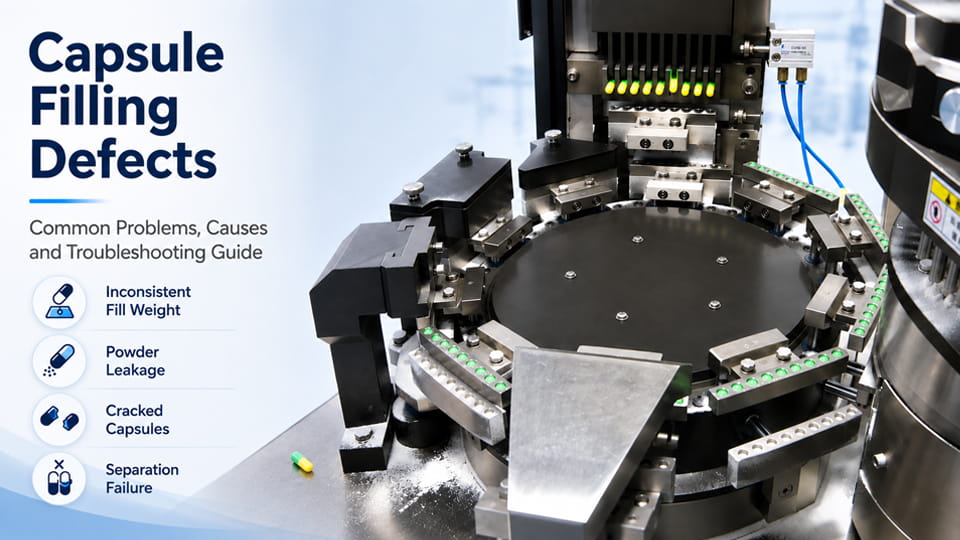
Sự thay đổi trọng lượng viên nang có thể xuất phát từ nhiều nguồn - dòng bột không nhất quán, vỏ viên nang sự khác biệt, hoặc cài đặt thiết bị. Khi việc kiểm tra trọng lượng trong quá trình của bạn bắt đầu hiển thị trọng lượng điền ngẫu nhiên hoặc sai lệch, đừng chỉnh máy ngay lập tức. Đầu tiên xác nhận những gì thực sự khác nhau (tổng so với trọng lượng tịnh, mô hình trạm), sau đó làm theo trình tự khắc phục sự cố hợp lý. Hướng dẫn này hiển thị quy trình chẩn đoán từng bước (Đo → Mẫu → Bột vs Vỏ vs Quy trình → Máy → Xác nhận) để xác định nguyên nhân gốc rễ, cùng với những lời khuyên hữu ích và danh sách kiểm tra.
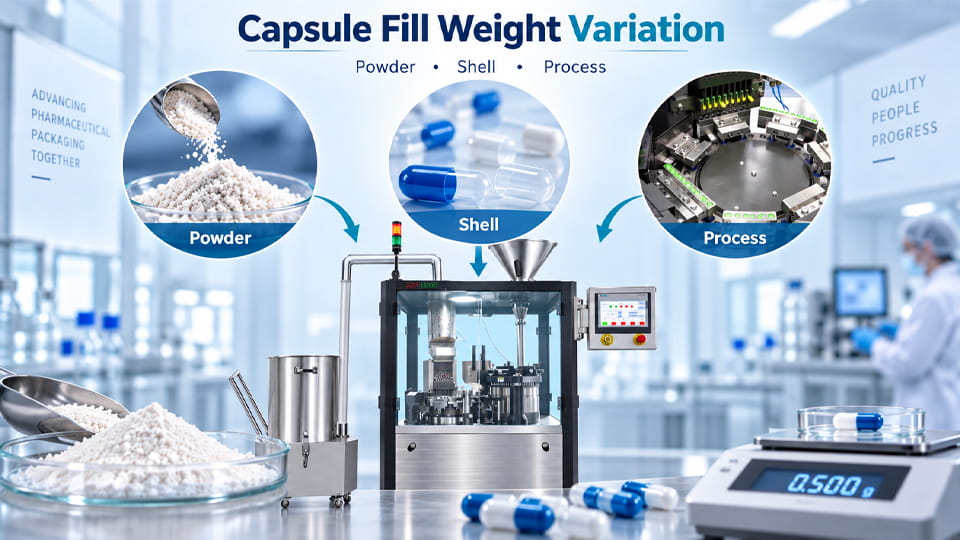
Sự thay đổi trọng lượng của viên nang đề cập đến sự khác biệt không mong muốn hoặc sự chênh lệch về trọng lượng tịnh của công thức được đóng thành từng viên nang trong cùng một lô. Nói cách khác, một số viên nang cuối cùng bị đổ đầy hoặc quá đầy so với liều mục tiêu. Kể từ khi liều chất làm đầy viên nang bằng âm lượng, không theo trọng lượng, ngay cả những thay đổi nhỏ về trạng thái vật liệu hoặc hoạt động của máy cũng có thể thay đổi khối lượng thực tế được đặt trong mỗi viên nang. Câu hỏi quan trọng không phải là “mỗi viên nang có thể nặng như nhau không?”?”, Nhưng “quy trình có thể giữ được sự khác biệt trong thông số kỹ thuật không”.
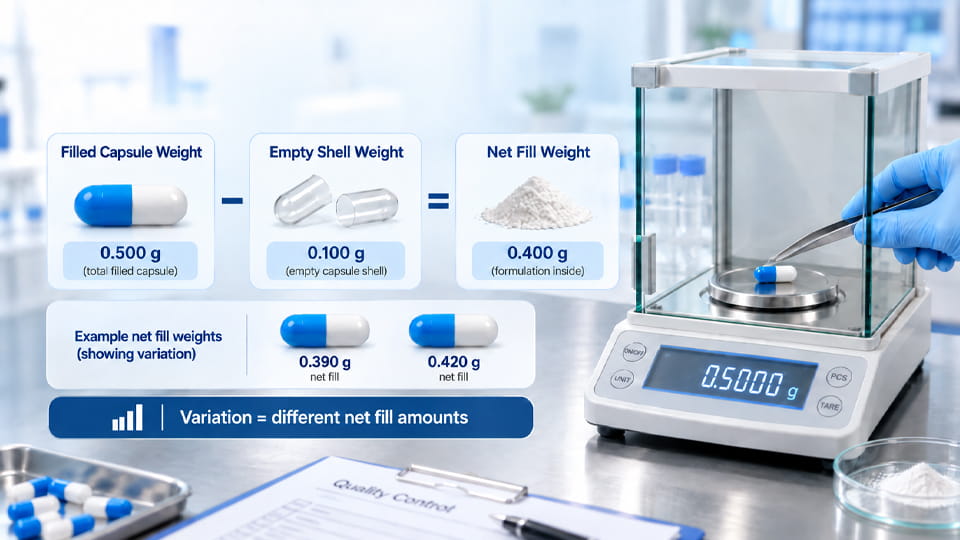
Theo định nghĩa, Sự thay đổi trọng lượng được đánh giá trên trọng lượng tịnh viên nang (hoạt chất + tá dược). Người vận hành thường đo tổng trọng lượng viên nang (vỏ bọc + đổ đầy) và trừ đi trọng lượng vỏ rỗng tiêu chuẩn (đẩy lùi). Lưu ý rằng bản thân vỏ rỗng có trọng lượng phân tán. Nếu trọng lượng vỏ thay đổi, những thay đổi về tổng trọng lượng có thể phản ánh sự khác biệt về vỏ, không định lượng bột. Trong thực tế, sử dụng trọng lượng vỏ trung bình sẽ gây ra sai lệch. Để có độ chính xác, luôn so sánh tổng trọng lượng cộng với bì:
Tổng trọng lượng viên nang = Vỏ + Đổ đầy.
Trọng lượng tịnh = Tổng – Trọng lượng vỏ rỗng.
Trong thực tế, theo dõi cả trọng lượng gộp và trọng lượng tịnh. Sự thay đổi trọng lượng từ vỏ đến vỏ có thể “che giấu” nguồn cấp bột ổn định hoặc phóng đại sự trôi dạt rõ ràng. Một quy trình được kiểm soát tốt sẽ giữ lấp đầy mạng riêng lẻ tập trung chặt chẽ xung quanh mục tiêu, ngay cả khi viên nang khác nhau một chút về trọng lượng vỏ.
Sự thay đổi trọng lượng viên nang chủ yếu là do kiểm soát quá trình vấn đề. Nó cho thấy liệu hệ thống định lượng (đĩa xáo trộn, máy phân phối, vân vân.) đang cung cấp một lượng bột có thể lặp lại. Tính đồng nhất về nội dung (xét nghiệm) và sự đồng nhất trong pha trộn là những vấn đề riêng biệt. Nói cách khác, sự phân bổ trọng lượng chặt chẽ chỉ chứng tỏ tính nhất quán về thể tích - nó không đảm bảo tính đồng nhất về mặt hóa học. Tuy nhiên, kiểm soát sự thay đổi trọng lượng (và xu hướng của nó) là rất quan trọng để đáp ứng các thông số kỹ thuật của liều thành phẩm.
Lưu ý rằng sự thay đổi trọng lượng (dựa trên khối lượng) và tính đồng nhất về nội dung (Xét nghiệm API) là những bài kiểm tra chất lượng khác nhau. USP <905> chỉ cho phép sử dụng sự thay đổi trọng lượng cho viên nang cứng nếu thuốc ít nhất 25 mg và ≥25% trọng lượng viên nang. Nếu không thì, viên nang phải đáp ứng yêu cầu về tính đồng nhất của nội dung (xét nghiệm từng đơn vị). Kiểm tra trọng lượng thực hiện trong quá trình là một công cụ kiểm soát quy trình, nhưng việc tuân thủ sản phẩm cuối cùng phụ thuộc vào phương pháp USP hiện hành.
Một cách tốt để phát hiện nguyên nhân thực sự của sự thay đổi trọng lượng là để so sánh xu hướng trọng lượng tổng và trọng lượng tịnh. Các công thức là:
| Thời hạn trọng lượng | Sự định nghĩa | Sử dụng điển hình |
|---|---|---|
| Tổng trọng lượng viên nang | viên nang đầy (vỏ bọc + nội dung) | Kiểm tra IPC nhanh; bao gồm khối lượng vỏ |
| Trọng lượng vỏ rỗng | Trọng lượng của thân viên nang + nắp | Đánh giá nhà cung cấp/thông số kỹ thuật viên nang |
| Trọng lượng tịnh | Chỉ dùng liều lượng bột (thô - vỏ) | Điều chỉnh máy & QC cuối cùng về tính đồng nhất của khối lượng chiết rót |
Mỗi vỏ viên nang tự nhiên có một số thay đổi về trọng lượng. Nếu vỏ của bạn có mức trung bình là ±5 mg, và liều lượng bột là 500 mg, sau đó chuyển sang shell 10 mg nặng hơn sẽ làm cho tổng trọng lượng có vẻ +10 mg, ngay cả khi phần điền giống hệt nhau. Sự thay đổi “sai” này xảy ra bởi vì chúng ta thường trừ đi giá trị bì cố định. Trong thực tế, việc hiệu chỉnh trọng lượng vỏ riêng lẻ cho thấy trọng lượng lấp đầy thực tế không thay đổi.
Điểm mấu chốt: Nếu tổng trọng lượng trôi đi nhưng trọng lượng điền ròng giữ phẳng, đo lượng bột là tốt. Sự thay đổi có thể đến từ sự thay đổi trọng lượng vỏ viên nang. Nếu cả tổng và ròng di chuyển cùng nhau, nghi ngờ quá trình điền hoặc công thức. Luôn kiểm tra riêng biệt một tập hợp trọng lượng vỏ rỗng. Ví dụ, nếu trọng lượng tổng thể của viên nang đột ngột tăng hoặc giảm khi giới thiệu một lô vỏ mới, thủ phạm có thể là Shell, không phải thiết bị làm đầy viên nang.
Công thức:
Trọng lượng tịnh (mg) ≈ Khối lượng định lượng (mL) × (Mật độ khối bột, g/mL) × 1000 – trọng lượng chất kết dính/chất hấp thụ.
Bởi vì chất độn thường đo âm lượng, thậm chí một sự thay đổi mật độ nhỏ (do bột mẻ hoặc bị ẩm) làm thay đổi khối lượng.

Khi phát hiện biến thể, theo dõi một quy trình làm việc có hệ thống thay vì điều chỉnh vội vàng. Các bước là:
Một sự đơn giản hóa sơ đồ cây quyết định minh họa cách tiếp cận này:
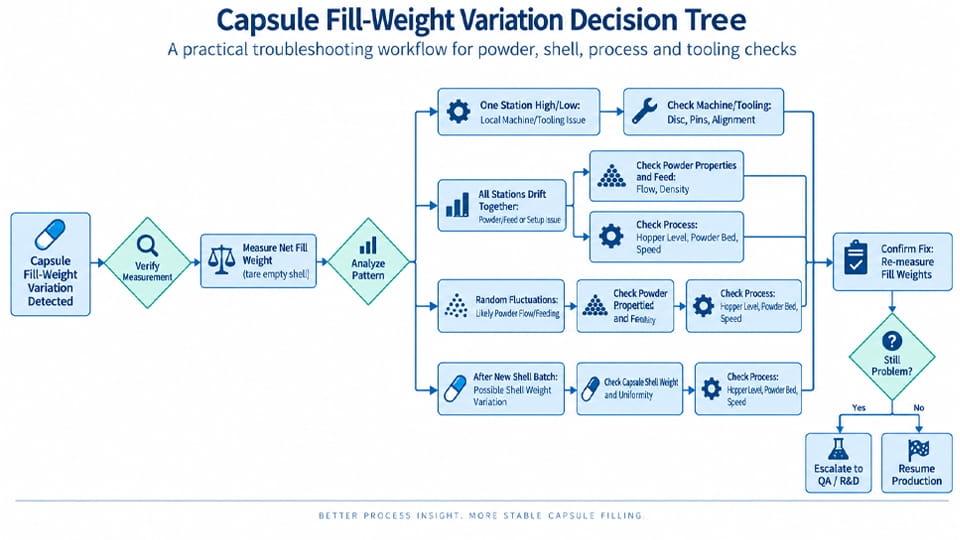
Mỗi nút đại diện cho một đầu mối. Ví dụ, nếu như tổng trọng lượng thay đổi nhưng tỷ trọng ròng ổn định, ngay lập tức kiểm tra sự thay đổi trọng lượng vỏ. Nếu như sự biến đổi tăng với tốc độ nhanh hơn, nghi ngờ vấn đề về ăn uống hoặc thời gian dừng. Mục tiêu là thu hẹp loại nguyên nhân có thể xảy ra (bột vs vỏ vs máy) trước khi đi sâu vào chi tiết.
Đối với hầu hết các quy trình viên nang chứa đầy bột, các công thức bột là nguồn biến đổi trọng lượng lấp đầy phổ biến nhất. Khắc phục sự cố bột bằng cách kiểm tra:
Trong thực tế, bắt đầu bằng sàng lọc sự pha trộn để loại bỏ các chất kết tụ lớn, kiểm tra xem lưu lượng có cải thiện không. Lắc nhẹ hoặc máy đo lưu biến bột cầm tay có thể cho biết liệu vật liệu có xu hướng kết nối hay không. Hãy nhớ rằng những thay đổi nhỏ (±5% ở mật độ khối) có thể tạo ra sự thay đổi ±5% hoặc nhiều hơn về trọng lượng lấp đầy. Khắc phục sự cố về dòng chảy (bằng cách thêm chất lượn, hút ẩm, hoặc chuyển đổi loại trung chuyển) có thể loại bỏ hoàn toàn sự biến đổi.
Nếu bột có vẻ nhất quán, tự kiểm tra các viên nang:
Nếu sự thay đổi trọng lượng vỏ rỗng là thủ phạm, giải pháp là thắt chặt các thông số kỹ thuật của vỏ hoặc sử dụng các phép đo bì riêng lẻ. Trong thời gian ngắn, tập trung vào trọng lượng lấp đầy lưới (trừ đi trọng lượng của mỗi vỏ) để xem liệu chất bột có thực sự khác nhau không. Một kịch bản để xem: tổng trọng lượng trôi nhưng ròng ổn định có nghĩa là đạn nghi ngờ.
Sau khi loại trừ các vấn đề lớn về bột hoặc vỏ, nhìn vào quá trình làm đầy viên nang. Các điểm kiểm tra chính bao gồm:
Một điều chỉnh nhỏ duy nhất (thích nén chân hơn một chút, hoặc làm chậm quá trình quay) thường không giải quyết được vấn đề do bột gây ra. Đầu tiên hãy tập trung vào các yếu tố làm thay đổi khối lượng đi vào khoang, chẳng hạn như hình dạng thức ăn và chiều cao giường. Các giải pháp ở đây (một khi bạn xác nhận nguyên nhân của quá trình) thường liên quan đến việc điều chỉnh hoặc thay thế các bộ phận máy.

Thường, mô hình về trọng số thay đổi như thế nào sẽ cho bạn biết nơi cần tìm đầu tiên. Dưới đây là một số tình huống phổ biến (“mẫu”) và đề xuất kiểm tra:
Bàn: Các mô hình biến đổi so với nguyên nhân có thể xảy ra (ví dụ phổ biến):
| Quan sát | Các vấn đề về bột/vật liệu có thể xảy ra | Các vấn đề về máy/quy trình có thể xảy ra |
| Tất cả các trạm theo dõi cao hay thấp cùng nhau | Dòng chảy kém (bắc cầu), thay đổi mật độ khối, nạp phễu không đều | Thiết lập chung (ví dụ. mục tiêu liều lượng quá cao/thấp), thay đổi công cụ thống nhất |
| Một trạm liên tục bị thiếu/tràn | khó xảy ra | Độ mòn chốt/đĩa định lượng, con dấu bị kẹt, bộ phận thay đổi sai ở trạm đó |
| Trọng lượng trôi dần (lên/xuống) | Sự phân chia trong bột, thay đổi cấp độ phễu, hiệu ứng độ ẩm | Tỷ lệ cho ăn thay đổi, khuấy phễu không đủ |
| Bước thay đổi sau khi khởi động lại | Trình tự lắng bột hoặc nạp lại bột | Vấn đề khởi động nóng, trình tự van, cấp lại không đầy đủ |
| Chỉ biến đổi sau lô bột mới | Sự thay đổi bột theo từng đợt (Tỉ trọng, chảy) | |
| Chỉ thay đổi sau lô viên nang mới | Chênh lệch trọng lượng/kích thước vỏ | |
| Biến đổi lớn hơn ở tốc độ cao (nhưng ổn định chậm) | Vượt quá giới hạn cấp liệu hoặc lưu lượng ở tốc độ | Thời gian định lượng, điền không đầy đủ ở tốc độ |
| Cầu bột hoặc lỗ chuột trong phễu | Vấn đề về bột (dòng chảy kém) |
Sử dụng những manh mối này như một “bộ ba” để ưu tiên kiểm tra. Ví dụ, nếu biến thể chỉ xuất hiện sau khi hỗn hợp bột mới được nạp, sự khác biệt của bột được chỉ định. Nếu nó tăng tốc với tốc độ, nghi ngờ cho ăn cơ khí. Nếu chỉ có một vòng định lượng bị tắt, nghi ngờ mài mòn/căn chỉnh dụng cụ. Xem nhanh biểu đồ cân nặng (viên nang # so với cân nặng) thường chỉ ra vấn đề là do bột hay do máy.
Dưới đây là sự cô đọng danh sách kiểm tra để đảm bảo không có yếu tố nào bị bỏ qua. Kiểm tra các hộp khi bạn đi:
Để làm rõ nghi ngờ điều gì đầu tiên, hãy xem xét bảng quan sát chung nhanh này:
| Quan sát | Có khả năng là bột/vỏ? | Máy/Quy trình có khả năng? |
| Sự biến đổi bắt đầu ngay sau lô bột mới | ✔ Bột (mật độ lô/thay đổi dòng chảy) | |
| Sự biến đổi bắt đầu sau lô vỏ mới | ✔ Vỏ (thay đổi trọng lượng rỗng) | |
| Một trạm (hoặc túi) liên tục tắt | ✔ Máy móc/dụng cụ (vấn đề về pin/đĩa) | |
| Tất cả các trạm phân tán ngẫu nhiên cao/thấp | ✔ Bột (dòng chảy/nguồn cấp dữ liệu) | |
| Sự biến đổi chỉ xuất hiện ở tốc độ sản xuất (ổn định chậm) | ✔ Quy trình (tỷ lệ cho ăn, thời gian) | |
| Sự thay đổi tăng lên khi phễu rỗng | ✔ Bột (bắc cầu) | ✔ Hệ thống cấp liệu (trì hoãn) |
| Hoán đổi đĩa/pin định lượng khắc phục sự cố | ✔ Máy/dụng cụ (đĩa sai, mặc) | |
| Bột chảy kém trên máy này nhưng tốt trên máy khác | ✔ | ✔ Có thể là máy (người khuấy động, lái xe) |
| Cùng một máy chạy một loại bột mịn khác nhau | ✔ Bột (cụ thể về vật chất) |
Hoàn thành kiểm tra có cấu trúc trước khi gọi dịch vụ có thể tiết kiệm hàng giờ. Nếu sau tất cả những điều trên mà vấn đề vẫn còn, sau đó cẩn thận điều chỉnh cài đặt máy: Ví dụ, tăng độ sâu chốt đầm hoặc lực nén chỉ sau khi xác minh độ ổn định của bột/vỏ. Nhớ, Việc giấu một loại bột không ổn định bằng lực mạnh hơn có thể che giấu vấn đề nhưng sẽ không khắc phục được vấn đề về lâu dài.
Việc sửa chữa dài hạn thường liên quan đến điều khiển ngược dòng:
Bằng cách kết hợp kiểm soát vật liệu tốt hơn và lựa chọn thiết bị thông minh, nhiều nhà sản xuất đạt được mức chênh lệch trọng lượng ±2–3% hoặc cao hơn.
Một sai lầm phổ biến là đổ lỗi cho máy trước. Dưới đây là một số quy tắc chung:
Tóm lại: Đừng vội thay đổi độ sâu của chốt định lượng, đột quỵ, hoặc tốc độ cho đến khi bạn chắc chắn rằng bột không phải là vấn đề thực sự. Nếu các vấn đề do bột gây ra không được giải quyết, một máy “cố định” sẽ chỉ ẩn triệu chứng trong các điều kiện khác nhau. Ví dụ, nếu mật độ khối hỗn hợp thấp hơn dự kiến, buộc máy không ổn định chiết rót ở mẻ tiếp theo. Luôn giải quyết vấn đề vật chất trước tiên, sau đó tinh chỉnh máy.
Nếu bạn đang mua một máy mới hoặc nâng cấp, hãy nhớ rằng không có chiếc máy nào thực sự “phổ quát”. các máy tốt nhất là người đã được chứng minh là có tác dụng với công thức của bạn. Các yếu tố chính cần xem xét:

Nhớ: chất làm đầy mới sáng bóng sẽ không tự động khắc phục sự thay đổi trọng lượng nếu công thức không được giải quyết. ROI tốt nhất đến từ sự kết hợp phù hợp giữa bột và thiết bị.
Sự thay đổi trọng lượng của viên nang là một vấn đề phức tạp với nhiều nguyên nhân tiềm ẩn. Cách tiếp cận hiệu quả là một cơ cấu trình tự khắc phục sự cố: xác nhận sự khác biệt, giải thích mô hình, sau đó kiểm tra bột, vỏ bọc, và máy móc một cách có hệ thống. Như các chuyên gia lưu ý, tính nhất quán đòi hỏi cả công thức ổn định và máy được điều chỉnh tốt.
Tóm lại:
Nếu bạn vẫn thấy biến thể không được kiểm soát sau tất cả những lần kiểm tra này, có lẽ đã đến lúc tham khảo ý kiến của nhà cung cấp máy móc dược phẩm của bạn. Các nhà sản xuất thích Đóng gói Jinlu cung cấp các thử nghiệm làm đầy viên nang để xác minh rằng một máy nhất định sẽ xử lý các yêu cầu về bột và trọng lượng làm đầy chính xác của bạn. Bằng cách tập trung vào nguyên nhân gốc rễ trước khi chỉnh sửa máy, bạn sẽ tiết kiệm thời gian và đảm bảo hoạt động mạnh mẽ, quá trình làm đầy tái sản xuất.
Các bước tiếp theo: Sử dụng danh sách kiểm tra và cây quyết định ở trên để chẩn đoán vấn đề của bạn. Nếu bạn cần lời khuyên về việc lựa chọn hoặc cấu hình máy làm viên nang, Các kỹ sư của Jinlu Packing có thể giúp đánh giá công thức và trọng lượng chiết rót mục tiêu của bạn để đề xuất giải pháp phù hợp nhất. Có thể đạt được trọng lượng viên nang ổn định nhờ sự kết hợp đúng đắn của kiểm soát vật liệu Và cấu hình máy.
Tìm hiểu thêm về cách khắc phục sự cố khi đổ đầy viên nang trên Jinlu's Hướng dẫn về khuyết điểm làm đầy viên nang, hoặc khám phá của chúng tôi Máy làm đầy viên nang tự động cho sản xuất tốc độ cao.
Sự thay đổi trọng lượng của viên nang có thể do dòng bột không nhất quán gây ra, thay đổi về mật độ khối hoặc độ ẩm, tách bột, cho ăn bột không ổn định, cài đặt liều lượng không chính xác, tốc độ máy, hoặc các bộ phận làm đầy bị mòn. Điểm khởi đầu tốt nhất là xác định mẫu biến thể trước khi thay đổi cài đặt máy. Nghiên cứu đã chỉ ra mối quan hệ giữa đặc tính dòng bột và sự thay đổi trọng lượng viên nang.
Trọng lượng viên nang có thể thay đổi khi bột chảy, mật độ lớp bột, điều kiện cho ăn, hoặc các thông số định lượng thay đổi trong quá trình sản xuất. Sự trôi dạt dần dần, biến thể ngẫu nhiên, hoặc sự khác biệt theo từng trạm cụ thể có thể chỉ ra những nguyên nhân khác nhau, vì vậy việc xem xét xu hướng cân nặng sẽ hữu ích hơn việc chỉ nhìn vào cân nặng trung bình.
Bột là bước kiểm tra quan trọng đầu tiên, đặc biệt là khi công thức hoặc lô nguyên liệu đã thay đổi. Xem lại khả năng lưu chuyển, mật độ lớn, độ ẩm, đặc tính hạt, sự phân chia, và hoạt động của lớp bột trước khi thực hiện các điều chỉnh lớn về máy. Tuy nhiên, mẫu biến thể sẽ xác định thứ tự khắc phục sự cố thực tế.
Dòng bột kém hoặc không đồng đều có thể làm cho việc nạp bột và tạo lớp bột kém đồng đều hơn, có thể làm tăng sự thay đổi trọng lượng viên nang. Các nghiên cứu đã tìm thấy mối quan hệ giữa tính chất dòng bột, mật độ bột và hiệu suất làm đầy viên nang.
Đúng. Mật độ khối ảnh hưởng đến lượng bột chiếm một khối lượng định lượng hoặc khối lượng viên nang nhất định. Nếu mật độ bột thay đổi giữa các lô hoặc trong quá trình chế biến, cùng điều kiện định lượng có thể tạo ra trọng lượng nạp khác nhau. Do đó mật độ khối là một thuộc tính vật liệu quan trọng cần theo dõi khi nghiên cứu sự thay đổi trọng lượng lấp đầy.
So sánh tổng trọng lượng của viên nang chứa đầy với trọng lượng tịnh của viên nang sau khi tính trọng lượng vỏ rỗng. Nếu tổng trọng lượng viên thay đổi trong khi trọng lượng tịnh vẫn tương đối ổn định, trọng lượng vỏ viên nang hoặc sự biến đổi của vỏ có thể góp phần vào kết quả. Quy trình USP dành cho viên nang vỏ cứng đặc biệt sử dụng trọng lượng vỏ rỗng riêng lẻ để tính toán hàm lượng viên nang thực khi được yêu cầu.
Tổng trọng lượng viên nang là trọng lượng của viên nang chứa đầy hoàn chỉnh, bao gồm cả vỏ và nội dung. Trọng lượng tịnh chỉ là trọng lượng của nội dung:
Trọng lượng tịnh = Tổng trọng lượng viên nang - Trọng lượng vỏ viên nang rỗng.
Sự khác biệt này rất quan trọng vì sự thay đổi về trọng lượng vỏ có thể ảnh hưởng đến tổng trọng lượng mà không cho thấy có vấn đề gì với quá trình định lượng bột..
Đúng. Cài đặt liều lượng, điều kiện giường bột, hình học dụng cụ, các bộ phận đầm nén hoặc định lượng, ổn định cho ăn, căn chỉnh và mài mòn cơ học đều có thể ảnh hưởng đến tính nhất quán của chất làm đầy. Tuy nhiên, cài đặt máy không nên tự động bị đổ lỗi; đặc tính vật liệu và điều kiện quy trình cũng có thể là những tác nhân chính.
Nó có thể, nhưng hiệu quả phụ thuộc vào công thức và hệ thống làm đầy. Những thay đổi về tốc độ có thể làm thay đổi việc cho ăn bột, điều kiện lắng hoặc định lượng, nhưng tốc độ không phải lúc nào cũng là nguyên nhân chính. Vì lý do này, so sánh sự thay đổi trọng lượng ở các điều kiện vận hành được kiểm soát thay vì cho rằng tốc độ cao hơn sẽ tự động gây ra độ chính xác kém hơn.
Bắt đầu bằng việc ổn định tính chất bột và chất lượng vỏ viên nang, sau đó tối ưu hóa quy trình chiết rót và các thông số định lượng. Theo dõi lưu lượng bột, mật độ lớn, độ ẩm, điều kiện giường bột, cài đặt dụng cụ và máy móc. Đối với máy làm đầy viên nang mới, việc thử nghiệm công thức thực tế trong các điều kiện sản xuất đại diện có thể giúp xác nhận liệu thiết bị có thể đạt được độ đặc trọng lượng như yêu cầu hay không.
Tài liệu tham khảo:
1.Tính đồng nhất của đơn vị liều lượng —— USP <905>
2.Ảnh hưởng của đặc tính dòng bột đến độ đồng đều về trọng lượng của viên nang —— PubMed
3.Khả năng chảy của bột như một dấu hiệu cho thấy hiệu suất làm đầy viên nang —— Khoa họcTrực tiếp
4.Nghiên cứu dòng bột III: độ bền kéo, tỷ lệ hợp nhất, tốc độ dòng chảy, và mối quan hệ biến đổi trọng lượng viên nang —— PubMed
5.Ảnh hưởng của các thuộc tính vật liệu đến trọng lượng viên nang và sự thay đổi trọng lượng trong máy phun định lượng —— PubMed
6.Ảnh hưởng của thành phần vỏ nang đến các chỉ tiêu hoạt động của viên nang hypromellose so với viên nang gelatin cứng —— PubMed