
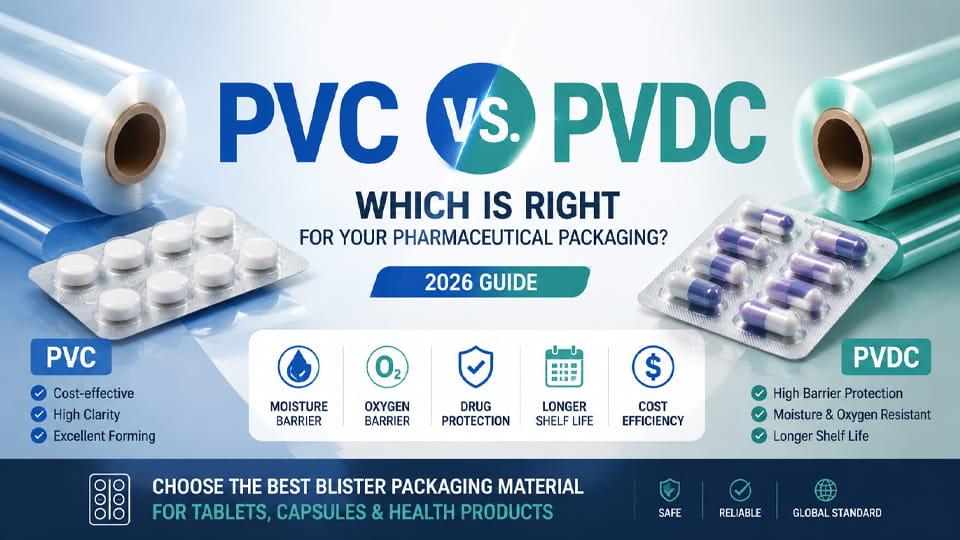
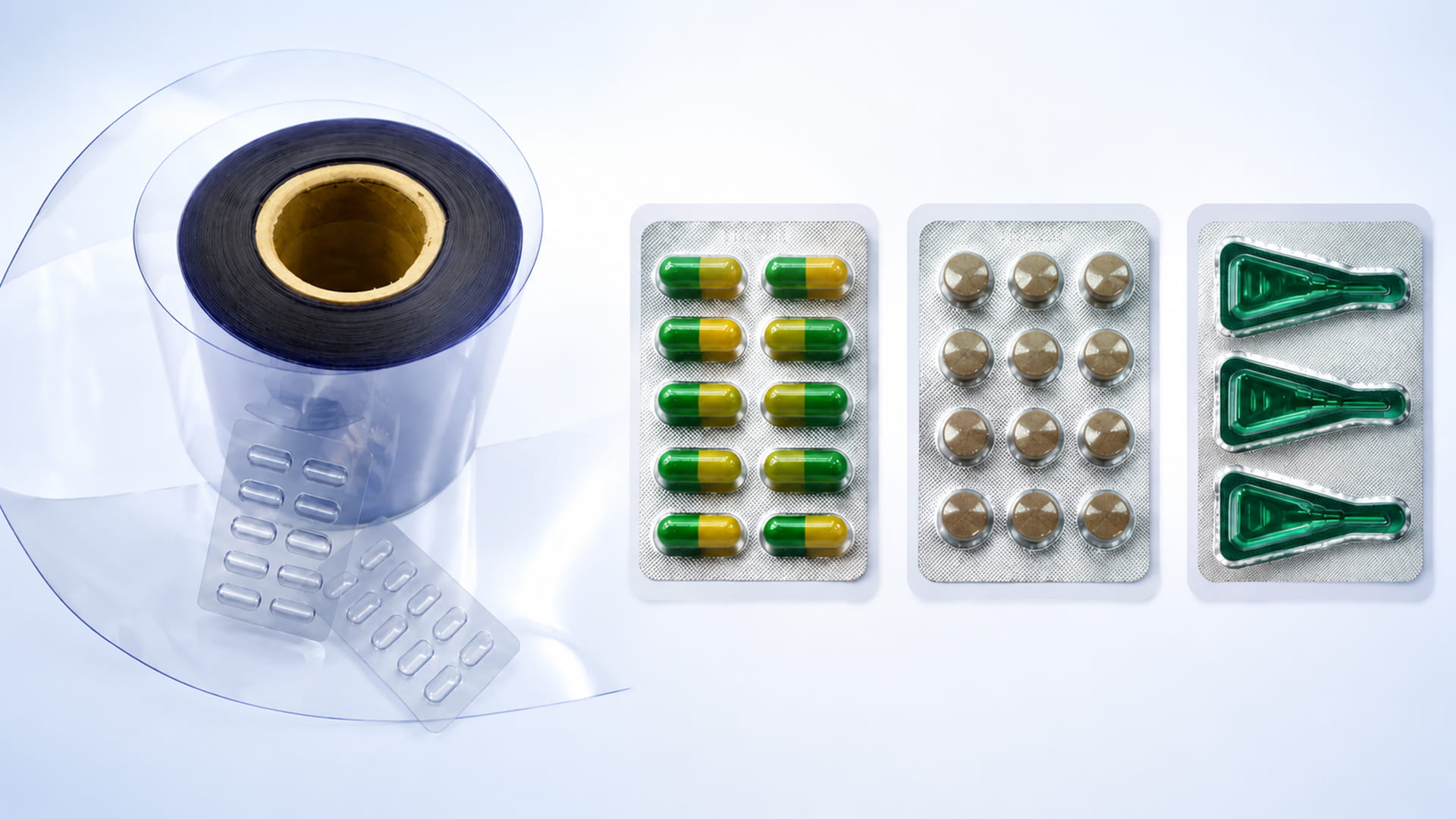
บรรจุภัณฑ์พุพองยา (E.G. แท็บเล็ตและแคปซูล) มักใช้ฟิล์มใส PVC หรือ PVC/PVDC ปิดผนึกด้วยฟอยล์. การเลือกสิ่งที่ถูกต้อง ฟิล์มพุพอง คือการตัดสินใจครั้งใหญ่สำหรับผู้ผลิตยา. PVC และ PVDC อาจมีลักษณะเหมือนกัน, แต่มีคุณสมบัติกั้นความชื้นและออกซิเจน, อายุการเก็บรักษา, ต้นทุนและความต้องการในการประมวลผลแตกต่างกันมาก. หากคุณทำงานในการผลิตยาหรือจัดซื้อจัดจ้าง, คุณน่าจะถามแล้ว: PVC หรือ PVDC เป็นตัวเลือกที่ดีกว่าสำหรับเราหรือไม่ แพ็คตุ่มยา? คู่มือที่เป็นมิตรนี้จะเปรียบเทียบ PVC และ PVDC แบบตัวต่อตัวสำหรับบรรจุภัณฑ์ยา. เราจะอธิบายว่าแต่ละวัสดุคืออะไร, คุณสมบัติอุปสรรคและต้นทุนแตกต่างกันอย่างไร, และคำแนะนำการปฏิบัติในการเลือกฟิล์มพลาสติกที่เหมาะสม. โดยในตอนท้าย, คุณจะรู้ว่า PVC ธรรมดาหรือ PVC เคลือบ PVDC (บางครั้งเรียกว่า PVC/PVDC) เหมาะสมกับความต้องการของผลิตภัณฑ์ของคุณ หรือหากโซลูชันแบบไฮบริดเหมาะสมที่สุด.
พีวีซี (โพลีไวนิลคลอไรด์) เป็นที่ชัดเจน, พลาสติกยืดหยุ่น, ที่ วัสดุตุ่มที่พบบ่อยที่สุด สำหรับยาเม็ดและแคปซูล. ในแผลพุพองยา, “พีวีซี” หมายถึงเสมอ ไม่ใช่พลาสติก, พีวีซีแข็ง. ฟิล์ม PVC ทั่วไปมีความหนา 200–300μm (มักจะ250μm). มันทำหน้าที่เป็น ชั้นฐานที่ขึ้นรูปได้ ของพุพอง. ข้อดีหลักของพีวีซีคือ ต้นทุนต่ำและความง่ายในการเทอร์โมฟอร์ม. มันชัดเจน (ความโปร่งใสที่ดีเยี่ยม), ทนทาน, และขึ้นรูปอย่างรวดเร็วบนเส้นเทอร์โมฟอร์ม. ผู้ผลิตชื่นชอบ PVC สำหรับผลิตภัณฑ์ทั่วไป เช่น แท็บเล็ตที่จำหน่ายหน้าเคาน์เตอร์, วิตามินและยาชื่อสามัญที่เสถียร.
ฟิล์มพีวีซีตุ่มให้ โครงสร้างและการมองเห็นที่ดี. คุณสามารถดูและนับเม็ดยาผ่านซองได้, และผลักพวกมันออกไปอย่างง่ายดาย. พีวีซียังมีความเสถียรทางเคมีต่อหลายชนิด สารเพิ่มปริมาณ และได้รับการอนุมัติในตำรับยาแล้ว (ปริญญาเอก. ยูโร. และ USP) เพื่อติดต่อเรื่องยา. ในระยะสั้น: พีวีซีมีความน่าเชื่อถือ, “ม้าทำงาน” ฟิล์มพองสำหรับ คำนึงถึงต้นทุน, ผลิตภัณฑ์ที่ทนต่อความชื้น.
PVDC (โพลีไวนิลิดีนคลอไรด์) คือ พอลิเมอร์ที่มีอุปสรรคสูง มักใช้เป็นสารเคลือบบนฟิล์มพีวีซี. ฟิล์ม PVDC บริสุทธิ์ (ไม่เคลือบ) ขึ้นรูปด้วยความร้อนได้ยากด้วยตัวมันเอง, ดังนั้นในบรรจุภัณฑ์พลาสติกจึงปรากฏเป็นชั้นฟิล์มบางมาก (ในโครงสร้างดูเพล็กซ์หรือสามเท่า). ชั้น PVDC ประกอบด้วย มีคลอรีนมากขึ้นในโครงสร้างทางเคมี (CH₂CCl₂), ทำให้สามารถต้านทานความชื้นและออกซิเจนได้ดีเยี่ยม.
ในทางปฏิบัติ, พีวีซีเคลือบ PVDC เป็นมาตรฐานสำหรับบรรจุภัณฑ์พุพองที่มีอุปสรรคสูง. ตัวอย่างเช่น, ฟิล์มดูเพล็กซ์ทั่วไปคือ PVC 250μm พร้อมการเคลือบ PVDC 40–120gsm. PVDC ที่หนาขึ้น (แกรมที่สูงขึ้น) ให้ WVTR ต่ำกว่า (ต่ำเพียง 0.25 กรัม/ตร.ม./วัน) และ OTR ใกล้ศูนย์. การขึ้นรูปคล้ายกับ PVC มาก – คุณรันฟิล์มคอมโพสิตบนเทอร์โมฟอร์มเมอร์ – แต่คุณต้องควบคุมอุณหภูมิของเตาอบ เพื่อไม่ให้ชั้น PVDC แข็งตัวเร็วเกินไป.
โดยทั่วไปการเคลือบ PVDC จะใช้อิมัลชัน (น้ำตาม) การเคลือบ, ในหลายรอบ. มีเกรด PVDC "มาตรฐาน" และ "สิ่งกีดขวางขั้นสูง". เกรดที่มีอุปสรรคอย่างยิ่งให้ ความต้านทานต่อความชื้น/O₂ มากกว่าสองเท่าต่อกรัม ของการเคลือบ. โครงสร้างสุดท้ายทั่วไป ได้แก่:
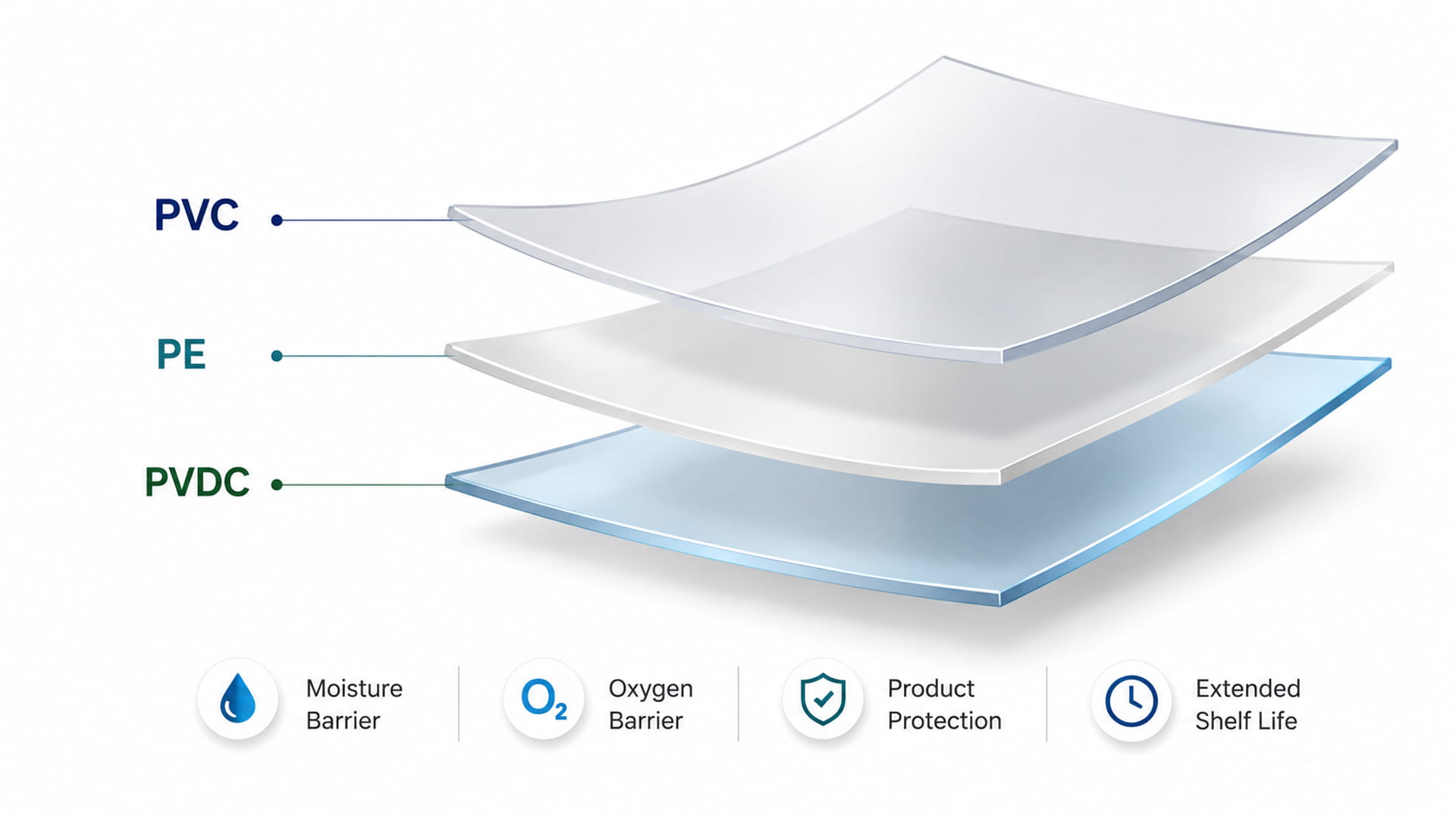
พูดง่ายๆ: PVC มีรูปร่างเป็นตุ่ม, ในขณะที่ PVDC ปิดผนึกอย่างแน่นหนา. บลิสเตอร์แพ็คทำจากพีวีซีธรรมดา (พร้อมแผ่นรองฟอยล์) มีความประหยัดและชัดเจน, แต่ให้ความคุ้มครองขั้นพื้นฐานเท่านั้น. บรรจุภัณฑ์ PVC/PVDC มีราคาสูงกว่าแต่จะทำให้ความชื้นและออกซิเจนไหลเข้าได้ช้าลงอย่างมาก, ปกป้องยาที่ละเอียดอ่อนได้นานขึ้น.
| คุณสมบัติ | พีวีซี (ไม่เคลือบ) | พีวีซี/พีวีดีซี (เคลือบ) |
| อุปสรรคความชื้น | ★★☆☆☆ (ปานกลาง) | ★★★★★ (สูง) |
| อุปสรรคออกซิเจน | ★★☆☆☆ (ต่ำ) | ★★★★★ (สูง) |
| ค่าใช้จ่าย | ต่ำ | ปานกลาง-สูง |
| ความชัดเจน (ความโปร่งใส) | ยอดเยี่ยม | ยอดเยี่ยม |
| อายุการเก็บรักษา (ในบรรจุภัณฑ์) | ปานกลาง (สั้นลง) | ยาว (ขยาย) |
| ความง่ายดายในการเทอร์โมฟอร์ม | ง่าย | ง่าย (พร้อมการตั้งค่าที่ปรับแล้ว) |
| ยาที่ละเอียดอ่อน (ความชื้น/O₂) | เลขที่ (ไม่เหมาะ) | ใช่ (ที่แนะนำ) |
| ตลาดส่งออก/เขตร้อน | ความเหมาะสมที่จำกัด | ความเหมาะสมดี |
| สินค้าทั่วไป | วิตามินโอทีซี, แท็บเล็ต | ยาที่ไวต่อความชื้น, การส่งออก |
โต๊ะ: เปรียบเทียบฟิล์มพุพอง PVC กับ PVC/PVDC. (★ = ระดับอุปสรรค, ดาวมากขึ้น = การป้องกันที่ดีขึ้น)
การเปรียบเทียบอย่างรวดเร็วนี้แสดงให้เห็นว่าเหตุใดจึงเลือก PVDC สำหรับการใช้งานที่ท้าทาย. PVC แบบไม่เคลือบก็ใช้งานได้ทั่วไป, แต่ PVC/PVDC ให้ การป้องกันที่ดีกว่ามาก.
การคุ้มครองยาเป็นเรื่องเกี่ยวกับ ประสิทธิภาพของสิ่งกีดขวาง. ความชื้นและออกซิเจนสามารถลดประสิทธิภาพของ API ได้, ส่งผลกระทบต่อความแรง, ทำให้เกิดการจับตัวเป็นก้อน, หรือกระตุ้นให้เกิดการเปลี่ยนแปลงทางเคมี. พีวีซีเพียงอย่างเดียวให้เท่านั้น การป้องกันปานกลาง: ที่ 38°C/90%RH, ฟิล์ม PVC มาตรฐาน 250μm เข้าไปได้ 3.0 ปริมาณน้ำ กรัม/ตรม./วัน. นั่นหมายความว่าความชื้นจำนวนมากสามารถซึมผ่านตุ่ม PVC ได้หากสัมผัสออก. ในทางตรงกันข้าม, เป็นฟิล์ม PVC/PVDC เคลือบอย่างดี (E.G. 250 ไมโครเมตร พีวีซี + 80 แกรม พีวีดีซี) อาจจะอนุญาตเท่านั้น 0.30 กรัม/ตรม./วัน (10×ความชื้นน้อยลง). เรื่องเดียวกันนี้มีไว้สำหรับออกซิเจน: OTR ของ PVC อยู่ที่ ~20 มล./ตร.ม./วัน, ในขณะที่ PVC/PVDC สามารถลดลงเหลือ ~0.1–1mL/m²/วัน.
ทำไมเรื่องนี้ถึงสำคัญ? WVTR/OTR ที่ต่ำกว่าหมายถึง อายุการเก็บรักษานานขึ้นและมีเสถียรภาพ. เป็นส่วนผสมที่ไวต่อความชื้น (เหมือนเม็ดฟู่หรือโปรไบโอติก) อาจเสียภายในเวลาเพียง 6-12 เดือนภายใน PVC, แต่ยังคงความคงที่ 2-3 ปีใน PVC/PVDC. ติดตามผู้ผลิตยา วว (อัตราการส่งผ่านไอน้ำ) และ โอทีอาร์ (อัตราการส่งออกซิเจน) เมื่อพัฒนาบรรจุภัณฑ์. ค่าที่ต่ำกว่าหมายความว่าฟิล์มเป็นอุปสรรคที่แข็งแกร่งกว่า.
ในระยะสั้น: ฟิล์มเคลือบ PVDC ปกป้องยาได้ดีกว่ามาก. หากผลิตภัณฑ์ของคุณไวต่อความชื้นหรือต้องการวันหมดอายุที่ยาวนาน, PVC/PVDC หรือฟิล์มกันซึมสูงอื่นๆ มักจะคุ้มค่ากับค่าใช้จ่ายเพิ่มเติม. พีวีซีเพียงอย่างเดียวถือเป็นการประนีประนอม – ไม่เป็นไรจนกว่าสภาพอากาศหรือข้อกำหนดด้านการเก็บรักษาในกรณีที่เลวร้ายที่สุดจะระบุไว้เป็นอย่างอื่น.
ใช้ฟิล์มพุพอง PVC ธรรมดาสำหรับ:
พีวีซีเป็นอุปกรณ์หลักสำหรับสิ่งของในชีวิตประจำวัน. คิด วิตามินซีแบบเม็ด ในร้านขายยาในเมือง, หรือ แอสไพริน ในสภาพอากาศฤดูหนาว. ผลิตภัณฑ์เหล่านี้ทนต่อความชื้นได้บางส่วนและไม่เน่าเสียเร็วหากบรรจุภัณฑ์รั่วเล็กน้อย. ตามแนวทางปฏิบัติที่ดีที่สุดของยา, ฟิล์มพีวีซีมาตรฐาน 250µm (อาร์พีวีซี) ใช้เมื่อ คุ้มค่าและง่ายดาย เป็นลำดับความสำคัญ.
ตัวอย่าง: บริษัทบรรจุภัณฑ์เม็ดวิตามินอาจเลือก PVC ขนาด 250µm ที่มีฝาปิดอลูมิเนียมฟอยล์. แท็บเล็ตมีอายุการเก็บรักษา 12 เดือนและจำหน่ายในตลาดท้องถิ่น. ต้นทุนต่ำและความชัดเจนของ PVC ทำให้เหมาะอย่างยิ่ง.
ใช้ฟิล์ม PVC/PVDC สำหรับ:
หากยาของคุณไม่สามารถทนต่อความชื้นหรือออกซิเจนได้, โดยทั่วไปต้องใช้ PVC/PVDC. เช่น, อัน ยาปฏิชีวนะในเด็ก มุ่งหน้าสู่ภูมิอากาศแบบเขตร้อนอาจจัดส่งจากสิงคโปร์ไปยังบราซิล. ใช้ PVC 250µm กับ PVDC 80–100gsm (ฟิล์ม "ดูเพล็กซ์") สามารถบรรลุ 12+ อายุการเก็บรักษาเดือน แม้ในสภาวะ 30°C/75%RH, ตามกรณีศึกษา.
ตัวอย่าง: เม็ดฟู่วิตามินซี (ซึ่งทำให้เกิดฟองในน้ำ) มีความไวต่อความชื้นอย่างมาก. ผู้ผลิตจะใช้ตุ่ม PVC/80gsm PVDC ขนาด 250µm เพื่อให้แน่ใจว่าแท็บเล็ตจะคงความแข็งแรงผ่านการจำหน่ายในเอเชีย. ต้นทุนฟิล์มที่สูงขึ้นนั้นสมเหตุสมผลด้วยการป้องกันความล้มเหลวของผลิตภัณฑ์.
นอกเหนือจาก PVC และ PVDC, วัสดุตุ่มอื่นๆ ได้แก่ อคลาร์® (พีซีทีเอฟอี) และ อลู-อลู (อลูมิเนียมแบบเย็น). นี่คือวิธีการเปรียบเทียบ:
| วัสดุ | ความแข็งแกร่งของสิ่งกีดขวาง | ระดับต้นทุน | การใช้งานทั่วไป |
| พีวีซี | ปานกลาง | $ | แท็บเล็ตมาตรฐาน, แคปซูล (ภายในประเทศ) |
| พีวีซี/พีวีดีซี | สูง | $$ | ยาที่ไวต่อความชื้น, การส่งออก |
| พีวีซี + อคลาร์® | สูงมาก | $$$$ | เทคโนโลยีชีวภาพพิเศษ, ยาระดับสูง |
| อลู-อลู | สูงสุด (ไม่มีแสง/ความชื้น) | $$$$$ | ฮอร์โมน, เนื้องอกวิทยา, ภูมิอากาศสุดขั้ว |
สำหรับการใช้ยาส่วนใหญ่, พีวีซี, PVC/PVDC และบางครั้ง PVC/Aclar® ก็เพียงพอแล้ว. Alu-Alu เป็นกลุ่มเฉพาะสำหรับ API ที่มีความไวสูงเป็นพิเศษ. (ดูตารางด้านบนของเราเพื่อการเปรียบเทียบอย่างรวดเร็ว) ในทางปฏิบัติ, PVC/PVDC เป็นตัวเลือกที่มีอุปสรรคสูงที่พบบ่อยที่สุด, สร้างความสมดุลระหว่างประสิทธิภาพและต้นทุน.
เมื่อประเมินวัสดุ, งบประมาณและความยั่งยืน มักจะมีน้ำหนักควบคู่ไปกับประสิทธิภาพ:
จริงๆ แล้วแผงบรรจุภัณฑ์ยาส่วนใหญ่ที่คุณเห็นทุกวันนั้นเป็นแบบนั้น พีวีซี/พีวีดีซี แทนที่จะเป็นพีวีซีบริสุทธิ์. เหตุผล: PVDC มอบสิ่งกีดขวางเพิ่มเติมโดยไม่กระทบต่อการมองเห็นและความสามารถในการขึ้นรูปของ PVC. ต่อไปนี้เป็นรูปแบบทั่วไปบางส่วน:
ในทางปฏิบัติ, ที่ ตุ่ม PVC / PVDC / Alu เป็นตัวช่วยสำคัญสำหรับยาเม็ดและแคปซูลจำนวนมากที่ต้องการอายุการเก็บรักษาที่ยาวนานขึ้น. หากถามว่า “อันไหนดีกว่ากัน, ตุ่ม PVC หรือ PVDC?-, โปรดจำไว้ว่ามันมักจะไม่ใช่อย่างใดอย่างหนึ่ง – มันคือชุดค่าผสมที่ชนะ.
ต่อไปนี้เป็นคำถามและคำตอบบางส่วนในการเลือกระหว่างฟิล์ม PVC และ PVDC ในยา:
ไม่ว่าคุณจะบรรจุยาเม็ดหรือแคปซูล, ตัวเลือกวัสดุทับซ้อนกัน. สถานการณ์ทั่วไป:
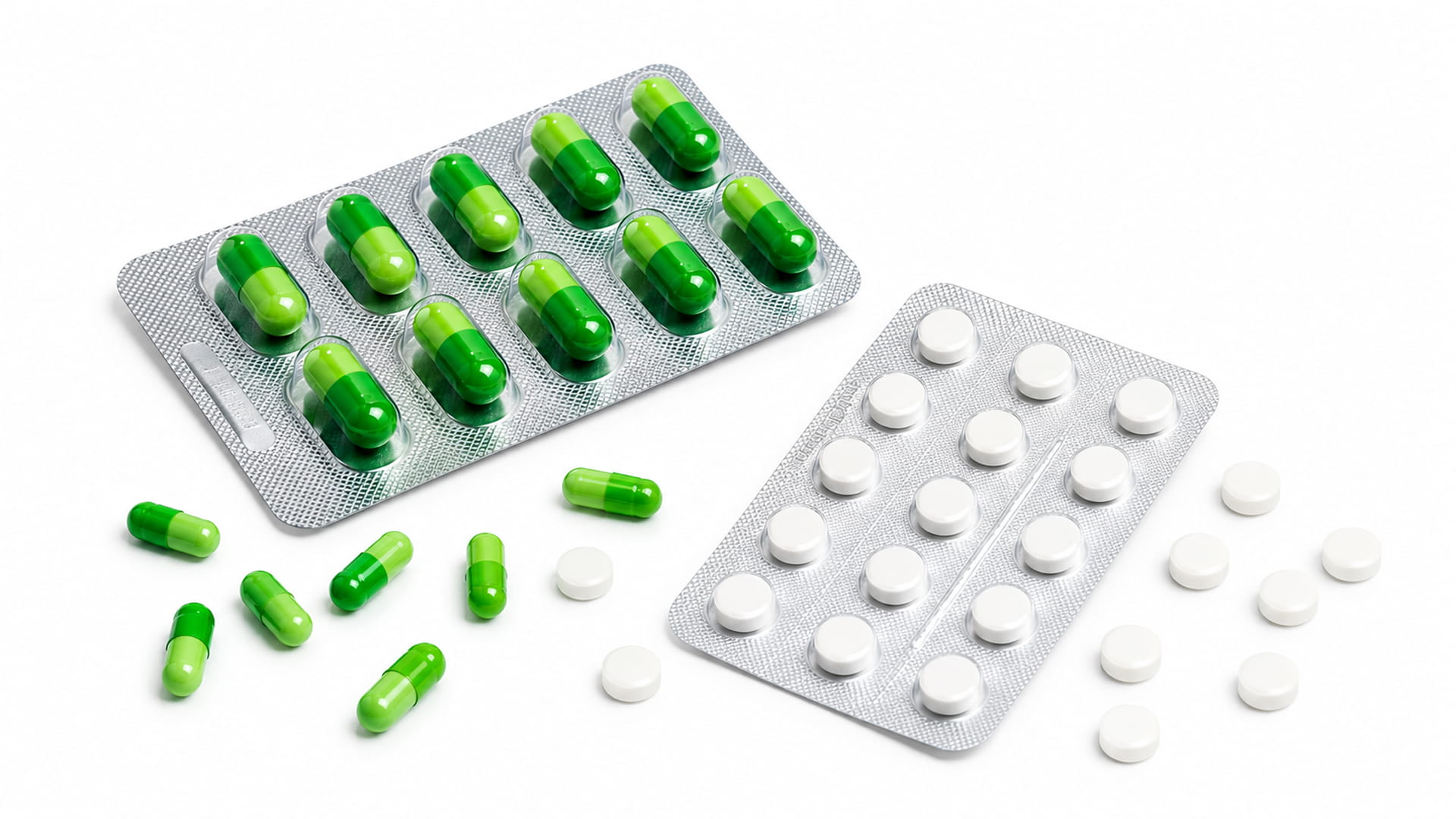
ในทั้งสองกรณี, ที่ รูปแบบหน่วย-ขนาดยา แยกแต่ละโดส, และช่องใสให้ผู้ใช้มองเห็นตัวยาได้. คุณอาจจะสงสัยเกี่ยวกับ เครื่องบรรจุหีบห่อ: เส้นที่ทันสมัยสามารถสร้างโพรงจากฟิล์ม PVC หรือ PVDC. ข้อแตกต่างที่สำคัญคือพีวีซีเคลือบ PVDC อาจต้องการการตั้งค่าความร้อนที่แตกต่างกันเล็กน้อยบนแม่พิมพ์เทอร์โมฟอร์ม. ศึกษาคู่มืออุปกรณ์ของคุณหรือผู้จำหน่ายของคุณเพื่อหมุนพารามิเตอร์ที่ถูกต้อง.
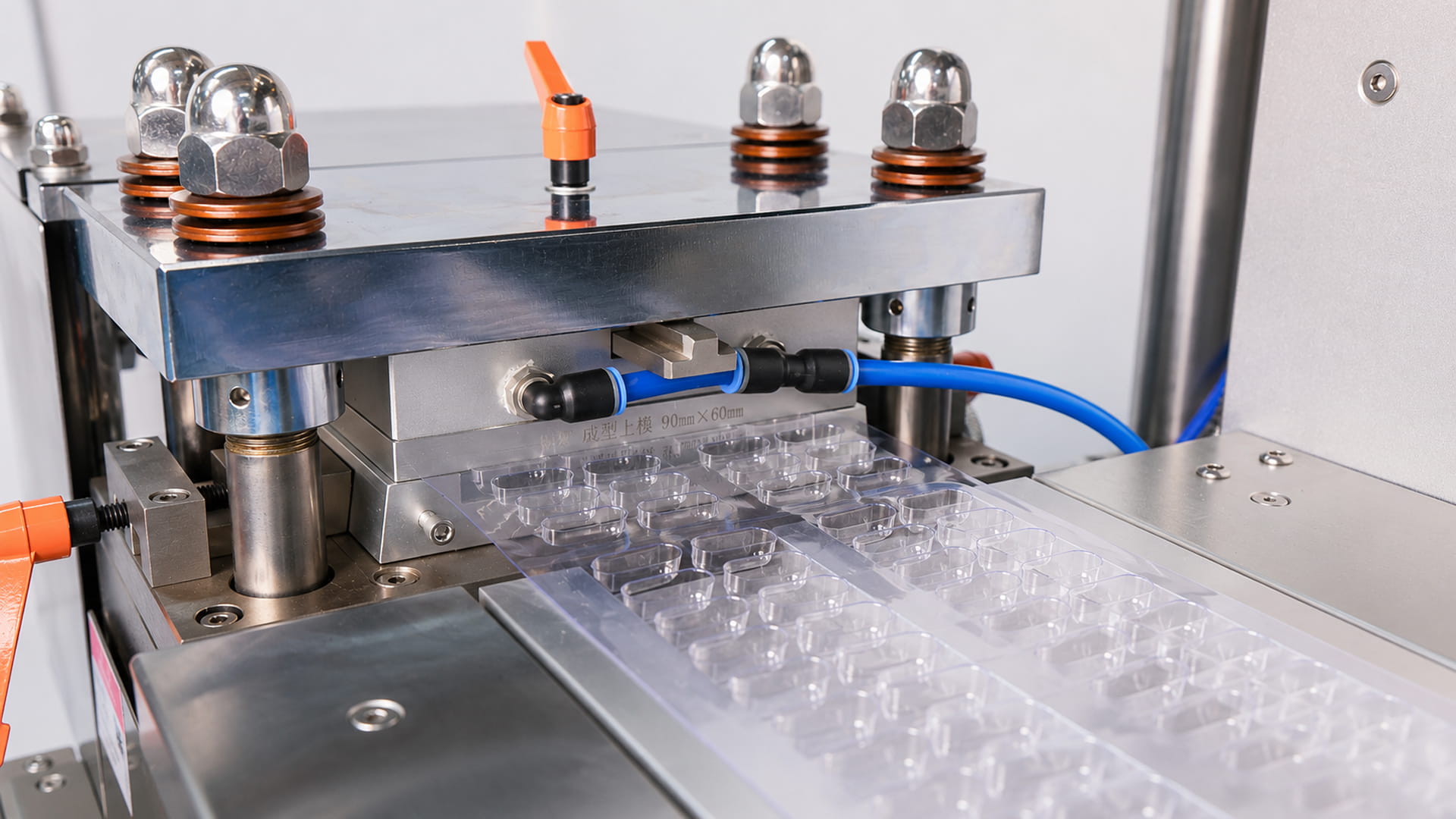
ใช่. เครื่องบรรจุภัณฑ์พุพอง โดยทั่วไปจะเข้ากันได้กับทั้งสองวัสดุ. คุณไม่จำเป็นต้องมีเครื่องจักรแยกสำหรับ PVC และ PVC/PVDC. อย่างไรก็ตาม, คุณ จำเป็นต้องปรับกระบวนการ:
เครื่องจักรที่ทันสมัย (เช่น JinLuPacking's ดีพีพี-160 หรือ DPP-270Max เทอร์โมฟอร์มเมอร์) ด้ามจับพีวีซี, PVC/PVDC และแม้แต่อะลูมิเนียมขึ้นรูปเย็น. ช่วยให้คุณสามารถสลับระหว่างฟิล์มต่างๆ ได้โดยการปรับโปรไฟล์อุณหภูมิและสร้างความลึก. ตัวอย่างเช่น, เมื่อใช้งาน PVC/PVDC, เทคโนโลยีอาจลดหลอดไฟเตาอบลงได้ 10-20% เมื่อเทียบกับพีวีซีธรรมดา. โดยรวม, การเปลี่ยนแปลงนั้นตรงไปตรงมาสำหรับผู้ปฏิบัติงานที่มีประสบการณ์.

เครื่องบรรจุภัณฑ์พลาสติกของ JinLuPacking ได้รับการออกแบบมาเพื่อใช้งานกับฟิล์มบรรจุภัณฑ์ยาหลักทั้งหมด - PVC, พีวีซี/พีวีดีซี, พีวีซี/พีอี/พีวีดีซี, อลูมิเนียม, แม้กระทั่งลามิเนตที่มีอุปสรรคสูง. การควบคุม PLC และระบบสูตรช่วยให้บันทึกพารามิเตอร์สำหรับฟิล์มแต่ละประเภทได้ง่าย. ในระยะสั้น, เครื่องเดียวสามารถเป็นโซลูชันแบบครบวงจรของคุณได้ ตราบใดที่คุณตั้งค่าอย่างถูกต้องสำหรับวัสดุ PVC และ PVDC.
การเลือกระหว่าง PVC และ PVDC ขึ้นอยู่กับความต้องการของผลิตภัณฑ์ของคุณ. ฟิล์มพีวีซีมี คุ้มค่าและชัดเจน, เหมาะสำหรับยาเม็ดและแคปซูลมาตรฐานหลายตัว. ส่งมอบฟิล์มเคลือบ PVDC สิ่งกีดขวางที่เหนือกว่า, ที่สำคัญต่อความชื้น- หรือยาที่ไวต่อออกซิเจนซึ่งต้องเก็บไว้นาน. ในทางปฏิบัติ, ที่ แนวทางไฮบริด PVC / PVDC มักจะชนะ: ใช้ความชัดเจนและความสามารถในการขึ้นรูปของ PVC ในขณะที่เพิ่มสิ่งกีดขวางของ PVDC ในจุดที่ต้องการ.
เมื่อมีข้อสงสัย, ประเมินปัจจัยต่างๆ เช่น ความเสถียรของยา, อายุการเก็บรักษาที่ต้องการ, งบประมาณ, และเป้าหมายความยั่งยืน. ตัวอย่างเช่น, ทางเลือกทั่วไปคือตุ่ม PVC/PVDC สำหรับส่งออกยา, และตุ่ม PVC-Alu ธรรมดาสำหรับท้องถิ่น, สินค้าระยะสั้น. คิดถึงเสมอ โหมดความล้มเหลว: หากผลิตภัณฑ์ของคุณสูญเสียประสิทธิภาพ 10% เร็วเกินไป, นั่นราคาเท่าไหร่? การประเมินความเสี่ยงนี้มักจะเป็นแนวทางว่าภาพยนตร์ที่มีอุปสรรคสูงกว่านั้นมีความสมเหตุสมผลหรือไม่.
พร้อมเพิ่มประสิทธิภาพบรรจุภัณฑ์ยาของคุณ? ติดต่อ JinluPacking สำหรับคำแนะนำจากผู้เชี่ยวชาญและโซลูชั่นการบรรจุตุ่มที่เหมาะสม. ทีมงานของเราสามารถช่วยคุณเลือกภาพยนตร์ในอุดมคติได้ (พีวีซี, PVDC, หรือคอมโพสิตขั้นสูง) และแนะนำการตั้งค่าเครื่องบรรจุภัณฑ์พุพองให้ตรงกัน. ไม่ว่าคุณจะต้องการตุ่มเม็ดยามาตรฐานหรือแคปซูลป้องกันเด็กโดยเฉพาะ, เราจะตรวจสอบให้แน่ใจว่าบรรจุภัณฑ์ของคุณช่วยให้ยาปลอดภัยและเป็นไปตามข้อกำหนด จนถึงที่สุด.
พีวีซี (โพลีไวนิลคลอไรด์) และพีวีดีซี (โพลิไวนิลิดีนคลอไรด์) เป็นวัสดุสองชนิดที่ใช้กันทั่วไปสำหรับบรรจุภัณฑ์พุพองยา. พีวีซีส่วนใหญ่จะใช้เป็นฟิล์มฐานเทอร์โมฟอร์มเนื่องจากมีความโปร่งใสที่ดีเยี่ยม, ขึ้นรูปง่าย, และต้นทุนต่ำ.
โดยปกติแล้ว PVDC จะถูกนำไปใช้เป็นชั้นเคลือบบนฟิล์ม PVC เพื่อปรับปรุงประสิทธิภาพการป้องกันความชื้นและออกซิเจน. เมื่อเทียบกับบรรจุภัณฑ์พุพอง PVC มาตรฐาน, ตุ่ม PVC/PVDC ให้การปกป้องยาที่ละเอียดอ่อนได้ดีขึ้น และช่วยยืดอายุการเก็บรักษา.
PVDC (โพลิไวนิลิดีนคลอไรด์) เป็นวัสดุโพลีเมอร์กั้นสูงที่ใช้กันอย่างแพร่หลายในการใช้งานบรรจุภัณฑ์ยาและอาหาร. มีความต้านทานต่อไอความชื้นและการส่งผ่านออกซิเจนได้ดีเยี่ยม, ทำให้เหมาะสำหรับการปกป้องผลิตภัณฑ์ที่ต้องการความเสถียรที่ดีขึ้น.
ในบรรจุภัณฑ์พุพองยา, โดยทั่วไปแล้ว PVDC จะถูกใช้เป็นชั้นเคลือบบนฟิล์มพีวีซี แทนที่จะเป็นวัสดุขึ้นรูปเดี่ยวๆ. การผสมผสานระหว่าง PVC/PVDC ทำให้เกิดฟิล์มพุพองที่มีการกั้นสูงพร้อมประสิทธิภาพการป้องกันยาที่ดีขึ้น.
ฟิล์ม PVC และ PVDC อาจแยกแยะได้ยากด้วยสายตา เนื่องจากวัสดุทั้งสองมักจะโปร่งใสและใช้ในโครงสร้างบรรจุภัณฑ์พุพองที่คล้ายกัน.
วิธีการระบุตัวตนหลัก ได้แก่:
• โครงสร้างวัสดุ: โดยปกติแล้ว PVC จะเป็นฟิล์มเทอร์โมฟอร์มฐาน, ในขณะที่ PVDC เป็นสารเคลือบบางๆ บน PVC.
• ประสิทธิภาพของสิ่งกีดขวาง: ฟิล์มเคลือบ PVDC ป้องกันความชื้นและออกซิเจนได้ดีกว่า PVC มาตรฐานอย่างมาก.
• ข้อกำหนดทางเทคนิค: ผู้ผลิตมักจะระบุวัสดุโดยใช้ป้ายโครงสร้าง เช่น PVC, พีวีซี/พีวีดีซี, หรือพีวีซี/พีอี/พีวีดีซี.
สำหรับการจัดซื้อและผลิตยา, การตรวจสอบเอกสารข้อกำหนดวัสดุของซัพพลายเออร์เป็นวิธีการที่น่าเชื่อถือที่สุด.
ในแง่ของความชื้นและอุปสรรคออกซิเจน, ใช่. PVDC (เป็นสารเคลือบ) ให้การกั้นที่สูงกว่า PVC ธรรมดามาก. แต่ PVDC มีราคาแพงกว่า, ดังนั้นจึง “ดีกว่า” เฉพาะในกรณีที่คุณต้องการการปกป้องเพิ่มเติมเท่านั้น. เพื่อความเรียบง่าย, ผลิตภัณฑ์ที่มีเสถียรภาพ, พีวีซีมักจะใช้ได้.
เรซิน PVDC มีต้นทุนในการผลิตมากขึ้น, และการทาเคลือบนั้นเป็นกระบวนการหลายขั้นตอน. คุณกำลังเพิ่มเนื้อหาพิเศษเป็นหลัก (การเคลือบ) และการประมวลผลเพิ่มเติม. ประสิทธิภาพที่เพิ่มขึ้นมาในราคานั้น.
ใช่. PVDC สามารถปรับปรุงอายุการเก็บรักษายาได้โดยลดการซึมผ่านของความชื้นและออกซิเจนเข้าไปในบรรจุภัณฑ์พุพอง.
ผลิตภัณฑ์ยามากมาย, รวมถึงแท็บเล็ตที่ไวต่อความชื้น, โปรไบโอติก, และผลิตภัณฑ์โภชนเภสัชบางชนิด, จำเป็นต้องมีบรรจุภัณฑ์กั้นที่แข็งแรงกว่า เนื่องจากความชื้นและออกซิเจนอาจส่งผลต่อคุณภาพและความเสถียรของผลิตภัณฑ์.
อย่างไรก็ตาม, อายุการเก็บรักษาจริงขึ้นอยู่กับสูตรยา, โครงสร้างบรรจุภัณฑ์, เงื่อนไขการจัดเก็บ, และผลการทดสอบความเสถียร.
PVC/PVDC และ PVC/PE/PVDC ต่างก็เป็นโครงสร้างบรรจุภัณฑ์พุพองที่มีอุปสรรคสูง.
พีวีซี/พีวีดีซี:
โครงสร้างดูเพล็กซ์มาตรฐานที่ใช้การเคลือบ PVDC บน PVC โดยตรง. ช่วยปกป้องความชื้นและออกซิเจนได้ดีขึ้น.
พีวีซี/พีอี/พีวีดีซี:
โครงสร้างสามเท่าที่เพิ่มชั้น PE ระหว่าง PVC และ PVDC. โครงสร้างนี้ช่วยเพิ่มความยืดหยุ่นและประสิทธิภาพการขึ้นรูป, โดยเฉพาะอย่างยิ่งสำหรับโพรงพุพองที่ลึกกว่า.
ทางเลือกที่ดีที่สุดขึ้นอยู่กับความต้องการของผลิตภัณฑ์, การออกแบบช่อง, และความสามารถของเครื่องบรรจุภัณฑ์.
เป็นฟิล์มพีวีซีที่มีชั้น PVDC บางด้านด้านหนึ่ง. พีวีซีให้การขึ้นรูปและความแข็งแรง; ชั้น PVDC ทำหน้าที่กั้นความชื้น/ออกซิเจน. รวมกันเป็นสองชั้น (ดูเพล็กซ์) หรือสามชั้น (สามเท่า) โครงสร้าง.
ใช่. เครื่องตุ่มที่ทันสมัย (เช่นโมเดลของ JinLuPacking) ได้รับการออกแบบสำหรับพีวีซี, PVC/PVDC และฟิล์มที่ขึ้นรูปด้วยความร้อนอื่นๆ. คุณเพียงแค่เลือกการตั้งค่าที่เหมาะสม. สิ่งสำคัญคือการควบคุมอุณหภูมิเตาอบและสร้างพารามิเตอร์สำหรับฟิล์มเฉพาะ.
สำหรับตลาดส่งออกร้อน/ชื้น, พีวีซี/พีวีดีซี (หรือแม้แต่ PVC/Aclar หรือ Alu-Alu) ขอแนะนำ. พีวีซีเพียงอย่างเดียวมักจะใช้ไม่ได้ผลในภูมิอากาศเขตร้อน.
อ้างอิง:
1.ระบบปิดภาชนะสำหรับบรรจุภัณฑ์ยาและชีววิทยาของมนุษย์ —— เรา. สำนักงานคณะกรรมการอาหารและยา
2.ระบบบรรจุภัณฑ์พลาสติกและวัสดุก่อสร้าง —— เภสัชตำรับของสหรัฐอเมริกา
3.บรรจุภัณฑ์พุพองยา, ส่วนหนึ่ง 1 เหตุผลและวัสดุ —— พายุ
4.โพลิไวนิลิดีนคลอไรด์ —— วิทยาศาสตร์โดยตรง
5.แนวทางทางเคมีสำหรับการจำแนก PVC และ PVDC ในวัสดุบรรจุภัณฑ์ยา —— รีเสิร์ชเกท
6.คุณสมบัติของวัสดุพีวีซีที่มีความยืดหยุ่น / พีวีซี – PVDC ในอุตสาหกรรมยา —— revistajrg.com