
ผู้ผลิตแท็บเล็ตและผู้ซื้ออุปกรณ์หลายรายต้องเผชิญกับปริศนาเดียวกัน: “แท็บเล็ตของฉันปิดฝาอยู่ตลอดเวลา,- หรือ “ความแข็งของแท็บเล็ตไม่สอดคล้องกัน” การคาดเดาตามธรรมชาติอาจเป็นได้ “เพียงเพิ่มแรงอัด” ในทางปฏิบัติ, ผู้กระทำผิดที่แท้จริงมักจะเป็น การบีบอัดล่วงหน้า เวที (บีบเบา ๆ ก่อนการบีบอัดครั้งสุดท้าย). เครื่องอัดแท็บเล็ตจำนวนมากมีขั้นตอนการกดอัดเบื้องต้นซึ่งบางครั้งผู้ปฏิบัติงานมองข้ามไป. หากตั้งค่าการบีบอัดล่วงหน้าไว้ต่ำเกินไป, อากาศที่ติดอยู่จะยังคงอยู่ในผงและทำให้เกิดข้อบกพร่อง; ตั้งสูงเกินไป, มันสามารถสร้างกระดูกหักได้. ในบทความนี้เราจะอธิบาย การบีบอัดล่วงหน้าคืออะไร, ทำไมเครื่องแท็บเล็ตสมัยใหม่ถึงใช้มันกันหมด, และแรงอัดล่วงหน้าที่เหมาะสมได้อย่างมาก ปรับปรุงคุณภาพแท็บเล็ต (ความแข็งที่ดีขึ้น, น้ำหนักสม่ำเสมอ) และป้องกันข้อบกพร่องเช่น การปิดฝาและการเคลือบ. นอกจากนี้ เรายังจะกล่าวถึงวิธีปรับแต่งการบีบอัดล่วงหน้าอย่างถูกต้องบนแท่นพิมพ์ของคุณ.
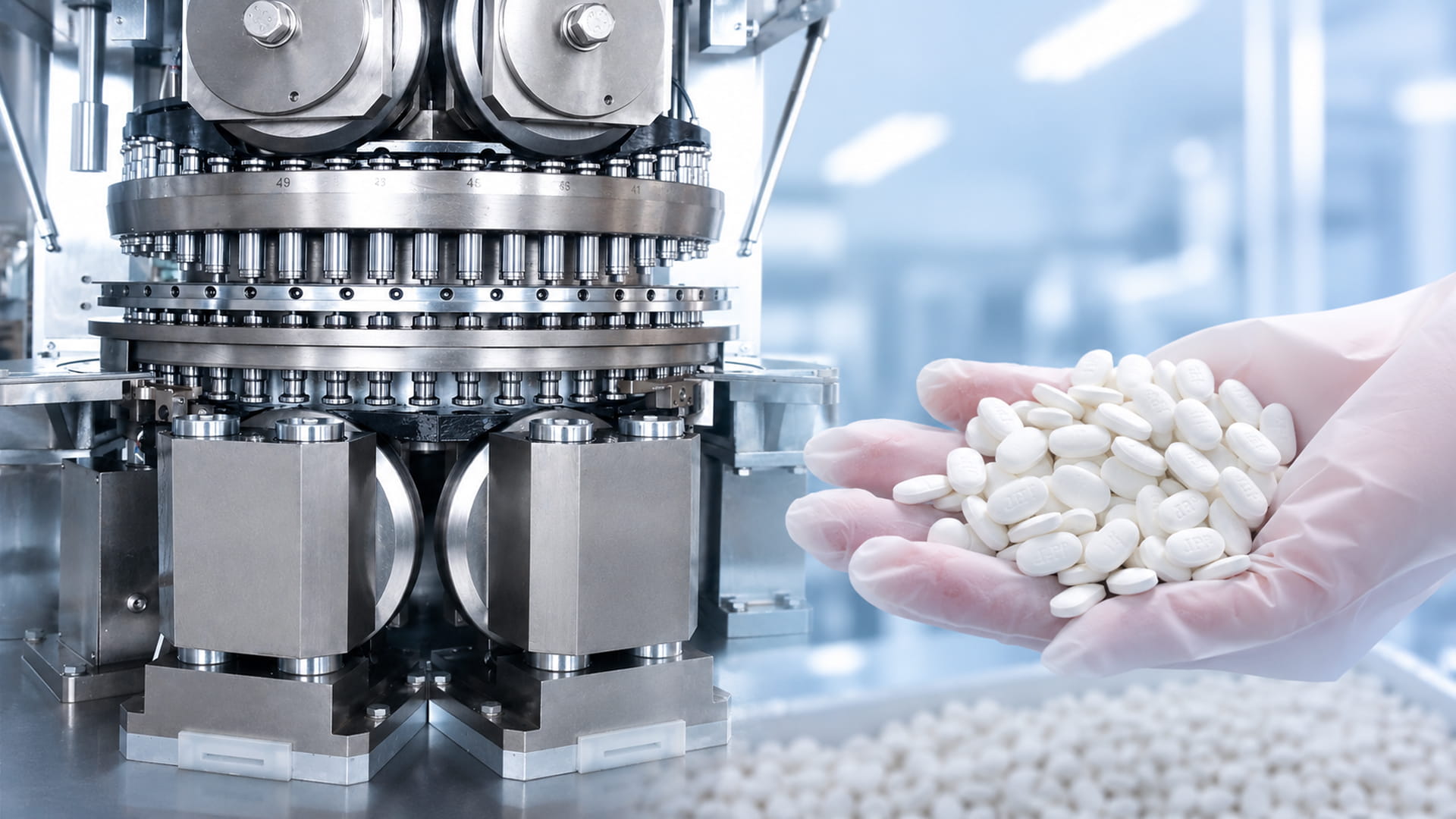
ในการผลิตแท็บเล็ต, วงจรการบีบอัดมีหลายขั้นตอน: เติมผงด้วยผง, การบีบอัดล่วงหน้า (แทมป์เริ่มต้นที่เบา), การบีบอัดหลัก (การบีบแรงดันสูงครั้งสุดท้าย), และการดีดออก. บน แท็บเล็ตหมุน, ตัวอย่างเช่น, ที่ หมัดล่าง ในตอนแรกจะยกขึ้นเพื่อเติมแม่พิมพ์, และป้อมปืนก็นำหมัดมารวมกัน. ในระหว่าง การบีบอัดล่วงหน้า, พลังอันอ่อนโยน (มักจะผ่านลูกเบี้ยวลูกกลิ้งขนาดเล็ก) ถูกนำไปใช้กับเตียงแป้ง. เป้าหมายไม่ใช่การสร้างแท็บเล็ตขั้นสุดท้าย, แต่เพียงเพื่อ รวม ผงและเอาอากาศออกก่อนการบีบอัดครั้งใหญ่. แหล่งข่าวอุตสาหกรรมแห่งหนึ่ง: “ในช่วงก่อนการบีบอัด, แรงเบาที่ใช้โดยการเจาะด้านล่างจะทำให้ผงแป้งแข็งตัวและลดช่องอากาศให้เหลือน้อยที่สุด. ในขั้นตอนการบีบอัดหลัก, หมัดบนถูกดันลงมาด้วยแรงสูง...เพื่อหลอมเม็ดให้เป็นเม็ด”. ในระยะสั้น, การบีบอัดล่วงหน้าเป็นขั้นตอนการบีบเบื้องต้นในการกดแท็บเล็ต, ในขณะที่การบีบอัดหลักคือการบดอัดแรงสูงเต็มรูปแบบซึ่งทำให้แท็บเล็ตมีรูปร่างสุดท้าย, ความแข็งและความหนาแน่น.
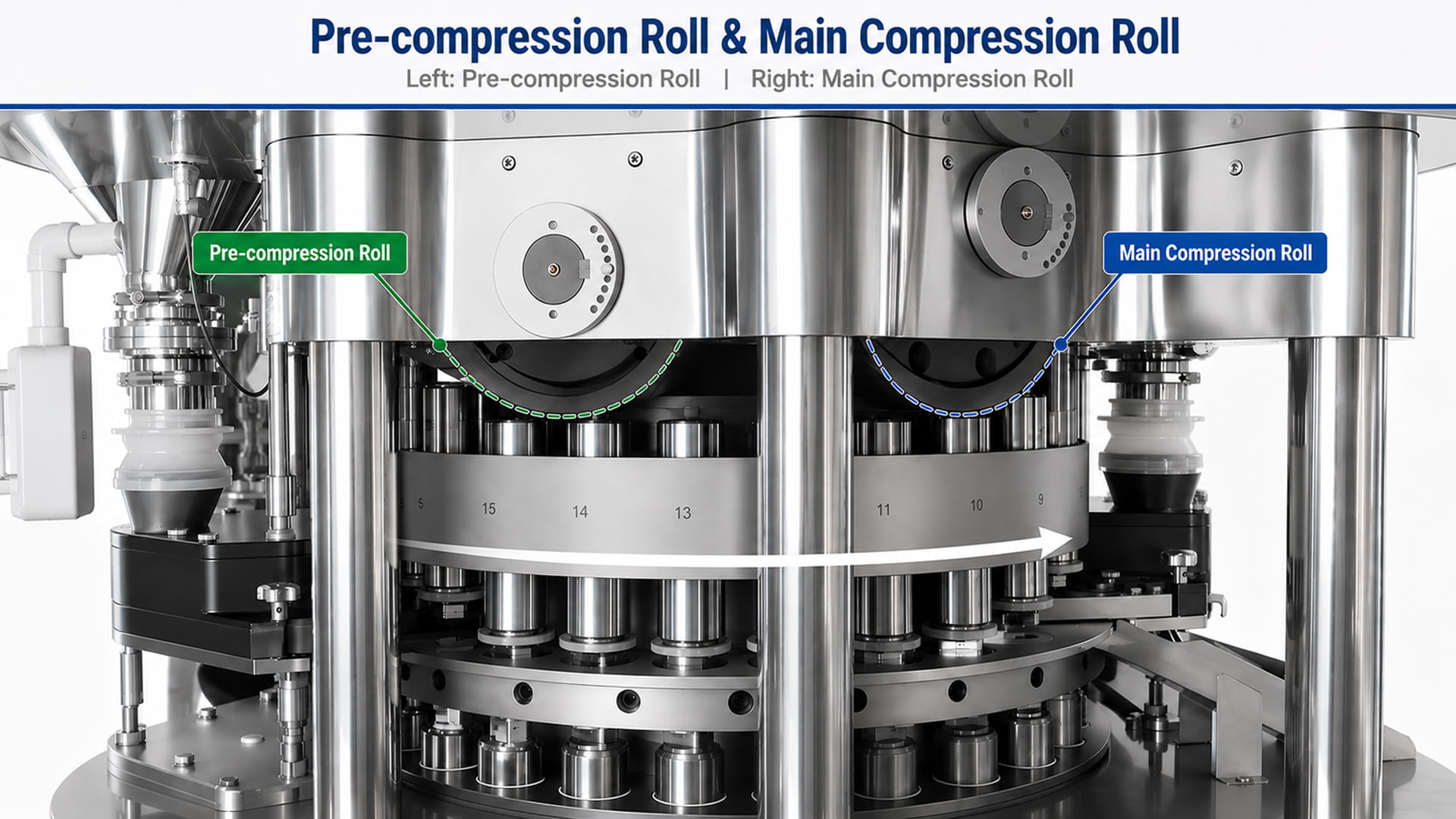
แท่นพิมพ์แท็บเล็ตสมัยใหม่มักจะมี ลูกกลิ้งก่อนการบีบอัด หรือสถานีแคมสำหรับขั้นตอนนี้โดยเฉพาะ. ลูกกลิ้งอัดล่วงหน้าเหล่านี้ "กดส่วนผสมเพื่อขจัดอากาศที่ติดอยู่ออกจากส่วนผสมและป้องกันการปิดฝาในที่สุด". กล่าวอีกนัยหนึ่ง, การบีบอัดล่วงหน้าเป็นหลัก การเติมอากาศ เวที: มันขับไล่อากาศเพื่อให้การบีบอัดหลักสามารถทำงานกับผงของแข็งได้, ไม่ใช่โฟม. ตัวอย่างเช่น, คู่มืออุปกรณ์ทางเภสัชกรรมเล่มหนึ่งอธิบายว่ามีการรวมลูกกลิ้งเตรียมการบีบอัดไว้เพื่อ “ทำให้ผงหนาแน่นก่อนการบีบอัดขั้นสุดท้าย”. โดยไม่ต้องบีบอัดล่วงหน้า, ผงแป้งถูกเติมอย่างหลวม ๆ และมีช่องว่าง. ด้วยการบีบอัดล่วงหน้า, อนุภาคของผงจะถูกอัดไว้ล่วงหน้าเล็กน้อยและอากาศส่วนใหญ่จะถูกบีบออก. การบีบอัดหลักที่ตามมาจะสามารถสร้างความแข็งแกร่งได้, แท็บเล็ตที่สอดคล้องกันโดยไม่มีการขยายตัวของอากาศอย่างกะทันหัน.
วิธีที่สะดวกในการแสดงภาพวงจรคือ:
การเติมผง → การบีบอัดล่วงหน้า (แทมป์เบา) → การบีบอัดหลัก (แรงสูง) → การดีดแท็บเล็ต
ในขั้นตอนก่อนการบีบอัด, การต่อยโดยพื้นฐานแล้ว ลดขนาดลง ผงเพียงพอที่จะไล่อากาศและปรับระดับการเติม. เพียงเล็กน้อยเท่านั้น (บางครั้ง ~10-20%) แรงสุดท้ายที่ใช้ในการอัดล่วงหน้า - เพียงพอที่จะทำให้เตียงมั่นคง, ไม่ใช่เพื่อจบความแข็ง. จากนั้นขั้นตอนการบีบอัดหลักจะใช้แรงสูงเต็มที่ (มักจะหลายร้อยกิโลนิวตัน) เพื่อผลิตแผ่นจารึกสุดท้าย.
การบีบอัดล่วงหน้าทำงานโดยการเปิดใช้งานการกดสั้นๆ ในโหมดแรงดันต่ำ. ขณะที่ป้อมปืนหมุน, หมัดล่างขึ้นไปถึงตำแหน่งเติมสุดท้ายโดยประมาณในแม่พิมพ์. จากนั้นลูกกลิ้งหรือลูกเบี้ยวบีบอัดล่วงหน้าจะทำให้การเจาะสัมผัสกันภายใต้แรงที่นุ่มนวล. แรงเบานี้ดันหมัดบนและล่างเข้าหากันเล็กน้อย, บีบแป้งให้พอให้อากาศที่ติดอยู่หลุดออกไปตามขอบ. หลังจากการบีบอัดล่วงหน้า, เตียงแป้งมีความสม่ำเสมอมากกว่าและมี "ขนปุย" น้อยกว่า เม็ดยาที่ออกมาจากบริเวณก่อนการอัดจะอ่อนแอมาก (พวกเขาแตกสลายอย่างง่ายดาย) แต่มีช่องว่างอากาศน้อยกว่า.
ต่อไป, ขั้นตอนการบีบอัดหลักจะเริ่มขึ้นทันที (โดยปกติเพียงหนึ่งสถานีในภายหลัง). ตอนนี้การต่อยปะทะกันอย่างเต็มกำลัง, ผลิตแผ่นจารึกสุดท้าย. เนื่องจากอากาศถูกกำจัดออกไปแล้วและอนุภาคก็ถูกจัดเรียงไว้บางส่วนแล้ว, การบีบอัดหลักจะมีประสิทธิภาพมากกว่า. ในแง่การปฏิบัติ, ผู้ปฏิบัติงานอาจปรับลูกเบี้ยวก่อนการบีบอัดเพื่อที่ “การทดสอบนิ้วหัวแม่มือ” แท็บเล็ตเกือบจะก่อตัวขึ้นและแทบจะไม่สอดคล้องกันเท่านั้น. เป้าหมายคือการกำจัดอากาศอย่างแท้จริง ไม่ใช่เพื่อสร้างแท็บเล็ตที่แข็งแรง. หากคุณตั้งค่าการบีบอัดล่วงหน้าไว้สูงเกินไป, คุณเสี่ยงที่จะบดอัดแป้งเร็วเกินไป; ต่ำเกินไป, และอากาศจะติดอยู่.
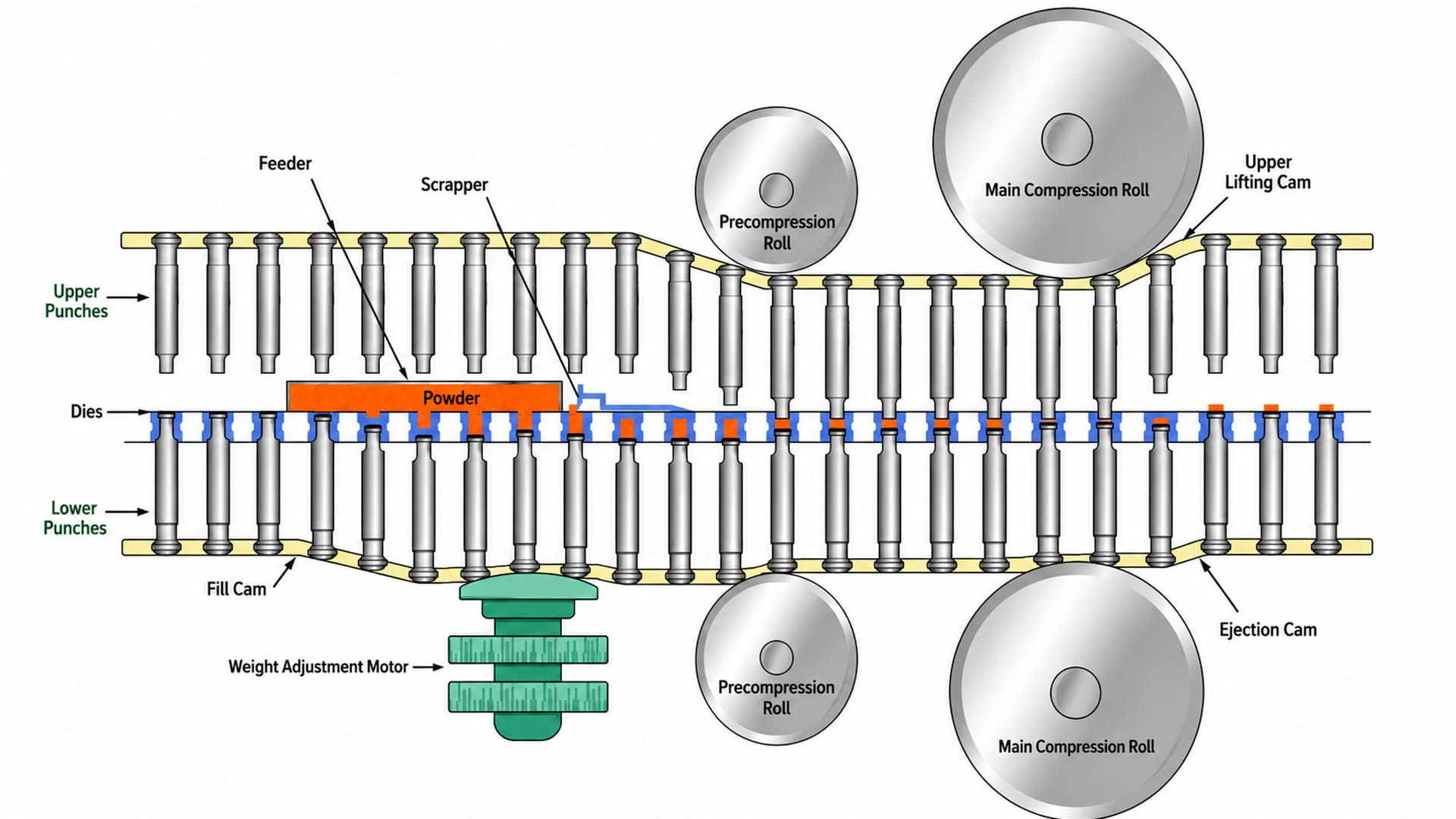
ในการดำเนินงาน, คุณจะเห็นหมัดบนแทบจะไม่สัมผัสแป้งระหว่างการอัดก่อนอัด. ระยะหมัดสั้น, แต่พอจะบีบช่องอากาศออกมาได้. ในแผนภาพ: หมัดบน ⇓ (ความดันแสง) ผง → อากาศหลบหนี → อนุภาคตกลง → การบีบอัดหลัก ⇓ (แรงดันสูง) แท็บเล็ตสำเร็จรูป. การบีบอัดแบบสองขั้นตอนนี้ (ก่อน- และหลัก) ปัจจุบันเป็นมาตรฐานสำหรับเครื่องโรตารี่สำหรับเภสัชกรรมส่วนใหญ่แล้ว, และแม้แต่การกดด้วยหมัดเดียวหลายๆ ครั้งก็มีขั้นตอนการพรีโหลดอย่างง่ายๆ เพื่อกดอัดผงล่วงหน้า.
การบีบอัดข้อมูลล่วงหน้าถือเป็นสิ่งสำคัญอย่างยิ่ง เนื่องจากสามารถแก้ไขสาเหตุที่แท้จริงได้หลายประการ ข้อบกพร่องของแท็บเล็ต. ด้วยตัวเอง, ขั้นตอนก่อนการบีบอัดจะป้องกันปัญหาที่พบบ่อยที่สุด:
ส่วนผสมแบบผงจะมีช่องอากาศระหว่างอนุภาคตามธรรมชาติ. หากคุณบีบอัดโดยตรงโดยไม่ต้องเอาอากาศนี้ออก, อากาศที่ติดอยู่จะขยายตัวเมื่อปล่อยหมัด, หรือทำให้เกิดการยึดเกาะที่ไม่สม่ำเสมอ. วัตถุประสงค์หลักของการบีบอัดล่วงหน้าคือ การอพยพทางอากาศ. ดังที่วิศวกรด้านเภสัชกรรมคนหนึ่งอธิบาย, “วัตถุประสงค์ของการบีบอัดล่วงหน้าคือเพื่อกำจัดอากาศที่กักขังออกจากช่องแม่พิมพ์แท็บเล็ตที่เต็มไป. งานนี้ช่วยขั้นตอนการบีบอัดหลักในการผลิตแท็บเล็ตที่แข็งแกร่ง”. ในระยะสั้น, การบีบอัดล่วงหน้าคือขั้นตอนการขจัดอากาศแบบผง. ด้วยการบีบอัดล่วงหน้าที่ดี, ฟองอากาศเหล่านั้นจะหลุดออกไปก่อนและไม่ขยายตัวภายในเม็ดยาที่ขึ้นรูป. สิ่งนี้นำไปสู่การสัมผัสอนุภาคที่แน่นยิ่งขึ้นระหว่างการบีบอัดหลักและเม็ดยาที่แข็งแกร่งขึ้น.
การจับ เกิดขึ้นเมื่อด้านบนของแท็บเล็ต (“หมวก”) แตกและแยกออกจากกัน. อากาศที่ติดอยู่มักเป็นสาเหตุ: ในระหว่างที่มีแรงอัดหลักสูงอย่างกะทันหัน, อากาศพยายามหลบหนีและสามารถยิงฝาปิดออกจากแท็บเล็ตได้อย่างแท้จริง. โดยไม่ต้องบีบอัดล่วงหน้า, อากาศส่วนใหญ่ยังคงอยู่ในความตาย. โดยการอัดผงไว้ล่วงหน้า, การอัดล่วงหน้าช่วยให้อากาศระบายออกได้อย่างนุ่มนวล, จึงไม่ทำให้หมวกหลุด. ดังแหล่งบันทึกแห่งหนึ่ง, “แรงอัดล่วงหน้าในปริมาณต่ำจะทำให้สามารถกำจัดอากาศระหว่างอนุภาคได้, ซึ่งลดศักยภาพในการกำหนดสูงสุด”. ในความเป็นจริง, การศึกษาแสดงให้เห็นผลลัพธ์ที่น่าทึ่ง: การทดลองหนึ่งพบว่า โดยไม่ต้องบีบอัดล่วงหน้า, 80% ของแท็บเล็ตประสบปัญหาการปิดฝา, ในทางตรงกันข้าม โดยเพิ่มการบีบอัดล่วงหน้าถึง 20–50%, ไม่มีแท็บเล็ตต่อยอดเลย ก่อนจะถึงความแข็งเป้าหมาย. กล่าวอีกนัยหนึ่ง, การบีบอัดล่วงหน้าที่เหมาะสมสามารถกำจัดการปิดฝาที่ขับเคลื่อนด้วยอากาศได้. (ในทางตรงกันข้าม, การบีบอัดล่วงหน้าที่ไม่เพียงพอเป็นปัญหาการกำหนดขนาดแบบคลาสสิก: คู่มือการกดแท็บเล็ต JinLu เตือนว่า “การบีบอัดล่วงหน้าไม่เพียงพอ...[โอกาสในการขาย] เข้าไปกักอากาศมากขึ้น” ทำให้ฝาแท็บเล็ตแตกออก)
การเคลือบจะคล้ายกับการปิดฝา, แต่แท็บเล็ตจะแบ่งออกเป็นชั้น ๆ แทนที่จะเสียส่วนบนไป. โดยพื้นฐานแล้วมันเป็นการกำหนดขั้นสูงสุด: หลังจากปอกเปลือกแล้วหนึ่งชั้น, อากาศหรือความเครียดเพิ่มเติมสามารถแยกชั้นได้. อีกครั้ง, อากาศที่ติดอยู่และการบีบอัดที่ไม่สม่ำเสมอเป็นสาเหตุสำคัญ. โดยปล่อยลมออกแต่เนิ่นๆ, การบีบอัดล่วงหน้าจะช่วยลดโอกาสที่ชั้นจะก่อตัวได้อย่างมาก. หากการบีบอัดล่วงหน้าต่ำเกินไป, กระเป๋าเล็กๆ ที่ติดอยู่อาจทำให้ฝาปิดหลุดออกมาก่อน (สูงสุดที่กำหนด) แล้วจึงแบ่งเพิ่มเติม (การเคลือบ). แหล่งข่าวชี้ให้เห็นว่าการเคลือบมักเกิดจากปัญหาเดียวกันกับการปิดฝา: “อากาศที่ติดอยู่ภายในสูตรยาเม็ด…สามารถสร้างจุดอ่อนเฉพาะที่ซึ่งอาจทำให้ยาเม็ดแยกตัวหรือแยกส่วนได้”. การบีบอัดล่วงหน้าที่ดีจะช่วยลดจุดอ่อนเหล่านั้นให้เหลือน้อยที่สุด, การเคลือบจึงหายาก.
โดยการกดแป้งไว้ก่อน, การบีบอัดล่วงหน้าจะเพิ่มพื้นที่สัมผัสของอนุภาคก่อนการบีบครั้งสุดท้าย. ส่งผลให้มีการยึดเกาะที่ดีขึ้นระหว่างแรงอัดหลักและความต้านทานแรงดึงที่สูงขึ้นในที่สุด. ในทางปฏิบัติ, เม็ดยาที่ขึ้นรูปด้วยขั้นตอนก่อนการบีบอัดที่มีประสิทธิภาพมีแนวโน้มที่จะเข้าถึงความแข็งเป้าหมายได้ง่ายขึ้น. ในการศึกษา Medelpharm ข้างต้น, เพิ่มแท็บเล็ตที่ได้รับอนุญาตล่วงหน้าการบีบอัดเพื่อให้บรรลุ 40 ความแข็งของเป้าหมาย N โดยไม่แตกหัก, ในขณะที่ไม่มีการบีบอัดล่วงหน้า แท็บเล็ตส่วนใหญ่ต่อยอดตั้งแต่เนิ่นๆ. โดยทั่วไปแล้ว, การอัดล่วงหน้าหมายถึงช่องว่างอากาศที่น้อยลงและฐานสตาร์ทที่หนาแน่นยิ่งขึ้น, ดังนั้นแต่ละหน่วยของแรงอัดหลักเพิ่มเติมจะทำให้ได้แท็บเล็ตที่แข็งขึ้น. (แน่นอน, การบีบอัดล่วงหน้าที่มากเกินไปอาจทำให้ผงมีความหนาแน่นมากเกินไปก่อนเวลาอันควร, ซึ่งเราจะหารือในภายหลัง)
เนื่องจากการบีบอัดล่วงหน้าจะทำให้ผงแป้งมีความสม่ำเสมอมากขึ้นในแม่พิมพ์ทั้งหมด, การเปลี่ยนแปลงของน้ำหนักจะลดลง. หากตายตัวหนึ่งมีอากาศติดอยู่มากกว่าอีกตัวหนึ่ง, มันสามารถเติมผงในปริมาณที่แตกต่างกันเล็กน้อย. การบีบอัดล่วงหน้าทำให้การเติมสม่ำเสมอโดยการกระจายผงโดยอัตโนมัติและผลักอากาศออก เพื่อให้แต่ละแม่พิมพ์บรรจุในลักษณะเดียวกัน. ผลลัพธ์ที่ได้คือการควบคุมน้ำหนักแท็บเล็ตตั้งแต่ช็อตหนึ่งไปอีกช็อตหนึ่งอย่างเข้มงวดยิ่งขึ้น. (ในทางกลับกัน, การข้ามการบีบอัดล่วงหน้ามักปรากฏขึ้นเนื่องจากการเปลี่ยนแปลงของน้ำหนักที่มากขึ้นในการดำเนินการผลิต)
แท็บเล็ตที่ได้รับการบีบอัดล่วงหน้าอย่างเหมาะสมมักจะทำให้ฝุ่นละเอียดน้อยลง. โดยช่วยให้มีความหนาแน่น, การบีบอัดล่วงหน้าช่วยให้มั่นใจได้ว่าแท็บเล็ตมีความหนาแน่นโดยรวมสูงขึ้นและมีช่องว่างบนพื้นผิวน้อยลง, ทำให้พวกเขาแข็งแกร่งขึ้นและมีแนวโน้มที่จะบิ่นหรือเปราะบางน้อยลง. ในทางปฏิบัติ, ผู้ปฏิบัติงานกดแท็บเล็ตมักจะเห็นการลดลง % ความเปราะบางเมื่อการบีบอัดล่วงหน้าได้รับการปรับให้เหมาะสม.
ปัจจัยทั้งหมดที่กล่าวมาข้างต้นส่งผลให้แท็บเล็ตดูสวยงามยิ่งขึ้น. การบีบอัดล่วงหน้าที่เหมาะสมจะช่วยสร้างเม็ดยาที่มีใบหน้าเรียบเนียน, ขอบคม, และไม่มีรอยแตกหรือชิป. ข้อบกพร่องเช่นชิป, หลุมอุกกาบาตหรือขอบที่หักมักเกิดจากการปล่อยอากาศออกอย่างกะทันหันหรือการบดอัดที่ไม่สม่ำเสมอ; การบีบอัดล่วงหน้าช่วยขจัดข้อบกพร่องเหล่านั้นได้อย่างมาก. โดยสรุป, ขั้นตอนการบีบอัดล่วงหน้าที่ได้รับการปรับแต่งมาอย่างดีทำให้แท็บเล็ตมีรูปลักษณ์และความรู้สึกที่สม่ำเสมอและเป็นมืออาชีพมากขึ้น.
เพื่อสรุปในส่วนนี้: โดยไม่มีการบีบอัดล่วงหน้าที่เพียงพอ, คุณได้รับปัญหาที่คุณพยายามแก้ไขอย่างแน่นอน. ตารางด้านล่างแสดงข้อบกพร่องทั่วไปและสาเหตุ (มักเชื่อมโยงกับการบีบอัดล่วงหน้าที่ไม่ดี):
| ปัญหา | สาเหตุที่น่าจะเป็นไปได้ (มักเชื่อมโยงกับการบีบอัดล่วงหน้าที่ไม่เพียงพอ) |
| การจับ | อากาศกักเก็บอยู่ในผงซึ่งจะระเบิดออกมาระหว่างการบีบอัด |
| การเคลือบ | ชั้นภายในแยกออกจากอากาศที่ติดอยู่/การบีบอัดที่ไม่สม่ำเสมอ |
| ความแข็งต่ำ | พันธะอนุภาคอ่อน (การบีบอัดที่ไม่สมบูรณ์) |
| ความกร่อนสูง | การบดอัดไม่ดี (แป้งฝุ่น) |
| การเปลี่ยนแปลงน้ำหนัก | เติมไม่สม่ำเสมอ (ช่องอากาศหรือปริมาณยาที่ไม่สอดคล้องกัน) |
| เม็ดแตก | การเด้งกลับแบบยืดหยุ่นของวัสดุหรือความเค้น (สปริงกลับ) |
อย่างที่คุณเห็น, การปิดฝาและการเคลือบติดตามโดยตรงกับอากาศที่ติดอยู่ (ซึ่งอยู่ก่อนการบีบอัด). ปัญหาอื่นๆ เช่น ความนุ่มนวลหรือความเปราะบางก็เกิดจาก "การบดอัดที่ไม่เพียงพอ,” ซึ่งการอัดล่วงหน้าที่ดีกว่าจะช่วยป้องกันได้.
เพื่อตอกย้ำความสำคัญของการอัดล่วงหน้า, พิจารณาว่าจะเกิดอะไรขึ้นหากคุณข้ามไป. โดยไม่ต้องบีบอัดล่วงหน้า, อากาศยังคงอยู่ ในแม่พิมพ์จนถึงการบีบครั้งสุดท้าย. เมื่อหมัดโดนเต็มแรง, อากาศนั้นไม่มีทางผ่านไปได้นอกจากผ่านผงแป้ง. อากาศที่ติดอยู่พยายามขยายตัว, นำไปสู่ข้อบกพร่องของแท็บเล็ต. ในทางปฏิบัติ, สิ่งนี้แสดงให้เห็นว่ามีอุบัติการณ์ของการปิดฝาและการเคลือบที่สูงขึ้นมาก, อาการเบื้องต้นที่มองเห็นได้ของการกักเก็บอากาศ. แม้ว่าการกำหนดสูงสุดจะไม่เกิดขึ้นทันทีก็ตาม, ความหนาแน่นของเม็ดยาจะไม่สม่ำเสมอ: ขอบอาจมีความหนาแน่นมากกว่าแกนกลาง, ทำให้เกิดรอยแตกร้าวภายในในภายหลัง. ตารางด้านบนแสดงให้เห็นว่าปัญหาการบีบอัดแท็บเล็ตส่วนใหญ่ (สูงสุดที่กำหนด, การเคลือบ, ต่ำ ความแข็ง, ความกร่อน, การเปลี่ยนแปลงของน้ำหนัก, ฯลฯ) สามารถสืบย้อนกลับไปยังปัญหาหลักของการบดอัดที่ไม่ดีหรืออากาศที่ติดอยู่.
ในความเป็นจริง, ผู้ปฏิบัติงานทราบจากประสบการณ์ว่า การเพิ่มการบีบอัดล่วงหน้าเล็กน้อยมักจะแก้ไขการกำหนดขีดจำกัดได้. หากเม็ดยายังคงบี้หรือเคลือบอยู่, โดยปกติแล้วจะหมายความว่าผงไม่ได้รับการขจัดอากาศอย่างเหมาะสม. ในทางปฏิบัติ, การปรับปรุงแรงอัดเบื้องต้นหรือการปรับจังหวะเวลาช่วยขจัดปัญหาเหล่านี้เกือบทั้งหมด.
เพื่อชี้แจงความแตกต่างระหว่างขั้นตอนการบีบอัดทั้งสองขั้นตอน, นี่คือการเปรียบเทียบอย่างรวดเร็ว:
| คุณสมบัติ | การบีบอัดล่วงหน้า | การบีบอัดหลัก |
| แรง/ความดัน | ต่ำ (แทมที่อ่อนโยน, มักจะ 5–20% ของแรงสุดท้าย) | สูง (แรงอัดเต็มกำลัง) |
| วัตถุประสงค์ | ถอดอากาศออก & ผงหนาแน่นบางส่วน | สร้างรูปร่างสุดท้ายของแท็บเล็ต, ความแข็ง, และความหนาแน่น |
| รูปร่างแท็บเล็ต | ชั่วคราว; เตียงแป้งหลวม (ไม่มีแท็บเล็ตสุดท้าย) | สุดท้าย; เม็ดยาที่เป็นของแข็งจะเกิดขึ้น |
| ส่งผลให้เกิดความแข็ง | ต่ำมาก (“แท็บเล็ต” แตกสลายได้ง่าย) | ความแข็งเป้าหมายเต็ม |
| ความหนาแน่นหลังระยะ | บางส่วน (แป้งจะอัดแน่นเล็กน้อย) | เต็ม (แท็บเล็ตที่ความหนาแน่นของข้อมูลจำเพาะ) |
| พันช์/ลูกกลิ้ง | โดยปกติแล้วจะเป็นลูกกลิ้งหรือลูกเบี้ยวบีบอัดล่วงหน้าขนาดเล็ก | ลูกกลิ้งหรือลูกเบี้ยวขนาดใหญ่ขึ้นและมีระยะเวลาคงตัวนานขึ้น |
| เวลาอยู่ | สั้นมาก (แทมด่วน) | อีกต่อไป (หมัดจะยึดผงภายใต้แรงกดได้นานขึ้น) |
ตัวอย่างเช่น, การวิเคราะห์ทางเทคนิคทราบว่า ลูกกลิ้งเตรียมอัดมีขนาดเล็กกว่าและให้แรงกดสั้น, ในขณะที่ลูกกลิ้งอัดหลักมีขนาดใหญ่กว่าและทำให้หมัดทำงานได้นานขึ้น. ขั้นตอนการบีบอัดหลักคือสิ่งที่กำหนดความแข็งของแท็บเล็ตและขนาดสุดท้ายในท้ายที่สุด. งานของการบีบอัดล่วงหน้าเป็นเพียงการ "จัดเตรียม" สำหรับการบีบหลัก.
ไม่มีจำนวนใดที่เหมาะกับทุกคนสำหรับแรงอัดล่วงหน้า. การตั้งค่าที่เหมาะสมที่สุดขึ้นอยู่กับสูตร (คุณสมบัติการไหล, ขนาดเม็ด, ปริมาณความชื้น, น้ำมันหล่อลื่น, ผู้ยึดติด, ฯลฯ) และอุปกรณ์ (ความเร็วในการกด, ขนาดป้อมปืน, เครื่องมือ). ตัวอย่างเช่น, ผงที่ไหลได้ไม่ดีหรือมีรูพรุนมากอาจต้องการบีบอัดก่อนถึงก๊าซมากกว่าการผสมแบบเม็ดละเอียดที่ไหลได้ดี. ปัจจัยสำคัญได้แก่:
ผู้ปฏิบัติงานจำนวนมากเริ่มต้นด้วย “กฎทั่วไป” – ตัวอย่างเช่น, โดยใช้แรงอัดหลักประมาณ 10–20% เป็นแรงอัดเบื้องต้น. อย่างไรก็ตาม, ผู้เชี่ยวชาญเตือนว่าถึงขนาดนี้ 10% กฎ “ไม่ได้ผลเสมอไป”. แนวทางที่ปลอดภัยที่สุดคือ การปรับเชิงประจักษ์. ในทางปฏิบัติ, คุณปรับแรงอัดล่วงหน้าตามการทดลอง:
คู่มือการกดแท็บเล็ตฉบับหนึ่งแนะนำแนวทางอันชาญฉลาด: ขั้นแรกให้ตั้งค่าการบีบอัดล่วงหน้าให้สูงกว่าที่จำเป็น (ดังนั้นหมัดก็แทบจะหยุดเคลื่อนไหว), จากนั้นลดลงจนกระทั่งทากที่บีบอัดไว้ล่วงหน้าแทบจะไม่สอดคล้องกัน. ที่สำคัญคือ: “เป้าหมายคือการเอาอากาศส่วนเกินออก… ไม่ใช่เพื่อสร้างแท็บเล็ต”. กล่าวอีกนัยหนึ่ง, ปรับจนกระทั่งเค้กที่บีบอัดไว้เพิ่งจับกัน, จากนั้นถอยออกไปเล็กน้อย. วิธีนี้ทำให้มั่นใจได้ว่าคุณจะได้รับการขจัดอากาศสูงสุดโดยไม่มีการบดอัดมากเกินไป.
ปัจจัยต่างๆ เช่น ความเร็วของป้อมปืนและสูตรอาจต้องมีการทดสอบซ้ำ. โดยสรุป, เริ่มต้นต่ำและค่อยๆ เพิ่มแรงอัดล่วงหน้าในขณะที่ตรวจสอบคุณภาพของแท็บเล็ต. ไม่มี "เป้าหมาย" ที่ตายตัวที่คุณสามารถคัดลอกไปยังผลิตภัณฑ์ทั้งหมดได้ แต่ละสูตรจะมีการตั้งค่าที่เหมาะสมที่สุดของตัวเอง.
หากการบีบอัดล่วงหน้าผิดพลาด, มีหลายประเด็นเกิดขึ้น. ตารางด้านล่างเน้นอาการทั่วไปและการเยียวยา:
| ปัญหา | วิธีแก้ปัญหาที่เป็นไปได้ (เรื่องที่เกี่ยวข้องกับ Pre-Compression) |
| การจับ | การบีบอัดล่วงหน้าต่ำเกินไป – เพิ่มการบีบอัดล่วงหน้า เพื่อปรับปรุงการไล่อากาศ |
| การเคลือบ | อากาศที่กักขังยังคงอยู่ – ปรับปรุงการบีบอัดล่วงหน้า (หรือเพิ่มระยะเวลาการอยู่อาศัย) |
| เม็ดอ่อน | การยึดติดที่อ่อนแอ – ตรวจสอบให้แน่ใจว่าแรงอัดหลักเพียงพอ หลังจาก การบีบอัดล่วงหน้าที่เหมาะสม |
| ความกร่อนสูง | การบดอัดไม่ดี - ตรวจสอบการบีบอัดล่วงหน้า และการบีบอัดโดยรวม; ปรับสูตรหากจำเป็น |
| การเปลี่ยนแปลงน้ำหนัก | การเติมไม่สม่ำเสมอ - ใช้การป้อนแบบบังคับหรือปรับปรุงการไหลของผง; การบีบอัดล่วงหน้าอย่างสม่ำเสมอช่วยรักษาน้ำหนักให้คงที่ |
| การหยิบสินค้า (การติด) | แรงเสียดทานของหมัด - โดยทั่วไปแล้วจะเป็นปัญหาเกี่ยวกับเครื่องมือ/การหล่อลื่น, แต่ให้ตรวจสอบลูกเบี้ยวก่อนอัดและถอดออก (บางครั้งการลดการบีบอัดล่วงหน้าสามารถลดการเกาะติดได้) |
ในทางปฏิบัติ, “เพิ่มการบีบอัดล่วงหน้า” มักเป็นคำแนะนำแรกเมื่อได้ยินเกี่ยวกับการปิดฝาหรือการเคลือบแบบอ่อน. อย่างแท้จริง, การเพิ่มการอัดล่วงหน้าอีกเล็กน้อยจะช่วยแก้ไขข้อบกพร่องเหล่านี้ได้. (เพียงแค่ระมัดระวัง, ตามที่เราจะกล่าวถึงด้านล่าง: การบีบอัดล่วงหน้ามากเกินไปอาจทำให้เกิดปัญหาได้)
ใช่ ยิ่งมากก็ไม่ได้ดีเสมอไป. การบีบอัดข้อมูลล่วงหน้ามากเกินไปอาจทำให้เกิดปัญหาใหม่ได้. หากแรงอัดล่วงหน้าสูงเกินไป, คุณเสี่ยงที่จะ "ตั้งค่า" แป้งไว้ล่วงหน้ามากเกินไปก่อนที่จะบีบหลัก. ที่สามารถนำไปสู่:
ในระยะสั้น, คุณสามารถเกินกำลังได้. ตามกฎแล้ว, การอัดล่วงหน้าควรเพียงพอที่จะกำจัดอากาศออก; “การอัดแบบเบาจะดีกว่าการใช้แรงอัดล่วงหน้าสูง”. วิศวกรหลายคนแนะนำให้เริ่มต้นจากระดับล่างสุดของมาตราส่วน. หากคุณพบว่าตัวเองกำลังผลักดันการบีบอัดล่วงหน้าให้ถึงขีดสุดและยังคงจำกัดอยู่, มันอาจจะหมายถึงปัญหาอื่น (สูตรหรืออัตราการป้อน) เป็นฝ่ายผิด, ไม่ใช่แค่ระดับกำลังเท่านั้น.
วันนี้, เครื่องอัดแท็บเล็ตแบบหลายสถานีที่ทันสมัยเกือบทั้งหมดมาพร้อมกับขั้นตอนการบีบอัดล่วงหน้าโดยเฉพาะ. อย่างไรก็ตาม, บางส่วนมีอุปกรณ์ที่ดีกว่าเพื่อการควบคุมที่ดี. ที่ JinluPacking เรานำเสนอเครื่องแท็บเล็ตที่ออกแบบมาเพื่อประสิทธิภาพการบีบอัดล่วงหน้าที่ดีที่สุด. ตัวอย่างเช่น, ของเรา ซีรีส์ HZP กด (เช่น HZP-26/40ดี, HZP-15/20ดี โมเดล) มี ลูกกลิ้งอัดล่วงหน้าอิสระ ในแต่ละสถานีที่สามารถปรับได้ผ่านแผงควบคุม. เครื่องจักรเหล่านี้มีการควบคุมแรงและเซ็นเซอร์ที่ใช้ PLC ซึ่งช่วยให้คุณตั้งค่าและตรวจสอบโหลดก่อนการบีบอัดได้อย่างแม่นยำ. ทางนี้, แม้จะใช้ความเร็วสูงก็ตาม, ระบบจะรักษาเวลาโหลดล่วงหน้าและเวลาหยุดนิ่งที่สม่ำเสมอ.
เช่น, ที่ เครื่องกดแท็บเล็ตโรตารี HZP-15/20D (สามารถได้ถึง 90,000 แท็บ/ชั่วโมง) รวมถึงตัวป้อนแรงที่ได้รับการอัพเกรดและการปรับการบีบอัดล่วงหน้าแบบอิสระ. รุ่นความเร็วสูงเช่น เครื่องโรตารี่ HZP-26D-40D (สูงถึง 160,000–260,000 แท็บ/ชั่วโมง) ยังรองรับการควบคุมการบีบอัดล่วงหน้าอีกด้วย (E.G. แรงดันเบื้องต้นสามารถปรับได้สูงสุด 20 kN ในรูปแบบเดียว). เครื่องจักรเหล่านี้ยังมีการตรวจสอบแรงดันแบบเรียลไทม์และการปรับอัตโนมัติอีกด้วย, ซึ่งช่วยเพิ่มประสิทธิภาพการบีบอัดล่วงหน้าโดยไม่ต้องคาดเดาจากผู้ปฏิบัติงาน.

ในระยะสั้น, หากคุณต้องการการบีบอัดล่วงหน้าที่เชื่อถือได้, มองหาสื่อกับ กล้องบีบอัดล่วงหน้าอิสระ (ไม่ใช่แค่เปอร์เซ็นต์คงที่) และการควบคุมแบบดิจิตอล. แท่นพิมพ์ของเราเป็นตัวอย่างของแนวทางนี้: พวกเขาผสมผสานการออกแบบกลไกที่แข็งแกร่ง (เครื่องมือและลูกกลิ้งที่มีคุณภาพ) ด้วยอุปกรณ์อิเล็กทรอนิกส์ที่ทันสมัย. สิ่งนี้ทำให้มั่นใจได้ว่าการกดที่คุณเลือกนั้นสามารถปรับแต่งได้อย่างละเอียดสำหรับความต้องการการบีบอัดล่วงหน้าของสูตรใดๆ, นำไปสู่แท็บเล็ตที่มีความสม่ำเสมอมากขึ้น.
ใช้รายการตรวจสอบต่อไปนี้เมื่อตั้งค่าหรือแก้ไขปัญหาการบีบอัดล่วงหน้าบนเครื่องของคุณ:
โดยการปรับและบันทึกผลอย่างเป็นระบบ, คุณจะพบกับ จุดหวาน โดยที่อากาศถูกกำจัดออกไปโดยไม่ทำให้แท็บเล็ตมีความหนาแน่นมากเกินไป.
โดยสรุป, การบีบอัดล่วงหน้า ไม่ใช่ทางเลือก แต่เป็นส่วนสำคัญของการดำเนินการกดแท็บเล็ตสมัยใหม่. ขั้นตอนการบีบอัดล่วงหน้าที่กำหนดไว้อย่างเหมาะสมจะขจัดอากาศที่ติดอยู่และอัดผงล่วงหน้า, นำไปสู่ความแข็งแกร่ง, แท็บเล็ตที่มีความสม่ำเสมอมากขึ้นและมีข้อบกพร่องด้านฝาปิดหรือการเคลือบน้อยกว่ามาก. หากแท็บเล็ตของคุณมีการกำหนดขีดจำกัดหรือแสดงน้ำหนักที่ไม่สอดคล้องกัน, ตรวจสอบการตั้งค่าการบีบอัดล่วงหน้าของคุณอีกครั้งก่อนที่จะตำหนิสูตรหรือการบีบอัดหลัก. การใช้แม้แต่แรงอัดก่อนการบีบอัดระดับปานกลางก็สามารถปรับปรุงคุณภาพของแท็บเล็ตได้อย่างมาก.
สำหรับผู้ผลิตและวิศวกรจัดซื้อ, การซื้อกลับมีความชัดเจน: เลือกหรือกำหนดค่าการกดแท็บเล็ตที่ให้การควบคุมการบีบอัดล่วงหน้าที่ดีเสมอ. เครื่องโรตารี่ที่มีชื่อเสียงทั้งหมด (จากร&รุ่น D สู่เครื่องจักรการผลิตเต็มรูปแบบ) รวมคุณสมบัตินี้, แต่เป็นรุ่นที่มีอิสระ, ลูกกลิ้งอัดล่วงหน้าแบบปรับได้ช่วยให้คุณมีความยืดหยุ่นสูงสุด.
หากคุณต้องการคำแนะนำเพิ่มเติมหรือต้องการดูแท่นพิมพ์ที่ออกแบบมาเพื่อการบีบอัดล่วงหน้าอย่างเหมาะสมที่สุด, ของเรา กลุ่มผลิตภัณฑ์กดแท็บเล็ต JinluPacking สามารถช่วยได้. ตรวจสอบของเรา [หน้าสินค้าเครื่องกดแท็บเล็ต] สำหรับรายละเอียดเกี่ยวกับรุ่นต่างๆ เช่น HZP-45ดี, และรู้สึกอิสระที่จะ ติดต่อทีมงานของเรา เพื่อขอความช่วยเหลือในการเลือกกดที่เหมาะสมหรือปรับการตั้งค่าของคุณ. การบีบอัดล่วงหน้าอย่างเหมาะสมคือเคล็ดลับในการทำให้แท็บเล็ตดีขึ้น – ทำให้ถูกต้อง, และคุณจะแก้ปัญหาเรื่องปวดหัวในการผลิตมากมายก่อนที่การบีบอัดขั้นสุดท้ายจะเริ่มต้นขึ้น.
พร้อมขจัดข้อบกพร่องของเม็ดยาและปรับปรุงผลผลิต? สำรวจเครื่องกดแท็บเล็ตโรตารีประสิทธิภาพสูงของเรา หรือติดต่อผู้เชี่ยวชาญของ JinluPacking เพื่อขอโซลูชันแบบกำหนดเอง.
การบีบอัดล่วงหน้าเป็นการเริ่มต้น, ขั้นตอนการบีบอัดแสงในวงจรการกดแท็บเล็ต. มันใช้กำลังเพียงเล็กน้อย (โดยปกติจะผ่านลูกกลิ้งอัดก่อน) เพื่อกดแป้งเบา ๆ ก่อนการบีบอัดหลัก. ซึ่งจะช่วยกำจัดแก๊สในผงโดยการเอาอากาศที่ติดอยู่ออก.
เพราะมันช่วยปรับปรุงความสมบูรณ์ของแท็บเล็ตได้อย่างมาก. โดยการไล่อากาศออก, การบีบอัดล่วงหน้าจะป้องกันข้อบกพร่อง เช่น การปิดฝาและการเคลือบ, และนำไปสู่ความแข็งแกร่งยิ่งขึ้น, แท็บเล็ตที่สม่ำเสมอมากขึ้น. โดยพื้นฐานแล้วมัน "เตรียม" ผงสำหรับการบีบอัดแรงสูงขั้นสุดท้าย.
เครื่องโรตารีสมัยใหม่ส่วนใหญ่ก็ทำได้. แม้แต่เครื่องกดแบบสถานีเดียวธรรมดาก็มักจะมีเครื่องป้อนกระดาษแบบแมนนวล. การบีบอัดล่วงหน้ามีประโยชน์มากจนเป็นมาตรฐานในเครื่องแท็บเล็ตยาเกือบทั้งหมดในปัจจุบัน.
การบีบอัดล่วงหน้าเป็นแรงต่ำ (แทมที่อ่อนโยน) และบดอัดผงเพียงบางส่วนเพื่อขจัดอากาศ. แรงอัดหลักคือแรงอัดสูงและเป็นสิ่งที่ก่อให้เกิดเม็ดยาขั้นสุดท้าย (กำหนดความแข็งและความหนา). การบีบอัดล่วงหน้าทำให้ได้พรีแท็บเล็ตที่อ่อนแอมาก; การบีบอัดหลักทำให้แท็บเล็ตสมบูรณ์.
จะไม่สามารถแก้ไขปัญหาการกำหนดสูตรได้ด้วยตัวเอง, แต่จะช่วยลดการปิดฝาที่เกี่ยวข้องกับอากาศได้อย่างมาก. การบีบอัดล่วงหน้าที่ตั้งค่าไว้อย่างเหมาะสมสามารถขจัดสิ่งที่กักเก็บอากาศได้เกือบทั้งหมด, ดังนั้นการปิดฝาเนื่องจากอากาศจึงถูกป้องกันเป็นส่วนใหญ่. อย่างไรก็ตาม, หากการกำหนดสูงสุดเกิดจากปัจจัยอื่น (เช่น สารยึดเกาะไม่ดีหรือความเร็วเกิน), คุณต้องจัดการกับสิ่งเหล่านั้นด้วย.
ไม่มีคำตอบ – ขึ้นอยู่กับเนื้อหาและสื่อของคุณ. วิธีปฏิบัติทั่วไปคือเริ่มต้นด้วยประมาณ 10% ของแรงอัดหลักแล้วปรับจากจุดนั้น, แต่แม้แต่ "กฎ" นั้นก็ล้มเหลวได้. แนวทางที่ดีที่สุดคือเริ่มต้นด้วยการบีบอัดข้อมูลเบื้องต้นแบบเบา, จากนั้นค่อยๆ เพิ่มขึ้นในระหว่างการทดลองใช้จนกว่าแท็บเล็ตจะหยุดจำกัด แต่ก่อนที่จะแข็งเกินไปหรือเครียดเกินไป.
ใช่. การบีบอัดล่วงหน้ามากเกินไปอาจทำให้แท็บเล็ตแตกหรือเคลือบได้แทนที่จะขึ้นรูปอย่างหมดจด. นอกจากนี้ยังอาจทำให้แท็บเล็ตแข็งเกินไปหรือทำให้ติดหมัดได้. โดยปกติแล้ว มักจะดีกว่าถ้าทำผิดในด้านที่อัดแน่นเกินไปเล็กน้อย ดีกว่าทำผิดที่อัดแน่นเกินไป. งานวิจัยชิ้นหนึ่งตั้งข้อสังเกตว่า “แรงกดแบบเบาจะดีกว่าแรงอัดล่วงหน้าสูง”.
ทางอ้อม, ใช่. โดยการเอาอากาศออกแล้วบรรจุผง, การบีบอัดล่วงหน้าช่วยให้การบีบอัดหลักทำงานได้อย่างมีประสิทธิภาพมากขึ้น, ดังนั้นแท็บเล็ตจึงมีความแข็งสูงขึ้นได้ง่ายขึ้น. ในการทดลองครั้งหนึ่ง, แท็บเล็ตจำเป็นต้องมีการบีบอัดล่วงหน้าเพื่อให้ถึงความแข็งของเป้าหมายโดยไม่ต้องปิดฝา. โดยทั่วไปแล้ว, เม็ดยาที่ผลิตด้วยการบีบอัดล่วงหน้าที่เหมาะสมจะมีความต้านทานแรงดึงสูงกว่าเม็ดที่ผลิตโดยไม่มีเม็ดยา.
อย่างแน่นอน. เครื่องกดความเร็วสูง (หลายร้อยรอบต่อนาที) มีเวลาพักสั้นมาก, ซึ่งทำให้การดักจับอากาศแย่ลง. ในการกดดังกล่าว, ขั้นตอนก่อนการบีบอัดที่แข็งแกร่ง (มักจะมีเครื่องป้อนและลูกเบี้ยวกำจัดอากาศ) เป็นสิ่งสำคัญเพื่อหลีกเลี่ยงการจำกัดความเร็ว. ในความเป็นจริง, รุ่นความเร็วสูงหลายรุ่นอาศัยลูกกลิ้งบีบอัดล่วงหน้าและเครื่องป้อนแรงที่เป็นอิสระเพื่อรักษาคุณภาพของแท็บเล็ตที่ปริมาณงานสูงสุด.
ทำตามคำแนะนำด้านบน: เริ่มต้นต่ำ, ปรับช้าๆ, และติดตามผล. ตรวจสอบแท็บเล็ตเพื่อดูการกำหนดสูงสุดเสมอ, ปัญหาการเคลือบหรือน้ำหนักเมื่อคุณเปลี่ยนการบีบอัดล่วงหน้า. ใช้การควบคุมการกดของคุณ (การตั้งค่า PLC, ลูกบิดแรงบิด, ฯลฯ) เพื่อปรับแต่ง. และอย่าลืมปรับการบีบอัดหลักให้เหมาะสมควบคู่ไปด้วย - บางครั้งจำเป็นต้องมีการบีบอัดหลักเพิ่มขึ้นเล็กน้อยเมื่อคุณเพิ่มการบีบอัดล่วงหน้า. ในที่สุด, การทดลองใช้งานโดยใช้สูตรจริงของคุณคือวิธีที่ดีที่สุดในการโทรเข้ามา.
อ้างอิง:
1.การออกแบบการทดลองเพื่อการบีบอัดแท็บเล็ต —— ฟาร์มเทค.คอม
2.แนวทาง QbD: การเพิ่มประสิทธิภาพกระบวนการบีบอัดแท็บเล็ตโดยใช้การออกแบบการทดลอง —— รีเสิร์ชเกท
3.อิทธิพลของอัตราการออกแรงระหว่างการบีบอัดต่อการกำหนดขนาดแท็บเล็ต —— วิทยาศาสตร์โดยตรง
4.บทบาทของการบีบอัดล่วงหน้าในการลดการกำหนดสูงสุด: กรณีศึกษา —— วิทยาศาสตร์โดยตรง
5.ใช้เวลาอยู่บนโต๊ะ: เวลาคงอยู่ตามแรงเทียบกับเวลาคงอยู่ทางเรขาคณิต —— tandfonline.com
6.เครื่องมือบีบอัดแท็บเล็ต – ผลกระทบของการปรับเปลี่ยนขอบหน้าเจาะ —— หอสมุดแห่งชาติแพทยศาสตร์