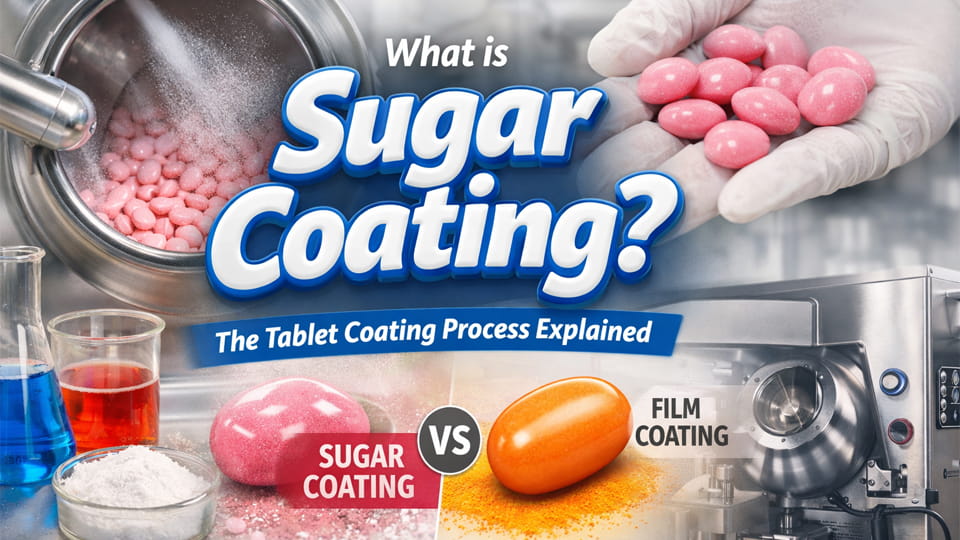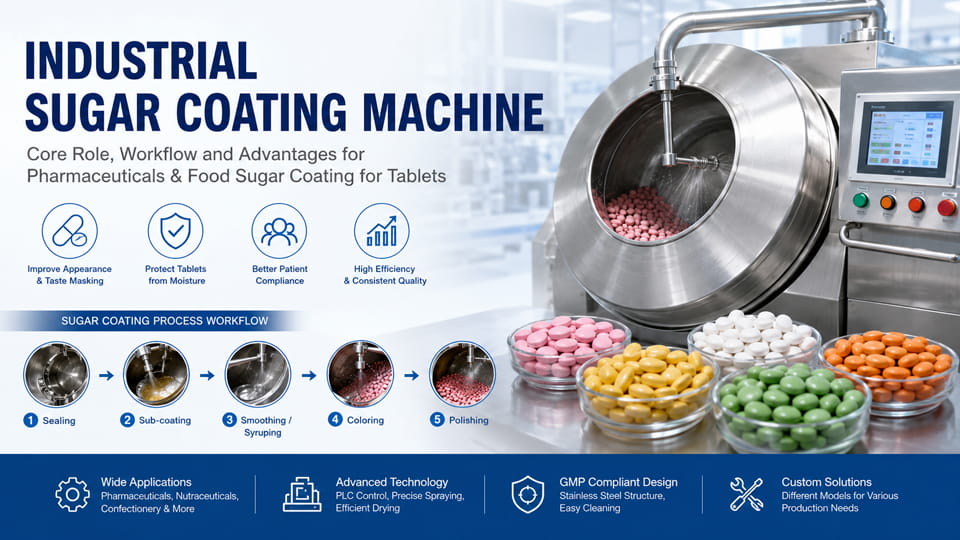

รูปแบบยาเม็ด มาในสองประเภทพื้นฐาน: เคลือบ และ ไม่เคลือบ. หนึ่ง แท็บเล็ตที่ไม่เคลือบ เป็นยาเม็ดอัดธรรมดาที่ไม่มีเปลือกเพิ่มเติม – เป็นเพียงส่วนผสมที่บีบอัดเท่านั้น (ยาออกฤทธิ์ บวก สารเพิ่มปริมาณ). ก แท็บเล็ตเคลือบ, ในทางตรงกันข้าม, มีชั้นนอกหรือเปลือกบางๆ ทาหลังการบีบอัด. สารเคลือบนี้อาจเป็นฟิล์มโพลีเมอร์ (เคลือบฟิล์ม), เปลือกที่ใช้น้ำตาล (เคลือบน้ำตาล), ชั้นลำไส้, หรือฟิล์มฟังก์ชั่นอื่นๆ. สารเคลือบทำหน้าที่ได้มากกว่าการมองเห็น เพราะสามารถปกป้องตัวยาได้, รสชาติของหน้ากาก, ปล่อยการควบคุม, หรือปรับปรุงความสามารถในการกลืน.
ตัวอย่างเช่น, รูป 1 แสดงให้เห็นว่าเครื่องเคลือบฟิล์มใช้ฟิล์มโพลีเมอร์สม่ำเสมอกับแท็บเล็ตอย่างไร, สร้างความเรียบเนียน, ยามันเงา. การเคลือบนี้ช่วยให้กลืนได้ง่ายขึ้นและปกป้องแกนแท็บเล็ตจากความชื้นและอากาศ. ในทางตรงกันข้าม, แท็บเล็ตที่ไม่เคลือบผิวธรรมดาเป็นแบบด้าน, มักจะเป็นชอล์ก, และเสี่ยงต่อสิ่งแวดล้อมมากขึ้น.
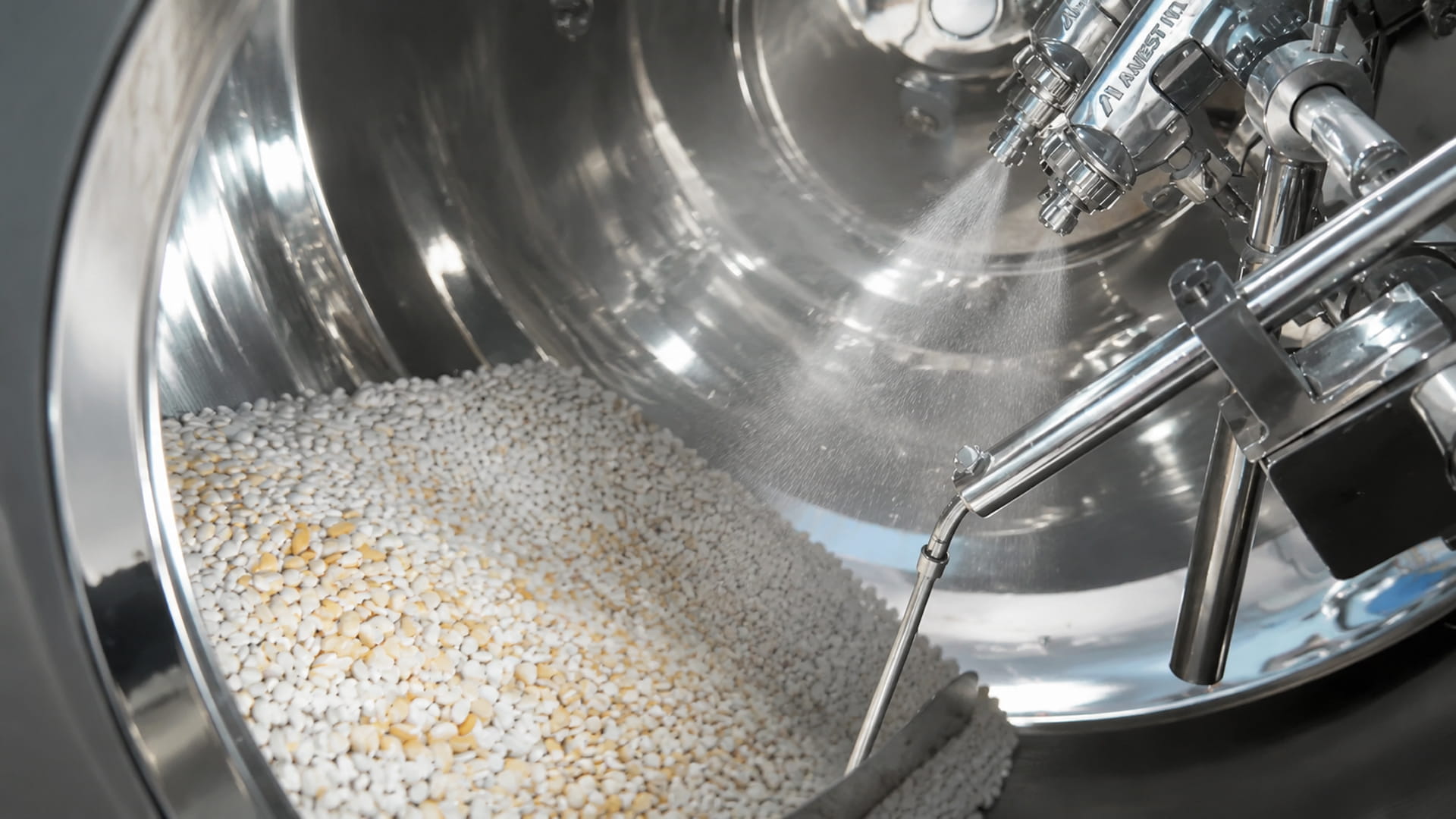
รูป 1. เครื่องเคลือบแท็บเล็ตความเร็วสูงที่ใช้การเคลือบฟิล์ม. การเคลือบเพิ่มการปกป้อง, ให้เรียบเป็นชั้นๆ ในแต่ละเม็ด, ปรับปรุงรูปลักษณ์และความมั่นคง.
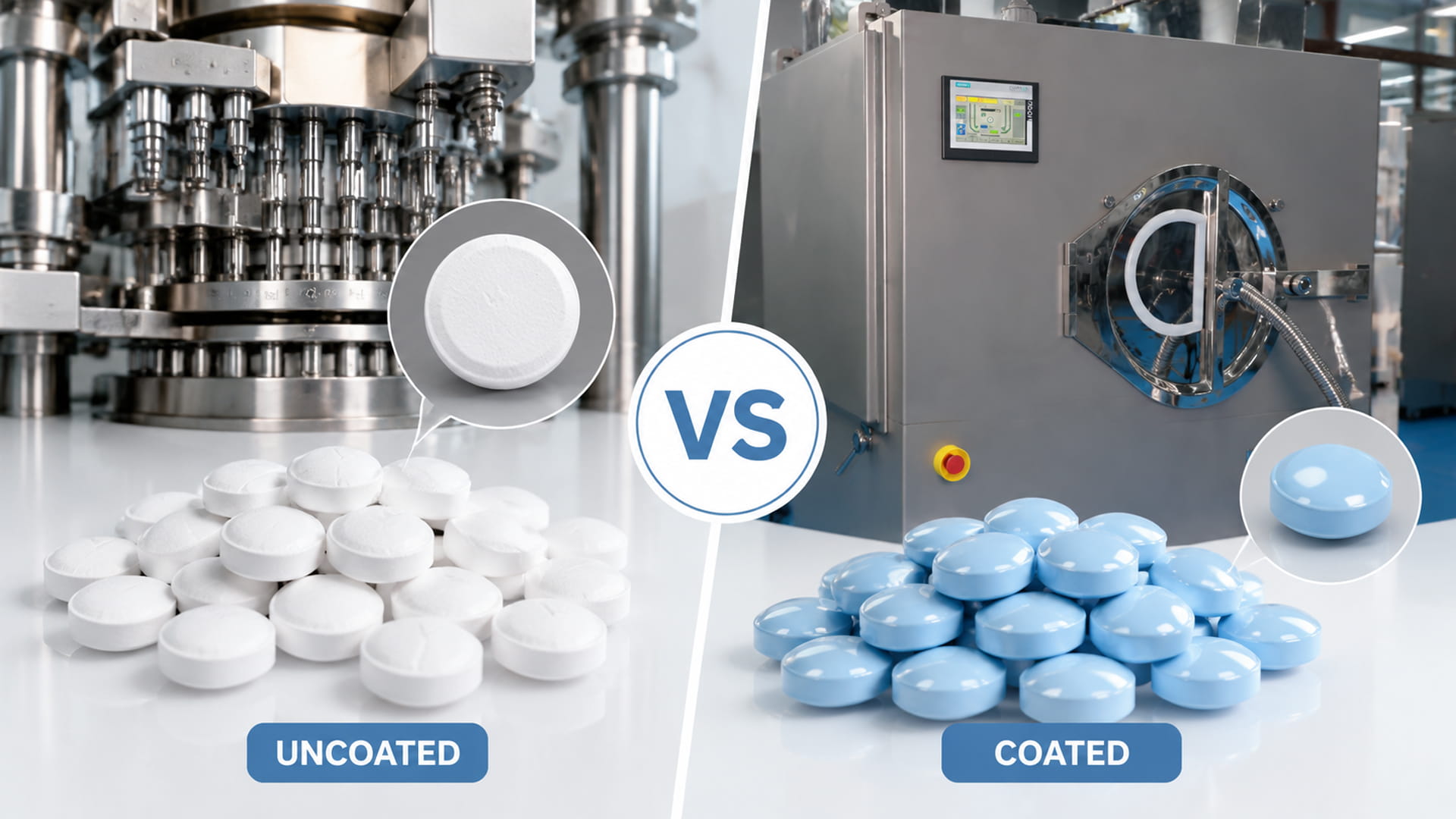
เช่น, อัน แท็บเล็ตเคลือบฟิล์ม มีฟิล์มโพลีเมอร์บางๆ (มักจะเป็นไฮดรอกซีโพรพิลเมทิลเซลลูโลสหรือคล้ายกัน) ที่ไม่ทำให้ยามีขนาดใหญ่ขึ้น. ก แท็บเล็ตเคลือบน้ำตาล มีความหนา, เปลือกน้ำเชื่อมหวาน – ต้องใช้ความลำบากในการทำและหนักกว่ามาก. หนึ่ง แท็บเล็ตเคลือบลำไส้ ใช้โพลีเมอร์ที่ไวต่อ pH เพื่อให้ผ่านกระเพาะอาหารและละลายในลำไส้. การเคลือบแต่ละประเภทมีข้อดีและข้อเสียของตัวเอง (ดูตารางด้านล่าง).
| ประเภทการเคลือบ | คำอธิบาย | การใช้งานหลัก |
| ไม่เคลือบผิว | ไม่มีการเคลือบ; แกนแท็บเล็ตถูกเปิดเผย | ปล่อยอย่างรวดเร็ว, คำนึงถึงต้นทุน, ยาที่มีเสถียรภาพ |
| ฟิล์มเคลือบ | ฟิล์มโพลีเมอร์บาง ๆ (E.G. HPMC) | กำบังรสชาติ, ป้องกันความชื้น/แสง, กลืนง่าย, การสร้างแบรนด์ |
| เคลือบน้ำตาล | ชั้นน้ำเชื่อมหนา | กำบังรสชาติเข้มข้น, ผิวมันเงาเรียบ, บ่อยครั้งในกุมารเวชศาสตร์ |
| เคลือบลำไส้ | โพลีเมอร์ที่ไวต่อค่า pH (ยูดรากิต) | ป้องกันกระเพาะอาหารหรือยา; การปล่อยลำไส้ล่าช้า |
| คนอื่น | เฉพาะทาง/ควบคุม-ปล่อย | การปลดปล่อยอย่างต่อเนื่อง, การส่งมอบที่กำหนดเป้าหมาย, ฯลฯ. |
โต๊ะ 1. การเปรียบเทียบระหว่างเม็ดยาที่ไม่เคลือบผิวกับยาเม็ดเคลือบและประเภทการเคลือบทั่วไป.
การเคลือบไม่ใช่แค่เพื่อรูปลักษณ์เท่านั้น แต่ยังเป็น ขั้นตอนการทำงาน ในการผลิตแท็บเล็ต. วิศวกรยาถาม, -แท็บเล็ตสามารถทำงานได้โดยไม่ต้องเคลือบ?” ถ้าใช่, แท็บเล็ตที่ไม่เคลือบจะง่ายกว่าและราคาถูกกว่า. แต่จะมีการเติมสารเคลือบทุกครั้งที่มีประโยชน์ทางเทคนิค. สาเหตุสำคัญที่ต้องเคลือบเม็ดยาได้แก่:
ในระยะสั้น, การเคลือบเพิ่มฟังก์ชันการทำงาน. มันไม่ได้ทำโดยพลการ, แต่เมื่อใดก็ตามที่ได้ลิ้มรส, ความมั่นคง, หรือเรื่องการควบคุมการปล่อย. ตามบันทึกคู่มืออุตสาหกรรมฉบับหนึ่ง, “การเคลือบจะใช้เฉพาะเมื่อให้ประโยชน์การใช้งานที่ชัดเจนเท่านั้น”.
เม็ดยาเคลือบผสมผสานความทนทานและความเป็นมิตรต่อผู้ใช้. ประโยชน์ที่สำคัญรวมถึง:
รูป 2 เปรียบเทียบแท็บเล็ตที่ไม่เคลือบผิวกับแท็บเล็ตที่เคลือบฟิล์ม. แท็บเล็ตเคลือบ (ขวา) มีความเรียบเนียนอย่างเห็นได้ชัด, ภายนอกมันเงาซึ่งปกปิดรอยประทับหรือความหยาบบนแกนกลาง.
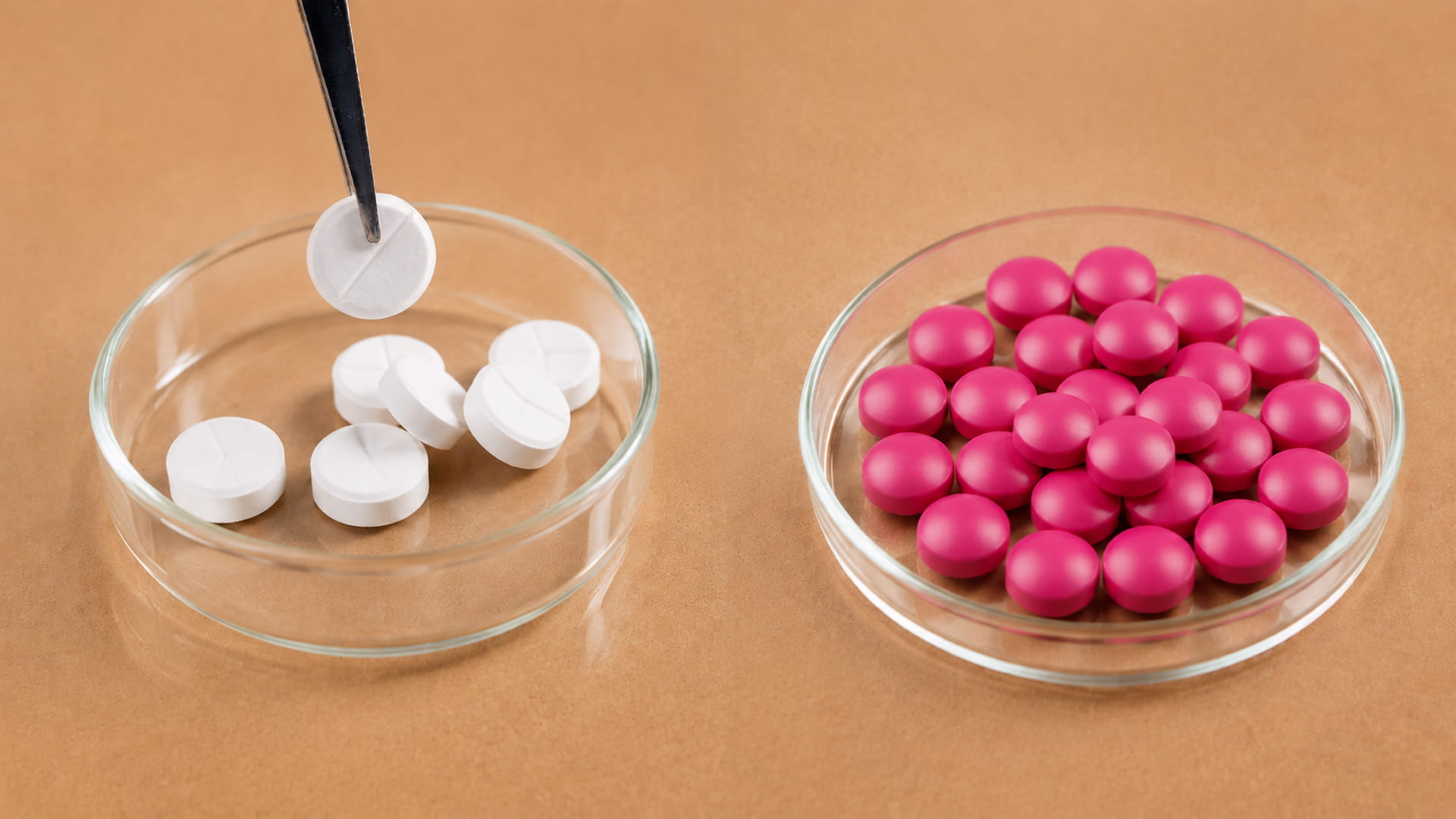
รูป 2. ไม่เคลือบผิว (ซ้าย) vs เคลือบฟิล์ม (ขวา) แท็บเล็ต. เม็ดเคลือบฟิล์มมีความเรียบเนียน, ผิวสำเร็จสม่ำเสมอซึ่งปกปิดสีและพื้นผิวของแกนกลาง. การเคลือบเช่นนี้ช่วยเพิ่มความสามารถในการกลืนและปกป้องยาที่อยู่ภายใน.
ประโยชน์ของการเคลือบนั้นอธิบายได้ง่าย: เม็ดเคลือบมักจะ “ดูดีขึ้น”, อีกต่อไป, และลงได้ง่ายขึ้น” กว่ายาเม็ดธรรมดา. ข้อดีเหล่านี้หมายความว่าแม้ว่าการเคลือบจะเพิ่มขั้นตอนและต้นทุนก็ตาม, ก็สามารถลดปัญหาในภายหลังได้ (ความเสียหาย, ข้อร้องเรียน, หมดอายุก่อนกำหนด). CMO ของผลิตภัณฑ์เสริมอาหารตั้งข้อสังเกตว่าแม้ “ยาเม็ดเคลือบจะเกี่ยวข้องกับวัสดุเพิ่มเติม, แรงงานและเวลา, การเคลือบอาจลดแบทช์ที่ถูกปฏิเสธ, ข้อร้องเรียนของลูกค้า, และปัญหาคุณภาพหลังการวางตลาด”. ในระยะยาว, เม็ดยาแบบเคลือบมักจะประหยัดเงินตลอดวงจรชีวิตของผลิตภัณฑ์.
แน่นอน, แท็บเล็ตธรรมดายังคงมีที่อยู่. เม็ดยาที่ไม่เคลือบผิวให้ความเรียบง่ายและคุ้มค่า:
พูดง่ายๆ, แท็บเล็ตที่ไม่เคลือบคือ “ทำง่ายและราคาถูก”. เป็นจุดเริ่มต้นที่ดีในการศึกษาความเป็นไปได้. บล็อกของเภสัชกรยังตั้งข้อสังเกตอีกว่ายาเม็ดแบบไม่เคลือบมีราคาถูกกว่าและใช้เวลาในการผลิตน้อยกว่า, และละลายได้เร็วปล่อยยาได้เร็ว.
อย่างไรก็ตาม, ผลกำไรเหล่านี้มาพร้อมกับการแลกเปลี่ยน: แท็บเล็ตที่ไม่เคลือบ "ปล่อยให้แกนยาเสี่ยง" ต่อความเสียหายต่อสิ่งแวดล้อม, และอาจเป็นที่ยอมรับของผู้ป่วยได้น้อย. ผู้ผลิตจึงชั่งน้ำหนักปัจจัยเหล่านี้: หากไม่จำเป็นต้องเคลือบ, พวกเขาอาจจะข้ามมันไป.
สารเคลือบไม่ได้มีขนาดเดียวสำหรับทุกคน. อุตสาหกรรมใช้การเคลือบหลายประเภทที่สำคัญ, แต่ละอันมีความเฉพาะเจาะจง การใช้และคุณประโยชน์:
เม็ดเคลือบฟิล์ม vs เม็ดเคลือบน้ำตาล: ในระยะสั้น, ฟิล์มเคลือบมีความบาง, ทนทาน, และเหมาะกับการผลิตด้วยความเร็วสูง. พวกเขาได้เปลี่ยนการเคลือบน้ำตาลเป็นส่วนใหญ่เนื่องจากเพิ่มปริมาณน้อยที่สุดและนำไปใช้อย่างรวดเร็ว. อย่างไรก็ตาม, การเคลือบน้ำตาลยังคงให้การปกปิดรสชาติที่เหนือกว่าและรูปลักษณ์คลาสสิก, จึงปรากฏในผลิตภัณฑ์เช่นวิตามินแบบเคี้ยวได้ซึ่งรสชาติเป็นสิ่งสำคัญ.
เม็ดเคลือบฟิล์มกับเม็ดเคลือบลำไส้: ความแตกต่างที่สำคัญคือสถานที่วางจำหน่าย. ฟิล์มเคลือบที่ปล่อยออกมาทันทีจะละลายในกระเพาะอาหาร และมักจะช่วยเพิ่มความสามารถในการกลืนหรือความเสถียรเท่านั้น. การเคลือบลำไส้ ความล่าช้า ละลายจนค่า pH ในลำไส้. ตัวอย่างเช่น, ยาแก้เสียดท้องอาจใช้เสื้อคลุมลำไส้เพื่อหลีกเลี่ยงกระเพาะอาหาร, ในขณะที่วิตามินรายวันอาจใช้ฟิล์มเคลือบปกติ.
ผู้ผลิตจะเคลือบแท็บเล็ตได้อย่างไร? เป็นการดำเนินการแบบสเปรย์และทำให้แห้งที่ได้รับการควบคุมอย่างระมัดระวัง. ขั้นตอนพื้นฐานก็คือ:
การผลิตแท็บเล็ตสมัยใหม่ใช้อุปกรณ์เช่น เครื่องอัดยาเม็ดแบบหมุน (สำหรับการขึ้นรูปแกน) และ เครื่องเคลือบความเร็วสูง (สำหรับทาฟิล์มหรือเปลือกน้ำตาล). เครื่องอัดแท็บเล็ตสามารถผลิตแกนที่สม่ำเสมอได้หลายแสนแกนต่อชั่วโมง. จากนั้นเครื่องเคลือบแบบพิเศษ ซึ่งโดยทั่วไปคือดรัมสแตนเลสที่มีหัวฉีดสเปรย์และการไหลเวียนของอากาศที่แม่นยำ จะใช้สารละลายเคลือบกับเม็ดยาที่กำลังเคลื่อนที่.
แต่ละขั้นตอนเหล่านี้จะต้องได้รับการควบคุมอย่างเข้มงวด. สเปรย์มากเกินไปหรืออากาศร้อนเกินไปอาจทำให้เกิด ตำหนิ เช่น เนื้อ “เปลือกส้ม” หรือฟิล์มลอก. นั่นเป็นเหตุผลว่าทำไมเครื่องเคลือบขั้นสูง (เช่นเดียวกับจาก JinluPacking) มีระบบควบคุม PLC อัตโนมัติ, หัวฉีดสเปรย์ที่แม่นยำ, และแม้แต่การตรวจสอบแบบเรียลไทม์เพื่อปรับพารามิเตอร์. ในที่สุด, ความแม่นยำคือกุญแจสำคัญ: ทุกเม็ดต้องมีความหนาเคลือบที่เหมาะสมเพื่อประสิทธิภาพที่สม่ำเสมอ.
[jl_youtube src=”https://www.youtube.com/embed/LFJJ-cEpfCk”]
เมื่อย้ายจากการพัฒนาห้องปฏิบัติการไปสู่การผลิตแท็บเล็ตเชิงพาณิชย์, การเลือกเครื่องเคลือบแท็บเล็ตที่เหมาะสมถือเป็นการตัดสินใจที่สำคัญ. ผู้จัดการฝ่ายผลิตมักจะประเมินอุปกรณ์โดยพิจารณาจากความสม่ำเสมอของการเคลือบ, ความจุ, ระดับอัตโนมัติ, ข้อกำหนดในการทำความสะอาด, และค่าบำรุงรักษา. อุปกรณ์เคลือบแท็บเล็ตที่พบมากที่สุด ได้แก่:

รูป 3. เครื่องเคลือบแท็บเล็ตความเร็วสูงอุตสาหกรรมของ Jinlu. เม็ดยาจะพังทลายลงไปในขณะที่สารละลายเคลือบถูกพ่นและทำให้แห้ง. คุณสมบัติต่างๆ เช่น เครื่องกวนแบบแผ่นกั้นและระบบหมุนเวียนวัสดุช่วยให้มั่นใจได้ถึงความครอบคลุมที่สม่ำเสมอและการเคลือบที่มีประสิทธิภาพ.
คุณสมบัติหลักที่ต้องมองหาในเครื่องเคลือบ ได้แก่:
การลงทุนในอุปกรณ์ที่มีคุณภาพให้ผลตอบแทนที่คุ้มค่า: เครื่องเคลือบที่ดีมีความสม่ำเสมอในการเคลือบสูง, ข้อบกพร่องน้อยที่สุด, และสามารถวิ่งด้วยความเร็วสูงได้. ซึ่งจะช่วยลดเวลาในการผลิตและแรงงาน. เป็นบันทึกบล็อกหนึ่ง, การเคลือบฟิล์มยุคใหม่ “รวดเร็วและสม่ำเสมอกว่าที่เคย,” ต้องขอบคุณระบบควบคุมอัตโนมัติและเครื่องจักรที่ได้รับการปรับปรุง.
เพื่อสรุป, นี่คือข้อแตกต่างหลักระหว่างแท็บเล็ตแบบเคลือบและไม่เคลือบ:
โต๊ะ 2 (ด้านล่าง) ตอกย้ำความแตกต่างเหล่านี้. โปรดทราบว่าการเคลือบไม่ได้ “ดีกว่า” ทั่วๆ ไป – ดีกว่า เมื่อจำเป็นต้องเคลือบ. เป็นคำถามที่พบบ่อยหนึ่งคำตอบ: “ยาเม็ดแบบเคลือบย่อมดีกว่ายาที่ไม่เคลือบเสมอไป? ไม่ – ยาเม็ดเคลือบจะใช้เมื่อมีเหตุผลในการทำงาน, เช่นการปิดบังรสชาติหรือการป้องกัน. เมื่อสูตรมีความคงตัวและน่ารับประทาน, แท็บเล็ตที่ไม่เคลือบผิวมักนิยมเพราะความเรียบง่ายและต้นทุน”.
| คุณสมบัติ | แท็บเล็ตที่ไม่เคลือบ | เม็ดเคลือบ |
| พื้นผิว | แมท, ผง/เม็ดที่มองเห็นได้ | เรียบ, ฟิล์มมันหรือสี |
| รสชาติ/กลิ่น | ขมหรือไม่เป็นที่พอใจอาจสังเกตเห็นได้ชัดเจน | การเคลือบมาส์กช่วยระงับกลิ่น/รสอันไม่พึงประสงค์ |
| กลืนสะดวก | มักจะยากกว่า, โดยเฉพาะอันที่ใหญ่ | ง่ายขึ้นเนื่องจากพื้นผิวเรียบ |
| การป้องกัน (ความชื้น/แสง) | ต้องใช้บรรจุภัณฑ์ที่แข็งแรง | ฟิล์มเพิ่มสิ่งกีดขวาง, ปรับปรุงเสถียรภาพ |
| ความมั่นคงของยา | เสี่ยงต่อความชื้นมากขึ้น, ความร้อน | ความเสถียรและอายุการเก็บรักษาที่ดีขึ้น |
| ความซับซ้อนในการประมวลผล | กระบวนการที่ง่ายกว่า, ขั้นตอนน้อยลง | ต้องมีขั้นตอนการเคลือบเพิ่มเติม |
| เวลา/ต้นทุน | ต้นทุนการผลิตที่ต่ำกว่า | ค่าใช้จ่ายล่วงหน้าที่สูงขึ้นแต่อาจลดต้นทุนตลอดอายุการใช้งาน |
| การควบคุมการปลดปล่อย | ปล่อยทันทีเท่านั้น | สามารถเปิดใช้งานการเผยแพร่ล่าช้าหรือควบคุมได้ (ลำไส้, ยั่งยืน) |
| การสร้างแบรนด์/รูปลักษณ์ภายนอก | จำกัด (สีธรรมดา) | ก็สามารถมีสีสันได้, พิมพ์เพื่อสร้างแบรนด์ |
โต๊ะ 2. เม็ดเคลือบและเม็ดไม่เคลือบ: การเปรียบเทียบคุณสมบัติที่สำคัญ.
ในทางปฏิบัติ, ผู้กำหนดสูตรและผู้ผลิตจะตัดสินใจตามความต้องการของผลิตภัณฑ์. หลักเกณฑ์ทั่วไปบางประการ:
บางครั้งการตัดสินใจก็ขึ้นอยู่กับบรรจุภัณฑ์: ยาเม็ดแบบเคลือบโดยทั่วไปจะดีกว่าถ้าใส่ในขวดหรือขวดโหลเพราะว่าฝุ่นจะออกน้อยกว่า. ใน แพ็คแผลพุพอง, ทั้งสองรูปแบบใช้งานได้, แต่การเคลือบอาจทำให้บรรจุภัณฑ์ง่ายขึ้น. ผู้ผลิตตามสัญญา (ซีเอ็มโอ) มักจะถาม: “เราสามารถทำให้แท็บเล็ตนี้ไม่เคลือบผิวได้หรือไม่?” และเพิ่มขั้นตอนการเคลือบเฉพาะในกรณีที่จำเป็นเท่านั้น.
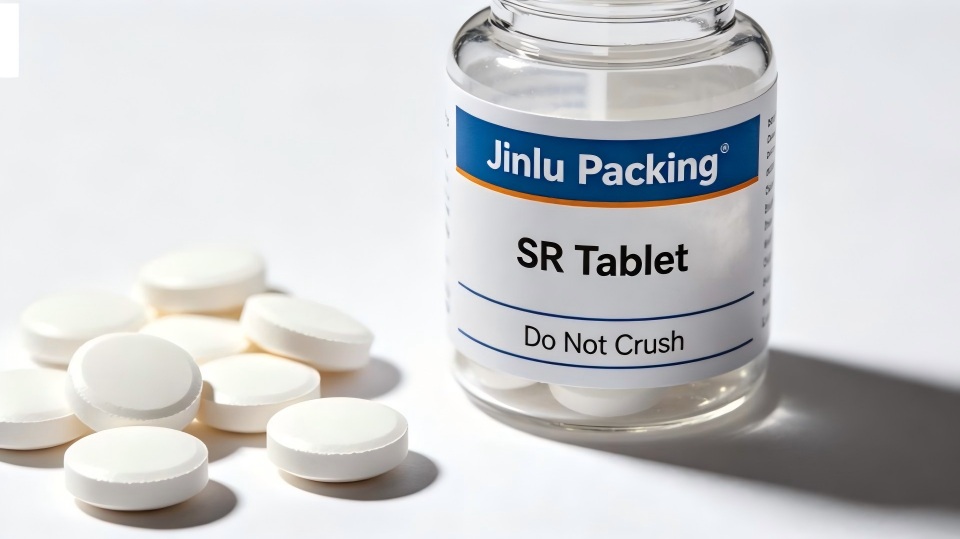
คำถามทั่วไปคือว่าเม็ดยาที่เคลือบสามารถแบ่งครึ่งหรือบดได้หรือไม่. โดยทั่วไป, เลขที่: การแยกหรือการบดเม็ดยาที่เคลือบแล้วไม่เป็นไปตามวัตถุประสงค์ของเปลือก. การเคลือบโพลีเมอร์มีวัตถุประสงค์เพื่อควบคุมการปลดปล่อยหรือป้องกันยา. การบดจะทำให้ยาเปิดเผยพร้อมกัน, ซึ่งสามารถเปลี่ยนแปลงการดูดซึมหรือทำให้เกิดการระคายเคืองได้. เม็ดเคลือบ (โดยเฉพาะอย่างยิ่งสิ่งที่ลำไส้หรือออกฤทธิ์นาน) ควรคงสภาพเดิมไว้. หากจำเป็นต้องใช้ขนาดยาที่น้อยลง, ตรวจสอบว่าแท็บเล็ตมีเส้นคะแนนหรือไม่ (แท็บเล็ตที่วางจำหน่ายทันทีบางรุ่นก็ทำได้) หรือสอบถามเภสัชกร. ดังที่ผู้เชี่ยวชาญคนหนึ่งกล่าวไว้: “โดยปกติแล้วจะไม่เป็นเช่นนั้น การบดขยี้สามารถทำลายชั้นป้องกันและเปลี่ยนแปลงการปลดปล่อยยาได้. ควรตรวจสอบกับเภสัชกรก่อนเสมอ”.
ในที่สุด, แท็บเล็ตแบบเคลือบและไม่เคลือบ เป็นการแลกเปลี่ยนระหว่างความเรียบง่ายและฟังก์ชันการทำงาน. แท็บเล็ตที่ไม่เคลือบผิวมีราคาถูกกว่าและผลิตเร็วกว่า, แต่ปล่อยให้แกนยาถูกเปิดเผย. เม็ดยาแบบเคลือบเพิ่มความซับซ้อนและต้นทุน, แต่ให้ผลประโยชน์ที่ชัดเจน: เสถียรภาพที่ดีขึ้น, ปิดบังรสชาติ, ความสามารถในการกลืนได้, และการสร้างความแตกต่างของแบรนด์. ในการผลิตยาสมัยใหม่, ยาเม็ดที่ใช้ประจำวันมากที่สุด (วิตามิน, ยา OTC, โภชนเภสัช) เป็นฟิล์มเคลือบเพราะให้ความสมดุลระหว่างการปกป้องและประสิทธิภาพ.
อย่างไรก็ตาม, เมื่อใดก็ตามที่สูตรอนุญาต, บริษัทต่างๆ อาจชอบแท็บเล็ตที่ไม่เคลือบผิวด้วยเหตุผลด้านต้นทุน. กุญแจสำคัญคือการ จับคู่ประเภทยาเม็ดให้ตรงกับความต้องการของยา. หากผลิตภัณฑ์ของคุณต้องการการปกปิดรสชาติหรือการควบคุมการปลดปล่อย, การเคลือบมักเป็นสิ่งจำเป็น. ถ้าไม่, แท็บเล็ตธรรมดาอาจเพียงพอแล้ว.
หากมีคำถามเกี่ยวกับการเคลือบแท็บเล็ตหรือเพื่อสำรวจตัวเลือกอุปกรณ์, เอื้อมมือออก! ทีมงานของเราที่ JinLuPacking เชี่ยวชาญด้านการอัดแท็บเล็ต, เครื่องเคลือบ, และสายการผลิตแท็บเล็ตที่สมบูรณ์. ไม่ว่าคุณจะต้องการระบบเคลือบฟิล์มความเร็วสูง, น้ำตาล, หรือแอปพลิเคชันลำไส้, หรือคำแนะนำในการเพิ่มประสิทธิภาพสูตรยาเม็ดของคุณ, เรามาที่นี่เพื่อช่วยเหลือ. ติดต่อเราเพื่อขอใบเสนอราคาหรือข้อมูลเพิ่มเติม, และมาตรวจสอบให้แน่ใจว่าแท็บเล็ตของคุณมีรูปลักษณ์และประสิทธิภาพที่เหมาะสม.
เม็ดเคลือบมีชั้นเพิ่มเติม (ฟิล์ม, น้ำตาลหรือพอลิเมอร์เชิงฟังก์ชัน) นำไปใช้กับแกนที่ถูกบีบอัด, ในขณะที่ยาเม็ดที่ไม่เคลือบจะเป็นยาอัดธรรมดาที่ไม่มีชั้นนอก. การเคลือบมีจุดประสงค์ในการใช้งาน: มันสามารถปกปิดรสชาติได้, ปกป้อง API จากความชื้น/แสง, และควบคุมการปล่อย. เม็ดยาที่ไม่เคลือบจะละลายทันทีและผลิตได้ถูกกว่า, แต่พวกมันจะทำให้ยาออกสู่สิ่งแวดล้อมและมักจะมีรสขม.
แท็บเล็ตถูกเคลือบเพื่อเพิ่มความเสถียร, การยอมรับของผู้ป่วย, และประสิทธิภาพ. มีสารเคลือบช่วยปกป้องความชื้น- หรือ API ที่ไวต่อแสง, ปกปิดรสชาติอันไม่พึงประสงค์, และทำให้กลืนแท็บเล็ตได้ง่ายขึ้น. การเคลือบแบบพิเศษ (เหมือนหนังเกี่ยวกับลำไส้) สามารถชะลอการหลั่งออกไปจนถึงลำไส้ได้, ป้องกันการระคายเคืองในกระเพาะอาหาร. ในระยะสั้น, การเคลือบช่วยเพิ่มรูปลักษณ์และอายุการเก็บรักษาของแท็บเล็ต, และสามารถควบคุมการส่งยาและการปฏิบัติตามข้อกำหนดของผู้ป่วยได้ดีขึ้น.
ไม่มีสิ่งใดที่ “ดีกว่า” ในระดับสากล ขึ้นอยู่กับการใช้งาน. เม็ดยาแบบเคลือบมีข้อดีในการปกป้องและดึงดูดใจคนไข้, แต่มีราคาสูงกว่าและต้องมีการประมวลผลเพิ่มเติม. แท็บเล็ตที่ไม่เคลือบจะง่ายกว่า, เร็วขึ้น, และผลิตได้ถูกกว่า, และพวกมันก็จะปล่อยยาออกมาอย่างรวดเร็ว. เพื่อความมั่นคง, ยาที่ออกฤทธิ์ทันทีโดยคำนึงถึงต้นทุนเป็นหลัก, ไม่เคลือบอาจจะเหมาะ. สำหรับยาที่มีรสขมหรือไวต่อความชื้น ซึ่งการปกปิดรสชาติและความคงตัวเป็นสิ่งสำคัญอันดับแรก, เคลือบเป็นทางเลือกที่ดีกว่า.
วิธีการเคลือบเม็ดยาหลักๆ มี 3 วิธีคือ:
• เคลือบฟิล์ม: ชั้นโพลีเมอร์บาง ๆ (มักจะใช้น้ำ) ใช้โดยสเปรย์; ที่พบบ่อยที่สุดในวันนี้. ให้การปกป้องความชื้นและสร้างแบรนด์โดยมีน้ำหนักเพิ่มขึ้นน้อยที่สุด.
• เคลือบน้ำตาล: เปลือกน้ำตาลหนาที่สร้างจากน้ำเชื่อมหลายชั้น; ให้ผิวมันเงาและมาส์กมีรสชาติดี, แต่เพิ่มจำนวนมากและต้องใช้การประมวลผลที่ยาวนาน.
• เคลือบลำไส้: ฟิล์มที่ไวต่อค่า pH ที่ต้านทานกรดในกระเพาะอาหารและละลายในลำไส้. ในทางเทคนิคแล้วเป็นการเคลือบฟิล์มประเภทหนึ่งด้วยโพลีเมอร์ชนิดพิเศษ, ใช้สำหรับยาที่ไม่มีส่วนผสมของกรดหรือเพื่อหลีกเลี่ยงการระคายเคืองในกระเพาะอาหาร.
เม็ดยาเคลือบฟิล์มได้รับประโยชน์หลักในการเคลือบส่วนใหญ่ด้วยเปลือกที่บางกว่า. ฟิล์มเคลือบน้ำที่ดีจะช่วยปกป้องตัวยาได้ (อุปสรรคความชื้น/แสง), ปกปิดรสชาติและกลิ่น, และปรับปรุงความสวยงามโดยไม่ต้องเพิ่มขนาดแท็บเล็ตอย่างมีนัยสำคัญ. การเคลือบฟิล์มแห้งเร็วในการเคลือบที่ทันสมัย, ให้ปริมาณงานสูง. นอกจากนี้ยังสามารถกำหนดสูตรสำหรับโปรไฟล์การเผยแพร่เฉพาะได้อีกด้วย (ลำไส้หรือยั่งยืน) โดยเลือกใช้โพลีเมอร์.
โดยทั่วไป, ใช่. เม็ดยาที่ไม่เคลือบมักจะสลายตัวและละลายเร็วขึ้นเนื่องจากไม่มีชั้นกั้น. API จะสัมผัสกับของเหลวในกระเพาะอาหารทันที, นำไปสู่การเกิดอาการเร็วขึ้น. ในทางตรงกันข้าม, แม้แต่การเคลือบฟิล์มที่ปล่อยออกมาทันทีก็ยังเพิ่มความล่าช้าเล็กน้อย (เนื่องจากขนจะต้องละลายก่อน). อย่างไรก็ตาม, ความแตกต่างอาจมีน้อยขึ้นอยู่กับองค์ประกอบและความหนาของสารเคลือบ.
อุปกรณ์เคลือบทั่วไปได้แก่:
• เครื่องเคลือบกระทะแบบเจาะรู (เครื่องเคลือบความเร็วสูง): เครื่องจักรมาตรฐานอุตสาหกรรมพร้อมถังหมุนมีรูพรุน. อากาศอุ่นไหลผ่านถังซัก, ให้ประสิทธิภาพการอบแห้งสูงและการเคลือบสม่ำเสมอ.
• เครื่องเคลือบฟลูอิดเบด: แท็บเล็ตถูกแขวนไว้ตามกระแสอากาศและพ่นจากด้านล่างหรือด้านบน. เหมาะสำหรับเม็ดหรือเม็ดเล็กที่มีชั้นบางสม่ำเสมอมาก.
• กระทะเคลือบแบบดั้งเดิม: กระทะเปิดขนาดใหญ่ที่ใช้สำหรับเคลือบน้ำตาลเป็นหลัก (ต้องใช้แรงงานเข้มข้นและส่วนใหญ่ล้าสมัยในยาสมัยใหม่).
เครื่องแต่ละประเภทจะถูกเลือกตามขนาดชุดงาน, ขนาด/รูปร่างของแท็บเล็ต, และวัสดุเคลือบ. สำหรับการเคลือบฟิล์มขนาดใหญ่, กระทะเจาะรู (เหมือนเครื่องเคลือบแท็บเล็ตของ Jinlu) เป็นเรื่องธรรมดาที่สุด.
การเคลือบสามารถชะลอหรือปรับเปลี่ยนการปล่อยยาได้. ชั้นเคลือบลำไส้ช่วยป้องกันการปล่อยกรดในกระเพาะอาหาร, ยาจึงออกเฉพาะในลำไส้เท่านั้น. สารเคลือบพิเศษอื่นๆ (ภาพยนตร์ที่ออกฉายอย่างต่อเนื่อง) ประกอบด้วยโพลีเมอร์ที่ช่วยชะลอการซึมผ่านของของไหล, ยืดเวลาการปลดปล่อยออกไปหลายชั่วโมง. แม้กระทั่งชั้นเคลือบฟิล์มที่ใช้งานไม่ได้ (เพื่อการปล่อยตัวทันที) อาจปล่อยช้าเล็กน้อยเมื่อเทียบกับแกนที่ไม่เคลือบผิว, เพราะอุปสรรคจะต้องสลายไปเสียก่อน. ดังนั้น, การเคลือบเป็นเครื่องมือในการปรับแต่งตำแหน่งและความเร็วของการส่งมอบ API อย่างแม่นยำ.
การเคลือบฟิล์มมีความหลากหลายและมีประสิทธิภาพ. ช่วยปกป้องยาและปรับปรุงรสชาติ/รูปลักษณ์โดยใช้เวลาในการผลิตน้อยที่สุด. ฟิล์มเคลือบน้ำสมัยใหม่แห้งเร็ว, ซึ่งจำเป็นสำหรับการผลิตที่มีปริมาณงานสูง. นอกจากนี้ยังอนุญาตให้เพิ่มสีและตัวระบุได้, ช่วยสร้างความแตกต่างของแบรนด์. เนื่องจากสามารถออกแบบสำหรับโปรไฟล์การเปิดตัวที่แตกต่างกันได้, การเคลือบฟิล์มเป็นกลไกสำคัญสำหรับบริษัทยาที่ต้องการมอบทั้งคุณภาพและประสิทธิภาพในแท็บเล็ตของตน.
บริษัทต่างๆ ประเมินปัจจัยหลายประการ. หากตัวยาไม่เสถียร, ขม, หรือต้องการการปกป้องกระเพาะอาหาร (ปล่อยลำไส้), พวกเขาเลือกยาเม็ดเคลือบ. หากสูตรมีความคงตัวอยู่แล้ว, รสชาติเป็นที่ยอมรับ, และการลดต้นทุนให้น้อยที่สุดถือเป็นสิ่งสำคัญ, พวกเขาไปกับการไม่เคลือบผิว. ตามที่คู่มืออุตสาหกรรมฉบับหนึ่งสรุปไว้: ใช้ยาเม็ดเคลือบหาก “คุณต้องการปิดบังรสชาติ”,” “ป้องกันความชื้น, แสงหรือออกซิเดชัน,” หรือ “ควบคุม/ปล่อยล่าช้า”; เลือกแบบไม่เคลือบหากสูตรของคุณมีความเสถียรและไม่จำเป็นต้องปกป้องเป็นพิเศษ. โดยพื้นฐานแล้ว, การตัดสินใจนั้นขับเคลื่อนด้วยข้อกำหนดของผลิตภัณฑ์ (เคมีเอพีไอ, การเปิดตัวเป้าหมาย, ความต้องการทางการตลาด) เมื่อเทียบกับการพิจารณาการผลิต (ค่าใช้จ่าย, ความพร้อมของอุปกรณ์).
อ้างอิง:
1.การประยุกต์ใช้ทางเภสัชกรรมในการเคลือบฟิล์มแท็บเล็ต —— หอสมุดแห่งชาติแพทยศาสตร์
2.การเคลือบแท็บเล็ต —— วิศวกรรมเคมีมหาวิทยาลัยมิชิแกน
3.การเคลือบแท็บเล็ต: วิศวกรรมระบบกระบวนการสำหรับการผลิตยา —— วิทยาศาสตร์โดยตรง
4.การเคลือบยาและแนวทางที่แตกต่าง, รีวิว —— หอสมุดแห่งชาติแพทยศาสตร์
5.การทบทวนที่ครอบคลุมเกี่ยวกับการเคลือบฟิล์มทางเภสัชกรรม: อดีต, ปัจจุบัน, และอนาคต —— หอสมุดแห่งชาติแพทยศาสตร์
6.การประยุกต์ใช้ทางเภสัชกรรมในการเคลือบฟิล์มแท็บเล็ต —— เอ็มดีพีไอ
7.ความก้าวหน้าในเทคโนโลยีการผลิตแท็บเล็ต: บท 10 – เทคโนโลยีเม็ดเคลือบ —— วิทยาศาสตร์โดยตรง