
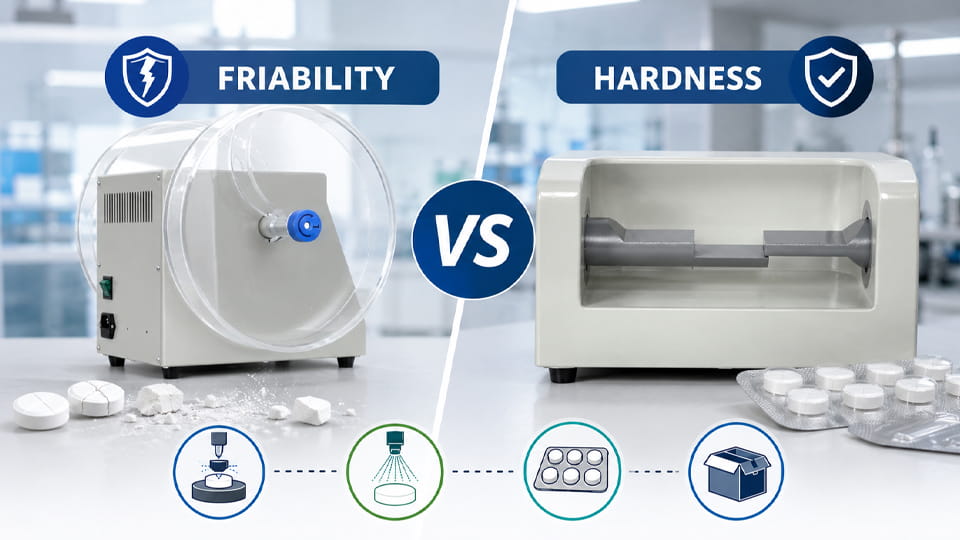
ใน การผลิตแท็บเล็ต, ความแข็ง และ ความกร่อน เป็นมาตรการคุณภาพที่สำคัญสองประการ. ความแข็ง (แรงทำลาย) บอกเราว่าแท็บเล็ตสามารถรับแรงกดดันได้มากเพียงใดก่อนที่มันจะแตก. ความกร่อนจะวัดว่าพื้นผิวของแท็บเล็ตแตกหรือสึกกร่อนได้ง่ายเพียงใดเมื่อล้มหรือหยิบจับ. กล่าวอีกนัยหนึ่ง, การตรวจสอบความแข็ง ความแข็งแกร่งภายใน, ในขณะที่ตรวจสอบความกร่อน ความทนทานของพื้นผิว. คุณสมบัติทั้งสองส่งผลต่อการประมวลผลขั้นปลาย ตั้งแต่วิธีการบีบอัดแท็บเล็ตไปจนถึงวิธีการเคลือบและการบรรจุในขั้นสุดท้าย. บทความนี้จะอธิบายว่าทำไมความเปราะบางและความแข็งจึงมีความสำคัญ, แต่ละคนได้รับการทดสอบอย่างไร, และอิทธิพลของการบีบอัดแท็บเล็ตอย่างไร, การเคลือบ, และคุณภาพบรรจุภัณฑ์ในสายการผลิตจริง.
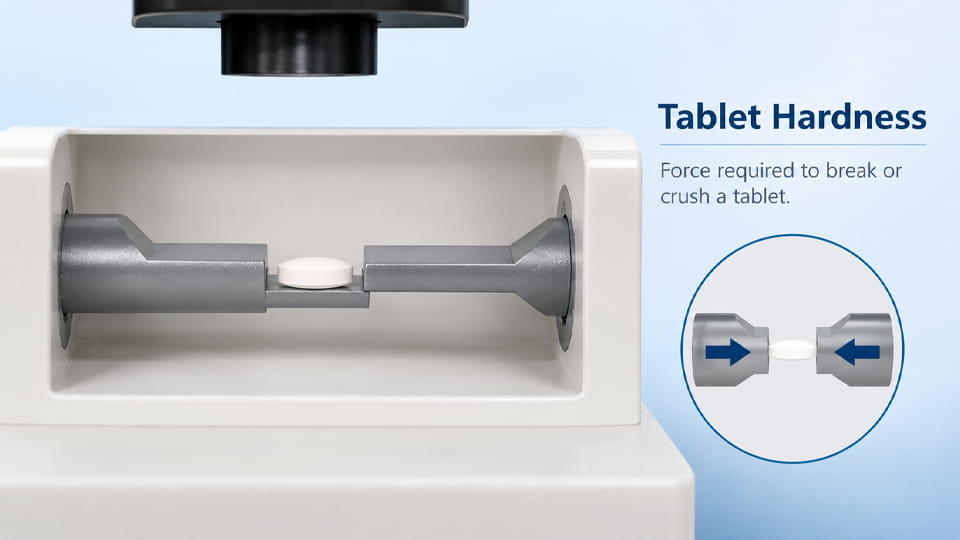
ความแข็งของแท็บเล็ต (ในทางเทคนิคแล้ว “แรงทำลายแท็บเล็ต”) คือแรงที่ต้องใช้ในการทำให้แท็บเล็ตแตกโดยการบีบอัด. ในทางปฏิบัติ, ความแข็งวัดโดยการวางแท็บเล็ตระหว่างทั่งหรือแท่นสองอันแล้วออกแรงจนแตกหัก. เครื่องทดสอบความแข็งสมัยใหม่ (คู่มือหรือดิจิทัล) วัดแรงสูงสุดเป็นกิโลกรัมหรือนิวตัน. แรงทำลายของแท็บเล็ตเป็นสิ่งสำคัญสำหรับ การควบคุมคุณภาพ: แท็บเล็ตต้องแข็งแรงพอที่จะทนทานต่อการหยิบจับ, บรรจุภัณฑ์, และจัดส่งโดยไม่แตกหัก. สหรัฐอเมริกา. และเภสัชตำรับของยุโรประบุวิธีมาตรฐานด้านความแข็ง (แรงทำลาย) การทดสอบ. วรรณกรรมอุตสาหกรรมบางเรื่องชอบคำนี้มากกว่า “พลังทำลายล้าง” เหนือ "ความแข็ง,” เนื่องจากในวัสดุศาสตร์ โดยทั่วไป “ความแข็ง” หมายถึง ความต้านทานต่อการเยื้องของพื้นผิว, ในขณะที่การทดสอบแท็บเล็ตจะวัดความแรงของการบีบอัด.
ความแข็งของเม็ดยาขึ้นอยู่กับการกำหนดสูตรและพารามิเตอร์ของกระบวนการ. สูงกว่า แรงอัด โดยทั่วไปแล้วจะให้ยาเม็ดที่ยากกว่า, ในขณะที่ปัจจัยด้านการกำหนดสูตร เช่น สารยึดเกาะและสารหล่อลื่นก็ส่งผลต่อความแข็งเช่นกัน. ตัวอย่างเช่น, เพิ่มสารยึดเกาะ (E.G. PVP หรือ HPMC) มักจะเพิ่มความแข็งแกร่งของแท็บเล็ต, ในขณะที่มีสารหล่อลื่นมากเกินไป (แมกนีเซียมสเตียเรต) สามารถทำให้พันธะระหว่างอนุภาคอ่อนลงได้. ขนาดของแท็บเล็ต, รูปร่าง, และความพรุนก็มีบทบาทเช่นกัน: เม็ดยาที่หนาขึ้นหรือหนาแน่นกว่ามักต้องใช้แรงมากขึ้นในการแตกหัก.
มีความแข็งต่ำเกินไป (ภายใต้การบีบอัด) ทำให้แท็บเล็ต แตก, สลายหรือชิป อย่างง่ายดาย. มีความแข็งสูงเกินไป, อย่างไรก็ตาม, อาจมีข้อเสีย: แท็บเล็ตที่ยากมากอาจ สลายตัวอย่างช้าๆ หรือละลายในร่างกายช้าเกินไป. แท็บเล็ตที่แข็งเกินไปก็สามารถเป็นได้ ผู้ป่วยกลืนลำบาก. ดังนั้น, การออกแบบแท็บเล็ตต้องสร้างความสมดุลระหว่างความแข็งแรงทางกลกับประสิทธิภาพ. ในทางปฏิบัติ, ผู้ผลิตกำหนดช่วงการยอมรับ (E.G. 4–10 กก. หรือประมาณนั้น) เพื่อทำลายแรงในระหว่างการผลิต.
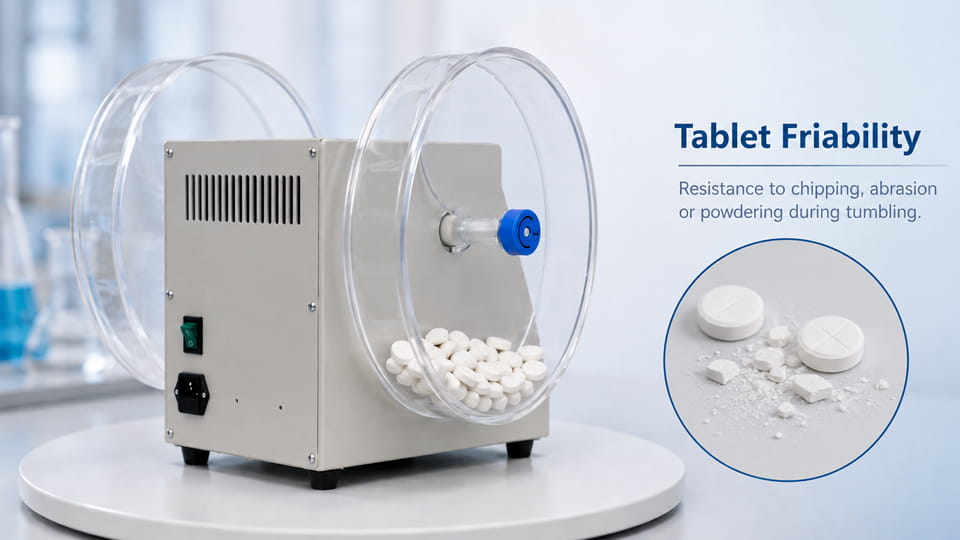
ความเปราะบางของแท็บเล็ตคือการวัดว่าแท็บเล็ตจะพังหรือสูญเสียมวลได้ง่ายเพียงใดเมื่ออยู่ภายใต้ความเครียดทางกล, เช่นการล้มหรือการกระแทก. การทดสอบความกร่อน เกี่ยวข้องกับการวางแท็บเล็ตที่กำจัดฝุ่นลงในถังหมุน (โรช เฟรเอเบิล), โดยทั่วไปที่ 25 รอบต่อนาที, และบังคับพวกเขาให้อยู่ภายใต้ 100 การปฏิวัติ. การปฏิวัติแต่ละครั้งจะกลิ้งและวางเม็ดยาตามความสูงคงที่เพื่อจำลองความเครียดระหว่างการจัดการและการขนส่ง. หลังจากการทดสอบ, มีการรวบรวมแท็บเล็ต, และฝุ่นที่เกาะอยู่จะถูกกำจัดออกไป. มีการชั่งน้ำหนักยาเม็ดก่อนและหลังเพื่อกำหนดเปอร์เซ็นต์การลดน้ำหนัก, ซึ่งมีรายงานว่าเป็น ความกร่อน. ตัวอย่างเช่น, ที่ USP <1216> และปริญญาเอก. เอกสารอธิบายขั้นตอนนี้.
ยิ่งความเปราะบางต่ำลง, ยิ่งแท็บเล็ตมีความทนทานต่อการขีดข่วนหรือการบิ่นมากเท่าใด. ขีดจำกัดความกร่อนที่ยอมรับได้นั้นเป็นไปตามอัตภาพ ≤1.0% ลดน้ำหนัก. แท็บเล็ตที่เสียเกินเกณฑ์นี้, หรือการแตกหรือแตกหักอย่างเห็นได้ชัดระหว่างการทดสอบ, ไม่ผ่านเกณฑ์ความเปราะบาง. ความกร่อนของแท็บเล็ตอยู่โดยเฉพาะ ความทนทานหลังการบีบอัด – จำลองความเครียดทางกายภาพที่ใบหน้าของเม็ดยาในกระทะเคลือบ, สายพานลำเลียง, ฟิลเลอร์ขวด, เส้นตุ่ม, และบรรจุภัณฑ์. ความเปราะบางสูงปรากฏให้เห็นเป็นเศษบนขอบแท็บเล็ต, รอยแตกที่มองเห็นได้, หรือฝุ่นส่วนเกิน. ความเปราะบางจึงเป็นคุณสมบัติด้านคุณภาพที่เชื่อมโยงอย่างใกล้ชิดกับความทนทานของบรรจุภัณฑ์และการจัดการ.
การทดสอบเหล่านี้ฟังดูคล้ายกันแต่จะตรวจสอบความเค้นต่างกัน. ในแง่ง่ายๆ:
ลองนึกภาพสองแท็บเล็ต: มีอันหนึ่งทดสอบที่ 20 เคพี (กิโลปอนด์) ของแรงบดขยี้ (ยากมาก) และอีกอันที่ 5 เคพี (อ่อนนุ่ม). คุณอาจจะคิดว่า 20 แท็บเล็ต kP ทำลายไม่ได้, แต่ถ้าขอบมันเปราะ, มันยังอาจสูญเสียมวล 2–3% ในถังที่มีความเปราะบาง - เป็นสองเท่าของขีดจำกัดที่ยอมรับได้. ในทางปฏิบัติ, แท็บเล็ตก็ได้ “แข็งมาก—ต้องใช้แรงมากในการบดขยี้—แต่ก็เปราะบางอย่างน่าประหลาดใจ”. นี่แสดงให้เห็นว่าทำไม ทั้งคู่ จำเป็นต้องมีการทดสอบ. ตารางด้านล่างสรุปความแตกต่าง:
ในระยะสั้น: ความแข็งต้านทาน บดขยี้, ในขณะที่ความเปราะบางต้านทาน บิ่น. การออกแบบแท็บเล็ตที่แข็งแกร่งทำให้ทั้งสองอย่างมีความสมดุล: มันจะต้องรอดจากการกดและเครื่องจักรโดยไม่มีฝุ่น, แต่ยังคงละลายได้ดี.
| พารามิเตอร์ | ความแข็งของแท็บเล็ต (พลังทำลายล้าง) | ความกร่อนของแท็บเล็ต |
|---|---|---|
| มันวัดอะไร | ความต้านทานต่อแรงที่ใช้เพียงครั้งเดียว (การบีบอัดหรือความตึงเครียด) ทำให้เกิดการแตกหัก | ทนทานต่อการเสียดสีซ้ำๆ, ผลกระทบ, และการบิ่น (ลดน้ำหนักเมื่อร่วงหล่น) |
| ประเภทความเครียดทั่วไป | แรงอัดขนาดใหญ่หรือแรงดัดงอสามจุดเพียงครั้งเดียวจนกระทั่งเกิดความเสียหาย | ล้ม/ล้มหลายครั้ง (โดยปกติ 100 การหมุน) จำลองการกระแทกขณะจัดการ |
| วัตถุประสงค์หลัก | ประเมินความแข็งแกร่งในการแตกหักของแท็บเล็ต (ความทนทานของสูตรภายใต้การบีบอัด) | ประเมินความทนทานระหว่างการลำเลียง, การเคลือบ, และบรรจุภัณฑ์ |
| ทดสอบผลลัพธ์ | ค่าพลังทำลายล้าง (E.G. ในนิวตันหรือ kp) | เปอร์เซ็นต์การลดน้ำหนักหลังการทดสอบ (และการตรวจสอบความเสียหายด้วยสายตา) |
| เชื่อมโยงไปถึงคุณภาพ | ตั้งค่าพารามิเตอร์การบีบอัด; ช่วยให้มั่นใจได้ว่าแท็บเล็ตจะไม่แตกร้าวภายใต้แรงกด | ตั้งค่าการตั้งค่าสายการบรรจุ; ช่วยให้มั่นใจได้ว่าแท็บเล็ตสามารถทนต่อการเคลือบ/การขนส่งได้ |
| ทดแทนได้ด้วยการทดสอบอื่น ๆ? | เลขที่. ความเครียดที่แตกต่างกัน; ต้องการการวัดของตัวเอง. | เลขที่. เหตุผลการทดสอบที่แตกต่างกัน; ไม่สามารถทดแทนการทดสอบความแข็งได้. |
ตารางด้านบนเน้นย้ำว่า ความแข็งและความเปราะบางเป็นการวัดในด้านต่างๆ. ความแข็ง (แรงทำลาย) เป็นการทดสอบความเครียดแบบครั้งเดียว, ในขณะที่การทดสอบความกร่อนทำซ้ำการกระแทกระดับต่ำ. ที่สำคัญ., แท็บเล็ตก็ได้ ยากแต่ก็เปราะบาง หรือในทางกลับกัน. ตัวอย่างเช่น, แท็บเล็ตที่มีแรงทำลายสูงอาจยังคงอยู่ ไม่ผ่านการทดสอบความกร่อน หากขอบของมันบิ่นง่ายหรือหากการยึดติดภายในไม่สม่ำเสมอ. ในระยะสั้น, ความแข็งและความเปราะบางมีความสัมพันธ์กันแต่ไม่สามารถใช้แทนกันได้ - ทั้งสองอย่างจะต้องได้รับการประเมิน.
เครื่องทดสอบความแข็งของแท็บเล็ตใช้แรงควบคุมกับแท็บเล็ตตัวเดียวจนกระทั่งแตกหัก. ในการทดสอบทั่วไป, ทั่งแบนสองอัน (จาน) จับแท็บเล็ต – หนึ่งอันอยู่กับที่, คนหนึ่งกำลังเคลื่อนไหว. ผู้ทดสอบจะบันทึกแรงขณะแตกหัก. ผู้ทดสอบด้วยตนเอง (ที่มีสปริงเหมือนมอนซานโต) และผู้ทดสอบดิจิตอลที่ทันสมัย (พร้อมโหลดเซลล์และการอ่านข้อมูลแบบอิเล็กทรอนิกส์) เป็นเรื่องธรรมดา. ผู้ทดสอบอิเล็กทรอนิกส์ให้ความแม่นยำ, การวัดซ้ำและมักจะวัดเส้นผ่านศูนย์กลางและความหนาไปพร้อมๆ กัน. ในระหว่างการทดสอบ, ปัจจัยเช่น การวางแนวแท็บเล็ต (สำหรับแท็บเล็ตหน้าแบน) หรืออุปกรณ์พิเศษ (เพื่อรูปทรงที่ไม่ธรรมดา) ได้รับการควบคุมอย่างรอบคอบเพื่อให้ได้ผลลัพธ์ที่สม่ำเสมอ. แรงทำลายที่วัดได้จะแจ้งการควบคุมคุณภาพ: แบทช์จะได้รับการยอมรับก็ต่อเมื่อความแข็งอยู่ภายในช่วงที่กำหนดสำหรับสูตรนั้น.
ก เปราะบาง หรือเครื่องทดสอบความกร่อนจะสุ่มตัวอย่างเม็ดยาในถังใสเพื่อจำลองการหยิบจับ. ขั้นตอนสำคัญ (ต่อ USP/Ph.Eur) เป็น: 1. กำจัดและชั่งน้ำหนักตัวอย่างแท็บเล็ต (E.G. 6.5 กรัมหรือ 10 แท็บเล็ต). 2. วางแท็บเล็ตลงในถังหมุนที่มีแถบยกอยู่ข้างใน. 3. หมุนที่ 25 รอบต่อนาทีเป็นเวลา 100 การปฏิวัติ (4 นาที). 4. ถอดแท็บเล็ตออก, กำจัดฝุ่นที่หลวม, ชั่งน้ำหนักใหม่. 5. คำนวณ % ลดน้ำหนัก: .
ถ้า แท็บเล็ตใด ๆ แตกหรือแตกหัก หลังจากล้มลง, แบตช์ล้มเหลวทันที. มิฉะนั้น, ถ้าน้ำหนักลดหมด >1%, การทดสอบซ้ำเป็นสามเท่าและใช้ค่าเฉลี่ย. ในทางปฏิบัติ, แท็บเล็ตที่ผ่านไปจะแสดงเศษหรือฝุ่นน้อยที่สุด. ผลลัพธ์ความเปราะบางเป็นแนวทางในการตัดสินใจก่อนการเคลือบและบรรจุภัณฑ์: การสูญเสียสูงทำให้เกิดการปฏิรูปหรือการเปลี่ยนแปลงกระบวนการ.
วิธีทดสอบถือว่าเม็ดยาไม่เคลือบ. สามารถทดสอบยาเม็ดเคลือบได้, แต่พวกมันมักจะมีความเปราะบางน้อยกว่าเพียงเพราะเปลือก. ในทางกลับกัน, เม็ดฟู่หรือมีรูพรุนสูงอาจต้องมีการควบคุมความชื้นเป็นพิเศษในระหว่างการทดสอบ. รูปร่างและขนาดของแท็บเล็ต ส่งผลต่อพฤติกรรมการสะดุดล้ม; สำหรับรูปทรงที่ไม่สม่ำเสมอ, ฐานถังซักสามารถเอียงได้ประมาณ 10° เพื่อให้แน่ใจว่ามีการเคลื่อนไหวแบบสุ่ม. ในทุกกรณี, มาตรฐานย่อ (USP, ปริญญาเอกยุโรป) ระบุเครื่องมือและขั้นตอน. ห้องปฏิบัติการสมัยใหม่ยังตรวจสอบการสอบเทียบเครื่องทดสอบความแข็งและความกร่อน และดำเนินการควบคุมคุณภาพด้วยแท็บเล็ตอ้างอิงมาตรฐานเป็นประจำ.
คุณสมบัติทั้งสองขึ้นอยู่กับสูตรและการประมวลผล. ปัจจัยสำคัญ ได้แก่ ประเภท/ความเข้มข้นของสารยึดเกาะ, แรงอัด, และรูปทรงแท็บเล็ต. ตัวอย่างเช่น:
เพราะมีตัวแปรมากมายที่สำคัญ, ผู้ผลิตกำหนดช่วงเป้าหมายมากกว่าค่าเดียว. มี ไม่มีความแข็ง "สมบูรณ์แบบ" ที่เป็นสากล; ขึ้นอยู่กับผลิตภัณฑ์ แบบฟอร์มการให้ยา, ตั้งใจใช้, และบรรจุภัณฑ์. มีวิตามินชนิดเคี้ยวและมี เคลือบฟิล์ม ยาแก้ปวดอาจมีระดับความแข็งที่เหมาะสมแตกต่างกันมาก, แม้ว่าพวกเขาจะมีน้ำหนักเท่ากันก็ตาม.
ขั้นตอนการบีบอัดบนการกดแท็บเล็ตจะเป็นตัวกำหนดความแข็งเป็นส่วนใหญ่. ในทางปฏิบัติ:

ในระยะสั้น, การปรับพารามิเตอร์และสูตรการบีบอัดให้เหมาะสมเป็นสิ่งสำคัญ. ตามคำแนะนำในการแก้ไขปัญหาของ JinluPacking, “ถ้าเม็ดนิ่มเกินไป, พวกเขาอาจจะชิป, หยุดพัก, หรือมีความกร่อนสูง. ถ้ายากเกินไป, พวกมันอาจต้านทานการเคลือบหรือละลายช้า”. โดยการปรับแรงอัดและปริมาณสารยึดเกาะ, ผู้ผลิตสามารถมุ่งเป้าไปที่แท็บเล็ตที่ทนทานต่อความเค้นในกระบวนการโดยไม่ใช้ความแข็งมากเกินไป.
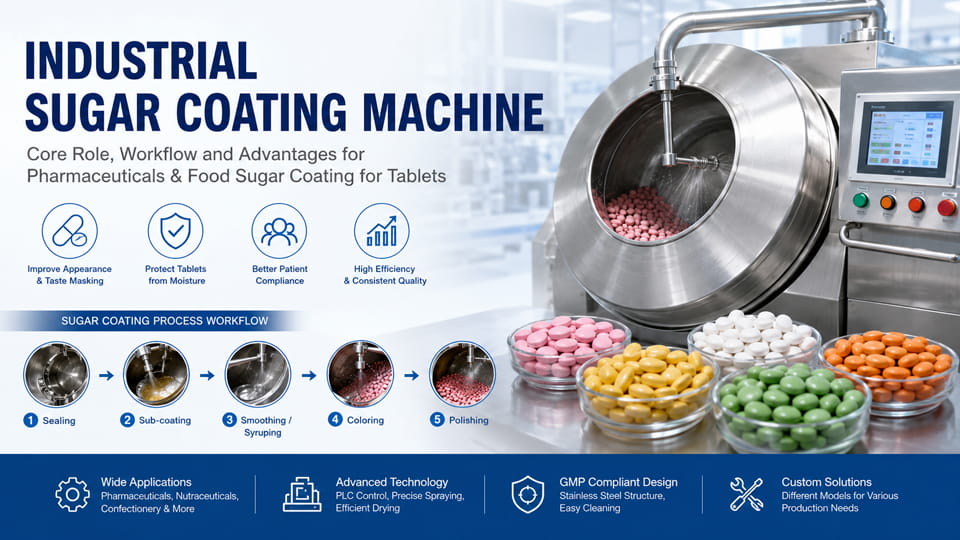
การเคลือบแท็บเล็ต (ฟิล์มหรือ สารเคลือบน้ำตาล) มีความไวต่อความแข็งแกร่งของแท็บเล็ตหลักมาก. ระหว่างการเคลือบ, แท็บเล็ตเกลือกกลิ้งในกระทะหมุนแล้วฉีดสารละลายลงไป. การกลิ้งนี้ทำให้เกิดความเครียดทางกลและความชื้น. ต่อไปนี้คือความแข็งและความเปราะบางที่เข้ามามีบทบาท:
เมื่อกดและเคลือบเม็ดยาแล้ว, พวกเขาย้ายไป สายการบรรจุ - เครื่องพุพอง, กล่องกระดาษ, หรือ เส้นบรรจุขวด. ความแรงของแท็บเล็ตก็มีความสำคัญเช่นกัน:

เพื่อให้ได้เม็ดยาคุณภาพสูงที่ตอบสนองความต้องการด้านการเคลือบและบรรจุภัณฑ์, โปรดคำนึงถึงประเด็นเหล่านี้:
ในทางปฏิบัติ, เป้าหมายคือแท็บเล็ตนั่นคือ “ยากพอที่จะเอาตัวรอด แต่ก็ไม่ยากจนไม่ผ่านการทดสอบการละลาย”. ผู้ผลิตหลายรายแสดงแผนภูมิแรงอัด, ความแข็ง, และความเปราะบางแบบเรียลไทม์เพื่อให้มองเห็นแนวโน้มตั้งแต่เนิ่นๆ (ตัวอย่างเช่น, ความแข็งที่เคลื่อนไปอย่างกะทันหันอาจส่งสัญญาณถึงการเปลี่ยนแปลงในการป้อนผงหรือความชื้น).
โดยสรุป, ความแข็งและความเปราะบางเป็นสองด้านของเหรียญเดียวกัน เพื่อคุณภาพของแท็บเล็ต. ความแข็งช่วยรับประกันความแข็งแกร่งของแกนแท็บเล็ตภายใต้การบีบอัด, ในขณะที่ความกร่อนจะวัดความทนทานของพื้นผิวต่อการเสียดสี. มีความสมดุลอย่างเหมาะสม, รับประกันว่าแท็บเล็ตจะแล่นผ่านกระทะเคลือบและเครื่องบรรจุภัณฑ์ได้โดยไม่บิ่นหรือแตกหัก. แท็บเล็ตที่นิ่มเกินไปจะทำให้เกิดฝุ่นและข้อบกพร่องของการเคลือบ, ในขณะที่แท็บเล็ตที่แข็งเกินไปสามารถต้านทานสารละลายเคลือบหรือทำให้ผู้ป่วยได้รับประสบการณ์ที่ไม่ดี.
สำหรับผู้ผลิตยาและวิศวกรบรรจุภัณฑ์, การให้ความสนใจกับการทดสอบทั้งสองเป็นสิ่งสำคัญ. ตรวจสอบให้แน่ใจว่าได้รวมการทดสอบความเปราะบางและความแข็งไว้ในจุดตรวจสอบคุณภาพของคุณ, และปรับสูตร/อัดตามต้องการ. โดยทำเช่นนั้น, คุณจะลดการปฏิเสธที่มีค่าใช้จ่ายสูงและรับประกันการทำงานที่ราบรื่นให้กับคุณ สายการบรรจุพุพอง, เครื่องเขียนกล่อง, หรือสายการบรรจุขวด.
พร้อมที่จะเพิ่มประสิทธิภาพการผลิตแท็บเล็ตและสายการบรรจุของคุณ? ทีมงานของ JinluPacking มีประสบการณ์หลายทศวรรษในด้านการบีบอัดและบรรจุภัณฑ์ยา. ไม่ว่าคุณจะต้องการ การกดแท็บเล็ตความเร็วสูง, เครื่องกำจัดฝุ่น, หรือโซลูชันบรรจุภัณฑ์พุพองแบบกำหนดเอง, เราสามารถช่วยให้แน่ใจว่าแท็บเล็ตของคุณไม่เสียหายตั้งแต่การพิมพ์จนถึงผู้ป่วย. ติดต่อเรา เพื่อหารือว่าเครื่องจักรและความเชี่ยวชาญของเราสามารถสนับสนุนเป้าหมายการผลิตของคุณได้อย่างไร.
เลขที่. ความแข็ง (แรงทำลาย) วัดแรงที่จำเป็นในการแตกหักของแท็บเล็ตภายใต้ภาระครั้งเดียว. ความกร่อนเป็นการวัดความทนทานของแท็บเล็ตภายใต้การเสียดสีซ้ำๆ, แสดงเป็น % การลดน้ำหนักในการทดสอบดรัม. พวกเขาประเมินคุณสมบัติที่แตกต่างกัน.
ใช่. แท็บเล็ตอาจมีแรงทำลายสูง (แข็ง) แต่ยังคงบิ่นที่ขอบหากการยึดเกาะของอนุภาคไม่ดี. แท็บเล็ตดังกล่าวอาจแตกง่ายเมื่อล้มลง, ให้ความเปราะบางสูง. ในทางกลับกัน, แท็บเล็ตที่มีความแข็งปานกลางอาจผ่านการแตกหักได้หากมีรูปร่างที่แข็งแรง. ดังนั้นจึงจำเป็นต้องมีการทดสอบทั้งสองอย่าง.
มาตรฐานอุตสาหกรรมทั่วไปคือการลดน้ำหนัก ≤1.0% หลังจากการทดสอบความกร่อน. ผู้ผลิตหลายรายกำหนด 0.5–1% เป็นข้อกำหนดสำหรับแท็บเล็ตทั่วไป. สินค้าบางชนิด (E.G. เม็ดใหญ่มากหรือผิดปกติ) อาจมีหลักเกณฑ์พิเศษ, แต่ 1% เป็นแนวทางทั่วไป.
ความแข็งสามารถส่งผลต่อการละลายได้อย่างมาก. แท็บเล็ตที่แข็งเกินไปอาจสลายตัวช้าๆ, ชะลอการปล่อยยา. การทดสอบตามข้อบังคับพบว่ายาเม็ดแข็งมาก (ถูกบีบอัดด้วยกำลังสูง) อาจตกอยู่นอกข้อกำหนดการละลายเนื่องจากเมทริกซ์ของแท็บเล็ตแน่นเกินไป. ในทางกลับกัน, แท็บเล็ตที่นิ่มมากอาจสลายตัวอย่างรวดเร็วแต่อาจแตกสลายก่อนเวลาอันควร. ความแข็งที่เหมาะสมที่สุดช่วยให้มั่นใจได้ว่าจะสลายตัวได้ทันท่วงทีโดยไม่แตกหัก.
สาเหตุที่พบบ่อย ได้แก่ สารยึดเกาะไม่เพียงพอ, ความชื้นของเม็ดที่ไม่เหมาะสม, การบีบอัดไม่เพียงพอ, น้ำมันหล่อลื่นส่วนเกิน, และสารเพิ่มปริมาณที่เปราะ. ตัวอย่างเช่น, เม็ดยาที่มีวัสดุยึดเกาะน้อยเกินไปหรือเม็ดแห้งเกินไปมักจะเปราะมากกว่า. วิธีแก้ไขโดยทั่วไปคือการปรับสูตร (E.G. สารยึดเกาะที่มีประสิทธิภาพมากขึ้น) หรือเพิ่มประสิทธิภาพกระบวนการทำแกรนูลแบบเปียกและการทำให้แห้ง.
ไม่เสมอไป. การบีบอัดที่สูงขึ้นโดยทั่วไปจะเพิ่มความแข็งและสามารถลดการแตกหักได้ในตอนแรก, แต่ก็มีขีดจำกัด. แรงที่มากเกินไปอาจนำไปสู่การปิดฝา, การเคลือบหรือการเปลี่ยนแปลงการละลาย. อีกด้วย, หากสูตรมีข้อบกพร่อง (E.G. การผูกไม่ดี), การเพิ่มความกดดันเพียงอย่างเดียวอาจไม่สามารถแก้ปัญหาความเปราะบางได้. ทางที่ดีควรเพิ่มประสิทธิภาพทั้งการกำหนดสูตรและแรงร่วมกัน.
เนื่องจากพวกมันจัดการกับความเค้นเชิงกลที่แตกต่างกัน. ความแข็งทำให้แท็บเล็ตสามารถทนต่อแรงกดทับเพียงครั้งเดียว (สำคัญสำหรับการบีบอัดและการตัด), ในขณะที่ความเปราะบางทำให้มั่นใจได้ว่าจะสามารถทนต่อการกระแทกซ้ำๆ ได้ (สำคัญต่อการเคลือบ, การจัดการ, และบรรจุภัณฑ์). มีเพียงการประเมินทั้งสองบริษัทเท่านั้นที่ผู้ผลิตสามารถมั่นใจได้ว่าแท็บเล็ตจะรักษาความสมบูรณ์ตลอดห่วงโซ่การผลิตและการจัดส่งทั้งหมด.
การออกแบบอุปกรณ์เป็นสิ่งสำคัญ. ตัวอย่างเช่น, ผู้บรรจุกล่องความเร็วสูงใช้เซ็นเซอร์และรางกันกระแทกเพื่อชะลอเม็ดยาอย่างนุ่มนวล (ป้องกันการแตกหักจากแรงกระแทก). สายพานลำเลียงสุญญากาศที่มีการโค้งงอเรียบช่วยลดแรงกระแทก. สายการบรรจุขวดมักจะมีท่อที่ยืดหยุ่นและการเปลี่ยนผ่านที่ช้า. ระบบการจัดการแท็บเล็ตที่ออกแบบมาอย่างดีช่วยลดการสั่นสะเทือน, หยด, และแรงเสียดทาน, ลดการแตกหักและการเกิดฝุ่นโดยตรง.
อ้างอิง:
1.การทดสอบความแข็งของแท็บเล็ต —— วิกิพีเดีย
2.ฉัน 4 ภาคผนวก QB 9 ความกร่อนของแท็บเล็ต – แนวทางทางวิทยาศาสตร์ —— สำนักงานยาแห่งยุโรป
3.ภาคผนวก Q4B 9: บททั่วไปเรื่องความกร่อนของแท็บเล็ต -- เรา. สำนักงานคณะกรรมการอาหารและยา
4.การพึ่งพาความเสียดทานของคุณสมบัติทางกลของเม็ดยาและวิธีการทำนายสำหรับสารผสมไบนารี —— ผู้เชี่ยวชาญ@มินนิโซตา
5.ผลของความชื้นและความแข็งแรงในการบดต่อความเปราะบางของเม็ดยาและการละลายในหลอดทดลอง —— ห้องสมุดออนไลน์ของไวลีย์