Вывод нового фармацевтического продукта на рынок предполагает гораздо больше, чем просто разработку эффективной рецептуры.. Одним из наиболее важных решений, с которыми сталкиваются производители, является выбор правильной упаковки.. Упаковка, выбранная для фармацевтического продукта, может напрямую влиять на его стабильность., срок годности, Соответствие нормативным требованиям, безопасность перевозки, и опыт пациента. Упаковка, которая не защищает от влаги, кислород, свет, или загрязнение может поставить под угрозу качество продукта задолго до того, как он достигнет конечного потребителя.. Таким образом, упаковка — это не просто контейнер, это важная часть системы защиты продукции..
Для фармацевтических производителей, менеджеры по производству, и группы по закупкам, Выбор правильной упаковки требует баланса множества факторов, включая лекарственную форму, Совместимость материала, барьерная производительность, безопасность пациента, эффективность производства, и будущая масштабируемость. Является ли продукт планшетом, капсула, пудра, жидкость, или инъекционный, правильное упаковочное решение может помочь обеспечить целостность продукта, одновременно поддерживая эффективное коммерческое производство.. В этом руководстве, мы рассмотрим ключевые факторы, которые каждый производитель должен учитывать при выборе упаковки для нового фармацевтического продукта..
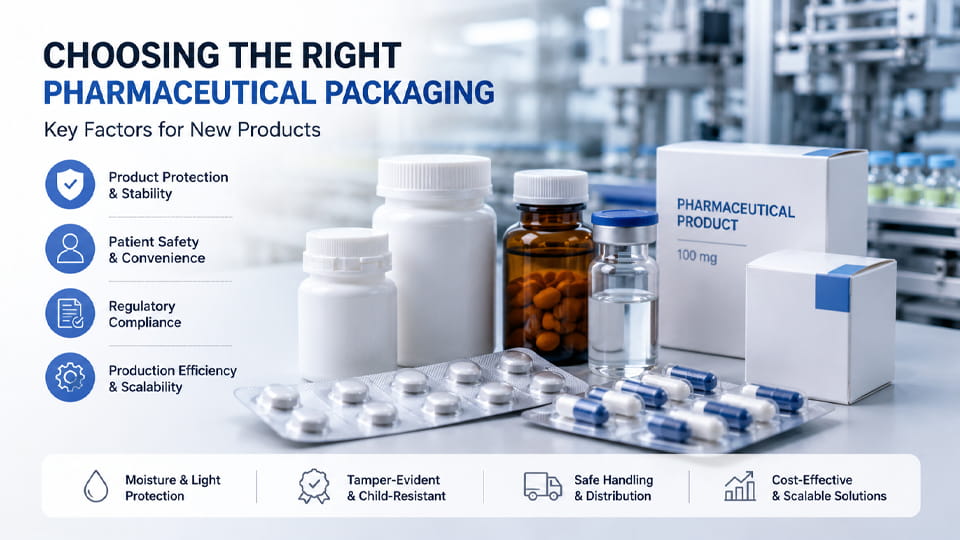
Почему выбор упаковки имеет значение в фармацевтической отрасли
Фармацевтическая упаковка является жизненно важный, не является обязательным. В отличие от обычной потребительской упаковки, фармацевтическая упаковка должна защищать целостность препарата на протяжении всего срока годности. Руководства ВОЗ и регулирующие органы подчеркивают, что упаковка должна защищать лекарства от влага, свет, кислород и другие внешние угрозы. Другими словами, он «сохраняет стабильность и качество лекарственных средств» и предотвращает порчу или подделку.
К основным функциям упаковки относятся:
- Защита продукта: Берегите влагу, кислород, свет, тепло и загрязнения. Например, в руководстве USP отмечается, что твердые таблетки «нужно беречь от водяного пара» поскольку влага может изменить эффективность или растворение лекарственного средства. Высокобарьерные материалы (алюминиевая фольга, пленки с покрытием, янтарное стекло) часто используются там, где чувствительность высока.
- Соответствие нормативным требованиям: Упаковка должна соответствовать FDA, EMA и ВОЗ Требования GMP. Это включает в себя надлежащее целостность закрытия контейнера (ТПП), проверенные материалы, и такие функции, как защищенный от несанкционированного доступа уплотнения. Упаковка с защитой от детей требуется для многих лекарств для предотвращения случайного проглатывания. Сериализация и отслеживаемость (уникальные штрих-коды на каждой упаковке) теперь обязательны на основных рынках (FDA DSCSA, ЕС ящура).
- Безопасность пациентов и соблюдение требований: Дизайн упаковки должен исключать ошибки дозирования и неправильное использование.. Этикетки с защитой от несанкционированного доступа и крышки с защитой от детей. «защитить от случайного отравления». Удобные функции (легко открывающийся, дозирующие средства, календарные волдыри) помочь пациентам правильно принимать лекарства.
- Бренд и коммуникация: Вторичная упаковка (коробки, этикетки) дает инструкции, предупреждения, и брендинг. По мнению экспертов, этикетки должны быть прочными и четкими, чтобы их нельзя было перепутать.. Действительно, один анализ обнаружил почти 50% отзывов о наркотиках связаны с проблемами упаковки/маркировки.
Суммируя, упаковка является активной защитой. Неправильный выбор пакета может привести к ухудшению качества API., вред пациенту, и регуляторные головные боли. Правильная упаковка «защищает качество лекарств» и тем самым подкрепляет эффективность и репутацию продукта.

Шаг 1: Узнайте характеристики вашего нового фармацевтического продукта
Первый шаг – это тщательный аудит продукта. Просить: Какая лекарственная форма (планшет, капсула, пудра, жидкость, инъекционный, и т. д.)? Какую чувствительность имеет препарат (влага, кислород, свет, нагревать)? Нужен ли специальный контроль дозирования? (дозированный ингалятор, капельница, предварительно загруженный шприц)?
- Лекарственная форма: Таблетки и капсулы обычно твердая доза и часто упакованы в блистерные упаковки или флаконы. Жидкости/суспензии попадают в бутылки или флаконы. Инъекционные препараты требуют стерильные флаконы, ампулы или предварительно заполненные шприцы. Для газов/ингаляторов используются специализированные баллоны.. Порошки или гранулы могут быть упакованы в пакетики, пакеты или бутылки.
- Химическая/физическая чувствительность: Является ли препарат гигроскопичным или склонным к окислению?? Препараты, чувствительные к влаге (например. шипучие таблетки) нуждаться высокобарьерная упаковка например, блистер Alu-Alu или бутылки с влагопоглотителем. Светочувствительные соединения необходимы непрозрачные или тонированные контейнеры. Реактивные лекарства требуют инертных материалов. (например. стекло, определенные полимеры).
- Срок годности и стабильность: Рассмотрите любой необходимый контроль температуры (охлаждение) или вакуум/стерильные условия. Для некоторых вакцин или биологических препаратов может потребоваться упаковка с холодовой цепью или специальные флаконы..
Ключевой момент: Первичная упаковка должна быть инертной и защитной.. Он не должен выщелачивать или поглощать препарат., и он должен поддерживать герметичную среду. Например, FDA отмечает, что твердые контейнеры для перорального применения должны иметь «низкая скорость проникновения водяного пара, и система закрытия должна обеспечить герметичность». Крайне важно провести тестирование на совместимость и экстрагируемые вещества с возможными упаковочными компонентами..
Чек-лист для аудита продукта:
- Лекарственная форма/тип (планшет, капсула, жидкость, и т. д.)
- Условия хранения/стабильности (температура, влажность, свет)
- Требования к дозированию/введению (капельница, насос, единичная доза)
- Рекомендации по использованию пациентами (Детская и взрослая медицина, мобильность, дружелюбный к пожилым людям)
- Нормативные ограничения (например. информация о пациенте является частью первичной упаковки?)
Это понимание будет определять ваш выбор первичной упаковки. (упаковка, непосредственно контактирующая с препаратом). Следующий, мы обсуждаем эти варианты.
Шаг 2: Выберите подходящую первичную упаковку
Первичная упаковка это непосредственный контейнер, в котором находится лекарство. Это напрямую касается лекарства.. К распространенным типам первичной упаковки относятся Блистерные пакеты, бутылки (пластик/стекло), флаконы/ампулы, мешочки, трубки, и т. д.. У каждого есть плюсы/минусы:
- Блистерные упаковки (Алю-Алу или Алю-ПВХ): Идеально подходит для одноразовых твердых форм. (таблетки, капсулы). Они обеспечивают отличный влаго/световой барьер, особенно Все время (фольга холодной формы) тип. Блистеры гарантируют герметичность каждой дозы до момента использования., улучшение соблюдения требований и снижение перекрестного загрязнения. Современные волдыри можно сделать устойчивыми к детям. Оборудование: Высокоскоростной Блистерные упаковочные машины формирование ручки, кормление, термосварка и резка (например. Блистерные машины Alu-Alu компании JinluPacking).
- Бутылки (Пластик или стекло): Обычное для групповой упаковки (сиропы, капсулы, таблетки). Бутылки экономически эффективны для больших объемов.. Стеклянные бутылки (Тип I боросиликат) обладают превосходной химической инертностью и могут иметь янтарный оттенок для защиты от света.. Пластиковые бутылки (ПНД, ПП) легкие и небьющиеся, но обычно имеют более высокую влагопроницаемость.. Бутылки часто используют шапочки с защитой от детей. Оборудование: Счетные/наполняющие машины наполняют и укупоривают бутылки, и может вставить осушители или фольгированные уплотнители (см. счетные линии). Линии розлива бутылок и автоматические укупорочные машины Jinlu объединяют эти этапы..
- Саше & Пакеты палочек: Используется для порошков, гранулы, или одноразовые жидкости (например. антибиотики, ОРС). Это гибкие пакеты из фольги или ламината, запечатанные со всех сторон.. Пакеты обеспечивают превосходный барьер (часто с алюминиевой фольгой) и удобство. Оборудование: Форма упаковочных машин для саше, наполнять, и запечатайте эти пакеты за один раз.
- Флаконы & Ампулы: Стандарт для стерильных инъекционных препаратов (решения, лиофилизированные порошки). Флаконы (стекло или пластик) с резиновыми пробками сохраняет стерильность. Ампулы (стекло) герметично закрыты до момента использования. Оба обеспечивают высокую чистоту и подходят для игл/шприцев.. Оборудование: Линии наполнения флаконов, используются укупорочные и обжимные машины (часто с зонами ламинарного потока для стерильности).
- Другие: Трубы (металл или пластик) характерны для мазей/кремов. Предварительно заполненные шприцы или ингаляторы (ДИ/ДИ) использовать индивидуальную упаковку устройства. Для них часто требуется специализированное оборудование для наполнения и сборки..
Пригодность каждого варианта зависит от вашего продукта.:
- Стоимость против. Защита: В таблице ниже сравниваются типы основных упаковок.:
| Тип |
Лучше всего для |
Уровень защиты |
Расходы |
Оборудование |
| Блистерная стакана |
Таблетки, Капсулы |
Очень высокий (Влажность/Свет) |
Середина |
Блистерная упаковочная машина |
| Бутылка |
Таблетки, Сиропы, Таблетки |
Середина (хорошо со вставками) |
Низкий |
Линия розлива/укупорки бутылок |
| Саше/стик |
Порошки, Гранулы |
Высокий (Фольгированный барьер) |
Середина |
Упаковочный аппарат саше |
| Флакон/ампула |
Инъекции, Сыворотки |
Очень высокий (Стерильное стекло) |
Высокий |
Наполнение флаконов & Линия уплотнения |
Выберите первичную упаковку, соответствующую лекарственной форме и барьерным требованиям.. Например, чувствительный к влаге планшет может потребовать Алю-Алу блистер или бутылочка из янтарного стекла с влагопоглотителем. Более обычные безрецептурные таблетки могут продаваться в пластиковых бутылках с плотной крышкой. (плюс функция защиты от детей).
Кончик: Если соблюдение единичной дозы важно (НАПРИМЕР., раздача больниц или дорожные пакеты), часто предпочтительнее блистерные листы или упаковки-стики. Для гибкости (дозировки могут быть изменены), бутылки лучше.
Шаг 3: Учитывайте требования к стабильности и сроку годности
Упаковочные решения неотделимы от стабильности. Неправильный контейнер может привести к ухудшению качества или повреждению этикетки.. Ключевые соображения:
- Барьерные свойства: Используйте материалы, блокирующие критические факторы. Для чувствительные к влажности препараты, необходимы высокобарьерные пленки или стекло. Например, алюминиевые блистеры холодной формы обеспечить практически нулевое попадание влаги. В руководстве по стабильности FDA/ICH отмечается, что продукты в действительно непроницаемых контейнерах (НАПРИМЕР., блистеры из фольги или герметичное стекло) можно тестировать в нормальных условиях без специальных исследований влажности. Наоборот, полупроницаемые пакеты (как некоторые пластмассы) требуют тщательной оценки влажности.
- Световая защита: Светочувствительные API нуждаются в непрозрачной или янтарной упаковке.. Например, бутылки из янтарного стекла или металлизированные пакеты защищают от ультрафиолета.. Обычной практикой является при необходимости заворачивать прозрачные флаконы в алюминиевую обертку..
- Совместимость: Убедитесь, что упаковочные материалы не вступают в реакцию с препаратом.. Стекло инертно, но некоторые пластмассы могут выщелачивать или поглощать соединения. Проведение исследований экстрагируемых/выщелачиваемых первичных компонентов.. Нормативные руководства (FDA, ЕМА) ожидать целостность закрытия контейнера (ТПП) тестирование на протяжении всего срока годности.
- Определение срока годности: Исследования стабильности (Я Q1A/R2) должен использовать предлагаемая система закрытия контейнера. Если испытания срока годности показывают деградацию, возможно, вам придется скорректировать упаковку (например. переключиться на лучший барьер) или инструкции по обращению/хранению этикеток.
- Расширенные функции: В некоторые упаковки входят осушители или поглотители кислорода.. Многослойные ламинаты (ПЭТ/алюминий/ПЭ) часто используются для глобального распространения. Для очень высокоточной защиты, активная упаковка (встроенные поглотители влаги) можно использовать.
Контрольный список совместимости стабильности:
- При необходимости выберите высокобарьерный первичный материал. (Все время, стекло, ламинаты).
- Проверьте метод герметизации (термосварка, кепки) обеспечивает низкую передачу паров влаги (МВТР).
- Проведение ускоренной стабилизации (40°C/75% относительной влажности) согласно ICH, чтобы исключить попадание влаги или химические изменения..
- Планирование целостности закрытия контейнера (вакуумное тестирование или тестирование на проникновение красителя) специально для жидких/стерильных продуктов.
- Убедитесь, что упаковка выдерживает потрясения при распределении (испытание на падение/вибрацию со вторичной/третичной упаковкой).
Выбрав упаковку, которая заранее отвечает требованиям стабильности, вы избегаете дорогостоящего изменения рецептуры или переупаковки в дальнейшем.
Шаг 4: Оцените удобство пациента и соблюдение требований
За пределами защиты, современная упаковка должна помочь пациентам правильно использовать лекарства. Дизайн упаковки напрямую влияет на приверженность и безопасность. Учитывать:
- Открытие/Простота использования: Пожилые пациенты могут испытывать трудности с тугими колпачками.. Предложение кепки для пожилых людей или легко отслаиваемые уплотнения могут быть полезны. Для однодозовых препаратов, календарные волдыри (отмеченные дни или время) может напомнить пациентам о необходимости принять правильную таблетку.
- Средства дозирования: Если применимо, включить мерные стаканчики/ложки для жидкостей, капельницы для офтальмологии, или дозирующие насосы. Четкая маркировка на контейнере (выпускной, цветные полосы) улучшить точность.
- Портативность: Если пациенты путешествуют или везут с собой лекарства, пригодятся компактные пакетики или маленькие бутылочки.. Функции защиты от несанкционированного доступа обеспечивают безопасность.
- Характеристики соответствия: Некоторые первичные упаковки разработаны с учетом соответствия: НАПРИМЕР., дозаторы таблеток со встроенным сигнализатором, или смарт-блистерные карты, которые отслеживают использование. Если высокая приверженность имеет решающее значение, рассмотреть такие нововведения.
- Этикетки и вставки: Обеспечьте ясность, многоязычные инструкции на коробке или буклете. Хорошая упаковка помогает фармацевтам и пациентам иметь разборчивые этикетки., таблицы дозировок, и значки хранилища.
По сути, просить: Считает ли пациент этот пакет простым и безопасным в использовании?? Если не, они могут неправильно использовать продукт или отказаться от него.. Включая функции, ориентированные на пациента (детские замки, легко открывающийся, четкая маркировка) также удовлетворяет регулирующие органы, которые подчеркивают безопасность пациентов.
Шаг 5: Обеспечение соблюдения нормативных требований
Фармацевтическая упаковка строго регулируется. Ключевые вопросы соответствия:
- Защита от детей (ЧР) требования: Многие страны (НАС, Евросоюз, Австралия) обязать упаковку CR для пероральных препаратов высокого риска. ВОЗ отмечает, что «разработаны замки с защитой от детей» защитить детей. Убедитесь, что для пероральных твердых и жидких рецептурных препаратов используются сертифицированные колпачки CR или поворотно-нажимные механизмы, если того требует закон.. (Например. НАС 16 CFR 1700 золото стандарты ЕС RU 14375).
- Пломбы с защитой от несанкционированного доступа: FDA и другие требуют доказательств того, что упаковка не была открыта. Тамперные ленты, термоусадочная пленка, или отрывные пломбы часто встречаются на бутылках.; фольгированные уплотнения распространены на банках. Даже блистерные упаковки должно быть трудно открыть без видимых повреждений..
- Маркировка: Первичная и вторичная упаковки должны содержать всю необходимую информацию. (название препарата, сила, лекарственная форма, номер партии/партии, истечение срока действия, Условия хранения, производитель). Шрифты должны быть разборчивыми и соответствовать фармакопейным рекомендациям.. Например, FDA 21 CFR 201.15 обеспечивает долговечность этикетки.
- Сериализация и отслеживаемость: Такие правила, как DSCSA FDA. (НАС) и Директива ЕС о фальсифицированных лекарственных средствах требуют уникальных кодов. (например. 2D штрих-коды) на каждую реализуемую единицу. Дизайн упаковки должен предусматривать печать или гравировку серийных номеров и кодов datamatrix на блистерных полосках или этикетках бутылок.. Вашей упаковочной линии может потребоваться кодирующий принтер и система машинного зрения., и интеграция с базой данных отслеживания и отслеживания.
- Надлежащая производственная практика (GMP): Упаковочные линии должен соответствовать GMP (очищаемость, отслеживаемость материалов, и т. д.). Все используемые первичные упаковки должны соответствовать требованиям GMP. (например. ИСО 15378 для упаковочных материалов). Машины должны быть ИК/Белый/PQ квалифицированный. (Ниже представлено упаковочное оборудование Jinlu.).
Ключевой совет по регулированию: Не относитесь к соблюдению требований как к второстепенной мысли. Например, отсутствие функции защиты от несанкционированного доступа может заблокировать регистрацию продукта. Заблаговременно ознакомьтесь с правилами, специфичными для конкретной страны, например:. USP <661> для пластиковых контейнеров, CFR 211 для контроля упаковки. Всегда проверяйте, соответствуют ли выбранная упаковка и упаковочное оборудование этим стандартам..
Шаг 6: Баланс между стоимостью упаковки и эффективностью производства
На этом этапе, оценивать общая стоимость владения (TCO) по вариантам упаковки. Учитывать:
- Стоимость материала: Гибкие пакеты и блистеры могут стоить дороже за единицу, чем простые бутылки.. Блистерная фольга Alu-Alu дороже, чем фольга ПВХ.. Стеклянные бутылки стоят дороже пластиковых.
- Производительность оборудования: Форматы с высокими барьерами, такие как блистеры, могут работать медленнее, чем линии бутылок., влияние на количество необходимого оборудования. Наоборот, Наполнители бутылок могут достигать очень высоких скоростей (несколько тысяч бутылок/час) но нужны расшифровщики, кепки, и этикетировщики в линию.
- Сложность линии: Более сложная упаковка. (например. блистеры с единичными дозами) требуются специализированные машины. Проверьте, соответствуют ли капитальные вложения и техническое обслуживание вашему бюджету.
- Труд: Полностью автоматизированные линии сокращают ручной труд, но увеличивают капитал.. Полуавтоматические машины стоят дешевле, но требуют больше операторов.
- Логистика: Вторичная/третичная упаковка также стоит. Большие стеклянные бутылки тяжелее транспортировать.. Громоздкие коробки увеличивают стоимость перевозки.
- Отходы и урожайность: Дополнительная обработка (например. блистерная штамповка) может генерировать металлолом. Оценить потраченные материалы (обрезка от волдырей, разбитые бутылки, и т. д.).
Выполните грубую сравнение затрат: например. стоимость за окончательную упаковку, включая материалы и обработку. Также учитывайте скорость (единиц в час) и требуемый размер партии.
А Контрольный список ТШО:
- Сравните стоимость упаковочного материала за единицу.
- Оцените необходимую производительность машины в сравнении со спросом.
- Рассчитайте трудозатраты и затраты энергии для каждой линии.
- Включите затраты на утилизацию/переработку отходов..
- Фактор риска переделки (например. если упаковка не удалась, стоимость перемаркировки или переупаковки).
- Будущее масштабирование: если объемы удвоятся, масштабируется ли это решение?
Часто дешевый материал – не лучший вариант если это приведет к отзыву или отказу. Достижение баланса имеет решающее значение: иногда платить больше за лучший барьер или автоматизацию окупается более высокой доходностью и соблюдением требований.
Шаг 7: Убедитесь, что упаковка может масштабироваться в соответствии с будущим спросом
Рассмотрим не только немедленный запуск, но долгосрочный жизненный цикл продукта:
- Пилот против. Коммерческий: Для первоначальных клинических или мелкорыночных партий, вы можете использовать ручные или полуавтоматические линии. Для крупномасштабного производства, потребуется полностью автоматизированная линия. Убедитесь, что ваш выбор (или предложение продавца) позволяет модульные обновления.
- Модульность оборудования: Можете ли вы добавить полосы движения или единицы для увеличения скорости?? Например, некоторые блистерные машины могут иметь больше вращающихся карманов.. Линии розлива могут добавлять параллельные разливочные машины..
- Интеграция: Думайте от начала до конца: подсчет/наполнение → запечатывание → картонирование → упаковка в ящики → паллетирование. Если вы сотрудничаете с Jinlu Packing или аналогичной компанией, они могут спроектировать упаковочная линия под ключ включая сериализацию, картонирование, упаковка корпуса, и т. д..
- Нормативное масштабирование: Любое изменение компонентов упаковки (например. новый поставщик бутылок) требуется повторное одобрение регулирующих органов, если это влияет на стабильность или соответствие требованиям. Планирование контроля качества поставщика упаковки и резервных поставщиков.
- Будущие продукты: Если ваша компания может производить другие лекарственные формы (например. гель в будущем), выбирайте гибкое оборудование. Модульные машины для наполнения капсул или блистерные машины, которые могут работать с различными форматами, могут стать хорошей инвестицией..
Раннее привлечение инженеров по упаковке или консультантов может предотвратить появление узких мест в дальнейшем.. Как отмечает один из отраслевых экспертов, «Упаковку следует рассматривать параллельно с разработкой рецептуры., не как запоздалая мысль». Правильные ранние решения сделают масштабирование и расширение линейки более плавным..
Распространенные ошибки при выборе упаковки, которых следует избегать
- Отказ от выбора упаковки слишком поздно: Не принимайте решение об упаковке только после того, как рецептура заблокирована.. В ранних исследованиях стабильности следует использовать окончательную упаковку., не баночки-пустышки.
- Пропуск тестов стабильности: Никогда не предполагайте, что контейнер будет работать; всегда проверяйте свой препарат в реальном контейнере/укупорочном средстве в условиях ICH.. В остальном стабильная формула может ухудшиться, если упаковка плохая..
- Сосредоточение внимания только на стоимости: Дешевые материалы могут сэкономить деньги заранее, но их стоимость будет выше из-за отзывов или сокращения срока годности.. Баланс стоимости с защитой.
- Игнорирование факторов пациента: Стандартная бутылка может соответствовать целевым затратам, но если пациенты не могут открыть его или приклеить, продукт будет хуже продаваться на рынке.
- Недооценка потребностей регулирования: Отсутствие пломбы с защитой от несанкционированного доступа или крышки с защитой от детей, когда это необходимо, может привести к прекращению утверждения.. Всегда сверяйтесь с рекомендациями.
- Пренебрежение цепочкой поставок: Учитывайте сроки поставки и срок годности упаковки.. Некоторые специальные материалы (как кислородопоглощающие вкладыши) может иметь длительный срок выполнения.
Избегая этих ошибок и кросс-функционального анализа (Р&Д, контроль качества, Производство, Регуляторный), вы гарантируете, что выбранная вами упаковка осуществима, совместимый, и эффективный.
Рекомендуемая упаковка для нового типа фармацевтического продукта
| Тип продукта |
Рекомендуемая первичная упаковка |
| Таблетки/капсулы |
Единичная доза Блистерные пакеты (Алю-Алу или ПВХ/Алю) или масса бутылки. Крышки с защитой от детей для бутылок.. Идеальное оборудование: блистерная упаковочная машина или подсчет таблеток/капсул & линия розлива. |
| Пероральные порошки/гранулы |
Саше или палочки (для разовой дозы); или бутылки (для оптовой продажи). Машины для упаковки в саше для разовых доз, шнековые наполнители для бутылок. |
| Жидкости/Сиропы |
Пластиковые или стеклянные бутылки с винтовыми крышками (часто с фольгированной печатью и крышкой с защитой от детей). Для высокой чистоты, Тип I стекло. Оборудование: линия розлива жидкости (насосы, встроенное укупоривание). |
| Инъекции |
Стеклянные флаконы или ампулы (стерильный) или предварительно заполненные шприцы. Используйте стерильные машины для наполнения и обжима флаконов в чистом помещении.. |
| Кремы/мази (Полутвердые вещества) |
Тюбики или банки (алюминиевые/пластмассовые трубки, стеклянные/пластиковые банки). Тюбики с пломбами, защищающими от несанкционированного вскрытия.. Полуавтоматические или автоматические машины для наполнения туб.. |
| Шипучивые таблетки |
Алюминиевые тубы или бутылки (оставаться сухим); часто с осушителем. Также распространены блистерные упаковки из алюминиевой фольги.. НКТ машины (для планшетов) или блистерные машины. |
| Суппозитории |
Блистерные лотки (обычно алюминий/ПВХ или алюминий/алюминий) или коробки с индивидуально упакованными единицами. Блистерные упаковщики или термоформовщики. |
| Ингаляторы/назальные спреи |
Баллоны MDI или картриджи DPI (зависит от устройства). Согласование с производителем устройства; оборудование для розлива/консервирования по индивидуальному заказу. |
Такое картирование помогает гарантировать, что каждая форма лекарственного средства получает соответствующую защиту.. Например, Блистерные упаковки отлично подходят для твердых пероральных доз., тогда как стеклянные флаконы необходимы для стерильных инъекций.. В таблице также указано оборудование: например. Блистерные упаковочные машины, линии розлива и укупорки бутылок, машины для упаковки в саше, наполнители для флаконов, и так далее.
Как Jinlu Packing помогает фармацевтическим компаниям
Jinlu Packing является ведущим производитель фармацевтического упаковочного оборудования. Предлагаем решения «под ключ» для новых линий по упаковке лекарственных препаратов.. Ключевые предложения:
- Блистерные упаковочные машины: Высокоскоростные блистерные машины для упаковок из ПВХ/алюминия или алюминия-алюминия.. Индивидуальный дизайн, соответствующий формату вашего планшета/капсулы и требованиям к скорости..
- Наполнение бутылок & Закрытие линий: Автоматическое наполнение бутылок, укупорка, и системы маркировки. Наши линии подсчета и наполнения могут быть оснащены расшифровщиками., осушители, герметики для фольги, и укупорщики для бутылочек с таблетками и жевательными конфетами.
- Картонирующие машины: Горизонтальные и вертикальные картонажные машины для установки коробок вокруг блистеров., бутылки, или пакетики. Такие функции, как 100% сканирование кода для сериализации и быстрой замены.
- Системы сериализации/кодирования: Мы можем оборудовать линии струйными/лазерными кодировщиками и системой визуального контроля для печати и проверки партии., истечение срока действия, и уникальные коды.
- Полные упаковочные линии: От подачи продукта до упаковки в ящики, мы можем спроектировать полностью интегрированную линию, отвечающую требованиям cGMP и сериализации.. Наши машины созданы для легкой очистки (SUS316L нержавеющая сталь) и включите документацию IQ/OQ.
- Поддерживать & Согласие: Мы помогаем с аттестацией машины (ИК/Белый/PQ) и предлагаем установку и обучение на месте по всему миру.
Работая с нами, вы получаете не просто оборудование, но опыт упаковки. Мы гарантируем выбранный вами метод упаковки (блистерная линия, линия бутылок, и т. д.) оптимизирован для вашего продукта и нормативных требований, сделать запуск вашего продукта более плавным.
Заключение
Выбор правильной упаковки для нового фармацевтического продукта – это многоплановое решение. Требуется сбалансировать стабильность лекарственного средства., безопасность пациента, согласие, расходы, и масштабируемость. Помнить: лучшая упаковка — это та, которая обеспечивает безопасность и эффективность вашего продукта до тех пор, пока он не достигнет пациента.. Речь идет не только о привлекательности или дешевизне, речь идет о качестве.. Тщательно анализируя свойства продукта, тестирование вариантов упаковки, и соблюдение правил, производители могут избежать дорогостоящих отзывов и обеспечить сохранение эффективности своих лекарств., чистый, и безопасно. С хорошо выбранной стратегией упаковки (и правильная техника), вы защищаете как своих клиентов, так и репутацию своего бренда.
Часто задаваемые вопросы о выборе упаковки для нового фармацевтического продукта
Почему упаковка важна для нового фармацевтического продукта?
Упаковка делает гораздо больше, чем просто содержит лекарство. Защищает фармацевтический продукт от влаги, кислород, свет, загрязнение, и физический ущерб. Правильная упаковка также помогает обеспечить соответствие нормативным требованиям., безопасность пациента, стабильность продукта, и срок годности на протяжении всего распределения и хранения.
Какие факторы следует учитывать при выборе фармацевтической упаковки?
Производителям следует оценить несколько факторов, включая:
• Лекарственная форма (планшет, капсула, жидкость, пудра, инъекционный)
• Чувствительность к влаге и кислороду
• Требования светозащиты
• Целевые сроки годности
• Нормативные требования
• Удобство для пациента
• Стоимость упаковки
• Эффективность производства
• Будущая масштабируемость
Идеальное упаковочное решение должно сочетать защиту продукта, согласие, и операционная эффективность.
Какая упаковка для таблеток и капсул лучше??
Блистерные упаковки и бутылки являются наиболее распространенными вариантами..
• Блистерная упаковка обеспечивает превосходную защиту от влаги и загрязнений, одновременно обеспечивая удобство дозировки..
• Бутылки экономически эффективны при крупносерийном производстве и обычно используются для таблеток., капсулы, и пищевые добавки.
Лучший выбор зависит от требований к стабильности продукта и целевого рынка..
Как упаковка влияет на стабильность лекарств?
Упаковочные материалы напрямую влияют на воздействие на препарат факторов окружающей среды, таких как влажность., кислород, и свет. Плохая упаковка может ускорить деградацию, снизить потенцию, и сократить срок годности. Вот почему тестирование стабильности обычно проводится с использованием окончательной конфигурации упаковки, предназначенной для коммерческого распространения..
Как фармацевтические компании могут обеспечить соответствие упаковке?
Производители должны убедиться, что упаковочные материалы, этикетки, закрытия, и упаковочное оборудование соответствуют действующим нормам, таким как FDA., GMP ЕС, сериализация, требования к упаковке, защищенной от детей.. Сотрудничество с опытными поставщиками фармацевтического упаковочного оборудования может помочь упростить процессы проверки и соответствия требованиям..
Когда следует учитывать упаковку при разработке фармацевтического продукта?
Упаковка должна быть оценена как можно раньше во время разработки продукта.. Ожидание коммерциализации может создать проблемы со стабильностью, нормативные задержки, стоимость редизайна упаковки, и производственные задачи. Ранний выбор упаковки позволяет производителям проводить точные исследования стабильности и разрабатывать более эффективную стратегию коммерческой упаковки..
Как выбрать подходящее фармацевтическое упаковочное оборудование для нового продукта??
Начните с оценки:
• Вид продукта и лекарственная форма.
• Формат упаковки (волдырь, бутылка, пакетик, флакон)
• Требуемая производственная мощность
• Уровень автоматизации
• Нормативные требования
• Планы дальнейшего расширения
Выбор масштабируемого фармацевтического упаковочного оборудования может помочь снизить будущие инвестиционные затраты и поддержать долгосрочный рост бизнеса..
Ссылки:
1.Системы укупорки контейнеров для упаковки лекарственных и биологических препаратов для человека -- НАС. Управление по контролю за продуктами и лекарствами
2.ICH Q8 Фармацевтическая разработка —— База данных ICH
3.Надлежащая производственная практика фармацевтической продукции -- ВОЗ
4.Фармакопея США Q&А: Стандарты на системы пластиковой упаковки лекарственных препаратов —— usp.org
5.Испытание целостности укупорочных средств контейнеров: практические аспекты и подходы в фармацевтической промышленности —— pda.org
