

Niezawodna produkcja farmaceutyczna zależy od prawidłowego działania wszystkich komponentów, łącznie z układem smarowania wewnątrz maszyn. Prawo Smar do sprzętu farmaceutycznego pomaga chronić najważniejsze komponenty, poprawić wydajność maszyny, i zmniejszyć problemy z konserwacją sprzętu, takiego jak maszyny do napełniania kapsułek, tabletkarki, i maszyny pakujące w blistry.
Dla producentów farmaceutycznych, Wybór smaru to także coś więcej niż tylko wydajność maszyny. Wymagania zgodności, kontrola higieny, kompatybilność smarów, i praktyki konserwacyjne wpływają na niezawodność sprzętu i bezpieczeństwo produkcji. W tym artykule opisano wszystko, co musisz wiedzieć o smarach do maszyn farmaceutycznych, od rodzajów smarów i kryteriów wyboru po praktyki konserwacji zgodne z GMP.
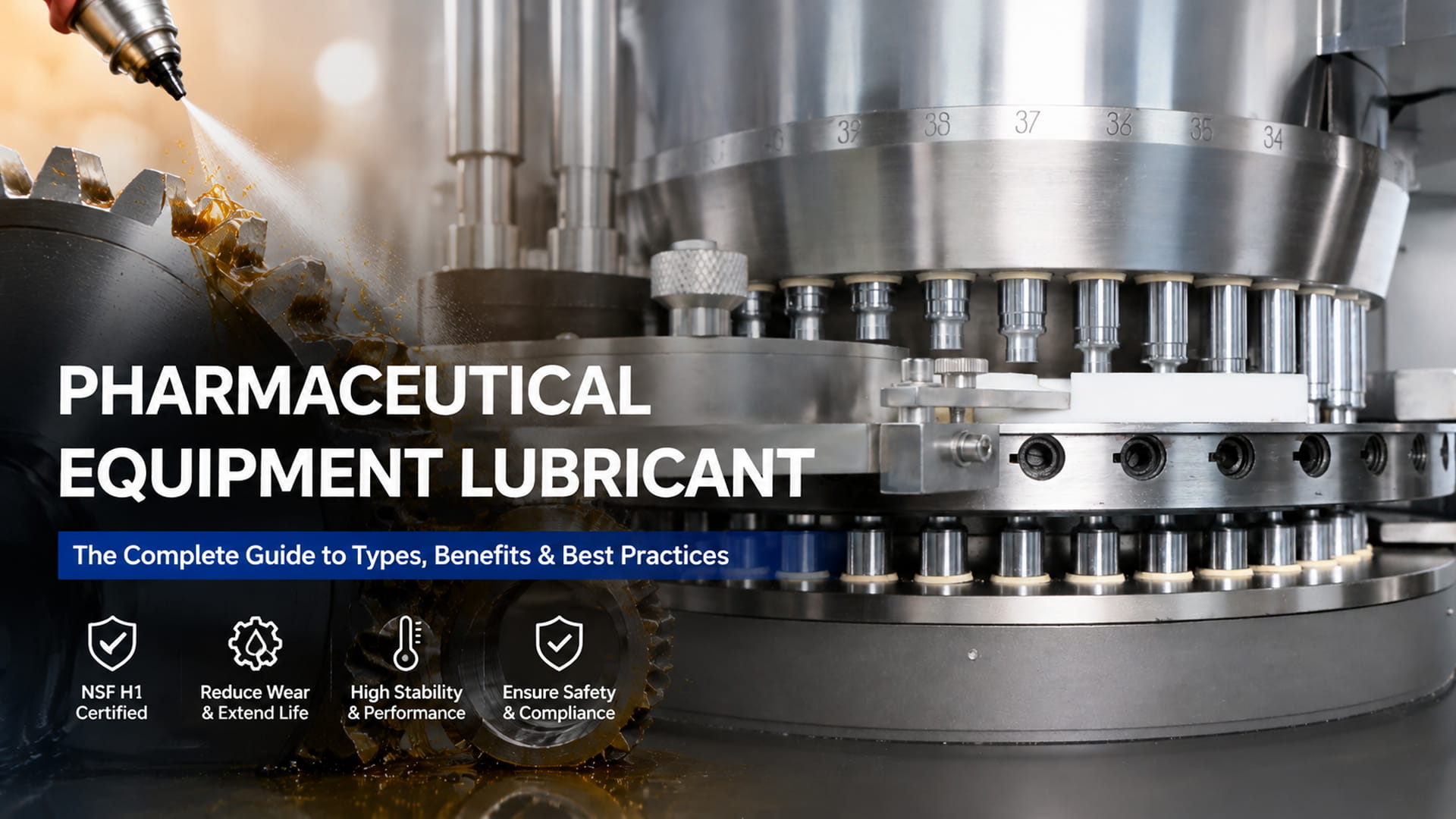
Smary do sprzętu farmaceutycznego to oleje specjalistyczne, smary i płyny przeznaczone do stosowania w maszyny do produkcji i pakowania leków. W przeciwieństwie do ogólnych smarów przemysłowych, to często klasy spożywczej lub farmaceutycznej aby zminimalizować ryzyko skażenia. Obejmują:
Te farmaceutyczne smary różnią się od zwykłych olejów tym, że są czyściej i bezpieczniej dla środowisk GMP. Na przykład, Pomarańczowy Przewodnik (Brytyjskie GMP) wyraźnie zaleca „smary i oleje dopuszczone do kontaktu z żywnością” na maszynach używanych z Pszczoła. Dlatego wielu producentów wybiera Certyfikat NSF H1 lub ISO 21469 oleje, aby zapewnić zgodność (zobacz następną sekcję).
Postać: Szybka, zautomatyzowana linia do pakowania produktów farmaceutycznych. Te maszyny (np. Napełnianie kapsułki, Pakowanie pęcherzy) mają wiele ruchomych części, które wymagają czyszczenia, certyfikowane smary, aby działać niezawodnie i spełniać standardy GMP.
Maszyny farmaceutyczne to złożone systemy krzywek, koła zębate, łańcuchy i łożyska, które pracują nieprzerwanie przy dużych prędkościach, a czasami w ekstremalnych warunkach. Właściwe smarowanie:
Jednakże, nie wszystkie smary są dopuszczalne w farmacji. Ponieważ sprzęt często działa w pomieszczeniach czystych lub w puszce (nawet przypadkowo) produkt kontaktowy, mandat organów regulacyjnych spożywczy, NSF H1 lub równoważne smary w każdym obszarze, w którym możliwe jest zanieczyszczenie. Krótko mówiąc, prawo lubrykanty klasy farmaceutycznej zapewniają zarówno płynną pracę, jak i kontrola zanieczyszczeń w produkcji farmaceutycznej.
Produkcja farmaceutyczna wykorzystuje kilka kategorii środków smarnych, wybrany na podstawie wymagań aplikacji i sprzętu:
Są to klarowne oleje (mineralne lub syntetyczne) stosowane w układach maszyn. Przykładami są oleje przekładniowe, oleje hydrauliczne i oleje ogólnego przeznaczenia opracowane z myślą o czystych środowiskach. Często posiadają dodatki zapewniające długą żywotność, zapobieganie rdzy i stabilność temperaturowa.
Wszystkie tego typu olejki dla farmacji powinny takie być klasy farmaceutycznej - tj. opracowany tak, aby unikać toksycznych lub metalicznych składników, i zwykle spełniają standardy NSF H1 lub podobne. Na przykład, oleje syntetyczne (PAO, PAG) są powszechne, ponieważ wytrzymują wysokie temperatury/ciśnienie i nadal kwalifikują się jako NSF H1.
NSF H1 odnosi się do certyfikatu amerykańskiego przemysłu spożywczego dotyczącego środków smarnych bezpiecznych w przypadku przypadkowego kontaktu. W farmaceutykach, Na części stosowane są smary NSF H1 gdzie produkt lub API mógłby przypadkowo dotknąć ruchomej części. Składniki muszą znajdować się na bezpiecznej liście FDA (21 CFR 178.3570).
Typowe smary H1 obejmują:
Stosowanie smaru/oleju H1 pomaga zachować zgodność z GMP. Jak podaje Pomarańczowy Przewodnik, w celu zmniejszenia ryzyka zanieczyszczenia „stosowanie smarów i olejów dopuszczonych do kontaktu z żywnością” jest zalecany do urządzeń przetwórczych. Klüber zauważa, że standardy GMP „zastrzegają, że certyfikowane produkty smarne… muszą być zarejestrowane w kategorii H1, Certyfikat ISO 21469, i zgodne z FDA” aby mieć pewność, że nie zanieczyszczą produktu.
Syntetyki o wysokiej wydajności (jak PAO, PAG, silikon, PFPE) doskonale sprawdzają się w ekstremalnych warunkach typowych dla sprzętu farmaceutycznego. Oferują:
Chociaż niektóre tworzywa sztuczne są z natury zgodne z normą NSF H1, użytkownicy muszą zawsze zweryfikować certyfikat dopuszczenia do kontaktu z żywnością, jeśli istnieje ryzyko kontaktu.
Smary są smarami półstałymi (olej + zagęszczacz) do wolno poruszających się lub narażonych na zachlapania części. W zakładach farmaceutycznych, widzisz smary: namiar, prowadnice liniowe, łożyska windy, i wały. Kluczowe rodzaje smarów:
Wybór odpowiedniej lepkości smaru i brak zanieczyszczeń (brak zanieczyszczeń w smarownicach) ma kluczowe znaczenie – typowymi błędami zajmiemy się później.
Sprzęt do produkcji farmaceutycznej ma wiele punktów smarowania. Poniżej znajdują się przykłady podstawowych maszyn Jinlu Packing:
Poniższa tabela przedstawia typowy sprzęt do pakowania z jego typowymi, smarowanymi częściami i zalecanymi spożywczy/H1 smar:
| Sprzęt | Typowe części do smarowania | Zalecany rodzaj smaru |
| Maszyna do tabletkowania | Kamerki dziurkujące, zjeżdżalnie, namiar | Smar NSF H1 do wysokich obciążeń |
| Maszyna do napełniania kapsułek | Przekładnie gramofonu, napędy kamer, namiar | Smar NSF H1 lub olej syntetyczny H1 |
| Maszyna do pakowania w blistry | Łańcuchy przenośników, szyny prowadzące, stacja uszczelniająca | Olej do łańcucha/przekładni NSF H1, lekki tłuszcz |
| Maszyna do kartonowania | Skrzynie biegów, przenośniki taśmowe, rolki prowadzące | Olej przekładniowy dopuszczony do kontaktu z żywnością lub smar NSF H1 |
| Linia do pakowania butelek | Łańcuchy przenośników, zębatki, namiar | Olej do łańcuchów NSF H1 lub smar polimocznikowy |
Tabela: Typowy farmaceutyczny sprzęt do pakowania i smarowane elementy (W celu spełnienia wymogów bezpieczeństwa GMP zaleca się stosowanie smarów dopuszczonych do kontaktu z żywnością lub NSF H1).
Te maszyny (kapsułka, tabletka, pęcherz) to przykłady wyposażenia Jinlu Packing. Aby uzyskać szczegółowe informacje na temat punktów smarowania w produktach Jinlu, zobacz nasze strony produktów na Maszyny do napełniania kapsułek, Maszyny pakujące w blistry, I Tabletkarki rotacyjne.
Wybór odpowiedniego smaru wiąże się z wyważeniem potrzeby maszyny z Wymogi GMP/zgodności. Kluczowe czynniki:
Podsumowując, priorytetyzować bezpieczeństwo i niezawodność. Jak zauważa Klüber Lubrication, Standardy GMP wymagają „smarów, które przejdą audyty” (Certyfikat H1/ISO). Zgodna strategia dotycząca środków smarnych gwarantuje płynną pracę maszyn I aby Twoje produkty pozostały nieskażone.
Nawet doświadczonym zespołom może się zdarzyć poślizg. Oto Szczyt 8 błędy smarowania i jak ich uniknąć:
Unikanie tych błędów jest niezwykle istotne. Jak ostrzega jeden z ekspertów branżowych, słabe smarowanie może „unieruchomić maszyny” i ostatecznie zakłócić produkcję.
Formalny program smarowania integruje konserwację z systemami jakości GMP. Oto 8 kroki do solidnego programu smarowania farmaceutycznego:
Postać: Harmonogram konserwacji zadań smarowania (codzienne kontrole poprzez kwartalną wymianę oleju) aby zapewnić ciągłą niezawodność sprzętu.
Użyj tej listy kontrolnej, aby podsumować rutynowe zadania. Sprawdź znaki (✓) wskazać zalecaną częstotliwość każdej kontroli lub czynności smarowania:
| Przedmiot kontroli | Codziennie | Tygodnik | Miesięczny | Kwartalny |
| Sprawdź, czy nie ma rozlanych olejów/wycieków na podłodze lub w pobliżu maszyn | ✓ | |||
| Sprawdź poziom oleju paska/przekładni i wzierniki | ✓ | ✓ | ||
| Sprawdź łożyska (słuchaj hałasu, czuć ciepło) | ✓ | |||
| Nasmaruj ponownie złącza i punkty smarowania | ✓ | ✓ | ||
| Dokręcić luźne złącza/uszczelki pokrywy | ✓ | |||
| Wymień olej w przekładni/skrzyni biegów lub płyny hydrauliczne | ✓ | |||
| Przeglądanie i aktualizacja zapisów/dziennika smarowania | ✓ | ✓ | ||
| Sprawdź stan narzędzi do smarowania (pistolety, lejki) | ✓ |
Regularne korzystanie z tej listy kontrolnej, wraz z rejestracją cyfrową (CMMS), pomaga wychwycić wzorce zużycia i zapewnia gotowość do audytu. Ankieta przeprowadzona wśród kierowników ds. utrzymania ruchu w zakładach farmaceutycznych pokazuje, że udokumentowane harmonogramy i zapisy smarowania są kluczowymi miernikami jakości.
Postać: Mechanik dodający olej do maszyny – analogicznie do serwisowania urządzeń pakujących farmaceutyki. Zawsze używaj oleju lub smaru zalecanego przez producenta (często NSF H1 dopuszczony do kontaktu z żywnością) i wytrzyj nadmiar, aby zapobiec zanieczyszczeniu.
Właściwe smarowanie to nie tylko rutynowa konserwacja – to kluczowy element zapewnienia niezawodność sprzętu farmaceutycznego, jakość, i zgodność. Używanie prawidłowego smary do sprzętu farmaceutycznego (Oleje i smary zatwierdzone przez H1/FDA) dzięki zdyscyplinowanemu programowi konserwacji zmniejszyć zużycie maszyny, zapobiec nieoczekiwanym przestojom, i chronić czystość produktu. Unikając typowych błędów (zobacz listę kontrolną) i postępować zgodnie z krokami zgodnymi z GMP, zespoły konserwacyjne mogą znacznie wydłużyć żywotność sprzętu i wspierać nieprzerwaną produkcję.
Do każdego sprzętu pakującego Jinlu (np. maszyny do napełniania kapsułki, Blister Packaging Machine, tabletkarki), nasz zespół techniczny może doradzić w sprawie odpowiednich środków smarnych i procedur konserwacji. Jeśli potrzebujesz niezawodnych maszyn do napełniania kapsułek, linie do pakowania blistrowego lub wysokoobrotową tabletkarkę rotacyjną wraz ze wskazówkami dotyczącymi konserwacji, skontaktuj się z Jinlu Packing dla specjalistycznych rozwiązań. Oferujemy nie tylko maszyny wysokiej jakości, ale pełne wsparcie w utrzymaniu ich dobrego smarowania i zgodności z GMP.
Smar do sprzętu farmaceutycznego to specjalnie dobrany środek smarny stosowany do konserwacji maszyn farmaceutycznych i urządzeń produkcyjnych. Pomaga zmniejszyć tarcie, zminimalizować zużycie podzespołów, poprawić niezawodność maszyny, i wspierać stabilną działalność produkcyjną. W porównaniu z ogólnymi smarami przemysłowymi, smary do sprzętu farmaceutycznego muszą uwzględniać takie czynniki, jak kontrola zanieczyszczeń, kompatybilność sprzętu, i wymagania GMP.
Smary są niezbędne w maszynach farmaceutycznych, ponieważ chronią ruchome elementy przed tarciem, przegrzanie, i przedwczesne zużycie. Właściwe smarowanie pomaga ograniczyć nieoczekiwane przestoje, poprawić wydajność sprzętu, i przedłużyć żywotność kluczowych części, takich jak łożyska, koła zębate, więzy, oraz zespoły mechaniczne stosowane w maszynach do napełniania kapsułek, tabletkarki, i maszyny pakujące w blistry.
Typowe rodzaje smarów stosowanych w sprzęcie farmaceutycznym obejmują oleje klasy farmaceutycznej, smary syntetyczne, smary dopuszczone do kontaktu z żywnością, smary, i lubrykanty na bazie silikonu. Właściwy wybór zależy od konstrukcji maszyny, temperatura robocza, warunki obciążenia, punkty smarowania, i wymagania regulacyjne.
Do sprzętu używanego we wrażliwych środowiskach produkcyjnych, producenci często rozważają smary NSF H1 tam, gdzie może istnieć ryzyko przypadkowego kontaktu.
Smar NSF H1 to zarejestrowana kategoria smarów dopuszczonych do kontaktu z żywnością, przeznaczona do zastosowań, w których może wystąpić przypadkowy kontakt z produktami. W środowiskach produkcyjnych związanych z farmaceutyką i żywnością, Smary NSF H1 są często wybierane w celu spełnienia wymagań higienicznych i zmniejszenia ryzyka zanieczyszczenia, jeśli są prawidłowo stosowane.
Jednakże, Certyfikat NSF H1 nie oznacza, że smar powinien celowo kontaktować się z produktami. Nadal ważne jest, aby zastosować minimalną wymaganą ilość i przestrzegać odpowiednich procedur konserwacji.
Tak, smary dopuszczone do kontaktu z żywnością, zwłaszcza smary zarejestrowane przez NSF H1, mogą być odpowiednie do niektórych zastosowań w maszynach farmaceutycznych, jeśli producent sprzętu i wymagania produkcyjne pozwalają na ich zastosowanie. Powszechnie uważa się je za obszary, w których możliwy jest przypadkowy kontakt ze środkiem smarnym.
Ostateczny wybór powinien zawsze uwzględniać specyfikacje maszyny, Kompatybilność materialna, warunki pracy, i wymagania związane z GMP.
Najlepszy smar do maszyny do napełniania kapsułek zależy od konstrukcji maszyny i punktów smarowania. Namiar, kamery, koła zębate, i ruchome mechanizmy mogą wymagać różnych rozwiązań smarowania. W wielu przypadkach, producenci wybierają odpowiednie oleje klasy farmaceutycznej, smary syntetyczne, lub smary NSF H1 w oparciu o warunki pracy i zalecenia dotyczące konserwacji.
Regularne smarowanie maszyny do napełniania kapsułek pomaga zachować dokładność, zmniejszyć zużycie, i poprawić stabilność produkcji.
Częstotliwość smarowania sprzętu farmaceutycznego zależy od takich czynników, jak godziny pracy maszyny, prędkość produkcji, środowisko, rodzaj smaru, i zalecenia producenta.
Dobry program smarowania zwykle obejmuje regularne przeglądy, zaplanowane zadania smarowania, kontrola stanu smaru, i dokumentację konserwacji, zamiast polegać wyłącznie na ustalonych odstępach czasu.
Typowe błędy w smarowaniu obejmują stosowanie nieodpowiednich smarów przemysłowych, wybierając niewłaściwą lepkość, mieszanie niekompatybilnych rodzajów smarów, nałożenie zbyt dużej lub zbyt małej ilości smaru, używanie zanieczyszczonych narzędzi do smarowania, oraz nieprowadzenie zapisów dotyczących smarowania.
Błędy te mogą zwiększyć zużycie sprzętu, stwarzać ryzyko skażenia, i prowadzić do niepotrzebnych przestojów w produkcji.
Program smarowania zgodny z GMP powinien obejmować kilka kluczowych etapów:
• Zidentyfikuj wszystkie punkty smarowania
• Wybierz odpowiednie środki smarne klasy farmaceutycznej lub zatwierdzone
• Tworzenie harmonogramów smarowania
• Operatorzy utrzymania pociągów
• Prowadź szczegółowe zapisy dotyczące smarowania
• Wykonuj regularne przeglądy sprzętu
• Wymień smary w zależności od warunków pracy
• Ciągłe doskonalenie procedur konserwacji
Ustrukturyzowany program smarowania pomaga poprawić niezawodność sprzętu i wspiera spójną produkcję farmaceutyczną.
Smar syntetyczny wykorzystuje syntetyczne oleje bazowe, które zwykle zapewniają lepszą odporność na temperaturę, stabilność oksydacyjna, i dłuższą żywotność w porównaniu z wieloma konwencjonalnymi smarami na bazie minerałów.
Do maszyn farmaceutycznych, smary syntetyczne posiadające odpowiednie atesty, takie jak rejestracja NSF H1, jeśli jest to wymagane, można uwzględnić w zastosowaniach obejmujących łożyska, więzy, oraz elementy mechaniczne wymagające długotrwałego smarowania.
Referencje:
1.Bezpieczeństwo maszyn — Smary w przypadku przypadkowego kontaktu z produktem — Wymagania higieniczne —— ISO 21469:2006
2.Smary dopuszczone do kontaktu z żywnością i ISO 21469 Orzecznictwo —— NSF
3.Wytyczne EHEDG 23 – Część 1, „Zastosowanie H1 & Smary zarejestrowane w HT1’ | Nowe dostępne wytyczne —— Europejska Inżynieria Higieniczna & Grupa projektowa
4.Jak rejestracje dowodzą, że smary są przeznaczone do kontaktu z żywnością —— NSF