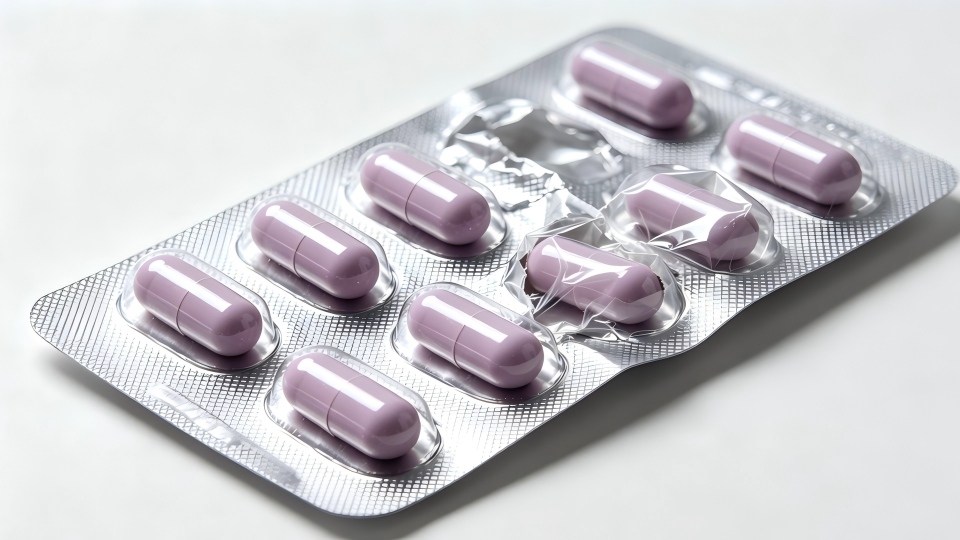
Het juiste selecteren blisterverpakkingsmachine is een cruciale beslissing voor farmaceutische fabrikanten. Tabletten en capsules verschillen in grootte, vorm, en gevoeligheid, wat betekent dat de machines die ze verpakken ook moeten verschillen. In deze handleiding worden de belangrijkste verschillen uitgelegd tussen tabletblistermachines en capsuleblistermachines, die alles omvat, van de geometrie van de holtes en de feeders tot de productiesnelheid en naleving van de regelgeving. We vergelijken thermovormen versus koudvormen en vlakke plaat versus roterende systemen, schets de belangrijkste factoren waarmee u rekening moet houden, en wijzen op veelvoorkomende valkuilen bij het kiezen van de verkeerde machine. Tegen het einde, u begrijpt precies waar u op moet letten – of u nu een tabletlijn met borstelvoeding of een volledig geautomatiseerde capsulelijn met oriëntatie-invoer nodig heeft – zodat u een weloverwogen aankoopbeslissing kunt nemen.
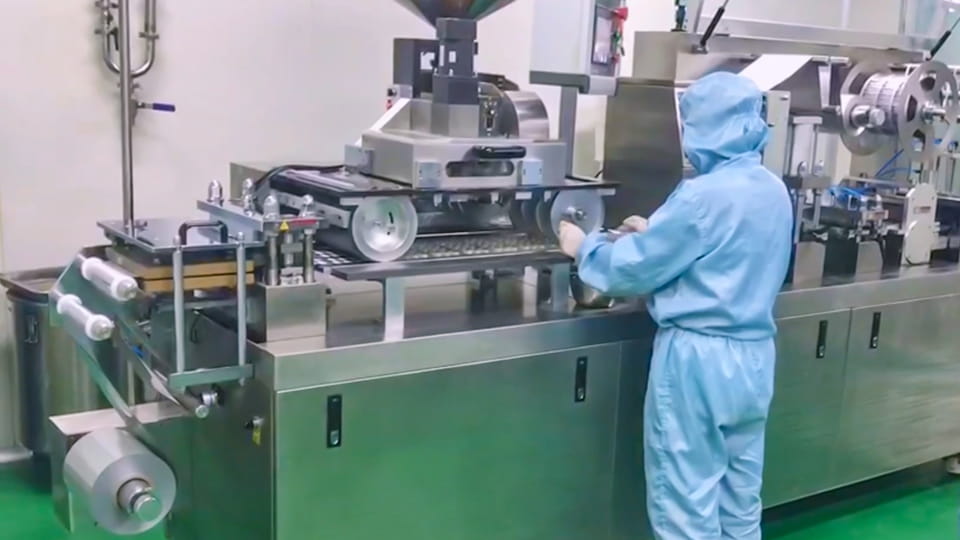
Figuur: Een moderne blisterverpakkingslijn voor tabletten/capsules in een GMP-cleanroom. Blistermachines automatiseren het vormen, vulling, afdichting, en het snijden van PVC- of aluminiumfolie om verpakkingen in eenheidsdosis te creëren.
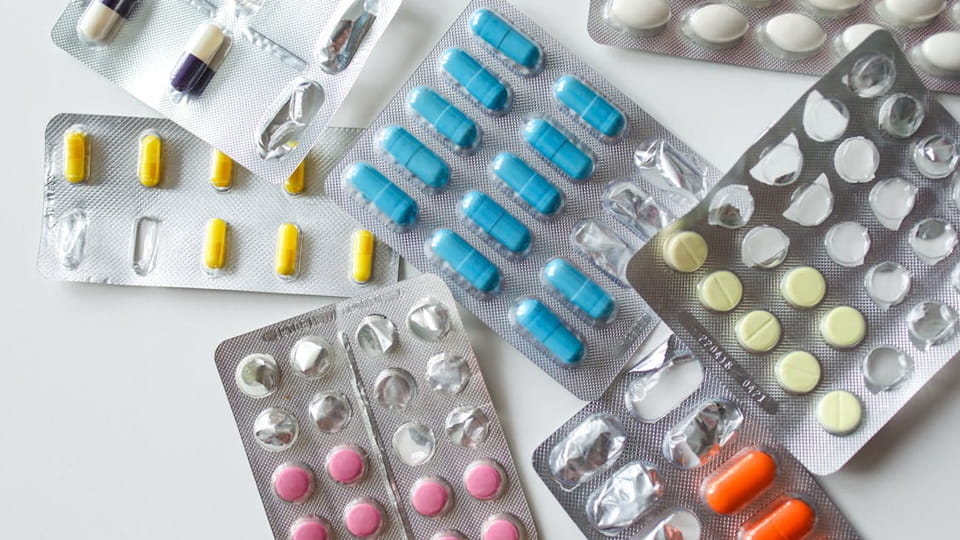
Blisterverpakkingsmachines zijn gespecialiseerde apparatuur die individuele holtes vormt (blaren) uit een plastic- of aluminiumfilm, vul ze met product, en sluit ze vervolgens af met folie. Ze voeren vier kernstappen uit:vormend, vulling, afdichting, en snijden- netjes produceren, verzegelde pakketten. Deze machines zijn alomtegenwoordig in de farmaceutische industrie: je vindt ze in verpakkingstabletten, capsules, of zelfs e-sigaretten en kleine verbruiksartikelen. Een hoogwaardige blisterverpakkingsmachine zorgt voor productveiligheid en houdbaarheid door elke eenheid nauwkeurig af te sluiten, terwijl we voldoen aan de strenge GMP/FDA-normen.
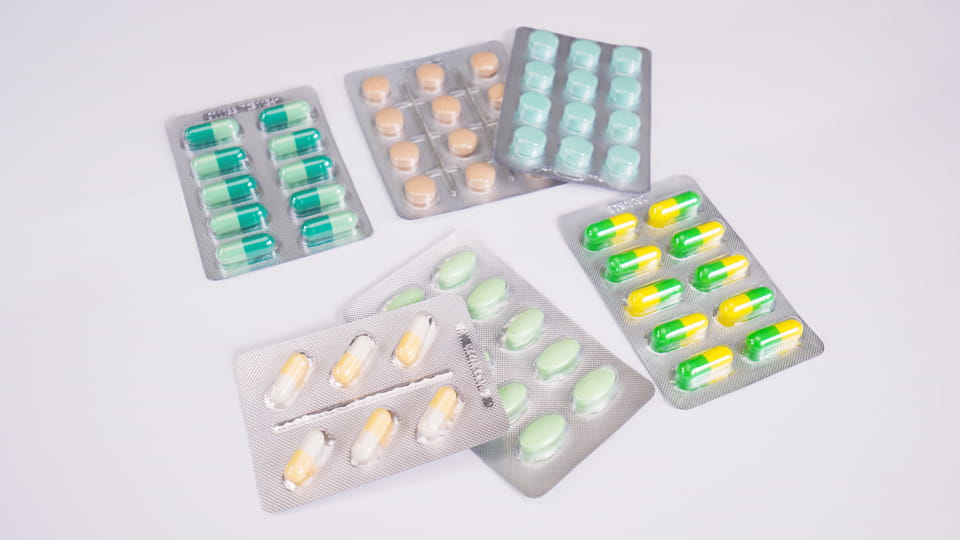
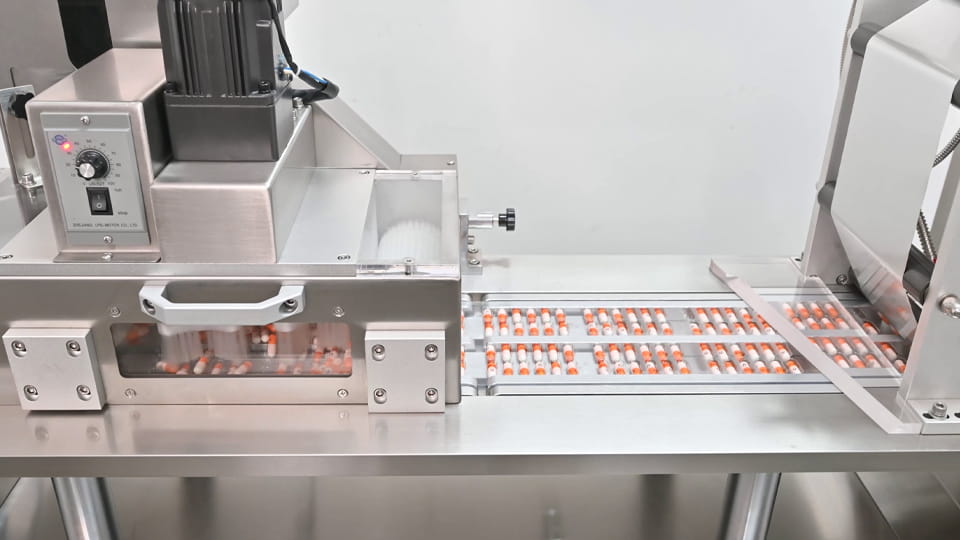
Tablet- en capsuleblisterlijnen delen dezelfde basisarchitectuur, maar de details verschillen. De zak (holte) de geometrie voor een ronde tablet is heel anders dan die voor een lange tijd, tweedelige capsule, en het voer-/oriëntatiesysteem moet bij elkaar passen. Bijvoorbeeld, een standaard ronde tablet van 10 mm heeft slechts een ondiepe tablet nodig, ronde zak, terwijl een 0# (21.7 mm) harde gelatinecapsule vereist een diepe, langwerpige ovale holte. Als gevolg hiervan, een capsuleblisterlijn bevat meestal een “oriëntatiefeeder” om de capsules correct uit te lijnen (kop tot staart) voordat ze het tankstation binnengaan. Capsules kunnen tuimelen of omkeren, dus een capsule-draaiende feeder wordt vaak gebruikt om elke capsule in een uniforme positie te draaien. Daarentegen, tabletten zijn eenvoudiger te voeden met een borsteltoevoer of trilplaat, aangezien de meeste tablets symmetrisch zijn en willekeurig in ronde vakken kunnen worden geplaatst.
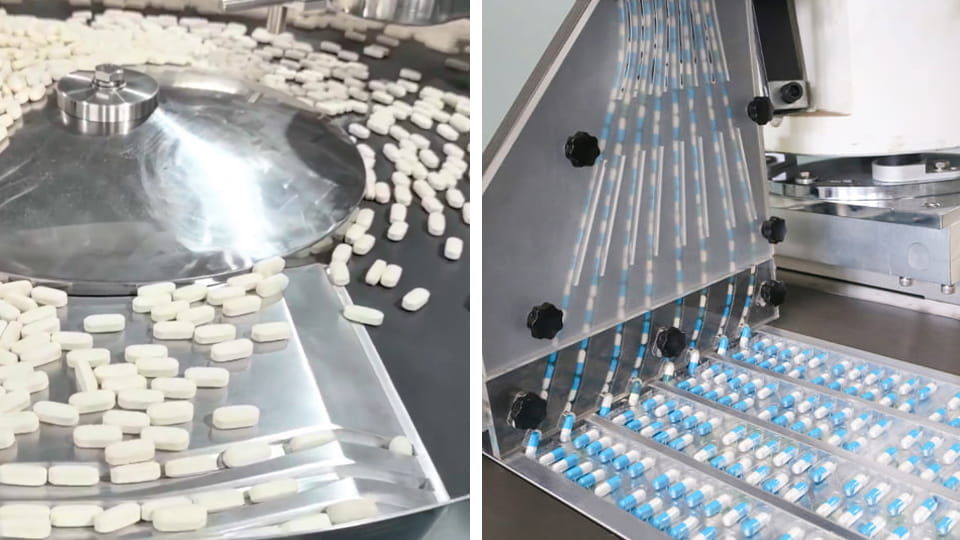
Figuur: Blisterlijnen voor capsules. Tabletholtes (circulaire) versus capsuleholtes (langwerpig ovaal) dicteer verschillende feederontwerpen en vormomstandigheden.
A blisterverpakkingsmachine is een farmaceutisch apparaat dat de verpakking van eenheidsdoses automatiseert. Het vormt gaatjes (blaren) in een kunststof of aluminium web, vult ze met product, sluit ze vervolgens af met folie of papier. In de farmacie, de vormfilm is typisch PVC/PVDC of aluminium (voor koude vorm), en de deksel is van aluminiumfolie. De basisvolgorde is: filmafwikkeling → vormstation → vul-/toevoerstation → sealstation → ponsen/snijden.
[jl_youtube src=”https://www.youtube.com/embed/hC-yo-ToX6s”]
Dit proces levert verzegelde blisterverpakkingen op die dat wel zijn manipulatie-duidelijk, hygiënisch, en gemakkelijk te gebruiken voor patiënten. Een goede blisterverpakkingsmachine zorgt voor een consistente vorm- en sluitkwaliteit, vaak met geïntegreerde vision-systemen om lege zakken of verkeerd gevulde eenheden te detecteren en te weigeren.
Hoewel tablet- en capsulelijnen er op het eerste gezicht hetzelfde uitzien, hun belangrijkste verschillen betekent dat u niet zomaar producten op elke machine kunt ruilen zonder aanpassingen. De drie belangrijkste hardwareverschillen zijn: zakvorm (matrijsgeometrie), feeder/oriëntatie, en logica verwerpen.
Als deze verkeerd worden uitgevoerd, kan dit de productie ruïneren: Een onjuiste zakvorm leidt tot defecten aan de afdichting of vervormde blisters, en voedingsfouten leiden tot afval of herinneren. Zoals Jinlupacking opmerkt, ”Gereedschapsgeometrie, voedingsmechanisme, en afwijzingslogica zijn wat bepaalt of je krijgt 98.5% efficiëntie of 84% efficiëntie tijdens de eerste productieweek”.
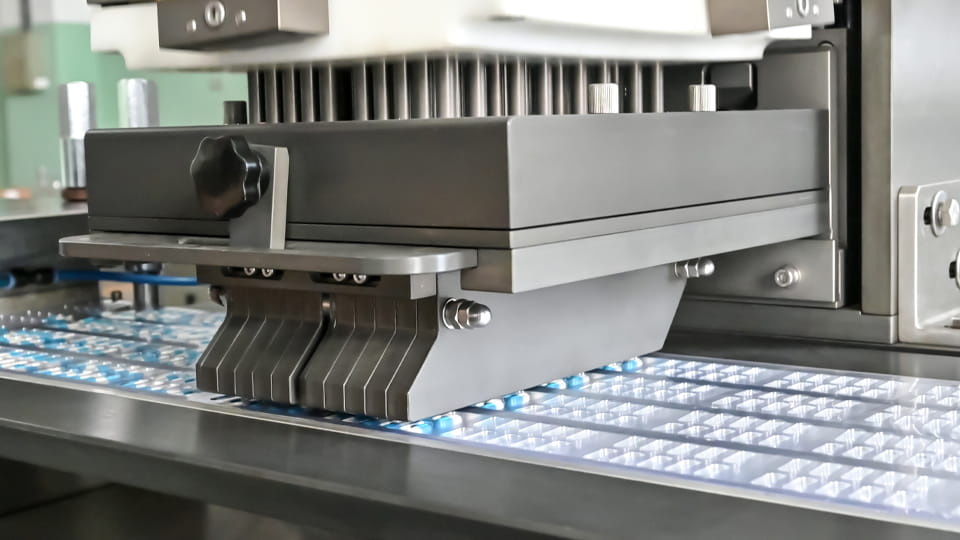
Om samen te vatten in een korte referentie, hier is hoe typisch tabletblistermachine vergelijkt met een capsule blistermachine:
| Functie | Tabletblistermachine | Capsule blistermachine |
| Holle vorm | Rond of ondiep ovaal (platte bodem) | Langwerpig ovaal (dieper trekken) |
| Typische holtediepte | ~ 4–8 mm | ~9–14 mm |
| Vormmateriaal | PVC/PVDC of PET (voor thermovormen) | Vaak PVC/PVDC of aluminium (voor thermovormen of koudvormen) |
| Vormtemperatuur | ~120–140 °C (PVC) | ~145–165 °C (PVC; of geen warmte voor koudgevormd Alu-Alu) |
| Voedingssysteem | Borstelaanvoer of trilplaat (niet-georiënteerd) | Oriëntatie voerbak (zwaartekracht glijbaan, geleiderails, of orbitaal) |
| Productoriëntatie | willekeurig (symmetrische tabletten) | Kop-staart vast (capsules moeten dezelfde kant op wijzen) |
| Visie/afwijzingslogica | Detecteer lege/gebroken tabletten | Detecteer ontbrekend, omgekeerd, of kruislings geladen capsules |
| Snelheidsefficiëntie | Meestal hoger (eenvoudiger vullen) | Iets lager (vanwege oriëntatiestappen) |
| Omschakelingskosten | Lager (eenvoudige platte mallen) | Hoger (complexe mallen voor capsulevorm) |
| Omgaan met risico's | Laag (tablets zijn robuust) | Hoger (capsules kunnen worden gesplitst of afzonderlijk worden afgesloten) |
De belangrijkste afhaalmaaltijd: Tabletmachines gebruik eenvoudige platte mallen en standaard feeders, terwijl capsulemachines voeg vaak oriëntatiegoten of roterende feeders en diepere mallen toe. Veel high-end machines (zoals de modellen van Jinlu) zijn gebouwd om beide aan te kunnen, maar hiervoor is een gevalideerde gereedschaps-/matrijswissel en soms een geautomatiseerde feederwissel nodig. Als de machine echt een tweeledig doel heeft, het feedersysteem moet beide modi ondersteunen (bijv. een verstelbare geleiderail die kan worden uitgeschakeld voor tablets).
Bij het plannen van uw verpakkingslijn, overwegen vormingstechnologie (thermovormen versus koudvormen) En machine-stijl (vlakke plaat versus roterend):
Wanneer moet u welke gebruiken?: Kiezen thermovormen als uw producten vochtstabiel zijn en u behoefte heeft aan snelheid en zichtbaarheid (bijv. OTC-tabletten, supplementen). Kiezen koude vorm (Aller tijden) als uw medicijnen zuurstof-/vochtgevoelig zijn of een zeer lange houdbaarheid vereisen. Sommige lijnen gebruiken hybride benaderingen (thermovormfolie met een Alu-deksel of PVDC-coating) om kosten en barrières in evenwicht te brengen.
Blistermachines zijn er ook in twee mechanische hoofdformaten:
Welke te kiezen? Als u veel verschillende SKU's produceert of dieptrekking nodig heeft (zoals Alu-Alu), A vlakke plaat machine is meestal het beste. Als u zeer grote batches van één product gebruikt (bijv. miljoenen blisterverpakkingen per maand), A roterend machine loont qua doorvoer. Bijvoorbeeld, Jinlu's DPP-180Pro is een vlakplaatmodel (max. ~4.800 platen/uur) goed voor de flexibiliteit, terwijl de DPH-270Max roterend model kan raken 11,200 blisters/uur voor snelle massaproductie.
| Functie | Vlakke machine | Roterende machine |
| Vormende stijl | Met tussenpozen (plaatpersen elke cyclus) | Continu (roterende trommel) |
| Max. Snelheid | Gematigd (tientallen tot ~100 sneden/min) | Zeer hoog (vaak 180+ sneden/min) |
| Beste voor | Kleine/middelgrote batches; dieptrekken (Aller tijden) pakken | Hoogvolume Alu-PVC-pakketten (massaproductie) |
| Vormkosten | Lager (vlakke platen zijn goedkoper) | Hoger (precisie cilindrische mallen) |
| Omschakeltijd | Snel (schimmeluitwisseling is eenvoudiger) | Langzamer (uitlijnen en vervangen is complex) |
| Voetafdruk per uitvoer | Groter (meerdere machines nodig voor dezelfde output) | Compacter (één machine staat gelijk aan veel vlakke platen) |
Bij het selecteren van een blisterverpakkingslijn, Concentreer u op deze zeven factoren om de beste pasvorm te garanderen en dure fouten later te voorkomen:
Door elke factor zorgvuldig te evalueren, je zult een veelvoorkomende valkuil vermijden: het kopen van een goedkopere machine die voldoet aan de behoeften van vandaag, maar niet voldoet aan de eisen van morgen (Bijvoorbeeld, er ontbreekt een feeder voor nieuwe capsule-SKU's of er is een volledige vervanging nodig voor hogere snelheden).
Het kiezen van een blistermachine is complex, beslissing met hoge inzet. Inkoopteams maken deze fouten vaak:
Door van deze fouten te leren, u kunt prioriteit geven aan waarde en prestaties op de lange termijn in plaats van alleen maar de vakjes op het specificatieblad aan te vinken.
Als u voornamelijk tabletten produceert:
Als u voornamelijk capsules produceert:
Als je beide doet:
Niet alle blisterverpakkingsmachines zijn gelijk gemaakt. U wilt een leverancier die de farmaceutische behoeften begrijpt en robuuste ondersteuning biedt. Jinlu-verpakking, bijvoorbeeld, hoogtepunten:
Het selecteren van een gerenommeerde fabrikant is bijna net zo belangrijk als de machinespecificaties. Zoek naar degenen die validatiedocumenten publiceren, opleiding aanbieden, en een trackrecord hebben op het gebied van farmaceutische installaties.
Het kiezen van de juiste blisterverpakkingsmachine is een strategische beslissing. Door zorgvuldig te matchen machinetype naar jouw product (tabletten versus capsules) En productiebehoeften, u kunt de efficiëntie en kwaliteit maximaliseren. Vergeet niet om het ontwerp van de feeder te overwegen, machineformaat, materiële compatibiliteit, en naleving van de regelgeving. Als u deze gegevens overslaat, kan dit u downtime en afgedankte producten kosten. In plaats van, volg de checklistbenadering van een koper: definieer uw vereisten, verifieer elke machine tegen hen, en schakel een leverancier in die u vertrouwt (met solide garanties en ondersteuning).
Het recht kiezen Blisterverpakkingsmachine gaat niet alleen over apparatuur – het gaat over het garanderen van een stabiele productie, productkwaliteit, en ROI op lange termijn. Als u van plan bent uw farmaceutische verpakkingslijn te upgraden of nog steeds opties voor tablets versus capsules vergelijkt, nu is het juiste moment om actie te ondernemen.
👉 Praat vandaag nog met ons team van Jinlu Packing
👉 Krijg een oplossing op maat op basis van uw product en capaciteit
👉 Vraag vrijblijvend een offerte of technisch advies aan
Wij helpen u de juiste blisterverpakkingsmachine af te stemmen op uw werkelijke productiebehoeften – niet alleen op papier.
Mogelijk, maar het hangt af van het ontwerp van de machine. Een echte dual-format blistermachine moet over verwisselbare gereedschappen beschikken (mallen sets) en een voedingssysteem dat zowel willekeurige tabletvoeding als gerichte capsulevoeding mogelijk maakt. In de praktijk, dit betekent extra kosten (speciale vormgereedschappen en een capsule-oriëntatie-feeder). Als gemengde productie incidenteel is, een enkele machine met omschakelkits kan werken, maar voor frequente omschakelingen, speciale machines zijn misschien praktischer.
Voor zeer vochtgevoelige of lichtgevoelige medicijnen, koude vorm (Aller tijden) blisterverpakkingen hebben de voorkeur. Het volledige aluminiumlaminaat zorgt voor een vrijwel ondoordringbare barrière, verlenging van de houdbaarheid. Houd er rekening mee dat de machine koudvervormen moet ondersteunen (hoge druk, geen hitte). Als snelheid en zichtbaarheid nodig zijn, sommigen gebruiken hybride packs (thermovormholten met aluminium- of PVDC-coatings) voor tussentijdse bescherming.
Thermovormen (PVC/PET) werkt voor de meeste tablets die niet extreem vochtgevoelig zijn. Het biedt een snelle productie en duidelijk, inspecteerbare verpakkingen. Echter, voor tabletten met natte granulatie of hygroscopische inhoud, Mogelijk hebt u een PVDC-gecoate film nodig of schakelt u over op koude vorm. Ook, sommige materialen (zoals retinoïden) kan interageren met PVC, dus compatibiliteitstesten zijn verstandig.
Capsulelijnen maken doorgaans gebruik van oriëntatiefeeders. Veel voorkomende typen zijn onder meer geleiderailfeeders, zwaartekracht glijbanen, of capsule-draaiinrichtingen. Het doel is om elke capsule met de kop naar voren in de holte te plaatsen. Jinlu en anderen bieden orbitale feeders of trilkanalen aan om dit te bereiken. Controleer altijd bij de leverancier of hun feeders uw capsulegrootte en -vorm aankunnen.
• Optimaliseer de voeding: Zorg voor soepel, jamvrij voeren. Een goed ontworpen feeder met de juiste roering of oriëntatie vermindert het aantal stilstanden
• Snelheid versus stabiliteit: Stem de bedrijfssnelheid af op de producttoleranties. Langzamer draaien dan de maximale snelheid kan uitval en uitvaltijd verminderen.
• Omschakelingsreductie: Standaardiseer de blistergroottes indien mogelijk. Gebruik snelwisselsystemen (zoals Jinlu's 15 minuten durende schimmelwissel).
• Preventief onderhoud: Houd apparatuur gekalibreerd (temperatuur, druk) en schoon. Vision-systemen moeten regelmatig worden gecontroleerd en gereinigd.
• Operatortraining: Ervaren operators die de nuances begrijpen (Bijv., voedingscorrecties, schimmel instelling) zijn van onschatbare waarde.
• Lay-outintegratie: Stroomlijn de materiaalstroom. Geautomatiseerde koppelingen met tabletpersen en kartonneermachines verminderen de stilstandtijd.
• Gegevensmonitoring: Gebruik PLC-gegevens om trends te ontdekken (temperatuur overschrijdt, pieken afwijzen) en corrigeer ze vroegtijdig.
Door deze factoren aan te pakken, u maximaliseert de opbrengst en uptime van uw blisterlijn.
Referenties:
1.Blisterverpakking —— Wikipedia
2.Een complete gids over blisterverpakkingsmachines —— farmaceutische-tech.com
3.Optimalisatie van het ontwerp van blisterverpakkingen voor farmaceutische producten in vaste vorm —— WetenschapDirect
4.Farmaceutische blisterverpakking, deel II: Machines en assemblage —— OnderzoekGate
5.Detectie van defecten in farmaceutische blisterverpakkingen op basis van het matchen van vormsjablonen —— OnderzoekGate