Wat is verpakkingsvalidatie in de farmaceutische industrie? Een complete gids voor farmaceutische fabrikanten
Wat is verpakkingsvalidatie in de farmaceutische industrie? Een complete gids voor farmaceutische fabrikanten
april 29, 2026
Geen opmerkingen
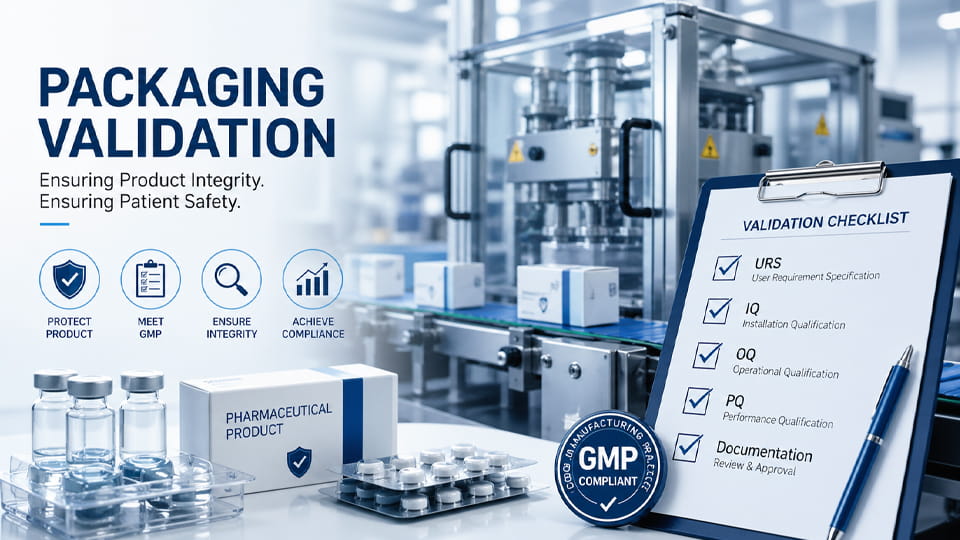
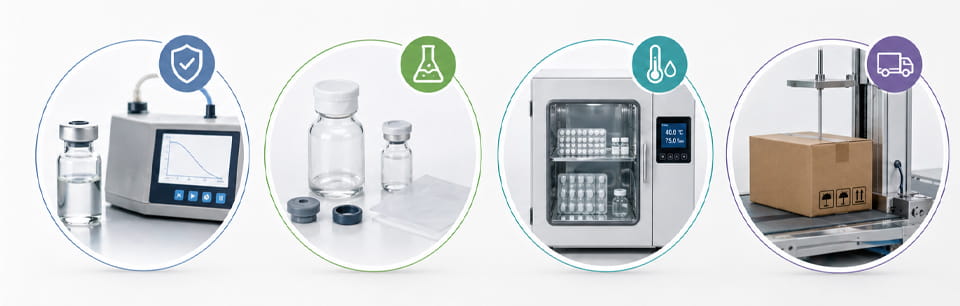
In de farmaceutische industrie, validatie van verpakkingen is een kritische subset van procesvalidatie gericht op het waarborgen dat verpakkingsapparatuur en -processen de kwaliteit van geneesmiddelen consistent beschermen. Het omvat een gedocumenteerd kwalificatieprogramma (Installatie, Operationeel, Prestatie) en testen (bijv. integriteit van de containersluiting, stabiliteit, vervoer) om aan te tonen dat verpakkingssystemen presteren zoals bedoeld onder GMP-omstandigheden. Effectieve verpakkingsvalidatie waarborgt de veiligheid van de patiënt (door besmetting te voorkomen, degradatie of verwisselingen) en zorgt voor naleving van de regelgeving (FDA, EMA, WHO, I, ISO). In deze gids wordt uitgelegd definitie, stappen, testen, normen, En beste praktijken voor farmaceutische verpakkingsvalidatie, en laat zien hoe geautomatiseerde apparatuur (leuk vinden De machines van Jinlu Packing) is ontworpen om aan deze strenge eisen te voldoen.
Definitie van verpakkingsvalidatie
Verpakkingsvalidatie in farmaceutische middelen aantonen met gedocumenteerd bewijsmateriaal dat het verpakkingsproces (apparatuur en materialen) produceert op betrouwbare wijze een verpakking die het medicijnproduct beschermt. In de praktijk, het past dezelfde rigoureuze validatieconcepten toe die bij de productie worden gebruikt (IR/WH/PQ) naar primair, secundair, en tertiaire verpakkingen operaties. Volgens de GMP-richtlijnen van de WHO, “Verpakkingsprocessen en apparatuur hebben validatie/kwalificatie nodig op dezelfde manier als elk ander onderdeel van de verwerking binnen een farmaceutische fabriek.”. Met andere woorden, verpakkingsvalidatie zorgt voor de container-sluitsysteem, etikettering, en verpakkingslijnen consistent voldoen aan de kwaliteitsspecificaties en wettelijke vereisten. Het doel is om de sterkte van het medicijn te behouden, zuiverheid en stabiliteit door verpakking, distributie en houdbaarheid, terwijl verwisselingen worden voorkomen, vervalsingen, of schade.
Typische resultaten bij verpakkingsvalidatie zijn onder meer: Specificatie gebruikersvereisten (URS) (het ontwerp & kwaliteitscriteria), Protocollen voor installatie/operationeel/prestatiekwalificatie, en testrecords. Het validatieproces omvat:
Primaire verpakking (de container of barrière die rechtstreeks in contact komt met het medicijn, bijv. flesje, blaren holtes, zakjes)
Tertiaire verpakking (bulkcontainers, pallets, koelketenverpakking voor transport)
Elk niveau moet het product beschermen. Bijvoorbeeld, definieert de Australische TGA “primaire verpakking” (de container die de goederen onmiddellijk afdekt) en onderscheidt secundaire verpakking als de buitenste doos of verpakking. Uiteindelijk, verpakkingsvalidatie sluit aan bij GMP – om dat te garanderen containers en sluitingen veranderen het medicijn niet En “adequate bescherming bieden tegen externe factoren” tijdens opslag en gebruik.
Waarom verpakkingsvalidatie van cruciaal belang is in de farmaceutische sector
Farmaceutische verpakkingen zijn de laatste verdediging voor de kwaliteit van geneesmiddelen. Het valideren van verpakkingsprocessen is van cruciaal belang omdat:
Zorgt voor productveiligheid en -integriteit: Een goed gevalideerde verpakking voorkomt besmetting, binnendringen van vocht, of blootstelling aan zuurstof die actieve ingrediënten zou kunnen afbreken. Bijvoorbeeld, Door lekken of defecte afdichtingen kunnen microben of gassen binnendringen, de steriliteit of potentie bederven.
Naleving van regelgeving: Agentschappen (FDA, EMA/I, WHO) gevalideerde verpakking vereisen. ONS. FDA's 21 CFR 211.94 verbiedt sluitingen die de kwaliteit van geneesmiddelen veranderen en schrijft sluitingen voor “adequate bescherming bieden tegen voorzienbare externe factoren”. EU GMP-bijlage 1 benadrukt dat eveneens “containers moeten worden gesloten met op passende wijze gevalideerde methoden” (met 100% integriteitstesten voor fusie-gesloten producten). De WHO stelt expliciet dat verpakkingssystemen moeten worden gekwalificeerd zoals elk ander GMP-proces. Niet-naleving kan betekenen herinnert zich, importeer afwijzingen of auditcitaties.
Verlengt de houdbaarheid: Verpakkingsmaterialen en zegels die zijn gevalideerd onder stabiliteitsomstandigheden helpen bij het vaststellen van nauwkeurige houdbaarheidsclaims. De ICH Q1A-richtlijnen specificeren zelfs dat stabiliteitsstudies moeten worden uitgevoerd in de “containersluitsysteem” voorgesteld voor het product. Als het verpakken mislukt, stabiliteitsgegevens zijn ongeldig.
Serialisatie en anti-namaak: Moderne farmaceutische verpakkingen omvatten vaak serialisatie, verzegelde zegels, en anti-namaakfuncties. Validatie van deze functies (bijv. scanbaarheid van barcodes, integriteit van sabotagetapes) helpt de toeleveringsketen veilig te stellen. Een fout in de etikettering of serialisatie kan de vrijgave van producten blokkeren.
Kwaliteit en kostenefficiëntie: Efficiënte gevalideerde lijnen verminderen defecten (verkeerde vullingen, etiketfouten, verpletterde dozen) en schroot. Geautomatiseerde inspecties (visionsystemen voor controle van zegels/labels) maken vaak deel uit van gevalideerde controles. Algemeen, gevalideerde verpakkingsprocessen minimaliseren het risico voor de patiënt en zorgen voor een consistente levering van effectieve, authentieke medicijnen.
Belangrijke drijfveren voor validatie
Patiëntveiligheid: Onjuiste verpakking kan patiënten schade toebrengen (bijv. verontreinigde injectables). Validatie documenteert de veiligheidsbarrière.
Regelgevende risicobeperking: Niet-gevalideerde processen brengen een hoog risico met zich mee voor terugroepingen of sancties. Regelgevers verwachten kwalificatiegegevens voor elke productielijn.
Wereldwijde distributie: Voldoen aan internationale normen (FDA/EMA/WHO) vereist gevalideerde verpakkingen in alle markten.
Bedrijfscontinuïteit: Verpakkingsfouten bij distributieafvalproduct en -tijd. Validatie zorgt ervoor “in één keer goed” werking onder GMP.
Auditgereedheid: Audits door kwaliteitsautoriteiten of toezichthouders van klanten zullen de validatiegegevens van verpakkingen en apparatuurkwalificaties beoordelen als onderdeel van GMP-inspecties.
Reikwijdte van de validatie van farmaceutische verpakkingen
Verpakkingsvalidatie omvat alle verpakkingsfasen. Typisch, wij onderscheiden:
Validatie van primaire verpakkingen: Focust op de containersluiting (flesje, ampullen, blaren holtes, flessen). Tests omvatten de integriteit van de afdichting, materiële compatibiliteit (extraheerbare/uitloogbare stoffen) en de prestaties van de containersluiting. Voor steriele producten, integriteitstests voor de sluiting van containers (CCIT) zijn verplicht om het behoud van de steriliteit te garanderen.
Secundaire verpakkingsvalidatie: Bedekt de directe buitenverpakking (dozen, etiketten, folders, droogmiddelen). Dit omvat controles op de leesbaarheid/nauwkeurigheid van etiketten, valtests voor dozen, en boxcompressietests (voor vervoer). Etiketverificatie zorgt ervoor dat de juiste patiëntinformatie consistent wordt toegepast.
Tertiaire verpakkingsvalidatie: Betreft bulk-/transportverpakking. Hier, prestatietests zoals trillingen, druppel, en thermische cycli (koude keten) simuleer transportstress om te verifiëren dat pallets en verzenddozen de productintegriteit en etikettering behouden tijdens distributie. Standaardprotocollen zoals ASTM D4169 (transport simulatie) worden vaak gebruikt.
Elk niveau vereist een risicobeoordeling en passende tests: Bijvoorbeeld, primair bij de verpakking kan USP betrokken zijn <1207>-stijlintegriteitstesten, terwijl secundair verpakkingstests kunnen de sterkte van de doos en de hechting van etiketten omvatten, En tertiair verpakking maakt gebruik van ISTA/ASTM-testprotocollen. Alles moet worden gedocumenteerd in het validatieplan.
Belangrijke stappen in het verpakkingsvalidatieproces
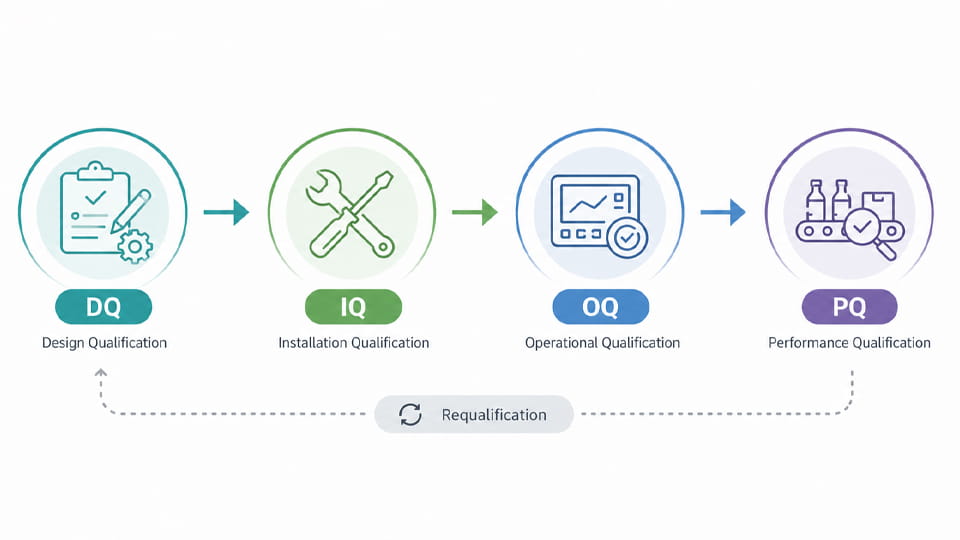
Verpakkingsvalidatie volgt doorgaans de levenscyclus van apparatuur/proceskwalificatie, vaak omschreven als DQ/IQ/OQ/PQ. Deze fases zorgen ervoor dat een nieuwe of aangepaste verpakkingslijn in elke fase voldoet aan de eisen.
Ontwerpkwalificatie (DQ): Vroege fase waarin het ontwerp wordt beoordeeld aan de hand van de URS (Specificatie gebruikersvereisten) en GMP-richtlijnen. Alle ontwerpaspecten (machinefuncties, materialen, reinigbaarheid, compatibiliteit met product-/verpakkingsmaterialen) worden beoordeeld. Documenten omvatten de URS en ontwerpspecificaties (Functionele ontwerpspecificatie FDS, Hardware-/softwareontwerpspecificaties). Vaak een risicoanalyse (bijv. DFMEA) wordt gedaan om te anticiperen op verpakkingsfoutmodi.
Installatiekwalificatie (IQ): Controleert of de machine/lijn correct is geïnstalleerd volgens de specificaties van de leverancier. IQ bevat een checklist die de juiste locatie verifieert, nutsvoorzieningen (stroom, lucht, water), omgevingsomstandigheden, en correcte montage. Alle onderdelen zijn aanwezig en onbeschadigd. Kalibratie van meetapparatuur wordt gecontroleerd. Leveringen: IQ-protocollen en rapport, kalibratiecertificaten.
Operationele kwalificatie (OK): Controleert of de machine onder alle gespecificeerde omstandigheden werkt zoals bedoeld. Kritieke parameters (snelheidsbereiken, temperaturen, druk, vacuümniveaus, koppel, enz.) worden uitgedaagd bij min/max of worst-case instellingen. Tests in OQ kunnen afdichting bij extreme snelheden omvatten, sensor-/alarmfuncties, snelheidsveranderingen van de transportband, nauwkeurigheid van de etiketteermachine, nauwkeurigheid van de vulpomp. In het OQ-protocol wordt vastgelegd dat elke functionele test voldoet aan de acceptatiecriteria.
Prestatiekwalificatie (PQ): Toont aan dat onder normale productieomstandigheden, de lijn produceert consequent producten die voldoen aan de kwaliteitsspecificaties. PQ wordt gedaan op basis van daadwerkelijke productiehoeveelheden/batches. Het omvat het runnen van de lijn gedurende een gedefinieerde tijd of hoeveelheid en het bemonsteren van de output. Typische activiteiten: met meerdere blisterverpakkingen, flessen of zakjes en het uitvoeren van QC-tests op monsters (Bijv., integriteit van de containersluiting (CCIT), gewichtscontroles, visuele defectinspectie, sterkte van de afdichting). PQ laat zien dat de lijn continu kan werken met behoud van de productkwaliteit.
De onderstaande tabel geeft een overzicht van de DQ – IQ – OQ – PQ-fasen:
Fase
Doel
Belangrijke documenten
Voorbeeldactiviteiten/tests
Ontwerpkwalificatie (DQ)
Controleer of het ontwerp van het verpakkingssysteem voldoet aan URS/GMP
Zoals het diagram laat zien, verpakkingsvalidatie is een levenscyclusproces van ontwerp tot prestatie. Merk dat op herkwalificatie kan nodig zijn na grote veranderingen of periodiek.
Belangrijke tests bij verpakkingsvalidatie
Tijdens de validatie van verpakkingen worden vaak verschillende gespecialiseerde tests uitgevoerd:
Integriteitstesten van containersluitingen (CCIT)
CCIT is essentieel voor steriele en zelfs niet-steriele producten. Het beoordeelt of het containersluitsysteem (bijv. injectieflacon+stop+dop, ampul, blisterverpakking) vormt een perfecte barrière. Methoden omvatten vacuümverval, druk verval, kleurstof binnendringen, of microbiële uitdaging. Zoals een bron uit de sector uitlegt, “Integriteitstesten van containersluitingen (CCIT) is een test die de geschiktheid van containersluitingssystemen evalueert om een steriele barrière tegen potentiële verontreinigingen te behouden.”. Regelgevende documenten (USP <1207>, FDA, EMA-bijlage 1) benadrukken het testen van de integriteit van de sluiting om er zeker van te zijn dat er geen lekken of inbreuken zijn. Bijvoorbeeld, USP <1207> biedt richtlijnen voor het selecteren van lektestmethoden om verzegelde pakketten te certificeren.
Verpakkingsmaterialen (kunststoffen, rubbers, inkten, lijmen) mag geen nadelige interactie hebben met het geneesmiddel. Extraheerbare en uitloogbare stoffen studies simuleren langdurig contact: Extraheerbare stoffen zijn chemicaliën die onder zware omstandigheden uit de verpakking worden gehaald, en uitloogbare stoffen zijn de stoffen die onder normale omstandigheden daadwerkelijk in het product migreren. Deze tests zorgen ervoor dat de verpakking geen giftige of stabiliteitsbeïnvloedende onzuiverheden introduceert. Farmacopee- en FDA-richtlijnen (bijv. USP <661>, Q3E) schets E/L-testen voor containersluitsystemen. In de praktijk, men controleert of het polymeer, coatings, en etiketmaterialen voldoen aan de farmacopee-normen (bijv. USP-glassoort, Specificaties ISO-rubberen sluiting). De WHO merkt op dat er farmacopeenormen gelden voor sluitingen (zoals rubberen stoppen) Zijn “minimumvereisten” en benadrukt stabiliteitsstudies om de geschiktheid te bewijzen.
Stabiliteitstesten in verpakkingen
Volgens ICH Q1A, stabiliteitsstudies moet worden gedaan op het geneesmiddel in de uiteindelijke verpakkingsconfiguratie. Tijdens validatie, de impact van verpakkingen op de stabiliteit wordt beoordeeld: Bijvoorbeeld, de uiteindelijke verpakking wordt onderworpen aan versnelde veroudering (hoge temperatuur/vochtigheid) en real-time omstandigheden om geen verslechtering te garanderen (bijv. binnendringend vocht in blisterverpakkingen, zuurstofpermeatie in flessen). Stabiliteitsindicerende testen (chemisch en microbieel) worden uitgevoerd. Verpakkingen die er niet in slagen het product onder stress te beschermen, maken claims over de houdbaarheid ongeldig. Dus, Bij validatie wordt onder meer bevestigd dat de gekozen verpakking voldoet aan de houdbaarheidseisen (dit overlapt met protocollen voor regelgevende stabiliteit).
Transport- en distributietesten
Tertiaire verpakking tests simuleren werkelijke transportomstandigheden. Standaardtests omvatten valhoogtetests, trillingen (vrachtwagen/spoor simulatie), compressie (gewicht stapelen), en temperatuurcycli (vooral voor de koudeketen). Bijvoorbeeld, ASTM D4169 (voor verpakte producten) of ISTA-protocollen kunnen worden gebruikt. Een robuust verpakkingsvalidatieplan verifieert die dozen, kisten en kratten beschermen primaire pakketten tijdens het hanteren: om te controleren of er geen breuk is, etiket loslaten, of vochtschade ontstaat onder distributieomstandigheden. Voor koudeketen, temperatuurkartering en gevalideerde geïsoleerde verladers worden getest om tijdens het transport de vereiste temperatuurbereiken te behouden.
Regelgevende normen en richtlijnen
Validatie van farmaceutische verpakkingen moet voldoen aan meerdere verwachtingen van de toezichthouders:
cGMP-voorschriften: In de VS, FDA's 21 CFR-onderdeel 211 (subonderdeel J) regelt containers en sluitingen. Sectie 211.94(advertentie) specificeert dat containers/sluitingen de kwaliteit van het medicijn niet kunnen veranderen en moeten beschermen tegen voorzienbare besmetting.
EU-GMP: Europese richtlijnen (EudraLex Vol. 4) vereisen dat “containers moeten worden gesloten met op passende wijze gevalideerde methoden” (Bijlage 1) en dat verpakkingsprocessen GMP volgen (Bijlage 15 op validatie). EU GMP-bijlage 11 geeft opdracht tot geautomatiseerde systeemvalidatie (inclusief verpakkingslijnen met elektronische besturing).
WIE GMP: WHO's technische rapportenreeks 902 (Bijlage 9) vermeldt expliciet dat verpakkingsapparatuur validatie nodig heeft, net als elke andere verwerkingsstap. De WHO geeft ook richtlijnen over de integriteit van pakketten (vergelijkbaar met EU/ICH).
ICH-richtlijnen: Hoewel ICH (Vraag 7, Vraag 8, Vraag 9, Q10) hebben geen specifiek verpakkingsvalidatiedocument, zij verplichten risicobeheer (Vraag 9) en kwaliteit door ontwerp (Q8/Q10) principes die van toepassing zijn. Bijvoorbeeld, risicobeoordeling (Ik Q9) moet verpakkingsattributen omvatten (soort sluiting, etiketteringscontrole) die van invloed zijn op product-CQA's.
Normen: Voor steriele producten, ISO 11607 (voor terminaal gesteriliseerde verpakkingen van medische hulpmiddelen) wordt vaak naar analogie gebruikt; Deel 2 van ISO 11607 definieert validatie-eisen voor vorm-/afdichtingsprocessen, wat relevant is voor parenterale blisterverpakkingen of ampullen voor geneesmiddelen. Farmacopeeën (USP, Ph. Eur.) bevatten ook hoofdstukken over verpakkingstests (bijv. USP <381> voor rubberen sluitingen, <1207> voor lektesten).
Samengevat, elke verpakkingslijn moet voldoen aan de nationale farmacopee en regionale GMP-normen. Compliance-checklists vermelden doorgaans de FDA, EU-GMP, WHO en relevante ISO-normen, en vragen vaak om volledig gedocumenteerde SOP's en validatiemasterplannen voor verpakkingen.
Veel voorkomende uitdagingen bij verpakkingsvalidatie
Verpakkingsvalidatie brengt unieke uitdagingen met zich mee vergeleken met productieprocessen:
Gegevenstype en bemonstering: Het succes van de verpakkingslijn wordt vaak bepaald door discrete uitkomsten (bijv. geslaagd/mislukt voor een zegel, traan) in plaats van continue metingen. Zoals een deskundige opmerkt, “Het soort gegevens dat wordt verkregen… vormt een aanzienlijke uitdaging. Succes of falen wordt vaak bepaald door gebreken (tranen, gaten, vlekken, of lekkende afdichtingen)… Dit gebrek aan meetbaarheid (variabel) gegevens vereisen vaak zeer grote steekproeven voordat een verpakkingsproces statistisch kan worden gevalideerd.”. Met andere woorden, Mogelijk hebt u veel monsters nodig om de betrouwbaarheid aan te tonen.
Technologie verscheidenheid: Er zijn veel verpakkingstechnologieën (blaren, karton, etiketteermachines, casepackers, enz.) van verschillende leveranciers. Elk heeft verschillende risicoprofielen, waardoor een one-size validatieplan onmogelijk wordt.
Controle wijzigen: Verpakkingslijnen draaien vaak veel productsoorten (tabletten, vloeistoffen, poeders) en verpakkingsgrootten op dezelfde apparatuur (met behulp van wijzigingsonderdelen of formaten). Voor elke wijziging kan een hervalidatie of opname in het validatieplan nodig zijn. Dit beheren (de validatiematrix) kan complex zijn.
Milieucontroles: Sommige verpakkingen (bijv. blisterverpakkingen van vochtgevoelige medicijnen) vereist een gecontroleerde luchtvochtigheid of een inerte atmosfeer. Het valideren van deze controles zorgt voor extra complexiteit.
Integratie met upstream-proces: Verpakkingsvalidatie is afhankelijk van upstream-consistentie. Als medicijnkorrels in grootte variëren, het wisselen van verpakkingsmachine kan hierdoor worden beïnvloed (bijv. jam vullen). Deze onderlinge afhankelijkheid kan de analyse van de hoofdoorzaak van verpakkingsfouten bemoeilijken.
Serialisatie/tracking: Moderne regelgeving (bijv. DSCSA, EU-MKZ) serialisatie en traceerbaarheid vereisen. Ervoor zorgen dat geautomatiseerde lijnen elke eenheid correct volgen (en het valideren van die gegevensverzameling) voegt een extra kwalificatielaag toe (softwarevalidatie, testen van barcodescanners, databasecontroles).
Regelgevingsambiguïteit: Paradoxaal genoeg, er zijn beperkte expliciete FDA/EMA-richtlijnen uitsluitend over ‘verpakkingsvalidatie’,” Bedrijven moeten dus vaak algemene GMP- en procesvalidatierichtlijnen voor verpakkingen interpreteren. Dit kan onzekerheid veroorzaken over de exacte omvang of benodigde tests.
Ondanks deze uitdagingen, het onderliggende principe blijft: behandel verpakkingen als ieder ander kritisch proces, met grondige kwalificatie en robuuste QC-controles. Zoals het ISPE-paper concludeert, validatie van verpakkingen "verschillen(S) weinig af van de validatie van processen die worden gebruikt voor de productie van medicijnen.”.
Beste praktijken voor de validatie van farmaceutische verpakkingen
Om uitdagingen te overwinnen en een succesvolle validatie te garanderen, volg deze best practices:
Vroege risicobeoordeling: Gebruik kwaliteitsrisicobeheer (Ik Q9) vanaf de ontwerpfase. Identificeer kritische verpakkingskenmerken (bijv. steriliteit, bewijs vervalsen, lichte bescherming) en prioriteer de tests dienovereenkomstig. Een faalmodus & Effectanalyse (FMEA) wordt aanbevolen tijdens DQ om de validatiescope te plannen.
Gebruikersvereisten Spec (URS): Documenteer vooraf duidelijk alle vereisten: productiecapaciteit, verpakkingsformaten, integratie punten (bijv. het koppelen van een blistermachine aan een kartonneermachine), omgevingsomstandigheden, schoonmaak eisen. Een goed gedefinieerde URS houdt de validatie op koers.
Standaard operationele procedures (SOP's): Onderhoud gedetailleerde SOP's voor de bediening van de apparatuur, schoonmaak, omschakeling, en onderhoud. De validatie moet verwijzen naar deze SOP's om consistent gebruik te garanderen.
Geautomatiseerde inspectie en controles: Integreer in-line kwaliteitscontroles (bijv. visionsystemen voor print-/labelinspectie, controlewegers, barcodescanners, lekdetectoren). Dit zijn niet alleen QA-tools, maar maken ook deel uit van de validatie door defecten in realtime te detecteren.
Uitgebreide documentatie: Bereid een validatiemasterplan voor waarin de strategie wordt uiteengezet, en zorgen voor alle kwalificatieprotocollen (IR/WH/PQ) duidelijke acceptatiecriteria hebben. Houd gedetailleerde logboeken bij van alle runs, afwijkingen, en hertesten. Gebruik checklists om ervoor te zorgen dat niets over het hoofd wordt gezien.
Opleiding en personeel: Operators en QC-personeel moeten worden getraind in zowel de apparatuur als de validatieprocedures. Alleen gekwalificeerd personeel mag validatietests uitvoeren en de resultaten registreren.
Software en elektronische documenten: Voor geautomatiseerde controles, volg FDA 21 CFR Deel 11/GMP bijlage 11: software valideren, audittrajecten, elektronische handtekeningen (zorgen voor veiligheid, back-ups). Zelfs niet-steriele verpakkingslijnen hebben vaak PLC's/HMI's die moeten worden gevalideerd.
Ontwerp voor validatie: Waar mogelijk, kies machines met functies die de validatie vereenvoudigen: bijv. servoaandrijvingen met digitale besturing (voor precies, reproduceerbare parameters), hygiënische roestvrijstalen frames (voor eenvoudige reiniging), eenvoudig te verwisselen onderdelen (om de schoonmaakinspanning tussen formaten te verminderen), en modulair ontwerp (om het aantal configuraties dat getest moet worden te beperken).
Doorlopende verificatie: Verpakkingsvalidatie is niet ‘eenmalig’. Implementeer periodieke beoordelings- of hervalidatietriggers (bijv. na groot onderhoud, upgrades van apparatuur, of aanzienlijke procesdrift). Gebruik statistische procesbeheersing (SPC) op belangrijke statistieken (variatie in vulgewicht, defectpercentage) om trends vroegtijdig te onderkennen.
Gegevensintegriteit: Pas ALCOA+ principes toe: alle validatiegegevens (testregistraties, QC-rapporten, kalibraties) moet toerekenbaar zijn, leesbaar, gelijktijdig, origineel, en accuraat. Gebruik ingebonden notitieboekjes of gevalideerde elektronische systemen.
Door in elke fase – van ontwerp tot dagelijkse werking – validatiedenken in te bedden, kunnen fabrikanten ervoor zorgen dat verpakkingslijnen producten leveren die voldoen aan de verwachtingen op het gebied van kwaliteit en naleving.
Rol van verpakkingsmachines bij validatie
De keuze en het ontwerp van verpakkingsapparatuur hebben een grote invloed op het succes van de validatie. Hoogwaardige verpakkingsmachines zijn ontworpen om aan de GMP-vereisten te voldoen en een gemakkelijke kwalificatie te ondersteunen. Bijvoorbeeld, Jinlu Packing's geautomatiseerde machines zijn gebouwd met functies die de validatie stroomlijnen:
Precisie en consistentie: Jinlu's Blister Machines, kartonneermachines en vulmachines maken gebruik van servomotoren en nauwkeurige mechanica om een consistente lasdruk te garanderen, volumes vullen, en indexering. Deze herhaalbaarheid is cruciaal voor het slagen voor de OQ- en PQ-tests (bijv. het servoaangedreven voedingsapparaat zorgt daarvoor “nauwkeurige positionering” op hun blaarlijn).
Hygiënisch ontwerp: Materialen en oppervlakken zijn van roestvrij staal of FDA-conforme kunststoffen, ontworpen voor eenvoudige reiniging. Zacht, hellende oppervlakken voorkomen stofophopingen. Dit ondersteunt de GMP-naleving en vereenvoudigt de reinigingsvalidatie.
Aanpassingsvermogen aan formaten: Jinlu biedt op maat gemaakte feeders en geleiderails voor verschillende pakkettypen (zien Aangepaste feeders op productpagina's). Het hebben van de juiste tooling vermindert de variatie en versnelt de formaatwisseling, waardoor de herkwalificatiebehoeften bij het wisselen van formaat worden verminderd.
Geïntegreerde bedieningselementen: Moderne Jinlu-lijnen hebben PLC/HMI-besturingen die elektronische batchrecords kunnen genereren. Bijvoorbeeld, de vloeistofvulmachine heeft een AI Siemens PLC/HMI voor simpel, traceerbare werking. Dergelijke digitale bedieningselementen ondersteunen datalogging (in lijn met 21 CFR deel 11/bijlage 11) – cruciaal voor het valideren dat instelpunten en alarmen functioneren zoals ontworpen.
Validatiedocumentatie: Jinlu biedt volledige documentatie (Gegevensbladen, handleidingen, enz.). Bijvoorbeeld, hun lijst met productpagina's “Volledige set technische documenten” en ze leggen de nadruk op het leveren van gedetailleerde ontwerp- en testdocumentatie. Een leverancier die bereid is een fabrieksacceptatietest af te leggen (VET) protocollen of IOQ-kits verlichten de validatielast van de gebruiker aanzienlijk.
Kwaliteitscertificeringen: Jinlu draagmachines CE, cGMP en andere certificeringen, wat aangeeft dat ze aan bepaalde kwaliteits- en veiligheidsnormen voldoen (zie het cGMP-logo op de productspecificatieafbeeldingen). Het gebruik van gecertificeerde apparatuur kan de beoordeling van de regelgeving stroomlijnen.
In de praktijk, een gevalideerde verpakkingslijn zou dit kunnen omvatten: een Jinlu blisterverpakkingsmachine gekoppeld aan een kartonneermachine En lijnen tellen/vullen. Elk apparaat moet gekwalificeerd zijn (IR/WH/PQ). De systemen van Jinlu zijn ontworpen om naadloos samen te werken (bijv. “sterk geautomatiseerde blisterverpakkingslijn” tot aan 320 dozen/min), het verminderen van integratieproblemen tijdens validatie. Wij bieden ook casestudies aan (bijv. een compleet tel- en bottellijn, of een automatisch kartonneren & etiketteringslijn) die end-to-end gevalideerde oplossingen demonstreren.
DPH-270Max Roller-blisterverpakkingsmachine
Door samen te werken met Jinlu of vergelijkbare fabrikanten, bedrijven profiteren van apparatuur “cGMP-compatibel”, ondersteunt een volledige validatielevenscyclus, en wordt geleverd met after-sales ondersteuning (inbedrijfstelling, opleiding) om ervoor te zorgen dat de lijn gevalideerd blijft.
Conclusie
Verpakkingsvalidatie is essentieel voor de farmaceutische kwaliteit en compliance. Door verpakkingsactiviteiten net zo rigoureus te behandelen als de belangrijkste productiestappen, Bedrijven zorgen ervoor dat hun producten patiënten veilig bereiken. Het proces omvat definitie (URS, risicobeoordeling), kwalificatie (DQ/IQ/OQ/PQ), testen (CCIT, stabiliteit, vervoer), en voortdurende monitoring. Het valt onder de GMP-voorschriften (FDA, EMA, WHO) en industriestandaarden.
Moderne geautomatiseerde verpakkingsapparatuur – zoals de machines van Jinlu Packing – spelen een sleutelrol bij de validatie. Ontworpen voor precisie, hygiëne en elektronische traceerbaarheid, ze helpen fabrikanten efficiënt aan de validatiecriteria te voldoen. Bij het selecteren van verpakkingslijnen, overweeg leveranciers die volledige validatiedocumentatie en ondersteuning bieden.
Uiteindelijk, grondige verpakkingsvalidatie is “de laatste waarborg voor productkwaliteit en patiëntveiligheid”, in lijn met zowel de eisen van de regelgeving als de bedrijfsdoelstellingen.
Veelgestelde vragen over verpakkingsvalidatie in de farmaceutische industrie
Wat is het verschil tussen verpakkingsvalidatie en procesvalidatie?
Procesvalidatie heeft doorgaans betrekking op de stappen die de medicijnsubstantie of het bulkmedicijnproduct produceren (bijv. mengen, korrel, compressie). Bij verpakkingsvalidatie worden validatieprincipes specifiek toegepast op de verpakkingsactiviteiten (afdichting, etikettering, kartonnen vulling, enz.). Echter, beide volgen dezelfde DQ/IQ/OQ/PQ-levenscyclus en GMP-vereisten. In wezen, verpakkingsvalidatie verzekert het verpakkingsproces (niet alleen het productieproces) voldoet voortdurend aan de kwaliteitseisen.
Welke tests zijn vereist voor de validatie van farmaceutische verpakkingen?
Belangrijke tests omvatten de integriteit van de containersluiting (CCIT) om zegels te verifiëren, materiële compatibiliteit (onderzoeken naar extraheerbare/uitloogbare stoffen), stabiliteitstesten (medicijn in eindpakket onder stress), en distributietesten (schok, trillingen, temperatuur voor doorvoer). Extra controles hebben betrekking op de nauwkeurigheid van het etiket, visuele inspectiesystemen, gewicht/controleweging, en eventuele contractspecifieke tests (bijv. steriele filmsterkte). Alle tests moeten vooraf gedefinieerde acceptatiecriteria hebben en gedocumenteerd zijn.
Hoe lang duurt de verpakkingsvalidatie doorgaans??
De tijdlijn is afhankelijk van de complexiteit (aantal formaten, apparatuur, sites). Een IQ/OQ/PQ met één regel kan variëren van een paar weken tot een paar maanden. Factoren: het aantal OQ-parametertests, vereiste steekproefomvang in PQ, en tijd voor testuitvoering (bijv. stabiliteit onder versnelde omstandigheden duurt weken). Parallelle activiteiten plannen (zoals het voorbereiden van protocollen terwijl de apparatuur arriveert) tijd kan besparen.
Welke documenten bepalen de verpakkingsvalidatie??
De primaire referenties zijn GMP-voorschriften: 21 CFR-onderdeel 211 (Amerikaanse FDA), EudraLex Vol. 4 (EU-GMP, Bijlage 1 En 15), en WHO GMP-bijlage 9. ICH Q7/Q10 bieden algemene validatieprincipes, ICH Q9 behandelt het risicobeheer voor verpakkingsbeslissingen, en ISO 11607-2 is van toepassing op de validatie van het steriele verpakkingsproces. Farmacopeiële normen (USP, Ph. Eur.) en lokale richtlijnen (bijv. Chinese NMPA, India Schema M) hebben ook invloed op de verpakkingseisen. Zorg er altijd voor dat u zich houdt aan de regelgeving voor de doelmarkt.
De verpakkingsmachines van Jinlu zijn gebouwd voor GMP. Zij leveren ontwerpdocumenten (URS, FDS), kalibratiecertificaten, en OQ/PQ-ondersteuning. Hun uitrusting (Blister Machines, karton, lijnen vullen) beschikt over nauwkeurige servobesturing en een hygiënisch ontwerp om aan de validatiespecificaties te voldoen. Zoals getoond op de site van Jinlu, machines zijn voorzien van cGMP/CE-logo's en worden geleverd met technische documentatiesets. Jinlu biedt ook installatie- en validatieondersteuning, oplossingen op maat, en training om gevalideerde verpakkingslijnen te helpen implementeren. Voor meer informatie, zie de pagina's van Jinlu's blisterverpakkingsmachine of kartonneermachine.
Kleine fu, Oprichter van Jinlupacking, brengt over 20 jarenlange expertise in de farmaceutische machinesector. Onder zijn leiding, Jinlu is uitgegroeid tot een vertrouwde leverancier die design integreert, productie, en verkoop. Petty is gepassioneerd over het delen van zijn diepgaande kennis van de sector om klanten te helpen bij het navigeren door de complexiteit van farmaceutische verpakkingen, ervoor te zorgen dat ze niet alleen apparatuur ontvangen, maar een echt one-stop-servicepartnerschap, afgestemd op hun productiedoelen.