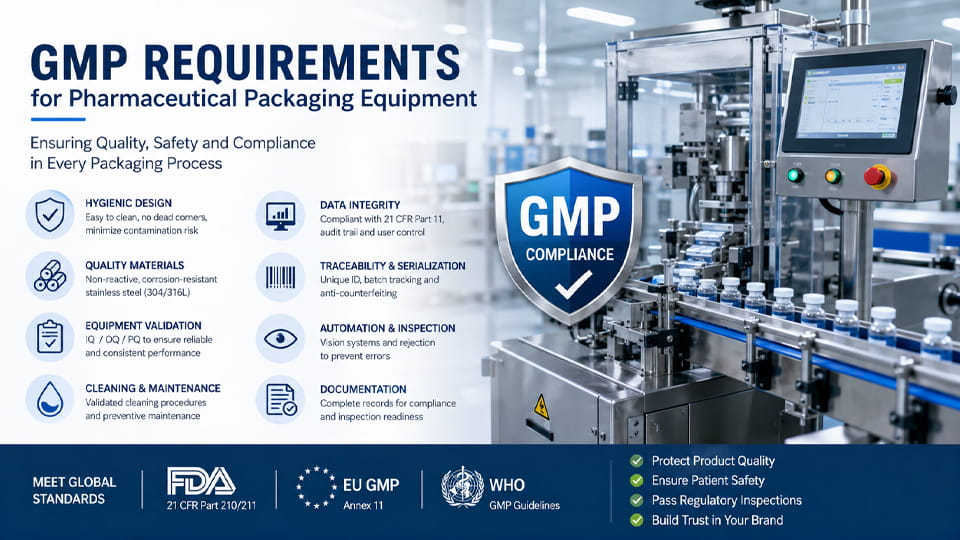

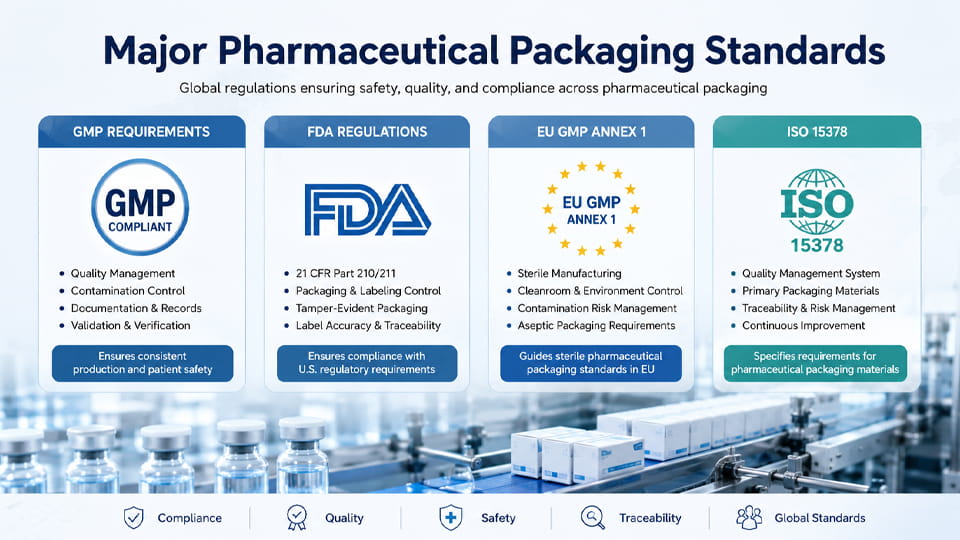
Farmaceutische verpakking moeten voorkomen contaminatie en zorgen voor traceerbaarheid, volgens strikte mondiale normen. Goede productiepraktijken (GMP) vereisen een hygiënisch ontwerp van apparatuur, niet-reactieve materialen, en volledige kwalificatie (IR/WH/PQ) van machines. Belangrijke regelgeving omvat FDA 21 CFR-onderdelen 210/211, die reinigbare apparatuur en onderhoudslogboeken verplicht stellen, EU-GMP (EudraLex Vol4) (Deel I, hoofdstuk 3 en bijlage 1) voor steriele verpakkingen, En ISO 15378, de QMS-standaard voor primaire verpakkingsmaterialen. Essentiële vereisten omvatten materiële compatibiliteit, gevalideerde reiniging/CIP, serialisatie, En gegevensintegriteit (21 CFR Deel 11/EU bijlage 11). In deze handleiding worden deze normen uitgelegd en hoe u GMP-conforme verpakkingsmachines kiest (blaar, fles vulling, kartonneren, etikettering, enz.) voor veilig, traceerbare geneesmiddelen.
Farmaceutische verpakkingen zijn net zo belangrijk als het medicijn zelf: het beschermt de productidentiteit, potentie en steriliteit. De WHO merkt op dat verpakkingen medicijnen moeten beschermen tegen ongewenste chemicaliën, biologische of fysieke besmetting en, voor steriele producten, “De steriliteit moet behouden blijven”. In de praktijk, dit betekent elke blisterverpakking, fles of kartonnen verpakking moet correct worden geproduceerd en geëtiketteerd onder GMP om verwisselingen of contaminatie te voorkomen. Mondiale toezichthouders (FDA, EMA, WHO) vereisen dat verpakkingsprocessen en -apparatuur worden gevalideerd en gecontroleerd, net als bij de productie van geneesmiddelen. Kortom, farmaceutische verpakkingsnormen bestaan om de patiëntveiligheid te garanderen door medicijnen correct te houden, puur en traceerbaar tijdens de distributie.

GMP is het overkoepelende raamwerk voor de kwaliteit van geneesmiddelen. Voor verpakking, GMP-mandaten hygiënisch ontwerp en strenge controles om kruisbesmetting en verwisselingen te voorkomen. Apparatuur moet zo zijn ontworpen “makkelijk en grondig schoon te maken”, zoals toezichthouders beweren. Bijvoorbeeld, FDA-richtlijnen specificeren die apparatuur “moet zo geconstrueerd en geplaatst worden dat het schoonmaken vergemakkelijkt wordt... besmetting voorkomen”. WHO/PIC/S-richtlijnen leggen op vergelijkbare wijze de nadruk op de validatie van apparatuur en processen met sanitair ontwerp. In essentie, GMP voor verpakking vereist: reinigbaar roestvrij staal (vaak SUS316L) apparatuur, gedocumenteerde reinigingsprotocollen, volledige kwalificatie (IR/WH/PQ) en nauwkeurige etiketteringsgegevens. Deze praktijken beschermen de identiteit en kwaliteit van het product bij elke verpakkingsstap.
In de Verenigde Staten, FDA's 21 CFR-onderdelen 210 En 211 betrekking hebben op de productie en verpakking van geneesmiddelen. Deel 211 (Subdeel D/E) omvat specifieke regels voor het ontwerp van apparatuur, reinigen en kalibreren. Bijvoorbeeld, alle apparatuur moet binnen de specificaties werken en volgens schriftelijke procedures worden gereinigd. Deel 211 vereist ook het identificeren en labelen van componenten om verwisseling te voorkomen, en het bijhouden van volledige batchgegevens tijdens het verpakken. Belangrijk, 21 CFR-onderdeel 11 geldt voor geautomatiseerde controles op verpakkingslijnen: het vereist unieke gebruikersaanmeldingen, audit trails en elektronische handtekeningen om de gegevensintegriteit te garanderen. In de praktijk, dit betekent dat moderne verpakkingsmachines batchgegevens moeten versleutelen, gebruikerstoegang beperken, en registreer elke wijziging, in overeenstemming met de FDA-regels.
De EU GMP-gids (EudraLex Vol 4) sluit nauw aan bij de FDA-principes voor apparatuur. Deel I Hoofdstuk 3 (Gebouwen en uitrusting) vereist dat die apparatuur aanwezig is “makkelijk schoon te maken” met niet-reactieve contactdelen. Bijlage 15 (EU) vereist volledige kwalificatie (IR/WH/PQ) van alle machines. Voor computersystemen, EU-bijlage 11 (hier niet weergegeven) vereist eveneens validatie en veilige audittrails, zoals het onderdeel van de FDA 11. Een belangrijke update is EU GMP-bijlage 1 (Steriele producten), volledig van toepassing vanaf 2024. Bijlage 1 legt de lat hoger voor steriele verpakkingen: het vereist een gedocumenteerde strategie voor besmettingsbeheersing (CCS) en hoogwaardige cleanroomnormen (ISO 5/7 cijfers), evenals barrièretechnologieën (isolatoren/RABS) en gevalideerde sterilisatiemethoden. Integriteit van de sluiting van de container (CCI) Er wordt ook de nadruk gelegd op het testen en controleren van extraheerbare/uitloogbare stoffen besmettingsrisico’s minimaliseren. Alle in de EU gevestigde of exportlijnen voor steriele injectables moeten aan deze criteria voldoen.
ISO 15378 is de internationale standaard voor primaire verpakkingsmaterialen van geneesmiddelen. Het specificeert een kwaliteitsmanagementsysteem (QMS) afgestemd op ISO 9001, met verwijzing naar GMP. Met andere woorden, ISO 15378 richt zich op het ontwerp, productie en levering van farmaceutische verpakkingscomponenten (blister folie, flessen, flesje, enz.), ervoor te zorgen dat ze consequent voldoen aan de eisen van klanten en regelgeving. Terwijl ISO 15378 is gericht op materiaalleveranciers en niet op apparatuurfabrikanten, machinefabrikanten moeten compatibele materialen verwerken (bijv. goedgekeurde kunststoffen of laminaten) en documentatie verstrekken (traceerbaarheidscertificaten van materialen) zodat de uiteindelijke primaire verpakking ISO-15378-gecertificeerd is. Het behalen van ISO 15378 certificering toont toewijding aan verpakkingsmaterialen van GMP-kwaliteit in uw productie.
Farmaceutische verpakkingsmachines moeten aan strenge technische criteria voldoen om aan de bovenstaande normen te voldoen. De onderstaande tabel vat de belangrijkste vereisten samen:
| Vereiste | Kernpunten |
| Hygiënisch ontwerp | Uitrusting in roestvrij staal (bijv. 316L), gladde lasnaden, schuine oppervlakken. Vrijdragende frames (geïsoleerde schijven) om verborgen gebieden te elimineren, reiniging mogelijk maken. |
| Materiële compatibiliteit | Alle delen die met het product in aanraking komen, mogen niet-reactief/niet-absorberend zijn (316L SS, PTFE, kunststoffen van farmaceutische kwaliteit) zodat ze geen actieve stoffen kunnen uitlogen of binden. Gebruik smeermiddelen en afdichtingen die geschikt zijn voor levensmiddelen (PTFE, EPDM) bestand tegen schoonmaakmiddelen. |
| Validatie van apparatuur | Vol IR/WH/PQ voor elke machine: gedocumenteerde installatiekwalificatie, functionele testen, en prestatietests tijdens een gesimuleerde of echte batch. Elke nieuwe of gewijzigde machine moet vóór gebruik worden gekwalificeerd. |
| Schoonmaak & Sanering | Gevalideerde reinigings-/CIP-procedures voor elke productverandering. Er moeten schoonmaak-SOP's worden geschreven, periodiek uitgevoerd en opnieuw gevalideerd. Alleen gebieden die in contact komen met het product vereisen validatiemonsters. |
| Onderhoud & Kalibratie | Gepland preventief onderhoud om versleten onderdelen te vervangen. Kalibratieprocedures (bijv. voor schalen, stroommeters) met verslagen (voor FDA 21 CFR 211.68) nauwkeurigheid garanderen. Regelmatige controles van sensoren en actuatoren volgens SOP. |
| Automatisering & Veiligheid | Foutpreventiefuncties zoals visuele inspectie, barcodescanning en geautomatiseerde uitwerppoorten verminderen menselijke fouten. Vergrendelingen (bijv. deur sensoren) stop machines bij storingen. Voor het labelen van lijnen, camera's verifiëren de juiste labeltoepassing. |
| Gegevensintegriteit | Controles moeten voldoen aan de FDA 21 CFR Deel 11/EU bijlage 11: beveiligde gebruikersaccounts, onveranderlijke audit trails, en elektronische aftekening van documenten. MES/ERP-integratie voor batchrecordarchivering. Digitale logs van instellingen en afwijkingen. |
| Serialisatie & Traceerbaarheid | Apparatuur moet het afdrukken of etsen van unieke identificatiegegevens ondersteunen (bijv. 2D DataMatrix-codes) op elk primair pakket. Integratie met track-and-trace-systemen zorgt ervoor dat elke code aan een batch/partij wordt gekoppeld. De lijn moet tracebacks en terugroepingen per code mogelijk maken. |
Bijvoorbeeld, na het installeren van een nieuwe blaar lijn of flessenvuller, GMP vereist gedocumenteerde IQ/OQ/PQ-tests om elke functie te bewijzen (vulvolume, afdichtingskwaliteit, wijst af) voldoet aan de specificaties. Op dezelfde manier, na elke batch, de machine moet worden gereinigd volgens een gevalideerde procedure. Regelgevers eisen dat deze reinigingsprocessen zo zijn “gedocumenteerd, geverifieerd, en periodiek herbevestigd”. Geautomatiseerde reiniging ter plaatse (CIP) systemen voor vloeibare vulstoffen of oplosmiddelgebaseerde reiniging voor vaste stoffen zijn gebruikelijk. Kritieke oppervlakken (hoppers, sproeiers, zeehonden) worden getest of gemeten (bijv. Totaal organische koolstof) om te bevestigen dat er geen residu achterblijft. Kortom, u moet door middel van documentatie kunnen aantonen dat bij elke vul-/verpakkingsoperatie een gekwalificeerde persoon is gebruikt, sanitaire machine.
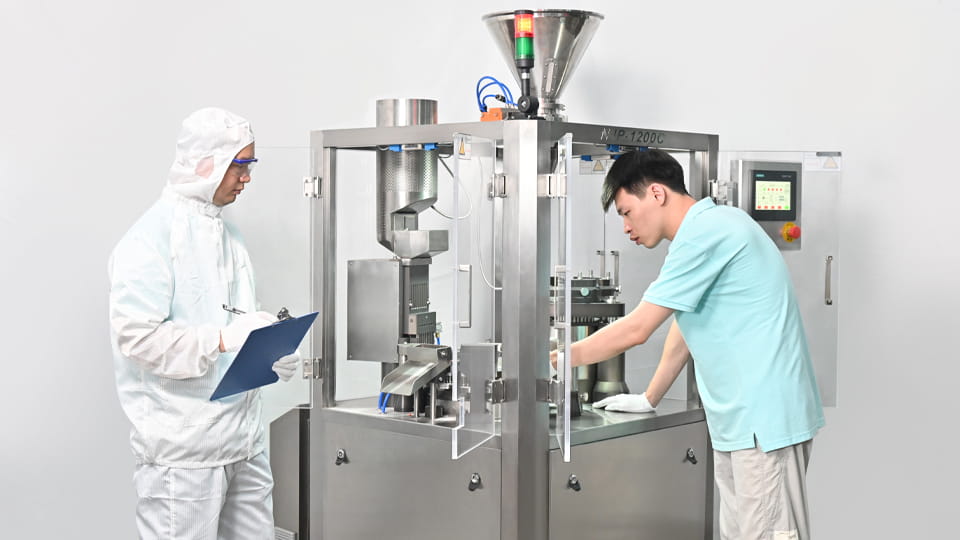
Farmaceutische productielijnen gebruik een verscheidenheid aan gespecialiseerde machines. De belangrijkste GMP-gerelateerde kenmerken van gemeenschappelijke apparatuur zijn onder meer::
Elk van deze machines moet worden geselecteerd met het GMP-ontwerp in gedachten (gladde roestvrijstalen oppervlakken, CIP, HEPA-lucht indien nodig). Voor gedetailleerde voorbeelden, zie de productpagina's van Jinlu Packing, die nalevingskenmerken benadrukken, zoals cantileverframes en CE/GMP-certificeringen.
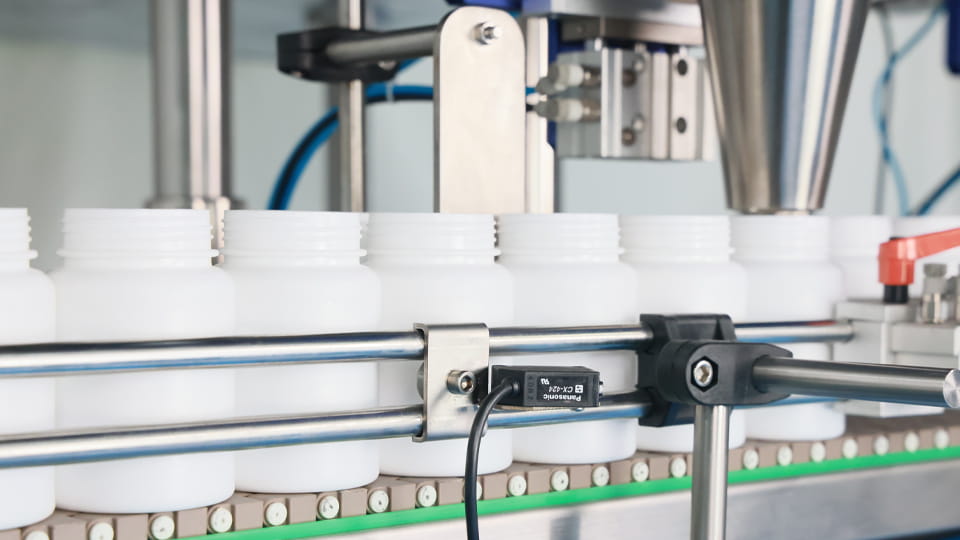
Voldoen aan de farmaceutische verpakkingsnormen brengt uitdagingen met zich mee: wettelijke vereisten verschillen per markt, en voor elk nieuw medicijn kunnen andere verpakkingsspecificaties nodig zijn (bijv. kindveilige sluitingen, specifieke coatings). Validatie en documentatie voegen tijd en kosten toe – elke nieuwe verpakkingsgrootte of productwijziging kan aanleiding geven tot hervalidatie. Serialisatieregels (DSCSA in de VS, MKZ in de EU, enz.) zijn complex en evoluerend, waarvoor regelmatige software-updates en personeelstraining nodig zijn. Cleanroom-eisen (voor steriele producten) verhogen ook de facilitaire kosten. Eindelijk, het volgen en bewijzen van naleving (via batchrecords en audittrails) betekent robuuste software en administratie. Het overwinnen van deze uitdagingen vereist een nauwe samenwerking tussen engineering, QA en leveranciers, en kiezen voor aanpasbaar, goed ondersteunde apparatuur.
Bij het selecteren van machines voor a farmaceutische verpakkingslijn, een GMP-checklist volgen:
De toekomst van farmaceutische verpakkingen wordt steeds digitaler duurzaam. Serialisatie en tracking & Spoor wereldwijd zal uitbreiden, Mogelijk wordt gebruik gemaakt van blockchain om toeleveringsketens te beveiligen. Slimme verpakking (RFID-tags, NFC-sensoren) kan beginnen met het monitoren van de opslagomstandigheden of sabotagegebeurtenissen. Apparatuur is in opkomst Industrie 4.0 – lijnen met IIoT-sensoren en AI-gestuurde visionsystemen die fouten voorspellen of pillen betrouwbaarder tellen. Robotica voor eindverpakking (afhandeling van de zaak, palletiseren) en geavanceerde aseptische barrières (bijv. gesloten aseptische systemen) groeien ook. Aan de materialenkant, er is een drang naar recycleerbare of biologisch afbreekbare verpakkingscomponenten, dus machines moeten nieuwe filmsoorten verwerken. Algemeen, automatisering, dataconnectiviteit en milieuveiligheid zijn belangrijke trends die vormgeven aan de volgende generatie farmaceutische verpakkingen.
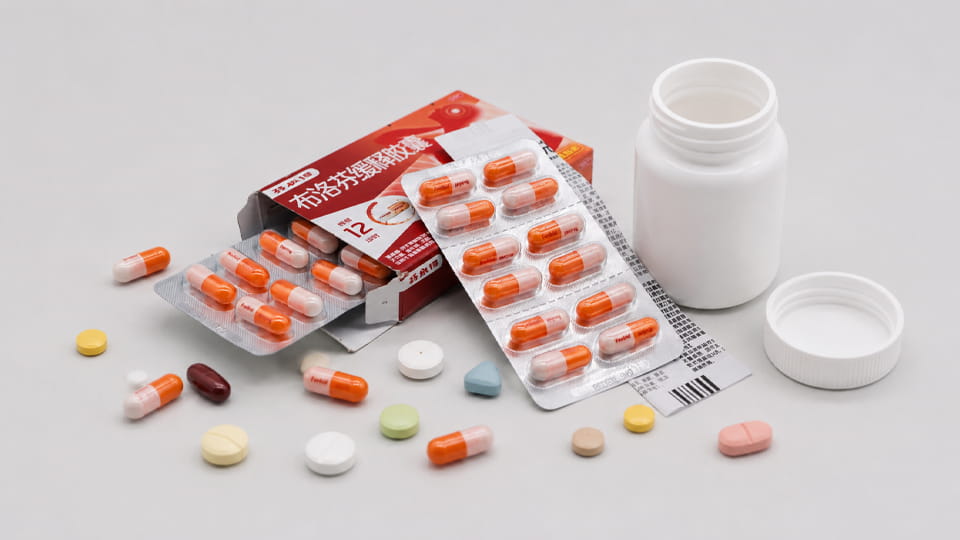
Het naleven van farmaceutische verpakkingsnormen is dat wel niet onderhandelbaar voor medicijnfabrikanten. Door GMP te begrijpen, FDA- en ISO-vereisten – en door machines te kiezen die zijn gebouwd om hieraan te voldoen – waarborgt u de productkwaliteit en patiëntveiligheid. Compliance vereist een rigoureus ontwerp (gladde 316L-oppervlakken, CIP/COP-reiniging), volledige validatie (IR/WH/PQ) en doorlopende documentatie (onderhouds- en auditlogboeken). Met regelgeving zoals die van de FDA 21 CFR en EU-bijlage 1, farmaceutische lijnen kunnen zich geen sluiproutes veroorloven.
Voor oplossingen voor verpakkingsapparatuur, werken met ervaren leveranciers. Jinlu-verpakking, Bijvoorbeeld, is gespecialiseerd in GMP-conforme blistermachines, vloeistofvullijnen, kartonneren en meer. Onze machines zijn voorzien van cantilever-ontwerpen, Materialen van FDA-kwaliteit en ondersteunen standaard serialisatie. Neem contact op met Jinlu Packing vandaag nog om ervoor te zorgen dat uw volgende verpakkingslijn voldoet aan de wereldwijde GMP-normen met volledige validatieondersteuning.
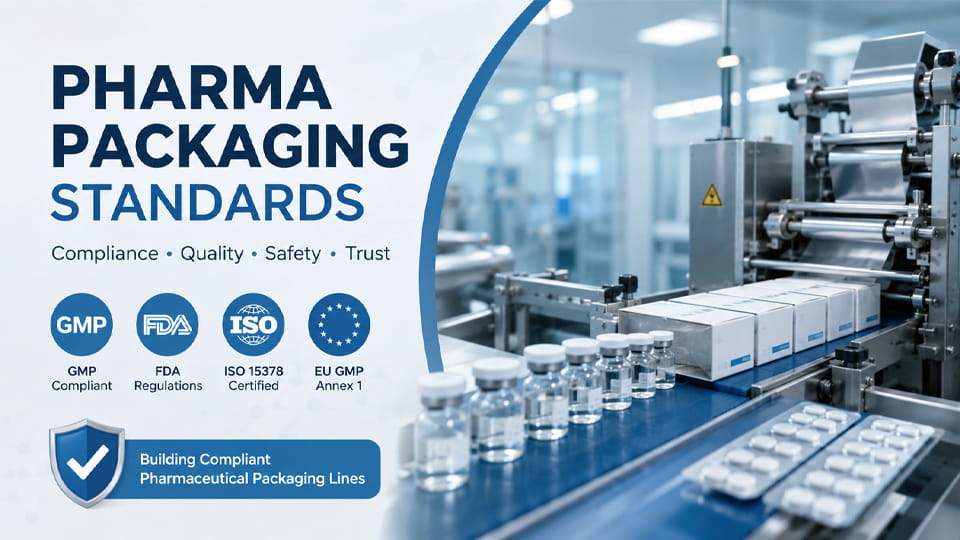
Farmaceutische verpakkingsnormen zijn de wettelijke vereisten die ervoor zorgen dat medicijnverpakkingen producten niet besmetten of verwisselen. Deze omvatten GMP-richtlijnen van instanties als FDA en EMA, die het ontwerp van hygiënische apparatuur verplicht stellen, reinigingsvalidatie en grondige documentatie. Standaarden zoals ISO 15378 focus op het kwaliteitsmanagement van de verpakkingsmaterialen zelf. Samen zorgen ze ervoor dat de verpakking de kwaliteit van medicijnen beschermt en nauwkeurige informatie bevat.
FDA's 21 CFR-onderdeel 211 omvat verpakkingsactiviteiten. Het vereist dat apparatuur wordt onderhouden, gereinigd en gekalibreerd, zodat de identiteit of zuiverheid van het geneesmiddel niet wordt beïnvloed. Bijvoorbeeld, FDA-richtlijnen stellen dat apparatuur “zo moet worden geconstrueerd dat het schoonmaken gemakkelijker is” en waarschuwt dat materialen niet mogen reageren met het medicijn. Ook computersystemen op de lijn moeten hieraan voldoen 21 CFR-onderdeel 11 (elektronische dossiers en audittrails).
ISO 15378 is een ISO-norm specifiek voor primaire verpakkingsmaterialen van farmaceutische producten. Het vergroot ISO 9001 met GMP-vereisten, ervoor zorgen dat leveranciers van verpakkingsmateriaal een QMS hebben dat consistent voldoet aan de wettelijke en klantnormen. Hoewel het de apparatuur niet rechtstreeks regelt, het gebruik van ISO 15378-gecertificeerde materialen op GMP-machines helpt bij het voldoen aan de wettelijke verwachtingen en de eisen van klanten aan kwaliteit.
Bijlage 1 van de EU GMP-gids heeft betrekking op steriele geneesmiddelen. Het stelt strikte regels voor aseptische productie, inclusief verpakking van injectables. Belangrijke punten zijn onder meer de implementatie van een Contamination Control Strategy (CCS), gebruik van geclassificeerde cleanrooms (ISO 5/7), isolator- of barrièretechnologie, en het valideren van sterilisatie-/desinfectiestappen. Bijlage 1 naleving zorgt ervoor dat zelfs tijdens het verpakken, steriele medicijnen blijven vrij van microben en deeltjes – wat van cruciaal belang is voor de patiëntveiligheid.
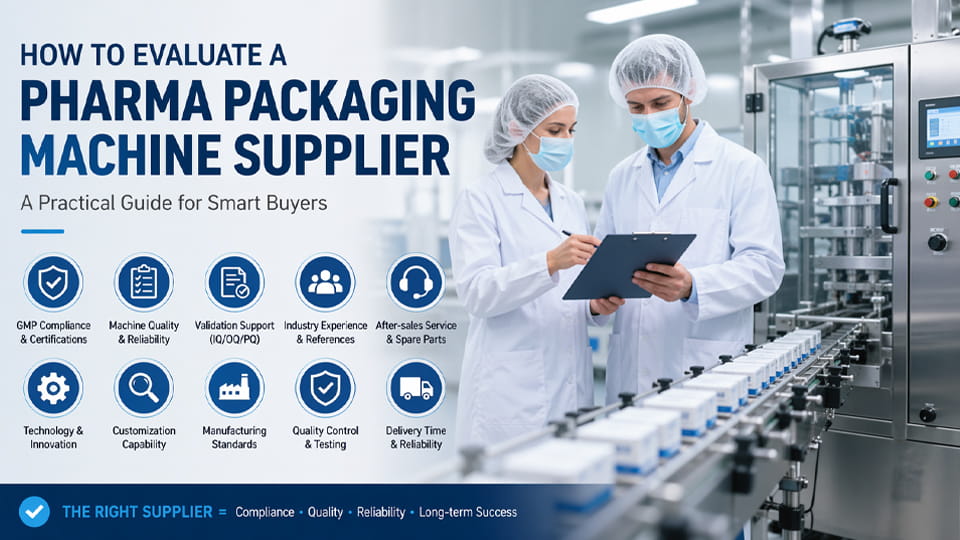
Eerst, controleer het ontwerp en de materialen: Alle onderdelen die in contact komen met het product moeten 316L roestvrij staal gebruiken en mogen geen verborgen spleten hebben. Zorg ervoor dat de leverancier volledige IQ/OQ/PQ-documentatie levert. Zoek naar functies zoals CIP-mogelijkheden of eenvoudige demontage. Controleer of er elektronische batchregistratie mogelijk is (21 CFR-onderdeel 11) en serialisatie-ondersteuning (2D-codering). Eindelijk, controleer eventuele certificeringsmerken (CE, GMP) en vraag om referenties of auditrapporten. Een echte GMP-machine wordt geleverd met validatieondersteuning en volledige nalevingsdocumentatie.
Serialisatiewetten (bijv. de Amerikaanse Drug Supply Chain Security Act, EU-richtlijn vervalste geneesmiddelen) verplicht een unieke code op elk individueel pakket om het door de toeleveringsketen te traceren. Verpakkingsapparatuur moet deze codes afdrukken of etsen (meestal 2D-barcodes) op elke blister of fles. Dit zorgt ervoor dat vervalsingen kunnen worden gedetecteerd en dat batches indien nodig snel kunnen worden teruggehaald. In de praktijk, serialisatie is via een codeerder en verificatiecamera in de verpakkingslijn geïntegreerd, met software die elke code koppelt aan batchrecords voor volledige traceerbaarheid.
Een GMP-kartonner moet soepel zijn, hygiënische oppervlakken en gesloten kartonnen toevoer om stof te minimaliseren. Het moet etiket- en codescanners integreren om de batchcode en inhoud van elke doos te verifiëren. Controleer of de machine Line Clearance kan uitvoeren (leegmaken/inspectie tussen producten) Per FDA -richtlijnen, en dat het een gemakkelijke reiniging van kartonnen lijmapplicators mogelijk maakt. Bijvoorbeeld, Veel kartonnerers zijn voorzien van vacuümdozengrepen en visionsystemen om vastgelopen dozen of ontbrekende inzetstukken op te vangen, voldoen aan de regels ter voorkoming van verwisseling 21 CFR 211.
Referenties:
1.21 CFR-onderdeel 211 – HUIDIGE GOEDE PRODUCTIEPRAKTIJK VOOR AFGEWERKTE FARMACEUTISCHE PRODUCTEN —— Instituut voor Juridische Informatie
2.ISO 15378:2017 Primaire verpakkingsmaterialen voor geneesmiddelen —— iso.org
3.EU GMP-bijlage 1: Vervaardiging van steriele geneesmiddelen —— gmp-compliance.org
4.Wet op de beveiliging van de geneesmiddelenvoorzieningsketen (DSCSA) --ONS. Voedsel- en Geneesmiddelenadministratie