제약 계약 제조란 무엇입니까?? CDMO에 대한 완전한 가이드, CMO, 이익 & 프로세스
제약 계약 제조란 무엇입니까?? CDMO에 대한 완전한 가이드, CMO, 이익 & 프로세스
칠월 15, 2026
코멘트 없음
오늘날의 제약산업에서는, 많은 회사들이 약품 생산을 전문 계약 제조업체에 아웃소싱하고 있습니다.. 제약 계약 제조에는 다음과 같은 모든 것이 포함됩니다. API 생산 및 제형 개발에서 최종 포장까지 - 흔히 계약 개발 및 제조 조직에서 제공 (CDMO) 또는 계약 제조 조직 (CMO). 이 가이드에서는 제약 계약 제조가 무엇을 의미하는지 설명합니다., 전형적인 과정을 거칩니다. (개발부터 완제품까지), CMO와 CDMO를 비교합니다., 아웃소싱의 이점과 과제를 간략히 설명합니다.. 우리는 또한 고급 기능을 강조합니다. 생산 및 포장 장비 (캡슐 필러, 태블릿 프레스, 물집 기계, 등.) 현대 CDMO가 사용하는 것.
제약 계약 제조 (제약 아웃소싱이라고도 함) 제약회사가 자사의 의약품을 만들기 위해 제3의 회사를 고용하는 경우입니다.. 이러한 제3자 – 계약 제조 조직 (CMO) – 상업용 약품만을 생산할 수도 있고 때로는 개발 지원을 제공할 수도 있습니다.. 실제로, 제약 계약 제조가 보장할 수 있음:
중요한 것은, 용어 CDMO (계약 개발 및 제조 조직) 더 흔해졌습니다. CDMO는 의약품을 제조할 뿐만 아니라, 개발과 확장도 한 곳에서 처리합니다.. 다시 말해서, CMO = “그냥 제조 중," 반면 CDMO = “개발 ...을 더한 조작." CDMO는 제형 설계에 도움이 될 수 있습니다., 파일럿 배치, 및 규제 서류, 그런 다음 프로세스를 전체 생산으로 원활하게 확장합니다., 핸드오프 및 지연 최소화.
CMO는 스폰서가 혁신적인 약물 물질 및 의약품을 제조하도록 돕습니다. (제조 시설 및 역량 제공). 대조적으로, CDMO는 통합 의약품 개발 및 제조 솔루션을 제공합니다., R을 결합&D 전문성과 생산능력. 실제로, 많은 제약 회사는 전환 간 위험을 줄이기 위해 초기 개발부터 최종 일련화까지 엔드투엔드 파트너십을 위해 CDMO 모델을 점점 더 선호하고 있습니다..
제약 계약 제조 프로세스
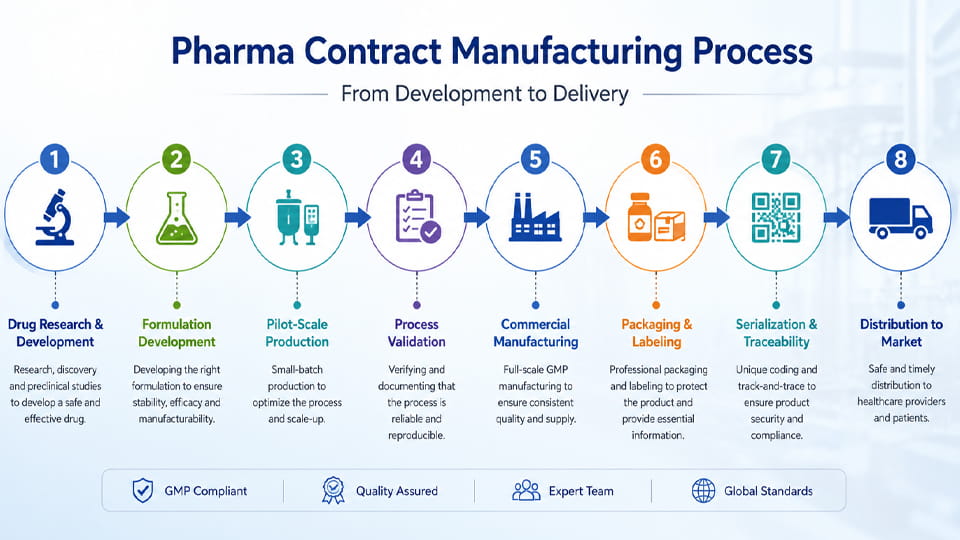
계약 제조 프로그램은 일반적으로 실험실에서 시장까지 약물 개발 라이프사이클을 따릅니다.. 주요 단계는 아래 순서도에 설명되어 있습니다., 그리고 간략하게 설명하면:
약물 연구 & 개발: 초기 R에서는&디, 과학자들이 후보 분자를 식별하다. 소규모 기업이나 생명공학 기업의 경우, CDMO는 공식화 또는 공정 설계에 협력할 수도 있습니다. (예를 들어. 정제 또는 캡슐 제형 최적화).
제형 개발: CDMO는 스폰서와 협력하여 약물의 제형을 마무리합니다. (태블릿, 캡슐, 가루, 액체, 등.) 제조방법을 개발하고. 이 단계에는 제형의 안정성과 효능을 보장하기 위한 실험실 작업과 제제화 전 연구가 포함됩니다..
파일럿 규모 생산: 공식이 설정되면, CDMO는 소규모 파일럿 배치를 생산합니다. (종종 10^3~10^5 단위) GMP 조건 하에서. 이 배치는 임상 시험 또는 규제 제출에 사용됩니다.. 프로세스는 단계적으로 확장됩니다..
프로세스 검증: 본격 상용화 전, CDMO는 프로세스를 검증합니다. (의약품이 품질 기준에 따라 일관되게 제조될 수 있음을 입증). 여기에는 장비의 전체 자격이 포함됩니다., 포장 라인, 분석 테스트, 그리고 문서.
상업용 제조: 검증 완료, CDMO는 cGMP 하에서 대규모 제조로 이동합니다.. 여기에는 여러 교대 근무가 포함될 수 있습니다., 배치 기록, 규제 검사 충족. 시설은 합의된 용량으로 활성 성분과 최종 제형을 생산합니다..
포장 & 라벨링: 완성된 제형은 포장됩니다. 예를 들어, 정제는 물집이나 병에 들어갈 수 있습니다, 액체를 채우고 뚜껑을 덮고 라벨을 붙입니다.. 최신 CDMO 포장 라인에는 자동 캡슐 필러가 포함되는 경우가 많습니다., 태블릿 카운터, 병 필러/캡퍼, 유도 실러, 라벨 프린터, 및 순서대로 작동하는 상자.
직렬화 & 추적성: 글로벌 규정을 준수하기 위해, 포장에는 일련번호가 포함되어 있습니다. (고유 바코드/QR 코드) 및 추적 기능. 이를 통해 모든 제품의 생산부터 판매까지 추적할 수 있습니다..
분포: 마지막으로, 포장된 약품은 창고에 보관되어 전 세계 고객이나 유통업체에 배송됩니다.. CDMO는 계약 조건에 따라 창고 및 물류도 처리할 수 있습니다..
각 단계에서, CDMO는 프로젝트 관리를 제공합니다, 품질 감독, 이정표가 충족되도록 보장하는 규제 지원. 이러한 단계를 아웃소싱함으로써, 제약 스폰서는 중복된 R 구축을 피합니다.&D 및 제조 인프라.
CMO 대 CDMO: 차이점은 무엇입니까?
다음은 기존 CMO를 간략하게 비교한 것입니다. (계약 제조 조직) 그리고 CDMO:
측면
CMO (계약 제조 조직)
CDMO (계약 개발. & 마누프. 조직)
서비스 범위
제조 및 때로는 포장.
엔드투엔드: 아르 자형&디, 공식화, 생산.
아르 자형&D 참여
최소; 공식이 제공된다고 가정합니다..
제형화에 적극적, 규모 확대, 그리고 기술이전.
생산단계
일반적으로 상업적 또는 임상 생산.
초기 임상부터 상업 규모까지 포괄.
공급업체 핸드오프
별도의 개발 파트너가 필요할 수 있음.
단일 파트너로 핸드오프 및 지연 감소.
일반적인 사용 사례
알려진 약물에 대한 추가 용량 (제네릭).
신약이나 복잡한 프로젝트의 개발.
부가가치
시설 & 규모 확대, 비용 절감.
규제 지원, 분석 개발, 전체 수명주기.
이 표는 다음을 강조합니다. CMO는 주로 제조에 중점을 둡니다., 반면 CDMO는 통합 개발 및 제조 서비스를 제공합니다.. 다시 말해서, 이미 최종 의약품 제형이 있고 생산 능력만 필요한 경우, CMO로 충분할 수도 있다. 하지만 도움이 필요하다면 새로운 약물 제형 개발, 확장 프로세스, 규정 탐색, CDMO는 최고의 파트너입니다.
위탁생산이 가능한 의약품의 종류
현대의 CDMO는 거의 모든 유형의 의약품을 생산할 수 있습니다.. 다음은 일반적인 예입니다., 사용된 주요 장비와 함께:
정제: 고체 경구 정제는 분말 또는 과립을 압축하여 제조됩니다. 회전식 태블릿 프레스. 고속 정제 프레스기는 시간당 수십만 개의 정제를 압축할 수 있습니다.. 전자 로터리 프레스 표준형 및 특수형 정제를 처리할 수 있습니다.. 태블릿 프레스는 일반적으로 다음과 같습니다. 습식 또는 건식 과립화 CDMO에서 수행된 단계. (그런 다음 정제에 물집이 생기거나 병에 담길 수 있습니다.)
캡슐: 경질캡슐은 분말 또는 펠렛으로 채워져 있습니다. 캡슐 충전 기계. Jinlu의 캡슐 충전기는 반자동 충전기부터 다양합니다. (소규모 배치용) 시간당 수천 캡슐을 처리하는 전자동 기계까지. 캡슐도 가능해요 소프트젤 또는 액체 캡슐. 캡슐 생산은 보충제와 OTC 의약품에서 흔히 발생합니다..
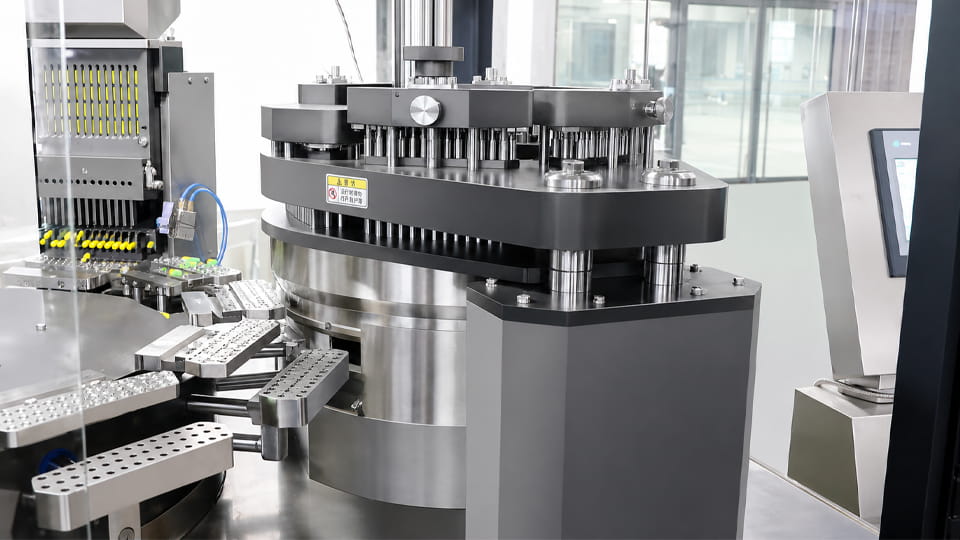
수치: 계약 제조 시설의 자동 캡슐 충전 라인. 이 기계는 분말이나 펠렛을 단단한 껍질 캡슐에 넣습니다., 시간당 수만 개의 캡슐을 가능하게 합니다..
가루 & 과립: 벌크 분말 또는 과립 (예를 들어. 향 주머니 또는 대량 포장용) 체적 측정 또는 오거로 처리할 수 있습니다. 충전물 기계, 가방이나 병에 포장되어 있습니다.. CDMO는 종종 진동 공급 장치를 사용합니다., 체중 감량 시스템, 또는 정확한 투여를 위한 특수 분말 필러. (예를 들어, 스틱 팩 기계 [아래를 참조하세요] 종종 체적 분말 공급 장치를 통합합니다.)
향 주머니 & 스틱 팩: 단일 용량 봉지는 분말 또는 액상 제제에 일반적입니다. (임상 시험용 분말 또는 액체와 같은). 수직형 채우기 밀봉 (Vffs) 향 주머니 포장기와 같은 기계가 자동으로 형성됩니다., 채우다, 봉인 스틱 팩과 작은 파우치. 이 기계는 분말을 포장할 수 있습니다., 과립, 밀봉된 패킷에 담긴 액체 또는 젤.
병 (액체, 정제): 액체 시럽 또는 현탁액은 고속을 사용하여 병에 채워집니다. 병 충전 라인, 헹굼이 포함된, 충전재, 캡핑, 및 유도 밀봉. 정제와 캡슐도 셀 수 있고 병에 넣을 수도 있습니다.. 이 라인에는 자동이 포함되는 경우가 많습니다. 정제/캡슐 카운터 병을 채우다. (Jinlu의 캡슐/정제 계수기는 50~100bpm으로 병을 채울 수 있습니다.) 일단 채우고 덮으면, 안 유도 실러 변조 증거를 위해 캡 아래에 호일 씰을 적용합니다..
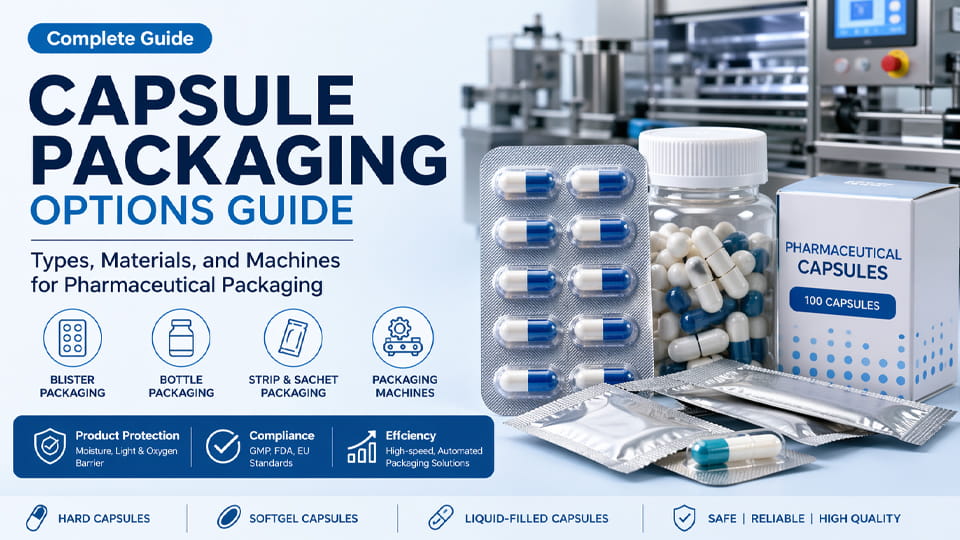
물집 팩: 많은 정제와 캡슐이 블리스 터 카드에 포장되어 있습니다. (PVC/Alu 공동). 자동화됨 물집 포장 기계 (예를 들어. JL의 블리스 터 패커) 물집 주머니를 형성하다, 복용량 단위로 채우십시오., 호일이나 PVC로 열 밀봉. 블리스터 기계는 대용량 제품의 경우 시간당 4,000~12,000개의 블리스터를 실행할 수 있습니다..
판지: 물집이 생기거나 병을 채운 후, 제품은 상자에 넣어집니다. 에이 포장 기계 제품 주위에 판지 상자를 접어서 붙입니다. (병, 물집 카드, 향 주머니). Jinlu의 상자 포장 기계는 시간당 최대 15,600개의 상자를 처리할 수 있으며 다운스트림 라벨링과 통합할 수 있습니다..
밀봉된 파우치/병: 일부 제품 (크림, 젤, 서스펜션) 튜브에 들어가다, 항아리, 아니면 특수 파우치. 튜브와 병을 위한 충전 및 캡핑 라인이 존재합니다.. (예를 들어, 유도 캡 실러 또는 캡핑 기계.) 진루도 공급 미리 만들어진 파우치 포장 라인과 자동화된 상자 멀티팩의 경우.
요컨대, 최종 투여 형태 - 정제, 캡슐, 분말, 액체, 물집 팩, 병 – 유능한 CDMO로 생산 가능.
제약 계약 제조의 이점과 과제
여느 비즈니스 결정과 마찬가지로, 제약 계약 제조 확실한 장점을 제공합니다, 하지만 책임도 따르죠. 양측을 이해하면 제약회사가 아웃소싱이 올바른 전략인지 판단하는 데 도움이 됩니다..
이익
투자 비용 절감 – GMP 제약 시설을 구축하고 검증하려면 상당한 자본이 필요합니다.. 계약 제조를 통해 기업은 값비싼 인프라에 투자하지 않고도 생산을 시작할 수 있습니다..
시장 출시 시간 단축 – 경험이 풍부한 CDMO는 이미 자격을 갖춘 시설을 보유하고 있습니다., 훈련받은 직원, 검증된 생산 라인, 제품이 개발에서 상용화까지 더욱 신속하게 진행되도록 돕습니다..
전문 지식에 대한 접근 – 계약 제조업체는 종종 제형 과학자를 경험했습니다., 품질 팀, FDA를 이해하는 규제 전문가, EMA, 그리고 GMP 요구 사항.
유연한 생산 능력 – 파일럿 배치 또는 상업적 규모의 볼륨 생산 여부, 아웃소싱은 시장 수요 변화에 따라 생산량을 늘리거나 줄일 수 있는 유연성을 제공합니다..
고급 제조 장비 – 최신 CDMO는 고속 캡슐 충전 기계에 투자합니다., 태블릿 프레스, 물집 포장 기계, 병 포장 라인, 많은 소규모 제조업체가 스스로 구매를 정당화할 수 없는 자동 검사 시스템.
도전과제
아웃소싱은 많은 이점을 제공하지만, 기업은 또한 몇 가지 잠재적인 문제를 인지하고 있어야 합니다.:
다행스럽게도, 강력한 품질 관리 시스템을 갖춘 숙련된 제약 계약 제조 파트너를 선택하면 이러한 문제의 대부분을 최소화할 수 있습니다., 투명한 소통, 검증된 규정 준수. 철저한 공급업체 자격 프로세스 및 정기 감사 또한 성공적인 장기 파트너십을 구축하는 데 도움이 됩니다..
올바른 제약 계약 제조 파트너를 선택하는 방법
CDMO/CMO를 선택하는 것은 중요한 결정입니다. 주요 기준은 다음과 같습니다, 의약품 요구 사항의 렌즈로 설명됨:
품질 & 규제 준수: 무엇보다도, 파트너는 강력한 품질 시스템과 깨끗한 규제 기록을 보유해야 합니다.. 찾아보세요 FDA, EMA, 또는 WHO GMP 인증, ISO 품질 인증, 감사 통과 이력. FDA 검사 데이터베이스를 검토하여 현장에서 경고 서한이나 GMP 483을 확인할 수 있습니다.. 회사는 품질 관리 실험실과 검증 프로세스를 투명하게 공개해야 합니다..
관련 경험: CDMO가 귀하의 제품 유형에 대한 경험이 있는지 확인하십시오.. 예를 들어, 태블릿을 만들면, 현대식 태블릿 프레스 라인이 있나요? 생물학적 제제가 있는 경우, 멸균 또는 일회용 시설이 있나요?? 귀하의 치료 분야에 경험이 풍부한 파트너 (항생제 대. 호르몬 대. 생물학제) 도전을 더 잘 예측할 것입니다. 비슷한 사례 연구나 함께 일했던 고객에게 물어보세요..
제조 능력 & 용량: 적절한 장비와 용량 규모를 갖추고 있습니까?? 최신 기계를 찾아보세요 (예를 들어. 자동 캡슐 필러, 다중 압축 태블릿 프레스, 물집과 병 라인) 귀하의 볼륨 요구 사항을 충족할 수 있는지 확인하기 위해. 또한 프로젝트에 맞춰 성장할 수 있는 여유 용량이나 확장 계획이 있는지 확인하세요.. 시설이 가득 차면 프로젝트 우선순위가 부여되지 않을 수 있습니다..
기술지원 & 개발 서비스: R이 필요하다면&D 도움, CDMO를 선택하세요 (단순한 CMO가 아닌) 강력한 제제 및 분석 실험실 보유. 포괄적인 서비스를 제공하는지 확인하세요. (분석방법 개발, 안정성 테스트, 포장 디자인). 이를 통해 전송이 더욱 원활해지고 규제 서류 제출에 도움이 됩니다.. 기꺼이 공동 개발하고 문제를 해결하려는 파트너가 훨씬 더 가치가 있습니다..
의사소통의 질 & 서비스: 좋은 프로젝트 관리가 핵심입니다. CDMO는 전담팀을 배정해야 합니다, 정기적인 업데이트 제공, 그리고 반응하라. 직접 또는 가상 회의가 쉬워야 합니다. 위치가 중요할 수 있습니다.. (한 업계 기사에 따르면, 근처에 파트너가 있으면 여행 지연이 줄어들고 조정이 향상될 수 있습니다.. 하지만, 많은 글로벌 CDMO는 국제 고객에게 효율적으로 서비스를 제공합니다.) 문화적 적합성과 언어가 귀하의 요구 사항과 일치하는지 확인하십시오..
재무안정성 & 평판: 신뢰할 수 있는 파트너에게는 탄탄한 재정이 필요합니다. 회사는 장기적인 관계를 원합니다, 그러니 회사의 규모와 안정성을 조사해 보세요. 충분한 지원을 받지 않는 스타트업 CDMO는 위험할 수 있습니다.. 또한 다른 제약 고객의 참고 자료를 확인하거나 업계 리뷰를 찾아보세요..
지적재산권 보호: IP 보안 정책에 대해 문의하세요.. 데이터를 어떻게 저장하나요?, 연구 노트를 다루다, 직원 액세스 관리? 신뢰할 수 있는 CDMO는 엄격한 기밀 유지 계약을 맺습니다..
가격 & 계약: 물론, 비용 문제. 투명한 견적 요청. 비정상적으로 낮은 입찰가를 조심하세요.. 리드타임도 논의, 변경 주문 유연성, 그리고 계약상의 처벌. 좋은 파트너는 공정하고 명확합니다.
요약: 품질을 감사하다, 그들의 노하우를 테스트해보세요, 귀하의 프로젝트에 적합한 키트와 용량을 갖추고 있는지 확인하세요.. 투명성과 신뢰가 중요합니다. 가능하면 시설 방문을 실시하십시오.. 한 업계 가이드가 제안한 대로, CMO의 FDA GMP 기록을 검토하는 것은 현명한 조치입니다.. 이러한 기준에 따라 여러 공급업체를 비교함으로써, 팀의 확장이 되는 파트너를 선택할 수 있습니다..
계약 제조에 사용되는 제약 장비
첨단 장비는 모든 CDMO 생산 라인의 중추입니다.. 다음은 계약 제조업체의 시설에서 일반적으로 볼 수 있는 몇 가지 핵심 기계입니다.:
캡슐 충전 기계: 이 기계는 빈 캡슐 껍질에 분말을 정확하게 채웁니다., 펠릿, 또는 과립. 최신 자동 필러 (진루에서 온 사람들처럼) 수백 개의 차선을 동시에 달릴 수 있다, 시간당 수만 개의 캡슐을 생산. 섬세한 조정을 처리합니다. (채우기 무게, 캡슐 방향) GMP 등급 기능을 갖추고 있습니다. 스테인레스 스틸 설계.
NJP-1200C 캡슐 충전 기계
태블릿 프레스 (회전식 압축기): 고속 로타리 태블릿 프레스 분말을 정제로 압축. 이 기계는 어떤 모양의 정제도 생산하기 위해 수천 톤의 힘을 가합니다.. 많은 곳이 자동 공급 장치를 갖추고 있습니다., 체중 조절, 정확성을 위한 PLC 작동. 정제 프레스는 모든 고형량 제조의 핵심입니다..
블리스 터 포장 라인: 정제/캡슐이 준비된 후, 자동화된 블리스 터 포장기 플라스틱/알루미늄 팩으로 성형 및 밀봉. Jinlu의 장비는 전체 블리스터 공정을 포괄합니다. (충치 형성, 먹이는 정제, 밀봉, 절단). 이러한 라인에는 통합 피더가 포함되는 경우가 많으며 시간당 수천 개의 블리스터로 작동할 수 있습니다..
캡슐/정제 계산 및 충전 기계: 병포장 제품의 경우, 헌신적인 계산 기계 정확한 알약 개수로 병을 정확하게 채우세요. 이 기계는 진동 또는 회전 트랙과 비전 센서를 사용하여 정제 또는 캡슐을 겹치지 않게 계산하고 용기에 떨어뜨립니다.. 고정밀 계수 (99.97%+) 광전 센서로 달성.
JL-16H cGMP 캡슐 정제 병입 기계
병 충전 & 캡핑 라인: 액체 또는 정제/캡슐 병용, 자동화 라인에는 병 스크램블러가 포함되어 있습니다., 막대, 절정, 및 캡 분류기. 전체 병 라인은 분당 50~100병 이상을 실행할 수 있습니다.. 많은 라인에는 다음이 포함됩니다. 호일 유도 실러 캡핑 후 중량 선별기/검사기.
라벨링 기계: 인쇄된 라벨을 병에 적용합니다., 상자, 또는 패킷. 현대의 라벨링 기계 순차적 바코드/일련번호를 인쇄하고 적용할 수 있습니다. (추적성을 위해) 결과를 육안으로 검사합니다.. Jinlu 사이트에는 라벨러 페이지가 표시되지 않았지만, CDMO는 일반적으로 포장 라인에서 자동 라벨러를 사용합니다..
포장 기계: 위에서 언급한 바와 같이, 탑승자 포장 제품 (병, 물집 카드, 향 주머니) 고속으로 골판지 상자에 넣기. 원활한 라인을 위해 필러 또는 블리스터의 하류에 연결될 수 있습니다..
JL-130W 수평 카톤 기계
향낭/VFFS 기계: 스틱 팩 또는 베개 팩 기계 (수직형 채우기 밀봉) 단일 용량 분말에 사용됩니다., 액체, 또는 젤. 진루의 향낭 포장기 높은 정밀도와 속도로 분말 또는 액상 제제용 다중 레인 팩을 채울 수 있습니다..
오토메이션 & 검사관: 이러한 모든 기계에는 PLC 제어 기능이 통합되어 있는 경우가 많습니다. (예를 들어. 지멘스, PLC), 공압 액츄에이터, 정밀함을 위한 서보 모터. 많은 라인에는 다음이 포함됩니다. 검사 시스템 - 좋다 중량 선별기, 금속 탐지기, 및 비전 스캐너 – 각 장치가 사양을 충족하는지 확인 (예를 들어. 체중체크, 약이 없어졌어, 라벨의 인쇄 품질). 이러한 자동화된 검사는 규정 준수에 매우 중요합니다..
이러한 기계를 숙련된 작업자 및 SOP와 결합함으로써, CDMO는 복잡한 다단계 생산을 실행할 수 있습니다.. 예를 들어, 캡슐 제품 라인은 캡슐 필러로 시작할 수 있습니다., 캡슐 카운터로 이동 (병 채우기), 그런 다음 인덕션 실러, 라벨러와 상자로 마무리 - 모두 동기화된 제어로 작동. 비슷하게, 정제 라인은 인쇄기 → 블리스터 패커 → 라벨러 → 카토너 순으로 진행될 수 있습니다.. 첨단 장비로 처리량을 높이고 일관된 품질을 유지합니다..
실제로, 주요 CDMO는 다음과 같은 분야에 투자합니다. 최첨단 장비. 예를 들어, Jinlu Packing은 통합 솔루션을 제공합니다.: 고속 캡슐 충전 기계 및 정제 프레스는 다음을 위해 설계되었습니다. cGMP 준수. 블리스 터 패커에는 다음과 같은 기능이 포함되어 있습니다. 알루미늄-알루미늄 (알루-알루) 및 PVC 유연성을 위한 열 밀봉. 이러한 자동화된 포장 및 처리 장비에 투자하면 CDMO가 대량 주문을 안정적으로 공급할 수 있습니다..
현대 CDMO에 고급 패키징 장비가 필요한 이유
계약 제조업체가 글로벌 제약 시장에 서비스를 제공하기 위해 규모를 확장함에 따라, 고급 자동화 포장 장비 필수가 된다. 이유는 다음과 같습니다:
속도 & 처리량: 고속 장비 (다중 레인 필러, 로터리 프레스, 물집 라인) 하루에 수천에서 수백만 개의 용량을 실행할 수 있습니다.. CDMO의 경우, 더 빠른 기계는 더 많은 계약과 더 많은 양을 처리할 수 있는 능력을 의미합니다.. 자동화된 라인을 실행할 수 있습니다. 24/7 최소한의 가동 중지 시간으로.
일관성 & 정도: 자동화된 기계는 각 장치가 동일함을 보장합니다.. 예를 들어, 최신 캡슐 필러에는 정밀한 충전 메커니즘이 있습니다. (JL의 특허 디자인에 등장) 복용량 변화를 낮게 유지하는. 정확한 정제 프레스 및 비전 검사 시스템은 일관된 복용량을 달성하는 데 도움이 됩니다., 이는 효능과 QC 통과에 매우 중요합니다..
규제 준수: GMP 규정에 따라 문서화된 관리 및 청결이 요구됩니다.. 최신 장비는 위생적인 설계로 제작되었습니다. (전체 스테인레스 스틸, 청소하기 쉬운 표면, 밀폐된 프로세스). 예를 들어, 밀폐된 충전재와 캡핑이 포함된 병 라인은 엄격한 위생 기준을 충족합니다.. 고급 기계는 직렬화 및 자동화된 데이터 로깅도 지원합니다., CDMO가 추적 규정을 준수하는 데 도움이 됩니다..
인건비 절감: 자동화된 라인은 수작업과 인적 오류를 크게 줄입니다.. 손으로 채우거나 수동으로 계산하는 대신, 기계 피드, 채우다, 밀봉하다, 자동으로 라벨을 지정하고. 이는 인건비를 절감할 뿐만 아니라 오염 위험과 인체공학적 문제도 줄여줍니다..
유연성 & 완성: 최신 CDMO 라인은 모듈식입니다.. 예를 들어, 캡슐 충전 스테이션은 캡슐 카운터에 연결되고 동일한 컨베이어의 병 필러에 연결될 수 있습니다., 연속적인 라인을 형성. 이러한 통합 접근 방식을 통해 제품 간 전환이 더 쉬워집니다.. Jinlu Packing과 같은 회사는 턴키 솔루션을 제공합니다. (예를 들어. 엔드투엔드 병 포장 라인 unscrambler→filler→capper→sealer→labeler→cartoner로) CDMO가 전체 작업 흐름을 업그레이드할 수 있도록.
품질 모니터링: 고급 장비에는 인라인 센서와 카메라가 포함되는 경우가 많습니다.. 예를 들어, 블리스터 팩을 밀봉한 후, 광학 카메라는 누락된 정제나 구멍이 있는지 각 구멍을 검사할 수 있습니다.. 문제가 감지된 경우, 그 물집은 자동으로 거부될 수 있습니다. 이러한 내장된 QA는 최종 제품의 안전성을 크게 향상시킵니다..
요컨대, 최첨단 포장기계는 사치품이 아닌 CDMO의 필수품입니다. 전반적인 장비 효율성을 향상시킵니다. (OEE) 그리고 빠른 속도를 보장합니다, 고품질, 엄격한 규제 통제 현대 의약품 제조 요구 사항. 다음과 같은 기계에 투자함으로써 자동 캡슐 필러, 물집 포장업자, 로타리 태블릿 프레스, 및 병 충전 라인, CDMO는 제품 품질과 공급 신뢰성을 더 잘 보장할 수 있습니다.. 이는 GMP에 부합하는 결과물과 추적성을 제공함으로써 제약 고객에게 직접적인 이점을 제공합니다..
결론
제약 계약 제조 (CMO를 통해서든 CDMO를 통해서든) 업계의 중요한 모델이 되었습니다.. 아웃소싱 의약품 생산 및 포장을 통해 기업은 자본을 절약할 수 있습니다., 전문적인 기술을 활용, 환자에게 새로운 의약품을 더 빠르게 제공할 수 있습니다.. 좋은 CDMO 파트너는 개발 및 검증부터 대량 제조 및 포장에 이르기까지 모든 것을 처리합니다., 모두 cGMP 조건 하에서.
아웃소싱은 어려움을 가져오지만 (감독 유지 및 IP 보호와 같은), 장점 – 비용 절감, 속도, 및 확장성이 중요합니다.. 시장이 커지면서 (수천억 달러를 넘어설 것으로 예상된다. 2030), 더 많은 제약회사가 CDMO를 선택할 것입니다.. CDMO, 차례로, 의지하다 현대의, 자동화 장비 (캡슐 및 정제 기계, 물집과 병 라인, 등.) 수요를 충족시키기 위해.
제약 생산을 간소화할 준비가 되었습니다.?Jinlu 포장에 문의 상담을 위해. 우리는 GMP 준수 계약 제조를 위해 설계된 캡슐 충전 기계 및 고속 정제 프레스부터 고급 블리스터 및 병 포장 라인에 이르기까지 완전히 통합된 포장 솔루션을 제공합니다.. 우리 팀은 귀하의 의약품 생산 및 포장 공정을 최적화하는 데 적합한 장비를 추천해 드릴 수 있습니다.. 지금 연락하여 CDMO/CDO 요구 사항을 지원할 수 있는 방법을 알아보세요.!
제약 계약 제조에 관한 FAQ
제약 위탁 제조란 무엇입니까??
제약 계약 제조는 제약 회사가 의약품 생산을 제3자 제조업체에 아웃소싱하는 것입니다. (CMO 또는 CDMO). 계약 제조업체가 API 합성과 같은 작업을 처리합니다., 공식화, 정제/캡슐 생산, 포장, GMP 조건에 따른 라벨링. 이를 통해 제약회사는 외부 전문 지식을 활용하고 자체 공장 건설을 피할 수 있습니다..
CMO와 CDMO의 차이점은 무엇입니까?
CMO (계약 제조 조직) 기존 공식에 따라 의약품을 제조하고 포장하는 데 중점을 두고 있습니다.. CDMO (계약 개발 및 제조 조직) 개발 및 제조 서비스를 모두 제공합니다.. 다시 말해서, CMO는 일반적으로 공식화가 완료된 후에 시작됩니다., CDMO는 초기 제형 개발부터 상업 생산까지 작업할 수 있습니다..
제약회사가 제조를 아웃소싱하는 이유?
기업은 비용과 시간을 절약하기 위해 아웃소싱합니다.. GMP 시설을 구축하는 데는 비용이 매우 많이 듭니다., 따라서 아웃소싱을 통해 자본 비용을 피할 수 있습니다.. CDMO는 이미 장비와 전문 지식을 갖추고 있습니다., 제품 출시를 가속화하는. 아웃소싱은 수요에 따라 생산 규모를 늘리거나 줄일 수 있는 유연성도 제공합니다., 제형과 같은 분야의 전문적인 노하우에 대한 접근, 해석학, 규제 준수.
계약 제조 서비스 GMP를 준수합니까??
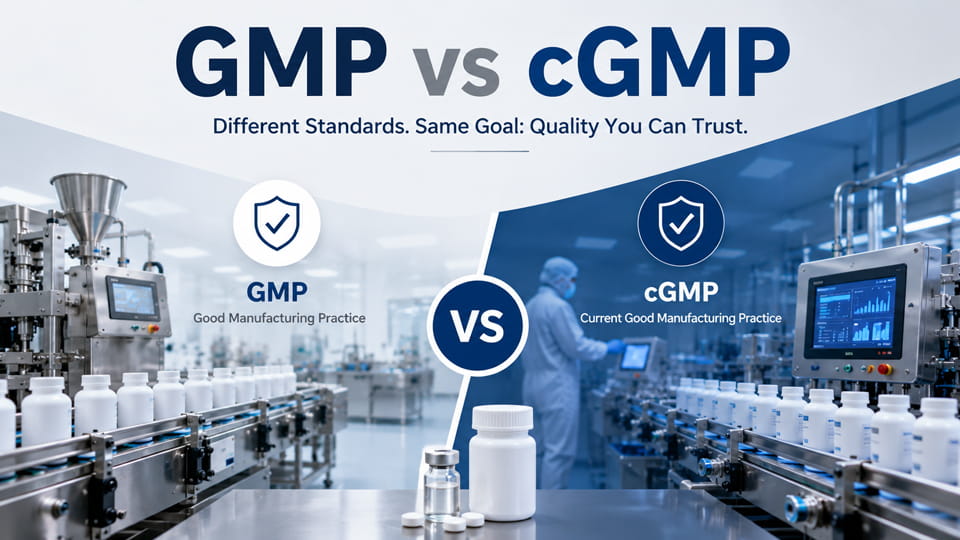
예. 평판이 좋은 제약 계약 제조업체는 cGMP에 따라 운영됩니다. (현행 우수제조관리기준) FDA와 같은 당국이 시행하는 표준, EMA, 또는 누구. 제휴 전, 인증 및 검사 이력을 확인해야 합니다.. FDA 검사에서 좋은 기록을 얻었습니다. (중대한 위반 없음) 필수입니다. GMP 인증 CMO와 협력하여 엄격한 품질 규정에 따라 제품을 제조하고 포장할 수 있습니다..
제약 계약 제조에 일반적으로 사용되는 장비는 무엇입니까??
현대 의약품 제조 시설은 일반적으로 고도로 자동화된 생산 장비를 사용합니다., 포함: • 캡슐 충전 기계 • 회전식 태블릿 프레스 • 분말 혼합 시스템 • 블리스터 포장기 • 병 채우기 및 계수 라인 • 포장 기계 • 비전 검사 시스템 • 일련번호 부여 및 추적성 장비 자동화로 생산 효율성 향상, 제품 일관성, 규제 준수.
제약 계약 제조 비용은 얼마입니까??
의약품 계약 제조 비용은 여러 요인에 따라 달라집니다., 제품 구성을 포함한, 배치 크기, 제형, 포장 요구 사항, 규제 테스트, 확인, 및 생산량. 대규모 상업용 배치는 일반적으로 규모의 경제로 인해 더 낮은 단위 비용을 달성합니다., 소규모 파일럿 배치는 일반적으로 단위당 제조 비용이 더 높습니다..
계약 제조업체에게 첨단 의약품 포장 장비가 중요한 이유?
자동화된 포장 장비로 생산성 향상, 인간의 실수를 줄인다, 제품 추적성을 지원합니다, 제조업체가 FDA를 준수하도록 돕습니다., EMA, 및 GMP 요구 사항. 블리스 터 포장 기계와 같은 기술, 병 포장 라인, 직렬화 시스템, 자동화된 검사 장비도 전반적인 장비 효율성을 높입니다. (OEE) 일관된 포장 품질을 보장합니다., 현대의 CDMO 및 CMO에 필수적인 투자가 됩니다..
위탁생산을 통해 생산할 수 있는 의약품은 무엇인가?
의약품 계약 제조업체는 다양한 제형을 생산할 수 있습니다., 포함: • 태블릿 • 하드 캡슐 • 소프트젤 • 분말 및 과립 • 액상 의약품 • 멸균 주사제 • 향낭 및 스틱 팩 • 블리스 터 팩 • 병에 담긴 의약품 및 기능식품 사용 가능한 제품 포트폴리오는 제조업체의 시설에 따라 다릅니다., 인증, 및 생산 능력.
사소한 푸, 진루패킹 창업자, 가져오다 20 제약 기계 부문에 대한 다년간의 전문 지식. 그의 리더십 아래, Jinlu는 디자인을 통합하는 신뢰할 수 있는 공급업체로 성장했습니다., 생산, 그리고 판매. Petty는 고객이 제약 포장의 복잡성을 헤쳐나갈 수 있도록 깊은 산업 지식을 공유하는 데 열정을 갖고 있습니다., 장비뿐만 아니라 제품도 받을 수 있도록 보장, 생산 목표에 맞춘 진정한 원스톱 서비스 파트너십.