

液体が入ったカプセル (液体充填ハードカプセルまたはLFHCとも呼ばれます) 本質的には ツーピースハードシェルカプセル (ゼラチンまたはHPMC) 油性または液体の配合物が充填されているもの. 充填後, キャップと本体は漏れを防ぐために、多くの場合薄いゼラチンバンドで密閉されています。. 言い換えると, LFHC はハイブリッド形式です: 内部に液体の投与量を含む固体のカプセルシェル. 対照的に、, ソフトジェルカプセル としてワンステップで作られます シングル, 柔軟なワンピースシェル すでに液体または半固体が充填されているもの. ソフトジェルは可塑化ゼラチンを使用します (グリセリンまたはソルビトールを含む) ソフトを作る, 密閉可能なメンブレン. これらは通常、非常に油性の成分や水溶性の成分に使用されます。, 魚油または脂溶性ビタミン (D, e, k) ほとんどの場合ソフトジェルで提供されます.
実務的には, どちらの形式でも液体の薬やサプリメントを提供できます, しかし彼らの 設計と製造 大きく異なる. 主な違いにはカプセル構造が含まれます, シェル素材, 互換性のある塗りつぶし, そして製造工程. これらを理解することは、製薬メーカーが自社の製品に適切な形式を選択するのに役立ちます. 以下に、それぞれの主な違いと利点を詳しく説明します。.
液体を充填したハードカプセル (LFHC) 標準です ツーピースカプセルシェル (キャップと本体) シェルが作られた後、液体または油ベースの配合物が充填されます。. シェルはゼラチンまたは植物ベースのHPMCで作ることができます。 (ベジタリアンカプセル用). 生産中, 正確な量の液体 (多くの場合、油溶液, 懸濁液または自己乳化混合物) 開いたカプセル本体に注入されます, その後、キャップを上から閉めて密封します. 特別なシール方法により漏れがありません (例えば, 関節の周りに薄いゼラチンのバンドを塗る, 「バンドシーリング」と呼ばれる).
この 2 つの要素からなるアプローチにより、LFHC は液体とカプセルの利点を組み合わせることができます。. 溶解した液体の迅速な放出と高い生物学的利用能が得られます。, カプセルが提供する飲み込みやすさと味のマスキングにより、. LFHC シェルは事前に製造されています, そのため、充填中にコストのかかるゼラチンシートの溶解は必要ありません。. 例えば, JinLuPacking の NJY-300C 液体カプセル充填機は、液体をサイズ #00 ~ #4 のハードシェルに自動的に充填し、1 つの高速ラインでバンドシールします。.
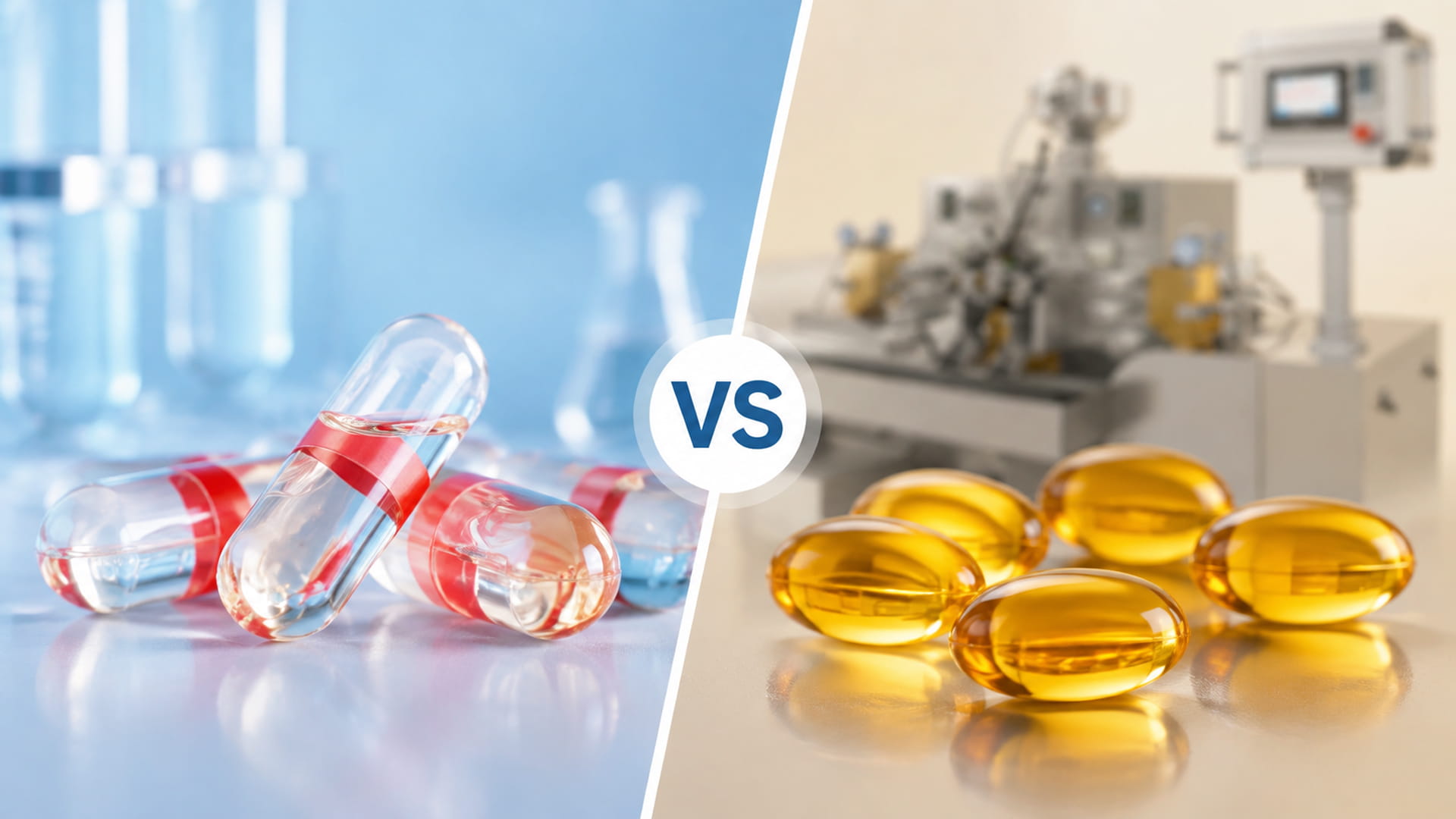
形: 液体を充填したハードカプセル (それぞれに、キャップと本体の接合部をシールする色付きのバンドが付いています。). これらの 2 ピースのカプセルは、固体のゼラチン/HPMC シェル内に油または液体を保持します。.
ソフトジェルカプセル (単に呼ばれることが多い ソフトジェル) は ワンピース, 液体または半固体の充填物を含むゲルコーティングされたカプセル. これらはロータリーダイ封止機で作られ、, 埋める, 各カプセルをワンステップで密封します. 機械の中, 可塑化ゼラチンのリボン 2 本 (ゼラチンとグリセリンまたはソルビトールを混合したもの) 計量された液体の流れがそれらの間に注入されながら、キャストされ、一緒に押し付けられます。. 各カプセルは加熱された金型によって同時に切断され、密封されます。. 結果はスムーズです, 楕円形, オイルベースのサプリメントによく使用される気密カプセル (ビタミンEやオメガ3の錠剤を思い浮かべてください).
ソフトジェルは油や敏感な液体に最適です. カプセル形成時にカプセル全体が密閉されるため、, 個別のシーリング手順は必要ありません. これにより、酸素や湿気から非常に保護されます。. 多くの魚油, ビタミンD/K, および植物油製品には、利便性と保存安定性を考慮してソフトジェルが使用されています。. 実際には, 調査によると、オメガ 3 と脂溶性ビタミンのサプリメントはソフトジェルとして提供されることが最も多い.
形: 薬瓶の隣の小さじに置かれた琥珀色のソフトジェル カプセル (魚油やビタミンDに共通).
| 特徴 | 液体充填カプセル (LFHC) | ソフトジェル |
| 構造 | ツーピース (キャップ & 体) | 一体型密閉カプセル |
| シェル材質 | ゼラチンまたはHPMC (ベジタリアンオプション) | 可塑化ゼラチン (ゼラチン + 可塑剤) |
| 製造方法 | 充填してから密封します (カプセルフィラーについて + ギャング) | ロータリーダイ封止 (フォーム-充填-シール) |
| 設備費 | より低い (標準カプセルフィラー) | より高い (専用ソフトジェルライン) |
| 規模 (MOQ) | 低い最小値 (小さなバッチに適合します) | 通常、より大きなボリュームが必要です |
| ベジタリアンオプション | はい (HPMC シェルが利用可能) | 限定 (でんぷん/野菜のオプションが追加されました) |
| シーリング | メカニカルシール (バンディング/フュージョン) | シール内蔵 (金型で気密封止) |
| 漏洩リスク | 低い (きちんと密閉されたら) | 非常に低い (漏れる継ぎ目がない) |
| 生産の柔軟性 | 高い (粉末またはペレットを液体と混合することができます) | 中くらい (液体/ペーストのみを充填します) |
| スケールアップ | 簡単 (標準的なカプセルマシンを使用) | より複雑な (特殊な乾燥, 等) |
どちらの形態でも液体または油ベースの活性物質を送達し、薬物を脂質に溶解して提示することで高い生物学的利用能を提供できます。. しかし, LFHC はより単純なラインを使用します (シェルはあらかじめ作られています) 一方、ソフトジェルにはゼラチンリボンの調理と乾燥のステップが必要です.
重要なポイント: ソフトジェルマシン 形状, 埋める, そしてワンステップでカット (乾燥が必要な), LFHC ラインは既製のシェルを充填して密閉します。 (長い硬化段階をスキップする). ある業界ガイドによると, 「ソフトジェルは充填後 2 ~ 4 日で硬化します」. LFHC には硬化ステップがありません…充填失敗によるバッチ損失はソフトジェルの方が高くなります。」.
液体で満たされたカプセルには、製造上および製品上のいくつかの利点があります:
これらの利点により、LFHC は医薬品市場と栄養補助食品市場の両方で魅力的なものとなっています.
ソフトジェルには強力な利点もあり、多くのサプリメントで人気があります。:
ソフトジェルを使用する産業には次のようなものがあります。 医薬品 (油ベースの薬), 栄養補助食品 (栄養補助食品), 化粧品 (栄養補助食品美容オイル), そして動物用製品さえも. 例えば, でんぷん/ゼランから作られたビーガンまたはハラールソフトジェルが増加しています.
| 材料 / 埋める | 液体入りカプセル | ソフトジェルカプセル |
| フィッシュオイル / オメガ3 | ✓ 適切 | ✓ 適切 |
| CBDまたは大麻油 | ✓ 適切 | ✓ 適切 |
| クルクミン (ウコンエキス) | ✓ 適切 | ✓ 適切 |
| ビタミンD (油) | ✓ 適切 | ✓ 適切 |
| ハーブ液体エキス | ✓ 適切 | ✓ 適切 |
| プロバイオティクス | ✓ (油中に浮遊している場合) | いいえ (湿気が細菌を殺す) |
| 湿気に敏感な API | ✓ (特にHPMCカプセルでは) | ✗ (シェルの水分が多い) |
どちらのカプセルタイプも油溶性有効成分をうまく処理します. 一般的な栄養補助食品オイル (魚油, ビタミンD, ハーブ抽出物, CBD, 等) LFHC またはソフトジェルによって効果的に送達されます.
特に, 乾燥したまたは湿気に敏感な成分 液体で満たされたハードカプセルの方が優れています. 例えば, プロバイオティクスや水に敏感な API はソフトジェルでは実用的ではありません. 対照的に, HPMC ハード カプセルは、プロバイオティクスの非水性懸濁液または非常に乾燥した製剤を保持できます。, HPMCは水分やガスの透過性が低いため、. ソフトジェルシェルには約 30% 水分と高い酸素透過性, そのような成分を分解する可能性があります.
要するに, 柔軟性と少量生産が重要な場合は LFHC を使用します; 規模と店頭での魅力を重視してソフトジェルを選択する.
メーカーの視点から見ると, 多くの場合、決定は規模に依存します, 投資, と戦略的目標:
以下の表は、シナリオごとの選択をまとめたものです:
| 会社の種類 / 状況 | 推奨フォーマット |
| スモールスタートアップまたはR&Dプロジェクト | 液体充填カプセル (低MOQ, フレキシブル) |
| ニッチなサプリメントライン, <10k単位 | 液体充填カプセル |
| 受託製造業者 (柔軟性) | 液体充填カプセル |
| 大手医薬品メーカー | ソフトジェル (高スループット, 一貫性のある) |
| 大量のオメガ3またはビタミン | ソフトジェル |
| ビーガンカプセルが必要な製品 | 液体充填カプセル (HPMC シェル) |
形: 液体をカプセルに分配する液体カプセル充填機の拡大図.
JinLuPacking はあらゆる種類のカプセル装置を製造しています. 例えば, 私たちの NJY-300C 液体カプセル充填剤 ラインは液体の充填を処理します, そして私たちも提供します ソフトジェルカプセルマシン ワンステップ生産の場合. これらの機械は医薬品および栄養補助食品の使用に関する cGMP 基準を満たしています。.
最後に, どちらも液体で満たされています ハードカプセル そして ソフトジェル 確立されている, 効果的な剤形. ソフトジェルは、油や油溶性有効成分を素早く溶解して届けるのに優れています。, 改ざん防止パッケージ. 液体で満たされたハードカプセルは柔軟性を提供します, より速いR&Dスケーリング, 製造の簡素化. それぞれの違いを理解することで, 利点と生産要件, メーカーは、製品の化学的性質やビジネス ニーズに最適なカプセルのタイプを選択できます。.
新しい配合を設計している場合、または生産ラインをアップグレードしている場合, 両方のオプションを慎重に検討してください. カプセル生産を最適化する準備ができました? Jinlu Packing は、両方のフォーマットに業界をリードする機器を提供しています (例えば, NJP-1000C は最大まで充填できます。 60,000 1時間あたりのハードカプセル) あなたの製品に最適なソリューションについてアドバイスできます. お問い合わせ あなたのプロジェクトについて話し合うために, 見積もりを依頼する, または当社の液体カプセルとソフトジェルについて詳しくご覧ください パッケージライン.
はい. 特殊なカプセル充填剤 (JinLuPackingの液体カプセル充填機のような) 空のハードカプセルにオイルまたは液体を注入できます, その後封印されます (例えば. バンディングによって) 液体をしっかりと保持します. これにより「液体が充填されたハードカプセル」が生成されます。
どちらも普遍的に「優れている」というわけではなく、さまざまなニーズに対応します. LFHC はコストで勝ります, スピード, と柔軟性 (特に小さなバッチの場合), 一方、ソフトジェルはシームレスなシールとオイルサプリメントとして馴染みのある形式を提供します。. 最適な選択は充填材によって異なります, 生産量, そして市場.
適切に密閉された LFHC は漏れません. 充填後, キャップと本体の接合部はゼラチンまたは HPMC バンドを適用して密閉されます。 (または溶融シーリングを使用する). 正しく行われた場合, カプセルは乾燥中に液体をしっかりと保持します, ストレージ, そして使用します. 品質ラインは各バッチをテストして磨き、完全性を保証します.
どちらも油ベースの活性物質に対して優れたバイオアベイラビリティを提供します. フィル配合 (オイルの種類, 乳化剤) 通常、吸収を決定します, シェルタイプではない. ソフトジェルはすぐに溶けます (~10~20分), ハードシェルカプセルながら (LFHC) 溶けるのが少し遅くなる (30–60分). 実際に, どちらの形式でも適切に設計された充填は同様の効果を達成できます.
はい. 植物由来の HPMC シェルは液体充填カプセルに広く使用されています. HPMC は水分が少なく、構造が強いため、内部に油性液体が入り込む可能性があります。. 実際には, HPMC の殻を使用することは、ベジタリアン カプセルを液体の形で提供する 1 つの方法です, 標準的なゼラチンソフトジェルでは提供できないもの.
企業は製造コストの削減などを理由に挙げる, リードタイムの短縮, 配合の柔軟性と. 例えば, R&D チームは、設備を変更することなく、迅速に用量を調整したり、LFHC の成分を組み合わせたりすることができます。. また, VFHC により製品ラインを簡単に拡張できます (同じカプセルに異なる液体を充填できるため、).
一般的に, はい. ソフトジェルの製造には高価な設備が必要です (ゼラチン調理器, ロータリーダイス, 乾燥機) 数日間にわたるさらなる労力. LFHC はよりシンプルな充填剤を使用し、エネルギーが少なくなります. 業界のレポートでは、LFHC はソフトジェルよりも製造コストが 1 個あたり 15 ~ 35% 低いと報告されています。. しかし, 非常に大量のソフトジェルでも費用対効果が高くなります.
液体カプセル充填機を使用して液体成分を充填します。 (多くの場合、標準的なカプセル充填剤の付属品または変形品). 例えば, JinLuPacking の NJY シリーズ機械は精密ポンプを使用しています (セラミックピストンまたはマイクロポンプ) オイルを計量してカプセルに入れる. これらのマシンは高速に到達できます (1時間あたり数千キャップ) ±1%以上の精度.
ほとんどが非水系, 油ベースまたは溶剤ベースの充填. 一般的な例: 魚油, ビタミンEオイル, 液体ビタミン, ハーブオイル抽出物, エマルジョン, および特定の自己乳化型薬物送達システム. 充填物はポンプで汲み上げることができ、一般に非腐食性でなければなりません. 水ベースの液体は避けてください (彼らは封印を弱めることができる). 充填中の飛沫や滴下を防ぐために、充填粘度を制御する必要があります。.
はい. 多くのカプセルマシンはコンバーチブルです: 投与システムを交換することにより, 粉末/顆粒または液体を充填できます. 実際に, 標準的なカプセル充填剤の粉末投与プレートを液体充填ヘッドとポンプ システムに置き換えます。. この多用途性は、1 つのラインで粉末と LFHC の生産を切り替えることができることを意味します。.
参考文献:
1.液体を充填し密封した硬質ゼラチンカプセル —— テイラー & フランシス・オンライン
2.ソフトゼラチンカプセル (ソフトジェル) —— サイエンスダイレクト
3.ソフトゼラチンカプセル製造におけるリボン特性に対する温度の影響 —— 国立医学図書館
4.ソフトゼラチンカプセルの総合レビュー: 工業製造業, 技術の進歩, および規制の観点 —— ドラッグデリバリージャーナル & 治療学
5.液体充填ハードゼラチンカプセル —— ドラッグデリバリージャーナル & 治療学
6.テクスチャー分析と実験計画によるハードゼラチンカプセルの液体充填塊中の最適な水量の決定 —— 国立医学図書館