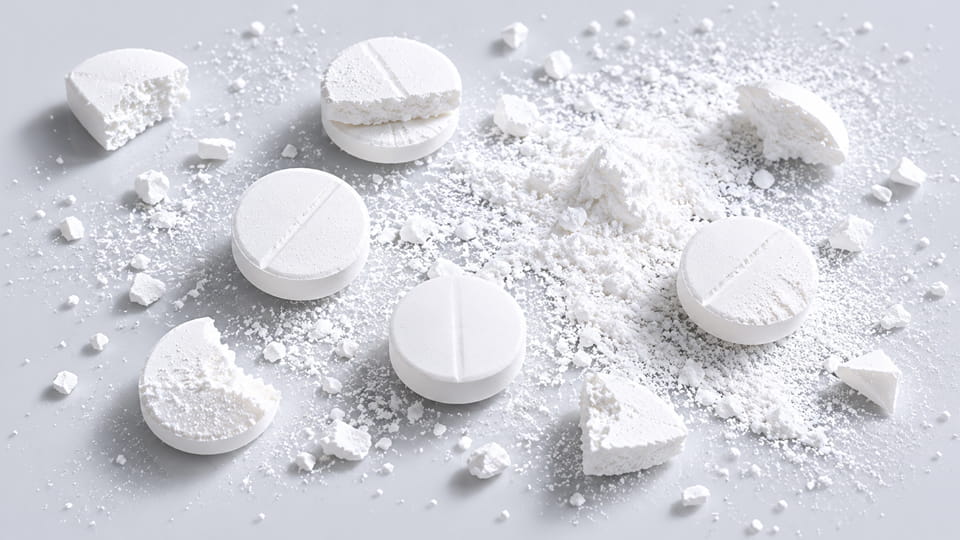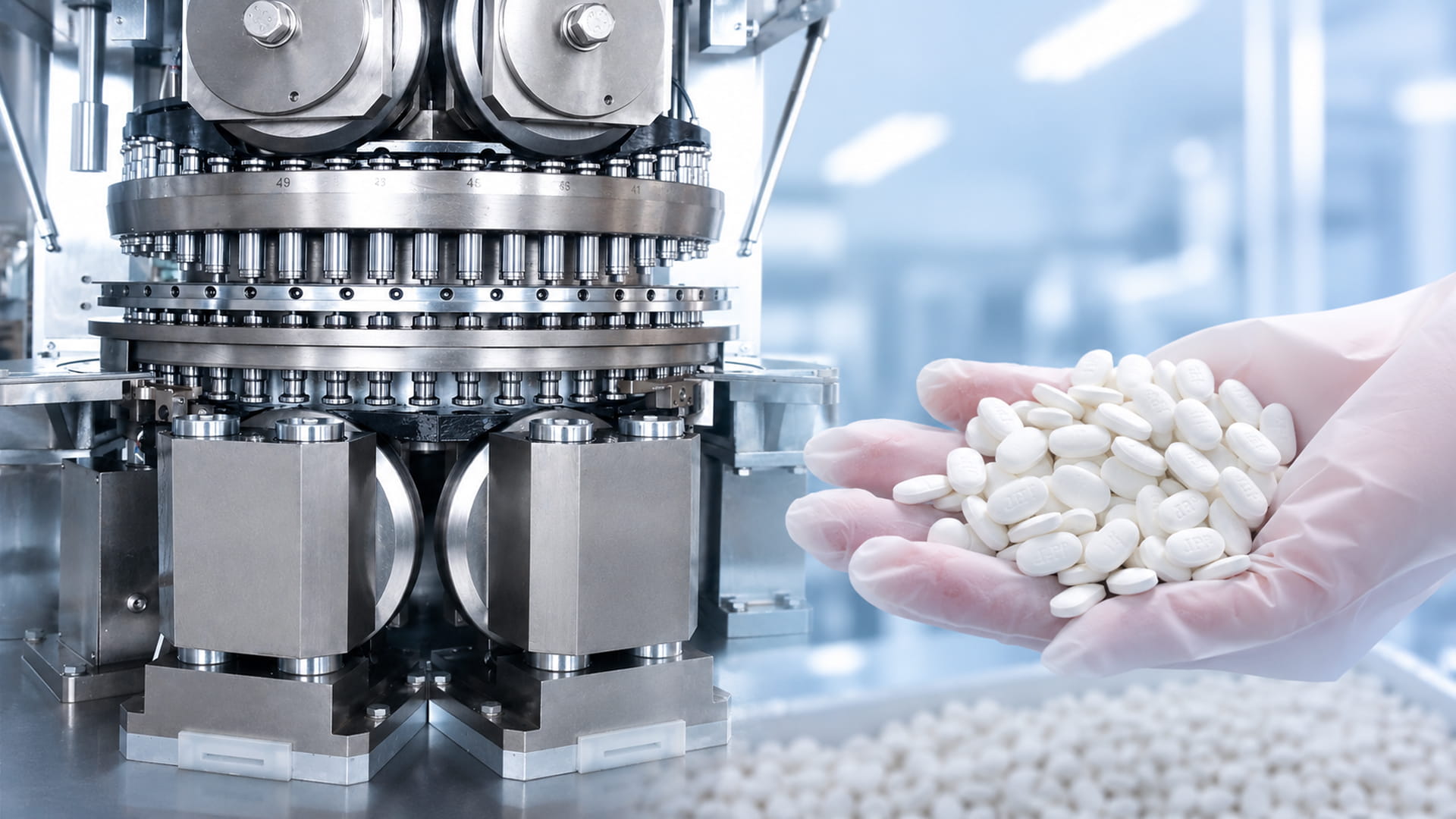

粉体や顆粒をダイスに投入し、上パンチと下パンチで圧縮します。 タブレット圧縮機. 一緒に, これらのパンチとダイにより、錠剤の最終的な形状と用量が形成されます。. プレスのタレットが 1 回転するたびに、ダイの上と下に 1 つのパンチが配置されます。. パンチが高圧でぶつかるとき, タブレットが形成される. 簡単に言うと, 錠剤プレス工具とは、錠剤打抜き機が錠剤を製造するために使用するパンチとダイのセットを指します。.
錠剤製造において, パンチとダイス – 総称してとして知られています タブレットプレスツール – をすべて決定します タブレットのサイズ, 形状と品質. 打錠機と呼ぶかどうか, 丸薬製造機, またはロータリー打錠機, 内部のツールが実際の錠剤化作業を行います. 適切なツール標準を選択することが重要です. 最も一般的な標準は次のとおりです。 B ツーリング, Dツーリング, およびその小さなバリエーションである BB および DB. 各規格では、異なるパンチバレルとダイの直径が指定されています, 特定のタブレット サイズやマシンに適したものにする. このガイドでは、B の内容を詳しく説明します。, D, BB および DB ツールの意味, それらはどのように違うのか, タブレット製造機に最適なツールを選択する方法.
打錠機でのツーリングとは、 パンチとダイのペア 粉末を成形して錠剤に圧縮する. 金型は中空のキャビティです (丸いことが多い) タブレットの直径と厚さを定義するもの, パンチしながら (上部と下部) 金型に上下からはめ込んで粉末を圧縮します. 本質的には, タブレットの形状を決定するツール 報道機関と正確に一致する必要があります. 適切なツールにより均一な重量が保証されます, タブレットの厚さと刻印. 高品質のツール (GCR-15のような硬化鋼製) 摩耗にも強く、摩耗を防ぎます。 キャッピングやラミネートなどの問題.
さまざまな国際工具規格があります. 北米では, AAP/TSM標準が一般的です, ISO 18084 (ヨーロッパ人) 標準は世界中で使用されています. この基準内で, 打錠機の工具はサイズクラスごとに分類されています: b, D, BB, およびDBツール. 各クラスには固定のパンチバレルとダイの直径があります (そして高さ), これにより錠剤の最大直径が制御されます. 例えば, ジンルパッキング すべての工具はタレットとタブレットの寸法 (小さい 6 ~ 8 mm) と一致する必要があることに注意してください。 噛むことができるタブレット BBツールを使用する, 標準の 12 ~ 13 mm タブレットは B ツールを使用します, 大型の 25+mm タブレットには D ツールが必要です.
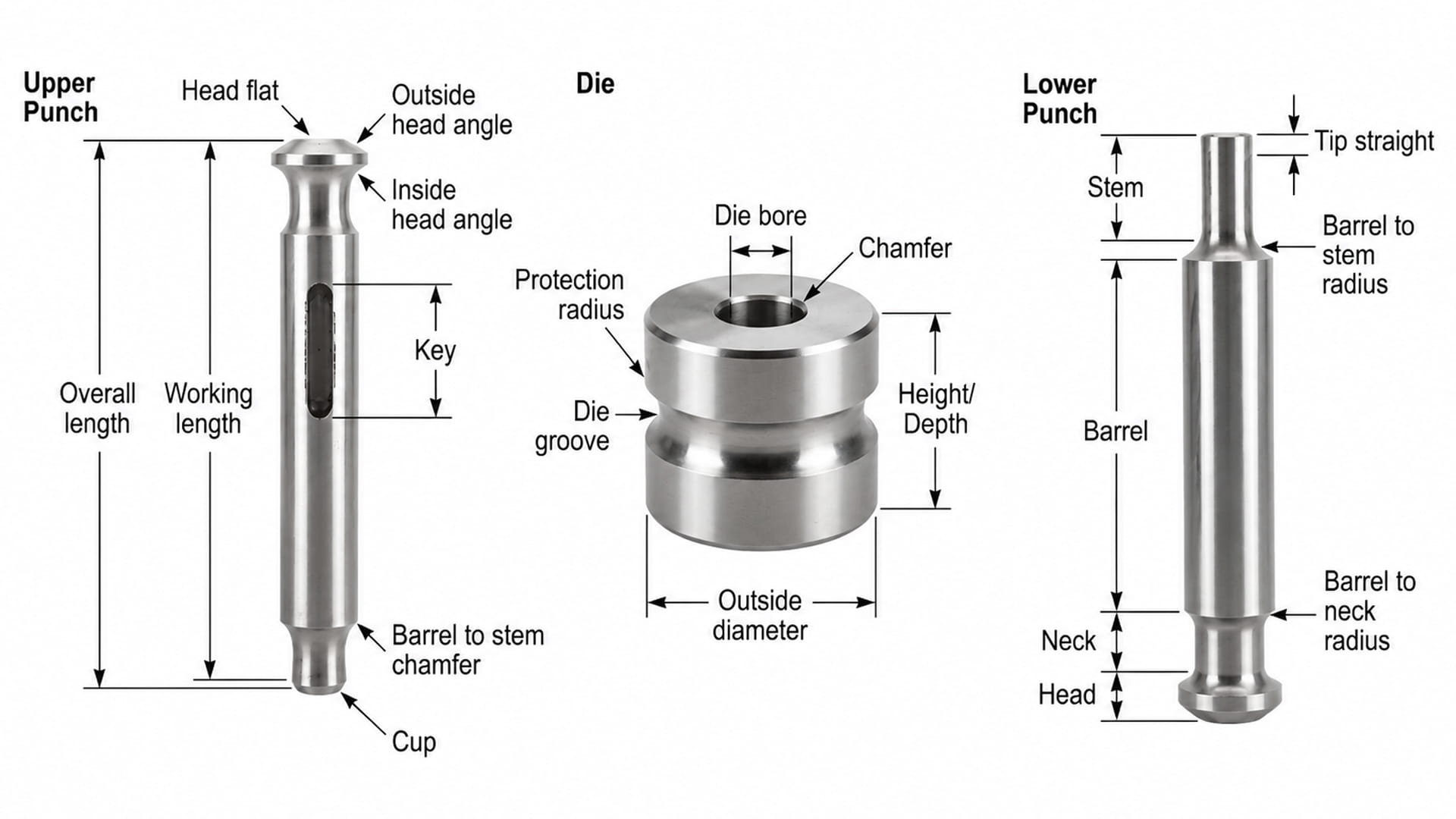
一貫したタブレットの品質と安定した生産パフォーマンスを実現するには、タブレット製品ごとに異なるツール構成が必要です. 錠剤圧縮機内, 最も一般的な打錠機のタイプには次のものがあります。 B ツーリング, Dツーリング, BBツーリング, およびDBツール. これらの工具オプションは主にパンチ サイズによって異なります。, 金型の寸法, 圧縮能力, および適切なタブレットアプリケーション. これらのツールの種類の違いを理解することは、製薬メーカーに役立ちます, 生産エンジニア, そしてマシンユーザーはタブレットマシンに適切なセットアップを選択します.
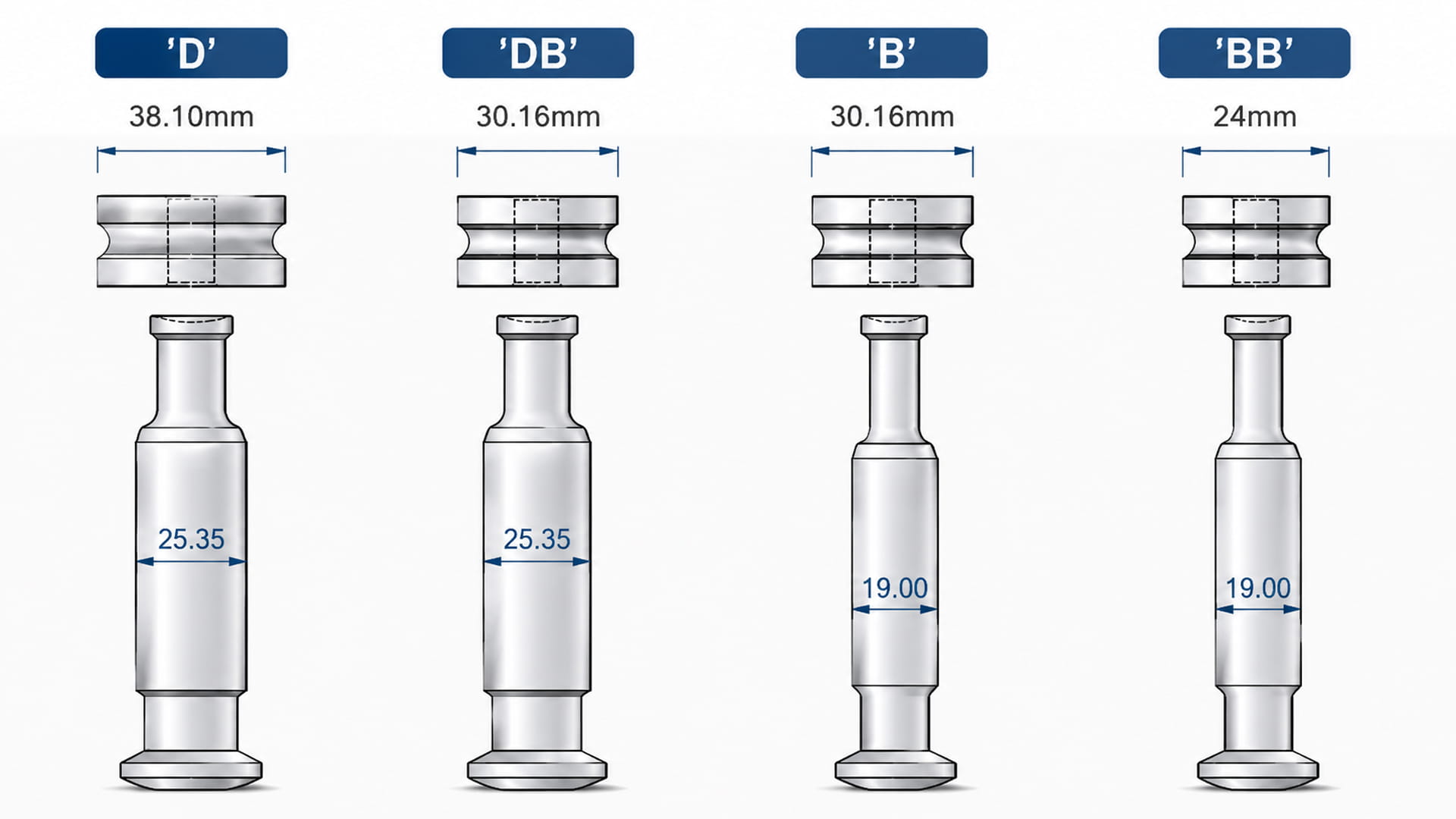
製薬業界では, B型ツーリング 最も一般的な規格の 1 つです. B ツールでは、 19.0 mmパンチバレル そして 30.16 ダイス外径 mm (の). パンチの突起が特徴的 フランジまたはリップ 頭の上に, 砲塔に固定されます. 言い換えると, Bパンチ 盛り上がったリムがある ロッキングクランプがかみ合っていること.
B ツールは非常に多用途です. それは 凹型パンチチップ (カップ状の) そして丸いダイス, ほぼすべての最新の打錠機と互換性があります (例えば, 多くの中程度- Fetteから高速輪転機まで, がある, マネスティ, 等. B型です). このツールは、幅広いサイズの標準的な固体錠剤に使用されます。 (通常約 4 ~ 16 mm の円形, 形状によっては最大 19 mm まで). 一般的な用途には、ビタミンなどの従来の円形および楕円形の錠剤が含まれます。, サプリメント, 適度なサイズと用量が必要な医薬品錠剤.
B ツーリングは広く入手可能であり、大量生産にコスト効率が高いため人気があります。. a 30.16 mm ダイは最大約 16 ~ 18 mm の錠剤を製造可能 (丸) またはもう少し形が良い. 例えば, ほとんどの中小型錠剤製造ラインでは、効率性と柔軟性を高めるために B ツールが使用されます。.
D型ツーリング のために設計されています より大きな錠剤またはより厚い錠剤. Dツーリングパンチバレルが大きくなりました (25.35 直径mm) そしてダイのODは 38.10 mm. Bツーリングとは異なります, D型パンチには リムやフランジが無い – それは単なるフラットディスクヘッドです. パンチはタレットにロックされます。 キーとリテイナー フランジクランプの代わりのシステム.
D ツーリングは「ヨーロピアン ツーリング」と呼ばれることもあります。 (アメリカでもよくあることですが). これは歴史的に古い頑丈な打錠機の標準であり、現在でも非常に大きな錠剤や非常に高い圧縮力に使用されています。. 例えば, Dツーリングが人気なのは、 発泡錠剤, 動物用錠剤, および高用量の医薬品錠剤 より大きな直径と厚さが必要な場合. D ツールの平面パンチは、複雑なデザインの錠剤や信頼性の高いエンボス加工が必要な錠剤に適しています。 (平らな面はマーキングに役立ちます).
実務的には, D ツールのセットアップ (25.35 ミリパンチ, 38.10 ミリメートルダイ) およそから錠剤を作ります 5 mmまで 25 直径mm. より高い圧縮領域を提供し、非常に硬い錠剤を実現できます。. 操作で大規模な ロータリータブレットプレスマシン 大きなビタミン錠剤や積層製品の場合, おそらくDツールを使用していると思われます. 覚えて: Dパンチにはリップがありません, 視覚的には平らなディスクトップのように見えます.
BB型ツーリング 本質的には B ツールの縮小版 非常に小さなタブレットの場合. BB ツーリングには、 19.0 mmパンチバレル (Bのように) しかし、を使用します 小さいダイ の 24.00 外径 mm. 主な違いは、BB ツールが 小さな錠剤またはトローチ – 13 mm未満の弾丸を考えてください.
BB ツーリングは、ステーション数が多い場合や複数の先端のパンチが必要な場合に好まれます。. と 24 mmダイス, 多くのステーションを 1 台に収めることができます 24- または 32 ステーションプレスで小型錠剤の生産量を向上. 小さいサイズでも精度を損なうことはありません: BB パンチは非常に均一なミニ錠剤を生成します (例えば, 咳止め薬, ブレスミント, 小さなチュアブル) 投与量の正確さが重要な場合.
要約すれば, BB ツール = 小径の錠剤. それは本質的にのためです コンパクトプレス または各タブレットが小さい高出力モード. BB ツーリング システムには、B ツーリングと同じタレット規格が必要です (同じパンチヘッドと保持力), それでBBパンチ する Bパンチのようなリップ/フランジを持っています. 利点は、より小型のツールを使用して、古い 16 ステーションの印刷機を 24 ステーションのセットアップで稼働できることです。.
DB型ツーリング DとBの機能を組み合わせたハイブリッドシステムです。. DB設定の場合, の パンチバレルの直径は 25.35 mm (Dと同じ), しかし、 ODは 30.16 mm (Bと同じ). 言い換えると, 大口径パンチヘッドを採用 (Dのように) より小さなダイボア (Bのように).
この組み合わせにより、かなり大きなものを作ることができます, 高用量錠剤 (Dみたいに背が高い) フル D ツールよりも多くのステーションを取り付けながら (金型が小さいので). DB ツールは、柔軟な生産向けに設計された印刷機に搭載されることがよくあります。: BサイズのダイスでDパンチの高い圧縮能力が得られます。. 例えば, DB パンチ/ダイ セットは、大きな形状が必要だが、パンチを交換して B タレットを再利用したい場合に、高濃度のマルチビタミン錠剤や大型の動物用丸薬に使用できます。.
DB ツールのパンチは B パンチのようにロックされます (頭にフランジが付いています) しかし、そのサイズはDに近いです. 特別な選択です 効率的な中大型タブレット 心の中で. 基本的に, DB は「B より大きいがフル D ほど大きくない」ためのもので、中型から大型のタブレットの高出力を提供する妥協案です。. DB ツールの一般的なタブレット サイズは直径約 5 ~ 19 mm です。.
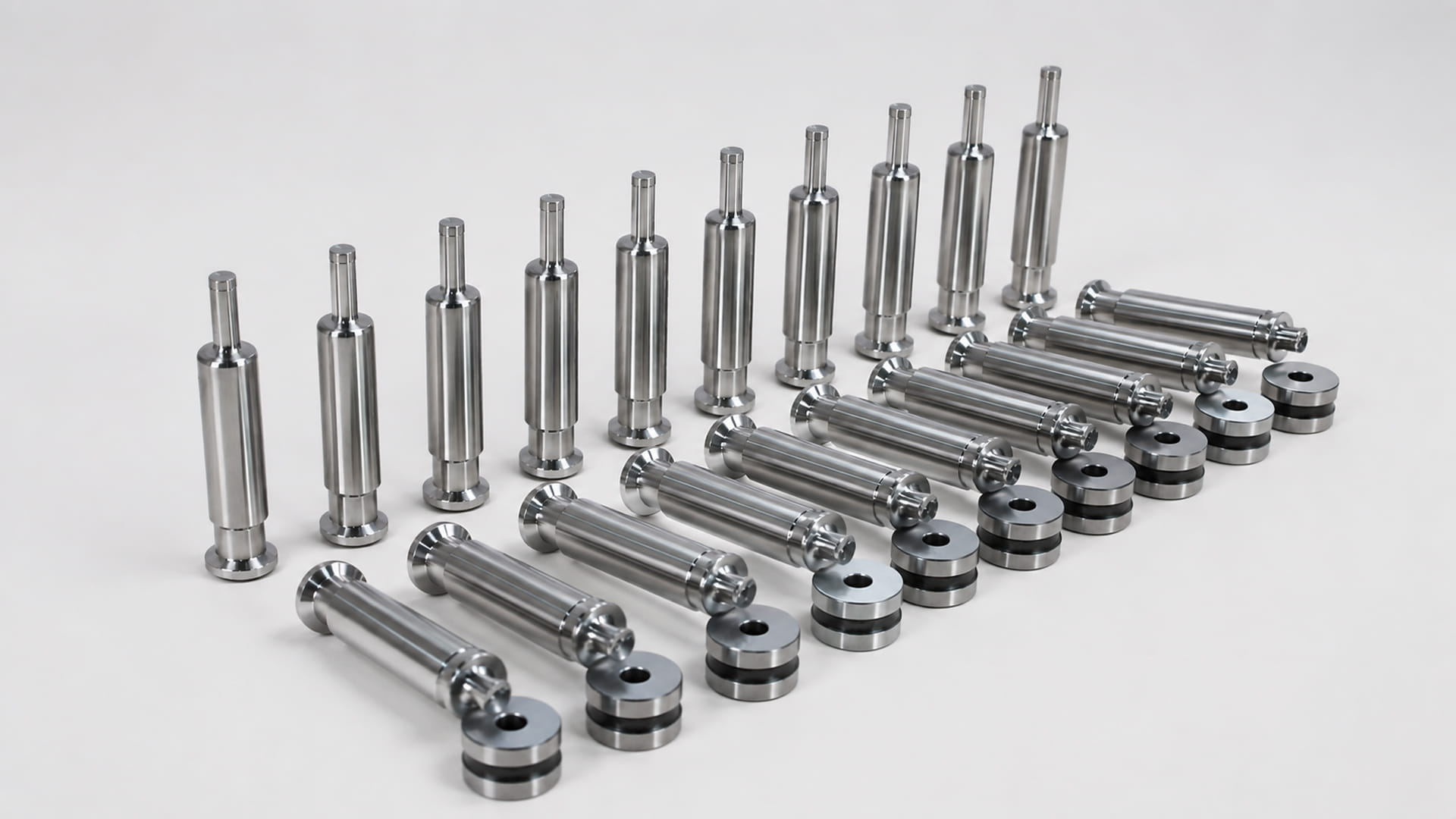
以下は、各ツールタイプの一般的な寸法とタブレットのサイズ範囲の簡単な比較です。, 業界標準に基づいて:
| ツーリングタイプ | パンチバレル径 | ダイØ (の) | 錠剤の直径 | 共通使用 |
| b | 19.00 mm | 30.16 mm | ~4~16mm | 標準タブレット (製薬) |
| D | 25.35 mm | 38.10 mm | ~10~25mm | 大型タブレット, 発泡性の |
| BB | 19.00 mm | 24.00 mm | ~4~13mm | 小さな錠剤, 高速回線 |
| DB | 25.35 mm | 30.16 mm | ~5~19mm | 高密度の小薬錠 |
例えば, Jinlu梱包に関する注意事項 B ツールでは通常、錠剤を 3 ~ 16 mm 製造します, D ツーリングは 10 ~ 25mm をカバーします. BB ツーリングは最大約 13mm、DB は約 19mm になります。. 正確なサイズはタブレットの形状にも依存します (ラウンド, 楕円形, 等).
Aを超えて, b, D ネーミング, 工具は打錠機に適合する規格に準拠する必要があります. ツーリング標準には 2 つの主要なファミリーがあります:
重要なこと, 欧州連合 (ISO 18084) TSM パンチは互換性がありません. 金型外径は同じでも (例えば. 38.10 Dの場合はmm, 30.16 Bの場合はmm), の パンチの詳細が異なります. 例えば, TSM パンチ ヘッドの座面の角度は ISO のものとはわずかに異なります。, キースロットの位置が異なります. 実際に, ISO/D パンチは通常、TSM/US スタイルの印刷機には正しく適合しません。, そしてその逆もまた然り. 常にプレスのドキュメントをチェックして、期待しているかどうかを確認してください。 TSM または ISO/EU パンチとダイを注文する前に工具を用意する.
要約すれば: TSM = 米国/日本規格, EU = ISO 18084 メトリック. どちらもタブレット形状の精度を保証します, しかし、ツールヘッドには互換性がありません.
錠剤プレス機用のツールを選択するとき, 考慮する タブレットのサイズ, 生産量, そして 錠剤の硬度:
実際に, 多くのメーカー (JinLuパッキングを含む) 指導する. 例えば, ジンルーさん ZP-17D打錠機 標準の GCR-15 パンチを使用した場合の定格は 100kN です, そのため、タブレットのサイズによってツールを指定します. 彼らはまた、両方のツールが サイズ そして 材料 案件: 難しい, 研磨タブレットにはより硬い鋼または特殊なコーティングが使用されています (錫, CrN) 工具の寿命を延ばすために.
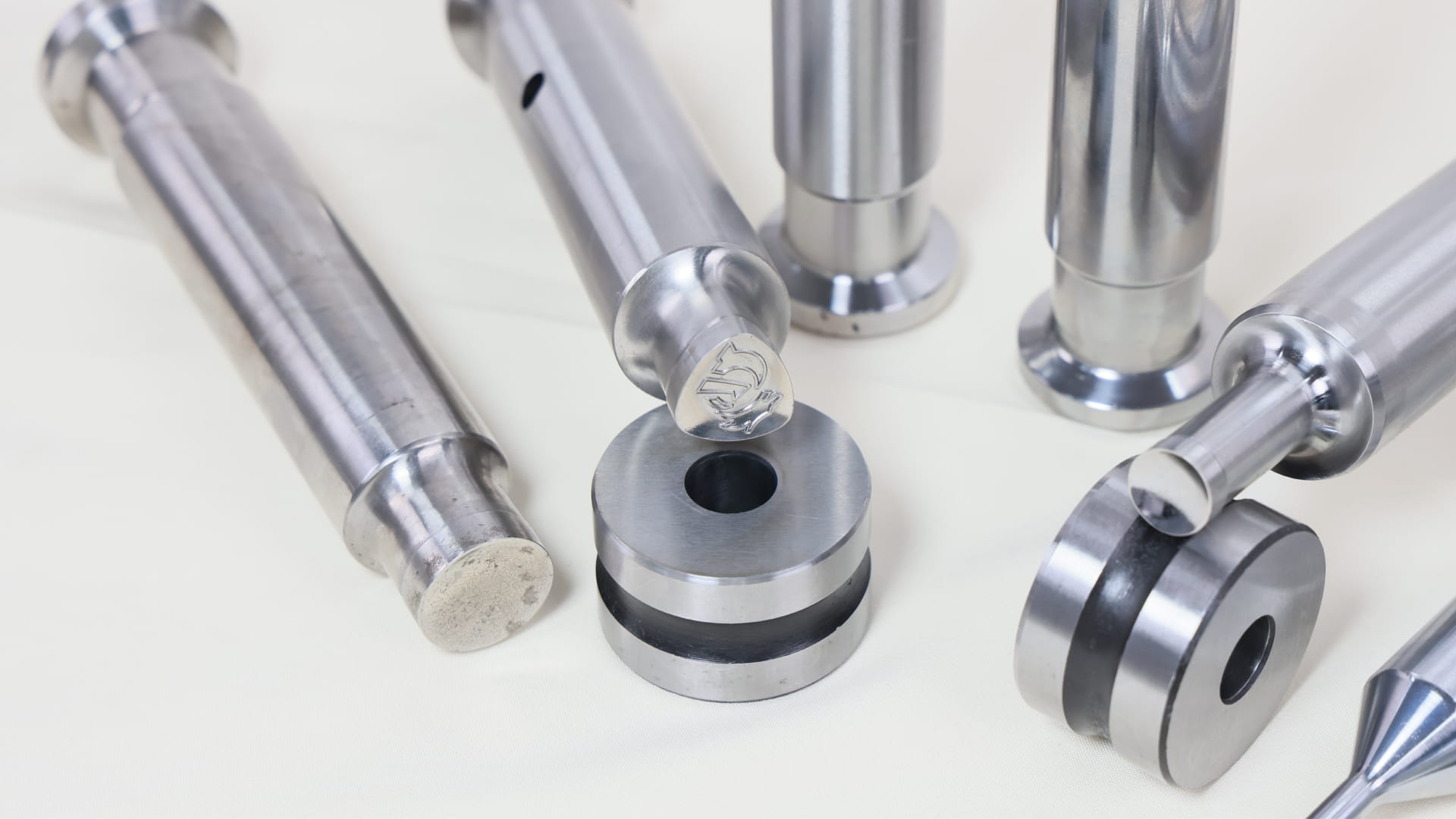
適切なメンテナンス 工具寿命を劇的に延長します タブレットの品質. 業界の専門家は、大まかに次のように指摘しています。 85% パンチアンドダイの問題の原因は不適切なメンテナンスと取り扱いにあります. ツールを最高の状態に保つためのベスト プラクティスを次に示します:
次の手順に従ってください (クリーン, 検査する, 修理・磨き, 測定, 潤滑する, ストア - 「7 ステップのツーリング メンテナンス プロセス」と呼ばれることもあります) ダウンタイムを最小限に抑えます. あるエンジニアはこう言いました, 「きれいな, 適切に維持されたパンチは、固着したり破損した錠剤を生成する可能性がはるかに低くなります。」実際に, 掃除は 最も重要なステップ: 固着の原因となる古い製品の残留物を除去します。, ピッキング, または相互汚染.
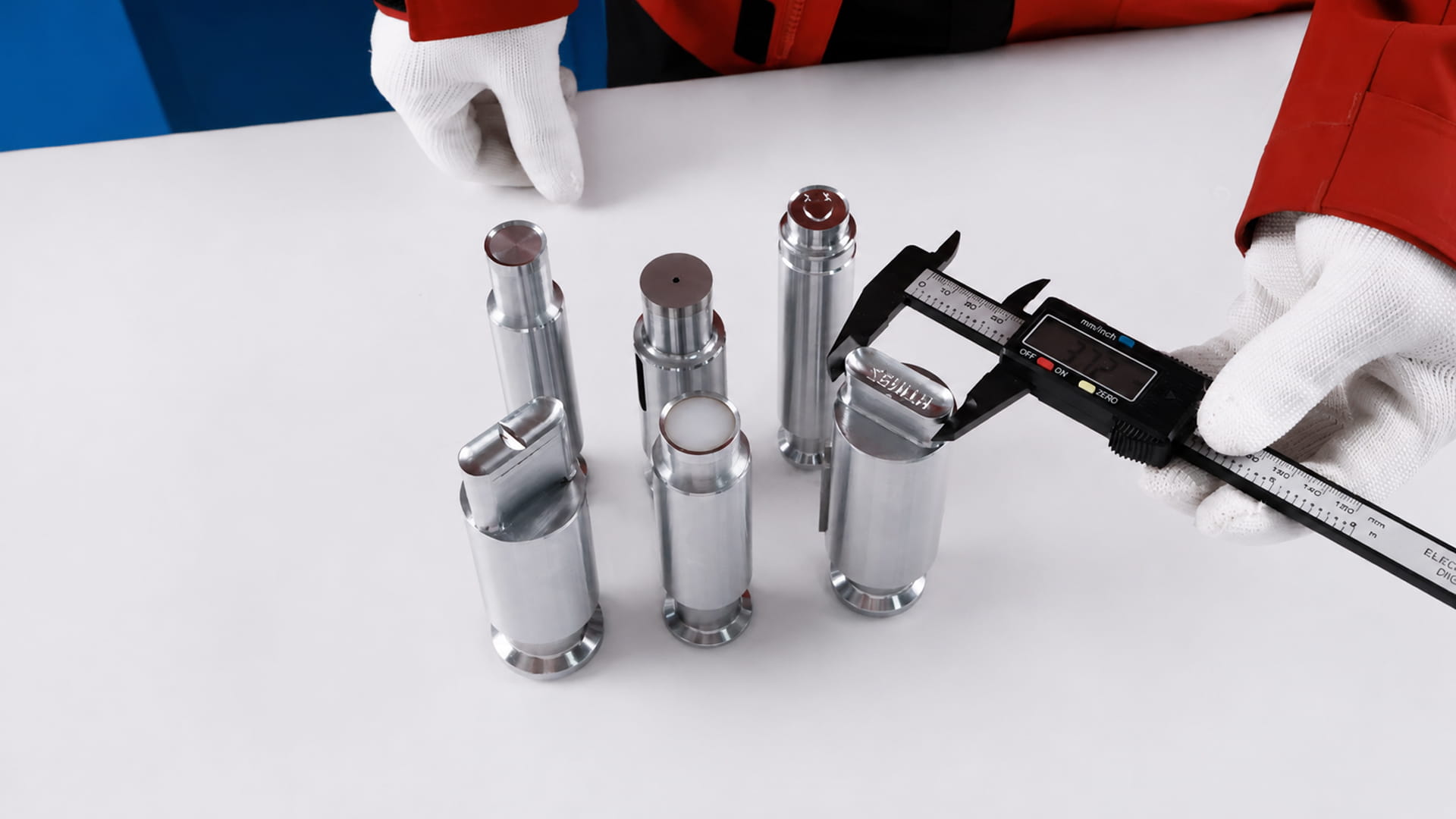
寸法以外にも, ツーリング 素材と仕上げ 重要です. ほとんどの打錠機のパンチは高級炭素鋼で作られています。 (例えば. GCR-15) 硬度 ~60 HRC, 高い圧縮力に耐える. 湿ったまたは酸性の製剤の場合 (ハーブや発泡剤のような), ステンレス鋼またはコーティングされたパンチ (錫, CrN, DLC) 腐食や固着に耐えることができます.
工具が仕様に従って製造されていることを常に確認してください. 多くのサプライヤーは打錠仕様書に従っています (TSM) または ISO 規格の公差. ジンル, 例えば, 注記 BB ツールは正確な TSM/EU 仕様に従って製造されており、要求に応じて検査書類が提供されます. 高品質のツールは欠陥を回避し、パンチの寿命を延長します。.
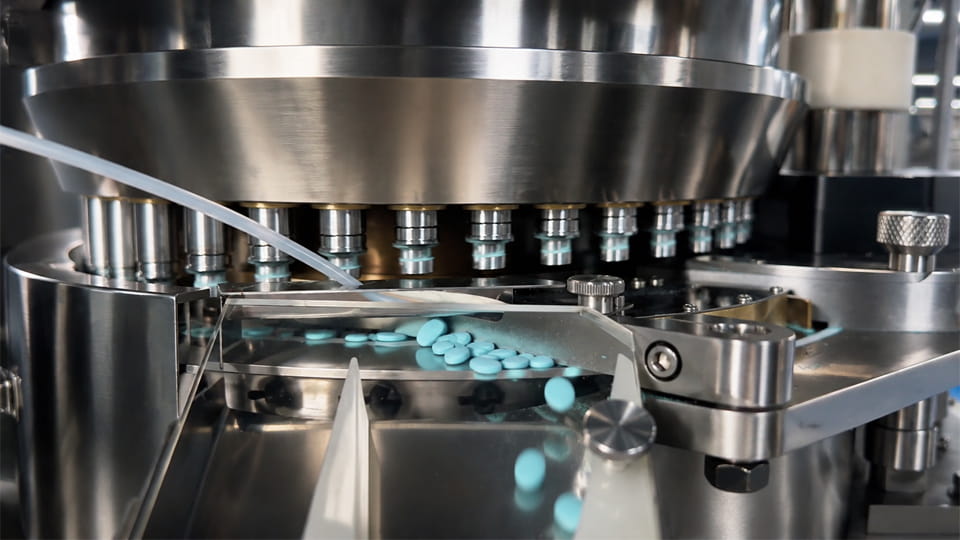
形: 高速プレスと工具により、多数の錠剤を迅速に生産します
評判の良い 打錠機メーカーおよび工具サプライヤー 適切な標準を選択するのに役立ちます. 例えば, JinLu Packing は、お客様が B から選択するのをよくお手伝いします。, D, 製品に基づく BB または DB ツール. 無料のフォーミュラテストを提供し、特殊なツールを推奨します (刻まれた, 得点, 等) プレス向け. 生産ライン全体を統合する場合, プレスと工具の両方を提供するサプライヤーを選択してください, したがって互換性は保証されています.
さらに, クイックチェンジツールシステムとメンテナンスプランにより、ダウンタイムを最小限に抑えます. 高速ダイ除去などの機能を探す, 砲塔クイックリリース, 新しい印刷機ではツールレスでパンチを取り外すことができます. 例えば, JinLu は GMP 設計に重点を置いているため、彼らの機械にはクイックリリースタレットと掃除が簡単な接触部品が備わっています。, 工具を最高の状態に保つのに役立ちます.
適切な打錠機ツールは単なる消耗部品ではなく、製品の品質と製造効率に直接影響を与える戦略的な選択です。. 両者の違いを理解することで、 b, D, BB, およびDBツール 選択とメンテナンスのベストプラクティスに従うこと, 製薬メーカーはコストのかかる欠陥やダウンタイムを回避できる. 必ず工具の標準に合わせてください (TSM と ISO), タブレットに適したサイズを選択してください, そして厳格に従ってください 清掃/検査ルーチン. 報酬は均一な錠剤です, 拒否が減ります, より信頼性の高い生産ラインを実現.
新しいタブレット圧縮マシンの購入またはツールのアップグレードを準備している場合, 経験豊富な OEM に連絡することを検討してください. Jinlu Packing は、お客様のニーズに最適なツーリング システムに関するガイダンスを提供します, タブレットを仕様どおりに保つためにカスタムのパンチとダイを提供できます. 私たちのチームは、お客様がタブレット印刷機を最大限に活用できるように、完璧なツール セットの選択をお手伝いする準備ができています。. お問い合わせ 高品質の打錠機の工具や装置に関する専門家のアドバイスや見積もりが必要な場合.
錠剤プレス工具とは、粉末または顆粒を錠剤に成形するために錠剤圧縮機で使用されるパンチとダイのセットを指します。. ツールはタブレットのサイズを制御します, 形, 厚さ, そして全体的な外観. 完全な工具セットには通常、上部パンチが含まれています, 下パンチ, そして死ぬ, 圧縮プロセス中に連携して機能します.
最も一般的なタイプの打錠機ツールには B ツールが含まれます, Dツーリング, BBツーリング, およびDBツール. これらの工具タイプは主にパンチ サイズが異なります。, 金型の寸法, 圧縮容量, および適切なタブレットアプリケーション. 正しい選択はタブレットのサイズによって異なります, 製剤特性, 生産要件, タブレット圧縮機の仕様.
B ツールと D ツールの主な違いは、サイズと圧縮能力です。. B ツールはパンチとダイの構成が小さく、標準サイズの錠剤に一般的に使用されます。. Dツーリングは大きめのデザインが特徴です, より高い圧縮力とより大きな錠剤の生産が可能になります. D ツールは多くの場合、大型タブレットに好まれます, 一方、B ツールは一般的な医薬品錠剤に対してより高い柔軟性を提供します.
BB ツールは、より小型の錠剤を製造するために設計された小型のツール構成です。. コンパクトなタブレットサイズを必要とする製品によく使用されます。, 特定の医薬品の錠剤など, サプリメント, そして特産品. BB ツールは、メーカーが効率的な生産パフォーマンスを備えた小型タブレットを必要とする場合に適したオプションとなります。.
DBツーリングは、DツーリングシステムとBツーリングシステムの特徴を組み合わせたツーリング構成です。. より大きなダイ構成とより小さなパンチ設計を使用しています。, 特定のタブレット サイズと生産要件に柔軟に対応します。. メーカーがタブレット サイズの能力とツールの効率のバランスを必要とする場合、DB ツールが選択されることがよくあります。.
常にではありません. 打錠機は特定の工具仕様に合わせて設計されています, 互換性は砲塔の設計によって異なります, パンチ寸法, ダイサイズ, およびツーリング標準. 例えば, B ツーリングと D ツーリングは、機械の互換性を確認せずに単純に置き換えることはできません。. 工具を変更する前に、必ず打錠機のモデルと工具の仕様を確認してください。.
主要な打錠機ツール標準には TSM が含まれます (タブレット仕様マニュアル), 欧州連合 (欧州ツーリング規格), および ISO ツール規格. TSMは北米で広く使用されています, 一方、EU および ISO 規格は多くの国際市場で一般的に使用されています. 一部の寸法は似ているように見えるかもしれませんが、, TSM と EU ツールは自動的に交換可能ではありません.
適切な打錠機の選択は、いくつかの要因に依存します。, タブレットサイズも含めて, 形, 定式化, 圧縮力, 生産量, 打錠機モデル. メーカーは工具の標準も考慮する必要があります, 材料の選択, 安定した錠剤の品質と効率的な生産を保証するための予想される工具寿命.
打錠機の治具に関する一般的な問題には固着などがあります。, ピッキング, タブレットのキャッピング, タブレットの重量が不均一である, パンチ摩耗, そして死亡ダメージ. これらの問題は、工具の磨耗が原因である可能性があります, 間違ったメンテナンス, 不適切な工具材料, またはタブレットの圧縮設定が不適切である. 定期的な検査と正しい工具の選択は、生産上の問題を軽減するのに役立ちます.
打錠機の耐用年数は錠剤の配合などの要因によって異なります。, 生産速度, 圧縮力, 工具材料, コーティング, とメンテナンスの実践. 適切な掃除をすることで, 検査, 潤滑, とストレージ, 高品質のパンチとダイにより、交換が必要になるまでに数百万個の錠剤を生産できます.
参考文献:
1.タブレット用プレスツール - パンチとダイ —— ISO 18084:2011
2.章 32 – 発達, 最適化, およびプロセスパラメータのスケールアップ: タブレット圧縮 —— サイエンスダイレクト
3.タブレットツールの標準化の利点 —— ファームテック
4.打錠機の工具のメンテナンスと保管の改善 —— ファームテック
5.パンチ形状の影響 (頭平部直径) およびツーリングのタイプ (「B」’ または「D」) 製剤錠剤の物理的機械的特性について —— 国立医学図書館
6.タブレット ツール テクノロジーの進歩に関する最新情報 —— サイエンスダイレクト