
- Macchine
- Competenza
- Risorse
- Certificati
- Di
- Contatto
- Macchine
- Competenza
- Risorse
- Certificati
- Di
- Contatto
La domanda globale di Supplemento a base di erbe i prodotti continuano a crescere man mano che sempre più consumatori cercano modi naturali per sostenere la propria salute e benessere. Dalle capsule e compresse alle polveri e caramelle gommose, gli integratori a base di erbe si trovano ora nelle farmacie, supermercati, e negozi online in tutto il mondo. Mentre il mercato si espande, i produttori si trovano ad affrontare aspettative crescenti di qualità costante, produzione efficiente, e un imballaggio affidabile che protegge gli ingredienti botanici sensibili. Anche buone pratiche di produzione e controlli adeguati degli imballaggi sono essenziali per garantire la qualità e la conformità del prodotto durante tutto il processo di produzione.
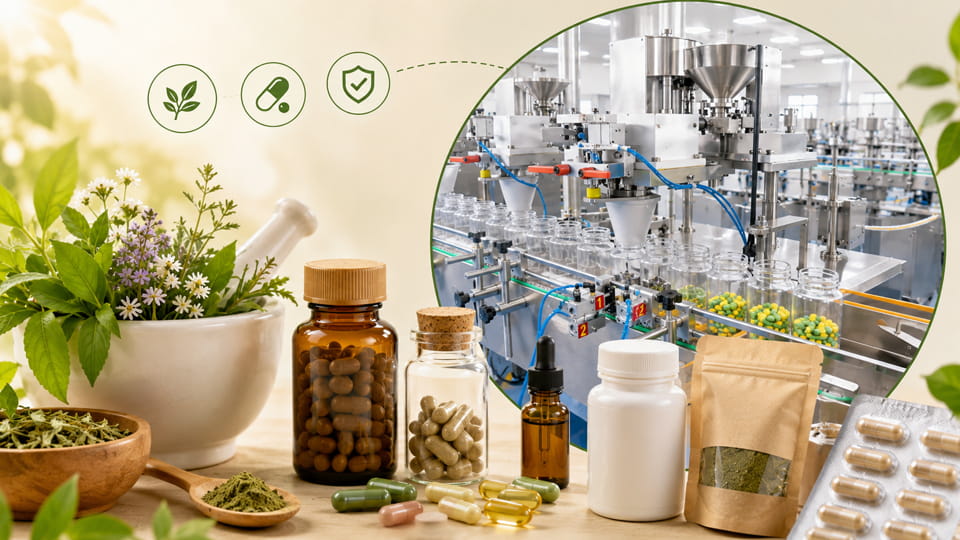
Che tu stia pianificando una nuova linea di produzione di integratori a base di erbe o aggiornando le attrezzature esistenti, comprendere il processo di produzione è il primo passo per prendere decisioni migliori. In questa guida, esamineremo i tipi più comuni di integratori a base di erbe, come vengono prodotti, l'attrezzatura coinvolta, e le soluzioni di imballaggio che aiutano i produttori a migliorare l'efficienza, qualità del prodotto, e durata di conservazione.
Integratori a base di erbe (chiamato anche integratori botanici) sono una categoria di integratori alimentari realizzati con materiali vegetali (radici, foglie, fiori, semi, o estratti) destinati a sostenere la salute. A differenza delle vitamine sintetiche, gli integratori a base di erbe derivano da fonti naturali. Spesso sfruttano le medicine tradizionali a base di erbe (per esempio. zenzero, ginkgo, echinacea) e comprendono estratti concentrati o polveri. In termini normativi, gli integratori a base di erbe sono classificati come integratori alimentari, non farmaci. Sotto gli Stati Uniti. per legge devono contenere gli ingredienti etichettati ed evitare contaminanti (pesticidi, metalli pesanti). Le forme tipiche includono capsule, compresse, softgel, polveri, liquidi (tinture), tè e caramelle gommose.
Gli integratori a base di erbe mirano a “integrare la dieta” con nutrienti o attivi di origine vegetale, spesso per il supporto immunitario, digestione, sollievo dallo stress, o energia. Per esempio, ingredienti come il sambuco, l'echinacea e la vitamina C sono popolari per l'immunità, mentre l'ashwagandha e il tè verde sono utilizzati per alleviare lo stress e il metabolismo. I consumatori preferiscono sempre più gli integratori a base di erbe per la loro provenienza naturale e le etichette pulite. Il mercato globale degli integratori a base di erbe era alle porte $45.9 miliardi di dollari 2025 e si prevede che crescerà dell'8% circa ogni anno 2034, spinto dalla domanda di assistenza sanitaria preventiva a base vegetale.

Gli integratori a base di erbe sono prodotti in molte forme di dosaggio. Ogni forma ha dei vantaggi, quindi i produttori scelgono in base al prodotto e al mercato. I formati comuni includono:


Gli integratori a base di erbe sono disponibili in molte forme: capsule dure, softgel, compresse e polveri utilizzano tutti ingredienti botanici. La scelta della forma giusta dipende dall'estratto di erbe, esigenze di dosaggio, e le preferenze dei consumatori.
| Modulo di supplemento | Ingredienti tipici a base di erbe | Vantaggi principali | Imballaggio comune | Attrezzature di produzione consigliate |
|---|---|---|---|---|
| Capsule | Ashwagandha, Curcuma, Ginseng | Facile da deglutire, dosaggio accurato, protegge le polveri sensibili | Bottiglie, pacchetti di blister | Macchina per il riempimento di capsule, Linea di riempimento bottiglie, Confezionatrice per blister |
| Compresse | Spirulina, Aglio, Cardo mariano | Economico, durata lunga, adatto per produzioni di grandi volumi | Bottiglie, pacchetti di blister | Macchina per la stampa di compresse, Macchina per rivestimento tablet, Linea di confezionamento bottiglie |
| Polveri | Matcha, Moringa, Erba di grano | Dimensioni delle porzioni flessibili, ideale per miscele di bevande e miscele proteiche | Buste stand-up, pacchetti di bastoncini, barattoli | Miscelatore di polveri, Riempitrice a coclea, Macchina confezionatrice per sacchetti preconfezionati |
| Capsule molli | Olio all'aglio, Olio di semi di lino, Olio di enotera | Adatto per estratti a base oleosa, facile da consumare | Bottiglie, pacchetti di blister | Linea di produzione di softgel, Macchina riempitrice di bottiglie |
| Gommose | Sambuco, Aceto di mele, Curcuma | Gusto gradevole, popolare tra bambini e adulti | Bottiglie, buste | Macchina per il conteggio delle caramelle gommose, Linea di riempimento bottiglie, Macchina confezionatrice per sacchetti preconfezionati |
| Estratti liquidi | Echinacea, Ginkgo Biloba, Radice di valeriana | Assorbimento rapido, conveniente per il dosaggio personalizzato | Bottiglie di vetro, flaconi contagocce | Macchina per il riempimento di liquidi, Tappatrice, Etichettatrice |
| Bustine di tisane | Camomilla, Menta piperita, Ibisco | Metodo di consumo tradizionale, preparazione semplice | Bustine, cartoni | Macchina confezionatrice per bustine di tè, Macchina Astucciatrice |
I produttori possono scegliere come target un formato specifico per la biodisponibilità o l'attrattiva del consumatore. Ad esempio, gli integratori erboristici a base di capsule rappresentano una quota di mercato significativa (in giro 39%) perché proteggono i principi attivi e si dissolvono rapidamente nell'organismo. Polveri (in barattoli o stick pack) stanno guadagnando popolarità per le miscele proteiche o di superalimenti verdi, mentre le compresse rimangono un alimento base per vitamine ed estratti di erbe standard. Alla fine, IL attrezzature di produzione (filler di capsule, comprimitrici, buste, ecc.) deve corrispondere alla forma scelta e al volume di produzione.
I produttori si concentrano sulle erbe con una forte domanda da parte dei consumatori e supporto scientifico. Le principali sostanze botaniche presenti negli integratori includono:
Il confronto seguente fornisce una rapida panoramica di alcuni degli integratori erboristici più utilizzati nell’industria nutraceutica odierna:
| Supplemento a base di erbe | Scopo sanitario comune* | Forme di dosaggio comuni | Confezione tipica | Note di produzione |
|---|---|---|---|---|
| Curcuma (Curcumina) | Supporto articolare e infiammatorio | Capsule, compresse, polvere | Bottiglie in HDPE, pacchetti di blister, buste stand-up | Estratto di curcumina spesso standardizzato con agenti fluidificanti |
| Ashwagandha | Supporto allo stress e al sonno | Capsule, Gummies, polvere | Bottiglie di plastica, pacchetti di bastoncini | Comunemente prodotto come estratto di radice standardizzato |
| Ginseng | Supporto energetico e cognitivo | Capsule, softgel, estratti liquidi | Bottiglie ambrate, pacchetti di blister | Il controllo dell'umidità è importante durante il riempimento |
| Echinacea | Supporto per la salute immunitaria | Compresse, capsule, tinture | Bottiglie, flaconi contagocce in vetro | Spesso prodotto come estratto secco o estratto liquido |
| Cardo mariano | Supporto alla salute del fegato | Capsule, softgel | Bottiglie in HDPE, pacchetti di blister | È comunemente richiesto un contenuto di silimarina standardizzato |
| Aglio | Supporto alla salute del cuore | Capsule molli, compresse | Pacchetti di blister, bottiglie | Spesso vengono presi in considerazione il controllo degli odori e il rivestimento |
| Zenzero | Supporto digestivo | Capsule, polveri, bustine di tè | Bustine, buste, bottiglie | La scorrevolezza della polvere influisce sulla precisione del riempimento |
| Ginkgo Biloba | Supporto alla memoria e alla circolazione | Compresse, capsule | Bottiglie, pacchetti di blister | Spesso standardizzato al contenuto di flavonoidi |
| Estratto di tè verde | Supporto antiossidante | Capsule, compresse | Bottiglie, pacchetti di blister | La protezione dal calore e dall'umidità migliora la stabilità |
| Sambuco | Supporto immunitario | Gommose, sciroppi, capsule | Bottiglie in PET, bottiglie di vetro | Le caramelle gommose richiedono attrezzature dedicate per il conteggio e l'imbottigliamento |
Tendenze in 2025 evidenziare gli integratori formulati per la salute immunitaria (sambuco, echinacea, zinco), salute delle donne, e benessere cognitivo. Per esempio, I consumatori del Regno Unito utilizzano sempre più la curcuma, ashwagandha, moringa e sambuco per l'immunità e lo stress. L'approvvigionamento e la formulazione degli ingredienti richiedono il controllo di qualità: ogni erba deve essere testata per la potenza attiva e l'assenza di contaminanti (pesticidi, metalli pesanti) secondo gli standard GMP.

La produzione di integratori a base di erbe segue un processo in più fasi, combinando tecniche farmaceutiche standard con una cura specifica per gli ingredienti botanici. Il flusso generale è: approvvigionamento di erbe crude → pulizia → essiccazione/macinazione → miscelazione → formazione del dosaggio (capsule/compresse) → confezione. I passaggi chiave includono:
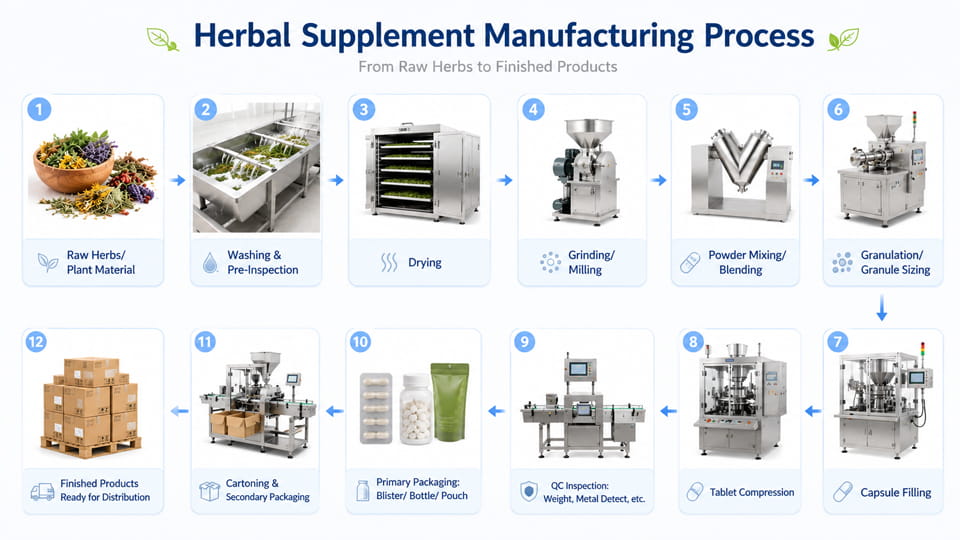
Durante tutta la produzione, condizioni (temperatura, umidità) sono strettamente controllati. Molti prodotti botanici sono sensibili all’umidità, quindi l'intera linea può funzionare in una camera bianca con umidità controllata. Imballaggio ad alta barriera (blister in foglio di alluminio, HDPE con essiccante) è selezionato per preservare la durata di conservazione.
Il successo della produzione di integratori dipende dall’affidabilità macchine per la lavorazione e il confezionamento. Ecco una panoramica delle attrezzature chiave, in particolare quelle offerte da Jinlu, con i relativi ruoli:

Figura: La riempitrice per capsule ad alta velocità di Jinlu (modello NJP-1500D, 90K cps/ora). Tali riempitrici automatiche orientano le capsule vuote, metro di polvere di erbe, tamponare il riempimento, e assemblare ciascuna capsula riempita con una precisione del ±3%..
 Figura: Macchina rotativa per compresse HZP-26D-40D. Le comprimitrici comprimono i granuli di erbe in compresse con peso e durezza accurati. Le macchine da stampa di Jinlu possono produrre oltre 260,000 compresse/ora garantendo l'uniformità.
Figura:Confezionatrice per sacchetti preconfezionati. Tali macchine (come la serie GD di Jinlu) può aprirsi automaticamente, riempire, e sigillare buste stand-up o con cerniera con polveri, granuli o compresse, ottenendo pesi di riempimento molto precisi.
Altre attrezzature essenziali includono i lavabottiglie (per avviare le bottiglie vuote), etichettatrici, E rilevatori di metalli. Le macchine Jinlu sono progettate per soddisfare le certificazioni globali (CE, cgmp, FDA) e può essere personalizzato (per esempio. con alimentatori a vuoto per polveri difficili, pesatrici combinate per miscele).
La scelta del giusto imballaggio primario influisce sulla stabilità, esperienza dell'utente, e conformità. Di seguito confrontiamo i formati di confezionamento comuni per gli integratori:
| Formato | Meglio per | Vantaggi | Sfide/Considerazioni |
| Bottiglie (HDPE, ANIMALE DOMESTICO) | Capsule, Compresse, Capsule molli, Gommose | Forte barriera contro umidità/ossigeno; facile da etichettare; disponibili chiusure a prova di bambino; formato familiare | Ingombrante per la spedizione; spesso opaco (meno riciclabile); richiedono tappi CR con materiali misti |
| Confezioni blister (Alluminio/PVC) | Compresse, Capsule, Caplets | Protezione per dose unitaria (ogni pillola sigillata); ottima barriera (sventare); a prova di manomissione; dosaggio conveniente | Più costoso per unità; forme/dimensioni limitate; Il riciclaggio di fogli/PVC è difficile |
| Pacchetti di bastoncini | Polveri (monodose), Tè | Dose portatile premisurata; residuo minimo; profilo sottile | Rifiuti monouso; richiedono laminati (sfide del riciclo); piccolo volume per confezione |
| Bustine | Granuli, Compresse effervescenti, Polveri | Confezioni monoporzione, spesso solubile in acqua; basso costo | Barriera contro l'umidità limitata; incline alla foratura; rifiuti monouso |
| Buste stand-up (richiudibile) | Polveri, Granuli, Gommose, Confezioni multiple | Leggero, salvaspazio; laminati ad alta barriera; cerniere richiudibili; forme personalizzabili | Spesso trasparente (rischio leggero); necessitano di essiccante per contenuti sensibili all'umidità; la cerniera aumenta i costi |
| Vasi / Lattine (Vetro/Alluminio) | Gommose, Polveri, Prodotti premium | Riciclabilità superiore (vetro/alluminio); barriera alta; riutilizzabile; aspetto premium | Più pesante (costo di spedizione); fragile (bicchiere); per impostazione predefinita non è a prova di bambino, a meno che non vengano aggiunti meccanismi del coperchio |
| Cartoni secondari | Capsule/compresse in flaconi o blister | Consente l'imballaggio sfuso; aggiunge barriera per più prodotti; fornisce spazio per l'etichettatura | Aggiunge costi e materiale; barriera del cartone inferiore alla plastica (potrebbe aver bisogno di rivestimenti per l'umidità) |
Per integratori a base di erbe, controllo dell'umidità e dell'ossigeno sono funzioni critiche di confezionamento. Per esempio, il foglio blister ad alta barriera o le buste multistrato possono proteggere le erbe igroscopiche. A prova di bambino (CR) le chiusure sono spesso obbligatorie per legge (soprattutto per le vitamine). Opzioni sostenibili (Plastica PCR, materiali riciclabili, buste compostabili) sono tendenze in crescita, ma deve comunque soddisfare i requisiti di sicurezza e durata di conservazione.
Macchine per l'imballaggio (riempitrici di bottiglie, linee di blister, imballatori di sacchetti) deve essere abbinato al formato e all'output scelti. Sistemi automatizzati (come la confezionatrice per buste modello GD di Jinlu o le blisteratrici della serie PJ) gestire velocità elevate con una tenuta uniforme, che è essenziale per il settore farmaceutico Conformità GMP.
Anche con una buona attrezzatura, la produzione di integratori può incontrare ostacoli. Ecco i problemi e i rimedi frequenti:
In tutti i casi, la manutenzione preventiva e gli operatori esperti sono fondamentali. Recupero automatico degli errori (rifiutare le stazioni, allarmi) aiuta a individuare tempestivamente i problemi. Per esempio, Le macchine Jinlu sono dotate di un “rifiuto intelligente” per scartare le buste riempite male.
La scelta delle attrezzature per l'imballaggio è una decisione strategica. I fattori da considerare includono:
In sintesi, scegli macchine classificate per i requisiti di produttività e conformità desiderati. IL giusta attrezzatura garantisce riempimenti/sigilli coerenti, massimizza la resa, ed evita costosi richiami.
Lo spostamento globale verso la salute naturale ha reso gli integratori a base di erbe un’industria importante, ma richiede anche una produzione rigorosa a livello farmaceutico. Dal test accurato delle materie prime vegetali al riempimento automatizzato delle capsule e al confezionamento a prova di manomissione, ogni passaggio deve essere ottimizzato per coerenza, conformità, e qualità. Progressi nelle attrezzature (come i riempitivi di capsule ad alta velocità, linee blister di precisione, e macchine per buste flessibili) consentire alle aziende nutraceutiche di espandersi in modo efficiente mantenendo tolleranze strette.
In sintesi, produzione di integratori a base di erbe è una danza complessa di know-how botanico tradizionale e ingegneria moderna. Seguendo le linee guida GMP, utilizzando i macchinari giusti, e stare al passo con le tendenze (Piace imballaggio sostenibile e formulazioni personalizzate), i produttori possono fornire prodotti sicuri, prodotti efficaci a base vegetale. Per le aziende che desiderano espandere o aggiornare le proprie linee, Imballaggio Jinlu offre una linea integrata di riempitivi per capsule, comprimitrici, macchine blister, confezionatrici di buste e altro ancora, tutte realizzate per la produzione nutraceutica. Contattaci per scoprire come le nostre attrezzature possono aiutarti a portare il tuo integratore a base di erbe dal giardino delle erbe agli scaffali dei negozi con qualità ed efficienza.
Un integratore a base di erbe è un integratore alimentare a base di erbe, estratti botanici, o altri ingredienti di origine vegetale. Questi prodotti sono comunemente disponibili sotto forma di capsule, compresse, polveri, Gummies, tè, o estratti liquidi e sono progettati per integrare la dieta piuttosto che sostituire gli alimenti convenzionali. A seconda del mercato, gli integratori a base di erbe sono regolamentati come integratori alimentari piuttosto che come farmaci.
Negli Stati Uniti, integratori alimentari (comprese le erbe) rientrano nella legge DSHEA della FDA. I produttori devono seguire le regole cGMP della FDA (21 CFR 111) per garantire l’identità, purezza, e per evitare contaminazioni. Ciò significa test approfonditi sulle erbe crude e controlli durante il processo. In Europa e altrove, standard di produzione simili (GMP dell’UE, Linee guida dell'OMS) applicare ai nutraceutici.
Sono disponibili in molte forme: capsule, compresse, polveri, liquidi/tinture, Gummies, pacchetti di bastoncini, tè, ecc. La scelta dipende dalle proprietà botaniche e dalle preferenze del consumatore. Per esempio, piccole erbe amare potrebbero essere contenute in capsule, mentre un tè rilassante viene venduto in bustine.
Il processo di produzione comprende solitamente diversi passaggi chiave:
• Selezione di erbe crude
• Pulizia e asciugatura
• Rettifica o fresatura
• Miscelazione delle polveri
• Granulazione (se necessario)
• Riempimento di capsule o compressione di compresse
• Controllo qualità
• Imballaggio primario
• Astucciamento e confezionamento secondario
I produttori moderni spesso automatizzano questi processi per migliorare la coerenza, produttività, e la qualità del prodotto.
Al minimo, i produttori necessitano di apparecchiature di miscelazione, un riempitivo per capsule o una pressa per compresse (a seconda del dosaggio), e una linea di confezionamento. Le macchine chiave includono: macchina per il riempimento di capsule, comprimitrice rotativa, macchina confezionatrice blister, linea di conteggio/riempimento bottiglie, macchina per bustine/stick pack, e macchina confezionatrice per sacchetti. Per esempio, Jinlu Packing offre riempitivi per capsule e confezionatrici per buste appositamente progettati per prodotti nutraceutici.
La maggior parte dei produttori utilizza materiali di imballaggio resistenti all'umidità come i blister, Bottiglie in HDPE con sigilli ad induzione, laminati di fogli di alluminio, o buste ad alta barriera. Ambienti di produzione controllati, essiccanti, adeguati sistemi di tenuta, e le ispezioni di qualità di routine aiutano anche a proteggere gli integratori a base di erbe durante lo stoccaggio e il trasporto.
L'imballaggio migliore dipende dal tipo di prodotto e dalla sua sensibilità all'umidità, ossigeno, e luce.
Le opzioni di imballaggio comuni includono:
• Flaconi per capsule e compresse
• Confezioni in blister per la protezione della dose unitaria
• Buste stand-up per polveri
• Stick pack e bustine monodose
• Flaconi in vetro per estratti liquidi
La scelta di un imballaggio barriera appropriato aiuta a mantenere la qualità del prodotto e a prolungarne la durata di conservazione.
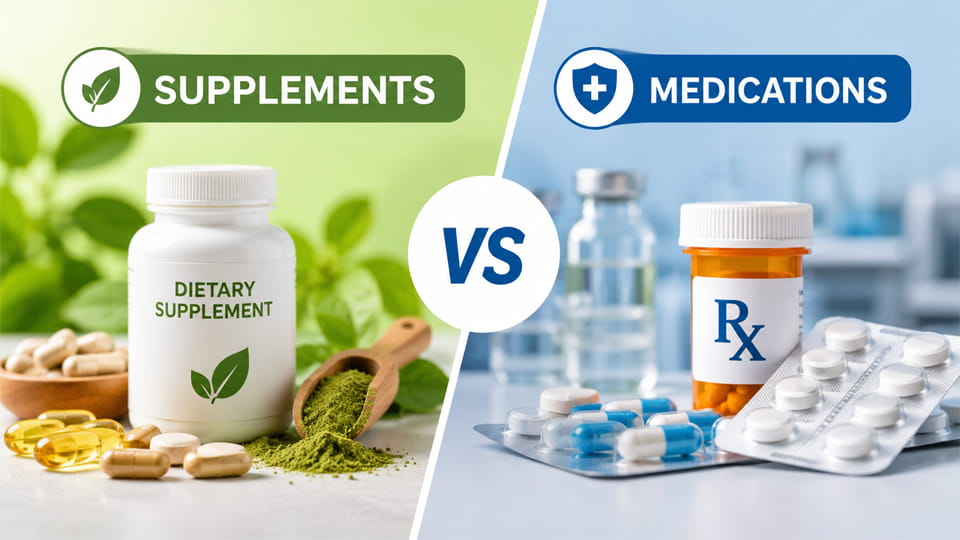
Gli integratori a base di erbe sono classificati come integratori alimentari e possono essere venduti senza prescrizione medica, concentrandosi sul supporto nutrizionale. Medicinali a base di erbe (come le medicine ayurvediche o tradizionali cinesi) sono spesso regolamentati come farmaci o prodotti medici, con pretese di curare disturbi. Gli integratori possono promuovere il benessere generale (per esempio. “sostiene l’immunità”) ma non può pretendere di curare le malattie.
Riferimenti:
1.Documenti orientativi sugli integratori alimentari & Informazioni sulla regolamentazione—— NOI. Amministrazione degli alimenti e dei farmaci
2.Integratori alimentari —— NOI. Amministrazione degli alimenti e dei farmaci
3.Integratori a base di erbe —— NOI. Dipartimento dell'Agricoltura
4.Sviluppo di integratori alimentari botanici sicuri ed efficaci —— Biblioteca nazionale di medicina
5.Garanzia di qualità e sicurezza degli integratori alimentari a base di erbe —— Biblioteca nazionale di medicina
6.Integratori dietetici ed erboristici —— NCCIH