
- Macchine
- Competenza
- Risorse
- Certificati
- Di
- Contatto
- Macchine
- Competenza
- Risorse
- Certificati
- Di
- Contatto
Prima di parlare dei materiali delle capsule, metodi di produzione, o attrezzature per l'imballaggio, è utile capire cosa capsule vuote lo sono effettivamente e perché sono così ampiamente utilizzati. Dai farmaci da prescrizione ai nutraceutici e agli integratori erboristici, le capsule vuote forniscono ai produttori farmaceutici una soluzione flessibile, accurato, ed efficiente soluzione di dosaggio. La loro compatibilità con il riempimento automatico delle capsule e linee di confezionamento li rende anche una parte essenziale della moderna produzione farmaceutica. Sia che tu stia selezionando capsule di gelatina vuote, valutare alternative vegetali, o pianificando una nuova linea di confezionamento di capsule, comprendere i fondamenti ti aiuterà a prendere decisioni migliori sulla produzione e sugli acquisti.

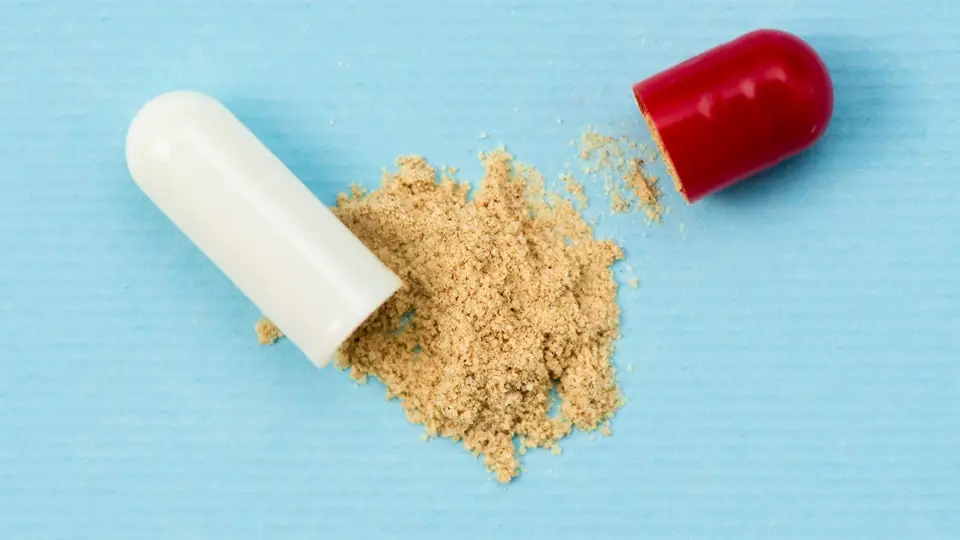
Nella produzione farmaceutica, capsule vuote (chiamate anche capsule vuote o capsule vuote per pillole) sono i gusci cavi di base utilizzati per creare orali forme di dosaggio. Fungono da contenitori per le polveri, granuli o pellet di farmaci e integratori. Una capsula vuota è tipicamente composta da due parti principali – il cappuccio e il corpo – che si adattano e si adattano chiudere insieme per formare un guscio chiuso. (Il cappuccio è la metà superiore più corta, e il corpo è la metà inferiore più lunga.) I moderni design delle capsule includono a meccanismo di bloccaggio (come anelli elastici o scanalature corrispondenti sul cappuccio e sul corpo) per garantire che la capsula rimanga ben chiusa dopo il riempimento. Ciò impedisce l'apertura accidentale della capsula durante la lavorazione, spedizione o movimentazione.
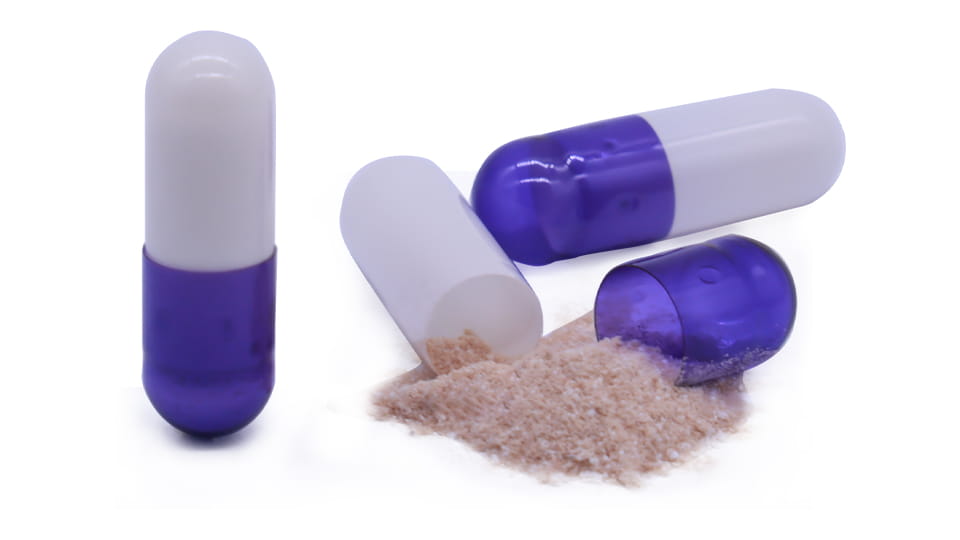
In pratica, le capsule vuote servono come un comodo “vaso vuoto” per la medicina. Sono comunemente realizzati in gelatina o materiali a base vegetale, e sono carichi di API o integratori durante la produzione. Dopo il riempimento, il cappuccio e il corpo si agganciano insieme per mantenere il contenuto al sicuro. Al microscopio, puoi vedere il cappuccio della capsula, corpo della capsula, e spesso un anello ad incastro o doppio scatto progettazione all'unione (come mostrato di seguito):
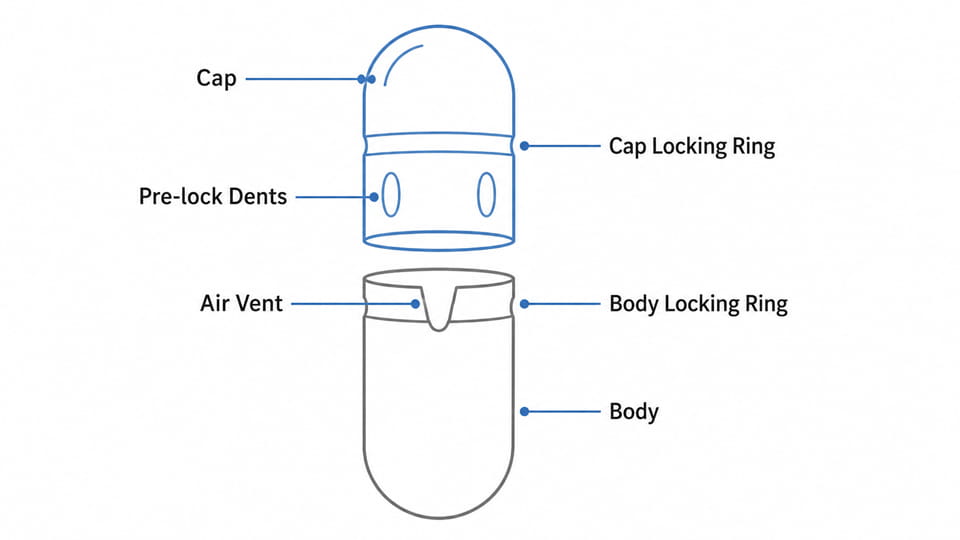
In sintesi, una capsula vuota è un guscio pronto da riempire costituito da un cappuccio e un corpo che si incastrano o si bloccano insieme. Questi gusci rigidi sono sufficientemente elastici da poter essere assemblati, ma sufficientemente rigidi da resistere alle linee di riempimento e confezionamento ad alta velocità. Vengono forniti preassemblati o come cappucci e corpi sfusi (spesso fornito in vassoi sfusi), e vengono riempiti in fasi separate nell'impianto.
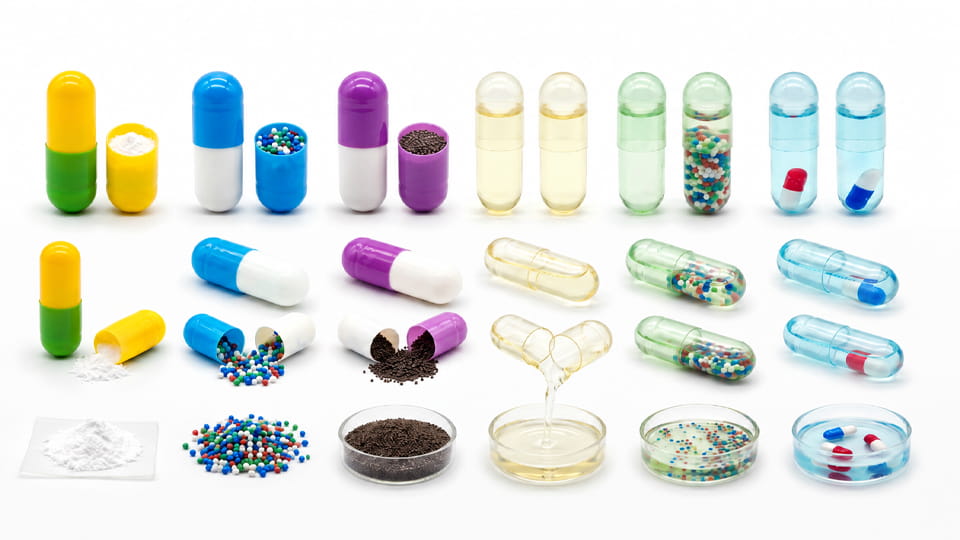
Esistono diversi tipi di capsule vuote, distinti principalmente dal loro materiale del guscio. I più comuni sono:
L’industria farmaceutica moderna si è espansa oltre la gelatina animale. “Poiché la scienza e la tecnologia sono avanzate, nuovi materiali e miglioramenti dei processi hanno portato allo sviluppo di capsule vuote realizzate in HPMC, amido idrossipropilico, e pullulano, oltre alla gelatina”. In pratica, quando qualcuno chiede “capsule di gelatina vuote”, di solito significano capsule rigide in due pezzi del materiale comune. Ma oggi i fornitori di capsule offrono entrambi gelatina e HPMC (vegetariano) capsule in una gamma di colori e dimensioni per soddisfare le diverse esigenze. (Al momento dell'ordine, potresti anche vederli chiamati capsule di pillole vuote, capsule medicinali vuote, O gusci delle capsule vuoti.)
Ogni materiale ha pro e contro. La gelatina è tradizionale, a basso costo e si dissolve facilmente, ma non adatto a vegetariani rigorosi. HPMC e altre opzioni vegane costano un po’ di più ma si adattano a basi di consumatori più ampie. Pullulan ha un'ottima protezione dall'umidità, che può migliorare la durata di conservazione di alcuni farmaci o integratori.

Le capsule vuote sono disponibili in a gamma di dimensioni per accogliere diversi volumi di dose. Le dimensioni standard sono numerate da 000 (il più grande) fino a 5 (il più piccolo). Misurare 000 è molto grande - circa 1.37 mL volume interno – mentre dimensione 5 è minuscolo (~0,21 ml). Scegliere il diritto dimensione della capsula dipende da riempire il peso e densità della polvere o dei granuli:
Tavolo 1 Dimensioni tipiche delle capsule di gelatina dura
| Designazione della dimensione | Riempi il volume (ml) | Riempi il volume (oz) | Altezza della capsula chiusa (mm) | Diametro esterno (mm) |
|---|---|---|---|---|
| 000 | 1.37 | 1/20 | 26.1 | 10.0 |
| 00 | 0.95 | 1/30 | 23.3 | 8.5 |
| 0 | 0.68 | 1/40 | 21.7 | 7.7 |
| 1 | 0.50 | 1/55 | 19.4 | 6.9 |
| 2 | 0.37 | 1/75 | 18.0 | 6.4 |
| 3 | 0.30 | 1/100 | 15.9 | 5.8 |
| 4 | 0.21 | 1/135 | 14.3 | 5.3 |
| 5 | 0.13 | 1/220 | 11.1 | 4.9 |
Il volume di riempimento di ciascuna dimensione viene generalmente fornito dal produttore della capsula. Per esempio, viene visualizzato un grafico standard volumi delle capsule da 1.37 ml (misurare 000) fino a 0.21 ml (misurare 5). Questo volume corrisponde ad un certo peso in base alla densità della polvere. Infatti, Tavolo 2.1 in un riferimento farmaceutico elenca i volumi e i pesi approssimativi per varie dimensioni in base alle densità tipiche spillate. Durante la formulazione, i produttori calcolano la dimensione della capsula necessaria in base al peso della dose target e alla densità del materiale (densità del rubinetto della polvere).
Applicazioni per dimensione: Nutraceutici (come multivitaminici o integratori a base di erbe) spesso usano capsule più grandi (0 O 000) perché hanno bisogno di apportare grandi quantità di erbe o vitamine. Molte compresse convertite in capsule (sovraincapsulamento per gli studi clinici) utilizzare capsule di dimensioni standard 1 O 0. Al contrario, capsule molto piccole (taglie 3–5) potrebbe essere utilizzato per farmaci ad alta potenza, o per una facile deglutizione da parte dei bambini.
In sintesi, le capsule vuote sono disponibili in dimensioni 000 A 5. Una linea guida generale è: più piccolo è il numero, più grande è la capsula (i.e. 000 è più grande, 5 è più piccolo). Produttori e fornitori di capsule forniscono tabelle delle taglie in modo che i formulatori possano scegliere una capsula che soddisfi il fabbisogno di volume della dose prevista. La selezione della dimensione corretta garantisce che ciascuna capsula contenga la quantità corretta di API per un dosaggio coerente.
Involucri vuoti delle capsule rigide (corpi e cappucci delle capsule) sono prodotti da a processo di rivestimento per immersione. I passaggi fondamentali sono i seguenti (vedere i riferimenti clinici farmaceutici per i dettagli):
Tutte queste fasi di produzione sono automatizzate e strettamente controllate per quanto riguarda la qualità. Infatti, una guida pubblicata sulla produzione delle capsule riassume queste fasi: "Fare un passo 1: preparazione della soluzione di gelatina; Fare un passo 2: rivestimento a immersione su perni metallici; Fare un passo 3: rotazione dei perni rivestiti; Fare un passo 4: asciugatura dei perni rivestiti; Fare un passo 5: sverniciatura e rifilatura; Fare un passo 6: unione del guscio della capsula tagliato; Fare un passo 7: stampa". (Fase di stampa: Dopo l'assemblaggio, le capsule sono spesso stampate con codici o loghi di prodotto, poi ispezionato e confezionato.)
Durante questo processo, ampio controllo di qualità vengono eseguiti i controlli (forza della fioritura della gelatina, viscosità, limiti microbici, ecc.) per garantire gusci uniformi. Le moderne linee di capsule possono produrre milioni di gusci al giorno, con peso e dimensioni molto consistenti.
Quando si seleziona il tipo e la dimensione della capsula, considerare innanzitutto il principio attivo e la formulazione, poi il metodo di produzione.
Scegli per ingrediente/formulazione:
Scegli per attrezzatura e scala:
In sintesi, scegli il materiale della capsula adatto alla tua API (stabilità, esigenze dietetiche) e poi scegli la dimensione della capsula per la tua dose. Assicuratevi inoltre la compatibilità con la vostra attrezzatura di riempimento (manuale vs. automatico). Moderni riempitivi per capsule (come quelli di Jinlu) sono progettati per gestire tutti i tipi di capsule standard. Per esempio, le configurazioni testate mostrano che la gelatina, I gusci HPMC e pullulan funzionano tutti senza problemi sulle stesse macchine ad alta velocità.
Le capsule vuote sono utilizzate in molti settori. Le applicazioni chiave includono:

Questi esempi mostrano la versatilità delle capsule vuote. Sono una forma di dosaggio universale per qualsiasi prodotto in polvere o granulare che necessiti di essere ingerito in una dose precisa.
Il riempimento delle capsule vuote con il prodotto può essere effettuato in diversi modi, a seconda della scala:


In tutti i metodi di riempimento, particolare attenzione viene posta per le polveri molto leggere o appiccicose (esaltatori di flusso, lubrificazione). Raccolta polveri e controllo elettrostatico (ionizzatori) sono importanti per la sicurezza dell'operatore e la precisione del riempimento. Per grandi operazioni, Le macchine riempitrici per capsule sono una parte fondamentale della catena di processo: trasformano le “capsule vuote” in prodotti finiti su larga scala.
Una volta riempite le capsule, le forme di dosaggio devono essere confezionate in modo efficiente. Ce ne sono alcuni soluzioni di imballaggio comuni per capsule rigide:
In pratica, uno stabilimento farmaceutico può combinare queste soluzioni. Per esempio, una linea di produzione ad alta velocità potrebbe iniziare con un riempitrice automatica di capsule, quindi instradare le capsule verso una macchina conta-tappatrice, e infine inviare le bottiglie a un'astucciatrice. In alternativa, per dosi unitarie, le capsule dalla riempitrice vanno ad una macchina blisteratrice in linea.
Punto chiave: L'attrezzatura per l'imballaggio deve essere scelta in modo che corrisponda alle capsule. Le macchine blisteratrici devono gestire le dimensioni e la forma delle capsule (per garantire un'alimentazione affidabile nelle cavità). Le macchine contatrici dovrebbero essere compatibili con la fragilità delle capsule e i requisiti di velocità. Molti fornitori di macchine (come Jinlu) offrire personalizzazione: ad esempio, regolare gli alimentatori o le guide dello scivolo per adattarli alle dimensioni e al materiale della capsula. Come pubblicizza il produttore, le loro confezionatrici blister sono costruite secondo gli standard GMP e possono confezionare compresse, capsule, e altre forme ad alta velocità.
Alla fine, linee di confezionamento integrate – combinare il riempimento delle capsule, conteggio, formazione di vesciche/incappucciamento, e astucciamento – forniscono la soluzione più efficiente per la produzione su larga scala. Automatizzano il flusso dalla capsula vuota al prodotto finito confezionato.
Capsule vuote (i gusci in due pezzi per pillole e integratori) sono un elemento fondamentale nella produzione farmaceutica. Comprendere i loro materiali, dimensioni, e caratteristiche di progettazione (come meccanismi di bloccaggio) ti aiuta a scegliere la scocca giusta per il tuo prodotto. Altrettanto importante è conoscere il processo di produzione e riempimento: le capsule sono realizzate mediante rivestimento a immersione (gelatina/HPMC) e poi riempiti su macchine automatizzate che separano, dose, e chiudere ciascuna capsula. Finalmente, un corretto confezionamento – tramite blisteratrici o linee di conteggio – garantisce che le capsule riempite rimangano intatte e conformi durante tutta la distribuzione.
Se sei un produttore farmaceutico o nutraceutico alla ricerca di attrezzature affidabili, considera un fornitore di soluzioni unico che comprenda le capsule. Aziende come Jinlu Packing offrono linee integrate di riempimento e confezionamento di capsule che soddisfano gli standard cGMP. Possono aiutarti a personalizzare la linea in base al tipo specifico di capsula e alle esigenze di produzione. Contatta un esperto oggi stesso per discutere su come semplificare la produzione e il confezionamento delle capsule.
Le capsule vuote sono involucri di capsule vuote utilizzate per contenere ingredienti farmaceutici, polveri, granuli, o integratori alimentari. Di solito sono costituiti da un cappuccio della capsula, corpo della capsula, e meccanismo di bloccaggio, consentendo ai produttori di produrre forme di dosaggio orale precise e convenienti.
Le capsule rigide sono generalmente costituite da gelatina (di derivazione animale) o alternative vegetariane come HPMC (cellulosa) e pullulano (amido di tapioca fermentato). In pratica, “capsula vuota” si riferisce solitamente a uno di questi gusci in due pezzi pronti per essere riempiti.
I principali tipi di capsule vuote includono capsule di gelatina dura, Capsule HPMC, e capsule pullulan. Le capsule di gelatina dura sono comunemente usate per i farmaci, mentre HPMC e le capsule a base vegetale sono popolari per i prodotti nutraceutici e vegetariani.
I principali tipi di capsule vuote includono capsule di gelatina dura, Capsule HPMC, e capsule pullulan. Le capsule di gelatina dura sono comunemente usate per i farmaci, mentre HPMC e le capsule a base vegetale sono popolari per i prodotti nutraceutici e vegetariani.
Le capsule vuote sono disponibili in diversi formati, tra cui 000, 00, 0, 1, 2, 3, 4, E 5. Dimensioni più grandi come 000 E 00 sono spesso usati per gli integratori, mentre i formati più piccoli sono comunemente utilizzati per i medicinali con requisiti di dosaggio inferiori.
Le taglie rigide più comuni nel settore farmaceutico e negli integratori sono le taglie 0 E 1. Questi offrono un buon equilibrio tra volume di riempimento e deglutibilità. (Tuttavia, possono essere utilizzate formule a dosaggio molto elevato 00 O 000, e le dosi pediatriche possono utilizzare la dimensione 3-5.)
Le capsule standard a due pezzi sono progettate per i solidi (polveri, granuli). Possono perdere con riempimenti di liquidi. Per oli o liquidi, Vengono generalmente utilizzate capsule softgel o capsule liquide specializzate. (Nota: esiste la tecnologia delle capsule rigide riempite di liquido, ma quelli usano ancora una barriera antipolvere all'interno.)
Le capsule conservate correttamente hanno una lunga durata. Sia le capsule di gelatina che quelle HPMC possono durare diversi anni (spesso 2-5 anni) se conservato sigillato al fresco, condizioni asciutte. Col tempo, la perdita o l'aumento di umidità può influenzarli, pertanto è necessario seguire le raccomandazioni per la conservazione.
Le capsule vuote vengono prodotte attraverso diverse fasi, compresa la preparazione delle materie prime, formazione del guscio della capsula, essiccazione, controllo di qualità, e imballaggio. Il processo garantisce una dimensione della capsula costante, forza, e qualità per la produzione farmaceutica.
SÌ. Per via delle materie prime e della lavorazione, Le capsule HPMC e pullulan costano molto di più da produrre rispetto alle capsule di gelatina. Ciò si riflette nel prezzo delle capsule vegetali vuote.
Riferimenti:
1.Capsule di gelatina dura: Formulazione & Produzione —— studylib.net
2.Capsula di gelatina dura con chiusura —— Brevetti di Google
3.Capsule HPMC: stato attuale e prospettive future —— Biblioteca nazionale di medicina
4.Capsule di gelatina dura —— farmacia180.com
5.Una revisione completa su: Capsula —— Giornale internazionale di scienze farmaceutiche (IJPS)