Guida completa alle opzioni di confezionamento delle capsule: Tipi, Materiali, e Macchine per il Confezionamento Farmaceutico
Guida completa alle opzioni di confezionamento delle capsule: Tipi, Materiali, e Macchine per il Confezionamento Farmaceutico
aprile 25, 2026
Non ci sono commenti
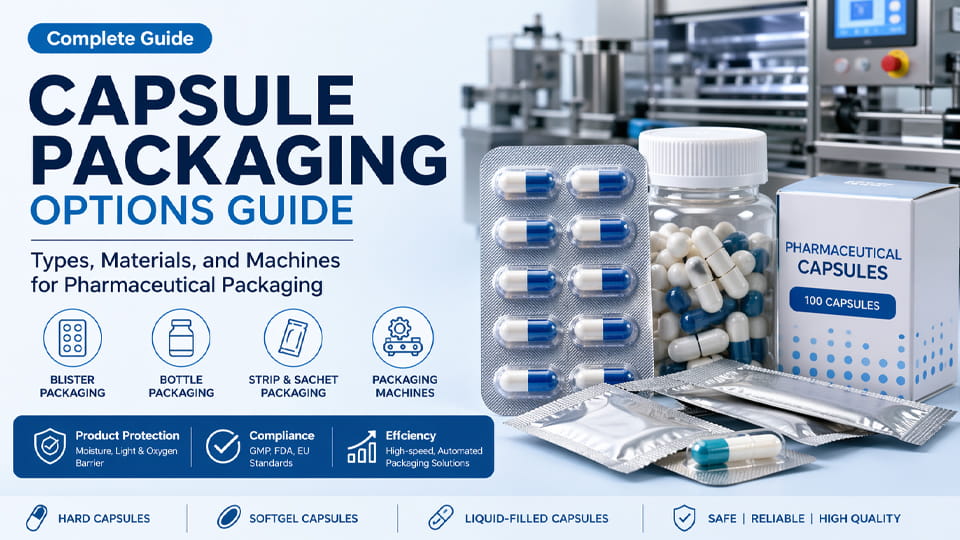
L'imballaggio delle capsule si riferisce al modo in cui le capsule farmaceutiche (guscio rigido o softgel) sono allegati per la distribuzione e l'utilizzo. Include imballaggio primario (il contenitore immediatamente a contatto con le capsule, per esempio. cavità di blister o bottiglie) E imballaggio secondario (cartoni esterni, scatole, ed etichette che proteggono e identificano ulteriormente il prodotto). Un buon imballaggio delle capsule deve proteggere il farmaco dall'umidità, leggero, e contaminazione, garantire la stabilità durante la durata di conservazione, e soddisfare i requisiti normativi. Per esempio, L’OMS lo rileva “I componenti dell'imballaggio circondano il prodotto dalla produzione fino all'utilizzo," e deve soddisfare funzioni come la protezione, stabilità, e identificazione. Le normative GMP della FDA (21 CFR 211) richiedere procedure scritte per l'ispezione e il test dei materiali di imballaggio al momento del ricevimento, e imporre un'etichettatura sicura e controlli contro le manomissioni. In pratica, dobbiamo abbinare il prodotto in capsule (forma di dosaggio, sensibilità, dosaggio, ecc.) al formato e al materiale di imballaggio appropriati.
Il confezionamento primario delle capsule farmaceutiche è fondamentale per protezione del prodotto, conformità, e la sicurezza del paziente: Mantiene le capsule asciutte, incontaminato, e chiaramente etichettati. Ad esempio, è noto che i blister e i flaconi color ambra sono ideali per i medicinali sensibili all'umidità. La confezione giusta favorisce anche la compliance del paziente (dosaggio in blister monodose, bottiglie a prova di bambino, etichettatura chiara) e le esigenze della catena di fornitura (serializzazione, logistica). Di seguito esaminiamo ciascuna opzione in dettaglio.
Tipi di confezionamento delle capsule
Confezione in blister per capsule
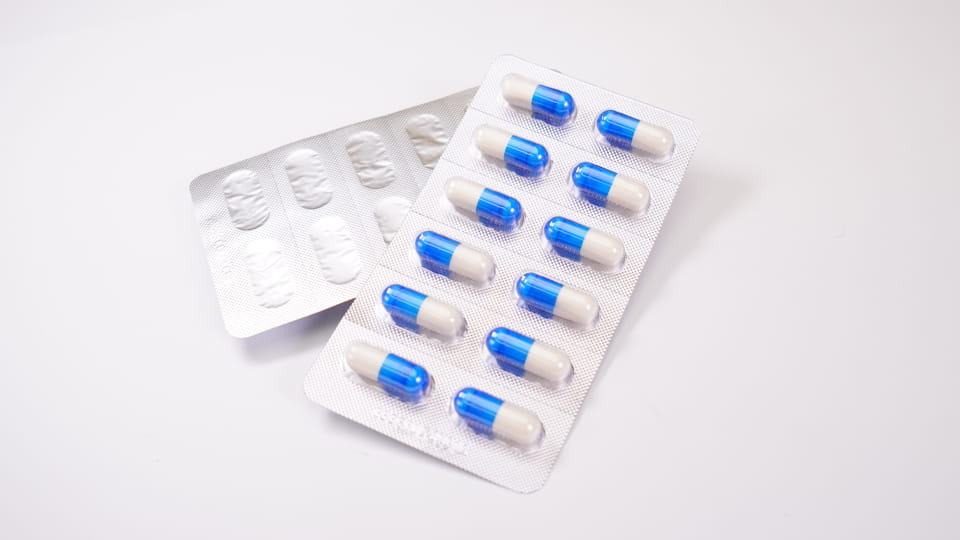
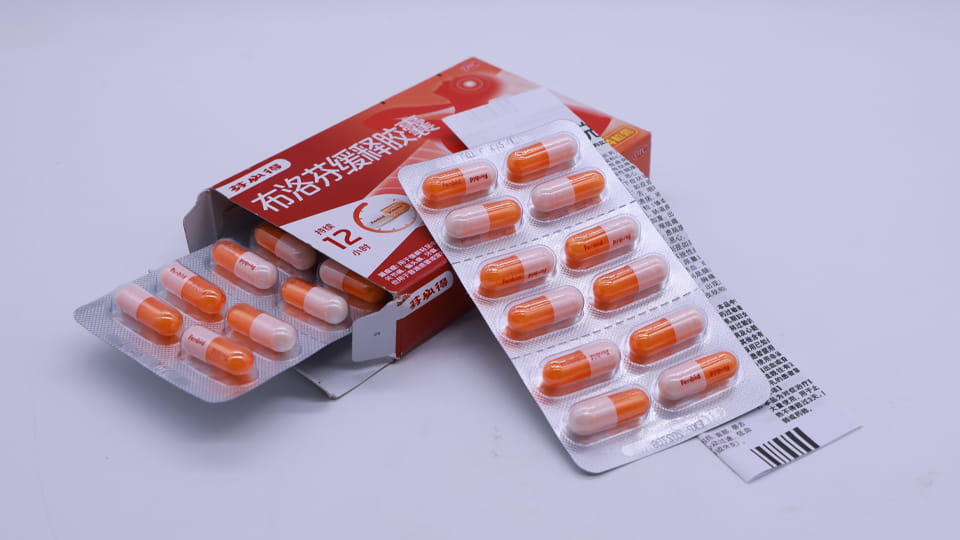
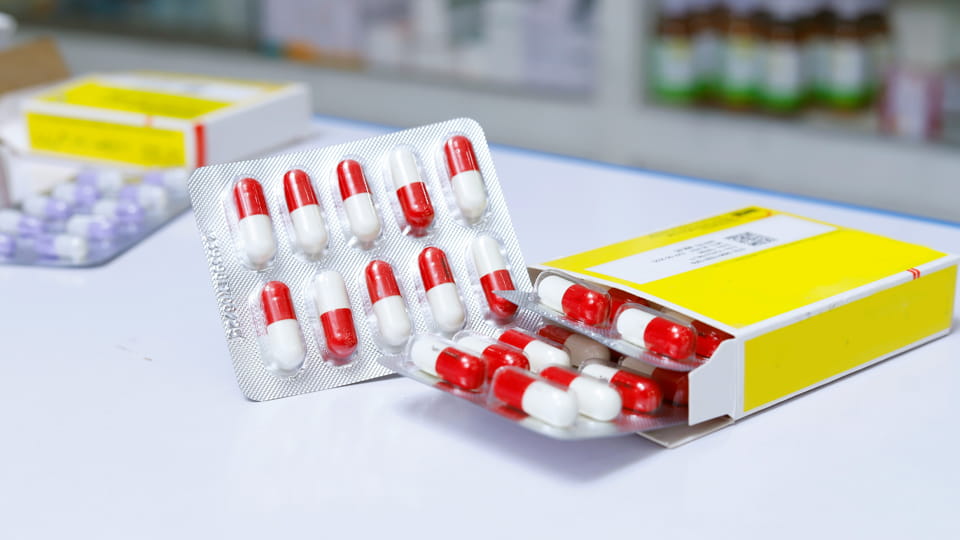
Pacchetti di blister sono costituiti da cavità plastiche preformate (“vesciche”) che contengono capsule individuali, sigillato con un supporto (pellicola o plastica). Questo imballaggio primario offerte protezione per dose unitaria. Le vesciche forniscono ottima barriera proprietà: possono essere realizzati con materiali come PVC/PVDC o lamina (Alluminio-PVC, Alu-Alu) per bloccare l'umidità, ossigeno e luce. Per esempio, La macchina blister DPP-180Pro di Jinlu può formare e sigillare fino a 4,800 blister di capsule all'ora in laminati Alu-PVC o Alu-Alu. Le caratteristiche principali dell'imballaggio in blister di capsule includono:
Protezione: Ogni cavità è sigillata ermeticamente, proteggere la capsula dall'umidità, ossigeno e luce. Come osserva uno studio, vesciche “fornisce una protezione superiore contro l’umidità e la luce” (meglio delle bottiglie). Lamine ad alta barriera (per esempio. Alu-Alu) prolungare la durata di conservazione delle capsule igroscopiche o sensibili all'ossigeno.
Prove manomissione: Un blister mostra chiaramente se una dose è stata rimossa o se il sigillo è rotto. Ciò garantisce l’integrità del prodotto e la sicurezza del paziente.
Convenienza: I blister monodose consentono ai pazienti di assumere una capsula alla volta, riducendo gli errori di dosaggio e gli sprechi. Sono particolarmente utili per programmi di dosaggio brevi o formulazioni pediatriche.
Personalizzazione: Le confezioni blister possono essere realizzate in varie forme e dimensioni di cavità per adattarsi alle diverse dimensioni delle capsule. Macchinari moderni (come le macchine per termoformatura o plug-assist) si adatta facilmente alle dimensioni delle capsule.
Efficienza spaziale: I blister sono compatti e impilabili. Riducono al minimo lo spazio vuoto rispetto alle bottiglie, risparmiando sulla spedizione e sullo spazio sugli scaffali.
Figura:Confezionatrice blister Jinlu JL-180Pro che forma blister per capsule (Alluminio-PVC), 4,800 cavità/ora.
Le macchine blister di Jinlu (per esempio. il DPP-180Pro) può formare automaticamente delle cavità, capsule di alimentazione, foca, piatti tagliati, e persino stampare i codici di lotto. Solitamente funzionano a velocità medio-alta (migliaia di cavità all'ora), Ideale per la produzione di massa. Diversi formati di blister (Alu-PVC contro Alu-Alu) sono selezionati per prodotto: Alu-Alu (foglio di alluminio) offre la barriera più alta (ideale per farmaci molto sensibili all'umidità), mentre il PVC/PVDC è comune per le capsule standard. L'imballaggio in blister semplifica inoltre il conteggio e l'ispezione: la maggior parte delle linee integra facilmente macchine per l'ispezione con telecamera o macchine per il conteggio delle compresse per verificare il riempimento delle capsule.
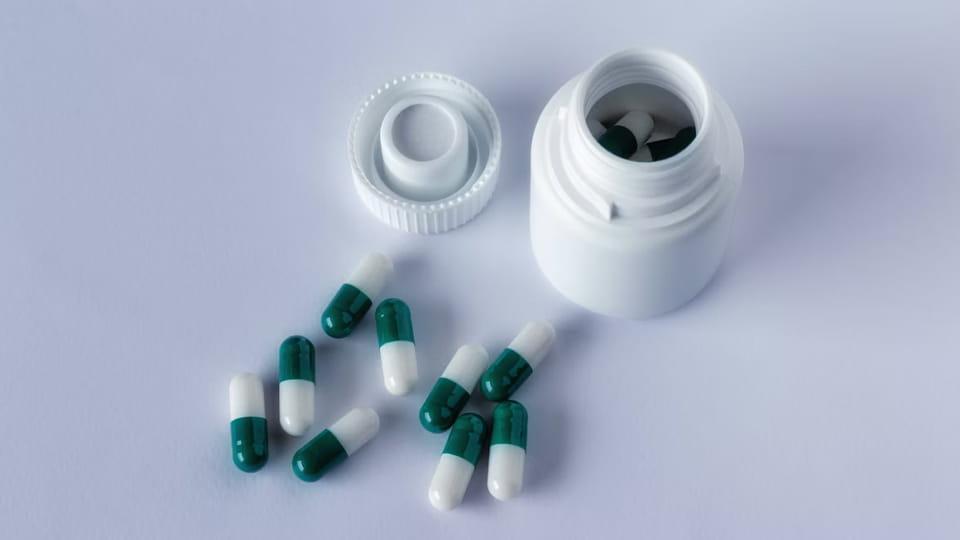
I flaconi sono il classico contenitore multidose. Le capsule vengono riempite in bottiglie (plastica o vetro) che vengono poi tappati. Questo formato è ben noto per le vitamine, integratori, e molte pillole da prescrizione. Caratteristiche principali:
Versatilità: Le bottiglie possono contenere grandi quantità (50–1000+ capsule) e una varietà di prodotti (compresse, capsule, polveri, anche liquidi). Di solito sono realizzati in plastica HDPE o PET, o vetro (per una forte inerzia chimica).
Imballaggio sfuso: Per capsule destinate ad essere assunte ripetutamente (vitamine quotidiane, terapie a lungo termine), le bottiglie sono convenienti. I pazienti possono dispensare più dosi contemporaneamente.
Efficienza dei costi: Le linee di riempimento delle bottiglie sono relativamente semplici. Le macchine contano o pesano le dosi più velocemente (per esempio. Il JL-16H di Jinlu può riempirsi fino a 100 bottiglie/minuto). Il costo del materiale per unità è spesso inferiore a quello del blister, soprattutto su larga scala.
Facile da maneggiare: I consumatori sanno come aprire le bottiglie. Potrebbe essere più facile per i pazienti anziani aprire una bottiglia (soprattutto con tappi ad apertura facilitata o a prova di bambino) piuttosto che staccare le vesciche.
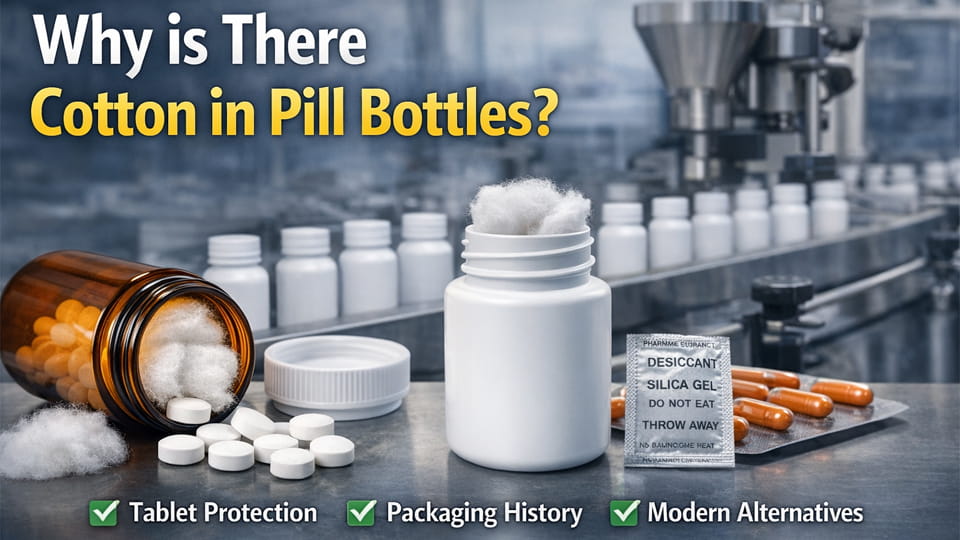
Imballaggio secondario: Le bottiglie consentono l'inclusione di elementi ausiliari come pacchetti di essiccante (per il controllo dell'umidità) O cotone. Accolgono inoltre le etichette complete dei prodotti attorno al corpo della bottiglia, e può essere imballato in cartoni.
Figura: Linea di imbottigliamento capsule/compresse Jinlu JL-16H (100 bottiglie/min) con riordinatore, riempitivo, tappatore, ed etichettatrice.
Le linee di imbottigliamento di capsule integrano più macchine: UN riordinatore di bottiglie (o tramoggia di alimentazione), UN macchina conta-riempitrice (che rilascia X capsule in ogni flacone), UN macchina tappatrice/sigillatrice (applicare e serrare i tappi), e un etichettatura. Per esempio, La linea JL-16H di Jinlu può gestire capsule da 3–40 mm, raggiungendo ~100 bottiglie/min con >99.8% precisione del conteggio. Le bottiglie possono essere riempite sfuse molto rapidamente. Per rispettare le normative, le linee di bottiglie spesso includono una stazione per l'inserimento degli essiccanti (per esempio. impacchi di silice) e una stazione di sigillo a prova di manomissione. I tappi a prova di bambino sono un’altra caratteristica comune per i medicinali pediatrici.
Nella scelta del packaging delle bottiglie, considerare il volume e la stabilità del prodotto: prodotti ad alto volume (per esempio. vitamine quotidiane) bottiglie di vestiti, mentre le capsule a basso volume o altamente sensibili possono preferire i blister. Nota che le bottiglie generalmente offrono protezione intrinseca da umidità/ossigeno inferiore rispetto ai blister ad alta barriera. Il vetro ambrato o i contenitori opachi possono aggiungere protezione dalla luce, e guarnizioni interne (rivestimenti in foglio di alluminio) può migliorare la barriera.
Bustine & Pacchetti di bastoncini (Buste monodose)
Bustine (e stick pack) Sono pacchetti flessibiliche contengono una dose di polvere, granuli o liquidi. Sebbene non sia così comune per le capsule, sono rilevanti per le forme di dosaggio correlate (per esempio. capsule nutraceutiche ridotte in polvere, o il riempitivo in polvere stesso). Ciò nonostante, bustine e stick pack meritano di essere menzionati in una guida all'imballaggio delle capsule:
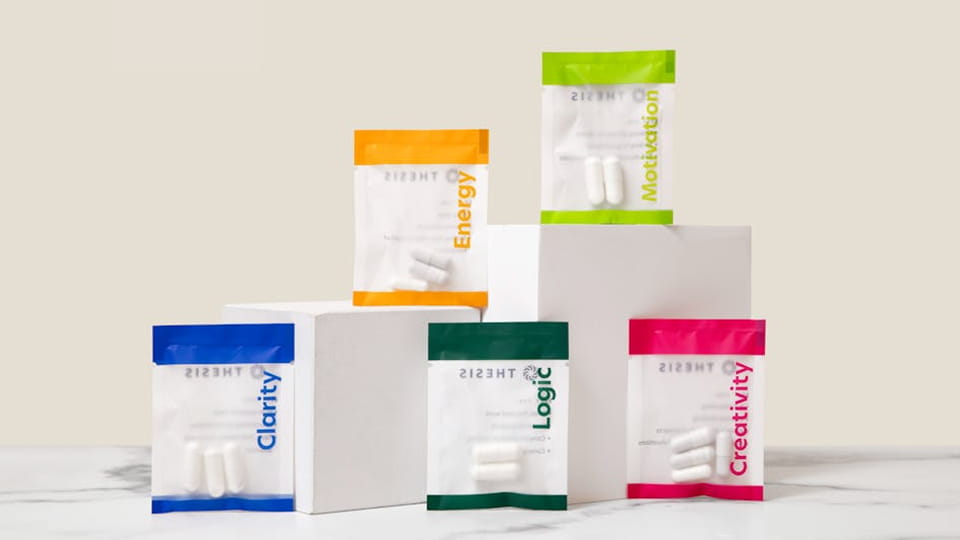
Bustine sono solitamente pacchetti piatti o a forma di cuscino sigillati 3 O 4 lati. Sono spesso utilizzati per polveri monodose (per esempio. granuli effervescenti) o capsule molto piccole (alcune farmacie distribuiscono le capsule in bustine per il dosaggio pediatrico). Le moderne macchine form-fill-seal possono riempire bustine con volumi esatti di piccole dimensioni. I vantaggi includono la portabilità (sta in tasca), convenienza, e dosaggio preciso (nessuno spreco parziale). Le bustine garantiscono inoltre una buona chiusura: la chiusura ermetica prolunga la durata di conservazione e previene la contaminazione. Molti prodotti farmaceutici (polveri, gel, unguenti, pillole monodose) utilizzare le bustine; Per esempio, soluzioni reidratanti iniettabili di emergenza o polveri antibiotiche monouso.
Pacchetti di bastoncini sono lunghi, bustine strette (spesso sigillato lungo una cucitura lunga più una cucitura finale). Sono popolari per gli integratori in polvere (per esempio. miscele di bevande istantanee) e può essere utilizzato per le polveri in capsule. Gli stick pack generalmente utilizzano meno materiale delle bustine e la produttività della macchina è maggiore (30–50% più veloce). Sono ideali per polveri a flusso libero grazie all'apertura sottile.
Sia le bustine che gli stick pack sono prodotti da form-fill-seal verticale (Vff) o macchine FFS orizzontali. La serie JL-VP di Jinlu, ad esempio, è una macchina FFS multipista per stick/bustine (40 bagagli/min/corsia, Precisione di ±0,02 g) per polveri, granuli, liquidi o gel. Se le capsule stesse dovessero essere confezionate in bustine, si aprirebbe la bustina per recuperare la dose, ma più comunemente, le capsule sono confezionate intatte in blister o flacone, mentre le bustine/stick pack gestiscono contenuti in polvere.
Nota normativa: sono consentite bustine e stick pack per i farmaci solidi e semisolidi (secondo le definizioni dell’OMS). Sono considerati imballaggi primari se contengono direttamente il prodotto. Come vesciche, le bustine possono essere progettate a prova di bambino o con tacche antistrappo.
Imballaggio in strisce
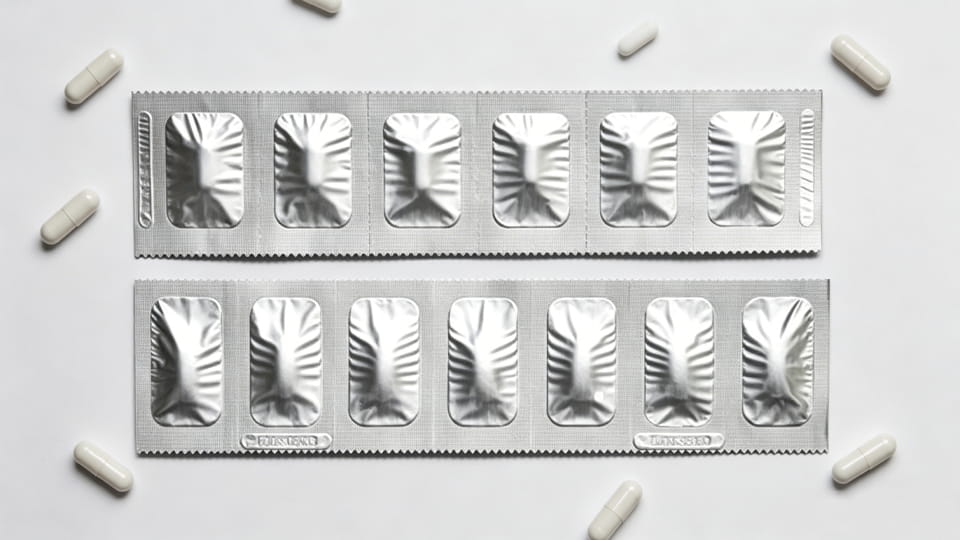
Confezioni a strisce (chiamate anche strisce di alluminio o “fasce di dosaggio”) sono un'altra forma di confezione primaria a dose unitaria. Una striscia è tipicamente una stretta rete di materiale (spesso alluminio o laminato multistrato) piegato e sigillato, con perforazioni tra le dosi. A differenza delle vesciche, gli strip pack non formano invece cavità profonde, la capsula è inserita tra due strati di pellicola. Le confezioni strip sono ampiamente utilizzate in Asia e per prodotti in cui è necessaria un'elevata protezione dall'umidità ma i blister sono troppo ingombranti. Punti chiave:
Barriera eccellente: Le confezioni a strip utilizzano spesso un foglio di alluminio che è impermeabile all'umidità e all'ossigeno. Ciò li rende ideali per capsule sensibili all'umidità o medicinali pediatrici dove è necessaria una lunga durata di conservazione. L’OMS definisce addirittura gli strip pack adatti a “dosi singole… di preparazioni solide o semisolide”.
Compatto & Dose unitaria: Come vesciche, le confezioni di strisce consentono l'utilizzo di una dose alla volta. Sono più leggeri e più piatti delle vesciche, risparmiare spazio.
Attrezzatura: Le macchine confezionatrici a strip formano e sigillano il foglio attorno a ciascuna capsula. Jinlu offre anche macchine per l'imballaggio di strisce. Per esempio, Note sull'imballaggio ricco Le confezioni strip utilizzano laminazione in alluminio o plastica e possono raggiungere lunghezze di molte dosi.
Figura:Macchina confezionatrice per strisce
Dal punto di vista della selezione, le confezioni strip occupano una via di mezzo tra la bottiglia (massa) e vesciche (rigidità). Spesso vengono scelti quando barriera all'umidità molto elevata è necessario ma in modo sottile, forma leggera. (Nota: le confezioni strip potrebbero non fornire prove di manomissione così chiare come i blister, a meno che non vengano utilizzati sigilli aggiuntivi.)
Imballaggio secondario & Etichettatura
Dopo aver scelto un pacchetto primario, le capsule vengono solitamente inserite imballaggio secondario come scatole di cartone o avvolto in una pellicola termoretraibile casi. I cartoni forniscono una protezione aggiuntiva durante la spedizione, consentire un'etichettatura aggiuntiva (informazioni sui farmaci, Branding, sigilli anti-manomissione), e aiuta a organizzare i prodotti in confezioni multiple. Considerazioni chiave per l'imballaggio secondario:
Cartoni & Inserti: I cartoni medici devono includere inserti del prodotto (Volantini con istruzioni di dosaggio, numero di lotto, scadenza, informazioni sul produttore, ecc.). Spesso si tratta di volantini di carta inseriti nella scatola.
Sigilli antimanomissione: L'imballaggio secondario è comunemente dotato di sigilli anti-manomissione (per esempio. nastri di sicurezza, fasce termoretraibili) per mostrare se la scatola è stata aperta.
Serializzazione/Traccia & Traccia: In molti mercati (DSCSA statunitense, FMD dell’UE), i singoli pacchi devono riportare codici seriali univoci (codici a barre/QR) per l'anticontraffazione. Una soluzione di imballaggio robusta comprende stampanti per etichette o codificatori a getto d'inchiostro per stampare numeri di lotto/batch e codici 2D sui cartoni.
Caratteristiche a prova di bambino e di sicurezza: Per alcuni farmaci, regolamenti (per esempio. 21 CFR 211) imporre imballaggi a prova di bambino. Ciò può includere pellicole blister difficili da aprire per i bambini, o tappi speciali sulle bottiglie. Le scatole secondarie possono anche avere serrature o richiedere l'apertura in due fasi, se necessario.
Stabilità e conformità: Il sistema combinato primario+secondario deve mantenere il prodotto stabile nelle condizioni di conservazione etichettate. Per esempio, Gli studi sulla stabilità dell'ICH richiedono esplicitamente il test della forma di dosaggio confezionata finale.
In sintesi, l'imballaggio secondario avvolge il prodotto per la distribuzione finale e garantisce che tutte le caratteristiche di etichettatura e conformità siano presenti. Un buon design qui migliora l'immagine del marchio e la comodità dell'utente (cartoni ad apertura facilitata, etichettatura chiara).
Materiali per il confezionamento delle capsule
La scelta del giusto materiale di imballaggio è fondamentale per proteggere le capsule. I materiali devono essere compatibili con il farmaco, soddisfare le esigenze di barriera, e rispettare le normative (ISO 15378 GMP per i materiali di imballaggio, ecc.). I materiali comuni includono:
Film in blister:
PVC (Cloruro di polivinile): Basso costo, plastica trasparente spesso utilizzata per i blister. Il PVC è permeabile all'umidità (non così protettivo) a meno che non sia rivestito.
PVC/PVDC: PVC rivestito con PVDC (cloruro di polivinilidene) riduce drasticamente l'ingresso di umidità (i comuni blister in alluminio-PVC utilizzano una barriera in PVDC).
Alu-PVC o Alu-Alu: Foglio di alluminio accoppiato a PVC o PET. L'alluminio-PVC fornisce una buona barriera all'umidità/ossigeno (comune), mentre Alu-Alu (foglio di alluminio) fornisce il più alto barriera (utilizzato per capsule molto igroscopiche o sensibili alla luce).
Polipropilene (PP): Emergere come alternativa sostenibile. Blister in PP (monomateriale) può essere completamente riciclato, come nel caso del liner PharmaGuard di Südpack, e funzionano ancora bene nelle linee automatizzate.
Materiali delle bottiglie:
HDPE (Polietilene ad alta densità): Plastica comune per flaconi farmaceutici; relativamente inerte ed economico.
ANIMALE DOMESTICO (Polietilene tereftalato): Offre migliore chiarezza e rigidità; buona barriera contro i gas. Spesso utilizzato per nutraceutici/integratori.
Bicchiere (Borosilicato di tipo I): Utilizzato per prodotti molto sensibili all'umidità o parenterali; il vetro offre un'eccellente barriera all'umidità e all'inerzia chimica. Il vetro ambrato blocca anche la luce UV.
Altri film: Per bustine e stick pack, pellicole laminate multistrato (per esempio. PET/Go/PE) sono utilizzati per controllare l'umidità e la sigillatura.
Generalmente, scegli la barriera più alta che abbia senso per la tua capsula. Per esempio, una capsula di gelatina sensibile all'umidità può richiedere un blister Alu-Alu o una bottiglia di vetro ambrato con essiccante. Al contrario, le capsule non sensibili potrebbero utilizzare un blister in PVC standard o un flacone in HDPE. Considera anche la durata di conservazione: i prodotti a lungo termine necessitano di barriere più robuste.
Note sulla sicurezza/riciclaggio: Le tendenze sostenibili favoriscono le confezioni monomateriale (per esempio. Blister in PP, bottiglie in PET riciclabili). Prove su materiali per estraibili, compatibilità, e rispettare i limiti FDA/UE (per esempio. USP <661> per plastificanti) fa parte della conformità dell'imballaggio.
Tipi di capsule e impatto sull'imballaggio
Le capsule sono disponibili in vari tipi e la loro formulazione determina le esigenze di confezionamento:
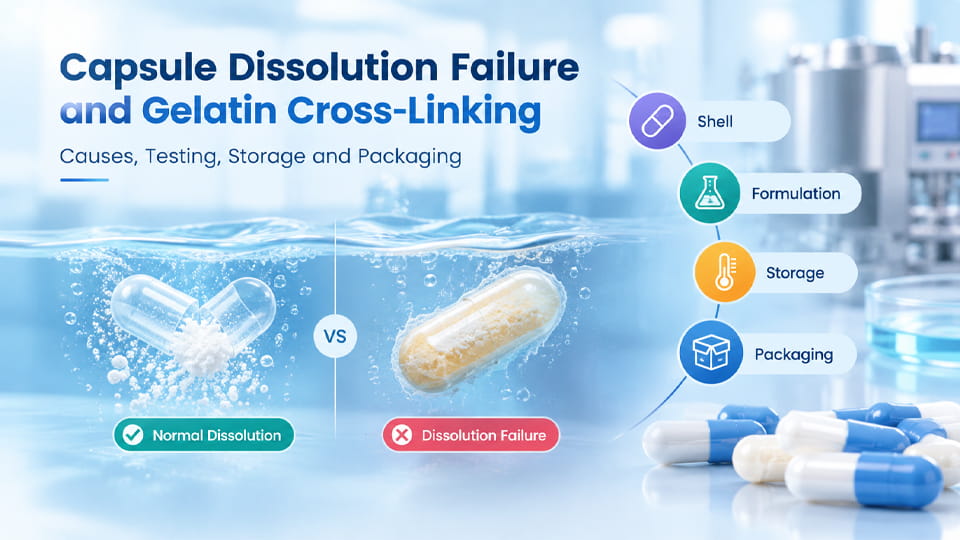
Capsule di gelatina dura: Le conchiglie in due pezzi più comuni. Contengono polveri/granuli secchi. I gusci di gelatina trattengono un po' di umidità e diventano fragili se troppo secchi, oppure morbido se troppo bagnato. Generalmente, capsule di gelatina dura richiedere moderare controllo dell'umidità. Una condizione di conservazione ampiamente citata è 15–25°C e 35–65% di umidità relativa. L'imballaggio dovrebbe mantenere questo ambiente: Per esempio, blister con rivestimento in PVDC o Alu-Alu, o bottiglie con essiccanti, aiutare a stabilizzare le capsule.
HPMC (Vegetariano) Capsule: Realizzato con cellulosa vegetale, questi gusci di solito hanno un'umidità intrinseca inferiore rispetto alla gelatina e tollerano fino a circa il 70% di umidità relativa. Sono spesso utilizzati per API sensibili all'umidità. Tuttavia, Anche Capsule HPMC richiedono imballaggi barriera per riempimenti molto igroscopici o sensibili alla luce. In pratica, Capsule HPMC + Spesso sono sufficienti i blister in PVC, ma la barriera alta aggiunge comunque sicurezza.
Capsule morbide (Riempito di liquido):Capsule molli avere una gelatina (o gelatina modificata) guscio riempito con olio o altri liquidi. Contengono acqua significativa (spesso ~ 5-10%) nel guscio e possono perdere umidità o ossidarsi. I softgel sono molto sensibili all'umidità: in genere richiedono bottiglie di vetro ambrato (con essiccante) o blister ad alta barriera per prevenire la perdita d'acqua e mantenere la potenza. Perché i gusci di softgel sono sensibili alla temperatura/umidità durante la produzione, Talvolta sono necessari la catena del freddo e imballaggi specializzati.
Capsule enteriche/a rilascio modificato: Questi hanno rivestimenti speciali per ritardare il rilascio nel tratto gastrointestinale. Il rivestimento aggiunge un ulteriore livello di sensibilità (può essere sensibile al pH o più fragile). Tali capsule devono essere comunque mantenute asciutte e generalmente confezionate in blister o flaconi come qualsiasi altra capsula. Il rivestimento richiede condizioni costanti; quindi è importante un imballaggio che assicuri il controllo della temperatura/umidità durante la distribuzione.
Insomma, IL materiale dell'involucro della capsula e tipo di riempimento influenzerà la scelta dell'imballaggio. Le formulazioni altamente sensibili all'umidità favoriscono sempre la barriera più stretta (Blister in alluminio-alluminio, bustina di alluminio, o bottiglia sigillata con essiccante). Le formulazioni meno sensibili hanno più opzioni. Testare sempre la stabilità del capsula confezionata finale (L'ICH Q1A richiede stabilità nel contenitore proposto).
Scegliere il giusto imballaggio (Diagramma di flusso decisionale)
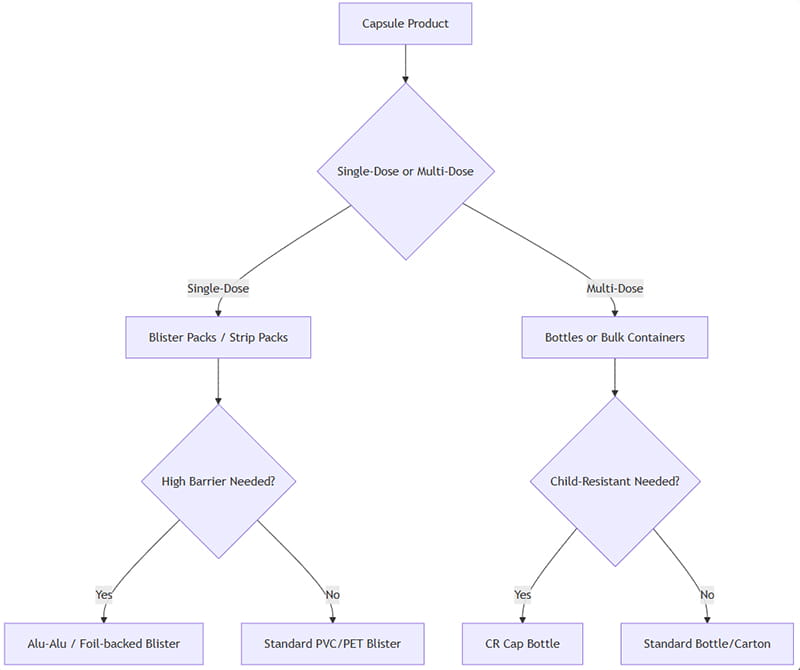
La scelta del confezionamento ottimale delle capsule implica la valutazione di molteplici fattori: forma di dosaggio, conformità al paziente, sensibilità del prodotto, durata di conservazione, requisiti normativi, e costo. Di seguito è riportato un quadro decisionale semplificato:
Come applicarlo: Se le capsule sono intese come unità singole (per esempio. dosaggio ridotto o blister al dettaglio), sono preferiti i blister/strisce. Per multidose (per esempio. integratori o farmaci ad alto consumo), le bottiglie sono più efficienti. Se la protezione dall'umidità/luce è fondamentale, selezionare opzioni ad alta barriera (Alu-Alu, bottiglia ambrata). Se serve la sicurezza pediatrica, utilizzare chiusure per bottiglie a prova di bambino o blister con design a prova di manomissione.
Altri criteri del settore includono:
Forma di dosaggio: Compresse/capsule → blister, bottiglia, o spogliarsi; Polveri → bustina/stick pack.
Sensibilità del prodotto: Per farmaci sensibili all'umidità, utilizzare blister Alu-Alu o buste di alluminio. Per fotosensibili, utilizzare flaconi ambrati o pellicole opache.
Compliance del paziente: Formati a dose unitaria (blister/striscia) aiutare l'adesione. Le bottiglie facili da aprire aiutano gli anziani.
Normativa: Includere prove di manomissione e rispettare le linee guida sull'imballaggio FDA/EMA.
Durata di conservazione: Una durata di conservazione più lunga richiede materiali con barriera più elevata (Alu-Alu, pellicole multistrato).
Scala di produzione: Le macchine blister sono ad alta velocità (volume medio), le linee di bottiglie eccellono in grandi lotti, le macchine per bustine gestiscono tariffe di linea flessibili.
Costo: Bilanciare i costi del materiale e della macchina. Per esempio, le bottiglie possono avere una manodopera per unità inferiore ma un costo della plastica più elevato; gli stick pack utilizzano pochissima pellicola per dose.
Alla fine, test pilota (studi di stabilità, studi sui consumatori) e l’analisi dei costi totali guiderà la decisione finale. Il diagramma di flusso riportato sopra è un punto di partenza per scenari tipici.
Attrezzature per l'imballaggio delle capsule
Il confezionamento delle capsule richiede macchinari specializzati. Dopo che le capsule sono state riempite (mediante riempitivi di capsule), questi vengono trasferiti alle linee di confezionamento:
Macchine per blister: Abbiamo già notato quello di Jinlu DPP-180Pro, una macchina blisteratrice per termoformatura ad alta velocità. Forma cavità (Pellicola in PVC o PET), alimenta le capsule (o compresse), e sigilla con pellicola, tutto automaticamente. Jinlu offre macchine (per esempio. DPP-180, DPP-270Max) fino a 4.800–11.200 cavità/ora. Le macchine blister sono abbinate a alimentatori contatori per rilasciare esattamente una capsula per tasca, e spesso dispongono di taglierini per separare i blister in carte. Moduli aggiuntivi (stampa/ispezione) assicurarsi che ogni blister sia leggibile e corretto.
Conteggio & Linee di riempimento (Linee di bottiglie): Questi trasformano le capsule sfuse in bottiglie. Una linea tipica ha: un riordinatore di bottiglie (organizza le bottiglie vuote), un contatore di compresse/capsule (vasca vibrante o sistema ottico che conta e rilascia un determinato numero in ciascuna bottiglia), una macchina tappatrice/sigillatrice, e una stazione di etichettatura. Quello di Jinlu JL-16H linea, Per esempio, strapazza le bottiglie, conta capsule da 3–40 mm al loro interno, applica i tappi, ed etichette fino a 100 bottiglie/min con 99.98% precisione. Per volumi elevati (imballaggio alla rinfusa) operazioni, le linee modulari con più teste di conteggio o riempitrici a coclea possono raggiungere velocità più elevate. È inoltre possibile aggiungere sigillanti a induzione o termoretraibili per il rivestimento in alluminio.
Macchine Bustinatrici/Stick-Pack: Questi sono modulo-riempi-sigillo (FFS) macchine. Quello di Jinlu JL-VP series è un sistema VFFS multi-pista in grado di produrre 30-40 bustine o stick pack al minuto per corsia. Dosa con precisione polvere o liquido (coclee per polvere, pompe per liquidi) e sigilli 3- o bustine a 4 lati o stick pack a 3 lati. Le macchine includono controlli PLC per la lunghezza del sacchetto, servo alimentatori per la precisione (±0,02 g), e termosaldatura ermetica. Tali macchine sono ideali per prodotti monodose, sebbene le capsule stesse siano raramente “confezionate in bustine” intatte.
Macchine confezionatrici a strisce: Gli imballaggi a strip sono realizzati su macchine specializzate che saldano a caldo fogli o film sovrapposti. Questi spesso assomigliano alle macchine blister ma utilizzano film piatto. (Se Jinlu offre imballatrici di strisce, integrazione simile alle macchine per bustine.)
Macchine per l'imballaggio secondario:Macchine astucciatrici può erigere cartoni, inserire blister o flaconi e foglietti illustrativi, e chiudere le scatole. Le astucciatrici farmaceutiche spesso gestiscono blister in alluminio o sacchetti di capsule. Incartonatrici (per le custodie esterne) e pallettizzatori completano la linea per la produzione di massa.
Conformità delle apparecchiature: Tutte le macchine confezionatrici per prodotti farmaceutici devono soddisfare la progettazione GMP (acciaio inossidabile, superfici pulibili, prestazione convalidata). Le macchine Jinlu sono certificate CE/cGMP, spesso con protezioni configurabili e sistemi di scarto per pillole non conformi alle specifiche. L’integrazione è fondamentale: Per esempio, una macchina blisteratrice può alimentare direttamente un'astucciatrice che forma le scatole e confeziona ogni blister. Sistemi completi (dal riempimento alla scatola finale) consentire l'automazione end-to-end del confezionamento delle capsule.
Considerazioni su normative e conformità
Il confezionamento delle capsule per i prodotti farmaceutici deve rispettare norme rigorose. I punti chiave includono:
Requisiti GMP: della FDA 21 CFR 211 La sottoparte G richiede procedure scritte per il ricevimento e il collaudo dei Tutto materiali di imballaggio prima dell'uso. Ciò significa vesciche, bottiglie, etichette, cartoni ecc. deve soddisfare le specifiche (nessun difetto). Lo stoccaggio separato dei materiali di imballaggio per prodotto è obbligatorio per evitare confusioni. Allegato GMP dell’OMS 9 allo stesso modo dettaglia i controlli sull'imballaggio. Le buone pratiche di produzione richiedono la tracciabilità (numeri di lotto sulla confezione) e maneggevolezza pulita.
Stabilità e linee guida ICH: Io Q1A(R2) stabilisce che gli studi di stabilità siano condotti sul prodotto nella sua versione finale sistema di chiusura del contenitore. In pratica, ciò significa che è necessario confezionare i lotti di prova delle capsule esattamente come previsto (stesso foglio di blister, stesso tipo di bottiglia) ed esporli a condizioni di stabilità in tempo reale. Qualsiasi modifica all'imballaggio potrebbe richiedere nuovi test di stabilità.
Serializzazione & Tracciabilità: In molti mercati, identificatori univoci (codici a barre/codici 2D) sull'imballaggio secondario (e talvolta vescicole primarie) sono tenuti a tracciare i farmaci lungo la catena di approvvigionamento. Le linee devono includere stampanti o applicatori per questi codici. La progettazione dell'imballaggio spesso include anche prove di manomissione (secondo la legge USA/UE).
Imballaggio resistente ai bambini e adatto agli anziani: Le sostanze controllate o alcuni farmaci richiedono caratteristiche a prova di bambino. Ciò significa spesso tappi speciali sulle bottiglie (per esempio. spingere e girare) o vesciche difficili da staccare. Tuttavia, deve essere considerata anche l’accessibilità del paziente (apertura facilitata per gli anziani). Consultazione della legge sugli imballaggi per la prevenzione dei veleni (NOI) o norme regionali simili sono necessarie.
Norme ISO: I fornitori di imballaggi primari dovrebbero seguire la norma ISO 15378 (GMP per i materiali di imballaggio primario) per garantire la qualità. Anche se non direttamente citato qui, questo è uno standard comunemente riconosciuto per i produttori di imballaggi. Le macchine stesse dovrebbero essere conformi agli standard dei macchinari farmaceutici (CE, UL, ecc.) E 21 CFR parte 11 se c'è la registrazione dei dati.
Regolamento sull'etichettatura: Le capsule devono essere etichettate con il nome del prodotto, dosaggio, data di scadenza, produttore, ecc. Ciò si estende ai cartoni e ai blister (a volte ogni segmento del blister riporta alcune informazioni stampate). FDA ed EMA hanno requisiti specifici su quali informazioni devono apparire sulle etichette primarie e secondarie.
Complessivamente, incontro con la FDA, Le linee guida dell’EMA e dell’OMS sono essenziali. Molti confezionatori lavorano con fornitori regolamentati (come Jinlu) che può fornire macchine e documentazione validate (IR/WH/PQ).
Conclusione
La scelta del giusto imballaggio delle capsule richiede una protezione equilibrata, usabilità, e costo. Pacchetti di blister, bottiglie, bustine, e le strisce hanno ciascuna il loro posto imballaggio farmaceutico. Fattori come la sensibilità all'umidità, forma di dosaggio, e le esigenze del paziente guidano la decisione. Accanto, devono essere soddisfatti severi requisiti normativi e GMP.
A Imballaggio Jinlu, siamo specializzati in soluzioni di packaging farmaceutico end-to-end. La nostra attrezzatura – da macchine blister ad alta velocità A conteggio completamente automatizzato & linee di imbottigliamento – ti aiuta a confezionare le capsule in modo efficiente e conforme. Sosteniamo anche scelte sostenibili (per esempio. macchine che lavorano nuovi film riciclabili) e offrire un servizio unico (personalizzazione, convalida). Il nostro team può aiutarti a valutare il miglior sistema di confezionamento delle capsule per il tuo prodotto.
Pronti per ottimizzare il confezionamento delle vostre capsule?Contatta Jinlu Packing oggi stesso per consigli e preventivi esperti. Le nostre soluzioni sono supportate da standard di qualità globali e oltre 3,000 clienti soddisfatti in tutto il mondo. Confezioniamo le tue capsule per il successo!
Domande frequenti sul confezionamento delle capsule
Cos'è il confezionamento delle capsule?
L'imballaggio delle capsule si riferisce al processo di racchiudere le capsule farmaceutiche in materiali protettivi per mantenerne la stabilità, sicurezza, e conformità. I formati comuni includono i blister, bottiglie, e spogliare l'imballaggio. Nella pratica farmaceutica, l'imballaggio non è solo contenimento: protegge le capsule dall'umidità, ossigeno, e contaminazione, che influisce direttamente sulla qualità e sulla durata di conservazione del farmaco.
Qual è il miglior imballaggio per capsule farmaceutiche?
Non esiste un’unica opzione “migliore”: dipende dal prodotto e dal mercato. • Confezione in blister → ideale per farmaci sensibili all'umidità o di alto valore • Imballaggio delle bottiglie → ideale per lo stoccaggio sfuso e gli integratori • Imballaggio in strip → comune nei mercati sensibili ai costi L'imballaggio in blister è spesso preferito perché fornisce protezione per dose unitaria e migliore isolamento ambientale.
Quali materiali dovrei utilizzare per proteggere il mio prodotto in capsule?
Utilizzare materiali che blocchino le principali minacce (umidità, ossigeno, leggero). Per esempio, I blister in alluminio-alluminio o i flaconi in vetro ambrato offrono un'eccellente barriera per le capsule sensibili all'umidità. I blister in PVC o PET con rivestimento in PVDC sono comuni e più economici per i prodotti stabili. I flaconi in HDPE sono standard ma potrebbe essere necessaria una busta essiccante se le capsule sono sensibili. Valutare le velocità di trasmissione del vapore acqueo (WVTR) di film. Nella produzione attenta alla sostenibilità, considerare i monomateriali riciclabili (per esempio. Blister in PP). Testare sempre la compatibilità dell'imballaggio tramite studi di stabilità.
In che modo il confezionamento delle capsule protegge la stabilità del farmaco?
Le capsule sono sensibili ai fattori ambientali come l'umidità, ossigeno, e luce. Imballaggio adeguato: • Previene l'assorbimento dell'umidità • Riduce l'ossidazione • Mantiene la stabilità chimica Imballaggio blister, in particolare, crea microambienti sigillati per ogni capsula, prolungando significativamente la durata di conservazione.
Di quali macchine confezionatrici ho bisogno per le capsule?
Dipende dal formato. Per vesciche, hai bisogno di una macchina per la formatura/sigillatura di blister (con stampi a cavità per adattarsi alla tua capsula) più forse un cartoniere. Per bottiglie, hai bisogno di una linea di riempimento/tappatura delle bottiglie (riordinatore, controriempitivo, tappatore, etichettatrice). Per stick pack, utilizzare una macchina per bustine verticale form-fill-seal. Jinlu offre tutto questo: per esempio. i nostri blister della serie DPP, Linea di conteggio JL-16H, e confezionatrice di bustine JL-VP. La scelta della macchina giusta implica capacità, dimensione della capsula, e le integrazioni richieste (sistemi di visione, rifiutare le stazioni, ecc.).
Come faccio a decidere tra blister e flaconi per una capsula?
Considera fattori come il dosaggio (singolo contro. multiplo), esigenze di stabilità, e l'uso da parte del paziente. Per la praticità della monodose e un'elevata protezione (soprattutto per capsule sensibili all'umidità/luce), spesso si preferiscono i blister. Per grandi volumi o per ragioni economiche, solitamente vengono scelte le bottiglie. Anche, se sono necessarie caratteristiche a prova di bambino o adatte agli anziani, le bottiglie possono offrire più opzioni. Di regola, abbina le proprietà della tua capsula alla confezione: per esempio. capsule molto igroscopiche → blister Alu-Alu; integratori molto richiesti → flaconi.
Piccolo Fu, Fondatore di Jinlupacking, porta sopra 20 anni di esperienza nel settore delle macchine farmaceutiche. Sotto la sua guida, Jinlu è diventato un fornitore affidabile che integra la progettazione, produzione, e vendite. Petty condivide con passione la sua profonda conoscenza del settore per aiutare i clienti a destreggiarsi tra le complessità del packaging farmaceutico, assicurandosi che ricevano non solo attrezzature, ma una vera partnership di servizi one-stop su misura per i loro obiettivi di produzione.